Fine Sentences February 14-20, 2010

These are some fine sentences from blogs I read during the week of February 14-20, 2010.  If a writer has not composed during the week, I do not make a selection.    As a general rule, I read the blogs listed here on Sage to Meadow and The 27th Heart, my other blog, and pick fine sentences.  The 27th Heart is almost identical to Sage to Meadow in content.  You can read the full posts of these fine sentences by clicking on my blogroll here on Sage to Meadow or The 27th Heart.

I’ve got to get out of here, if just for a little while. I’ve got to breathe some fresh air!  I headed for my room and got dressed in some warm clothes. Heavy socks, shirt, sweater over the shirt and breeches. Headed for the garage, found my riding boots, fingerless gloves and jacket, hopped into the car and took off for the barn. Now this might sound strange to some, but for me, this was therapy.  –Turquoise Moon, Daily Om, upon getting out of the house after the death of her husband.

I’m shifting, branching out into more modern art pieces. I’m not happy with the place I am right now, my work is not fulfilling me in the way I want it to and I’ve been increasingly frustrated.  –Katie Johnson Art, on going in a new direction in her painting.

Cerillos is the Yin to Madrid’s Yang, the definite shadow city on this trail of powerful contrasts. There’s a heaviness here. A quiet darkness.  –Kristy Sweetland, Stark Raving Zen, on photographing Cerillos, New Mexico, the Turquoise Trail.

She is not sitting around wondering if you’re going to make the right decision for her. She wants your comfort, your company, your love. Give her that — give yourself that — and the rest will follow.  –Coyote Crossing, Chris Clarke, on knowing when it’s time to put your dog, your companion, down.

We only ask that you help us to compete as honest as the horses we ride and in a manner as clean and pure as the wind that blows across this great land of ours. –Evangeline Chavez, Evangeline Art Photography, from “A Rodeo Cowboy’s Prayer.”

My grandparents married in 1912, and their love story is a blog post (or two or three) in and of itself, but my Grandma Ayres never let a day, if not an hour, go by without talking about how much she missed her husband, Frank, after he died.  He was born Benjamin Franklin Ayres, and he is buried next to his brother, Thomas Jefferson Ayres. –I Love New Mexico, Bunny Terry, on attending a funeral in Tucumcari.

At this, the factory hushed. I stood in silence while others awaited my answer. “Tell us your problem,” Yosi insisted. And, realizing that all of this factory work that helped support an entire kibbutz had come to a halt, I finally understood what a kibbutz was all about. An individual’s well-being trumped money made and money spent. For the unit was only as strong as the weakest link.  –Kittie Howard, The Block, on her laundry and losing weight at the Plason kibbutz.

This is really a nice escape on these grey winter days…and once again is stirring up my desire to visit the town in Mexico where my father’s family came from. Con tiempo.  –Taos Sunflower, Martie, on reading “Mexican Time,” a book on her nightstand.

I had arrived here, in the late fall of 2001, in a fog of emotions and with an empty gas tank. I had run out of gas, in every way, just before the first exit.  –Teresa Evangeline, on arriving in Santa Fe in 2001.

This section of the Pedernales River runs through one of the most prominent uplift regions of the Edwards Plateau resulting in stair-step waterfalls running for over a mile. –Jeff Lynch, on photographing the Pedernales River in Texas.

It caught my breath at the rise of the arched bridge. We, the mass of morning migratory workers, moved at procession speed, paying reverence to that glorious sight. A vivid sky painting lingering long enough to fill our vessels for the day ahead.  –Sea Mist and Sunsets, Chris Schutz, on the commute to work, crossing Puget Sound and the bridge.
9 Comments

Filed under Fine Sentences Series

Fanny with Duncan Steele-Park

Shiners Fannin Peppy with Duncan Steele-Park

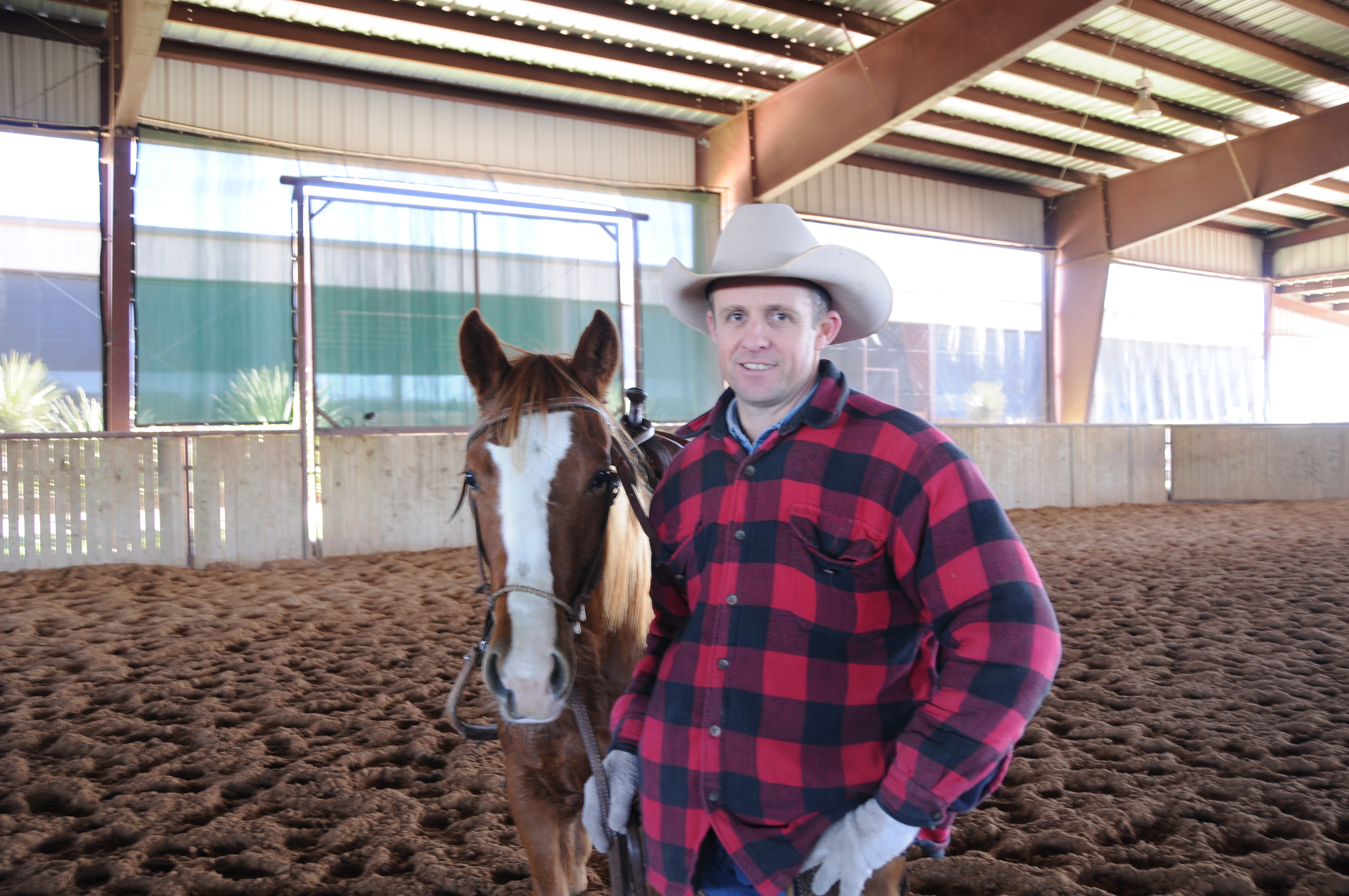
I went to see Fanny Wednesday morning after classes.  Duncan Steele-Park took her through her paces, circles and stops.  It was a cold morning and Fanny and Duncan followed one calf in the large indoor arena to accustom her to cattle.  At times, I saw her breath as a small cloud, rise softly, then evaporate.  Fanny has been around cattle all her short life, but having a rider to give her commands was different.  Duncan gave me a critique of her behavior in the workout and she stops really well.  Her work on right-hand circles is testing her, although her left-hand circles are good.  Fanny has about two more weeks with Duncan before we make a decision on her future.  She is out of kindergarten, Duncan says, and in elementary school.

On the one hand, with progressive improvement, Fanny can stay in school and in another year become a futurity prospect in a crop of 750 cutting horses.  Then, on the other hand, Fanny can have a good education at the hands of Duncan for a few more weeks and come back home to our place to be a good companion and safe horse for human beings.  Duncan has stated that there could be reasons to bring her out of his training and put her on a decent, average road for horses that will not be a prospect for the Fort Worth futurity, but will give her experience for a comfortable, safe life with human beings.  And, they with Fanny.

I do wish all of you could see Duncan and Fanny working together.  He lets her be free in learning.  By that I mean, he lets her be a force for herself, not him, not Duncan.  He will start every session with turning her head with the rein and hackamore (no snaffle, no bit) to the left, then to the right.  When he changes the gait in her circles, there is no overt spurring or talk, just a few clucks or pressure with his legs, and she adjusts.  I could not see the cue Duncan was applying to get her to stop.  Maybe there was a slight pressure from the hackamore for Fanny to whoa, but I could not see his cue for her to halt.  And, she stops quickly.

So, I asked Duncan, What is the cue you give Fanny to whoa?  As he was riding by on Fanny, Duncan said, Look at my leg and boot.  I looked and when Duncan takes his boot and leg away from her flank, just slightly, she stops.  All he does is take off leg and boot pressure about her flanks and she halts.  Dead so, doesn’t move.  Stays immobile, stopped.  I thought: That’s why I pay tuition.

Fanny is fortunate.  Fanny is under a stoa, a porch, of ancient pedagogy, a place with a teacher that doesn’t use a cudgel to beat the cursive into the student, but a stoa-arena that allows her to draw out of herself a strength and performance that instills confidence that she will possess, whether she is futurity bound or is ridden by a young, blondhaired lass in the greenest of nature’s pastures, enjoying the wind on her face and the gentle pressure of rider around her soft, sorrel flanks.  Go, my darling, Fanny, go.  I have given you the best I could.

Fanny and Duncan Under the Stoa (Click image for enlargement.)

14 Comments

Filed under Duncan Steele-Park, Horses, Shiners Fannin Peppy (Fanny)

Snow as Fertilizer

Snowfall at Flying Hat Ranch February 11, 2010 (Click to enlarge)

I did not know until today and I think it true.  Snow and hail capture more nitrogen in flake and stone than raindrop.  Grass and crop grow intensely after snow and hail.  Heavy hailstorms on bayous and ponds deplete oxygen.  Fish die.  This was told to me by a rancher from Coleman County, Texas, whose family has husbanded cattle and horses for five generations (130 years) on the Upper Colorado River watershed.  Snow and hail with more (bonded?) nitrogen are nature’s fertilizers.

South of Cisco, Texas, another rancher confirms the observation that snow or hail are fertilizers:  Oh, it’s a fact.  We will have good spring grass with this snow, but I don’t know what the summer will bring as we will have to wait and see.

5 Comments

Filed under Flying Hat Ranch

Early Morning Sounds on Flying Hat

I rise early to start the day, walking down the lane to the barn.  Before sunrise this morning at 6:45 a.m., I heard three flocks of turkeys responding to each other to the south and west of our place.  They gobbled in flock choruses, their refrains carrying far because of the cold air.  Between turkey gobbles, loud and many they were, coyotes howled and yipped.  I don’t think the coyote had a kill, but were merely howling.  Past the Dooley’s place, I heard a neighbor’s hound bay, and from the Dooley’s farmyard, a cock crowed.  Ducks on the pond quacked and I heard them on Blue’s pond to the east of us, sounding friendly to each other, not alarmed.  The sun lay below the horizon, slowly illuminating the sky, as I absorbed sounds of nature’s creatures, some wild, some not.  I finished one chore and returned to the house, waiting for the horses to turn broadside, flankside to the sun as it rose, awaiting their grain and hay.  Lilly the alpha mare will nicker when I enter the stables.

8 Comments

Filed under Dogs, Ducks, Flying Hat Ranch, Horses

Antelope and Sagebrush

Between 1804 and 1806, Meriweather Lewis and George Rogers Clark led an expedition of the American West.

Lewis noticed not just one but several species of sagebrush. He wrote,

“[O]f this last the A[n]telope is very fond; they feed on it, and perfume the hair of their foreheads and necks with it by rubing against it.” Sierra Club notes on Lewis and Clark expedition.

6 Comments

Filed under Sagebrush

Fine Sentences February 7-13, 2010

Here are some fine sentences from blogs published February 7-13, 2010.  You may link to these blogs by referring to the blogroll on the right hand side of any page.  If a blogger has not posted a writing during February 7-13, 2010, they are not listed here.

There is something broken in us if we look at the Ivanpah Valley and see not peace, but merely a way to increase our power and the profit we derive from it.  –Chris Clarke on Coyotes Crossing.

The name is a Spanish interpretation of the Tewa word, “nanbe,” which roughly translates as “earth roundness.”  –Evangeline Chavez on Nambe Falls, New Mexico, Evangeline Art Photography.

So Dave and I found ourselves in the bottom of the Canadian River canyon under the bridge, and we walked between the salt cedars and the water, which was actually quite deep for just being seepage from the dam.   There was no wind, and we followed dozens of deer tracks in and out of the cattails.  –Bunny Terry on I Love New Mexico.

There’s something about Madrid that makes walking down the tiny winding roads without an exaggerated smile a virtual impossibility.  –Kristy Sweetland, Stark Raving Zen, on visiting and photographing Madrid, New Mexico.

I used to love to hand write letters, and have written hundreds upon hundreds in my years. I hear they’re still out there…friends have told me they have kept them…and that is also thought provoking to me. It’s like my history is spread out around the country in little envelopes.  –Martie, Taos Sunflower, on the lost art of writing letters.

I love the ritual of grinding the beans, transferring them to the filter, pouring the water in, and hittin’ that button, knowing that heaven is just around the corner.  –Teresa Evangeline, on early morning and making coffee.

After weeks of overcast skies and rain the rivers and creeks in the Hill Country are flowing fast and furious, which makes for some nice photographic opportunities.  –Jeff Lynch, “On the Road Again,” taking photographs in the Hill Country of Texas.

There is something Really Nasty out there, unbridled, coarse, and raw.  –Kittie Howard, The Block, a comment on Bald-Face Lie shooting, Sage to Meadow.

3 Comments

Filed under Cedar, Fine Sentences Series, Juniper

No News on Bald-Face Lie

I’m sorry to report that no news has surfaced in public newspapers this last week about the shooting of the filly, Bald-Face Lie.  The Parker County Sheriff’s Department is  taking this case very seriously, says one person who has knowledge of the case.

2 Comments

Filed under Horses

Primm, Nevada, Power Station

[I have copied this post by Chris Clarke on his Comment on the Ivanpah Solar Electric Generating Station.  His blog is Coyote Crossing: Writing and Photography from the Mojave Desert.]
——————————————————
Posted by Chris Clarke on February 11, 2010

I posted this earlier today at Desert Blog. My publicist tells me I should put it here as well. Today was the deadline for public comment.

re: Ivanpah SEGS Public Comment Thursday, February 11, 2010
To Whom It May Concern:

Of other public comments arriving with regard to the proposed Ivanpah Solar Electric Generating Station south of Primm, NV, I am confident many will address the abundant technical, hydrological, and wildlife-related problems contained in the proposal to bulldoze a broad swath of publicly owned ancient desert habitat for private industrial development. It is on these details that projects such as the Ivanpah SEGS are either approved or denied, and I am grateful that others can speak to those details more authoritatively than I.

What I can address with confidence and authority, however, is the fact that the Brightsource project threatens one of the most beautiful places in the United States. True, that beauty may not be apparent to the casual traveler on I-15 speeding through the desert with the airconditioning cranked up as they peer through tinted safety glass. It takes a few moments of quiet for the Ivanpah Valley’s beauty to sink in fully.

I lived in the Ivanpah Valley for much of 2008. I have been spending time there and in neighboring places in the desert for much of my life. The Ivanpah Valley is not wilderness, at least not that part of it outside the Preserve. There are many visible human intrusions there. Freight trains roar through the valley sounding loud horns, engines on both ends straining to build up momentum for the long climb to Cima. Off I-15 there is traffic on Nipton Road, long-haul truckers heading for Searchlight, vacationers in RVs and motorcycles heading for the Colorado River. One can in fact hear them from several miles away. They approach. They grow louder. They pass. The noise recedes.

And then the noise ebbs, and the cricket song swells, and the coyotes’ song, the breeze, the sound of blood in your veins. In the south end of the Ivanpah Valley, at least, human influence is limited and inconstant. From the Mojave National Preserve even Interstate 15 recedes in significance, becoming not much more than a pretty string of far head- and taillights in the distance, and that only at night. The sere backdrop of Clark Mountain, the McCulloghs and Lucy Grays in the east, and the protected peaks of the New York and Ivanpah mountain ranges contain between them a vast, largely wild piece of the Mojave. The Ivanpah Valley contains nearly all the Mojave’s landscapes in its boundaries — alkali flat, old-growth creosote and ancient Mojave yucca, Joshua tree woodland, piñon-juniper forests on the slopes of the fringing ranges. There is even an alpine sky-island overlooking the Ivanpah Valley, white firs clinging to the higher slopes of Clark Mountain, directly above the project site. The Valley is the Mojave in microcosm.

Paving thousands of acres of the Ivanpah Valley with mirrors would utterly destroy the wild character of the place. It would be an encroachment on the peace of the Preserve and the lands around it, with the noise and dust of construction and the subsequent blinding glare of the completed facility an intrusion into a peace I have found nowhere else on earth.

Others will question the actual carbon reduction benefit provided by building this plant, and rightly so. They will question the validity of tortoise relocation and mitigation, the additional demand on the 12,000-year-old water in the Ivanpah Valley’s aquifer, the loss of Mojave milkweed habitat. These are all crucial questions that absolutely must be answered. Neither Brightsource nor Interior have done so.

The loss I want to question, however, is the loss of our soul.

Are we really so bereft of wisdom that we see this beleaguered but beautiful stretch of ancient desert as nothing more than a blank spot on a map? Are we really so callous that we can consider the improbably old creosote, Mojave yucca and barrel cacti on the Ivanpah site less valuable than leaving our closet lights on when the door is closed? Many of the plants growing there are older than this nation. Some may pre-date European presence on the continent. We may as well raze the Parthenon to build a strip mall, knock down Stonehenge for use as highway berms. There is something very wrong in us if we value this place not for its beauty but for its square footage. There is something broken in us if we look at the Ivanpah Valley and see not peace, but merely a way to increase our power and the profit we derive from it.

In 2008, just before sunset after a day of scattered small rainstorms, a friend and I got out of her car near the abandoned railroad siding known as “Ivanpah,” in the southern Ivanpah Valley well within the Preserve. We had a clear and unobstructed view of the whole valley there at the end of the paved section of Ivanpah Road. A desert tortoise stood at roadside. We’d stopped to make sure no passing cars hit her as she tried to cross but there were no passing cars, and she had no apparent intent to cross. Unperturbed by our presence, she fell asleep as we watched. A band of coyotes began singing somewhere off toward Morning Star Mine Road. It was hard not to feel very small. The valley held an immensity of space and of time as well, humbling both in the sense of personal insignificance it conveyed and in the realization of our frightening capacity to do unintended harm.

It was one of those moments I have found surprisingly common in the Ivanpah Valley, a place that though altered by human hands is still precious, still wild in essence, well worth being defended from further unnecessary and destructive change.

I urge you to halt this project.

Chris Clarke
Private citizen

2 Comments

Filed under Life Out of Balance

Levitating Horse at Flying Hat

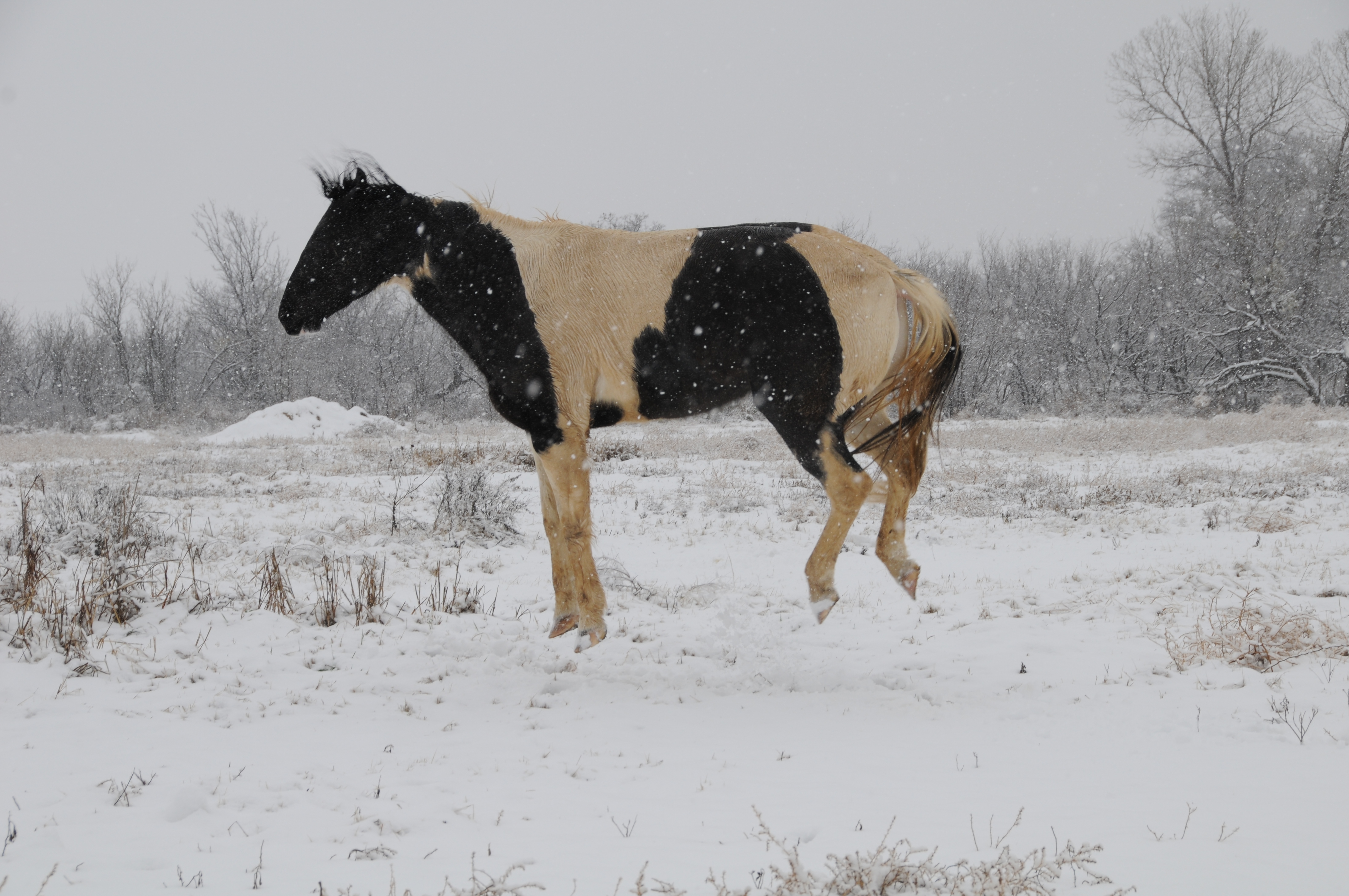
I give you my word, this photograph has not been retouched.  Click the photograph to see the famous, all-inspiring, fabulous, courageous, fine, good horse named, Star, as he defies gravity in the Texas snowstorm.  Come one, come all…okay, enough.  Let’s look at the photograph.  I caught Star in a leap off the ground.

Stars Bars Moore (APHA) Levitates

7 Comments

Filed under Horses, Star

Winter Photographs at Flying Hat

Winter 2.11.2010, Poprock Pasture

Poprock Pasture and Arena In Winter

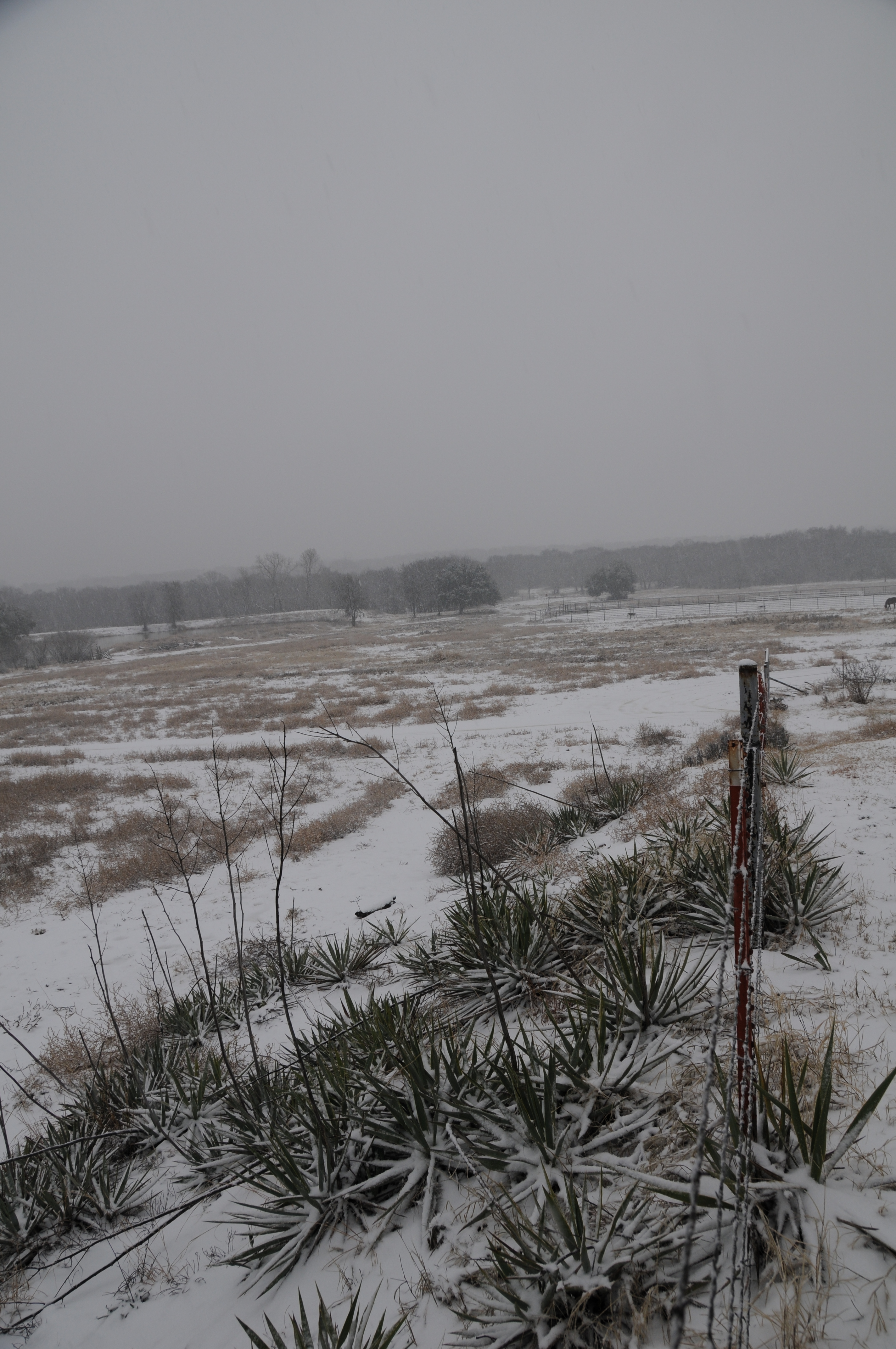
Yucca and Fence

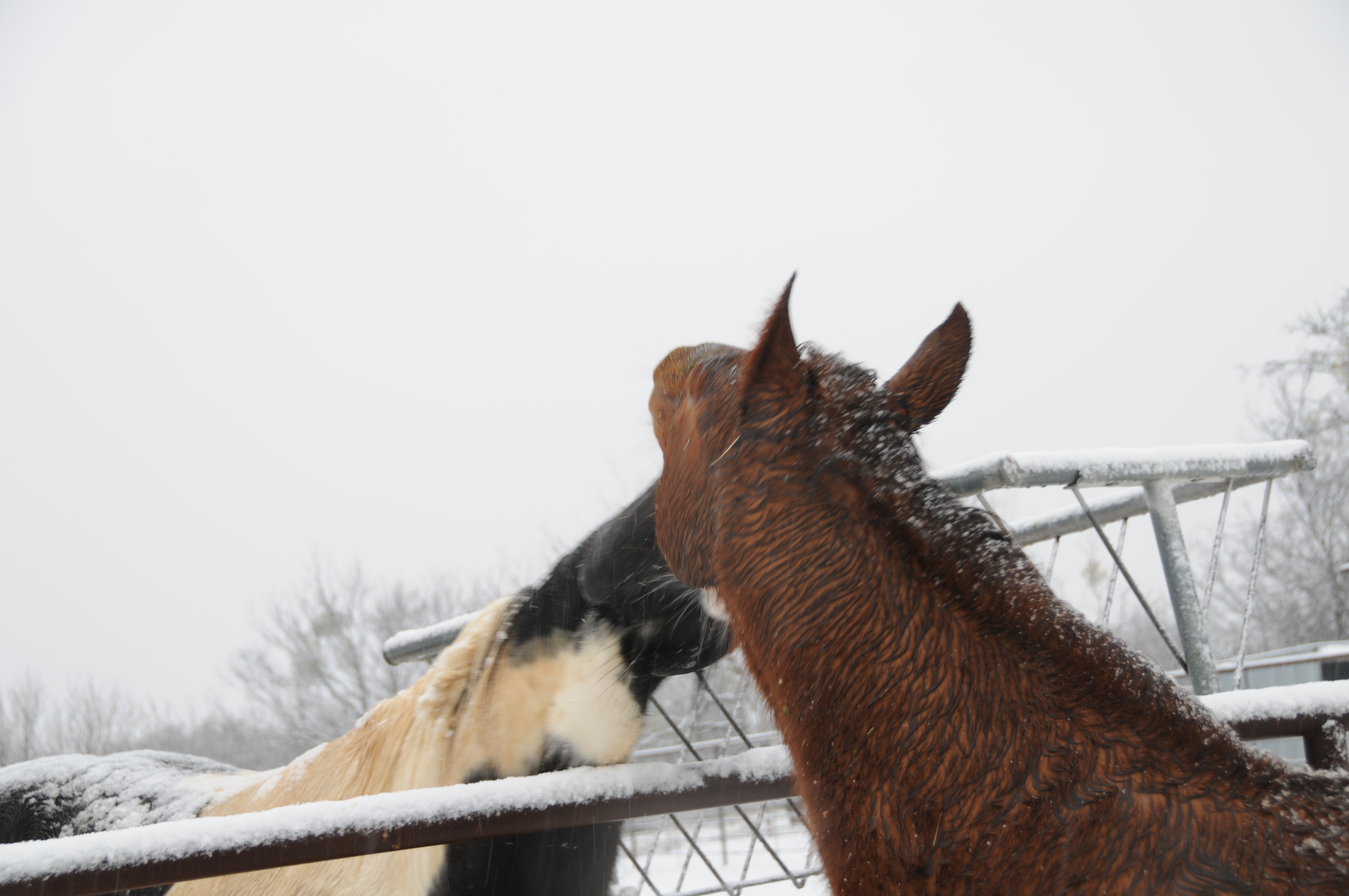
Shiney and Star Playing Gotcha

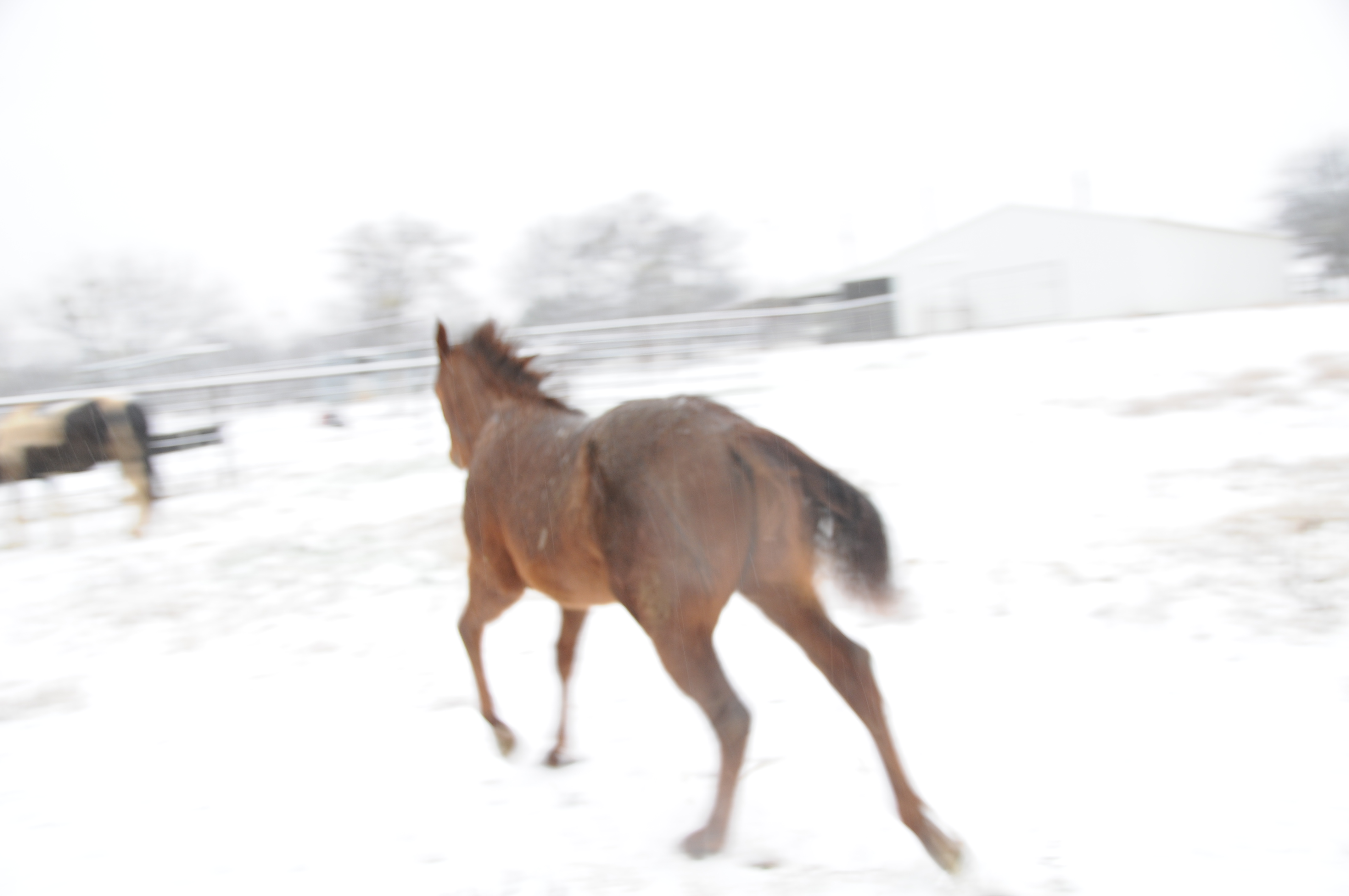
Shiney Galloping to Corral

Remuda at Well House Corral

Mountain White-crown Sparrows Above Stables (Zonotrichia leucophrys oriantha)

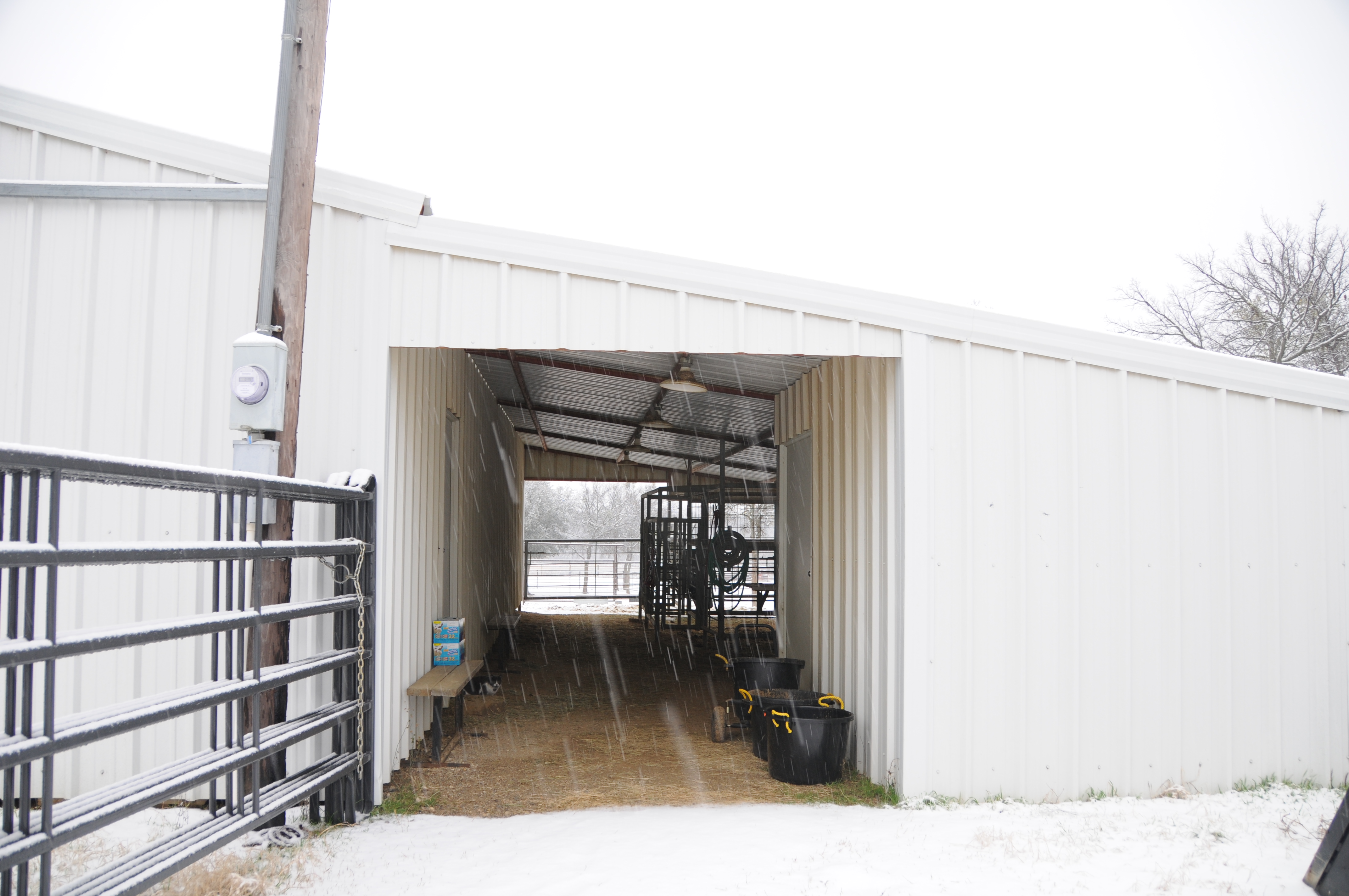
Stable Alleyway with Panels

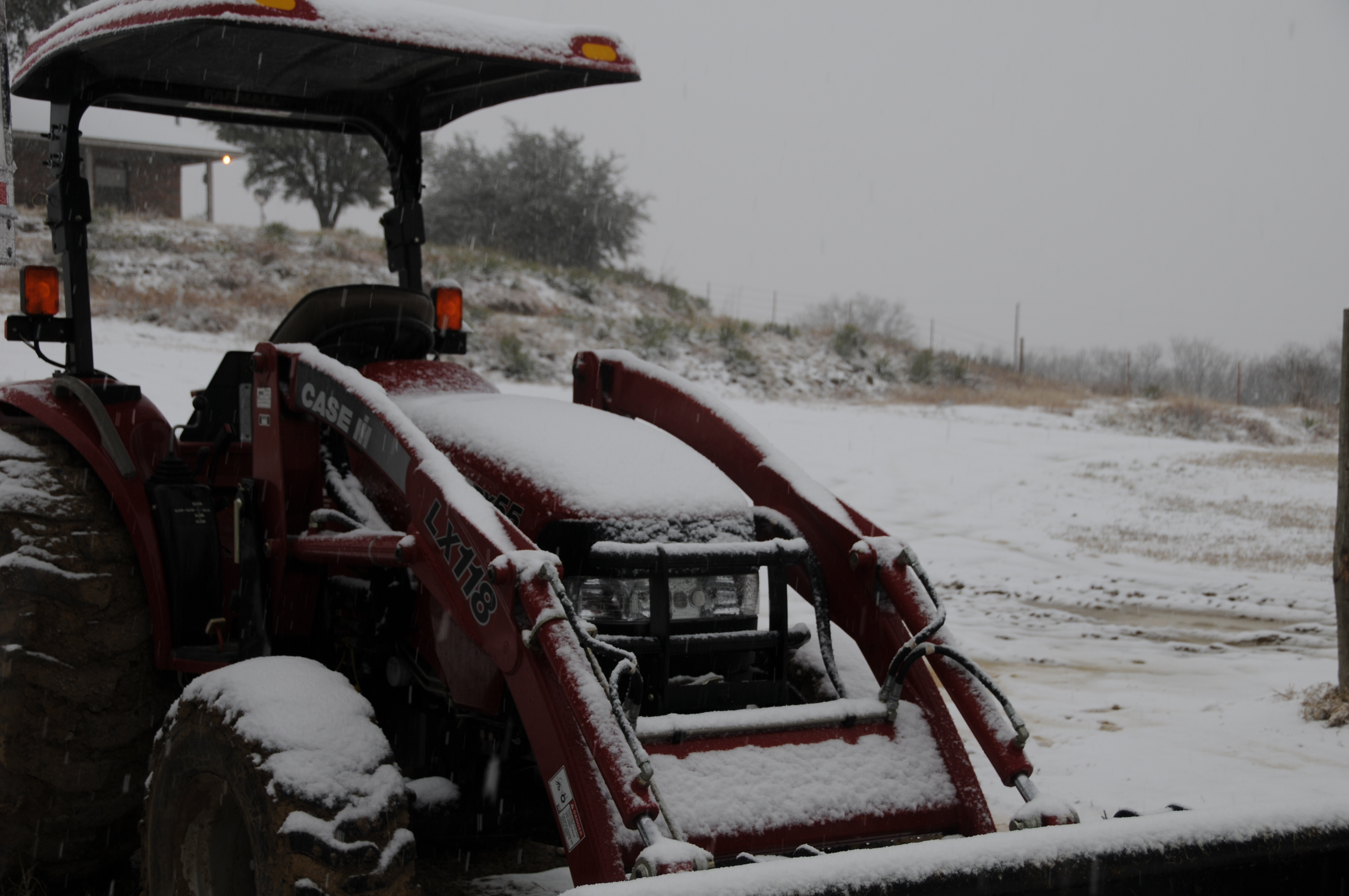
55 Horses by Case Farmall

Flying Hat Ranch House

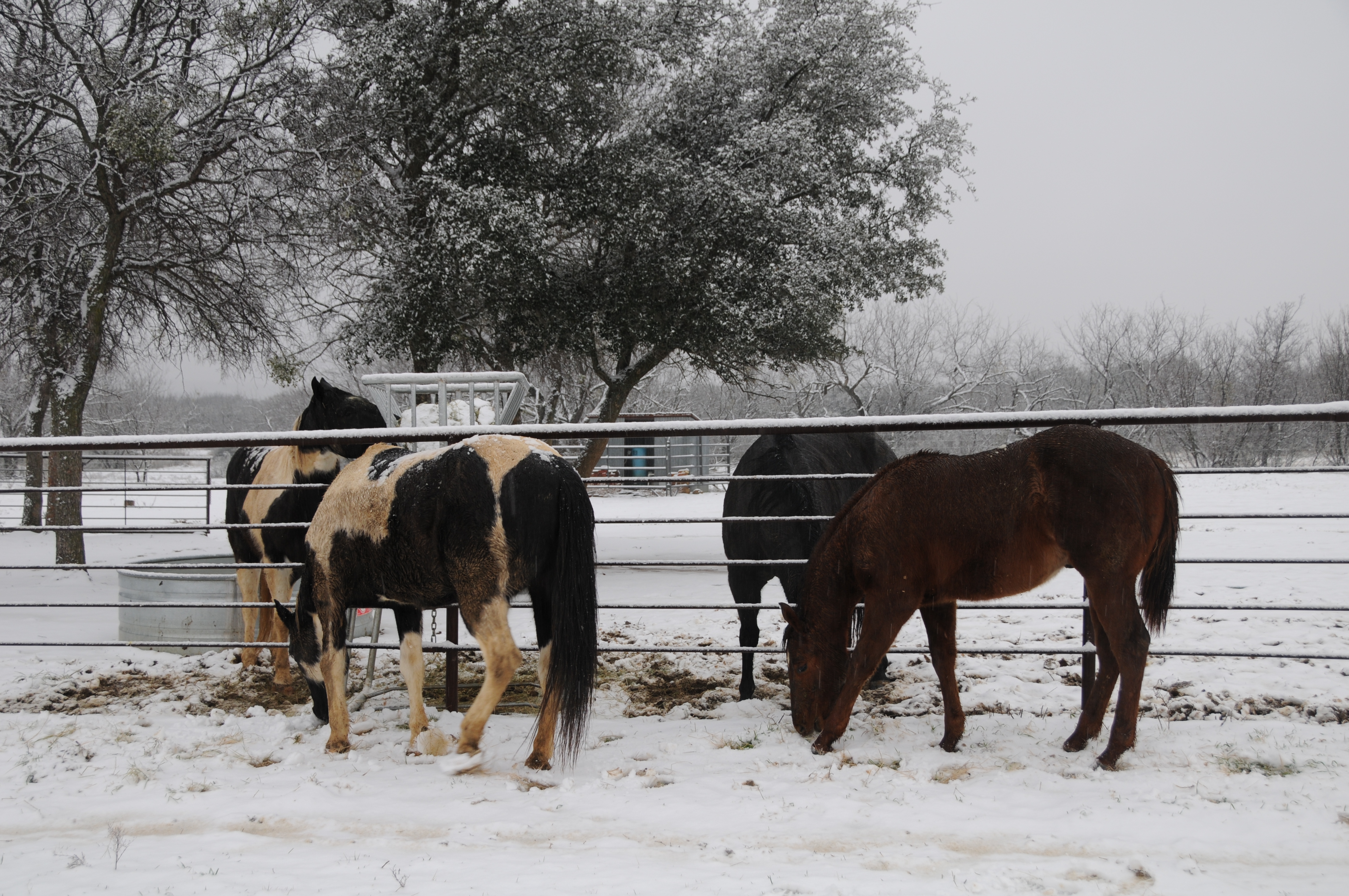
Schools in Abilene and Fort Worth, Texas, were canceled this morning.  I went out to take some photographs of Flying Hat.  If you click the photographs, you get a full-size picture with detail.

9 Comments

Filed under Birds, Flying Hat Ranch, Horses, Lilly, Shiners Fannin Peppy (Fanny), Shiney (Shiners Fannin Pepto), Star, Sweet Hija