Early Morning Rain

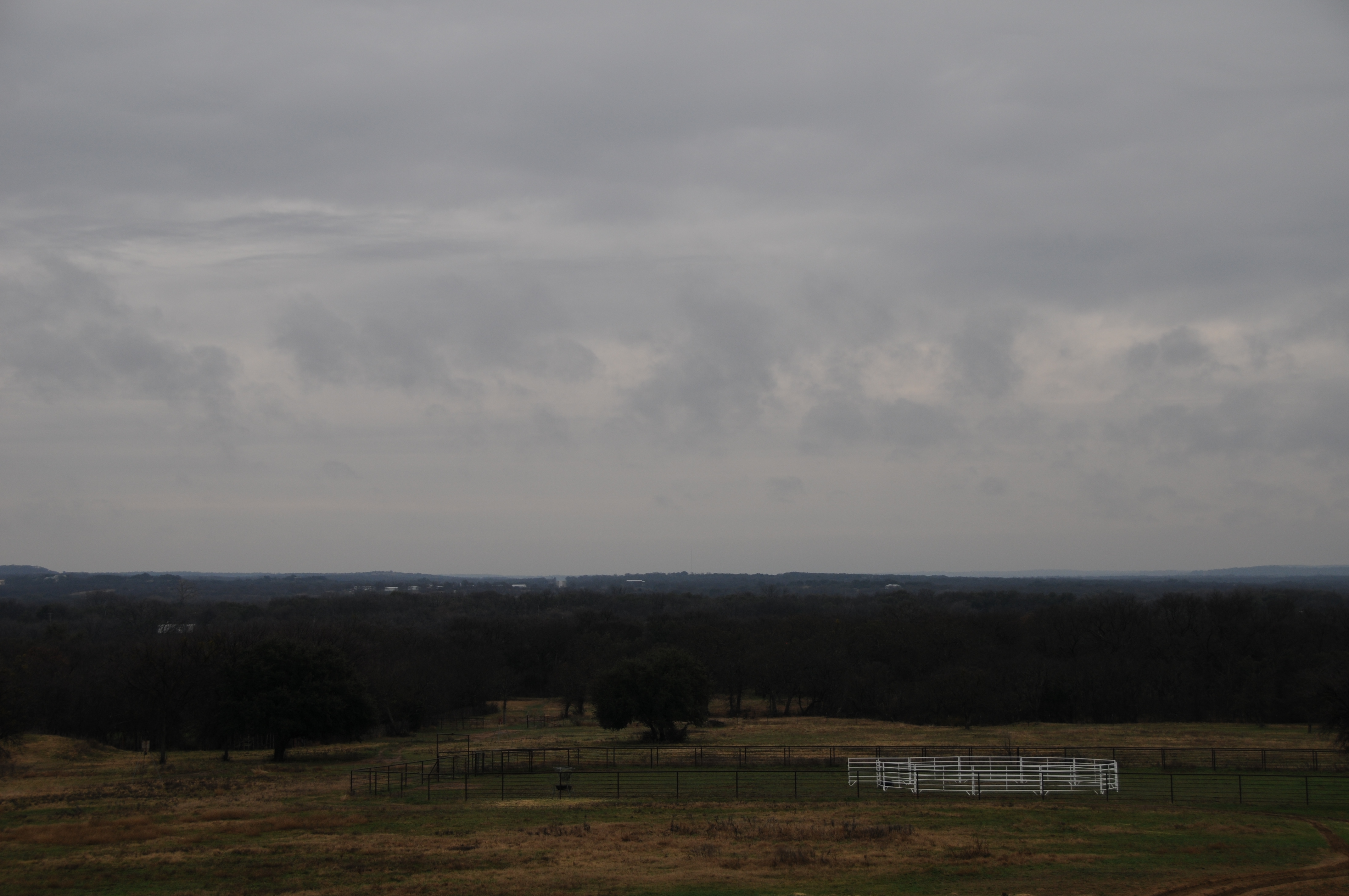
Flying Hat Ranch, Texas, Early Morning Rain, March 7, 2010 (click to enlarge)

This photograph shows a late winter in Central West Texas.  This is a view from the back terrace of our ranch house, looking southward.  Six miles away, in the distance, is Hannibal, Texas.  The pasture and arena shows Bermuda and Buffalo grasses emerging.  The white pen is a round pen for training horses, a kind of school room.  Beyond the arena and round pen is the tree grove with an intermittent-flowing stream: Salt Creek.  The rain is a fine mist.  It continued misting all day long, into the evening.  The cloudy weather had all creatures off their schedules: horses did not play or prance today very much, birds were relatively quiet and I saw a skunk at 4:30 p.m. near the corral, ambling through the Dooley pasture.

Leave a comment

Filed under Flying Hat Ranch

Sandhill Cranes: 350+ Northing

Yesterday at about 5:45 p.m., as I returned from the pasture, I heard the Sandhill Crane, tuk-tuk–tuk-tuk, and looked south towards Hannibal, Texas, the direction I had seen flocks earlier this week.  I saw no flocks to the south.  Catching the sound again, I looked east towards the Rust Ranch (whose horse barn repeats my microwave for internet service) and saw a huge, migratory, single congregation of Sandhill Crane heading north, three miles away, 1,500 feet a.g.l. over the Rust Ranch barns.

By my quick and dirty count, I estimated the northing cranes at about 350-500 in number.  My camera was back at the house, so I could not get there in time to snap a picture of this huge flock.

I may have this wrong, but I discerned that in this large flock of 350+, only, say, ten cranes calling, tuk-tuk.  I would have thought more vocalizations from such a large group.  But no.  It was the largest flock I have seen in flight.  I have heard large flocks on the ground in the Muleshoe, Texas, marshes and their murmurs are quite numerous before daylight.  Beautiful, peaceful chorus.

2 Comments

Filed under Sandhill Crane

Texas Rancher An Unlikely Environmentalist : NPR

Texas Rancher An Unlikely Environmentalist : NPR.

Down near Johnson City, Texas, this rancher has taken worn-out land and turned it into a place for wildlife, cattle, grass, plants and trees.  He’s even built a bat cave!

Although prosperous through salesmanship and Church’s Fried Chicken, he never forgot his farming roots in the Mid-West and once able, bought over-used ranch land and restored it.

2 Comments

Filed under Life in Balance

Fine Sentences February 28-March 6, 2010

These are some fine sentences from my blogroll I read during the week of February 28-March 6, 2010.   If a writer has not composed during the week, I do not make a selection.  Refer to the writer’s blog for the full posting.  See blogroll on the right margin of this page.

He ate the food provided, slept on a bunk bed in a rough barrack, and saved every pay check. Pa worked dawn to dusk beneath a scorching sun, endured the thick humidity, and avoided malaria….My grandfather carried his true love over the threshold. –Kittie Howard, The Block, on her grandfather working on the Panama Canal, buying land and building a home and parlor in Louisiana for his wife.

I told them once, “Mantengan su uso de las dos lenguas. La mente de una persona que sabe dos es mas lista.” Keep your knowledge of two languages. Your mind is smarter knowing two.” –By C.C., Color of Sand Blog, on teaching several students from Chihuahua in Bernalillo, New Mexico, Middle School.

Centennial Flat is a place I’ve spent a little time, and I was wondering if I might recognize any of the individual Joshua trees even after eighty years of change. That little one in the middle there almost leapt out at me. Let’s take a closer look.  —Chris Clarke, Coyote Crossing, on comparing Joshua trees in the Mojave from photographs taken eighty-years apart (see photos on his blog).

Old retablos, santos and other holy artifacts are in the church. The pews beckon you to sit, to pray, to stay awhile. Turquoisie Moon, on visiting the Catholic church in Chimayo, New Mexico.

My dad never misses a beat, just moves a little faster and they are fifteen again, unmarried and without children, dancing at someone’s house after church on Sunday night over in the Porter community. Then dad grins at me and I know this is my life and they are right here, still happily in love with each other and glad to have us.  —Bunny Terry, I Love New Mexico, on being in the second grade and transcending the criticisms of her second-grade teacher.

The small villages along Highway 55 have always held a special place in my hard-scrabble New Mexican heart. Using the few resources available in the barren, harsh acres, early settlers recycled the ever-present rocks into homes, walls, and churches.  —Karen Rivera, New Mexico Photography, comments on photographing The San Antonio Church near Moriarty.

I was simply told to follow my heart. –Kristy Sweetland, Stark Raving Zen, on the motivation to write, despite it all.

Oh…and the best news yet…it is sunny today, that full up, in your face sun, complete with crystal clear blue skies. –Martie, Taos Sunflower, on shaking off the winter blues in Arroyo Seco, New Mexico.

Meanwhile, down on Main Street, I could hear the sound of a dulcimer. I walked back down and saw a gal sitting on a bench, playing it as it laid there across her lap. It was the sweetest sound I’d ever heard. –Teresa Evangeline, on visiting Cripple Creek, Colorado, in 1975.

If it’s a choice between a lens or a bottle of water, always take the water. The Texas sun can be a relentless companion in the Hill Country and folks that don’t respect its strength soon find themselves dehydrated and exhausted. Not a great combination for a nature photographer. –Jeff Lynch, Photography, on how to survive photographing in the Texas Hill Country in spring and summer.

A time comes each winter when we look at our dwindling wood pile and wonder how we managed to burn so much wood and it’s only February. Most years we keep on top of it, but sometimes — for one reason or another — it gets away from us. –Coffee on the Mesa, Taos, on running low on firewood at the end of February.

Hippie Bus by Evangeline Chavez

It was the flower child, peace, love, or to me it was feelin’ groovy.  —Evangeline Chavez, on the 1960s and 1970s and what the decades meant to her.

6 Comments

Filed under Fine Sentences Series

The Blue Sign

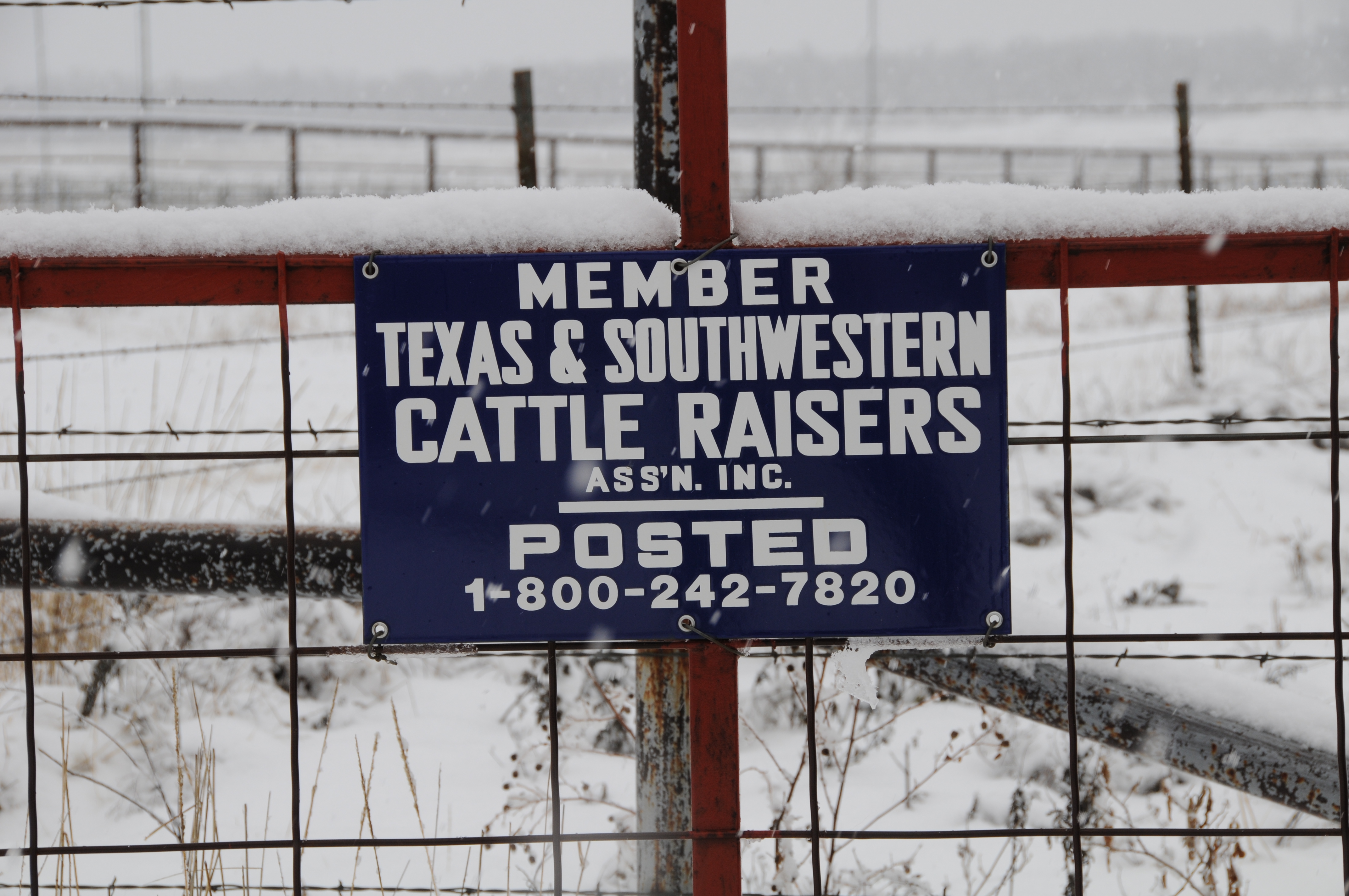
Blue Sign on Pasture Gate, TSCRA

One of the protective aspects for livestock in Texas and the Southwest is the familiar TSCRA blue sign.  Texas and Oklahoma are divided into districts with a special ranger from TSCRA chasing down rustlers and thieves that pinch off everything from one cow to a whole herd.  I have these signs on all my pasture gates that front a public road.  Rustlers admit that they try and stay clear of places with the blue sign, but it doesn’t always work. Recent letters to The Cattleman, the official publication of the TSCRA, compliment special rangers catching the bad guys:  “Our camp house and barn in Waller County was broken into and several items were stolen–including a pair of spurs my dad had made for me 26 years ago….[They] were recovered five days later in Vega (30 miles west of Amarillo).”

Here at my place, I am in TSCRA district 10 and H.D. Brittain of Weatherford, Texas, is the special ranger.  I’ve not had a reason to call H.D., but the shooting of Bald-Face Lie has put him on the list of persons to interview about the status of the investigation.

My uncle Floyd in Cherokee, Texas, near San Saba, was a member of the TSCRA and posted these signs on his place.  The entry to Floyd’s ranch was a cattle guard that several ranches used for access to their own property.  Wired to the fence, next to Uncle Floyd’s cattle guard, was the blue sign of TSCRA that cautioned desperadoes to move farther on down the trail.

Leave a comment

Filed under Flying Hat Ranch

Still No News on Bald-Face Lie Shooting

Bald-Face Lie Profile 2009-2010

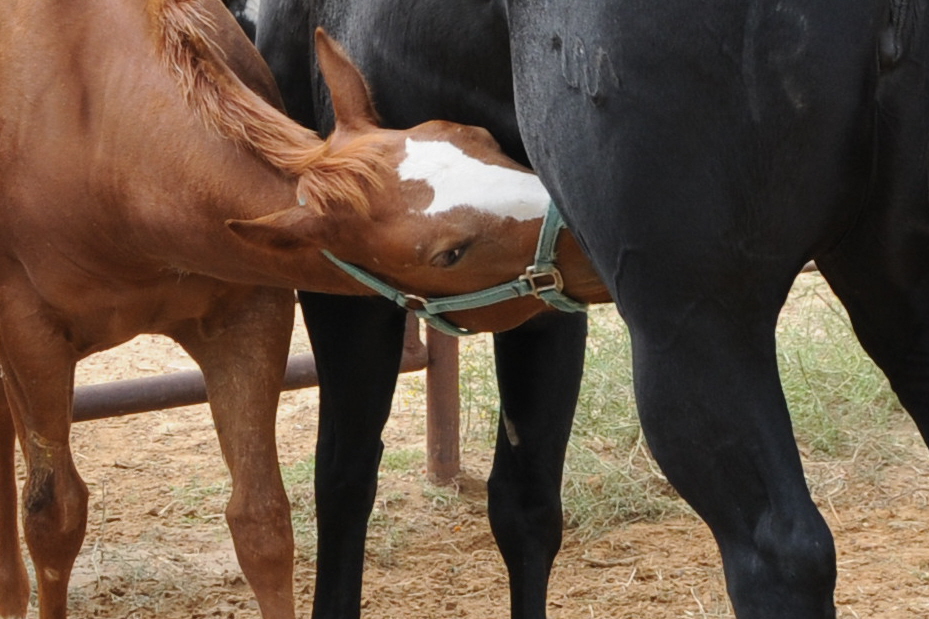
Sorry to report that there is no news on the shooting of the filly, Bald-Face Lie.  I’ll see what I can do to find out some additional information.  If you Google the Weatherford Democrat and the Fort Worth Star-Telegram newspapers, you can read some articles about previous depredations in the area.  I, frankly, do not want to post articles of such violence, but, as Kittie Howard wrote, “There is something Really Nasty out there.”  I think despite the gore, we have got to speak out about this craziness and drill down into the American culture to burn out those ideas and pathologies, fostering violence against people, animals and nature.  The Really Nasty has to always feel the heat and hear the hooves coming at ’em.

I am writing an article on the shooting of several buffalo up north of Abilene, Texas, months ago.  It’s a piece I want to spend time on, nail it down and write about the rancher that slaughtered the herd that had “strayed” on his land as well as the culture (regional and historical) that underwrites this behavior.  I may have to post the article on another blog than Sage to Meadow, but I’ll let you know where.

6 Comments

Filed under Horses

Sandhill Cranes Going North

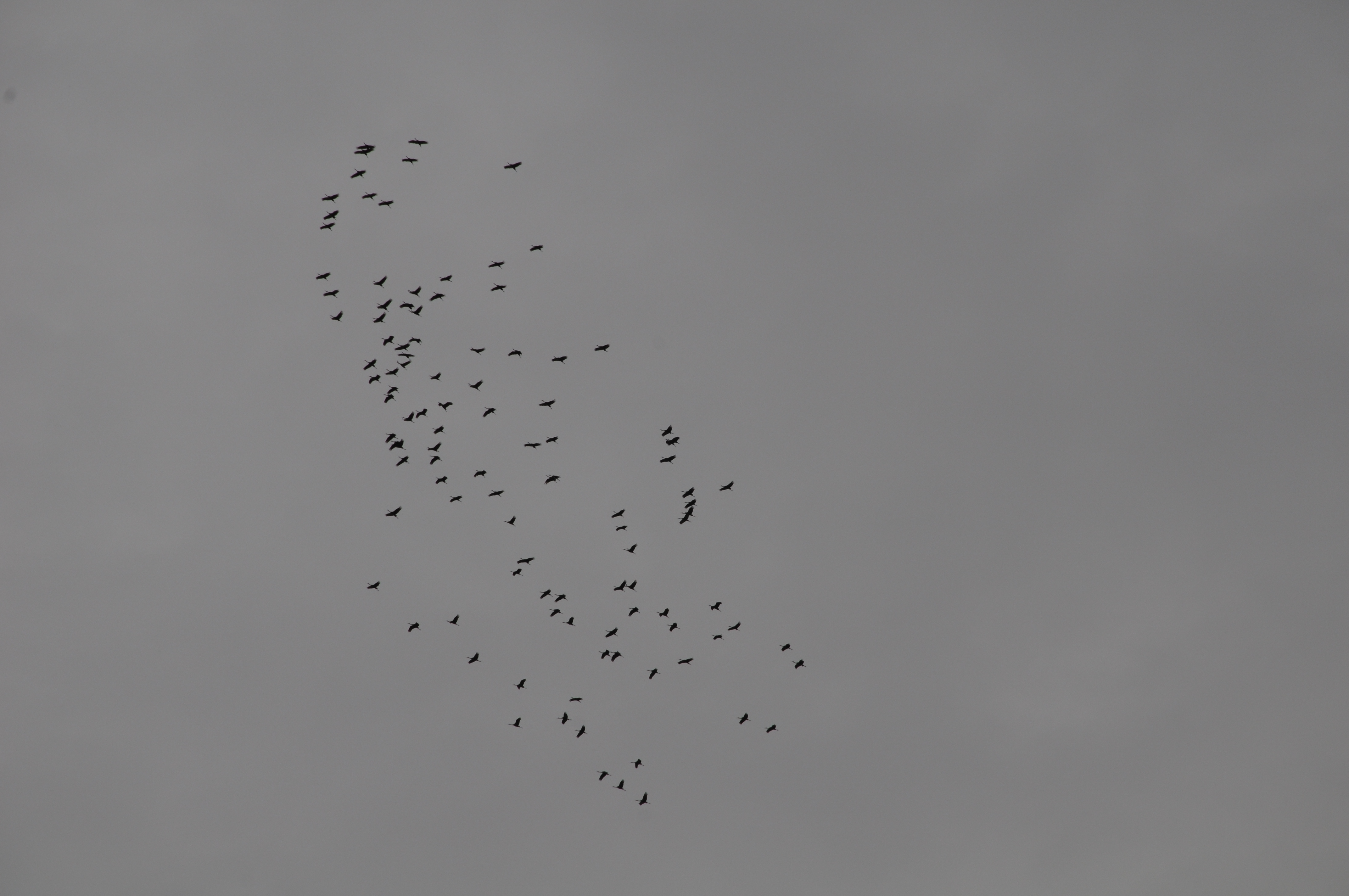
Sandhill Crane (Grus canadensis) Flying North, Hannibal, Texas, February 28, 2010 (click to enlarge)

Yesterday, February 28, 2010, as I came back from feeding the horses at 5:50 p.m., I heard the tuk-tuk–tuk-tuk–tuk-tuk of the Sandhill Crane overhead.  The cranes were heading north, about 1,500 feet above ground level.  I first saw them over Hannibal, Texas, six miles to the south of us, and after I got the camera and starting taking pictures, they had flown over the ranch and were two or three miles away to the north.  They were circling and moving north at the same time.  Thirty minutes later, another flock of cranes, this group shaped in a V configuration, were flying faster in the same direction.  Their tuk-tuk calls were less frequent.  I suppose they were intent on catching up with the crowd ahead of them who had found, most likely, a good marsh to settle down for the night.  Preferring flight than chat, they sped quietly into dusk.

8 Comments

Filed under Sandhill Crane

The Day After the Poly Survey

Poly Cemetery, September 2002, Archeological Surface Survey for Texas Wesleyan University

In September 2002, I managed an archeological surface survey of Poly Cemetery in Fort Worth, Texas, for the Poly Cemetery Association and their descendants.  The History Club at Texas Wesleyan University assisted in the fieldwork.  The next day after conducting the survey, my mother called and said my step-father was diagnosed with leukemia and his prognosis was grim.  My wife and I canceled our trip to France.  Lufthansa gave us a full refund when my step-father’s doctor sent them a letter.  He died in December 2002, and mother in April 2003.  I was not able to complete the report of the surface survey analysis until 2006, and then in 2008, the State of Texas awarded a Historical Survey Marker for the cemetery, the 1,000th cemetery marker for the state.

I was proud of the work we had accomplished as a survey crew that September day in 2002, but the photographs and field notes I inscribed always remind me of  how my life was changed the day after the survey.  Within a week after the Poly survey, I began to manage, among several things, two horses:  Lilly and Star.  After I settled the estate of my parents, I purchased another horse, a mare, Sweet Hija, a legacy horse of King Ranch.

Shiners Fannin Peppy and Sweet Hija, March 2008

From Sweet Hija came Shiners Fannin Peppy or “Fanny” as she is affectionately named.  Several posts have been centered around Fanny’s training with Duncan Steele-Park over at the GCH Land & Cattle Co. near Weatherford, Texas.  Life changed, and the good and bad were different from 2002.  Overall, this time, good came about.

Road in Grove, November 2008

Since 2002, one good emerging  is this road and where it takes me.  This is the road from the ranch house through the grove and down the creek bed and up onto Pecan Tree Pasture adjacent to the Bryant place.  The road must be maintained.  Erosion from rain, not wind, force me to grade the road by blade or allow erosion to continue.  The road is passable by tractor most of the time.  When it is graded, car and pickup can travel the road.  We take picnic baskets with red-checkered tablecloths and have a feast in the shade of the tree, usually on the tailgate of the pickup.  In Novembers, we drink Beaujolais Nouveau beneath the pecan tree with our picnic of french bread, meats, cheeses, pates and tapenade.  The new wine is not as robust as we like, but it is the new crop of vino. The horses will stand off and graze if they are in the pasture, looking up occasionally when they detect a rapid motion under the tree, a flapping of the tablecloth.  In parking, we angle our pickup so that we can look in the direction that has no power lines, no buildings in view, only trees and ridge line.  The direction is West.  We spill some wine on the ground, a Lakota custom we have adopted in honor of the departed ones, and we talk about our family and of things to come, the days after the Poly Survey.

Pecan Tree, November 2008

3 Comments

Filed under Recollections 1990-

Fine Sentences February 21-27, 2010

These are some fine sentences from blogs I read during the week of February 21-27, 2010.  If a writer has not composed during the week, I do not make a selection.    As a general rule, I read the blogs listed here on Sage to Meadow and The 27th Heart, my other blog, and pick fine sentences.

I read at the Renaissance Festival for years. Our booth had many fine readers, but noticed some were simply downers. –Turquoise Moon, reading at the Kansas City, Kansas, festival.

It is twilight, and the snow makes all a soft glow. Spring will come. It will come. It will. Coffeeonthemesa, Taos.

If you’re making a ton of money, but how you’re earning it is literally killing you, then nothing else matters but re-focusing. The cars, the house, the fancy clothes… None of it matters but your happiness, your health, your ability to live freely-societal expectations be damned. –Stark Raving Zen on changing occupations, overcoming the affect of depression.

I know what makes me happy — being in the desert — and it’s readily available, just an hour away. –Chris Clarke, Coyote Crossing.

Slowly I pieced my household together, and in the process my life started to get some of its form back. I Love New Mexico Blog, on a double-wide trailer at Ute Lake, New Mexico.

My rinky-tink ‘61 Morris Mini-Cooper S supported legions of mechanics on its wiring problems alone. On one ill-advised trip south, with yet another electrial crisis, I pushed my non-working sportscar into Guaranteed Tire in Mountainair. –New Mexico Photography, Sebastian on Mountainair Guarantee Tire Shop, 1975.

Every child should have access to nature’s mastery. It’s the birth of reverence. Sea Mist and Sunsets, on the aquarium at Monterey Bay, California.

Sunshine so bright the snow looked alive with jewels everywhere you looked. Sunshine so bright our skies were that incredible blue we’re famous for. Sunshine so bright I spent the day smiling and feeling like I had suddenly lost a huge weight off my shoulders. We were all smiling…even the dogs…no kidding. –Taos Sunflower, on the sunshine in Arroyo Seco and Taos, February 24, 2010.

Valentine seems like the last holdout, a vanguard against change, the kind of change that has occurred across our country, creating a deep divide that appears untraversable. I don’t long for the way things were. I do long for a strong sense of community where people look out for one another and find solace in their shared lives. –Teresa Evangeline, on visiting Valentine, Nebraska, returning from Santa Fe, winter 2010.

But winter has a beauty all its own, full of photographic possibilities. The sun is lower in the southern sky, casting wonderful shadows and creating dramatic contrast. The air is crisp and clean and you can capture details seldom seen during the hazy summer months. The lack of color pushes the mind to see texture and detail often missed during more vibrant times of the year. –Jeff Lynch, on photographing McKinney Falls near Austin, Texas.

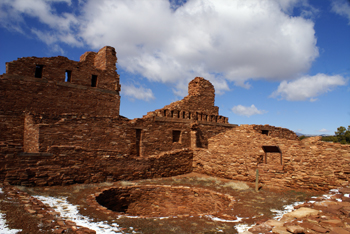
Mission of San Gregorio de Abo, Mountainair, New Mexico, by Evangeline Chavez


11 Comments

Filed under Fine Sentences Series

Is This the Way to Idaho?

In the 1970s, in the middle of May after I finished teaching the spring semester, a few of us guys from Amarillo, Texas, would go camping in New Mexico and Colorado before snow completely melted in the mountains.  We called our movable camp, The Rendezvous, after the “present yourselves” French word, and more historical, the mountain man trade meetings in the early nineteenth century.  We camped out for a week, avoiding established campsites in favor of back country in the national forests:  Gila, Kit Carson, Isabell.  We took several pickups and one pop-up Coleman camper, tons of grub, beer (before several guys went on the wagon in the late 70s), money for bail, and reading material.  Over the decade of the seventies, we camped from the Conejos River Valley in Colorado to the desert boot heel of Columbus, New Mexico.  We bailed our friend out of jail at Tierra Amarilla and ate native plants near Jemez Springs.

One May, we started our movable camp at Holy Ghost Canyon near Santa Fe, up the Pecos River , then northwest ascending Holy Ghost Creek.  Getting to the campgrounds was tedious, dangerous, and way, way far into the forest.  The road to Holy Ghost turned into a one-lane, barely passable road where if you met a car or truck, you usually had to back up to a side cut in the road so both could pass.  Warning signs back at the main road that goes from Pecos to Cowles alerted recreational vehicles from ascending to Holy Ghost Campground, although stock trailers could usually make the trip to pastures in the high country of the Sangre de Cristo Mountains to round up cattle.  Holy Ghost Creek was far away from normal camping areas.  Remote, quiet, and unnerving.  We really liked it even though it was built up with national park structures, tables, outhouses, the like.

After a couple of nights, we planned to leave Holy Ghost and venture elsewhere.  But before we left, three of us had to go into Terrero for some supplies.  Terrero was back at the crossroads to Cowles, a beautiful place at the entry to the Pecos Wilderness area.  We got in a pickup and headed back down the road following Holy Ghost Creek, coasting down the narrow road and being careful lest we run off to the side of the road and down the embankment.

About halfway down the road to Terrero, we met a car, an aged maroon Impala Chevy, driven by an old, mostly toothless driver waving frantically out the window for us to stop.  We slowed down and saw the car was filled with camping gear and trash, up to the window sills in the back seat and papers and junk on the dashboard.  The driver was alone.  A little Chihuahua dog was barking like crazy inside the car, running over the camping gear and junk in the back seat.  The driver was wide-eyed and hair-blown.  When we halted, he stopped waving.  We thought there must have been a landslide or accident down the road and he was summoning our aid or warning us to turn around.

We pulled closer so that we could understand him over the barking Chihuahua and truck, and still hanging out the window, the old man shouted at the three of us:  Is this the way to Idaho?

I thought: for god’s sake, mister, Is this the way to Idaho?  Do you know just where in the hell you are?  Apparently not.  That’s why the question, but you are at least three states away from Idaho and if you continue up the road, you will dead end at Holy Ghost Canyon.  There’s no way out.  Further, you are way off the Interstate 25 by at least fifteen miles.  Our Rendezvous group of revelers could barely navigate the road to Holy Ghost and you are looking for Idaho?  Up here?

We wanted to help.  So, being courteous to the old coot, we answered his question:  No, this is not the way to Idaho, you are pretty far off the beaten path for that, old timer.  We gave him correct directions back to Pecos, then to the interstate.  He thanked us and drove up and I guess turned around at Holy Ghost and went back to the highway cause we never saw him again.  We slowly drove to Terrero for supplies.

The three of us very nearly fell out of the pickup in laughter:  Is this the way to Idaho?  We must have told that story a hundred times over the years, but we pitied the old man in a good way.

We knew he was disoriented and probably a bit addled, but with his Chihuahua and car full of camping equipment, he probably wouldn’t hurt himself, but spend his days, driving the backroads,  trying to find the road to Idaho.  He could have been in a lot worse place, say, the Golden Age Nursing Home, looking at television.  The old guy, I think, was much better off searching for Idaho, El Dorado or the grail in the Great West of North America than watching reruns of Bonanza from bed.

17 Comments

Filed under Adventure, Recollections 1966-1990