Winter day of my content

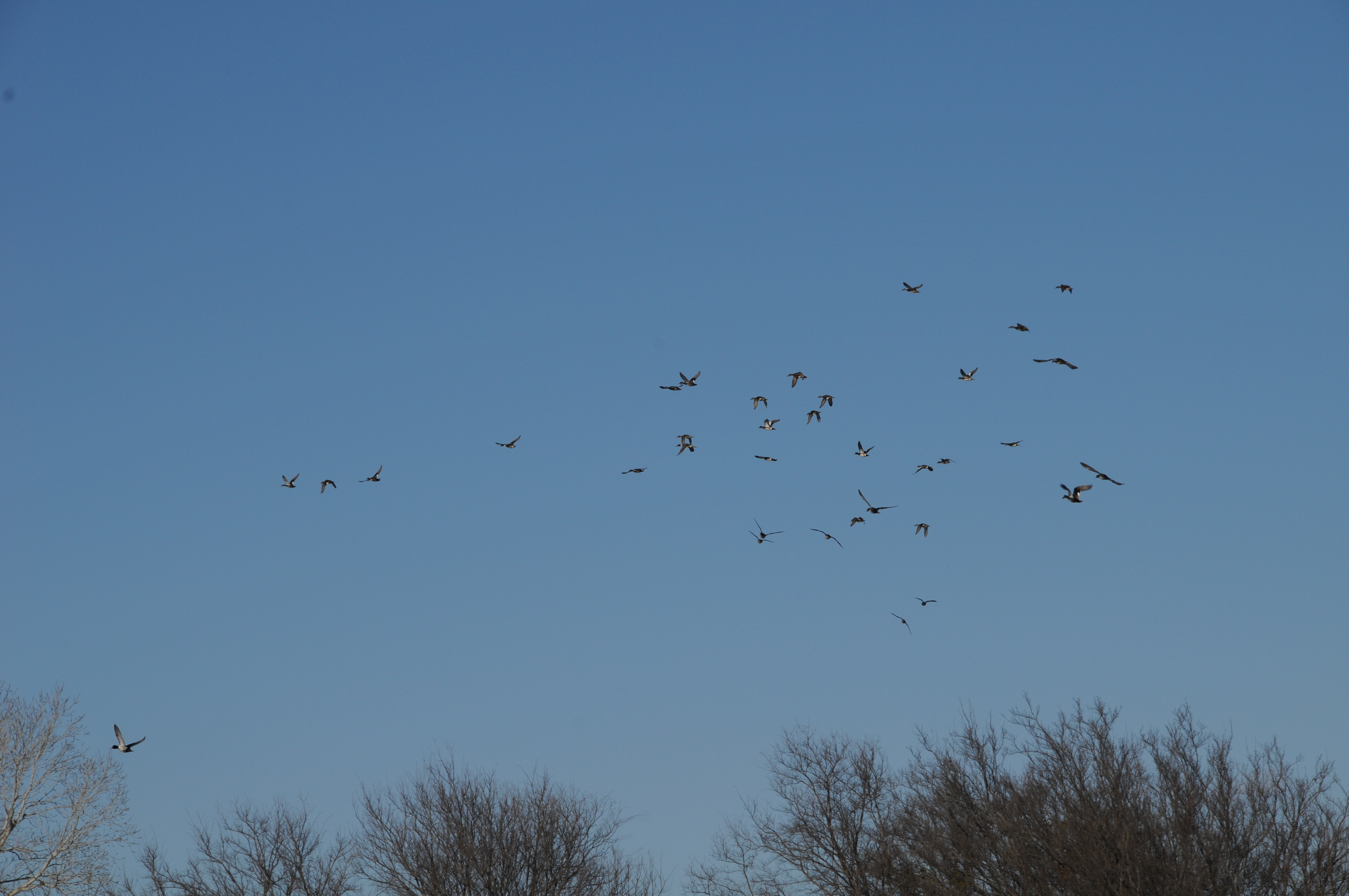
Duck flight, Flying Hat Ranch, Texas, 2011

The temperatures rose to 35 degrees and the sun came out, melting the snow about the place.  Corrals turned to mud.  Meadow Lark, White-crowned Sparrow, and Chickadee scattered away from their emergency ration station in the barn alleyway and I turned Star out so that he could run about the pastures and go to the county road to visit his friends at the Nowack place.  I saw deer track along the grove lane and vowed to throw corn near the salt block tomorrow.

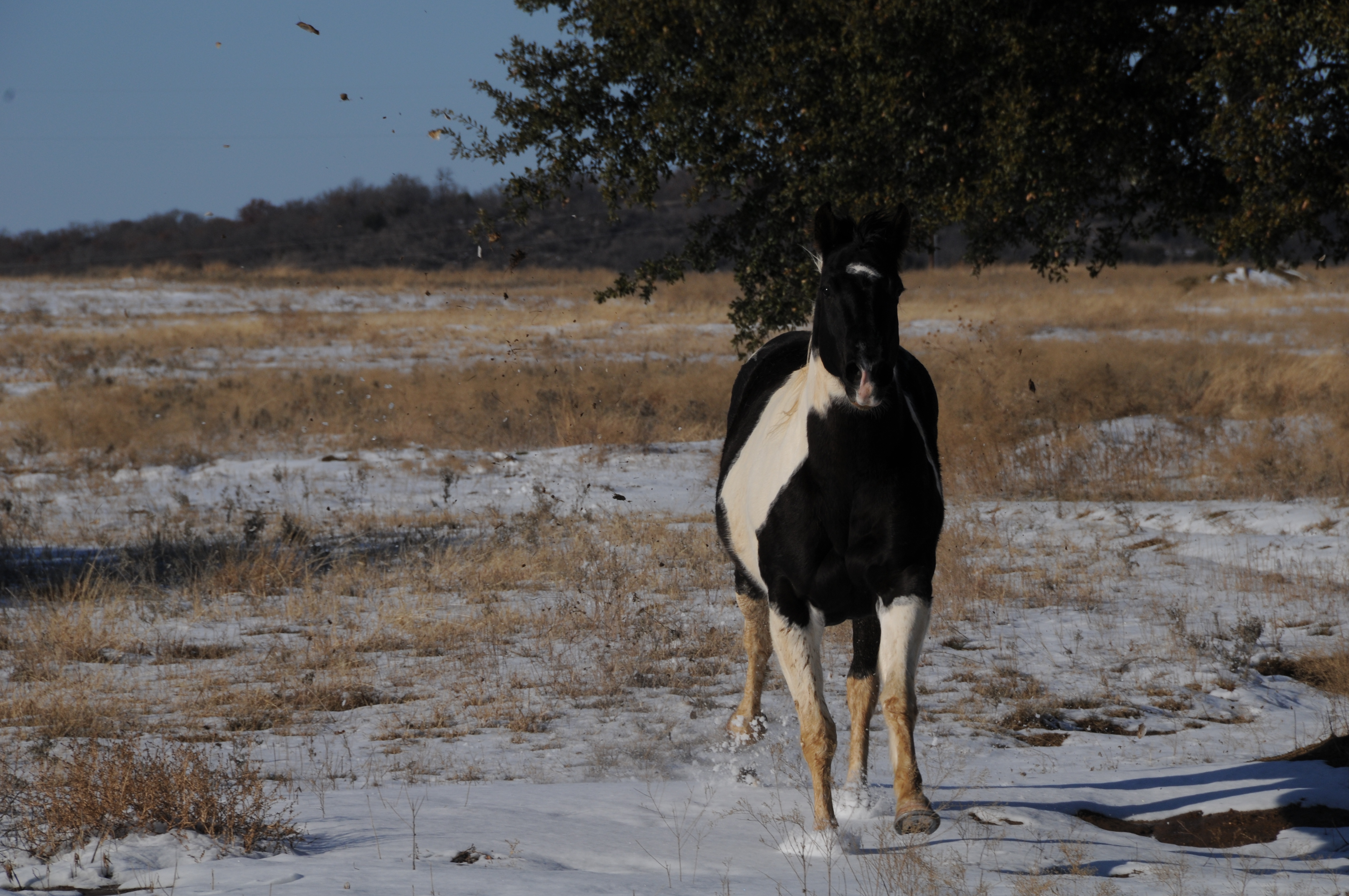
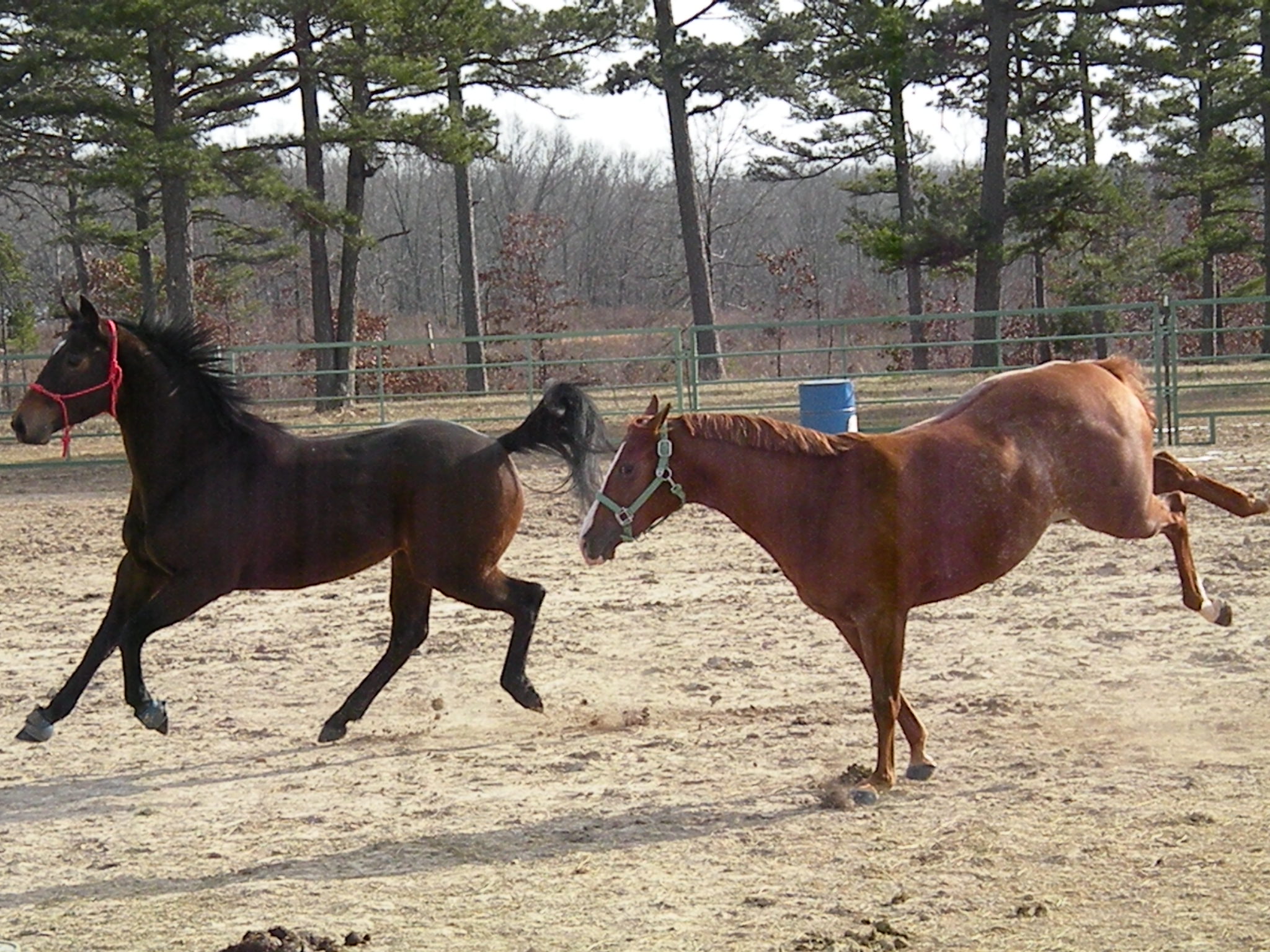
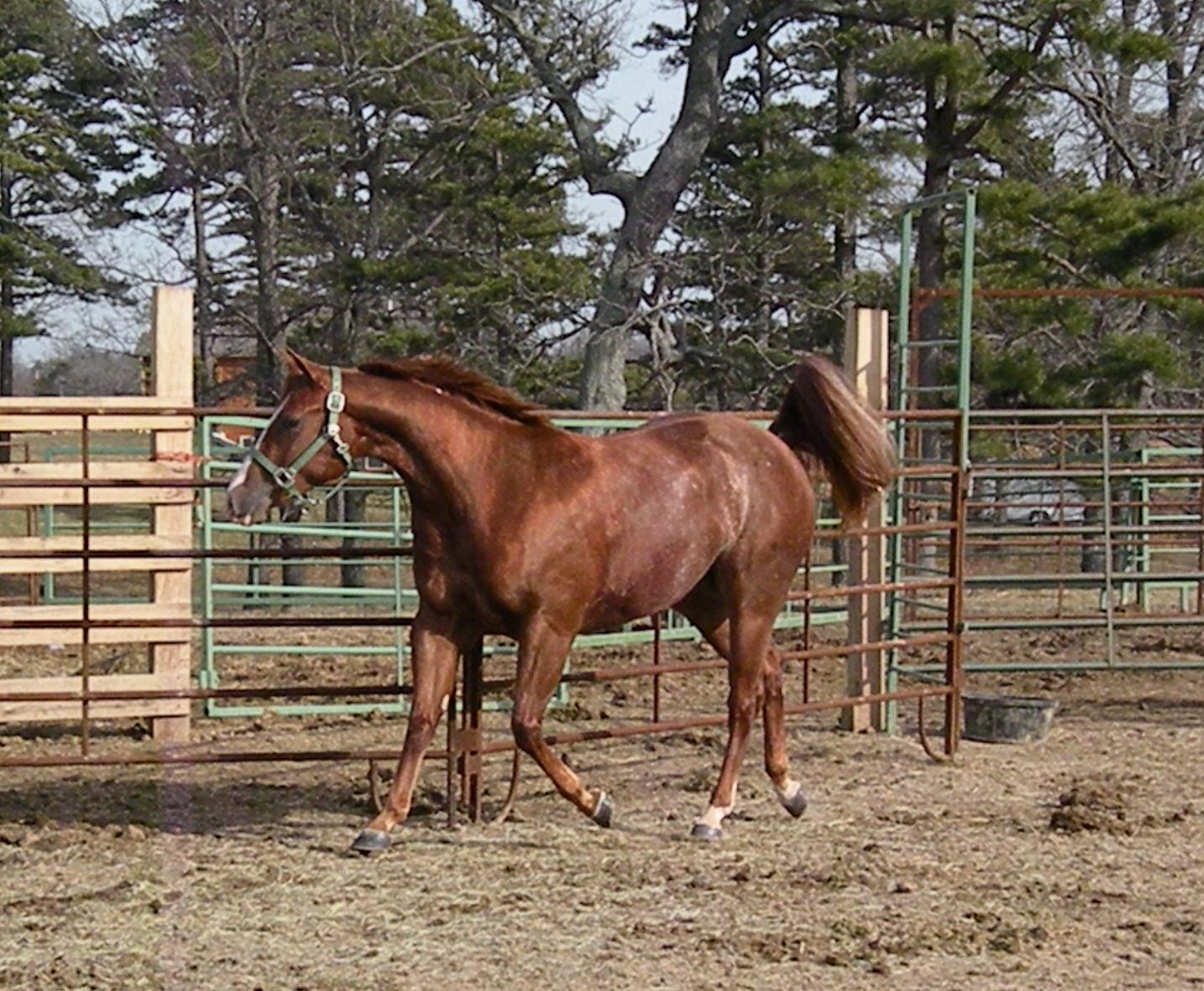
Star galloped through snow and mud to the pond and as we both made our way towards the barn, ducks flew upward from their browsing, but circled back to the pond, dousing their beaks, grasping algae and minnow.  A west wind blew across the snow and I wore sunglasses to reduce the glare of the sun.  After I fed Star, I walked up the hill to the house, strongly striding because cold air filled my lungs and I was content with Winter.

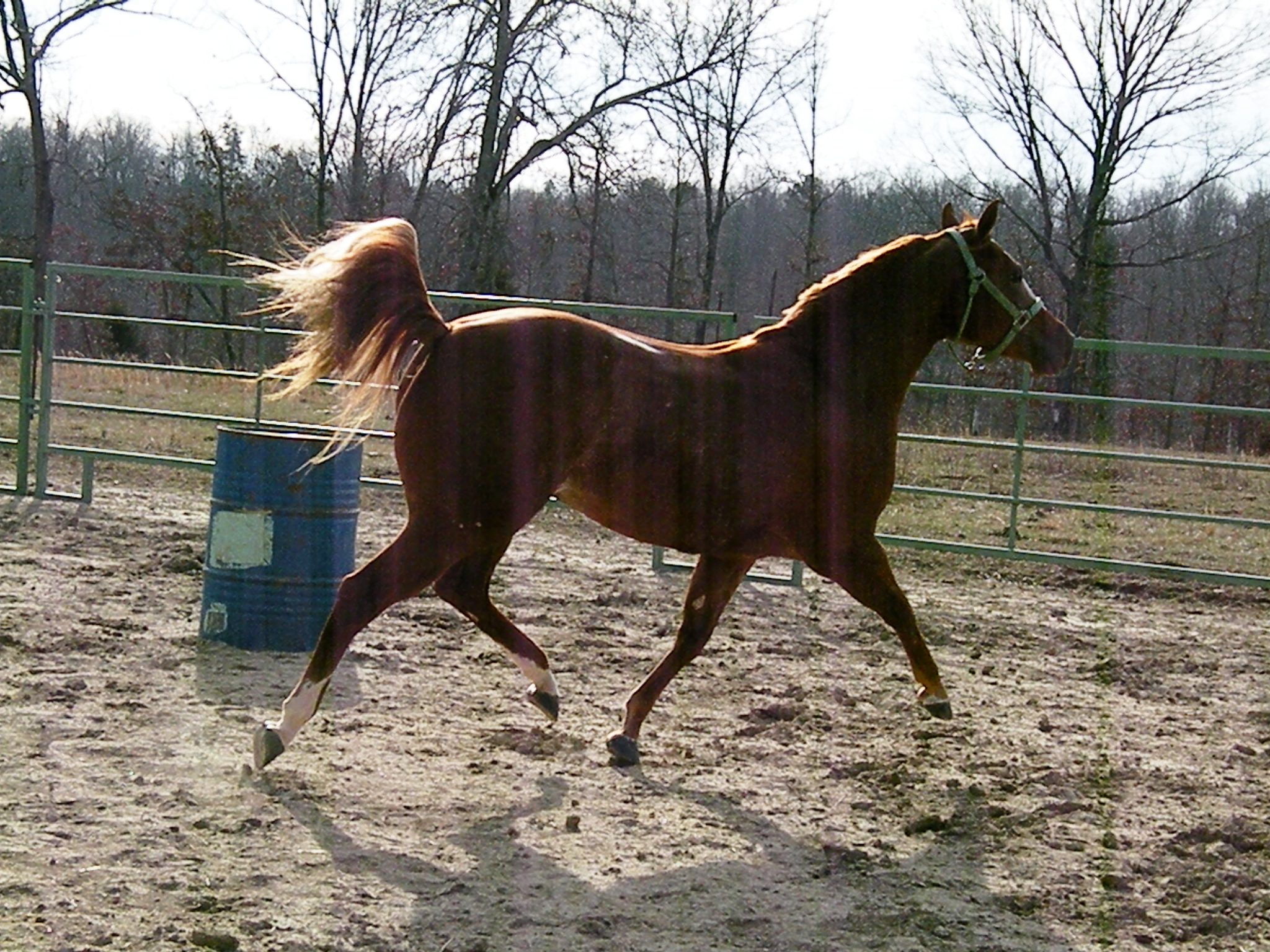
Star galloping, Flying Hat Ranch, Texas, 2011

13 Comments

Filed under Ducks, Horses, Star

Cedar post traction

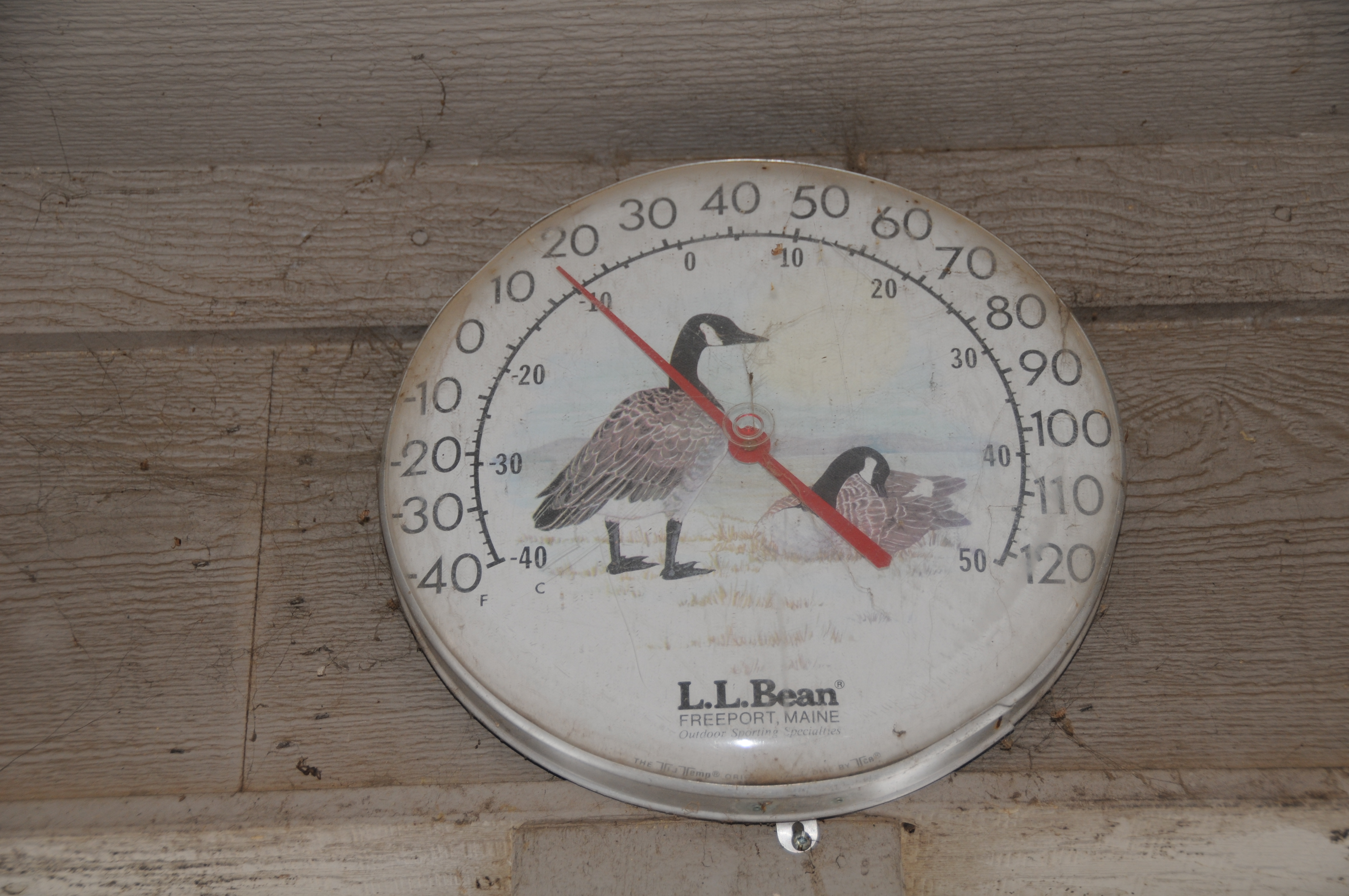
The weather remains cold, down to 12 degrees last night and up to 21 degrees at 3:00 p.m.  I do like Winter.

Since Tuesday, we have stayed put in the ranch house, burning pinion in the fireplace during the day, lowering the thermostat to 65 degrees in cooperation with emergency power issues in Texas.  The temperature is not expected to go above freezing until Saturday and another snowfall descends this evening.

Schools closed.  Our mail carrier, Jeannie Chisolm, told us this morning that the roads are treacherous on her route that encompasses county roads in Erath and Palo Pinto Counties.

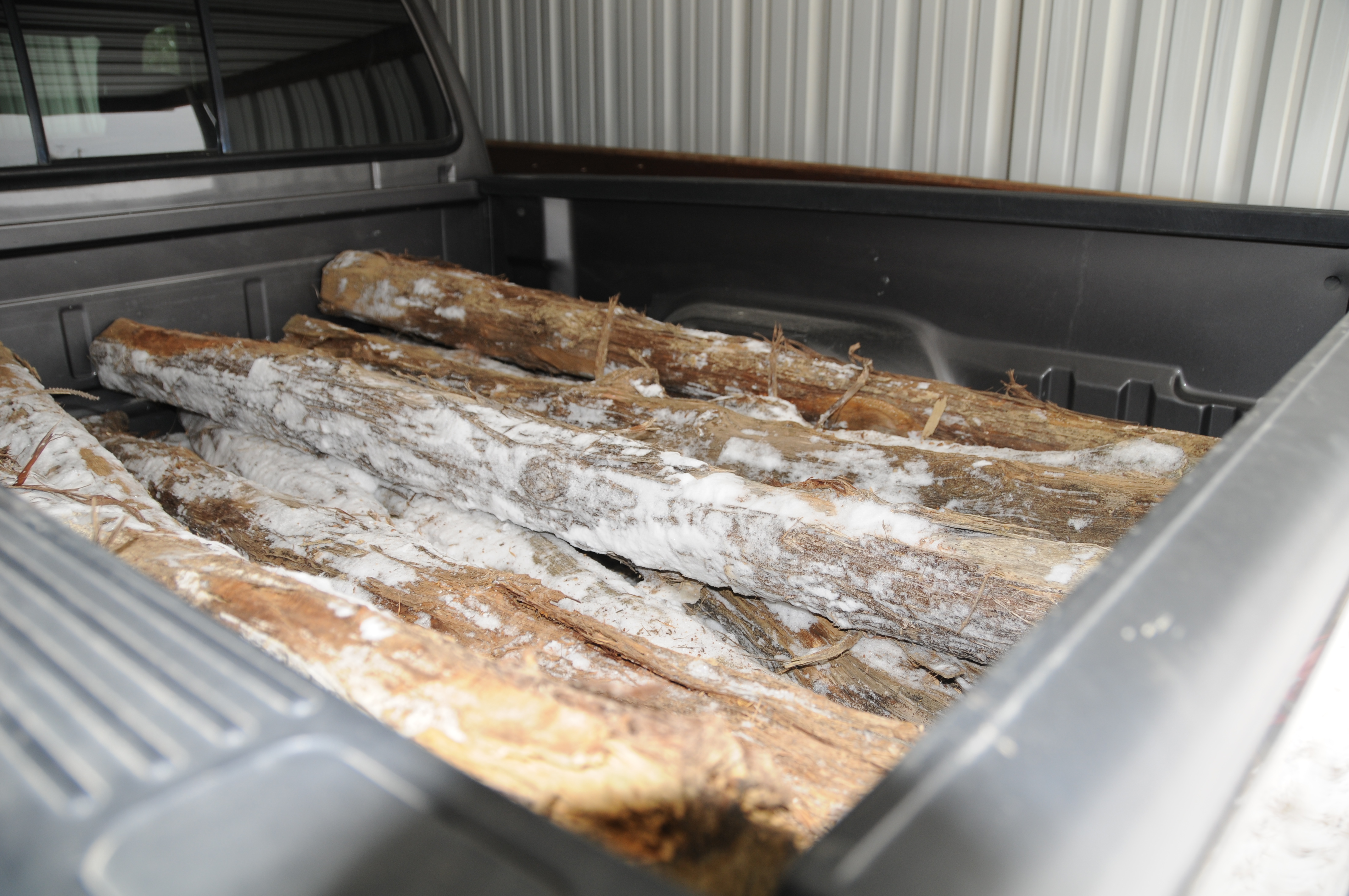
I needed to make a mercy run to Interstate 20, five miles away, for supplies.  First, I had to put weight in back of the F-250.  The old “two-bales-of-hay-watered-down-and-frozen” ploy was not feasible.  Too cold and I didn’t want the hassle of clean up next week.  As a second option, I decided to load the F-250 with cedar posts in order to weigh the rear end down.  Actually, the wood used for fence posts is not cedar, but juniper.  The colloquial is “cedar,” however, and I’m not about to go to the “cedar” yard and ask for “juniper” posts — might result in fisticuffs about definition of terms. But, back to loading cedar.

It’s not as easy as it sounds.  First, I broke the ice around the barn doors with a flat shovel in order to drive the DX-55 Case-Farmall into the pasture where I stored the posts.  After the tractor warmed up, I loaded two big stacks of cedars into the front-end loader, sweeping some snow off the posts and observed Meadow Larks nearby, scratching for seed where the posts had rested.  I drove up the hill to the house.  I used a rubber hammer to dislodge the goose-neck ball from the bed of the pickup, as it had become frozen after the rain Monday evening.  I use the rubber hammer and vise-grips frequently in these times.

I dumped — very carefully — two loads of 6 to 9 inch cedar posts into the bed of the F-250, raising the front-end loader above the bed of the pickup and away from the back window.  I estimated the load to be about 800 pounds, sufficient to give traction on ice for the pickup.  I test drove the 250 up and down the lane.  Two loads seemed sufficient — it was.

Between our place and the interstate, a pickup had overturned and at least ten off-road events in the bar ditch had occurred.  Trucks on the interstate traveled in one lane at 15-20 m.p.h.  We bought our few supplies and came back to the house on the road with two inches of ice beneath several inches of snow.  The clerk at the Exxon station stated that the local propane dealer had run out of propane and his trucks could not resupply until the roads cleared.  There was no milk for sale — all sold out.

Back at the house, we settle in.  I give Star a loaf of hay to tide him over till supper.  Lottie our Schnauzer jumps up on the fireplace bench to warm herself after we relight the fire.  I look out and see cedar posts in the F-250 and I know in an emergency we can make the Palo Pinto Rural Health Clinic (PPRHC) in Gordon with cedar posts as weight in the back for traction.

14 Comments

Filed under Adventure, Cedar, Flying Hat Ranch, Juniper

Snow and ice at Flying Hat

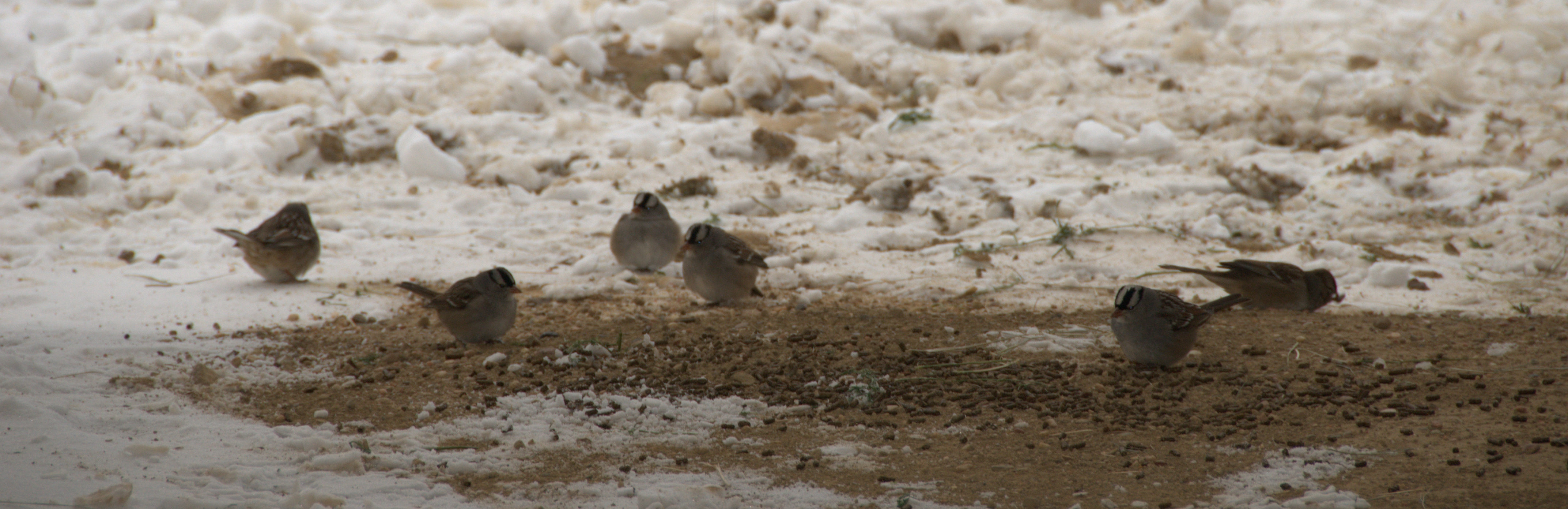
White-crowned Sparrows, Flying Hat, Texas, February 2011

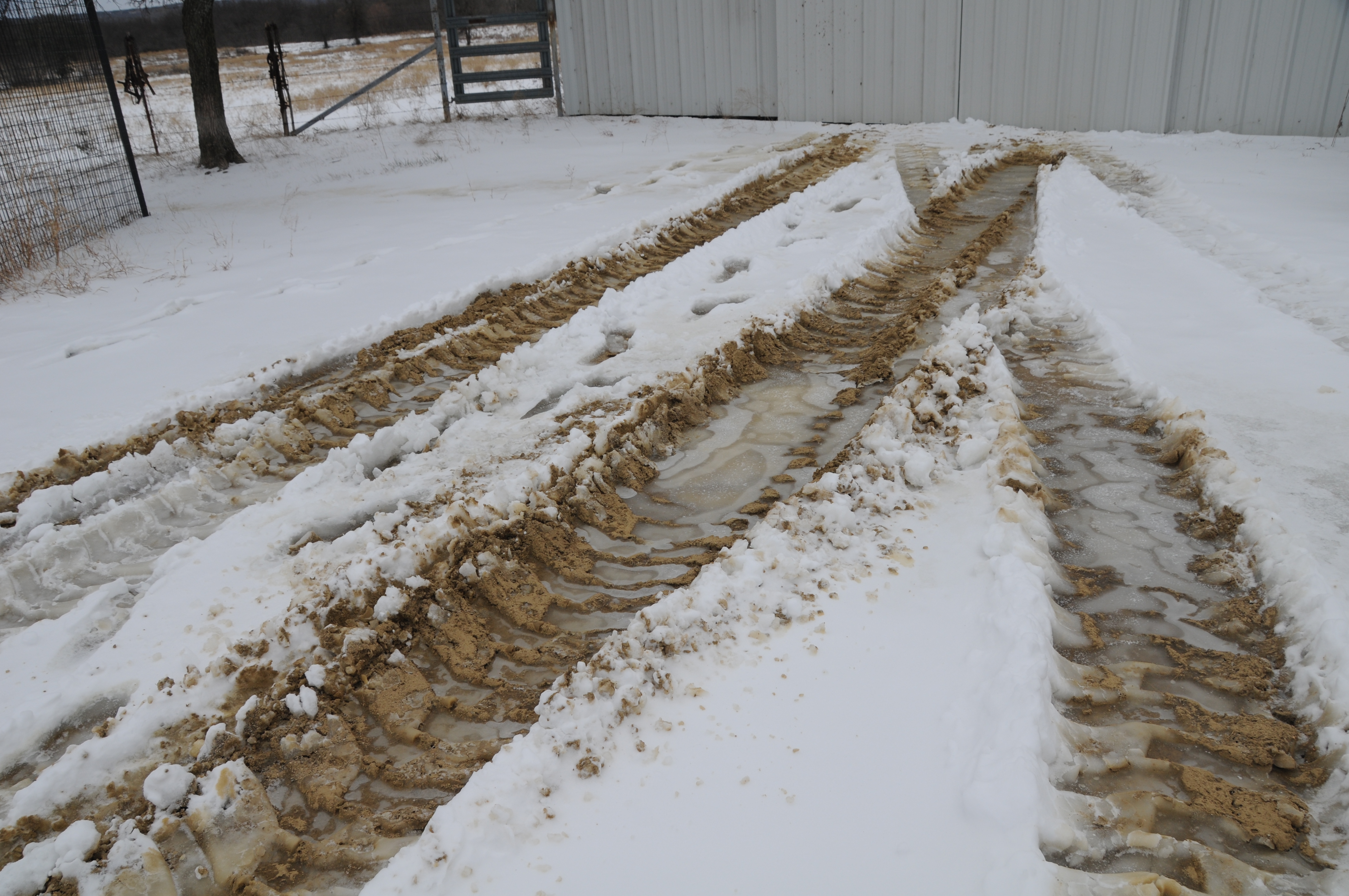
Two nights ago, early Tuesday morning at 12:30 a.m., a rain storm followed by sleet and snow descended on our ranch. The wind blew, gusts to 50 m.p.h., and the temperature reached 10 degrees this morning.  Yesterday, I used the Case Farmall DX-55 tractor to pull our F-250 out of the lane that intersects County Road 114.  Beneath a snow of four inches, two inches of ice held fast to the ground and the F-250, being a two-wheeled drive, could not gain traction in the lane.  Brenda backed up the F-250 while I pulled with the Farmall.  We parked the pickup close enough to the electrical circuit at the house so that if necessary we could warm the engine with its electrical plug.

Yesterday, our rural mail carrier, Jeannie Chisolm, posted mail throughout her route using a four-wheeled drive Jeep.  I called her this morning for road conditions and she told me she became stuck one time yesterday as she delivered the last three mailboxes on her route.  She made it back to her home at 8:00 p.m. last night.  The road between Flying Hat and Interstate 20 is only passable with four-wheel vehicles or those with chains.

Star munches on hay and grain in the stable and I crunched some horse feed and threw it on the ground so White-crowned Sparrows could peck and fill themselves.

The State of Texas has declared a power emergency and seven-million people will begin to experience rolling blackouts to prevent an overload of the grid.  We have experienced no blackouts, but our Internet Provider, centered in Fort Worth, Texas, goes down infrequently.

Weather forecasts indicate below freezing temperatures through Friday at noon.  We have lowered our thermostat to 65 degrees and switched unnecessary electrical appliances to the OFF position.  We have a week’s supply of firewood stacked in the shed and oakwood windfall in the grove.

* * *

Additional comment:  We had a blackout at 11:25 a.m. for about forty minutes.

19 Comments

Filed under Adventure, Flying Hat Ranch

Why western American landscape photography matters

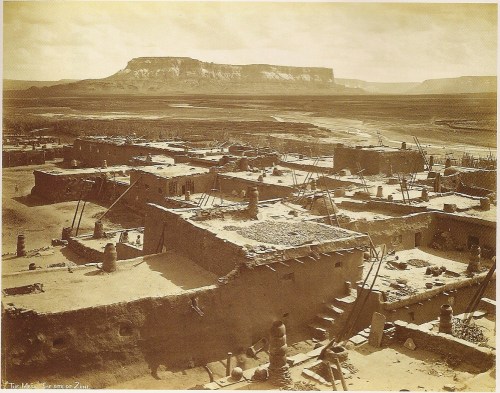
John K. Hillers, Mesa at Zuni Pueblo, ca. 1875

Cameron Walker writes in a recent issue of High Country News,

Recently, I asked Martha Sandweiss, a Princeton University historian and author of Print the Legend: Photography and the American West, why people are so attracted to Western photographs — hoping, really, that I’d learn something more about myself.

Photography, she said, became a way of reframing the country after the Civil War. “The West was a place beyond history, during a time when recent history was really painful,” Sandweiss said. Many landscape photographers kept their cameras trained on the wilderness and its prospects, often omitting the West’s history and people to create a powerful illusion of a place where only the future mattered. “There’s this intense desire to imagine the West as our last great hope.”

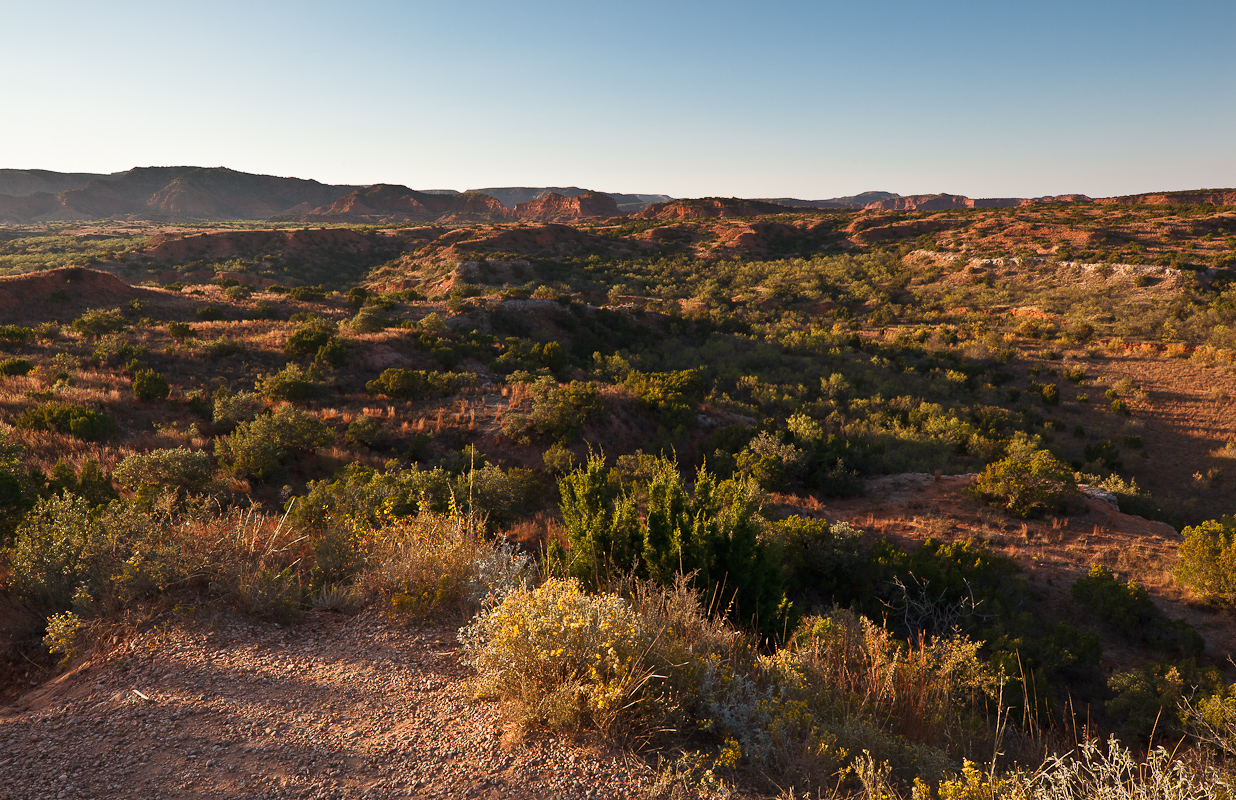
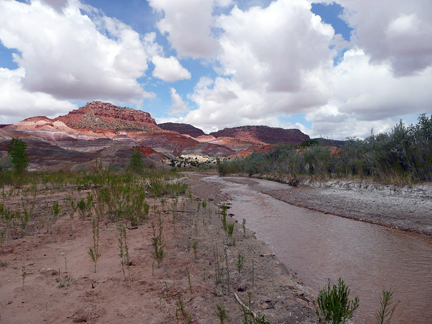
To Sandweiss and Walker, the West in landscape photography is a place beyond history, a place where only the future matters, the West as our last great hope.  I agree.  Placing this position on one side, say, the positive side, we have the other position that Western landscape photography displaced a painful past (Civil War in this case), created an illusion and omitted actual history (relocating Indians, extermination of vast herds of buffalo, hollowing out natural resources).  Both sides fit together although we repress the pain, illusion and facts in favor of a place beyond history.  Look at the following three photographs, continue reading and let me explain.
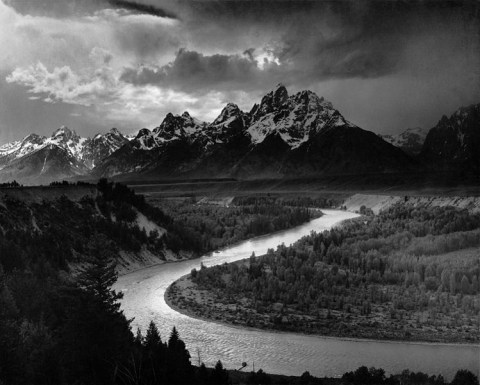
Ansel Adams, Tetons and the Snake River, Wyoming, 1942
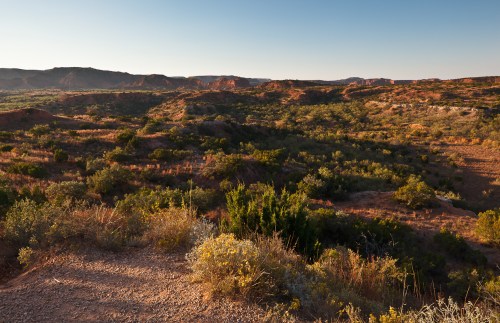
Jeff Lynch, Palo Duro Canyon, Texas, 2011
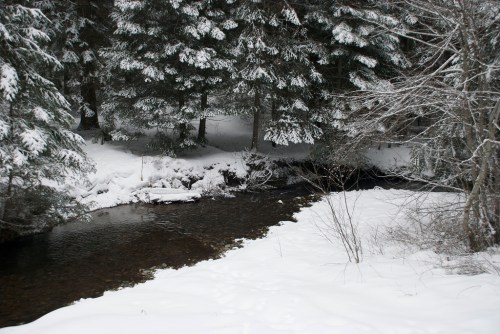
Montucky of Montana Outdoors, Cool, clear water, 2011

In the three photographs of Ansel Adams, Jeff Lynch and Montucky, each has captured a western landscape in pure form, without human artifice intruding — no church spires, courthouses, schools or bridges.  As we wander into these Wests, I submit that we want to leave behind those objects that change the terrain — automobile, antennas, roads.  Further, if we seek to preserve these pure forms, we must leave behind the ideologies of exploitation, over-consumption and race.  We may desire preservation, but the ongoing drive of the machine into the West can hardly be slowed down, much less stopped, as population expands.  We may want to leave behind the ideologies and terrain-changing objects and, though difficult, it is not impossible.

I do not view nature in these photographs as a cropping or harvesting opportunity and they are not presented as such by the artists.  I see rivers, streams, trees and mountains that are in themselves moving and living things, having the same molecular and atomic substance that make up my flesh, bones and hair.  Different arrangements for a time, the land and me, but substantially the same.  These three photographs give rise, I believe, to humanity’s kinship with the earth and invite gentle, ethical occupation of the land.  When I move into these Wests I do not want to construct a Monticello, but rather fit my home and hearth into the line and contour of the earth as in John K. Hillers, Mesa at Zuni Pueblo, seen above.

Leaving artifice behind, slowing the machine and having kinship with the earth in thought and deed has been tried before, and the dream has died ten-thousand times and it will die again.  Sand Creek and Ludlow coexist with the Rockies as backdrop in our history — blood and beauty.  Nonetheless, every vignette of western landscape offers the dream again, a chance to move on past the pain of history and into the wild without the machine.  Art museums, galleries and photographic books elicit a response in the viewer that there is a purity of form beyond the city, in all landscapes, all regions.  As a special art, western American landscape photography matters because it renews again and again what has been torn in our history.  We build upon beauty momentarily captured on film and not what has been shattered in history.  Western landscape photography can help us transcend what has terribly gone wrong.  As a result, I submit, we will take lighter loads and bigger hearts in our wagons when we migrate West next time.

It is all there in the photographs, beyond the lens of Adams, Lynch and Montucky.  They point the way.  Can you not see it?

* * *

Not all people that view landscape photography of the West will see renewal or lessen their impact on the land.  The West is still seen as ripe for exploitation and extraction.  New lamentations are writ everyday in the West and many of them are never heard, yet they are always seen — on film.

______________________________

Notes:

Cameron Walker, January 24, 2011, High Country News, interviews Martha Sandweiss, “Depth Afield: Why is the Western Image so Appealing?”

Mesa at Zuni Pueblo from James L. Enyeart, Land, Sky, and All That is Within: Visionary Photographers in the Southwest, Santa Fe: Museum of New Mexico Press, 1998.

Additional comment, February 2, 2011.  Caralee Woods of Kanab, Utah, sent this by e-mail and I post it as another example of the appeal of the western image.

Caralee Woods, Paria River, Grand Staircase-Escalante National Monument, Utah, 2010.

18 Comments

Filed under Life in Balance, Life Out of Balance

Rough Creek drums

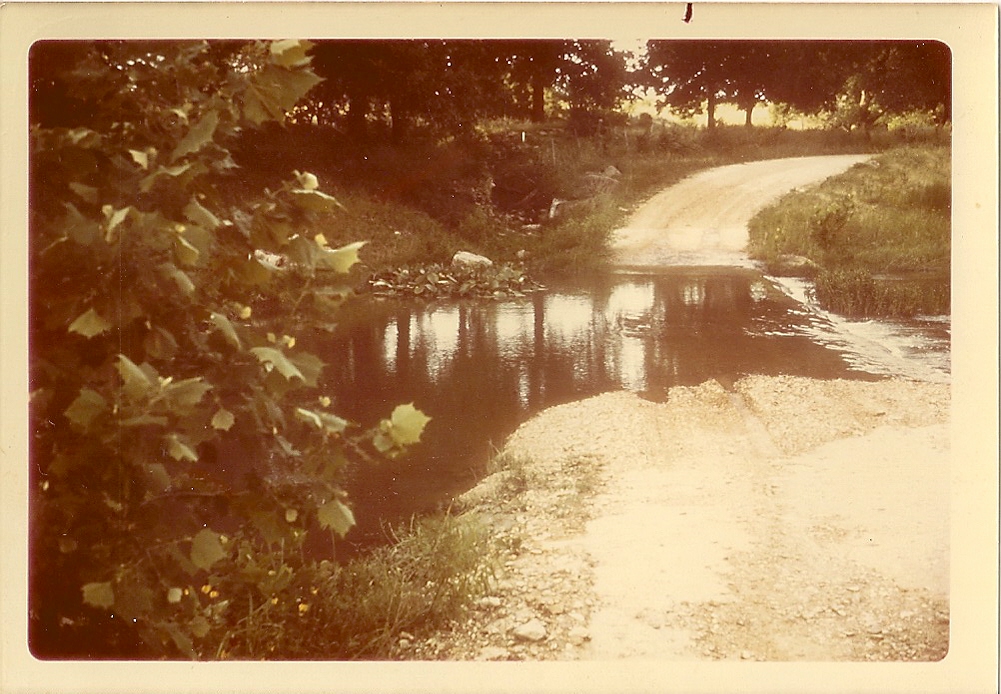
Rough Creek on the Parks Place, San Saba County, Texas, looking northeast, ca. 1970 (J. Matthews)

Relying upon memories of childhood can be misleading, even downright wrong in place and time.  As adults when we reflect upon last year’s vacation we may err in detail and conversations we thought we had.  Even so, memories preserve detail that can re-emerge with an almost preternatural force with a bit of reflection and musing, even to the point of re-evoking scents and cachets of the past that transcend the moment.

My mother and grandmother never hosted parties, but they hosted and partook of family celebrations — Thanksgiving, Christmas, Easter, birthdays.  And there were funerals, lots of them.  Funerals brought the Parks, McRorey, Morris, Ward, Millican and Ragsdale families together for burying kinfolk and re-establishing contact with distant relatives at Bend Sand, High Valley, Colony and Cherokee cemeteries in central Texas.  When I attended these functions, I had two sets of clothes, one for dressing-up and the other for outdoors.  Following the meal or funeral, I changed quickly into jeans and hiking shoes and explored and played with my cousins.  Having dinner at the Parks Place signified the best of all possible worlds because Rough Creek ran through it.

Rough Creek flowed through my great-grandfather’s place and formed the backdrop, foreground, side-scene and main-event for me.  Even today, still, Rough Creek continues to course through my mind and heart and its memory pacifies my days.  My great-grandfather’s ranch was called the Parks Place.  Not the Parks Ranch, the Parks Place.  Rough Creek cut the Parks Place in two parts, emptying into the Colorado River that bordered the east boundary.  For untold generations, Comanche Indians encamped at the confluence of Rough Creek and the Colorado, only to be driven away in the 1840s with the settlement of the area.  In the field north of the creek, after a hard rain, flint tools lay exposed.  A large midden revealed debris of hundreds of years.

I found stone tools, but my primary focus concerned the creek.  A county road ran through the Parks Place and at the creek, a large concrete slab had been poured, forming a stone-firm foundation for the road and continual pool of fresh water for perch, catfish and minnows.  Blue-colored dragon flies lit on green lily-pads and joined together in reproduction that I never fully figured out as to male and female flies.  Sycamore, cottonwood and pecan trees shaded most of the creek’s bank.  The water temperature was cold and it took a few minutes to become accustomed when as a boy my mother allowed me to swim and wallow with slippery moss on rounded stones.

I hiked up and down both banks of the creek.  When the terrible drought of the 1950s occurred, Rough Creek continued to run.  Neighbors in pickups with forty-five gallon water drums, came to the creek, parked on the slab and filled drums with water.  Their children swam and played in the water while the adults bailed water into the drums with buckets.  The elders were sun-tanned and strong, their hats crusted with dark sweatbands that bespoke toil and care for their cattle and family.  My great-grandfather never closed the road and I never saw the gates closed.  Cattle guards — steel-framed panels set in the ground — allowed trucks and pickups to pass over them unhindered, but kept the cattle in check and within the bounds of the Parks Place.

My great-grandfather gave me a branding iron, an iron with a capital “P” for the Parks Place, when I was a boy.  I have it hanging in the alleyway of my barn and see it everyday when I feed Star, my paint gelding.  I’ve not used it because our brand is a Running M.  I do not think of cattle when I see the the branding iron.  I think of Rough Creek on the Parks Place and I wonder how high the water is at the crossing.  Is it high enough that perch and catfish swim back and forth across the slab?  If another drought comes, will the present owners be patient with the neighbors who come to fill their drums?

In the early 1970s, I took the photograph of Rough Creek that sets the banner and feature photo of this post.  The Parks Place had been sold and passed into other hands.  The road remained open and I stopped at the creek’s edge and took this photograph.  I framed it with the sycamore on the left and the road and concrete slab in the foreground.  Behind the trees, on the upper left-side of the photograph is the grist mill, but you cannot see it clearly.

The photograph verified that my memory remained good and that cool, fresh water flowed over a concrete slab with lily-pads and bull rushes abounding.  After taking the photo, I drove slowly out of the Parks Place and up the road, past the mill and over the cattle guard I had seen when I was young and had most of my life in front of me.

______________________________

Notes:

The intersection of Rough Creek and the road is precisely 31.136°N 98.5468°W, elevation at center: 1,119 feet (341 meters), San Saba Quad map.

I have a true narrative I have written involving a court case between my relatives and the first owner of the Parks Place (not the present owners) after it was sold.  The first post-Parks owner attempted to close the road.  My cousins de-welded the gates, threw them in the pasture and smeared his brand on the portal with cow manure.  The owner sued my cousins in civil court — most upset he was about the cow manure.  My mother and cousins testified that the road running through the Parks Place had always been open for ranchers and their families living in the back country, and that closing the gate impeded the commercial and social intercourse, long-standing in history, of the community.  The owner lost the case, sold out and moved on.  The present owners of the former Parks Place indulge me and my kin when we stop and look at Rough Creek as we go into the back country.  My great-aunt Helen Tom, daughter of my great-grandfather, talks with the present owners about her growing up on the ranch and they allow my aunt to visit and see the place at any time she so desires.

16 Comments

Filed under Bend Texas, Colony Road, Recollections 1942-1966, Recollections 1966-1990, San Saba Texas

Acequia and Rough Creek mill race

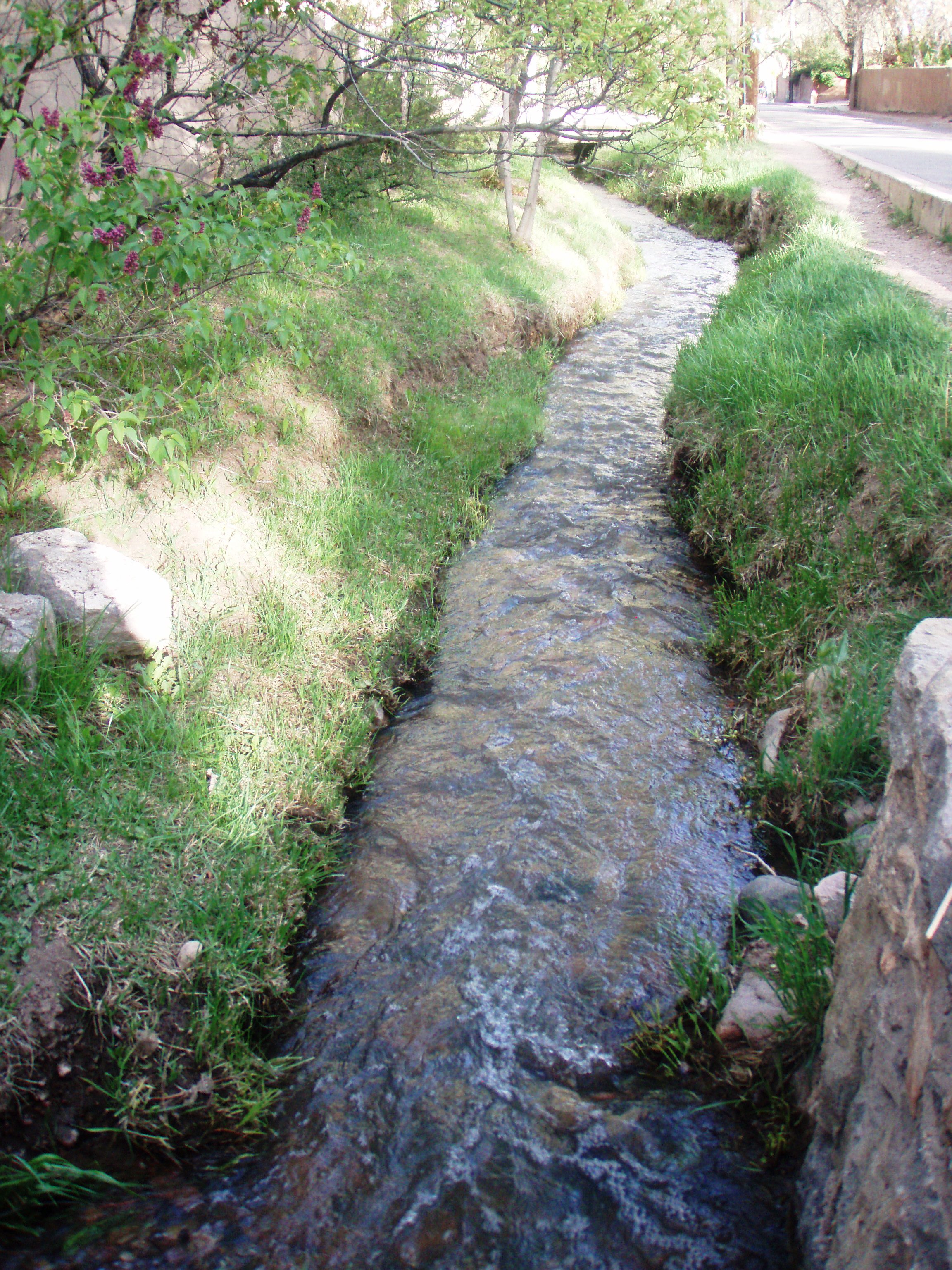
Acequia Madre of Santa Fe

Throughout the upper Rio Grande bioregion, from the uplands of the north to the more desertic and mesa lands to the south, watercourses and their tributaries stand apart as the most defining features critical to all forms of life, biotic and human.  For centuries, this region has been homeland to the aboriginal peoples, the Tewa, Tiwa and Keres (Pueblo) Indians, and the descendants of the first European settlers, the hispano mexicanos.  These cultures revere water, treasuring it as the virtual lifeblood of the community….Nestled within the canyons and valley floors, tiny villages and pueblos dot the spectacular, enchanting landscape.  Their earthen ditches, native engineering works known locally as acequias, gently divert the precious waters to extend life into every tract and pocket of arable bottomland….

But these systems have also performed other important roles…social, political, and ecological.  As a social institution the acequia systems have preserved the historic settlements and local cultures spanning four major periods….The great majority of acequia villages are unincorporated.  In these instances the acequia institutions have functioned as the only form of local government below the county level.

As biological systems, the acequias have served other important objectives:  soil and water conservation, aquifer recharge, wildlife and plant habitat preservation, and energy conservation.

Jose A. Rivera, Acequia Culture: Water, Land, and Community in the Southwest, pp. xvii-xviii (1998).

In 2007, I drove up Santa Fe River canyon from downtown to the iron gates of the reservoir that held water for the town, including the Acequia Madre.  The acequia no longer irrigated fields, but the channel held water for occasional diversions to small plots in the neighborhood.  For a distance of about two miles, I traced the acequia back towards the center of Santa Fe.  All along the way, I saw some neighborhoods had gleaned the acequia while others ignored it.  At the end of my search near the junction of the Old Santa Fe Trail, the acequia held little water, but it was visible and grasses sprouted about the narrow canal.  It appeared ready, at attention really, to carry water again.

* * *

I spoke with a vintner at Dixon, New Mexico, north of Santa Fe, who also superintended the annual cleaning of the Dixon acequia.  She told me that local inhabitants still work on keeping their canal clear of brush, even if it does not border their property,  a communal behavior extending back to prehistoric times.

* * *

On my great-grandfather’s ranch in San Saba County, Texas, the local inhabitants of Colony and High Valley constructed a grist mill for grinding grain in the late-nineteenth century.  They dug a mill race or channel to divert the water of Rough Creek to the wheel that powered belts to millstones.  My mother often told me she remembered her father coming out of the mill covered in flour, face smothered and sweaty.  As a boy, when I visited my great-grandfather’s ranch, I followed the channel upstream on Rough Creek to where the water diverted.

Today, the mill still stands sans roof, windows and doors; the mill race is visible, though eroded, and no water flows.  On the second story ledge of the mill, a prickly-pear cactus took root in shallow soil, erupting ten or twelve paddles of cacti clearly visible from the ground, its propulsion coming from the prevailing southwesterly wind from High Valley and warmer climes in Mexico that blew seed upwards onto the old mill’s second story.  To this day, picnics and family reunions congregate about the old mill and under the pecan trees nearby.

Although some acequias have fallen into disrepair and the old mill will no longer grind grain, no lament is necessary because these structures symbolize the communal efforts of people to work with the flow of water.  Acequias can be cleaned out and the mill race can be reconstructed to a higher ground so that its flow can be opened to a newly-planted orchard of plum and peach.  The mill race becomes acequia.


10 Comments

Filed under Bend Texas, Colony Road, Recollections 1942-1966, San Saba Texas, Santa Fe

Interstate 20 Kestrel

Sparrow Hawk (Falco sparverius, from Peterson's Field Guide)

In my long commute to Abilene from Mingus, Texas (87.2 miles), I see flora and fauna of Cross Timbers and west Texas plains along Interstate 20.  The Clear Fork of the Brazos River is the major river in the area, meandering north of the interstate at a distance I cannot discern from the highway, but within sight of the wind turbines that I see turning swiftly with the wind.

Between Abilene and Clyde, Texas, I have seen for several years a particular type of hovering bird above the interstate that dives down, usually on the median, to take a field mouse.  The angle of the sun has not been right for me to identify the bird nor have I minimal traffic to definitely type the predator.  (Trucks carry a lot of cargo on Interstate 20 between El Paso and Dallas-Fort Worth and must be respected.)  Yesterday, however, at the same spot (about a two-hundred-yard splotch) that I have seen these birds over the years, I was able to identify a Sparrow Hawk (Falco sparverius), as my elusive companion for the commute.

The Sparrow Hawk or “American Kestrel” flashed a rufous back, wings spread with blue-gray color and a rufous tail, signifying a male, as it dove onto the median.  Returning home, driving east, the sun on my right side at 3:30 p.m. in the afternoon, I saw brightly illuminated the plumage and color of this beautiful hawk.  The sighting occurred within five seconds, but I will remember this Interstate 20 Kestrel for a long, long time.

* * *

How can we ever think ourselves alone when in the absence of our own kind we have kestrel, oak and four-legged companions about?  But we do feel estranged.  I have and will feel alone again.  Yet, so, and despite it all, our senses become filled with flapping wings, stamping hooves and trees swaying in the wind among ten thousand sights and sounds.  Our yearning for connectedness disappears with a self-loss in nature’s rhythm, even along the interstate.  It is a kind of sacred hoop, Black Elk once said.

25 Comments

Filed under Birds

Bearable lightness of humans with horses

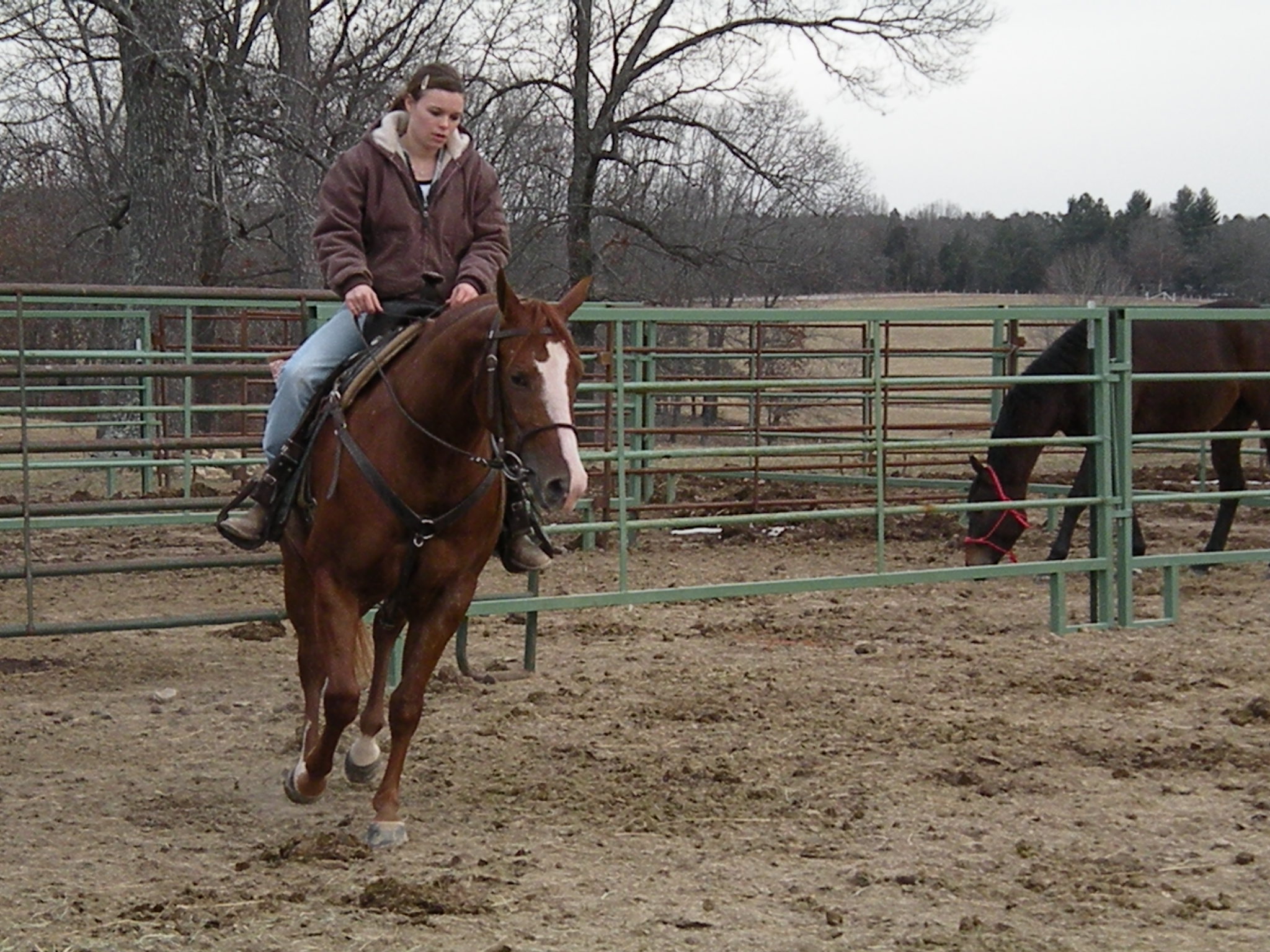
Courtney Hampton on Fanny in Missouri (2011)

Considering all the events of the past week, I thought I would pass this e-mail along to you from Courtney Hampton who traveled to Oklahoma City on a mission to see and evaluate Fanny.  She bought Fanny and this is her comment on riding her the first day.

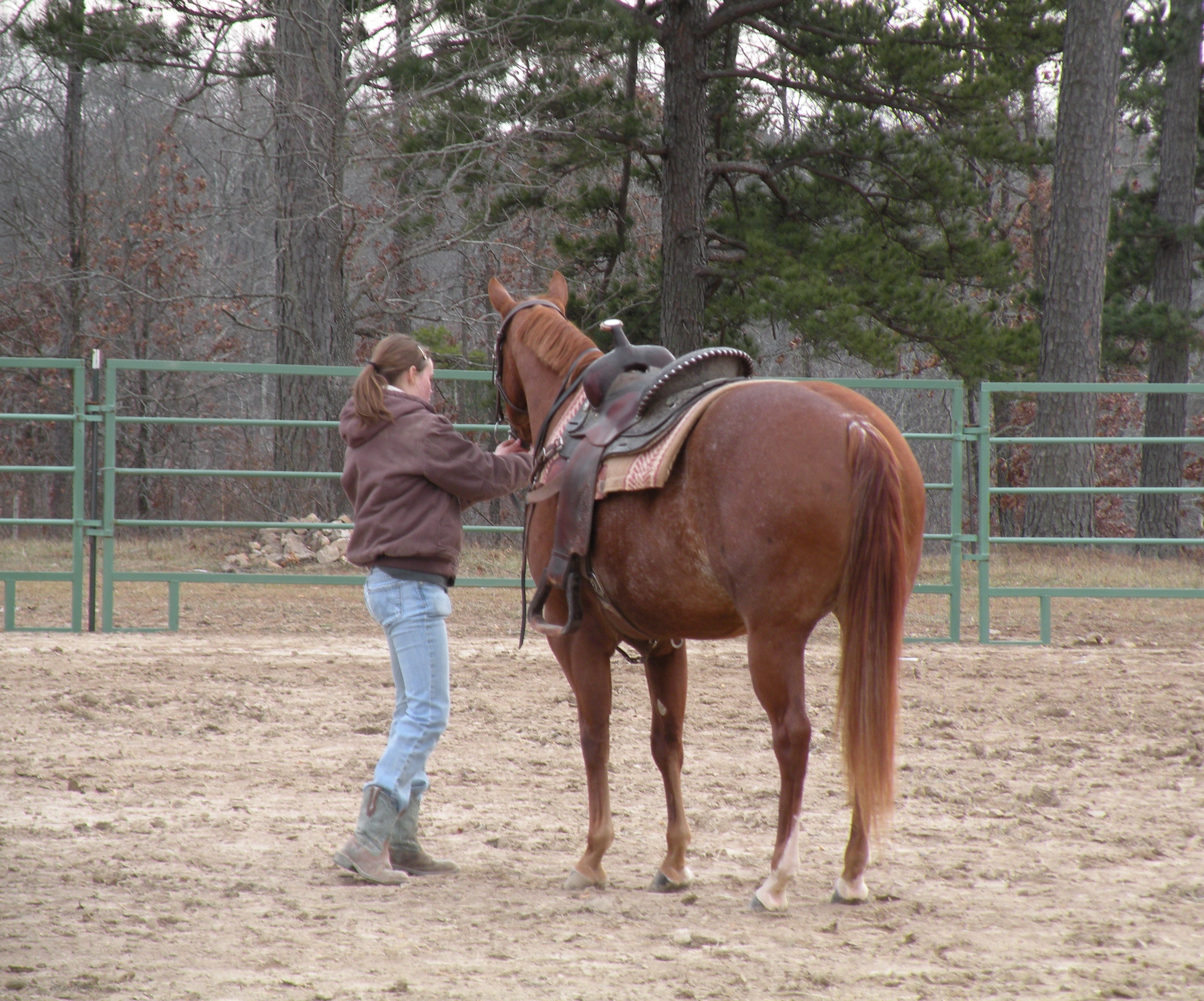
I just thought I’d give you an update on how Fanny is doing. We arrived at Heritage Place at about 5 a.m. Friday morning and loaded her and Diesel (the other mare we bought) up and headed to Missouri. It was about an eight-hour drive, but we stopped several times to let them stretch.   She handled everything very well. When we got her home (about 1:30 p.m.) we turned her and Diesel (aka Ms Royal Fever) out in the big arena (their new home for two weeks until the others get used to them).   As soon as we let them go they took off and started running and bucking.  They were definitely happy to get out of the trailer!  It was about 55 degrees out, so all my other horses started running around too.  (It hasn’t been that warm in weeks.)  What a sight to be sure!  Fanny was sure strutting her stuff! (I will attach pictures.)  She and Diesel ran around that arena for half an hour. So cool to watch!  After their energy had worn down some I threw some alfalfa out and they went to munching.  Later that day, about 4:30 or so, I went down and decided to ride them both for a few minutes just to see how they did.  I started with Fanny first as I wasn’t sure how the race mare was going to be (I’ve bought off the track horses before and they can be a little hard to handle).   I saddled Fanny and of course she just stood there like a pro.  I got on her and rode her around for about 30 minutes and put her through some paces just to see what she could do. She did everything I asked like a champ: roll-backs, counter-bending, side-passing, stop *which that mare can STOP!*  Then I took her out and walked her around the pasture that we have our weanling calves in.  Of course she was very alert and nervous but she never spooked — even when our flock of guinea hens flew by her.  She started shaking (poor baby), but then just snorted and walked on.  Since she was doing so good I quit her and unsaddled and fed her while I rode Diesel (who has a pretty good handle on her for a race mare and I was pleasantly surprised).

— Courtney Hampton to Jack Matthews, January 16, 2011

This is the sweet side of handing off horses to young people whose attachment to animals renews those of us that have become coarse.  Some of the bitter goes away when you hear-tell this kind of narrative.

14 Comments

Filed under Duncan Steele-Park, Horses, Life in Balance, Shiners Fannin Peppy (Fanny)

Lilly (1985 – 2011)

Lilly (1985-2011)

Lilly died today.  Born January 20, 1985, at Cibolo, Texas, on the ranch of Janis Hawthorne, she had two issues, the last one being Star Bars Moore who remains on our ranch.

Lilly had osteoarthritis.  She had been down since yesterday for eighteen hours, but had come up for me this morning.  The vets were called at 8:00 a.m.  She had alfalfa and a natural sedative to lessen her pain before the vets arrived.  I told her I was beside her and not be afraid.  She was not.

Lilly has been with my family for eighteen years and our grandchildren have ridden her.  She carried my stepfather on trail rides for many years and Brenda rode her with great pleasure.

Her son, Star Bars Moore, watched at a distance as we put her down.  I had talked to him about what we were doing and he lowered his head, not so much about what I told him for he did not understand, but that I had come directly to him to talk in fair and caring tones.  He watched at a distance as I covered his mother in the good earth of this world.

We shall miss this fine horse.


44 Comments

Filed under Life in Balance, Lilly

To the land of open range

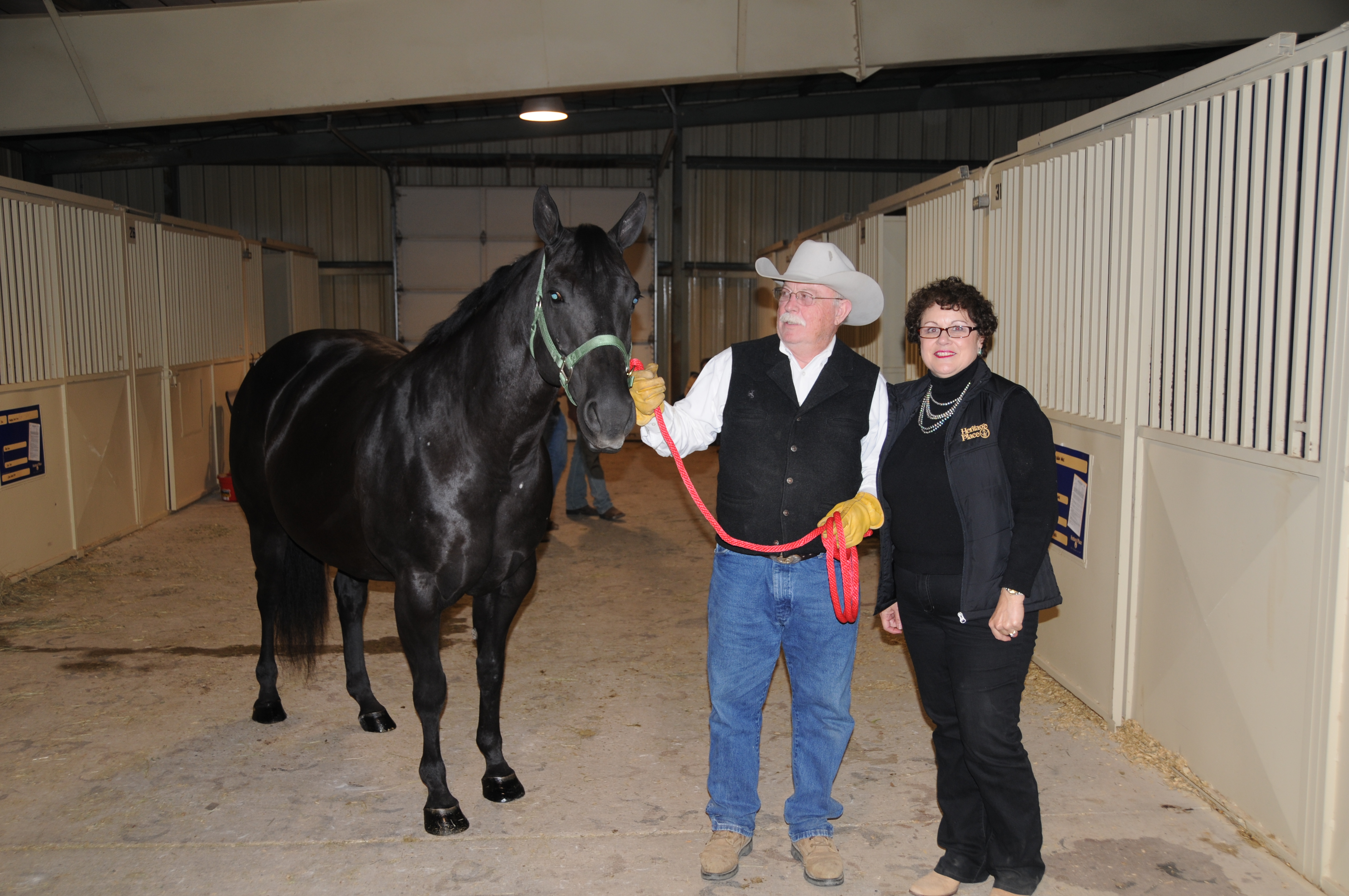
We carried Fanny and Hija and her unborn foal to sale in our two-horse trailer named Equi Spirit.

Fanny or Shiners Fannin Peppy sold at the Heritage Place Mixed Winter Sale on Thursday in Oklahoma City.  Courtney Hampton of Summersville, Missouri, purchased Fanny.  Courtney’s work and pleasure with Fanny will center about Barrel Racing competition and Fanny will do Courtney well.  For Courtney and Fanny, it seemed love at first sight.  The hind socks on Fanny are white and shaped like wings and I trust Fanny will fly like the wind with Courtney.

In the listing of horses to be sold at Heritage Place, our second and third horse, Sweet Hija and the unborn foal, came up for bid at 8:00 p.m. Friday night.  All day long I prepped Sweet Hija and her unborn foal for the big event, going into the make-up ring — a place where you walk your horse in an open area — and then up the walk to the auction arena where a professional handler takes control.  When the presentation began, I walked with Hija and she showed her King Ranch style:  energetic, fully alert, stepping high, ears forward.  Yet she stayed close by me as I walked her from her left side.  For five minutes she presented her Running W, the brand of King Ranch, to the crowd before I handed her off to the handler that took her into the the bidding arena.

When she came back to me she was no longer mine.  Sweet Hija and her unborn foal passed into the kind and humane possession of Kim Elliott of Calgary, Alberta, Canada.

Sweet Hija and her foal will reside near Calgary, on land and terrain that gave Bierstadt panorama to the films, Open Range and Legends of the Fall. Kim Elliott acted and her horses performed in both movies.  Ms. Elliott told me and Brenda that When horses come to our ranch, they are there for good and they have the terrain of Open Range to look at day after day.  How can Brenda and I be so happy and mournful at the same time for the unexpected fortunes of our three horses?  We are and we will be.


Sweet Hija and foal's new home with Kim Elliott on the open range near Calgary, Alberta, Canada.


13 Comments

Filed under Horses, Shiners Fannin Peppy (Fanny), Sweet Hija