La Bajada Hill, New Mexico, Vintage Postcard

Karen Rivera’s blog, New Mexico Photography, has a keen post on the La Bajada Hill road between Albuquerque and Santa Fe.  She has a vintage postcard illustrating the switchbacks on La Bajada in the 1920s.  My father-in-law, Loy Taylor, was a United States Marshall and always kept beaucoup road maps in his car.  Postcards like Karen collects have a wealth of information about old roads, bridges and ways of passage that are now erased or a byway to modern roads.  I always like to see the old highways and the cafes and stores along the wayside.  The interstate highway system has given us speed from one point to another, but it has taken away a lot of local color.

See the link below for Karen’s postcard:

La Bajada Hill, New Mexico, Vintage Postcard.

3 Comments

Filed under Santa Fe

Fanny with Verbena

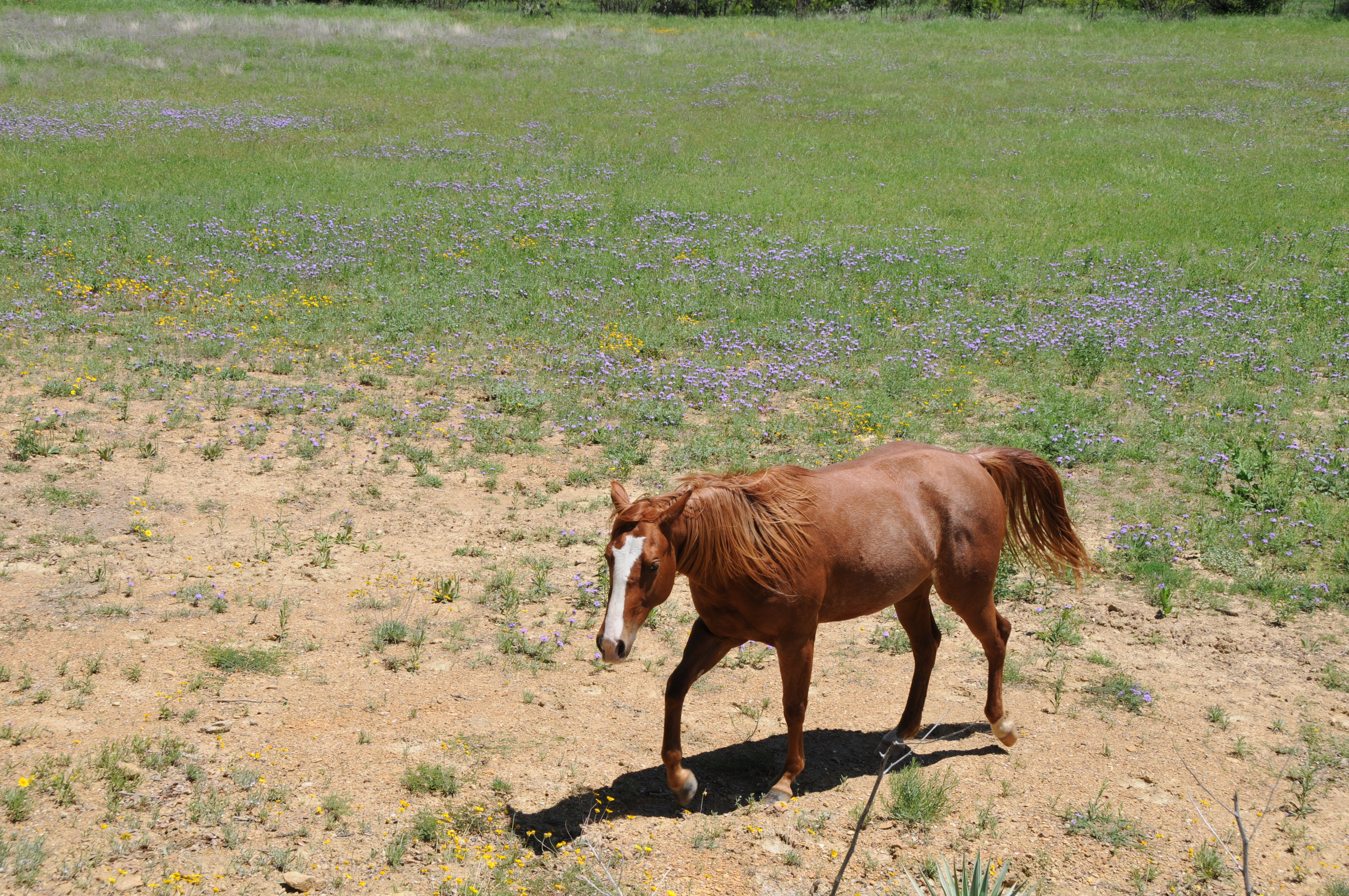
Fanny with Verbena, Spring 2010

I thought you might like this photograph.  I do.  It doesn’t have all the right composition angles, but it’s a good snapshot.  But, ’tis not a Kodak moment any more, folks, is it?  Digital.

Anyway, it’s a picture of Shiners Fannin Peppy on a warm spring day a few weeks ago.  Fanny is coming up the pasture to where I am standing on Poprock Hill.  The sun is shining brightly, it’s probably near high noon as I recollect.  You can see that her coat is sleek and she is a good two-year old that has been trained well and tended–Duncan Steele-Park’s regime of education.

In the background, emerging and standing brilliantly, is a nice stand of purple verbena.  Verbena has been all over the place this spring–in pastures, corrals, stables, front yard, back yard.  There’s some yellow flowers also in the mix and some yucca blossom stalks about ready to burst.  It’s just a fine, sunny picture on a good day here on Flying Hat.

And, here she is up on the edge of Poprock Hill, being cute and pretty and all-horse.

Fanny with Live Oak, Spring 2010

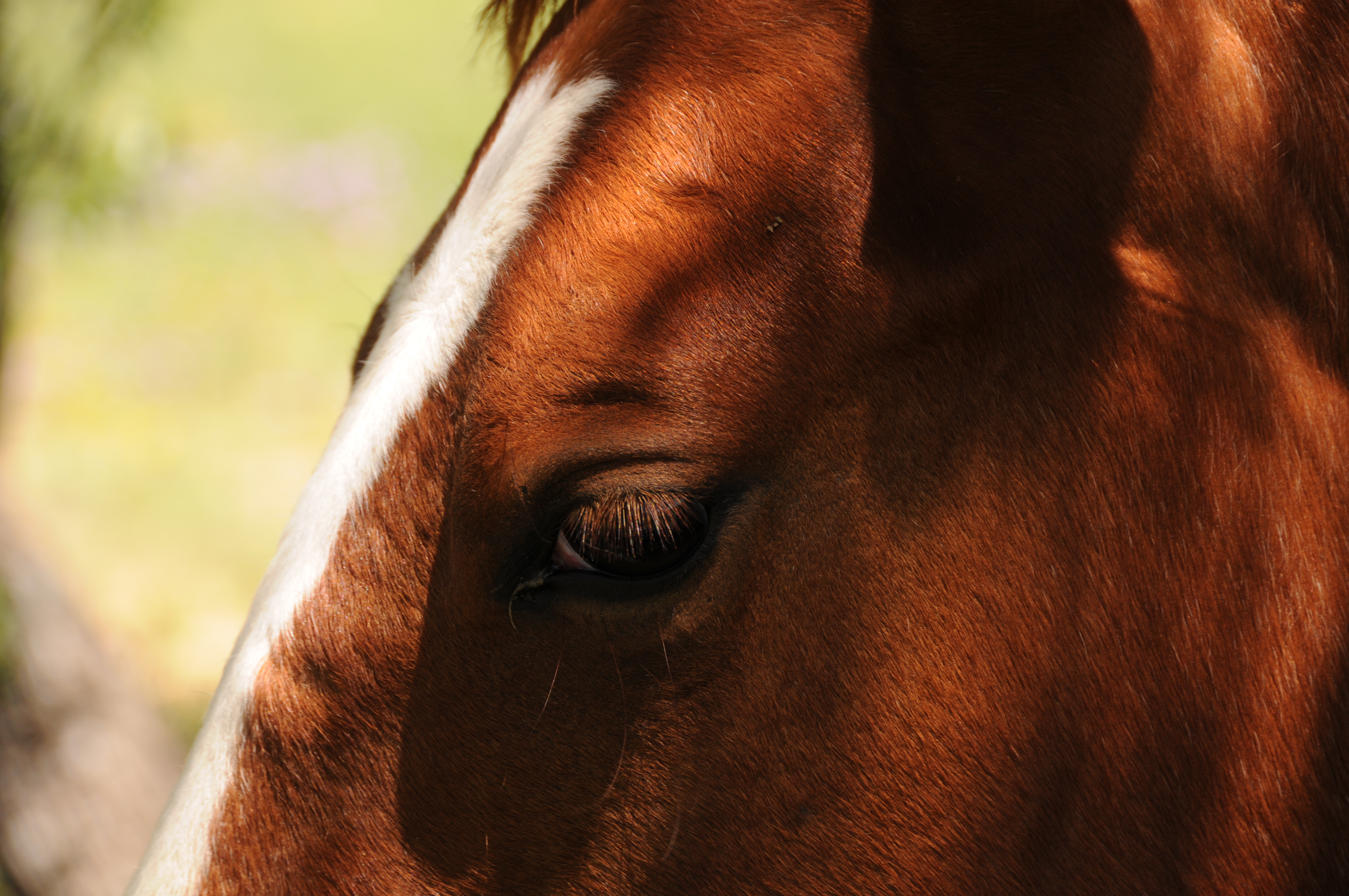
Equus Fanny, Spring 2010

Equus. Long ago and faraway I read the play, Equus, and saw the movie with Sir Richard Burton as the psychiatrist.  Peter Shaffer wrote the play in 1973, based on a true story.  It’s not a pleasant story at all, and I won’t summarize it here, but the play and Burton’s acting inspired me to delve more into depth psychology and formative events in human development.  As a result, I became immersed in anthropology.  I was already in anthropology as a sub-field of my discipline, history, but I went way, way down into the discipline and eventually began to teach cultural and physical anthropology at a college in the Texas Panhandle.

There are many starting points for learning a field of knowledge.  Wherever you find that interest, follow it and exhaust your curiosity by reading late into the night, visiting museums and researching in libraries–wherever it takes you, go, go, go!  One of my starting points was Equus.

Did I say I liked horses?

Yes, I did say that, especially Fanny in verbena, on a sunny spring day.

16 Comments

Filed under Duncan Steele-Park, Horses, Shiners Fannin Peppy (Fanny)

Bat Disease Crosses Mississippi: Species Extinction in Hyperdrive

A mysterious disease ravaging bat populations in northeast United States may be spreading westward.  It’s a fungus called white-nose syndrome.  The Center for Biological Diversity has sent letters to state officials, urging them to close state-owned bat caves to prevent the spread.  Bats help control populations of insects.

Bat-to-bat and bat-to-cave transmission appear to be the more common means by which white-nose syndrome is spread, but scientists believe that the newly discovered fungus for which the disease is named can also be spread by people on contaminated caving gear, clothing, and other equipment [Press release, Center for Biological Diversity].

Bat houses are often placed near gardens and homes to give bats a place to hang out–seriously.  My good friends, Caralee Woods and Jimmy Henley, had a bat house near Eagle Mountain Lake in Fort Worth, Texas.

A rancher near Kerrville, Texas, had a bat cave constructed on his ranch and after several years, bats began to populate the cave.

New Mexico and the American Southwest have been alerted, writes the New York Times.

National Briefing – Southwest – New Mexico – Bat Disease Spreads – NYTimes.com.

Center for Biological Diversity Press Release on Bat Disease

4 Comments

Filed under Life Out of Balance

Field Log 5/7/2010 (Shiney’s Little Stud Moments)

North Erath County, Texas, 32.43 lat., -98.36 long. Elev. 1,086 ft.  Turkey Creek Quad.
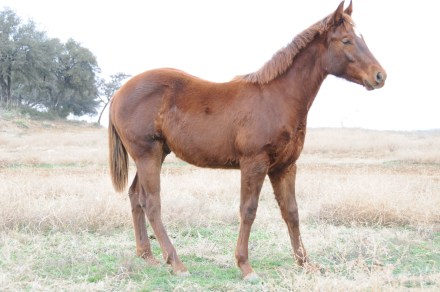
Shiners Fannin Pepto (Shiney) Winter 2009-2010

Shiney at Jimmie Hardin’s

Talked with Jimmie Hardin in Aubrey about Shiners Fannin Pepto’s (Shiney) training for manners on the ground and around mares and people.  She said that “Shiney is doing really great, settling down, but he does have his little stud moments.”  What a world I thought, “Little stud moments.”  I asked Brenda, my wife, the female equivalent of “little stud moment,” and she said, maybe for women, “It’s a meltdown.”

The first time at Jimmie Hardin’s, when we put Shiney in a corral, he was between two mares and they teased him over the fence.  He was really an excited colt with two mares on either side of him.  The mares pranced in front of him and he ran around in a prancing gait, light on his feet, even though he probably didn’t know what was going on.  He became lathered up and I fretted he was over-doing his excitement, but Jimmie said he would settle down once we left with his travel buddy, Star, the paint from our place that we put in the trailer to help ease Shiney’s trip to Aubrey, north of Denton.  Star munched on his alfalfa while watching his little friend, Shiney.

In conclusion, he is doing just fine despite his little stud moments.

Called up to Triangle Sales in Shawnee, Oklahoma.  They will have handlers to help me show him through the ring.  And, knowing he is a stud, they will not put him between two mares in the stall area.

Pecan Tree Pasture Mesquite Trimming

Indian Blanket flowers are blooming over in Pecan Tree Pasture.

Went over to Pecan Tree Pasture to lob off mesquites that were growing in the field.  The grass is up to my chest in places and I can detect large animals–deer or wild boar–that have lain in the grass.

Yahoo Runs Amuck

While cutting mesquite, some yahoo drove through my gate, wanting to inquire about the trailer my neighbors have for sale.  The yahoo immediately drove off the pasture road and started coming toward me in his grey, F-250 pickup, trampling grass I wanted to let seed and grow higher.  I was a hundred-yards away and frantically waved him to stop.  What the dickens was this yahoo doing coming into a native grass field in his pickup?

I walked briskly over to where he had stopped after coming some fifty yards into the native grass field, scattering birds.  I had my pruning shears in my hand, but my pistol (.45 cal.) was in the pickup some seventy-yards away.  I did not know what to say, but this is what happened.

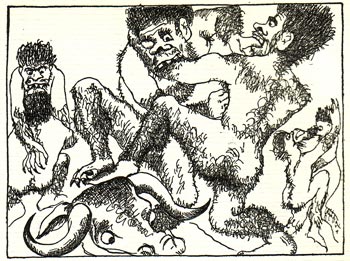
Yahoos Fighting by Dudley Fitts (Illustrator)

“Yew goin’ git chiggers,” he squawked, referring to the high grass I had come through to stop his onslaught into the field.  An entirely inappropriate opening of discourse after entering posted property (Texas and Southwestern Cattle Raisers Association blue sign).  Was there some chigger alert I had missed on the morning news from Stooperville’s Fox News?

Holding my anger, I said, “You don’t need to be rolling into my field crushing the grasses.  It’ll take two months for the grass to come back up.  The trailer belongs to those people,” I nodded in the direction of the Hall Place.

He looked at me, put the truck in reverse, made an abrupt turn around and sped off, then hit high speed next to my water tank and out the gate and on down the highway towards Stephenville.  I paced off how many feet he had knocked down by coming into grassland that was two to four feet high, native species I had planted six-years ago: a total of one-hundred and twenty-five feet of off-road grass crushing.  It’ll rise up again in a few months with the rains.

I’ll close the gate next time to avoid a confrontation.  I was born and reared in Texas, but I am seeing more arrogant and ill-mannered  people than ever before.  I know yahoos are all around us, but jeez!, wouldn’t you think they could all hang out at another cracker barrel in a county over?

The field log is rather caustic today.  Sorry.

8 Comments

Filed under Field Log, Shiney (Shiners Fannin Pepto)

Sage Dancing in New Mexico

A Break on Plaza of Santa Fe, Summer 2009

A break.  This young lady has been pedaling touristas about the plaza in Santa Fe.  Her sign campaigns the La Plazuela in the La Fonda Hotel.  She is resting in front of the Ore House and Ortega’s.

The spring has been front of us for the last few weeks over here in Texas, and now we are turning our attention to the Land of Enchantment, New Mexico, for the summer.  I know that snow has fallen in northern New Mexico this last week from the posts and tweets of Coffeeonthemesa, Taos Sunflower and Stark Raving Zen.  Hold fast!  Change is coming!  There exists in the near future a glorious, desert spring for you.  It’s very hard to replicate anywhere else in the world that ability to go out on the land and gently crush the leaves of sage, inhaling the pungent air it perfumes, spurring memories of ancient things, deep-thinking wellsprings of wisdom and rhythm beats of feet upon the ground–sage dancing.  Only in New Mexico.

The young lady in the photograph rests, barefoot on the Santa Fe plaza, content in her respite from toil.  Sage dancing, me thinks, be in her future.

6 Comments

Filed under Santa Fe

Blog Collective I: Vectors

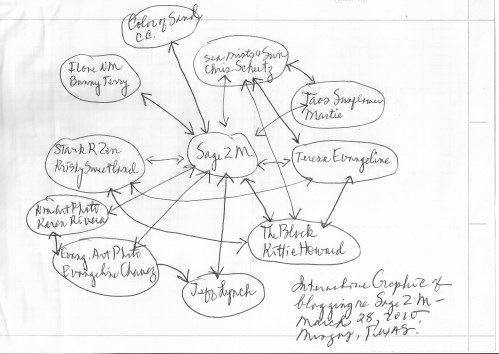
Blog Vectors with Sage to Meadow, March 28, 2010

This is a Blog Vector Analysis, a *quick-and-dirty study of interactions among selected bloggers interacting with Sage to Meadow, March 28, 2010.

Each of the lines represent a blogroll connection.  The arrows generally go two ways: bloggers put each other on their blogrolls, a matter of friendly and interested reciprocation.

I have more blogs on my blogroll than is seen in the Blog Vector.  This diagram lists only those blogs that I have had interaction with for at least ten (10) to fifteen (15) times in the comment section of our blogs, both comment sections combined.

My blog is Sage2M or Sage to Meadow.  My interactions on an involved level (10-15 comments) are with ten (10) bloggers.

The Blog Collective I have consists of eleven (11) nodes, myself included.

One objective I had in drawing the diagram was to ascertain where my Blog Collective might have originated and, then, multiplied.  A second objective was to diagram the interaction of my blogging friends, to see who connected with whom.

My first search for bloggers involved New Mexico blogs and I came up with two: Stark Raving Zen and Teresa Evangeline (formerly of Santa Fe).  From those two blog nodes, the Collective was begun, so that now I have the ten (10) involved nodes.

On the diagram, please note that Sea Mists and Sunsets, Chris Schutz, has four (4) interactions within the Collective, and so also does The Block with Kittie Howard and Teresa Evangeline’s blog.

Note also that the photographic blogs interact with each other and me, but not with others in the Collective: New Mexico Art Photography, Evangeline Art Photography and Jeff Lynch.

Seven nodes are related by New Mexico connections: Color of Sand, Taos Sunflower, Teresa Evangeline, Evangeline Art Photography, New Mexico Art Photography, Stark Raving Zen and I Love New Mexico.  The diagram does not relate that attribute.

In conclusion, the graphic illustrates that if you like New Mexico, the American West, photography, writing, place or nature, then you will be a part of the Sage to Meadow Collective.

*A quick-and-dirty (Q&D) study is just what is sounds like: fast, quick, but revealing.  Basically, there are two kinds of research: Q&D, sometimes called “hot” research when bullets are flying and bulldozers are idling in the background and pressure is on to evaluate a situation.  The second is “cool” research–time can be taken to hypothesize, ponder and conclude, like writing a monograph or thesis.

12 Comments

Filed under Life in Balance

Spring Flowers in Texas

Stork's Bill (Erodium texanum) April 2010

Here is Stork’s Bill or Pine Needle (Erodium texanum) found here on Flying Hat.  It is an annual herb, member of the Geranium family, most of which are found in Europe and South Africa [C. and L. Loughmiller, Texas Wildflowers: A Field Guide, p. 104; H. Irwin and M. Wills, Roadside Flowers of Texas, pp. 140-41.]

Scarlet Paintbrush or Indian Paintbrush (Castilleja indivisa) April 2010

These Indian Paintbrushes are uncommon on Flying Hat.  I found most of these in the Pecan Tree Pasture and not many of them.  The Blue Place, the family to the east of us, has a field that is quite loaded with the paintbrushes.  I have a photograph of the Blue field and will post it in the future.

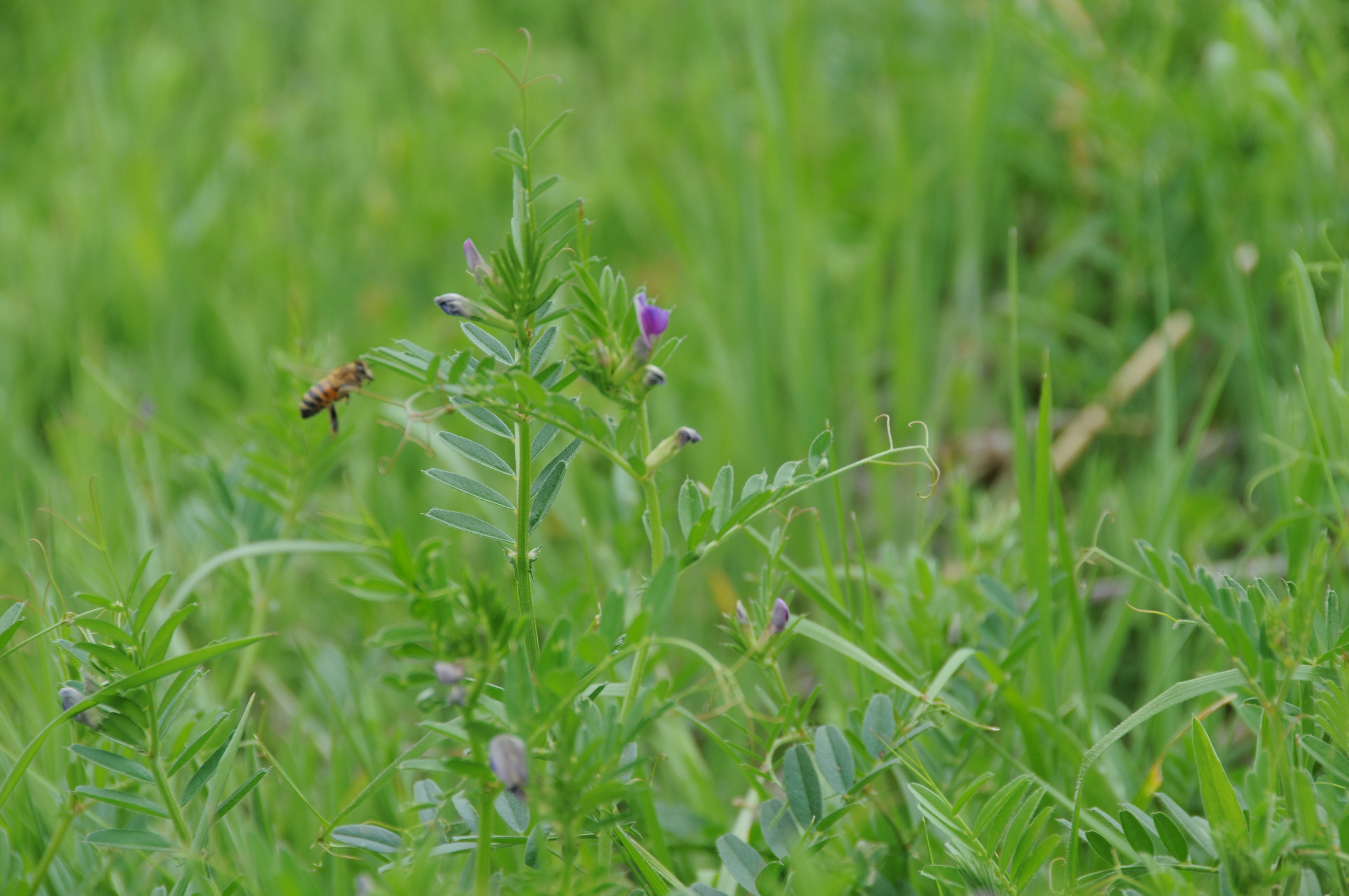
Purple Vetch (Vicia dasycarpa) with Bee April 2010

This vetch, Purple Vetch (Vicia dasycarpa), is not the poisonous variety. Notice the bee that is pollen-gathering.  The spring rains have been so abundant that the vetch is knee-high in my fields and the Blue Place, to the east of us, has vetch that is chest-high as it climbs on the field fence.  As I say, this is not the poisonous variety and the bees love to gather pollen from it.

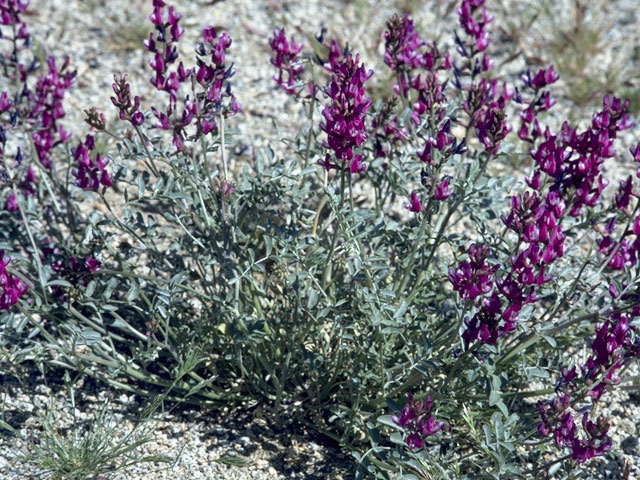
Wooly Milkvetch (Astragalus mollissimus), Wooly Locoweed (NPIN Image Gallery, Lady Bird Johnson Center)

This is a photograph of the poisonous variety of vetch that we do not have on the ranch.   From Irwin and Wills, Roadside Flowers of Texas, p. 138:  “Of the nearly 1000 species of Astragalus, over 200 occur in the United States, about 35 of them in Texas.  The members of the genus that are poisonous to livestock are called Locoweeds, while the harmless ones are known as Milk-vetches.  In the former category is the Woolly Loco of the Panhandle and Trans-Pecos area, a tufted, soft-hairy, deeply rooted perennial with dense racemes of purplish flowers in the late spring.  Quite innocuous looking to the eye, the Woolly Loco is among the ‘early risers’ in the spring, and so tempts cattle, even though its taste is so disagreeable that they normally avoid it.  Later, in periods of drought when grasses succumb, the persistent Woolly Loco remains, seemingly unaffected.  Nor are browsing animals the only ones concerned.  The nectar contains poisonous substances, sometimes causing decimation of bee populations.”

In talking with Roland Stroebel today, my colleague at the college who tends Angus cattle, our non-poisonous Purple Vetch is abundant on his place also, but does not cause a problem for his browsing livestock.  Roland’s ranch is south of Cisco, Texas, and his family goes back several generations.

2 Comments

Filed under Plants and Shrubs

Bicycle Rest Area Lubbock

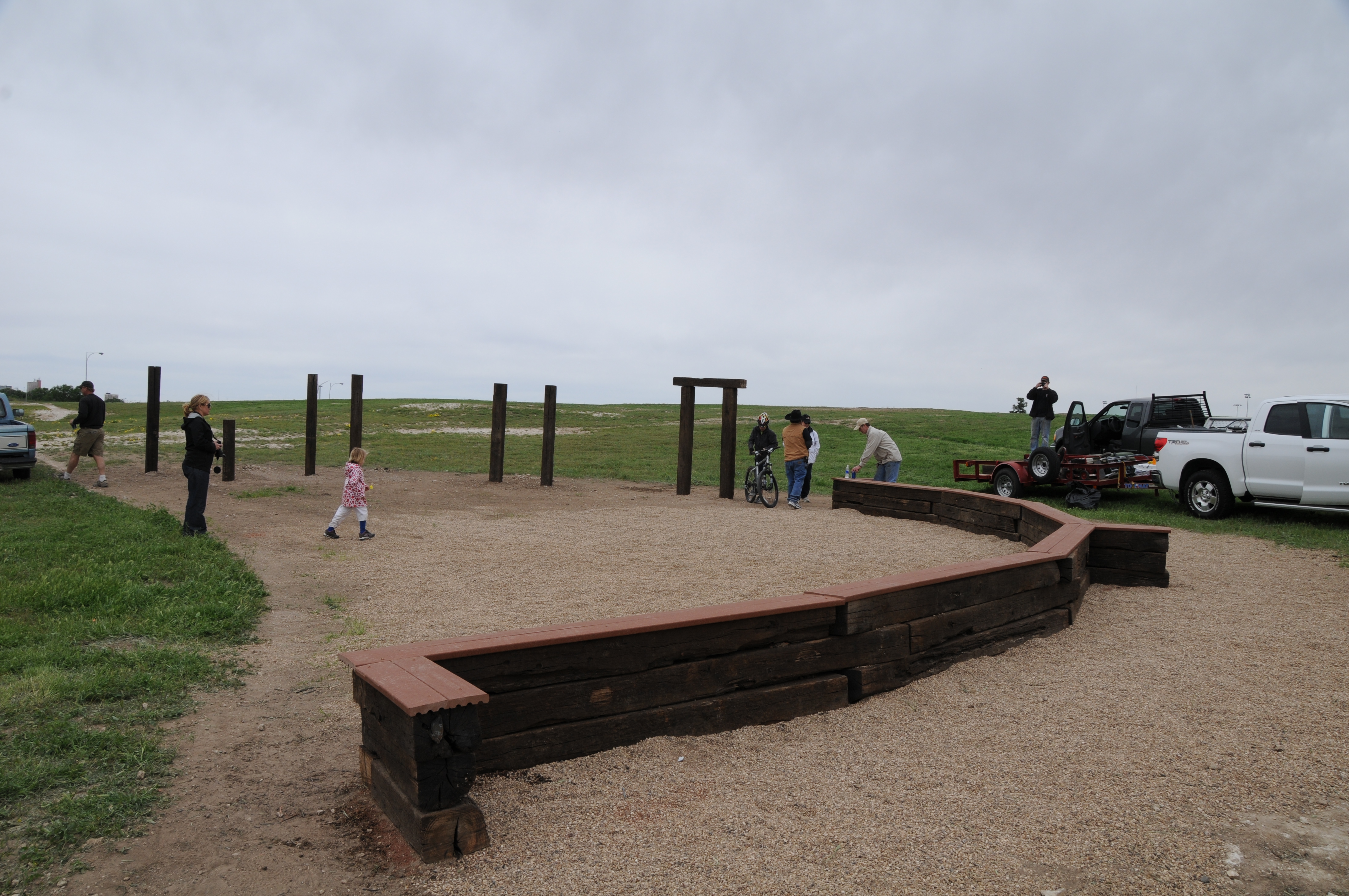
Lubbock Bicycle Rest Area, Eagle Scout Project of Connor Needham

I came up to Lubbock, Texas, yesterday, to assist my grandson, Connor Needham, in constructing a bicycle rest area out at a recreation lake near the east loop.  He seeks to attain the Eagle Scout rank and it was his project to gather scouts and family to build the rest area.

By my count, there were ten adults and ten scouts for the construction that began at 9:00 a.m. this morning and ended at 3:00 p.m. this afternoon.  Connor composed the construction plans–a notebook-size description–and persuaded the the Lubbock City Government to level the ground for the site.  The weather during the day remained cool, in the 60s F., and hot dogs and cold drinks were consumed in great quantities during the middle of the day.

An Eagle Scout from the Goliad Council who goes to school in Lubbock dropped by to give considerable assistance to the effort.

The family and scout effort succeeded.  I remember my own Eagle Scout project to clean out and restore the Coggin Park Pond in Brownwood, Texas.  Connor’s and my project taught us to think outside ourselves for a greater good, beyond self.

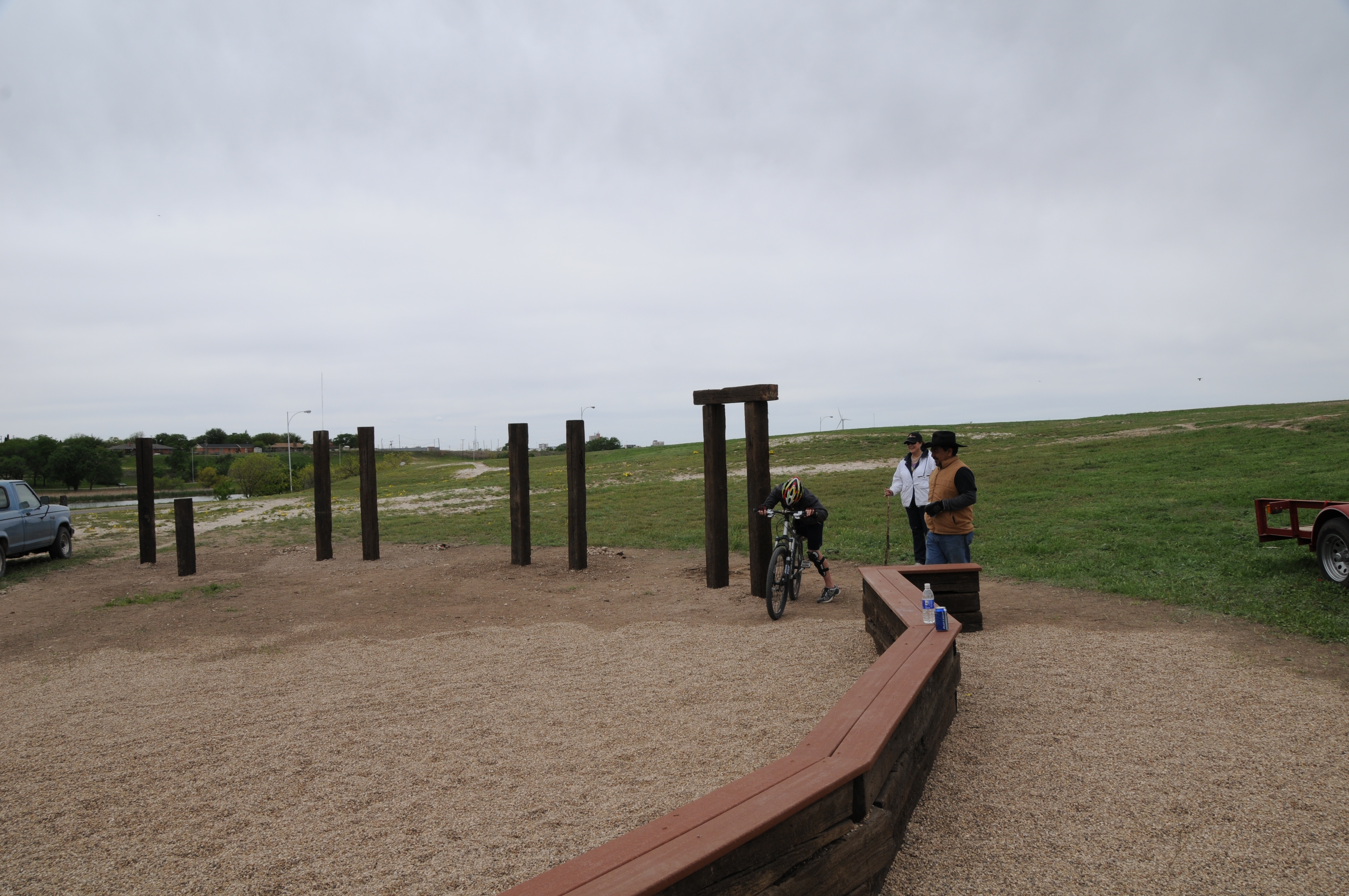
The bicycle rest area is at the head of a series of bike trails about the lake.  As you can see from the photograph, not only is it functional, but also artful–note the Stonehenge design.

Lubbock Bike Rest Area

Connor Needham and Father (Charlie Needham)

14 Comments

Filed under Life in Balance

Taos Pueblo Watercolor

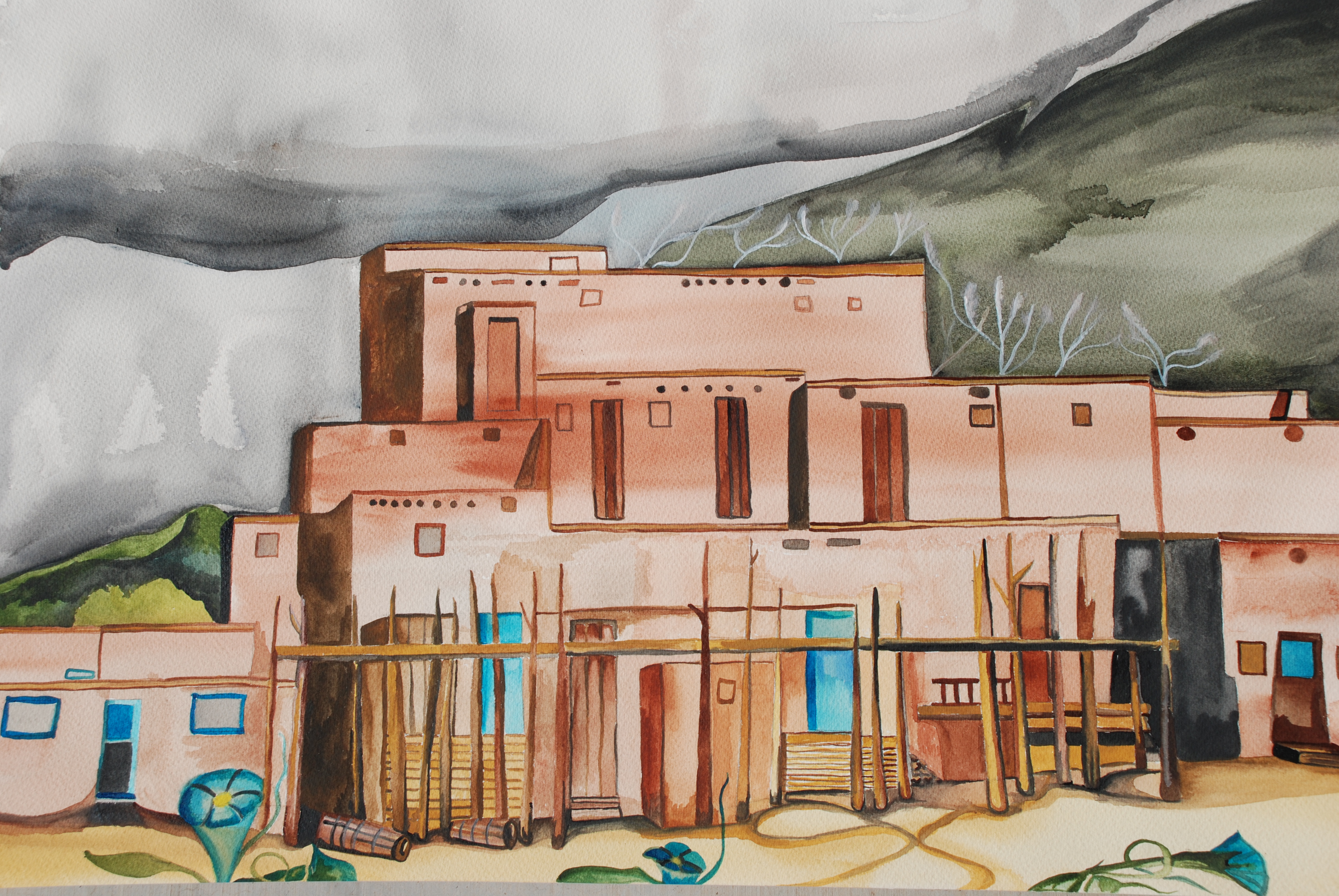
Taos Pueblo In Storm (2009)

WordPress has a function of searching related posts to a blogger’s posting.

This artist, only identified as Hilldowdy1, has produced a magnificent watercolor.  Who is Hilldowdy1?  The artist has several other watercolors online, but there is no information about him or her.

After skimming through Hilldowdy1’s blog, I find out that the artist has traveled in Europe and been at the Chicago Institute of Art.

Please link to Hilldowdy1’s blog by referring to her comment below.  A very fine blog with paintings.

7 Comments

Filed under Taos

Texas Prickly Pear or The Nopal That Coyote Brushes

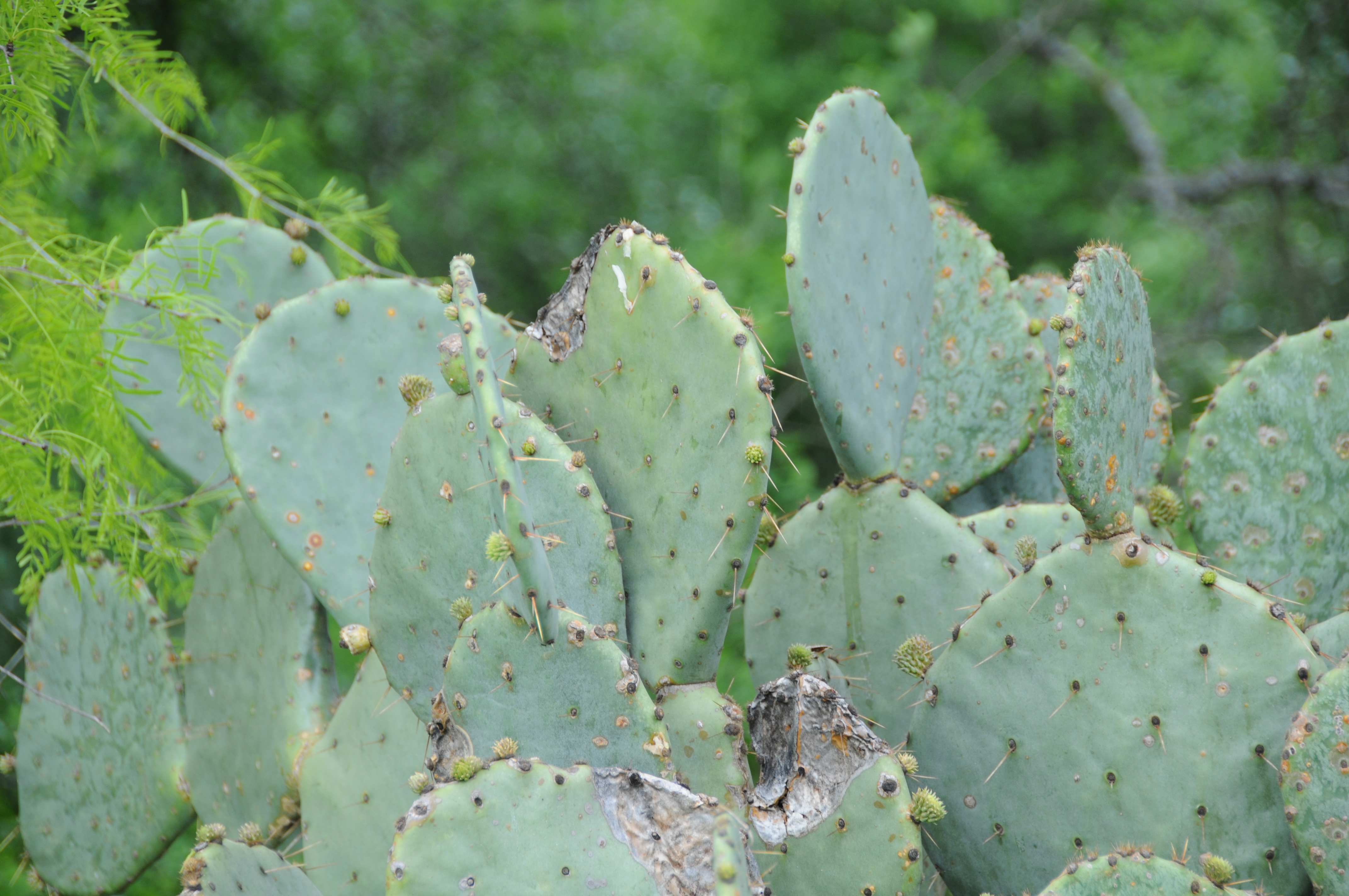
Prickly Pear Bush, April 2010

This is a common Prickly Pear in Texas, also known as Nopal Prickly Pear.  There’s much about the cactus to be learned and applied in the world.

Texas prickly pear has been used extensively for food: the tunas are eaten raw or processed into preserves, syrups and fermented juice, tuna cheese (queso al tuna) and a tea to cure gallstones. Commercial alcohol is produced from the sap and the tender young joints are used as poultices to reduce swelling. The juice of the joints is also used in candle making. For cattle food the spines are burned from the joints. The older pads contain oxalic acid and may cause oxalic acid poisoning when eaten to excess. Of course many animals and birds feed on the fruit. There is a legend that the coyote brushes the spines off the fruit with his tail before eating it. [Texas A&M University, Texas Native Plants Database]

The Texas Prickly Pear is found along fence rows especially on Flying Hat.  I am letting larger stands of the Nopal Prickly Pear alone to thrive.  Can’t do it all.  I have to set up a list of priorities on our place.  Mesquite control in the fields is my first priority, then comes the elimination of broomweed.  On the other hand, I have a fondness for the Nopal Prickly Pear–it relaxes me to see a good stand of it with fruit.  I’ve eaten the fruit in survival training and it’s okay.  Not cantaloupe, but good enough.  It’s soothing to see a healthy stand of Prickly Pear because it’s a sign that no pear-burning has occurred.  And, pear-burning is a task to be avoided.

My family burned Nopal thorns off the cacti for cattle to eat de-thorned cactus pads (other varieties of cacti, too).  My great-grandfather Henry Morris labored at such terrible work during the drought of the 1930s.  For him and others, west of San Angelo, it was a hot, brutal job.   In the 1950s, I used to see and hear the burning of Prickly Pear thorns on ranches near San Saba and Lampasas, Texas.  The sound the propane hand-held burners spewed was low-modulated, hollow–a raspy roar.  Violent, unearthly.  Uncommon sound, even for Texas, and you could hear the roar for miles around.  It was rather disturbing, the sound, because it signified hard times and lack of rain upon the region as well as ghastly work for the crew performing the task.  My uncle and cousin and their work crews would wear bandannas about their faces, shields from errant licks of flame and a filter from the smell of torched plants.  After the toil of the day, blisters arose in bubbles upon parts of their hands and wrists. I never burned pear, for as a boy they made me stay in the shade.

As my uncle and crew burned pear, they would first give the snakes and small animals time to flee from the burning.  The reptiles and animals would, after an hour or so, circle back to their stands of cacti, their habitat singed, but not destroyed.  The cattle would have emergency rations.  And, we might all see another day, a chance for rain.  No good feelings came out of burning Nopal.  We all suffered when pear burned.

Rain brought the good and allowed land and flesh to heal, and the coyote could use his tail for combing spines away–as legend would have it.

Millions of people cook and eat the tender young pads of several species of prickly pear. Besides being more tender, immature pads have less oxalic acid, which could be toxic in large amounts. Nopales (the edible species of prickly pear and the harvested whole pads of the same) are very nutritious. Nopalitos (small pads that are cut into bite-size pieces) are mucilaginous like okra, and good for thickening broths. The mucilage also helps control blood-sugar levels associated with adult-onset diabetes. Diabetes is a common affliction among native Americans who adopt Western high-fat, low-fiber diets. There is also clinical evidence that nopales reduce blood cholesterol. Widely ignored by Anglos, who often regard them as worthless nuisances, opuntias are abundant and healthy foods for those who know how to use them.

Prickly pears are a historically important reason that the Spaniards continued their conquest of the New World. They quickly looted the precious metals they were after, but they also discovered cochineal. Cochineal is a scale insect that feeds on prickly pears. Its body fluids contain a bright crimson, foul-tasting substance that protects it from predators. Ground up cochineal insects were used by native peoples to dye their textiles rich red or purple, depending on the processing. In Europe this color of dye was so rare that only royalty could afford it. In some kingdoms the colors “royal purple”(derived from a sea cucumber) and, after discovery of the New World, royal crimson from cochineal, were reserved for the king by law. The cultivation and export of cochineal dye became a major economic activity, and its source was kept secret for many years. The commercial cochineal was harvested and later cultivated from prickly pears in southern Mexico. Our Sonoran Desert species contain the same dye.  [From Mark A. Dimmitt, A Natural History of the Sonoran Desert (ASDM Press, 2000), as quoted from webpage of Arizona-Sonora Desert Museum Digital Library on Opuntia wilcoxii.]

3 Comments

Filed under Recollections 1942-1966