Fanny at the Vet

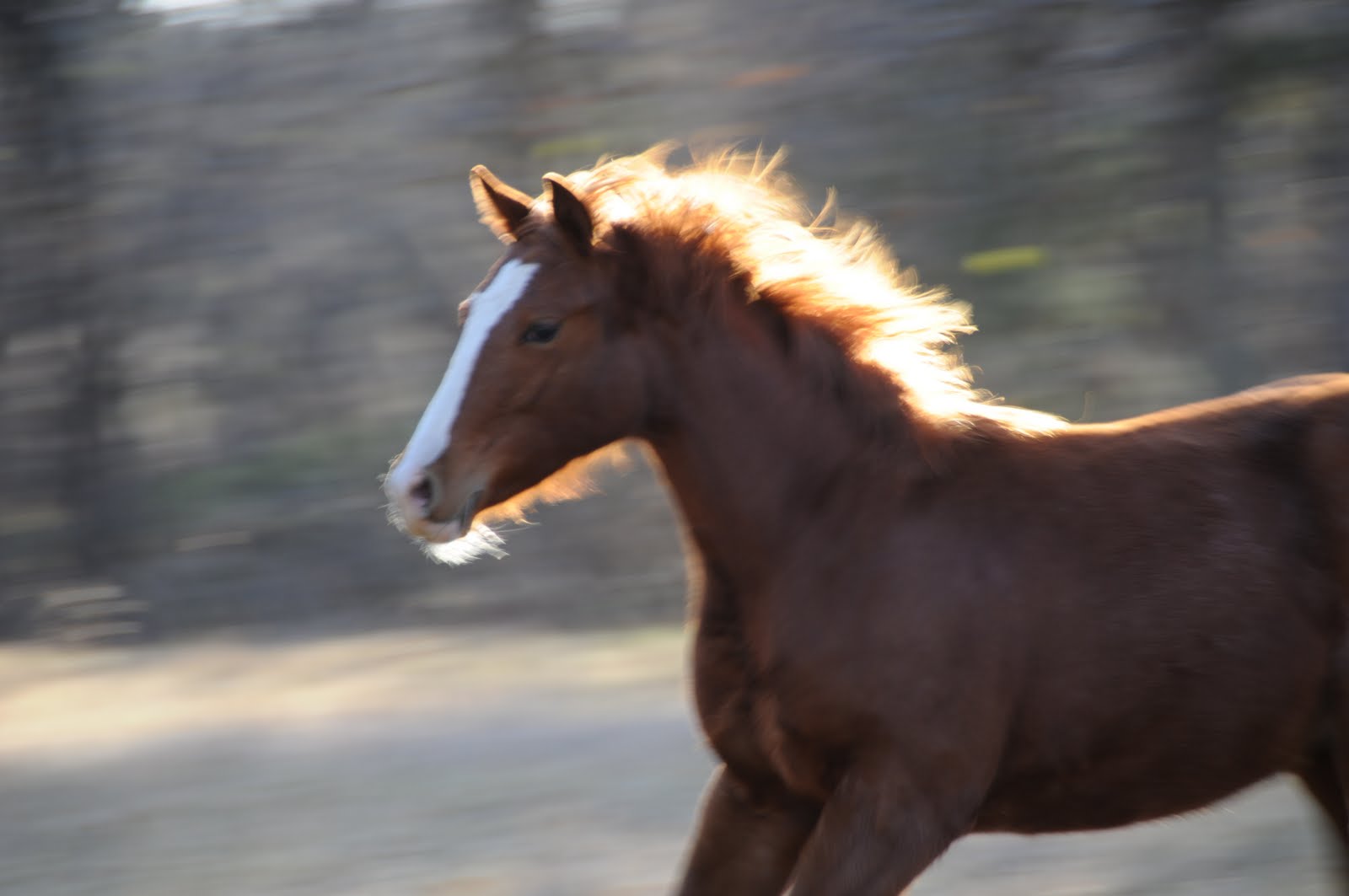
Shiners Fannin Peppy, Photo by B. Matthews (2009)

Sometime last Saturday night or early Sunday morning, Shiners Fannin Peppy (Fanny) severely lacerated her right leg between the fetlock and knee, a gash with minimum loss of blood.  When I cleaned the wound, I discovered that it was much more serious than at first glance and may have penetrated to the bone.  The night before, as a matter of routine, I had placed four horses in two corrals and had left open entry gates to the stalls.  Fanny is an active two-year old and may have injured herself on a gate that was open.

Within two hours of this emergency, I drove Fanny to Equine Sports Medicine & Surgery (ESMS) in Weatherford, Texas, and Dr. Skeet Gibson and his staff took x-rays, cleaned the wound, wrapped her leg and put Fanny in a comfortable stall with alfalfa and Purina Strategy (grain).  He sutured the wound on Monday after the swelling decreased.  Fanny has remained at the ESMS since Sunday and will be confined for a few more days until the laceration heals.  There was no bone impact from the laceration, although another round of x-rays will be taken in two weeks to determine bruising.

Dr. Gibson says the prognosis is very good and the chance of bone damage is minimal.

Fanny is the horse trained by Duncan Steele-Park at GCH Land & Cattle Company.

I have been visiting Fanny and she is healing nicely.

3 Comments

Filed under Horses, Shiners Fannin Peppy (Fanny)

Picnic at Flying Hat

Since last Monday, Brenda and I have been hosts to Wendy, my daughter and her two girls, Olivia and Anna Belle.

Yesterday, we drove to the Pecan Tree Pasture for a picnic at 11:00 a.m. to beat the heat of late-spring June.  We had ham sandwiches, potato chips, cookies, white wine and Crystal Lite.

I had shredded the grass underneath the pecan tree with the Case DX-55 several days ago and we spread two tarps and several Mexican blankets on the tarps to provide a buffer from bugs and sticky grass.  We stayed in the shade for over an hour and even reclined and rested on the blankets, looking up into the tree. I dozed slightly.

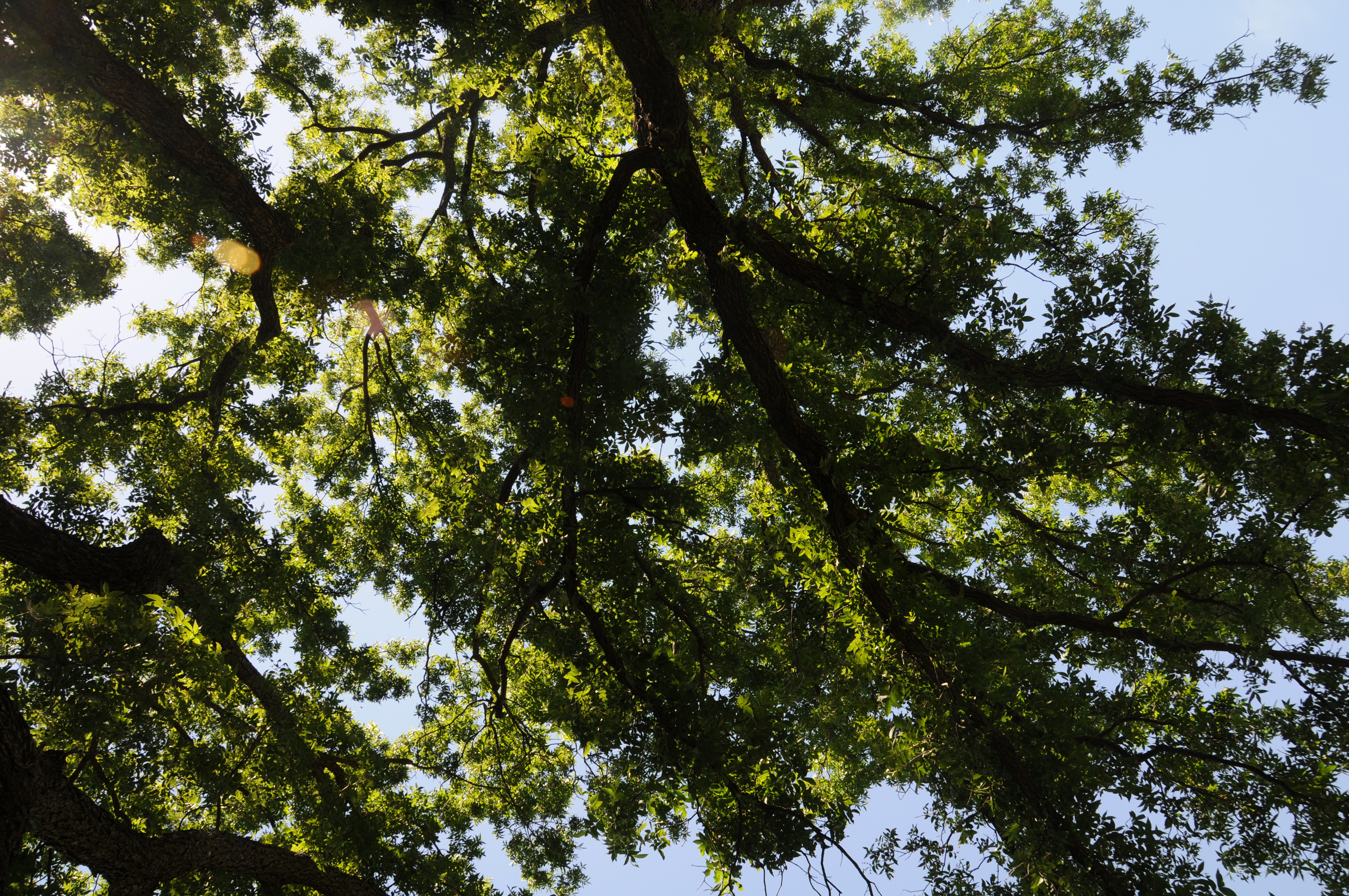
Looking Up from the Picnic (June 2010, Photo by B. Matthews)

Making this picnic a bit more eventful (or painful, depending on your taste), I sang two songs, “O Bury Me Not on the Lone Prairie” and “Ghost Riders In the Sky,” songs I knew almost all the words.  I also quoted some poetry, improvised of course, in honor of the shade of the pecan tree and the slight breeze that cooled us.  Not a good piece of poetry, but my heart was in it.

Comments from the family:

Brenda: “It’s pretty hot here.  I forgot the Love Dip.”

Wendy: “Isn’t this so nice under the sacred pecan tree….We will always remember this.”

Brenda: “If it was Sunday, we wouldn’t hear as much traffic on the highway.”

Olivia: “There’s a bug!…Where are the pecans?”

Anna Belle: “Goo, goo, burble, burgle, chkk.”

Picnic Snooze (June 2010, Photo by W. Needham)

9 Comments

Filed under Flying Hat Ranch

Field Log 6/18/2010 (Fawn)

North Erath County, Texas, Lat 32.43 N, Long -98.36 W, elev. 1,086 ft. Turkey Creek Quad.

Salt Creek Field Hike

Yesterday, Wendy, my daughter, and Olivia, my granddaughter, and I hiked through the grove on a short field trip.  I gave Olivia her first lesson in using the field compass: the arrow points north, where is north?  Show me.  She had been given a military field compass, basic structure.

Field discoveries and observations: mussel shell, dead wild turkey with feathers scattered, several Swallowtail butterflies and skeletal remains of small animals.  Rocks of various colors collected for Olivia’s “rock bag.”  Identification of poison ivy and sumac — to be avoided, of course.

The horses, Hija, Star and Fanny followed us closely until we got deep in the grove and then they galloped through the grove’s tall grasses.  They were curious of the little one, Olivia.  I gave instructions to walk deliberately and straight while the horses lingered with us, so as to let them clearly know where we were.  (Lilly was in the Broke Tree corral with her hay.)

Down in the grove we identified recently-imprinted deer tracks, but saw no deer.  I pointed out the sharper edge of the deer track indicated the direction the deer was walking.

Taking the F-150 to the Far Field

After the hike into Salt Creek bed and grove, the temperature climbed to the upper 80s F. and we came back to the barn and drove the F-150 to the far field, beyond the creek where I have nurtured native grasses for several years, including a recent spring planting of native grass and flower seeds.  The grasses were high and from a recent rain of 2.00 inches quite plush with green and erectness.  It was much too hot to amble across the grove into the pasture and return by foot.

Last week I had shredded a six-foot path in the grove and in the Pecan Tree Pasture for safety’s sake and mobility.  The Dooleys had told me that several copperheads and rattlesnakes had been found on their place.  The copperheads, Kelly Dooley said, had been attracted by the recent addition of a small pond with koi fish about their house.  They may deconstruct the small pond.  I have only seen grayish coachwhips on our place.

As we turned the F-150 onto the southern, shredded pathway, running east-west on the far southern side of the Pecan Tree Pasture, we looked down the path and at the far end and there was a fawn, about two-tenths of a mile away.  The fawn browsed leisurely along the path while, I presume, its mother lay in the tall native grasses.  It was quite small with large ears.

It was my first sighting of deer for several months.  We corroborated, as best we could, that it was deer and we turned the F-150 on the path I had shredded under the pecan tree.  Wendy wants to have a picnic lunch  under the pecan tree on Saturday.  I was still raving about the deer as we turned onto the highway to come back to the house.

______________________________

Notes:

Since settling here in 2003, the deer count has diminished drastically from a weekly count of 15 to zero.  Deer used to migrate from the Blue and Hall places to the east of us through our house pastures and into the grove and southern Pecan Tree Pasture.  The Halls cleared brush from their small acreage and eliminated cover for deer.

The distance for the sighting of the deer was two-tenths of a mile.  Wendy sighted the deer.  We had no binoculars so I could not bring the image closer.  My only reservations on a fully-positive identification were that I did not see the mother deer and there seemed to be a white stripe on the muzzle of the fawn, but that could have been an illusion from the angle of the sun (we were looking eastward).

I intend to let the grasses grow high near the edge of the highway to give a privacy hedge to shredded pathways.  As of now, the deer along the pathway can be observed from the highway.  Given the present disposition of blood sportsmen in our state, a sighting of one deer will result in leasing several deer blinds on contiguous land.  I have observed hunters placing apples on fence posts to attract deer onto land they have leased — not the ethic of most hunters I know.

I have some photos pertinent to field activity, but they were not taken yesterday on the field trip.

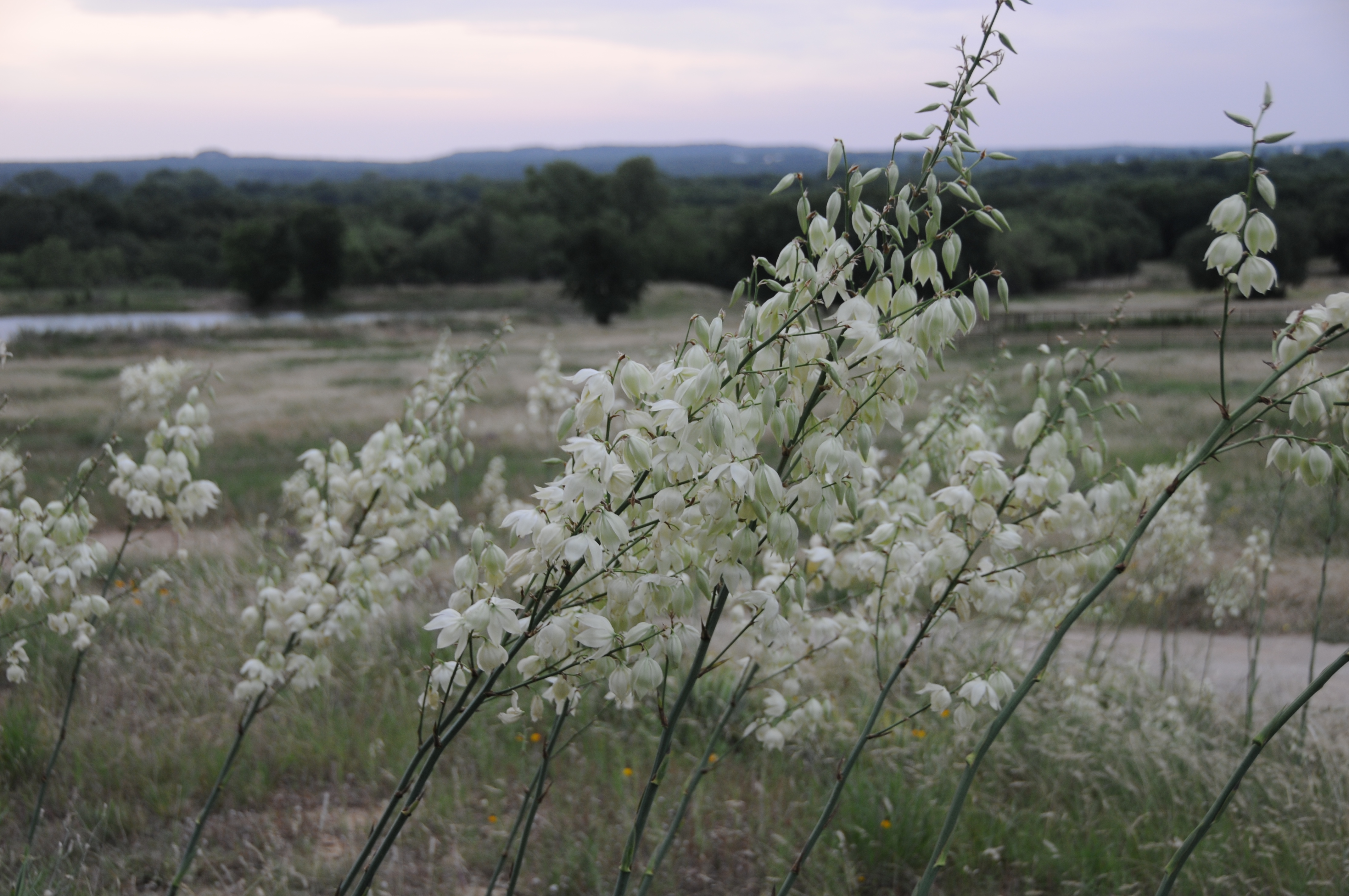
Yucca Blossoms in June (Photo by B. Matthews, 2010)

Olivia Needham with Star, Hija and Fanny (Photo by B. Matthews, June 2010)

Texas Groundsel (Photo by B. Matthews, May 2010)

8 Comments

Filed under Field Log

Larry McMurtry and the Barber

Last evening, I finished reading Larry McMurtry’s Books: A Memoir (2008).  He sustained a theme about books in his life, defining himself in book lingo as antiquarian, second-hand bookseller and book scout.  A few years ago, he settled back in his hometown of Archer City, Texas, bringing his Georgetown bookstore business into the small Texas town, about two hours away from where I live.  The name of his bookstore in Archer City is the Blue Pig (merged with his Georgetown Booked Up bookstore) from the notorious pigs in Lonesome Dove.  He owns six buildings on the square in Archer City, five of them devoted to books, about 400,000.  At his home, he has a personal library of 28,000 volumes that began with his original nineteen books as a boy.

Dustcover of Books by Larry McMurtry

I’ve been there twice and have an appointment to go again in the near future with my wife and friends, Selden Hale and Claudia Stravato.  I am interested in purchasing ethnography of Western America.

I met McMurtry once in Amarillo, Texas, where he lectured at the Amarillo Art Center back in the 1980s.  I asked him what was the greatest novel ever written and he replied, “Anna Karenina.”  He is not fond of novels anymore, preferring non-fiction, especially travel journals of the late-nineteenth, twentieth century.

McMurtry has bought bookshops in bulk and one that he bought was Barber’s Book Store in Fort Worth, Texas.  When I came to TCU in 1990, I asked about second-hand bookshops and was referred to Barber’s.  It was downtown.  (Last weekend when I was in Fort Worth, I saw that the sign for Barber’s was still erect over the closed shop.)  The shop was quite large and had a good collection of Western Americana.  I purchased several books, including a five or six-year collection of The New Mexico Historical Quarterly.

15 Comments

Filed under Recollections 1966-1990

Running With Shiney

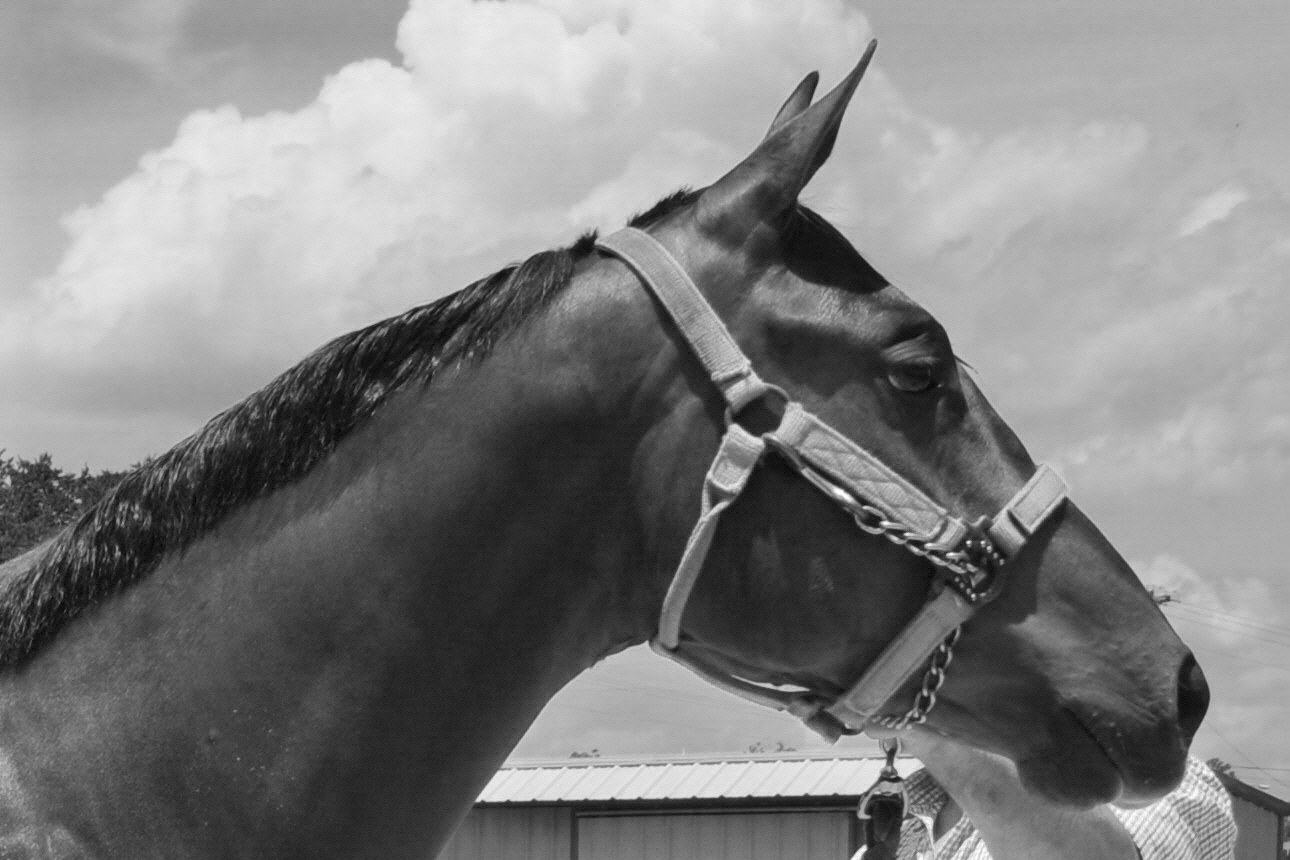
Shiners Fannin Pepto (2010)

Bittersweet is the moment when you perceive that the boy has become a man, the girl a woman, for then you see passageways that are closed forever.  Those days of softness and pliability are gone.  Ahead, there appears toil and disciplined hours that hopefully will insure security and comfort in all seasons, so that  life can go on with moments, perhaps hours, of rest and sociability with family and friends.  As a caretaker for the young, be they human or not, the letting-go as they walk away or as you drive away from the curb extracts a pain within that circulates around the thoughts: Have I done well enough by them?  Do they have what it takes to survive?  What could I have done different?

I trained Shiney (Shiners Fannin Pepto) in ground manners as much as I could while working and traveling at a full-time job.  My life with horses began only eight-years ago when my parents died and I inherited two paint horses.  I began to change when I worked horses.  I gradually became more patient with my life in west Texas that had turned out quite different than I thought it would.  I added another horse.  I bought a fine-blooded mare (Sweet Hija) from King Ranch and from her issued two foals, Fanny and Shiney.  The time came about three months ago to send Shiney to a professional horse trainer to fit for sale.  When I sent Shiney to Jimmie Hardin’s in Aubrey, Texas, I had carried the colt as far as I could.  Since I had only worked with mares or geldings since 2002, he was more than I could handle — or so I thought.

Jimmie Hardin and her crew, especially Peppy, her right-hand trainer, worked with Shiney to fit him for sale: standing, tying, leading, and running with the handler.  Good manners.  Midway in his training, I went up to see Shiney’s progress.  I saw his development in many areas, but one behavior held my attention:  when Shiney ran with Peppy in the corral, he held his head high and the two of them trotted in unison, turning this way and that way, Shiney showing his form and muscle and even excitement to run with a person.  As I first saw them running, I wanted to run with my horse, my colt, that young thing I had blown my breath into his nostrils on his first day, a year ago, May 15, 2009.

Four days ago, Brenda and I picked up Shiney from the trainer.  His mane was braided, coat sleek, and hair trimmed.  All fit for sale in Shawnee, Oklahoma.

We unloaded Shiney after a four-hour trip and I walked him around the sale grounds.  Then, I began to walk briskly, faster, and then broke into a trot.  I held the stud chain close under his chin, neither tight nor loose, and Shiney picked up his pace and we both ran together.  I turned and he turned with me.  I stopped, he stopped.  We ran again.  There, it happened, a powerful creature, joining with a person.

As I walked back to Brenda, she was smiling so broadly: He is so beautiful.  He holds his head so erect.  He is gorgeous.  You two looked so good together.

On sale day, I ran with Shiney three times.  I didn’t have to.  Once for buyers from Laredo and once for Steve Phipps of Springfield, Missouri, who purchased him.  We did not even lead him through the sale ring.  The price was right and Phipps was the one for Shiney.

The third time I ran with Shiney it was for me and him, alongside the barn and trailers, outside in the morning sun of Oklahoma.  I never grew tired or weary with our runs.  I was holding on to him for as long as I could and then I had to let him go.

I’ll never forget as long as I live that I once ran with a colt that was becoming a stallion.  Bittersweet, to see him grow.

9 Comments

Filed under Horses, Shiney (Shiners Fannin Pepto)

Field Log 5/30/2010 (Coneflowers)

North Erath County, Texas, Lat 32.43 N, Long -98.36 W, elev. 1,086 ft. Turkey Creek Quad.

General Log

Weather has been hot, 90 deg. F. plus, last few days.  Air is almost completely calm.  Some slight breeze from the south.

Grass is drying up, browning.  Seeds are become ripe and falling off.

This week, Shiney goes for sale at Shawnee, Oklahoma.  We leave on Thursday, come back on Sunday.  The most important objective is guarantee that Shiney will have a good home, regardless of the auction price.

F-250 in shop for air conditioner repair.  Have been looking at new and used F-250s to purchase.  The trucks have been repaired frequently in the last week, ranging from oil pumps to the F-150 bearings and now the air conditioner.

Barn Swallows and Feeding Wild Birds by Hand (A Method Observed)

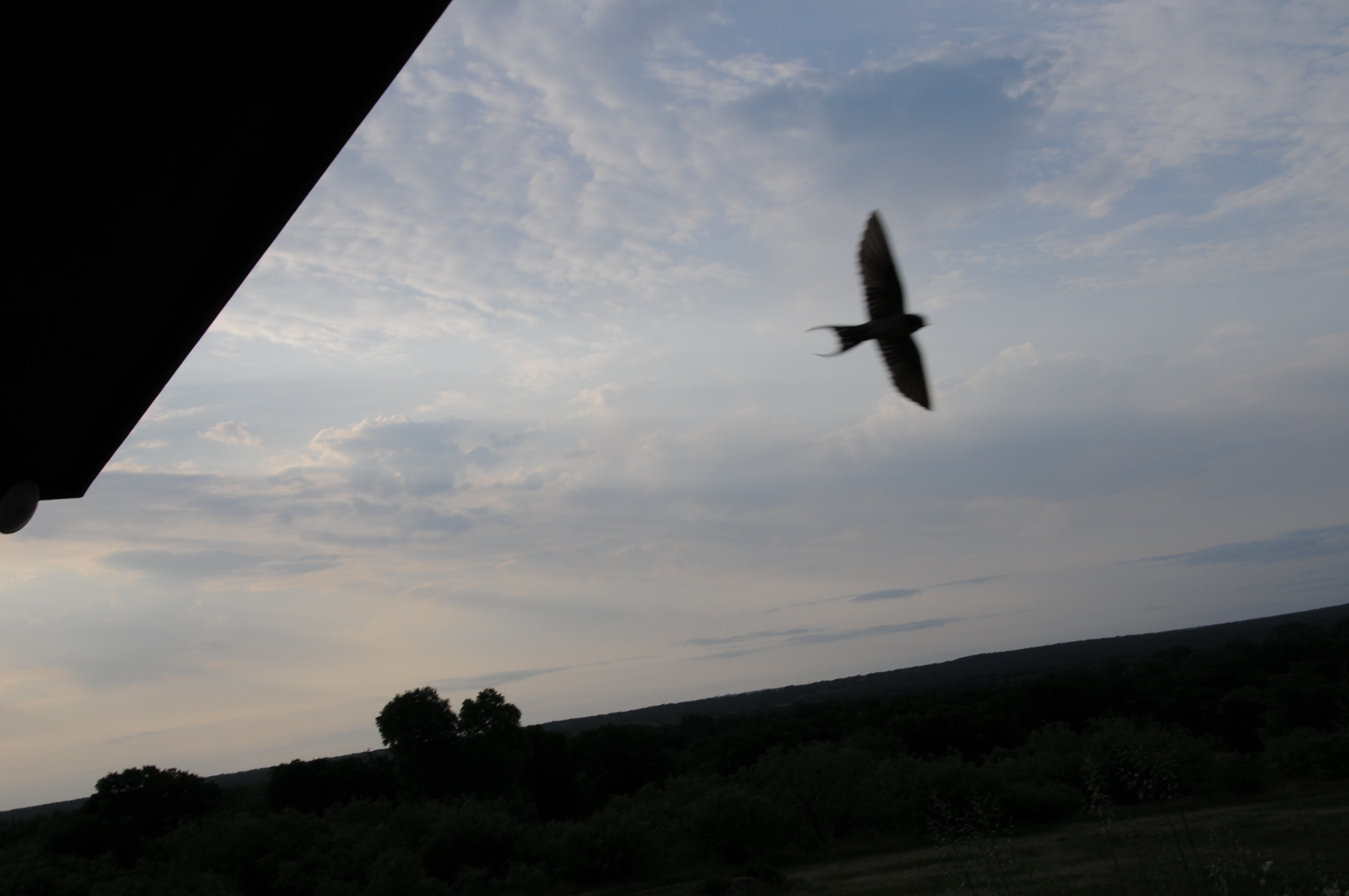
In the evening, Barn swallows (Hirundo rustica) encircle our ranch house on Poprock Hill and feed on mosquitoes and flies.  A nest of barn swallows have hatched fledglings on our back porch.  Notice the characteristic sharply-notched tail.  This photograph was taken in the morning.  If I sit quietly on the porch, the swallows will angle under the eve of the porch and fly within three or four feet of where I am sitting.  Last year, a resident wren that fed about the porch landed on my hat and pecked around on my hat for about a minute until it flew off.   I will set the camera up for remote operation and see if I can photograph the wren on my hat.  When I lived in Paris, I was always intrigued by the young man at Notre Dame that would sit in a chair about the sidewalk and hedge and have the sparrows feed out of his hand.  The method he used was to look away from the birds and extend his arm back from his body (like in handing off a baton) so that the birds did not see his eyes or mouth (specific threat areas for birds).  The young man was neither monk nor priest, but a lad that loved birds.

Barn Swallow in Flight, Photo by J. Matthews

Wildflower Photography and Hoe Downing with Bull Nettle (Not a Dance)

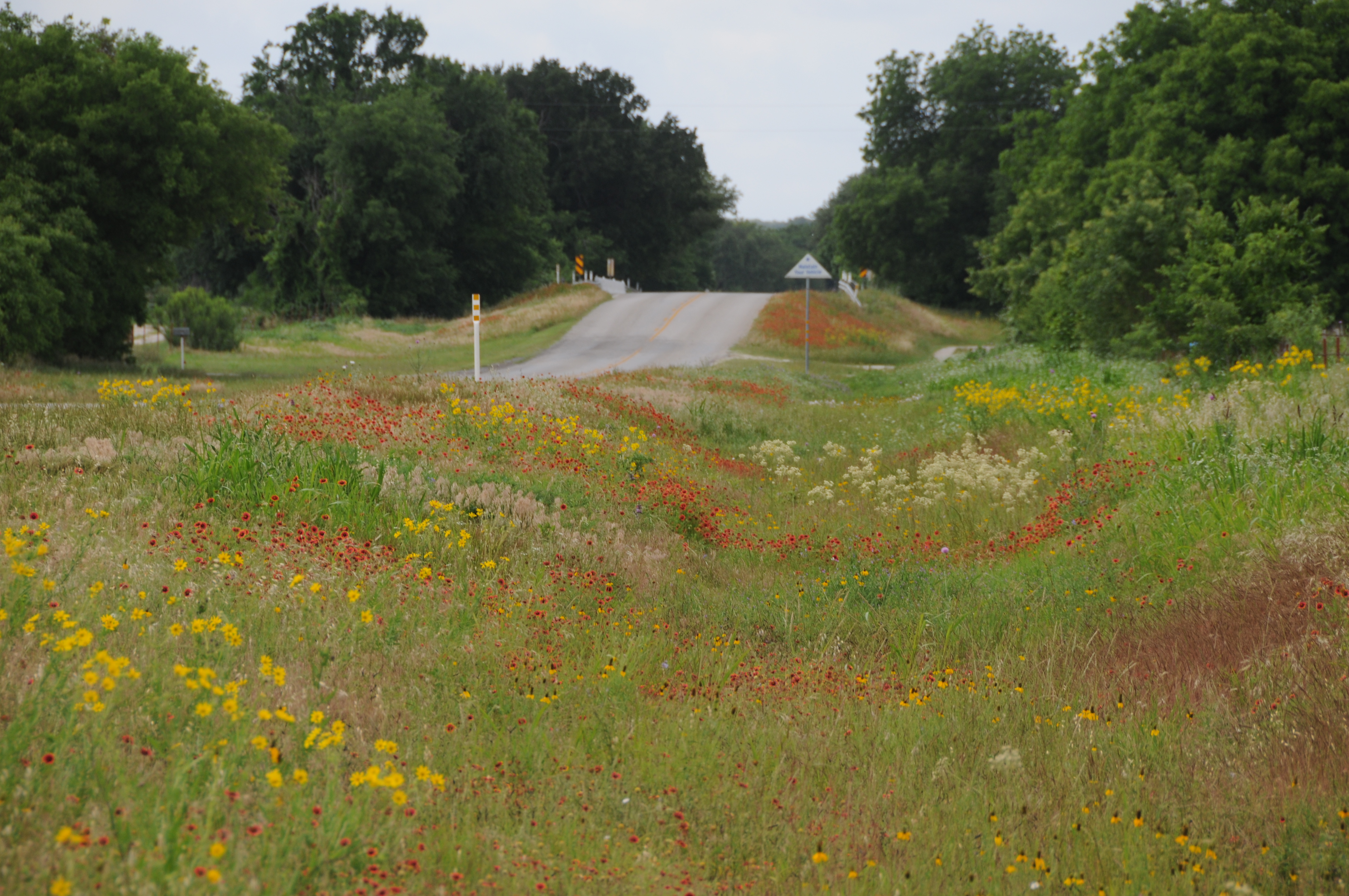
On May 23, 2010, Brenda and I drove the F-150 to Pecan Tree Pasture for her to photograph wild flowers and for me to hoe down Bull Nettle.

Wild Flowers alongside SH 108 at Gate 3 Entrance, Photo by B. Matthews

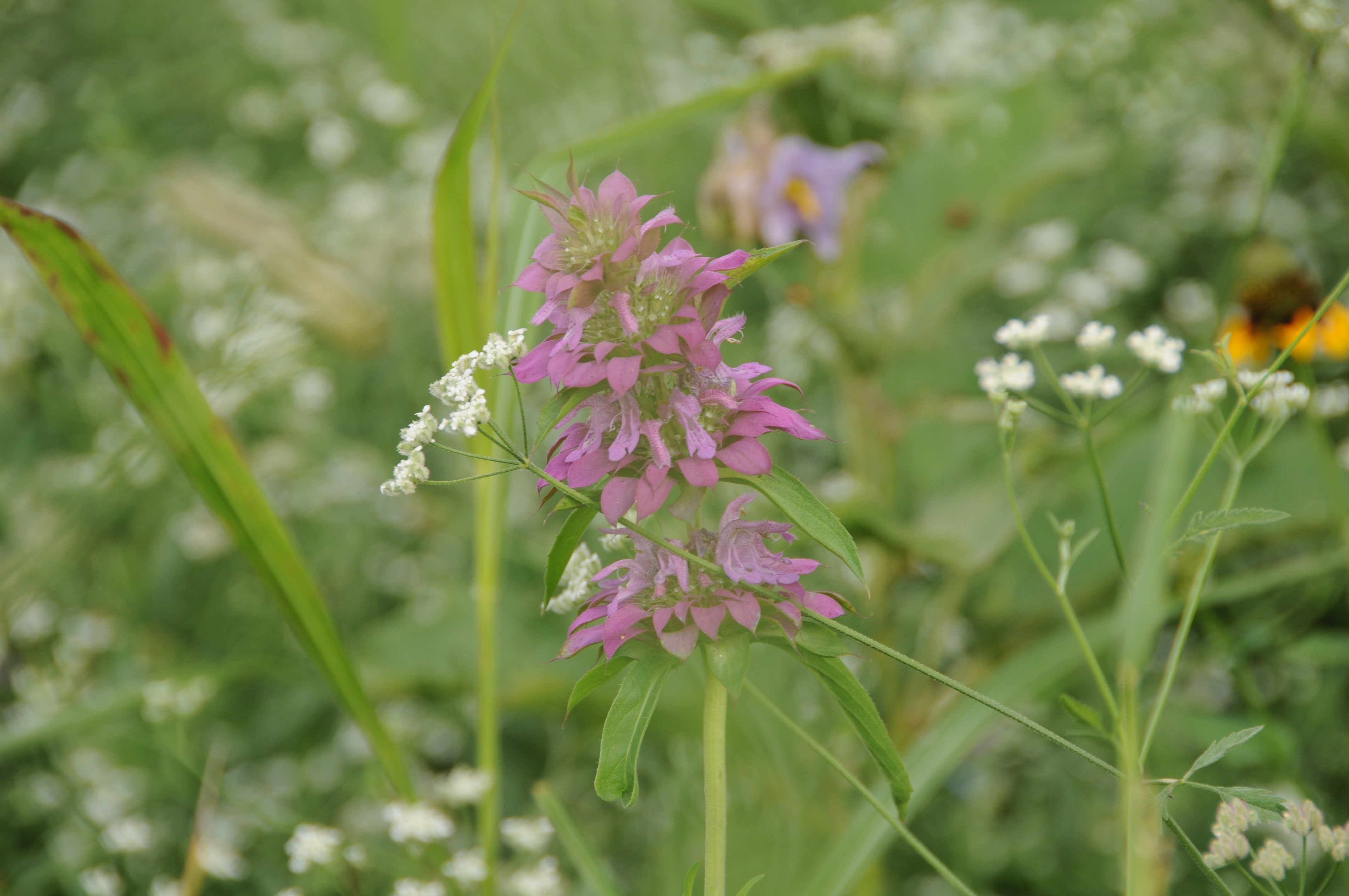
Lemon Horsemint, Photo by B. Matthews

This blossoming plant is the Lemon horsemint (Monarda citriodora Cerv. ex Lag.)  It is also known as the Lemon beebalm, Horsemint, Purple horsemint or Plains horsemint.  Several stands of this plant are about the place.  Over near the pecan tree, a few blossoms are present.  The biggest stand of Lemon horsemint is back up by the barn, about an old hearth location that goes back for several decades, perhaps prehistoric.  The Lemon horsemint is attractive to butterflies and bees.

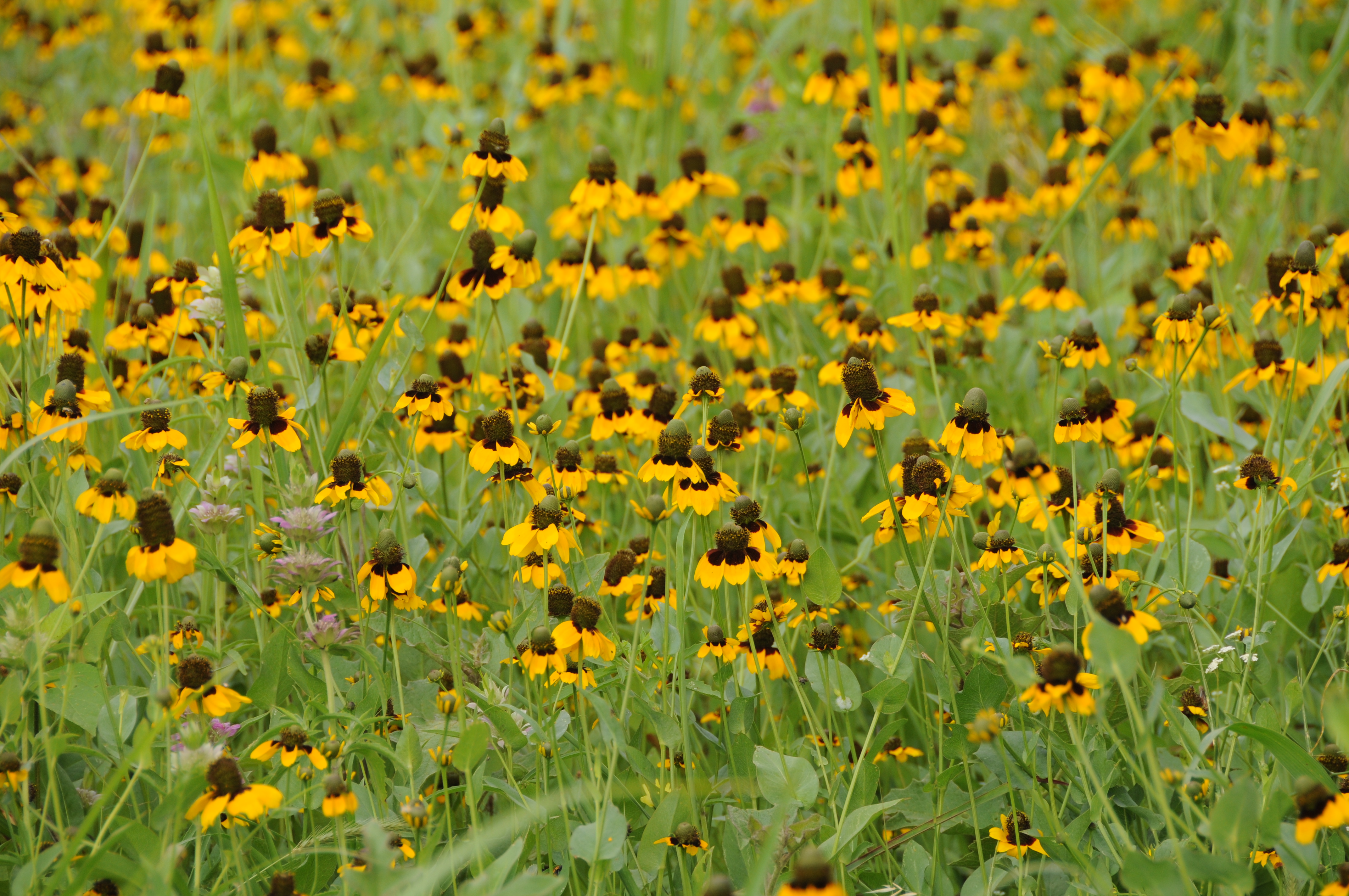
Clasping Coneflower, Photo by B. Matthews

This yellow-leafed blossom is the Clasping Coneflower (Dracopis amplexicaulis).  It is also know as Clasping-leaf Coneflower.  It differs from the Black-eyed Susan and Mexican Hat.  This particular species has medicinal qualities: the Cherokee used the  juice of root for earache and a tea, made from the leaves, was used as a tonic and diuretic.

Unidentified Plant and Blossom (Now Identified)

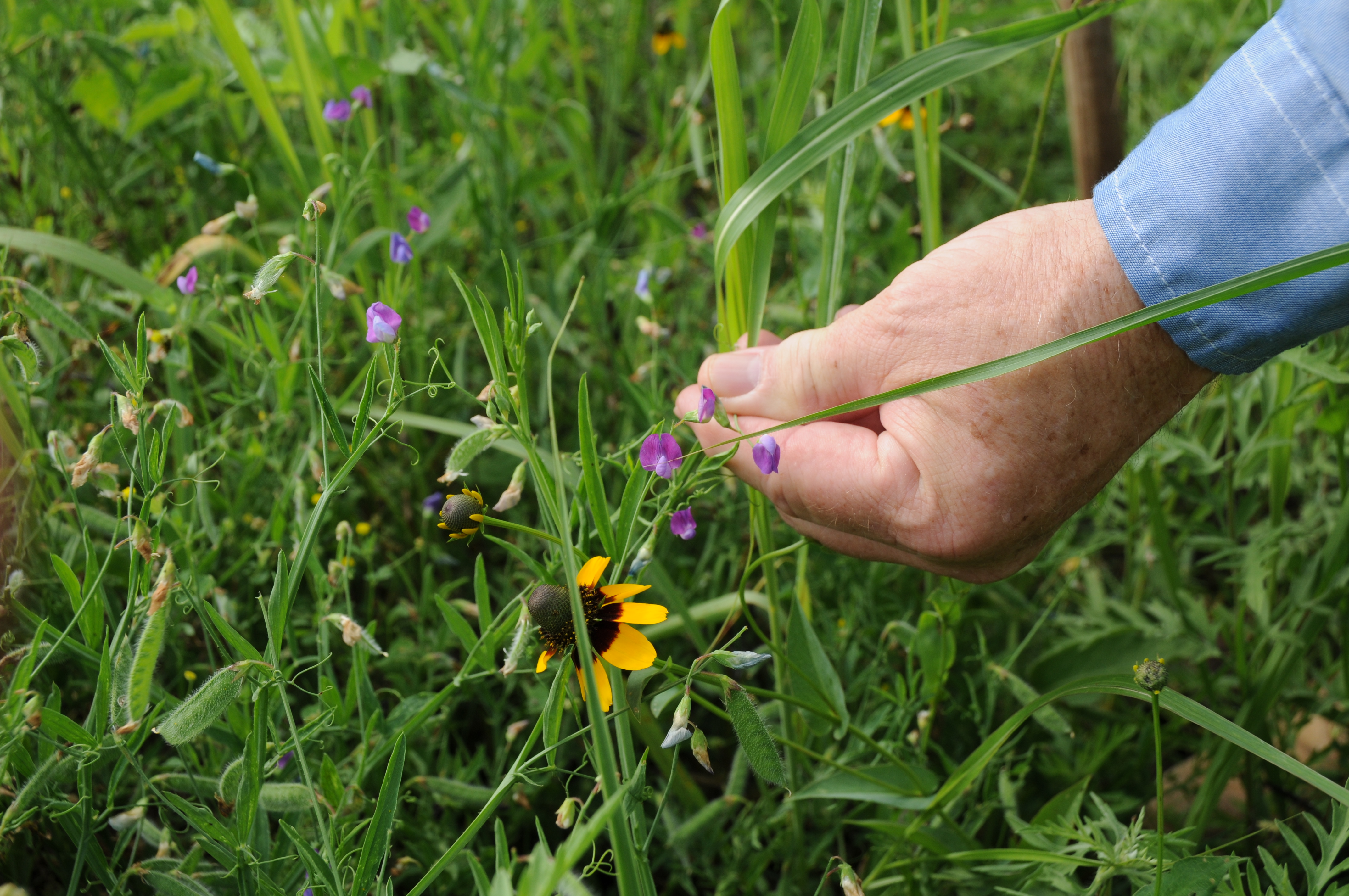
Bush Vetchling or Manystem Pea, Photo by B. Matthews

Here we have an unidentified plant and blossom.  (See update for identification in next paragraph.)  I first thought it a Skull-cap (Scutellaria drummondii), but I am not sure.  Like my previous analysis regarding the Mariposa and Wine-cup, I must go back over to the pecan tree area and re-photograph and take a sample of the full plant, not merely the blossom.  One of the interesting aspects of posting this photograph and determining genus and species is that I look more closely at the photograph to make sure I get it right, and upon looking closer at the photograph, I see bean pods that I did not notice while I was in the field — see if you can spot the pods.

Update:  The unidentified plant and blossom is the Bush Vetchling or Manystem Pea from the Lathyrus genus, more than likely the species montanus or nissolia.  The Lady Bird Johnson Wildlife Center lists several species including polymorphus and brachycalyx ssp. zionis. Thank you, Grethe Bachmann of Thrya Blog and Flora and Fauna Blog for the identification.  I never would have found it since it does not appear the two general sources of plants I use for identification.  You can go to Grethe’s blogs by linkage from my blogroll on my Homepage.

Texas Prickly Pear, Photo by B. Matthews

This is the blossom of the Texas Prickly Pear (Opuntia engelmannii var. lindheimeri).  The blossoms are especially brilliant.

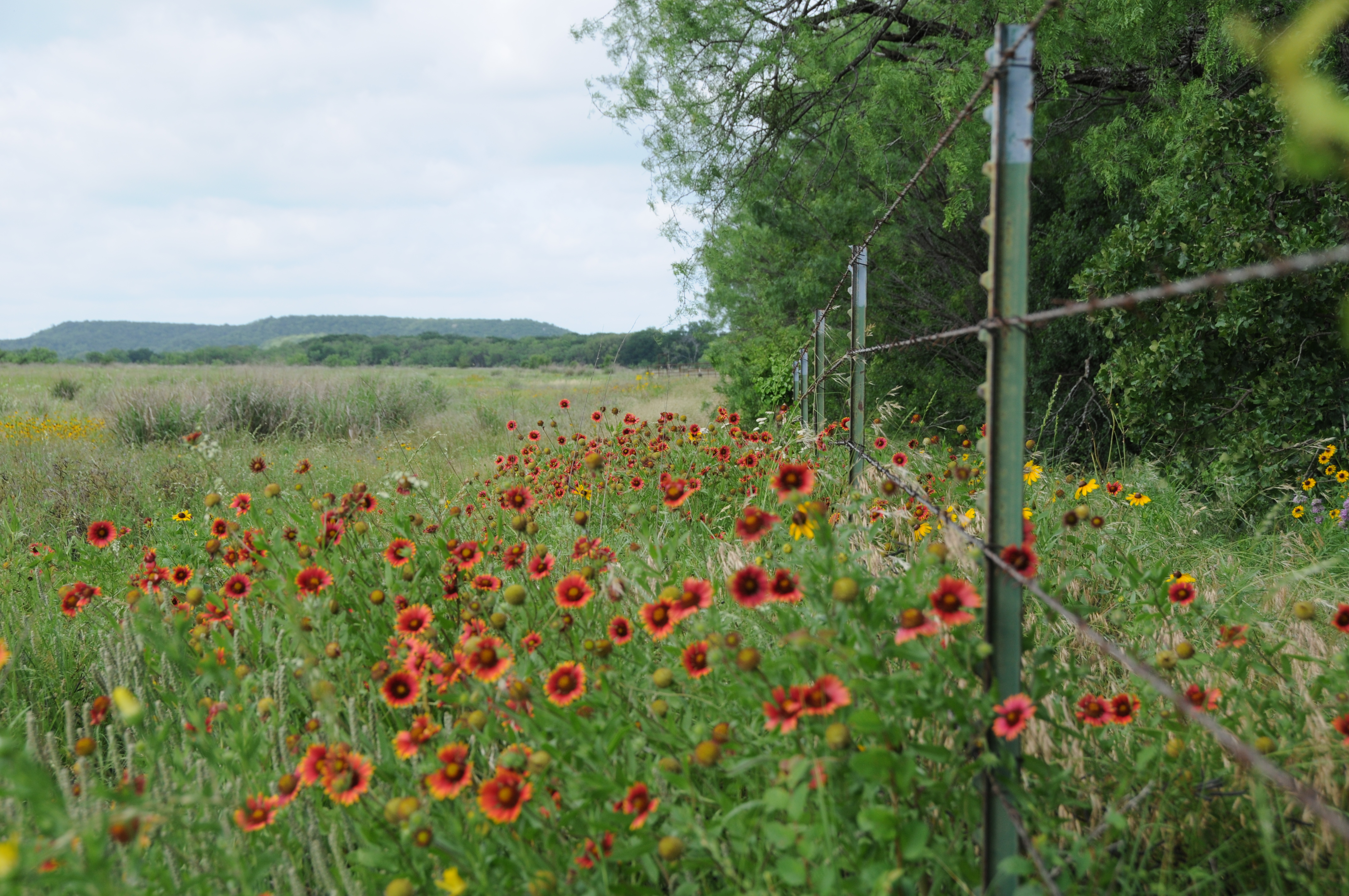
Indian Blankets with Shelton Rock Hills, Photo by B. Matthews

This is a stand of Indian Blankets with the Shelton Rock Hills (north and south) in the background.  The direction of the camera is west.  To the right (north) is The Grove and Salt Creek.

With this hot weather, the horses go back to the stables for shade and water.  I attend to them at about 6:00 p.m. everyday.

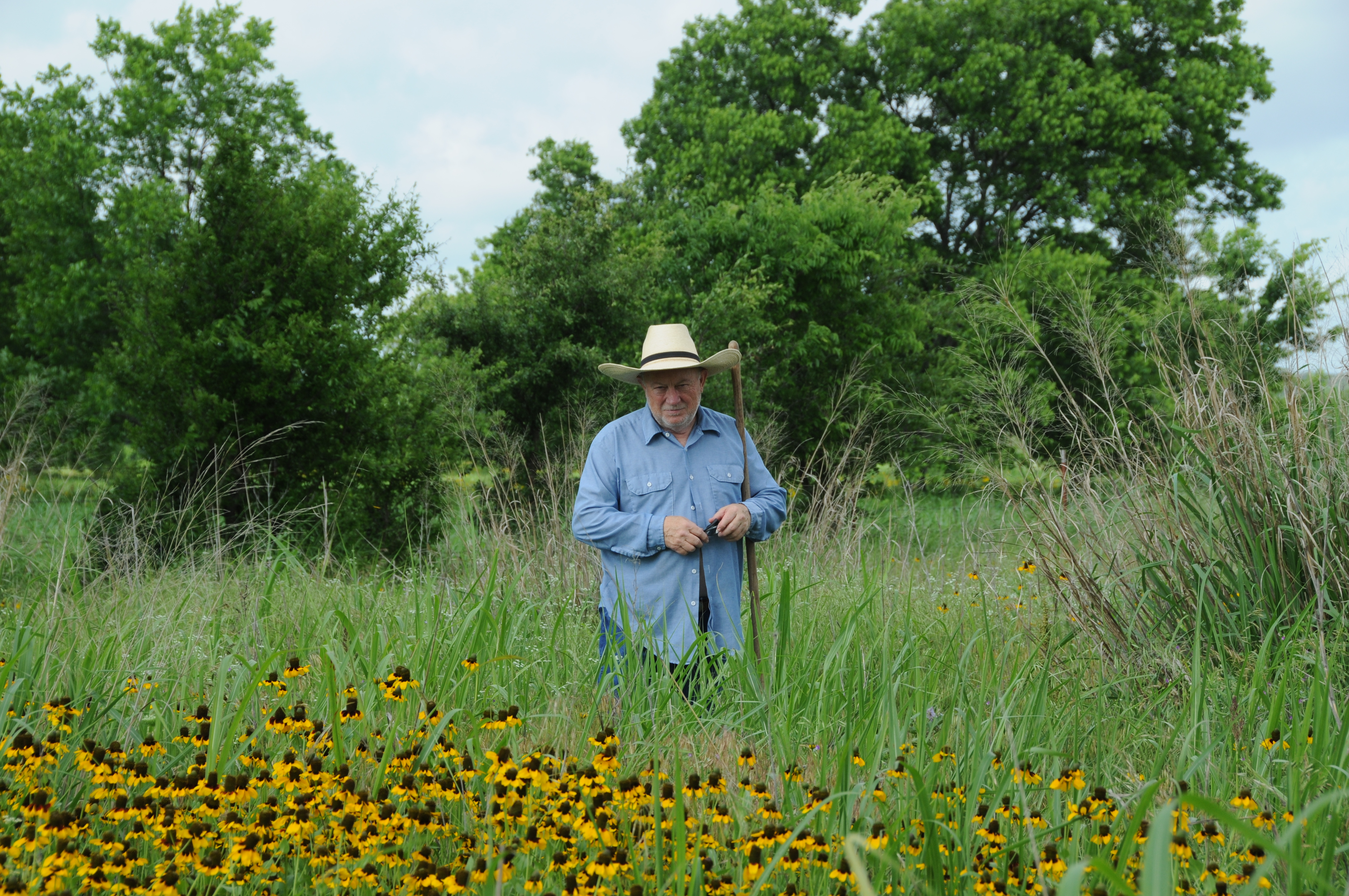
Jack Matthews with Hoe and Clasping Coneflower (2010), Photo by B. Matthews

I am actually in a much, much better mood than what this photograph belies.  In the pasture, I’ve been hoeing a few Bull Nettle down and it is rather hot, late in the morning.  Note the large stand of Big Bluestem grass to my left.  I’ve been careful to keep the Big Bluestem from getting shredded for several years and now it grows higher than me in the field.  Please also note the tool on my left side.  That is a hoe.  Not machinery, a manual tool.  Kinda Luddite-ish, don’t you think?

15 Comments

Filed under Field Log, Plants and Shrubs

Santa Fe Wine Festival is Coming!

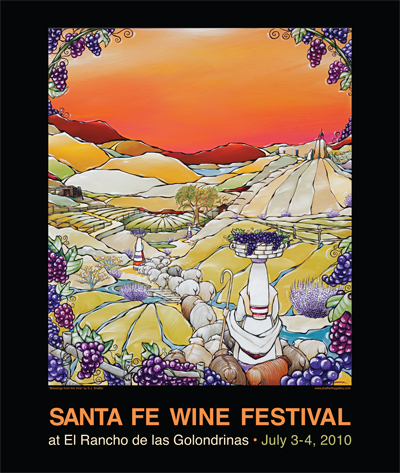
The Santa Fe Wine Festival poster for July 2010

"Blessings from the Vine," S. J. Shaffer, Santa Fe Wine Festival Poster 2010

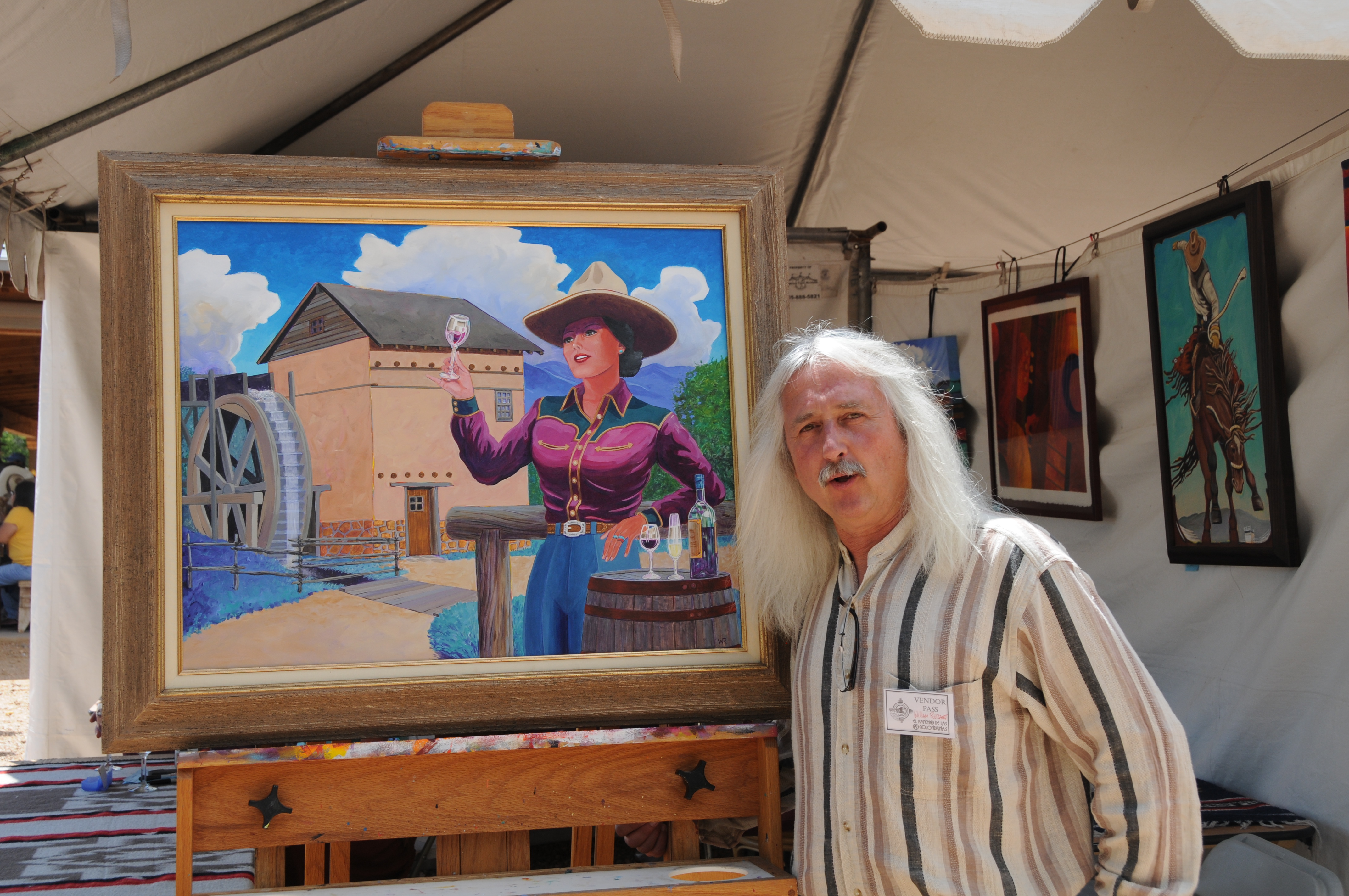
William Rotsaert: Artist that Painted Santa Fe Wine Festival Poster for 2009

The Santa Fe Wine Festival is July 3-4, 2010, 12 noon to 6 p.m. at El Rancho de las Golondrinas, outside of Santa Fe.  See directions on the two website links below.

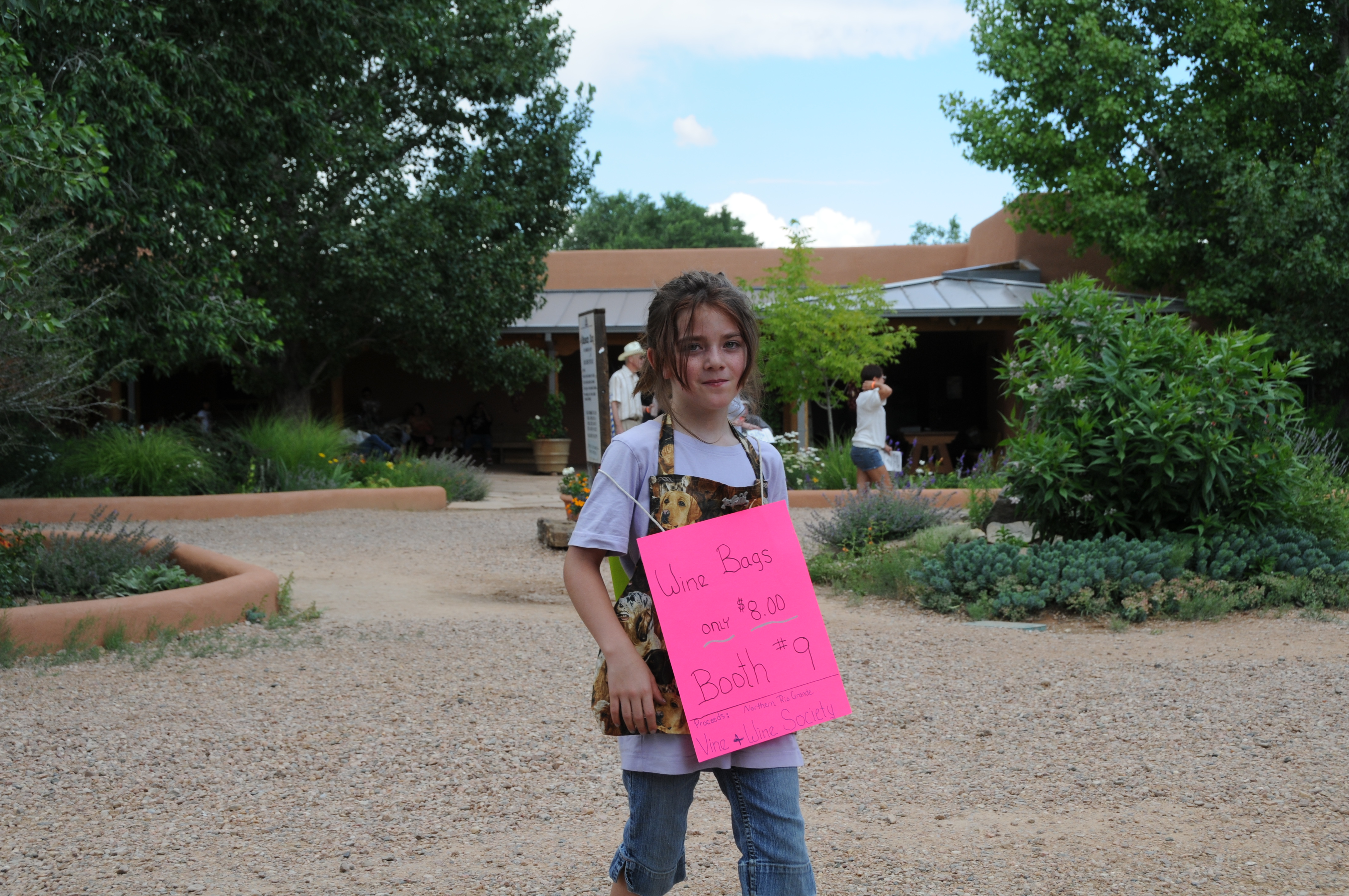
Last year, Brenda and I attended the Santa Fe Wine Festival in July 2009.  I’m not for sure if we can attend this year, but we would like to engage the fun and festivities if we could.  In any case, here are some photos from last year’s wine festival to ramp up the mood for wine and food.

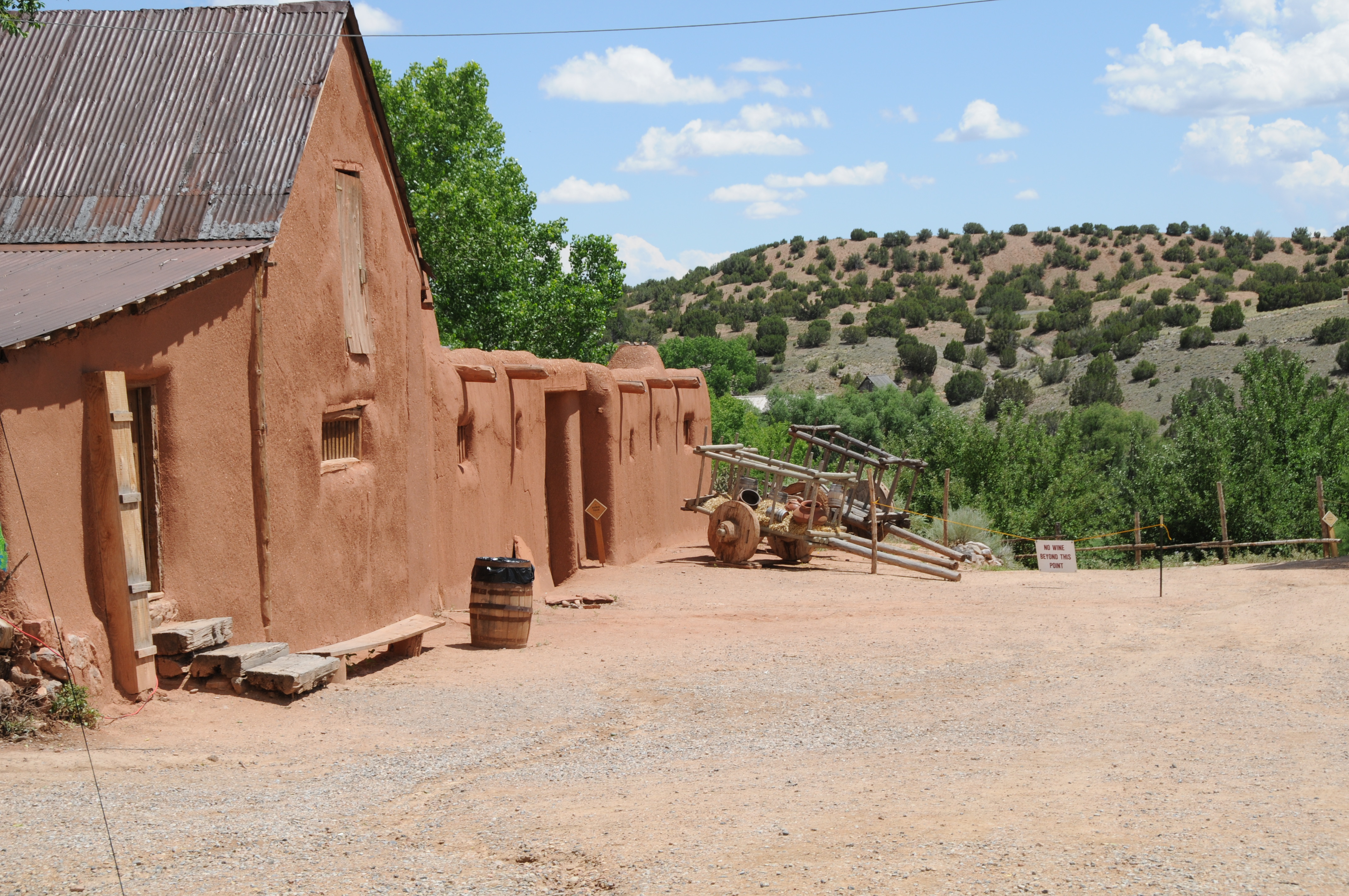
El Rancho de las Golondrinas is the location of the wine festival, a living history museum of Spanish colonial New Mexico, translated as, “The ranch of the swallows.”

The website for the Santa Fe Wine Festival is Santa Fe Wine Festival.

Brochure of 2009 Santa Fe Wine Festival. This brochure details the wineries in New Mexico and the associated vendors at the festival.  Quite colorful brochure with more information about William Rotsaert.

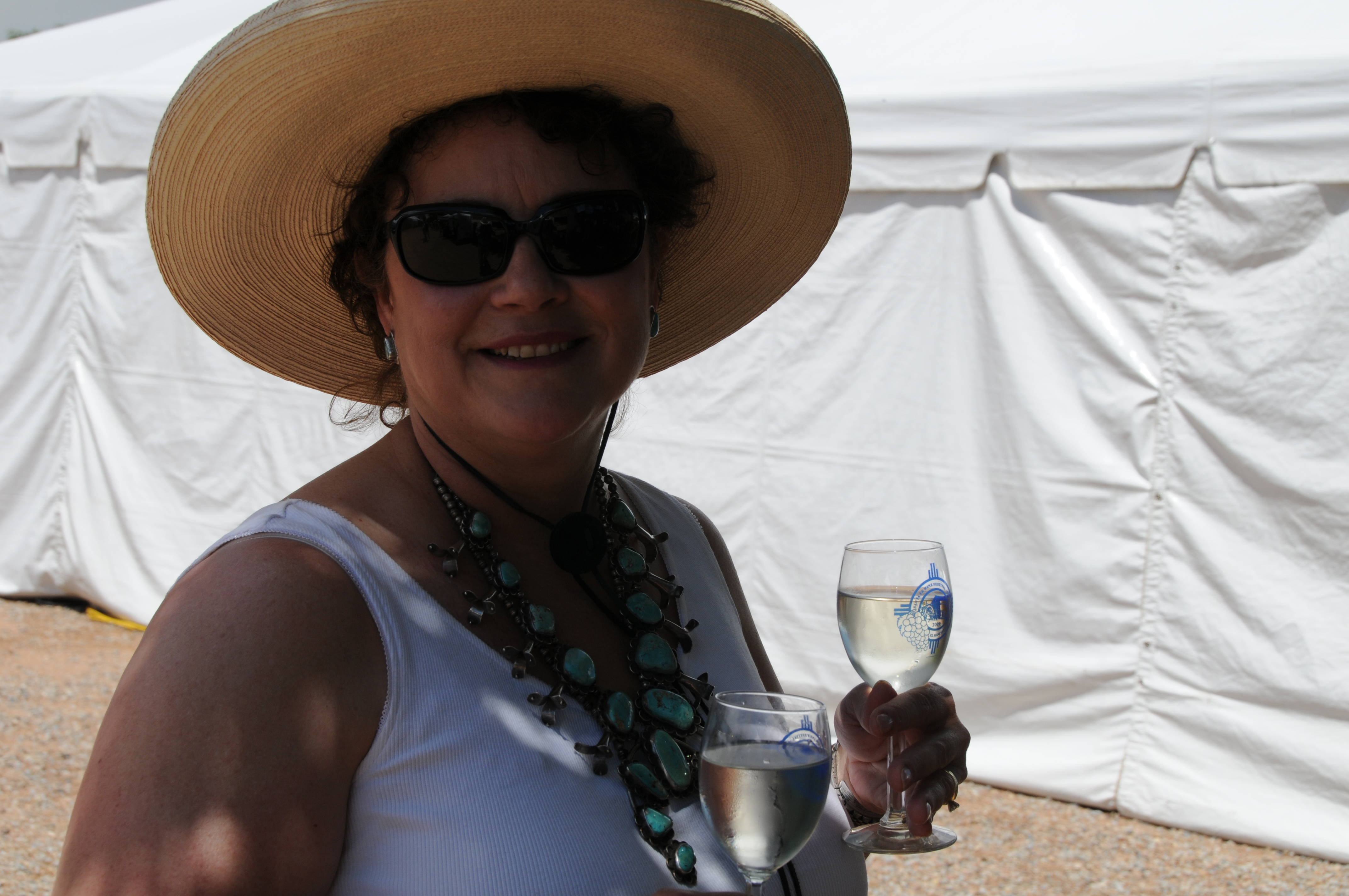
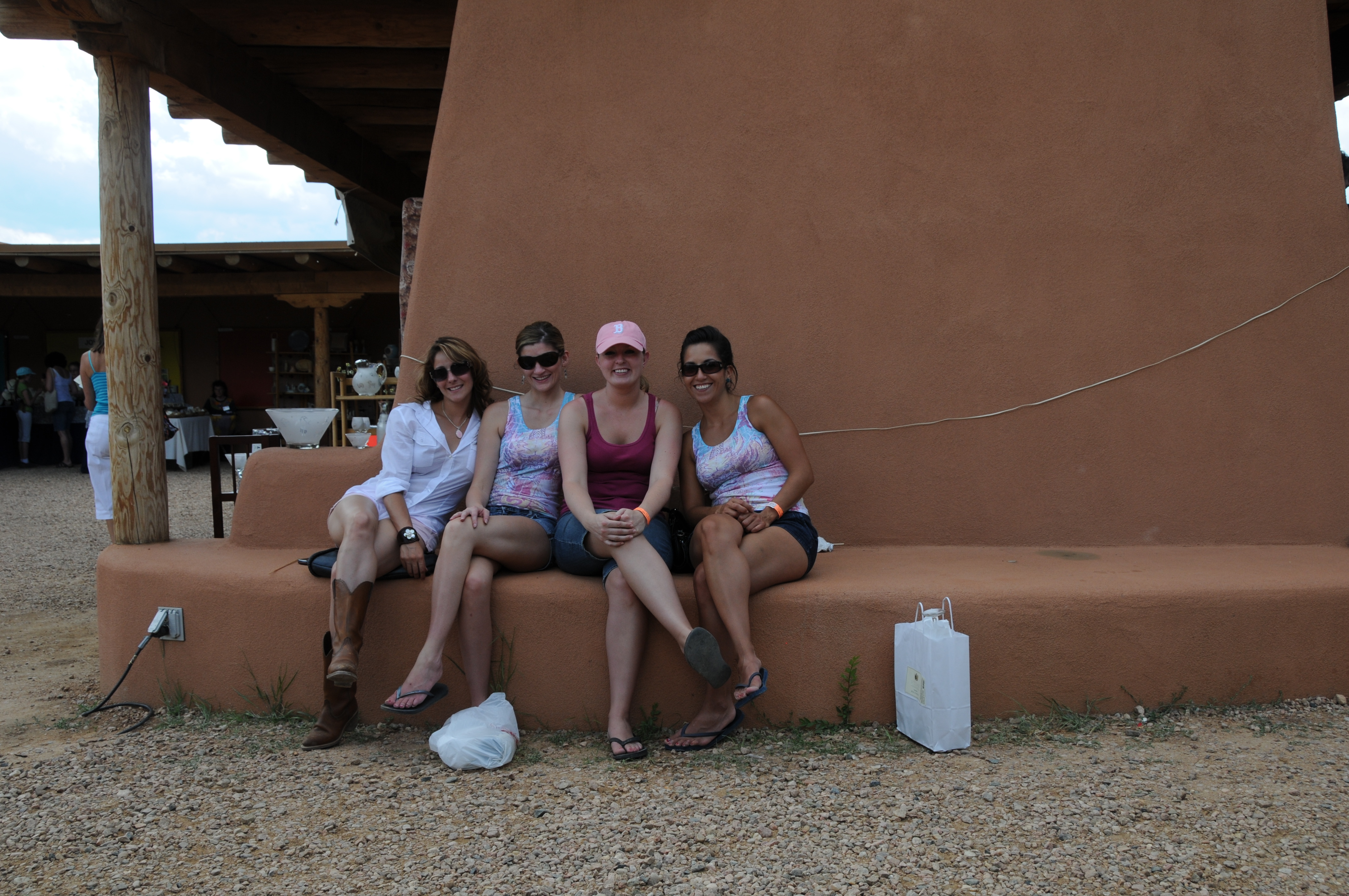
Brenda Matthews with Our Wine and Glasses 2009

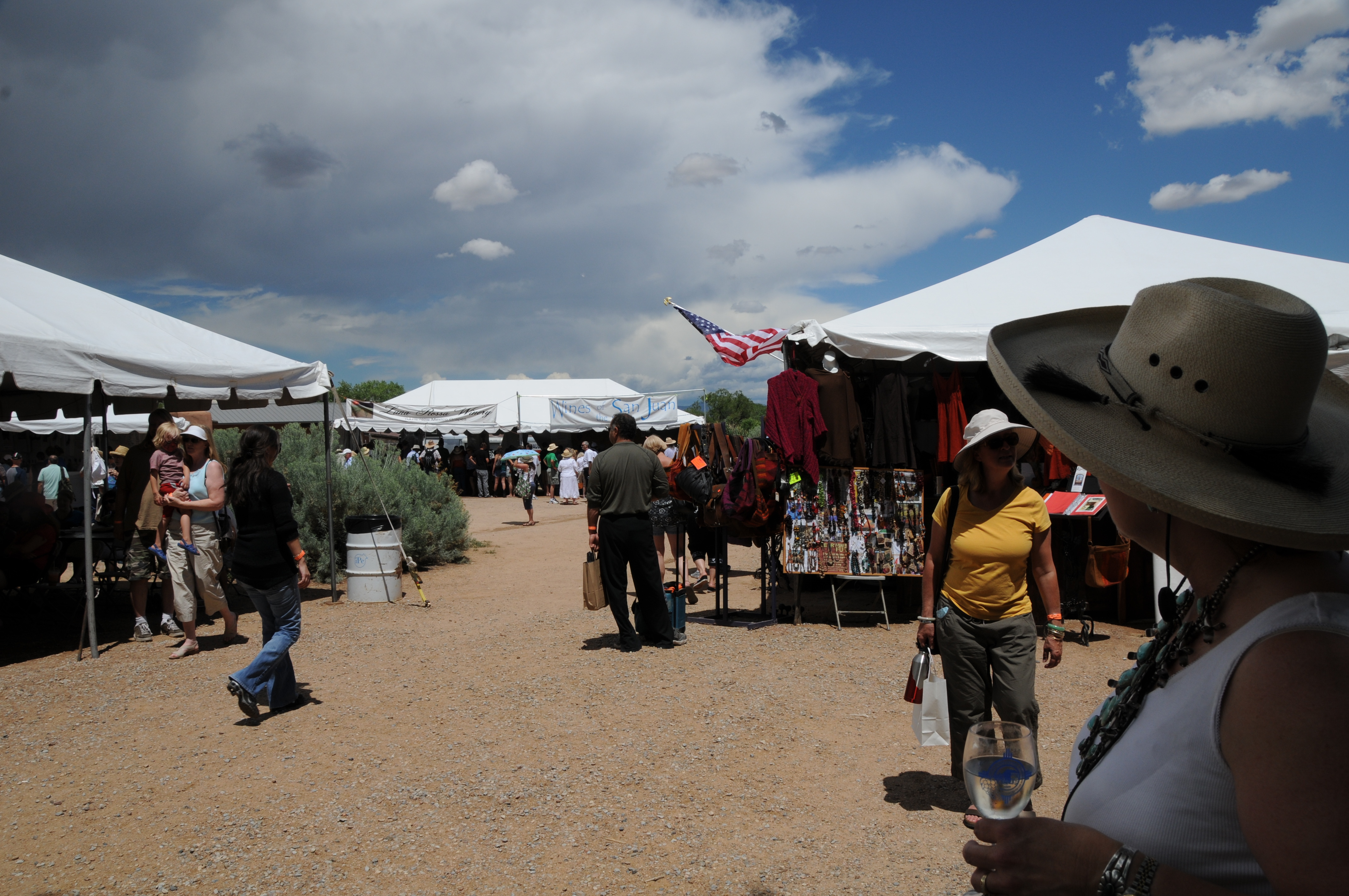
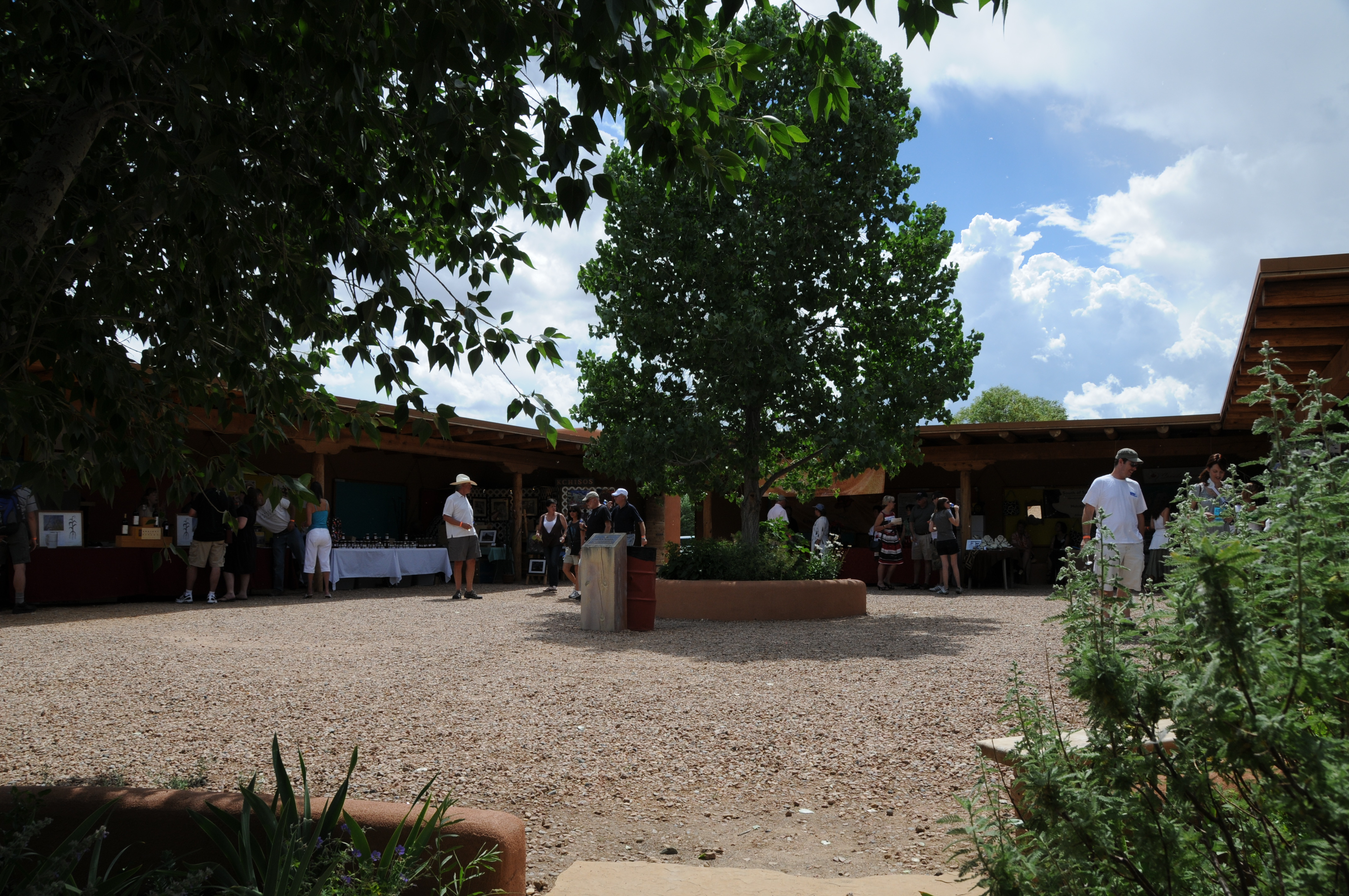
Wine Festival Thoroughfare 2009

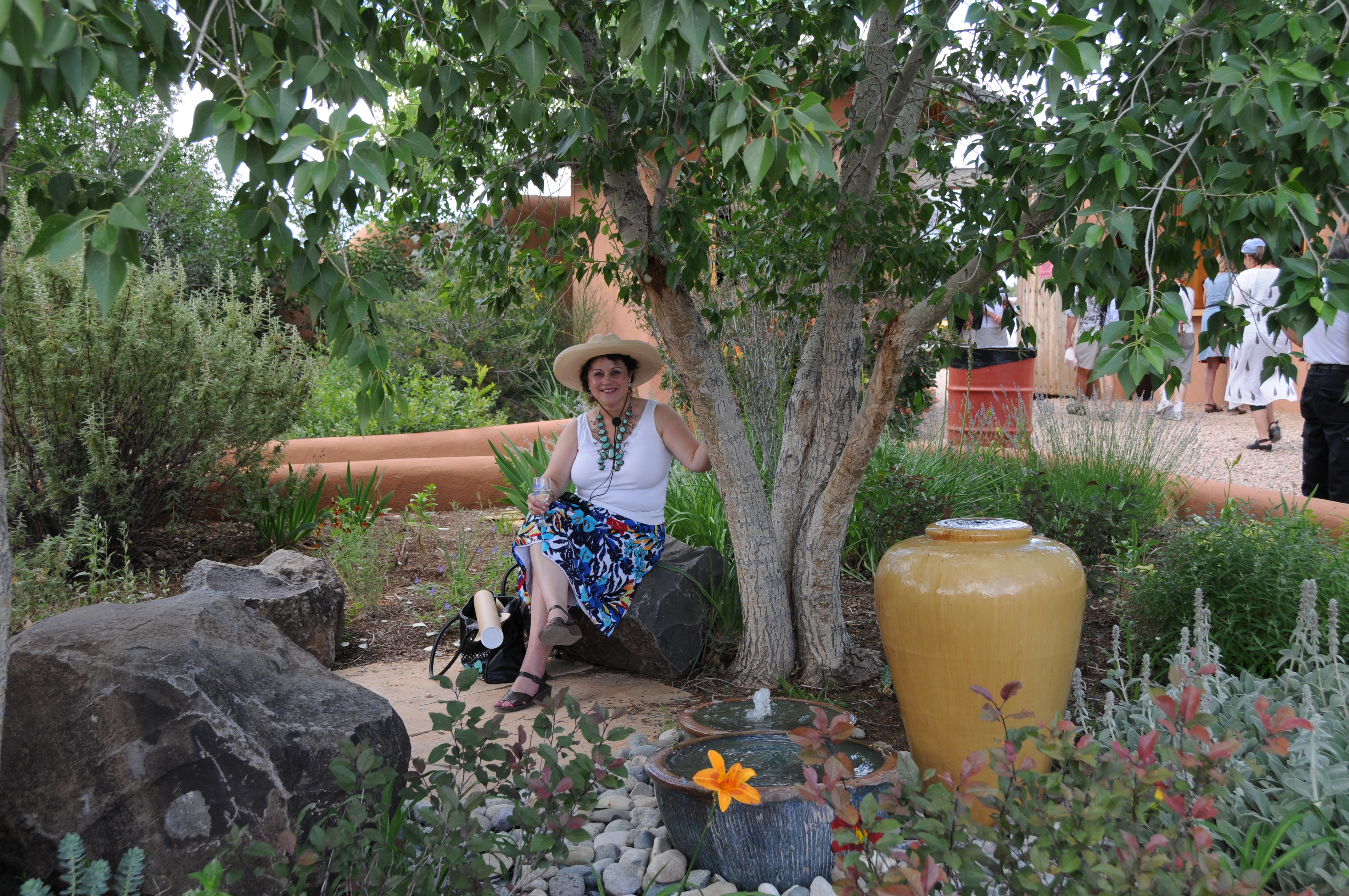
Shade and Wine at the Festival 2009

El Rancho de Las Golondrinas Adobe Buildings

Santa Fe Wine Festival 2009 with Clouds

11 Comments

Filed under Santa Fe

A Prelude to the Prairie Sagebrush Awards for 2010

A Prelude to the Prairie Sagebrush Awards for 2010

[The full collection of posts will be posted on my blogging anniversary, June 27, 2010, but I thought you might like a prelude to the collection.  I won’t start counting the comments for donation purposes until June 27, 2010.]

Well, here they are, the best posts of my blogger friends!  The Prairie Sagebrush Awards for 2010!  I have picked one post from each of my blogger friends I have known for several months.  The criteria for selecting the post is based on narrative unity, coherence, literacy, specificity and emotional appeal.  These selections I’ve made are full of haute prose, local color, personal intensity and revelation of character.

For each reader comment (one comment per person), I will donate one dollar to a Wildlife Corridor fund in Texas and New Mexico ($500.00 limit).

_______________________________


Stark Raving Zen on “Joy of Barbed Wire.” Kristy Sweetland lives in Raton, New Mexico.  Her blog, Stark Raving Zen, concerns her personal odyssey to the land of enchantment.  She and her husband go frequently out into the back country of New Mexico and have written and photographed numerous posts about small towns and wildlife.  Kristy’s writing is quite serious and she has embarked on a new career in psychology.  Yet, even in her serious writings and musings, a streak of comedy breaks through, as you can read below.

After two months of living here I have to admit that every now and then I find myself going absolutely bonkers. I can’t find fennel in any grocery store. I can’t eat sushi unless I’m willing to drive three hours to get it. There are no book stores or vegetarian markets. We are in the middle of no…where….

I asked a town veterinarian what one does in case of an after-hours pet emergency, recently, and he said, “I’ll answer my phone if I’m around….” Not exactly reassuring. Then I went to a Raton theatre production, and there he was up on stage, acting his finest Bob Cratchett. All I could think of while I sat there in the dark, was Finlay [pet dog] at home one night bloating up or something, while our vet twirled Tiny Tim above his head. New Mexico is no place for the neurotic, that’s for certain. And where it comes to pets, they just don’t get any more neurotic than me.

Last night my husband and I went out for a big night on the town. We chose a new restaurant to try which had been written up in Frommer’s New Mexico travel guide as a must-stop. It was the most bizarre, borderline disturbing experience I’ve had in quite some time. All I wanted was a cheese enchilada. It seems, however, that you can’t get a cheese enchilada at this fine establishment sans sea of pork or beef sauce, which I don’t eat. Rather than work with me a little, I mean, I would have eaten it with nothing but salsa on top, this surreal waitress simply informed me that I “couldn’t order the cheese enchilada if I didn’t eat beef or pork.”  So I settled on a really mediocre substitute, when what I should have done is just gone elsewhere. But then, had we done that, I would have missed out on overhearing the life drama of some other patrons sharing our dining experience that night.

A rancher man, complete with western shirt, Wranglers, and an alabaster ten-gallon hat, sat with his wife and teen aged son. The kid had the typical wry, smug aura of an 18 year old, who had recently found himself in some trouble with the law. Though it was not certain what he had done, it was clear that he felt no remorse for it, and that nobody had been harmed in the infraction’s making. He thought it was funny. The rancher dad… didn’t seem amused. But when the kid shook his head, suppressing a laugh, and said, “I don’t know! All I remember is lights flashing on me, unable to move, ’cause I was all wrapped up in barbed wire. It’s not like I could run away.”   They finished their meals and stalked out, leaving Aaron and me to quell wild laughter, as much as we tried to rise above it.

So looking at the silver lining here, had I gone to another restaurant which would have served me the cheese enchilada I craved, I would have missed out on this classic western story. I mean, the visual of some kid wrapped up like a barbed wired burrito while attempting to roll away from the local sheriff, flashlights and cop cars illuminating the scene of the hilarious high-desert crime is worth any poor dining experience isn’t it? I can see the police officer, walkie-talkie in hand, mumbling back to headquarters, “Found the perp. No need for backup.” Could I get that kind of priceless voyeurism in Minneapolis? I think not. So when I start to focus on the human experience in Raton, those everyday things that this part of the world doesn’t provide, I need only switch my focus back to the understanding of what it does provide. Rich experience, the free flow of writing material, the natural world in abundance, and the opportunity for me to grow, despite the dearth of fennel, book stores, and sushi.

(Stark Raving Zen, “The Joys of Barbed Wire”)

______________________________

Next:  The Block, Teresa Evangeline, Evangeline Art Photography, New Mexico Art Photography and more!

5 Comments

Filed under Prairie Sagebrush Awards 2010

Prairie Sandbur and Bull Nettle

Two New Discoveries of Flowering Plants

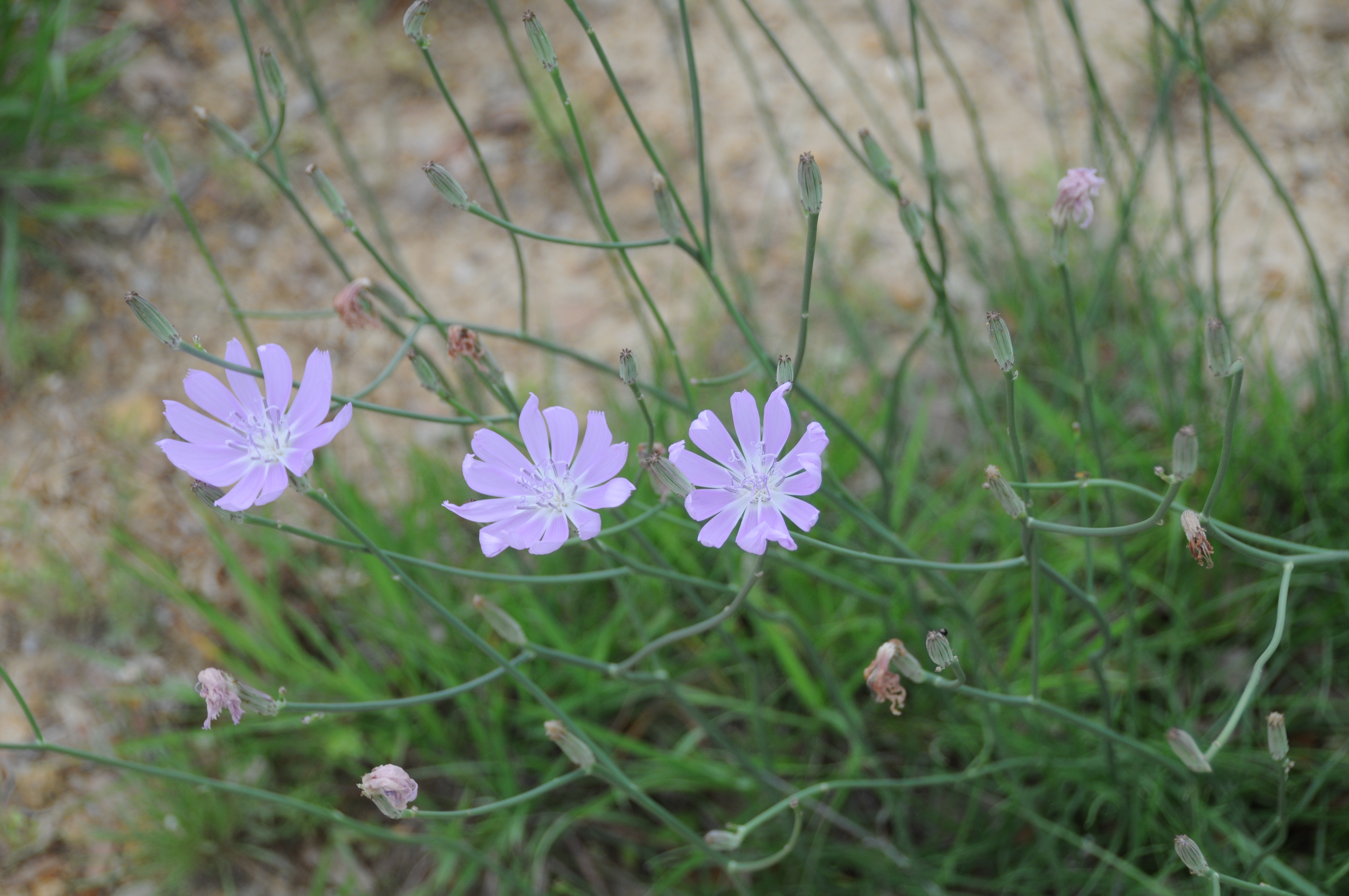
In my regular field work here on Flying Hat, two new discoveries were made this morning of Texas flowering plants.  One discovery  was the Texas Skeleton Weed (Lygodesmia texana), also known as Purple Dandelion, Flowering Straw.  The other discovery, this one rather exciting, was the Prairie Sandbur (Krameria lanceolata), also known by the name of Crameria, Ratany or Trailing Ratany.  Before we go to the Prairie Sandbur (accurate spelling), let’s look at the Texas Skeleton Weed, shall we?  (I’m beginning to sound like Mr. Rogers here.)

Texas Skeleton Weed

Texas Skeleton Weed, May 2010

This beautiful lavender flower is the Texas Skeleton Weed (Lygodesmia texana), also referred to as the Purple Dandelion, Flowering Straw.  These flowers appeared rather suddenly in the last two or three days.  The term skeleton is applied because of the  leafless stems and the odd angles of the stems, analogous to skeletal assemblies.  According to Loughmiller, Texas Wildflowers, “When the stems are broken, they exude sap which coagulates into a gum.”  The medicinal qualities of this plant are presently unknown to me.  I am currently searching my bookselves for my medicinal plant book for North America.  I do have Richard Evans Schultes, Hallucinogenic Plants, New York: Golden Press, 1976, but this Texas Skeleton Weed is not in it.  I don’t like the term, “weed.”  This plant is far to beautiful to be designated, “weed.”  Perhaps the Bull Nettle is a weed, but I even have my doubts about the construct of the botanical term, “weed” applied to it.  Weed carries a cultural signification of unwanted, not desirable or bad.  I know we use the term, “weed,” a great deal and I understand the context, but I think it should be dropped from the lexicon.

Prairie Sandbur

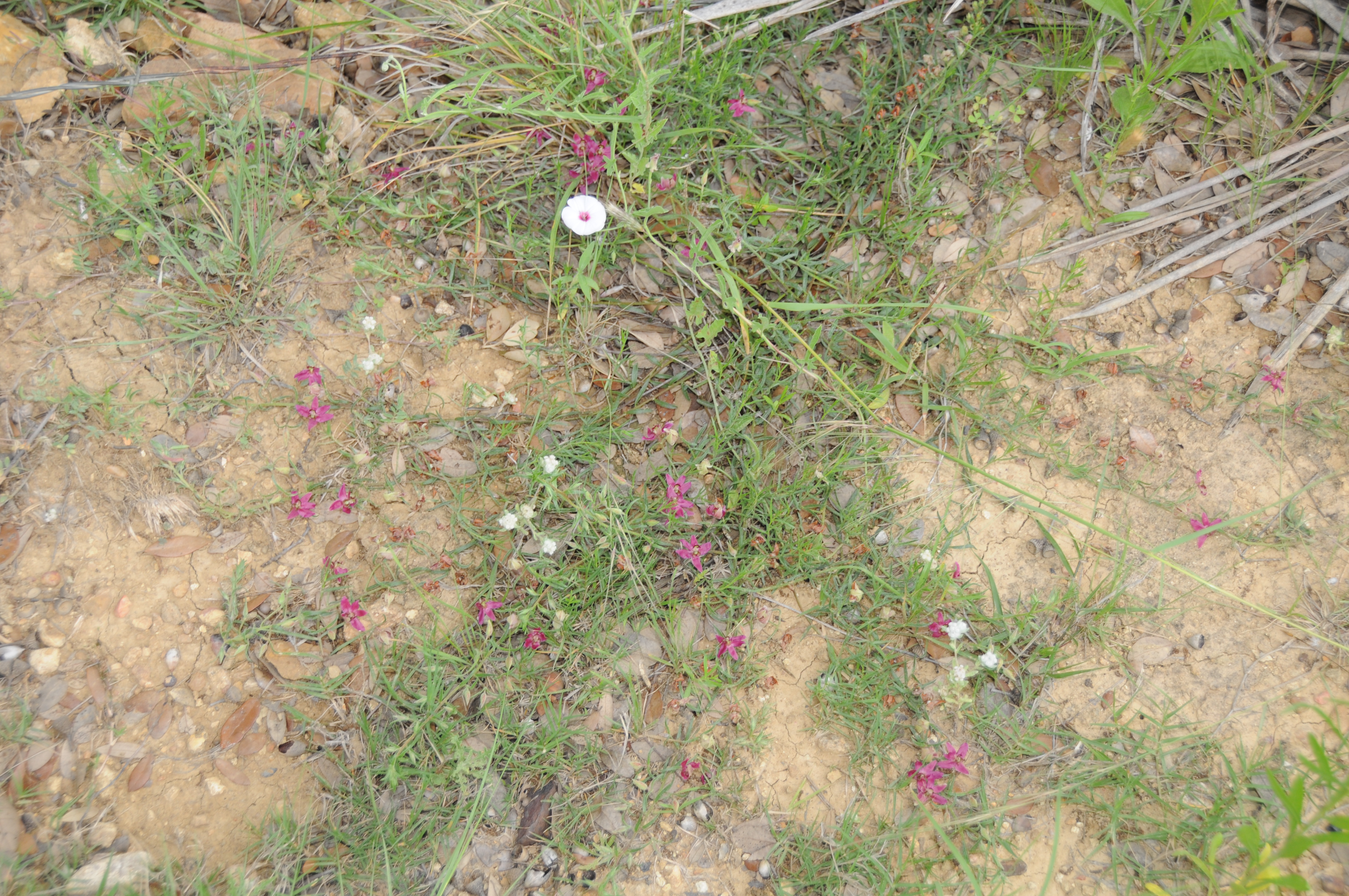
Prairie Sandbur Cluster, May 2010
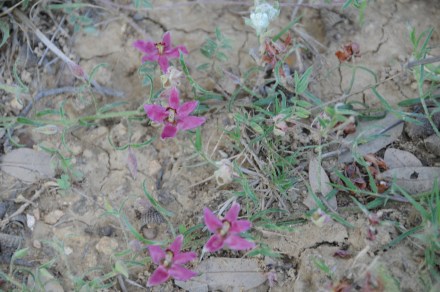
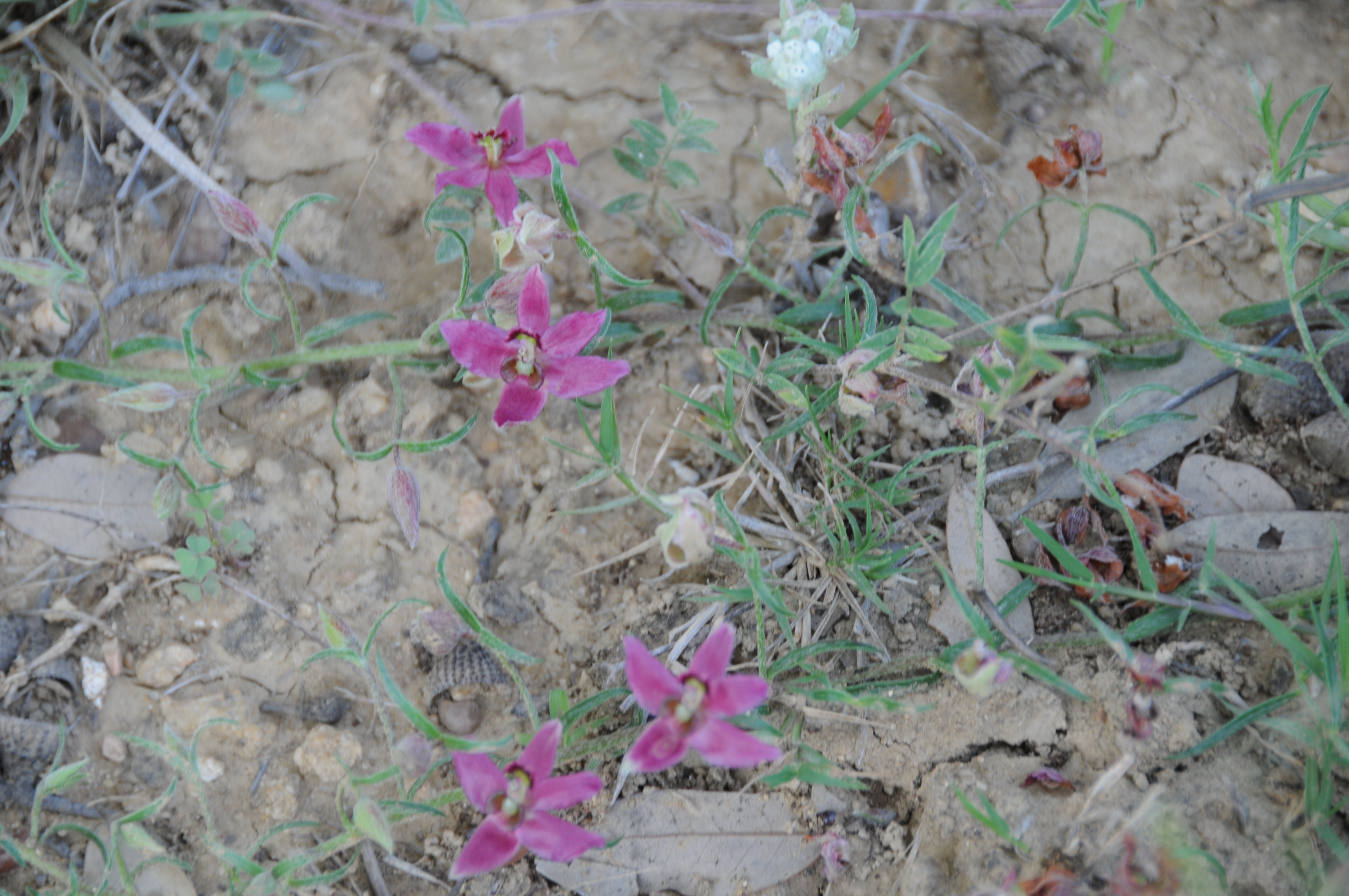
Prairie Sandbur Close-up, May 2010

The Prairie Sandbur is the reddish flower in the photographs above.  It is also known as the Trailing Krameria, Ratany, Crameria and Trailing Ratany.  This is not the sandbur of the grass family.  The leaves and flowers grow from prostrate branches.  According to Loughmiller, this plant and flower is neither conspicuous nor abundant.  They state that the Prairie Sandbur does occur in many parts of the Trans-Pecos River area of Texas.  Our ranch is in the West Cross Timbers region of Texas.  We are Trans-Brazos by about 50 miles westward.  This Prairie Sandbur was found on the east side of Poprock Hill in a well-drained slope area.  This plant may be the rarest find on our place.  I have looked carefully about Poprock Hill and this is the only cluster!

Texas Bull Nettle, Stinging Nettle, Tread-Softly, Spurge Nettle or STAY AWAY FROM THIS THING!

I went out to the Pecan Tree Pasture this morning and hoed or cut out by the hoe some 100 or so Bull Nettles (Cnidoscolus texanus).  I still have about one more acre to hoe.
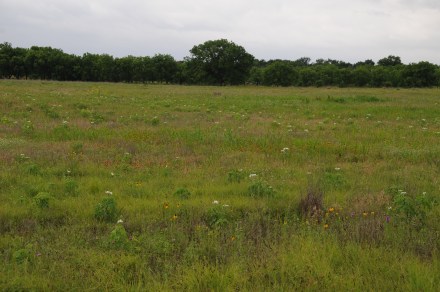
Bull Nettle (White Blossoms) in Pecan Tree Pasture, May 2010

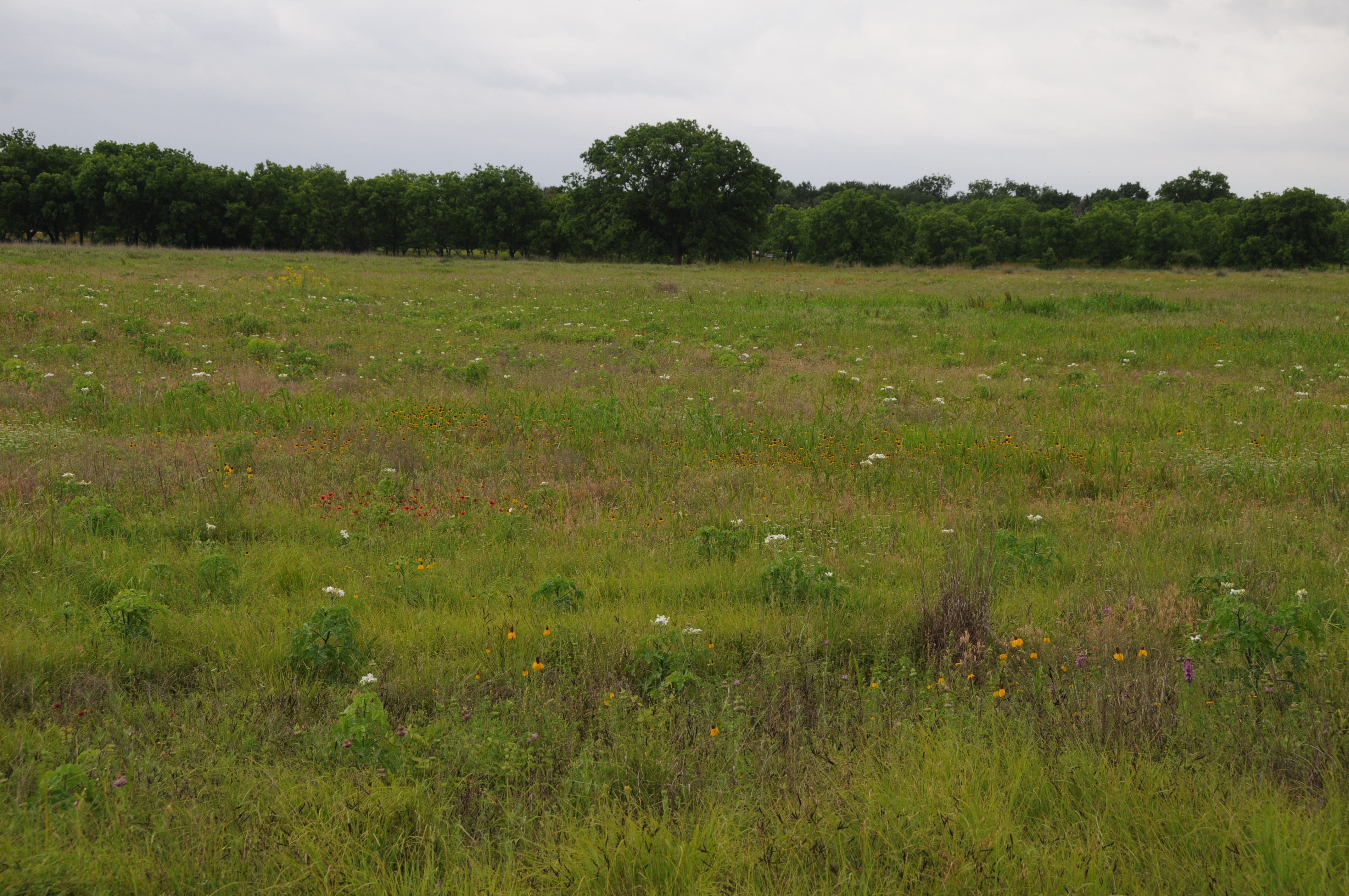
Here you see the white blossoms of the Bull Nettle in the field.  Actually, hoeing the plant is rather easy since the vascular main stems are soft at this stage of growth, plus with all the rain we have had, the soil is soft.  This photograph is looking southward, towards the Old Bryant Place, and you can see that the pecan tree, for whom this pasture is named has dark-green foliage.
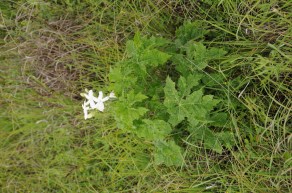
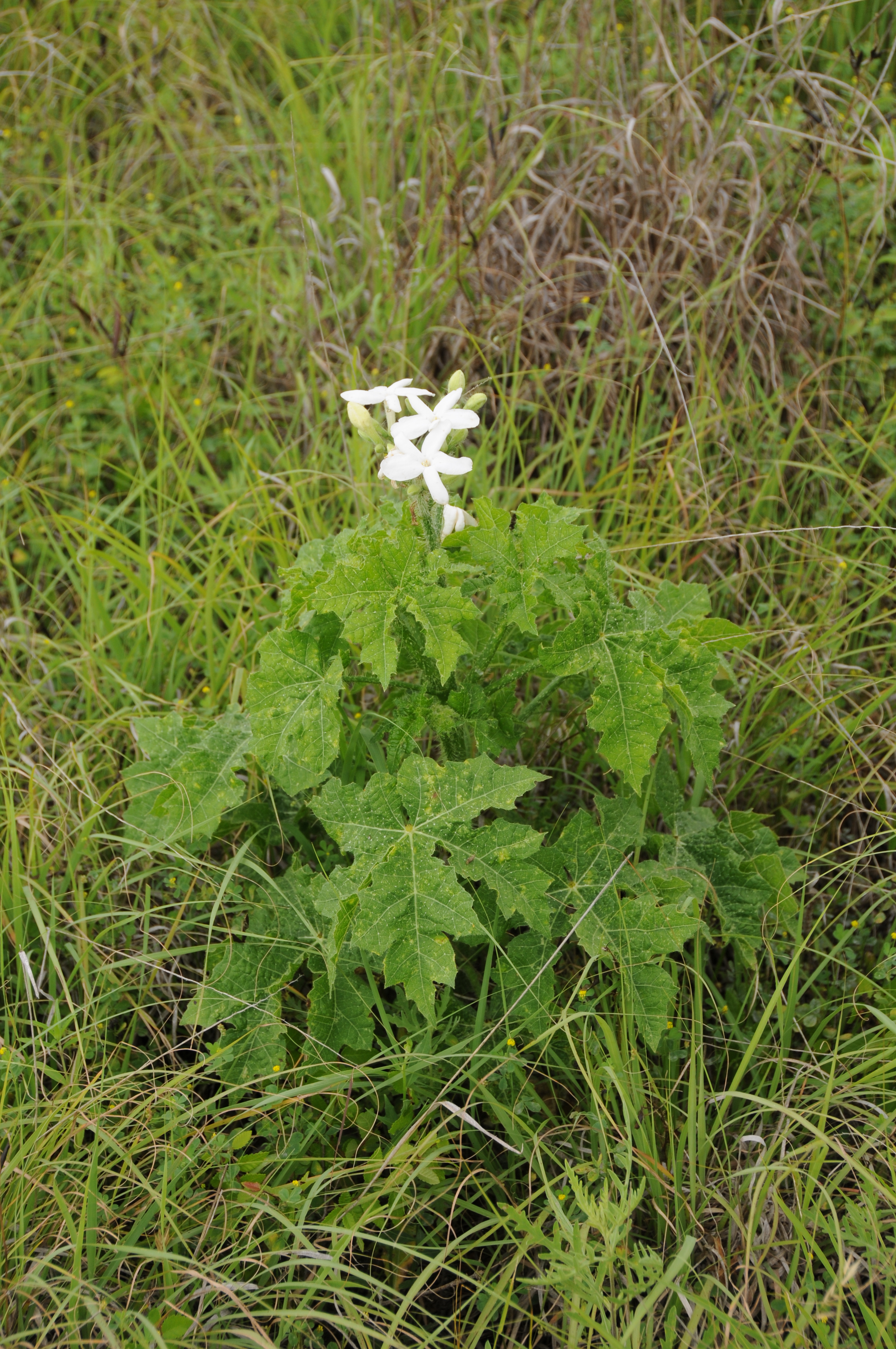
Single Bull Nettle Plant in Pecan Tree Pasture, May 2010

The Bull Nettle is a plant to be avoided.  The plant has leaves that are prickly as well as the stem and if you brush up against it, the nettles will sting.  Loughmiller says the effect of the nettles will last 30-45 minutes.  The stems, if broken, will exude a sap that some people discover, too late, is an allergen.

Today, I brushed up against a Bull Nettle once and I was wearing denim jeans (Wranglers), but the nettle penetrated the denim and I felt a sharp sting.  It was a light brushing, just once, but still burned.  I have a quick recovery to Bull Nettle in my system and the stinging lasted for about one minute.   My initial contact with Bull Nettle occurred when I was three or four-years old and I was with my mother and grandmother at the Sand Cemetery in Bend, Texas.  They were on a cemetery clean-up for our ancestors’ graves when I grabbed a Bull Nettle (trying to help) in my right hand.  It had a lovely blossom.  I really, really experienced pain, especially in the palm of my hand, and for several years, the palm would erupt in a rash.  I think that early exposure to Bull Nettle gave me a bit of tolerance, but not immunity.

The Bull Nettle has a personal and family history that goes back sixty-four years, to a time when we cleaned up the cemetery for the Morris, Baxter and Brazil families at Bend, Texas.  With the 400 or so Bull Nettles I have scooped out of my pasture, every Bull Nettle or so, I think of my family and how I came to be doing precisely this hoeing, on this cloudy day in Texas.

______________________________

Notes:

A fine source for identifying Texas wildflowers is Campbell and Lynn Loughmiller, “Texas Wildflowers: A Field Guide,” Austin: University of Texas Press, 1989.

I supplement my typing operations with cross-checking from other sources, particularly the online services listed under my page, “Native Shrub Identification Guide.”  The sources found online at the Ladybird Johnson Wildlife Center are quite valuable.

13 Comments

Filed under Plants and Shrubs, Recollections 1942-1966

Field Log 5/21/2010 Native Prairie Grass Restoration

North Erath County, Texas, Lat 32.43 N, Long -98.36 W, elev. 1,086 ft.  Turkey Creek Quad.

Early this spring I planted a variety of native grasses in Pecan Tree and Poprock Hill Pastures.  Some sprouts have come up and the native wild flower mix I integrated into the seed broadcast has yielded flowers.  I have committed to minimum impact farming and stock-tending on the land.  One principle is to allow native prairie grasses to flourish and reseed areas that are sparse.  A second principle is to manually work the land, where possible, such as using the garden hoe, grubbing hoe, shovel and pick rather than machinery–minimum use of the tractor.

To work manually, I hoed six acres, cutting Bull Nettle with a garden hoe.  Approximately 300 nettle scooped out.

Poprock Hill Pasture with Soil Prepared for Reseeding

Pecan Tree Pasture with Native Grass

I still have some nettle to remove, but two-thirds has been eradicated by the hoe–no herbicides used.  If I had used the recommended herbicides, I would have had to keep livestock off the pasture for several weeks plus purchase the herbicides and spray tank.  As it was, when I hoed, I discovered areas in the 35 acre pasture that could use a disc plow to aerate and some natural fertilizer for enriching the soil.  If I had not been close to the ground with my hoe, I would not have seen the land profoundly.

5 Comments

Filed under Field Log