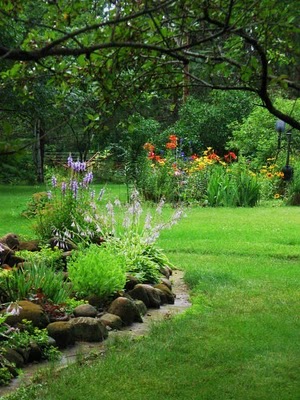
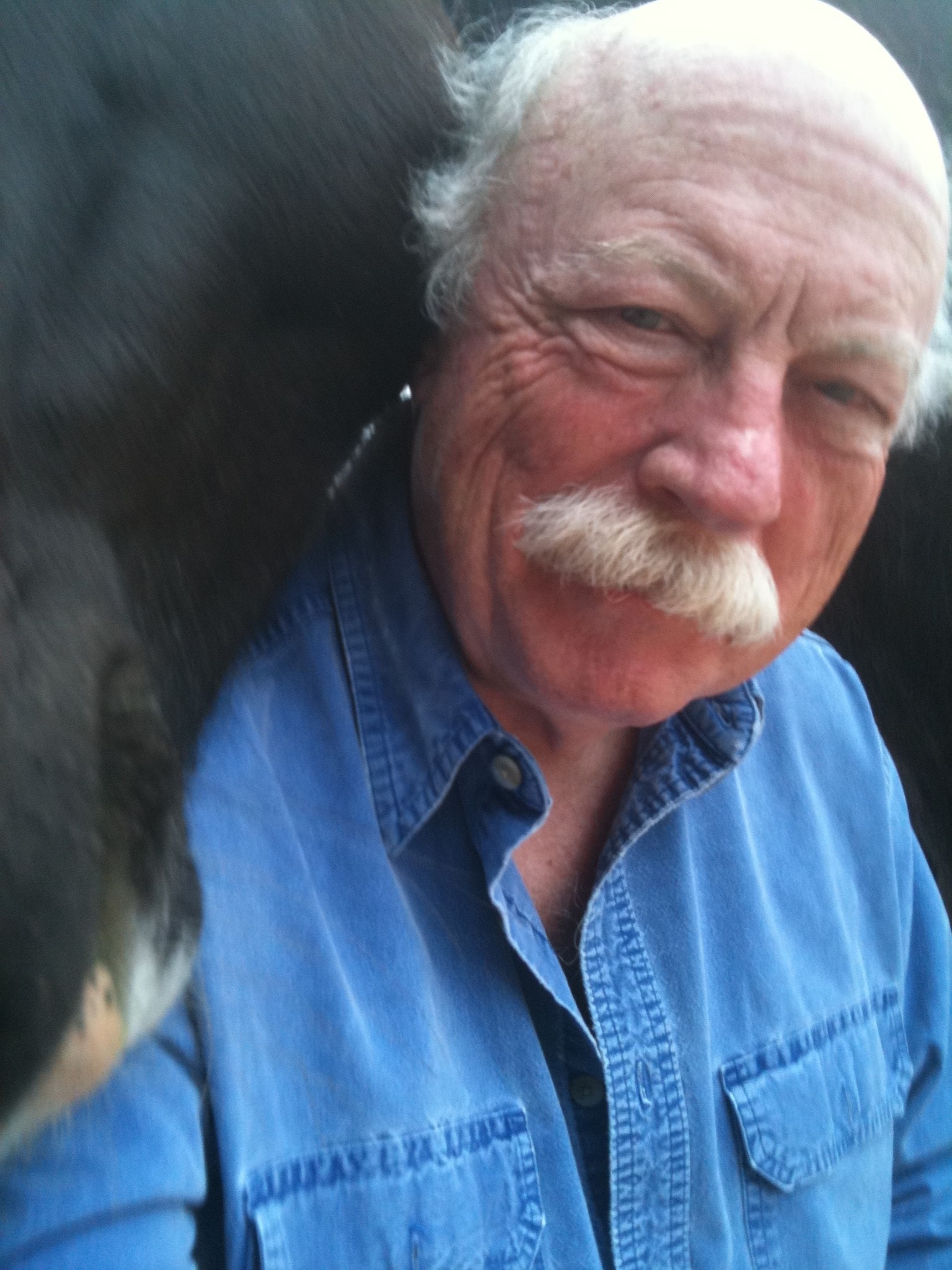
One of my friends has a beautiful garden and lawn in Minnesota that helps me transcend dust in the corral. Today I turned the sprinkler on for the horses to cool themselves. They liked it, but asked me, “How do we get to Teresa Evangeline’s garden?”
“We’re in Texas, guys,” I replied. “She’s way north of us.”
Three terraces form the foundation for our home on a hill. The hill stands out in the Turkey Creek Quadrangle map, but it has no name. We refer to our knoll with its expansive view in west Texas as Poprock Hill, but the numerous swallows gliding about our home prompt us to rename the hill: Swallow Hill. We’ve not committed to the change, but the possibility lingers.
Pale-leaf Yucca grows and roots along and down each of our three terraces, providing nectar for moths and fruit for deer although we have seen no deer in several months. The yucca stalks are several feet high, the blossoms are so heavy that most of the stalks are weighted down, drooping bulbs, yet still a vibrant yellow-white for weeks in mid-spring. By now, the last days of July, all of the blossoms have fallen.
It is said that plants grow in assemblies, like a family of sorts. If so, then our yucca family on Poprock Hill prospers and grows haply. I do not see the yucca as a plant to be uprooted, but as a succulent that prevents erosion of our terraces, an ornamental of natural spikes guarding our home. A protector. Someday because of erosion we will have to reinforce the terraces, but we will not uproot one yucca, one family, one blade, to do so. Bayonets, stakes on the plains, these yuccas have been named in history. For us, however, our Pale-leaf Yucca are our cousins that enliven the daily family reunion we have with nature.
Opening up the senses in the country — it could also be the city — means to go outside, into the weather, the air. Lewis and Clark saw antelope rub their heads on sagebrush to perfume themselves. I camped one night on the Zuni reservation and a light rain fell that exploded the smell of sage around me. Today the dominant scent is dust, stirred by shredding broomweed that has a pungent, woody quality when cut. From time to time, however, the broomweed receded as I shredded wild thyme, rising up in sweet waves to greet me, please me, offering a odor that buffered dust and wood.
In the distance, I see thunderclouds and rain shafts, and coming on the cool breeze is the smell of rain sprinkling the ground, turning dust to loam, a nursery for wild thyme. Dominant not is dust anymore. A revolution of the senses always comes with rain.
______________________________
Notes:
My cousin, Sam Gray, whose mother (Myvan Morris Gray) was my great aunt on my maternal grandmother’s side, wrote on facebook that there was word describing the smell of rain:
petrichor — a pleasant, distinctive smell frequently accompanying the first rain after a long period of warm, dry weather in certain regions. Also, an oily liquid mixture of organic compounds which collects in the ground and is believed to be responsible for this smell (Oxford English Dictionary).
Our ranchito is faraway from the nation’s land line-broadband backbone. The fiber-optic cable stopped at the Barton Creek Water Cooperative pumping station about three miles to the south of us and the Interstate-20 nexus is four miles away. We have no fiber-optic cable, but rely upon another technology.
Microwave Antenna of Flying Hat Ranch
Flying Hat Ranchito, our 53 acre, low-impact horse and cattle operation, connects with a high-speed, microwave service providing fast — 2 megs. per second variable — speeds through a Fort Worth, Texas, service, Mesh.net. The relay from our house goes to the Rust Ranch horse arena, about four miles away, then from Rust Ranch to the Celebrity Ranch Castle above New York Hill near the ghost town, Thurber, Texas. From the Celebrity Ranch microwave connection, the backbone is tapped along Interstate-20, about one-half mile away. In short, we are three microwave towers away from a fiber-optic connection (our tower, Rust Ranch, Celebrity Ranch, then the cable).
This connection through microwave relays costs $117.00 a month. Installation was $750.
I teach four online history classes and maintain a blog, Sage to Meadow. I have grown dependent on the internet for income, news and e-mail. I read The New York Times and Washington Post each morning before I feed the horses and go to work — twice a week — in Abilene, Texas. My dependency on the internet has steadily increased since 1989, when I first began to learn the technology of main frames and word processing on computers.
All of that being said, I don’t want broadband and I don’t want the associations that go along with the internet: online classes, blogging, facebook, twitter, e-mail and on-and-on. But, I use them all.
The internet has constricted, even eliminated, face-to-face classes. I no longer see, smell, touch or enjoy the organic unit, the human body as I once did. Conversations around the student union or commons are limited and many of my friends I no longer see, but maintain contact via electrons. Things have gone so virtual that I have become organically starved for human contact. I cannot pick up on my students’ immediate, organic reactions, nor they on mine.
Don’t bring anymore internet to the country. In fact, reverse it. Develop human contact, real human contact by handshakes, face-to-face communications. See your friends in “real” reality, not “virtual.” It is far better to go to Huckabay General Store and sit around the coffee table and get the news of north Erath County than it is to read news online. I see my neighbors and they see me. We can give tips of craft on farming, taking care of livestock and they can notice an oil leak from my pickup and suggest a remedy. You can’t do that on the internet.
Internet providers for rural areas will destroy the diversity and local color of communities. Send teachers to rural areas, re-create independent school districts and recruit on-site professors, if you are concerned about education. I don’t need broadband. I don’t want it, but I have to have it. For now.
Use of the internet for “texting” confronts parents at dinner tables, professors with classes. Last year I caved in and let my students put their cell phones on their desk, but limited their texting — moderate their use to one or two messages a class. I had students hiding their cell phones in their laps, under their coats when I had a strict prohibition.
The internet is used as a form of communication. It is a medium like a rock wall upon which a paleolithic person chisels, buckskin and red ocher for the Sioux, paper and pen for correspondence. You may also factor in ham radio (I have a General Class license — N5LWM) that has absorbed men and women for generations by the use of telegraph and voice. These mediums or modes take persons away from face-to-face communication.
In all of these mediums, you cannot extend your hand and shake the hand of another. Or caress. Substitutions are substitutions are substitutions — virtual reality. A profound loss with profound consequences.
North Erath County, Texas, Lat 32.43 N, Long -98.36 W, elev. 1,086 ft. Turkey Creek Quad.
Grass remains high and relatively green in north Erath County, Texas.
Broomweed shredding seems in order today.
Must plan for a quick construction of stock pen in Pecan Tree Pasture to manage horses so that they do not overeat the grass. Horses have not been feeding in the far pasture anytime this summer.
The Persian barn cat, Bubbles, has disappeared. I have not seen him for two weeks. My small animal vet says that owls are significant predators on cats and small dogs. Bubbles was quite close to the barn. Perhaps he will reappear.
Some yucca pods appear to be re-greening.
Pale-Leaf Yucca Pods Resurge
Nowack, to the north of us, across County Road 114, hired a farmer to bale the prairie grass in his south field.
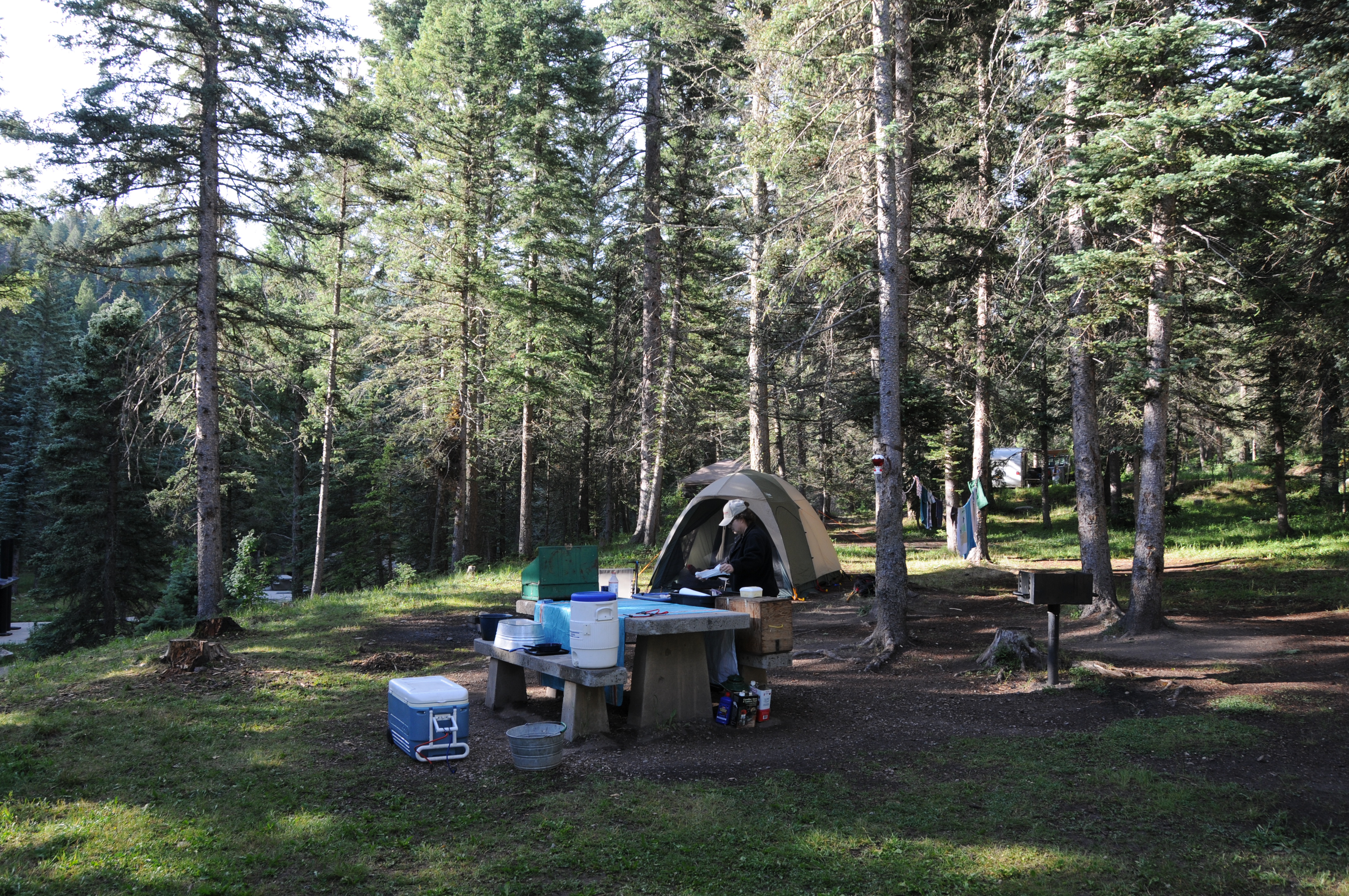
Over the past week, my wife and I have encamped near the Pecos Wilderness in the Carson National Forest of northern New Mexico, traveled the High Road of Taos down to Santa Fe and rented a pleasant room at the Inn at Loretto. Observations noted during field work and retrenchment in the The City Different Santa Fe are listed below, impressionable and subject to interpretive change with further research as well as some drying out and recuperation.
Santa Barbara campground, in fact all of the Carson National Forest campground facilities, has been contracted out to a private concessionary firm, Scenic Canyons Recreational Services, Inc. A resident couple permanently camp at the entry point.
Vegetation on the trail from Santa Barbara to Pecos Wilderness seems healthy and more intense than I remember in 1968.
The Chimayo Restaurant serves a spicy carne adovada, whose effect remains for hours (1).
The Trujillos of Chimayo gave us wood for three fires when they broke camp. Mr. Trujillo has an apple orchard and a V-10 F-250. Mr. and Mrs. Trujillo had camped beside us.
A fisherman from Rodarte, New Mexico, scanned the debris area of the space shuttle Challenger for several weeks. They formed lines of 1,000 scouts, side-by-side and touching. When debris was found, the whole line stopped while it was harvested. He had been a U. S. Forest Service employee at the time of the disaster.
Considerable road improvements are being made on the High Road to Taos, straightening out curves.
The diamond hitch for roping cargo in our pickup works extremely well.
We ate at Doc Martin’s, Osteria, La Fonda, Luminaria, Casa Sena and 315.
Don Rael’s margarita at the La Fonda bar is one good concoction and we met Rael who created the drink. At the bar, I met a young lady who works at the Santa Fe Opera and who once lived in Hurst, Texas.
Santa Fe Pale Ale now puts out a wheat beer.
Brenda and I danced at the La Fonda bar to the tunes of “Nadine” and “Luckenbach.”
Brenda gave me a birthday present: a sage-cornmeal-sea salt exfoliation and massage at the spa at the Inn at Loretto. I am not given to such follies, but Brenda was insistent. I have visited in the early 1970s the springs at Jemez after extended field work in the Gila. The spa treatment was a little different. Amelia was my therapist whose family is from East Prussia.
On the plaza, I hear more variety of music from several directions, sometimes at once, reminding me of something old and ancient. I hear dobro, banjo, guitar, mariachi instruments, harmonica, vocals. This is an increase of variety from years past. Locals are now coming back downtown in greater numbers to hear local bands and itinerant musicians. The plaza is a family affair, all ages, reminiscent of older times.
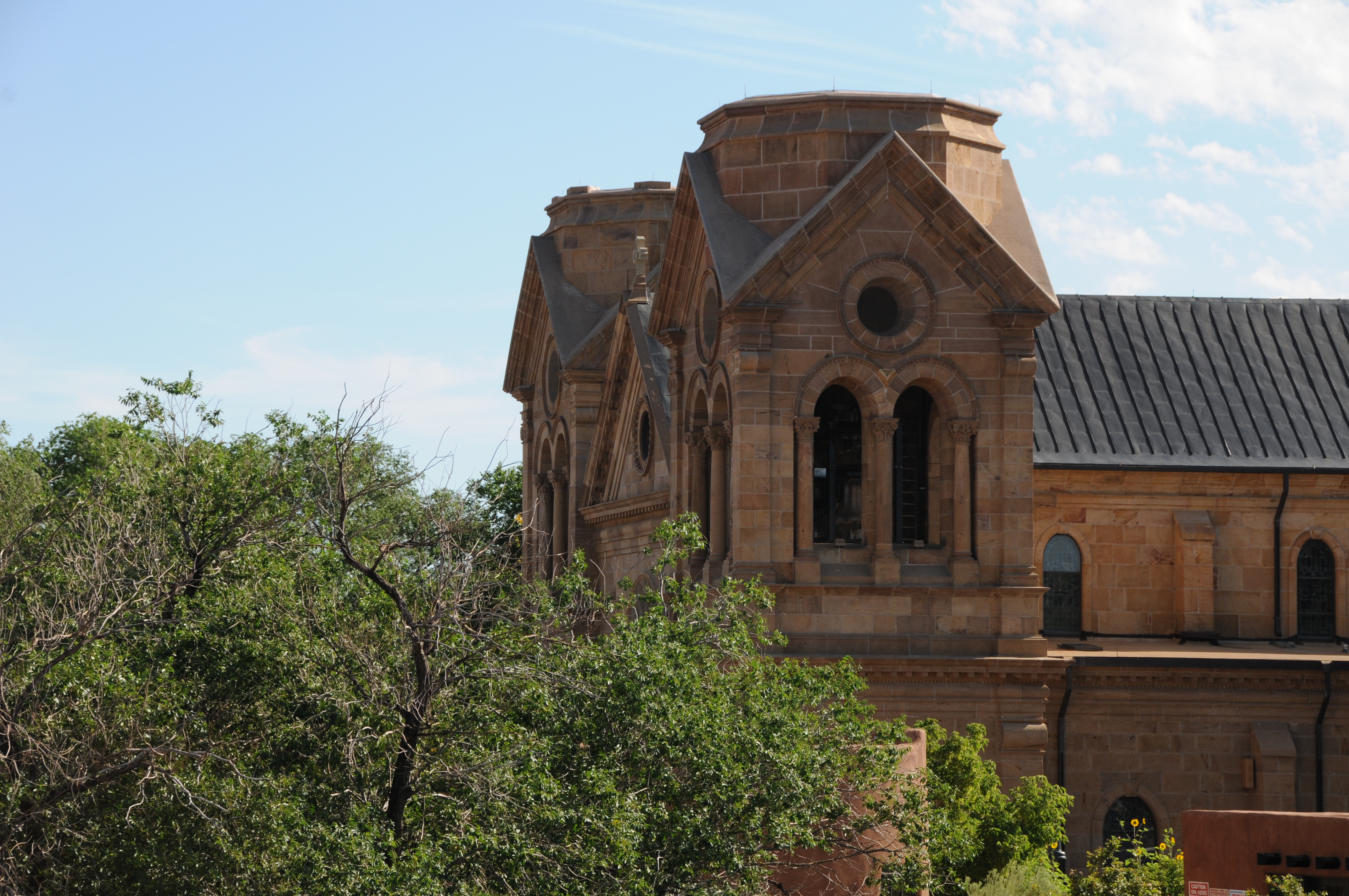
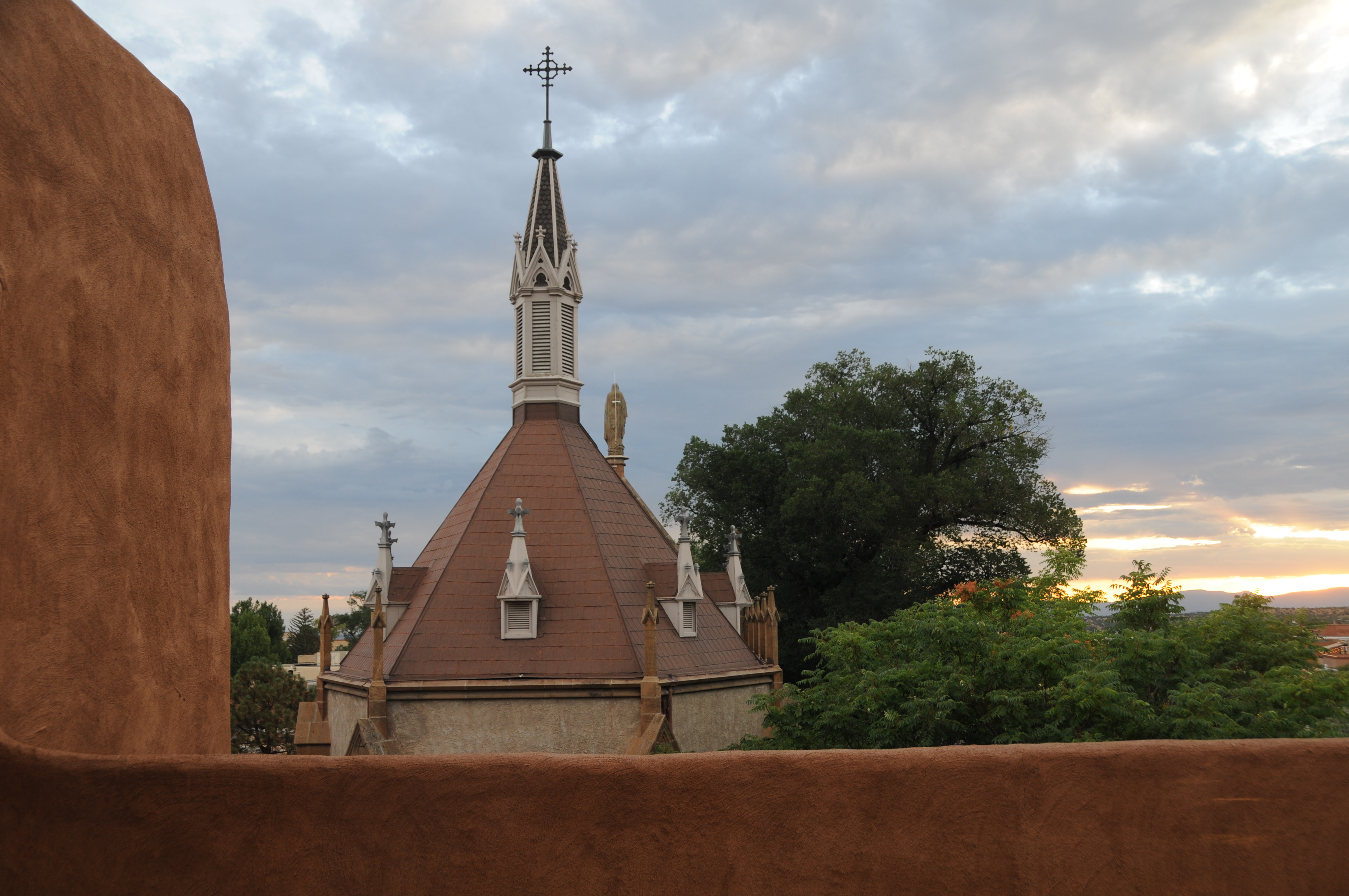
On Saturday, the bells of the cathedral of Saint Francis rang for two weddings in addition to regular tolling at 00:15, 00:30, 00:45 and the beginning of the hour. At one of the wedding parties following the ceremonies, through terrace doors, we saw Mother and Son dancing together in celebration of the marriage to his lovely bride.
St. Francis Cathederal, View from Inn at Loretto Balcony
______________________________
Notes:
1. Presently, diacritical markings are omitted for Anglicized spelling because of expediency.
Plaza walking in the late afternoon and early evening incites the senses. There are food carts about the plaza, hanging baskets of flowers from the lamp poles, music and young children and grand parents playing. A few couples are dancing when appropriate. Some apparently homeless individuals are passing their time. A number of people are lounging on the plaza grass. I counted about 200-300 people about the plaza on an early Saturday evening. People greet and meet, come and depart, lightened.
[Ruth Karbach of Fort Worth, Texas, is an historian whose most recent work are two chapters in Grace and Gumption: Stories of Fort Worth Women, TCU Press, 2007. This is a comment she wrote in response to “Upper Llano Redoubt,” a recent post on the blog. Ruth’s statement brings out issues we will have to resolve in the outdoors.]
Lone Hiker (All Big Bear California)
Last year my generous friend loaned me her home in the mountains of southern Colorado. Solitude to commune with nature after a tough twenty months dealing with terminal illness of my beloved and grief with his death was the solace I needed. Alerts about armed robberty on trails in the last couple of years were discouraging to hiking as a single female; but my two Shelties came to the rescue. We traveled many a trail during our week of “Rocky Mountain High” and meet some interesting people and critters.
Unprecedented in forty years of hiking state and national forest was being nearly hit by a mountain bike as I was helping my dogs up a four foot vertical embankment to get off the trail. The two teen riders did not slow, move over or stop after I had to throw myself onto the embankment to avoid an accident.
With the present economy we are seeing more neglect and underfunding of the quality of life services such as libraries, parks and the arts. To me, this is the time when these services and talents are most needed. During the Great Depression greater wisdom in government caused a flowering of public arts, building of park structures and funding by local businesses and individuals of book purchases for libraries. Have we become too urban, too materialistic, too self-centered a people interested in immediate gratification? I hope not.
A yearly trek to the northern New Mexico mountains encounters warmer temperatures and a reflection on the ethical use of firearms when confronted with dangerous and rude behavior, leading to a conclusion that visits to some national forests become occasions for redoubt construction in a search for solitude in modern times.
Preparation for Upper Llano Camping Delayed
Our vacation this summer has been postponed several times. Fanny, our youngest mare, injured her leg and I had to make sure she was healing before heading outdoors in northern New Mexico. Once she was on the mend, we packed the F-250 with group-camping gear, tied a diamond hitch about the tarp and drove to the Upper Llano area near Penasco and pitched camp along the Rio Santa Barbara (latitude 36.08556, longitude -105.60833).
We had looked at eighteen acres of land bordering the Carson National Forest several years ago near Llano. An acequia bordered the parcel we came close to purchasing, but in the end we decided to wait a few more years and look again. We were not in the market for land this summer, but wanted cooler ambient temperatures for a few days, relief from Texas July weather.
Brenda and Rio Santa Barbara
Basically, near Upper Llano, we have experienced cooler temperatures, especially in the mornings. Our camp site is at 8,500 ft. amidst spruce, fir, aspen and ponderosa, a sub-alpine zone. Temperatures during the day in the mountains have been about 83 deg. F., and at night, probably in the lower 40s.
Hiking into Pecos Wilderness
Brenda and I hiked into the Pecos Wilderness for three miles and admired the fern and sub-alpine flora. My first hike into the northern Pecos Wilderness occurred in 1968, and much remains the same, perhaps an increase in vegetative cover and I think the aspens are much, much higher.
What Would Teddy Roosevelt Think? Or Gifford Pinchot?
The U. S. Forest Service, however, turned campground management over to a private concessionary, Scenic Canyons Recreational Services Inc. , Hyrum, Utah. The daily fee is fifteen dollars for an improved site, although one may camp off the grid, porting water and digging latrines. Since the Forest Service has Stage 1 Fire Restriction, no fires are permitted outside the developed park campground, one would be reduced to precooked meals (1). Not an attractive choice.
We decided to pitch camp within the developed area. We stayed for four nights and days.
I saw no U.S. Forest Rangers in pickups or horse packing into Carson or Pecos Wilderness. When I first started coming up to the Upper Llano forests and Carson in the 1960s, I would at least see in the established campgrounds, a forest ranger in a pickup once a day, sometimes twice. And, back in the forest or wilderness area, I would come across a ranger every few days or so. By the longest of shots, I am not given to the idea that a gendarme on every trail is necessary, but to see none in four days and nights, is not good.
Reflection on Personal Security
My idea of security is that a person is in charge of their own safety and protection first, then call in the law when the dust settles or the event indicates the odds are mightily against you. By those lights, I have learned basic defense skills and also pack pistols and rifles when necessary. I offer absolutely no apologies for doing so. I was reared with firearms and they have provided protection from poisonous and rabid critters and, on one occasion, food for my family’s table when resources were scarce. Above these reasons, however, is protection against invaders and aggressors — man. (On two occasions in my family, firearms were used for personal protection. Fortunately, I have never had to use them. Several years ago, two miles down our county road in Texas, three people were killed in a crime of revenge.)
I pack pistols on every camping trip. This trip, the hog legs were a .357 magnum Colt revolver and a .45 cal. Colt semi-automatic.
I did not carry them with me when we hiked up into the wilderness for a short, three-mile hike. It was a leisurely hike and we were close to the main trails and no reports of trouble had been rumored among the local campers. We hiked, took photographs and returned to base camp.
Yesterday, July 16, we broke camp, hummingbirds whirling about us, and drove down the High Road from Taos to Santa Fe, the Upper Llano left behind, reluctantly.
The summary of the article was that a man was attacked by a mountain biker on a trail in the Santa Fe National Forest when he complained that the biker needed to leash his dog after the dog twice charged after him, his wife and their leashed dogs. The biker hit him several times and threw him down the hill, stating he was going to teach him some trail manners. The second incident was up in the Pecos Wilderness (south of the Truchas Peaks where we hiked) where horsemen fired a pistol and made rude remarks to female backpackers. They were drunk. Pistols are not always peacemakers.
So much for solitude.
A Partial Solution to Violence in the Back Country
Who can stop such incidents? It’s an imperfect world and there will always be some ruffians about, but the lack of U. S. Forest Rangers on the trails and campgrounds establishes a context of free-for-all and uninhibited behavior. Ethics and codes exist outside of federal and state regulations and that assures in most cases a chance to enjoy nature, wild and free. I saw more respect for the rules on the trail and while encamped in Carson than I saw disrespect. Men and women are generally given to cooperation rather than competition and confrontation. The U. S. Forest Service, however, needs more rangers in order to establish a presence of authority so incidents like those reported in The Santa Fe New Mexican can be reduced.
I will continue to hike and encamp as usual with all our equipment.
Tenting at Rio Santa Barbara
Next post: dining from the Pecos Wilderness to Santa Fe and follies in between.
_____________________________
Notes:
1. On July 9, 2010, the Taos District of Carson National Forest released a bulletin that the Stage 1 Restriction had been lifted because of predicted moisture and monsoon season. I did not know this until today, July 17, 2010, as my last contact with the Taos District was on July 7.
North Erath County, Texas, Lat 32.43 N, Long -98.36 W, elev. 1,086 ft. Turkey Creek Quad.
The Use of Twine for Safety in Horse Trailers
Rained off and on most of the day.
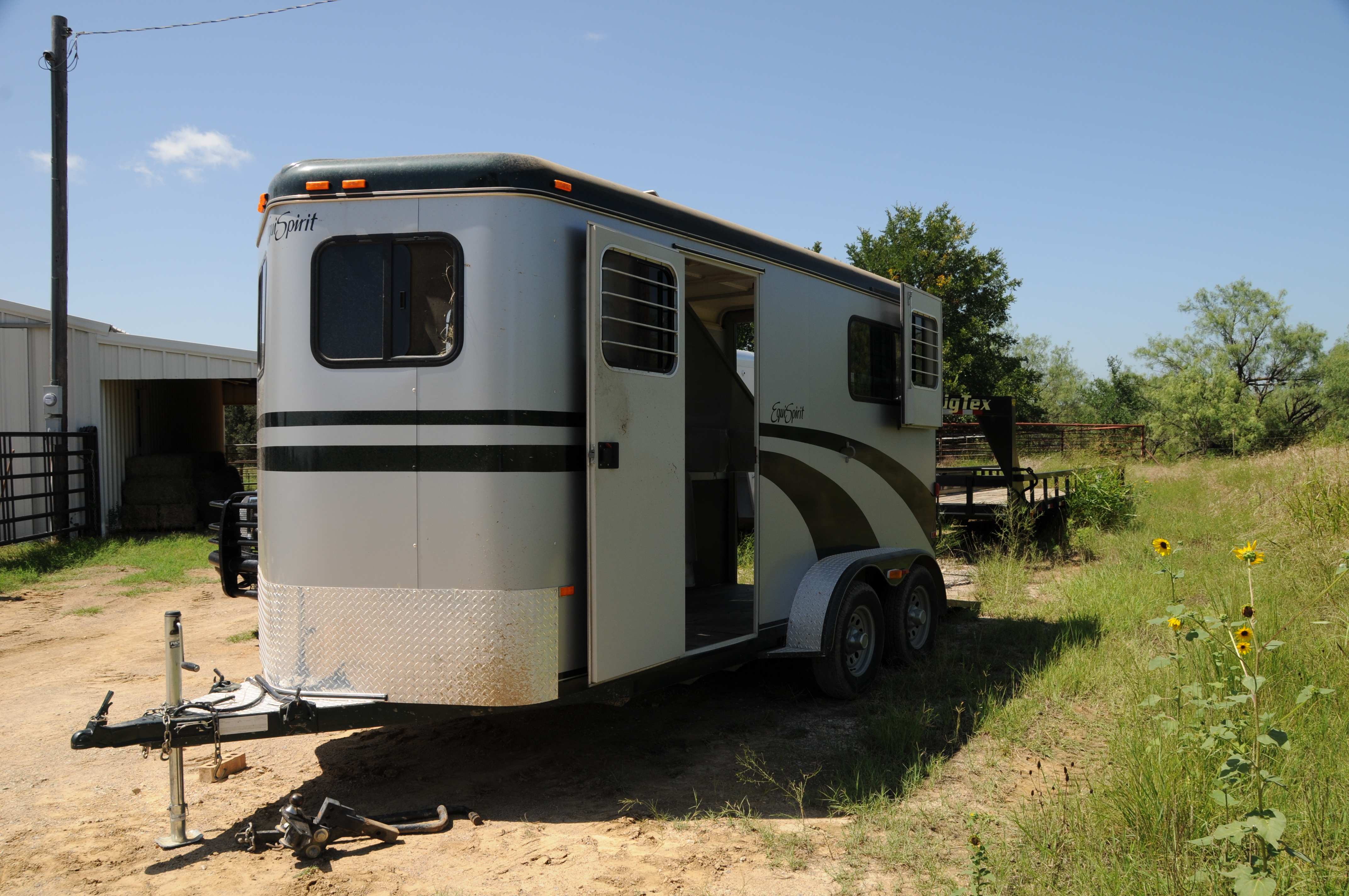
Took Sweet Hija to Equine Sports Medicine and Surgery (ESM&S) on the Brazos for a pregnancy check. Loaded Hija into the two-horse, side-by-side trailer. Some balking at loading.
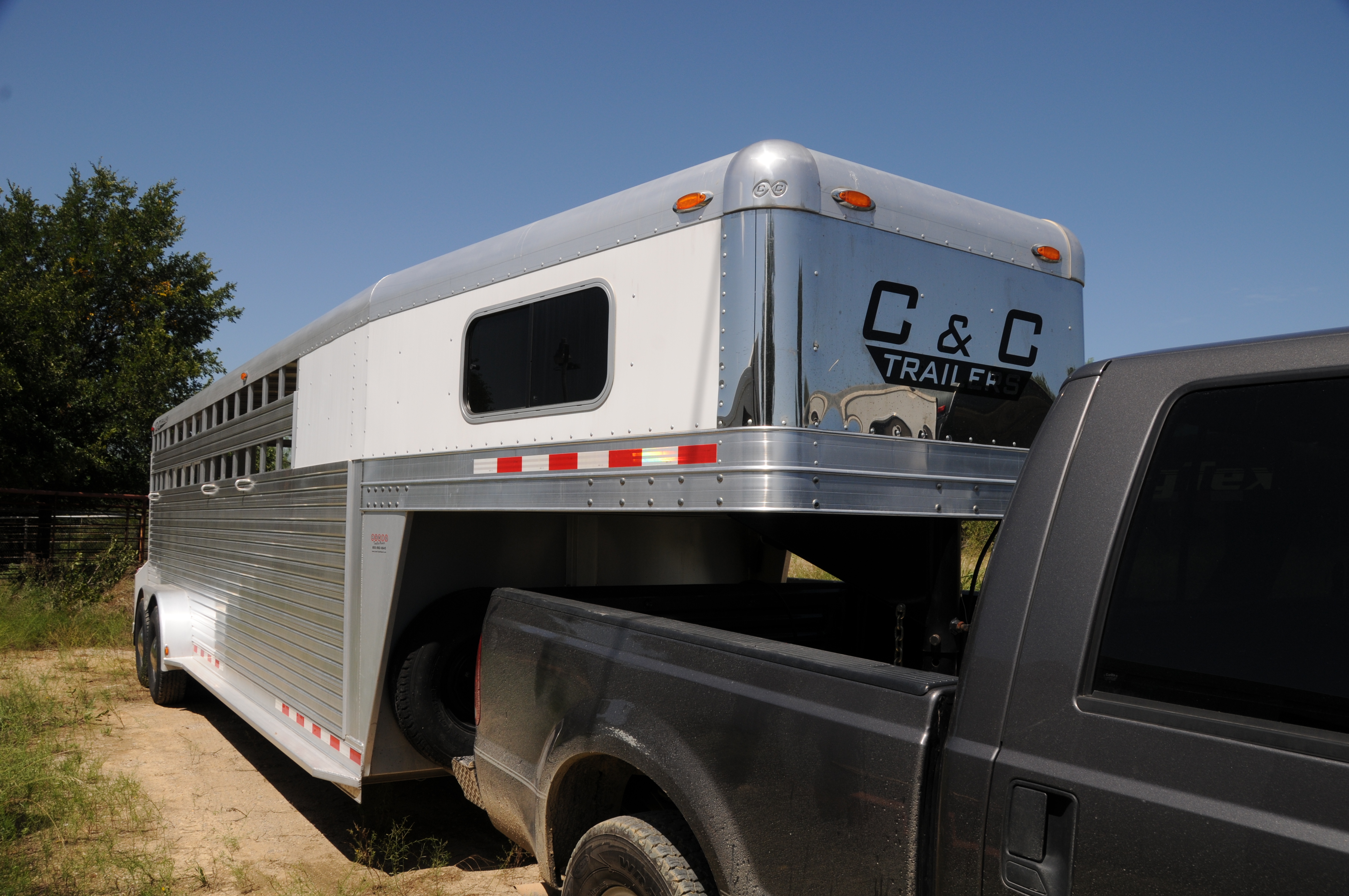
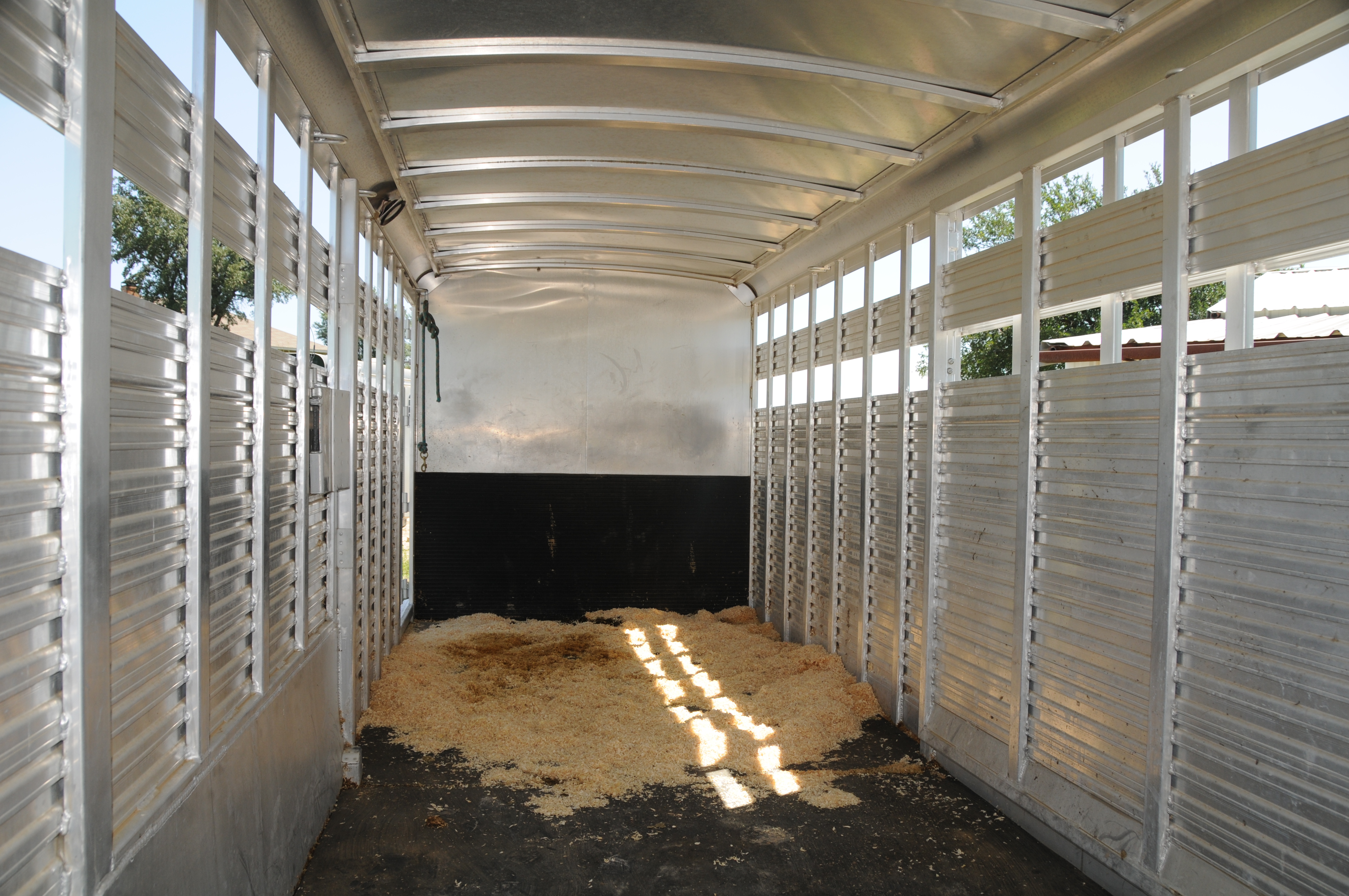
C & C Stock Trailer at Flying Hat Ranch
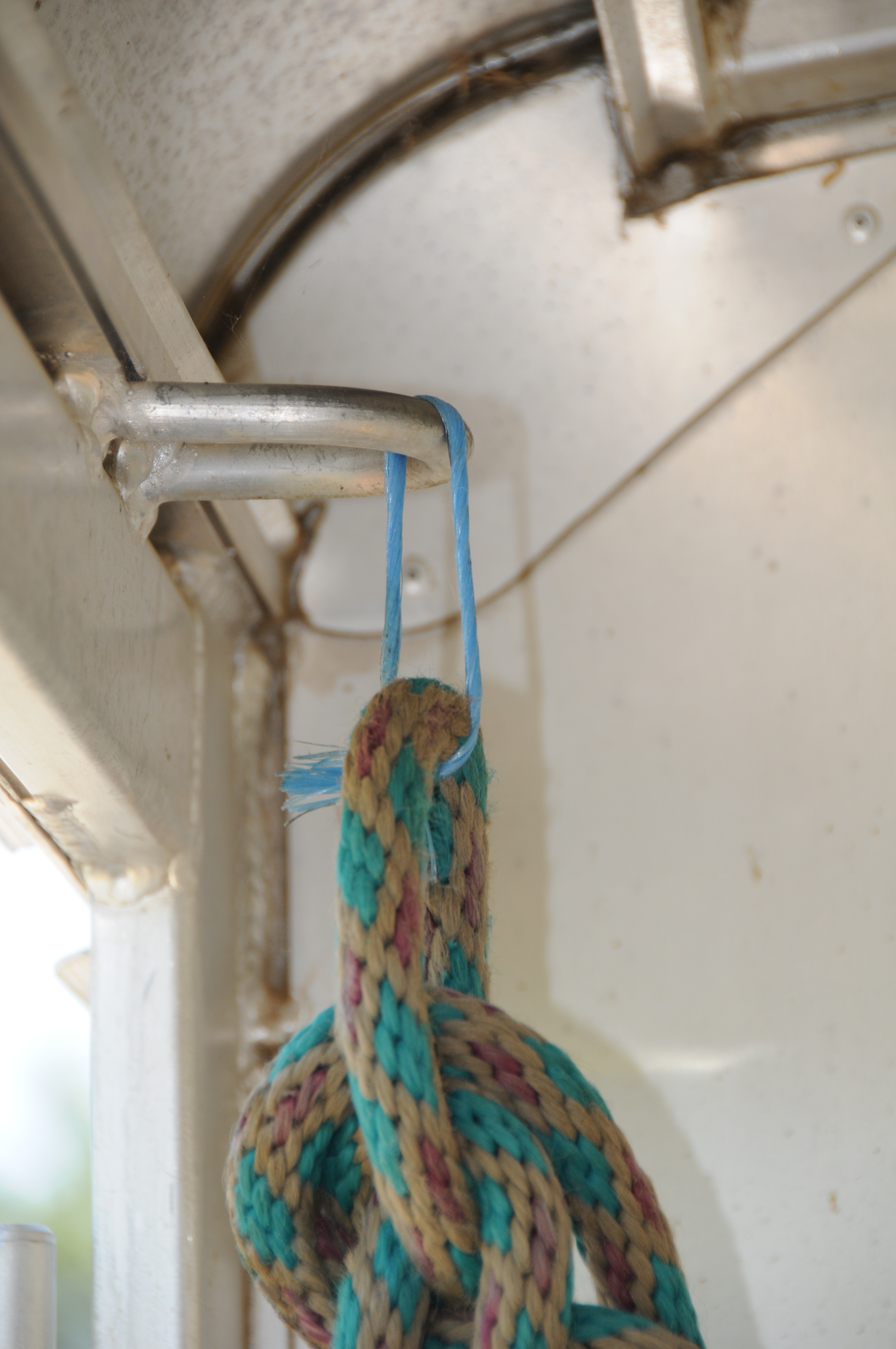
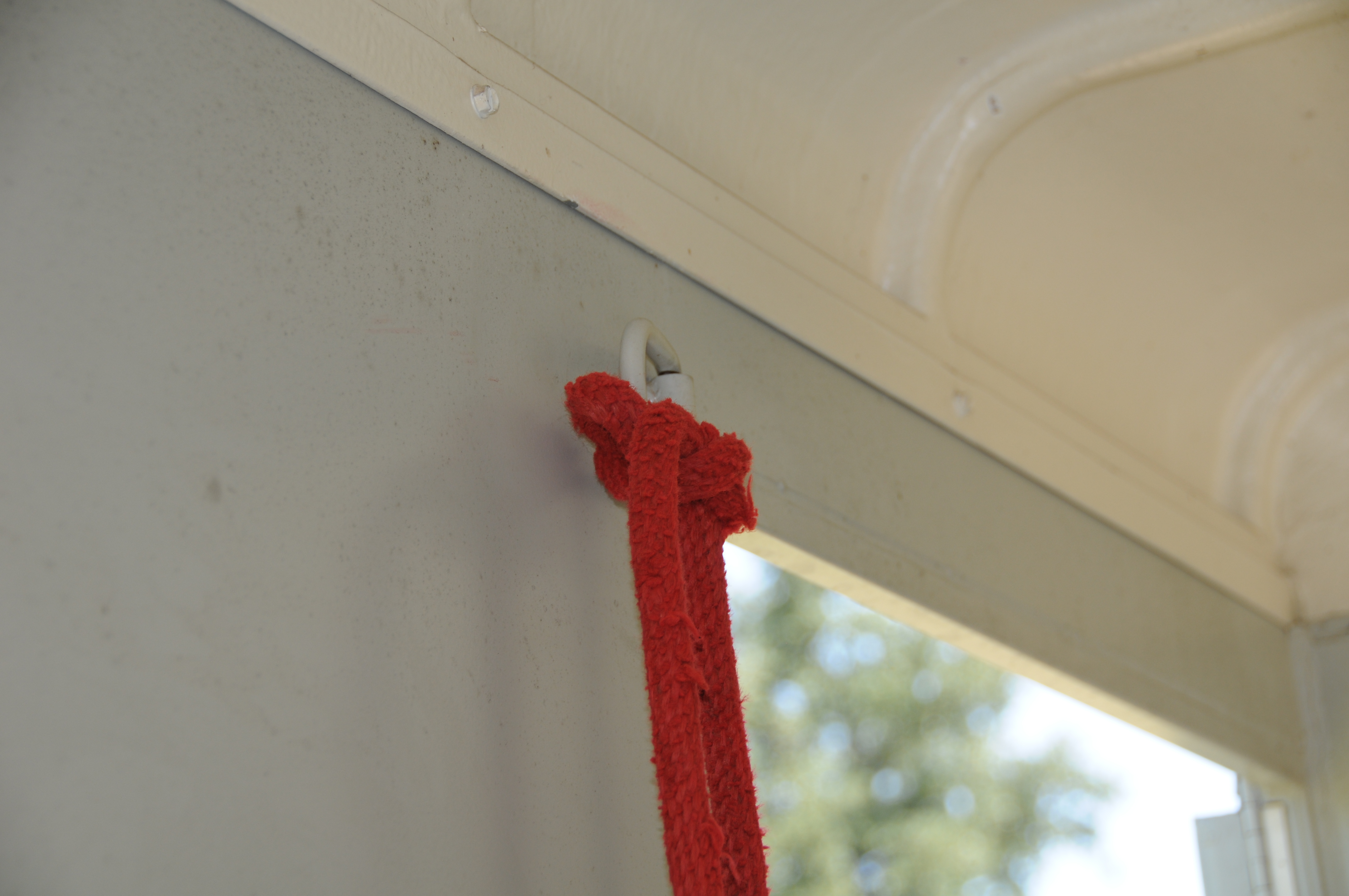
On our place, the horses are accustomed to a C & C stock trailer that is twenty-six feet long, not the two-horse, side-by-side. The C & C stock trailer, for both horses and cattle, allows a larger space, plenty of views between the side rails, a good comfort zone. I don’t tie them up during the trip, only during the loading and unloading process. In the stock trailer, I put up baling twine to tie the lead rope, in case there is an accident or a panic incident, they can snap the twine much easier.
I used the two-horse, side-by-side trailer today rather than the C & C.
Bailing Twine Attached to Lead Rope for Safety
In the two-horse, I had failed to use the baling twine to tie the lead rope, but instead put the lead rope through the conventional steel rung. It did not register on me that I was side-stepping safety behavior for the horse and me. I failed to perform a checklist because I was in a hurry.
Equine Spirit Two-Horse Trailer, Side-by-Side, Flying Hat Ranch
Trip to Equine Sports Medicine and Surgery on the Brazos was slowed by several hundred bicyclists on a race via the Brock Road. Had to drive slowly and be careful passing. Rain tapered off at Brock.
Sweet Hija Will Birth a Filly in May 2011
Dr. Semira S. Mancill gave Hija her sixty-day physical and also sexed the newly-developing foal. Two weeks ago, the sonogram signaled a colt, but the definitive conclusion with ultra-sound yesterday was that the foal was a filly. The sire is Shiners Lena Doc out of Carol Rose’s stables north of Denton, Texas. Dr. Mancill said that the ultra-sound indicated a healthy filly will be developing for birthing next April 15, 2011.
Bad sign in trying to reload Sweet Hija in the trailer. She balked and it took us ten minutes to convince her to join-up with the two-horse trailer. Dr. Mancill, Zack (our helper at ESM&S) and I completed the task. I was embarrassed.
Load completed, I drove to Stephenville to pick up supplies and hay. Twelve bales of coastal and alfalfa, three Strategies, one Horseman’s Edge. Rain eased up so I transported the hay in the bed of the pickup, the grain in the horse trailer.
Accident Due to Several Factors
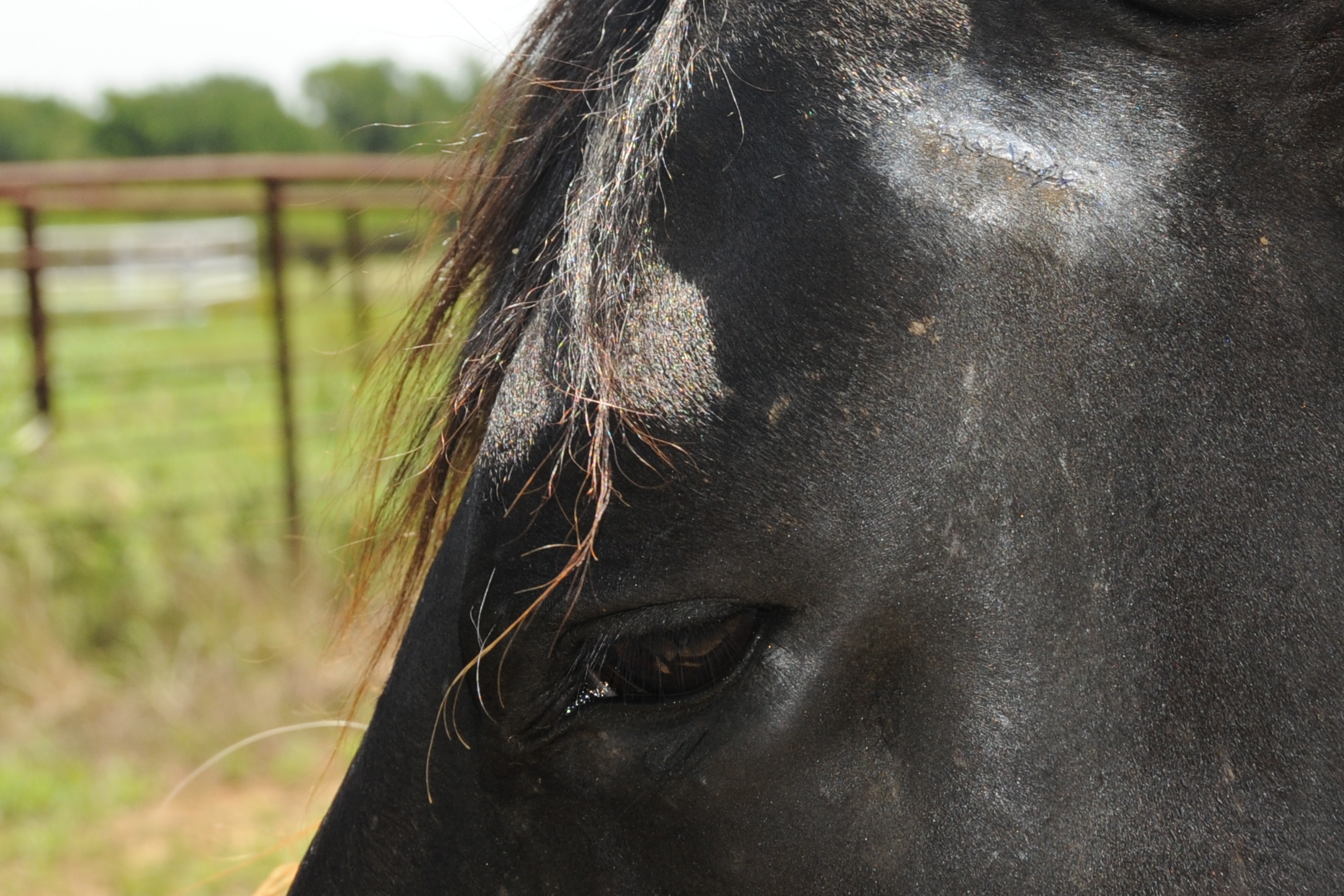
Back at the ranch, I proceeded to unload Hija. Instead of being fully safety-conscious, I proceeded to undo the butt bar on Hija, intending to walk around to side door, climb in the trailer and back her up. Hija panicked and pulled back on the lead rope, breaking the snap on the rope that was under her chin. In rearing backwards, she got a laceration above her left eye from the brass on the halter. I had seen her start to back up and thought she would stop once she got to the end of the lead rope, but she did not. I grabbed her halter without a lead rope and she quickly calmed down, but the laceration was three-inches long and deep, bleeding, though not to the bone.
Entangled Lead Rope on D-ring As Result of Aggressive Pullback of Horse (No Baling Twine)
I asked Brenda to come down to the stables and help me assess what to do. Brenda says it’s bad enough to go to the vet. She calls ESM&S in Weatherford, Texas (not the reproduction center on the Brazos) to tell the emergency staff we are coming with Hija. It was a Saturday afternoon, about 1:30 p.m.
ESM&S Staff Stitches Hija
I hitch up the C & C stock trailer to the white F-250 we have. I’m not going to use the two-horse again today — bad medicine. I proceed to tie Hija to the twine loop, then unfasten her for the trip to ESM&S once she is loaded in. We speed to Weatherford, unload Hija. She is bleeding a bit more, but not effusively. The staff stitches the laceration and we return home by 5:00 p.m. We must take her back in two weeks to get the stitches out.
Sweet Hija With Stitches, Flying Hat Ranch
In the response to Hija’s accident, we were negligent in applying known safety standards. Fortunately, the snap broke before further injury occurred.
Open stock trailers like the C & C trailer have their drawbacks. Probably the most serious is that the separation of horses must be well-planned because there are no panels as in the side-by-side or slant transport. In most situations, however, the trailer has two compartments, large stall areas, and that seems adequate for separation.
Albuquerque Central Avenue Vintage Postcard (Legends of America)
As a boy, I looked out of a hotel window in Albuquerque, New Mexico. I saw women in colored skirts and snow-covered mountains.
…
In 1947, my mother and I and her boyfriend traveled to Albuquerque, New Mexico, from Brownwood, Texas. I do not remember the name of mother’s friend, but he was a nice man and very kind to her. I was five-years old. The road we traveled to New Mexico included a long stretch of highway paved like a washboard. I sat in the backseat, and for an hour or so when we hit that stretch of highway, I bounced up and down. At the end of the bouncing lay Albuquerque, a city that imprinted the New Mexico I revere in memory.
My mother and father divorced shortly after World War II, and mother worked at several jobs to support herself and me. We lived with her mother, Effie, who worked also at odd jobs to pay the groceries and rent for trailer house space under walnut trees on Fourth Street. It was a very small trailer with one room composing three bunk beds and kitchenette. Our toilet was in the neighbor’s house from whom we rented the space for the trailer. Late into the evening, the Philco Safari shortwave radio emitted a golden glow with its sounds of music, news and comedy.
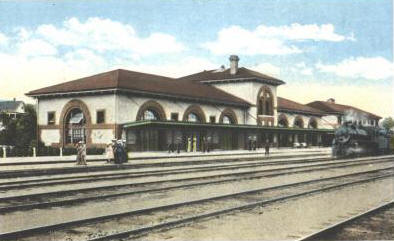
Mother must have met her boyfriend at the cafe she worked, across from the Harvey House at the Brownwood Santa Fe railway depot. He toiled for Santa Fe railroad.
Brownwood Santa Fe Train Depot (Historic Texas Net)
She also waitressed (it became a verb in our family) downtown at the Cactus Cafe where she became cashier before being hired by Southwestern States Telephone Company, a corporation she worked at for over thirty years. Mother had blond hair and blue eyes, about five feet, two inches tall in height. She was slightly built and vivacious — Irish through and through. She was quite verbal, having descended from a background of story tellers and fiddlers near Bend, Texas, a small village along the Colorado River in central Texas. Stern and hard-working, she pushed herself to the extreme while young and it did not cease when she grew old.
This trip, however, was a vacation to Albuquerque with a close friend and there was no work involved, just fun and merriment. We must have stayed several days in Albuquerque. Mother and I stayed in one hotel room and her friend stayed in another. She bought me a book, Indians of Yesterday, that I still have to this day. We visited the Old Town trading area and shopped downtown. Our hotel was several stories high, but I don’t remember the name of it.
The view from our hotel window looked down upon the main street and in the distance, the Sandia Mountains.
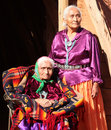
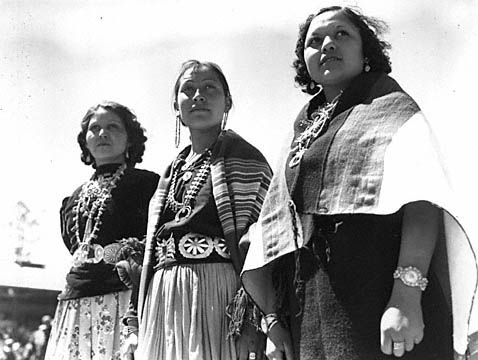
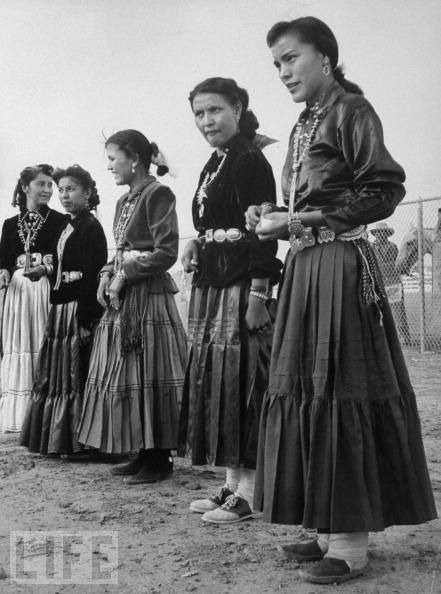
I remember gazing out that window. I would have solitude in the hotel room. Not long, just enough. From my window, I looked down on the street corner and saw women dressed in colorful skirts with concho belts. Their hair was black and they clustered in drops of color about the shops, standing, milling around. Within the skirt pattern, some of which were black or navy blue, I could see rhythmic lines of white ribbon. Soft boots, it seemed, they wore. I don’t remember their wearing hats or bonnets. Exotic women, full of energy, covered in color. It seemed as if they wore several skirts, layered one upon the other.
I peered up from the hotel room and saw snow-covered mountains in the distance, deep purple, deep blue, holding secrets. I looked at them and wanted to go to the snowline and touch the cold — or, have the cold touch me.
I looked down at the women and looked up at the mountains, then the scene as a whole, one tableau. As a child, I comprehended novelty, but I was also enamored by the scene from my window. Today I know that the women are the Navajo that come for trade and fun. The mountains are the Sandia, the location of the earliest paleolithic finds in North America, and I have taken students on field trips to see the Sandia Cave. These new attributions of New Mexico embellish my early memory; they neither replace nor smother what I saw as a child.
You could say, I suppose, if mother and her boyfriend had taken me to New York City, I would have become entranced with cities, but I doubt it. As it was, we returned to Brownwood, Texas, and I got bounced again on the highway while mother and her friend chatted and laughed. Mother continued for a time to work at the cafe across from the Harvey House. Time passed before I returned.
…
In 1955, I traveled to Glorieta, New Mexico, with a church group. I was distracted by infatuation and pious supervisors, but I remember the smell of conifers and the soft carpet of pine needles about the camp. There were neither colorful skirts nor snow-covered mountains — a regretful trip, in so many ways.
Then, in 1967, my wife and I traveled from Amarillo, Texas, to Raton, New Mexico. We had spontaneously decided to go at four o’clock that afternoon. So after packing quickly, we got in the Ford Mustang and drove through thunderstorms to New Mexico. As lightning flashed, it illuminated the countryside and I remember the volcanic hills and mountains flaring to light, then darkness all around. We reached Raton at midnight, excited by our thunderous passage westward.
For the next three days, we stayed in Raton, Taos, and Santa Fe. I was twenty-five years old, twenty years since I had been in Albuquerque with mother. To me at the time, and even now as I compose this piece, the early visit to Albuquerque and the jaunt to Raton seemed a hundred years apart — long, long in-between, though only twenty years. I cannot account for the emotional relativity of it, but it is true. The effect of the quick trip with my wife to New Mexico, however, was quite different from the regret of Glorieta.
I dreamed in vivid colors of New Mexico when I returned to Amarillo: passageways of art and pottery, cafes of chile, museums, people dressed in color and turquoise, adobe walls and hornos. I made plans for a second visit to go farther into the forest and into the desert and trade shops. Over the years, I slept in maid’s quarters and the backseat of my car. I was stranded alone, overnight, in a snowstorm on top of Jemez Pass, bundling in a bedroll and losing a bit of an ear by frostbite. I went again and again and I am still going. I have stayed long enough in the high desert and mountains, however, to become acquainted with rough and jaded junk that falls into arroyos, the brutality of domestic violence, the rage induced by alcohol and drugs on the streets and hyped-up-commercialism of art and craft. I was never an innocent about New Mexico. Never.
It is the land and the people that draws me: the rhythm of the drum, the conifers of Carson, the silky dust of an unpaved road, the remembrance of man and horse plowing the field at Mora, bronzes of Canyon Road, the Dona Luzes of La Casa Sena, Truchas, sagebrush, meadow and the vista of Logan. After my divorce, I took my daughter annually to New Mexico, camping out and staying in fine hotels. We saw Christmas lights on the highway from Tucumcari to Las Vegas, arriving late in Taos one evening. In the summer, dust devils rode beside us, rocking our pickup as we cowboyed through the devil to the campground in the cool forest. These days, I am in northern New Mexico, writing and living in my daughter and son-in-law’s home, renting houses on Witt Road in Taos, and paying beaucoup amount of money in Santa Fe and Albuquerque when I research in special collections and archives. Dust devils still whirl around me; snow and ice make Palo Flechado Pass dangerous; and acequia water still flows along the curbs of Mora and Fort Sumner.
In overcoming loneliness and discontent, I was lucky to have been seized by terrain, something massive and material rather than soft and ideological. It is not all pleasant, this nature writing, because one season is green, the other brown and dying. Yet, the sage blooms again and the riosgrandes have always run shallow or deep, never dry. I see it as my duty to attend these cycles and write about them so that a not-so-bloodless redemption may save our planet yet. It may be a futile effort and I may be wrong.
______________________________
Notes:
Indians Of Yesterday, by Marion E. Gridley, illustrated by Lone Wolf, M. A. Donahue & Company, 1940.
Use of the word, “cowboyed,” is a regionalism. See also “cowboy up.”
The Dona Luz was a restaurant in Taos. I use it here as a personal application to La Casa Sena restaurant, reflecting all the cuisines of the region. To my knowledge, there is no Dona Luz at La Casa Sena. The Dona Luz in Taos had a wine cellar that was dug deeply into the ground. I always liked to eat at a table near the stairwell to the cellar so that I could look down at the wine racks.
I have struggled to define the attraction I have for the Southwest, New Mexico in particular. Texas has its fine qualities and I’ve spent most of my life here and I type it, of course, as southwestern, too. Being a child and on my first, conscious, exotic vacation, the Albuquerque visit would be striking, a first-time event of major proportion. That is explainable by that context. The visit to Raton, Taos, and Santa Fe in 1967, is inexplicable. Calling it a “rebirth” makes me want to stick my finger down my throat. The closest classic description of what happened is D. H. Lawrence’s statement that New Mexico and the high desert vistas called him to fully attend the physical environment (I paraphrase). That’s about as close as I can define it: made me attend landscape and my life like never before.