Cactus Illusion II

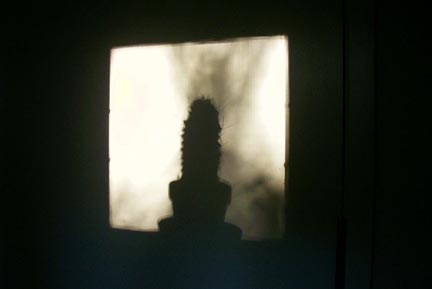
Caralee Woods, Cacti Illusion, Fort Worth, Texas

Caralee Woods of Kanab, Utah, sent me a cactus illusion she had in her home at Eagle Mountain Lake, Texas, several years ago.  She writes,

Here’s another cactus illusion, one of my favorite photos.  It was taken in a hall that led from the kitchen to the garage in the Fort Worth house.  You will remember there was a series of three small square windows in which I put little pots of small cacti.  The sun would shine at a particular angle, making a shadow on the white opposite wall.

Caralee Woods and Jimmy Henley live in Kanab, Utah, and are building a strawbale compound.  You can visit their website Building Our Strawbale Home! Caralee was a regional book representative for Harper and Row before she retired.  Her husband, Jimmy Henley, was the undergraduate dean at Texas Christian University and taught sociology.  He was a grade school and high school friend of mine in Brownwood, Texas.

Their home at Eagle Mountain Lake near Fort Worth was featured in Architectural Digest [n. d.] before they sold it and moved to Kanab.  Their home was built with many of the lines and forms of the Kimball Art Museum in Fort Worth.

I used to house sit and take care of their companions (doggies and kitty cats) while they vacationed in the American Southwest.  I grew so attached to their companions that I regretted when they returned and I had to leave.

______________________________

Correction:

Caralee and Jimmy’s home was not featured in Architectural Digest, but in the local Dallas and Fort Worth newspapers.  See the comment section below.

6 Comments

Filed under Lilly, Plants and Shrubs

Cactus Illusion

We had a scare today.  At 11:30 a.m., I trained the binoculars on the pasture beyond the arena to check on Lilly and Star who were turned out today.

There is a special spot along side the fence and under a mesquite tree that Lilly likes to loaf, and when I looked at her favorite spot, it appeared that she was on her back, legs stuck along the posts of the fence and injured.  Maybe even comatose from stress and the heat.

I yelled at Brenda to put her boots on, “Pronto!”  She did and we climbed in the pickup and I quickly drove by the barn to get rope, halter and blankets.

We drove rapidly through the pasture gate and sped alongside the pond under the live oak trees.  Rounding the curve, Brenda said, “There she is, in the grove, under the live oak tree, standing up!  She’s not by the fence!”

Sure enough, Lilly loafed under a tree, head down, drowsy-like.

What I saw from the house was the reflection of the sun off a stand of prickly pear cactus.  The paddles of the cactus were long enough to appear as Lilly’s legs and the shine seemed like Lilly’s white coat.  I had looked carefully, but I had seen a crisis in the stand of cactus, not reality.

I was embarrassed at the panic, but what could I say?  “Sorry, Brenda, I didn’t mean to get you upset.”  She understood.

This heat is affecting my brain pan.  It’s okay, we have siestas, the horses are well-fed and cool under the trees and this is summer in west Texas.

Taking a cue from an Irish saying, “If we waited for the rain to stop, we’d never get anything done.”  Well, here in Texas, if we waited for it to cool off, we’d never get anything done.

But, I can do without cactus illusions.

5 Comments

Filed under Adventure, Horses, Lilly

Siesta in Mingus

Texas heat and the great, fiery bronze orb in the sky drives us into long siestas these August days.  Temperatures in the 100s bleaches the hair on my horses.  Star, my big paint gelding, loses the black color on his head to a color of creamed coffee and his browsing during the afternoon comes in bursts of fifteen or twenty minutes before he seeks the shade of the live oak trees in the corral.

I stay inside the house from about 11:00 a.m. until 6:00 p.m.  At six o’clock I go down to the corral to feed the horses and my barn cat, Painters.  But, most of the day is siesta, hiding from the heat.  If this is a foretaste of global warming, we are all in for despairing afternoons.   Buy misters to put on the porches, turn the air conditioners to 75 deg. F. and put the ceiling fans on medium speed.  Put ice cubes in the bathtub with your daily wash.

The highest spot in Texas is in the Guadalupe Mountains of west Texas.  Guadalupe Peak is 8,749 feet.  Is it cool there?  The National Park Service that manages the park does not report the temperature on their web page.  I frankly can’t answer if it is cool or not on Guadalupe Peak.  I’m busy taking my siesta in Mingus.

12 Comments

Filed under Flying Hat Ranch

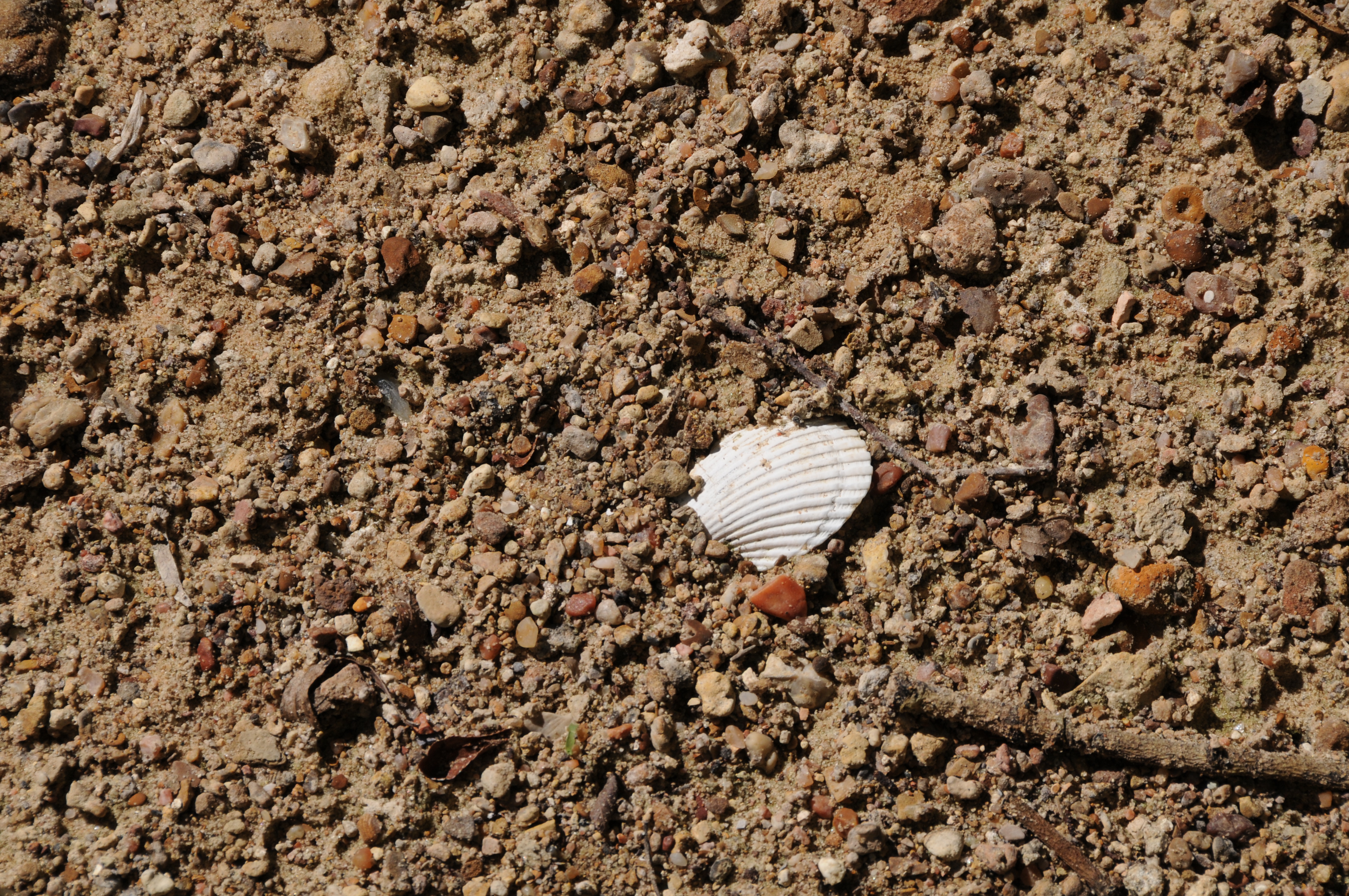
Let the Scallop Be (Field Log 8/1/2010)

North Erath County, Texas, Lat 32.43 N, Long -98.36 W, elev. 1,086 ft. Turkey Creek Quad.

[I incorrectly identified the shell (see photograph above) as a mussel shell and had written in the notes section of this post that I would change the title and identification if someone knew their shells better than me.  It is a scallop shell, well-bleached.  My good friend, Caralee Woods of Kanab, Utah, sent a comment about my incorrect typing and I have made the necessary changes for accuracy in the post.]

Jack, I hate to be the one to tell you, and I’m not a biologist, but I did have an extensive shell collection as a child (I still have it somewhere)! I learned a lot about shells in those days, and I can tell you this ain’t a mussel! It appears to be one half of a very bleached-out scallop shell. I know you’ve eaten mussels, so you know that the mussel shell is tear-shaped and smooth inside and out. The scallop is ridged as you see this one is, and rounder in shape.

Caralee Woods of Kanab, Utah

A high pressure sits above Texas.  Temperatures predicted here in north Erath County are in the range between 100 and 105 deg. F.

10:00 a.m.  I drive in the F-150 towards the grove.

Barn swallows are flying two to five feet above the pasture grasses, eating mosquitoes.  In my shredding of broomweed over the past week, I focus on shredding it alone — broomweed — leaving native grasses and coastal bermuda for insects, loafing areas for the jack rabbits and cottontails and browsing for the horses.

At the pond, a Red-tailed hawk flies from its perch in the willow tree or live oak tree that borders the north side of the pond.  The hawk flies low to the ground, ten feet or so, in the direction of Blue’s pond over the fence line.  I shall be careful next time and try to photograph the Red-tail.

In the grove, above the creek bed, the temperature falls slightly.  Birds are silent.  One bird, a finch encircles me and then flies into the brush.  Cicadas chatter, sawing a melody, then silent.

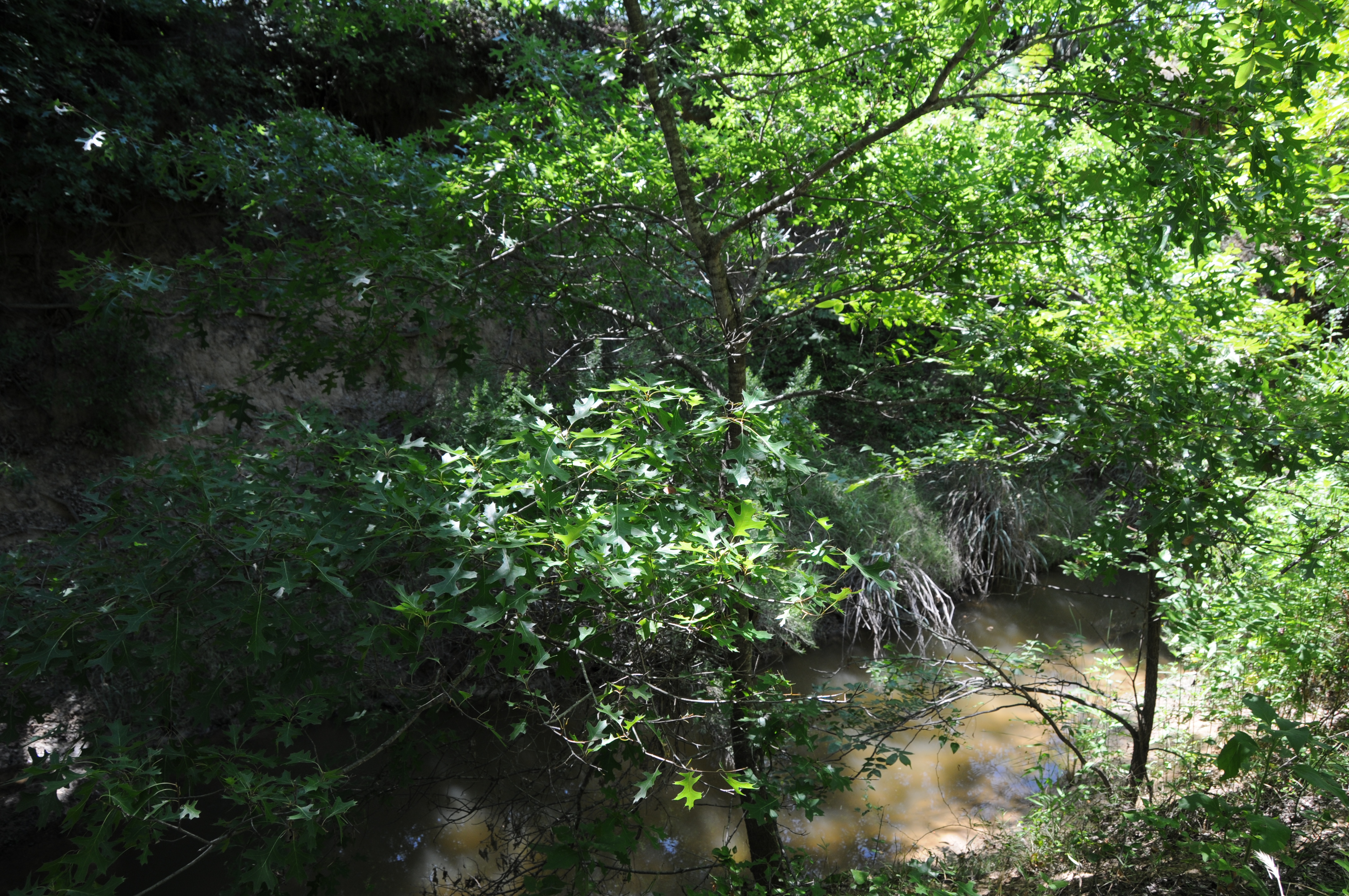
Along the creek bed next to the native grass pasture (Pecan Tree Pasture), pools of clear water stand under oak, pecan, elm, ash and hickory.  Willow and a few cottonwoods grow close to the water.  The temperature falls significantly under the canopy of trees.  The trees are vibrant.  Mustang grapevines erupt leaves, some vines for the first time in years.  This riparian swatch regrows.

The Riparian Swatch, Salt Creek, Flying Hat Ranch, Texas

Star and Lilly have been turned out around the barn and have browsed their way to the front of the house pasture.  Star, however, sees me in the grove and he gallops away from Lilly and neighs to me in the creek bed.  (When I return, he will kick and gallop back to Lilly at the front of the pasture.)

I walk in the creek bed towards the Hall place and east water gap.

I photograph tadpoles and small frogs.  Standing on the edge of a pool of water, the tadpoles turn as a group towards me, peering through the water’s filmy surface.  I am reminded that when I used to swim in the Colorado River and Rough Creek near San Saba, Texas, the tadpoles would come and nibble my flesh.  I wonder if these tadpoles would do the same?

I amble down the creek.  Deer trails appear unused and leaves and debris cover the trail where four-years ago, ten to fifteen deer browsed and migrated about the ranch.  Allen Gaddis, my previous farrier for the remuda, saw fifteen deer in the pasture and grove during a cool and foggy morn when he trimmed horses.  He stopped trimming, looked at the herd and motioned for me to see them.  From east to west, the deer glided in the fog.  Most deer are gone now and Allen Gaddis has relocated to Benjamin, Texas, near the 6666 Ranch and his daughter.  He used to work in Wyoming and once rode a King Ranch stallion that was the fastest and smartest cow horse he had ever ridden.  Though Gaddis is gone, I have his story about that ride he took as a teenager.  I find no deer track.

Turning around, I retrace my steps to the F-150.  Star sees me driving and he gallops back to the front of the pasture and his mother.  I going to my place and he must get back to his.

I had photographed a scallop shell and when I enlarge the photo back at the house I see many things I did not see when I took the shot.  Stones small and colorful.  A poprock.  Seed hulls.  Twig.  Bone.  Leaves.  The outline of the white shell reminds me of Neanderthal decorations I once saw in a textbook.  Earthly things held together in a creek bed matrix.  I notice that the white scallop shell has sand on it.  Should I have brushed it off to improve the photogenic quality of the shell?  I briefly think, yes, but then, no.  I take nature as I have discovered her — earthy, water-coursed, bursting with color and containing the past in bone and hull.  A receptacle.

Let the scallop be.

Scallop Shell in Salt Creek Bed, Flying Hat Ranch, Texas

______________________________

Notes:

My presumption is that the shell is a mussel shell.  I’ll be mightily embarrassed if I am wrong, but I will correct my post and title if a biologist sets me straight.  I have Peterson guides for a lot of categories, but nothing on shells.

All photographs are taken with a Nikon D300 with AF-5 Nikkor 18-200 mm lens.  Each shot is taken with full digital exposure.  You can always reduce the detail, but you can never add to it.

Updated, August 3, 2010.  Please see the comment quoted at the first of this post about shell identification.  My apologies to both the mussel and scallop worlds.

9 Comments

Filed under Field Log

In Death Giraffes Circled

Tadpoles Communicating with Observer (Road Crossing at Salt Creek)

Pleasant or not, I write to reveal the behavior of animals using language we humans have ignored or lost adeptness in translating, so that we might begin again to absorb information that has been showering us for thousands of years.  Such rain washes us everyday, purest liquid in clouds above us, below us, all around us.  In relearning the language of animals the purpose is not only for acquiring knowledge, but for creating a transcendent place for humans and animals once again.  It is finding the garden we humans have lost, not the animals, a place where the heart is at ease.

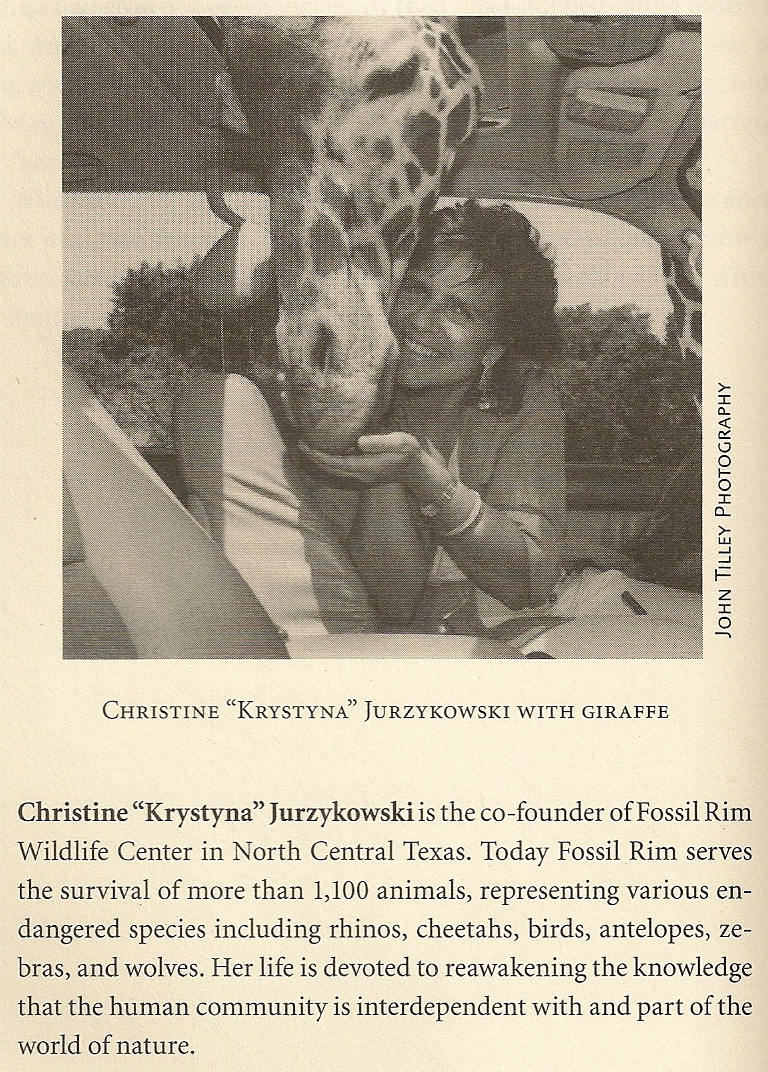
Christine “Krystyna” Jurzykowski wrote an article for Kinship and Animals. The excerpt below focuses on the death of a young male giraffe at Fossil Rim Wildlife Center near Glen Rose, Texas, about fifty miles from Flying Hat Ranch where I live.  This is an example of  inter-species communication in an extremely stressful event.

______________________________

He was six years old.  From birth, he had never really enjoyed good health….We found him fully horizontal one afternoon.  “Quick, prop his head up,” someone said.  A giraffe must have its head elevated or else the buildup of unused pressure causes an aneurysm of the brain.  We spend the next forty-eight hours with this gentle giant on our laps.

After twelve hours, I begin to get into a matched rhythm with his breathing.  I find myself supporting his strength or doubling my energy when his inability to fight dominates.  His head alone feels like a fifty-pound weight on my knees.  The other giraffes form a circle on the other side of the barn.  Slowly they walk, in formation, in silence, heads arching forward and back, as they move in one continuous circle, stopping from time to time for a minute or two.  Their pace seems in harmonious synchronicity to his own ability to fight or surrender.

Ceremony, ritual, a death dance, a communion of higher understanding?  The bull becomes nervous.  The females follow.  We move the bull out in order to regain some quiet.  Something tells us to watch them all at the same time.  The memory is clear: whatever the bull did, the females followed, both on body position and movements, all matching the energy level of the dying giraffe, all in silence, all in loyal reverence and support to his deteriorating condition.

His eyes would catch mine….His gaze would turn away when my own fear surfaced.  The circle, my affirmations, the questions, my cycles of hope and despair lasted another twenty-four hours.  Moments after his death, a group of professors from Texas A&M University arrived for their scheduled site visit.  I met them with tears streaming down my face.

______________________________

These are worlds colliding, animals and humans, worlds of different genetic makeups and culture.  The collision is not annihilation.  It is mysterious, transcendent, beyond the grasp.  For forty-eight hours, both worlds sought to re-vitalize the giraffe.  The herd circled about the one whose head lay in the lap of humans.  Humans elevated the head to prevent an aneurysm.  From a distance the herd watched and circled, parading in unison, swaying like a chorus, sending waves of motion to their kin to rise up.  In the end, both agents of mercy failed at their work, but the six-year-old giraffe did not die alone for there was the company of man and kin about his death chamber.

Do you need a translation for this event?  For now, no, it is sufficient.

Christine Jurzykowski and Giraffe

______________________________

Notes:

Kate Solisti and Michael Tobias (eds.), Kinship with Animals, San Francisco: Council Oaks Books, 2006.

Christine “Krystyna” Jurzykowski, “Be Your Purpose, My Friend,” in Kinship with Animals, cited above.

Fossil Rim Wildlife Center website.

7 Comments

Filed under Life in Balance

Rewilding the Self

Rediscovering nature and its sentient beings is “rewilding.”  In the mid-1990s, Michael Soule of the University of California, Santa Cruz, proposed the idea that to restore ecosystems one should start from the topside down — reintroduce bears, wolves and otters to a deteriorating system.  Soule’s work was in conservation biology, but is now applied to psychology.

To many people in the field of mental health, a rewilding of the psyche is essential to the “heart’s ease.”  The following article from The New York Times expands on several themes surging in ecology and psychology.  I highly recommend you read this.

Is There an Ecological Unconscious? – NYTimes.com.

Artwork by Kate MacDowell (Photograph by Dan Kvitka for The New York Times)

8 Comments

Filed under Life in Balance

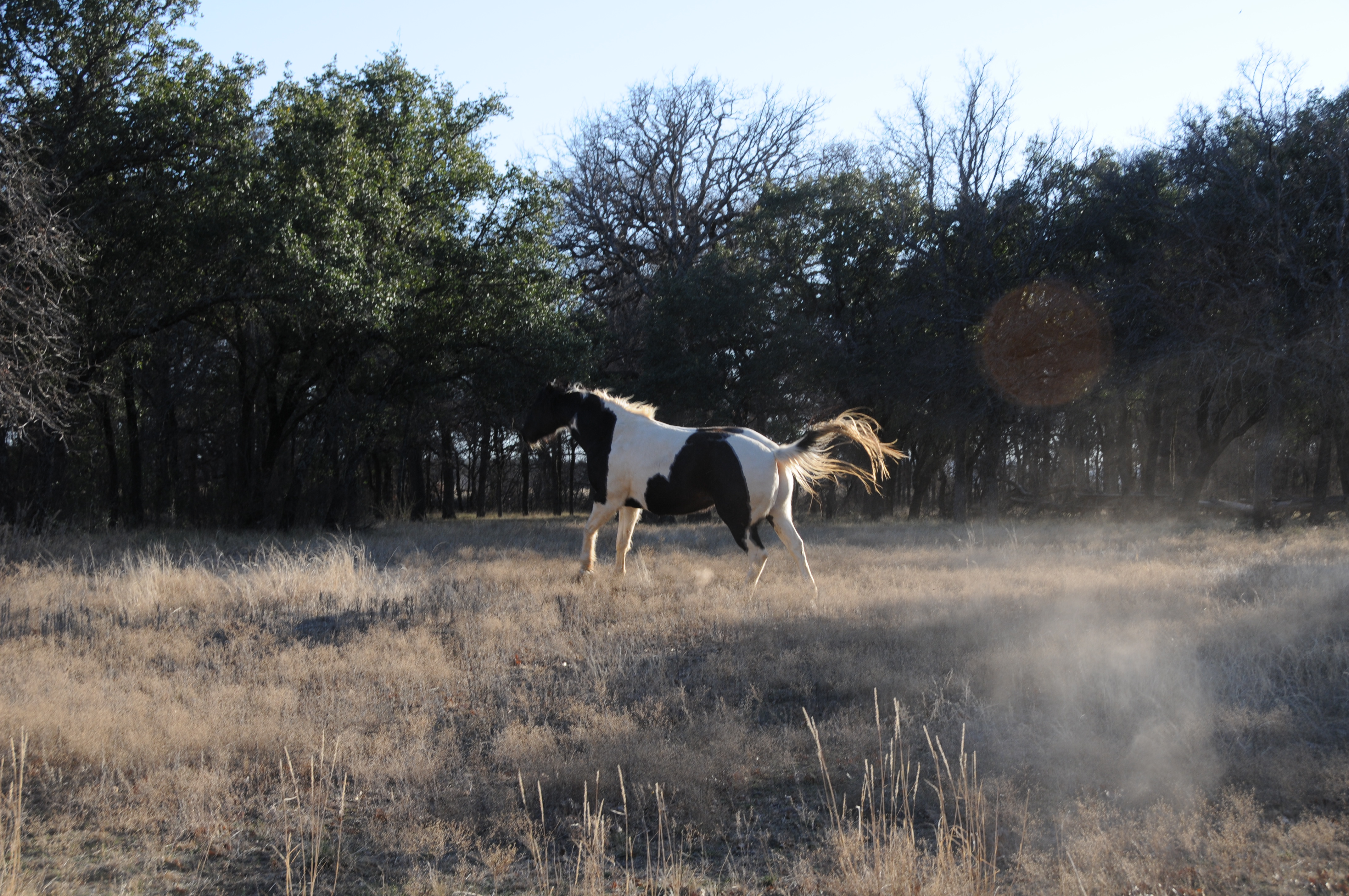
Star in My Barn

A Star fell on me.  A September day in 2002, the paint horse named Star ran into my life.  His mother, Lilly, accompanied him, but he pranced with an independent bounce and cocked his head towards me when I first saw him, a knowing look in his dark eyes that he was coming, full gallop, into my circle of kin.  Did I like him, he asked?  Oh, yes, I liked him and as our friendship endured, Star has become my companion of heart.

Star is a big paint horse, standing sixteen-plus hands, weighing about 1,300 lbs.  I describe him, jokingly, as the beer wagon horse.  His full name is Star Bars Moore, each name carrying champions in his blood.  He is gelded and the emasculation probably gentled him, but I sense that even if he had been kept intact, he would have been mostly mannerly towards his keepers and offspring.

He baby-sits.  He watched two foals (Fanny and Shiney) grow into yearlings and kept them safe and out of harm.  Star would stay with the foals in the pasture and the brushy creek areas, keeping them company on the first weeks of their weaning.  The foals grew and challenged him.  Star never fought them, but would walk away from their threats, knowing the antics of growing teenagers.  I sensed a sadness in Star that his charges went against him when he had protected them.

Star is quiet.  It’s natural to be so.  I stood in the corral one winter day, looking at horses in the field, when Star walked up quietly behind me and put his head on my shoulder, peering in the same direction.  His heavy head fell so lightly on my shoulder it was like the embrace of a friend.  We stood there, as young boys often do, chatting about this, about that.  I talk to him:  Good horse, strong horse, courageous horse.  I move away after awhile and he follows me to the gate and when I look back, Star has put his head over the gate and looks at me get in the pickup and drive up the hill to the house.  I know in truth that a star is in my barn.

14 Comments

Filed under Horses, Star

Yucca Meditation (Parachuting Cats)

Yucca Thoughts

This is Yucca Meditation.  Why yucca?  It’s an abundant succulent on our place here in west Texas and every time I look out from our porch to the southern skies and mesas, I see yuccas.  Yuccas here, yuccas there, yucca yucca everywhere.  I like yucca.  Surrounded by a lot of yucca, I think about many things.  Nothing more, nothing less.

The Pond on Baird Hill

I have written a post on the pond at West Cut on Baird Hill, along Interstate 20, near Abilene, Texas. The pond in the last two years has gone from a vibrant, lush pond of cattails and flora to a grayish-brown receptacle of run-off from nearby inclines.  Though my proof is impressionable and subject to further research, the most likely cause of the pond’s decline is water run-off from construction of power lines above the pond that transfer power from wind farms on the east and north side of Abilene.  I saw the construction crews and they did not run willy-nilly all over the ranch land.  From what I saw, crews behaved as stewards to the land.

These days, wind farm blades turn and electricity emerges from a green source, renewable and free by all accounts.  Even so, because of transmission lines, a pond declined in health, an impact unintended and unforeseeable.  This brings me to the cats.

Dayak of Borneo

The Dayak of Borneo (Imageshack, Asian Chat)

After World War II, the World Health Organization (WHO) and other similar agencies sought to eradicate the mosquito that carried the plasmodium of malaria.  DDT was the first insecticide applied in regions that had a high incidence of malaria.  In Borneo live the Dayak people, residing in large single homes or long houses of up to 500 people.   After the application of DDT to the mosquito population, malaria was eradicated and the overall quality of life and energy of the tribe dramatically increased.  The tribe’s health had never been so good (1).

Living in the long houses, however, were cockroaches, cats and small lizards — the gecko.  The cockroaches ingested the DDT and the geckos ate the cockroaches.  Normal pattern.  Cats ate the lizards, but the lizards had become lethal weapons through the eating of so many cockroaches laced with DDT.  The cats, unfortunately, all died from eating the lizards.  Not normal.

The unintended consequences of helping the Dayak people eradicate malaria did not stop there.  When the cats died, rats from the surrounding woods invaded the villages, bringing the sylvatic plague through fleas, lice and parasites rats normally vectored.  The Dayak missed their cats greatly.  The Royal Air Force (RAF) and the WHO met the situation in quick order.  The RAF parachuted 14,000 living cats into the villages to eat the rats.  I can see it now:  parachutes with kitty-cats in crates dropping from the skies.  I don’t think they would have harnessed the kitties with little webbings and ripcords, do you?

It doesn’t end there.

In the roofs of the thatched houses lived a small caterpillar that burrowed into the rafters and before the DDT spraying, caused little damage.  Parasites and predators of the little caterpillar had kept the caterpillar population in check, particularly the wasp.  The DDT killed the parasites of the caterpillar, the caterpillar population skyrocketed, burrowing deeper into the rafters of the long houses and single homes, resulting in the collapse of the huts and exposure of the population to the elements before repairs.

The Dayak must of thought the end of the world was near, seeing cats drop out of the sky and houses collapsing.  Oh, the evil WHO!

A Law of Unintended Consequences

DDT has now been discredited and is not used widely, if at all.  The initial application of the chemical was intended for good effect and that was attained, yet the unintended consequences were disastrous for the Dayak, and, we know today, bad for many organisms in the food chain.

The correlation of DDT and the effects of wind farm construction occurs only at the juncture of unintended consequences.  DDT has been completely taken out of most systemic plans for public health.  Wind farms will remain and should remain.  The West Cut Pond on Baird Hill will probably renew itself and ducks will arrive in October and not leave until March.  In comparing the degree of damage by DDT and transmission line construction, there’s no balancing of the equation.  Wind farms should stay.  DDT needs to be tightly regulated.

In the beginning, the application of new technology usually promises much: efficiency, improvement of health and speed (automobile vs. horse and buggy).  The continuing use of technology, however, reveals unintended consequences that may be destructive in a large sense (collapse of long houses) or small.  The decision arises as to whether to keep the technology, drop it entirely or regulate its use.

In my yucca frame of mind, let’s keep parachuting cats to a minimum and be careful, very careful, about the destruction of water habitats.

______________________________

Notes:

1.  See Harrison, Tom, 1965, “Operation Cat Drop,” Animals, 5:512-13 as quoted and utilized in the article, C. S. Holling and M. A. Goldberg, “Ecology and Planning,” pp.  78-93, in an anthology by Daniel G. Bates and Susan H. Lees (eds.), Contemporary Anthropology: An Anthology, New York: Alfred A. Knopf, 1981.

A blog post similarly composed is Planninga from Nanninga that has a parachuting cat cartoon and commentary on unintended consequences.

See also “Parachuting Cats — A True Story.” The cartoon illustration in the post is from this article.

Malaria cases in the U.  S. are minimal (1,200 cases a year), due to the previous use of DDT.  Malaria, however, appears in central Mexico today and is gradually coming northward to the U. S.  The application of some form of insecticide in the coming decades will be needed to eradicate the vector mosquito.

5 Comments

Filed under Life Out of Balance

Lightening Strikes Castle and Sage to Meadow Repeater!

Readers!

A lightening storm moved through our area — west Texas — last evening and a lightening bolt struck one of the two repeaters for microwave service.  The Castle on top of New York Hill at Mingus, Texas, was hit hard, but no fire or damage.  Bolts of Zeus struck the Castle’s IP relay station, and I have just now been able to get back on the internet.  Feisty fellow.

Full service has been restored.

I will reply to comments and post more these evening.  I was not able to see the responses to Lyric and Teddy Bear until a few minutes ago.

I have work to do in the field until after dark.

______________________________

Notes:

Pardon the mythological reference.  Who threw the lightening bolts?  May have been Thor?  I wrote Zeus.

5 Comments

Filed under Adventure

Lyric and Teddy Bear

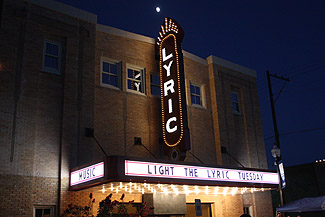
Lyric Theater, Brownwood, Texas (ca. 1940s)

In the 1940s, in Brownwood, Texas, three movie palaces illuminated downtown: the Bowie, Lyric and Queen.  I sat in all of them and learned much about Hollywood life, even Mexico because the Queen ran some of the best desperado celluloids I have ever seen.  The Bowie theater showed upscale film, hardly any Saturday morning trailers for boys and girls.  The Lyric posted both upscale (MGM, Colombia, 20th Century Fox) as well as the Lone Ranger, Roy Rogers, Tarzan and the Three Stooges.  I can still see the darkened theater and kids at the Lyric waving and shouting and screaming and laughing, hands and arms waving between me and the screen.  When I saw Purple Rose of Cairo, I saw myself in the audience at the Lyric theater watching the film come right off the screen and into my heart.

Mother took me to the Lyric one day and I took my teddy bear, young boy that I was.  I fell asleep.  After the showing, we came back to the trailer house on Austin Avenue, where the clocks spun in the dirt.  The trailer was cramped for the three of us: mom, grandmother and me.  Sweltering in the summer, pumping and pushing those sprayers of mosquito repellent at night.  I looked for my bear at bedtime.  The bear was gone.  I had dropped teddy when I fell asleep and now it was gone and in the hands of who-knows-who at the Lyric theater.

A day went by and I missed that bear.

Then, magic, like Hollywood and the desperado escapes in Mexico, mother said, “Look under your pillow, Little Jack.”

I uplifted the pillow and there was my teddy bear, black buttons for eyes and leather for its paws, all back in my clutches, never to leave my side again.  What vacuum had been was now evaporated in the retrieval my mother obtained from the Lyric theater management.  She had gone next door to use the landlady’s telephone to have them hold the bear until she could walk (we had no car) back downtown the next day, rescue the bear and come back to our trailer house on Austin Avenue.

The good citizens of Brownwood have turned the old theater — it has been shut for decades — into a thespian venue, replete with new furnishings and grand opening.  A new palace for acting and art.  I can extrapolate, but won’t right now.  It’s good, not bad.

I parse the loss of the bear and its return.  What I see and feel is a mother caring, a business attentive to lost toys and a town that nurtured its community with innocent amusement for a post-war generation.  The Lyric theater in 1914, from what I read about it, was to be a theater for live performance, probably a late-vaudeville medium as well.  If that is true, then the Lyric theater has gone from a venue for live performance to Hollywood and serials on Saturday back again to live performance.  A cycle.

When I lived in that small town, I never lost anything, not even a bear at the Lyric.

The Lyric Today in Brownwood (2010)

______________________________

Notes:

For a link to the changing venue of the Lyric, click on: Lyric Lights Up Downtown Brownwood – Photos & Video.

8 Comments

Filed under Recollections 1942-1966