Canada! Watch out for Lonespurs Shining Badger!


Lonespurs Shining Badger born April 11, 2011, Calgary, Alberta.

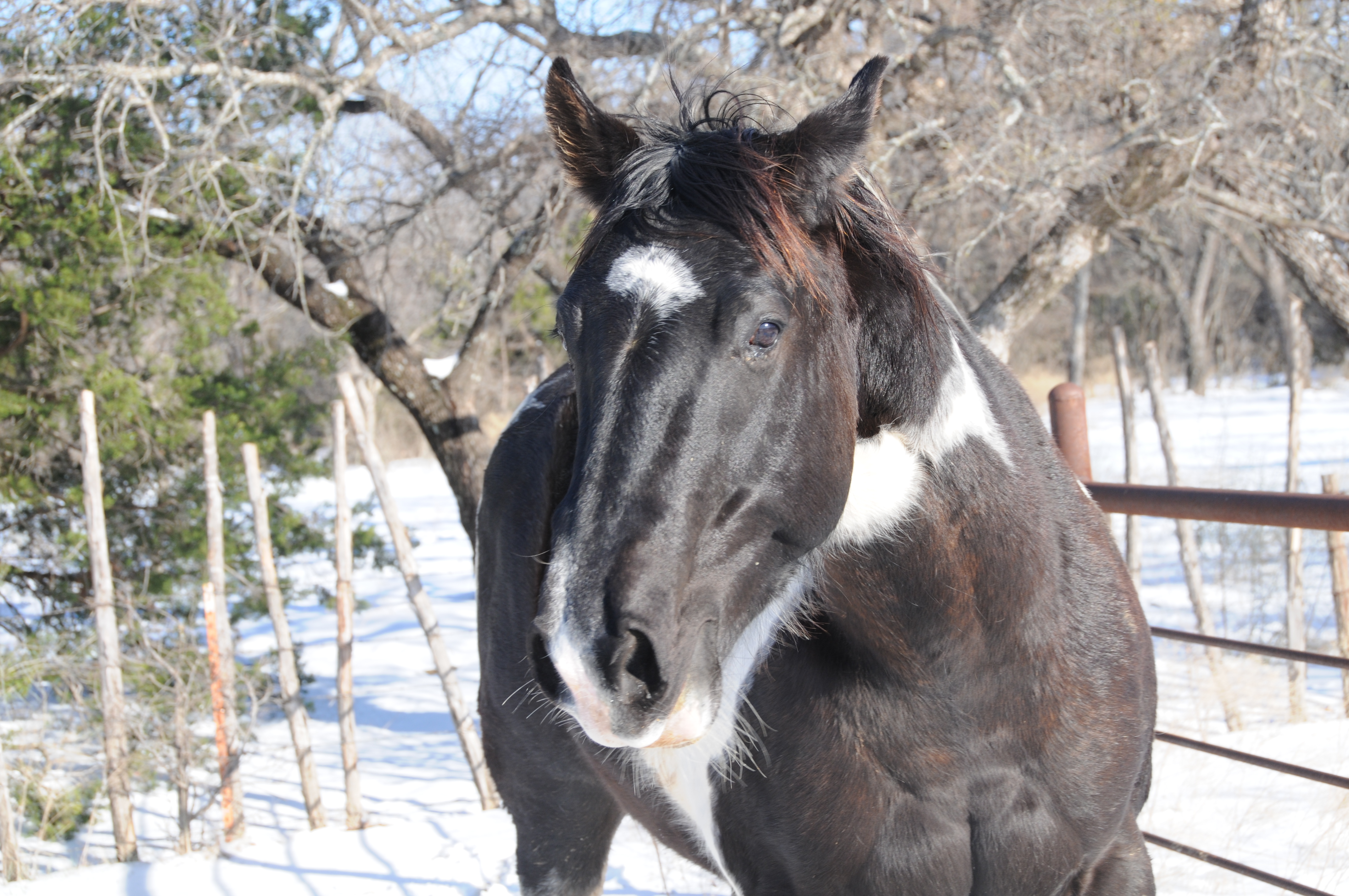
Sweet Hija foaled a colt, Lonespurs Shining Badger, on April 11, 2011.  Kim Elliott, the owner of Sweet Hija, has selected the paper name for the colt:  Lonespurs, the name of their ranch near Calgary where Legends of the Fall and Open Range were filmed; Shining, after the sire Shiners Lena Doc; and Badger, after the King Ranch bloodline of Sweet Hija.

Kim said that Sweet Hija was as big as Mac Truck before she foaled and that she had the foal all by herself, no problem.  That’s one of the reasons we bought Sweet Hija in 2003.  She was strong and bred for ranch work and could take care of things quickly.

I thought that all my tears had been shed about Sweet Hija, but Brenda and I gave a few more tears to the good earth when we learned of Hija and Highway 101, the barn name for the little colt named, Lonespurs Shining Badger.

Kim Elliott and her family — I talked to them on the phone — are so very proud of Hija and Highway 101 that I think (don’t know for sure) they will keep Highway 101 intact and have him sire a whole new bloodline in Canada.  We’ll see if my hunch is correct.

In any case, watch out, Canada, for this little man!

This slideshow requires JavaScript.

Notes:

Kim Elliott and her family operate and own Elliott Equine Transport, the premier horse transport for North America.  Highway 101, Kim told me, is the coastal highway they travel between Canada and Mexico and the place in between and a fitting name for the little colt.

11 Comments

Filed under Horses, Sweet Hija

Prairie Sagebrush Awards 2011 — preview

I will be giving the second Prairie Sagebrush Award to my blogroll friends in a few weeks.  It is the second year of recognizing fine creations on the blogosphere.

Read last year’s award-winning posts: Prairie Sagebrush Award 2010.

I select a post, photograph or artwork that has been composed in the last year, say, from June 2010 to May 2011.  It’s a celebration of a year of my blogging.

There’s no first, second or third.  I select the post, photograph or artwork that was meaningful to me and the universe and create a ONE POST ANTHOLOGY of all the fine work created.  It’s a long post, but well worth bookmarking.

For every comment made on the ANTHOLOGY POST for Prairie Sagebrush Award 2011, I will donate one buck to a wildlife corridor in Texas or New Mexico (limit is $500).  Last year I donated thirty-five dollars.

I’ll be posting a couple of my favorite posts from my blogroll before the big revelation on June 1, 2011 — if not before.

9 Comments

Filed under Fine Sentences Series, Prairie Sagebrush Awards 2010

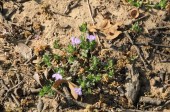
Wild flowers of a dry Texas Spring day

[Please note that when this post was first published yesterday, April 10, 2010, the Silverleaf nightshade was misidentified as a Dayflower.  The corrections have been made in the caption of the flower and plant and the notes contain a warning about the use of the Silverleaf nightshade.]

At 9:59 a.m. I drove down to the barn and parked the F-150.  Taking my camera and walking carefully, within the next hour I traced a familiar path from the barn thorough the corrals, into the arena pasture and into the grove.  I walked along the edge of Salt Creek and photographed these wild flowers of our dry Texas Spring.  Salt Creek is an intermittent-running creek, but there are pools of water and tracks abound.   The trees are green and lush about the creek and grass, despite the drought, remains verdant.

I picked a blossom of wild verbena in the main pasture and gently pressed it.  The fragrance flew about my face and I inhaled deeply.  Only a partial blossom I pressed, but it nonetheless imparted its scent that remained for minutes, not seconds, as I walked back up to the barn.  Beside the kitchen sink, we have liquid verbena soap, reminding me of the wild as I wash my hands, arms and face.

* * *

My uncle Floyd McRorey used to come in from the field and wash his hands in the kitchen sink with hard Lava soap as Aunt Lennie prepared a meal.  I never saw Aunt Lennie wash the dinner dishes.  She helped dry, but never washed the dinner dishes.  Uncle Floyd always washed the dinner dishes.

* * *

All of the following photographs may be enlarged with a click of your mouse.


Notes:

The scientific nomenclature for each plant may be incorrect as there are a broad range of varieties.  I refer to as many as four books and two databases to identify the plant, but I may be in error, so please verify my identification.

The Silverleaf nightshade is all toxic.  Medicinal: Used for rattlesnake bite – root chewed by medicine man, who then sucks on the wound to remove venom, then more root is chewed and applied to swollen area. (Steiner) Southwestern Native Americans used the crushed berries to curdle milk in making cheese, and the berries have also been used in various preparations for treating sore throat and toothache (Lady Bird Wildflower Center Plant Database).

Please see the link for Silverleaf nightshade:

Lady Bird Johnson Native Plant Database Silverleaf nightshade.

10 Comments

Filed under Wild Flowers of Texas

Spring with Effie and Gywn


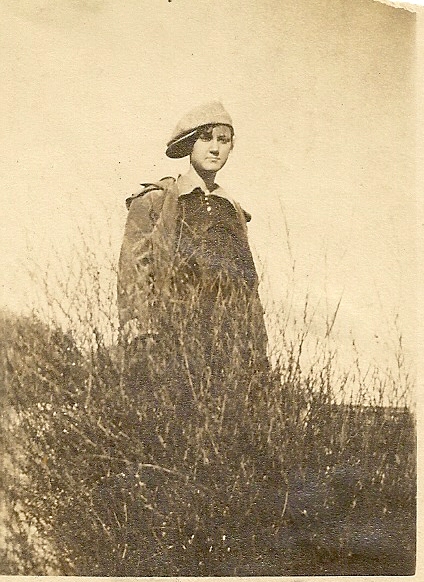
Effie Vernon Morris Parks (1900-1966)

I have written about my grandmother, Effie Parks, many times on the blog.  Here is a photograph of her in 1919, near Bend, Texas.  She cooked for chuck wagons on several ranches along with her husband, Jake, who managed cattle on horseback.  During the Great Depression, she sewed for the Works Progress Administration.  In her last years, she worked as a telephone operator in Lometa and Bend, Texas.  She taught me the rudiments of dominoes, playing guitar and hitting a baseball.  She and her husband were married by a parson in an onion field near the Colorado River in central Texas.  In her will, she divided her property among her two children and me.

Gywn Matthews Hollingshead (1920-2003)

This is my mother, Gywn.  This photograph was taken about 1938 when she was living with her mother, Effie, at Bend, Texas.  She married my father, Jack, in 1942, shortly before he volunteered to become a parachutist with the 506th P.I.R.  He was a member of Easy Company, made famous by Stephen Ambrose and Tom Hanks.  Gywn worked for over thirty years for the Southwestern States Telephone Company and General Telephone.  She helped pay for my college education and gave Brenda and me the money for a down payment for a $35,000 house in Mingus, Texas in 2000.  She would come to Mingus and visit us, sitting in the kitchen and looking out on the vineyard I had planted.  She always had a quote of some sort to throw out for the occasion.  One I remember is: Ask me no questions and I’ll tell you no lies.  She was Irish mainly, and proud of it.

I have posted these photographs and short commentary of Effie and Gywn because it is April and Spring is upon us and I never can go through this month without thinking of how Effie and Gywn and I traveled the backroads to Bend, Texas, and San Saba to visit relatives at Easter.  The flowers of April and May emitted the most beautiful perfumes imaginable in nature.  They talked quietly about plants and cattle and loved ones that we saw and loved ones that had departed.  I sat in the back seat of the car and listened to their talk and inhaled the scent of bluebonnets and paintbrushes all around.

Today, Brenda and I can travel the same road to Bend, Texas, and flowers spring up again.  We can go down that road and crisscross the same roads I traveled as a boy with Effie and Gywn.

31 Comments

Filed under Bend Texas, Life in Balance

Rabies and Star

Star Bars Moore

In the city, look out for the bus.  In the country, what doesn’t sting or bite you will stick you — wasps, mosquitoes, mesquite thorns or worse.  Still, I had rather be out in the country and take my chances.

Rabies in horses is rare, but on the Bryant place, across the fence to the south of us, two horses were put down because one of them had a full-blown case of rabies.  Its companion horse had not displayed rabies symptoms, but Erath County authorities ordered it killed as it had no rabies vaccination documentation.  One was euthanized Thursday, March 24, and the other unfortunate horse this Thursday, March 31.  The first horse exhibited rabies symptoms and the vet took tissue samples that confirmed the disease.  The Bryants are having to take rabies shots since they were in close contact with the horse.

My paint gelding, Star, had been staying in the front pastures away from the Bryant place until last Sunday, March 27.  For two days, Star had infrequent contact with the second horse over the fence that had been killed.  Since rabies can be transmitted via mucous interchange, it is a very serious situation for Star.

Star had been inoculated against rabies in 2009, and last week before the contact with the Bryant horse he had been given his rabies shot for 2011.  Our veterinarian, Dr. Skeet Gibson of Equine Sports Medicine and Surgery, Weatherford, says the 2011 inoculation has not gone into full effect, and the 2009 inoculation begins to diminish in effectiveness after a year-and-a-half.  But since Star had no contact with the rabid horse — only the companion horse that had been killed — the chances were slim that any transmission had taken place.

Nonetheless, the vet said to isolate Star for two weeks and minimize my contact with his muzzle and mucous discharges, look for symptoms (not eating, behavior changes, etc.) and contact my personal physician for advice.

I called our personal physician immediately and neither I nor Brenda will be required to take rabies shots unless Star is rabid.  Star will probably be okay, but isolation and observation is imperative.

And just how did I find out about this whole issue of rabies next door?  My neighbors to the east that have horses called me Thursday, March 31, to inform me of the euthanizing, and they have no land contiguous with the Bryants!  They called to alert me as a fellow horseman.  Neither the Bryants nor the Erath County authorities had contacted me.  Had I been informed last week, I would not have allowed Star to go to the far pasture — Pecan Tree Pasture.  As it is now, we are having to take measures to determine disease contact that may, in the end, be fatal to Star, although I repeat it is doubtful.

Within an hour after the Halls called me and I had visited with the Bryants to find out the facts, I went across the county road to inform a fellow horseman of the situation.  In the country, we must work together.  I choose to do so.

25 Comments

Filed under Flying Hat Ranch, Horses, Star

The fox, the hare and the chef

I think we should leave our boxes of house, classroom and boardroom and integrate with the natural world of fresh air, sun and terrain, if only for a vacation.  Venturing into the field, the park, even a backyard, nature comes upon you with sight, sound and scent that carries you away from asphalt and brick.

It’s not all pleasant, this leaving the box.  With the flower comes the wasp.  The fox is beautiful, but rabbits will die.
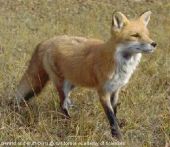
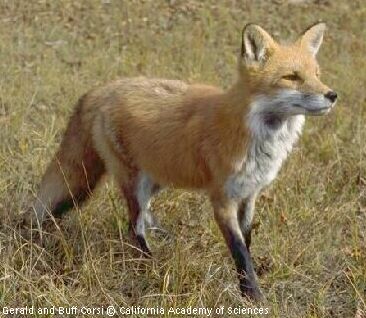
I have seen three wild foxes in my lifetime — that’s all, and I have looked.  In 1956, the first was along Pompey Creek in Mills County, Texas, on the lease of my step-father.  I was sitting on one side of the creek and along the other bank, a fox trotted along the stream, looked once at me and continued on.  I was impressed at its gait that was leisurely, self-assured.  The fox was plump, its coat deep-red and shiny.  I wanted to follow it and see where it went and if it had a mate and kits and where its burrow was.  I wanted to live with the fox and see it again and again and again in the forest and along Pompey Creek.  I never saw it again, although I looked for months and years thereafter for red fur coats in the central Texas brush.

The second time I saw a wild fox was in 2005 when Brenda and I were sitting out on the back porch.  We can look far into the pasture that is twenty-feet below, as we are on a hill above the grasses.  In the late spring evening, a fox came trotting along a pasture road, heading north into the brush of Blue’s farm to the east of us.  This fox’s coat was darker than the one at Pompey Creek, but the same focused gait carried him farther into the brush and away from the cleared field of buffalo grass.  Brenda and I spoke in whispers as it trotted away.  That same year, 2005, fifteen deer moved daily from Blue’s farm, across our pasture and into the grove.

Two years later in 2007, I was standing on the bank of Salt Creek in our oak tree grove when along the dry creek bed the third fox trotted, headed upstream towards the Dooley place on the west side of our ranch.  I was about fifteen feet above the creek bed and stood still as the fox passed by.  That was four years ago and I have seen none since.  A solitary deer occasionally drinks from the pond and I see track that may be fox.

* * *

The fox hunts and in the end, rabbits scream and chickens cluck and run.  The farmer brings the shotgun to the shoulder and fires once, twice, thrice.  The Dooleys to our west have chickens and they pen them for safety, but fox and coyote still take their cut.  The Dooleys count their losses.  I hear no gunfire.  The fox must eat.

It is a cycle of birth and death, the preyed upon and the predator.  You know the story, you’ve even been a part of it.  To describe the cycle is easy, but to understand it and live with it, to go on despite the tooth and claw is very difficult, for we like to deny the cycle happens or we put it away over there, behind the fence, beyond the hedge.  When I taught anthropology, my first lesson and repeated lesson through the semester was “Food — Where is it?  And, how do we get it? Who provides it for you?”  We buy food at the supermarket, but that’s not where it comes from, and it is not wrapped in cellophane when the middleman harvests the animal or plant.

Thomas Keller owns the most famous restaurant in America today, The French Laundry in California.  When he was young and honing his skills at the restaurant of Rene and Paulette Macary, near Catskill, New York,  he approached the purveyor of rabbit:

Thomas Keller

One day, I asked my purveyor to show me how to kill, skin, and eviscerate a rabbit.  I had never done this, and I figured if I was going to cook rabbit, I should know it from its live state through slaughtering, skinning, and butchering, and then the cooking.  The guy showed up with twelve live rabbits.  He hit one over the head with a club, knocked it out, slit its throat, pinned it to a board, skinned it — the whole bit.  Then he left.

I don’t know what else I expected, but there I was out in the grass behind the restaurant, just me and eleven cute little bunnies, all of which were on the menu that week and had to find their way into the braising pan.  I clutched the first rabbit.  I had a hard time killing it.  It screamed.  Rabbits scream and this one screamed loudly.  Then it broke its leg trying to get away.  It was terrible.

The next ten rabbits didn’t scream and I was quick with the kill, but that first screaming rabbit not only gave me a lesson in butchering, it also taught me about waste.  Because killing those rabbits had been such an awful experience, I would not squander them.  I would use all my powers as a chef to ensure that those rabbits were beautiful.  It’s very easy to go to a grocery store and buy meat, then accidentally overcook it and throw it away.  A cook sauteing a rabbit loin, working the line on a Saturday night, a million pans going, plates going out the door, who took that loin a little too far, doesn’t hesitate, just dumps it in the garbage and fires another.  Would that cook, I wonder, have his attention stray from that loin had he killed the rabbit himself?  No.  Should a cook squander anything, ever?

It was a simple lesson.

— Thomas Keller, The French Laundry Cookbook, New York: Artisan, 1999, p. 205, “The Importance of Rabbits.”

In too many of my hunts when young I squandered wildlife.  I still pay for that everyday.  I don’t hunt anymore, but I would if I had to.  My last hunt was deer and that was many years ago when I went with two of my closest friends to Van Horn, Texas.  I dressed my kill in the field and brought the deer back for my family.  I did not need to hunt for I garnered a paycheck every month and bought groceries at the supermarket.  I never hunted after Van Horn.  We ate what I shot.

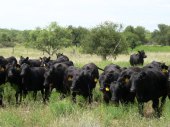
In 2008, Brenda and I brought to market twenty-seven head of Angus stocker cattle after feeding them several months on our native grass pastures.  I made sure that when I transported them to the feed yard that they went to the cleanest and healthiest feed yard in Texas.  They did go to Perryton, Texas, a place of little stress and fine management with no HotShots (paddles to strike the calf) and plenty of room to move and breathe.

As I loaded the twenty-seven Angus into the stock trailer, I said under my breath and to no one in particular:  You go now!  You fatten yourselves!  I’ve done the best by you I could!  You better go to the table of someone that finds a cure for cancer for I will think of you the rest of my years!

I made no profit on the cattle, but I prepared them the best I could.  I did not squander resources in tending them as their steward.

And they were beautiful, like the fox, for some of them had a red hue about their coats as the sun went down.
______________________________

Notes:

One of my first blogs was called, “The 27th Heart,” named after Unit 27 Angus stocker calf that fell sick.  I tended him and took him to the vet.  He recovered.

I cook from Keller’s cookbook and always remember that story he wrote.  It is deep and connected with the American Indian.  Parallels can be drawn.

The italics in the quote of Keller’s are mine.


28 Comments

Filed under Life in Balance

Balance — monarchs, milkweed and horses

Leading edge monarch in Spring 2011, north Erath County, Texas.

Earlier this week on the first full day of Spring 2011, I received a communication from Journey North that the monarchs “were pouring out of Mexico” and that the leading edges were entering Oklahoma, about a 100 miles from our place in north Erath County, Texas.  A day before the e-mail, I had seen a monarch in our front field feasting on nectar of wild verbena, but I did not have my camera to take a picture.

The next day, March 23, 2011, I spotted this leading edge monarch in our live oak tree out in front of our house.  Twenty-three live oak trees live on the knoll of our home, a hill really, that is known as Poprock Hill in local folklore.  These trees have been the roosting place for monarchs, I am sure, for several generations.  We have seen monarchs every year since we have moved here and last year I snapped pictures for the blog of a large roost of monarchs in the Fall as they flew to Mexico.

I have known of butterflies all of my life, but only in the last fifteen years have I begun to look deeply into the ecology of where I live in north Erath County, Texas.  This blog I write, Sage to Meadow, has become a platform for me to the rest of the world, a medium of communicating my love of nature, its greens and browns, births and deaths that encompass us all.  Butterflies such as the monarch abound where I live and I did not know milkweed was a prime source of its nutrition.

Milkweed, like many other things, is an example of nature’s complexity and diversity, for although it is a prime source of food for butterflies, its over-indulgence by horses and cattle is toxic and may result in death if untreated.  When I learned of that last year, I quickly researched  the milkweed and its correlation with horses and found that adequate grass and grain prevents the livestock from consuming large quantities of milkweed.

So, the lesson here is balance for farmers and ranchers.  Keep good stands of grass in the field, do not overgraze, and horses and man and butterflies can co-exist.  It’s not the final lesson of life, but it’s one of the best lessons to acquire — for the monarchs can continue to find food to and from Mexico, horses will graze elsewhere and be pacified, and we will be able to look upon all their beauty and grace as we observe from close and far away the interconnectedness of us all.


Green-flowered Milkweed (Asclepias asperula), May 2010, north Erath County, Texas.


18 Comments

Filed under Horses, Life in Balance, Monarch Butterfly

Field notes 3/22/2011 — diamondback and monarch

Winds sustained at 22 m.p.h.  Highway travel to Abilene slowed.

Yeller, our Aussie-Lab mix dog, sat in the hallway in front of the glass door leading to the outside porch.  He growls deeply, the deepest and most sustained growl I have ever heard from him.  I go to the front door, thinking Yeller has alerted us to a strange dog or our resident lizard that comes across the front porch.  Yeller growls deeper.  On the porch, I see a four-foot rattlesnake slithering next to the closed glass door, six inches from his nose.

The glass door separates Yeller and us from the rattlesnake.  Brenda gets Yeller and Lottie, our Schnauzer, away from the door and takes them into another room, away from what must happen.  I grab the Remington 12 gauge and run around to the front door and dispatch the snake quickly, angling the shot to prevent blowback.  We are unnerved since no rattlesnakes — other snakes have been left alone — have been seen around our house since we moved here in 2003.

I must make sure the grass is cut about the house and piles of brush are placed at a distance away from the yard.  We have become complacent and need to sharpen our senses.

Later this afternoon, I see a lone monarch butterfly sitting on our wild verbena in the front field, a hundred-feet away from the front porch event a hour before, feasting on nectar, gently folding and unfolding the wings.

I am not sure what to make of monarchs, diamondbacks, dogs and all of this that comes across my field.  I am saddened and must do what needs to be done to be safe and live.  This day, March 22, 2011, has been filled with many things I do not understand.

* * *


[From Backpacker, June 2000.]  Sure, carrying a hiking stick makes me look like a rugged mountain man, but it also helps me in more pedestrian ways. By easing the load on my knees and shoulders, it helps me chew up big miles, plus I can tiptoe across loose rocks, slippery logs, and rushing streams without a wobble. Here’s how to create your own personalized staff.

1. Search your local forest for a downed branch that’s stout, straight, and preferably, blemish-free (no obvious cracks or big knotholes). The stick should reach your armpit and measure 1 to 2 inches in diameter.

2. Remove twigs with a pocketknife and strip the bark if you want. Round off sharp points or level knobs with a plane or file. Hold the stick as though you’re hiking (your elbow should form a right angle) to figure out where your grip will be– 2 to 3 inches below the top. Customize the grip by cutting shallow grooves for your fingers like those on a steering wheel. Just above the grip area, drill a 1/4-inch hole for a wrist loop. Smooth the surface of the stick first with coarse, then fine, sandpaper.To remove residual sawdust, wipe the stick with a rag dipped in paint thinner.

3. Decorate the stick with carvings, wood burnings, paintings, emblems or bear bells. If the wood is still green, place it in a warm, dry location to cure for at least 2 weeks, and rotate it often to prevent bowing.

4. Apply two coats of wood stain, allowing each coat to dry overnight, to give the stick a darker, richer hue. Then apply three coats of clear urethane varnish to seal the wood and prevent rot. Allow each coat of varnish to dry overnight. Sand the stick lightly with very fine sandpaper or steel wool after each coat.

5. Thread a 2-foot piece of rawhide lace or heavy cord through the hole. Adjust the length of the loop to fit your wrist, tie the ends in a big knot to secure the loop, then trim the ends as necessary.

Wood is a fickle creature, so remember that hiking sticks are born as much as they are made. –Jonathan Dorn

____________________________

Notes:

“Making Your Own Walking Stick,” Backpacker magazine, June 2000.

13 Comments

Filed under Adventure, Diamondback Rattlesnake, Field Log

Widgeon flying

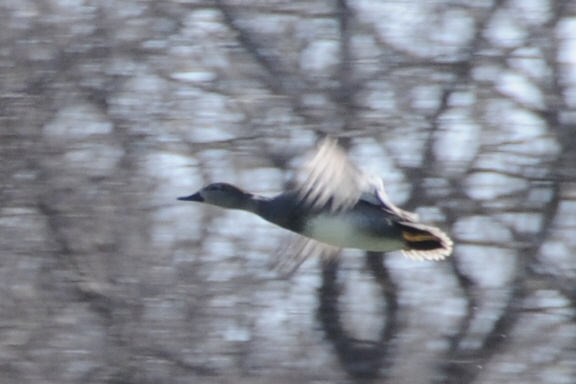
American widgeon (Mareca americana) or baldpate species.


By the analysis of Jay Miles of Wells, Maine, the featured duck in the last two posts is an American widgeon (Marcea americana) or baldpate species.  Several months ago I posted “Gray Sky with Duck,” concerning nine ducks I scared from our pond when I drove down the pasture road after feeding the horses and scattering corn in the grove for deer.  After reading my post, Jay commented that he would help in identification of ducks.  I looked at his Kicking Bull Gallery website and he knows ducks!  He sculpts ducks, he sells vintage and antique duck decoys.  He has five lists (each list is several pages) of duck decoys on his website of  “Antique old vintage decoys, hunting decoys used in old times past to hunt ducks in the marshes and the sea.”  Jay has his ducks in a row.


Kicking Bull Gallery


I wrote Jay an e-mail several days ago asking for his opinion since I was wallowing around in factoring duck morphology.  I may know cacti and sagebrush, but I don’t know ducks.  Jay responded this morning by e-mail.  By this time next year, I will be a bit more versed in duck identification.

* * *

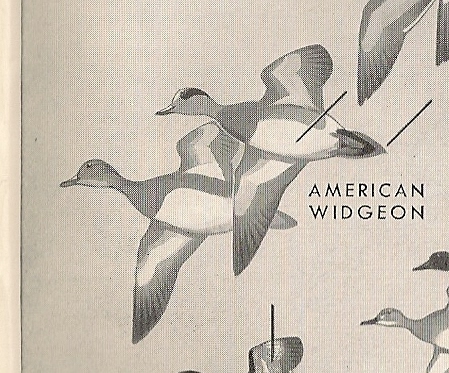
Roger Tory Peterson writes in A Field Guide to Western Birds that the female American widgeon voices qua-ack.  I noted this two-part voice pattern many times before as I stood out of sight near the pond’s embankment.  I often thought that the duck had been bumped into by other browsers, eliciting a two-part sound of frustration.  No, that wasn’t the case despite my attempt at personification.  The widgeon winters from southern Alaska to Central America.  Its habitat is in fresh marshes, irrigated land, ponds, lakes and bays.  Some widgeons, we now know, winter or pass by north Erath County, Texas, and spend time on the Flying Hat pond.

An interesting nexus emerged in my previous posts asking for assistance in identification.  Bill of Wild Ramblings opined, so did Laura of A Number of Things, Caralee of Built by Hand Strawbale Housing and Jay Miles of Kicking Bull Gallery.  Bill hails from Massachusetts, Jay is from Maine, Laura of London and Caralee of Utah.  The five of us that took an interest in the duck are attuned to nature.  Caralee added her observations about the difficulty of typing birds in flight — she is working on typing hawks that swoop down upon her.  I opened Peterson to pages about duck profiles in flight, something I had never done before.  Bill added the difficulty in typing waterfowl and steered me away from it being a Canvasback because of the beak feature.  Laura apologized for not identifying, but pointed out that the title of the post, “Typing duck in flight,” made her think of a duck carrying a typewriter while in flight!  I find it fascinating that a digital photo of duck taking flight from a Texas pond could provoke a response from Utah to New England to London.  We are all curious about birds, and, moreover, the infinite wildness of the natural world.

_____________________________

Notes:

The Kicking Bull Gallery logo is from Jay Miles website.

Photograph of American widgeon in flight is J. Matthews, March 2011, Mingus, Texas.

Illustrations are from Roger Tory Peterson, A Field Guide to Western Birds, second edition, Boston: Houghton Mifflin Company, 1969.

American widgeon from Roger Tory Peterson.

14 Comments

Filed under American Widgeon, Ducks

Typing duck in flight part 2: the takeoff

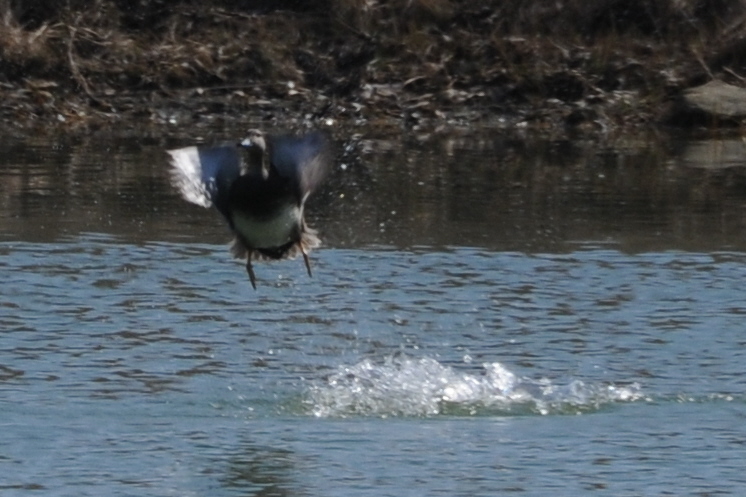
The unidentified duck in the photograph below takes off.  Upon a clue from Bill Lattrell who loves wild places (see his Wild Ramblings blog), the duck may be a Redhead (Aythya americana).  Field marks from Peterson’s include the male that is gray with a black chest and round red-brown head; the bill blue with black tip.  Both sexes have gray wing-stripes.  I have one additional photograph of the duck as it took off from the pond.


Tentatively a Redhead duck in takeoff from pond (February 2011).

The other aspect that may be a factor in identifying the duck as Redhead is that they patter along the surface while getting underway.  From the photograph above, you can see the traces of a patter?  It all happened so fast when the duck took flight that I could only snap two pictures.  (There is a camera feature to take rapid sequential shots that I should turned on.)  The other photograph is in a previous post yesterday.  It is the same duck.

In any case, if any of you have an opinion about the duck above, please comment or write me at matthewsranch@msn.com.  Duck feedback anyone?

7 Comments

Filed under Canvasback, Redhead Duck