Tag Archives: Texas

Over the Hill

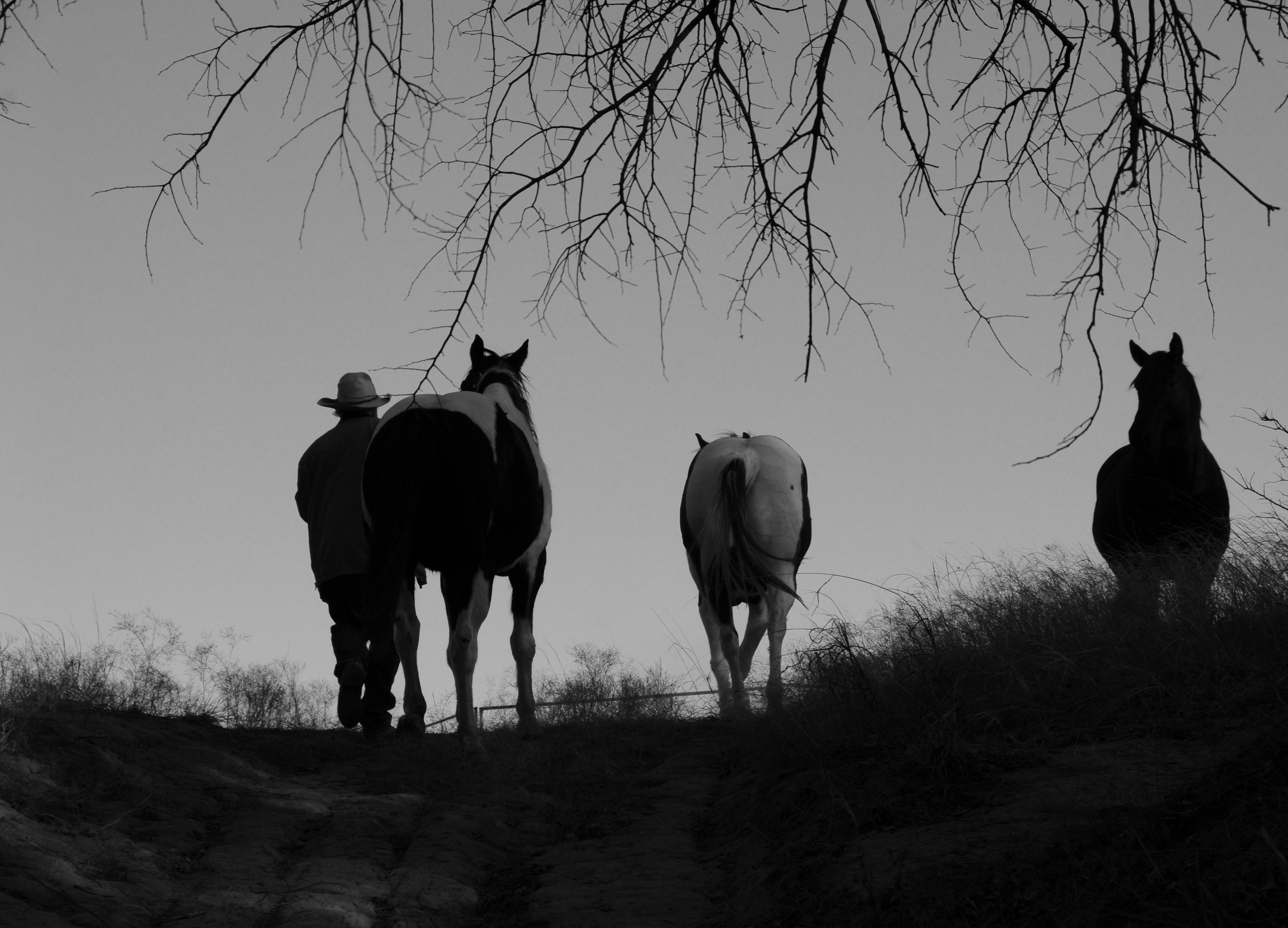
Over the Hill, February 2009

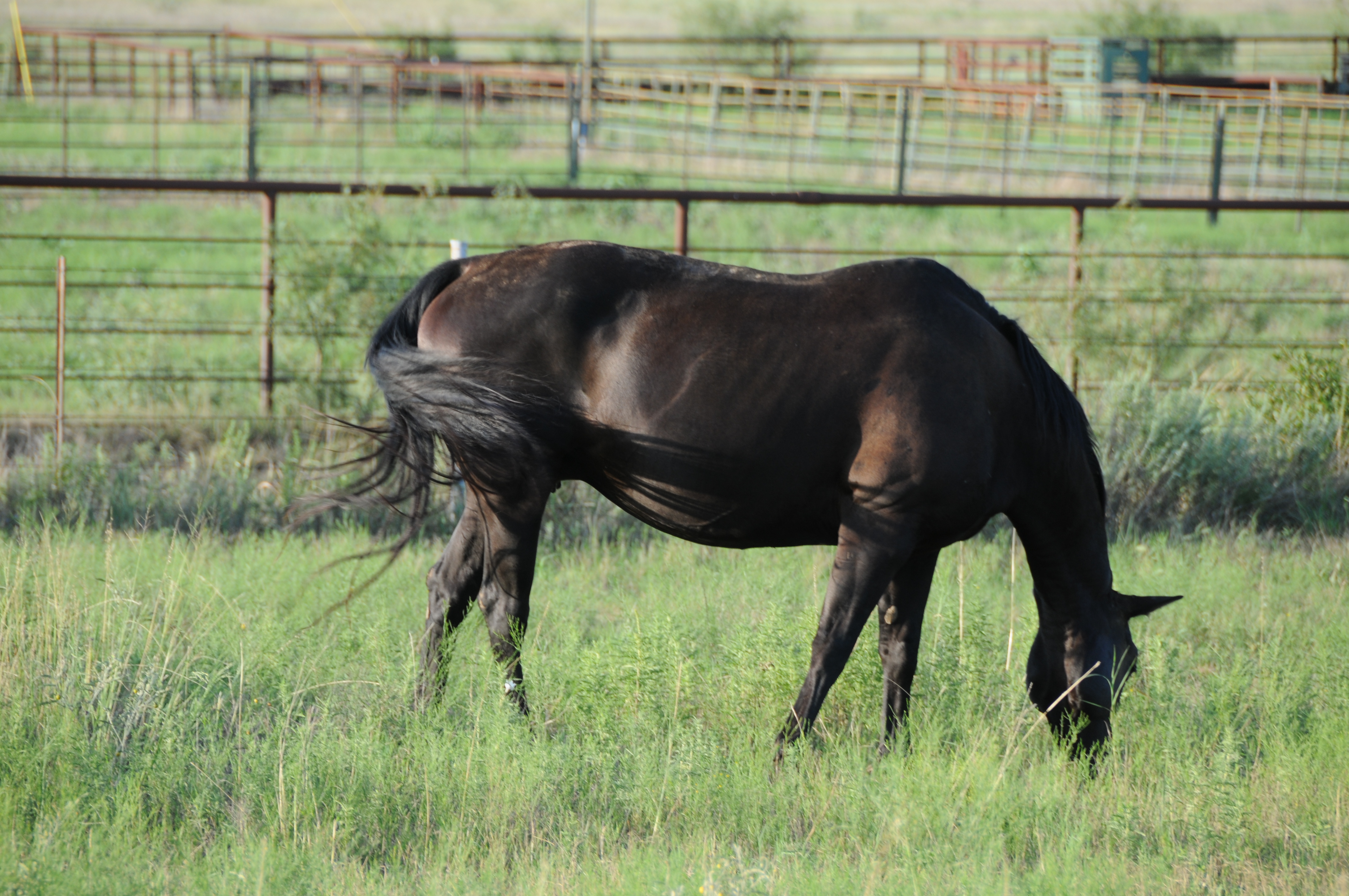
I am leading Star, Lilly and Sweet Hija over to the Pecan Tree Pasture.  They don’t really need my assistance to go over to the field, but on that day, the horses had not been there in several months and I wanted to walk with them.  The photograph was snapped in February 2009.  Hija was pregnant with Shiney and Fanny was behind Brenda who took the shot.  She stands in the creek bed and is looking up the road to the pasture.

The gate to the Pecan Tree Pasture was closed and I had to open it for them.

Their habit pattern is to go over to the far field and browse on grass most of the day, then near sundown that will come running at a gallop to get their grain in the stables.  Since this photograph was taken, I have kept Lilly close to the stable because of her age.  With Lilly back at the stables, they will not linger in the Pecan Tree Pasture all day long, but come back early to be with Lilly.

Brenda entitled this photograph, “Over the Hill.”

12 Comments

Filed under Horses

Field Log 5/10/2010 (Kiowa Good Luck, The Mariposa) [Corrected]

North Erath County, Texas, 32.43 lat., -98.36 long. Elev. 1,086 ft.  Turkey Creek Quad.

All photographs below may be enlarged with a click of the mouse for maximum detail.

Yesterday, I hiked into the grove.  Cool temperatures in the 60s F.  Light rain.  Saw several blooms of plants I have yet to identify.

This morning, drove to Pecan Tree Pasture to photograph blossoming plants for identification and cut mesquite.  Wind is high at 25 m.p.h. plus, sustained.  Red Flag warnings are posted on the MSN Weather link for counties west of us (Upper Concho River area) until 8:00 p.m.
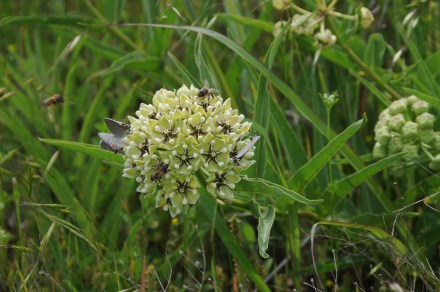
Green-flowered Milkweed (Asclepias asperula), May 2010

Plant Identification

This is the Green-flowered Milkweed (Asclepias asperula).  I saw only two clumps in the pasture.  Several butterflies and bees are on the flower.  The Monarch caterpillar feasts on blossoms.  It is toxic to animals and probably humans.  The pollen may also cause a rash or itch.  The Butterfly-weed (not this type pictured) is also known as the Pleurisy-root, known for medicinal value.

I was not aware of its toxicity.
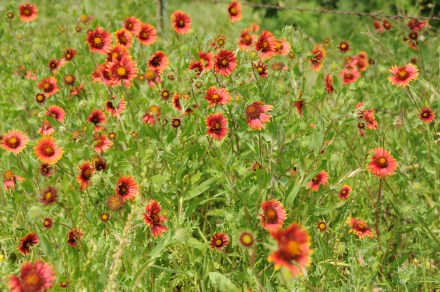
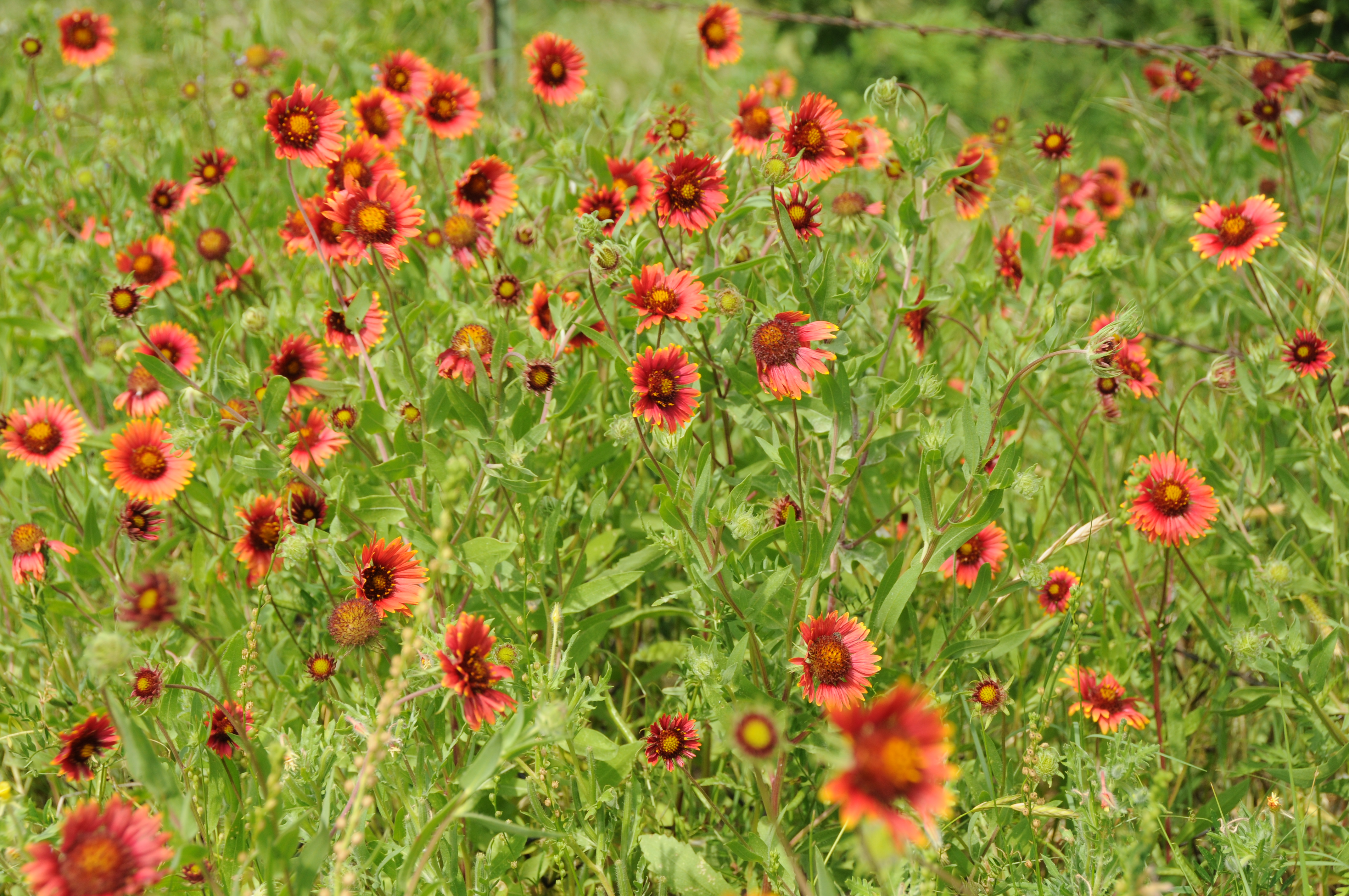
Indian Blanket (Gaillardia pulchella), May 2010

This is a stand of Indian Blanket (Gaillardia pulchella) next to the fence in the far pasture, the biggest stand of this species on the ranch.  Alongside State Highway 108, however, extensive Indian Blankets occur.  C. and L. Loughmiller, Texas Wildflowers, report that they have seen a forty-acre pasture completed covered in this one species.  Many years ago, I saw pastures in San Saba and Lampasas Counties covered in Indian Blanket.

Another name for Indian Blanket is Fire-Wheel.

It has medicinal qualities and the Kiowa considered its emergence good luck.  [See Lady Bird Johnson Wildflower Center notation, Indian Blanket.]
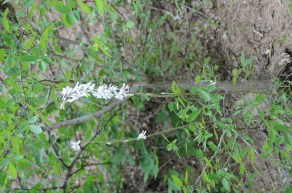
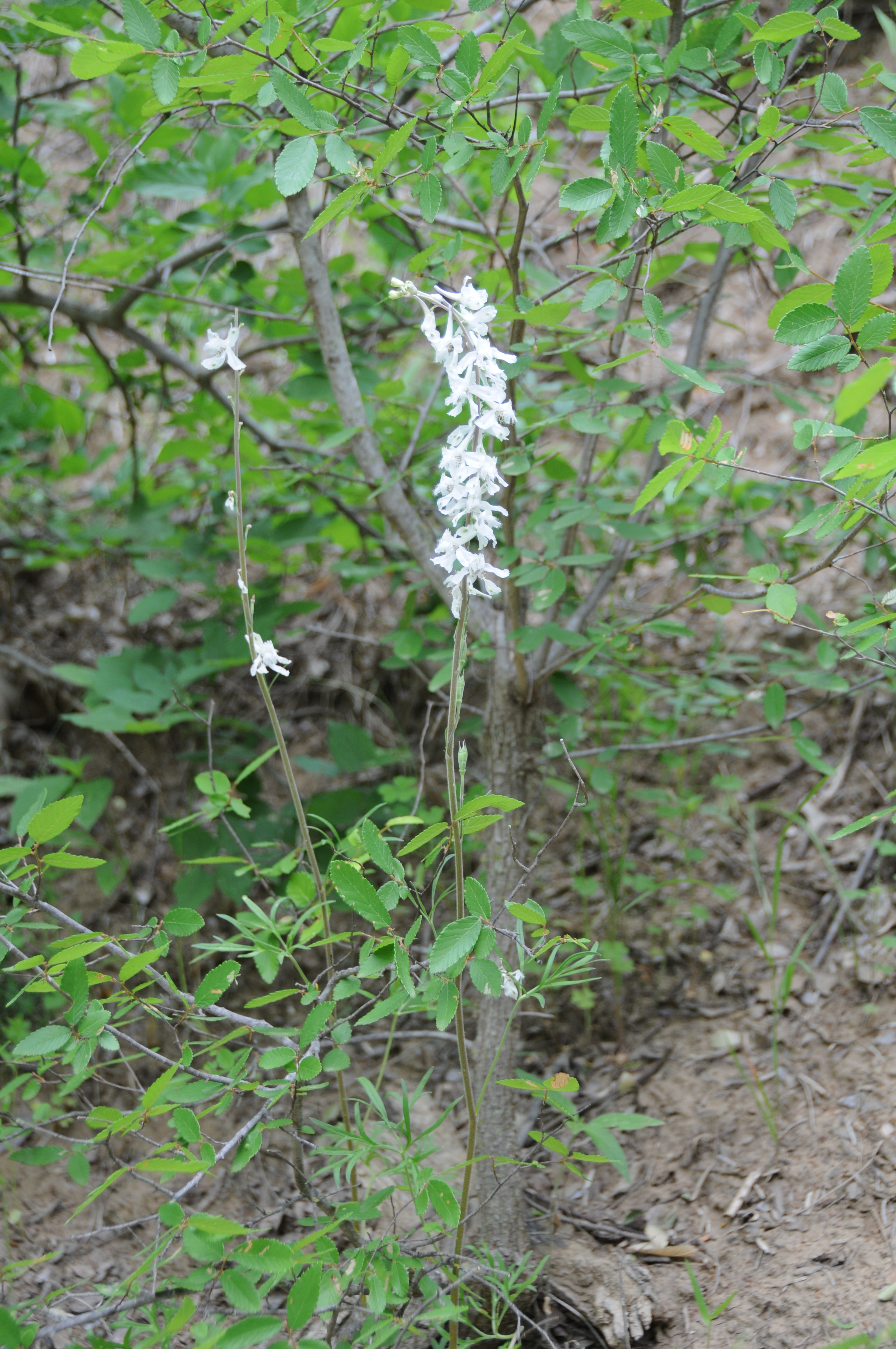
Prairie Larkspur (Delphinium virescens) Nutt., May 2010

This is the Prairie Larkspur (Delphinium virescens).  I found this along the banks of Salt Creek.  Again, this is a poisonous plant to animals and humans, although its seeds have medicinal properties.

In typing these plants and blossoms, I am finding more poisonous species than I imagined.  The horses leave the Larkspur and Milkweed alone, but I will be cautious during the fall when green grass is gone, as they might sample the plants.
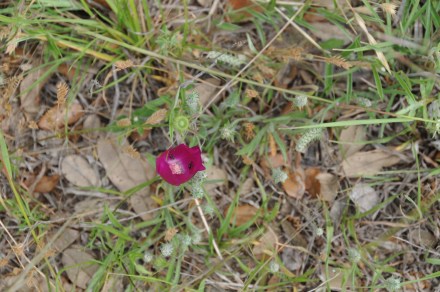
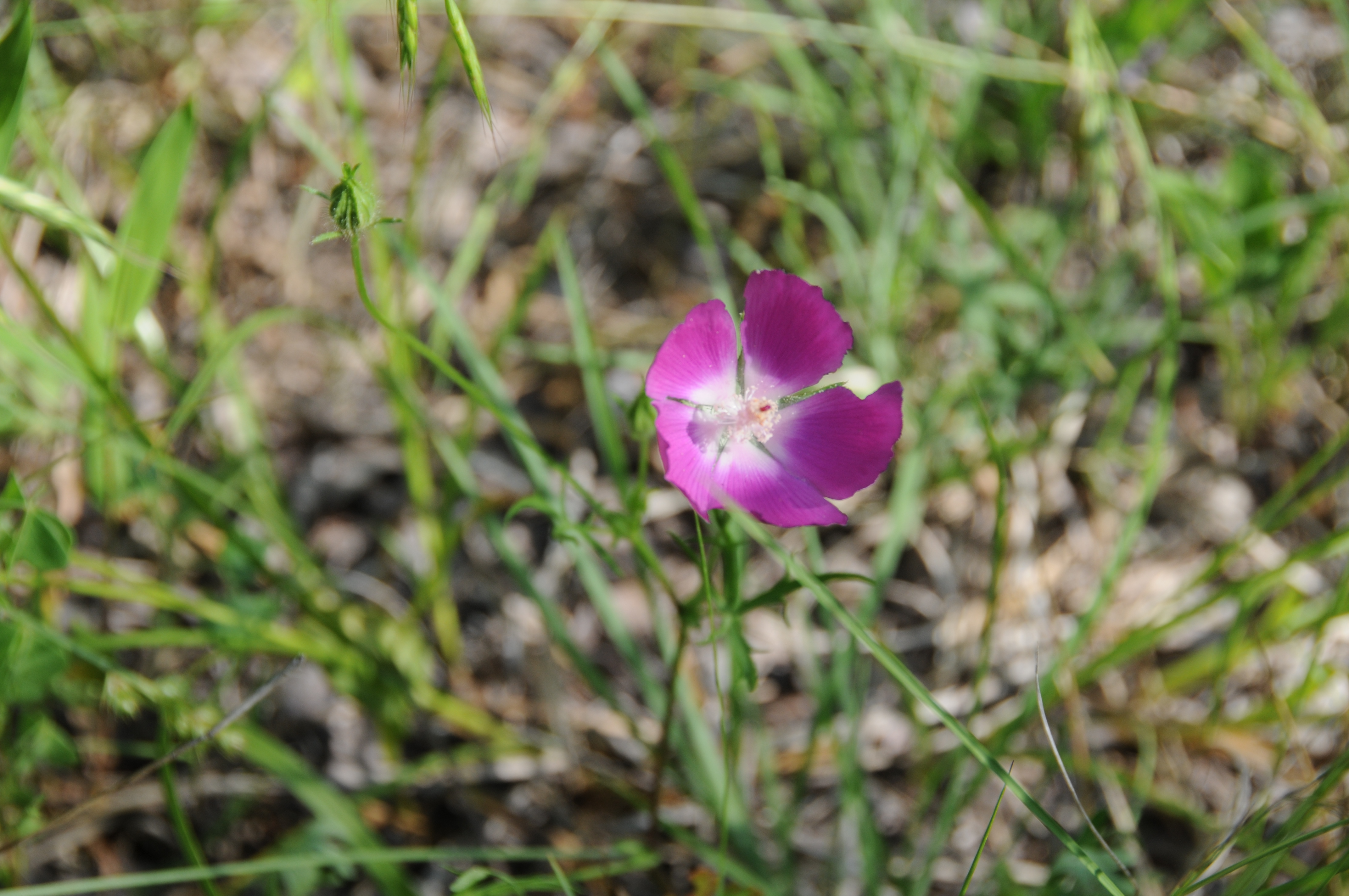
Wine Cup (Callirhoe digitata), May 2010, Photo 1

I am excited about this plant and blossom.  It is a delicate flower and there are only two stands of it on Flying Hat.  It is called Mariposa Lily or Sego Lily (Calochortus nuttallii).  One stand is along side the Pecan Tree Pasture road and the other is on the north side of The Grove.  I’m anxious to put out this photograph to show you, and I think I have it typed correctly, but later this evening when the wind calms down, I will go and verify.

The Mariposa Lily is considered among the most beautiful wildflowers in southwestern United States (Loughmiller, Texas Wildflowers). This Mariposa Lily on Flying Hat is probably the more common Mariposa, but a Desert Mariposa is quite rare in Texas.  Nonetheless, this flower is most delicate and I am excited we have two bunches of Mariposas.

Although I would be disappointed, if anyone can type this otherwise, please enter your rationale in the comment section.
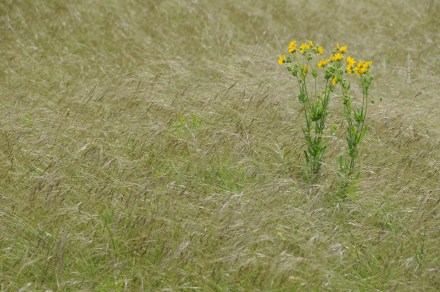
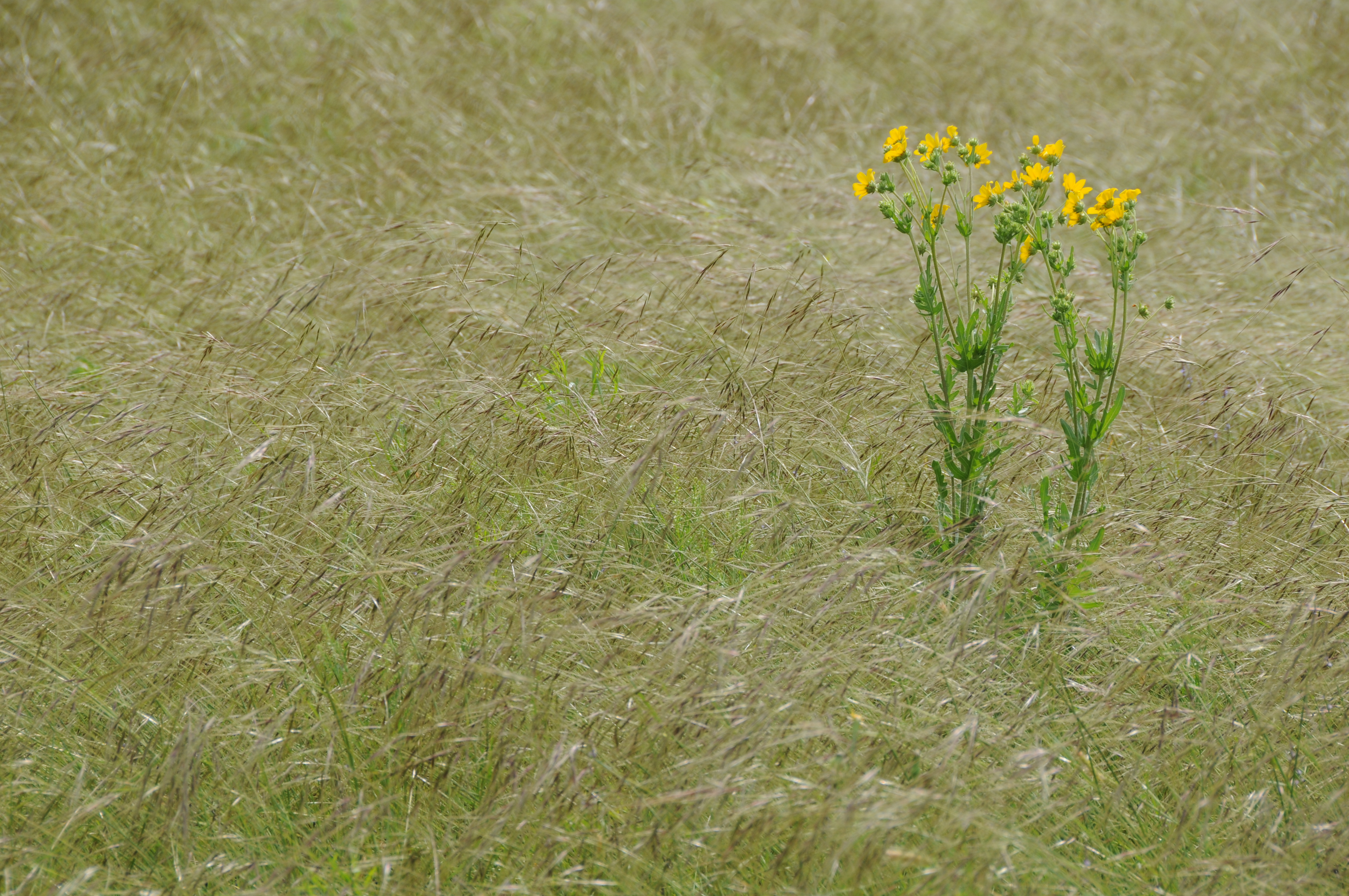
Texas Groundsel (Ragwort), May 2010

We have beaucoup amount of Texas Groundsel (Ragwort, Senecio ampullaceus) along our pasture roads.  The yellow blossoms are striking and until I changed the range strategy, I would shred these plants rather early in the spring.  This year, however, I have let them thrive.

Horses

Sweet Hija is still at Equine Sports Medicine & Surgery, waiting for the right time to be inseminated.

Shiney is still in Aubrey, learning manners from Jimmie Hardin.

Cut fifteen (15) mesquite bushes from pasture and fence row.

Note: Please check back later today for a verification of the Mariposa.

Correction to Identification

Correction to post, 5/10/2010, 5:38 p.m.  The winds died down some and I went back to The Grove to verify the plant and blossom.  It is not a Mariposa Lily.  It is a Wine Cup (Callirhoe digitata). When I investigated the Wine Cup in the field, I did not separate its petals to count them, but rather relied on the photograph exclusively when I got back to the house.  Brenda looked at it and had a question about the stamens and pistil form, but did concur with my first conclusion.

When I went back down to the grove a few minutes ago, I separated the petals to determine if there were three or five or however many.  Three petals would be the Mariposa.

Wine Cup (Poppy Mallow), May 2010, Photo 2

As you can clearly see in the Photo 2 of Wine Cup (Poppy Mallow), there are five petals.  I also carefully delineated the stem structure and it seems to be C. involucrata (Nutt.) [Wills and Irwin, Roadside Flowers of Texas, p. 153-154].

This plant also goes by Finger poppy-mallow, Poppy mallow, Standing winecup, Wine cup or Winecup.

15 Comments

Filed under Field Log, Plants and Shrubs

Field Log 4/16/2010

North Erath County, Texas, 32.43 lat., -98.36 long. Elev. 1,086 ft.  Turkey Creek Quad.

Light mist this morning.  Probably 0.20 inch of rain since yesterday.

Lilly, Star and Fanny browse front pasture.  Lilly shows age with slower gait and right back leg limp.  Sweet Hija still at ESMS on Brazos.  Shiney is at Jimmie Hardin’s in Aubrey, Texas, for ground training and conditioning for Triangle Sale, Shawnee, Oklahoma, June 5, 2010.  Miss the little guy more than I thought I would.

Pasture grasses are erupting well.  Vetch in far field is waist-high in places.

This week, Mourning Doves (Zenaidura macroura) are cooing.  No calls before then, but noticed their presence.  This morning the doves were ground feeding in the front yard.  From Peterson: has a pointed tail, most widespread dove in the West.  As to the call, Peterson says it is a “hollow mournful ooah, cooo, cooo, coo. At a distance only the three coo‘s are audible.”  The color of the dove in our front yard was a reddish-gray with black spots.  The two dove would ground feed a moment, then hunker down in the grass and loaf.  I must have watched them for ten minutes and then had to come back to office and work on college Blackboard classes.  I will have to focus on their call to hear the 00ah.  I am practicing on imitating their call better.

We have a larger dove that is whitish that appears in late summer.  It is untyped.  The two dove will perch on the power pole by the barn and watch me feed the horses.

The following are some photographs I took this morning.

Vetch and Clouds Far Field, April 2010

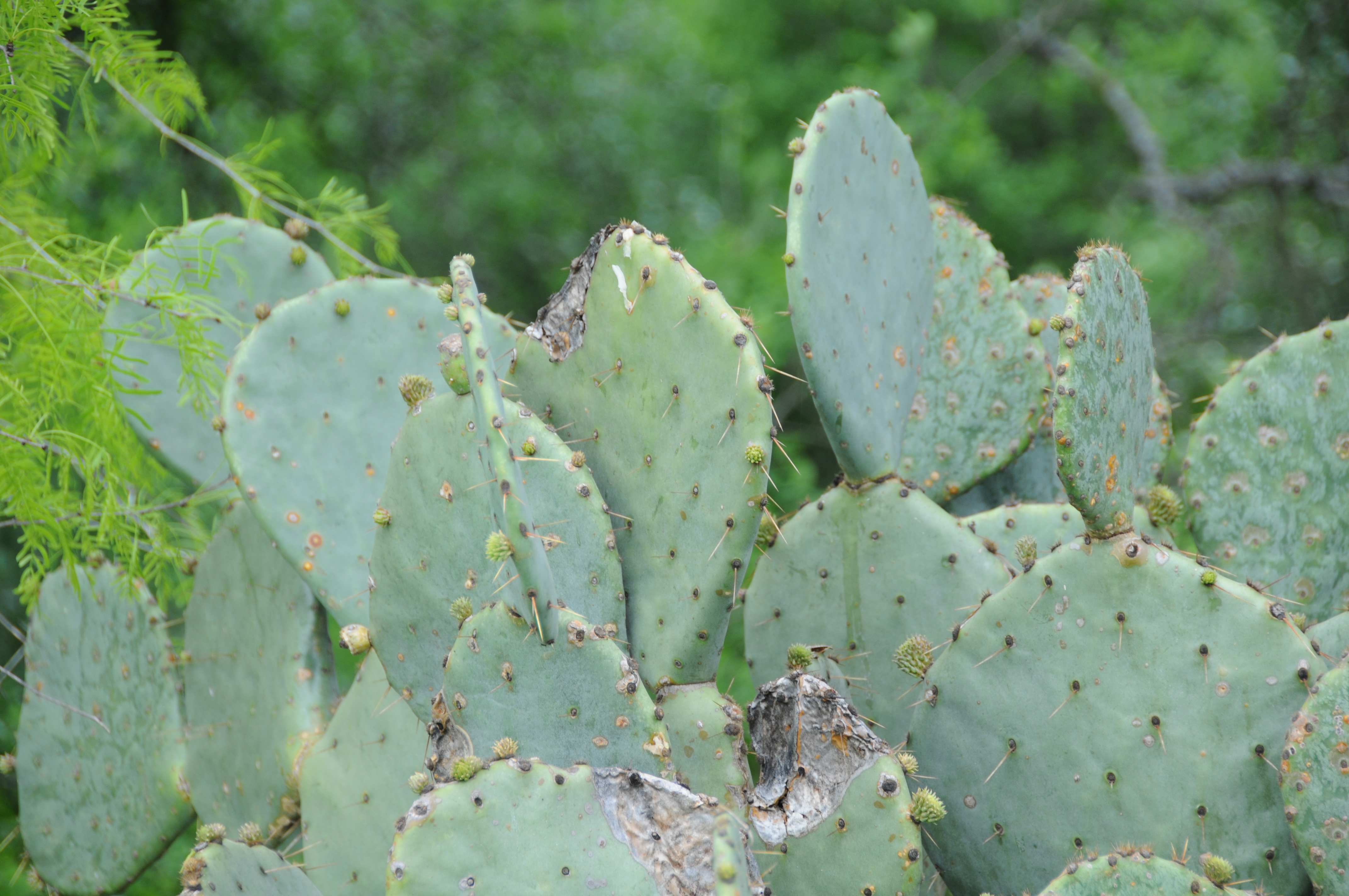
Prickly Pear Bush, April 2010

Cactus Fruit, April 2010

These photographs were taken last week.

Round Pen and Twin Mountains in Distance, April 2010

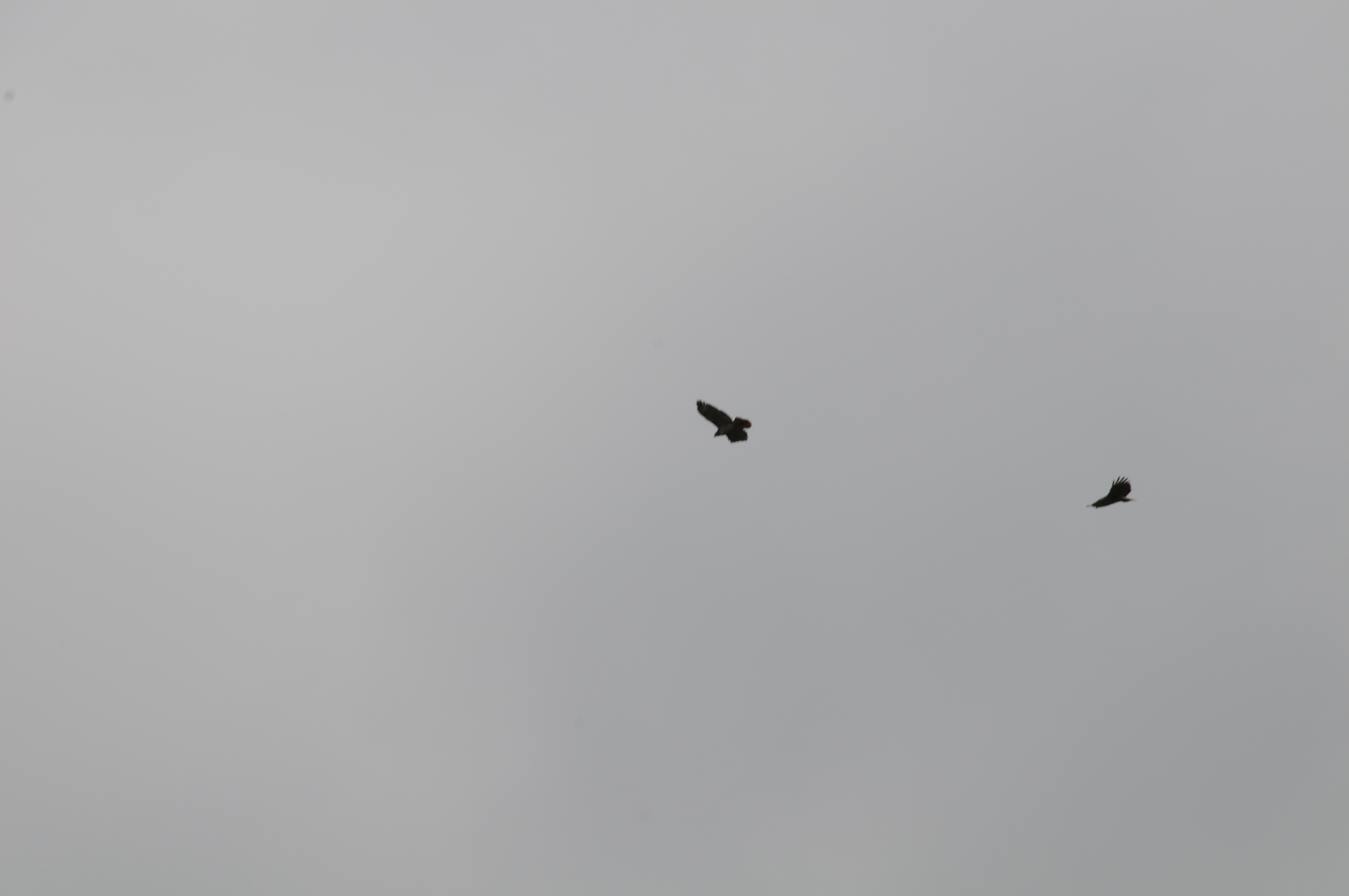
Harris' Hawks at Play, April 2010

Field grasses obscure pasture lanes.  Minimum shredding planned this year, indicative of lower carbon footprint.  In addition, taller grasses can harbor wildlife.  Hand cut mesquite brush this season, using clippers and large cutters.  Lessen vehicle use in pastures.

Lilly, Star and Fanny have browsed their way to the front pasture and are now standing close together, switching their tails to keep the flies away.  They have all this space to lounge around in and they prefer to stand together with their bodies almost touching.  Herd animals.  I worry about Lilly during the night and have corralled her so she can avoid predators.  One mountain lion sighting three months ago on SH 108 near Gibson place.

I must get the duct tape down in the barn and duct tape my Peterson’s Field Guide.  The binding is coming off.

10 Comments

Filed under Field Log

Field Log 4/3/2010

North Erath County, Texas, 32.43 lat., -98.36 long. Elev. 1,086 ft.  Turkey Creek Quad.

Day looks less windy and can broadcast grass seeds.  Disc and broadcast today (Saturday).  Take Sunday off.

Finished turning and applying disc implement to Pecan Tree Pasture and the house fields.  Turned about four acres in the far pasture, two acres at the house fields.  Harris’ Hawk flies overhead as I prep soil.  The Bryant field west of the pecan orchard is being plowed so lessee can plant seed for hay.  The lessee drives a John Deere enclosed cab.  I like my Case that is not enclosed, but has a Farmall sun shield, because I can feel the wind and smell the turned soil.  And, I really don’t want a CD player and radio on the tractor.  Also, when idling the engine, I can hear the Harris’ Hawk — can’t do that with enclosed cab.  Note: with the Bryant field stripped of grass and brush, there is less cover for wildlife.

As I apply the disc to the pasture, I can see the shadows of the Turkey Vulture (Cathartes aura) and Harris’ Hawk on the ground as they glide above the tractor.  Several vultures roost in the dead tree on the Bryant place, along Barton Creek.

Wind over past two weeks has dried out topsoil despite rain.

I say to Brenda at lunch that I saw a wren-type, ground-feeding bird in the native grasses that I have let grow in the Pecan Tree Pasture.  The bird spied the tractor coming and darted around and entered the tall bluestem grass (verify) as I passed by along the fence row.  I have shredded the pasture twice since I moved here, but I’ll not be shredding any more.  The fifty-three (53) acres will be as sustainable as I can make it.  Seeing the wren in the field of native grass that Cody Scott had planted in 2004, signals to me that the field is a good habitat for wildlife.  Last year as I worked in the field, I scared up two deer that had taken a rest in the high grass.  Since the Halls cleared their brush and have put Adirondack chairs in their grove, small bridges over their gullies and a workshop next to the Pecan Tree Pasture, I’ll not be seeing as many deer as I once did.  I’ll not be putting any chairs about the place.  I’ll sit on a log or lean up against a tree — nature’s furniture.

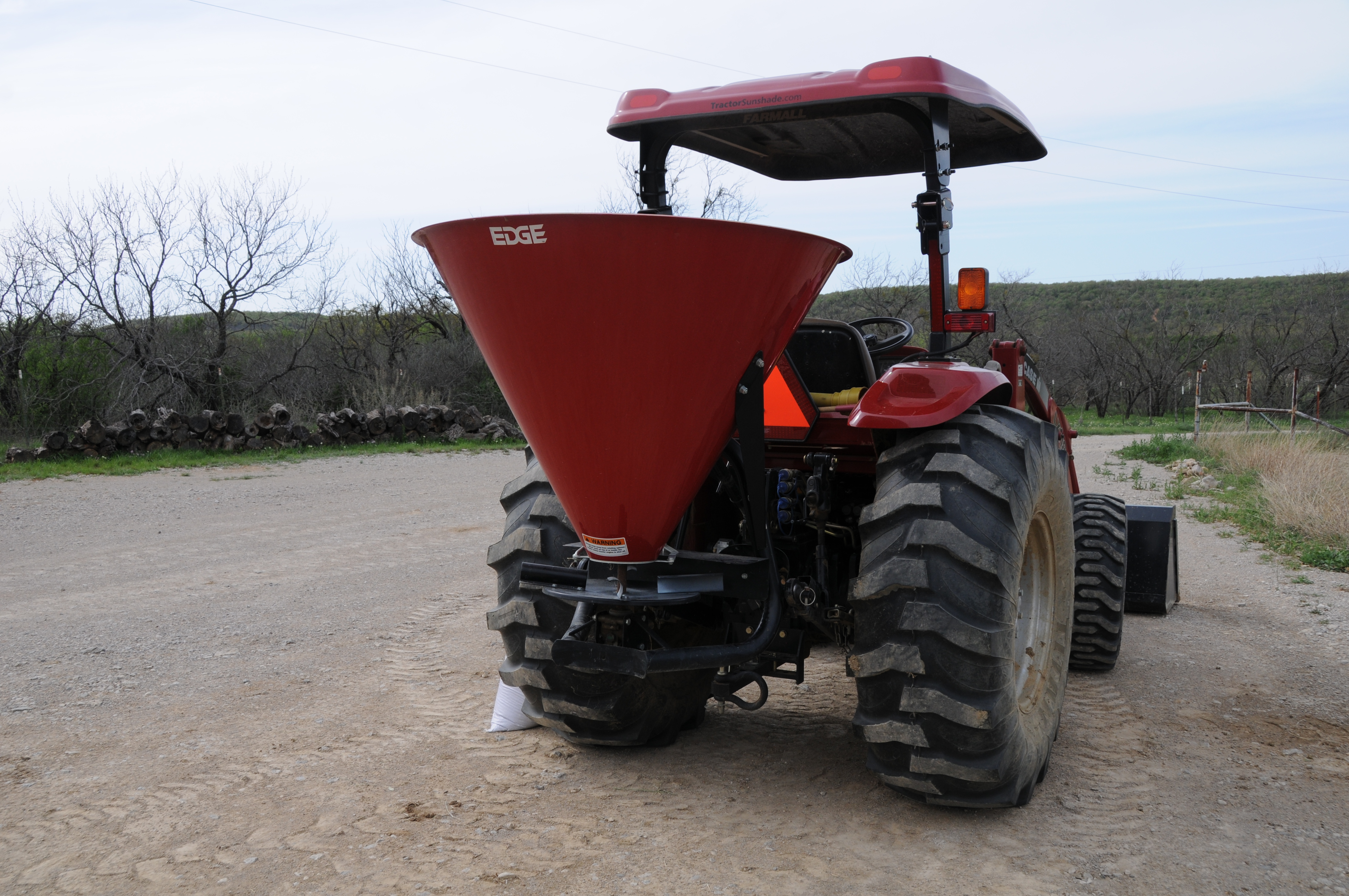
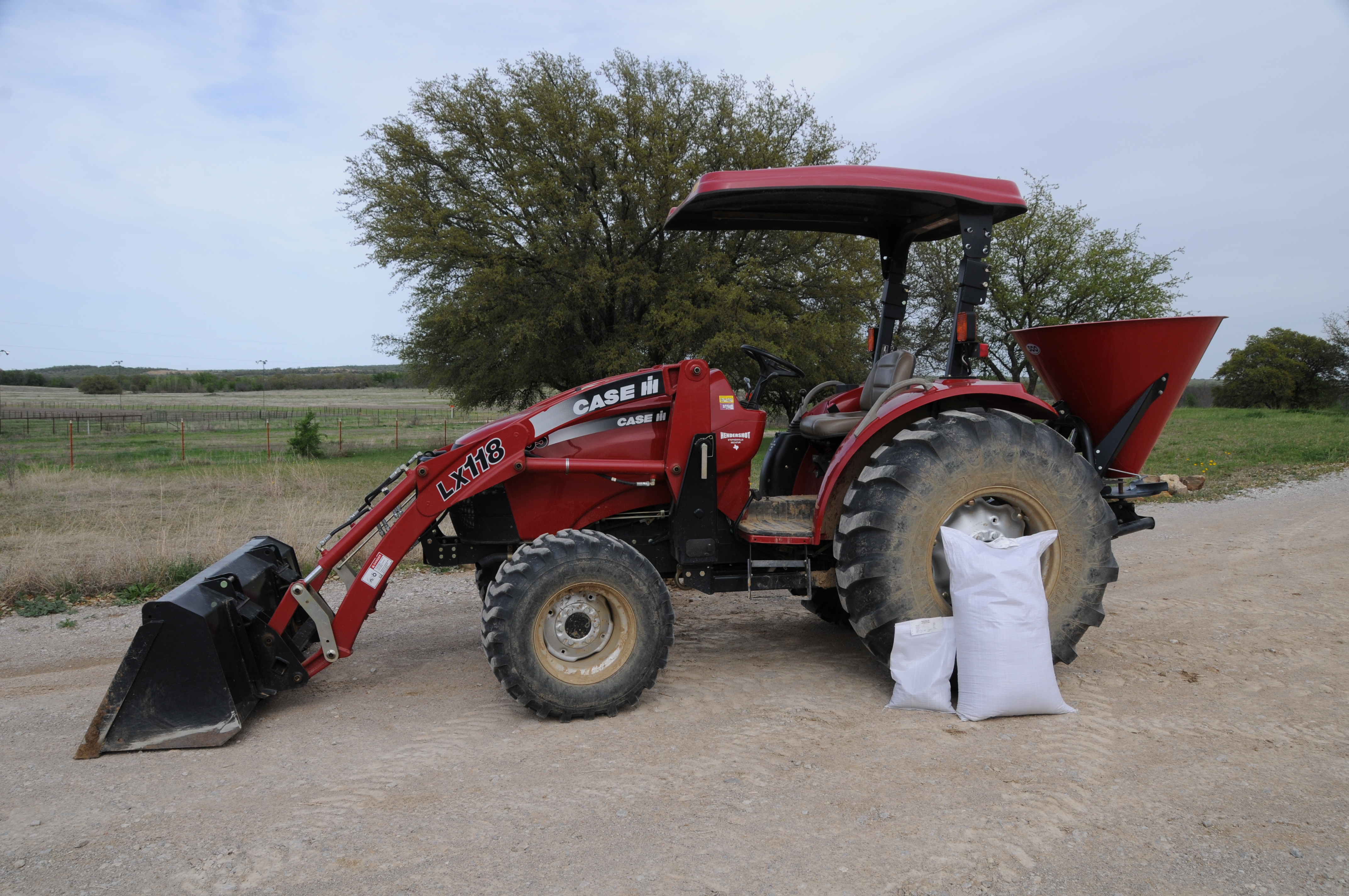
Brought up the tractor with the Edge broadcast seeder and spreader.  Backed tractor and spreader up to rocks on driveway so that water runoff would go onto lawn not puddle in driveway.  Attaching PTO difficult.  Used WD-40.

Case DX-55 with Edge Broadcast Seeder and Spreader, April 3, 2010 (click to enlarge)

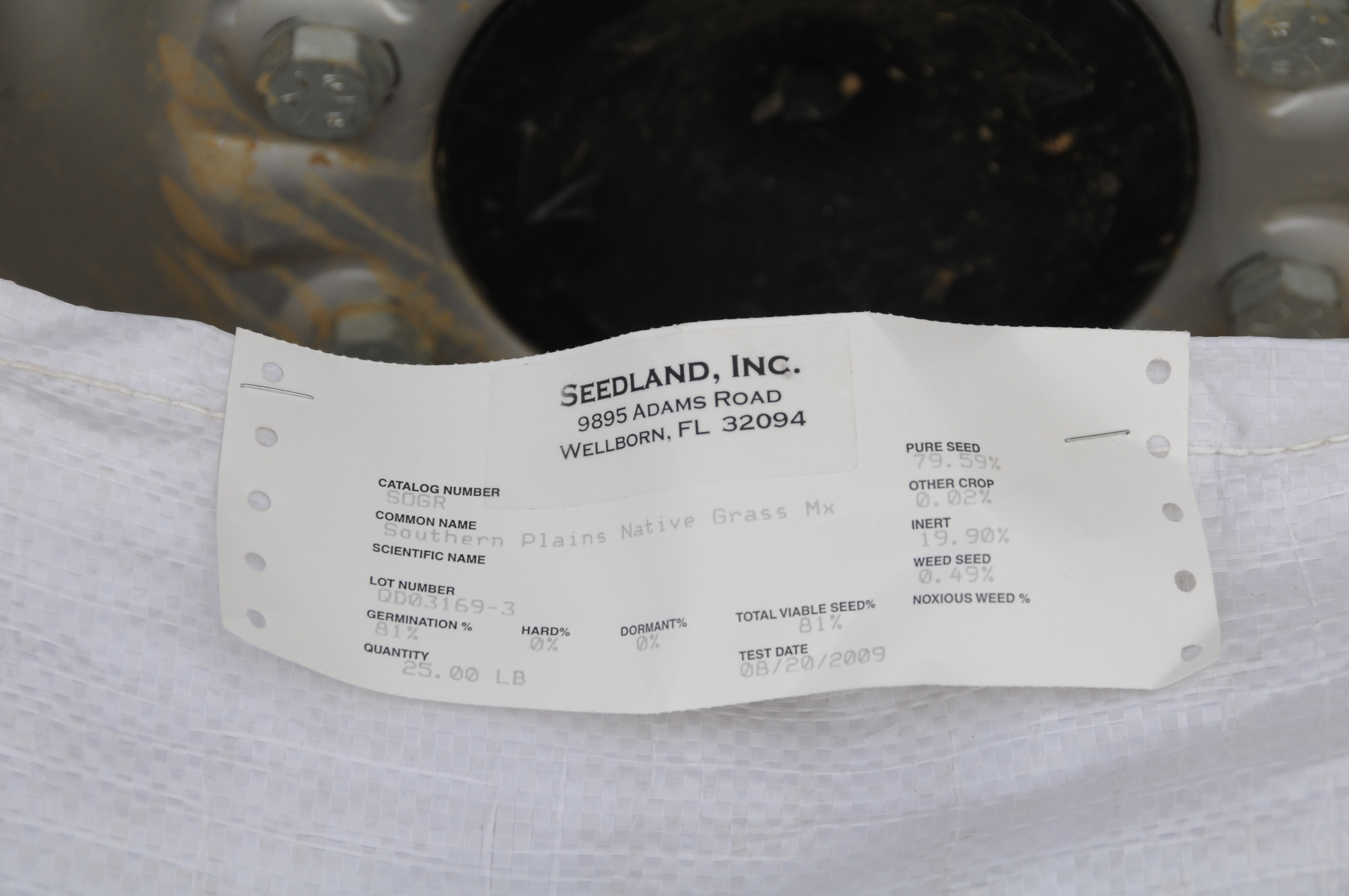
Made calculations as to orifice size to allow seeds to fall through and be broadcast.  Start out with a No. 2 opening.  In the thumbnail below you can see a large white bag and a smaller bag.  The larger bag is the native grass (25 lbs.) and the smaller is the wildflower seed (2 lbs.).

Southern Plains Native Grass Mixture #2901, April 3, 2010

Native Grass Seed Bag and Small Wildflower Bag, April 3, 2010

Texas and Oklahoma Native Wildflower Mixture, April 3, 2010

Wildflower Varieties Planted

Premium TEX / OKA Regional Wildflower Mixture

Common Name *Type Scientific Name Flower Color
Baby’s Breath, Annual A Gypsophila elegans White
Black-Eyed Susan A/B/P Rudbeckia hirta Yellow
Bluebonnet, Texas A Lupinus texensis Blue
Coreopsis, Lance-Leaved P Coreopsis lanceolata Yellow
Cosmos, Sulphur A Cosmos sulphureus Yellow/Orange
Candytuft, Annual A Iberis umbellata White/Pink/Violet
Coneflower, Purple P Echinacea purpurea Purple
Cornflower, Dwarf A Centaurea cyanus Mix
Coneflower, Prairie B/P Ratibida columnifera Yellow/Red
Coneflower, Clasping A Rudbeckia amplexicaulis Yellow
Golden Wave Tickseed A Coreopsis basalis Yellow
Evening Primrose, Dwarf P Oenothera missouriensis Yellow
Evening Primrose, Showy P Oenothera speciosa Pink
Gaillardia, Annual A Gaillardia pulchella Yellow-Red
Mint, Lemon A Monarda citriodora Lavender/White
Phlox, Annual A Phlox drummondii Red
Poppy, Corn A Papaver rhoeas White/Pink/Red
Prairie Clover, Purple P Petalostemon purpureum Purple
Sage, Scarlet A/P Salvia coccinea Red
Wildflowermix.com

Native Grasses Planted

The native grasses planted are: Blue Grama, Sideoats Grama, Buffalo Grass, Plains Bristlegrass, Little Bluestem, Prairie Junegrass and Sand Dropseed.

The wind came up to 10-15 m.p.h.  in the afternoon.  Delayed spreading until after supper at 6:15 p.m.

Following supper, spread seed in Pecan Tree Pasture and house pastures until 9:15 p.m.  Used headlights on tractor to finish spreading.  Orifice enlarged to Nos. 5 and 8.  Spread some seeds on arena-south pasture.  Must disc twice this area on Monday.

Salt Creek runs through the grove with about two-three inches of flow.  Tadpoles emerge.  I hear the trickle of flow as the water falls down on the rocks alongside the road to the far pasture.  Cannot use the road because of the water flow and must go around the Halls place on SH 108.  I put the Case tractor into high gear, fourth position and watch for traffic on the highway.  I have lights flashing.  In four trips to the far pasture today, only one vehicle passed me: a motorcycle with two people, man and woman, traveling to Stephenville, most likely to have barbecue at Hard Eight.

The quote I always have in mind:  Begin with the sun and all else shall follow.  — D.H. Lawrence.

4 Comments

Filed under Field Log, Plants and Shrubs

The Horses of Flying Hat

I thought I would put in one post a photograph of each of the horses I work with on a daily basis here at our place, Flying Hat.  All of these photographs can be enlarged by clicking on the photograph. By enlarging the photograph, if you have a moment, will reveal a lot of detail, as these photographs are usually 2.0 plus in megabytes.  I like to take photographs using the most detailed mode (within reason, of course) I can.  You can always lessen the detail in a photograph, but never add detail to it.

Shiners Fannin Peppy

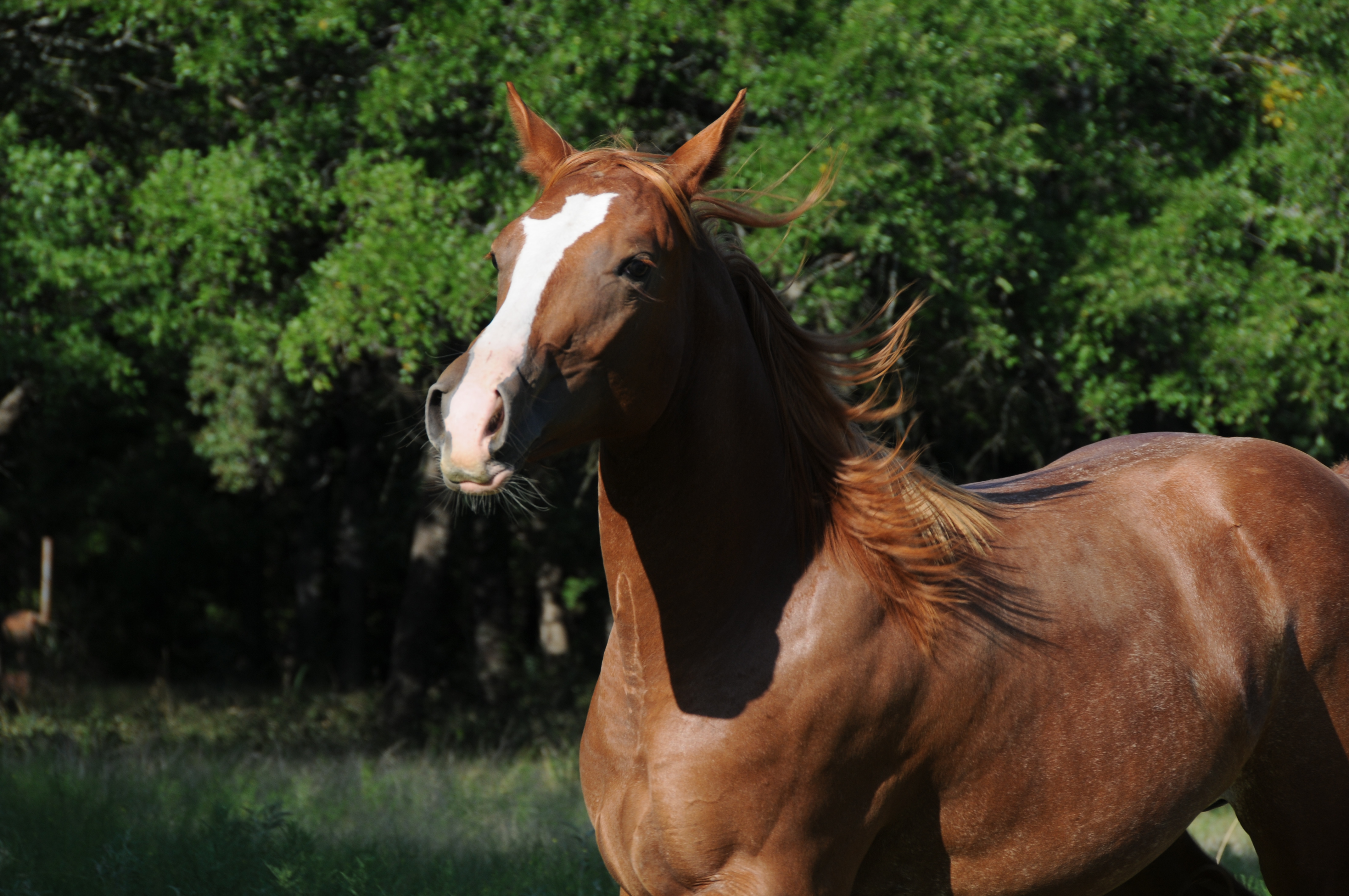
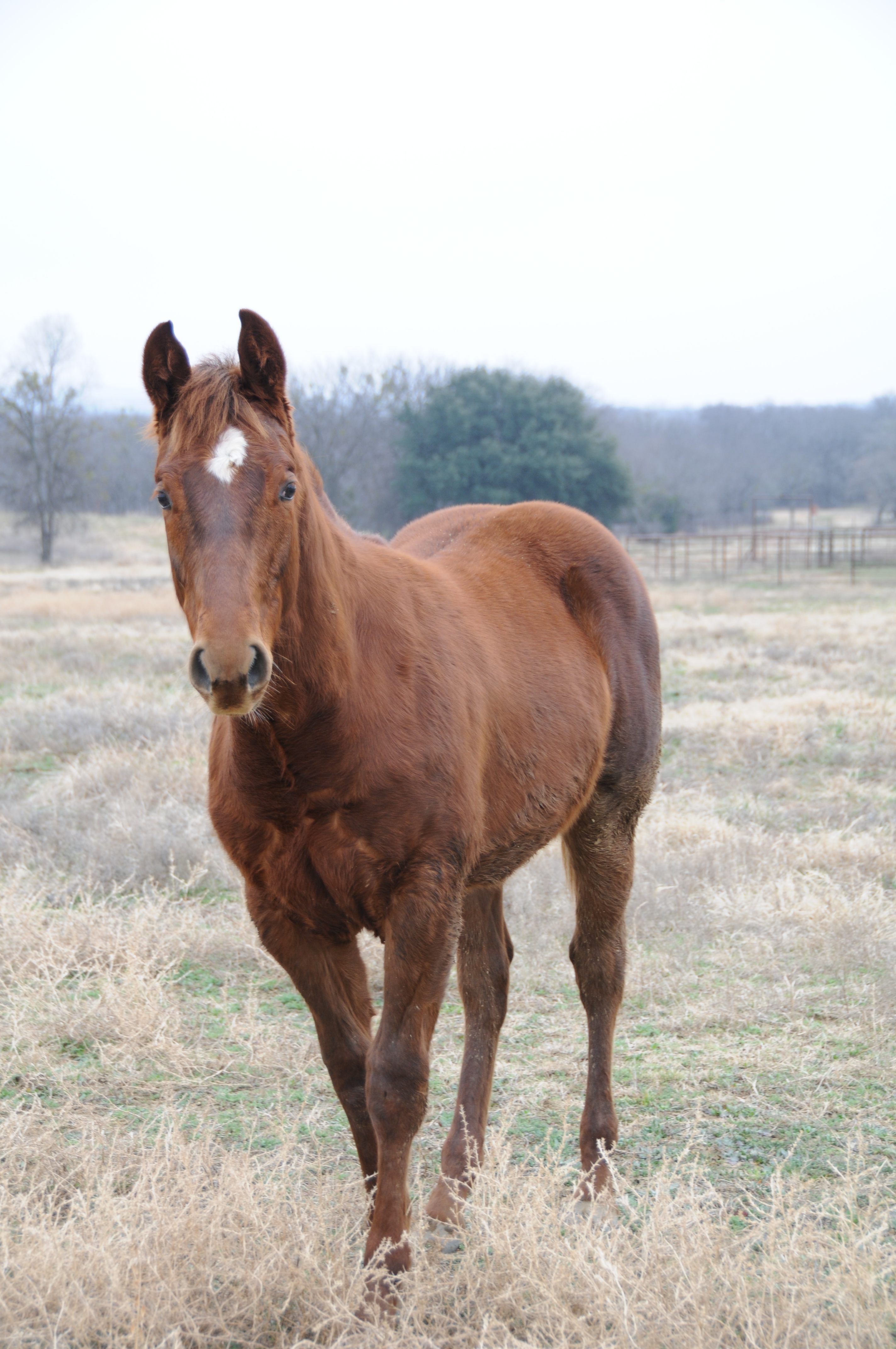
This is Shiners Fannin Peppy or “Fanny.”  Fanny has been in training — elementary school — for a hundred days with Duncan Steele-Park at the GCH Land & Cattle Company of Weatherford, Texas.  Fanny is a daughter of Sweet Hija below.  Fanny is quite vocal.  She will begin to nicker once she knows that I am going to feed.  It is a vocalization that is more of a chortle, kind of a gargle, deep-down in her throat.  Fanny will continue to nicker-chortle every fifteen seconds or so until I put feed in her bin.  Translation to English:  “Oh, boy, I can’t wait, can’t wait for my grain.  Oh, boy, oh boy.”

Sweet Hija

This is Sweet Hija or “Hija,” as we like to call her.  I purchased her in 2003, from King Ranch.  She starred in a King Ranch video for marketing before the auction at Kingsville.  She cut cattle with J. R. Ramirez, her trainer, in front of two-hundred prospective buyers.  I bought her at the King Ranch Legacy Auction in 2003, in front of  2,000 spectators — really stressful, but fun.  When I walked to the stables to view Hija after purchase, two stalls down from her was her grandfather, Peppy San Badger.  He was looking over the crowd and his granddaughter.  Peppy San Badger was nearing the end of his days, but he was still eager to see people and his progeny — be around the excitement.  I am sorry to say that I did not appreciate his background and heritage that day as I was just beginning to understand the quarter horse culture.  Peppy San Badger, Hija’s grandsire, was one of the greatest quarter horses ever to have lived: he rewrote performance records and records in the show pen.  He died in 2005, less than two years after he saw Hija load up into our horse trailer and come to Hannibal.  I have a photograph that shows Peppy in the background, Hija in the fore.  I’ll try and retrieve it for you some day.

When I saddle and ride Hija, I have to give her a run around the round pen before I mount (it’s been a while, however, since I’ve ridden) because she has that spirit of Peppy San Badger.  He would give a little buck when you first mounted him, but not a mean buck, just an energetic buck that he was happy to be alive — so also, his granddaughter.

Ima Lil Moore

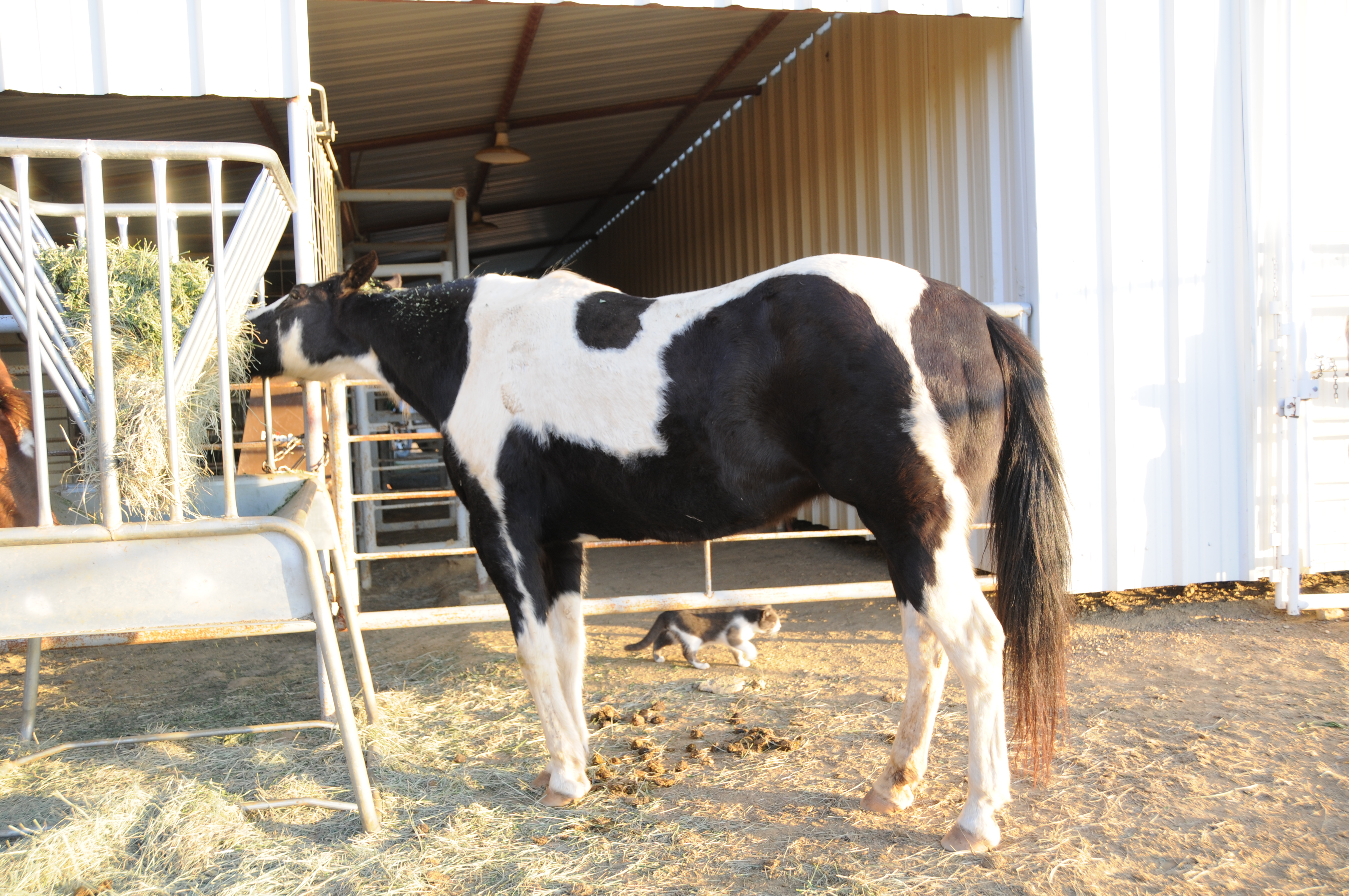
This is Lilly, the oldest mare in the remuda.  I inherited Lilly and her son, Star, upon the settlement of my parents’ estate in 2003.  Lilly is the alpha mare of the remuda.  She is challenged by Fanny for placement at the food trough.  Lilly likes to take her good time these days to come to the stall.  I favor her and let her use the alleyway to get into her stall (see the alleyway above) rather than have her walk a longer distance.  You can also see in the photograph above, the barn cat, Paint or Little Paint.  Odd, but he has the same markings of Lilly.

Shiners Fannin Pepto

Here is “Shiney.”  He is all-boy, a colt and a peppy one at that.  He is the son of Sweet Hija.  This is the guy I am having so much fun with these days.  He is an intact male and I have him for sale, but Brenda and I have talked about keeping him — me more than her — but it would require the construction of a stallion run.  Shiney is such a fine boy.  I really like working with him.

Stars Bars Moore

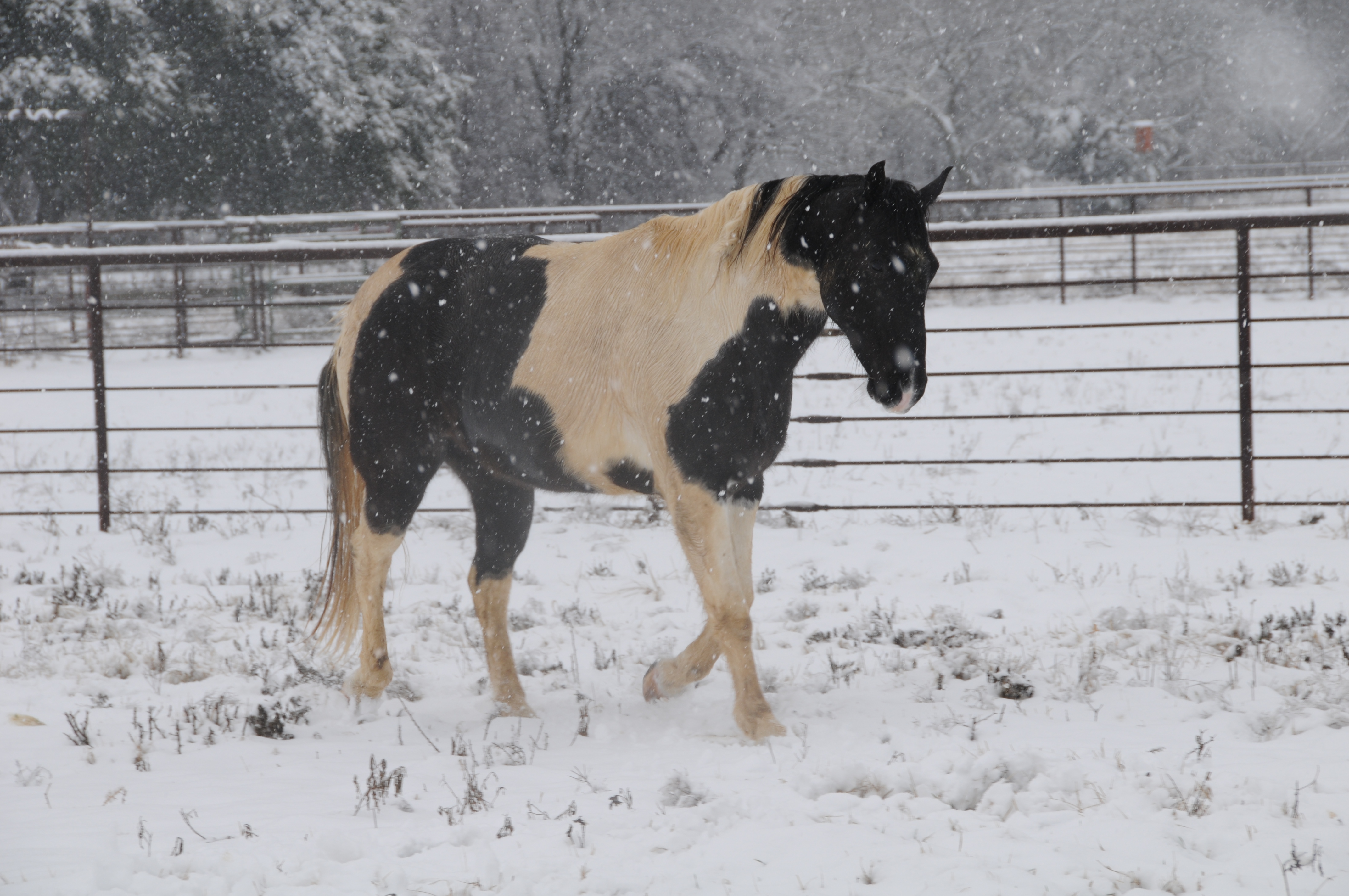
Star is a gelding and the baby-sitter for Shiney.  Star and Shiney inhabit the large outdoor arena and are given to playing many games of “Gotcha,” a variation of tag.  Star is a large horse.  I often refer to him with affection: The Beer Wagon Horse.  Star is the son of Lilly.  Star is known far and wide as the levitating horse of Flying Hat — check a previous post this winter on the blog.

A friend of mine at the college, Roland Stroebel, says to me almost daily, “I’m homesick, Jack.”  By that he means that he wants to go back to his farm south of Cisco, Texas, and work with the land and his cattle.  He misses his farm — homesick.  When Roland’s work is done at the college, he leaves and I can see him working with his fine Angus cattle into the evening darkness.

When I am away from all of the horses and land upon which they trod, I am homesick for their companionship, their warm breath and smell.  It is said:  “There is something about the outside of a horse that is good for the inside of a person.”  I believe that with all my heart.

19 Comments

Filed under Duncan Steele-Park, Flying Hat Ranch, Horses, Lilly, Shiners Fannin Peppy (Fanny), Shiney (Shiners Fannin Pepto), Star, Sweet Hija

Field Log 3/20/2010 (Deer Track)

North Erath County, Texas, 32.43 lat., -98.36 long. Elev. 1,086 ft.  Turkey Creek Quad.

Windy from north, intermittent slight snow mist, 34 deg. F.  Heavy rain last night.  Rain gauge not measured.

Drove DX-55 tractor to arena area.  Slippery, used four-wheel drive.  Walk to grove revealed no track.  Camera tucked under zipped field coat.

Hawk sighted, soaring low from north to south along pasture.  No definite typing.  Voice resembles a high-pitched shrill pweeeeeee; diminishing (see Peterson, A Field Guide to Western Birds, p. 68, under Broad-Winged Hawk (Buteo platypterus) [2nd ed., 1969]).  Tailbanding verification is ambiguous.

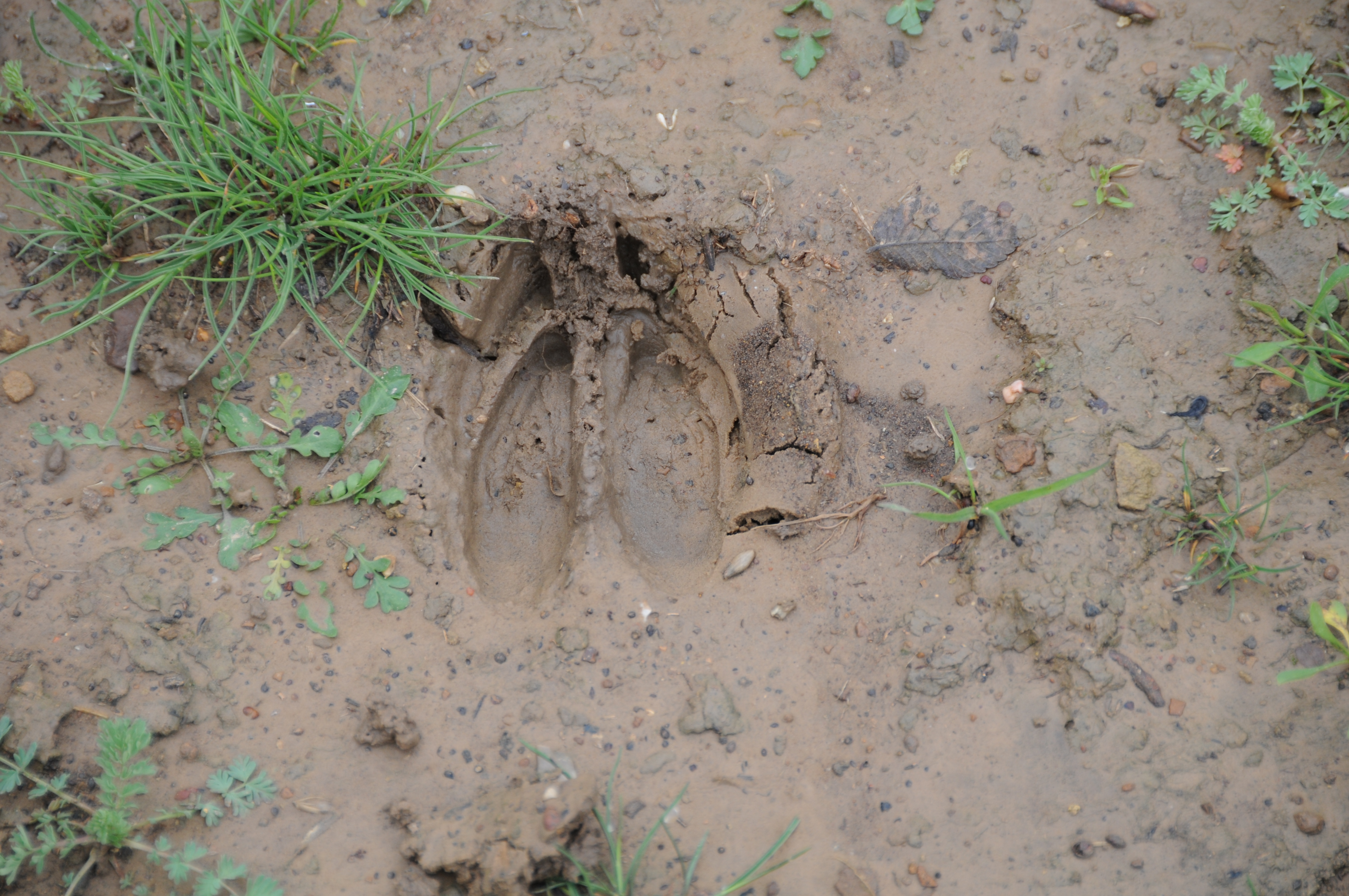
Deer track found on north side of The Grove, near corn site.  No corn set out for five days.  One deer track.  Mature.  Headed southwest.

Deer Track North Side Grove, March 20, 2010 (approx. 2.5 in. length, click to enlarge)

Deer Track North Side Grove Large View, March 20, 2010 (click to enlarge)

Scouting to creek area revealed no deer track.  Creek running high at approx. three (3) feet above normal.

Salt Creek After Rain, March 20, 2010 (click to enlarge)

Upon returning to house, deer track discovered along Poprock Hill Pasture, near the Blue place pond.  This indicates the one deer is still browsing between Blue’s pond, our pasture and the grove area.  No track emanates from Hall place to the southeast, as it used to.  Note: talk to Blue and verify continued support of brush growth around his pond.

One or two deer, not fifteen.

Returned to house at 11:15 a.m.

10 Comments

Filed under Deer, Field Log

Deer Tracks Vanishing

Neighbors surround our place and new arrivals have built homes and constructed fences and water gaps.  Changing things, the habitat for wild things, most of all.  Not any of the change has been good for me.  Oh, I can look closer at settlement patterns and see loneliness overcome, socializing more frequent and assistance rendered when needed — but I would not depend on it.

Deer tracks vanish.  The fox are gone.  Wildlife disappears.  Within seven years since our arrival here in the country, human settlement has pushed wildlife to an endangered status on our place.

Yesterday, I scouted the south side of The Grove for deer track.  I found none.  Since 2003, I have found deer track every day I have looked on the south side of The Grove.  Not yesterday.  The new neighbors to the southeast cut and burned brush that harbored deer.  For what purpose?  Better view from their house?  To loose their dogs into the clearings for exercise?  To give horses a open area for turnout?  A person can use their property as they see fit — an English-American axiom.

And, to the west, our neighbor has permitted two more families to reside on their place.  Target practice occurs.  The creek bank and bed where shots are fired in practice are pathways for deer migrating through our place and onto adjacent ranches.  Last Sunday, I stopped counting the rounds fired in the creek bed.  A person can use their property as they see fit — an English-American axiom.

In 2003, I regularly saw a herd of twelve-to-fifteen deer migrate and browse in our pasture.  Our farrier, Allen Gaddis of Wyoming, marveled at the deer on a misty morning as he trimmed hooves.  Deer used to graze with our horses.  Last year, I saw no more than three deer in a grouping.

I will go tomorrow to the north side of The Grove and seek deer track.  I will take the camera.  If there is track, I want a record in the future of how things used to be and how people use their property as they see fit — an English-American axiom.

I may post photographs.  I may not.

6 Comments

Filed under Deer, Life Out of Balance

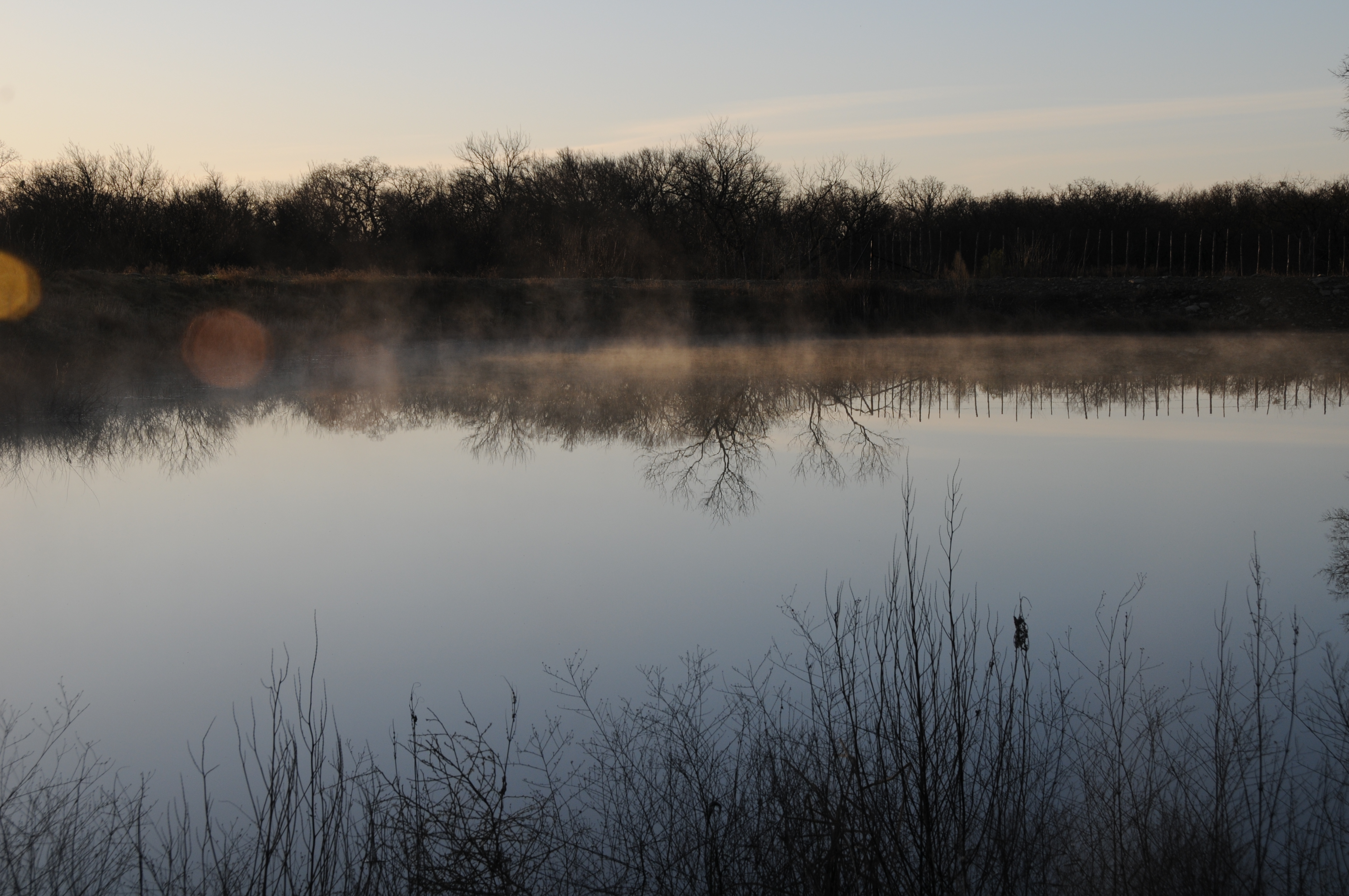
Poprock Hill Pond Mist

Poprock Hill Pond Mist, March 14, 2010 (click to enlarge)

This is Poprock Hill Pond, also known as a stock pond, stock tank, cow tank, watering hole, runoff reservoir or catch pond.  In this region of Texas — central, west — they are called, cow tanks or stock tanks.  “Cow tank,” of course, has familial, idiosyncratic, usage:  Uncle Floyd’s ranch, Tom Parks place and many others.  Cow or stock tank does not have the Walden cachet that reflexively appeals to non-Westerners, non-Texans.  To many of us, however, the cow tank was the first place where we learned to swim, fish and observe water in a region of semi-arid climate.  It was a separate, exciting area, cupped in the earth.

The rivers of Texas, such as Brazos, Colorado, Llano, Pecan Bayou (yes, a river), San Saba, Concho, Pecos and Rio Grande (always drop the word, “river,” before you say or write Rio Grande) may be public in water rights, but only a few families own the land around the river banks.  The Walton family of Walmart has a large ranch along the Brazos River near Millsap, Texas.  The few families that control river banks have no duty to the public to give them access.  To canoe or float down these rivers in Texas, you enter the river at a public road crossing, such as Interstate 20.

For most of us owning land in Texas, our first exposure to large bodies of water — other than bathtubs — were cow tanks, such as Poprock Hill Pond or stock tank, photographed above.  Swimming in cow tanks with cousins was often the first time people saw another body without clothes or scant apparel.  Perch and bass fish were stocked in the tanks and in the winter, ducks arrived to feed, carouse.  The cow tank was a retreat from family conflict, a quiet place to throw stones in the water and watch the ripples circle out to the edges.  It was another visual reference for for drought or abundance:  cow tank down, way down, dry.  Or, the other way:  stock tank up, way up, overflowing.   During the summer, we camped on the northern side of the stock tank, so as to catch the water evaporation from the southwest wind at night as we would sleep in a tent or on cots beneath live oaks, pecan trees.  By the morning, we wrapped ourselves in old quilts or sleeping bags to ward off  the cold breeze from the tank.

Stock tanks, however, are primarily for livestock.  Angus cattle walk the dam and water daily.  Our horses, Star, Lilly, Hija, Fanny and Shiney, wallow in the shallows to the right in the above photograph, bathing and cooling themselves in hot weather.  Hija is a water nymph.  She wallows more than others, she plays in it:  nuzzling the surface, plunging her head down into the water almost up to her eyes, stomping the edge of the bank to splash water on herself.  She’s a fine horse, she is.  If she could, she would bring her stallion to the water’s edge.

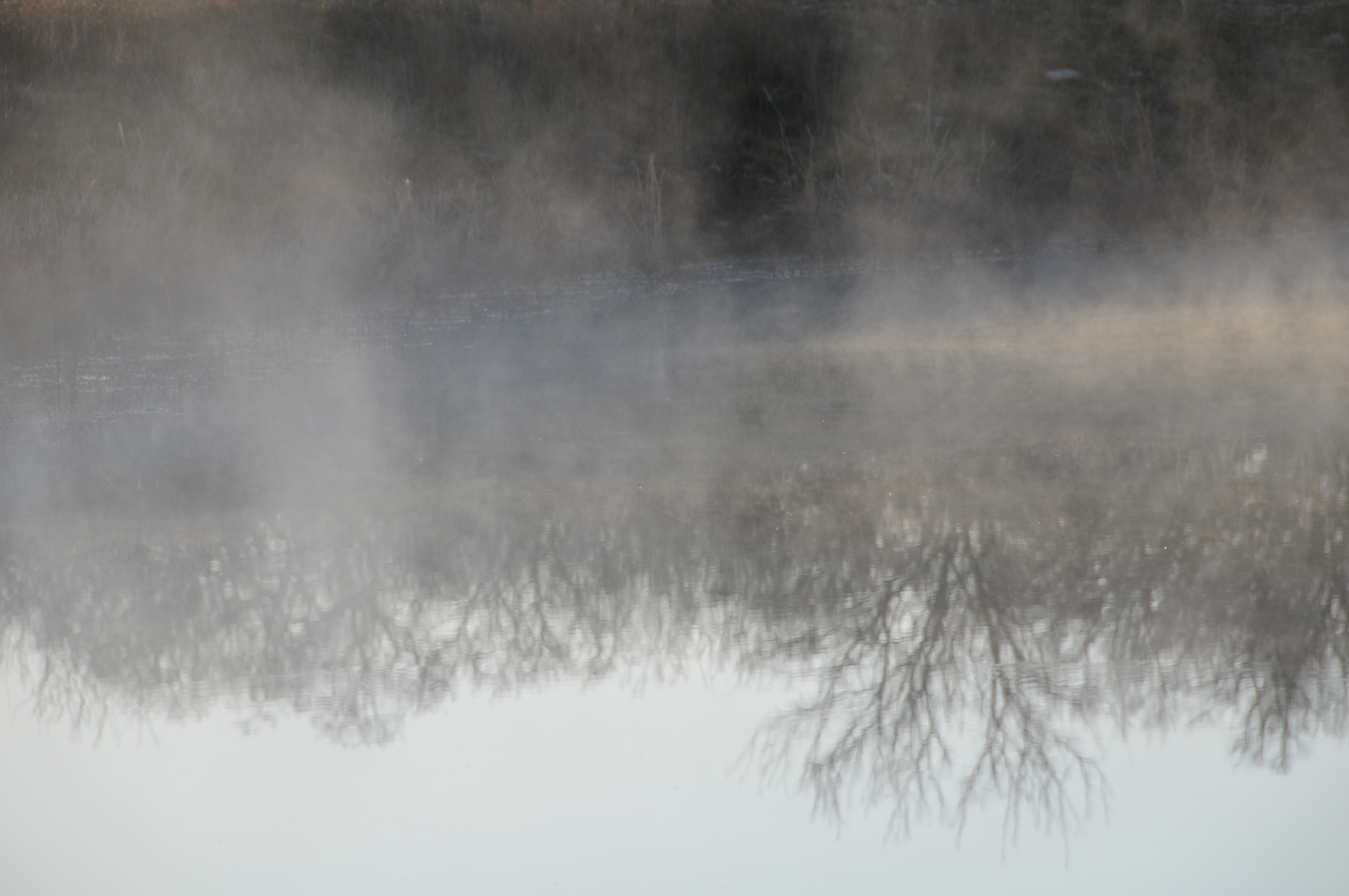
This morning, the temperature was 41 deg. F. and I saw the mist arise from Poprock Hill Pond.  Before I threw hay to Hija — she’s a fine horse, she is — I went down to the pond and took the photograph.  I don’t know the temperature of the water, but I’ll get a thermometer one of these days and plunge it into the pond water, if it is pertinent to my tasks that day.  Then, again, I may not.  I may stand on the edge of the cow tank and think of my cousins and Sweet Hija, bucolically at play and passing time.  The registering of the surface temperature may have to wait as I look at the wind moving the surface of the water, the light film of natural oils, the young willows emerging along the banks and the sunlight reflecting.  And, soon — it always happens — I’ll forget myself, looking at a misty cow tank in Texas.

Closeup Mist on Poprock Hill Pond, March 14, 2010 (click to enlarge)

8 Comments

Filed under Flying Hat Ranch, Recollections 1990-

Field Log 3/10/2010

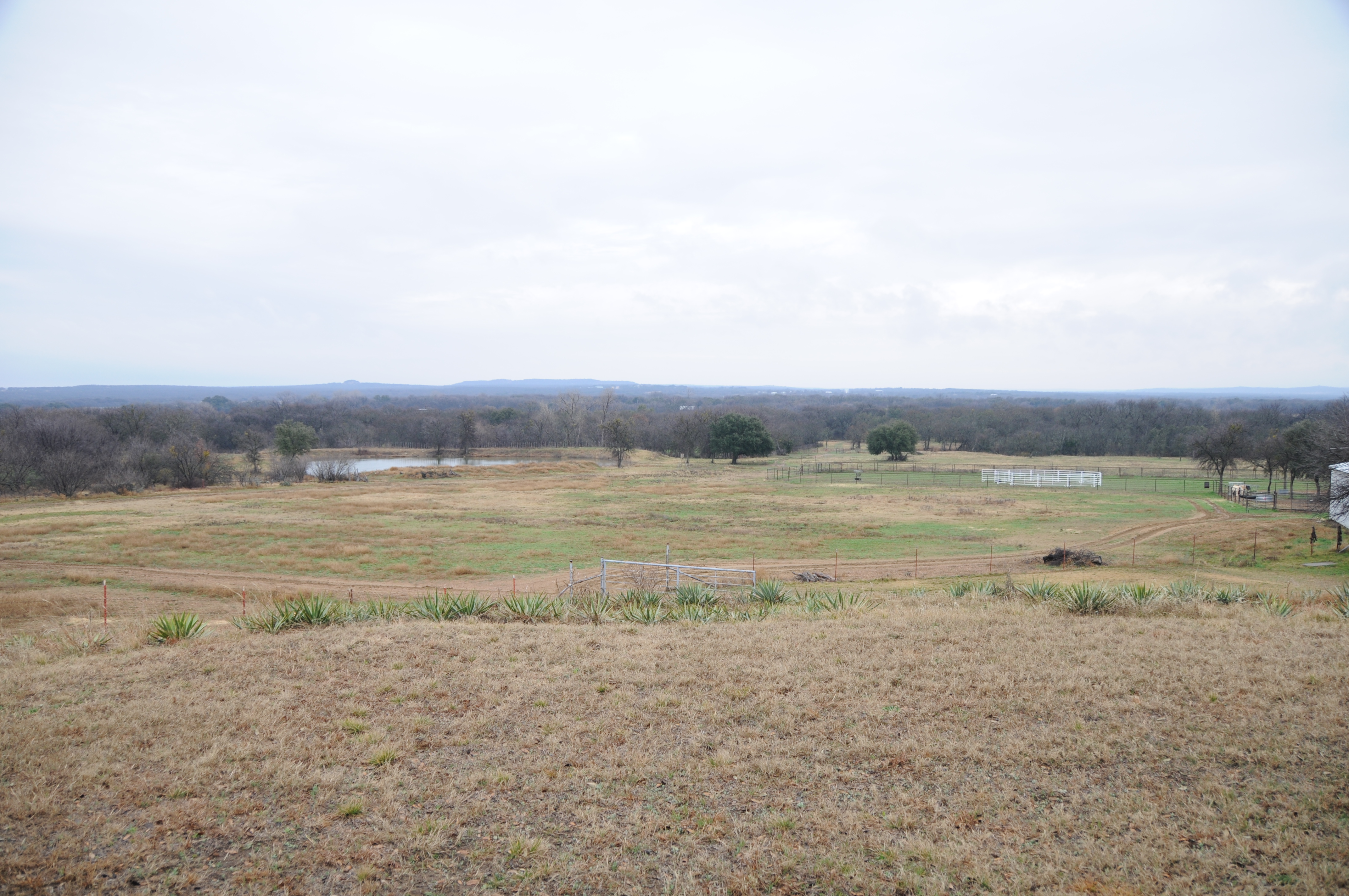
Poprock Pasture on March 7, 2010 (click to enlarge)

North Erath County, Texas:

5:45 p.m., in field between grove and arena, a large coyote, primarily reddish-gray, trotting, then scanning the Dooley pasture.

Two blue herons sighted flying over stock tank.

Pear tree on Blue place bloomed whitish blossoms yesterday, more blossoms today.

Some budding of brush in grove, unidentified.

Some greening and sprouting buffalo grass in pastures.

Stock tank overflow is light, flowing into Hall place stock tank.

Note: must order grass seeds immediately.  Mow down patches of cheatgrass before it emerges higher.

5 Comments

Filed under Field Log

Early Morning Sounds on Flying Hat

I rise early to start the day, walking down the lane to the barn.  Before sunrise this morning at 6:45 a.m., I heard three flocks of turkeys responding to each other to the south and west of our place.  They gobbled in flock choruses, their refrains carrying far because of the cold air.  Between turkey gobbles, loud and many they were, coyotes howled and yipped.  I don’t think the coyote had a kill, but were merely howling.  Past the Dooley’s place, I heard a neighbor’s hound bay, and from the Dooley’s farmyard, a cock crowed.  Ducks on the pond quacked and I heard them on Blue’s pond to the east of us, sounding friendly to each other, not alarmed.  The sun lay below the horizon, slowly illuminating the sky, as I absorbed sounds of nature’s creatures, some wild, some not.  I finished one chore and returned to the house, waiting for the horses to turn broadside, flankside to the sun as it rose, awaiting their grain and hay.  Lilly the alpha mare will nicker when I enter the stables.

8 Comments

Filed under Dogs, Ducks, Flying Hat Ranch, Horses