Tag Archives: Smokey Bear Hotshots

100 degrees and fire at Possum Kingdom 18 APR 11

After transferring items between two trailers here on our place, I ate a ham sandwich and departed for the northern part of our region, up SH 108, FM 919 through Gordon and up to US 180, approximately twenty miles away.  I turned west on US 180 and drove to the Stephens County-Palo Pinto County, Texas line.  I had not driven farther two days ago than the SH 16 highway intersection.

The magnitude of this fire stuns me.  From Ioni Creek to the Stephens County line on US 180, about ten miles or so, the country is blackened and hot spots still smolder in the hills.  As I approached the intersection of US 180 and SH 16, I looked out the window of my F-150 and saw the beginning of a huge fire eruption at Possum Kingdom East.

Click the photographs with your mouse to enlarge and get detail.
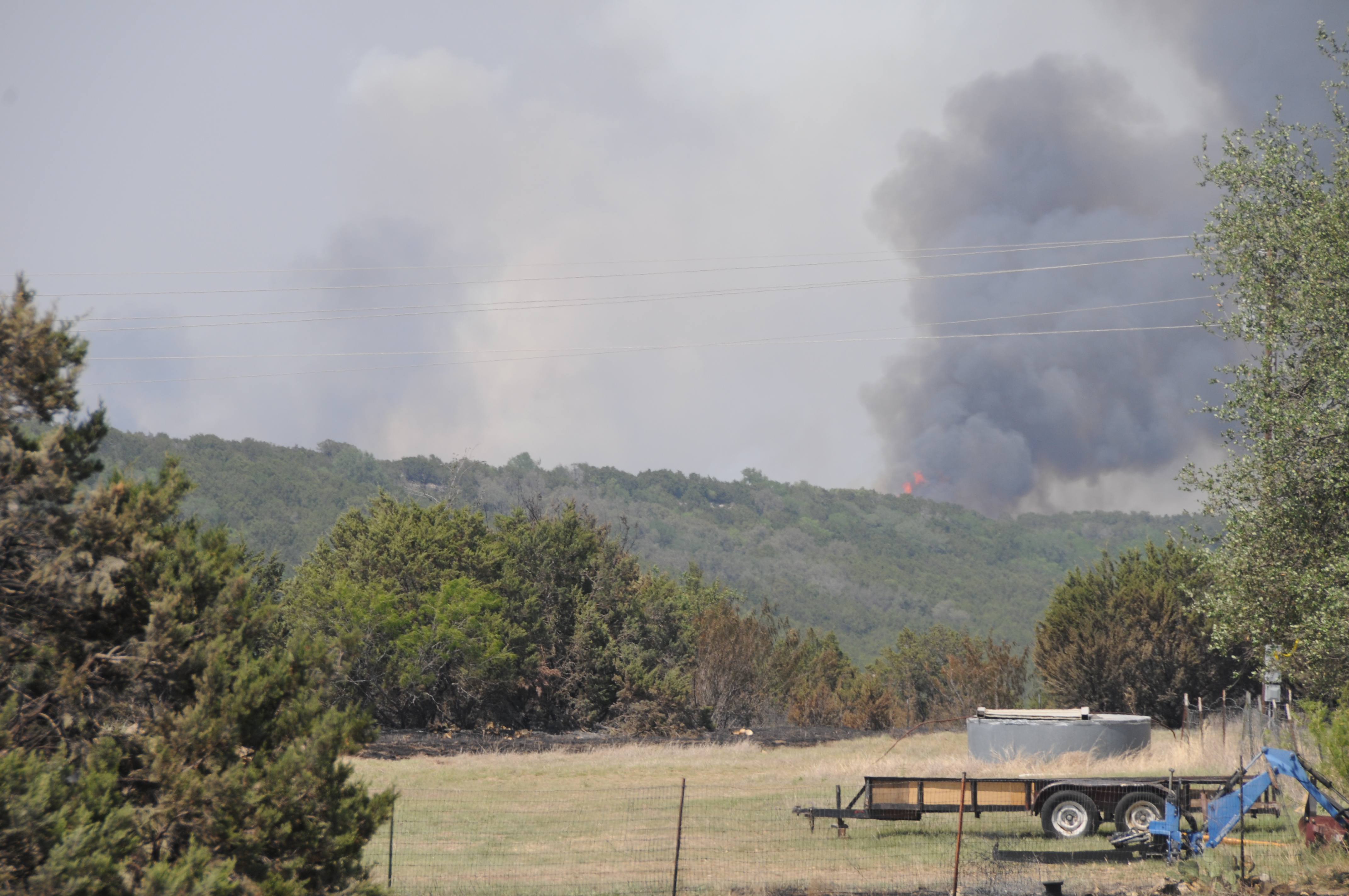
Looking north from US 180 near intersection of SH 16, PK East Fire.

I drove farther from the SH 16- US 180 intersection — Highway Patrol blocked SH 16 north — and saw blackened countryside all the way to the Stephens County line.  I turned around and came back down US 180 and here is a shot of the smoke cloud.
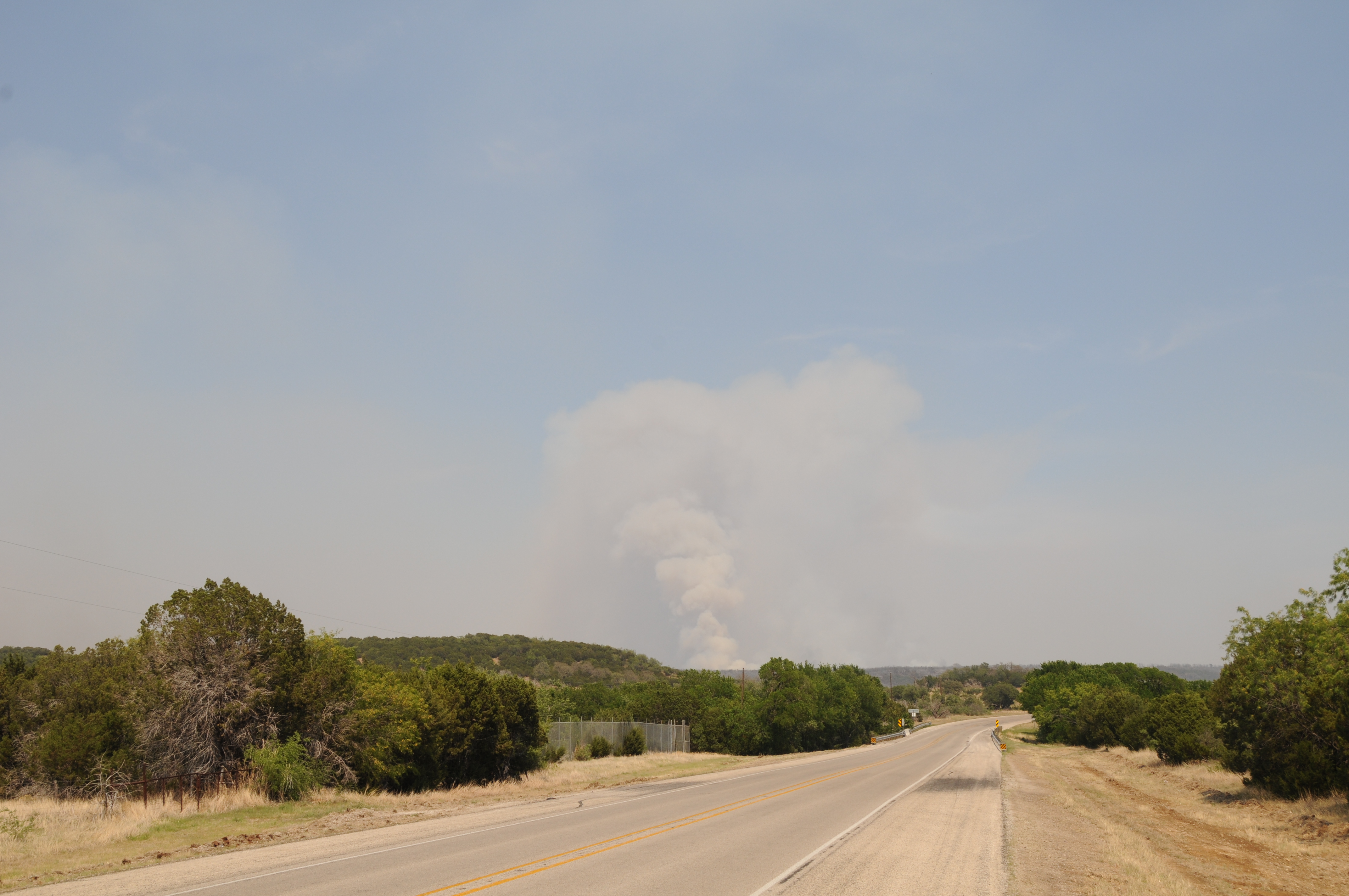
Smoke cloud of PK East Fire on US 180 headed east back to SH 16 and Strawn.

I saw at least ten fires — not counting the hot spots — along US 180 and SH 16. Rio Vista, Joshua, Granbury and other volunteer units were scattered along the highway. With the outbreak of at least two fires northwest of Strawn, I saw the Cunningham Fire Department go into a ranch, led by the rancher and authorities.

Through-traffic in Strawn is prohibited and I cut across the country, using Davidson Cemetery Road to get back home.  Highway 16 in Strawn is scattered with vehicles and fire trucks.

I don’t like disaster-pandering posts.  I think they are bad form and take the mind away from applying its powers to correct defects that caused disasters in the first place.  Tours of Chernobyl are disgusting.   These events in my region — I am about fifteen-to-twenty miles south from the fires that have gone on for days it seems to me — are uncommon.  I’ve lived most of my life in Texas, in this region, and I’ve never seen fires like this.  My immediate surrounds in north Erath County are green and we’ve been fortunate.  Mingus, my mailing address, and Gordon, six-miles away, were ordered to evacuate several days ago.  As soon as these events are over, I will be glad to post on verbena and milkweed.

Tomorrow the Fire Weather Watch forecast is worse.  Today, it’s 100 deg. and wind at 20-25 m.p.h., humidity low.  If it gets worse, I won’t go to teach in Abilene, but stay here and monitor the place.
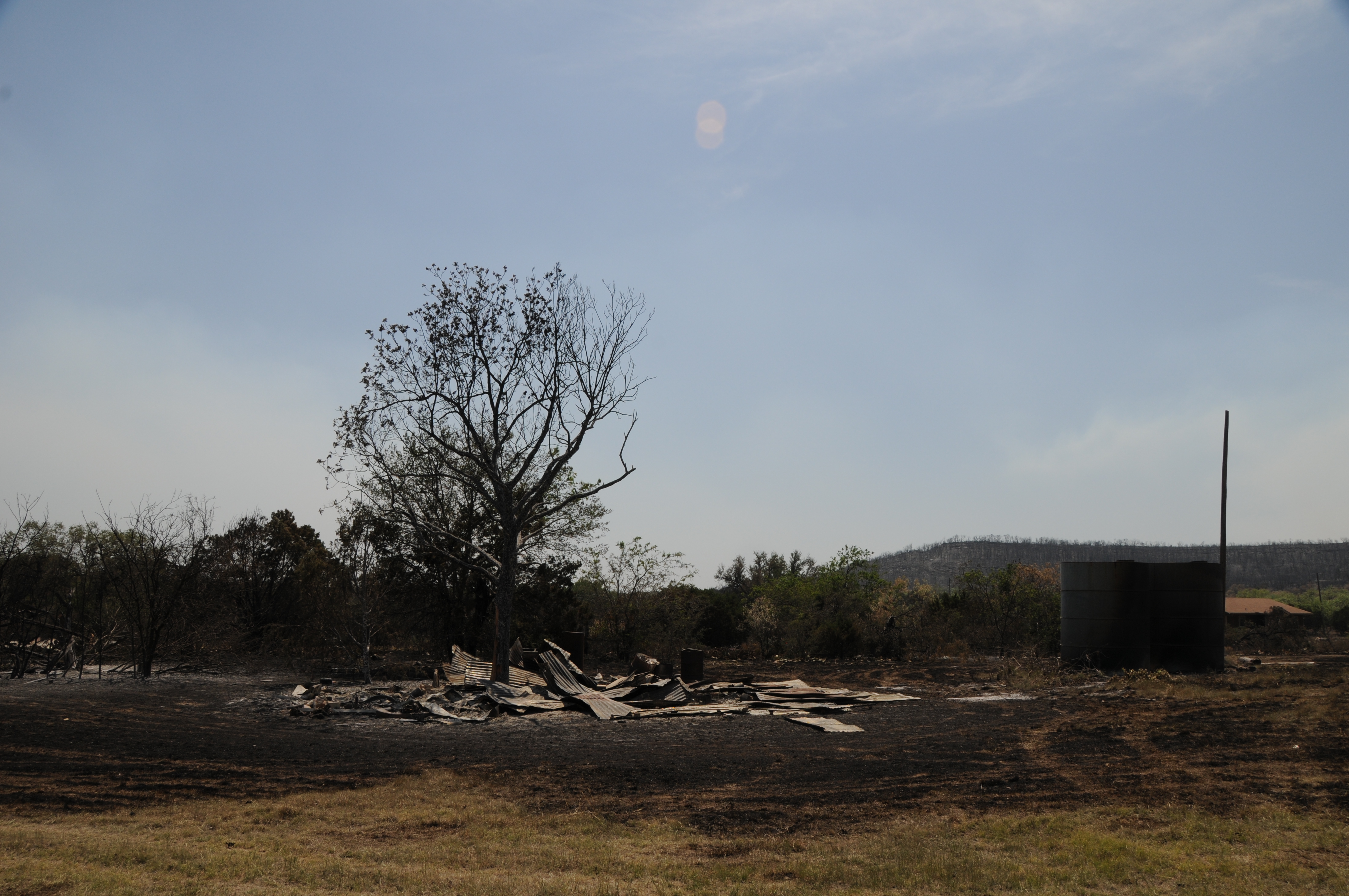
Burned structures at US 180 and SH 16.

12 Comments

Filed under Wildfire

Smokey Bear Hotshots of Ruidoso, New Mexico, help fight Possum Kingdom fires 18 APR 11

The Fire Weather Watch is on again for us today and tomorrow. The temperatures are to be in the 90s today with humidity levels dropping to single digits. The winds are forecast to be at 20-25 m.p.h. this afternoon. At last count, 1,200 firefighters are trying to retard the Palo Pinto-PK Fires and other spots in a ten-county area.

Here at our place, I am again prepared for evacuation although the fires are north of us some fifteen miles or so and the winds are prevailing from the south.  Our county and several counties south of us are in the Fire Weather Watch, however, so if a fire breaks out south of Flying Hat, we’ll have to be vigilant and take action.

* * *

The Smokey Bear Hotshots of Ruidoso, New Mexico, have sent their crew to the Palo Pinto-PK East Fires.

Brenda reported that she saw the trucks and equipment on Saturday on I-20 near Abilene, speeding to the complex of fires in our area.

News reports this morning state that the original fire was started by a campfire in the Possum Kingdom Lake vicinity.  Warnings had been posted against campfires.  Fire bans have been activated for several months in west-central Texas.

In addition to the tragic death of a firefighter near Gorman, Texas, ninety head of cattle died from this fire event in the last few days.  In most cases, ranchers cut their fences or drag them down to let the cattle drift and round them up later.  Too often, the fire spreads so fast that cutting fences is impossible.

On the last resort list of behaviors, I would cut fences and round-up later.

______________________________

Notes:

A hotshot crew consists of 20-22 members. There are two national formats certified for hotshot crews.

The first format is:

  • One GS-9 Superintendent;
  • Two GS-8 Foremans, (also known as Captains, or Assistant Superintendents)
  • Two GS-6/7 Squad Leaders;
  • Two – Four GS-5 Senior Firefighters; and
  • Approximately twelve GS-4 and/or GS-3 Temporary Firefighters.

The second format is

  • One GS-9 Superintendent;
  • One GS-8 Assistant Superintendents;
  • Three GS-6/7 Squad Leaders;
  • Three GS-5 Senior Firefighters; and
  • Approximately twelve GS-4 and/or GS-3 Temporary Firefighters.

In addition, crewmembers are assigned various other specialized roles within the crew structure. These specialties may include:

  • Medic – certified as First Responders, Wilderness First Responders, Emergency Medical Technician-level B or higher.
  • Helicopter Crewmember (HECM) – responsible for manifesting and packaging crew supplies and equipment into “sling-loads” for transport by helicopter long-line into and out of remote locations.
  • Faller – Highly skilled chainsaw operators that specialize in the safe falling of hazardous snags and burning or damaged trees.
  • Saw Team – Consisting of one Sawyer and one “Swamper”; The Sawyer will use a chain saw to cut brush and woody material away from the fires edge while the Swamper pulls and throws the cut material to the non-fire side of the fireline. These teams sometimes trade tasks with each tank of fuel used in the chain saw. The reason for this being that both cutting with the saw and swamping are both physically exhausting, but in different ways, therefore, trading tasks allows the team to do more work for longer. Also, operating the chainsaw is usually a more desirable task, compared to throwing brush and limbs, so trading tasks is more equitable.

(Wikipedia description)

6 Comments

Filed under Wildfire