Tag Archives: Ragwort

Wild flowers of a dry Texas Spring day

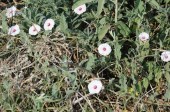
[Please note that when this post was first published yesterday, April 10, 2010, the Silverleaf nightshade was misidentified as a Dayflower.  The corrections have been made in the caption of the flower and plant and the notes contain a warning about the use of the Silverleaf nightshade.]

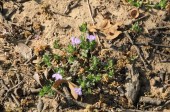
At 9:59 a.m. I drove down to the barn and parked the F-150.  Taking my camera and walking carefully, within the next hour I traced a familiar path from the barn thorough the corrals, into the arena pasture and into the grove.  I walked along the edge of Salt Creek and photographed these wild flowers of our dry Texas Spring.  Salt Creek is an intermittent-running creek, but there are pools of water and tracks abound.   The trees are green and lush about the creek and grass, despite the drought, remains verdant.

I picked a blossom of wild verbena in the main pasture and gently pressed it.  The fragrance flew about my face and I inhaled deeply.  Only a partial blossom I pressed, but it nonetheless imparted its scent that remained for minutes, not seconds, as I walked back up to the barn.  Beside the kitchen sink, we have liquid verbena soap, reminding me of the wild as I wash my hands, arms and face.

* * *

My uncle Floyd McRorey used to come in from the field and wash his hands in the kitchen sink with hard Lava soap as Aunt Lennie prepared a meal.  I never saw Aunt Lennie wash the dinner dishes.  She helped dry, but never washed the dinner dishes.  Uncle Floyd always washed the dinner dishes.

* * *

All of the following photographs may be enlarged with a click of your mouse.


Notes:

The scientific nomenclature for each plant may be incorrect as there are a broad range of varieties.  I refer to as many as four books and two databases to identify the plant, but I may be in error, so please verify my identification.

The Silverleaf nightshade is all toxic.  Medicinal: Used for rattlesnake bite – root chewed by medicine man, who then sucks on the wound to remove venom, then more root is chewed and applied to swollen area. (Steiner) Southwestern Native Americans used the crushed berries to curdle milk in making cheese, and the berries have also been used in various preparations for treating sore throat and toothache (Lady Bird Wildflower Center Plant Database).

Please see the link for Silverleaf nightshade:

Lady Bird Johnson Native Plant Database Silverleaf nightshade.

10 Comments

Filed under Wild Flowers of Texas

Field Log 5/10/2010 (Kiowa Good Luck, The Mariposa) [Corrected]

North Erath County, Texas, 32.43 lat., -98.36 long. Elev. 1,086 ft.  Turkey Creek Quad.

All photographs below may be enlarged with a click of the mouse for maximum detail.

Yesterday, I hiked into the grove.  Cool temperatures in the 60s F.  Light rain.  Saw several blooms of plants I have yet to identify.

This morning, drove to Pecan Tree Pasture to photograph blossoming plants for identification and cut mesquite.  Wind is high at 25 m.p.h. plus, sustained.  Red Flag warnings are posted on the MSN Weather link for counties west of us (Upper Concho River area) until 8:00 p.m.

Green-flowered Milkweed (Asclepias asperula), May 2010

Plant Identification

This is the Green-flowered Milkweed (Asclepias asperula).  I saw only two clumps in the pasture.  Several butterflies and bees are on the flower.  The Monarch caterpillar feasts on blossoms.  It is toxic to animals and probably humans.  The pollen may also cause a rash or itch.  The Butterfly-weed (not this type pictured) is also known as the Pleurisy-root, known for medicinal value.

I was not aware of its toxicity.

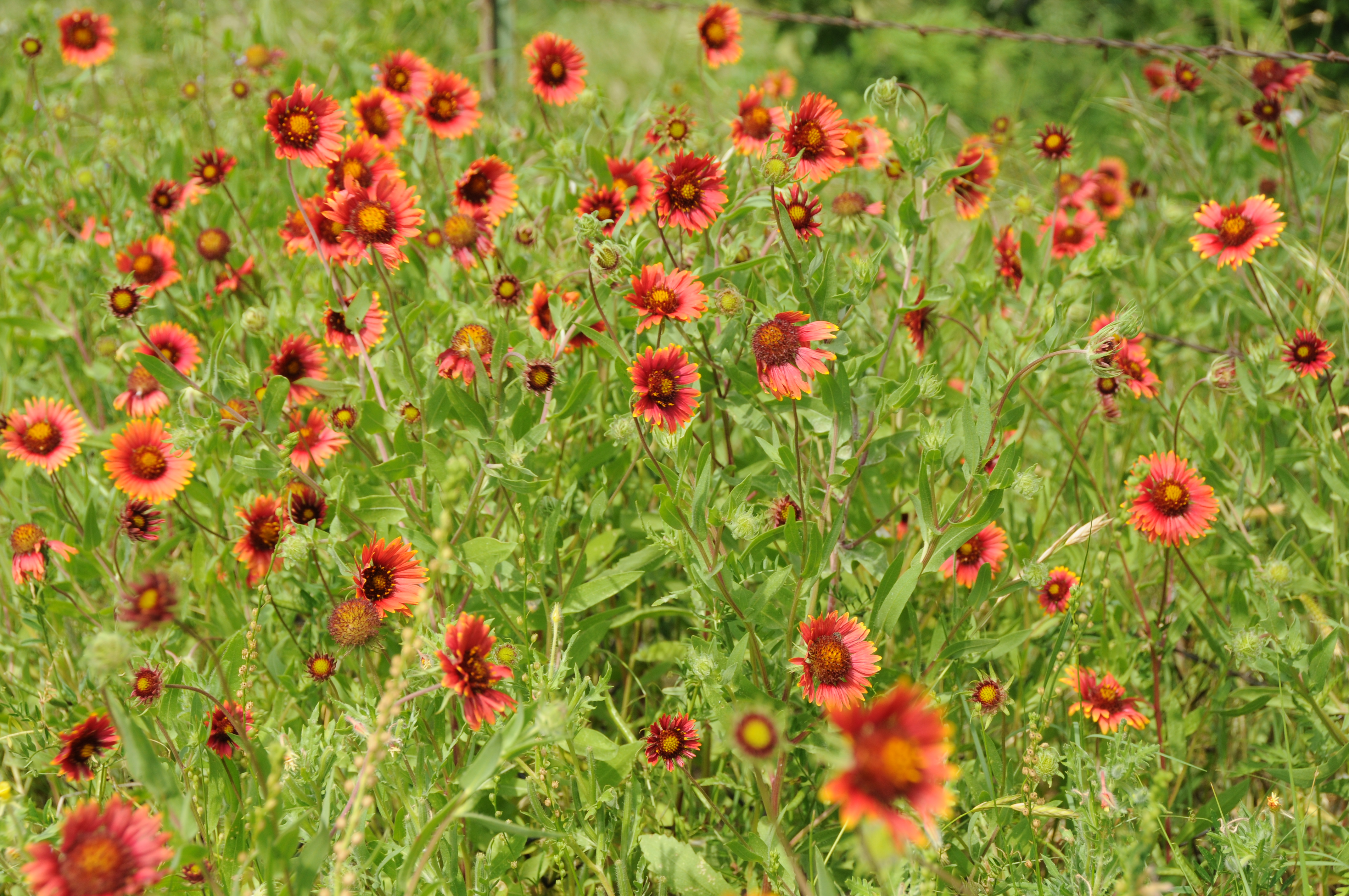
Indian Blanket (Gaillardia pulchella), May 2010

This is a stand of Indian Blanket (Gaillardia pulchella) next to the fence in the far pasture, the biggest stand of this species on the ranch.  Alongside State Highway 108, however, extensive Indian Blankets occur.  C. and L. Loughmiller, Texas Wildflowers, report that they have seen a forty-acre pasture completed covered in this one species.  Many years ago, I saw pastures in San Saba and Lampasas Counties covered in Indian Blanket.

Another name for Indian Blanket is Fire-Wheel.

It has medicinal qualities and the Kiowa considered its emergence good luck.  [See Lady Bird Johnson Wildflower Center notation, Indian Blanket.]

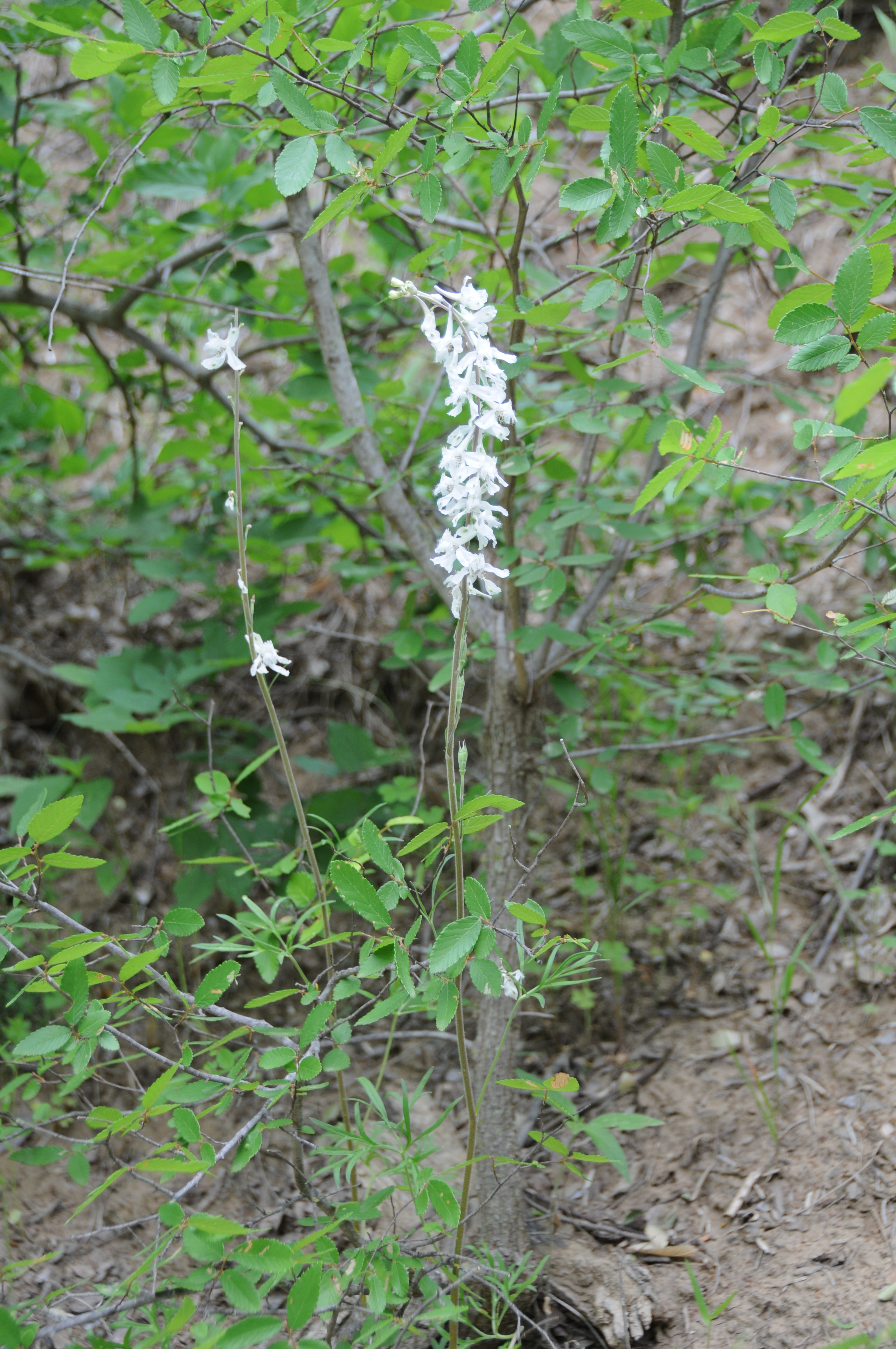
Prairie Larkspur (Delphinium virescens) Nutt., May 2010

This is the Prairie Larkspur (Delphinium virescens).  I found this along the banks of Salt Creek.  Again, this is a poisonous plant to animals and humans, although its seeds have medicinal properties.

In typing these plants and blossoms, I am finding more poisonous species than I imagined.  The horses leave the Larkspur and Milkweed alone, but I will be cautious during the fall when green grass is gone, as they might sample the plants.

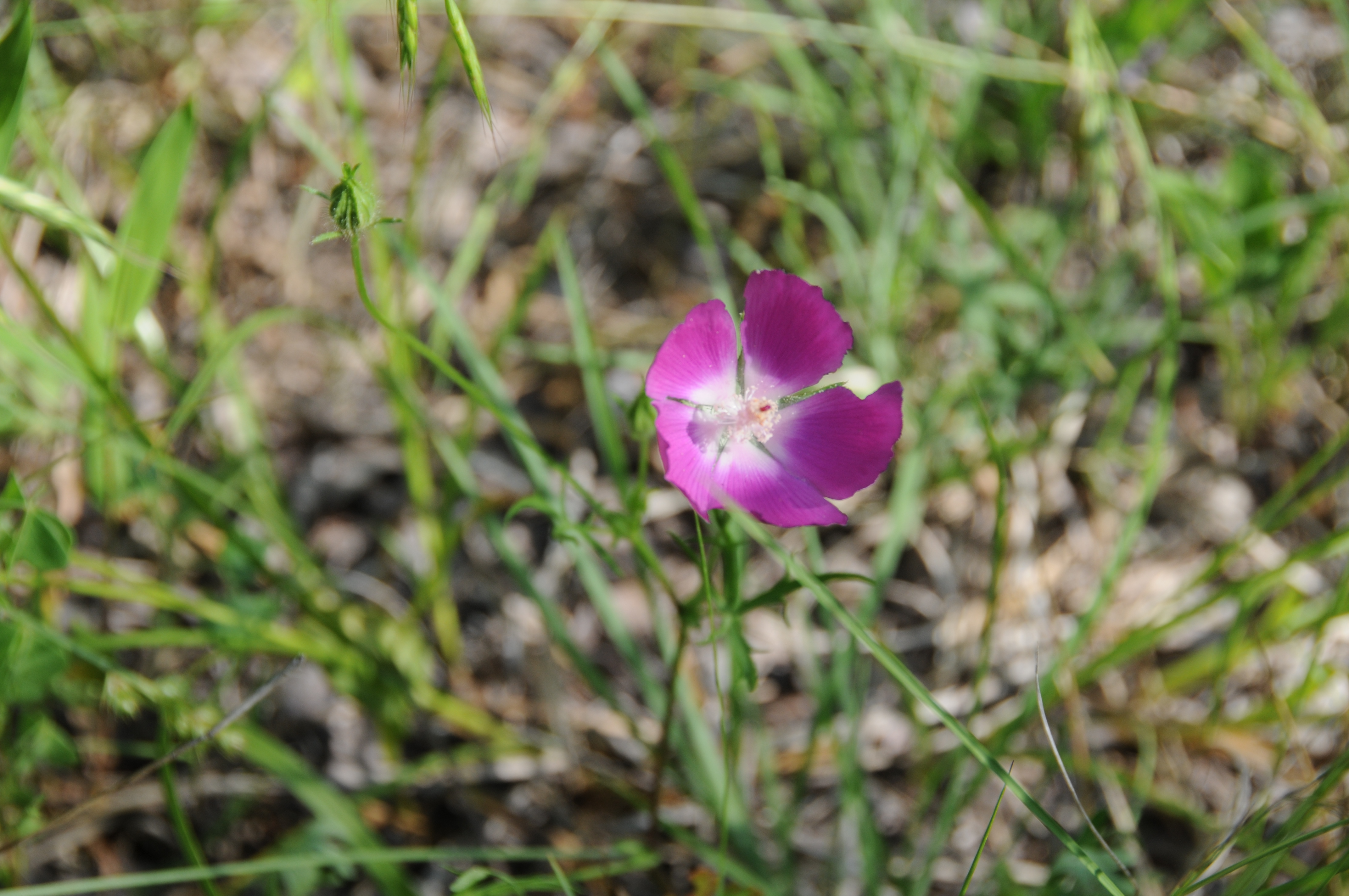
Wine Cup (Callirhoe digitata), May 2010, Photo 1

I am excited about this plant and blossom.  It is a delicate flower and there are only two stands of it on Flying Hat.  It is called Mariposa Lily or Sego Lily (Calochortus nuttallii).  One stand is along side the Pecan Tree Pasture road and the other is on the north side of The Grove.  I’m anxious to put out this photograph to show you, and I think I have it typed correctly, but later this evening when the wind calms down, I will go and verify.

The Mariposa Lily is considered among the most beautiful wildflowers in southwestern United States (Loughmiller, Texas Wildflowers). This Mariposa Lily on Flying Hat is probably the more common Mariposa, but a Desert Mariposa is quite rare in Texas.  Nonetheless, this flower is most delicate and I am excited we have two bunches of Mariposas.

Although I would be disappointed, if anyone can type this otherwise, please enter your rationale in the comment section.

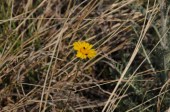
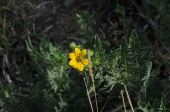
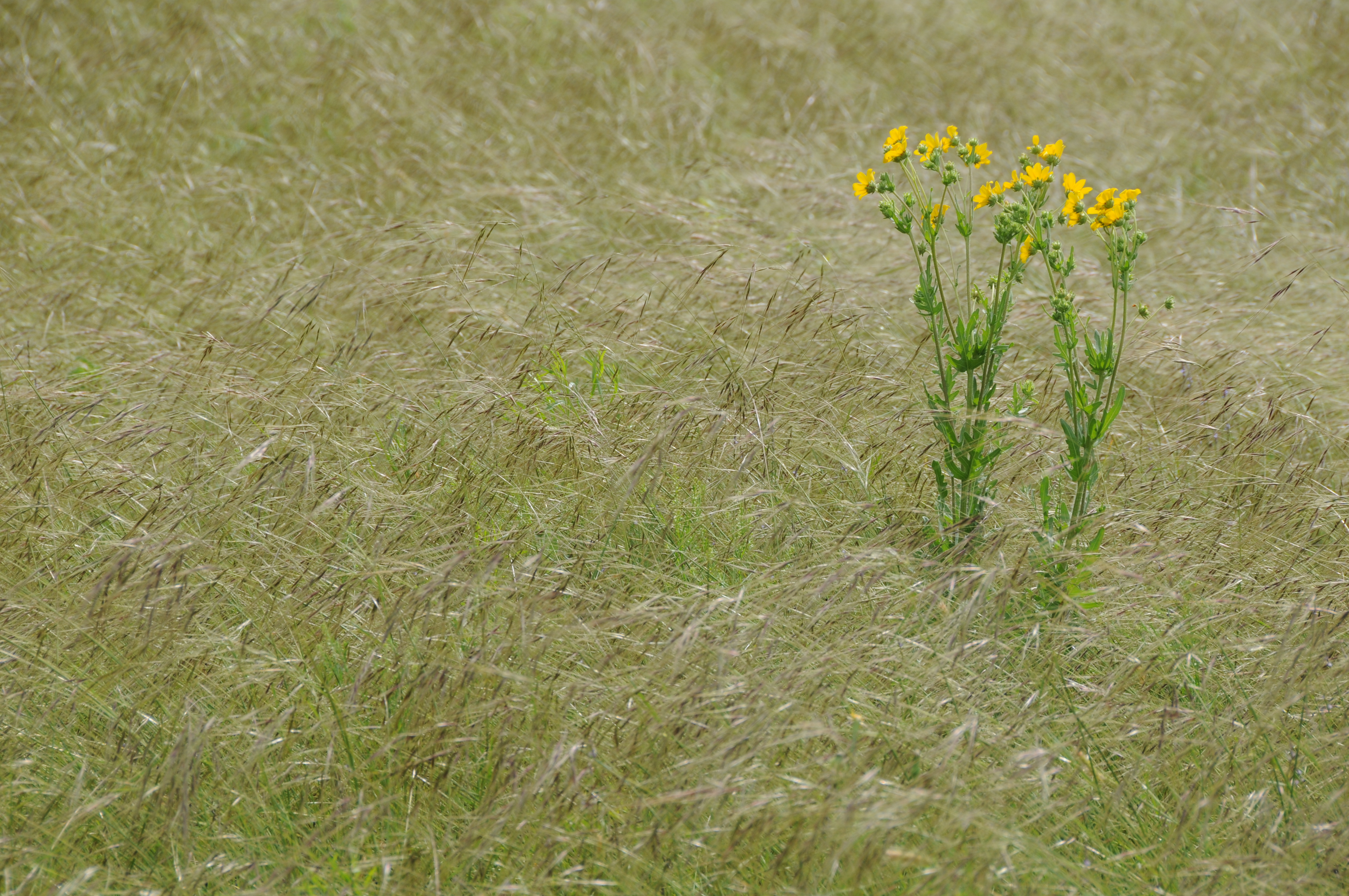
Texas Groundsel (Ragwort), May 2010

We have beaucoup amount of Texas Groundsel (Ragwort, Senecio ampullaceus) along our pasture roads.  The yellow blossoms are striking and until I changed the range strategy, I would shred these plants rather early in the spring.  This year, however, I have let them thrive.

Horses

Sweet Hija is still at Equine Sports Medicine & Surgery, waiting for the right time to be inseminated.

Shiney is still in Aubrey, learning manners from Jimmie Hardin.

Cut fifteen (15) mesquite bushes from pasture and fence row.

Note: Please check back later today for a verification of the Mariposa.

Correction to Identification

Correction to post, 5/10/2010, 5:38 p.m.  The winds died down some and I went back to The Grove to verify the plant and blossom.  It is not a Mariposa Lily.  It is a Wine Cup (Callirhoe digitata). When I investigated the Wine Cup in the field, I did not separate its petals to count them, but rather relied on the photograph exclusively when I got back to the house.  Brenda looked at it and had a question about the stamens and pistil form, but did concur with my first conclusion.

When I went back down to the grove a few minutes ago, I separated the petals to determine if there were three or five or however many.  Three petals would be the Mariposa.

Wine Cup (Poppy Mallow), May 2010, Photo 2

As you can clearly see in the Photo 2 of Wine Cup (Poppy Mallow), there are five petals.  I also carefully delineated the stem structure and it seems to be C. involucrata (Nutt.) [Wills and Irwin, Roadside Flowers of Texas, p. 153-154].

This plant also goes by Finger poppy-mallow, Poppy mallow, Standing winecup, Wine cup or Winecup.

15 Comments

Filed under Field Log, Plants and Shrubs