Tag Archives: Nature

Little bluestem with iPhone

On February 26, Saturday last, when in the field, I applied the iPhone to take photographs and upload for a field test: short bursts of field notes and photographs as I surveyed 53 acres of Cross Timbers prairie, creek and woodland. I attempted to snap a photograph and upload it with commentary as I went about my survey. While in the field, miles from cell towers, I was unable to coordinate photos and commentary. In addition, the “thumbing” of data on the iPhone was too slow. I was absorbing data much, much faster than I could thumb the phone. I did send a few in-the-field updates onto my blog, but later trashed them. I composed a long post with photographs taken with the Nikon when I got back to the ranch office.  In the field I did not think the photographs had been uploaded.

Today, however, as I was going through the media library on Sage to Meadow blog, I discovered that the photographs with the iPhone had been uploaded! I uploaded one photograph twice, thinking it had not been uploaded the first time. And, here it is, Little bluestem grass that is coming back on the prairie.

Little bluestem grass, Pecan Tree Pasture, Flying Hat Ranch, Texas, February 2011.

I think the utility of the iPhone in field work is evolving.  It is portable and lighter than a camera.  Composing commentary can exceed 140 characters.  It’s not going to replace the steno pad and camera, but it may have some further use.  I like the idea of field work live, or with a minimum of time lapse, as a light and useful activity.

3 Comments

Filed under Bluestem Field Log, Plants and Shrubs

High grass in the pasture 1:46 pm

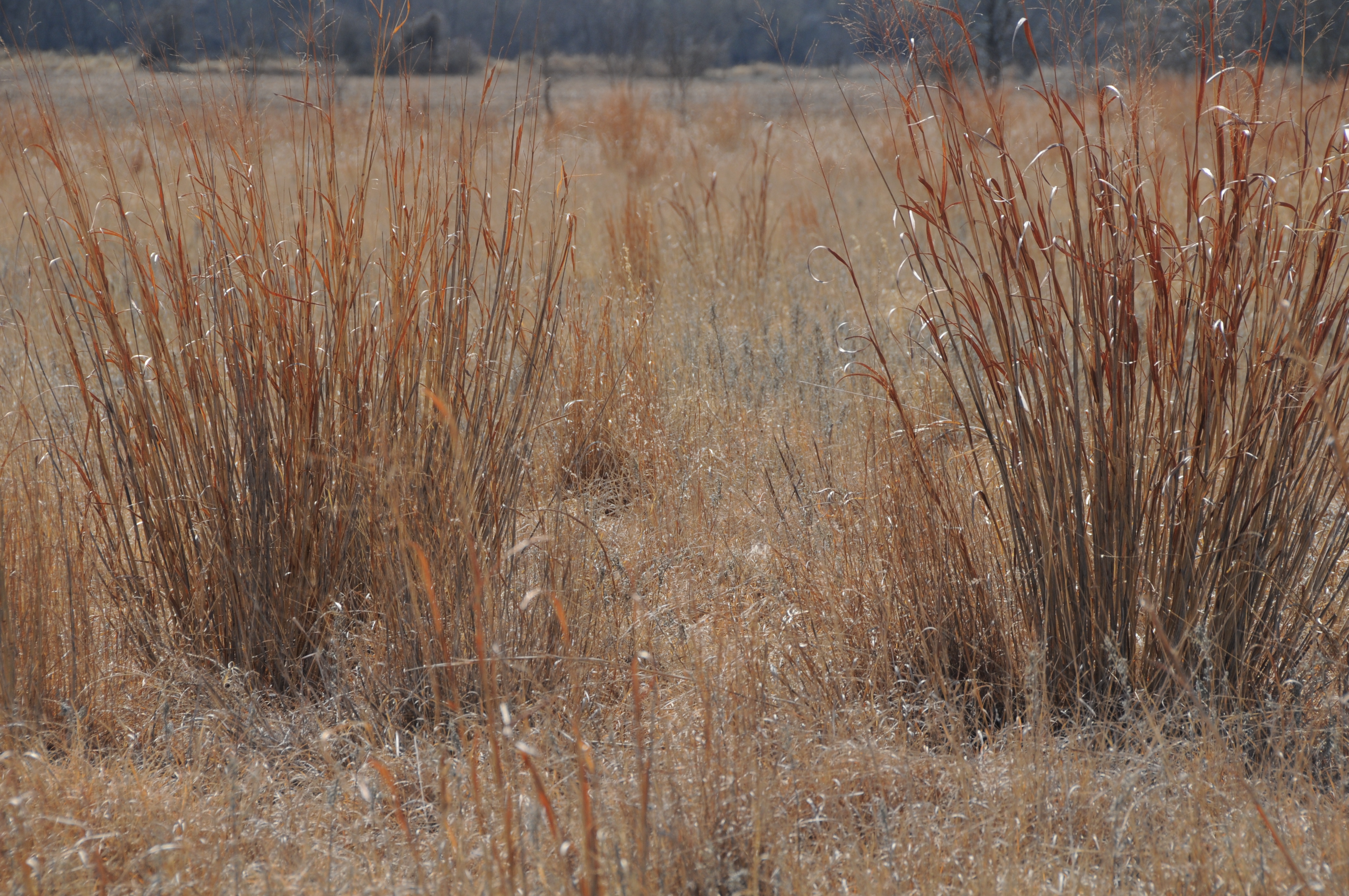
Big bluestem (Andropogon gerardii), Flying Hat Ranch, Texas, February 2011.

[February 27, 2011, added comment.  In my field work, the constant tools (carried in pockets or small rucksack) are stenographer’s pad, pens, tape measure, compass, topographical map and watch.  Close by in the pickup are engineering graph tablets, colored flags, binoculars and camera.  The camera is ofttimes carried around the neck.  I have also been using a GPS lately.  I’ve not used a laptop in the field, but I can see its utility with uploaded topo maps and data entry.  The iPhone may have some applications in field work, but the fundamental tools are steno pad, topo map, compass and tape measure.]

The experiment with in-the-field short note taking has come to an end.  I am back up at the ranch office and am writing on the desktop, not the iPhone.

The use of the iPhone in the field for short bursts of updates works, but the photographic uploads into my blog via iPhone did not work.  Part of the problem is that our ranch is way out in the brush and our cell towers are at Bluff Dale and Morgan Mill, Texas, miles and miles away.  For any extended commentary, a laptop with a wireless connection is much preferable to the iPhone although I will try the iPhone mode again.

While in the field today I kept a written journal and took photographs with another camera.  I am posting the photographs of high grass in the pasture.  The Big bluestem is “big,” reaching six-feet tall.  The Little bluestem is about three-feet tall.  For now, enjoy the field photographs.


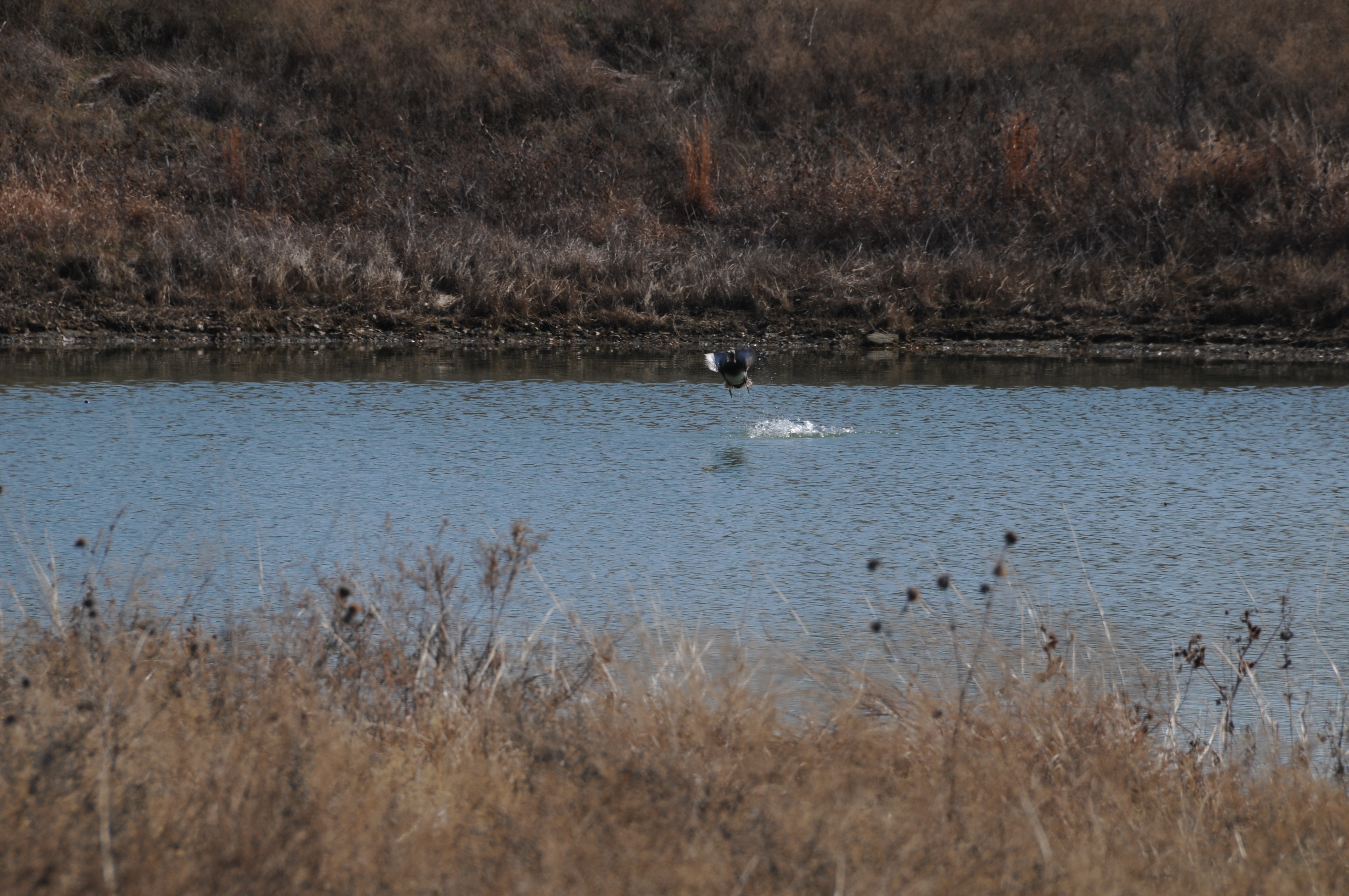
Unidentified duck taking flight from the stock pond.

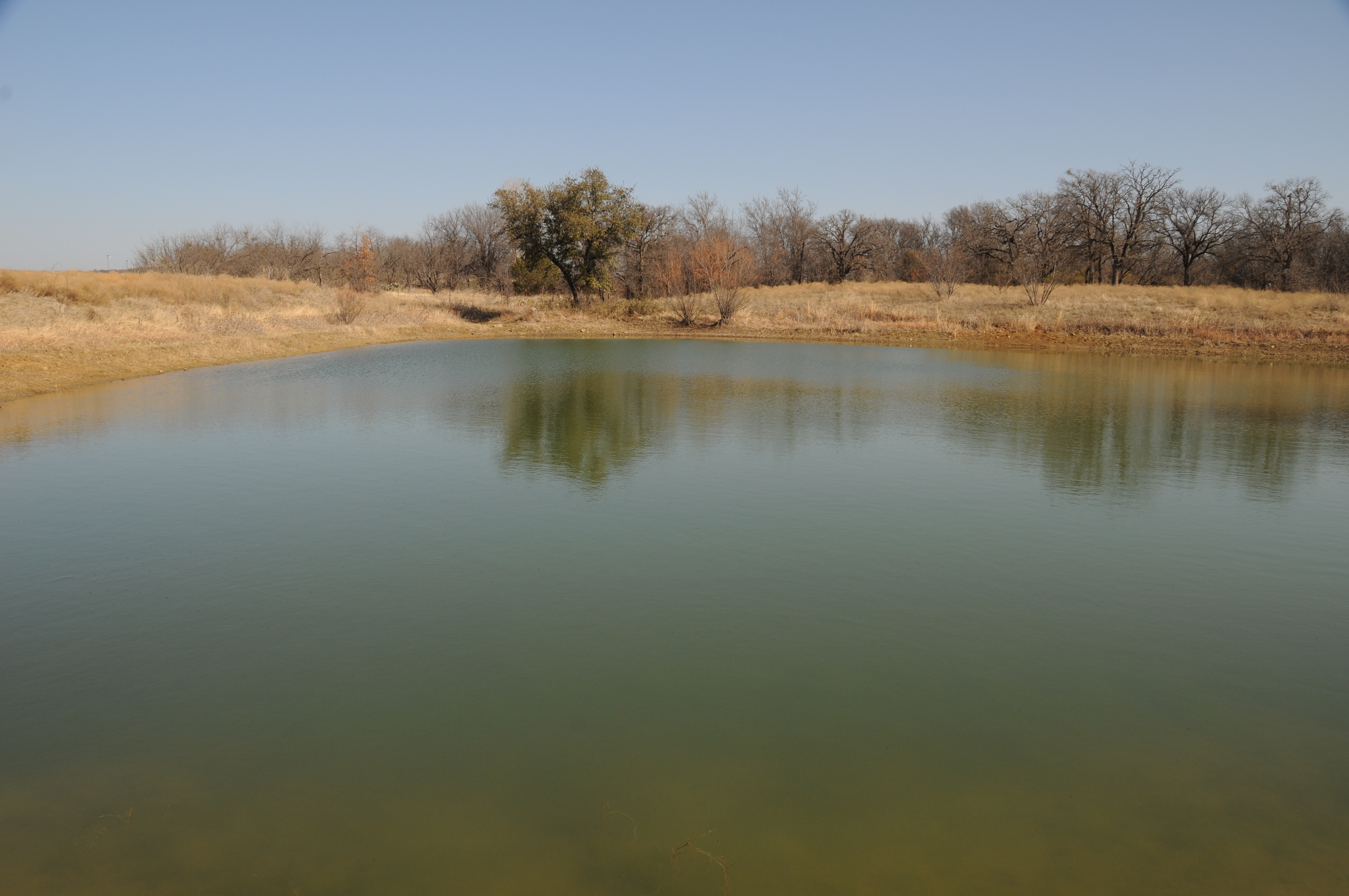
Still waters on the stock pond, ducks have taken flight to Blue's pond to the north.

A typical Cross Timbers life zone that has been harvested and cut for several generations. The tree grove is rebuilding itself.

Big bluestem, Flying Hat Ranch, Texas, February 2011.

15 Comments

Filed under Bluestem Field Log (Live)

Kiowa wind, grass, colors

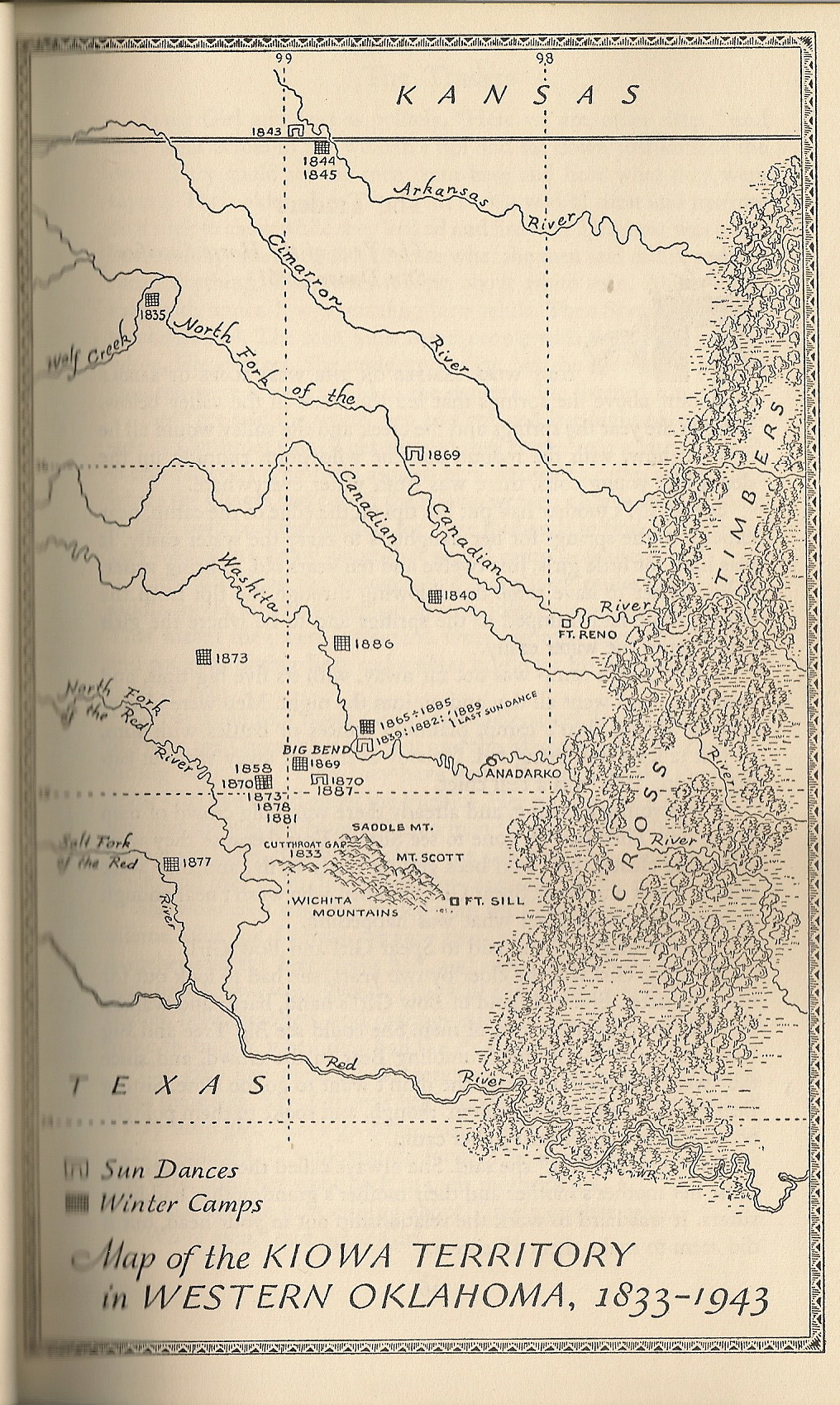
Map of the Kiowa Territory in Western Oklahoma, 1833-1843, from Alice Marriott, The Ten Grandmothers, p. 15.

In 1944, Alice Marriott in her book, The Ten Grandmothers, recorded Kiowa Spear Woman’s narrative of the motion and color changes of prairie grasses.  The “Ten Grandmothers” are ten Kiowa medicine bundles.  The bundles still exist, but they have not been opened since the 1890s when the last person who had the right to see the contents died.

For Leah the south porch of the big house was the best part of home.  Here you could sit and watch sunrise or sunset; watch the shapes of the earth change and move as the sun moved.  Then you knew, when you sat out there, that the earth was alive itself.

Spear Woman sat beside her granddaughter and thought that the earth had gone dead.  Lights played and moved, and cloud shadows came and went, but the earth itself had somehow died.  It was all one color now; not like the old days when its shades really changed and flickered like flames under the wind.  She stirred and sighed and spoke.

When the buffalo moved across it, there were other colors and other lights.

The thought was near enough Leah’s own to startle her.  There are lots of colors there now.

Her father spoke behind them.  Not like there used to be.  In the days that even I remember, there was one color when the wind was from the north and another when it was from the south, one from the east and another from the west.  Now the grass is all one color on every side, and it doesn’t change with the wind.

Sometimes the colors change.  Down near Lawton there is a prairie where the grass takes different colors.

* * *

[Spear Woman insists they travel to Lawton (Fort Sill, Oklahoma), fifty miles away.]

She brought her best Pendleton blanket from the trunk and spread it over the seat.  She put on her very best clothes and painted her face….

Two lines of high, tight fence spread across the prairie from a gate, and Spear Woman sat stiff, suddenly.  What is that!  That is grass like the old days.  Real grass.  All different colors.

It was, too.  It was like changeable silk, the kind the Delawares used to trim their blankets.  Yellow as the wind struck it; rose-color as it died away; then a sort of in-between color, with patterns that moved like patterns in silk when you folded it….

Shade was not even in sight, and when they had driven through the gates, with the lines of the fence on either hand, it was still not easy to find.  Spear Woman didn’t care.  She sat and watched the grass turn over in the sun, flickering and bending and straightening like little campfire flames, and was happy.  It was the old kind of grass, the old, rippling, running prairies, even if there were fences.  She was glad her eyes were dim, because she didn’t always see the fences, and could forget about them.  It was all peaceful and alive again.

From Alice Marriott, The Ten Grandmothers, pp. 285-288.

* * *

When I was a boy, my grandmother drove between Brownwood and Bend, Texas, near San Saba to visit relatives.  I watched fields of grass sway in the wind on either side of the road, a narrow two-lane highway.  She would point out to me where she and her family had camped and where she had seen buckboard wagons ascend a hill along the creek, the hubs carving their initials along the cliffs.  I saw them and put my hands in wagon-hub grooves when we stopped to rest.  The prairie wind flowed over the grass, moving stems and leaves in a rhythm, a wave of motion like water I saw in Corpus Christi Bay.

* * *

Last year I planted six acres of native grasses in the Pecan Tree Pasture.  The grasses are native to the Cross Timbers of Oklahoma where Spear Woman found peace again, and the grasses are native to our ranch that is also designated as Cross Timbers.  The grasses in our pastures grow waist-high, chest-high in some areas, and when the prevailing wind, a southwest flow from Mexico, crosses the pastures, grasses move and bend and change color.  As I go up the road towards Huckabay, Texas, about six miles away, I always notice a very old stand of Bluestem that turns reddish-brown in the Fall and Winter, but becomes blue and green in the Spring.  The stand of Bluestem is only an acre in size and machines have not touched it in many years for it is on the side of a hill.  It is old, that family, and I care for it.  If I could move that acre of old Bluestem to my ranch, I would.  I can’t.  But I have planted its relatives in the Pecan Tree Pasture and there I shall attend to their health and growth.

______________________________

Notes:

The citation is: Alice Marriott, The Ten Grandmothers, Norman: University of Oklahoma Press, 1945.  I have the fourth printing, October, 1951.  In the excerpt, I have omitted quotation marks and substituted italics for the spoken words.

Lawton, Oklahoma, is also the home of Fort Sill, Oklahoma, that is seen in the map above.  If you click on the map, then enlarge it with your computer, you can see more clearly the locations of encampments and the Sun Dance locations.  The Cross Timbers designation flows all the way down into Texas and includes our ranch, Flying Hat Ranch, Mingus, Texas.

12 Comments

Filed under Flying Hat Ranch, Life in Balance, Life Out of Balance, Nature Quote of the Day

Lilly’s Mound: early Winter morning


Lilly's Mound in an early Winter morning at Flying Hat Ranch, Texas, 2011 (click to enlarge)

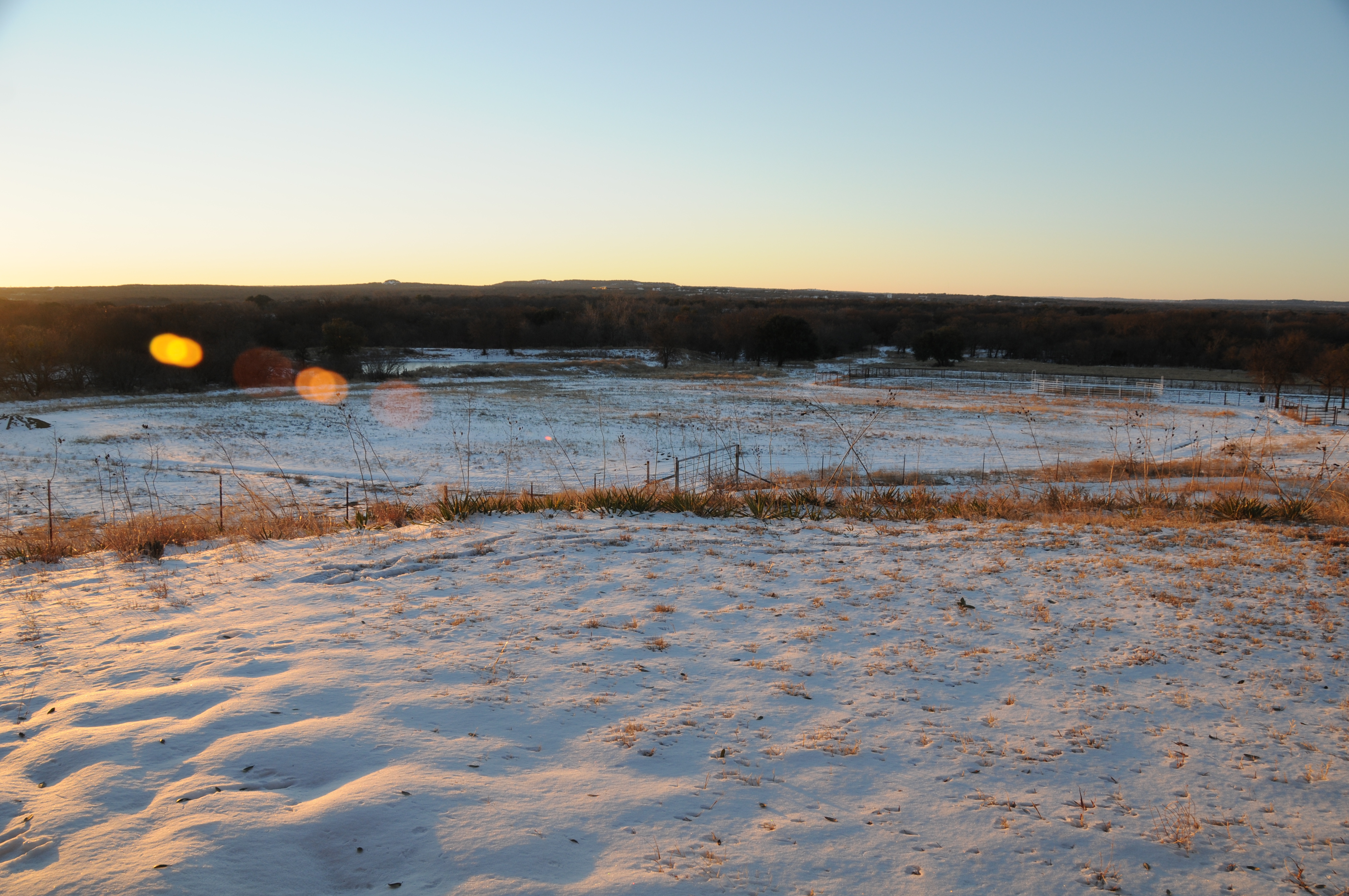
In the far background are the Twin Mountains of north Erath County, Texas, 1,400 feet. Ducks swim and feed upon and beneath the pond in the middle of the photograph even in this cold weather.  The gate opens into the arena pasture.  The small mound with cedar posts upon it, to the far, far left in the photograph (you may have to enlarge), is Lilly’s Mound, 1,065 feet.  The mound is small and does not stand out in the photograph — in fact, hardly noticeable — , but it is a meaningful part of this good earth to me and Brenda and Star.

21 Comments

Filed under Cedar, Flying Hat Ranch, Horses, Juniper, Lilly, Star

Why western American landscape photography matters

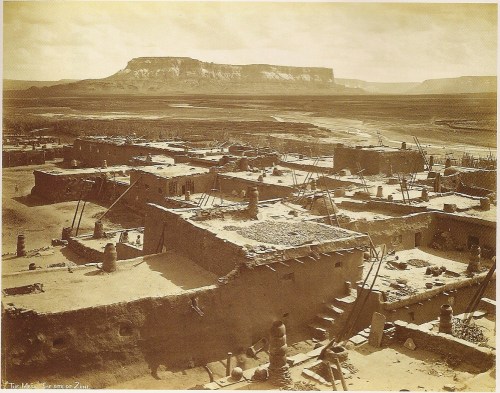
John K. Hillers, Mesa at Zuni Pueblo, ca. 1875

Cameron Walker writes in a recent issue of High Country News,

Recently, I asked Martha Sandweiss, a Princeton University historian and author of Print the Legend: Photography and the American West, why people are so attracted to Western photographs — hoping, really, that I’d learn something more about myself.

Photography, she said, became a way of reframing the country after the Civil War. “The West was a place beyond history, during a time when recent history was really painful,” Sandweiss said. Many landscape photographers kept their cameras trained on the wilderness and its prospects, often omitting the West’s history and people to create a powerful illusion of a place where only the future mattered. “There’s this intense desire to imagine the West as our last great hope.”

To Sandweiss and Walker, the West in landscape photography is a place beyond history, a place where only the future matters, the West as our last great hope.  I agree.  Placing this position on one side, say, the positive side, we have the other position that Western landscape photography displaced a painful past (Civil War in this case), created an illusion and omitted actual history (relocating Indians, extermination of vast herds of buffalo, hollowing out natural resources).  Both sides fit together although we repress the pain, illusion and facts in favor of a place beyond history.  Look at the following three photographs, continue reading and let me explain.
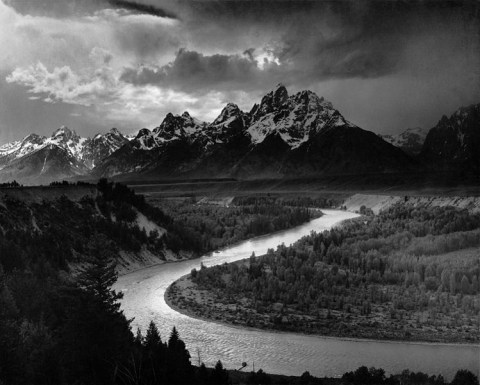
Ansel Adams, Tetons and the Snake River, Wyoming, 1942
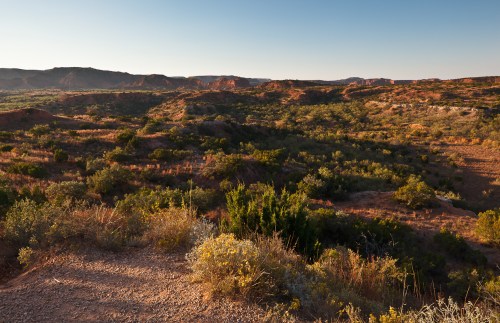
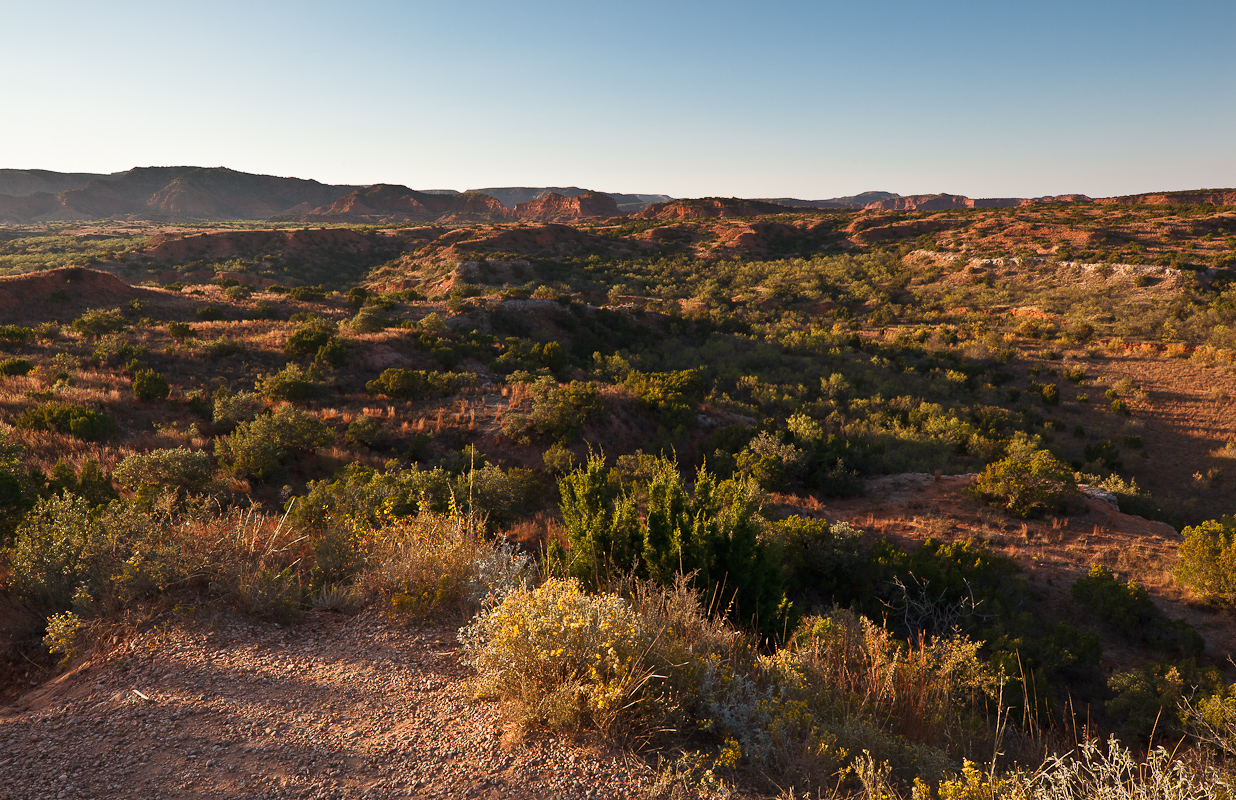
Jeff Lynch, Palo Duro Canyon, Texas, 2011
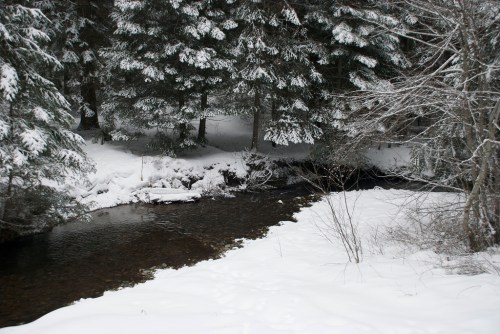
Montucky of Montana Outdoors, Cool, clear water, 2011

In the three photographs of Ansel Adams, Jeff Lynch and Montucky, each has captured a western landscape in pure form, without human artifice intruding — no church spires, courthouses, schools or bridges.  As we wander into these Wests, I submit that we want to leave behind those objects that change the terrain — automobile, antennas, roads.  Further, if we seek to preserve these pure forms, we must leave behind the ideologies of exploitation, over-consumption and race.  We may desire preservation, but the ongoing drive of the machine into the West can hardly be slowed down, much less stopped, as population expands.  We may want to leave behind the ideologies and terrain-changing objects and, though difficult, it is not impossible.

I do not view nature in these photographs as a cropping or harvesting opportunity and they are not presented as such by the artists.  I see rivers, streams, trees and mountains that are in themselves moving and living things, having the same molecular and atomic substance that make up my flesh, bones and hair.  Different arrangements for a time, the land and me, but substantially the same.  These three photographs give rise, I believe, to humanity’s kinship with the earth and invite gentle, ethical occupation of the land.  When I move into these Wests I do not want to construct a Monticello, but rather fit my home and hearth into the line and contour of the earth as in John K. Hillers, Mesa at Zuni Pueblo, seen above.

Leaving artifice behind, slowing the machine and having kinship with the earth in thought and deed has been tried before, and the dream has died ten-thousand times and it will die again.  Sand Creek and Ludlow coexist with the Rockies as backdrop in our history — blood and beauty.  Nonetheless, every vignette of western landscape offers the dream again, a chance to move on past the pain of history and into the wild without the machine.  Art museums, galleries and photographic books elicit a response in the viewer that there is a purity of form beyond the city, in all landscapes, all regions.  As a special art, western American landscape photography matters because it renews again and again what has been torn in our history.  We build upon beauty momentarily captured on film and not what has been shattered in history.  Western landscape photography can help us transcend what has terribly gone wrong.  As a result, I submit, we will take lighter loads and bigger hearts in our wagons when we migrate West next time.

It is all there in the photographs, beyond the lens of Adams, Lynch and Montucky.  They point the way.  Can you not see it?

* * *

Not all people that view landscape photography of the West will see renewal or lessen their impact on the land.  The West is still seen as ripe for exploitation and extraction.  New lamentations are writ everyday in the West and many of them are never heard, yet they are always seen — on film.

______________________________

Notes:

Cameron Walker, January 24, 2011, High Country News, interviews Martha Sandweiss, “Depth Afield: Why is the Western Image so Appealing?”

Mesa at Zuni Pueblo from James L. Enyeart, Land, Sky, and All That is Within: Visionary Photographers in the Southwest, Santa Fe: Museum of New Mexico Press, 1998.

Additional comment, February 2, 2011.  Caralee Woods of Kanab, Utah, sent this by e-mail and I post it as another example of the appeal of the western image.

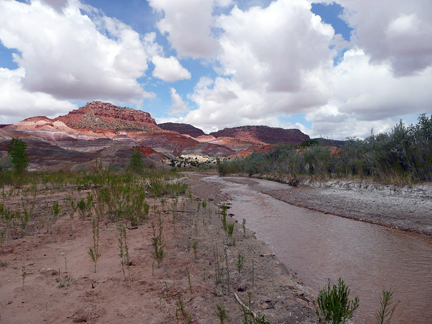
Caralee Woods, Paria River, Grand Staircase-Escalante National Monument, Utah, 2010.

18 Comments

Filed under Life in Balance, Life Out of Balance

Rough Creek drums

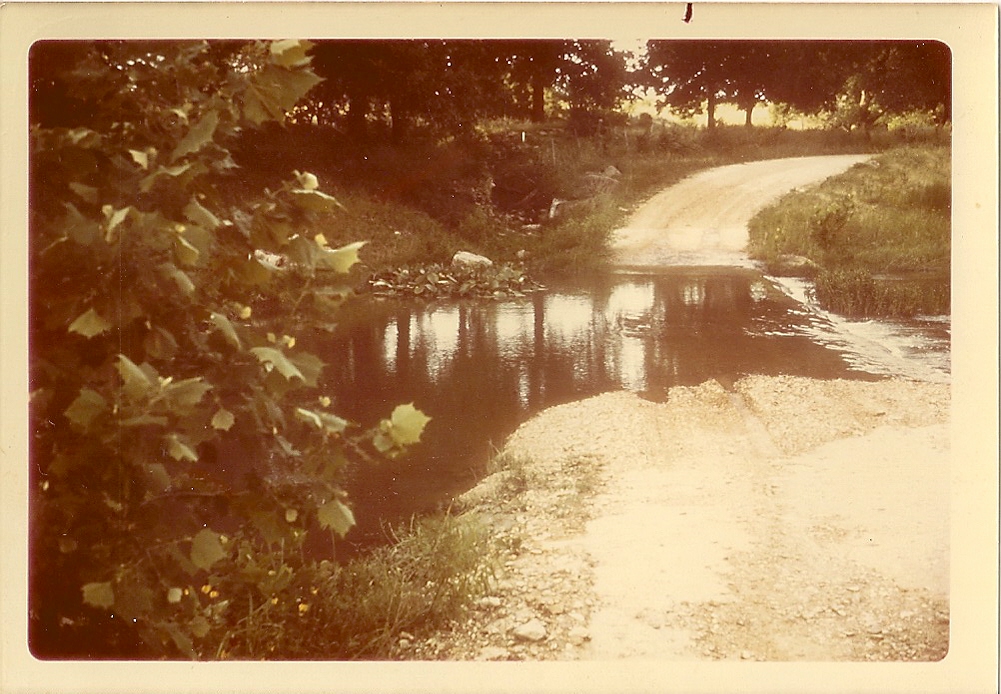
Rough Creek on the Parks Place, San Saba County, Texas, looking northeast, ca. 1970 (J. Matthews)

Relying upon memories of childhood can be misleading, even downright wrong in place and time.  As adults when we reflect upon last year’s vacation we may err in detail and conversations we thought we had.  Even so, memories preserve detail that can re-emerge with an almost preternatural force with a bit of reflection and musing, even to the point of re-evoking scents and cachets of the past that transcend the moment.

My mother and grandmother never hosted parties, but they hosted and partook of family celebrations — Thanksgiving, Christmas, Easter, birthdays.  And there were funerals, lots of them.  Funerals brought the Parks, McRorey, Morris, Ward, Millican and Ragsdale families together for burying kinfolk and re-establishing contact with distant relatives at Bend Sand, High Valley, Colony and Cherokee cemeteries in central Texas.  When I attended these functions, I had two sets of clothes, one for dressing-up and the other for outdoors.  Following the meal or funeral, I changed quickly into jeans and hiking shoes and explored and played with my cousins.  Having dinner at the Parks Place signified the best of all possible worlds because Rough Creek ran through it.

Rough Creek flowed through my great-grandfather’s place and formed the backdrop, foreground, side-scene and main-event for me.  Even today, still, Rough Creek continues to course through my mind and heart and its memory pacifies my days.  My great-grandfather’s ranch was called the Parks Place.  Not the Parks Ranch, the Parks Place.  Rough Creek cut the Parks Place in two parts, emptying into the Colorado River that bordered the east boundary.  For untold generations, Comanche Indians encamped at the confluence of Rough Creek and the Colorado, only to be driven away in the 1840s with the settlement of the area.  In the field north of the creek, after a hard rain, flint tools lay exposed.  A large midden revealed debris of hundreds of years.

I found stone tools, but my primary focus concerned the creek.  A county road ran through the Parks Place and at the creek, a large concrete slab had been poured, forming a stone-firm foundation for the road and continual pool of fresh water for perch, catfish and minnows.  Blue-colored dragon flies lit on green lily-pads and joined together in reproduction that I never fully figured out as to male and female flies.  Sycamore, cottonwood and pecan trees shaded most of the creek’s bank.  The water temperature was cold and it took a few minutes to become accustomed when as a boy my mother allowed me to swim and wallow with slippery moss on rounded stones.

I hiked up and down both banks of the creek.  When the terrible drought of the 1950s occurred, Rough Creek continued to run.  Neighbors in pickups with forty-five gallon water drums, came to the creek, parked on the slab and filled drums with water.  Their children swam and played in the water while the adults bailed water into the drums with buckets.  The elders were sun-tanned and strong, their hats crusted with dark sweatbands that bespoke toil and care for their cattle and family.  My great-grandfather never closed the road and I never saw the gates closed.  Cattle guards — steel-framed panels set in the ground — allowed trucks and pickups to pass over them unhindered, but kept the cattle in check and within the bounds of the Parks Place.

My great-grandfather gave me a branding iron, an iron with a capital “P” for the Parks Place, when I was a boy.  I have it hanging in the alleyway of my barn and see it everyday when I feed Star, my paint gelding.  I’ve not used it because our brand is a Running M.  I do not think of cattle when I see the the branding iron.  I think of Rough Creek on the Parks Place and I wonder how high the water is at the crossing.  Is it high enough that perch and catfish swim back and forth across the slab?  If another drought comes, will the present owners be patient with the neighbors who come to fill their drums?

In the early 1970s, I took the photograph of Rough Creek that sets the banner and feature photo of this post.  The Parks Place had been sold and passed into other hands.  The road remained open and I stopped at the creek’s edge and took this photograph.  I framed it with the sycamore on the left and the road and concrete slab in the foreground.  Behind the trees, on the upper left-side of the photograph is the grist mill, but you cannot see it clearly.

The photograph verified that my memory remained good and that cool, fresh water flowed over a concrete slab with lily-pads and bull rushes abounding.  After taking the photo, I drove slowly out of the Parks Place and up the road, past the mill and over the cattle guard I had seen when I was young and had most of my life in front of me.

______________________________

Notes:

The intersection of Rough Creek and the road is precisely 31.136°N 98.5468°W, elevation at center: 1,119 feet (341 meters), San Saba Quad map.

I have a true narrative I have written involving a court case between my relatives and the first owner of the Parks Place (not the present owners) after it was sold.  The first post-Parks owner attempted to close the road.  My cousins de-welded the gates, threw them in the pasture and smeared his brand on the portal with cow manure.  The owner sued my cousins in civil court — most upset he was about the cow manure.  My mother and cousins testified that the road running through the Parks Place had always been open for ranchers and their families living in the back country, and that closing the gate impeded the commercial and social intercourse, long-standing in history, of the community.  The owner lost the case, sold out and moved on.  The present owners of the former Parks Place indulge me and my kin when we stop and look at Rough Creek as we go into the back country.  My great-aunt Helen Tom, daughter of my great-grandfather, talks with the present owners about her growing up on the ranch and they allow my aunt to visit and see the place at any time she so desires.

16 Comments

Filed under Bend Texas, Colony Road, Recollections 1942-1966, Recollections 1966-1990, San Saba Texas

Acequia and Rough Creek mill race

Acequia Madre of Santa Fe

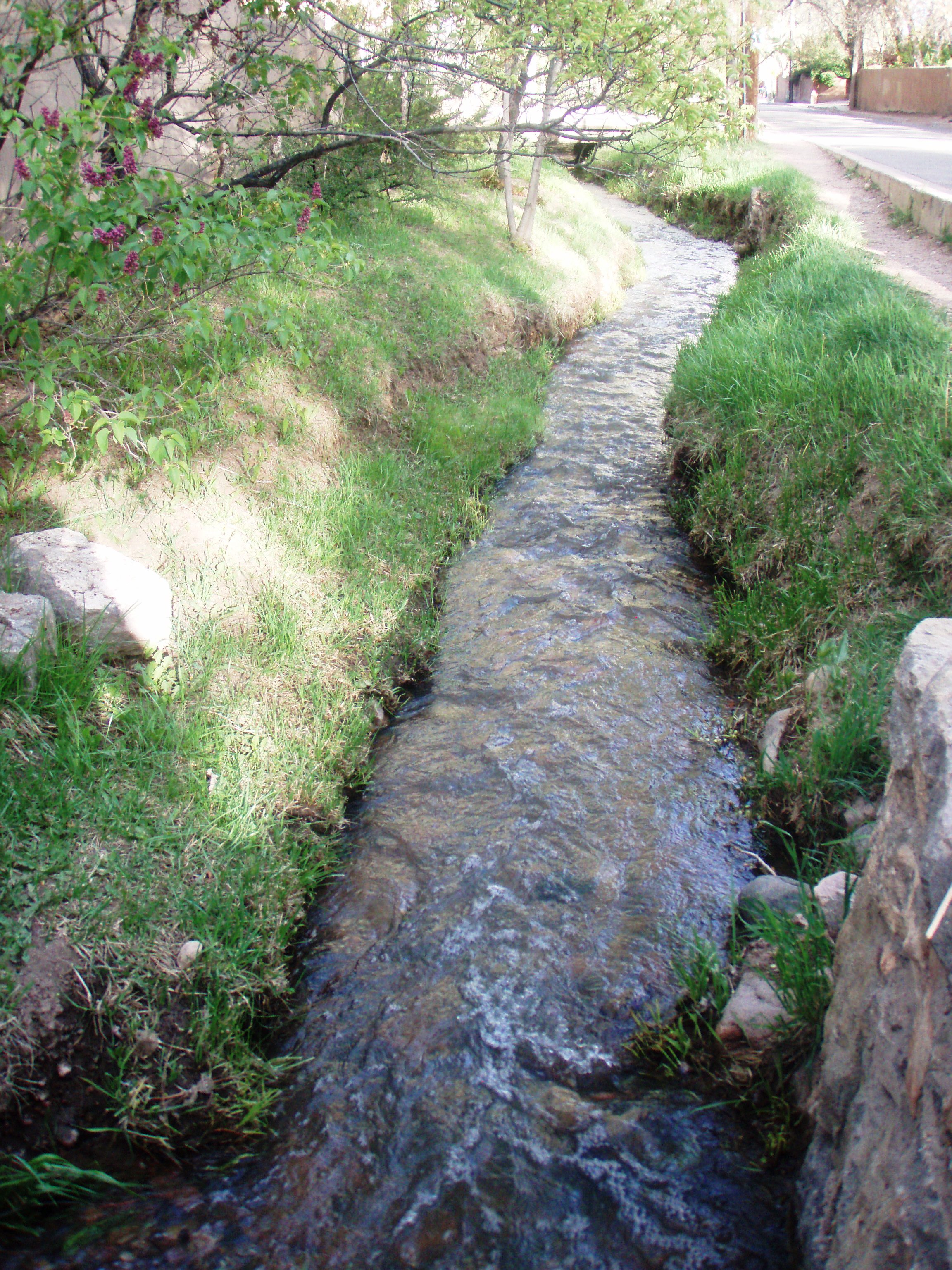
Throughout the upper Rio Grande bioregion, from the uplands of the north to the more desertic and mesa lands to the south, watercourses and their tributaries stand apart as the most defining features critical to all forms of life, biotic and human.  For centuries, this region has been homeland to the aboriginal peoples, the Tewa, Tiwa and Keres (Pueblo) Indians, and the descendants of the first European settlers, the hispano mexicanos.  These cultures revere water, treasuring it as the virtual lifeblood of the community….Nestled within the canyons and valley floors, tiny villages and pueblos dot the spectacular, enchanting landscape.  Their earthen ditches, native engineering works known locally as acequias, gently divert the precious waters to extend life into every tract and pocket of arable bottomland….

But these systems have also performed other important roles…social, political, and ecological.  As a social institution the acequia systems have preserved the historic settlements and local cultures spanning four major periods….The great majority of acequia villages are unincorporated.  In these instances the acequia institutions have functioned as the only form of local government below the county level.

As biological systems, the acequias have served other important objectives:  soil and water conservation, aquifer recharge, wildlife and plant habitat preservation, and energy conservation.

Jose A. Rivera, Acequia Culture: Water, Land, and Community in the Southwest, pp. xvii-xviii (1998).

In 2007, I drove up Santa Fe River canyon from downtown to the iron gates of the reservoir that held water for the town, including the Acequia Madre.  The acequia no longer irrigated fields, but the channel held water for occasional diversions to small plots in the neighborhood.  For a distance of about two miles, I traced the acequia back towards the center of Santa Fe.  All along the way, I saw some neighborhoods had gleaned the acequia while others ignored it.  At the end of my search near the junction of the Old Santa Fe Trail, the acequia held little water, but it was visible and grasses sprouted about the narrow canal.  It appeared ready, at attention really, to carry water again.

* * *

I spoke with a vintner at Dixon, New Mexico, north of Santa Fe, who also superintended the annual cleaning of the Dixon acequia.  She told me that local inhabitants still work on keeping their canal clear of brush, even if it does not border their property,  a communal behavior extending back to prehistoric times.

* * *

On my great-grandfather’s ranch in San Saba County, Texas, the local inhabitants of Colony and High Valley constructed a grist mill for grinding grain in the late-nineteenth century.  They dug a mill race or channel to divert the water of Rough Creek to the wheel that powered belts to millstones.  My mother often told me she remembered her father coming out of the mill covered in flour, face smothered and sweaty.  As a boy, when I visited my great-grandfather’s ranch, I followed the channel upstream on Rough Creek to where the water diverted.

Today, the mill still stands sans roof, windows and doors; the mill race is visible, though eroded, and no water flows.  On the second story ledge of the mill, a prickly-pear cactus took root in shallow soil, erupting ten or twelve paddles of cacti clearly visible from the ground, its propulsion coming from the prevailing southwesterly wind from High Valley and warmer climes in Mexico that blew seed upwards onto the old mill’s second story.  To this day, picnics and family reunions congregate about the old mill and under the pecan trees nearby.

Although some acequias have fallen into disrepair and the old mill will no longer grind grain, no lament is necessary because these structures symbolize the communal efforts of people to work with the flow of water.  Acequias can be cleaned out and the mill race can be reconstructed to a higher ground so that its flow can be opened to a newly-planted orchard of plum and peach.  The mill race becomes acequia.


10 Comments

Filed under Bend Texas, Colony Road, Recollections 1942-1966, San Saba Texas, Santa Fe

“From the Stone Wall” by Wildramblings

Far away from the Southwest, this nature writer describes a day in the New England woods, not so far different from our treks and hunts among the mesquite, cholla and oak.  Wildramblings is a blog worthy of putting on your roll.  Click the link below and relish fine writing.

From the Stone Wall | Wildramblings.

7 Comments

Filed under Adventure, Life in Balance

Holiday wishes from Sage to Meadow and field notes

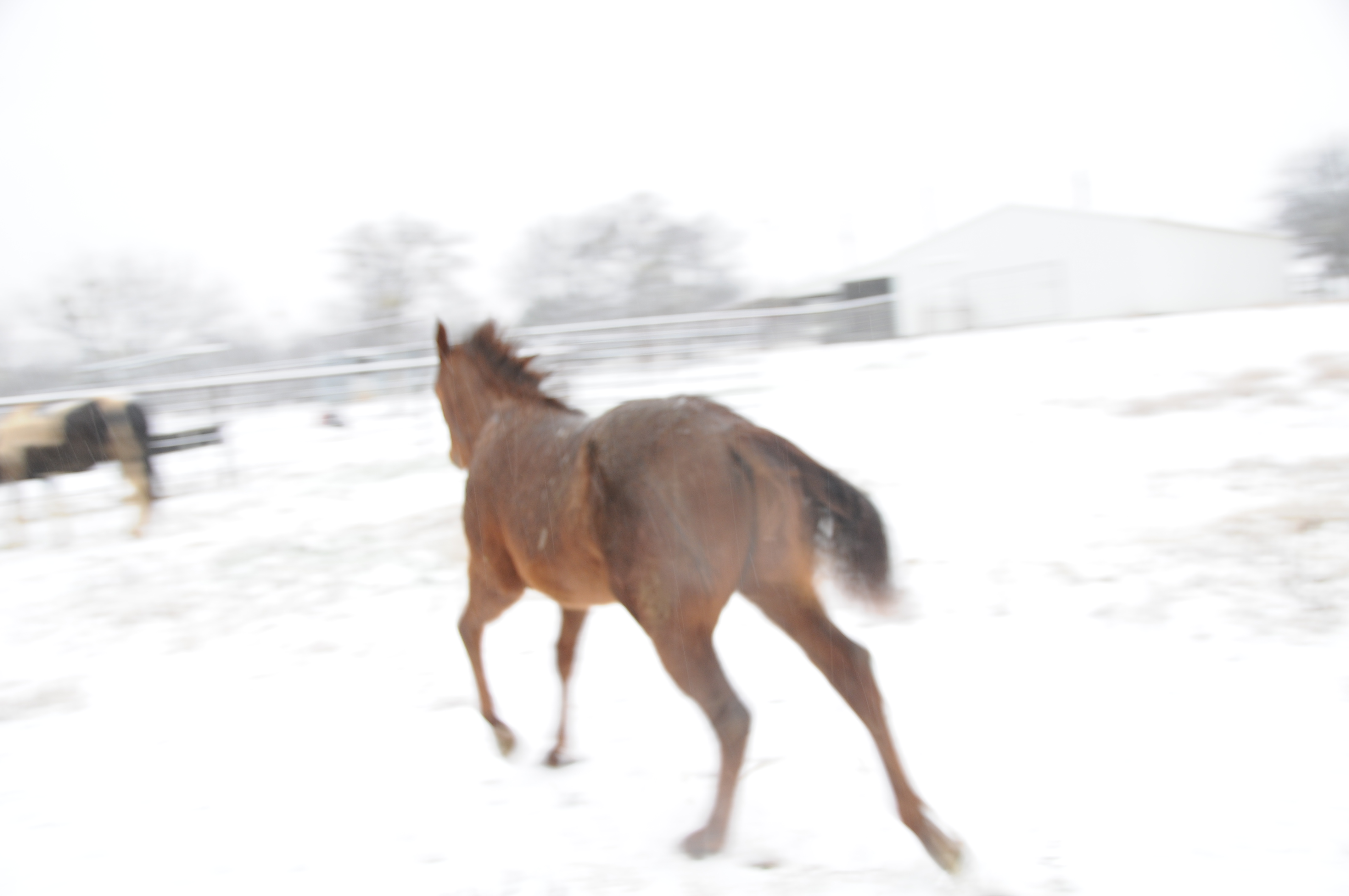
Shiney galloping to the corral during winter. No fear of the sun disappearing here.

A holiday greeting…

The sun in the northern hemisphere is at its lowest points this time of the year.  I do not think ancient and prehistoric people feared the sun would continue to sink towards the south and disappear forever — at least in southern latitudes of the northern hemisphere.  There was and is sufficient overlap of folk knowledge and tribal elder history to instruct the young and anxious that nature’s cycle continues her circle of cold to warm to hot, hot to warm to cold.

Christmas Eve and Day are here.  I wish each of you a Merry Christmas and Happy New Year!

* * *

Update on Lilly and Star…

Lilly, our oldest mare, is holding her own at 25 years of age.  She moves between the Well House Corral and the pasture, indicating a good level of energy and health.  Her feed consists of all the alfalfa she wants, Equine Senior Purina grain and 1 – 2 grams of bute (painkiller for horses) a day.  To husband animals rewards the steward: nickers and whinnies of recognition and impatience, warmth of animal in cold weather, riding for fun (both rider and horse can enjoy if accomplished properly) and work, and the sheer companionship and friendship of the horse.  One of my pleasures of having horses is hiking in the woods and having Star follow me like a hiking friend.  Star will go up and down creek bank, push aside brush to continue the hike and rest with me beside a fallen log.  If I wish to walk alone, I have to close the gate to the woods.  Most of the time, I want him with me.

Star is confined to the first corral.  He is overweight and feed intake must be limited.  He has all the coastal bermuda hay he can eat and some painkiller for his front legs.  His confinement lasts one week.  I have had to separate him from Lilly since she has alfalfa, he must have coastal.  Star is not pleased, but he adjusts.

* * *

A field post about bird songs on winter mornings…

December 16, 2010, 7:05 a.m.

Within the last two weeks I have noted birds about the barn and stables sing profusely only in the morning during the winter and are relatively quiet for the rest of the day.  I have not spent the day about the barn and stables to confirm unequivocally this observation (I’ll probably regret having brought this up in the first place), but it seems a sound observation.  During the day when I do chores and in the evening when I feed the horses and spend a hour or so in the barn area, I hear no birds or few birds.  In the morning, birds chatter and tweet, but do not break into long melodious fugues.

Our small ranch is located in North Erath County, Texas, Lat 32.43 N, Long -98.36 W, elev. 1,086 ft. Turkey Creek Quad.  Mesquite trees, live oak trees, elm and underbrush comprise the habitat for birds.

Among singing birds I see in the morning are redbird (just tweets), titmouse, chickadee, wrentit, wren, red-headed woodpecker, white-crowned sparrow, house sparrow, dove and a couple of other species I have yet to identify.  They browse in trees, on the ground and in the underbrush.  If I remain motionless in the corral after disturbing them, they resume their chattering and calls in a few minutes.  When the sun reaches a point in the sky at approximately 10:00 a.m. or so, songs and calls diminish.  I see birds for the remainder of the day, though not quite as frequent as the first two or three hours in the morning.  I hear during the day the quacks of ducks on stock ponds and crows on the fly.

7:35 a.m.

I have returned from the barn and stable area and this post is taking a curious turn.

A cold front moved in last night and the temperature is 40 deg. F.  The sun is not shining and clouds completely obscure the sky.  On point, birds are quiet, not even a peep, casting a different observation and bringing to light variables I had not considered: temperature, sunshine, clouds.

With the temperature in the 40s and no sunshine, I hear no birds.

17 Comments

Filed under Christmas, Flying Hat Ranch, Horses

Nature quote of the day: Emerson

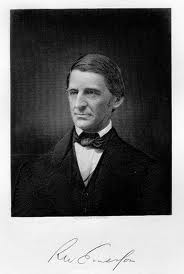
To speak truly, few adult persons can see nature.  Most persons do not see the sun.  At least they have a very superficial seeing.  The sun illuminates only the eye of the man, but shines into the eye and the heart of the child.  The lover of nature is he whose inward and outward senses are still truly adjusted to each other; who has retained the spirit of infancy even into the era of manhood.  His intercourse with heaven and earth become part of his daily food.  In the presence of nature a wild delight runs through man, in spite of real sorrows.

Ralph Waldo Emerson, Essay on Nature (1836)

6 Comments

Filed under Nature Quote of the Day