Tag Archives: Flying Hat Ranch

The fox, the hare and the chef

I think we should leave our boxes of house, classroom and boardroom and integrate with the natural world of fresh air, sun and terrain, if only for a vacation.  Venturing into the field, the park, even a backyard, nature comes upon you with sight, sound and scent that carries you away from asphalt and brick.

It’s not all pleasant, this leaving the box.  With the flower comes the wasp.  The fox is beautiful, but rabbits will die.
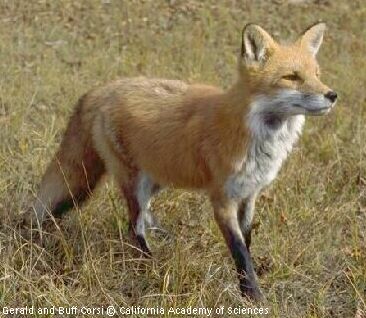
I have seen three wild foxes in my lifetime — that’s all, and I have looked.  In 1956, the first was along Pompey Creek in Mills County, Texas, on the lease of my step-father.  I was sitting on one side of the creek and along the other bank, a fox trotted along the stream, looked once at me and continued on.  I was impressed at its gait that was leisurely, self-assured.  The fox was plump, its coat deep-red and shiny.  I wanted to follow it and see where it went and if it had a mate and kits and where its burrow was.  I wanted to live with the fox and see it again and again and again in the forest and along Pompey Creek.  I never saw it again, although I looked for months and years thereafter for red fur coats in the central Texas brush.

The second time I saw a wild fox was in 2005 when Brenda and I were sitting out on the back porch.  We can look far into the pasture that is twenty-feet below, as we are on a hill above the grasses.  In the late spring evening, a fox came trotting along a pasture road, heading north into the brush of Blue’s farm to the east of us.  This fox’s coat was darker than the one at Pompey Creek, but the same focused gait carried him farther into the brush and away from the cleared field of buffalo grass.  Brenda and I spoke in whispers as it trotted away.  That same year, 2005, fifteen deer moved daily from Blue’s farm, across our pasture and into the grove.

Two years later in 2007, I was standing on the bank of Salt Creek in our oak tree grove when along the dry creek bed the third fox trotted, headed upstream towards the Dooley place on the west side of our ranch.  I was about fifteen feet above the creek bed and stood still as the fox passed by.  That was four years ago and I have seen none since.  A solitary deer occasionally drinks from the pond and I see track that may be fox.

* * *

The fox hunts and in the end, rabbits scream and chickens cluck and run.  The farmer brings the shotgun to the shoulder and fires once, twice, thrice.  The Dooleys to our west have chickens and they pen them for safety, but fox and coyote still take their cut.  The Dooleys count their losses.  I hear no gunfire.  The fox must eat.

It is a cycle of birth and death, the preyed upon and the predator.  You know the story, you’ve even been a part of it.  To describe the cycle is easy, but to understand it and live with it, to go on despite the tooth and claw is very difficult, for we like to deny the cycle happens or we put it away over there, behind the fence, beyond the hedge.  When I taught anthropology, my first lesson and repeated lesson through the semester was “Food — Where is it?  And, how do we get it? Who provides it for you?”  We buy food at the supermarket, but that’s not where it comes from, and it is not wrapped in cellophane when the middleman harvests the animal or plant.

Thomas Keller owns the most famous restaurant in America today, The French Laundry in California.  When he was young and honing his skills at the restaurant of Rene and Paulette Macary, near Catskill, New York,  he approached the purveyor of rabbit:

Thomas Keller

One day, I asked my purveyor to show me how to kill, skin, and eviscerate a rabbit.  I had never done this, and I figured if I was going to cook rabbit, I should know it from its live state through slaughtering, skinning, and butchering, and then the cooking.  The guy showed up with twelve live rabbits.  He hit one over the head with a club, knocked it out, slit its throat, pinned it to a board, skinned it — the whole bit.  Then he left.

I don’t know what else I expected, but there I was out in the grass behind the restaurant, just me and eleven cute little bunnies, all of which were on the menu that week and had to find their way into the braising pan.  I clutched the first rabbit.  I had a hard time killing it.  It screamed.  Rabbits scream and this one screamed loudly.  Then it broke its leg trying to get away.  It was terrible.

The next ten rabbits didn’t scream and I was quick with the kill, but that first screaming rabbit not only gave me a lesson in butchering, it also taught me about waste.  Because killing those rabbits had been such an awful experience, I would not squander them.  I would use all my powers as a chef to ensure that those rabbits were beautiful.  It’s very easy to go to a grocery store and buy meat, then accidentally overcook it and throw it away.  A cook sauteing a rabbit loin, working the line on a Saturday night, a million pans going, plates going out the door, who took that loin a little too far, doesn’t hesitate, just dumps it in the garbage and fires another.  Would that cook, I wonder, have his attention stray from that loin had he killed the rabbit himself?  No.  Should a cook squander anything, ever?

It was a simple lesson.

— Thomas Keller, The French Laundry Cookbook, New York: Artisan, 1999, p. 205, “The Importance of Rabbits.”

In too many of my hunts when young I squandered wildlife.  I still pay for that everyday.  I don’t hunt anymore, but I would if I had to.  My last hunt was deer and that was many years ago when I went with two of my closest friends to Van Horn, Texas.  I dressed my kill in the field and brought the deer back for my family.  I did not need to hunt for I garnered a paycheck every month and bought groceries at the supermarket.  I never hunted after Van Horn.  We ate what I shot.

In 2008, Brenda and I brought to market twenty-seven head of Angus stocker cattle after feeding them several months on our native grass pastures.  I made sure that when I transported them to the feed yard that they went to the cleanest and healthiest feed yard in Texas.  They did go to Perryton, Texas, a place of little stress and fine management with no HotShots (paddles to strike the calf) and plenty of room to move and breathe.

As I loaded the twenty-seven Angus into the stock trailer, I said under my breath and to no one in particular:  You go now!  You fatten yourselves!  I’ve done the best by you I could!  You better go to the table of someone that finds a cure for cancer for I will think of you the rest of my years!

I made no profit on the cattle, but I prepared them the best I could.  I did not squander resources in tending them as their steward.

And they were beautiful, like the fox, for some of them had a red hue about their coats as the sun went down.

______________________________

Notes:

One of my first blogs was called, “The 27th Heart,” named after Unit 27 Angus stocker calf that fell sick.  I tended him and took him to the vet.  He recovered.

I cook from Keller’s cookbook and always remember that story he wrote.  It is deep and connected with the American Indian.  Parallels can be drawn.

The italics in the quote of Keller’s are mine.


28 Comments

Filed under Life in Balance

Little bluestem with iPhone

On February 26, Saturday last, when in the field, I applied the iPhone to take photographs and upload for a field test: short bursts of field notes and photographs as I surveyed 53 acres of Cross Timbers prairie, creek and woodland. I attempted to snap a photograph and upload it with commentary as I went about my survey. While in the field, miles from cell towers, I was unable to coordinate photos and commentary. In addition, the “thumbing” of data on the iPhone was too slow. I was absorbing data much, much faster than I could thumb the phone. I did send a few in-the-field updates onto my blog, but later trashed them. I composed a long post with photographs taken with the Nikon when I got back to the ranch office.  In the field I did not think the photographs had been uploaded.

Today, however, as I was going through the media library on Sage to Meadow blog, I discovered that the photographs with the iPhone had been uploaded! I uploaded one photograph twice, thinking it had not been uploaded the first time. And, here it is, Little bluestem grass that is coming back on the prairie.

Little bluestem grass, Pecan Tree Pasture, Flying Hat Ranch, Texas, February 2011.

I think the utility of the iPhone in field work is evolving.  It is portable and lighter than a camera.  Composing commentary can exceed 140 characters.  It’s not going to replace the steno pad and camera, but it may have some further use.  I like the idea of field work live, or with a minimum of time lapse, as a light and useful activity.

3 Comments

Filed under Bluestem Field Log, Plants and Shrubs

Kiowa wind, grass, colors

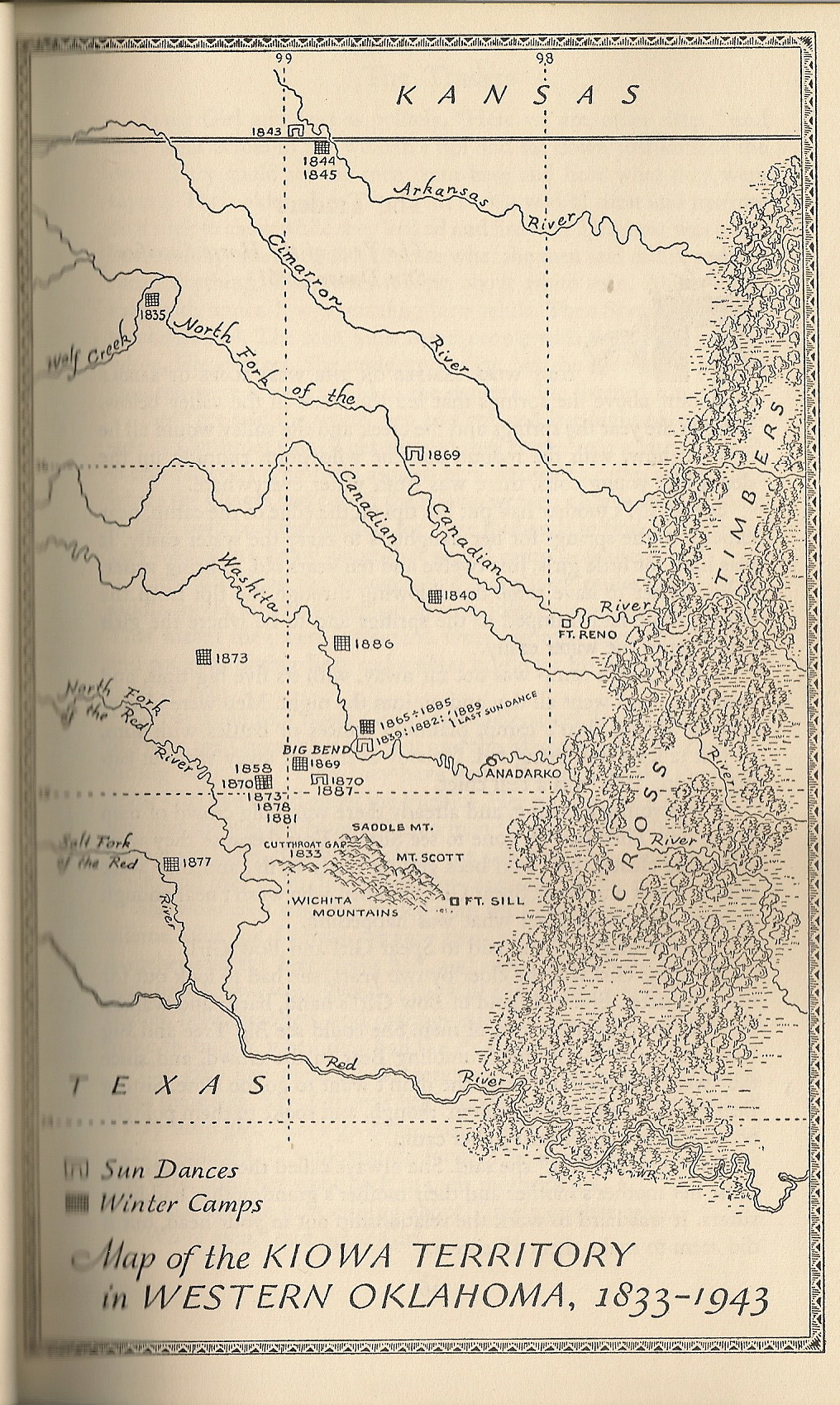
Map of the Kiowa Territory in Western Oklahoma, 1833-1843, from Alice Marriott, The Ten Grandmothers, p. 15.

In 1944, Alice Marriott in her book, The Ten Grandmothers, recorded Kiowa Spear Woman’s narrative of the motion and color changes of prairie grasses.  The “Ten Grandmothers” are ten Kiowa medicine bundles.  The bundles still exist, but they have not been opened since the 1890s when the last person who had the right to see the contents died.

For Leah the south porch of the big house was the best part of home.  Here you could sit and watch sunrise or sunset; watch the shapes of the earth change and move as the sun moved.  Then you knew, when you sat out there, that the earth was alive itself.

Spear Woman sat beside her granddaughter and thought that the earth had gone dead.  Lights played and moved, and cloud shadows came and went, but the earth itself had somehow died.  It was all one color now; not like the old days when its shades really changed and flickered like flames under the wind.  She stirred and sighed and spoke.

When the buffalo moved across it, there were other colors and other lights.

The thought was near enough Leah’s own to startle her.  There are lots of colors there now.

Her father spoke behind them.  Not like there used to be.  In the days that even I remember, there was one color when the wind was from the north and another when it was from the south, one from the east and another from the west.  Now the grass is all one color on every side, and it doesn’t change with the wind.

Sometimes the colors change.  Down near Lawton there is a prairie where the grass takes different colors.

* * *

[Spear Woman insists they travel to Lawton (Fort Sill, Oklahoma), fifty miles away.]

She brought her best Pendleton blanket from the trunk and spread it over the seat.  She put on her very best clothes and painted her face….

Two lines of high, tight fence spread across the prairie from a gate, and Spear Woman sat stiff, suddenly.  What is that!  That is grass like the old days.  Real grass.  All different colors.

It was, too.  It was like changeable silk, the kind the Delawares used to trim their blankets.  Yellow as the wind struck it; rose-color as it died away; then a sort of in-between color, with patterns that moved like patterns in silk when you folded it….

Shade was not even in sight, and when they had driven through the gates, with the lines of the fence on either hand, it was still not easy to find.  Spear Woman didn’t care.  She sat and watched the grass turn over in the sun, flickering and bending and straightening like little campfire flames, and was happy.  It was the old kind of grass, the old, rippling, running prairies, even if there were fences.  She was glad her eyes were dim, because she didn’t always see the fences, and could forget about them.  It was all peaceful and alive again.

From Alice Marriott, The Ten Grandmothers, pp. 285-288.

* * *

When I was a boy, my grandmother drove between Brownwood and Bend, Texas, near San Saba to visit relatives.  I watched fields of grass sway in the wind on either side of the road, a narrow two-lane highway.  She would point out to me where she and her family had camped and where she had seen buckboard wagons ascend a hill along the creek, the hubs carving their initials along the cliffs.  I saw them and put my hands in wagon-hub grooves when we stopped to rest.  The prairie wind flowed over the grass, moving stems and leaves in a rhythm, a wave of motion like water I saw in Corpus Christi Bay.

* * *

Last year I planted six acres of native grasses in the Pecan Tree Pasture.  The grasses are native to the Cross Timbers of Oklahoma where Spear Woman found peace again, and the grasses are native to our ranch that is also designated as Cross Timbers.  The grasses in our pastures grow waist-high, chest-high in some areas, and when the prevailing wind, a southwest flow from Mexico, crosses the pastures, grasses move and bend and change color.  As I go up the road towards Huckabay, Texas, about six miles away, I always notice a very old stand of Bluestem that turns reddish-brown in the Fall and Winter, but becomes blue and green in the Spring.  The stand of Bluestem is only an acre in size and machines have not touched it in many years for it is on the side of a hill.  It is old, that family, and I care for it.  If I could move that acre of old Bluestem to my ranch, I would.  I can’t.  But I have planted its relatives in the Pecan Tree Pasture and there I shall attend to their health and growth.

______________________________

Notes:

The citation is: Alice Marriott, The Ten Grandmothers, Norman: University of Oklahoma Press, 1945.  I have the fourth printing, October, 1951.  In the excerpt, I have omitted quotation marks and substituted italics for the spoken words.

Lawton, Oklahoma, is also the home of Fort Sill, Oklahoma, that is seen in the map above.  If you click on the map, then enlarge it with your computer, you can see more clearly the locations of encampments and the Sun Dance locations.  The Cross Timbers designation flows all the way down into Texas and includes our ranch, Flying Hat Ranch, Mingus, Texas.

12 Comments

Filed under Flying Hat Ranch, Life in Balance, Life Out of Balance, Nature Quote of the Day

Lilly’s Mound: early Winter morning


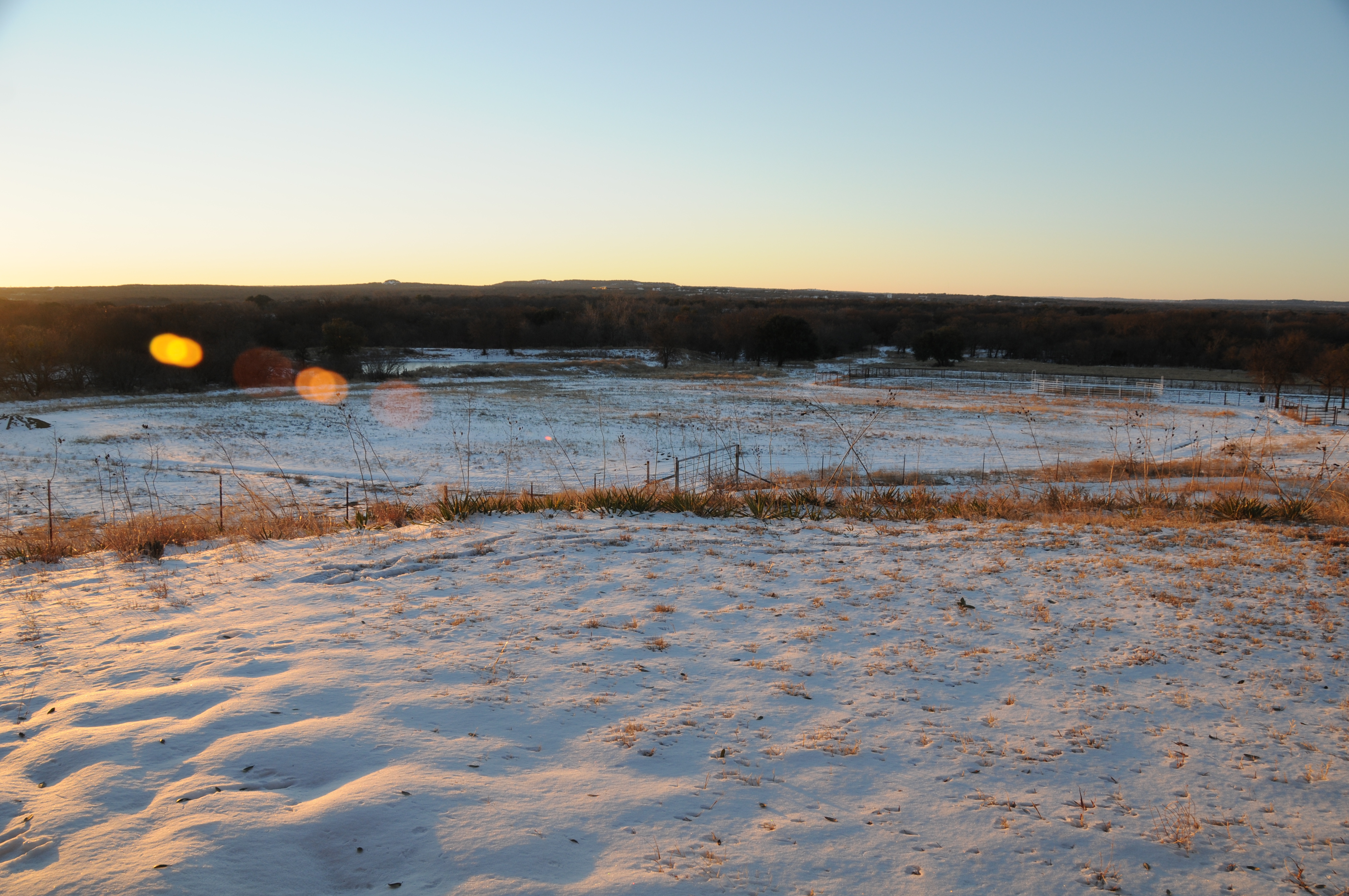
Lilly's Mound in an early Winter morning at Flying Hat Ranch, Texas, 2011 (click to enlarge)

In the far background are the Twin Mountains of north Erath County, Texas, 1,400 feet. Ducks swim and feed upon and beneath the pond in the middle of the photograph even in this cold weather.  The gate opens into the arena pasture.  The small mound with cedar posts upon it, to the far, far left in the photograph (you may have to enlarge), is Lilly’s Mound, 1,065 feet.  The mound is small and does not stand out in the photograph — in fact, hardly noticeable — , but it is a meaningful part of this good earth to me and Brenda and Star.

21 Comments

Filed under Cedar, Flying Hat Ranch, Horses, Juniper, Lilly, Star

Snow and ice at Flying Hat

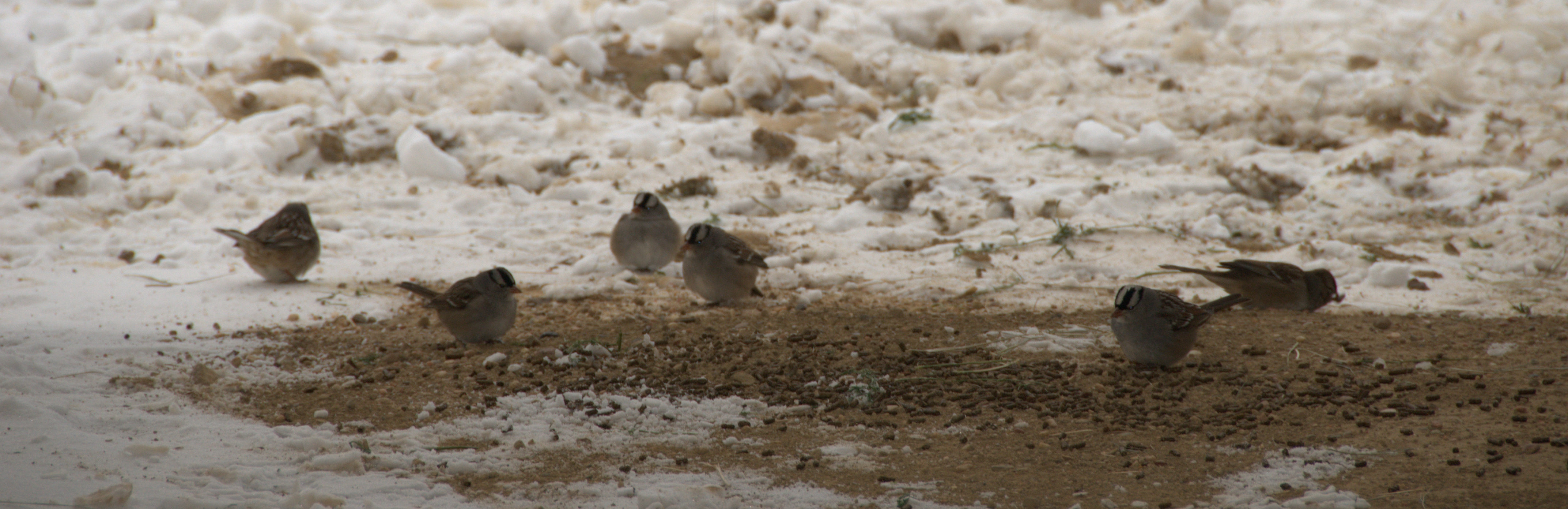
White-crowned Sparrows, Flying Hat, Texas, February 2011

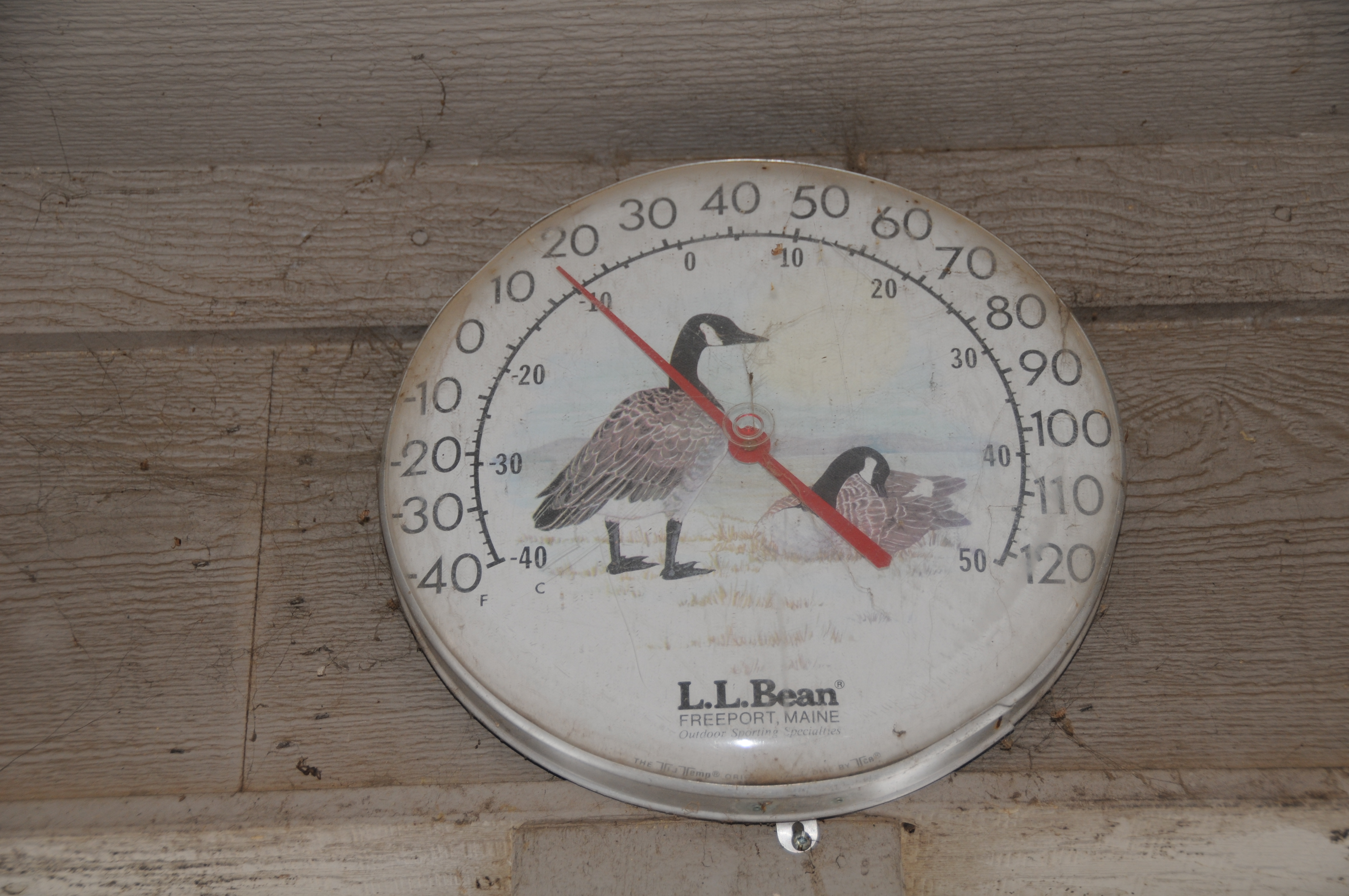
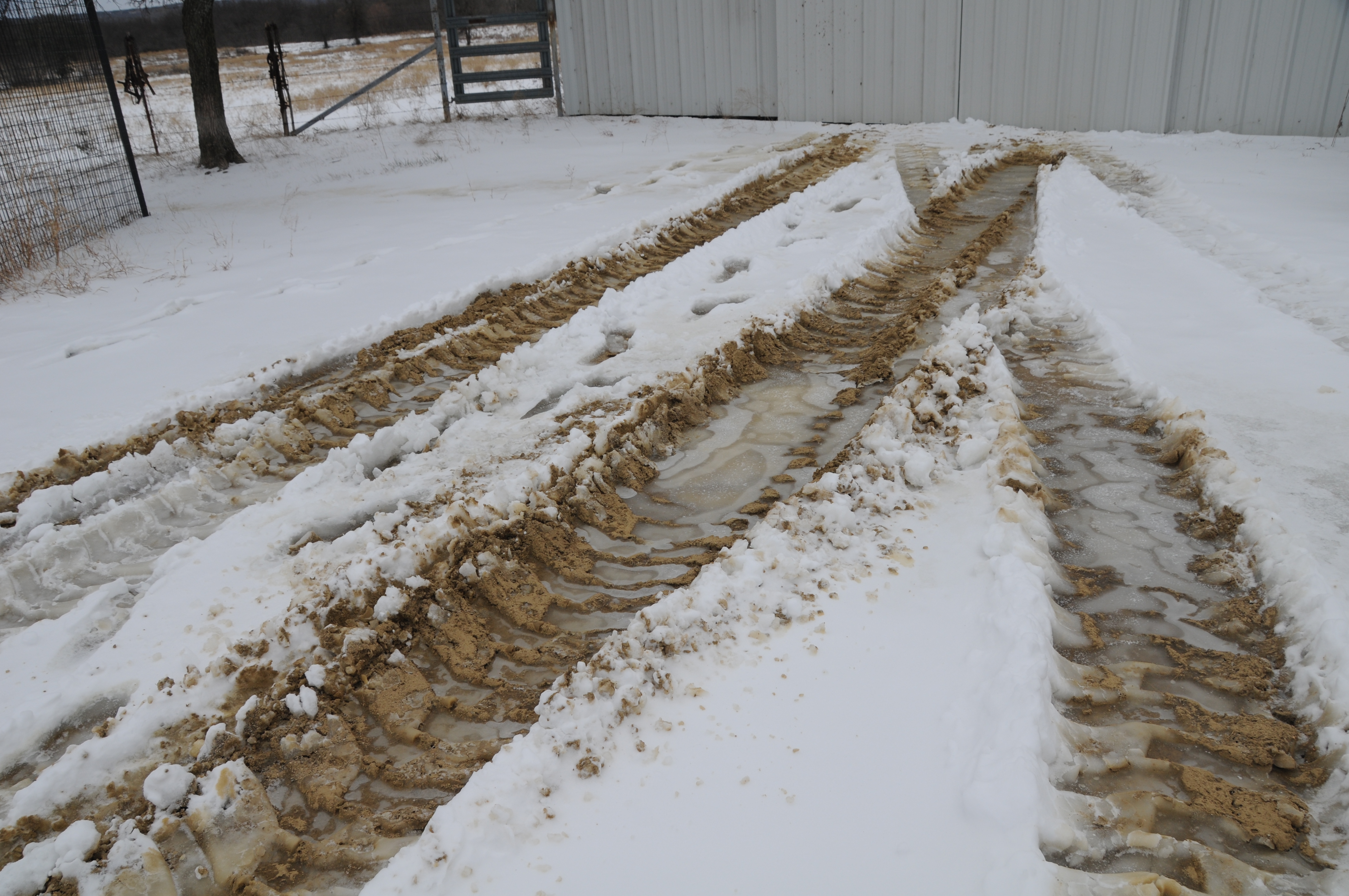
Two nights ago, early Tuesday morning at 12:30 a.m., a rain storm followed by sleet and snow descended on our ranch. The wind blew, gusts to 50 m.p.h., and the temperature reached 10 degrees this morning.  Yesterday, I used the Case Farmall DX-55 tractor to pull our F-250 out of the lane that intersects County Road 114.  Beneath a snow of four inches, two inches of ice held fast to the ground and the F-250, being a two-wheeled drive, could not gain traction in the lane.  Brenda backed up the F-250 while I pulled with the Farmall.  We parked the pickup close enough to the electrical circuit at the house so that if necessary we could warm the engine with its electrical plug.

Yesterday, our rural mail carrier, Jeannie Chisolm, posted mail throughout her route using a four-wheeled drive Jeep.  I called her this morning for road conditions and she told me she became stuck one time yesterday as she delivered the last three mailboxes on her route.  She made it back to her home at 8:00 p.m. last night.  The road between Flying Hat and Interstate 20 is only passable with four-wheel vehicles or those with chains.

Star munches on hay and grain in the stable and I crunched some horse feed and threw it on the ground so White-crowned Sparrows could peck and fill themselves.

The State of Texas has declared a power emergency and seven-million people will begin to experience rolling blackouts to prevent an overload of the grid.  We have experienced no blackouts, but our Internet Provider, centered in Fort Worth, Texas, goes down infrequently.

Weather forecasts indicate below freezing temperatures through Friday at noon.  We have lowered our thermostat to 65 degrees and switched unnecessary electrical appliances to the OFF position.  We have a week’s supply of firewood stacked in the shed and oakwood windfall in the grove.

* * *

Additional comment:  We had a blackout at 11:25 a.m. for about forty minutes.

19 Comments

Filed under Adventure, Flying Hat Ranch

The eve of a new year on the ranch

Pigeons flying towards a new year above the Santa Fe plaza.

 We make resolutions and there’s nothing wrong in doing so.  We plan to do better, give more and finish the big chores we have had on our list for months, maybe even curtail or give up our vices.  Well, maybe not completely give them up, but back off bad habits.

I work with students, horses and the land.  I work in order to live, not live in order to work.  That’s a big, big difference.  Working with students this last year has been more rewarding than ever before in my professional career.  I attribute that to my nearing retirement and wanting to give what I think is of value to the student before I put the chalk in the tray and walk away.  Time is fleeting and I don’t have time to cover all the points, just the most significant.  So, for this next year, I resolve to cut the excess from the lectures and discussions and get right to the core: finding your voice, writing down your voice and tending to your own garden (Voltaire, Gilgamesh, Trilling).

For my life with horses, it’s a sadder year coming.  We are selling Sweet Hija who is pregnant with a female and Shiners Fannin Peppy, the first foal out of Sweet Hija.  Brenda and I will be left with our two paints, Star and Lilly, both having their share of health problems these days.  In January, we are going to Oklahoma City for the Mixed Winter Sale at Heritage Place.  Market forces beyond my control have cut through our ranch operations with a vengeance and the cost of horse breeding and market conditions force my hand.  What Brenda and I are trying to do, in taking Hija and Fanny to the sale in Oklahoma, is to put these fine horses in the best sale around so that they will have good homes or ranches to live out their days.  So, for this next year, I resolve to focus on Star and Lilly, build some good, strong pens in the Pecan Tree Pasture for their safety.  I resolve not to think too much about our loss of Hija and Fanny and the little one — difficult to push that resolution through next year, I guarantee.

And, finally with the land, I resolve to set up brush piles for the little critters, deer and birds about the place, not shredding every single bush like some of my neighbors.  Further, I want to learn the name of every tree species on Flying Hat Ranch, or at least make a major dent in nomenclature.  I will also continue to plant native grasses about the pastures.

The eve of 2011 is here.  I toast to love, health and fortune to be found among horses and land, family and students — yours as well as mine.

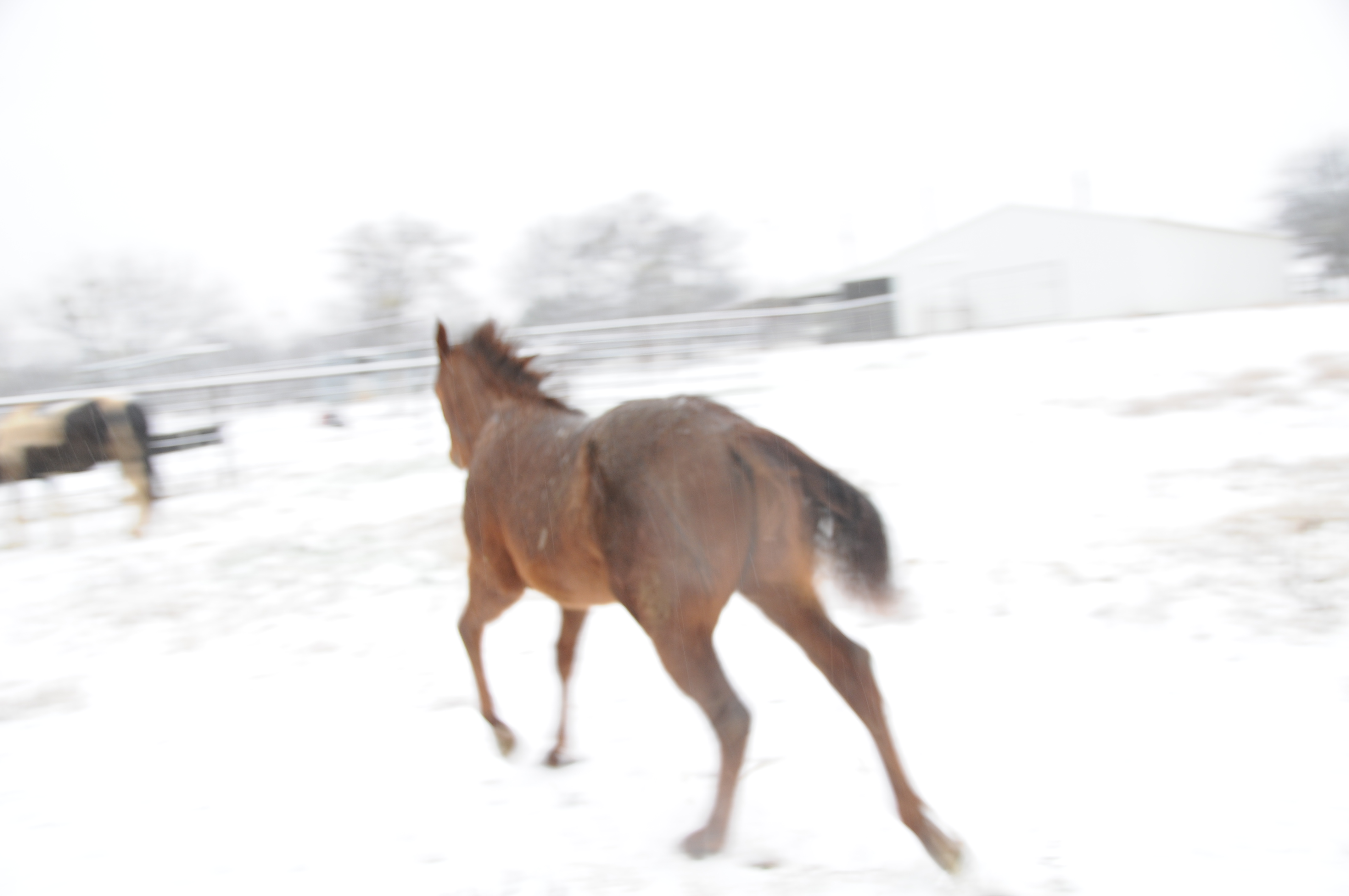
Sweet Hija at full gallop in winter snow (2010).
Fanny strutting in the grove with Shiney (summer 2009).

15 Comments

Filed under Flying Hat Ranch, Lilly, Shiners Fannin Peppy (Fanny), Sweet Hija

Willful Lilly

Willful Lilly walks to Well House Corral (December 27, 2010).

In the ongoing story of Lilly (Ima Lil Moore), she is a willful horse.  The above photograph shows her this morning, after browsing a few minutes in the front pasture, walking intently to the fence panels of the Well House Corral.

Lilly had spent the night in the stables underneath a 150 watt light bulb.  When I went down this morning to feed her, she was up and moving and whinnying for her breakfast, even pinning her ears back slightly when I entered her stall.  After she finished her grain, I put out two blocks of green alfalfa for her to munch on.

And, this is point of the story, she turned away from the hay rack and deliberately walked out of the corral and into the pasture with a determination of a yearling.  She’s twenty-five years old, for goodness sakes!  Then, after a bit of browsing, I shot the above photograph of Lilly.

She’s going to die — we’re all headed that way, for sure — within who-knows-how-long?  Tomorrow, next week, next month, next year?  Jim Scroggins is coming out to the ranch with his back hoe in the morning to dig a grave pit for Lilly.  Don’t be sad.  I’ll set up panels around it so that no one will wander into it.  It’s a preparation, sort of like making a will or planning a funeral with your favorite mortician.  (My political mentor when I was young was Groner Pitts of Brownwood, Texas, a funeral director.)  If Lilly makes it through the winter and I and the vet think she will, I’ll fill up the pit with water and maybe ducks will swim in it.  It is there, however, just in case.

But, for now, Lilly is a willful mare, stubborn in her habits, sleeping longer than usual and limping a little with arthritis.  Kinda like your grandfather or grandmother.  She has her life today and she willfully directs herself to green winter grass, lying down in the sun and drinking from the stock pond with ducks swimming about her.  It’s a good day to live.

9 Comments

Filed under Horses, Life in Balance, Lilly

Holiday wishes from Sage to Meadow and field notes

Shiney galloping to the corral during winter. No fear of the sun disappearing here.

A holiday greeting…

The sun in the northern hemisphere is at its lowest points this time of the year.  I do not think ancient and prehistoric people feared the sun would continue to sink towards the south and disappear forever — at least in southern latitudes of the northern hemisphere.  There was and is sufficient overlap of folk knowledge and tribal elder history to instruct the young and anxious that nature’s cycle continues her circle of cold to warm to hot, hot to warm to cold.

Christmas Eve and Day are here.  I wish each of you a Merry Christmas and Happy New Year!

* * *

Update on Lilly and Star…

Lilly, our oldest mare, is holding her own at 25 years of age.  She moves between the Well House Corral and the pasture, indicating a good level of energy and health.  Her feed consists of all the alfalfa she wants, Equine Senior Purina grain and 1 – 2 grams of bute (painkiller for horses) a day.  To husband animals rewards the steward: nickers and whinnies of recognition and impatience, warmth of animal in cold weather, riding for fun (both rider and horse can enjoy if accomplished properly) and work, and the sheer companionship and friendship of the horse.  One of my pleasures of having horses is hiking in the woods and having Star follow me like a hiking friend.  Star will go up and down creek bank, push aside brush to continue the hike and rest with me beside a fallen log.  If I wish to walk alone, I have to close the gate to the woods.  Most of the time, I want him with me.

Star is confined to the first corral.  He is overweight and feed intake must be limited.  He has all the coastal bermuda hay he can eat and some painkiller for his front legs.  His confinement lasts one week.  I have had to separate him from Lilly since she has alfalfa, he must have coastal.  Star is not pleased, but he adjusts.

* * *

A field post about bird songs on winter mornings…

December 16, 2010, 7:05 a.m.

Within the last two weeks I have noted birds about the barn and stables sing profusely only in the morning during the winter and are relatively quiet for the rest of the day.  I have not spent the day about the barn and stables to confirm unequivocally this observation (I’ll probably regret having brought this up in the first place), but it seems a sound observation.  During the day when I do chores and in the evening when I feed the horses and spend a hour or so in the barn area, I hear no birds or few birds.  In the morning, birds chatter and tweet, but do not break into long melodious fugues.

Our small ranch is located in North Erath County, Texas, Lat 32.43 N, Long -98.36 W, elev. 1,086 ft. Turkey Creek Quad.  Mesquite trees, live oak trees, elm and underbrush comprise the habitat for birds.

Among singing birds I see in the morning are redbird (just tweets), titmouse, chickadee, wrentit, wren, red-headed woodpecker, white-crowned sparrow, house sparrow, dove and a couple of other species I have yet to identify.  They browse in trees, on the ground and in the underbrush.  If I remain motionless in the corral after disturbing them, they resume their chattering and calls in a few minutes.  When the sun reaches a point in the sky at approximately 10:00 a.m. or so, songs and calls diminish.  I see birds for the remainder of the day, though not quite as frequent as the first two or three hours in the morning.  I hear during the day the quacks of ducks on stock ponds and crows on the fly.

7:35 a.m.

I have returned from the barn and stable area and this post is taking a curious turn.

A cold front moved in last night and the temperature is 40 deg. F.  The sun is not shining and clouds completely obscure the sky.  On point, birds are quiet, not even a peep, casting a different observation and bringing to light variables I had not considered: temperature, sunshine, clouds.

With the temperature in the 40s and no sunshine, I hear no birds.

17 Comments

Filed under Christmas, Flying Hat Ranch, Horses

Four Standing Orders for a Texas Ranch

As written in a previous post, if we had to wait for cooler weather in Texas to get anything done, we’d never get anything done.  For our operations here on the ranch, we have four standing orders that must be accomplished everyday.

The First Order is feed the horses twice a day, once in the morning between 7:00 and 8:00 a.m. and in the late afternoon between 5:00 and 6:00 p.m.  During the summer, I watch the shadows lengthen at five o’clock in the afternoon from the mesquite and live oak trees surrounding the corrals and barn, a signal to feed.  Although the temperatures are high, the shadows present a significant measure of relief.  In the open sun, the temperatures have reached 115 deg. F. this summer.

The Second Order is to fill three water troughs in the two corrals and stable.  Horses consume water in large quantities.  We are dependent on Barton Creek Water Cooperative for potable water at the house and at the barn.  We have a large stock tank in the front pasture and in Pecan Tree Pasture, a half-mile away and across Salt Creek, there is a large circular water trough filled with Barton Creek Coop water.  All water troughs must be at least one-quarter full.

The Third Order is to physically check the health of all the horses, from head to tail, hoof to withers, and apply medicine or fly spray (marigold tincture, not oily, water-based) to los caballos. Horses are bound, like toddlers, to get cuts and scrapes, sometimes worse.

Fourth Order is to check fences where the horses are turned out.  This may be done on horseback, in the pickup or using binoculars.

When we run a herd of cattle, these four orders apply to their pastures and browsing areas.  In addition, certain Niman Ranch protocols (c) must be followed if the cattle are certified Niman Ranch.

Feed, water, check the health of the livestock and fences dictate four chores that must be accomplished, summer or winter.

* * *

The front pasture has been shredded of its broomweed.  I leave large swatches of tall grass for the critters.  Perhaps one day quail may come back.  I’ve only seen one covey here at the ranch in eight years.  They will nest in tall grass, dead grass.  To completely shred a pasture destroys that cover.

* * *

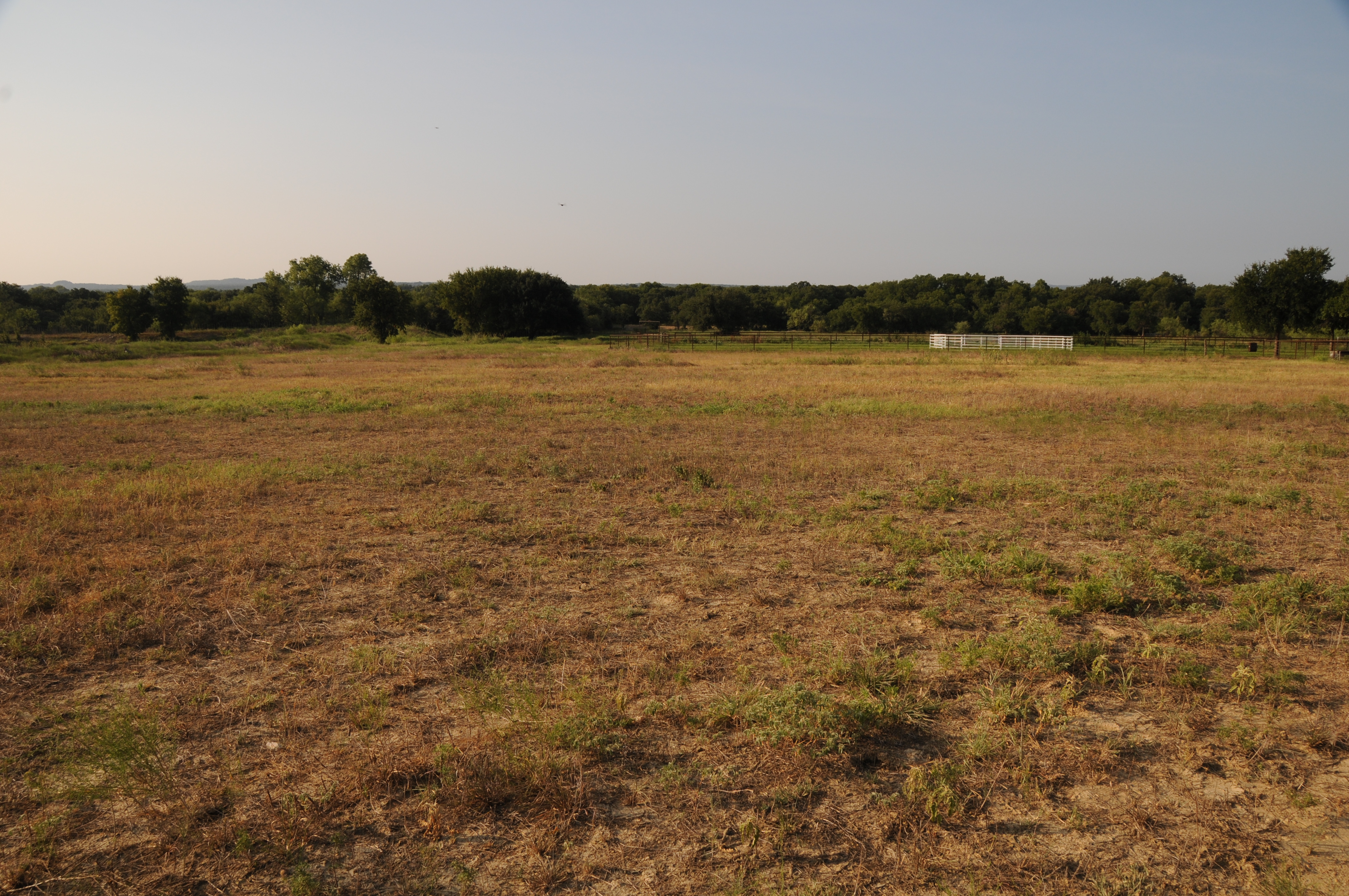
Summer Pasture Flying Hat Ranch, August 2010

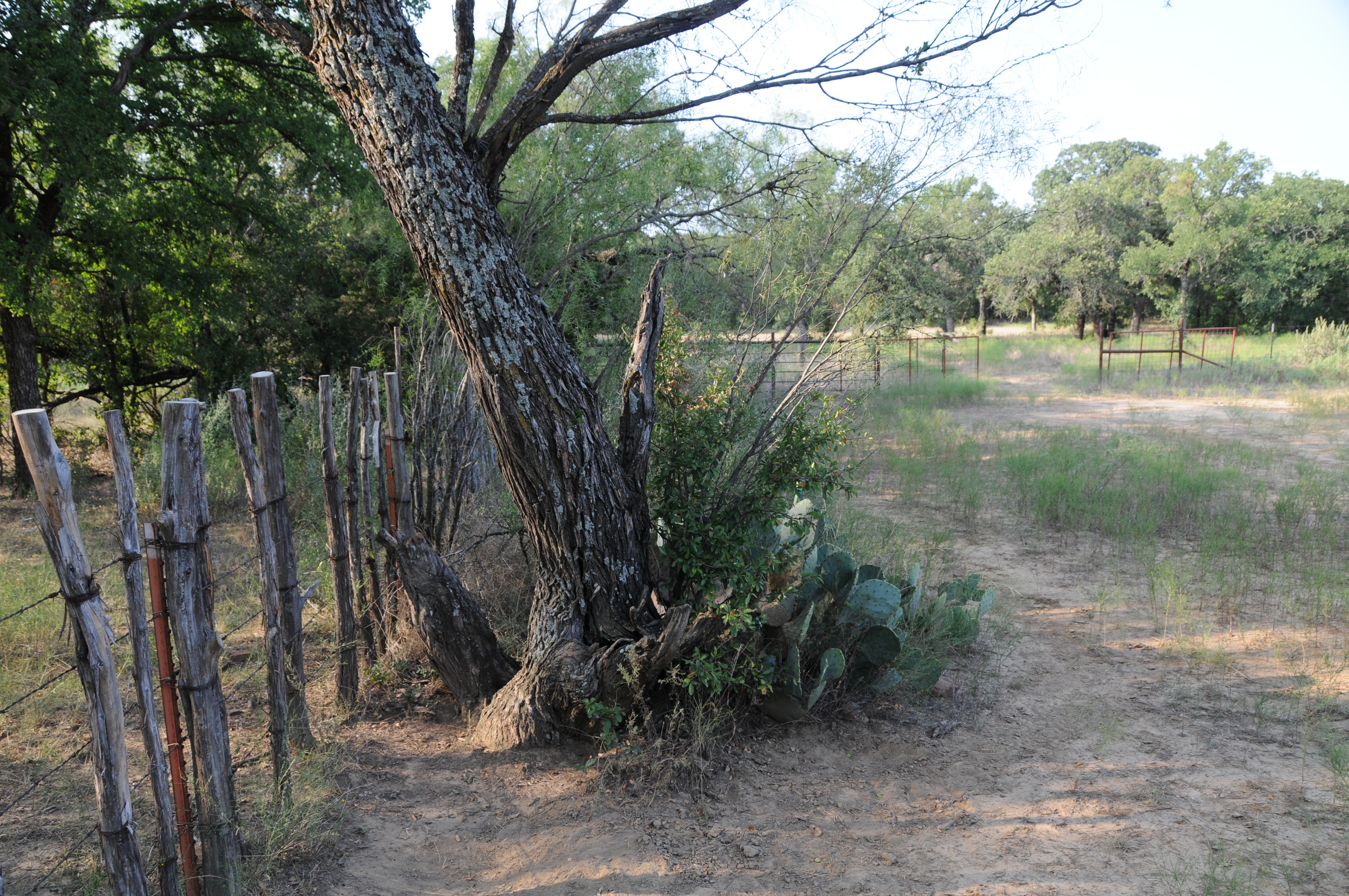
Several days ago I posted “Cactus Illusion,” a momentary scare that our oldest mare, Lilly, had become entangled in the fence at the area she loafs, next to the Hall place on the east side of the arena pasture.  I have some photographs of that area.

As explained in the post, I was a quarter-of-a-mile away, using the binoculars to examine the fence line and check on the horses at mid-day when I thought I saw Lilly down and entangled.  The sun and my crisis mode at the time played a trick on my behavior as Brenda and I sped to the area to rescue Lilly.  She was just fine, loafing in the grove area underneath a live oak tree.  We were terribly relieved that it was a cactus illusion.

Getting adapted to working Texas summertime heat requires thinking ahead more than usual.  By and large, work should be done before 10:30 a.m. so that the work during the heat of the day can be accomplished in the shade or in a barn with good circulation.  Large circular fans, 10 to 15 feet in diameter can be installed at the top of a barn or enclosed arena.  We don’t have those fans, but we work on the breezy porch or in the alleyway of the stables.  I use misters in the stables.

Take a lesson from livestock during the summer.  Rest and loaf in the shade during the heat of the day.  Browse in the early morning, evening and night.

Paint Horse Lilly's Loafing Area, Cactus Illusion

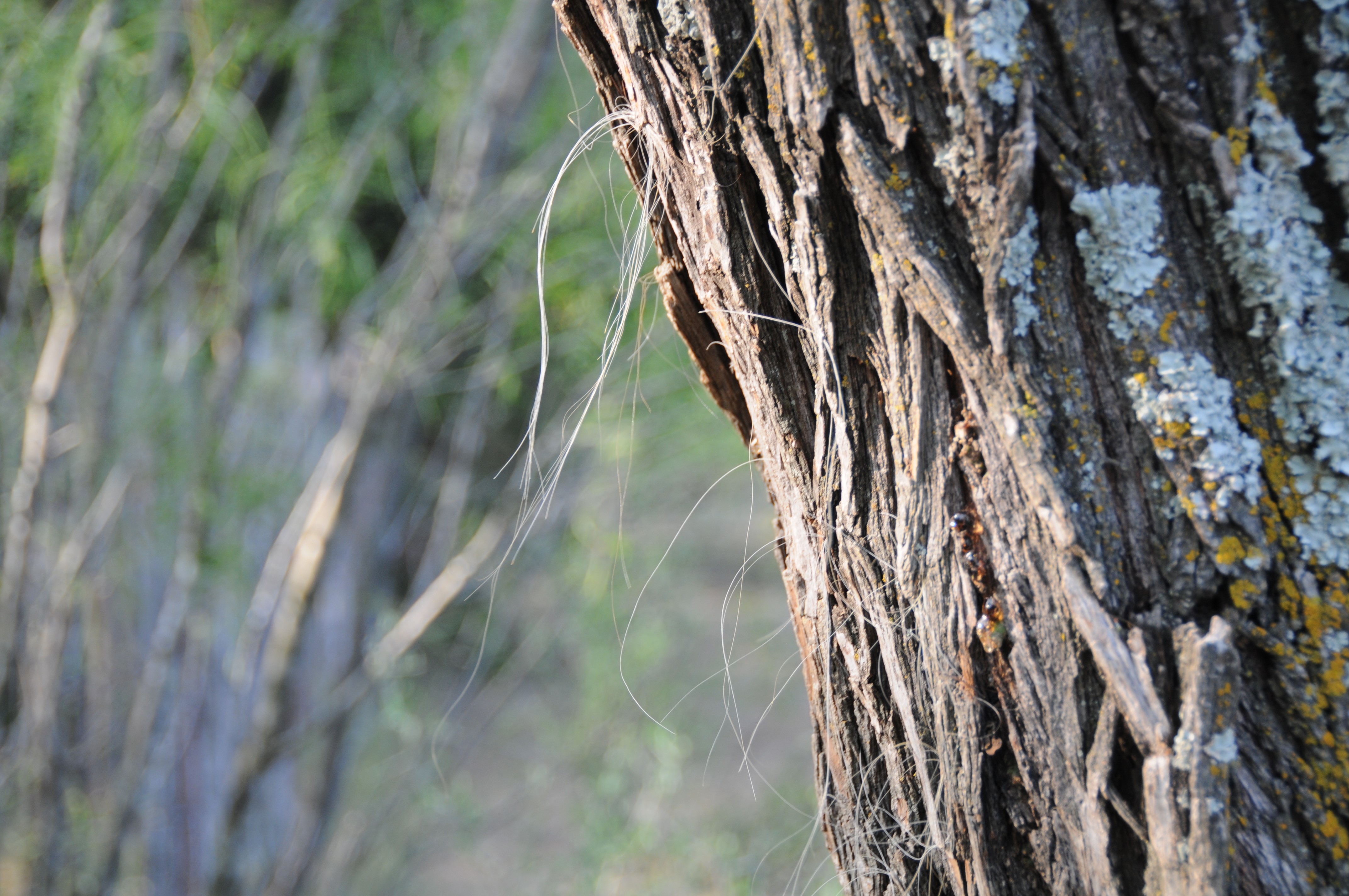
Lilly's Mane Hair at Loafing Station, August 2010

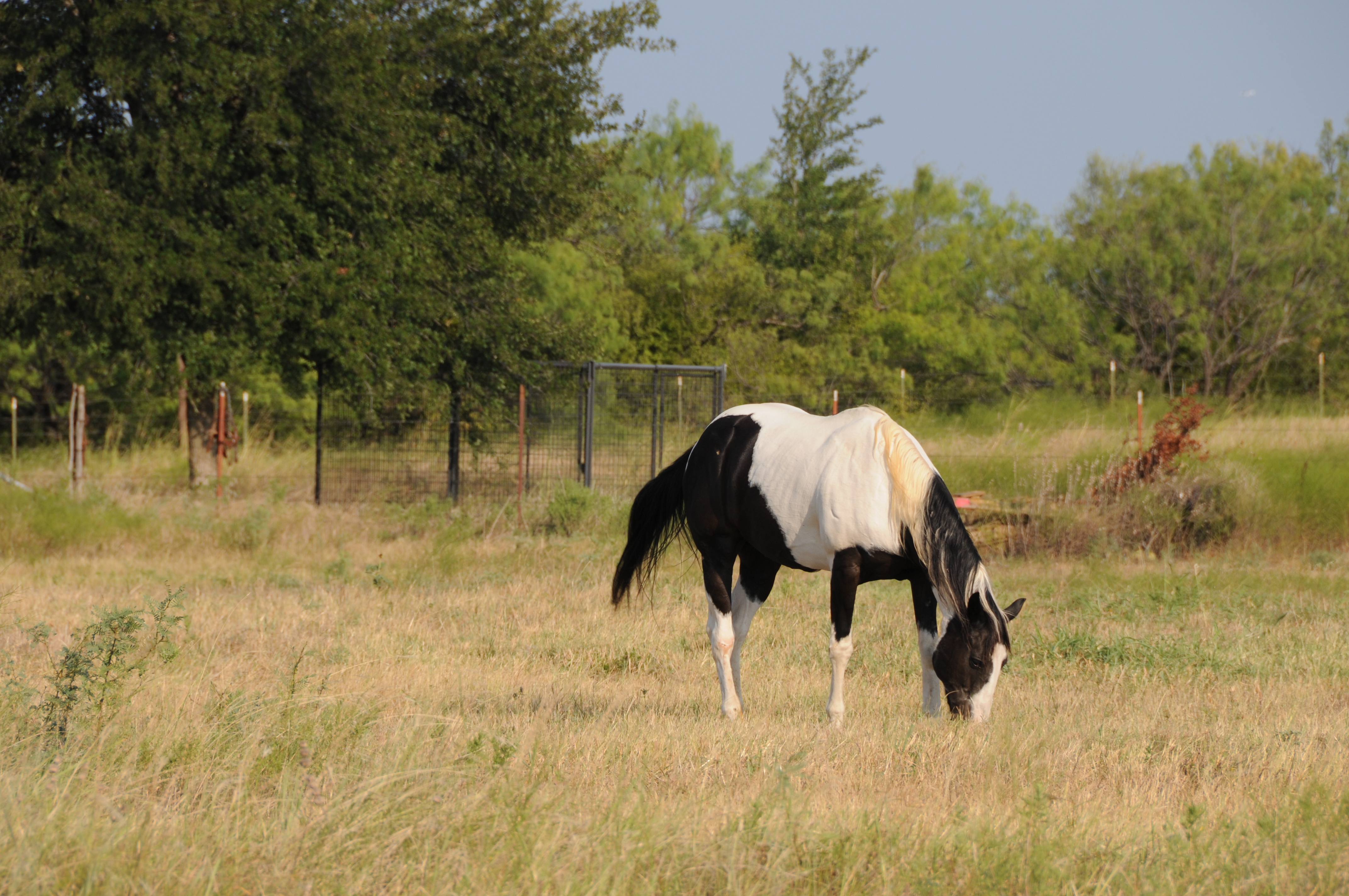
Ima Lil Moore "Lilly" browsing early in the morning (8:30 a.m.) before going to her loafing area along the fence line.

For Lilly’s pedigree and other photos, click on Ima Lil Moore APHA 111214.

______________________________

Notes:

The Niman Ranch protocols may be found under the link for our ranch: Niman Ranch Beef Cattle protocol.

The Niman Ranch website. Here you may find a list of ranches specializing in the protocol as well as sources to purchase the high-quality meat.

We have not had a cattle herd since 2009.  We specialize in Angus cattle.

8 Comments

Filed under Flying Hat Ranch, Horses

Early Morning Sounds on Flying Hat

I rise early to start the day, walking down the lane to the barn.  Before sunrise this morning at 6:45 a.m., I heard three flocks of turkeys responding to each other to the south and west of our place.  They gobbled in flock choruses, their refrains carrying far because of the cold air.  Between turkey gobbles, loud and many they were, coyotes howled and yipped.  I don’t think the coyote had a kill, but were merely howling.  Past the Dooley’s place, I heard a neighbor’s hound bay, and from the Dooley’s farmyard, a cock crowed.  Ducks on the pond quacked and I heard them on Blue’s pond to the east of us, sounding friendly to each other, not alarmed.  The sun lay below the horizon, slowly illuminating the sky, as I absorbed sounds of nature’s creatures, some wild, some not.  I finished one chore and returned to the house, waiting for the horses to turn broadside, flankside to the sun as it rose, awaiting their grain and hay.  Lilly the alpha mare will nicker when I enter the stables.

8 Comments

Filed under Dogs, Ducks, Flying Hat Ranch, Horses