Tag Archives: Erath County

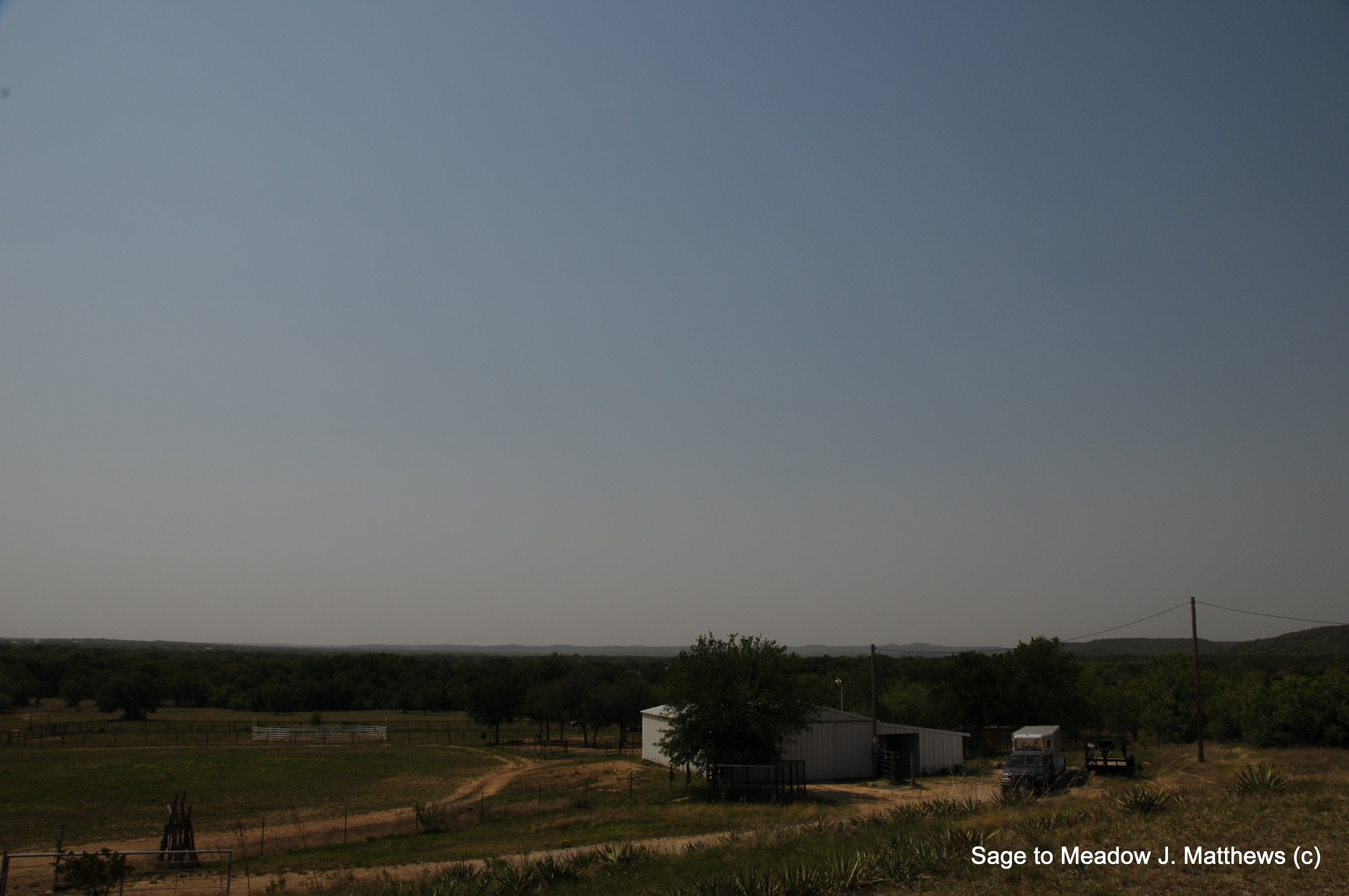
Clear and windy! To the southeast 11:30 a.m., 17 APR 11

Location of Flying Hat Ranch is in north Erath County, Texas, CR 114, off of SH 108 about 0.2 mile.  It’s in the Cross Timbers country of Texas.

I am not usually given to posting frequently, but the wildfires in our area have prompted more writing.  I had 496 hits yesterday and an e-mail from KXAS NBC 5 in Dallas-Fort Worth requesting further “news” postings.  “News,” of course, to a television station is one thing, but to me, to us, in the blogosphere is another.  So here’s what’s going on poste haste, for my friends and acquaintances.  If it’s news to NBC 5, so much the better.

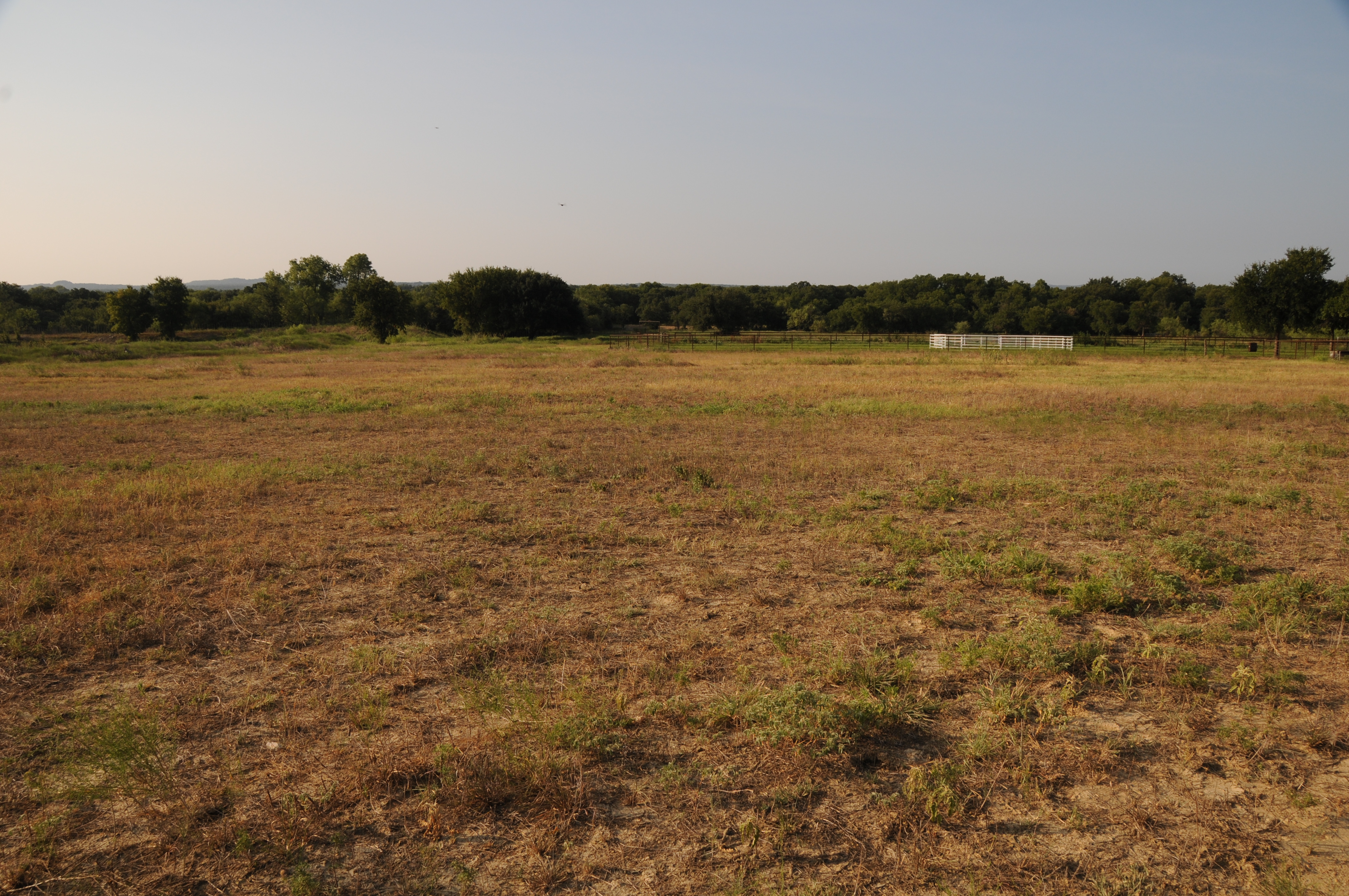
At 11:30 a.m., I took the following photo.  There’s no smoke, no fire.  The wind is 25 m.p.h. out of the south-southeast, the temperature is currently 80 degrees, and the humidity is 14 percent.  The gusts of wind are exceeding 30 m.p.h.  I have weather equipment, except for wind velocity, in the front yard.  The wind is quite frankly, scary.

I have repaired the Pecan Tree Pasture fence — more in a post later — from a deliberate cutting by thieves to get into our neighbor’s workshop.

Trailers are hitched, pasture gates are either unlocked or open for fire trucks and game wardens if necessary, Star is in the corral, the barn door is chained and water hoses are spread about the ranch house and barn.  Brenda and I have already gone through our checklist of what we will take out of the house, if necessary.  First and foremost, come Yeller and Lottie our dogs into the pickup, then our passports.  We load up Star, then throw what we can in the stock trailer.

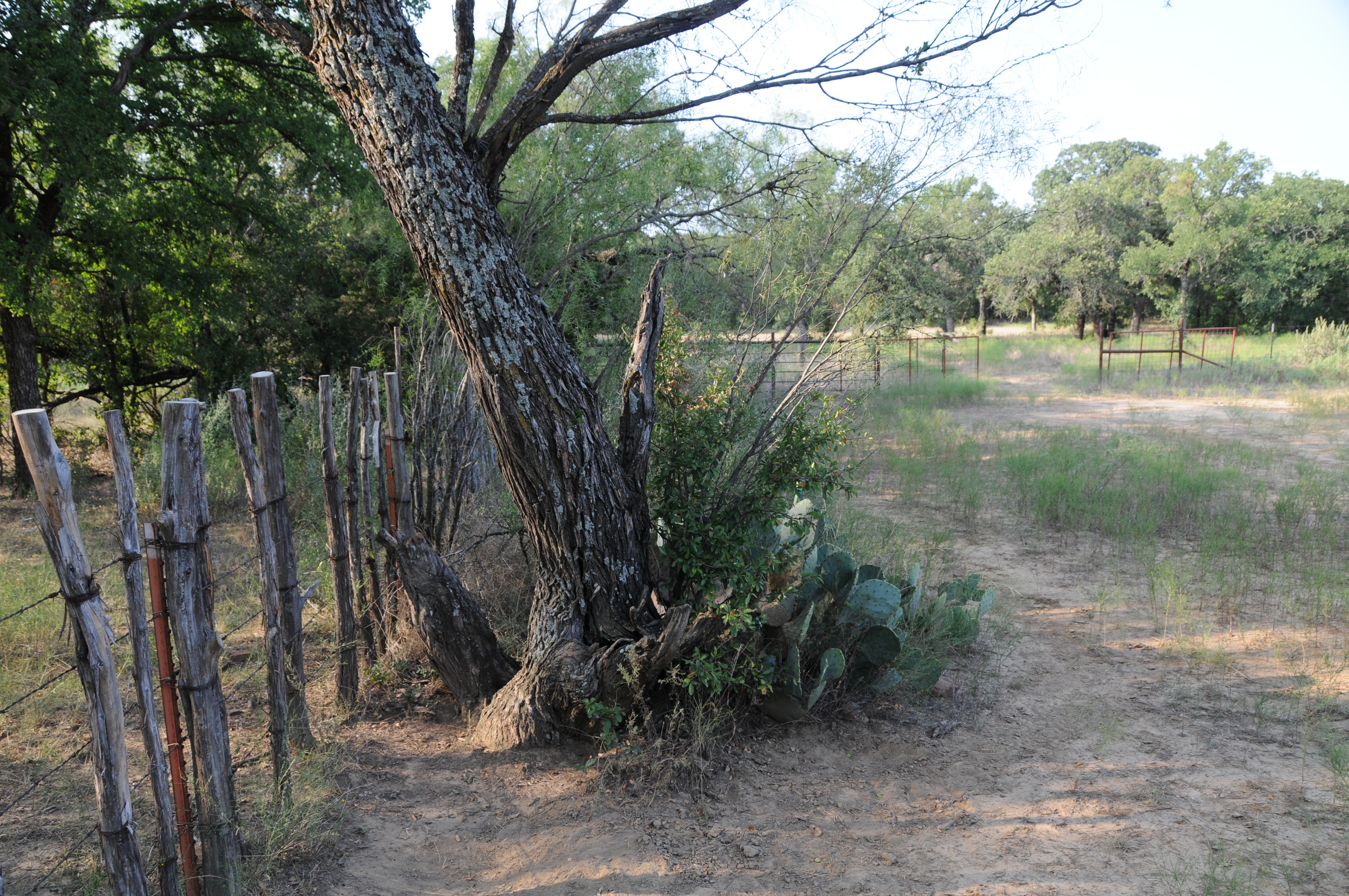
Here’s the photo of the Texas landscape from the direction the wind is blowing.  It’s clear.  More later.

A click of your mouse will produce a larger, more detailed picture.  (Forget the copyright line, it just popped up.  Anyone can use this with proper attribution — as is the custom in our community.)

11:30 a.m. CDT, April 17, 2011, view from Poprock Hill, facing southeast, Flying Hat Ranch.

2 Comments

Filed under Wildfire

Wild flowers of a dry Texas Spring day

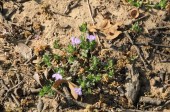
[Please note that when this post was first published yesterday, April 10, 2010, the Silverleaf nightshade was misidentified as a Dayflower.  The corrections have been made in the caption of the flower and plant and the notes contain a warning about the use of the Silverleaf nightshade.]

At 9:59 a.m. I drove down to the barn and parked the F-150.  Taking my camera and walking carefully, within the next hour I traced a familiar path from the barn thorough the corrals, into the arena pasture and into the grove.  I walked along the edge of Salt Creek and photographed these wild flowers of our dry Texas Spring.  Salt Creek is an intermittent-running creek, but there are pools of water and tracks abound.   The trees are green and lush about the creek and grass, despite the drought, remains verdant.

I picked a blossom of wild verbena in the main pasture and gently pressed it.  The fragrance flew about my face and I inhaled deeply.  Only a partial blossom I pressed, but it nonetheless imparted its scent that remained for minutes, not seconds, as I walked back up to the barn.  Beside the kitchen sink, we have liquid verbena soap, reminding me of the wild as I wash my hands, arms and face.

* * *

My uncle Floyd McRorey used to come in from the field and wash his hands in the kitchen sink with hard Lava soap as Aunt Lennie prepared a meal.  I never saw Aunt Lennie wash the dinner dishes.  She helped dry, but never washed the dinner dishes.  Uncle Floyd always washed the dinner dishes.

* * *

All of the following photographs may be enlarged with a click of your mouse.


Notes:

The scientific nomenclature for each plant may be incorrect as there are a broad range of varieties.  I refer to as many as four books and two databases to identify the plant, but I may be in error, so please verify my identification.

The Silverleaf nightshade is all toxic.  Medicinal: Used for rattlesnake bite – root chewed by medicine man, who then sucks on the wound to remove venom, then more root is chewed and applied to swollen area. (Steiner) Southwestern Native Americans used the crushed berries to curdle milk in making cheese, and the berries have also been used in various preparations for treating sore throat and toothache (Lady Bird Wildflower Center Plant Database).

Please see the link for Silverleaf nightshade:

Lady Bird Johnson Native Plant Database Silverleaf nightshade.

10 Comments

Filed under Wild Flowers of Texas

Kiowa wind, grass, colors

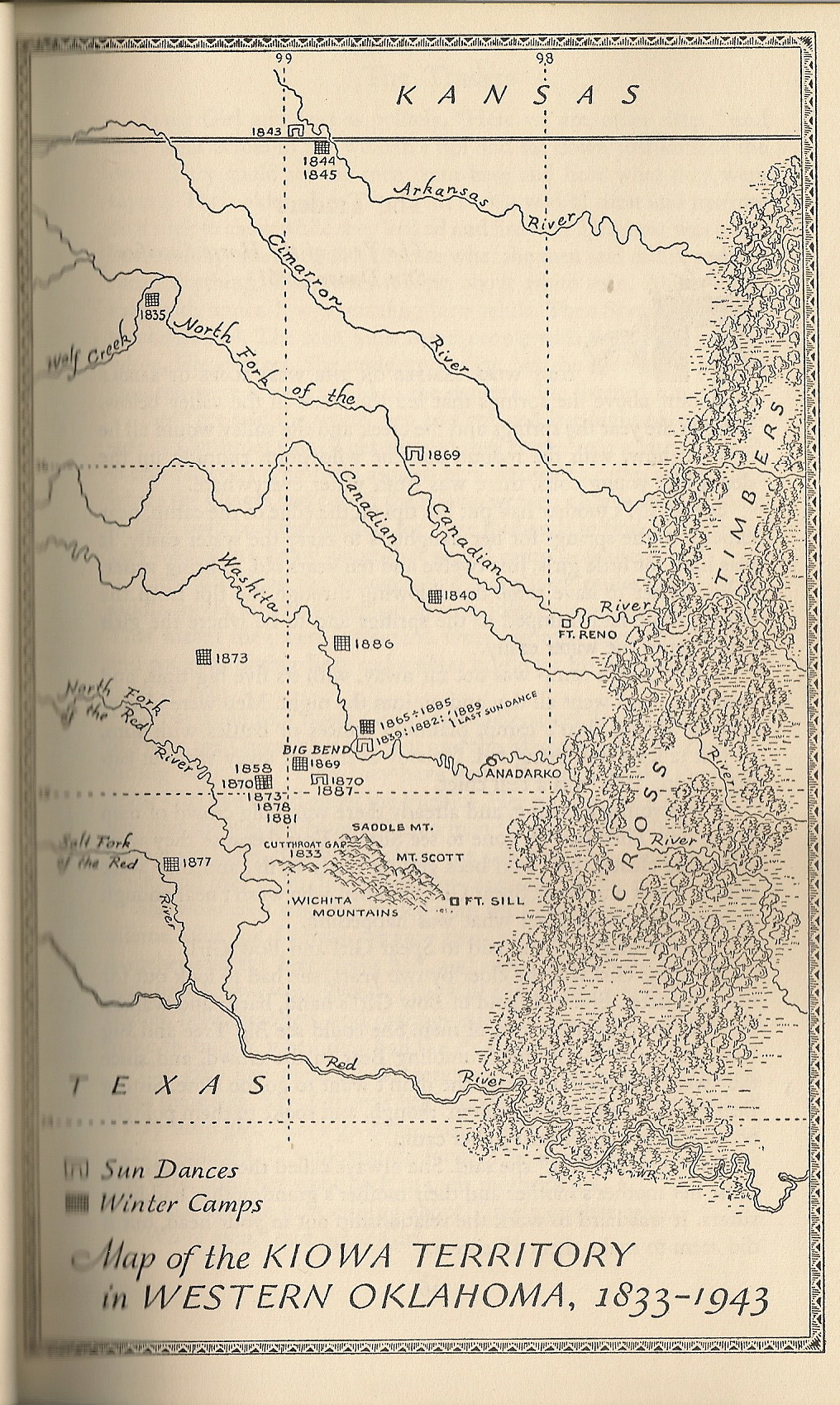
Map of the Kiowa Territory in Western Oklahoma, 1833-1843, from Alice Marriott, The Ten Grandmothers, p. 15.

In 1944, Alice Marriott in her book, The Ten Grandmothers, recorded Kiowa Spear Woman’s narrative of the motion and color changes of prairie grasses.  The “Ten Grandmothers” are ten Kiowa medicine bundles.  The bundles still exist, but they have not been opened since the 1890s when the last person who had the right to see the contents died.

For Leah the south porch of the big house was the best part of home.  Here you could sit and watch sunrise or sunset; watch the shapes of the earth change and move as the sun moved.  Then you knew, when you sat out there, that the earth was alive itself.

Spear Woman sat beside her granddaughter and thought that the earth had gone dead.  Lights played and moved, and cloud shadows came and went, but the earth itself had somehow died.  It was all one color now; not like the old days when its shades really changed and flickered like flames under the wind.  She stirred and sighed and spoke.

When the buffalo moved across it, there were other colors and other lights.

The thought was near enough Leah’s own to startle her.  There are lots of colors there now.

Her father spoke behind them.  Not like there used to be.  In the days that even I remember, there was one color when the wind was from the north and another when it was from the south, one from the east and another from the west.  Now the grass is all one color on every side, and it doesn’t change with the wind.

Sometimes the colors change.  Down near Lawton there is a prairie where the grass takes different colors.

* * *

[Spear Woman insists they travel to Lawton (Fort Sill, Oklahoma), fifty miles away.]

She brought her best Pendleton blanket from the trunk and spread it over the seat.  She put on her very best clothes and painted her face….

Two lines of high, tight fence spread across the prairie from a gate, and Spear Woman sat stiff, suddenly.  What is that!  That is grass like the old days.  Real grass.  All different colors.

It was, too.  It was like changeable silk, the kind the Delawares used to trim their blankets.  Yellow as the wind struck it; rose-color as it died away; then a sort of in-between color, with patterns that moved like patterns in silk when you folded it….

Shade was not even in sight, and when they had driven through the gates, with the lines of the fence on either hand, it was still not easy to find.  Spear Woman didn’t care.  She sat and watched the grass turn over in the sun, flickering and bending and straightening like little campfire flames, and was happy.  It was the old kind of grass, the old, rippling, running prairies, even if there were fences.  She was glad her eyes were dim, because she didn’t always see the fences, and could forget about them.  It was all peaceful and alive again.

From Alice Marriott, The Ten Grandmothers, pp. 285-288.

* * *

When I was a boy, my grandmother drove between Brownwood and Bend, Texas, near San Saba to visit relatives.  I watched fields of grass sway in the wind on either side of the road, a narrow two-lane highway.  She would point out to me where she and her family had camped and where she had seen buckboard wagons ascend a hill along the creek, the hubs carving their initials along the cliffs.  I saw them and put my hands in wagon-hub grooves when we stopped to rest.  The prairie wind flowed over the grass, moving stems and leaves in a rhythm, a wave of motion like water I saw in Corpus Christi Bay.

* * *

Last year I planted six acres of native grasses in the Pecan Tree Pasture.  The grasses are native to the Cross Timbers of Oklahoma where Spear Woman found peace again, and the grasses are native to our ranch that is also designated as Cross Timbers.  The grasses in our pastures grow waist-high, chest-high in some areas, and when the prevailing wind, a southwest flow from Mexico, crosses the pastures, grasses move and bend and change color.  As I go up the road towards Huckabay, Texas, about six miles away, I always notice a very old stand of Bluestem that turns reddish-brown in the Fall and Winter, but becomes blue and green in the Spring.  The stand of Bluestem is only an acre in size and machines have not touched it in many years for it is on the side of a hill.  It is old, that family, and I care for it.  If I could move that acre of old Bluestem to my ranch, I would.  I can’t.  But I have planted its relatives in the Pecan Tree Pasture and there I shall attend to their health and growth.

______________________________

Notes:

The citation is: Alice Marriott, The Ten Grandmothers, Norman: University of Oklahoma Press, 1945.  I have the fourth printing, October, 1951.  In the excerpt, I have omitted quotation marks and substituted italics for the spoken words.

Lawton, Oklahoma, is also the home of Fort Sill, Oklahoma, that is seen in the map above.  If you click on the map, then enlarge it with your computer, you can see more clearly the locations of encampments and the Sun Dance locations.  The Cross Timbers designation flows all the way down into Texas and includes our ranch, Flying Hat Ranch, Mingus, Texas.

12 Comments

Filed under Flying Hat Ranch, Life in Balance, Life Out of Balance, Nature Quote of the Day

The eve of a new year on the ranch

Pigeons flying towards a new year above the Santa Fe plaza.

 We make resolutions and there’s nothing wrong in doing so.  We plan to do better, give more and finish the big chores we have had on our list for months, maybe even curtail or give up our vices.  Well, maybe not completely give them up, but back off bad habits.

I work with students, horses and the land.  I work in order to live, not live in order to work.  That’s a big, big difference.  Working with students this last year has been more rewarding than ever before in my professional career.  I attribute that to my nearing retirement and wanting to give what I think is of value to the student before I put the chalk in the tray and walk away.  Time is fleeting and I don’t have time to cover all the points, just the most significant.  So, for this next year, I resolve to cut the excess from the lectures and discussions and get right to the core: finding your voice, writing down your voice and tending to your own garden (Voltaire, Gilgamesh, Trilling).

For my life with horses, it’s a sadder year coming.  We are selling Sweet Hija who is pregnant with a female and Shiners Fannin Peppy, the first foal out of Sweet Hija.  Brenda and I will be left with our two paints, Star and Lilly, both having their share of health problems these days.  In January, we are going to Oklahoma City for the Mixed Winter Sale at Heritage Place.  Market forces beyond my control have cut through our ranch operations with a vengeance and the cost of horse breeding and market conditions force my hand.  What Brenda and I are trying to do, in taking Hija and Fanny to the sale in Oklahoma, is to put these fine horses in the best sale around so that they will have good homes or ranches to live out their days.  So, for this next year, I resolve to focus on Star and Lilly, build some good, strong pens in the Pecan Tree Pasture for their safety.  I resolve not to think too much about our loss of Hija and Fanny and the little one — difficult to push that resolution through next year, I guarantee.

And, finally with the land, I resolve to set up brush piles for the little critters, deer and birds about the place, not shredding every single bush like some of my neighbors.  Further, I want to learn the name of every tree species on Flying Hat Ranch, or at least make a major dent in nomenclature.  I will also continue to plant native grasses about the pastures.

The eve of 2011 is here.  I toast to love, health and fortune to be found among horses and land, family and students — yours as well as mine.

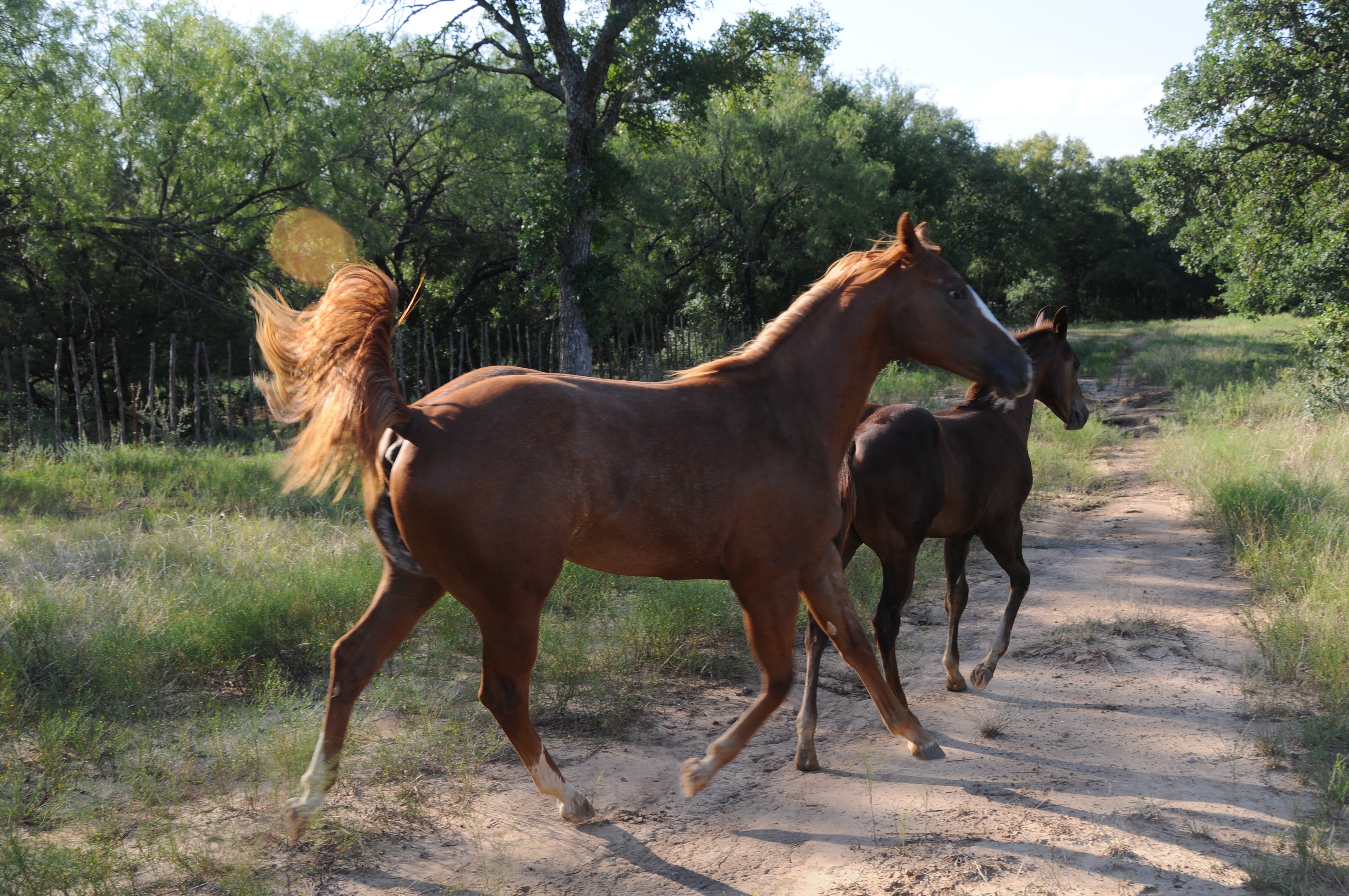
Sweet Hija at full gallop in winter snow (2010).
Fanny strutting in the grove with Shiney (summer 2009).

15 Comments

Filed under Flying Hat Ranch, Lilly, Shiners Fannin Peppy (Fanny), Sweet Hija

Willful Lilly

Willful Lilly walks to Well House Corral (December 27, 2010).

In the ongoing story of Lilly (Ima Lil Moore), she is a willful horse.  The above photograph shows her this morning, after browsing a few minutes in the front pasture, walking intently to the fence panels of the Well House Corral.

Lilly had spent the night in the stables underneath a 150 watt light bulb.  When I went down this morning to feed her, she was up and moving and whinnying for her breakfast, even pinning her ears back slightly when I entered her stall.  After she finished her grain, I put out two blocks of green alfalfa for her to munch on.

And, this is point of the story, she turned away from the hay rack and deliberately walked out of the corral and into the pasture with a determination of a yearling.  She’s twenty-five years old, for goodness sakes!  Then, after a bit of browsing, I shot the above photograph of Lilly.

She’s going to die — we’re all headed that way, for sure — within who-knows-how-long?  Tomorrow, next week, next month, next year?  Jim Scroggins is coming out to the ranch with his back hoe in the morning to dig a grave pit for Lilly.  Don’t be sad.  I’ll set up panels around it so that no one will wander into it.  It’s a preparation, sort of like making a will or planning a funeral with your favorite mortician.  (My political mentor when I was young was Groner Pitts of Brownwood, Texas, a funeral director.)  If Lilly makes it through the winter and I and the vet think she will, I’ll fill up the pit with water and maybe ducks will swim in it.  It is there, however, just in case.

But, for now, Lilly is a willful mare, stubborn in her habits, sleeping longer than usual and limping a little with arthritis.  Kinda like your grandfather or grandmother.  She has her life today and she willfully directs herself to green winter grass, lying down in the sun and drinking from the stock pond with ducks swimming about her.  It’s a good day to live.

9 Comments

Filed under Horses, Life in Balance, Lilly

Four Standing Orders for a Texas Ranch

As written in a previous post, if we had to wait for cooler weather in Texas to get anything done, we’d never get anything done.  For our operations here on the ranch, we have four standing orders that must be accomplished everyday.

The First Order is feed the horses twice a day, once in the morning between 7:00 and 8:00 a.m. and in the late afternoon between 5:00 and 6:00 p.m.  During the summer, I watch the shadows lengthen at five o’clock in the afternoon from the mesquite and live oak trees surrounding the corrals and barn, a signal to feed.  Although the temperatures are high, the shadows present a significant measure of relief.  In the open sun, the temperatures have reached 115 deg. F. this summer.

The Second Order is to fill three water troughs in the two corrals and stable.  Horses consume water in large quantities.  We are dependent on Barton Creek Water Cooperative for potable water at the house and at the barn.  We have a large stock tank in the front pasture and in Pecan Tree Pasture, a half-mile away and across Salt Creek, there is a large circular water trough filled with Barton Creek Coop water.  All water troughs must be at least one-quarter full.

The Third Order is to physically check the health of all the horses, from head to tail, hoof to withers, and apply medicine or fly spray (marigold tincture, not oily, water-based) to los caballos. Horses are bound, like toddlers, to get cuts and scrapes, sometimes worse.

Fourth Order is to check fences where the horses are turned out.  This may be done on horseback, in the pickup or using binoculars.

When we run a herd of cattle, these four orders apply to their pastures and browsing areas.  In addition, certain Niman Ranch protocols (c) must be followed if the cattle are certified Niman Ranch.

Feed, water, check the health of the livestock and fences dictate four chores that must be accomplished, summer or winter.

* * *

The front pasture has been shredded of its broomweed.  I leave large swatches of tall grass for the critters.  Perhaps one day quail may come back.  I’ve only seen one covey here at the ranch in eight years.  They will nest in tall grass, dead grass.  To completely shred a pasture destroys that cover.

* * *

Summer Pasture Flying Hat Ranch, August 2010

Several days ago I posted “Cactus Illusion,” a momentary scare that our oldest mare, Lilly, had become entangled in the fence at the area she loafs, next to the Hall place on the east side of the arena pasture.  I have some photographs of that area.

As explained in the post, I was a quarter-of-a-mile away, using the binoculars to examine the fence line and check on the horses at mid-day when I thought I saw Lilly down and entangled.  The sun and my crisis mode at the time played a trick on my behavior as Brenda and I sped to the area to rescue Lilly.  She was just fine, loafing in the grove area underneath a live oak tree.  We were terribly relieved that it was a cactus illusion.

Getting adapted to working Texas summertime heat requires thinking ahead more than usual.  By and large, work should be done before 10:30 a.m. so that the work during the heat of the day can be accomplished in the shade or in a barn with good circulation.  Large circular fans, 10 to 15 feet in diameter can be installed at the top of a barn or enclosed arena.  We don’t have those fans, but we work on the breezy porch or in the alleyway of the stables.  I use misters in the stables.

Take a lesson from livestock during the summer.  Rest and loaf in the shade during the heat of the day.  Browse in the early morning, evening and night.

Paint Horse Lilly's Loafing Area, Cactus Illusion

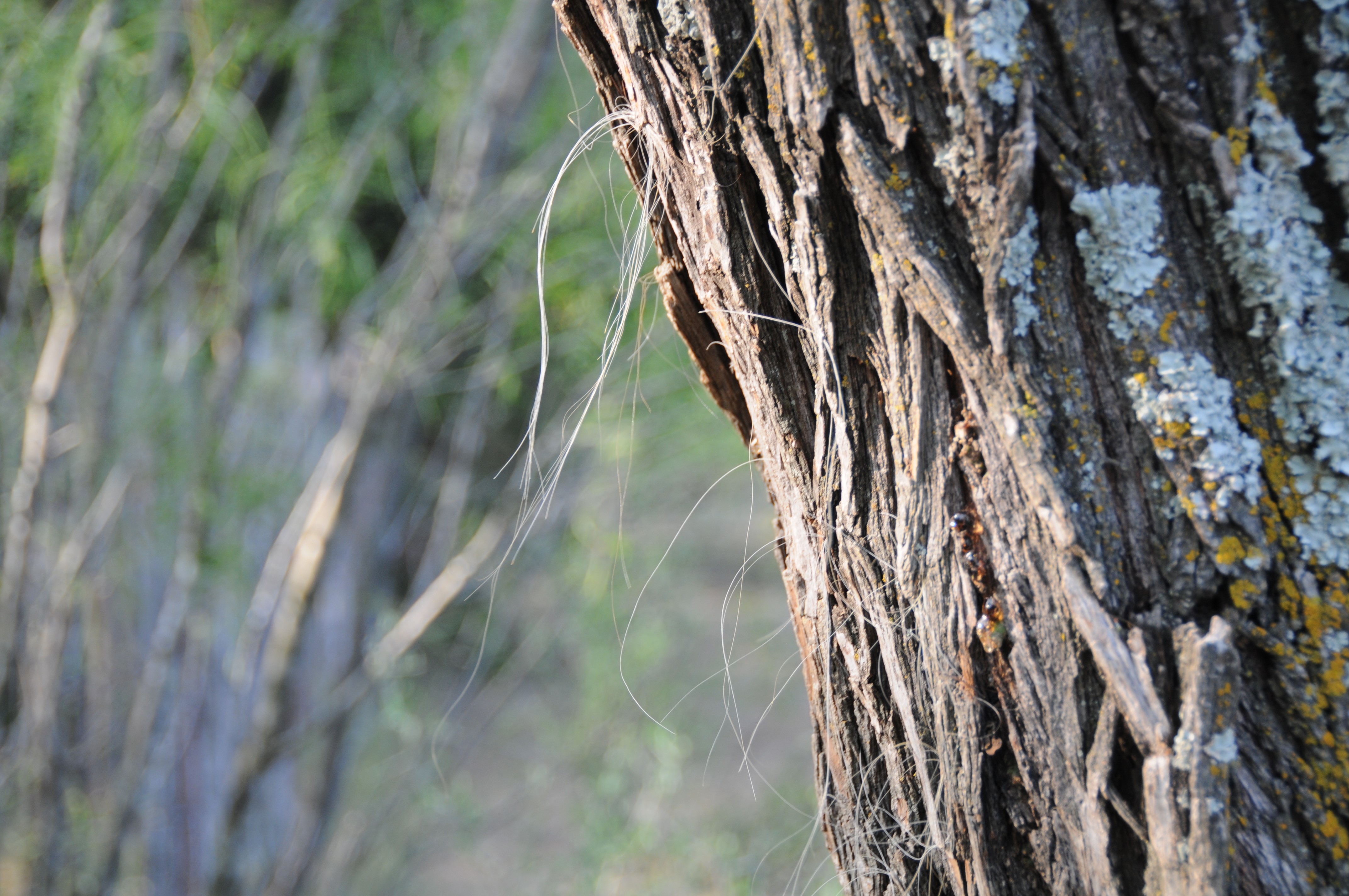
Lilly's Mane Hair at Loafing Station, August 2010

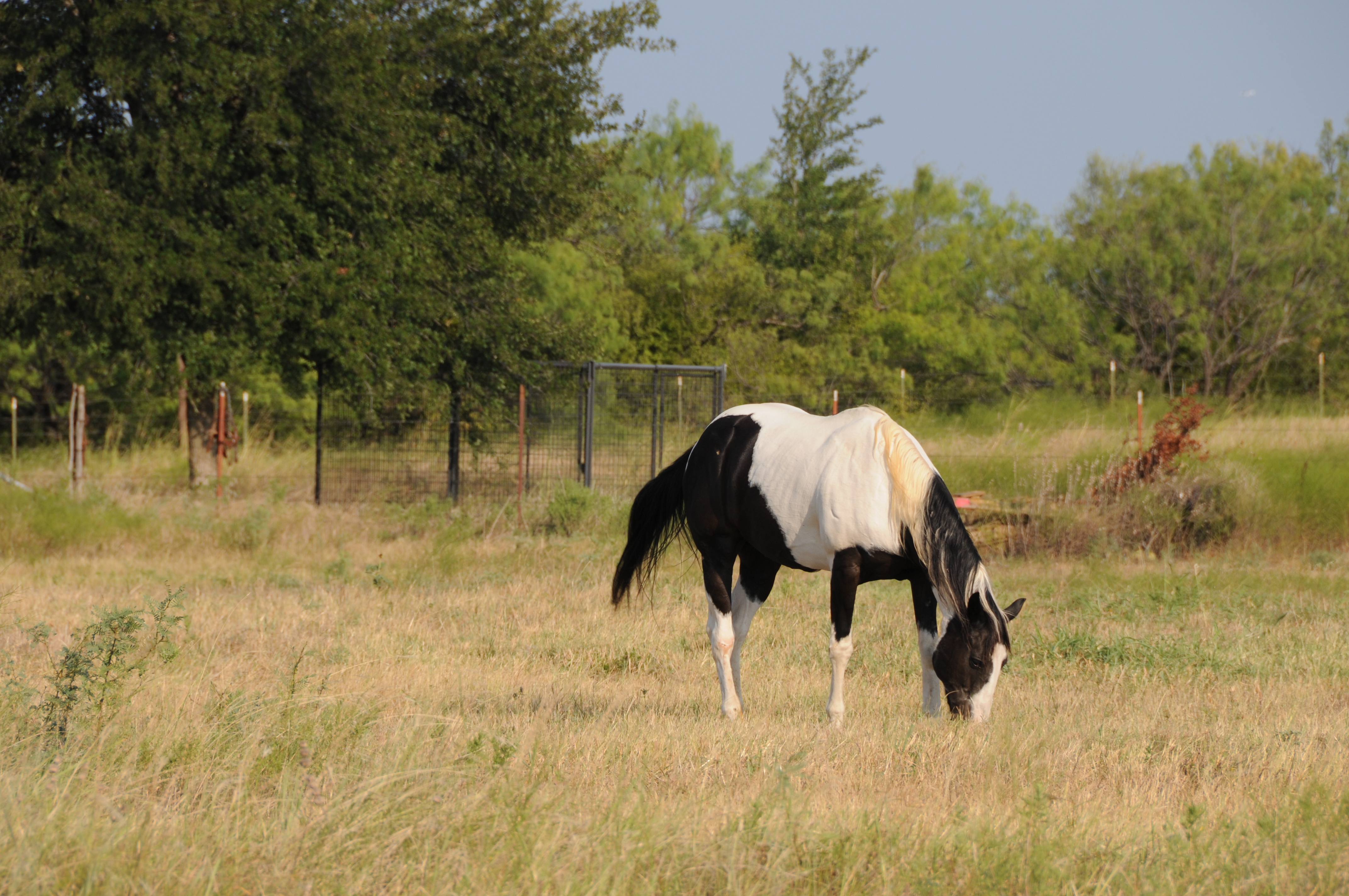
Ima Lil Moore "Lilly" browsing early in the morning (8:30 a.m.) before going to her loafing area along the fence line.

For Lilly’s pedigree and other photos, click on Ima Lil Moore APHA 111214.

______________________________

Notes:

The Niman Ranch protocols may be found under the link for our ranch: Niman Ranch Beef Cattle protocol.

The Niman Ranch website. Here you may find a list of ranches specializing in the protocol as well as sources to purchase the high-quality meat.

We have not had a cattle herd since 2009.  We specialize in Angus cattle.

8 Comments

Filed under Flying Hat Ranch, Horses

Picnic at Flying Hat

Since last Monday, Brenda and I have been hosts to Wendy, my daughter and her two girls, Olivia and Anna Belle.

Yesterday, we drove to the Pecan Tree Pasture for a picnic at 11:00 a.m. to beat the heat of late-spring June.  We had ham sandwiches, potato chips, cookies, white wine and Crystal Lite.

I had shredded the grass underneath the pecan tree with the Case DX-55 several days ago and we spread two tarps and several Mexican blankets on the tarps to provide a buffer from bugs and sticky grass.  We stayed in the shade for over an hour and even reclined and rested on the blankets, looking up into the tree. I dozed slightly.

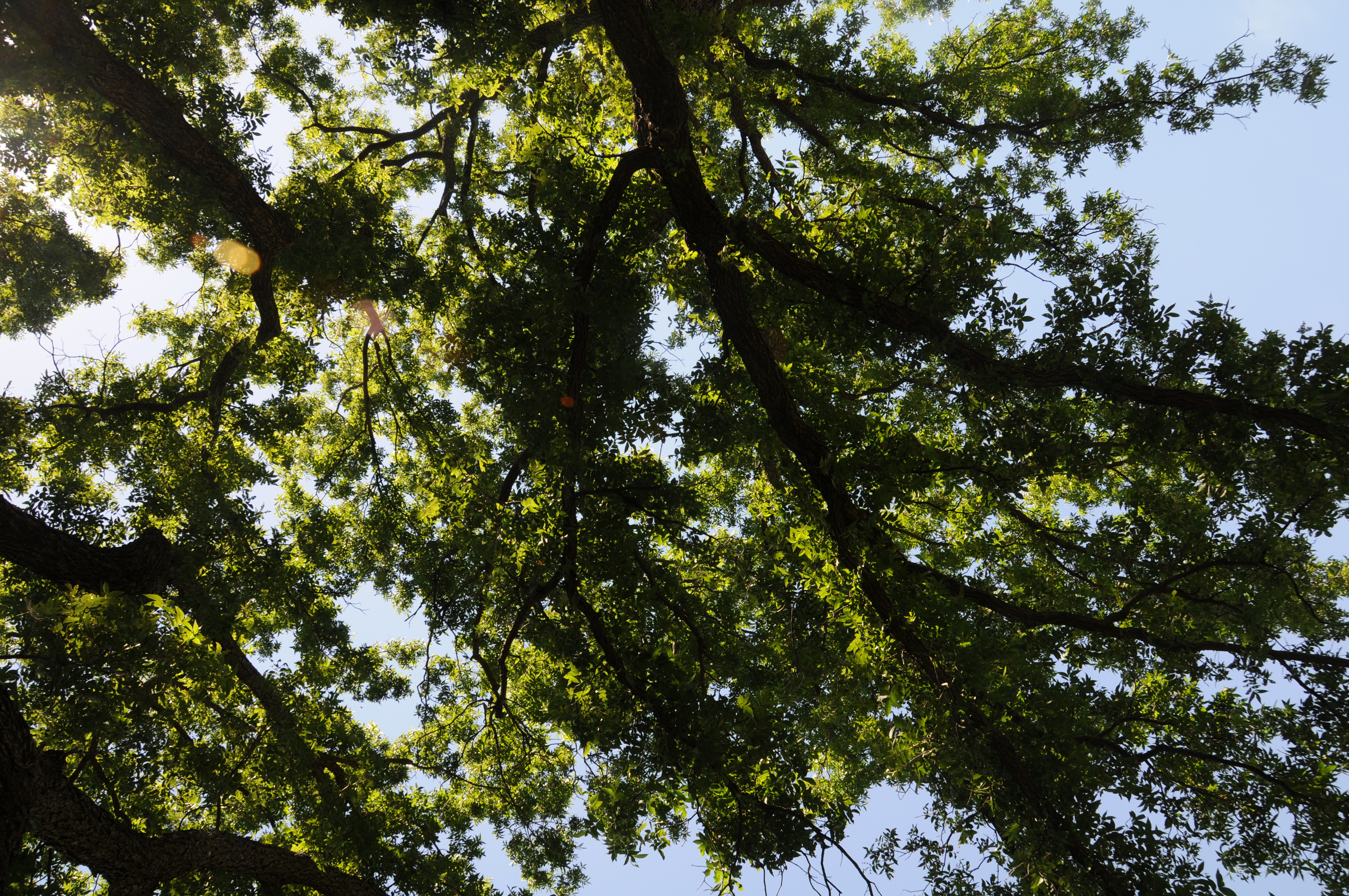
Looking Up from the Picnic (June 2010, Photo by B. Matthews)

Making this picnic a bit more eventful (or painful, depending on your taste), I sang two songs, “O Bury Me Not on the Lone Prairie” and “Ghost Riders In the Sky,” songs I knew almost all the words.  I also quoted some poetry, improvised of course, in honor of the shade of the pecan tree and the slight breeze that cooled us.  Not a good piece of poetry, but my heart was in it.

Comments from the family:

Brenda: “It’s pretty hot here.  I forgot the Love Dip.”

Wendy: “Isn’t this so nice under the sacred pecan tree….We will always remember this.”

Brenda: “If it was Sunday, we wouldn’t hear as much traffic on the highway.”

Olivia: “There’s a bug!…Where are the pecans?”

Anna Belle: “Goo, goo, burble, burgle, chkk.”

Picnic Snooze (June 2010, Photo by W. Needham)

9 Comments

Filed under Flying Hat Ranch

Field Log 5/7/2010 (Shiney’s Little Stud Moments)

North Erath County, Texas, 32.43 lat., -98.36 long. Elev. 1,086 ft.  Turkey Creek Quad.
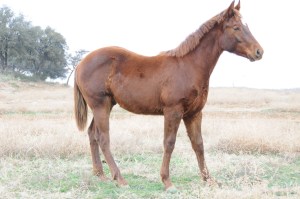
Shiners Fannin Pepto (Shiney) Winter 2009-2010

Shiney at Jimmie Hardin’s

Talked with Jimmie Hardin in Aubrey about Shiners Fannin Pepto’s (Shiney) training for manners on the ground and around mares and people.  She said that “Shiney is doing really great, settling down, but he does have his little stud moments.”  What a world I thought, “Little stud moments.”  I asked Brenda, my wife, the female equivalent of “little stud moment,” and she said, maybe for women, “It’s a meltdown.”

The first time at Jimmie Hardin’s, when we put Shiney in a corral, he was between two mares and they teased him over the fence.  He was really an excited colt with two mares on either side of him.  The mares pranced in front of him and he ran around in a prancing gait, light on his feet, even though he probably didn’t know what was going on.  He became lathered up and I fretted he was over-doing his excitement, but Jimmie said he would settle down once we left with his travel buddy, Star, the paint from our place that we put in the trailer to help ease Shiney’s trip to Aubrey, north of Denton.  Star munched on his alfalfa while watching his little friend, Shiney.

In conclusion, he is doing just fine despite his little stud moments.

Called up to Triangle Sales in Shawnee, Oklahoma.  They will have handlers to help me show him through the ring.  And, knowing he is a stud, they will not put him between two mares in the stall area.

Pecan Tree Pasture Mesquite Trimming

Indian Blanket flowers are blooming over in Pecan Tree Pasture.

Went over to Pecan Tree Pasture to lob off mesquites that were growing in the field.  The grass is up to my chest in places and I can detect large animals–deer or wild boar–that have lain in the grass.

Yahoo Runs Amuck

While cutting mesquite, some yahoo drove through my gate, wanting to inquire about the trailer my neighbors have for sale.  The yahoo immediately drove off the pasture road and started coming toward me in his grey, F-250 pickup, trampling grass I wanted to let seed and grow higher.  I was a hundred-yards away and frantically waved him to stop.  What the dickens was this yahoo doing coming into a native grass field in his pickup?

I walked briskly over to where he had stopped after coming some fifty yards into the native grass field, scattering birds.  I had my pruning shears in my hand, but my pistol (.45 cal.) was in the pickup some seventy-yards away.  I did not know what to say, but this is what happened.
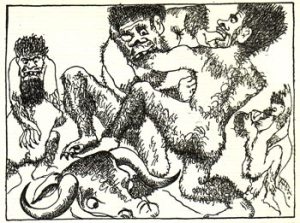
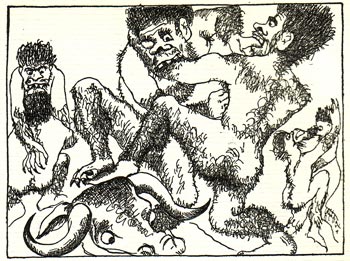
Yahoos Fighting by Dudley Fitts (Illustrator)

“Yew goin’ git chiggers,” he squawked, referring to the high grass I had come through to stop his onslaught into the field.  An entirely inappropriate opening of discourse after entering posted property (Texas and Southwestern Cattle Raisers Association blue sign).  Was there some chigger alert I had missed on the morning news from Stooperville’s Fox News?

Holding my anger, I said, “You don’t need to be rolling into my field crushing the grasses.  It’ll take two months for the grass to come back up.  The trailer belongs to those people,” I nodded in the direction of the Hall Place.

He looked at me, put the truck in reverse, made an abrupt turn around and sped off, then hit high speed next to my water tank and out the gate and on down the highway towards Stephenville.  I paced off how many feet he had knocked down by coming into grassland that was two to four feet high, native species I had planted six-years ago: a total of one-hundred and twenty-five feet of off-road grass crushing.  It’ll rise up again in a few months with the rains.

I’ll close the gate next time to avoid a confrontation.  I was born and reared in Texas, but I am seeing more arrogant and ill-mannered  people than ever before.  I know yahoos are all around us, but jeez!, wouldn’t you think they could all hang out at another cracker barrel in a county over?

The field log is rather caustic today.  Sorry.

8 Comments

Filed under Field Log, Shiney (Shiners Fannin Pepto)

Field Focus Log 4/18/2010 (RT)

North Erath County, Texas, 32.43 lat., -98.36 long. Elev. 1,086 ft.  Turkey Creek Quad.

I have a focus for field activity today: scout on ranch and immediate surrounds for white-tailed deer.  Last sign of track for deer was over a month ago and since then, noise and brush-clearing from adjacent development has occurred.  All entries for Sage to Meadow will be as close to real time (RT) as possible.

7:05 a.m. CST: scan in grove and pasture for deer, daylight.  No sighting.  Seek track later today with corn distribution.  No corn has been distributed for two weeks.  Probability of finding deer track is minimal.

11:30 a.m., depart for general store for deer corn.

1:00 p.m., arrive back at ranch with two sacks of deer corn, $7.50 per sack.  Rain and mist, 57 deg. F.

On Sundays, I purchase deer corn at the Circle H Shell gasoline station at Interstate 20 and Highway 281, approximately 20 miles away.  Since it is misting and raining, I place the deer corn in the cab of the pickup, the scent of fresh-shucked corn filling the cab as I come back to the pastures.  An attendant at Circle H remarks, “I loaded up a couple of sacks of corn yesterday in the back of my pickup and by the time I got back home there was water dripping from the sacks.”

“That’s why I put the sacks in the cab when it rains,”  I replied.  The conversation was amiable, an exchange of information from two strangers, overcoming boredom on a rainy afternoon.

2 Comments

Filed under Deer, Field Log

Field Log 4/16/2010

North Erath County, Texas, 32.43 lat., -98.36 long. Elev. 1,086 ft.  Turkey Creek Quad.

Light mist this morning.  Probably 0.20 inch of rain since yesterday.

Lilly, Star and Fanny browse front pasture.  Lilly shows age with slower gait and right back leg limp.  Sweet Hija still at ESMS on Brazos.  Shiney is at Jimmie Hardin’s in Aubrey, Texas, for ground training and conditioning for Triangle Sale, Shawnee, Oklahoma, June 5, 2010.  Miss the little guy more than I thought I would.

Pasture grasses are erupting well.  Vetch in far field is waist-high in places.

This week, Mourning Doves (Zenaidura macroura) are cooing.  No calls before then, but noticed their presence.  This morning the doves were ground feeding in the front yard.  From Peterson: has a pointed tail, most widespread dove in the West.  As to the call, Peterson says it is a “hollow mournful ooah, cooo, cooo, coo. At a distance only the three coo‘s are audible.”  The color of the dove in our front yard was a reddish-gray with black spots.  The two dove would ground feed a moment, then hunker down in the grass and loaf.  I must have watched them for ten minutes and then had to come back to office and work on college Blackboard classes.  I will have to focus on their call to hear the 00ah.  I am practicing on imitating their call better.

We have a larger dove that is whitish that appears in late summer.  It is untyped.  The two dove will perch on the power pole by the barn and watch me feed the horses.

The following are some photographs I took this morning.

Vetch and Clouds Far Field, April 2010

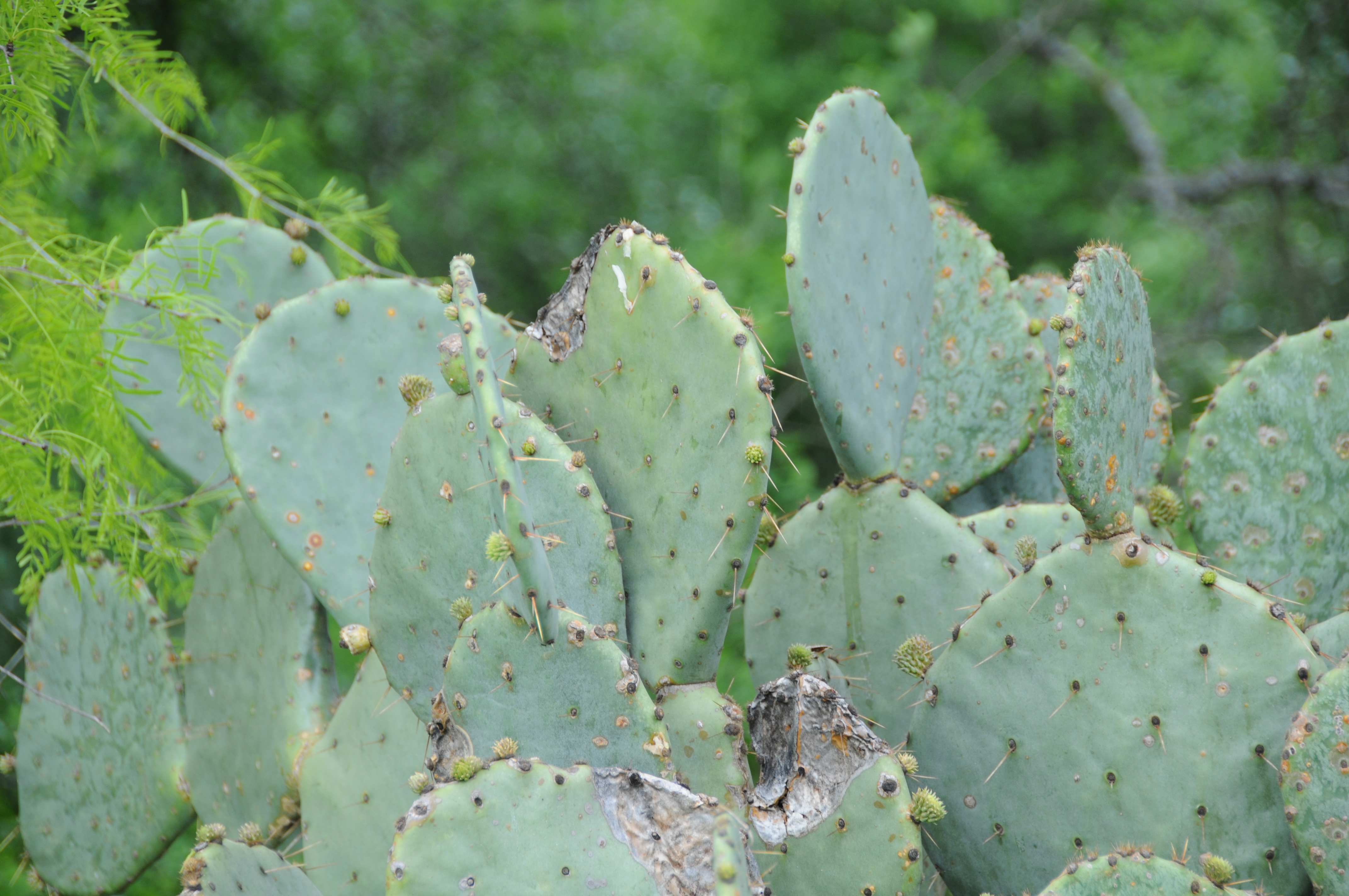
Prickly Pear Bush, April 2010

Cactus Fruit, April 2010

These photographs were taken last week.

Round Pen and Twin Mountains in Distance, April 2010

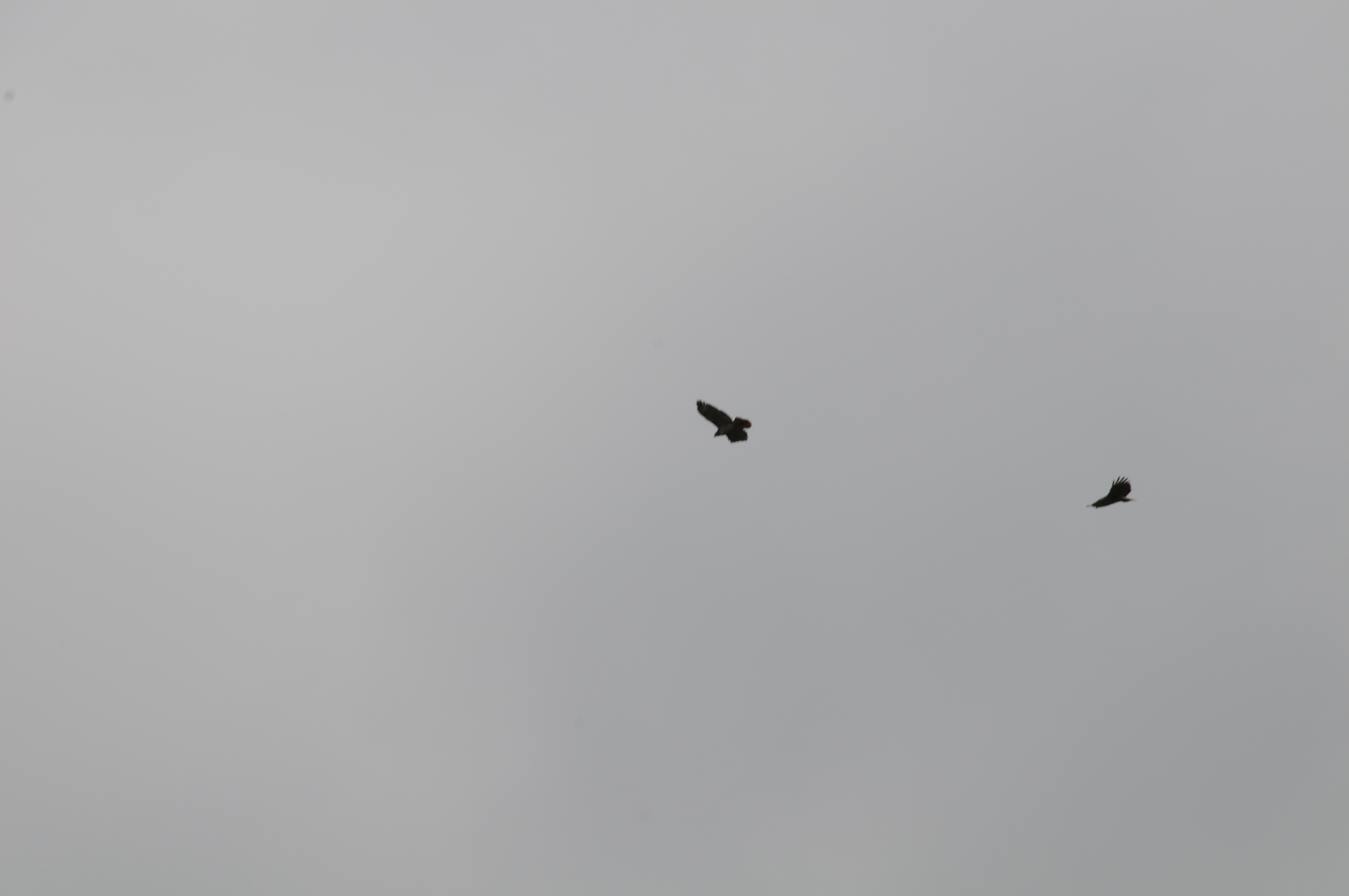
Harris' Hawks at Play, April 2010

Field grasses obscure pasture lanes.  Minimum shredding planned this year, indicative of lower carbon footprint.  In addition, taller grasses can harbor wildlife.  Hand cut mesquite brush this season, using clippers and large cutters.  Lessen vehicle use in pastures.

Lilly, Star and Fanny have browsed their way to the front pasture and are now standing close together, switching their tails to keep the flies away.  They have all this space to lounge around in and they prefer to stand together with their bodies almost touching.  Herd animals.  I worry about Lilly during the night and have corralled her so she can avoid predators.  One mountain lion sighting three months ago on SH 108 near Gibson place.

I must get the duct tape down in the barn and duct tape my Peterson’s Field Guide.  The binding is coming off.

10 Comments

Filed under Field Log