Tag Archives: Ecology

Monarch Migration Plunges to Lowest Level in Decades – NYTimes.com

Monarch Migration Plunges to Lowest Level in Decades – NYTimes.com.

But an equally alarming source of the decline, both Mr. Taylor and Mr. Vidal said, is the explosive increase in American farmland planted in soybean and corn genetically modified to tolerate herbicides.

The American Midwest’s corn belt is a critical feeding ground for monarchs, which once found a ready source of milkweed growing between the rows of millions of acres of soybean and corn. But the ubiquitous use of herbicide-tolerant crops has enabled farmers to wipe out the milkweed, and with it much of the butterflies’ food supply.

“That habitat is virtually gone. We’ve lost well over 120 million acres, and probably closer to 150 million acres,” Mr. Taylor said.

A rapid expansion of farmland — more than 25 million new acres in the United States since 2007 — has eaten away grasslands and conservation reserves that supplied the monarchs with milkweed, he said.

The monarchs’ migration is seen as a natural marvel and, for Mexico, a huge tourist attraction. But naturalists regard the butterflies as a forward indicator of the health of the food chain. Fewer butterflies probably means there are fewer other insects that are food for birds, and fewer birds for larger predators.

Here on my ranchito I have seen no monarchs this year.  It is a little early for their migration through central Texas (at least here in north Erath County, Texas), and I will hold off making any conclusive statements about their pattern for several more weeks.

I have only a few sprouts of milkweed on my 53 acres.  I know precisely where the milkweed is and seek to keep it flourishing for the butterflies.

12 Comments

Filed under Life Out of Balance, Monarch Butterfly

Winter lingers

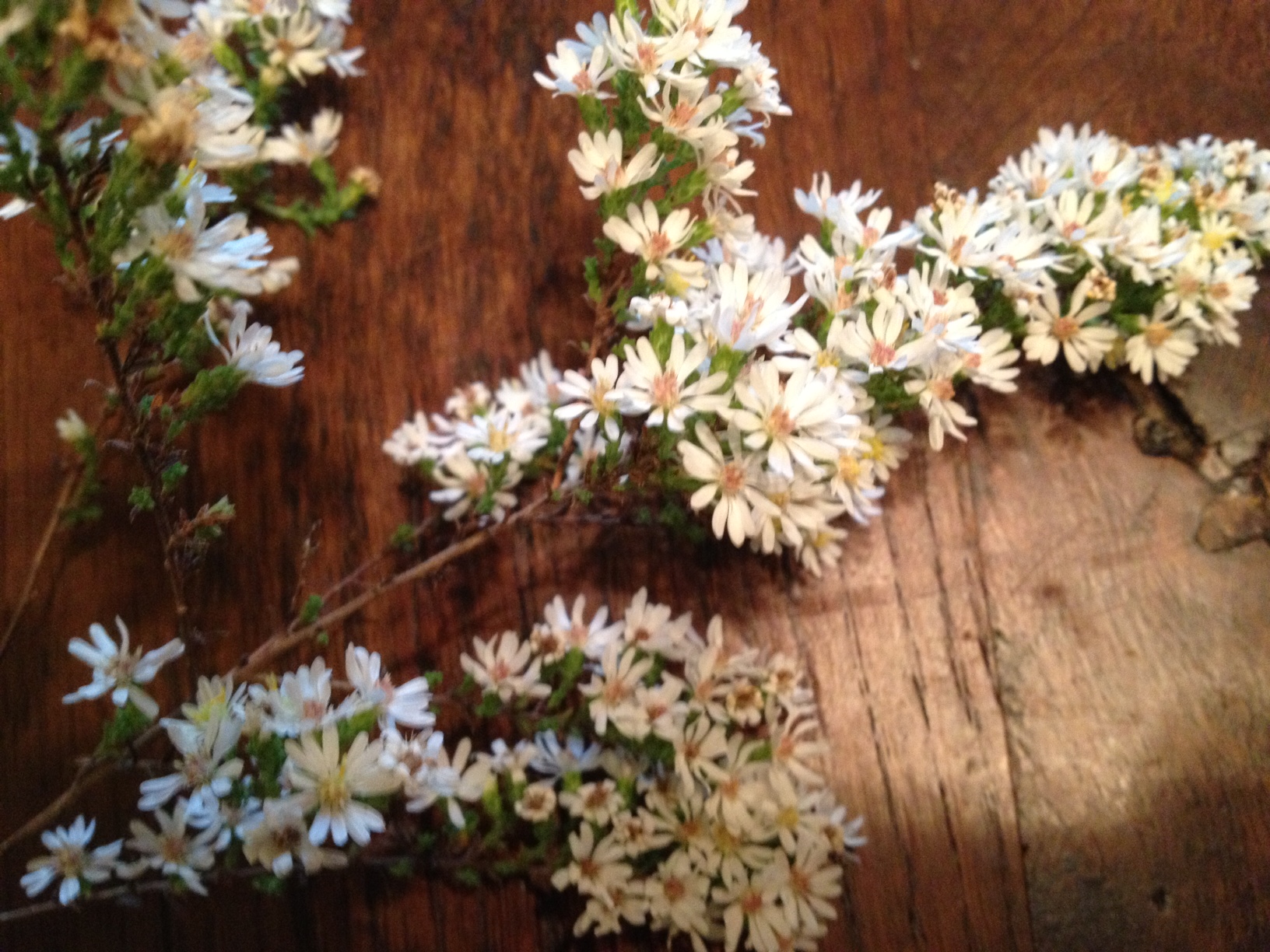
In the late fall, my whole front field appeared as snow with these flowers.

In the late fall, my whole front field appeared as snow with these flowers.

Winter lingers in north Erath County, Texas.  Grasses remain brown, although buffalo grass emerges through dead grass of the late fall freeze.  My paint gelding, Star, has lost weight and his laminitis has remitted completely.

New neighbors, the Stroebels, have moved onto the land to the southeast.  The husband is an English teacher.  The wife is an engineer, originally from eastern Europe.  At the first instance, I like them.  They purchased the five acres mainly for the new stone house.

By my stated goal a few months ago, I have only a month or so before my photographing all flowers on my place comes to an end.  I know I have missed some flowers over the last eleven months, but I think I have captured many.  Some flowers, like the wine cup, did not unfold last spring so they fell outside my range, but not my thoughts.


18 Comments

Filed under Flowers of Flying Hat

Flowers of Flying Hat (10-11): Salt Creek water sounds

The rains about two weeks ago produced sufficient runoff from pastures farther upstream to maintain a water flow in Salt Creek, an intermittent creek that runs through the ranchito.  You can turn up your sound volume and hear the burble of water flowing over and down sedimentary rock.

This is the first sustained water flow — beyond thunderstorm rains — since before the drought.

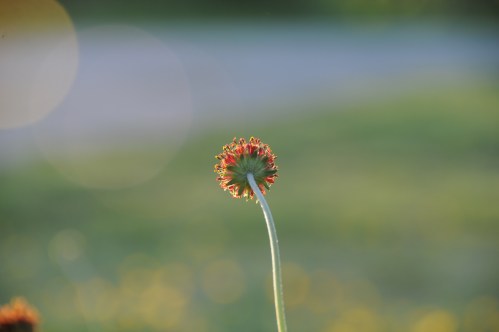
10. Gyp Indian Blanket, rear view of blossom that is pointed west.

The Gyp Indian Blanket is one of my favorite wildflowers.  They are so free-standing, tall and bunched together like a family.

Gyp Indian Blanket family


11. Vetch with yucca sprouts

The vetch is knee-high near the house and in the far field it is waist-high in some places.  I like this photograph because of the contrast — yucca and delicate vetch blossoms.

My photography of every new-emergent flower continues.  I have several varieties backlogged in pictures.  Today I have taken several photographs of the Stork’s Bill blossom and will post them soon.

11 Comments

Filed under Flowers of Flying Hat

Yucca morning

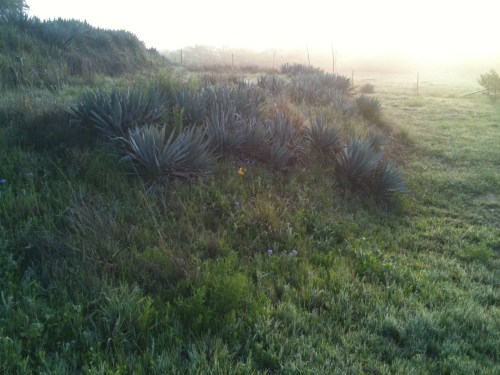
Pale-leaf Yucca on Terraces with Fog, Flying Hat Ranchito, March 30, 2012

In walking down to the stables to feed Star this morning, I paused and looked towards the east, the rising sun flared by fog, and I shot this photograph of yucca, fog, dew and a couple of blossoms of verbena (click the photograph to enlarge). Three terraces gird the ranch house and each level has families of yucca that hold the soil about the landscape and prosper in well-drained soil for their health.

The temperature briefly holds in the middle 60s as I look at this scene. I dwell on it as I write this post and think of the moisture upon green grasses and yucca.  So different from this time last year as fires broke out across Texas, consuming dried grasses, brittle brush and wildlife unable to flee.  Today is different, substantially so, with recent rains and low temperatures. The fire ban is off for Erath County. I see an abundance of wildflowers and I inhale the air suffused with humidity and perfumed with fresh grasses.

This ‘yucca morning’ will last in my senses for a long, long time, and I possessively want the moment to stand still as I look east towards the rising sun, flared by fog, that shall warm the day and send fresh grass shoots skyward.

14 Comments

Filed under Flying Hat Ranch, Life in Balance, Plants and Shrubs, Succulents

Wild flowers of a dry Texas Spring day

[Please note that when this post was first published yesterday, April 10, 2010, the Silverleaf nightshade was misidentified as a Dayflower.  The corrections have been made in the caption of the flower and plant and the notes contain a warning about the use of the Silverleaf nightshade.]

At 9:59 a.m. I drove down to the barn and parked the F-150.  Taking my camera and walking carefully, within the next hour I traced a familiar path from the barn thorough the corrals, into the arena pasture and into the grove.  I walked along the edge of Salt Creek and photographed these wild flowers of our dry Texas Spring.  Salt Creek is an intermittent-running creek, but there are pools of water and tracks abound.   The trees are green and lush about the creek and grass, despite the drought, remains verdant.

I picked a blossom of wild verbena in the main pasture and gently pressed it.  The fragrance flew about my face and I inhaled deeply.  Only a partial blossom I pressed, but it nonetheless imparted its scent that remained for minutes, not seconds, as I walked back up to the barn.  Beside the kitchen sink, we have liquid verbena soap, reminding me of the wild as I wash my hands, arms and face.

* * *

My uncle Floyd McRorey used to come in from the field and wash his hands in the kitchen sink with hard Lava soap as Aunt Lennie prepared a meal.  I never saw Aunt Lennie wash the dinner dishes.  She helped dry, but never washed the dinner dishes.  Uncle Floyd always washed the dinner dishes.

* * *

All of the following photographs may be enlarged with a click of your mouse.


Notes:

The scientific nomenclature for each plant may be incorrect as there are a broad range of varieties.  I refer to as many as four books and two databases to identify the plant, but I may be in error, so please verify my identification.

The Silverleaf nightshade is all toxic.  Medicinal: Used for rattlesnake bite – root chewed by medicine man, who then sucks on the wound to remove venom, then more root is chewed and applied to swollen area. (Steiner) Southwestern Native Americans used the crushed berries to curdle milk in making cheese, and the berries have also been used in various preparations for treating sore throat and toothache (Lady Bird Wildflower Center Plant Database).

Please see the link for Silverleaf nightshade:

Lady Bird Johnson Native Plant Database Silverleaf nightshade.

10 Comments

Filed under Wild Flowers of Texas

Little bluestem with iPhone

On February 26, Saturday last, when in the field, I applied the iPhone to take photographs and upload for a field test: short bursts of field notes and photographs as I surveyed 53 acres of Cross Timbers prairie, creek and woodland. I attempted to snap a photograph and upload it with commentary as I went about my survey. While in the field, miles from cell towers, I was unable to coordinate photos and commentary. In addition, the “thumbing” of data on the iPhone was too slow. I was absorbing data much, much faster than I could thumb the phone. I did send a few in-the-field updates onto my blog, but later trashed them. I composed a long post with photographs taken with the Nikon when I got back to the ranch office.  In the field I did not think the photographs had been uploaded.

Today, however, as I was going through the media library on Sage to Meadow blog, I discovered that the photographs with the iPhone had been uploaded! I uploaded one photograph twice, thinking it had not been uploaded the first time. And, here it is, Little bluestem grass that is coming back on the prairie.

Little bluestem grass, Pecan Tree Pasture, Flying Hat Ranch, Texas, February 2011.

I think the utility of the iPhone in field work is evolving.  It is portable and lighter than a camera.  Composing commentary can exceed 140 characters.  It’s not going to replace the steno pad and camera, but it may have some further use.  I like the idea of field work live, or with a minimum of time lapse, as a light and useful activity.

3 Comments

Filed under Bluestem Field Log, Plants and Shrubs

High grass in the pasture 1:46 pm

Big bluestem (Andropogon gerardii), Flying Hat Ranch, Texas, February 2011.

[February 27, 2011, added comment.  In my field work, the constant tools (carried in pockets or small rucksack) are stenographer’s pad, pens, tape measure, compass, topographical map and watch.  Close by in the pickup are engineering graph tablets, colored flags, binoculars and camera.  The camera is ofttimes carried around the neck.  I have also been using a GPS lately.  I’ve not used a laptop in the field, but I can see its utility with uploaded topo maps and data entry.  The iPhone may have some applications in field work, but the fundamental tools are steno pad, topo map, compass and tape measure.]

The experiment with in-the-field short note taking has come to an end.  I am back up at the ranch office and am writing on the desktop, not the iPhone.

The use of the iPhone in the field for short bursts of updates works, but the photographic uploads into my blog via iPhone did not work.  Part of the problem is that our ranch is way out in the brush and our cell towers are at Bluff Dale and Morgan Mill, Texas, miles and miles away.  For any extended commentary, a laptop with a wireless connection is much preferable to the iPhone although I will try the iPhone mode again.

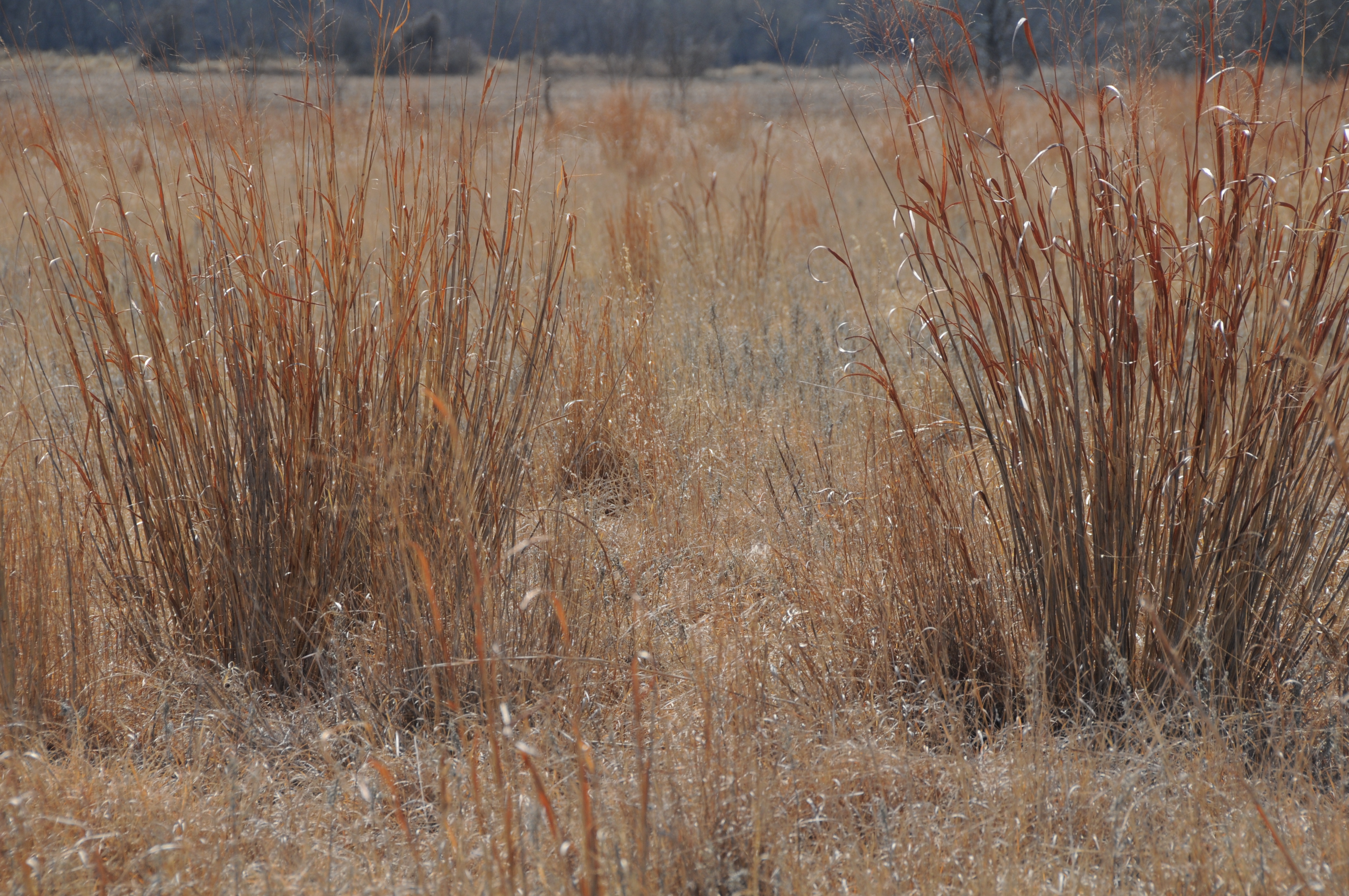
While in the field today I kept a written journal and took photographs with another camera.  I am posting the photographs of high grass in the pasture.  The Big bluestem is “big,” reaching six-feet tall.  The Little bluestem is about three-feet tall.  For now, enjoy the field photographs.


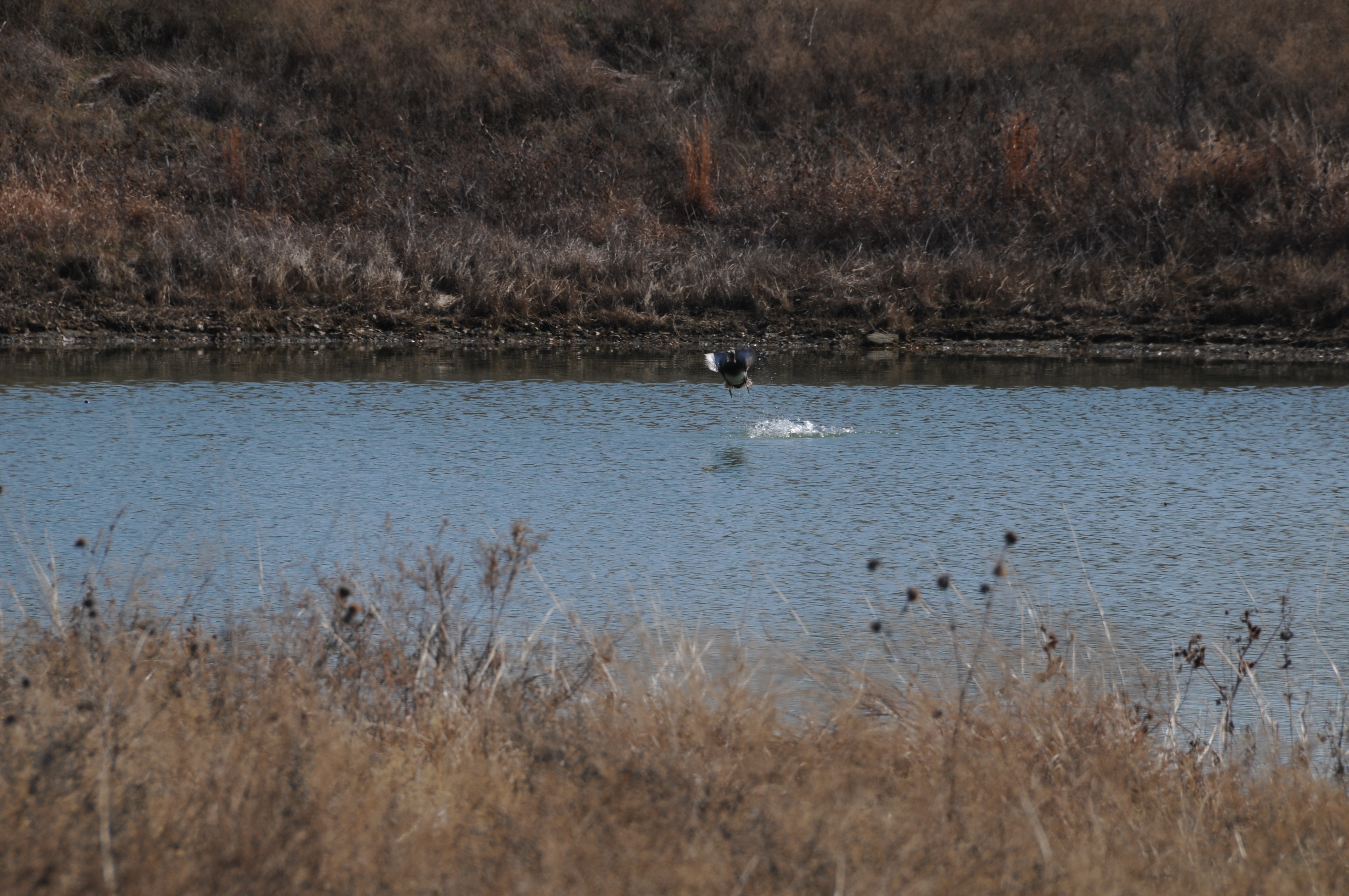
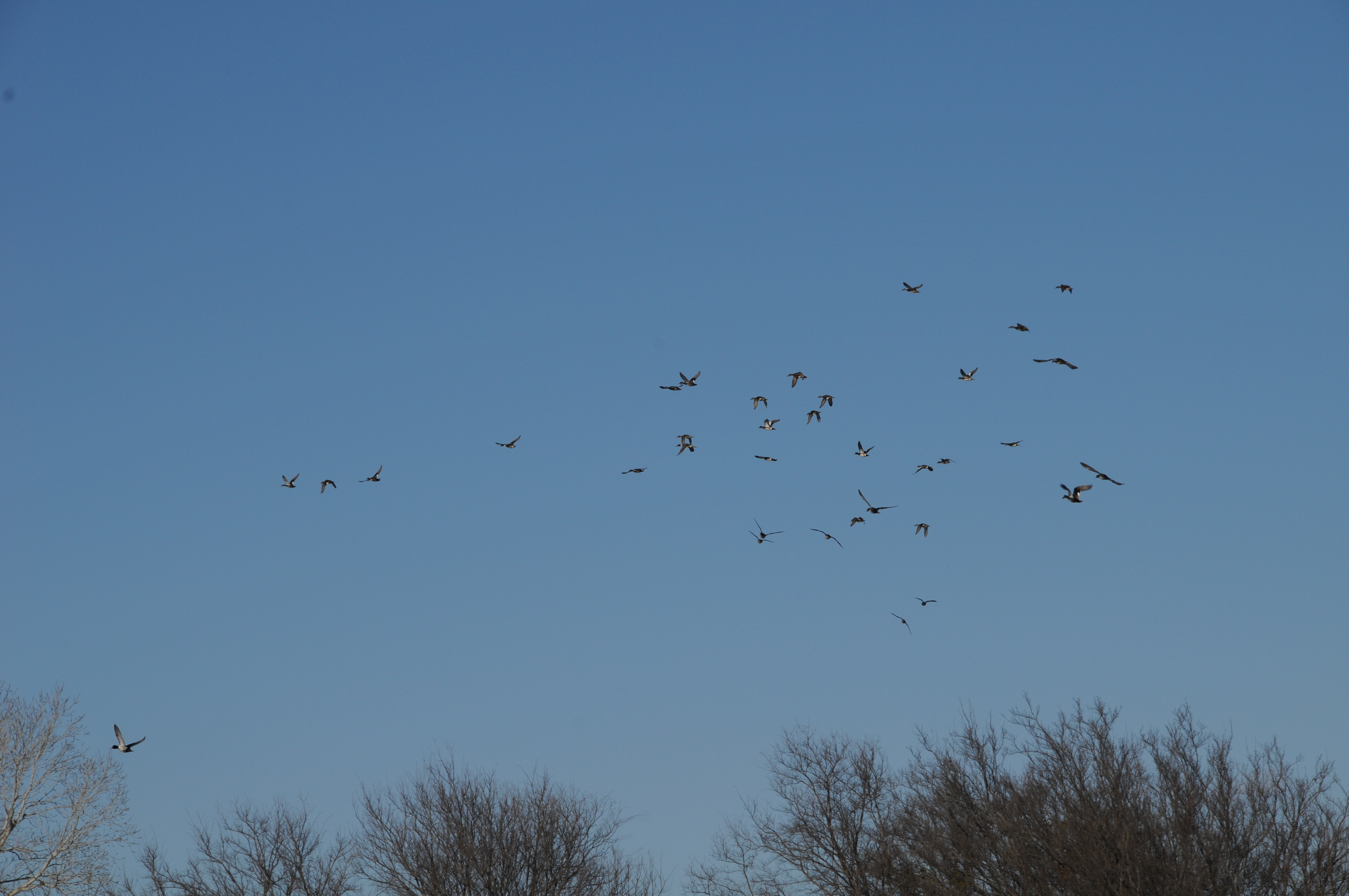
Unidentified duck taking flight from the stock pond.

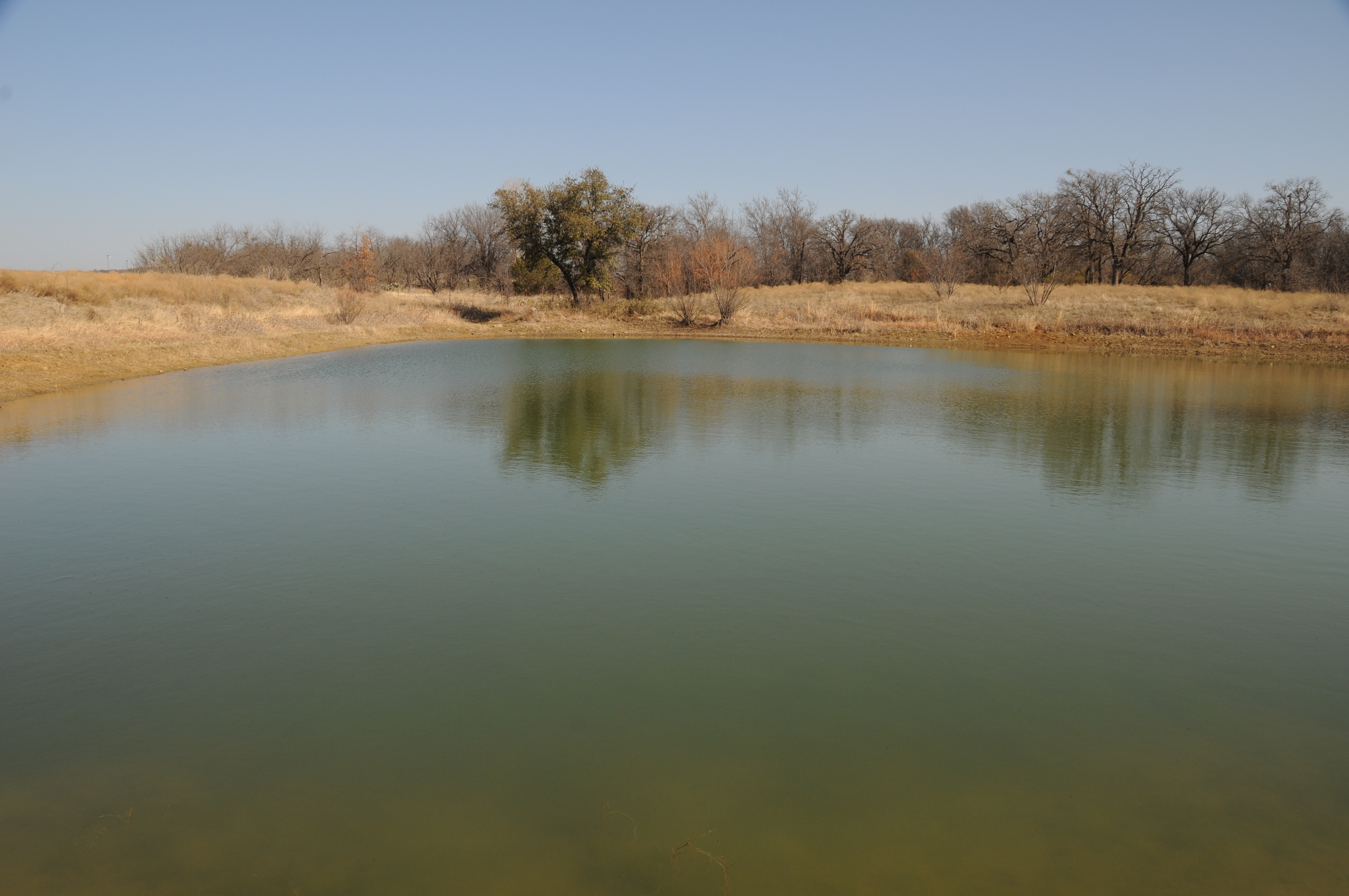
Still waters on the stock pond, ducks have taken flight to Blue's pond to the north.

A typical Cross Timbers life zone that has been harvested and cut for several generations. The tree grove is rebuilding itself.

Big bluestem, Flying Hat Ranch, Texas, February 2011.

15 Comments

Filed under Bluestem Field Log (Live)

Kiowa wind, grass, colors

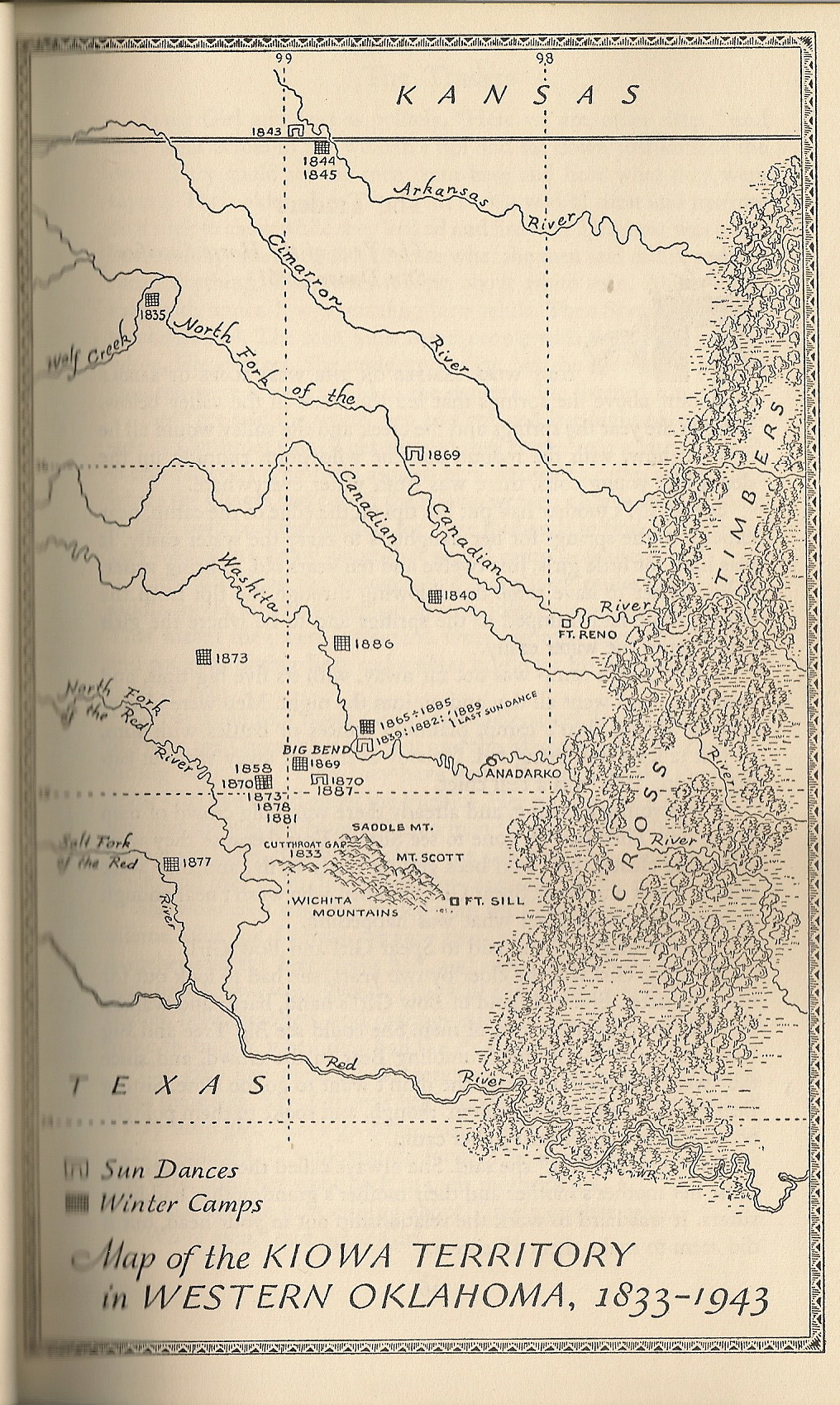
Map of the Kiowa Territory in Western Oklahoma, 1833-1843, from Alice Marriott, The Ten Grandmothers, p. 15.

In 1944, Alice Marriott in her book, The Ten Grandmothers, recorded Kiowa Spear Woman’s narrative of the motion and color changes of prairie grasses.  The “Ten Grandmothers” are ten Kiowa medicine bundles.  The bundles still exist, but they have not been opened since the 1890s when the last person who had the right to see the contents died.

For Leah the south porch of the big house was the best part of home.  Here you could sit and watch sunrise or sunset; watch the shapes of the earth change and move as the sun moved.  Then you knew, when you sat out there, that the earth was alive itself.

Spear Woman sat beside her granddaughter and thought that the earth had gone dead.  Lights played and moved, and cloud shadows came and went, but the earth itself had somehow died.  It was all one color now; not like the old days when its shades really changed and flickered like flames under the wind.  She stirred and sighed and spoke.

When the buffalo moved across it, there were other colors and other lights.

The thought was near enough Leah’s own to startle her.  There are lots of colors there now.

Her father spoke behind them.  Not like there used to be.  In the days that even I remember, there was one color when the wind was from the north and another when it was from the south, one from the east and another from the west.  Now the grass is all one color on every side, and it doesn’t change with the wind.

Sometimes the colors change.  Down near Lawton there is a prairie where the grass takes different colors.

* * *

[Spear Woman insists they travel to Lawton (Fort Sill, Oklahoma), fifty miles away.]

She brought her best Pendleton blanket from the trunk and spread it over the seat.  She put on her very best clothes and painted her face….

Two lines of high, tight fence spread across the prairie from a gate, and Spear Woman sat stiff, suddenly.  What is that!  That is grass like the old days.  Real grass.  All different colors.

It was, too.  It was like changeable silk, the kind the Delawares used to trim their blankets.  Yellow as the wind struck it; rose-color as it died away; then a sort of in-between color, with patterns that moved like patterns in silk when you folded it….

Shade was not even in sight, and when they had driven through the gates, with the lines of the fence on either hand, it was still not easy to find.  Spear Woman didn’t care.  She sat and watched the grass turn over in the sun, flickering and bending and straightening like little campfire flames, and was happy.  It was the old kind of grass, the old, rippling, running prairies, even if there were fences.  She was glad her eyes were dim, because she didn’t always see the fences, and could forget about them.  It was all peaceful and alive again.

From Alice Marriott, The Ten Grandmothers, pp. 285-288.

* * *

When I was a boy, my grandmother drove between Brownwood and Bend, Texas, near San Saba to visit relatives.  I watched fields of grass sway in the wind on either side of the road, a narrow two-lane highway.  She would point out to me where she and her family had camped and where she had seen buckboard wagons ascend a hill along the creek, the hubs carving their initials along the cliffs.  I saw them and put my hands in wagon-hub grooves when we stopped to rest.  The prairie wind flowed over the grass, moving stems and leaves in a rhythm, a wave of motion like water I saw in Corpus Christi Bay.

* * *

Last year I planted six acres of native grasses in the Pecan Tree Pasture.  The grasses are native to the Cross Timbers of Oklahoma where Spear Woman found peace again, and the grasses are native to our ranch that is also designated as Cross Timbers.  The grasses in our pastures grow waist-high, chest-high in some areas, and when the prevailing wind, a southwest flow from Mexico, crosses the pastures, grasses move and bend and change color.  As I go up the road towards Huckabay, Texas, about six miles away, I always notice a very old stand of Bluestem that turns reddish-brown in the Fall and Winter, but becomes blue and green in the Spring.  The stand of Bluestem is only an acre in size and machines have not touched it in many years for it is on the side of a hill.  It is old, that family, and I care for it.  If I could move that acre of old Bluestem to my ranch, I would.  I can’t.  But I have planted its relatives in the Pecan Tree Pasture and there I shall attend to their health and growth.

______________________________

Notes:

The citation is: Alice Marriott, The Ten Grandmothers, Norman: University of Oklahoma Press, 1945.  I have the fourth printing, October, 1951.  In the excerpt, I have omitted quotation marks and substituted italics for the spoken words.

Lawton, Oklahoma, is also the home of Fort Sill, Oklahoma, that is seen in the map above.  If you click on the map, then enlarge it with your computer, you can see more clearly the locations of encampments and the Sun Dance locations.  The Cross Timbers designation flows all the way down into Texas and includes our ranch, Flying Hat Ranch, Mingus, Texas.

12 Comments

Filed under Flying Hat Ranch, Life in Balance, Life Out of Balance, Nature Quote of the Day

Winter day of my content

Duck flight, Flying Hat Ranch, Texas, 2011

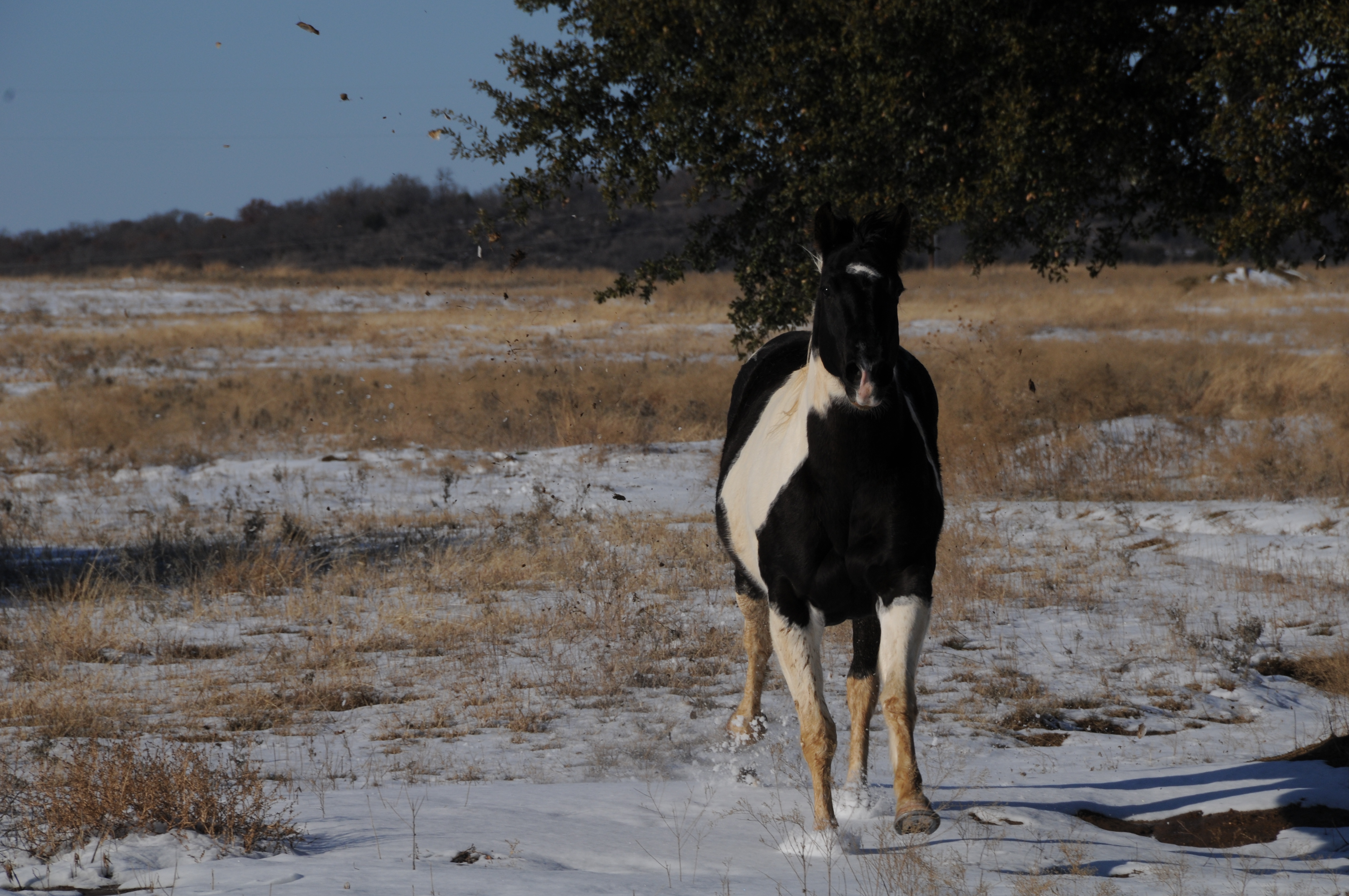
The temperatures rose to 35 degrees and the sun came out, melting the snow about the place.  Corrals turned to mud.  Meadow Lark, White-crowned Sparrow, and Chickadee scattered away from their emergency ration station in the barn alleyway and I turned Star out so that he could run about the pastures and go to the county road to visit his friends at the Nowack place.  I saw deer track along the grove lane and vowed to throw corn near the salt block tomorrow.

Star galloped through snow and mud to the pond and as we both made our way towards the barn, ducks flew upward from their browsing, but circled back to the pond, dousing their beaks, grasping algae and minnow.  A west wind blew across the snow and I wore sunglasses to reduce the glare of the sun.  After I fed Star, I walked up the hill to the house, strongly striding because cold air filled my lungs and I was content with Winter.

Star galloping, Flying Hat Ranch, Texas, 2011

13 Comments

Filed under Ducks, Horses, Star

Why western American landscape photography matters

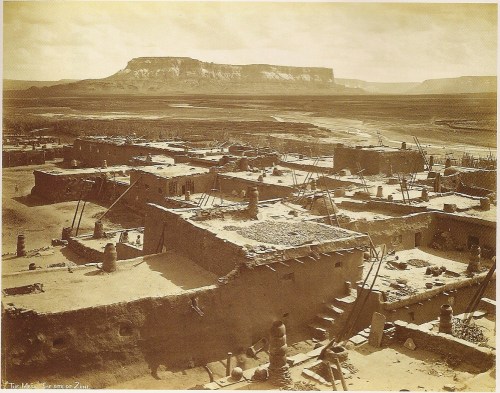
John K. Hillers, Mesa at Zuni Pueblo, ca. 1875

Cameron Walker writes in a recent issue of High Country News,

Recently, I asked Martha Sandweiss, a Princeton University historian and author of Print the Legend: Photography and the American West, why people are so attracted to Western photographs — hoping, really, that I’d learn something more about myself.

Photography, she said, became a way of reframing the country after the Civil War. “The West was a place beyond history, during a time when recent history was really painful,” Sandweiss said. Many landscape photographers kept their cameras trained on the wilderness and its prospects, often omitting the West’s history and people to create a powerful illusion of a place where only the future mattered. “There’s this intense desire to imagine the West as our last great hope.”

To Sandweiss and Walker, the West in landscape photography is a place beyond history, a place where only the future matters, the West as our last great hope.  I agree.  Placing this position on one side, say, the positive side, we have the other position that Western landscape photography displaced a painful past (Civil War in this case), created an illusion and omitted actual history (relocating Indians, extermination of vast herds of buffalo, hollowing out natural resources).  Both sides fit together although we repress the pain, illusion and facts in favor of a place beyond history.  Look at the following three photographs, continue reading and let me explain.
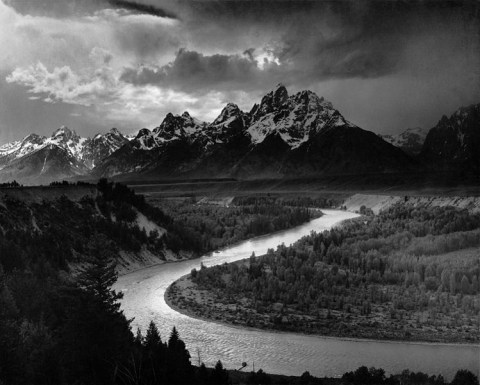
Ansel Adams, Tetons and the Snake River, Wyoming, 1942
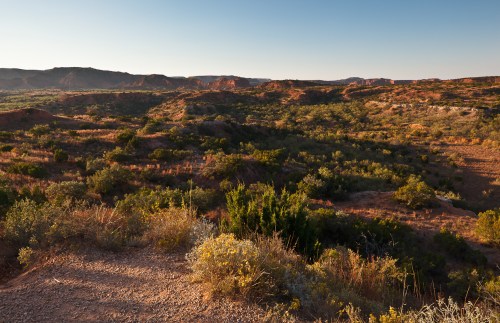
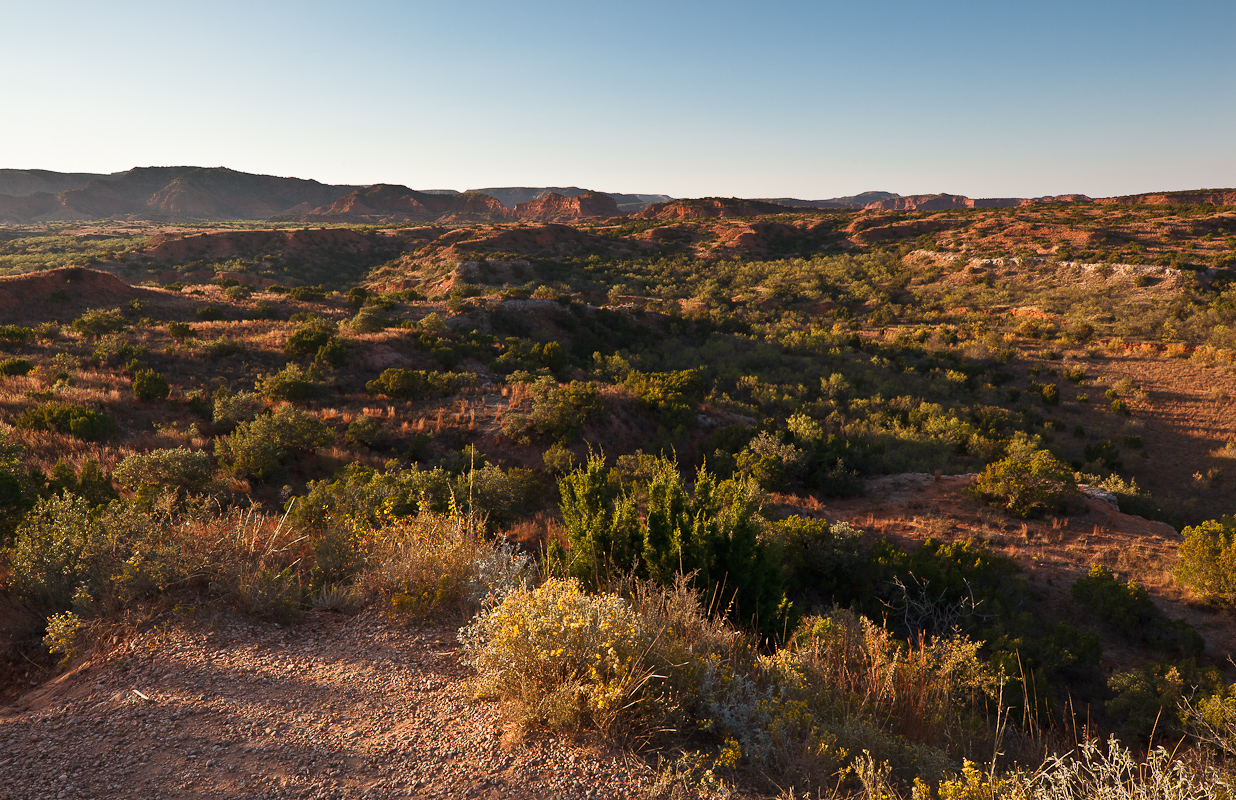
Jeff Lynch, Palo Duro Canyon, Texas, 2011
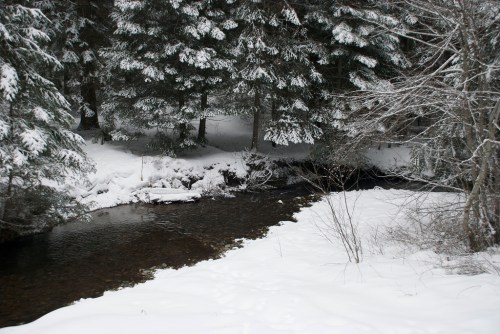
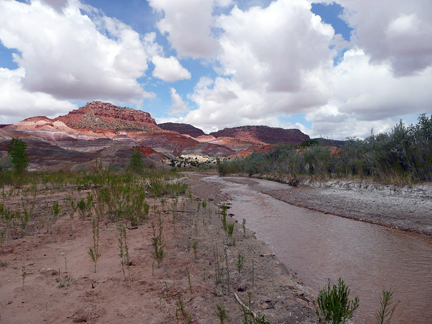
Montucky of Montana Outdoors, Cool, clear water, 2011

In the three photographs of Ansel Adams, Jeff Lynch and Montucky, each has captured a western landscape in pure form, without human artifice intruding — no church spires, courthouses, schools or bridges.  As we wander into these Wests, I submit that we want to leave behind those objects that change the terrain — automobile, antennas, roads.  Further, if we seek to preserve these pure forms, we must leave behind the ideologies of exploitation, over-consumption and race.  We may desire preservation, but the ongoing drive of the machine into the West can hardly be slowed down, much less stopped, as population expands.  We may want to leave behind the ideologies and terrain-changing objects and, though difficult, it is not impossible.

I do not view nature in these photographs as a cropping or harvesting opportunity and they are not presented as such by the artists.  I see rivers, streams, trees and mountains that are in themselves moving and living things, having the same molecular and atomic substance that make up my flesh, bones and hair.  Different arrangements for a time, the land and me, but substantially the same.  These three photographs give rise, I believe, to humanity’s kinship with the earth and invite gentle, ethical occupation of the land.  When I move into these Wests I do not want to construct a Monticello, but rather fit my home and hearth into the line and contour of the earth as in John K. Hillers, Mesa at Zuni Pueblo, seen above.

Leaving artifice behind, slowing the machine and having kinship with the earth in thought and deed has been tried before, and the dream has died ten-thousand times and it will die again.  Sand Creek and Ludlow coexist with the Rockies as backdrop in our history — blood and beauty.  Nonetheless, every vignette of western landscape offers the dream again, a chance to move on past the pain of history and into the wild without the machine.  Art museums, galleries and photographic books elicit a response in the viewer that there is a purity of form beyond the city, in all landscapes, all regions.  As a special art, western American landscape photography matters because it renews again and again what has been torn in our history.  We build upon beauty momentarily captured on film and not what has been shattered in history.  Western landscape photography can help us transcend what has terribly gone wrong.  As a result, I submit, we will take lighter loads and bigger hearts in our wagons when we migrate West next time.

It is all there in the photographs, beyond the lens of Adams, Lynch and Montucky.  They point the way.  Can you not see it?

* * *

Not all people that view landscape photography of the West will see renewal or lessen their impact on the land.  The West is still seen as ripe for exploitation and extraction.  New lamentations are writ everyday in the West and many of them are never heard, yet they are always seen — on film.

______________________________

Notes:

Cameron Walker, January 24, 2011, High Country News, interviews Martha Sandweiss, “Depth Afield: Why is the Western Image so Appealing?”

Mesa at Zuni Pueblo from James L. Enyeart, Land, Sky, and All That is Within: Visionary Photographers in the Southwest, Santa Fe: Museum of New Mexico Press, 1998.

Additional comment, February 2, 2011.  Caralee Woods of Kanab, Utah, sent this by e-mail and I post it as another example of the appeal of the western image.

Caralee Woods, Paria River, Grand Staircase-Escalante National Monument, Utah, 2010.

18 Comments

Filed under Life in Balance, Life Out of Balance