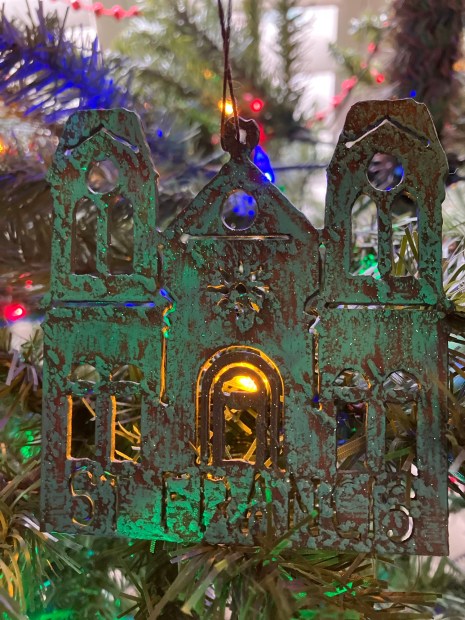
A Christmas Ornament Cathedral Basilica of St. Francis of Assisi, Santa Fe, New Mexico, 2025
Merry Christmas and a Happy New Year 2025 to you, your family, and all associated living things surrounding your life!
This Christmas ornament was purchased at a shop in Chimayo, New Mexico, several years ago. It hangs on a prominent spot on our Christmas tree. I adjusted the focus of the camera to have a golden ornament bulb shine through the door. The Cathedral in Santa Fe has a Christmas Eve midnight Mass most every year. Check the link I have provided to verify the Mass this year.
On Christmas Eve night, two other events in northern New Mexico occur worthy of attendance and participation: Canyon Road art walk in Santa Fe and the bonfire procession of the Holy Family clockwise around the Taos Pueblo Plaza. Take care in attending these celebrations. It’s impossible to make all three, but just one attendance at a celebration will make your evening bright.
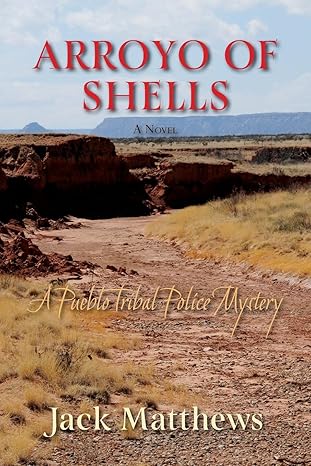
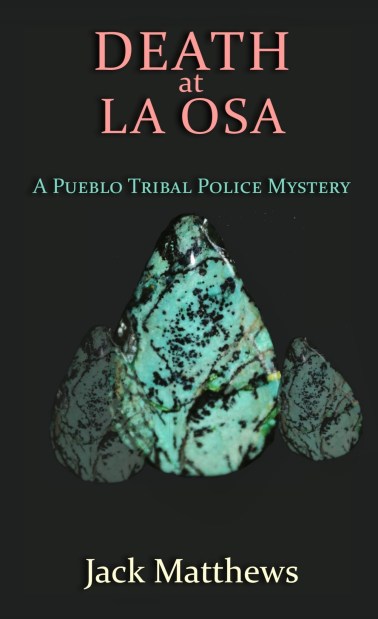
Newly released is ‘Arroyo of Shells: A Pueblo Tribal Police Mystery,’ published by Sunstone Press, Santa Fe, New Mexico. The novel, featuring the same characters and background as in ‘Death at La Osa,’ is tribal policeman Tafoya and U.S. Forest Service biology specialist Janet Rael search for stolen museum items and apprehension of a murderer in the high country of northern New Mexico. An attempt at kiva revitalization carries the story into noir-mystical worlds of pueblo ceremonialism and Navajo mythology. Three cultures interact, forming a matrix of detail of Puebloan, Hispano, and Anglo dynamics. Available through Amazon.com, BarnesandNoble.com, and Bookshop.org.
Quay County, New Mexico
QUICK LINKS TO ORDER ‘ARROYO OF SHELLS: A PUEBLO TRIBAL POLICE MYSTERY‘
Three thousand acres of old-growth prairie is at the backdoor of Fort Worth near Lake Benbrook.
I put the last acres of Flying Hat Ranch up for sale last week. The location for 29.15 acres is 38295 N SH 108, Mingus, TX. The posts of Sage to Meadow since 2009 have been centered on that ranchito, which had started out at fifty-three acres. Ranch Realty Pro, the broker being J. Bryan Davis, of Stephenville is handling the sale the land.
Yes, I am sad, even grieving, that we had to sell. But the traffic to and from Fort Worth on Interstate 20 has become risky, even dangerous. (From my home in Fort Worth to the Far Field is seventy-two miles.)
So this morning, I searched for public places near me that I could go out and trek and commune with nature. I found just a few miles away, the Fort Worth Prairie Park that is under the purview of the Great Plains Restoration Council.
3,000 acres of old-growth prairie
I never knew the prairie was so close, so protected from development.
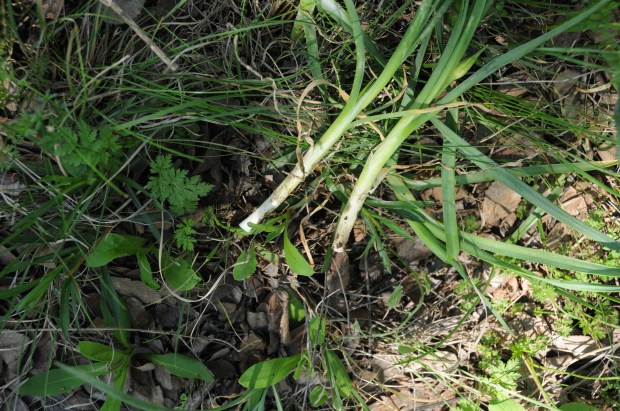
I took my Nikon camera and hiked three-quarters of mile into the prairie. I could see the flags of Fort Worth development and hear the planes overhead, but no matter, I wandered with the prairie and found wild onion and spring blossoms. I came across an old campsite (historic) that had not been used for several years. Here are some of the photos of my afternoon.
Pink and yellow blossoms
Blue blossoms
A family of onions
Fire ring
Look closely at the red ants busy tending their home
I am almost, but not completely, compelled to camp next to this chokecherry (?) tree in my front yard to watch the birds (juncos, etc.) strip the tree and come back time and time again.
Last year I saw the flock of birds that stripped the tree and identified them, but I did not write down my observations, so, here I go again and I will record this time.
I write this nature post and I do not have either bird or berry tree identified. But, so, I adore berry and bird regardless.
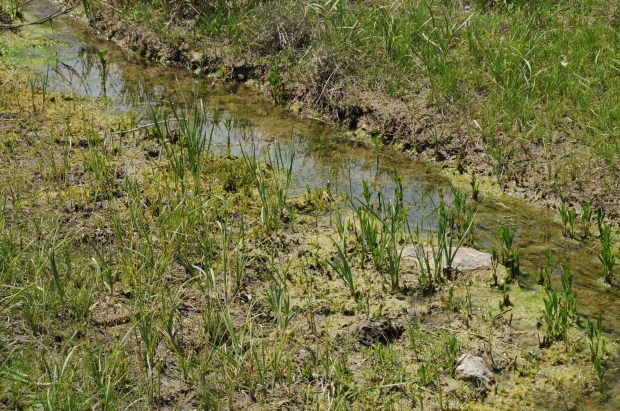
Last September I attended a water association meeting in Penasco, New Mexico. The acequia photographed above is one of several thousand water ditches and collateral offshoots in New Mexico. This ditch alongside the road to Dixon, New Mexico, is not a part of the water association at Penasco although the two towns are close together and divert off of the Embudo Watershed.
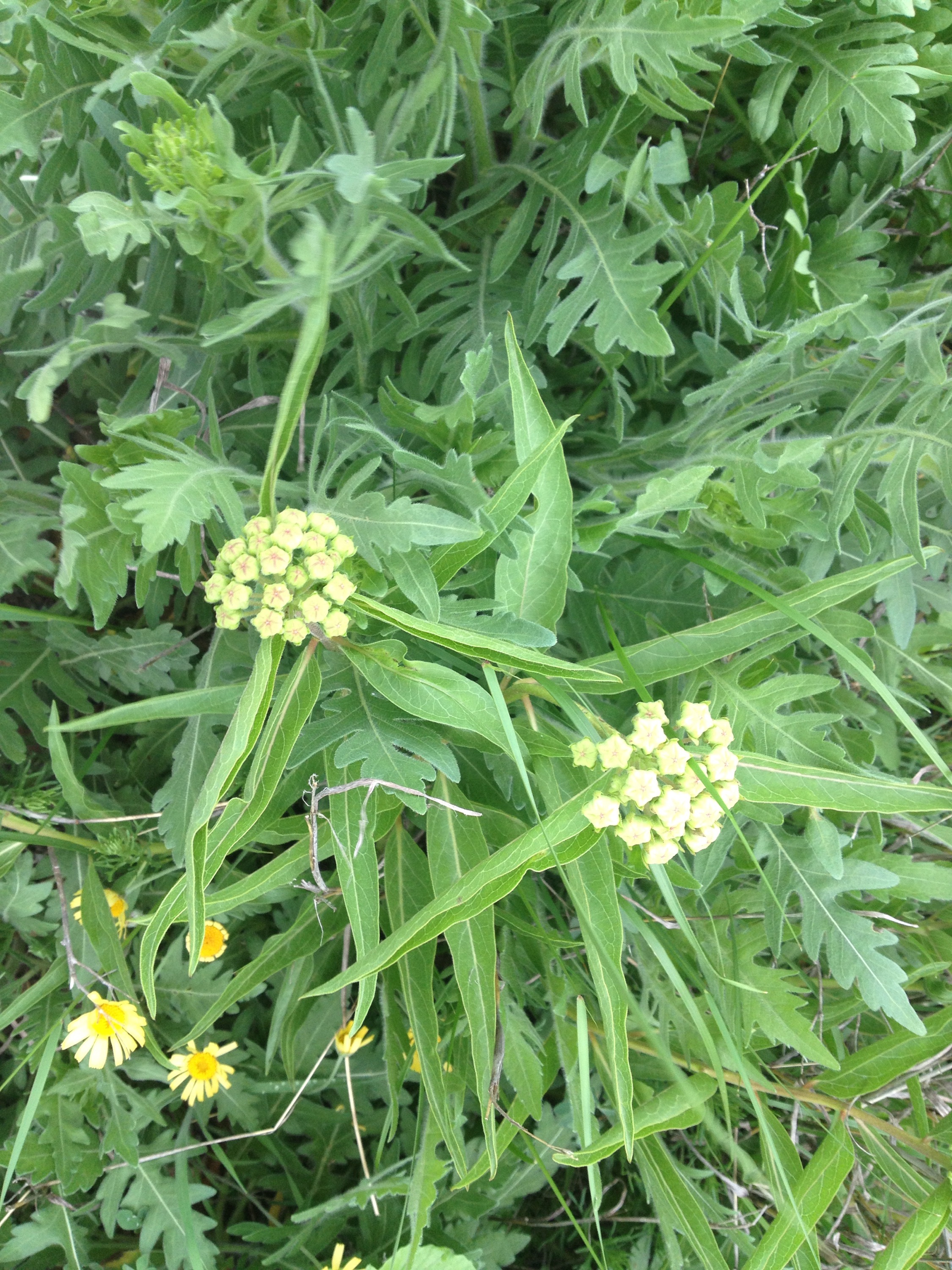
I have located three milkweed clusters since 2003 on my place–central Texas, Erath County. Today I sought the three clusters again, one directly in front of the house, one alongside the road to the barn, and the cluster in the far field, one-quarter of a mile away. I found only the cluster photographed above–the cluster beside the road to the barn. I found no milkweed in the far field nor in the front yard. I believe that this spring has been mild so far and some heat is needed to bring out other patches of milkweed. Today, as I walked the fields, I discovered a large Monarch in the grove that soared out of the grass and into the sky above the trees. A huge Monarch, one the largest I have ever seen. Then as I finished my field trip, in the front yard, a Monarch flitted above the cut-leaf daisy and lawn grass. Two Monarchs, one patch of milkweed that has ten clusters of blossoms (you can only see seven in the above photograph)–definitely an event to be recorded for 2015. I will continue to monitor the milkweed and Monarchs, posting the field trips I take to far and near fields on my place.
It is spring at my place, Flying Hat Ranch or Ranchito, and I am not sad, even though it is said, “April is the cruelest month.” I understand the sadness and lament, but yesterday I took several photographs of the constant and the transient forms on Flying Hat.
The constants are the live oaks and yucca. You see them, they seem always present, but the blossoms of plants erupt, then fade out. They are the “transients.”
Yet, as the blossoms drop off, transient as they are, I know their roots and stems remain. That is constant, and given another year about this earth, I will see them again.
Here in central Texas, Erath County, we remain in a drought. Since Christmas, however, rain has fallen and we do not have to boil our water before drinking. The date for near-complete water extinction has been extended into the future. No specific date for extinction has been given, but the February 15th date for extinction is no longer in effect.
In the photograph above, I hold a rosemary blossom, indicative of moisture in the air and soil about the large rosemary bush on the west side of the ranch house. The scent of rosemary lingers on my fingers as I type. I use the rosemary for several recipes, but I favor its use when I prepare a sauce for steaks or lamb chops.
* * *
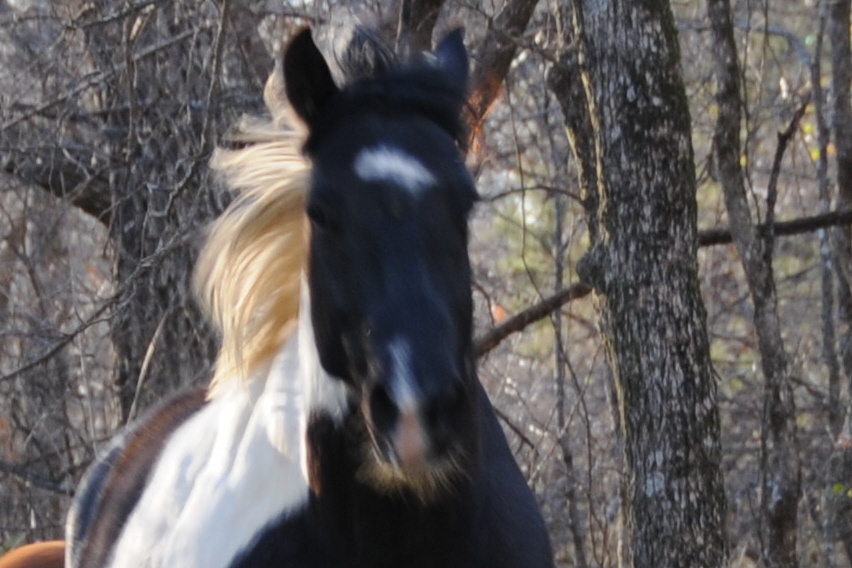
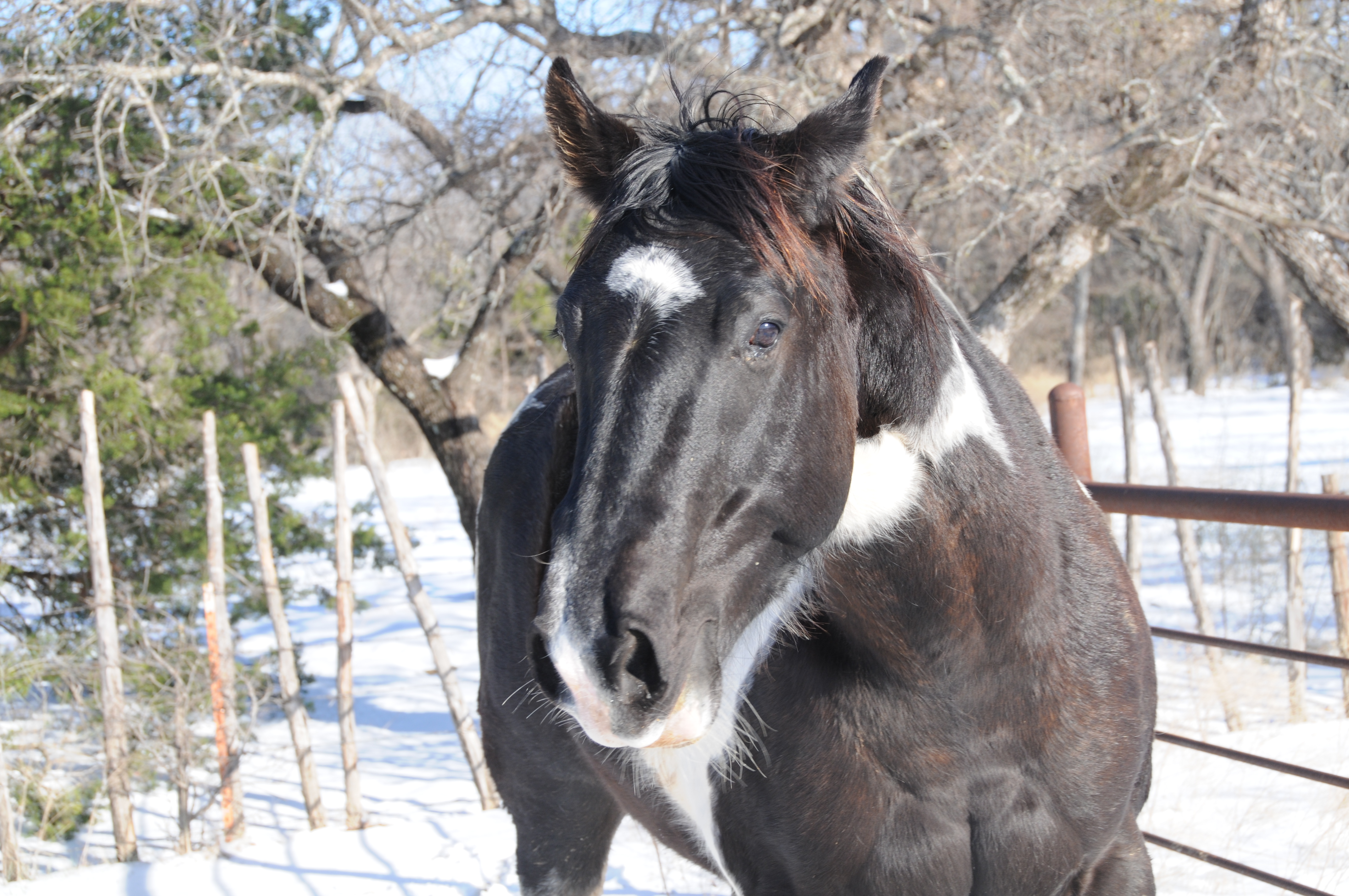
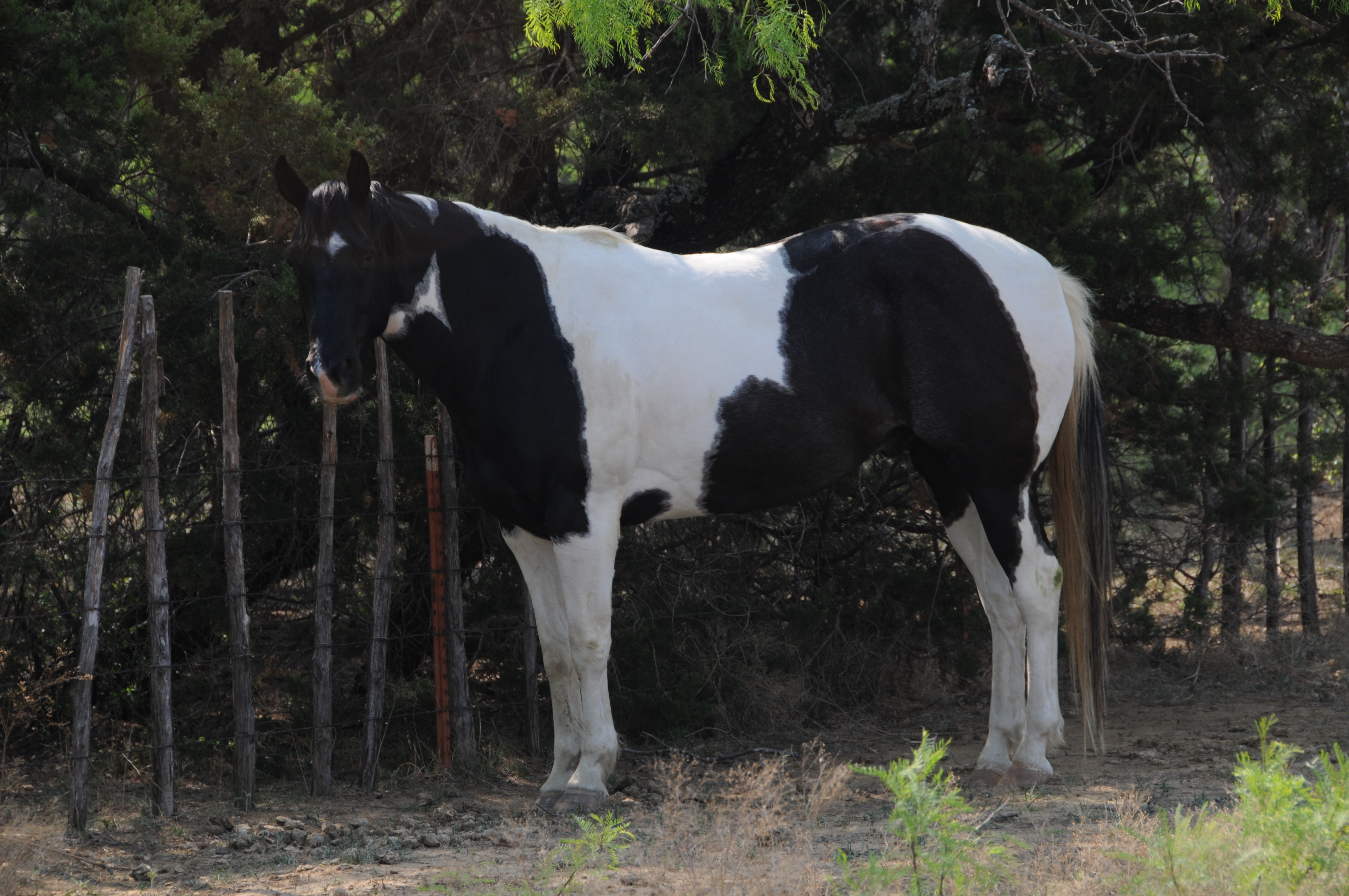
Before Christmas, my good horse Star died of colic. The old boy was fourteen years old and in his becoming ill, the first veterinary I called to the ranch said he was a strong, stoical horse in that he did not lash out at us, his handlers. Star was diagnosed at six in the evening and had to be put down at two o’clock the next morning at the Equine Sports Medicine and Surgery compound in Weatherford, Texas, where he was surrounded by three female veterinarians who took control and managed his passing. Without being sentimental, I still look out my porch windows, even today, to see where Star is in the pasture. Is he loafing under the mesquites? I know he is not there, but I still look.
Star Bars Moore APHA 808164, loafing in arena pasture under mesquites.
Currently, I am wrestling with water restrictions imposed by Barton Water Cooperative. My area is in a drought. Yet, so, I have green grass in all my fields for I have not allowed over-grazing by neither horses nor cattle.
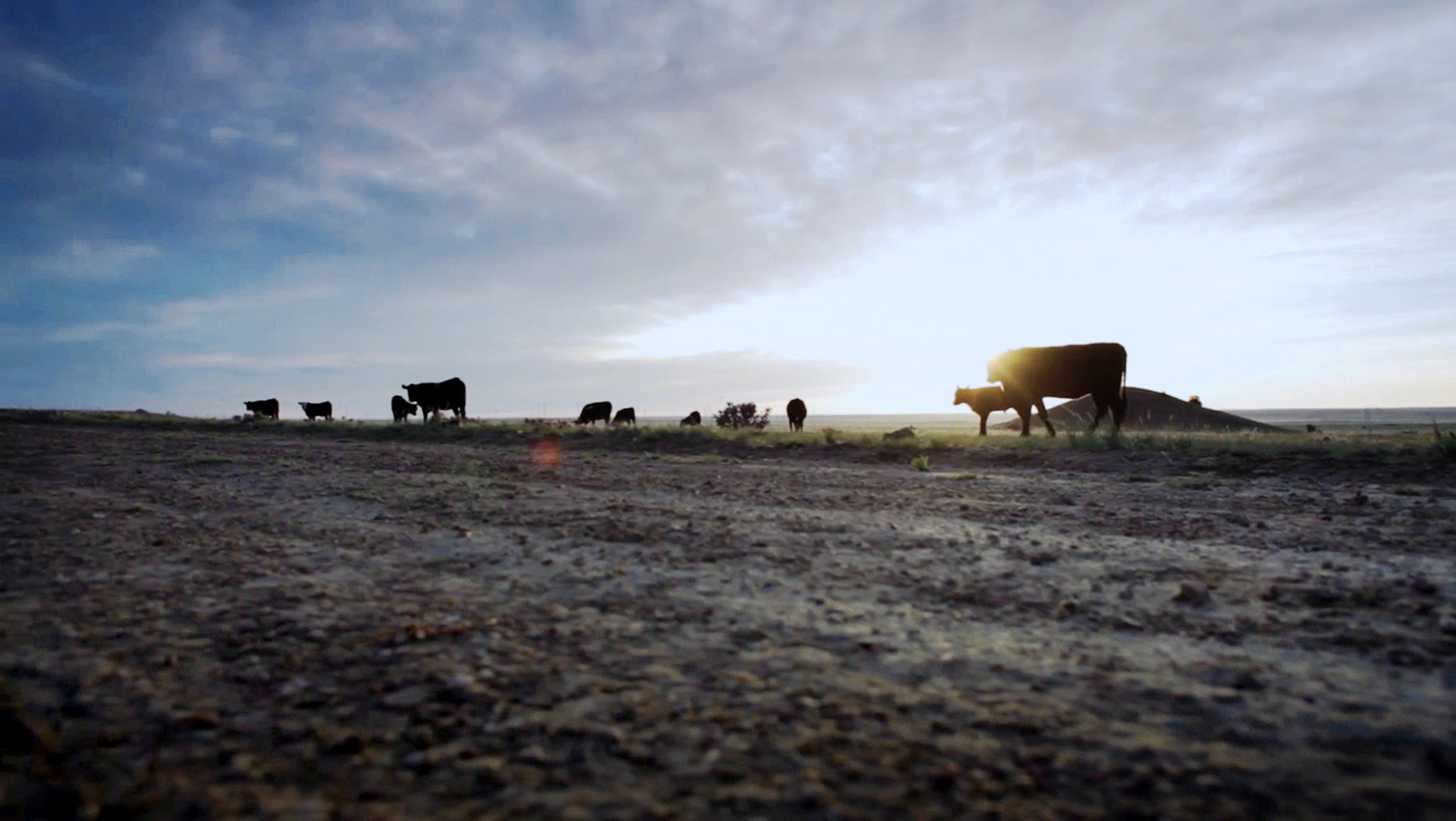
Kirk Hanna sought to employ a holistic environmental approach to cattle ranching. His struggles are detailed in this documentary, “Hanna Ranch.” See also the link within the article to the Holistic Resource Management site, originating on the savannas of Africa.
“This Colorado cattle rancher — a featured personality in Eric Schlosser’s 2001 best seller “Fast Food Nation” — was a forward-thinking cowboy who embraced Holistic Resource Management, a fruitful approach that, among other things, encourages herding methods less stressful to cattle and a more frequent rotation of livestock through pastures. Mr. Hanna used earth-friendly natural fertilizer; to attack weeds, he employed hungry goats.”
A mid-morning rain fell on the place. The air is cool, almost cold, and the sky has not cleared and probably will not this day. This photograph shows a break in the clouds towards the south, the town of Stephenville, lying about nineteen miles away. My mother came to Stephenville–I tagged along–and bought plants at Wolfe Nursery. The nursery had a large sign of a wolf that signaled the entry to the nursery that encompassed acres and acres of tended trees and several hothouses.
The rain caused an eruption of this blossom upon the sage near the house.
Fall has come to the place, the farm, the ranchito, the people of Sims Valley, and all the wildlife abounding.


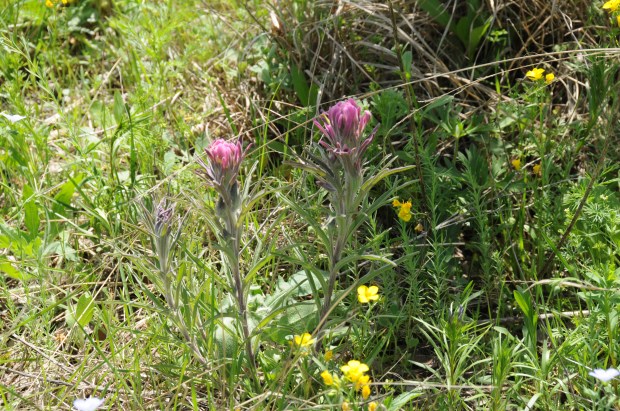



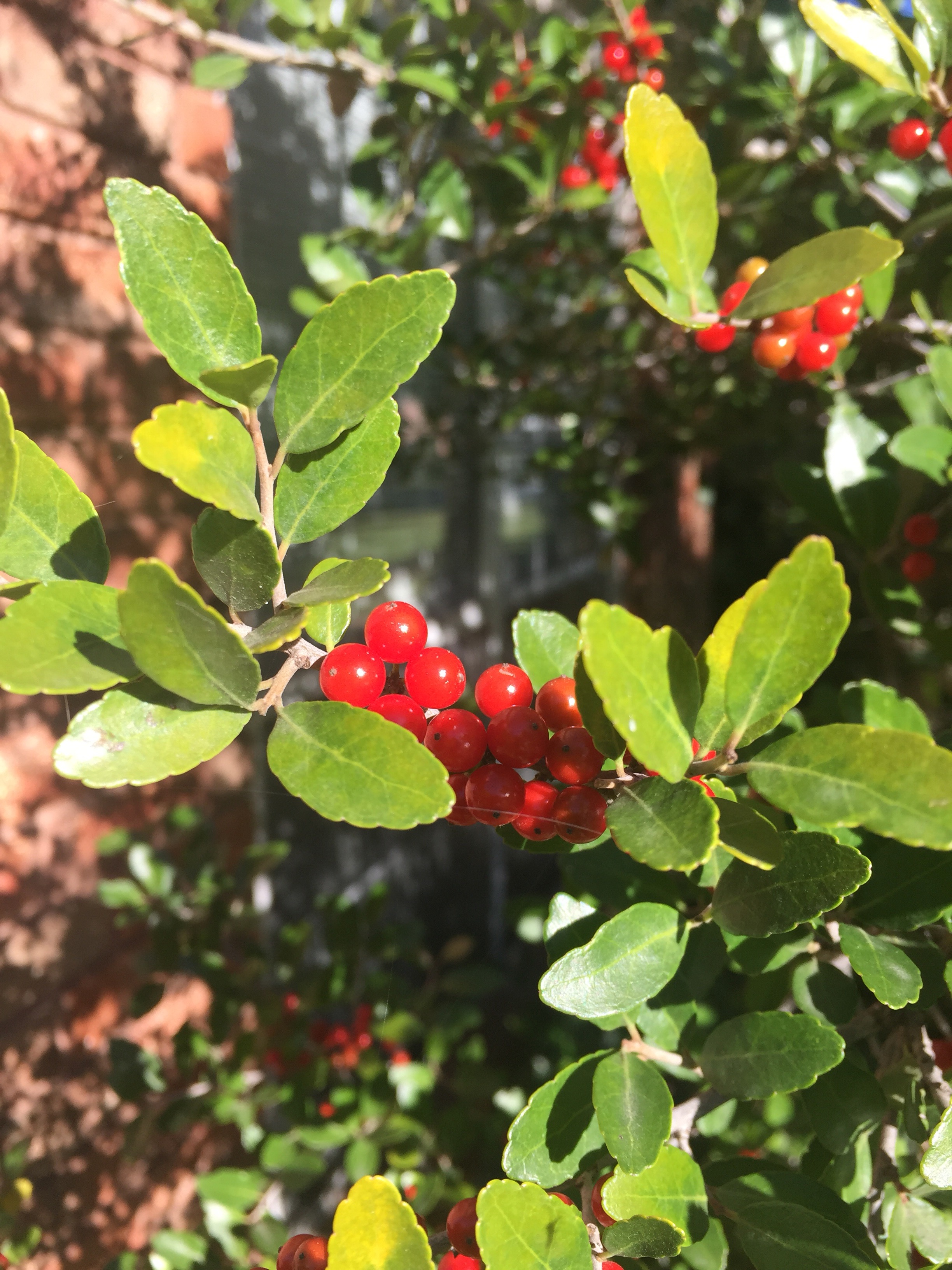 I am almost, but not completely, compelled to camp next to this chokecherry (?) tree in my front yard to watch the birds (juncos, etc.) strip the tree and come back time and time again.

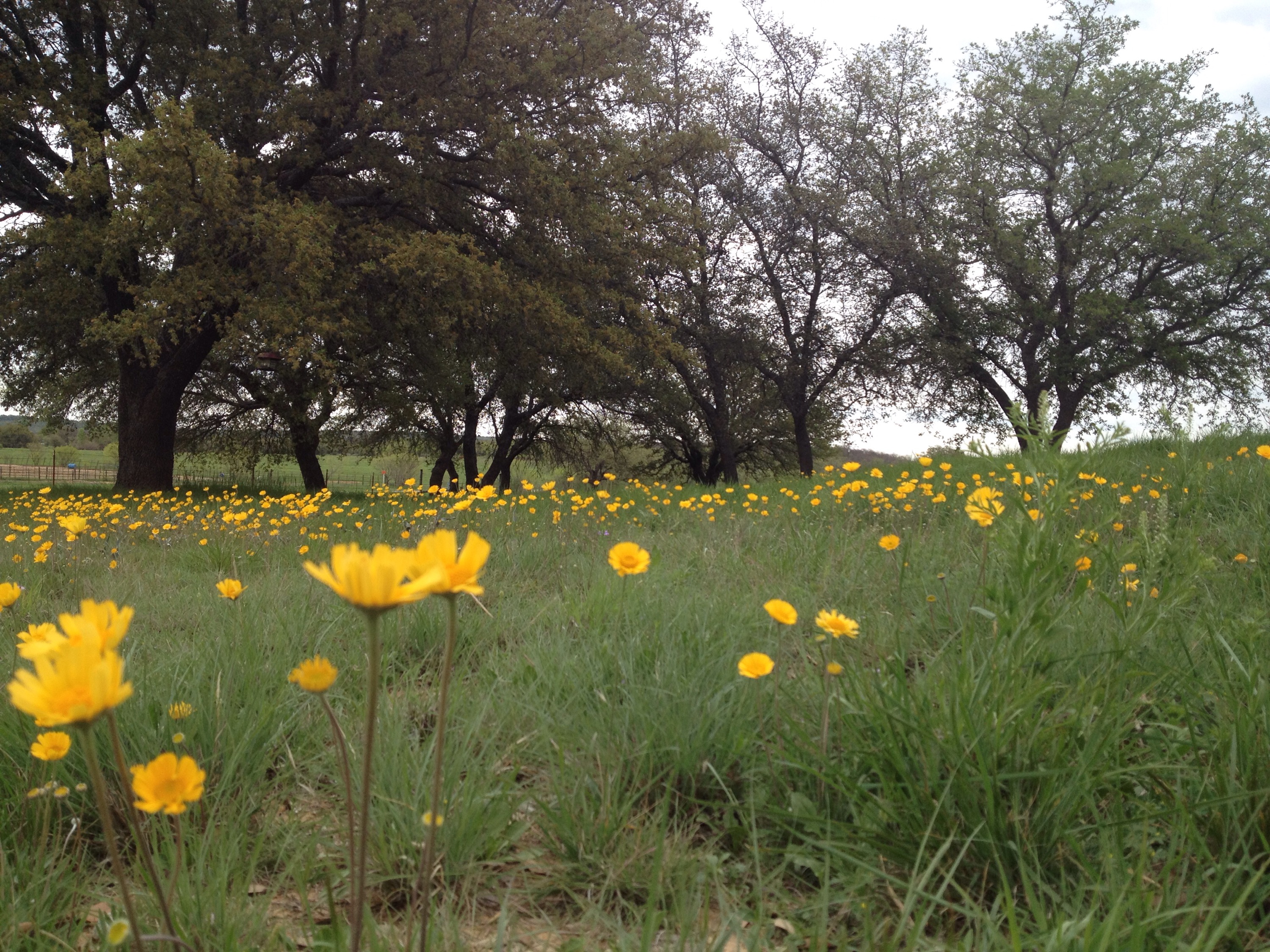
 It is spring at my place, Flying Hat Ranch or Ranchito, and I am not sad, even though it is said, “April is the cruelest month.” I understand the sadness and lament, but yesterday I took several photographs of the constant and the transient forms on Flying Hat.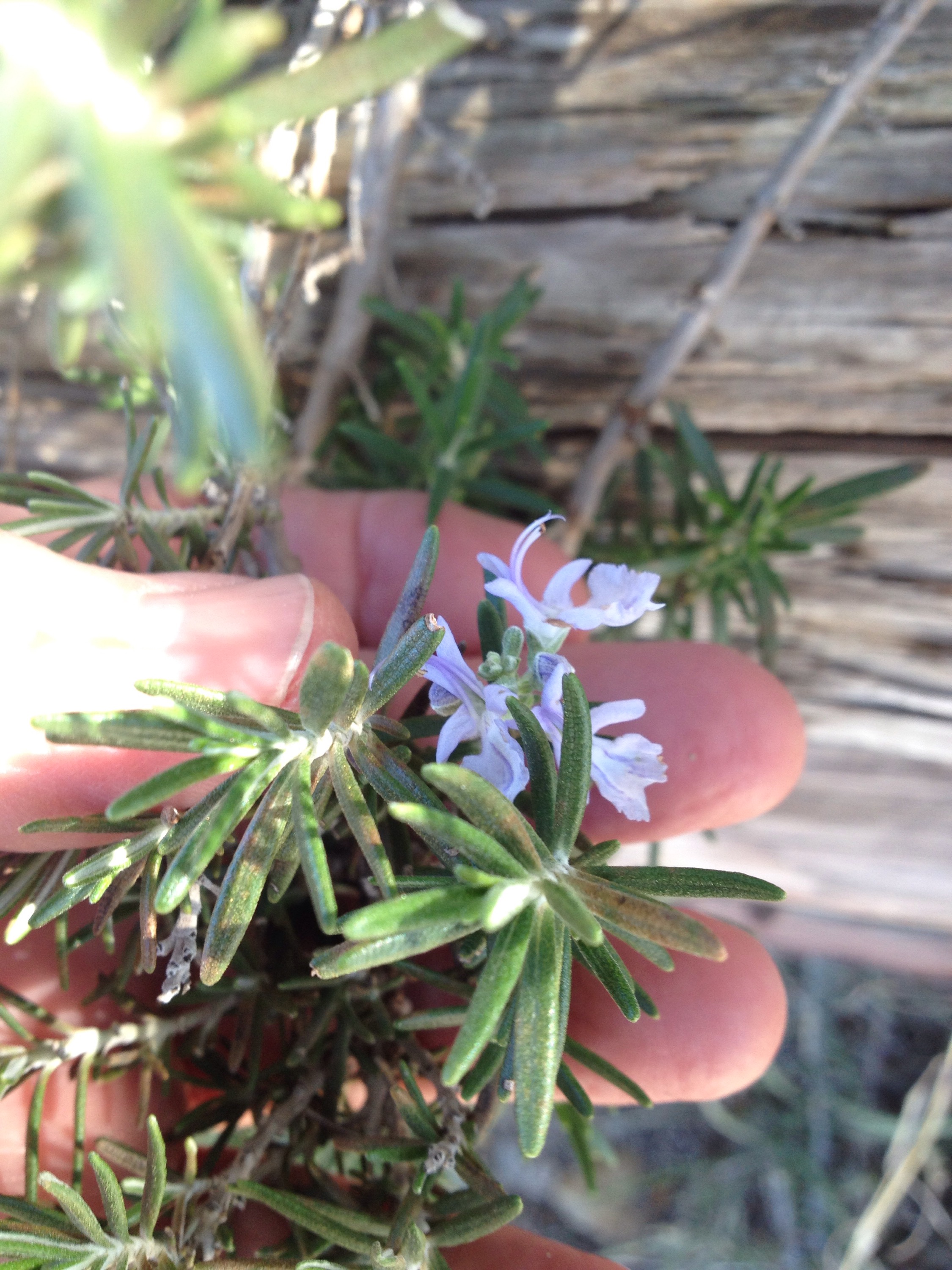




















 Sage to Meadow ~ Jack Matthews