Tag Archives: Conservation

Kiowa wind, grass, colors

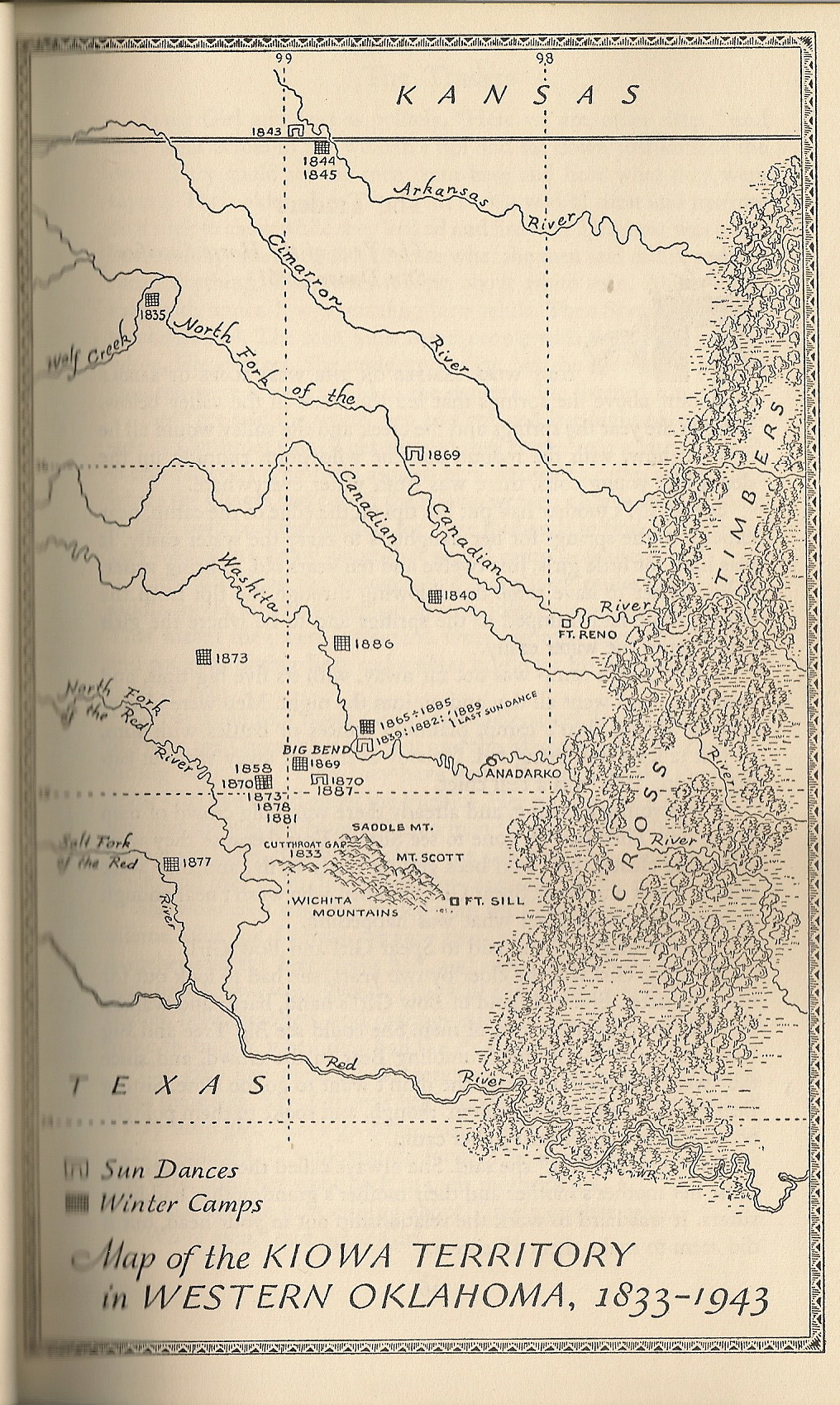
Map of the Kiowa Territory in Western Oklahoma, 1833-1843, from Alice Marriott, The Ten Grandmothers, p. 15.

In 1944, Alice Marriott in her book, The Ten Grandmothers, recorded Kiowa Spear Woman’s narrative of the motion and color changes of prairie grasses.  The “Ten Grandmothers” are ten Kiowa medicine bundles.  The bundles still exist, but they have not been opened since the 1890s when the last person who had the right to see the contents died.

For Leah the south porch of the big house was the best part of home.  Here you could sit and watch sunrise or sunset; watch the shapes of the earth change and move as the sun moved.  Then you knew, when you sat out there, that the earth was alive itself.

Spear Woman sat beside her granddaughter and thought that the earth had gone dead.  Lights played and moved, and cloud shadows came and went, but the earth itself had somehow died.  It was all one color now; not like the old days when its shades really changed and flickered like flames under the wind.  She stirred and sighed and spoke.

When the buffalo moved across it, there were other colors and other lights.

The thought was near enough Leah’s own to startle her.  There are lots of colors there now.

Her father spoke behind them.  Not like there used to be.  In the days that even I remember, there was one color when the wind was from the north and another when it was from the south, one from the east and another from the west.  Now the grass is all one color on every side, and it doesn’t change with the wind.

Sometimes the colors change.  Down near Lawton there is a prairie where the grass takes different colors.

* * *

[Spear Woman insists they travel to Lawton (Fort Sill, Oklahoma), fifty miles away.]

She brought her best Pendleton blanket from the trunk and spread it over the seat.  She put on her very best clothes and painted her face….

Two lines of high, tight fence spread across the prairie from a gate, and Spear Woman sat stiff, suddenly.  What is that!  That is grass like the old days.  Real grass.  All different colors.

It was, too.  It was like changeable silk, the kind the Delawares used to trim their blankets.  Yellow as the wind struck it; rose-color as it died away; then a sort of in-between color, with patterns that moved like patterns in silk when you folded it….

Shade was not even in sight, and when they had driven through the gates, with the lines of the fence on either hand, it was still not easy to find.  Spear Woman didn’t care.  She sat and watched the grass turn over in the sun, flickering and bending and straightening like little campfire flames, and was happy.  It was the old kind of grass, the old, rippling, running prairies, even if there were fences.  She was glad her eyes were dim, because she didn’t always see the fences, and could forget about them.  It was all peaceful and alive again.

From Alice Marriott, The Ten Grandmothers, pp. 285-288.

* * *

When I was a boy, my grandmother drove between Brownwood and Bend, Texas, near San Saba to visit relatives.  I watched fields of grass sway in the wind on either side of the road, a narrow two-lane highway.  She would point out to me where she and her family had camped and where she had seen buckboard wagons ascend a hill along the creek, the hubs carving their initials along the cliffs.  I saw them and put my hands in wagon-hub grooves when we stopped to rest.  The prairie wind flowed over the grass, moving stems and leaves in a rhythm, a wave of motion like water I saw in Corpus Christi Bay.

* * *

Last year I planted six acres of native grasses in the Pecan Tree Pasture.  The grasses are native to the Cross Timbers of Oklahoma where Spear Woman found peace again, and the grasses are native to our ranch that is also designated as Cross Timbers.  The grasses in our pastures grow waist-high, chest-high in some areas, and when the prevailing wind, a southwest flow from Mexico, crosses the pastures, grasses move and bend and change color.  As I go up the road towards Huckabay, Texas, about six miles away, I always notice a very old stand of Bluestem that turns reddish-brown in the Fall and Winter, but becomes blue and green in the Spring.  The stand of Bluestem is only an acre in size and machines have not touched it in many years for it is on the side of a hill.  It is old, that family, and I care for it.  If I could move that acre of old Bluestem to my ranch, I would.  I can’t.  But I have planted its relatives in the Pecan Tree Pasture and there I shall attend to their health and growth.

______________________________

Notes:

The citation is: Alice Marriott, The Ten Grandmothers, Norman: University of Oklahoma Press, 1945.  I have the fourth printing, October, 1951.  In the excerpt, I have omitted quotation marks and substituted italics for the spoken words.

Lawton, Oklahoma, is also the home of Fort Sill, Oklahoma, that is seen in the map above.  If you click on the map, then enlarge it with your computer, you can see more clearly the locations of encampments and the Sun Dance locations.  The Cross Timbers designation flows all the way down into Texas and includes our ranch, Flying Hat Ranch, Mingus, Texas.
12 Comments

Filed under Flying Hat Ranch, Life in Balance, Life Out of Balance, Nature Quote of the Day

Winter day of my content

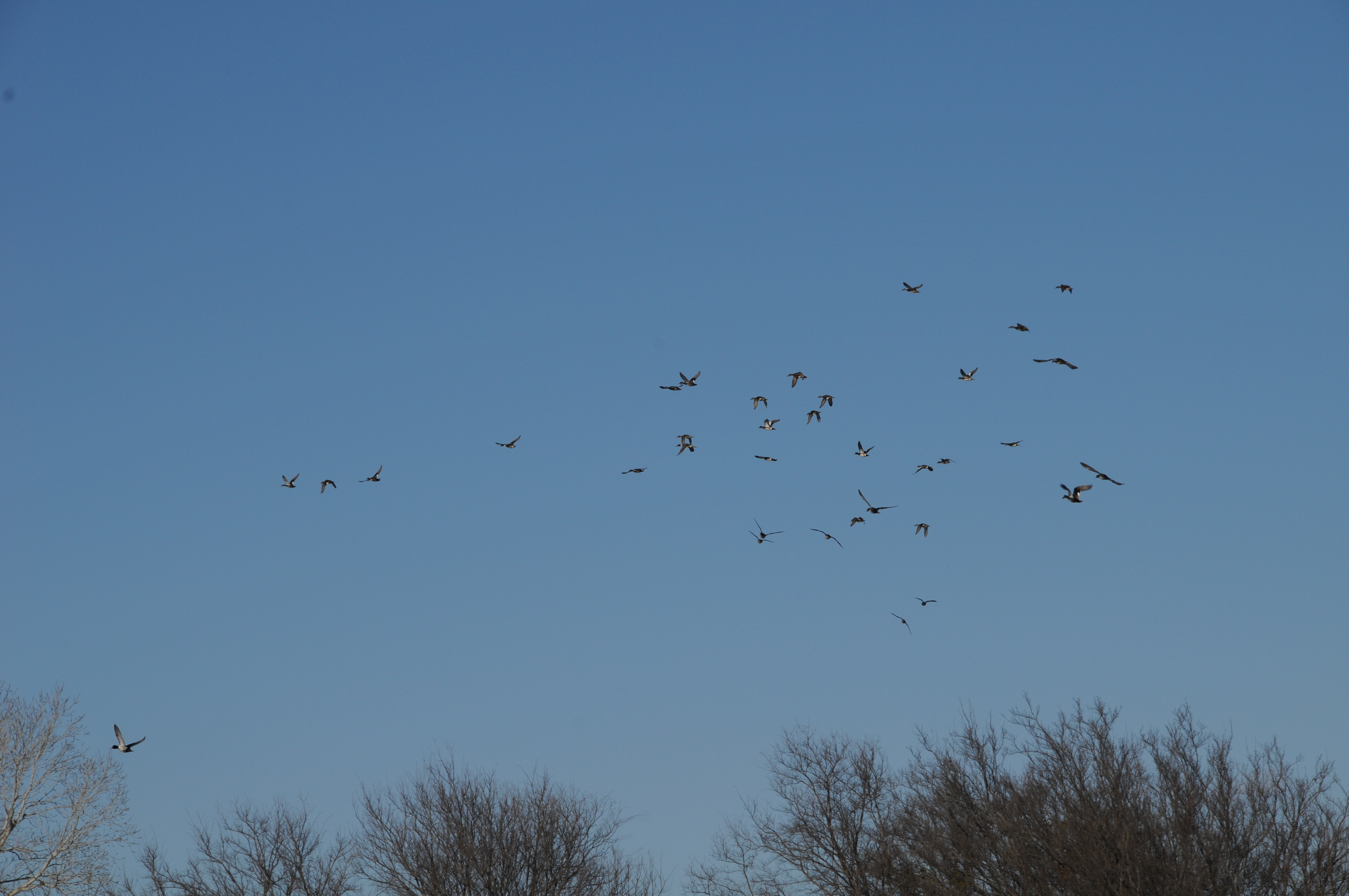
Duck flight, Flying Hat Ranch, Texas, 2011

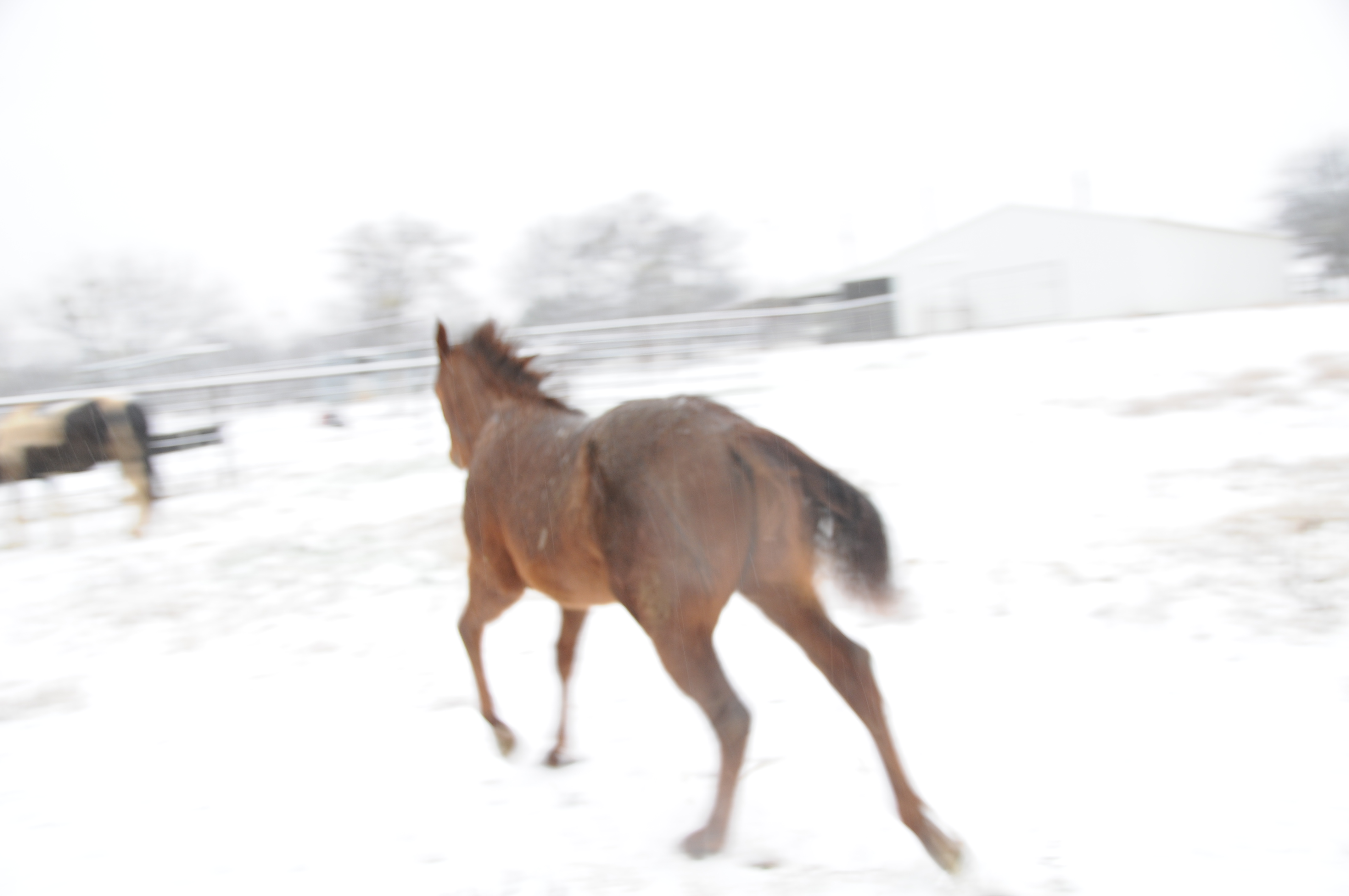
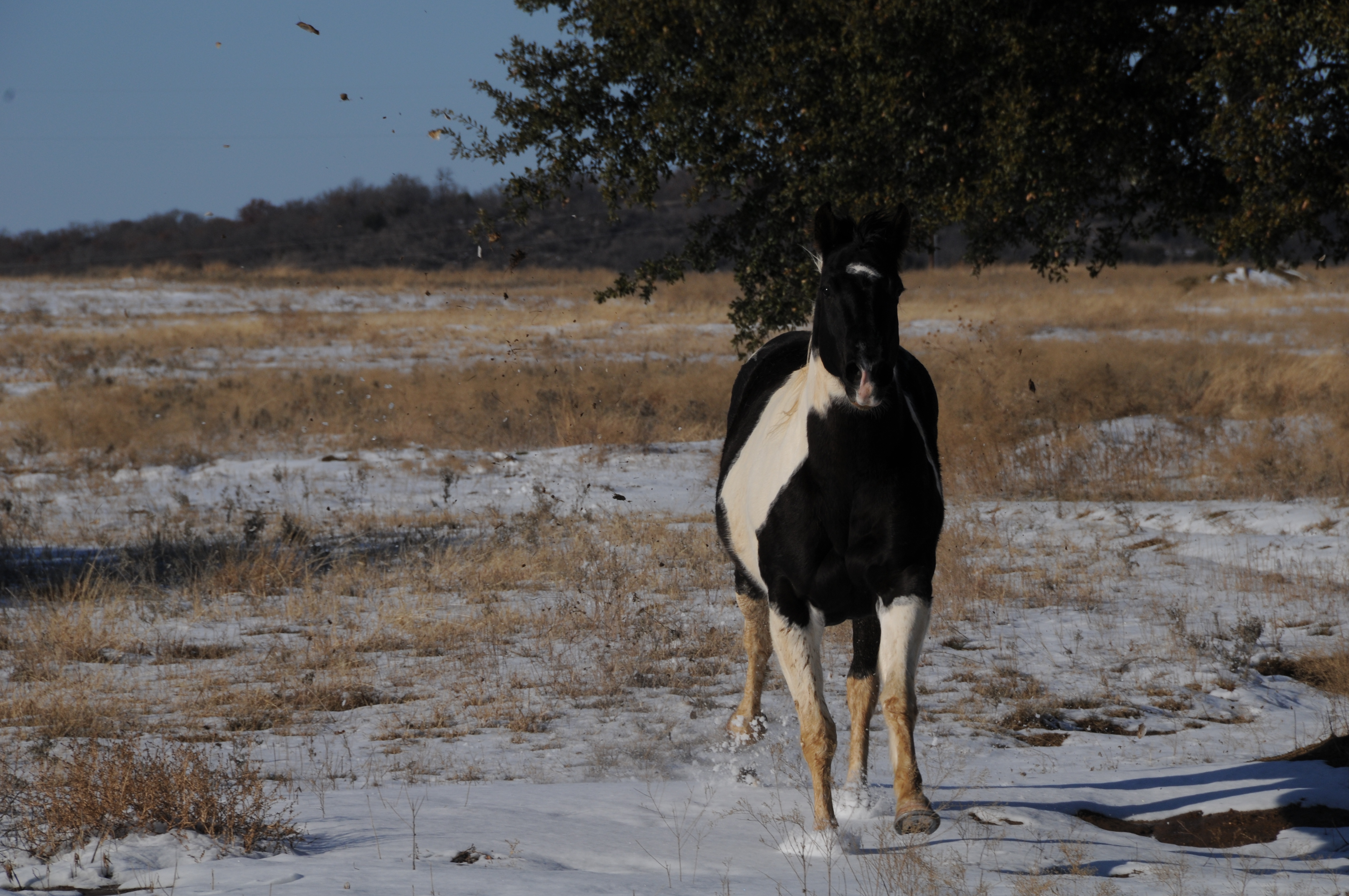
The temperatures rose to 35 degrees and the sun came out, melting the snow about the place.  Corrals turned to mud.  Meadow Lark, White-crowned Sparrow, and Chickadee scattered away from their emergency ration station in the barn alleyway and I turned Star out so that he could run about the pastures and go to the county road to visit his friends at the Nowack place.  I saw deer track along the grove lane and vowed to throw corn near the salt block tomorrow.

Star galloped through snow and mud to the pond and as we both made our way towards the barn, ducks flew upward from their browsing, but circled back to the pond, dousing their beaks, grasping algae and minnow.  A west wind blew across the snow and I wore sunglasses to reduce the glare of the sun.  After I fed Star, I walked up the hill to the house, strongly striding because cold air filled my lungs and I was content with Winter.

Star galloping, Flying Hat Ranch, Texas, 2011

13 Comments

Filed under Ducks, Horses, Star

Why western American landscape photography matters

John K. Hillers, Mesa at Zuni Pueblo, ca. 1875

Cameron Walker writes in a recent issue of High Country News,

Recently, I asked Martha Sandweiss, a Princeton University historian and author of Print the Legend: Photography and the American West, why people are so attracted to Western photographs — hoping, really, that I’d learn something more about myself.

Photography, she said, became a way of reframing the country after the Civil War. “The West was a place beyond history, during a time when recent history was really painful,” Sandweiss said. Many landscape photographers kept their cameras trained on the wilderness and its prospects, often omitting the West’s history and people to create a powerful illusion of a place where only the future mattered. “There’s this intense desire to imagine the West as our last great hope.”

To Sandweiss and Walker, the West in landscape photography is a place beyond history, a place where only the future matters, the West as our last great hope.  I agree.  Placing this position on one side, say, the positive side, we have the other position that Western landscape photography displaced a painful past (Civil War in this case), created an illusion and omitted actual history (relocating Indians, extermination of vast herds of buffalo, hollowing out natural resources).  Both sides fit together although we repress the pain, illusion and facts in favor of a place beyond history.  Look at the following three photographs, continue reading and let me explain.

Ansel Adams, Tetons and the Snake River, Wyoming, 1942

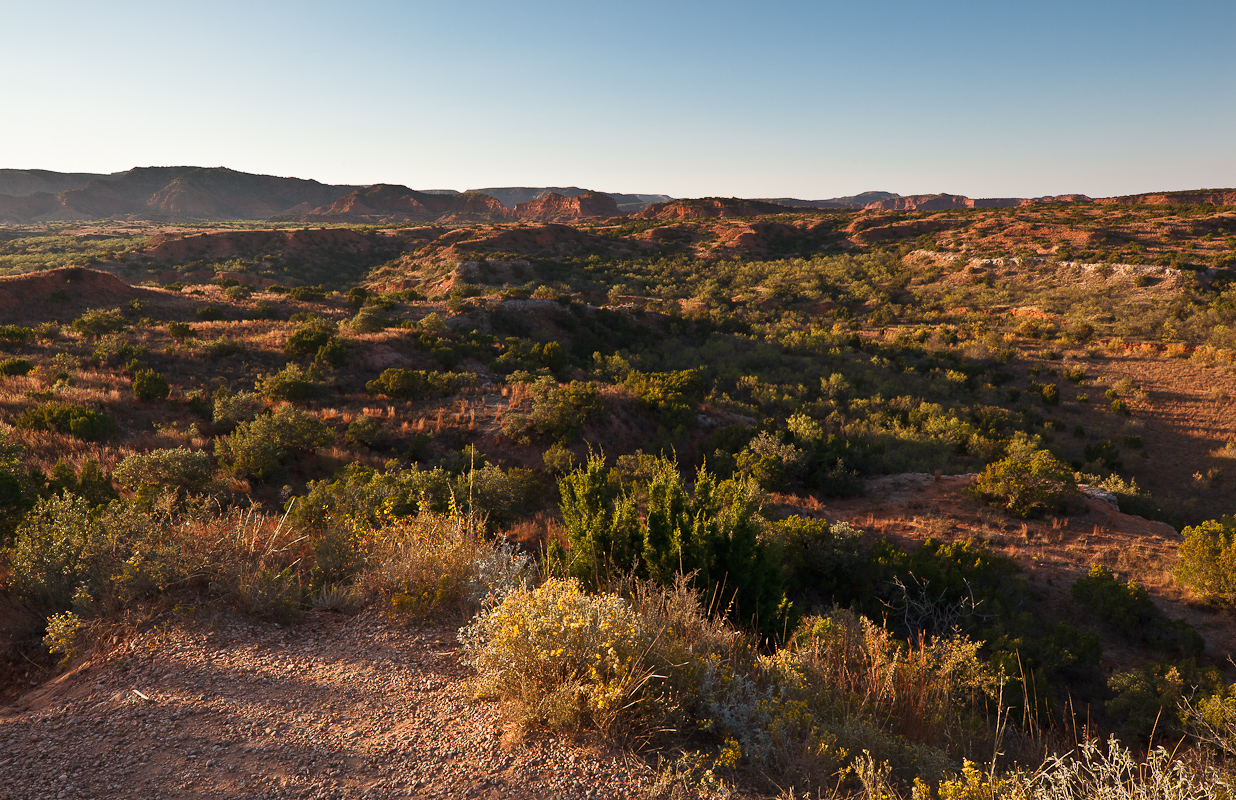
Jeff Lynch, Palo Duro Canyon, Texas, 2011

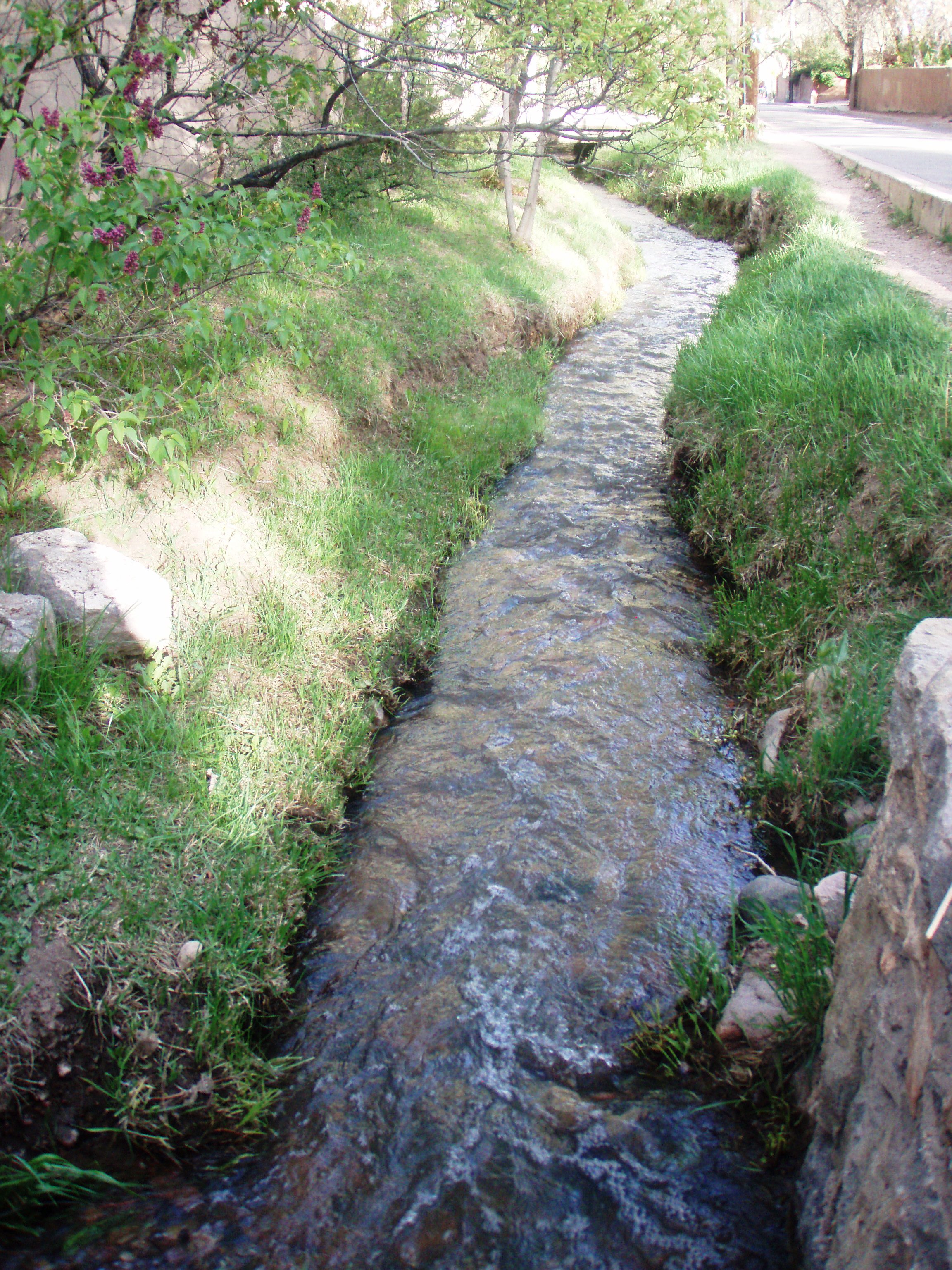
Montucky of Montana Outdoors, Cool, clear water, 2011

In the three photographs of Ansel Adams, Jeff Lynch and Montucky, each has captured a western landscape in pure form, without human artifice intruding — no church spires, courthouses, schools or bridges.  As we wander into these Wests, I submit that we want to leave behind those objects that change the terrain — automobile, antennas, roads.  Further, if we seek to preserve these pure forms, we must leave behind the ideologies of exploitation, over-consumption and race.  We may desire preservation, but the ongoing drive of the machine into the West can hardly be slowed down, much less stopped, as population expands.  We may want to leave behind the ideologies and terrain-changing objects and, though difficult, it is not impossible.

I do not view nature in these photographs as a cropping or harvesting opportunity and they are not presented as such by the artists.  I see rivers, streams, trees and mountains that are in themselves moving and living things, having the same molecular and atomic substance that make up my flesh, bones and hair.  Different arrangements for a time, the land and me, but substantially the same.  These three photographs give rise, I believe, to humanity’s kinship with the earth and invite gentle, ethical occupation of the land.  When I move into these Wests I do not want to construct a Monticello, but rather fit my home and hearth into the line and contour of the earth as in John K. Hillers, Mesa at Zuni Pueblo, seen above.

Leaving artifice behind, slowing the machine and having kinship with the earth in thought and deed has been tried before, and the dream has died ten-thousand times and it will die again.  Sand Creek and Ludlow coexist with the Rockies as backdrop in our history — blood and beauty.  Nonetheless, every vignette of western landscape offers the dream again, a chance to move on past the pain of history and into the wild without the machine.  Art museums, galleries and photographic books elicit a response in the viewer that there is a purity of form beyond the city, in all landscapes, all regions.  As a special art, western American landscape photography matters because it renews again and again what has been torn in our history.  We build upon beauty momentarily captured on film and not what has been shattered in history.  Western landscape photography can help us transcend what has terribly gone wrong.  As a result, I submit, we will take lighter loads and bigger hearts in our wagons when we migrate West next time.

It is all there in the photographs, beyond the lens of Adams, Lynch and Montucky.  They point the way.  Can you not see it?

* * *

Not all people that view landscape photography of the West will see renewal or lessen their impact on the land.  The West is still seen as ripe for exploitation and extraction.  New lamentations are writ everyday in the West and many of them are never heard, yet they are always seen — on film.

______________________________

Notes:

Cameron Walker, January 24, 2011, High Country News, interviews Martha Sandweiss, “Depth Afield: Why is the Western Image so Appealing?”

Mesa at Zuni Pueblo from James L. Enyeart, Land, Sky, and All That is Within: Visionary Photographers in the Southwest, Santa Fe: Museum of New Mexico Press, 1998.

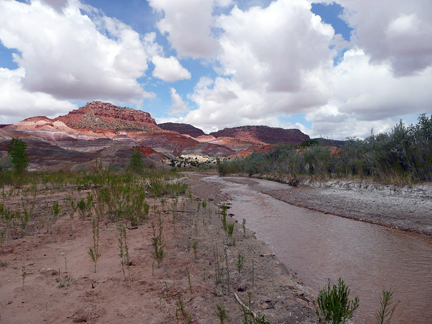
Additional comment, February 2, 2011.  Caralee Woods of Kanab, Utah, sent this by e-mail and I post it as another example of the appeal of the western image.

Caralee Woods, Paria River, Grand Staircase-Escalante National Monument, Utah, 2010.

18 Comments

Filed under Life in Balance, Life Out of Balance

Rough Creek drums

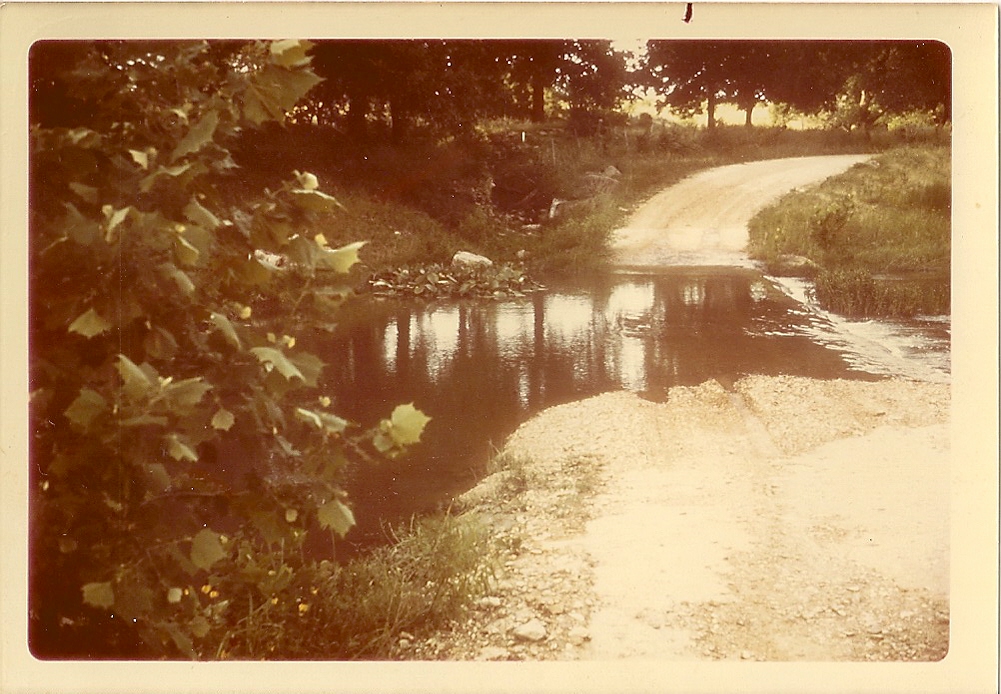
Rough Creek on the Parks Place, San Saba County, Texas, looking northeast, ca. 1970 (J. Matthews)

Relying upon memories of childhood can be misleading, even downright wrong in place and time.  As adults when we reflect upon last year’s vacation we may err in detail and conversations we thought we had.  Even so, memories preserve detail that can re-emerge with an almost preternatural force with a bit of reflection and musing, even to the point of re-evoking scents and cachets of the past that transcend the moment.

My mother and grandmother never hosted parties, but they hosted and partook of family celebrations — Thanksgiving, Christmas, Easter, birthdays.  And there were funerals, lots of them.  Funerals brought the Parks, McRorey, Morris, Ward, Millican and Ragsdale families together for burying kinfolk and re-establishing contact with distant relatives at Bend Sand, High Valley, Colony and Cherokee cemeteries in central Texas.  When I attended these functions, I had two sets of clothes, one for dressing-up and the other for outdoors.  Following the meal or funeral, I changed quickly into jeans and hiking shoes and explored and played with my cousins.  Having dinner at the Parks Place signified the best of all possible worlds because Rough Creek ran through it.

Rough Creek flowed through my great-grandfather’s place and formed the backdrop, foreground, side-scene and main-event for me.  Even today, still, Rough Creek continues to course through my mind and heart and its memory pacifies my days.  My great-grandfather’s ranch was called the Parks Place.  Not the Parks Ranch, the Parks Place.  Rough Creek cut the Parks Place in two parts, emptying into the Colorado River that bordered the east boundary.  For untold generations, Comanche Indians encamped at the confluence of Rough Creek and the Colorado, only to be driven away in the 1840s with the settlement of the area.  In the field north of the creek, after a hard rain, flint tools lay exposed.  A large midden revealed debris of hundreds of years.

I found stone tools, but my primary focus concerned the creek.  A county road ran through the Parks Place and at the creek, a large concrete slab had been poured, forming a stone-firm foundation for the road and continual pool of fresh water for perch, catfish and minnows.  Blue-colored dragon flies lit on green lily-pads and joined together in reproduction that I never fully figured out as to male and female flies.  Sycamore, cottonwood and pecan trees shaded most of the creek’s bank.  The water temperature was cold and it took a few minutes to become accustomed when as a boy my mother allowed me to swim and wallow with slippery moss on rounded stones.

I hiked up and down both banks of the creek.  When the terrible drought of the 1950s occurred, Rough Creek continued to run.  Neighbors in pickups with forty-five gallon water drums, came to the creek, parked on the slab and filled drums with water.  Their children swam and played in the water while the adults bailed water into the drums with buckets.  The elders were sun-tanned and strong, their hats crusted with dark sweatbands that bespoke toil and care for their cattle and family.  My great-grandfather never closed the road and I never saw the gates closed.  Cattle guards — steel-framed panels set in the ground — allowed trucks and pickups to pass over them unhindered, but kept the cattle in check and within the bounds of the Parks Place.

My great-grandfather gave me a branding iron, an iron with a capital “P” for the Parks Place, when I was a boy.  I have it hanging in the alleyway of my barn and see it everyday when I feed Star, my paint gelding.  I’ve not used it because our brand is a Running M.  I do not think of cattle when I see the the branding iron.  I think of Rough Creek on the Parks Place and I wonder how high the water is at the crossing.  Is it high enough that perch and catfish swim back and forth across the slab?  If another drought comes, will the present owners be patient with the neighbors who come to fill their drums?

In the early 1970s, I took the photograph of Rough Creek that sets the banner and feature photo of this post.  The Parks Place had been sold and passed into other hands.  The road remained open and I stopped at the creek’s edge and took this photograph.  I framed it with the sycamore on the left and the road and concrete slab in the foreground.  Behind the trees, on the upper left-side of the photograph is the grist mill, but you cannot see it clearly.

The photograph verified that my memory remained good and that cool, fresh water flowed over a concrete slab with lily-pads and bull rushes abounding.  After taking the photo, I drove slowly out of the Parks Place and up the road, past the mill and over the cattle guard I had seen when I was young and had most of my life in front of me.

______________________________

Notes:

The intersection of Rough Creek and the road is precisely 31.136°N 98.5468°W, elevation at center: 1,119 feet (341 meters), San Saba Quad map.

I have a true narrative I have written involving a court case between my relatives and the first owner of the Parks Place (not the present owners) after it was sold.  The first post-Parks owner attempted to close the road.  My cousins de-welded the gates, threw them in the pasture and smeared his brand on the portal with cow manure.  The owner sued my cousins in civil court — most upset he was about the cow manure.  My mother and cousins testified that the road running through the Parks Place had always been open for ranchers and their families living in the back country, and that closing the gate impeded the commercial and social intercourse, long-standing in history, of the community.  The owner lost the case, sold out and moved on.  The present owners of the former Parks Place indulge me and my kin when we stop and look at Rough Creek as we go into the back country.  My great-aunt Helen Tom, daughter of my great-grandfather, talks with the present owners about her growing up on the ranch and they allow my aunt to visit and see the place at any time she so desires.

16 Comments

Filed under Bend Texas, Colony Road, Recollections 1942-1966, Recollections 1966-1990, San Saba Texas

Acequia and Rough Creek mill race

Acequia Madre of Santa Fe

Throughout the upper Rio Grande bioregion, from the uplands of the north to the more desertic and mesa lands to the south, watercourses and their tributaries stand apart as the most defining features critical to all forms of life, biotic and human.  For centuries, this region has been homeland to the aboriginal peoples, the Tewa, Tiwa and Keres (Pueblo) Indians, and the descendants of the first European settlers, the hispano mexicanos.  These cultures revere water, treasuring it as the virtual lifeblood of the community….Nestled within the canyons and valley floors, tiny villages and pueblos dot the spectacular, enchanting landscape.  Their earthen ditches, native engineering works known locally as acequias, gently divert the precious waters to extend life into every tract and pocket of arable bottomland….

But these systems have also performed other important roles…social, political, and ecological.  As a social institution the acequia systems have preserved the historic settlements and local cultures spanning four major periods….The great majority of acequia villages are unincorporated.  In these instances the acequia institutions have functioned as the only form of local government below the county level.

As biological systems, the acequias have served other important objectives:  soil and water conservation, aquifer recharge, wildlife and plant habitat preservation, and energy conservation.

Jose A. Rivera, Acequia Culture: Water, Land, and Community in the Southwest, pp. xvii-xviii (1998).

In 2007, I drove up Santa Fe River canyon from downtown to the iron gates of the reservoir that held water for the town, including the Acequia Madre.  The acequia no longer irrigated fields, but the channel held water for occasional diversions to small plots in the neighborhood.  For a distance of about two miles, I traced the acequia back towards the center of Santa Fe.  All along the way, I saw some neighborhoods had gleaned the acequia while others ignored it.  At the end of my search near the junction of the Old Santa Fe Trail, the acequia held little water, but it was visible and grasses sprouted about the narrow canal.  It appeared ready, at attention really, to carry water again.

* * *

I spoke with a vintner at Dixon, New Mexico, north of Santa Fe, who also superintended the annual cleaning of the Dixon acequia.  She told me that local inhabitants still work on keeping their canal clear of brush, even if it does not border their property,  a communal behavior extending back to prehistoric times.

* * *

On my great-grandfather’s ranch in San Saba County, Texas, the local inhabitants of Colony and High Valley constructed a grist mill for grinding grain in the late-nineteenth century.  They dug a mill race or channel to divert the water of Rough Creek to the wheel that powered belts to millstones.  My mother often told me she remembered her father coming out of the mill covered in flour, face smothered and sweaty.  As a boy, when I visited my great-grandfather’s ranch, I followed the channel upstream on Rough Creek to where the water diverted.

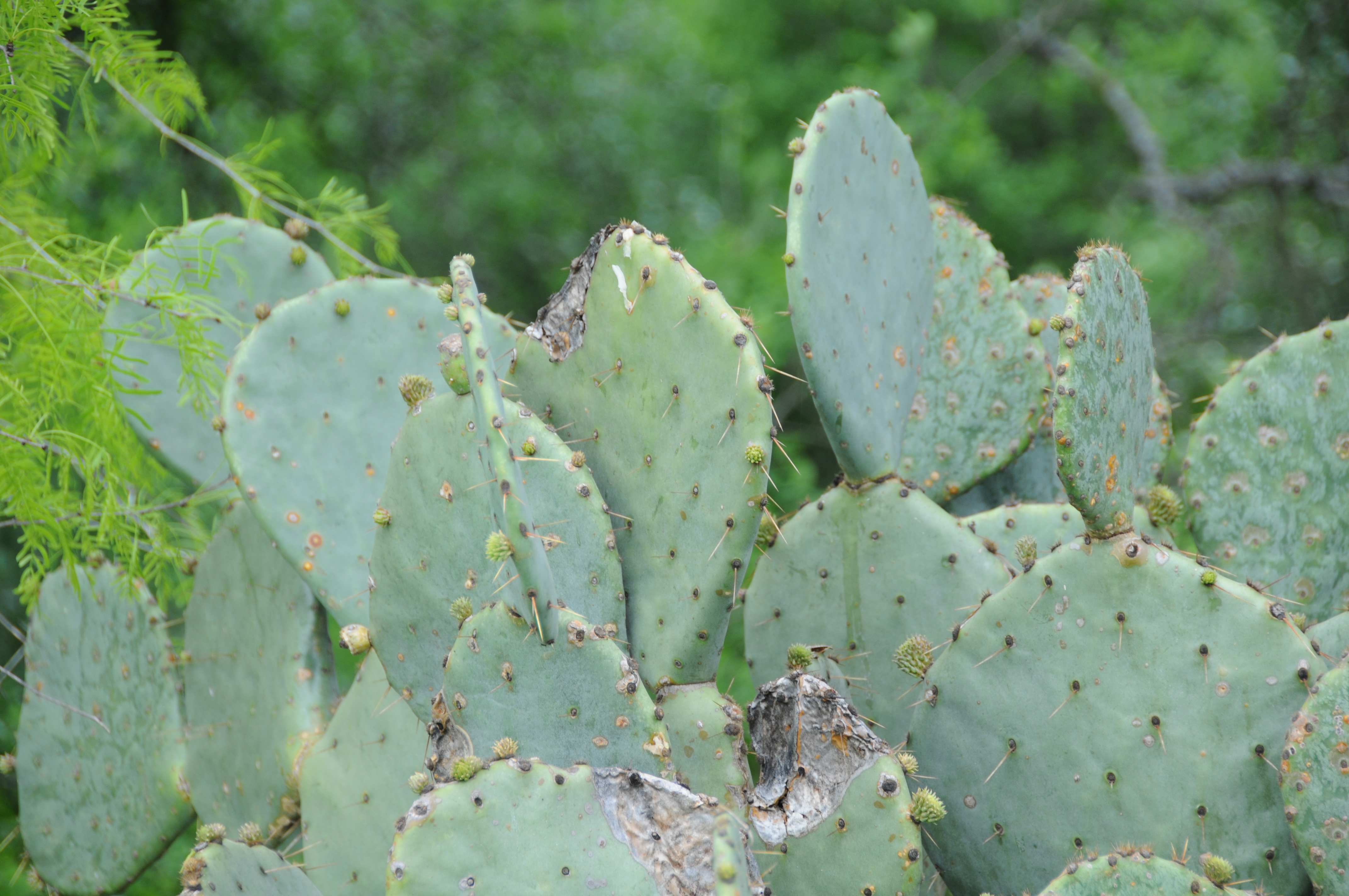
Today, the mill still stands sans roof, windows and doors; the mill race is visible, though eroded, and no water flows.  On the second story ledge of the mill, a prickly-pear cactus took root in shallow soil, erupting ten or twelve paddles of cacti clearly visible from the ground, its propulsion coming from the prevailing southwesterly wind from High Valley and warmer climes in Mexico that blew seed upwards onto the old mill’s second story.  To this day, picnics and family reunions congregate about the old mill and under the pecan trees nearby.

Although some acequias have fallen into disrepair and the old mill will no longer grind grain, no lament is necessary because these structures symbolize the communal efforts of people to work with the flow of water.  Acequias can be cleaned out and the mill race can be reconstructed to a higher ground so that its flow can be opened to a newly-planted orchard of plum and peach.  The mill race becomes acequia.


10 Comments

Filed under Bend Texas, Colony Road, Recollections 1942-1966, San Saba Texas, Santa Fe

Holiday wishes from Sage to Meadow and field notes

Shiney galloping to the corral during winter. No fear of the sun disappearing here.

A holiday greeting…

The sun in the northern hemisphere is at its lowest points this time of the year.  I do not think ancient and prehistoric people feared the sun would continue to sink towards the south and disappear forever — at least in southern latitudes of the northern hemisphere.  There was and is sufficient overlap of folk knowledge and tribal elder history to instruct the young and anxious that nature’s cycle continues her circle of cold to warm to hot, hot to warm to cold.

Christmas Eve and Day are here.  I wish each of you a Merry Christmas and Happy New Year!

* * *

Update on Lilly and Star…

Lilly, our oldest mare, is holding her own at 25 years of age.  She moves between the Well House Corral and the pasture, indicating a good level of energy and health.  Her feed consists of all the alfalfa she wants, Equine Senior Purina grain and 1 – 2 grams of bute (painkiller for horses) a day.  To husband animals rewards the steward: nickers and whinnies of recognition and impatience, warmth of animal in cold weather, riding for fun (both rider and horse can enjoy if accomplished properly) and work, and the sheer companionship and friendship of the horse.  One of my pleasures of having horses is hiking in the woods and having Star follow me like a hiking friend.  Star will go up and down creek bank, push aside brush to continue the hike and rest with me beside a fallen log.  If I wish to walk alone, I have to close the gate to the woods.  Most of the time, I want him with me.

Star is confined to the first corral.  He is overweight and feed intake must be limited.  He has all the coastal bermuda hay he can eat and some painkiller for his front legs.  His confinement lasts one week.  I have had to separate him from Lilly since she has alfalfa, he must have coastal.  Star is not pleased, but he adjusts.

* * *

A field post about bird songs on winter mornings…

December 16, 2010, 7:05 a.m.

Within the last two weeks I have noted birds about the barn and stables sing profusely only in the morning during the winter and are relatively quiet for the rest of the day.  I have not spent the day about the barn and stables to confirm unequivocally this observation (I’ll probably regret having brought this up in the first place), but it seems a sound observation.  During the day when I do chores and in the evening when I feed the horses and spend a hour or so in the barn area, I hear no birds or few birds.  In the morning, birds chatter and tweet, but do not break into long melodious fugues.

Our small ranch is located in North Erath County, Texas, Lat 32.43 N, Long -98.36 W, elev. 1,086 ft. Turkey Creek Quad.  Mesquite trees, live oak trees, elm and underbrush comprise the habitat for birds.

Among singing birds I see in the morning are redbird (just tweets), titmouse, chickadee, wrentit, wren, red-headed woodpecker, white-crowned sparrow, house sparrow, dove and a couple of other species I have yet to identify.  They browse in trees, on the ground and in the underbrush.  If I remain motionless in the corral after disturbing them, they resume their chattering and calls in a few minutes.  When the sun reaches a point in the sky at approximately 10:00 a.m. or so, songs and calls diminish.  I see birds for the remainder of the day, though not quite as frequent as the first two or three hours in the morning.  I hear during the day the quacks of ducks on stock ponds and crows on the fly.

7:35 a.m.

I have returned from the barn and stable area and this post is taking a curious turn.

A cold front moved in last night and the temperature is 40 deg. F.  The sun is not shining and clouds completely obscure the sky.  On point, birds are quiet, not even a peep, casting a different observation and bringing to light variables I had not considered: temperature, sunshine, clouds.

With the temperature in the 40s and no sunshine, I hear no birds.

17 Comments

Filed under Christmas, Flying Hat Ranch, Horses

Survived by her Family and the Tamarin

Devra G. Kleiman (1942-2010) at National Zoo with Golden Lion Tamarins at National Zoo (NY Times Photo)

People Not Avatars

Examples, models and real-people, not avatars, present themselves as historic figures upon whose narratives we should integrate into our lives.  Dr. Devra G. Kleiman, who died this week, transformed zoo culture and assisted sentient beings in replenishing their species.  As Livy remarked:  “She is a model to emulate.”

Kleiman’s Procedures Relevant to American West

My blog, Sage to Meadow, focuses on the American West, mainly Trans-Mississippi West, and I worry everyday about the destruction and attenuation of not only sentient creatures, but also the sagebrush and native grassland.  Dr. Kleiman represents the scientific and emotionally best in us, Homo sapiens sapiens.  Her procedures–careful study, legal applications, conservation–can be applied anywhere in the biological environs of this planet, be it the Central Plains or the National Zoo.  Her work must be carried on by us and young men and women coming of age.  Writ small, it might be the feed you distribute occasionally to the mountain quail in Taos or establishing wildlife corridor for deer in Texas.  The caretaking of dogs and cats as Caralee Woods and Jimmy Henley in Kanab, Utah, reflect Kleiman’s outlook upon the wider biological kingdoms.  Writ large, it would be the slowing down or elimination of paved parking lots and strip malls: the culture of overconsumption.

Devra G. Keiman (1942-2010) Biologist Whose Work Transformed Zoos

Dr. Devra Kleiman worked successfully for decades to re-flourish the populations of the Gold Lion Tamarin and Giant Panda.  Her research and field crews impelled the culture of exhibition zoo-dom to restructure their entertainment and captivity culture “to concerted, scientifically informed conservation.”

Dr. Kleiman, in her work with the tamarin, persuaded zoos to give up title to the tamarin in return for the designation of  “a long-term loan from Brazil,” allowing zoo tamarins to be shuffled about the world for diverse breeding.  Her work became the paradigm for 100 breeding programs for endangered species, including the California condor and the black-footed ferret.

In 1972, when China presented the United States with two pandas, Ling-Ling and Hsing-Hsing, Dr. Kleiman and her research team begain to study the panda, holistically (social, sexual, gastronomic) in a 24-hour observation log.  Not until 2005, thirty-three years later, did the pandas produce offspring and only by artificial insemination.   The first offspring, a male by the name of Tai Shan, was later sent to China.

Please note the by whom she is survived in the quote,

Dr. Kleiman’s first marriage, to John Eisenberg, ended in divorce. Besides her husband, Mr. Yeomans, whom she married in 1988, she is survived by her mother, Molly Kleiman; a brother, Charles; three stepdaughters, Elise Edie, Joanna Domes and Lucy Yeomans; and four grandchildren.

She is also survived by the heirs of her scientific labors. When Dr. Kleiman began her work with golden lion tamarins, there were fewer than 200 alive anywhere; today, according to the National Zoo, about 1,500 live in the Brazilian wild.

Tai Shan, now almost 5, has lived since February at the Bifengxia Panda Base in China’s Sichuan Province.

I like that paragraph, “survived by the heirs of scientific labors.”  Give us legions of men and women like Dr. Kleiman.

Devra G. Kleiman, 67, Biologist Whose Work Transformed Zoos – Biography – NYTimes.com.

3 Comments

Filed under Life in Balance

Field Log 4/16/2010

North Erath County, Texas, 32.43 lat., -98.36 long. Elev. 1,086 ft.  Turkey Creek Quad.

Light mist this morning.  Probably 0.20 inch of rain since yesterday.

Lilly, Star and Fanny browse front pasture.  Lilly shows age with slower gait and right back leg limp.  Sweet Hija still at ESMS on Brazos.  Shiney is at Jimmie Hardin’s in Aubrey, Texas, for ground training and conditioning for Triangle Sale, Shawnee, Oklahoma, June 5, 2010.  Miss the little guy more than I thought I would.

Pasture grasses are erupting well.  Vetch in far field is waist-high in places.

This week, Mourning Doves (Zenaidura macroura) are cooing.  No calls before then, but noticed their presence.  This morning the doves were ground feeding in the front yard.  From Peterson: has a pointed tail, most widespread dove in the West.  As to the call, Peterson says it is a “hollow mournful ooah, cooo, cooo, coo. At a distance only the three coo‘s are audible.”  The color of the dove in our front yard was a reddish-gray with black spots.  The two dove would ground feed a moment, then hunker down in the grass and loaf.  I must have watched them for ten minutes and then had to come back to office and work on college Blackboard classes.  I will have to focus on their call to hear the 00ah.  I am practicing on imitating their call better.

We have a larger dove that is whitish that appears in late summer.  It is untyped.  The two dove will perch on the power pole by the barn and watch me feed the horses.

The following are some photographs I took this morning.

Vetch and Clouds Far Field, April 2010

Prickly Pear Bush, April 2010

Cactus Fruit, April 2010

These photographs were taken last week.

Round Pen and Twin Mountains in Distance, April 2010

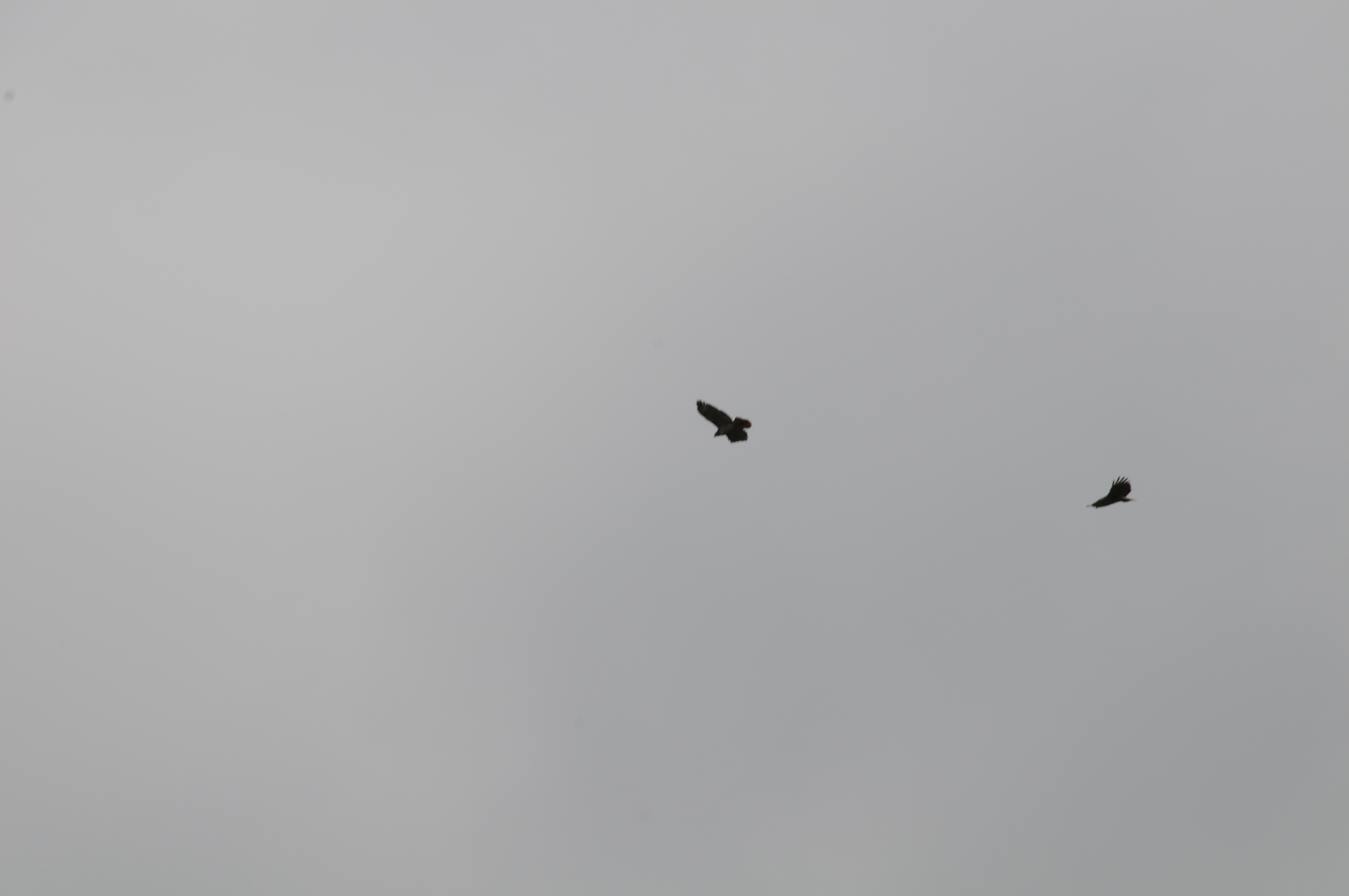
Harris' Hawks at Play, April 2010

Field grasses obscure pasture lanes.  Minimum shredding planned this year, indicative of lower carbon footprint.  In addition, taller grasses can harbor wildlife.  Hand cut mesquite brush this season, using clippers and large cutters.  Lessen vehicle use in pastures.

Lilly, Star and Fanny have browsed their way to the front pasture and are now standing close together, switching their tails to keep the flies away.  They have all this space to lounge around in and they prefer to stand together with their bodies almost touching.  Herd animals.  I worry about Lilly during the night and have corralled her so she can avoid predators.  One mountain lion sighting three months ago on SH 108 near Gibson place.

I must get the duct tape down in the barn and duct tape my Peterson’s Field Guide.  The binding is coming off.

10 Comments

Filed under Field Log

Antelope and Sagebrush

Between 1804 and 1806, Meriweather Lewis and George Rogers Clark led an expedition of the American West.

Lewis noticed not just one but several species of sagebrush. He wrote,

“[O]f this last the A[n]telope is very fond; they feed on it, and perfume the hair of their foreheads and necks with it by rubing against it.” Sierra Club notes on Lewis and Clark expedition.

6 Comments

Filed under Sagebrush

Primm, Nevada, Power Station

[I have copied this post by Chris Clarke on his Comment on the Ivanpah Solar Electric Generating Station.  His blog is Coyote Crossing: Writing and Photography from the Mojave Desert.]
——————————————————
Posted by Chris Clarke on February 11, 2010

I posted this earlier today at Desert Blog. My publicist tells me I should put it here as well. Today was the deadline for public comment.

re: Ivanpah SEGS Public Comment Thursday, February 11, 2010
To Whom It May Concern:

Of other public comments arriving with regard to the proposed Ivanpah Solar Electric Generating Station south of Primm, NV, I am confident many will address the abundant technical, hydrological, and wildlife-related problems contained in the proposal to bulldoze a broad swath of publicly owned ancient desert habitat for private industrial development. It is on these details that projects such as the Ivanpah SEGS are either approved or denied, and I am grateful that others can speak to those details more authoritatively than I.

What I can address with confidence and authority, however, is the fact that the Brightsource project threatens one of the most beautiful places in the United States. True, that beauty may not be apparent to the casual traveler on I-15 speeding through the desert with the airconditioning cranked up as they peer through tinted safety glass. It takes a few moments of quiet for the Ivanpah Valley’s beauty to sink in fully.

I lived in the Ivanpah Valley for much of 2008. I have been spending time there and in neighboring places in the desert for much of my life. The Ivanpah Valley is not wilderness, at least not that part of it outside the Preserve. There are many visible human intrusions there. Freight trains roar through the valley sounding loud horns, engines on both ends straining to build up momentum for the long climb to Cima. Off I-15 there is traffic on Nipton Road, long-haul truckers heading for Searchlight, vacationers in RVs and motorcycles heading for the Colorado River. One can in fact hear them from several miles away. They approach. They grow louder. They pass. The noise recedes.

And then the noise ebbs, and the cricket song swells, and the coyotes’ song, the breeze, the sound of blood in your veins. In the south end of the Ivanpah Valley, at least, human influence is limited and inconstant. From the Mojave National Preserve even Interstate 15 recedes in significance, becoming not much more than a pretty string of far head- and taillights in the distance, and that only at night. The sere backdrop of Clark Mountain, the McCulloghs and Lucy Grays in the east, and the protected peaks of the New York and Ivanpah mountain ranges contain between them a vast, largely wild piece of the Mojave. The Ivanpah Valley contains nearly all the Mojave’s landscapes in its boundaries — alkali flat, old-growth creosote and ancient Mojave yucca, Joshua tree woodland, piñon-juniper forests on the slopes of the fringing ranges. There is even an alpine sky-island overlooking the Ivanpah Valley, white firs clinging to the higher slopes of Clark Mountain, directly above the project site. The Valley is the Mojave in microcosm.

Paving thousands of acres of the Ivanpah Valley with mirrors would utterly destroy the wild character of the place. It would be an encroachment on the peace of the Preserve and the lands around it, with the noise and dust of construction and the subsequent blinding glare of the completed facility an intrusion into a peace I have found nowhere else on earth.

Others will question the actual carbon reduction benefit provided by building this plant, and rightly so. They will question the validity of tortoise relocation and mitigation, the additional demand on the 12,000-year-old water in the Ivanpah Valley’s aquifer, the loss of Mojave milkweed habitat. These are all crucial questions that absolutely must be answered. Neither Brightsource nor Interior have done so.

The loss I want to question, however, is the loss of our soul.

Are we really so bereft of wisdom that we see this beleaguered but beautiful stretch of ancient desert as nothing more than a blank spot on a map? Are we really so callous that we can consider the improbably old creosote, Mojave yucca and barrel cacti on the Ivanpah site less valuable than leaving our closet lights on when the door is closed? Many of the plants growing there are older than this nation. Some may pre-date European presence on the continent. We may as well raze the Parthenon to build a strip mall, knock down Stonehenge for use as highway berms. There is something very wrong in us if we value this place not for its beauty but for its square footage. There is something broken in us if we look at the Ivanpah Valley and see not peace, but merely a way to increase our power and the profit we derive from it.

In 2008, just before sunset after a day of scattered small rainstorms, a friend and I got out of her car near the abandoned railroad siding known as “Ivanpah,” in the southern Ivanpah Valley well within the Preserve. We had a clear and unobstructed view of the whole valley there at the end of the paved section of Ivanpah Road. A desert tortoise stood at roadside. We’d stopped to make sure no passing cars hit her as she tried to cross but there were no passing cars, and she had no apparent intent to cross. Unperturbed by our presence, she fell asleep as we watched. A band of coyotes began singing somewhere off toward Morning Star Mine Road. It was hard not to feel very small. The valley held an immensity of space and of time as well, humbling both in the sense of personal insignificance it conveyed and in the realization of our frightening capacity to do unintended harm.

It was one of those moments I have found surprisingly common in the Ivanpah Valley, a place that though altered by human hands is still precious, still wild in essence, well worth being defended from further unnecessary and destructive change.

I urge you to halt this project.

Chris Clarke
Private citizen

2 Comments

Filed under Life Out of Balance