Tag Archives: Conservation

Winter lingers

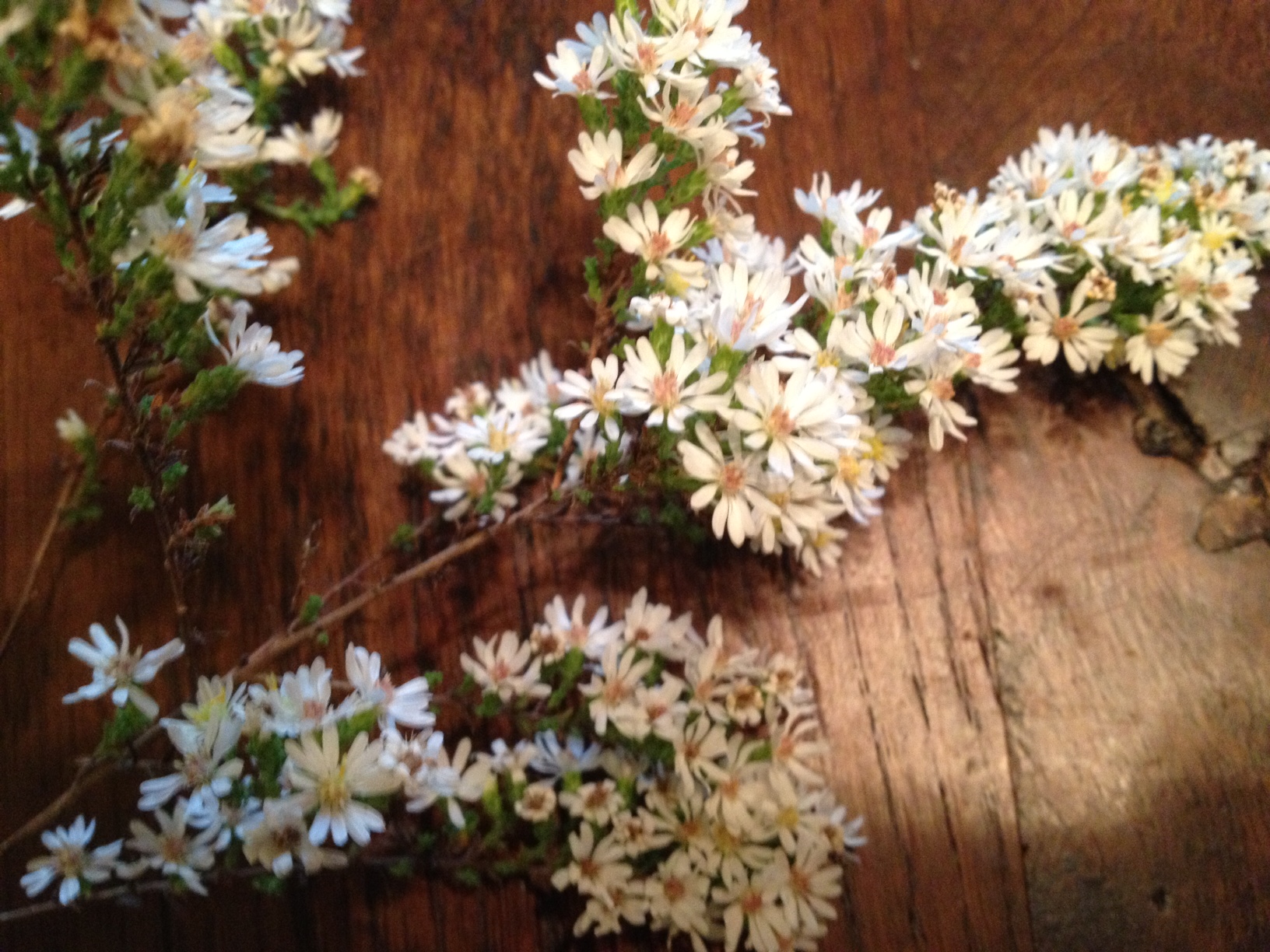
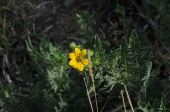
In the late fall, my whole front field appeared as snow with these flowers.

In the late fall, my whole front field appeared as snow with these flowers.

Winter lingers in north Erath County, Texas.  Grasses remain brown, although buffalo grass emerges through dead grass of the late fall freeze.  My paint gelding, Star, has lost weight and his laminitis has remitted completely.

New neighbors, the Stroebels, have moved onto the land to the southeast.  The husband is an English teacher.  The wife is an engineer, originally from eastern Europe.  At the first instance, I like them.  They purchased the five acres mainly for the new stone house.

By my stated goal a few months ago, I have only a month or so before my photographing all flowers on my place comes to an end.  I know I have missed some flowers over the last eleven months, but I think I have captured many.  Some flowers, like the wine cup, did not unfold last spring so they fell outside my range, but not my thoughts.


18 Comments

Filed under Flowers of Flying Hat

Flowers of Flying Hat (10-11): Salt Creek water sounds

The rains about two weeks ago produced sufficient runoff from pastures farther upstream to maintain a water flow in Salt Creek, an intermittent creek that runs through the ranchito.  You can turn up your sound volume and hear the burble of water flowing over and down sedimentary rock.

This is the first sustained water flow — beyond thunderstorm rains — since before the drought.

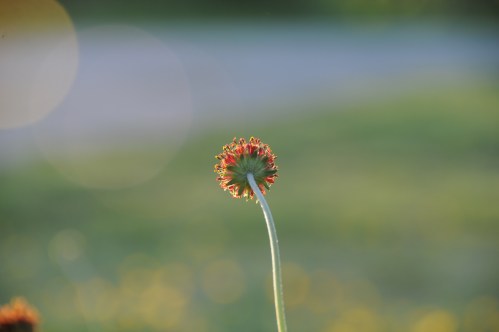
10. Gyp Indian Blanket, rear view of blossom that is pointed west.

The Gyp Indian Blanket is one of my favorite wildflowers.  They are so free-standing, tall and bunched together like a family.

Gyp Indian Blanket family


11. Vetch with yucca sprouts

The vetch is knee-high near the house and in the far field it is waist-high in some places.  I like this photograph because of the contrast — yucca and delicate vetch blossoms.

My photography of every new-emergent flower continues.  I have several varieties backlogged in pictures.  Today I have taken several photographs of the Stork’s Bill blossom and will post them soon.

11 Comments

Filed under Flowers of Flying Hat

Yucca morning

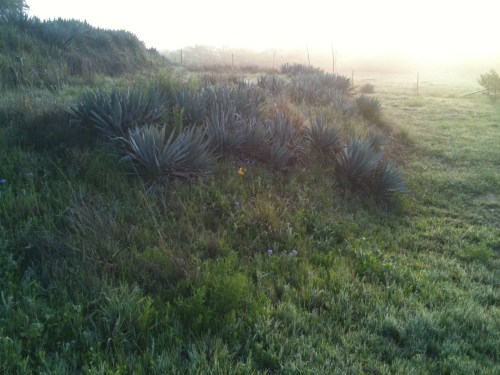
Pale-leaf Yucca on Terraces with Fog, Flying Hat Ranchito, March 30, 2012

In walking down to the stables to feed Star this morning, I paused and looked towards the east, the rising sun flared by fog, and I shot this photograph of yucca, fog, dew and a couple of blossoms of verbena (click the photograph to enlarge). Three terraces gird the ranch house and each level has families of yucca that hold the soil about the landscape and prosper in well-drained soil for their health.

The temperature briefly holds in the middle 60s as I look at this scene. I dwell on it as I write this post and think of the moisture upon green grasses and yucca.  So different from this time last year as fires broke out across Texas, consuming dried grasses, brittle brush and wildlife unable to flee.  Today is different, substantially so, with recent rains and low temperatures. The fire ban is off for Erath County. I see an abundance of wildflowers and I inhale the air suffused with humidity and perfumed with fresh grasses.

This ‘yucca morning’ will last in my senses for a long, long time, and I possessively want the moment to stand still as I look east towards the rising sun, flared by fog, that shall warm the day and send fresh grass shoots skyward.

14 Comments

Filed under Flying Hat Ranch, Life in Balance, Plants and Shrubs, Succulents

Flowers of Flying Hat (6-8): Sow thistle is not a weed.

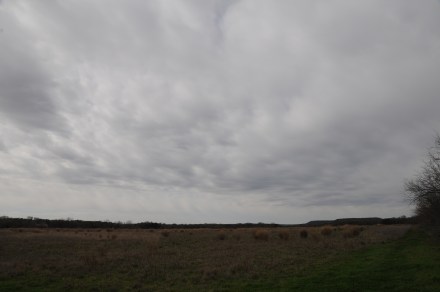
Far field clouds, March 2012.

6. False Garlic, Crow Poison (Nothoscordum bivalve), March 2012.

This False Garlic flowers early and there are several colonies clustered together throughout the ranchito.  This False Garlic is closed and due to the rains and cold yesterday and today, I do not have an open flower to illustrate — but, I shall.  This is found in the lane to County Road 114, and other colonies are about the gate between the arena and the grove pasture.

7. Sow Thistle (Sonchus asper), March 2012.

Sow Thistle appears to be a weed, but it is not.  Authorities claim the milk of this plant relieves eye ailments.  I wonder if I could apply this to my left eye?  I think not.  I’ll rely upon Dr. Callanan, but then again…. This appeared one afternoon and then its flowers have closed.  This Sow Thistle inhabits the disturbed soil underneath the live oak tree to the southeast of the house.  I have read much about the categorization of ‘weed’ versus ‘plant.’  The term ‘weed’ seems culture-specific, a term of dislike, marginal.  Goats, sheep and cattle eat this with relish.  To them, it seems, this is a plant, not an obnoxious weed.  One person’s plant is another person’s weed?

8. Unknown.

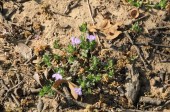
These little-bitty guys erupt on the top terrace and emerge as small, almost unnoticeable flowers. As of today, I have failed to find their name, and I also need a closeup to gain greater resolution of their attributes. Today it is raining and the blossoms are closed.

More Violet ruellia, violet wild petunia (Ruellia nudiflora).

This is a another photograph of violet wild petunia, previously identified.  It has erupted in large numbers along Interstate 20 from Mingus to Abilene.

13 Comments

Filed under Flowers of Flying Hat

Southwestern farrago

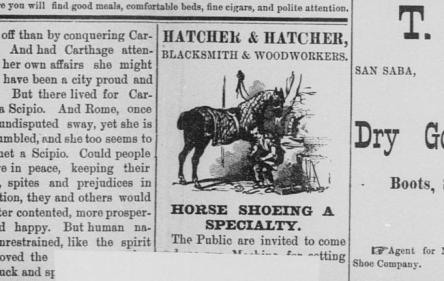
San Saba Weekly News, October 9, 1891.

Within the last two months, I have collected a special farrago of items relative to the Southwest and travel south of the border.  I had thought about writing a post on each of these items, but probably will not in the near future.  I do not want these bits and pieces to go stale.  So, in this mixed bag of  items you may find something of interest.  Click on the hyperlinks for details.

***

Tundra Native Flies To Texas | NBC 5 Dallas-Fort Worth.  The Snowy Owl comes to Texas — near Dallas.  This is so rare of a sighting down here that I may drive over to the area and photograph the owl (Robertson State Park at Lake Ray Hubbard Snowy Owl sighting site location courtesy of Texas Parks and Wildlife).

***

In Arizona, Rare Sightings Of Ocelots and Jaguars – NYTimes.com.  The New York Times relates to Arizona.  But, two years ago near Abilene, Texas, three sober people sighted what was thought to be a jaguar.  The Texas Parks and Wildlife agency did not confirm the sighting along a brushy ridge line that extended for miles running east and west.  Given the craziness of some hunters, I have not given the story publicity and I do not intend to pinpoint the location.

***

How safe is Mexico for tourists? – World – CBC News.  This writer has experience in Mexico and his website seems worthwhile.  This is a valuable article for those of you seeking to take your Spring break in Mexico.  Combined with the State Department’s guidelines and warnings linked below, avoid some places and enjoy safely other areas.

***

Mexico.  U.S. Department of State Travel Warning to Mexico.  The State Department updates these warnings regularly.

***

BBC – Travel – A German enclave in central Texas : Cultural Activities, Texas.  This is about Fredericksburg, one of my favorite towns in Texas.  I went to Fredericksburg as a boy, before it became touristy.  It still has the old-town feeling.  This was written for the British Broadcasting Company.

18 Comments

Filed under Birds, Fredericksburg Texas, San Saba Texas, Texas

Walking with Great Blue Herons

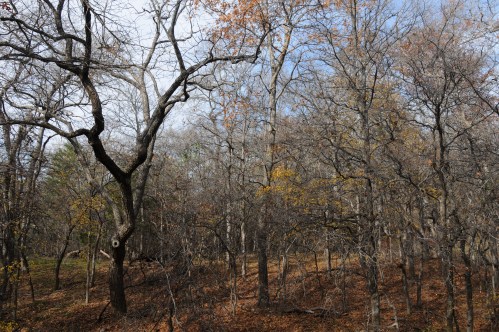
The grove peninsula. This is one of several peninsulas formed by the meandering Salt Creek (December 2011).

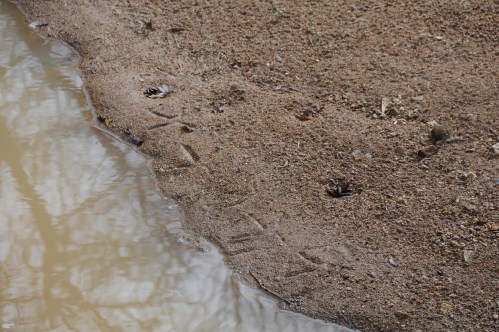
Blue Heron tracks along a still pool of water in Salt Creek (December 2011).

I walked in the grove this morning.  Several peninsulas emerge in the grove, cut by the swift and long-flowing water of Salt Creek.  Upon purchasing Flying Hat Ranchito eight-years ago, I found a red metal chair on the peninsula I photographed, a solitary chair for the previous owner to muse, observe or rest.  I took the chair off the peninsula.

Wet and cold the air, I saw track of the Great Blue Heron that frequents the creek that meanders among the elm, oak and juniper.  I see one or two of them each day flying to the cow tanks about the ranchito.  The heron track I identified with my Peterson’s field guide to animal tracks, a new third edition I purchased when Border’s went out of business in Fort Worth.

I was not alone as I walked in the grove.  The Great Blue Heron — past and present — walked with me in the grove today.

Related articles


7 Comments

Filed under Birds, Great Blue Heron, Juniper, Life in Balance

Wild flowers of a dry Texas Spring day

[Please note that when this post was first published yesterday, April 10, 2010, the Silverleaf nightshade was misidentified as a Dayflower.  The corrections have been made in the caption of the flower and plant and the notes contain a warning about the use of the Silverleaf nightshade.]

At 9:59 a.m. I drove down to the barn and parked the F-150.  Taking my camera and walking carefully, within the next hour I traced a familiar path from the barn thorough the corrals, into the arena pasture and into the grove.  I walked along the edge of Salt Creek and photographed these wild flowers of our dry Texas Spring.  Salt Creek is an intermittent-running creek, but there are pools of water and tracks abound.   The trees are green and lush about the creek and grass, despite the drought, remains verdant.

I picked a blossom of wild verbena in the main pasture and gently pressed it.  The fragrance flew about my face and I inhaled deeply.  Only a partial blossom I pressed, but it nonetheless imparted its scent that remained for minutes, not seconds, as I walked back up to the barn.  Beside the kitchen sink, we have liquid verbena soap, reminding me of the wild as I wash my hands, arms and face.

* * *

My uncle Floyd McRorey used to come in from the field and wash his hands in the kitchen sink with hard Lava soap as Aunt Lennie prepared a meal.  I never saw Aunt Lennie wash the dinner dishes.  She helped dry, but never washed the dinner dishes.  Uncle Floyd always washed the dinner dishes.

* * *

All of the following photographs may be enlarged with a click of your mouse.


Notes:

The scientific nomenclature for each plant may be incorrect as there are a broad range of varieties.  I refer to as many as four books and two databases to identify the plant, but I may be in error, so please verify my identification.

The Silverleaf nightshade is all toxic.  Medicinal: Used for rattlesnake bite – root chewed by medicine man, who then sucks on the wound to remove venom, then more root is chewed and applied to swollen area. (Steiner) Southwestern Native Americans used the crushed berries to curdle milk in making cheese, and the berries have also been used in various preparations for treating sore throat and toothache (Lady Bird Wildflower Center Plant Database).

Please see the link for Silverleaf nightshade:

Lady Bird Johnson Native Plant Database Silverleaf nightshade.

10 Comments

Filed under Wild Flowers of Texas

The fox, the hare and the chef

I think we should leave our boxes of house, classroom and boardroom and integrate with the natural world of fresh air, sun and terrain, if only for a vacation.  Venturing into the field, the park, even a backyard, nature comes upon you with sight, sound and scent that carries you away from asphalt and brick.

It’s not all pleasant, this leaving the box.  With the flower comes the wasp.  The fox is beautiful, but rabbits will die.
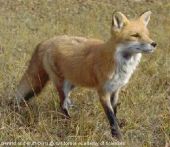
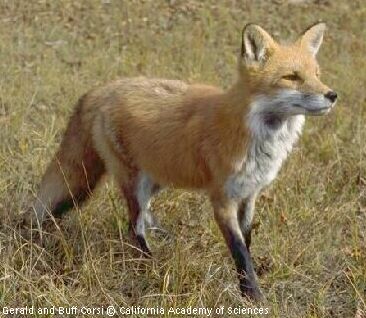
I have seen three wild foxes in my lifetime — that’s all, and I have looked.  In 1956, the first was along Pompey Creek in Mills County, Texas, on the lease of my step-father.  I was sitting on one side of the creek and along the other bank, a fox trotted along the stream, looked once at me and continued on.  I was impressed at its gait that was leisurely, self-assured.  The fox was plump, its coat deep-red and shiny.  I wanted to follow it and see where it went and if it had a mate and kits and where its burrow was.  I wanted to live with the fox and see it again and again and again in the forest and along Pompey Creek.  I never saw it again, although I looked for months and years thereafter for red fur coats in the central Texas brush.

The second time I saw a wild fox was in 2005 when Brenda and I were sitting out on the back porch.  We can look far into the pasture that is twenty-feet below, as we are on a hill above the grasses.  In the late spring evening, a fox came trotting along a pasture road, heading north into the brush of Blue’s farm to the east of us.  This fox’s coat was darker than the one at Pompey Creek, but the same focused gait carried him farther into the brush and away from the cleared field of buffalo grass.  Brenda and I spoke in whispers as it trotted away.  That same year, 2005, fifteen deer moved daily from Blue’s farm, across our pasture and into the grove.

Two years later in 2007, I was standing on the bank of Salt Creek in our oak tree grove when along the dry creek bed the third fox trotted, headed upstream towards the Dooley place on the west side of our ranch.  I was about fifteen feet above the creek bed and stood still as the fox passed by.  That was four years ago and I have seen none since.  A solitary deer occasionally drinks from the pond and I see track that may be fox.

* * *

The fox hunts and in the end, rabbits scream and chickens cluck and run.  The farmer brings the shotgun to the shoulder and fires once, twice, thrice.  The Dooleys to our west have chickens and they pen them for safety, but fox and coyote still take their cut.  The Dooleys count their losses.  I hear no gunfire.  The fox must eat.

It is a cycle of birth and death, the preyed upon and the predator.  You know the story, you’ve even been a part of it.  To describe the cycle is easy, but to understand it and live with it, to go on despite the tooth and claw is very difficult, for we like to deny the cycle happens or we put it away over there, behind the fence, beyond the hedge.  When I taught anthropology, my first lesson and repeated lesson through the semester was “Food — Where is it?  And, how do we get it? Who provides it for you?”  We buy food at the supermarket, but that’s not where it comes from, and it is not wrapped in cellophane when the middleman harvests the animal or plant.

Thomas Keller owns the most famous restaurant in America today, The French Laundry in California.  When he was young and honing his skills at the restaurant of Rene and Paulette Macary, near Catskill, New York,  he approached the purveyor of rabbit:

Thomas Keller

One day, I asked my purveyor to show me how to kill, skin, and eviscerate a rabbit.  I had never done this, and I figured if I was going to cook rabbit, I should know it from its live state through slaughtering, skinning, and butchering, and then the cooking.  The guy showed up with twelve live rabbits.  He hit one over the head with a club, knocked it out, slit its throat, pinned it to a board, skinned it — the whole bit.  Then he left.

I don’t know what else I expected, but there I was out in the grass behind the restaurant, just me and eleven cute little bunnies, all of which were on the menu that week and had to find their way into the braising pan.  I clutched the first rabbit.  I had a hard time killing it.  It screamed.  Rabbits scream and this one screamed loudly.  Then it broke its leg trying to get away.  It was terrible.

The next ten rabbits didn’t scream and I was quick with the kill, but that first screaming rabbit not only gave me a lesson in butchering, it also taught me about waste.  Because killing those rabbits had been such an awful experience, I would not squander them.  I would use all my powers as a chef to ensure that those rabbits were beautiful.  It’s very easy to go to a grocery store and buy meat, then accidentally overcook it and throw it away.  A cook sauteing a rabbit loin, working the line on a Saturday night, a million pans going, plates going out the door, who took that loin a little too far, doesn’t hesitate, just dumps it in the garbage and fires another.  Would that cook, I wonder, have his attention stray from that loin had he killed the rabbit himself?  No.  Should a cook squander anything, ever?

It was a simple lesson.

— Thomas Keller, The French Laundry Cookbook, New York: Artisan, 1999, p. 205, “The Importance of Rabbits.”

In too many of my hunts when young I squandered wildlife.  I still pay for that everyday.  I don’t hunt anymore, but I would if I had to.  My last hunt was deer and that was many years ago when I went with two of my closest friends to Van Horn, Texas.  I dressed my kill in the field and brought the deer back for my family.  I did not need to hunt for I garnered a paycheck every month and bought groceries at the supermarket.  I never hunted after Van Horn.  We ate what I shot.

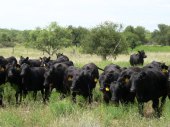
In 2008, Brenda and I brought to market twenty-seven head of Angus stocker cattle after feeding them several months on our native grass pastures.  I made sure that when I transported them to the feed yard that they went to the cleanest and healthiest feed yard in Texas.  They did go to Perryton, Texas, a place of little stress and fine management with no HotShots (paddles to strike the calf) and plenty of room to move and breathe.

As I loaded the twenty-seven Angus into the stock trailer, I said under my breath and to no one in particular:  You go now!  You fatten yourselves!  I’ve done the best by you I could!  You better go to the table of someone that finds a cure for cancer for I will think of you the rest of my years!

I made no profit on the cattle, but I prepared them the best I could.  I did not squander resources in tending them as their steward.

And they were beautiful, like the fox, for some of them had a red hue about their coats as the sun went down.
______________________________

Notes:

One of my first blogs was called, “The 27th Heart,” named after Unit 27 Angus stocker calf that fell sick.  I tended him and took him to the vet.  He recovered.

I cook from Keller’s cookbook and always remember that story he wrote.  It is deep and connected with the American Indian.  Parallels can be drawn.

The italics in the quote of Keller’s are mine.


28 Comments

Filed under Life in Balance

Little bluestem with iPhone

On February 26, Saturday last, when in the field, I applied the iPhone to take photographs and upload for a field test: short bursts of field notes and photographs as I surveyed 53 acres of Cross Timbers prairie, creek and woodland. I attempted to snap a photograph and upload it with commentary as I went about my survey. While in the field, miles from cell towers, I was unable to coordinate photos and commentary. In addition, the “thumbing” of data on the iPhone was too slow. I was absorbing data much, much faster than I could thumb the phone. I did send a few in-the-field updates onto my blog, but later trashed them. I composed a long post with photographs taken with the Nikon when I got back to the ranch office.  In the field I did not think the photographs had been uploaded.

Today, however, as I was going through the media library on Sage to Meadow blog, I discovered that the photographs with the iPhone had been uploaded! I uploaded one photograph twice, thinking it had not been uploaded the first time. And, here it is, Little bluestem grass that is coming back on the prairie.

Little bluestem grass, Pecan Tree Pasture, Flying Hat Ranch, Texas, February 2011.

I think the utility of the iPhone in field work is evolving.  It is portable and lighter than a camera.  Composing commentary can exceed 140 characters.  It’s not going to replace the steno pad and camera, but it may have some further use.  I like the idea of field work live, or with a minimum of time lapse, as a light and useful activity.

3 Comments

Filed under Bluestem Field Log, Plants and Shrubs

High grass in the pasture 1:46 pm

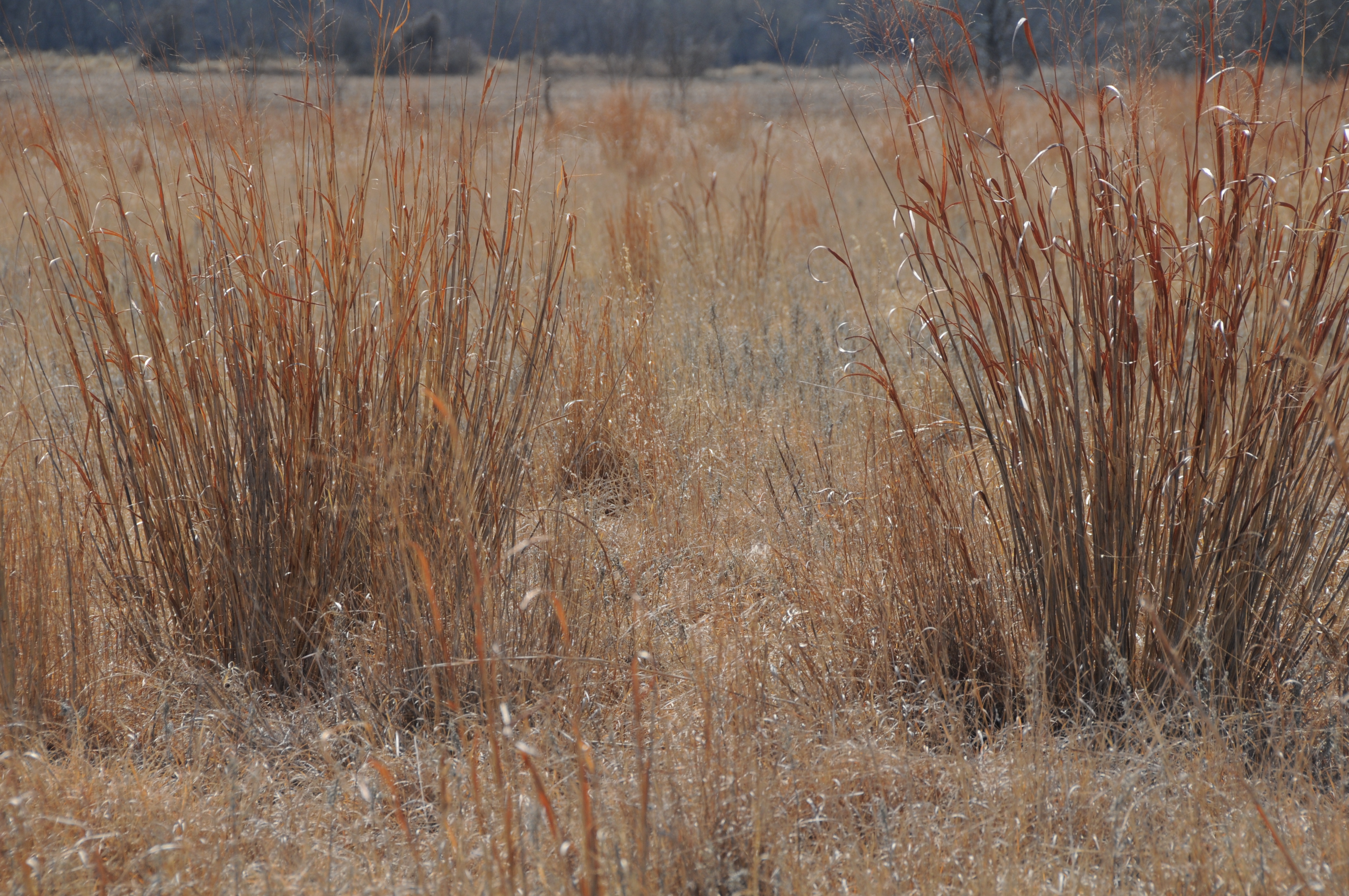
Big bluestem (Andropogon gerardii), Flying Hat Ranch, Texas, February 2011.

[February 27, 2011, added comment.  In my field work, the constant tools (carried in pockets or small rucksack) are stenographer’s pad, pens, tape measure, compass, topographical map and watch.  Close by in the pickup are engineering graph tablets, colored flags, binoculars and camera.  The camera is ofttimes carried around the neck.  I have also been using a GPS lately.  I’ve not used a laptop in the field, but I can see its utility with uploaded topo maps and data entry.  The iPhone may have some applications in field work, but the fundamental tools are steno pad, topo map, compass and tape measure.]

The experiment with in-the-field short note taking has come to an end.  I am back up at the ranch office and am writing on the desktop, not the iPhone.

The use of the iPhone in the field for short bursts of updates works, but the photographic uploads into my blog via iPhone did not work.  Part of the problem is that our ranch is way out in the brush and our cell towers are at Bluff Dale and Morgan Mill, Texas, miles and miles away.  For any extended commentary, a laptop with a wireless connection is much preferable to the iPhone although I will try the iPhone mode again.

While in the field today I kept a written journal and took photographs with another camera.  I am posting the photographs of high grass in the pasture.  The Big bluestem is “big,” reaching six-feet tall.  The Little bluestem is about three-feet tall.  For now, enjoy the field photographs.


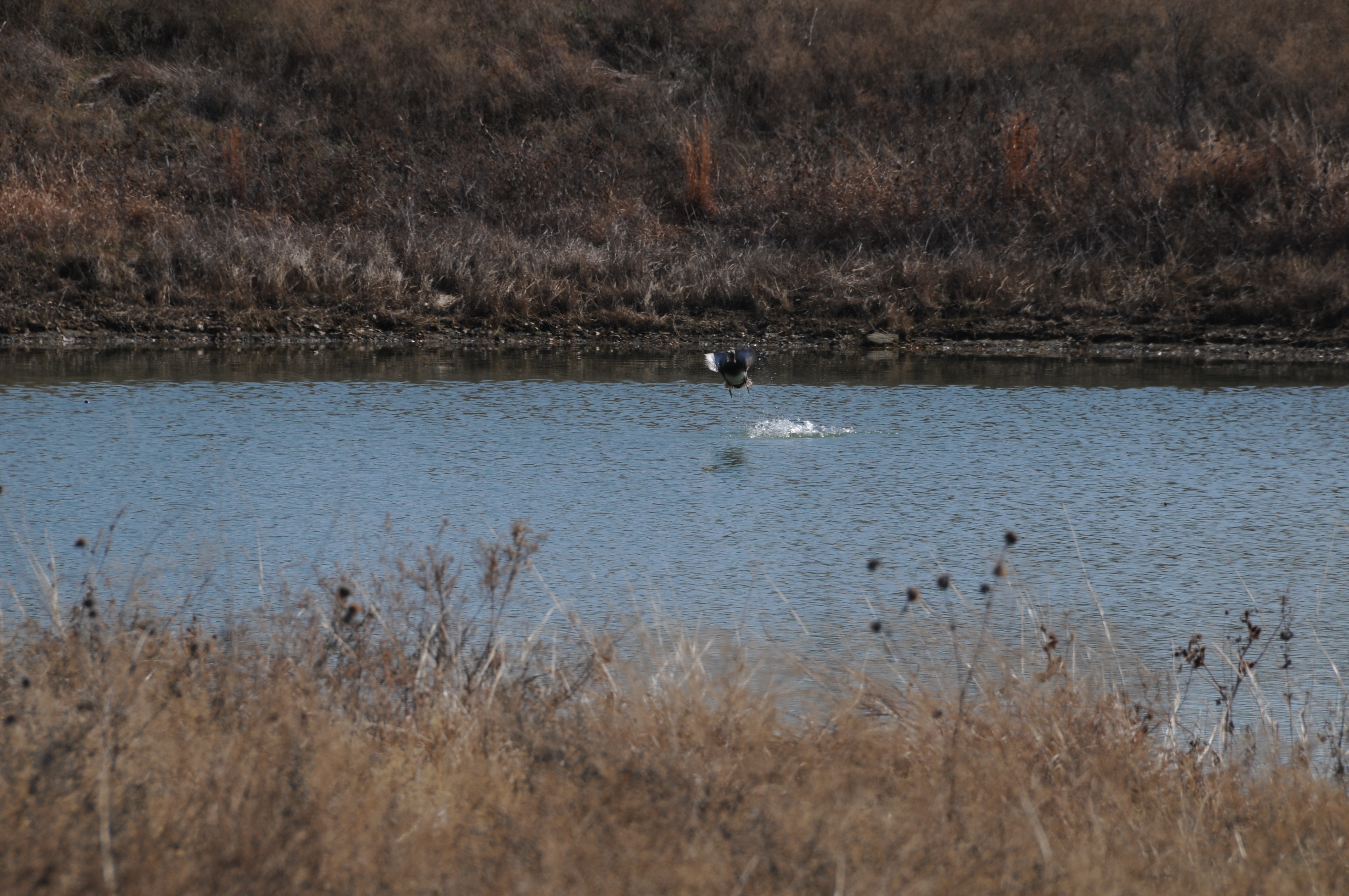
Unidentified duck taking flight from the stock pond.

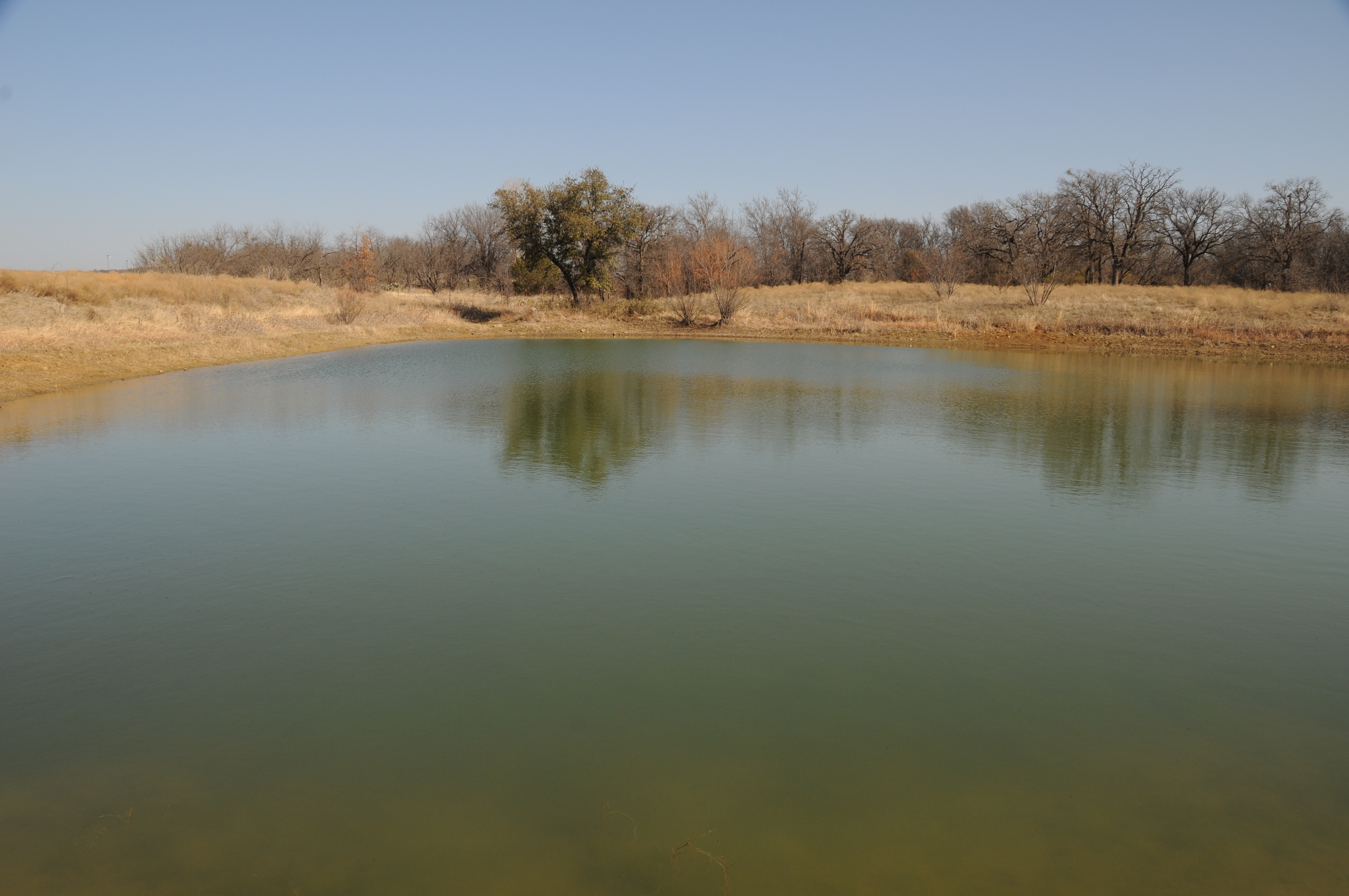
Still waters on the stock pond, ducks have taken flight to Blue's pond to the north.

A typical Cross Timbers life zone that has been harvested and cut for several generations. The tree grove is rebuilding itself.

Big bluestem, Flying Hat Ranch, Texas, February 2011.

15 Comments

Filed under Bluestem Field Log (Live)