Tag Archives: Brownwood Texas

It’s Recess! Coggin Ward 1955

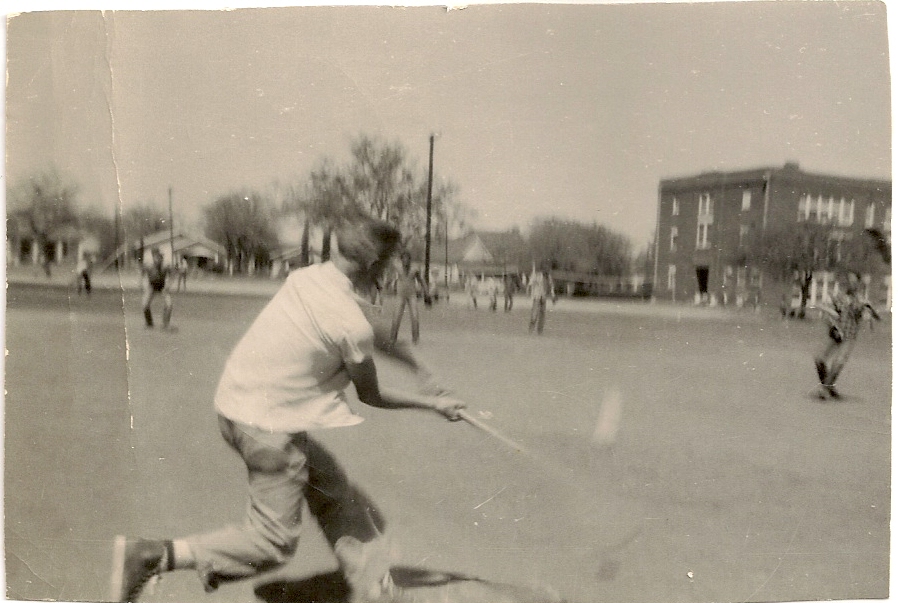
Dale Smith Hitting Home Run, Coggin Ward, Brownwood, Texas, 1955 (click to enlarge)

In the 1950s, when I went to elementary school at Coggin Ward in Brownwood, Texas, we had two recesses, one in the morning and one in the afternoon.  The op-ed article from the New York Times today (see link below) decries the lack of playtime in childhood and the problems encountered at recess — bullying, arguing, intimidation — so much so, that recess coaches have been appointed for troubled schools and playgrounds.  “For children in past eras, participating in the culture of childhood was a socializing process. They learned to settle their own quarrels, to make and break their own rules, and to respect the rights of others. They learned that friends could be mean as well as kind, and that life was not always fair”, so writes David Elkind.

I loved recess at Coggin!  Not so much to escape academics because I loved most of my classes, but I engaged recess like a high form of testing my strength against my weaknesses — running, jumping, kicking soccer balls, escaping from tag, hitting the baseball, even playing mumblepeg on school grounds (pocketknife game, we all carried them).

I used a 620 Kodak camera to take these pictures of us playing baseball in ca. March 1955, at Coggin Ward school.   (Mother used the Kodak to capture pictures of Camp Bowie and my father in the 1940s.)  Dale Smith was a good friend of mine and quite talented in athletics.

These photographs show no recess coaches.  I think there were a couple of teachers observing from the building, but they were never interventionists in our play and gaming unless a major squabble broke out (I don’t remember any).  We chose sides to play baseball.  There was some organization every now and then — calesthentics were occasionally forced upon us.  In the choosing of sides, athletic ability carried the most importance, then popularity.  Even the poorest-talented boy would be chosen to play for there was no sulking allowed we ordered.  I learned that life was not always fair and good, but most of the time the shame and failure could be overcome by coming up to bat again, having another chance for a hit to drive in Henley from second base.   There was always another chance at the plate, and, even then, there was tomorrow’s recess to score a point to win the game.

Television, computer games and other devices have robbed children and adolescents of time outside in the sun and wind and rain.  Look at the trees in the photographs.  It’s late winter, early spring and the leaves are not even out on the trees.  I can tell you that we would play at recess as long as the dust did not obscure second base from homeplate.  We learned to play and adapt to each other.  Oh, these were “social skill sets” that we carried into life beyond Coggin, beyond Brownwood High School.  It may be strange for us of the 1940s and 1950s to visualize a recess coach on the playground, but if that is needed to get boys and girls, young men and women, out of boxes called classrooms and houses, then so be it.  I think I’ll apply to be a recess coach in my retirement.  I’d rather be on the playground than behind a lectern on any sunny day of the year.

Choose sides, boys!  I want Dale, Joe and Jimmy on my side.  Carol will lead the cheers.  It won’t turn out that way, but that’s life, a lesson I learned at recess.
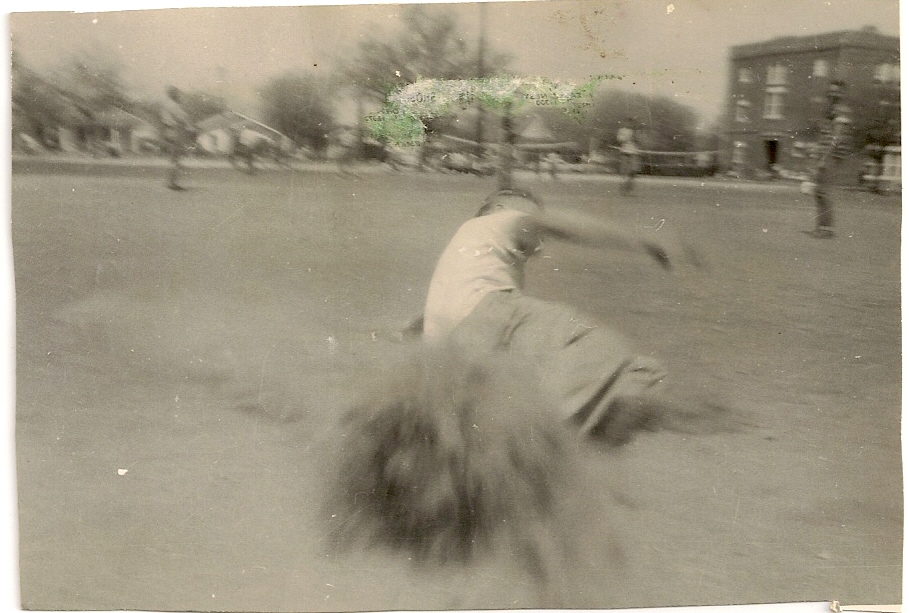
Dale Smith Sliding Into Homeplate, Coggin Ward, Brownwood, Texas, 1955 (click to enlarge)

Baseball Card Photo, Dale Smith, Coggin Ward, Brownwood, Texas, 1955 (click to enlarge)

Op-Ed Contributor – At Schools, Playtime Is Over – NYTimes.com.  This is the link to the New York Times article explaining the socialization problems of modern youth.

18 Comments

Filed under Recollections 1942-1966

Bill Tiblets Picks Pecans

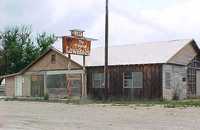
Abandoned Mingus Grocery Store, Texas

Mingus Post Office, Texas, 2009

In 1999, my wife and I looked at a house to purchase in Mingus, Texas, an old nineteenth-century mining community mid-way between Fort Worth and Abilene.  The house was a wooden two bedroom structure that had been moved from New York Hill along the main highway to 113 East Grant Town Road.  The caretaker and brother of the woman that had lived in the house was named Bill Tiblets.  He and his wife lived next door to the house we would buy.  Bill said, “Set a price on the house.”  We did, and for $35,000 we had a 1913 Arts and Crafts house with about one-quarter of an acre upon which I planted a vineyard of forty-four Cabernet franc, Cabernet savignon, and Syrah grape vines, most imported from California vineyards.  The vineyard flourished over the next four years and we still have a car boy of the Cabernet sitting in the dining room.

Bill Tiblets had lived in Mingus all of his life, been postmaster, and had operated a steak house, “Will’s Steakhouse,” for many years before he retired.  He was tall, pleasant, well-groomed, and friendly.  Bill became a close friend of mine and so did his wife, Will, for whom the steakhouse was named.  They had four sons, Larry, Jody, James, and Charles, and the kind and friendly attributes of their father and mother were ingrained into their behavior.

Bill, however, in his early seventies, was partially impaired by the concoction of old age and hard work.  He had osteoarthritis and from time to time had to use a scooter to get around in the house and yard.   Each week or so, he would call me and invite me to come over to his home next door and have a toddy.  It would be a toddy of Old Granddad whiskey with Seven-Up or Coca-Cola.  We talked and I found out that during World War II, he had been stationed in Brownwood, Texas, for training, and that his wife, Will, had come down to stay with him.  Accommodations were so sparse in Brownwood  with Camp Bowie nearby, that they rented out a clean chicken house in which to reside for a couple of months.

As time passed, I could tell that Bill was in a state of physical degeneration, becoming less and less mobile.  Still, however, he would walk as best he could.  One day, he and his sons came over to the house and we went outside to see the old steakhouse that he had owned.  The steakhouse was across a nearby creek that used to have crawdads and bullfrogs when the climate was wetter and cooler, back in the 1930s and 1940s.  Bill, his four sons, and I picked up relics from the cafe that had burned down (a case of arson): spoons, forks, knives.  Brenda and I had already picked up some Buffalo-style platters in the rubble.  We use them to serve steaks to our guests.  But, on that day, Bill, his sons, and I reflected on the steakhouse so many people enjoyed.  Bill said that people would fly into the landing strip on New York Hill and come down to their steakhouse to eat.   Will’s Steakhouse was also known as Little Lowake, a steakhouse near San Angelo that was as popular in Texas as The French Laundry in California.

Lowake Steakhouse, Concho County, Texas

As Bill’s degeneration worsened, he walked less and less, motored more and more.  We still had our weekly toddies.  He continued to joke.  He tolerated the local minister’s visits to insure his passage to the afterlife would be comfortable, although, like me, Bill professed skepticism at such things as heaven and hell.  He much preferred the company of his family and friends while alive to thinking of  reverie beyond the grave.  Bill worked in his wood shop and plant nursery in his last days.

Our houses, as I said, were next door:  the Tiblets a brick house, ours the wooden Arts and Crafts of 1913.  Pecan trees bordered our property with a 100 foot vacant grassy lot between us that we kept mowed.  Larry, Bill’s son, trimmed around the mesquite and pecan trees.  The vacant lot had been a parking lot for a dance hall in the 1930s and 1940s.  The pecan trees would seasonally give both our families a sufficient harvest for munching, perhaps a pie.  We could see each other across the lot and we would talk almost daily.

One fall day, Bill drove his scooter to the pecan trees between our homes.  I saw him through our kitchen window.  He sat briefly under the shade of the trees, warming in the sun, and then he wiggled out of the scooter, got on his hands and knees and picked pecans.  His impairment prevented him from bending over from the scooter.  I called my wife to the kitchen window.  “Bill is picking pecans on his hands and knees,” I said quietly.  He would put them in his pockets and occasionally empty the nuts into a bag attached to the scooter.  Over the next few weeks, Bill would pick every few days or so, easing himself down from his machine.

Bill possessed the good in mankind,  the deep-down drive to keep going, despite pain, to maintain a simple but necessary ritual of harvesting pecans when ripe or making a pie for the holidays or feeding the horses or cattle.  Necessary toil.  I saw Bill on his knees that day, but he was a thousand feet tall, decked in finery, and crowned with an ancient helmet of self-possession to duty, until the end of his time, his day, his life.

Bill died later that year.  We all will have our end, but until that day, we need to get out of the chair and harvest the fruit on the ground, on hands and knees, if necessary.  Like Bill.

I raise my toddy everyday and toast to my friend, Bill Tiblets:  “A votre exemple.”

______________________________

Notes:

Bill’s children and widow have moved from their home on Grant Town Road in Mingus.  Will lives in Gordon, Texas, a few miles east of Mingus, and her children have all built homes nearby  on top of a hill, overlooking Interstate 20.  The Arts and Crafts home Brenda and I lived in for four years has been sold.  The present tenants have let the vineyard lapse into semi-chaos, but when I drive by on the way to the post office I do see Cabernet franc vines robustly staying alive.  We kept the Mingus house for a couple of years as we moved  to our ranch.  We got a good price for it since I had cleaned up the dead trees and had planted the vineyard.  I miss the house and so does Brenda.  Bill’s children are settling in on the hill and each son has the drive and initiative of their father: construction, home repair, accounting, water plant worker, and other skills.  Brenda and I talk about Will and Bill and our life next door to them in Mingus, but the one topic that always comes up is Bill Tiblets Picks Pecans.

10 Comments

Filed under Recollections 1990-