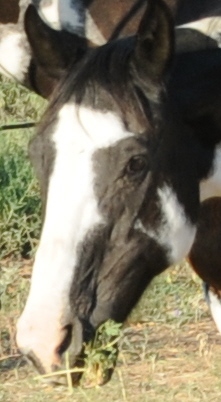
Tag Archives: American Paint Horse Association

Oak Tree Mast Year

Lichen and moss on the north side of live oak tree in the front yard at Flying Hat.

Moss grows on the north side of trees.  That’s true in the northern hemisphere.  Probably it’s on the south side of trees in the southern half of Earth.  We have many oak trees bearing fruit this Fall.

Acorns fall from trees abundantly this season.  Our car port becomes a tin drum when the acorns fall — about one every thirty seconds at the fastest rhythm.  This is a “mast” year for acorns, a season of superabundant oak tree fruit.

Here on the ranch in prehistoric times, acorns were a staple supply for the Indian.  About the ranch house, in the front pastures and around the barn, I have discovered stone tools in abundance:  choppers and grinders.  It is possible that archeological analysis will reveal Flying Hat a quarry for tool making since non-worked iron ore and meteorite sources are plentiful (1).

Horses must be watched lest they overeat acorns.  A few nuts will not hurt them.  This Fall season the grass is so abundant the horses don’t care about the acorns.  During a lean year of grass in the Fall, I have seen Star (levitating and stealth horse) stand beneath an oak tree and wait for nuts to fall, some bonking him on the head, other nuts bouncing off his backside.  This year, however, come the browning of the grass, horses must be given ample hay or put in another pasture without acorns.  Star would much prefer to be gently pelted with nuts.

______________________________

Notes:

(1)  Archeological analysis in Texas falls under the Texas Historical Commission administration.  Contract archeological firms analyze sites.  My work in archeological field survey and analysis (I like the fieldwork) stems from my graduate field school tenure at Texas Tech University, anthropology department, under Dr. William Mayer-Oakes.

See also Texas Historical Commission, Archeological Subset.

3 Comments

Filed under Flying Hat Ranch, Horses

Stealth Horse

You can hear horses nicker and whinny.  You can feel the ground shake when they gallop past you in full run.  When you are inside a horse trailer with them and they call for their mates, the trailer vibrates with the force of their voice and your ears ring for thirty minutes.

Even so, horses are quiet.  Really quiet.

One story, among many I have, illustrates the stealth horse in every horse that lives and breathes.   Air force secret stealth projects have nothing on these guys.  Four years ago I was setting up cedar staves between big fence posts on the boundary between our place and a neighbor’s ranch southeast of us.  Our small remuda of equine was in the pasture behind me and I was sweating and swearing vigorously in the morning heat.  Between me and the horses in the field was a flat-bed trailer.

As I stood back from a particularly hard tie of a cedar stave to a five-strand barbed wire fence, I felt this hairy flesh about my neck and shoulder.  I was already nervous from fighting yellow-jacket wasps and I had a couple of minor puncture wounds from the barbed wire.  What in the world has got me now?

It was Star, paint horse gelding!  Sneaked up he did, went around the flat-bed trailer, and quietly walked up to my backside!

Five minutes ago, he was back up a hundred yards in the pasture.  Now the guy is building fence with me!   “Star, what are you doing?  You scared the daylights out of me!”

He stood there looking at my work.  I’m sure he was real proud of himself  having spooked me.  I gave him a gentle rub between the eyes.  He stood with me for about fifteen minutes while I finished the task and then ambled off, walking around the flat-bed trailer to go munching on bermuda grass.

That Star is a stealth horse.


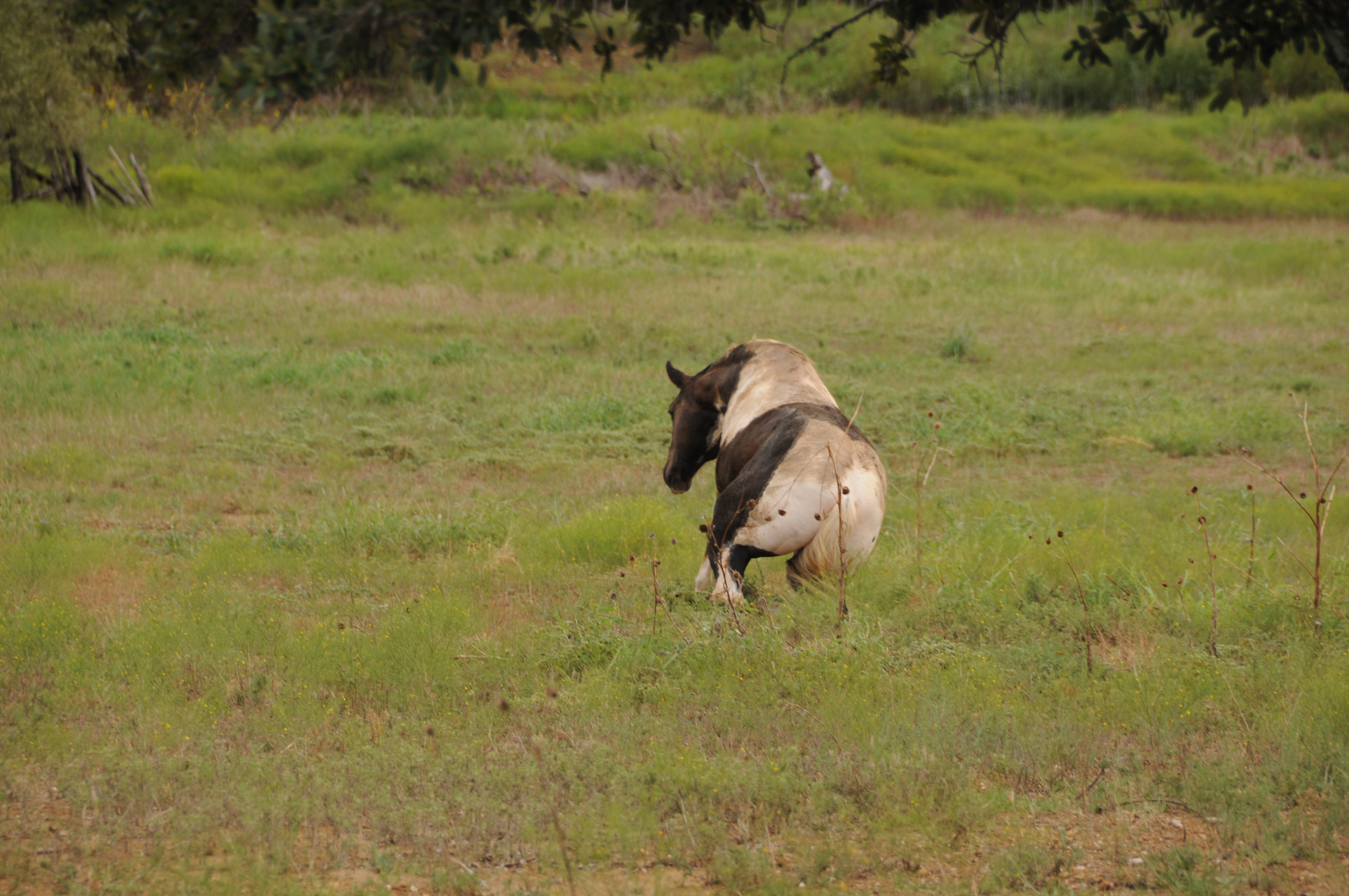
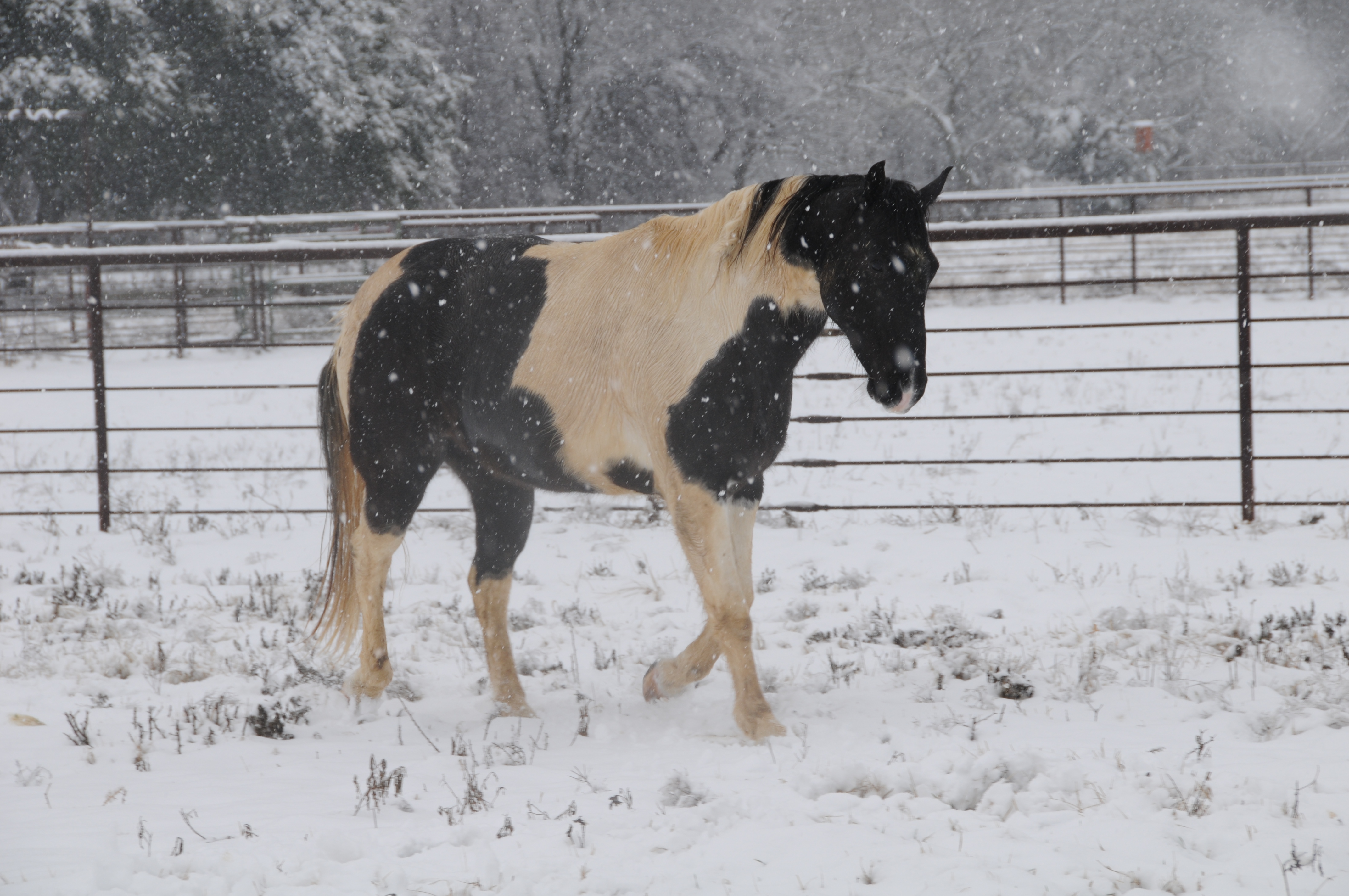
Star the stealth horse lying down in the pasture.


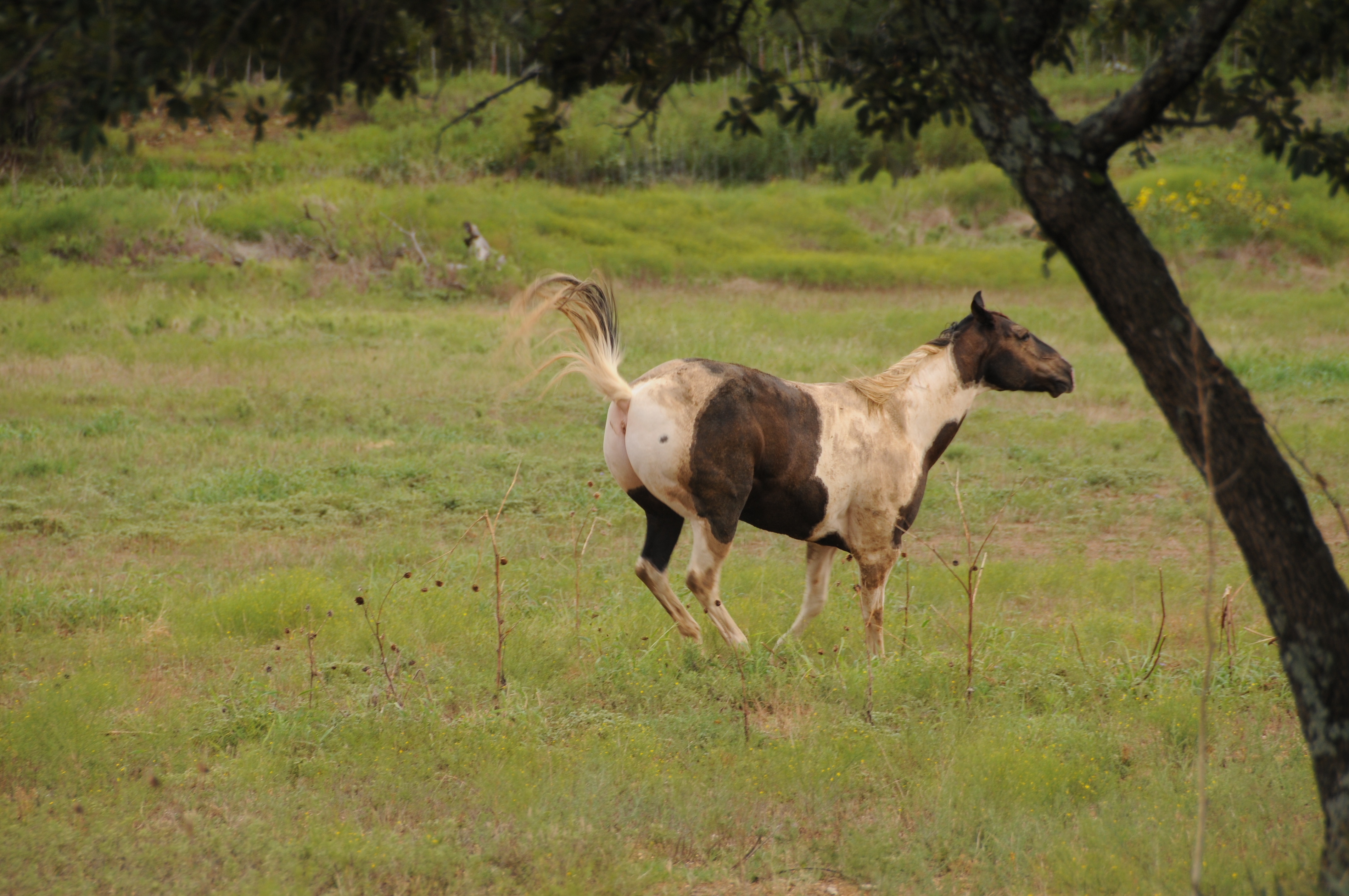
Star the stealth horse galloping away.


Forthcoming post:  Star Herds Sheep Without Rider

10 Comments

Filed under Cedar, Horses, Juniper

Lilly: A Kick of Delight

Lilly (2008)

Lilly must have attracted my stepfather because he was always frugal with money and as long as I knew him, J. W. (Jesse Walter) never purchased horses.  Until Lilly.  He bought her in about 1993.  She was eight-years old.

J. W. had married my mother  in 1951, worked for Texas Power & Light Company and kept watch over two parcels of land in central Texas:  a 35 acre area near Goldthwaite, Texas, and a 13 acre plot, called Salt Creek, near Brownwood, Texas.  Lilly stayed, from time-to-time, in both places.  Star, her colt, was born at Salt Creek.

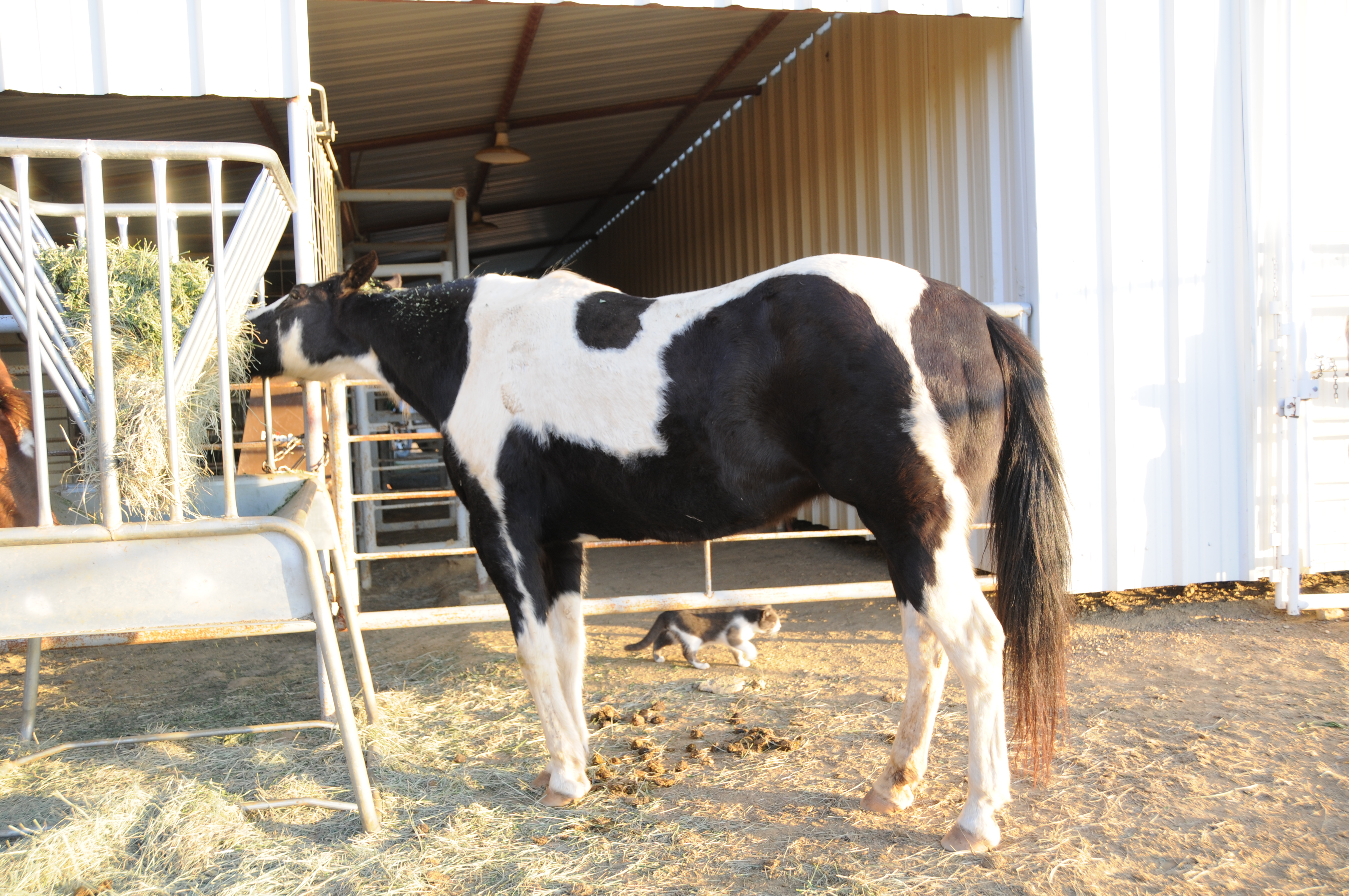
Lilly is a black and white tobiano paint horse.  Tobiano indicates a color ensemble of paint horses that is not speckled, like paint that is thrown from a paint brush, but rather broad swatches of color that can be interpreted as representational figures on the horse, as American Indians were wont to do: woman lying down, warrior standing up, galloping horse, and so on.  She stands about 14.5 hands, fairly short for a horse, but good for easy mounting and fast breaks and stops.  Crazy Horse would have liked her, as he painted hailstones on his mounts and Lilly had broad patches of black.

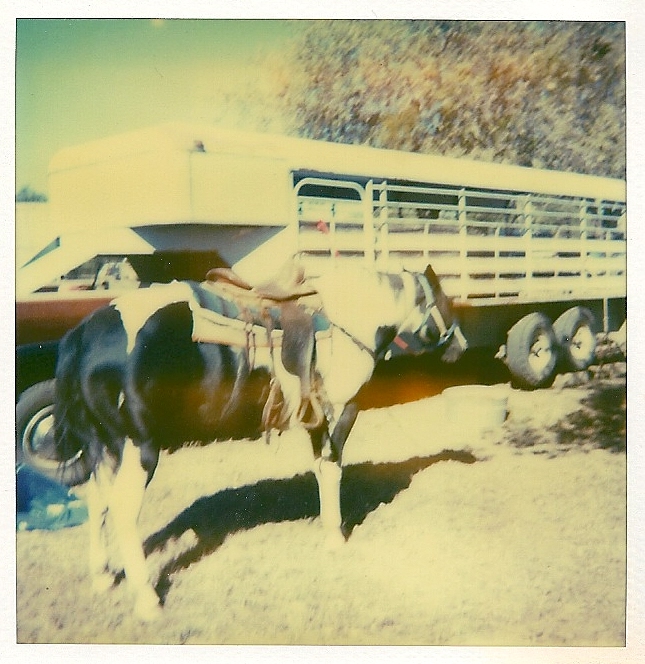
Lilly Saddled (1993)

Lilly was J. W.’s trail horse.  She would be his ride on daily trail rides around central Texas and may have, on one occasion, gone with him to Colorado for an elk hunt.  J. W. did not hunt elk in his later years, preferring to stay back in camp, taking pictures on a Kodak camera and conversing about the fire.  Lilly may not have gone with him, but I think I remember her being framed in a photograph in the high country.

I first saw Lilly at Salt Creek.  She was beautiful.  Still is.  My daughter rode her when young.  Brenda has ridden her and so has Olivia, my granddaughter.  I never rode Lilly.  For some reason, Star was my steed and when my family rode with me, they chose Lilly and I rode Star.  I don’t regret not having ridden Lilly because I am always around her.  I have been her keeper since September 2002, when J. W. was diagnosed with leukemia.  Twice a day after I moved her and Star to Mingus, I have tended her, groomed her, had her feet trimmed and doctored her bruises and scrapes.

When J. W. fell ill and I went to Goldthwaite to feed her the first time, Lilly saw me coming down the pasture road in my little Mazda sedan.  She munched a few more bites of grass and then followed me to where I parked.  I had a bucket of oats in my hand and when she saw the oats, or smelled them, her head shot up and she rolled her head slightly, giving kicks of delight (I know now) as she walked beside me on my right side to the feed bin.  I had not been around horses that much and the kick seemed out of place to me.  Horses kick because they are threatened?  What is going on with her, I thought?  I knew that I was not threatening her and was in the process of feeding, so what was going on?

I was a bit fearful of her and moved away.  I stopped walking and reflected.  Lilly is happy she is being fed, I reasoned, not apprehensive, so, the kick must be a behavior of delight, not attack.

A cold, sharp wind cut across the hill to the stock pen where the feed bin was located.  She needed her oats, I thought, and I need to become acquainted with her because J. W. can’t come out to Goldthwaite anymore.  Lilly stopped when I did.  I started walking again and she walked right beside me, a 1,000 lb. sentient being that could hurt me.  The whole process of feeding and my stepfather being ill and I had sheep to round up at Salt Creek and I had mother to worry about now since she was in bad health too and I had to drive back to Mingus and teach in Abilene the next morning, all this was on me and now I have Lilly to contend with.  I thought I can’t do all this.

Cold wind or not, Lilly and I stood together.  She wanted her oats.  Fair enough, let’s continue.  She went down the walkway of the pen and stopped near her bin and I walked between her and the stock fence, inhaling scents of her and the fall season, grasses dying and wind from across our neighbor’s pasture to the north.  I poured her oats into her bin and she chomped.  Simply ate.  And I stood there looking at this beautiful animal.  I reached out and touched her, caressed her and she continued to eat, letting me stand beside her.  The event of feeding Lilly turned from apprehension to friendship, a subtle first-step in getting acquainted.  Because Lilly allowed me to be with her, I reasoned that in the coming weeks I could manage the end-state of my family’s affairs.  I would come to the stock pens and feed Lilly and be lightened.

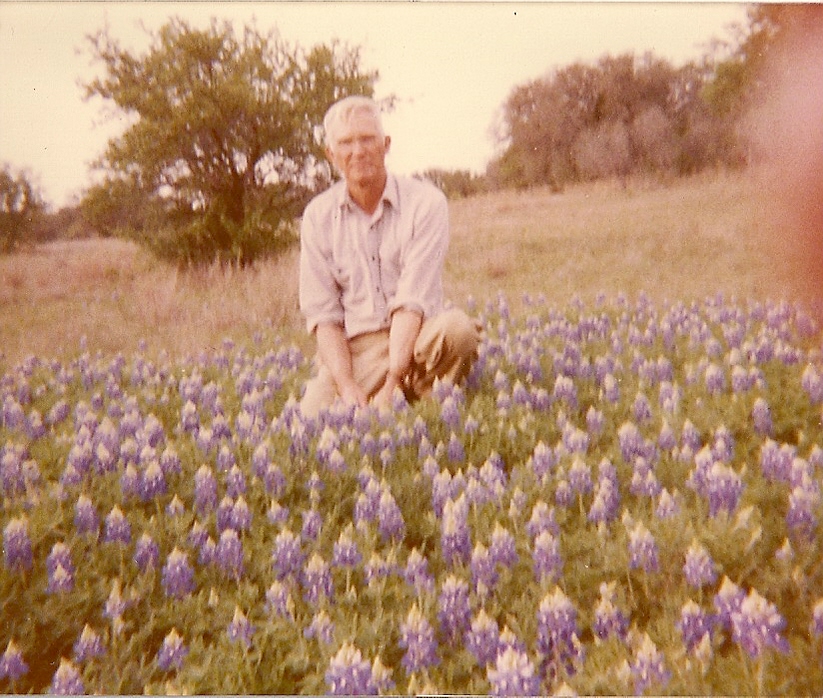
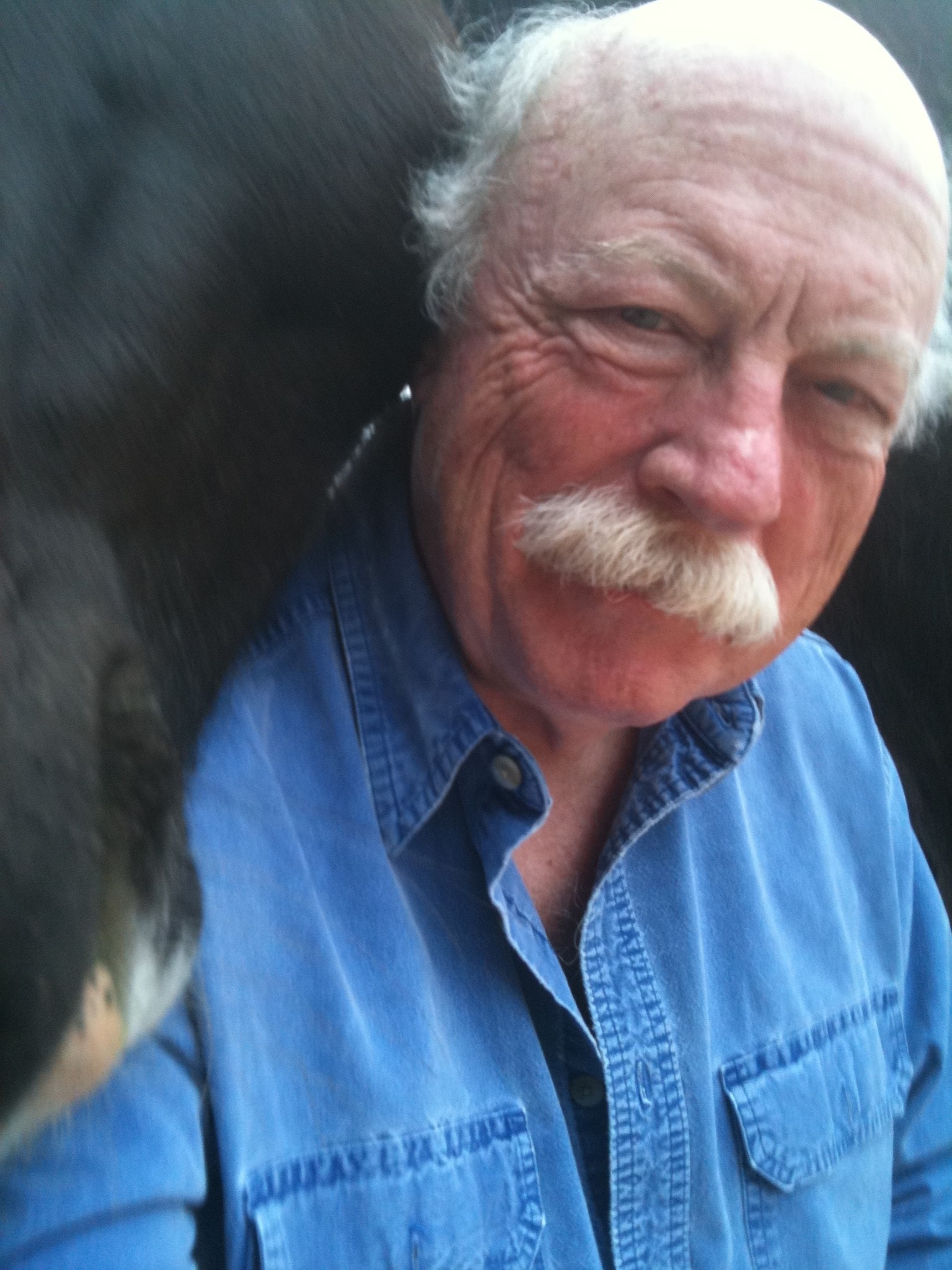
My Stepfather, J. W. Hollingshead, Central Texas (ca. 1990)

J. W. never saw his horses again.  I would narrate to him what I was doing, but he was concerned about other things, but I told him anyway about Lilly and Star and rounding up the sheep to sell in Goldthwaite and Star helping cut the sheep into the pen on his own, a naturally penning tendency in some horses.  J. W. let me manage the horses and livestock for the first time in our family.

In J. W.’s personal effects, there are ribbons and medals and trophies of trail riding with Lilly.  They are just courtesy awards given to every trail rider, but the awards signify a bond that goes back in time, back in prehistory when humans approached horses and the horses allowed the touching to occur.  Lilly has been a part of our family for seventeen years and I have been her keeper for eight.  She’s family.  I know now she kicked that first day out of delight for oats and for me.  Rest assured, I’ll be with that old girl, all the way to the end, be it a cold day or hot.

10 Comments

Filed under Horses, Lilly

Four Standing Orders for a Texas Ranch

As written in a previous post, if we had to wait for cooler weather in Texas to get anything done, we’d never get anything done.  For our operations here on the ranch, we have four standing orders that must be accomplished everyday.

The First Order is feed the horses twice a day, once in the morning between 7:00 and 8:00 a.m. and in the late afternoon between 5:00 and 6:00 p.m.  During the summer, I watch the shadows lengthen at five o’clock in the afternoon from the mesquite and live oak trees surrounding the corrals and barn, a signal to feed.  Although the temperatures are high, the shadows present a significant measure of relief.  In the open sun, the temperatures have reached 115 deg. F. this summer.

The Second Order is to fill three water troughs in the two corrals and stable.  Horses consume water in large quantities.  We are dependent on Barton Creek Water Cooperative for potable water at the house and at the barn.  We have a large stock tank in the front pasture and in Pecan Tree Pasture, a half-mile away and across Salt Creek, there is a large circular water trough filled with Barton Creek Coop water.  All water troughs must be at least one-quarter full.

The Third Order is to physically check the health of all the horses, from head to tail, hoof to withers, and apply medicine or fly spray (marigold tincture, not oily, water-based) to los caballos. Horses are bound, like toddlers, to get cuts and scrapes, sometimes worse.

Fourth Order is to check fences where the horses are turned out.  This may be done on horseback, in the pickup or using binoculars.

When we run a herd of cattle, these four orders apply to their pastures and browsing areas.  In addition, certain Niman Ranch protocols (c) must be followed if the cattle are certified Niman Ranch.

Feed, water, check the health of the livestock and fences dictate four chores that must be accomplished, summer or winter.

* * *

The front pasture has been shredded of its broomweed.  I leave large swatches of tall grass for the critters.  Perhaps one day quail may come back.  I’ve only seen one covey here at the ranch in eight years.  They will nest in tall grass, dead grass.  To completely shred a pasture destroys that cover.

* * *

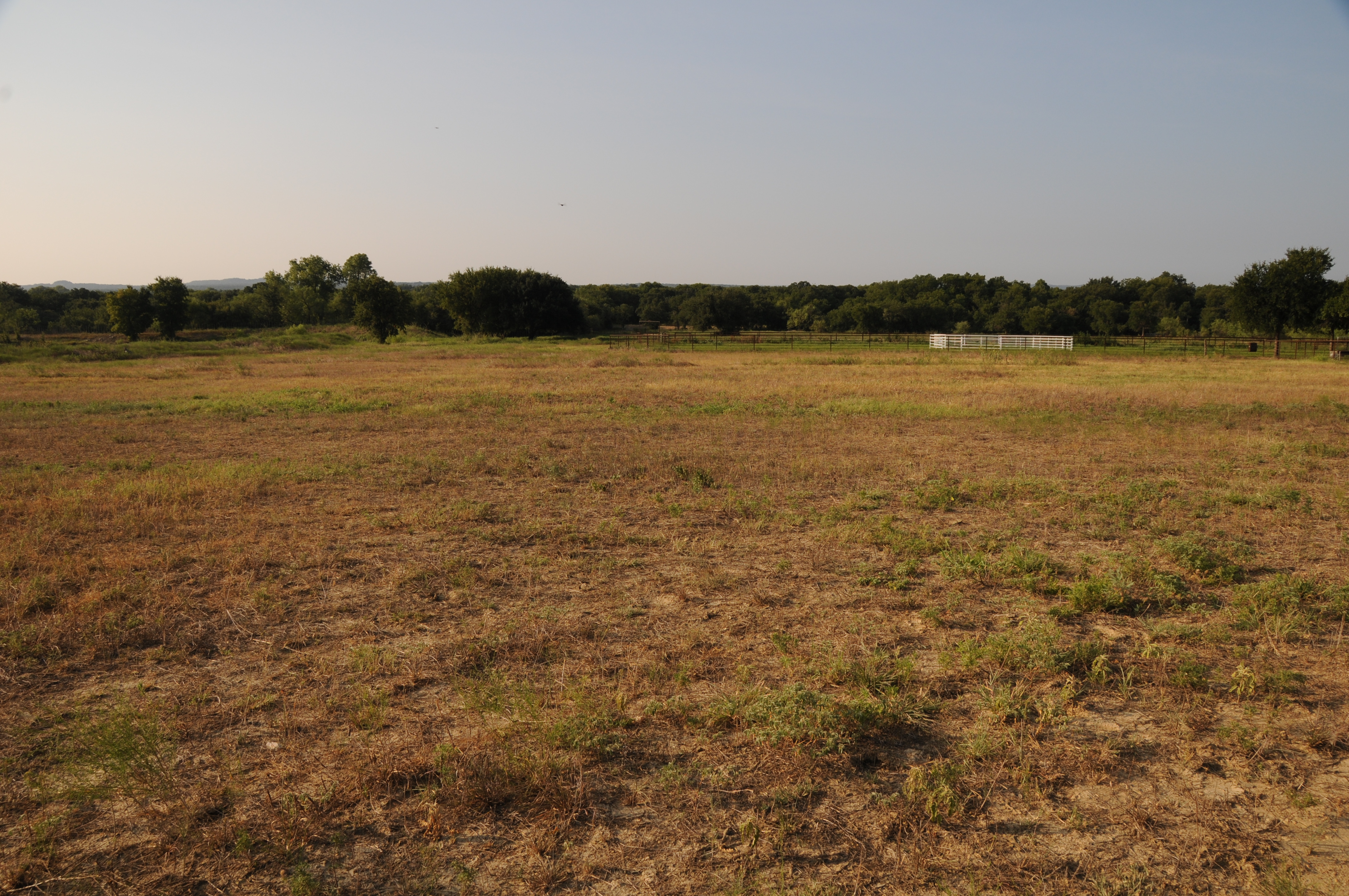
Summer Pasture Flying Hat Ranch, August 2010

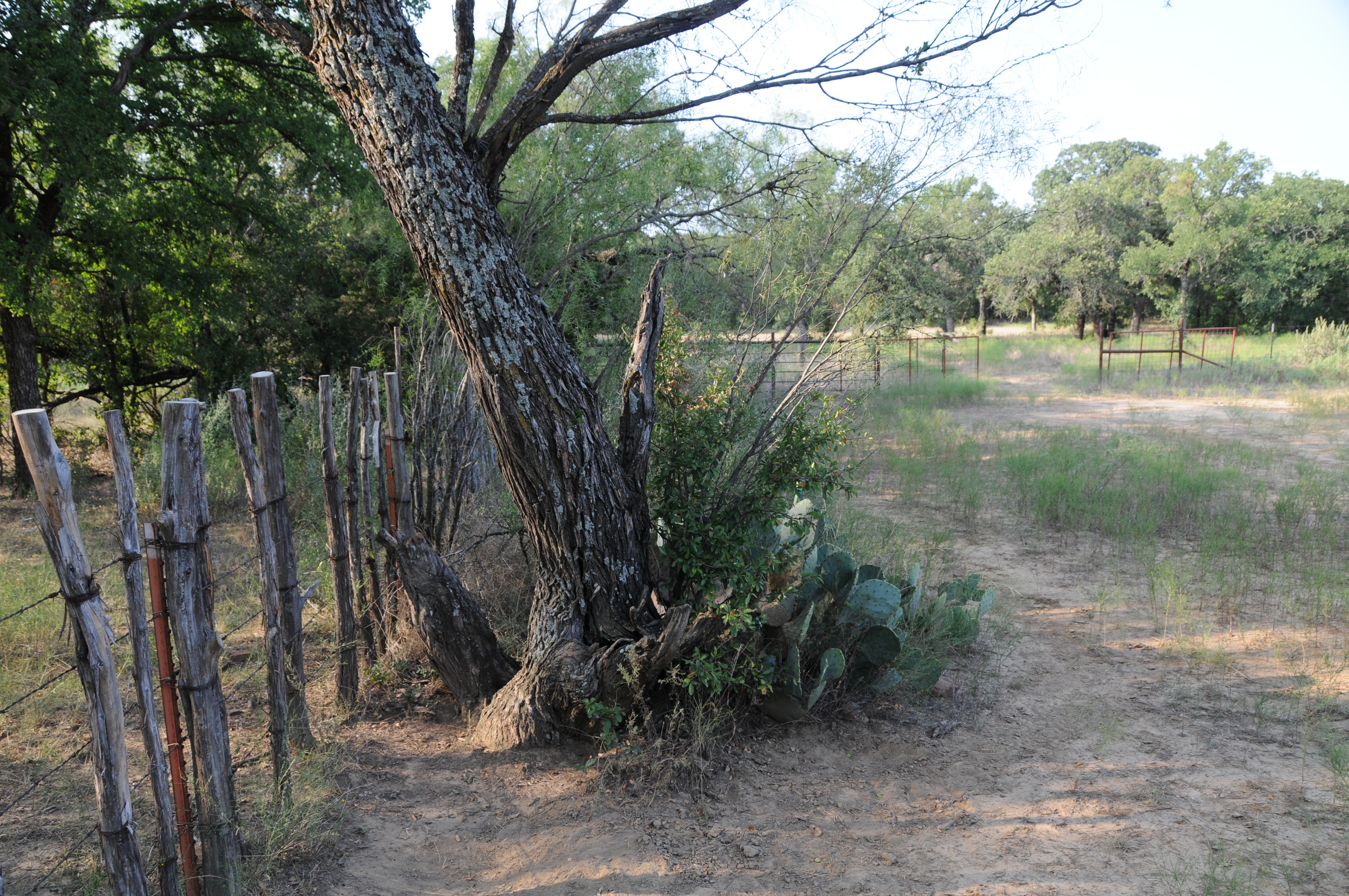
Several days ago I posted “Cactus Illusion,” a momentary scare that our oldest mare, Lilly, had become entangled in the fence at the area she loafs, next to the Hall place on the east side of the arena pasture.  I have some photographs of that area.

As explained in the post, I was a quarter-of-a-mile away, using the binoculars to examine the fence line and check on the horses at mid-day when I thought I saw Lilly down and entangled.  The sun and my crisis mode at the time played a trick on my behavior as Brenda and I sped to the area to rescue Lilly.  She was just fine, loafing in the grove area underneath a live oak tree.  We were terribly relieved that it was a cactus illusion.

Getting adapted to working Texas summertime heat requires thinking ahead more than usual.  By and large, work should be done before 10:30 a.m. so that the work during the heat of the day can be accomplished in the shade or in a barn with good circulation.  Large circular fans, 10 to 15 feet in diameter can be installed at the top of a barn or enclosed arena.  We don’t have those fans, but we work on the breezy porch or in the alleyway of the stables.  I use misters in the stables.

Take a lesson from livestock during the summer.  Rest and loaf in the shade during the heat of the day.  Browse in the early morning, evening and night.

Paint Horse Lilly's Loafing Area, Cactus Illusion

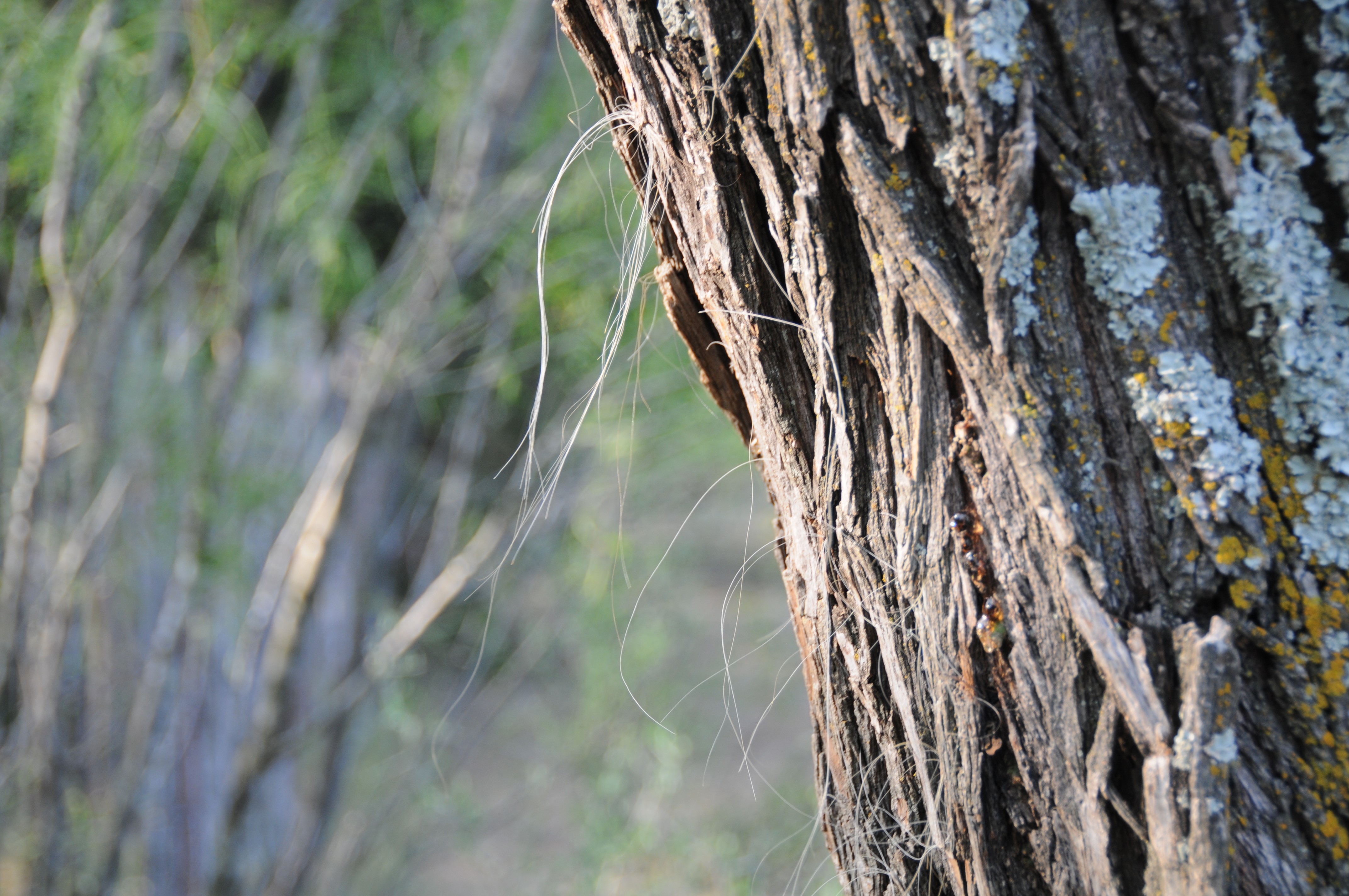
Lilly's Mane Hair at Loafing Station, August 2010

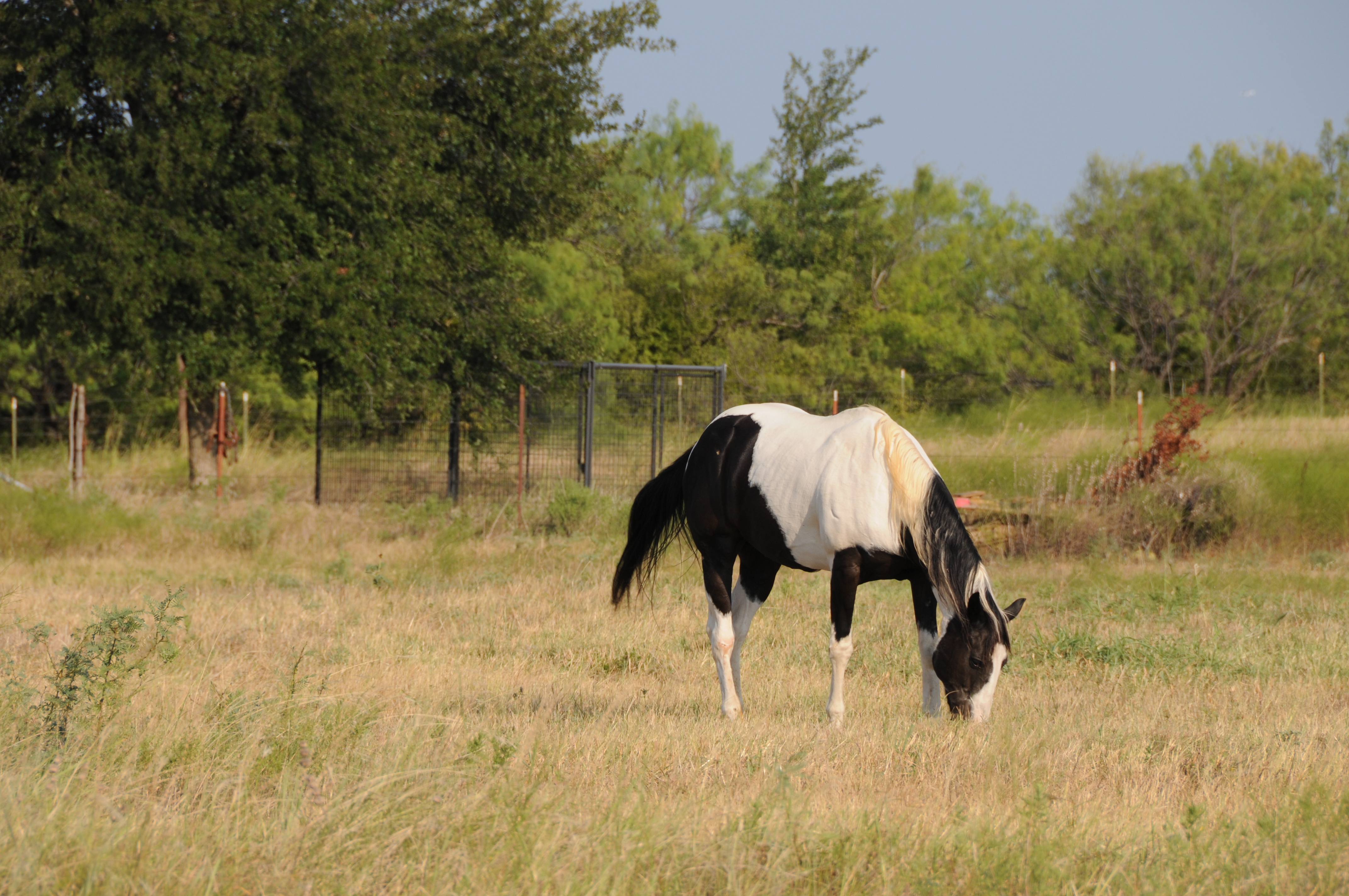
Ima Lil Moore "Lilly" browsing early in the morning (8:30 a.m.) before going to her loafing area along the fence line.

For Lilly’s pedigree and other photos, click on Ima Lil Moore APHA 111214.

______________________________

Notes:

The Niman Ranch protocols may be found under the link for our ranch: Niman Ranch Beef Cattle protocol.

The Niman Ranch website. Here you may find a list of ranches specializing in the protocol as well as sources to purchase the high-quality meat.

We have not had a cattle herd since 2009.  We specialize in Angus cattle.

8 Comments

Filed under Flying Hat Ranch, Horses

The Horses of Flying Hat

I thought I would put in one post a photograph of each of the horses I work with on a daily basis here at our place, Flying Hat.  All of these photographs can be enlarged by clicking on the photograph. By enlarging the photograph, if you have a moment, will reveal a lot of detail, as these photographs are usually 2.0 plus in megabytes.  I like to take photographs using the most detailed mode (within reason, of course) I can.  You can always lessen the detail in a photograph, but never add detail to it.

Shiners Fannin Peppy

This is Shiners Fannin Peppy or “Fanny.”  Fanny has been in training — elementary school — for a hundred days with Duncan Steele-Park at the GCH Land & Cattle Company of Weatherford, Texas.  Fanny is a daughter of Sweet Hija below.  Fanny is quite vocal.  She will begin to nicker once she knows that I am going to feed.  It is a vocalization that is more of a chortle, kind of a gargle, deep-down in her throat.  Fanny will continue to nicker-chortle every fifteen seconds or so until I put feed in her bin.  Translation to English:  “Oh, boy, I can’t wait, can’t wait for my grain.  Oh, boy, oh boy.”

Sweet Hija

This is Sweet Hija or “Hija,” as we like to call her.  I purchased her in 2003, from King Ranch.  She starred in a King Ranch video for marketing before the auction at Kingsville.  She cut cattle with J. R. Ramirez, her trainer, in front of two-hundred prospective buyers.  I bought her at the King Ranch Legacy Auction in 2003, in front of  2,000 spectators — really stressful, but fun.  When I walked to the stables to view Hija after purchase, two stalls down from her was her grandfather, Peppy San Badger.  He was looking over the crowd and his granddaughter.  Peppy San Badger was nearing the end of his days, but he was still eager to see people and his progeny — be around the excitement.  I am sorry to say that I did not appreciate his background and heritage that day as I was just beginning to understand the quarter horse culture.  Peppy San Badger, Hija’s grandsire, was one of the greatest quarter horses ever to have lived: he rewrote performance records and records in the show pen.  He died in 2005, less than two years after he saw Hija load up into our horse trailer and come to Hannibal.  I have a photograph that shows Peppy in the background, Hija in the fore.  I’ll try and retrieve it for you some day.

When I saddle and ride Hija, I have to give her a run around the round pen before I mount (it’s been a while, however, since I’ve ridden) because she has that spirit of Peppy San Badger.  He would give a little buck when you first mounted him, but not a mean buck, just an energetic buck that he was happy to be alive — so also, his granddaughter.

Ima Lil Moore

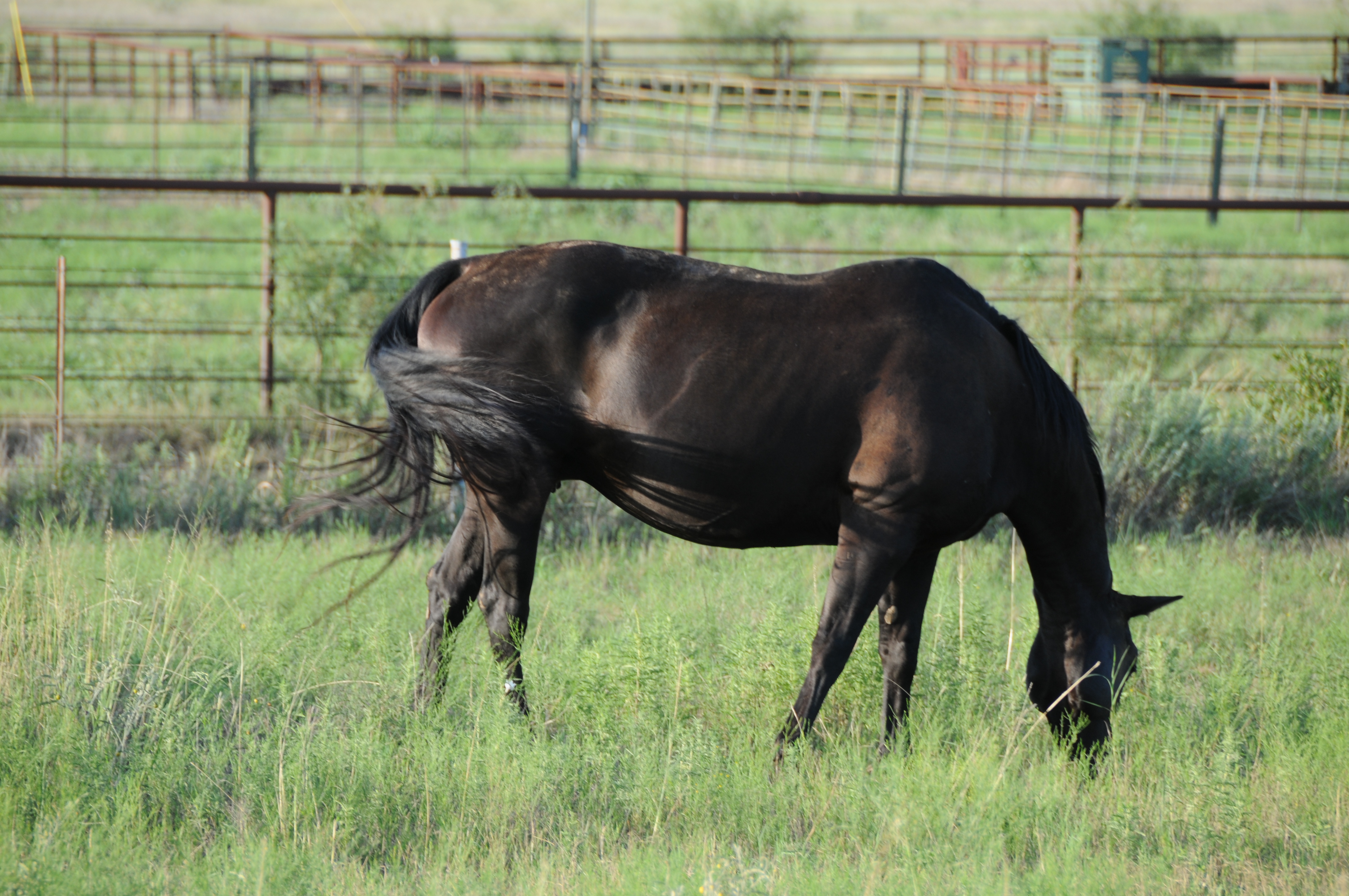
This is Lilly, the oldest mare in the remuda.  I inherited Lilly and her son, Star, upon the settlement of my parents’ estate in 2003.  Lilly is the alpha mare of the remuda.  She is challenged by Fanny for placement at the food trough.  Lilly likes to take her good time these days to come to the stall.  I favor her and let her use the alleyway to get into her stall (see the alleyway above) rather than have her walk a longer distance.  You can also see in the photograph above, the barn cat, Paint or Little Paint.  Odd, but he has the same markings of Lilly.

Shiners Fannin Pepto

Here is “Shiney.”  He is all-boy, a colt and a peppy one at that.  He is the son of Sweet Hija.  This is the guy I am having so much fun with these days.  He is an intact male and I have him for sale, but Brenda and I have talked about keeping him — me more than her — but it would require the construction of a stallion run.  Shiney is such a fine boy.  I really like working with him.

Stars Bars Moore

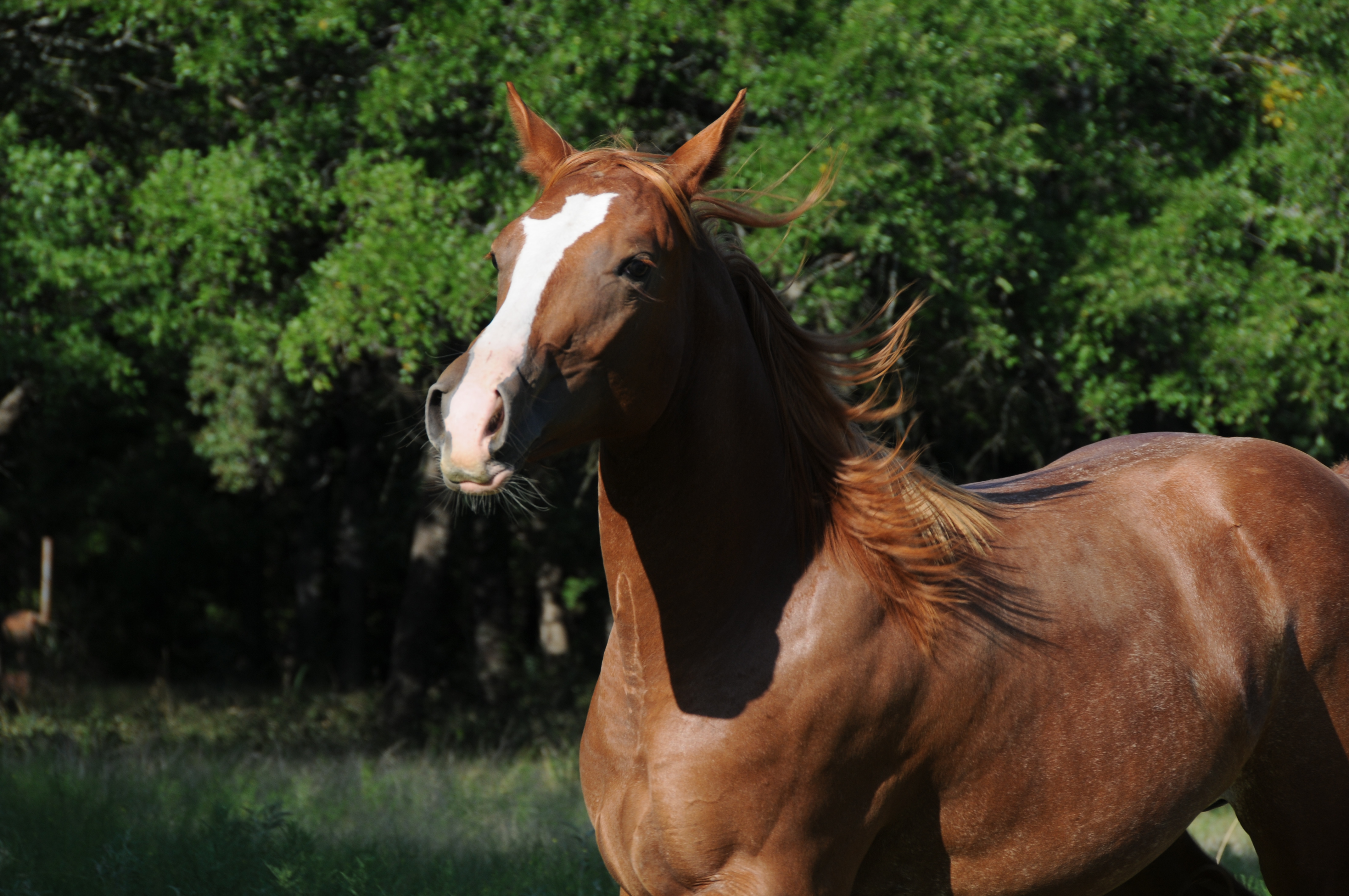
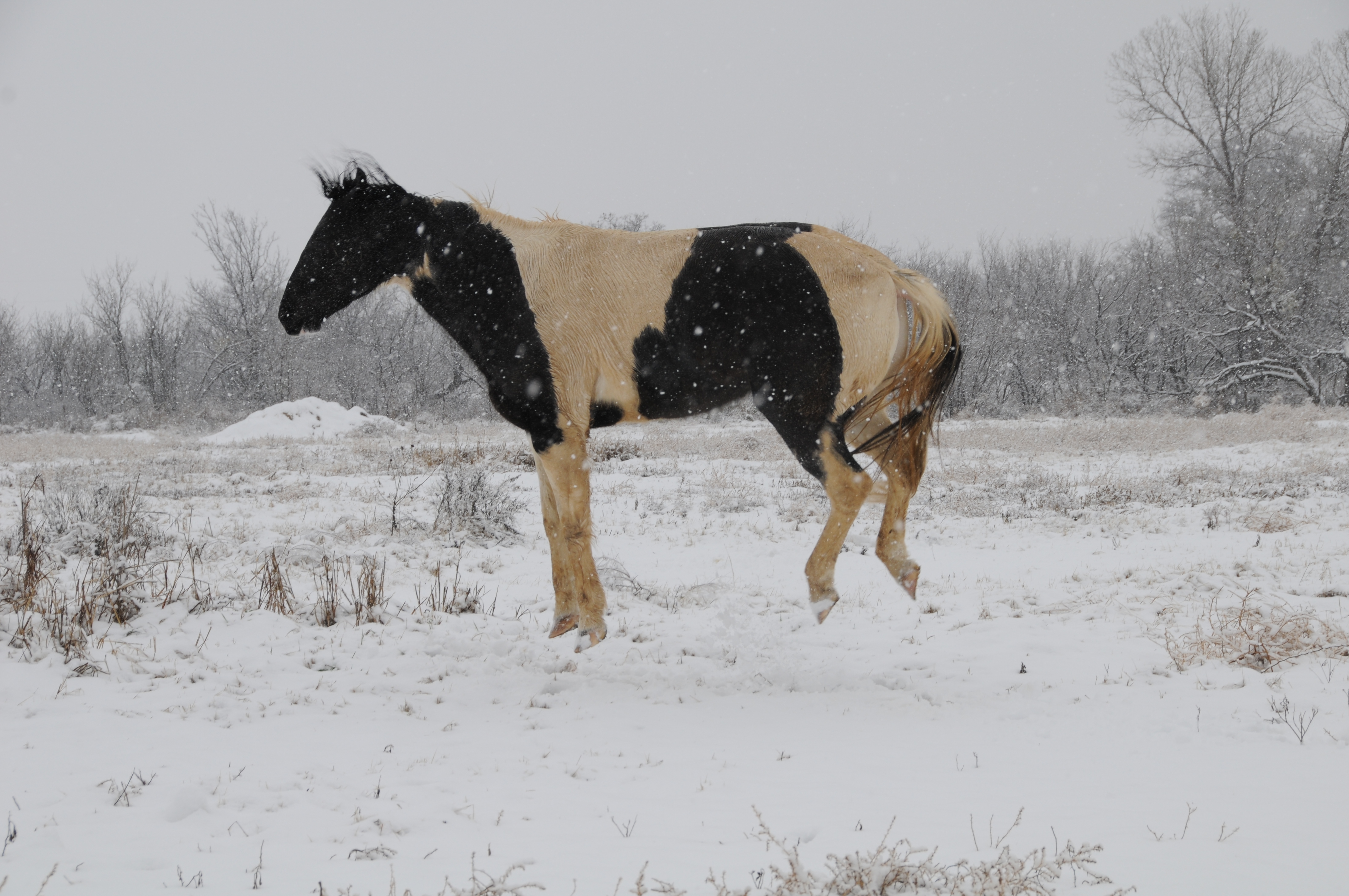
Star is a gelding and the baby-sitter for Shiney.  Star and Shiney inhabit the large outdoor arena and are given to playing many games of “Gotcha,” a variation of tag.  Star is a large horse.  I often refer to him with affection: The Beer Wagon Horse.  Star is the son of Lilly.  Star is known far and wide as the levitating horse of Flying Hat — check a previous post this winter on the blog.

A friend of mine at the college, Roland Stroebel, says to me almost daily, “I’m homesick, Jack.”  By that he means that he wants to go back to his farm south of Cisco, Texas, and work with the land and his cattle.  He misses his farm — homesick.  When Roland’s work is done at the college, he leaves and I can see him working with his fine Angus cattle into the evening darkness.

When I am away from all of the horses and land upon which they trod, I am homesick for their companionship, their warm breath and smell.  It is said:  “There is something about the outside of a horse that is good for the inside of a person.”  I believe that with all my heart.

19 Comments

Filed under Duncan Steele-Park, Flying Hat Ranch, Horses, Lilly, Shiners Fannin Peppy (Fanny), Shiney (Shiners Fannin Pepto), Star, Sweet Hija

Levitating Horse at Flying Hat

I give you my word, this photograph has not been retouched.  Click the photograph to see the famous, all-inspiring, fabulous, courageous, fine, good horse named, Star, as he defies gravity in the Texas snowstorm.  Come one, come all…okay, enough.  Let’s look at the photograph.  I caught Star in a leap off the ground.

Stars Bars Moore (APHA) Levitates

7 Comments

Filed under Horses, Star