Notes face-down: bipedalism and scanning the savannah

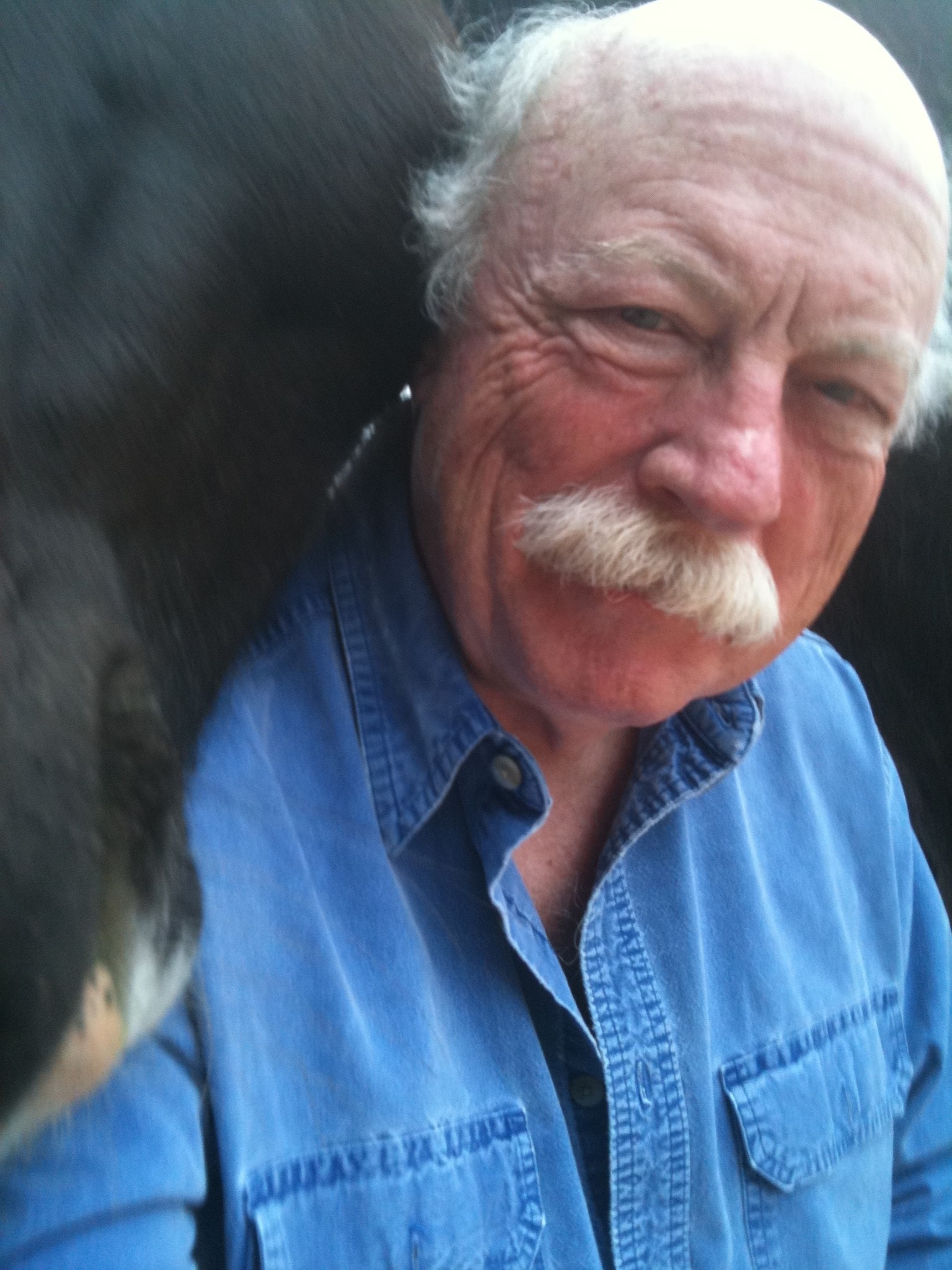
(Contrary to the suggestion proposed by my daughter, Wendy, I will not be making the accompanying photograph in this post my latest profile picture.)

Bipedalism came first, then the large brain among the history of primates.  The upright stance allowed man to scan the savannah, edges of forest and plains, or wherever he had wandered for food and predators.

I haven’t posted since December 27, 2011, mainly because I have had eye problems (really, only the left eye) since December 25th, Christmas morning, and a “Ho, ho, ho,” Christmas gift I desire to return, but can’t!  I woke up that morning with blurred vision caused by a macular hole in my left eye.  This last Tuesday, January 10th, I received a vitrectomy at Arlington Day Surgery Center, under the skilled hands of Dr. David Callanan (Dr. Wu administered the pharmacological agents — much appreciated).

I may still be bipedal, but I have assumed the position of a face-down recovery period lasting five days or more so that I neither can scan the savannah nor see the quacking ducks on my pond.  I cannot have any hard spirits during my ten-day recovery, but that is not as painful as it may seem to some.  I have this nature blog and like to go out into the field, but the only nature I see are house plants, two dogs and trees outside my living room window.  I take a new interest in bugs that infrequently cross the floor.

I took a picture with my iPhone immediately after surgery and this is what I look like.  I spend most of my days face-down in a specially-designed “chair” and a bedside rest for my face that is like those contraptions in massage parlors for your head as you get your massage.  Dr. Callanan predicts a 90-95% recovery of vision in my left eye with another operation for cataracts in about a year (cataracts — Nile River, Egypt). 

So, I will not be hiking the grove or taking photos of juniper any time soon.  Medical technology and habitat adaptations, however, have come a long way since primates first scanned the savannah.  I’m in a safe wikiup, been worked on by medicine men and women, have taken drugs and have nature outside my window.  My hearing and tactile senses are sharpened.  I listen for the Sandhill Crane that may fly overhead.  I brush my canine that barks at strange sounds at the edges of camp.  Although I question that human society has progressed, today with the skills brought to bear in my life I think in some areas we have progressed.

(Note:  please do not show this photo to your children as it may cause nightmares or sleep unrest.  Oh, go ahead, give the little primates a scare and make up a good narrative while you are at it.)

44 Comments

Filed under Christmas, Sandhill Crane

Fur, crane and juniper berries: field log

The Scientist does not study nature because it is useful to do so.  He studies it because it takes pleasure in it; and he takes pleasure in it because it is beautiful.  — Jules Henri Poincare

* * *

[These are primary field notes taken today.  Time entered in UTC or Zulu time, i.e. 1759.  Post-field note commentary bracketed and italicized.]

12/27/2011

Flying Hat Ranch, North Erath County, Texas, Lat 32.43 N, Long -98.36 W, elev. 1,086 ft. Turkey Creek Quadrangle map.

1759.  51 deg. F.  [Cold enough to start into the field with line jacket, but by the time I got to grove, I shed the jacket, putting it on the fence post.]

1805.  Three or more ducks on pond.  No identification.  Woodpile near pond has been reduced by rain and natural deterioration.  Tree limbs and logs have settled in earth.  [Erath County has taken the burn ban off.  I’ll not burn the pile because it houses several critters.  The ducks are three and they make little noise.  They paddle to the far side of the pond as I stride by.]

1817.  Barbed wire between grove and arena pasture broken, 5 T-posts from the gate, towards the west.  Apparent deer tracks on the ground, no sign of struggle, crawling under, deer popped the strand.  Fur on ground.  Photos taken.  [I have seen juvenile deer scoot under the fence; hence, I think they broke it.  I looked carefully for signs of an entanglement in the wire, but found none and also went over to the creek embankment to make sure no deer had fallen.  I’ll repair the fence later this winter.  I wonder if it is deer “fur” or “hair?”  According to Scientific American, mammalogist, Nancy Simmons, there is no difference between fur and hair.]

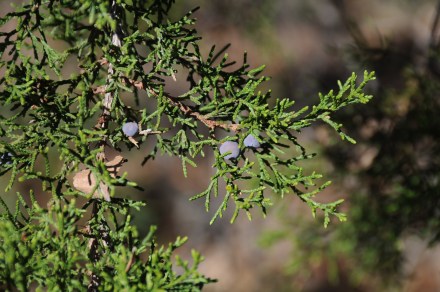
1828.  Juniper berries on tree to the east of brick pile.  Tree is 20 feet high, 20 feet across  at lower crown.  Five juniper trees in immediate vicinity.  One large juniper 30 feet to east-southeast of the little grove.  This juniper is 30 feet tall, trunk is 2-3 feet in diameter.  [I had never stopped to count the number of junipers in the small grove, nor estimated the height of the tallest tree.  My recent post on junipers has prompted my focus.  I thought about picking the berries and consuming them, reenacting my Zuni experience.]

1843.  Red oak leaf falls.  I think it a floating butterfly.  Then I see the red oak.  No butterfly.  [What tricks our mind plays.  I thought for a moment that a Monarch might have roosted and emerged in the sun.  The leaf floated like a butterfly, not a swaying back-and-forth manner like a leaf.]

1849.  Two burrows near east water gap, one looks inhabited.  [Skunk, armadillo?  Other?]

1853.  Remnants of deer-stand ladder.  [I have dismantled all deer stands in the trees that I can find.  This ladder will be dismantled soon.  I hate it when nails are driven into trees.]

1855.  Bull bellows on Dooley Place.  [The Red Angus bull bellows.  ‘Twould be interesting to take field notes at a certain point for just sound, not images, just sound.]

1858.  Harris hawk ascends into tree at about 10 foot level, watches me approach, then flies low out of tree towards north.  [I have typed the Harris before.  There are two of them that soar and predate in the grove and surrounds.  They’ve been here on Flying Hat for two years.]

1908.  Scare 4-7 turkey vultures from dead mesquite tree at southwest part of grove.  [I hope Ethan Connell has checked the turkey vulture on his Life List in his Peterson’s.]

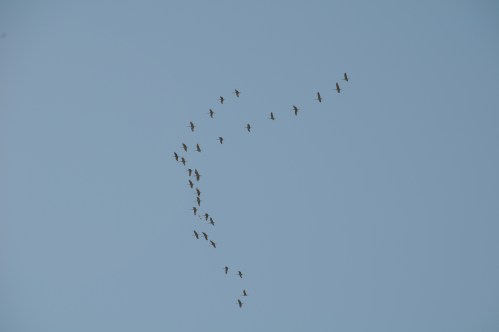
1917.  Flock of Sandhill Cranes overhead, flying north to south, catching wind currents.  [When I first heard the Sandhills,  I looked too high, gave up and then found them at a lower altitude.]

1930. Turn around at northwest corner of far field and return to house. Star whinnies at me.

1938.  White-crowned sparrows fly low in brush about arena at southeast end.

1942.  Scare up the resident jack rabbit while searching for stone tool in situ.  [I cannot find the stone tool.  I do have it located, however, on the GPS and I can locate it later.  I had placed a yellow surveyor’s flag at its place, but the elements have blown it down — or possibly, Star.]

1946.  At pasture-house gate.  [Log entries conclude.]

5 Comments

Filed under Cedar, Deer, Ducks, Field Log, Sandhill Crane

Juniper: an evergreen for all my seasons

Juniper in Flying Hat Ranchito grove, often referred to as cedar (J. Matthews, 2011).

(As a disclosure, I use “cedar” and “juniper” interchangeably.  See notes below from Encyclopedia Britannica and Wikipedia.)

I grew up with cedar all around me, but cedar posts for building fence predominated.  T-posts (the steel ones) may be making fence construction faster these days, but I hold to the cedar post as a primary building material.  Allergies from cedar congest the lungs of Texans, particularly central residents who weather the Mountain Cedar every year.  A website dedicates itself to, “Cedar: The Allergy Plague of Trees.

All of that being said, the cedar or juniper holds personal value for me beyond the descriptions, quotes and links I attach in this post.

Of all the flora about me as I grew up and the plants about me now, the juniper radiates scent and memories, even beyond the majestic pecan in my far pasture.  I burned juniper in a Folger’s coffee can to sweeten the air at campsites and even in my apartment from time to time, placing the coffee can at the edge of the hearth.  I have taken cedar bark and twisted it into fine pieces and lit a single match to start a campfire, and I have carried cedar tinder in my backpack to start fire along the trail.  I cut cedar staves and posts one Christmas vacation to earn extra money and to say, I once worked as a cedar chopper.

Green juniper groves along the Colorado River near Bend, Texas, contrasted with bleached white-gray rock outcroppings, and I found old campsites of roundups in pastures about the river, the blackened rock, not the red, holding the remains of cedar fires.  My grandmother once pointed out a cow camp firepit near the Colorado that she had cooked for the crew and her husband-cowboy Jake, before his accident on the horse Hell’s Canyon.

I have camped near cedar breaks many times, but the one time I remember was on the Zuni Reservation, out in the middle of the reservation, by myself with junipers and coyotes through the night.  I built a small fire of cedar and munched on a juniper berry for its bitter effect.  I had sped to the reservation from Grants, New Mexico, and hastily set up camp, sleeping in my bedroll beside the fire the night through.  I was seeking a medicine man, but he never found my camp.

More often than not at Christmas time, my family cut a juniper tree from the ranch to place in the living room.  The tree may have been as short as three feet, at other times, five-feet tall.  I loved the aroma of the juniper as it filled the house for Christmas.  Tinsel drooped from the branches with those bubbly lights all aglow.

Near Abilene, on the road to Coleman, there is a park on the east side of the highway at Buffalo Gap, a broad cut in the hills that buffalo and migrants used to go into southwest Texas from the High Plains and Caprock.  The park has a large grove of junipers that have trunks three to five feet in diameter.  I have rested there many times and note the broad-deep shade the junipers provide in the Summer and windbreak during Winter.  From the Juniper Park — as I have taken to call it — one can see into Buffalo Gap and off in the distance the plains to the north.  This Juniper Park has been a lookout, a redoubt of some sort, for a long, long time.  I think I stopped there one time when I was traveling to Brownwood to take care of my aging mother, or it may have been another time, and I rolled the windows down to smell the juniper and place my hand on the fertile greenery I had known all my life, or that other day anew in late Spring.  I thought then, as I do now, that I will remember this day for as long as I live, for although my mother lay dying and I was teaching in a foreign land, the evergreen of juniper and its effect transcended my sorrow and sense of alienation from this world.  I have found home and peace and love beneath junipers for all my seasons.  To me, its fruit is never bitter.

______________________________

Notes, corrections and additions:

Some juniper trees are misleadingly given the common name “cedar,” including Juniperus virginiana, the “red cedar” that is used widely in cedar drawers. True cedars are those tree species in the genus Cedrus, family Pinaceae.

In Morocco, the tar (gitran) of the arar tree (Juniperus phoenicea) is applied in dotted patterns on bisque drinking cups. Gitran makes the water more fragrant and is said to be good for the teeth.

American Indians have used juniper to treat diabetes; such treatments by the Navajo, for example, are under clinical study.[3] Clinical studies have shown that treatment with juniper may retard the development of streptozotocin diabetes in mice.[4] Native Americans also used juniper berries as a female contraceptive.[5] The 17th Century herbalistphysicianNicholas Culpeper recommended the ripened berries for conditions such as asthma and sciatica, as well as to speed childbirth.[6]

“Juniper,” Wikipedia, accessed December 25, 2011.

* * *

juniper, any of about 60 to 70 species of aromatic evergreen trees or shrubs constituting the genus Juniperus of the cypress family (Cupressaceae), distributed throughout the Northern Hemisphere. The juvenile leaves of a juniperare needlelike. Mature leaves are awl-shaped, spreading, and arranged in pairs or in whorls of three. Some species have small, scalelike leaves, often bearing an oil gland, which are pressed closely to the rounded or four-angled branchlets. Male and female reproductive structures usually are borne on separate plants. The reddish brown or bluish cones are fleshy and berrylike and often have a grayish, waxy covering. They mature in 1 to 3 seasons and contain 1 to 12 seeds, usually 3.

Common juniper (J. communis), a sprawling shrub, is widely distributed on rocky soils throughout the Northern Hemisphere. Many ornamental cultivars have been developed. The berrylike megastrobilus of this species is used to flavour foods and alcoholic beverages, particularly gin, which is named after Juniperus through the French genièvre. Juniper “berries” have a fragrant, spicy aroma and a slightly bittersweet flavour. Used with venison, they remove the gamey taste. They are also used to season sauces and stuffings, in pickling meats, and to flavour liqueurs and bitters.

An important ornamental and timber tree of eastern North America is the eastern red cedar (J. virginiana), whose fragrant wood is made into cabinets, fence posts, and pencils. This species is an invader of glades, pastures, prairies, and other open grassy areas in parts of its range; thus, it is considered a troublesome weed by some botanists and land managers. The savin (J. sabina) of central Europe, Chinese juniper (J. chinensis) of eastern Asia, and creeping juniper (J. horizontalis) of eastern North America are other popular ornamental species with many horticultural varieties. The wood of incense, or Spanish, juniper (J. thurifera), of Spain and Portugal, and of Phoenician juniper (J. phoenicea) of the Mediterranean region sometimes is burned as incense.

Oil of juniper, distilled from the wood and leaves of several species, is used in perfumes and in medicines such as diuretics. Galls produced by junipers as a reaction to fungal infection are known as cedar apples. This fungus, cedar apple rust, completes its life cycle on members of the apple subfamily of the flowering plant family Rosaceae, which contains numerous species of trees and shrubs commercially valuable as fruit and ornamental plants. The growth of junipers around apple orchards and plantings of related genera is thus discouraged to avoid disfigurement or loss of these important cultivated plants.

Encyclopædia Britannica Online, s. v. “juniper,” accessed December 25, 2011, http://www.britannica.com/EBchecked/topic/308301/juniper.

12 Comments

Filed under Cedar, Juniper, Life in Balance

Merry Christmas!

Electric lantern in central Texas with characteristic star, December 24, 2011.

I wish you a Merry Christmas and Happy New Year!  In the words of Abraham Lincoln, A fellow is about as happy as he makes up his mind to be.  So, in the spirit of a great president who faced reality head-on, let us make up our minds a few times during the day to be merry and happy.  I would be a lot happier if I didn’t have to hear Alvin and the Chipmunks sing Christmas songs, but it is hard to avoid if one goes into the city malls.  Yet, to stay out of the malls means I might not run into my favorite seasonal character, Clark Griswold.  Play ball! 

Merry Christmas!

(I will publishing a post later today about my favorite fauna flora coincident with Christmas and other events in my life: the juniper.) 

5 Comments

Filed under Christmas

Central Texas Christmas Eve 2011

Circulating around Christmas Eve and coming into Christmas Day, I have taken some photographs that illustrate rural and town life in central Texas.  These photographs were taken near Mingus, Llano and Fredericksburg.  Mingus is the town that is designated on my mailing address, although Hannibal (no longer having a post office) and Gordon are closer to my ranchito.  (The Mingus post office is slated to be closed because of cost-cutting measures.)

My Uncle Floyd and Aunt Lennie had a ranch at Cherokee, near Fredericksburg.  I spent summers and holidays with Floyd and Lennie as a boy and teenager.  My Aunt Lennie prepared chicken-fried steak that was actually a recipe for wienerschnitzel (lightly breaded veal steaks) and serve beets that were purple and sweet and icebox cold.  My cousin, Allan, and I literally begged her to prepare chicken-fried steak.  Little did I know then that she obtained her country cuisine largely from the Fredericksberg German culture.

Christmas variety cookies at Fredericksburg Bakery, December 24, 2011.

The Fredericksburg Bakery has been producing cookies and breads since 1917.

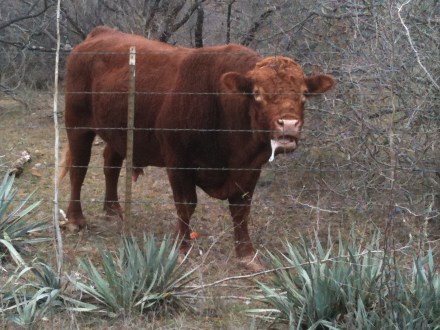
Here is Dooley's Red Angus bull, my neighbor to the west (December 22, 2011).

There is nothing wrong with the drooling Red Angus. He has been feasting on shortgrasses and hay, perhaps a few Christmas cookies.  He’s a very gentle fellow and will amble away when you approach him. The Red Angus breed is noted for its weight-gaining ability. I have considered purchasing some.

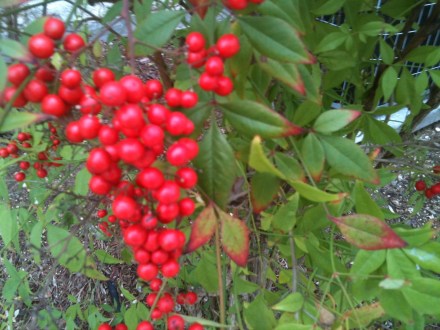
Red berries beside Highway 16 near Llano, Texas (December 23, 2011).

These berries look good enough to eat, but don’t! If you see berries or fruits that are red and you don’t know the variety, don’t eat the red!  These berries are not to be mixed into any Christmas recipe for cookies or breads.  Please refer to your favorite cookbook for ingredients in your cookies.

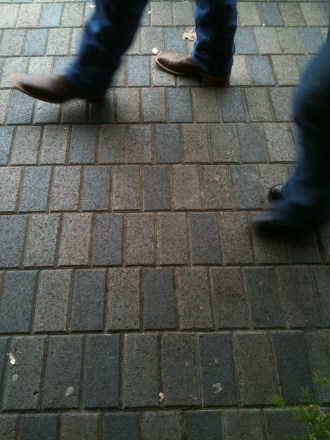
Texas boots on the last shopping day before Christmas (Fredericksburg, Texas, December 24, 2011).

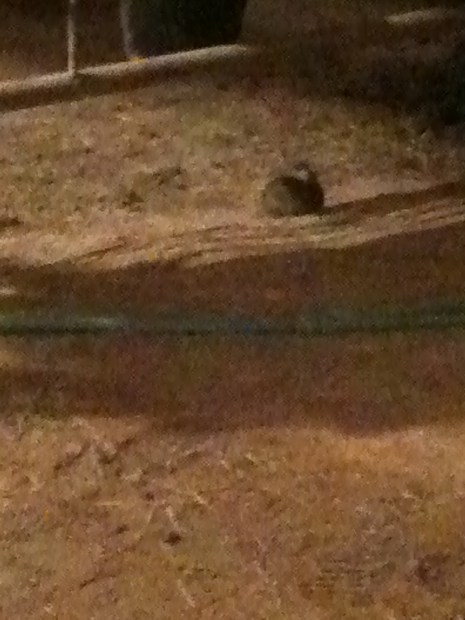
Cottontail rabbit eating spilled grain, December 22, 2011.

I like this pre-Christmas Eve image. I had fed Star before dark and left the light on in the barn and stalls. When I went back down to turn off the lights, I saw this cottontail beneath Star’s feed and hay bin, delicately picking up stray nuggets of Horseman’s Choice 12% feed. I watched the rabbit for five minutes and snapped several shots with my iPhone, the one I include here being the best in low light.  The rabbit probably favors a sweeter fare, like the Purina sweet feed for performance horses.

Heron and squirrel along Baron's Creek in Fredericksburg, Texas, December 24, 2011.

Baron’s Creek runs through Fredericksburg, Texas. I walked along the creek yesterday and today. This afternoon I spotted a heron in the water and framed the heron with the pecan tree on the left of the shot. When I looked at the results, I saw a squirrel in the tree. Do you see the squirrel?  The squirrel had been gathering pecans, the heron waiting for the stray frog or fish.

Tomorrow is Christmas Day.  I hope to have another post about rural and town life in central Texas as well as the flora and fauna.  Be sure to note my attention to juniper on Christmas Day.

8 Comments

Filed under Birds, Christmas, Fredericksburg Texas, Great Blue Heron

Walking with Great Blue Herons

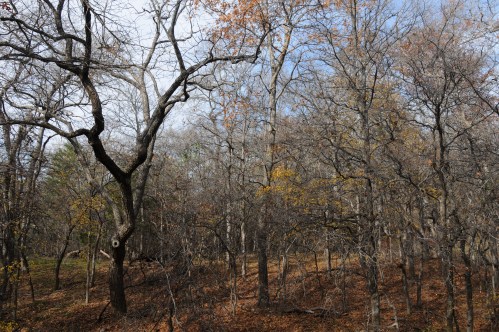
The grove peninsula. This is one of several peninsulas formed by the meandering Salt Creek (December 2011).

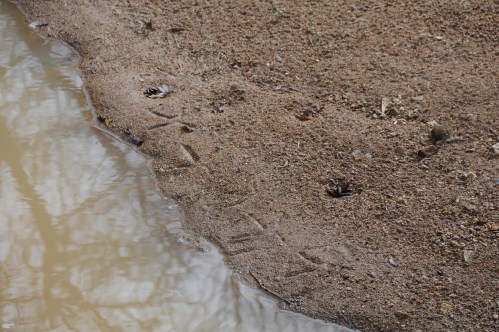
Blue Heron tracks along a still pool of water in Salt Creek (December 2011).

I walked in the grove this morning.  Several peninsulas emerge in the grove, cut by the swift and long-flowing water of Salt Creek.  Upon purchasing Flying Hat Ranchito eight-years ago, I found a red metal chair on the peninsula I photographed, a solitary chair for the previous owner to muse, observe or rest.  I took the chair off the peninsula.

Wet and cold the air, I saw track of the Great Blue Heron that frequents the creek that meanders among the elm, oak and juniper.  I see one or two of them each day flying to the cow tanks about the ranchito.  The heron track I identified with my Peterson’s field guide to animal tracks, a new third edition I purchased when Border’s went out of business in Fort Worth.

I was not alone as I walked in the grove.  The Great Blue Heron — past and present — walked with me in the grove today.

Related articles


7 Comments

Filed under Birds, Great Blue Heron, Juniper, Life in Balance

Christmas Eve music in Old California (2011)

This post was published Christmas 2009, 2010.  I have added some photographs to the original for this 2011 Christmas.

Christmas in California before the Americans came [1840s] was a season when all the grown people had as much fun as the children do now.  And the children had so much fun that they never got over it and ever after loved play and presents more than work and hard bargaining….

One Christmas Eve, I remember best, there was a full moon.  Over all the ground there was a glittering frost, just enough to whiten everything, yet not enough to even nip the orange trees which at this season of the year hang full of fruit and blossom both….

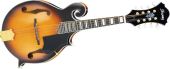
We had much music–guitars of the Mexican and Spanish type, made with twelve strings of wire, and mandolins.  After supper there was dancing in the patio, coffee and cigaritos on the veranda, and singing everywhere.  Someone said it was a beautiful night for a horseback ride over the valley to the Mission Santa Clara.  The horses in the corral were soon saddled.  There were twenty-five or thirty of us young men and women.  Our horses were the best of the big herds that were attached to every rancho….The saddles, bridles and spurs were heavily covered with silver bullion ornaments, as in those times we put silver on our horses instead of on our dining tables; for Spaniards…live on horseback, and they eat but to live, instead of living to eat.

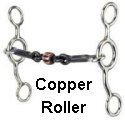
Riding out of the patio gate it was like a scene from the time of the Moors in Spain.  As our horses snorted in the cold air they spun the rollers in their bits, making music that only the Spanish horse knows [1].

José Ramon Pico, “Before the Gringo Came,” San Francisco Call, December 1899.

Here are some selections of Spanish music with mandolin and guitar.

______________________________

Notes:

[1]  José Ramon Pico, “Before the Gringo Came,” San Francisco Call, December 1899.  From Sam Travers, Christmas in the Old West:  A Historical Scrapbook, pp. 171-174.

Mission Santa Clara Asís established in 1777, was located a few miles south of San Francisco.  This mission and adjacent Indian pueblo eventually grew into Santa Clara and San Jose.  The mission is now located on the campus of  Santa Clara University.

Frank Principe, silversmith from Lindell Beach, British Columbia, writes that many of the old California-type bits, such as the Santa Barbara, were designed with Islamic religious symbols.  The symbols included seven buttons, half moons, and starts.  This is traceable to Moorish occupation of Spain until the 1490s, the Cortez expedition to Mexico, and other adventures.  He writes, “For the last one hundred years or so most North American bit makers have been using these designs without realizing their historical significance.”

Sweet Hija (Spanish for “daughter”), my black mare, has King Ranch breeding.  Even today, King Ranch provides ranch horses for Mexican ranches.  Of all my horses, Sweet Hija is the fastest and most energetic.  After saddling Hija, I must run her about the round pen to work off her energy before she is ridden.  She is the most alert and sensitive to her surroundings, spotting deer a half a mile away.  I have to use binoculars to see what she sees.

Spanish Mustang Research Facility.

7 Comments

Filed under Christmas

My Little Bull

Little Bull in the far field.

We like, even love, our pickups.  The vehicle in people’s lives possess an almost life-like identity as we accelerate, speed and reach our destination, or for that matter, drive just to be driving — touring, it used to be called.  We remember our first car we owned, the first car or pickup we drove.  My first lesson in driving came in a 1950 Chevy pickup, green in color, in the sands of Sulfur Springs road, near Bend, Texas.  I was ten-years-old and the year was 1952.  My grandmother sat beside me and taught me clutch and foot-feed (accelerator).  I stalled it one time and then, off we went!  I loved that Chevy pickup, and, of course, the instructor who finally gave me a passing grade.

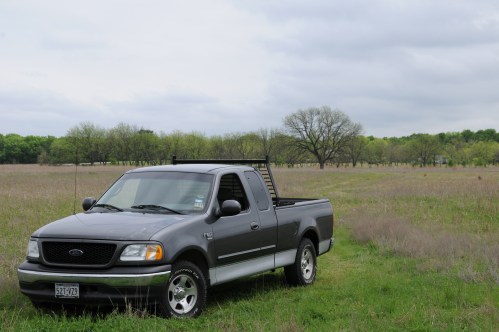
This month, December, I am selling my 2002 Ford F-150.  Its name is Little Bull.  His coat is gray.

Little Bull has carried me, my friends, my family and all things horsey and mechanical for nearly ten years.  He has 260,000 plus miles and is tired and broke, his transmission needing replacement.  The service department at Arrow Ford in Abilene, Texas, holds his remains and a repairman wishes to purchase Little Bull and use him for short hauls about the city.  For me to repair him costs $2,500.00 and that is beyond my budget.  The repairman can tend Little Bull back into health for way less than I can and he keenly wants him.  Little Bull is still wanted, still admired, and so I have made the choice to sell.

Chariots, wagons and pickups have carried commerce and people through the ages.  Vehicles have been spaces for conversations and monologues, carriages to weddings and funerals and platforms for hay and feed.  Little Bull has pulled trailers with injured horses to the vet, pregnant mares for foaling and newly-bought furniture from Dallas.

I shan’t grow maudlin about Little Bull for it is not good for me and he deserves better in his next life than to be sent away in sorrow.  He’s been a good boy, a fine man and now, in his later years, a helpmate for another respectful owner.  Little Bull may be cannibalized for parts, his wheels and tires going one way, the headache rack another, but I have cherished his life, his dependability and his character.  Like that Chevy in the sands of central Texas, I shall never forget my Little Bull.

8 Comments

Filed under Life in Balance, Recollections 1942-1966

Wait for the wind to stop? You’ll never get anything done in Texas!

I worked a lot yesterday on clearing my two-horse trailer of camping gear and storage boxes.  I have this reluctance to store things in the attic because of spontaneous combustion, so I am careful about what goes in the attic — hardly any cardboard boxes, mainly plastic storage containers that are tightly sealed.  The main focus of work, however, was to reclaim the two-horse trailer for hauling Star, hay and camping gear.  I have a larger stock trailer, but I like the shorter trailer for maneuverability.

There’s an old Irish saying:  If we wait for the rain to stop so we can work, we’ll never get anything done.  Transposing that old saw:  If we wait for the wind to stop or the weather to cool here in Texas, we’ll never get anything done.  So I worked with barn doors banging, dust about me, and wind chill in the 40s.  The wind blew a gale, upwards of 40 mph gusts during the day, and when night fell, I parked the trailer and F-250 inside the barn beside the tractor.  The photo shows the interior of the barn with trailer, truck, tractor and in the background the ever-present Stihl chainsaw (orange casing next to back wall).  The Stihl needs a workout on windfall oak in the grove.

In Santa Fe, Mr. Rios, of the Rios Woodyard in back of Geronimo’s Restaurant on Canyon Road, told me last winter that he would trade me even-Steven for oak and pinion.  I need pinion, he needs oak.  I won’t make it to Santa Fe this holiday, so I have time to cut the oak into proper size to make the trade in the summer.  The Stihl chainsaw is just about the most reliable chainsaw I have ever used.  I have many “safety issues” with using a chainsaw, but that’s for another post.  (I beginning to feel like I am writing a column for safe behavior in the modern Wild West.)

The wind did not cease until 10:30 p.m., but the trailer is clean.  I got a few things done in Texas today.

15 Comments

Filed under Weather

Hardshell and gobble, gobble! Pecans and turkeys in my family

In central Texas, for as long as I can remember, pecans and turkeys have been a mainstay harvest source for my family clan:  Morris, Parks, McRorey, Millican, Gray, Hollingshead.

Millican Pecan Co., San Saba, Texas

The Millican family business, stretching back to the nineteenth century, provided pecans for Queen Victoria and Alfred Lord Tennyson. The queen and Lord Tennyson were an integral part of the customer base for many years. My grandfather and grandmother took long bamboo poles and thrashed pecans along the Colorado and San Saba Rivers. On one occasion my grandfather lost his high school ring while thrashing and never found it. Someone will unearth it one day and see the graduation date at about 1917-1918, and think it unfortunate, yet quaint, the ring was lost.

Before mechanical pecan shellers, my step-father and uncles about Thanksgiving and Christmas had stained fingers, like charred wood, from cracking and peeling pecans.  In older years, a package of shelled pecans was always included with Christmas gifts and the nuts were minced upon for days thereafter.  As I put a pecan in my mouth, I reflected upon the labor tended, my step-father cracking pecans in front of the radio or television in the evenings.  I knew hard shell from soft shell pecans and sought the soft shell to crack — didn’t we all?

The McRorey family — Floyd, Lennie, John R. and Joycelyn — raised turkeys for the Thanksgiving table on a grand scale with thousands fed and sped to market before the holidays.  The turkey business was good for the McRoreys and when I stayed with them I drove the tractor as grain was unloaded in the feed bins.  I was not the best of drivers, but I meant well.  I learned much from my Uncle Floyd.

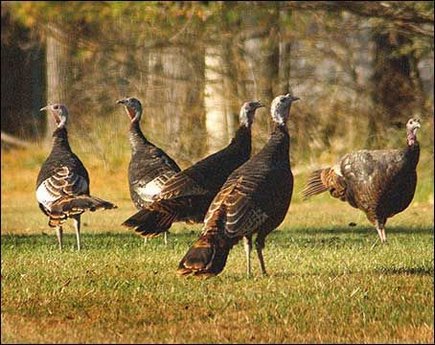
My mother hunted wild turkey.  On one occasion in Brown County (Brownwood, Texas, the county seat), she bagged the first turkey of the season.  With a .22 caliber rifle she took her kill that season.  She arose before daylight in the morning and placed herself behind a hunter’s blind on my uncle’s ranch near Brookesmith, along the creek, and waited patiently for the flock.  Ofttimes, she merely watched the wildlife, counting the flock or observing deer in the pasture.  For many years after she won the first-turkey-taken prize, as I accompanied her on errands around town, she was asked: Are you going to get the first turkey this year, Gywn?  What rifle do shoot turkey with?  Where do you hunt?

I am one and two generations removed from a family clan that thrashed pecans, raised turkeys and lived off the produce of the soil, harvesting and consuming nature’s fecundity.  I have only lightly touched those activities, but I am aware, deeply so, that when I eat pecan pie today I see the bamboo poles of thrashing in the rafters of the barn, and when I see the breast meat of turkey upon my plate I hear the gobble-gobble of Uncle Floyd’s turkeys along the Cherokee Creek in San Saba County.  I am truly thankful for for the produce of the soil and the hands that have tended the harvest and taught me lessons about nature and all that dwells therein.

18 Comments

Filed under Pecan, Turkey