Butterfly and flowers

Two days ago I took this photograph of a butterfly on a cluster of aster-looking flowers. These flowers were so abundant in the front field that it appeared as snow.

20121122-121405.jpg
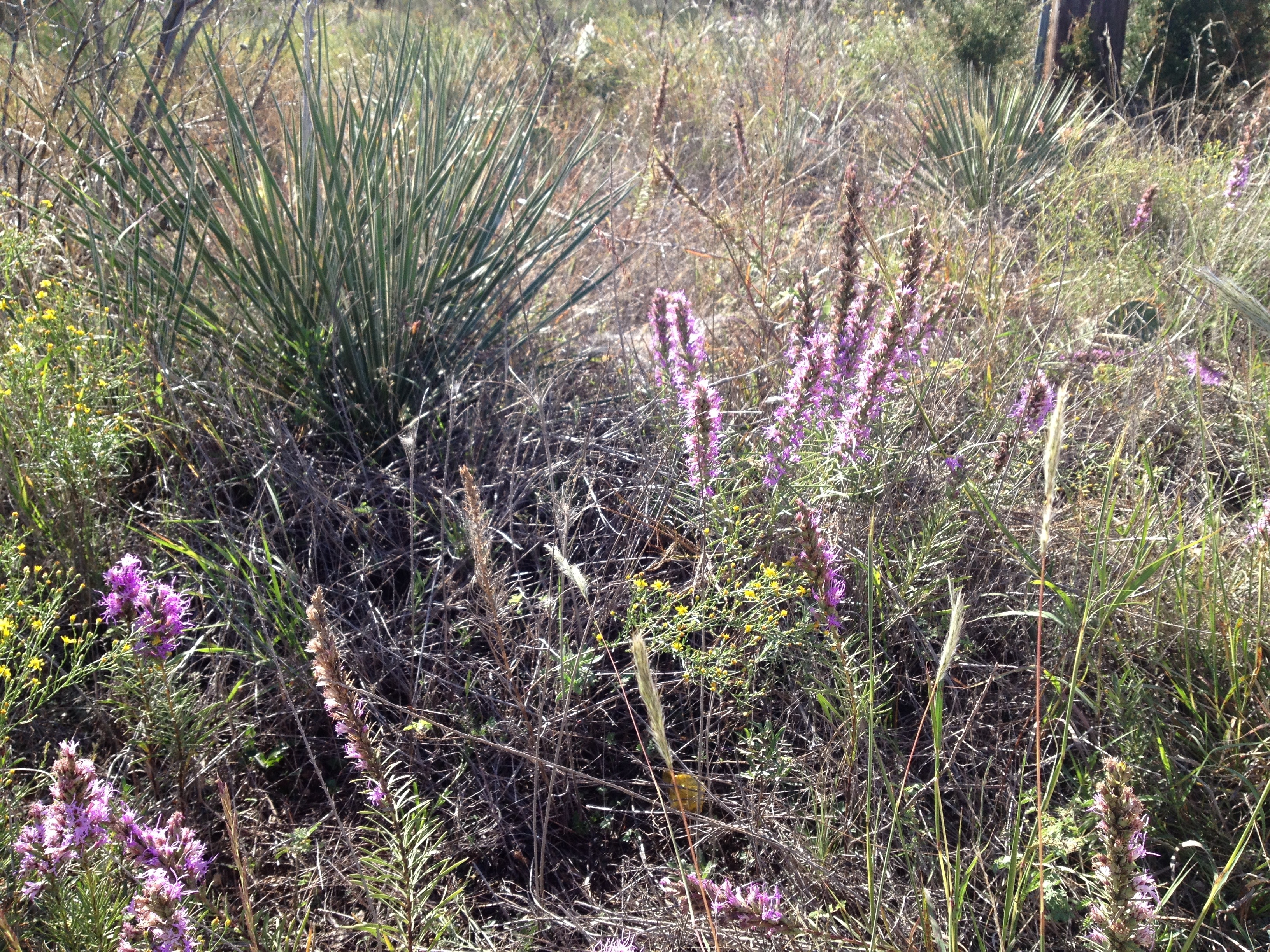
Here are liatris blossoms in a park two miles from where I teach in Abilene, Texas. This photo was taken about a month ago.

20121122-122149.jpg

16 Comments

Filed under Flowers of Flying Hat

Quixote and Flowers of Flying Hat (43-46)

While in Santa Fe this summer, I found Don Quixote’s image in the clouds.

Meanwhile, back at the ranchito, prior to a rain, the sage bloomed on the terrace.

I have also included four more blossoms on the ranchito.  For the last three days, it has rained and even tumbleweed has blossomed!

Don Quixote in the clouds, Santa Fe, 2012

Blooming sagebrush, Summer, 2012

11 Comments

Filed under Flowers of Flying Hat

George Catlin, Prairie Meadows Burning (1832)

George Catlin (1796-1872), Prairie Meadows Burning, 1832, 11 x 14.13 in., Smithsonian

Lately, some of my blogger friends have had fires break out near their cabins, farms and ranches.  George Catlin (1796-1872) in Prairie Meadows Burning (1832), portrays the flight of people on horseback from fire.

Three days ago, fire erupted thirty miles to the north of my place, near Possum Kingdom Lake.  It has been mostly put under control at this time.

(See another post of mine about George Catlin:  ‘The Day I Saw the George Catlins.’)

12 Comments

Filed under Horses, Wildfire

Only eight days at 100 degrees, Flowers of Flying Hat (39-42)

This summer our region — Ft. Worth to Abilene — has had only eight or so days at 100 degrees.  Last summer by this time twenty-seven days had been at 100 degrees, ending at about seventy days at 100 in the summer of 2011.

Grasses are greener, no wildfires have erupted.  My pond has shore-line reeds and fish jumping, blue herons abound and several new sprouts of willow emerge along the banks.

Of course, there are mosquitoes, crickets and grasshoppers.  The West Nile virus has killed two people in Dallas, about three counties away.

I draw no conclusions about why the weather is cooler this summer, it just is.  I understand changing weather patterns, but why the patterns are altered this summer, I draw no conclusions; they just are that way.

* * *

No new flowers have sprung for about a month, but the grass continues to thrive with rain.  Here are the final photographs of flowers that I have found on the ranchito this year.  I continue to scan for new flowers on the trail.  I have missed some, I know, but the attempt to photograph all the species continues until spring 2013.  I estimate I have missed many species, but nearly all I have seen I have photographed.  (I do remember one or two that I saw and failed to photograph because I did not have any camera with me.)

8 Comments

Filed under Flowers of Flying Hat

Rare the white buffalo

On the highway to Lubbock from Hermleigh, Texas, there is a byway that goes west to a marker for the white buffalo.  I have visited it once, but I do not see any markers these days to the monument of the white buffalo.  The monument may not be standing anymore since vandals have besmirched much of the statues and markers here in west Texas.

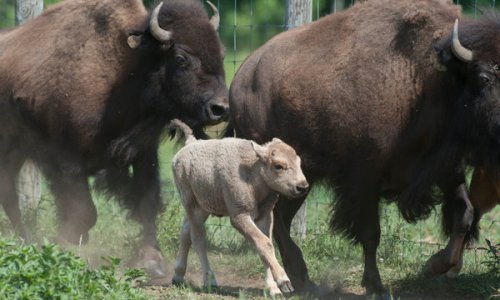
That being written, in Connecticut, a white buffalo has been born.  One in ten million the odds.  See the article in The New York Times:  White Buffalo,

http://www.nytimes.com/2012/07/13/nyregion/sacred-white-bison-is-born-in-rural-connecticut.html

Good, let us now praise a beautiful calf, and if it is born in Connecticut, so much the better.


14 Comments

Filed under Life in Balance

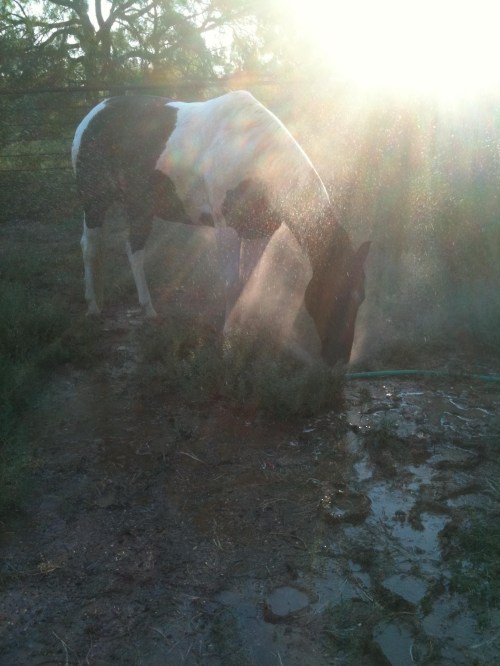
Star with water

Star with water sprinkler in Broke Tree Corral (June 28, 2012)

Hot weather pervades my place, but it also falls across so many regions this summer.  Colorado suffers this season with wildfires close to Colorado Springs.

My gelding, Star, sweats in temperatures during the day that come in at 100, 102, 108 deg.  Rains have fallen this spring so there is green and wildfires are negligible.  But, Star got water spray today.  After an hour of his nuzzling the spray and standing over the water, I shut it off.

His hooves were trimmed yesterday and like cutting our fingernails close to the quick, he was stiff today in walking to the hay bin, so, I turned the sprinkler on to cool him and to soften the earth upon which he walks.  My water comes from a water cooperative, the Barton Creek Cooperative.  I’ll spend a few more dollars this summer and turn the sprinkler on for Star.

10 Comments

Filed under Star

Salt Creek Butterfield

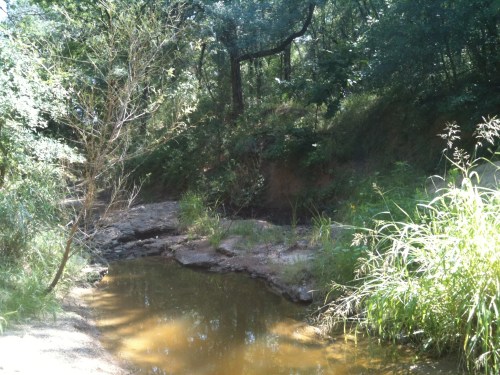
Lately, rains fell and Salt Creek flows, shallow water pools form and grass sprouts from the bank.

Near Abilene, the Butterfield mail and stage line crossed the semi-arid desert, terminating in San Francisco.  Behind this historical marker, my friend Blu Cooksey leases the pasture for cattle.  Near where the Butterfield stables stood, nails, mule shoes and horse shoes may still be found after a hard rain.

I must mow the lawn about the ranch house since rains have come this spring.  Last year, I mowed only twice because of the drought.

10 Comments

Filed under Dusty Blu, Salt Creek

Flora funeral: Silphium and Liatris

The pews shine with furniture polish as the funeral ceremony approaches all too soon, I am afraid.  We have read the obituary either on the internet or in the strange pulp we call newspaper.  There was an accident, no, that’s not quite correct.  There occurred an intentional erasure of a Silphium and Liatris beside a highway as the road expanded to carry cargo from Cathay to London and places in between.   They had to go, making way for trucks, cars and commerce.  In another county, these two species of wildflowers were literally mowed down to accommodate fields of bermuda grass for cattle grazing.  Man and his machines with an ideology of progress cut these plants from our world.

At the flora funeral, I settle in the pew, way at the back because I want to leave as soon as the sermonizing begins, for I know that in some corner of a county road, a cemetery, an abandoned field, there are survivors and I want to find them and stand guard against their enemies.  The parson begins, “We come here today to honor two beautiful friends, Silphium and Liatris, that unfortunately were in the wrong place at the wrong time.”  He continues and I slip out the back….

I shall find Silphium’s relatives, the kin of Liatris, somewhere on the back roads of America.  I know I will discover them, for mankind cannot be so cruel as to grind under every beautiful blossom in the name of progress.  I will, and many others will, stand as sentinel, protecting their existence from unthinking blades of technology.

* * *

For several years, Aldo Leopold monitored a tract of Silphium near a Wisconsin graveyard as mowers came closer and closer, year by year, eventually cutting it down.
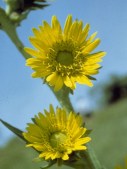
Silphium

Every July I watch eagerly a certain country graveyard that I pass in driving to and from my farm. It is time for a prairie birthday, and in one corner of this graveyard lives a surviving celebrant of that once important event.

It is an ordinary graveyard, bordered by the usual spruces, and studded with the usual pink granite or white marble headstones, each with the usual Sunday bouquet of red or pink geraniums. It is extraordinary only in being triangular instead of square, and in harboring, within the sharp angle of its fence, a pin-point remnant of the native prairie on which the graveyard was established in the 1840’s. Heretofore unreachable by sythe or mower, this yard-square relic of original Wisconsin gives birth, each July, to a man-high stalk of compass plant or cutleaf Silphium, spangled with saucer-sized yellow blooms resembling sunflowers. It is the sole remnant of this plant along this highway, and perhaps the sole remnant in the western half of our county. What a thousand acres of Silphiums looked like when they tickled the bellies of the buffalo is a question never again to be answered, and perhaps not even asked.

This year I found the Silphium in first bloom on 24 July, a week later than usual; during the last six years the average date was 15 July.

When I passed the graveyard again on 3 August, the fence had been removed by a road crew, and the Silphium cut. It is easy now to predict the future; for a few years my Silphium will try in vain to rise above the mowing machine, and then it will die. With it will die the prairie epoch.

The Highway Department says that 100,000 cars pass yearly over this route during the three summer months when the Silphium is in bloom. In them must ride at least 100,000 people who have ‘taken’ what is called history, and perhaps 25,000 who have ‘taken’ what is called botany. Yet I doubt whether a dozen have seen the Silphium, and of these hardly one will notice its demise. If I were to tell a preacher of the adjoining church that the road crew has been burning history books in his cemetery, under the guise of mowing weeds, he would be amazed and uncomprehending. How could a weed be a book?

This is one little episode in the funeral of the native flora, which in turn is one episode in the funeral of the floras of the world. Mechanized man, oblivious of floras, is proud of his progress in cleaning up the landscape on which, willy-nilly, he must live out his days. It might be wise to prohibit at once all teaching of real botany and real history, lest some future citizen suffer qualms about the floristic price of his good life.

 — Aldo Leopold, Sand County Almanac (1948).

* * *

Elaine Lee, a friend of mine, wrote me about Liatris, her narrative quite similar to Leopold’s Silphium, as you can read for yourself:
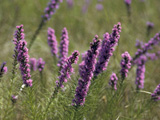
Purple Gayfeather, Liatris

Just this morning as I was driving to work I noticed about 150-100 yards west of the abandoned oil storage tank east of Putnam, there is a field full of purple flower spikes.  I think, just from seeing them while driving eastbound, that they may be purple Gayfeather, or Liatris.  The only other time I have seen Liatris in the wild, it was called to my attention by a Texas Master Gardener and she was doing her best to protect a very small stand in Clyde, near the cemetery.  According to her they are not extremely common in this area.  I had never seen them before, but I think the purple color of these plants, plus the fact that it was after many other wildflowers had bloomed that she made me aware of them and this particular field could be the same.  If so, it is a very large cluster in a good-sized field.  The habitat was very similar to that of the small cluster I saw in Clyde — an open field, not attended, and not plowed or mowed for probably many years.   Just the right amount of sunshine and rain coming at just the right time.

— E-mail of Elaine Lee to Jack Matthews, May 21, 2012.

I will seek out the Liatris as soon as possible, photograph it and write about its presence in west Texas.  I don’t like going to funerals and neither do my friends.

______________________________

Notes, corrections and additions:

Excerpt of Aldo Leopold from: http://gargravarr.cc.utexas.edu/chrisj/leopold-quotes.html

21 Comments

Filed under Wild Flowers of Texas

Fogfruit or Frogfruit: Art and whimsy

On the Lady Bird Johnson Wildflower Center website, botanists answer questions from the laity — you, me and other interested observers of things botanical. Wild Bill of Wild Ramblings asked me where the common names, Fogfruit and Frogfruit, emanated. For the moment, Wild Bill — and others –, this is the best answer I found. Yet, the question of origin requires more research.  The Oxford English Dictionary (OED) is a good first start.

The OED cites:  ‘1866   J. Lindley & T. Moore Treasury Bot.,   Fog-fruit, an American name for Lippia nodiflora.’  I will have to go to the university library to find The Treasury of Botany, but at least I have a title to search.  Nineteenth-century newspapers and periodicals probably have notations about common names, so I better dust off my microfilm reader at the office.  Oh, Bill, why did you have to ask that question?

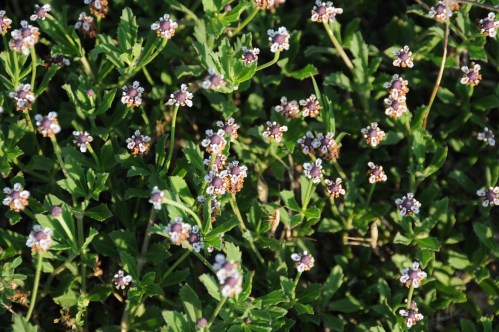
33. Texas Frogfruit or Fogfruit

Common names are curious things.  While no one would bat an eye about a paper dissecting some arcane point of minutiae regarding Polygonum orientale, it’s difficult to imagine a crotchety old botanist standing before his peers at a professional conference and delivering a serious exposition on “Kiss-me-over-the-garden-gate.” Where botanical names are all about science and rules, common names are about art and whimsy.  Botanical names are about the sharing of information; common names are about conversation and pleasant communication.  Botanical names are neat and orderly, law-abiding citizens; common names are messy, free-wheeling, teenaged scofflaws.

All of that is a way of saying that “frogfruit” and “fogfruit” are like the old chewing gum ads – they’re “two… two… two mints in one!”  OK, Phyla nodiflora is not a mint, it’s in the Verbena family, but both common names are commonly applied to that species and several others related to it.  In fact, fogfruit probably even predates frogfruit as a common name by about 100 years (early 1800’s for fogfruit vs. early 1900’s for frogfruit).  Most likely, frogfruit arose as a common name from a mispronunciation or misspelling of fogfruit. I have in my mind the scene of a copy editor looking at “fogfruit” and saying, “That can’t be right!  What the heck is a fogfruit?  It must be, oh, I don’t know, maybe frogfruit!  Yep, that must be it.  Frogfruit makes a lot more sense!  Set the type, boys!”  Even today, if you do a Google search for each common name, you’ll get more “hits” for fogfruit than you will for frogfruit.  Neither common name makes much sense to me and I’m still looking for a good (non-fanciful) explanation for the origin of either one.  My personal preference is for the common name, Turkey-tangle, but that’s another issue altogether.

—  Joe Marcus of Lady Bird Wildflower Center, The University of Texas at Austin.

For a full explanation see:

http://www.wildflower.org/expert/show.php?id=4265

11 Comments

Filed under Flowers of Flying Hat, Wild Flowers of Texas

Well, I declare!

20120522-125612.jpg

20120522-125635.jpg

20120522-125705.jpg

Well, I declare!

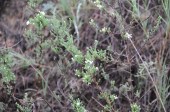
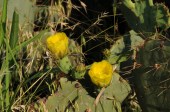
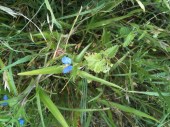
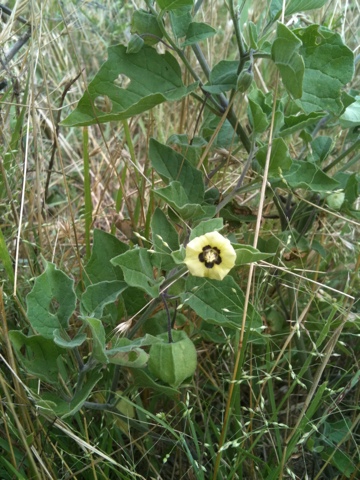
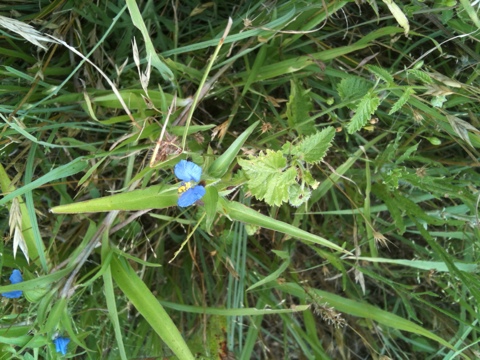
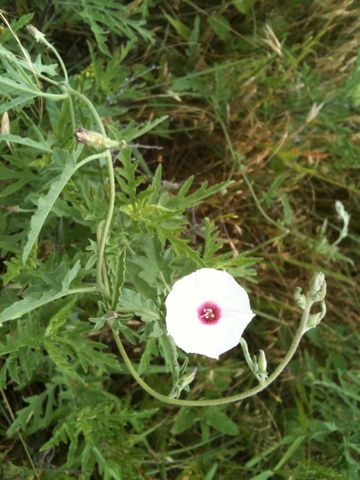
I open the valve on the far-field water trough and I nonchalantly look around the ground, thinking, There are no new wildflowers about.

I am wrong.  I see three new wild flowers.

Well, I declare, my Aunt Lennie used to say.

__________________________

Notes, corrections and additions:

Mandala56 posted this comment: ‘What’s that blue one called? When I was a kid we called it “elephant’s ears”.’  I replied that I did not know — yet.  I was in the field when I published the post.

8 Comments

Filed under Flowers of Flying Hat, Wild Flowers of Texas