Blue Ground I

In 1977, I climbed Mount Taylor during the day and came down the mountain in the evening by full-moon light.  The coming-down at night was unplanned.

I still climb mountains, not with rope and anchor, but one foot in front of the other, up the trail to the summit where a cairn is located, signing my name on the log book tucked in a steel tin.  Mountaineering climbs test body, attack motivation; high altitudes increase depression, morbid thoughts.  One of my climbs, Mount Taylor near Grants, New Mexico, combined the usual test of fortitude with a special insight into mysticism.   Mount Taylor is the southern holy mountain in Navaho mythology and I was determined to see what was at the summit and, more importantly, what was on the mountain that made it sacred.

To be candid, the nature of man’s life is radically material.  For a short period of time, the individual is formed as an ensemble of perceptions and sensations, the life cycle, four score years or so.  Before birth, the ensemble, there is oblivion and after death, the same:  oblivion.  But during the ensemble, there is life, movement, talking, sensing.  Religion, magic, and witchcraft exist as explanations about oblivion, life, oblivion.  Saints, sages, and shamans that seek to explain are in the end, like Thomas Aquinas, swept away by the magnitude of life, the universe, that they become silent (or should) and express only that the ultimate mystery is ineffable [1].

That the ultimate mystery is unexplainable should not mean despair, immobility.  It often does petrify.  Nevertheless, take the body and place it there, here, over there, up there, down there!  Explore.  There is the mountain, desert, ocean, space.  Witness the inexpressible grandeur of the place.  It is all we have, but it is quite enough.

My reasoning, therefore, in climbing Mount Taylor was to put myself on top of the sacred mountain to encounter the ineffable or, at least, be present in nature at a high altitude, looking at vistas from the summit.  I would be a moving participant, a spectator, to the incomprehensible spirit that moves in all things.  I was not in search of the supernatural or mystical in the conventional, religious sense.  Within my life, I wanted to place myself in nature at her most inspiring locations.  That was all, but quite enough as it turned out.  For at the climb’s end, that evening, the coming-down time from Mount Taylor, I saw blue ground, but I did not understand.

(Next, Blue Ground II)

Notes

[1]  Bertrand Russell, “A Free Man’s Worship,” in Mysticism and Logic. See also Four Noble Truths, Eightfold Path of Guatama, “The Benares Sermon of Buddha–6th century BCE,” in Elsa Nystrom, Primary Source Reader for World History, Volume I to 1500, Wadsworth, 2006, pp. 38-39.

7 Comments

Filed under Adventure, Colony Road

Pulling Down the Sun

In days past, the sun’s rays at noon on winter solstice were carefully marked, attended.  The sun in northern American latitudes would be at the lowest place in the sky for a year, thereafter rising higher daily to the summer solstice noon in June.  These two times, winter and summer solstice, were known as meridian passage.

Elsie Clews Parsons made note of the Isleta Pueblo marking light on winter solstice day.

In the roof of the ceremonial room there is a hole through which at noon the sun shines on a spot on the floor near where the chief stands….All sing the song of “pulling down the sun.”…This is noon time when for a little while the Sun stands still [1].

Humans, singing,  help pull the sun down.  And, by singing again, humans push the sun up.  Although scientifically un-plausible, the ceremony embeds connection with the sun in a metaphorical sense that, in turn, reflects the empirical, august, palpable unity that people need with one another to sing their lives into another yearly cycle with nature.

Notes

[1]  Elsie Clews Parsons, Forty-Seventh Annual Report of the Bureau of American Ethnology for the Years 1929-1930, pp. 193-466.  Washington, D. C.: 1932.  From Anna F. Sofaer and Rolf M. Sinclair, “Astronomical Markings on Fajada Butte,” in John B. Carlson and W. James Judge (eds.), Astronomy and Ceremony in the Prehistoric Southwest, Papers of the Maxwell Museum of Anthropology, No. 2, 1987, pp. 63-64.

YS8JKK5S6UG7

2 Comments

Filed under Life in Balance

Zacatecas Tutorial

I gave a tutorial yesterday to Alumna Zacatecas.  (I have changed the name to protect her privacy.)  Zacatecas is an older student from Mexico, enrolled in my world civilization course, prehistory to Treaty of Westphalia.  Tutorials are incongruous with state junior colleges.  Instructors have large classes, students coming by the office rarely occurs because of jobs and family.  Zacatecas was different.  She wanted to know things and, of course, there was the final examination on Thursday.  She was blocked in deciphering Omar Khayyám The Rubáiyát [Edward Fitzgerald’s translation, 1859].  She had questions.

“I don’t get it,” she said.  “Just what does Khayyám tell us in these verses about the meaning of life?” Zacatecas added.

Older student in her thirties, asking this?  She was serious about understanding The Rubáiyát . She looked perplexed, not dramatic in face, small wrinkles between her eyes in puzzlement.  Zacatecas had a tattoo about two inches below the hollow of her throat, often hiding it with high collar blouses because it had been inked when she was a teenager.  Physically, somatically, she was interested, but wanted to know quickly and then leave the office.  Other appointments, a teenager to manage?  Many plates in the air.

“Tell me what you think Khayyám thinks is the meaning of life,” I asked.

It began, the tutorial.

“Fill the Cup…Wine of Life keeps oozing…A Jug of Wine…Cup of forbidden Wine…Drink!”  She said, forcing an answer, phrases cobbled together.

“The meaning of life, is to drink?” She went on.  Zacatecas was not being contemptuous, I could tell.  Still perplexed.

No, not the meaning of life, to drink.

In class, I will ask the students to read a passage aloud they do not understand.  Maybe it would work in the tutorial.

“Read the first quatrain, and, read slowly,” I said.

“The Bird of Time has but a little way/To flutter–and the Bird is on the Wing.”  And, so on.

We paused.  Zacatecas pondered, “The Bird of Time….”  Still no change of expression in her face.

“Go on.  The second quatrain.”

“The Wine of Life keeps oozing drop by drop/The Leaves of Life keep falling one by one….”  And, so on.

“Continue, Zacatecas, the third quatrain.”  I thought this quatrain would punch through her confusion since it is the most quoted.

She read the third quatrain, “A Book of Verses underneath the Bough/A Jug of Wine, a Loaf of Bread–and Thou/Beside me singing in the Wilderness–/Oh, Wilderness were Paradise enow!”  And, there she stopped.

“Is ‘Thou’ you or is it me?”  She asked.  This was not exactly the question or declaration I wanted to hear, but at least it was movement.

I’m not a Rubáiyát scholar, but I answered, “Both, depending on how you read it, what context.  ‘Thou’ can mean any person, you, me.”

She said nothing.  Still cramped, stymied.  So, let us skip and go on to the sixth quatrain.  She read.

The Worldly Hope men set their Hearts upon

Turns Ashes–or it prospers; and anon,

Like Snow upon the Desert’s dusty Face,

Lighting a little hour or two–is gone….

Zacatecas became still in her chair, smiling faintly, looking at the sixth quatrain in her book.  The smile held, her body visibly relaxed, her breathing slowed.  She held the book more gently, less nervous, caring.  The tension left her face.

Zacatecas  looked up at me.  “It’s about living fully because life ends like snow on the desert.”

The sixth quatrain captured her, but did not ensnare.  Zacatecas integrated the refrain, something echoing from the high desert of her homeland, Mexico, an analogy with that day in her life when she parted from others of her village, seeing things they did not.

Tutorial over.  I concluded Zacatecas was beginning to know The Rubáiyát, felt the quatrains, had a new sense, a higher circle of confusion.  She left the office after a few more questions.  Gregorian chant?  Merovingian dynasty?  Slipping her books into her backpack, she pulled her dark pea coat tightly against the Texas cold, her blouse tucked high over the tattoo and walked out of the tutorial.

She will pass that question on Thursday.

______________________________

Notes:

I use Elsa A. Nystrom’s anthology of primary sources, Primary Source Reader for World History, Volume I: To 1500.

Undergraduates, generally, say little to absolutely nothing to their instructors.  At least, that has been my experience.  Therefore, I have focused on para-linguistic qualifiers, above and beyond what tedious pedagogues call body language, although that, too.  The pitch of the voice, facial expressions, postures, breathing, and the eyes.  These behaviors are often the only way they will communicate.  I have young men and women from different cultures and know that different cultures embed different qualifiers for communication.  Hence, my observations about Zacatecas take a rather focused picture in my essay.  During a regular class, I will observe a few students and how they are reacting.  Mainly, however, I am focused on the material.  A one-on-one lesson differs substantially.

Using diacritical markings occurs by composing the foreign word in Microsoft Word, then copying words created in Word, and then pasting onto WordPress.  Cumbersome, but gives literacy to the composition.

I have always thought of D. H. Lawrence coming out of the last canyon on the road from Santa Fe, seeing Taos Mountain for the first time, the desert.  He had written about New Mexico,

But the moment I saw the brilliant, proud morning shine high up over the deserts of Santa Fe, something stood still in my soul, and I started to attend.

The snows at Lawrence’s ranch linger longer than on the desert, but still melt in the spring.

5 Comments

Filed under Taos

Wood Not Splitting

This morning at almost 7:30 o’clock, I heard a sharp, loud crack, towards the south pasture.  I thought an oak tree in the grove had split its trunk.

It was not the splitting of a large oak tree, but the sharp, hard retort of a deer rifle.  To the southeast is the Hall place, to the due south is the Bryant place, and west is the Dooley land.  I could not determine the precise location of the wood-not-splitting crack.

Since moving here in 2003, I have seen the deer population go down significantly.  The Halls to the southeast have cleared their ten acres and, thus, removed the brush for deer.  The Dooleys have a deer stand within fifty yards of my Well House Corral.  The Bryants have had as many as four or five deer stands to the south of the native-grass pasture.  The harvest of deer has been devastating.  I now see two deer occasionally, where six years ago, I saw a herd of twelve to fifteen regularly.

After the rifle report this morning, I put on my red jacket, fed the horses, and then walked over our fifty-three acres to see the killing fields around us.  Deer tracks in our creek indicated two, maybe three deer, had passed.  I walked the creek bed, then over to the pasture of gramma, Johnson, and blue-stem grasses.  I saw no hunters, but a half a mile away a white pickup was tucked up against a grove on the Fulfer place.  That was the place of the Wood Not Splitting.

The hunter’s white pickup was new, neither rusted nor bleached by the sun.  The chrome shined.  Was it necessary to kill deer for food this Sunday morning?  To rouse me and my wife with your wood-not-splitting crack?  I’m not so sure I would be the Gentle Stockman if you met me today.

I say again, I have no argument with those that need food to live, to harvest deer for their table, to take a kill with respect.  But, for those that kill to gainsay an image of Western toughness or ruggedness, I think their behavior is violent upon the deer, their friends, and themselves.  There is redemption for the blood sportsman.  Go into the field without a weapon and sit.  Sit quietly for a day and see the stag and doe dash through the brush, across the pasture, and out of sight.  Sit so quietly that you see the deer graze, browse, and lick their young.  Then, if you are not redeemed after seeing these things, you are lost.

The word “deer” is connected to the verb, “to breathe,” in the Indo-European hypothetical.  Harvesting deer without respect cuts off breathing, the deer as well as your own.

16 Comments

Filed under Deer, Flying Hat Ranch

Protected: Gywn Parks at Rural Declamation 1938

This content is password-protected. To view it, please enter the password below.

Enter your password to view comments.

Filed under Uncategorized

Bill Tiblets Picks Pecans

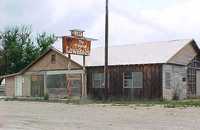
Abandoned Mingus Grocery Store, Texas

Mingus Post Office, Texas, 2009

In 1999, my wife and I looked at a house to purchase in Mingus, Texas, an old nineteenth-century mining community mid-way between Fort Worth and Abilene.  The house was a wooden two bedroom structure that had been moved from New York Hill along the main highway to 113 East Grant Town Road.  The caretaker and brother of the woman that had lived in the house was named Bill Tiblets.  He and his wife lived next door to the house we would buy.  Bill said, “Set a price on the house.”  We did, and for $35,000 we had a 1913 Arts and Crafts house with about one-quarter of an acre upon which I planted a vineyard of forty-four Cabernet franc, Cabernet savignon, and Syrah grape vines, most imported from California vineyards.  The vineyard flourished over the next four years and we still have a car boy of the Cabernet sitting in the dining room.

Bill Tiblets had lived in Mingus all of his life, been postmaster, and had operated a steak house, “Will’s Steakhouse,” for many years before he retired.  He was tall, pleasant, well-groomed, and friendly.  Bill became a close friend of mine and so did his wife, Will, for whom the steakhouse was named.  They had four sons, Larry, Jody, James, and Charles, and the kind and friendly attributes of their father and mother were ingrained into their behavior.

Bill, however, in his early seventies, was partially impaired by the concoction of old age and hard work.  He had osteoarthritis and from time to time had to use a scooter to get around in the house and yard.   Each week or so, he would call me and invite me to come over to his home next door and have a toddy.  It would be a toddy of Old Granddad whiskey with Seven-Up or Coca-Cola.  We talked and I found out that during World War II, he had been stationed in Brownwood, Texas, for training, and that his wife, Will, had come down to stay with him.  Accommodations were so sparse in Brownwood  with Camp Bowie nearby, that they rented out a clean chicken house in which to reside for a couple of months.

As time passed, I could tell that Bill was in a state of physical degeneration, becoming less and less mobile.  Still, however, he would walk as best he could.  One day, he and his sons came over to the house and we went outside to see the old steakhouse that he had owned.  The steakhouse was across a nearby creek that used to have crawdads and bullfrogs when the climate was wetter and cooler, back in the 1930s and 1940s.  Bill, his four sons, and I picked up relics from the cafe that had burned down (a case of arson): spoons, forks, knives.  Brenda and I had already picked up some Buffalo-style platters in the rubble.  We use them to serve steaks to our guests.  But, on that day, Bill, his sons, and I reflected on the steakhouse so many people enjoyed.  Bill said that people would fly into the landing strip on New York Hill and come down to their steakhouse to eat.   Will’s Steakhouse was also known as Little Lowake, a steakhouse near San Angelo that was as popular in Texas as The French Laundry in California.

Lowake Steakhouse, Concho County, Texas

As Bill’s degeneration worsened, he walked less and less, motored more and more.  We still had our weekly toddies.  He continued to joke.  He tolerated the local minister’s visits to insure his passage to the afterlife would be comfortable, although, like me, Bill professed skepticism at such things as heaven and hell.  He much preferred the company of his family and friends while alive to thinking of  reverie beyond the grave.  Bill worked in his wood shop and plant nursery in his last days.

Our houses, as I said, were next door:  the Tiblets a brick house, ours the wooden Arts and Crafts of 1913.  Pecan trees bordered our property with a 100 foot vacant grassy lot between us that we kept mowed.  Larry, Bill’s son, trimmed around the mesquite and pecan trees.  The vacant lot had been a parking lot for a dance hall in the 1930s and 1940s.  The pecan trees would seasonally give both our families a sufficient harvest for munching, perhaps a pie.  We could see each other across the lot and we would talk almost daily.

One fall day, Bill drove his scooter to the pecan trees between our homes.  I saw him through our kitchen window.  He sat briefly under the shade of the trees, warming in the sun, and then he wiggled out of the scooter, got on his hands and knees and picked pecans.  His impairment prevented him from bending over from the scooter.  I called my wife to the kitchen window.  “Bill is picking pecans on his hands and knees,” I said quietly.  He would put them in his pockets and occasionally empty the nuts into a bag attached to the scooter.  Over the next few weeks, Bill would pick every few days or so, easing himself down from his machine.

Bill possessed the good in mankind,  the deep-down drive to keep going, despite pain, to maintain a simple but necessary ritual of harvesting pecans when ripe or making a pie for the holidays or feeding the horses or cattle.  Necessary toil.  I saw Bill on his knees that day, but he was a thousand feet tall, decked in finery, and crowned with an ancient helmet of self-possession to duty, until the end of his time, his day, his life.

Bill died later that year.  We all will have our end, but until that day, we need to get out of the chair and harvest the fruit on the ground, on hands and knees, if necessary.  Like Bill.

I raise my toddy everyday and toast to my friend, Bill Tiblets:  “A votre exemple.”

______________________________

Notes:

Bill’s children and widow have moved from their home on Grant Town Road in Mingus.  Will lives in Gordon, Texas, a few miles east of Mingus, and her children have all built homes nearby  on top of a hill, overlooking Interstate 20.  The Arts and Crafts home Brenda and I lived in for four years has been sold.  The present tenants have let the vineyard lapse into semi-chaos, but when I drive by on the way to the post office I do see Cabernet franc vines robustly staying alive.  We kept the Mingus house for a couple of years as we moved  to our ranch.  We got a good price for it since I had cleaned up the dead trees and had planted the vineyard.  I miss the house and so does Brenda.  Bill’s children are settling in on the hill and each son has the drive and initiative of their father: construction, home repair, accounting, water plant worker, and other skills.  Brenda and I talk about Will and Bill and our life next door to them in Mingus, but the one topic that always comes up is Bill Tiblets Picks Pecans.

10 Comments

Filed under Recollections 1990-

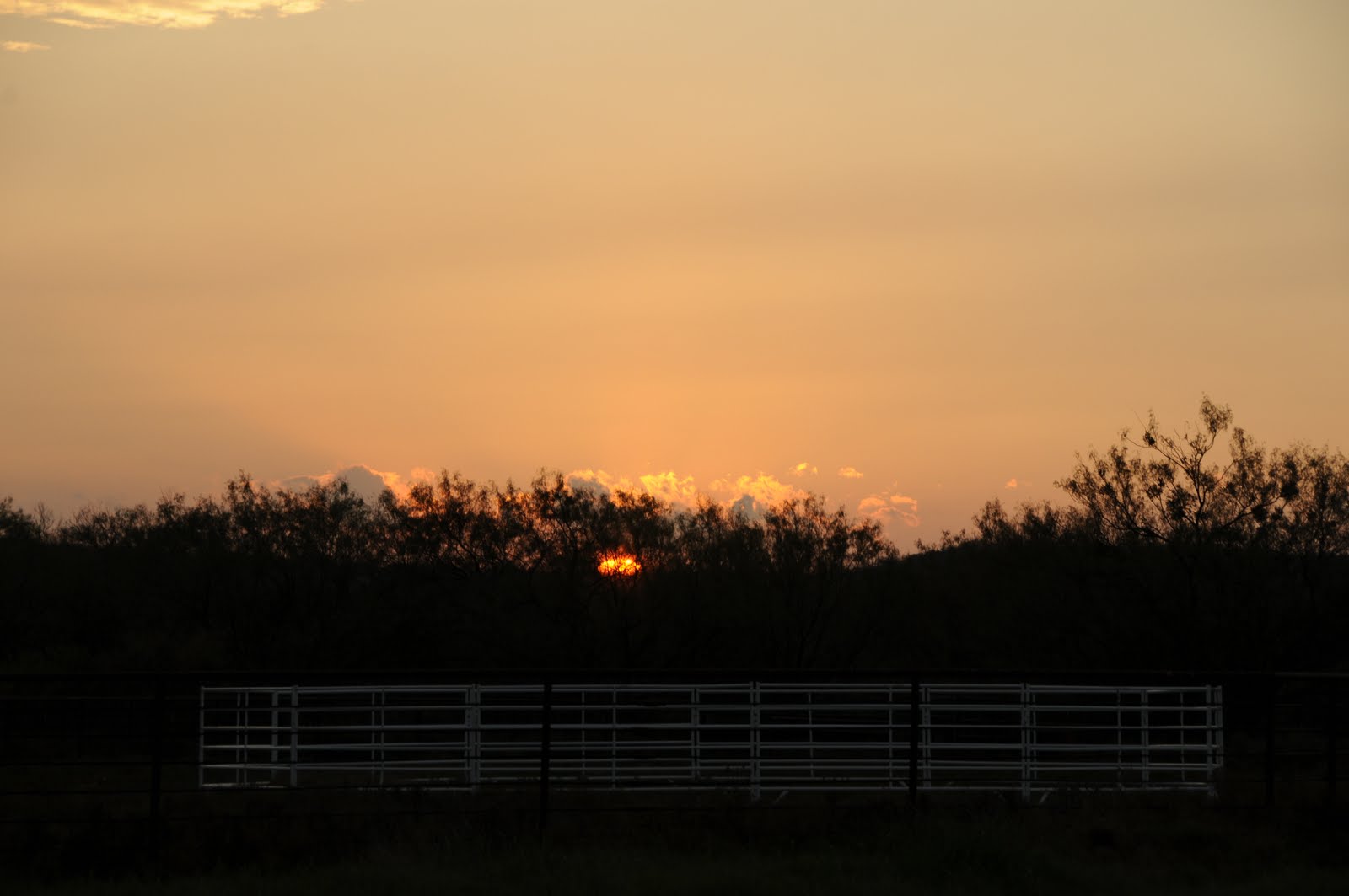
Round Pen at Sunset

Round Pen at Sunset, Photograph by J. Matthews

The round pen is an ages-old schoolroom for horses.  I have not trained my horses for a few weeks, but have let them out to graze and play.  Soon, two horses, Fanny the yearling and Shiney the colt, will have a lesson in the round pen.  Of gentle horsemen, see the link to Monty Roberts, the horse whisperer, that I have provided.  Not only does Monty train by “joining up” with the horse, but also has taught his method throughout the world to trainers, including professionals for the Queen of England’s stables.  When horses come to Flying Hat, Monty’s method of training is applied, haply and without violence.  We are all the better for it, man and horse.
www.montyroberts.com

15 Comments

Filed under Flying Hat Ranch, Horses

Quail in the Texas Panhandle

Bobwhitequail

Bobwhite Colinus virginianus, Photograph birdsofoklahoma.net

In the late 1970s, I began to train Brittany spaniels to point, hold, flush, and retrieve quail.  My Uncle Adolph Kampen of Amarillo kept a Brittany as a house dog and hunting companion, and I sought to have Brittanies, train them to the hunt, and find good homes for them.   My intention was to keep a brace of Brittanies as house companions.

I first obtained pigeons for the Brittanies to flush under blocks of hay that I scattered on the neighborhood school ground.  The pigeons would fly back to their cages when flushed.  It was only three blocks away.

I purchased  fifty quail chicks to use in the training of Brittanies.  I lived in the city and would eventually move out to the country.  Bobwhite quail were available by mail order, like chickens.   A quail chick is about the size of a large human thumb, quite small and yet, not fragile.  Roger Tory Peterson writes that the Bobwhite is  “a small, brown, chicken-like bird, near size of Meadowlark.  The male shows a conspicuous white throat and eye-stripe (in female, buffy).  Tail short, dark.”

[Peterson, Roger Tory.  A Field Guide to Western Birds. Boston:  Houghton Mifflin, 1969.  See pp. 86-91.]

The quail chicks arrived in boxes delivered by the postal service.  I divided the quail into three coveys and I placed chicks in large cardboard boxes  in a spare bedroom on _____ Street in Amarillo, Texas.   At night, the coveys would settle in and sleep, but during the daylight hours, they would feed, water, and utter quiet “peeps.”

Within a month, the chicks had outgrown their cardboard boxes in the bedroom and I placed them in quail pens in the backyard that I had constructed.   Quail pens have compartments that allow all quail to be released, but one or two quail are retained in the pen so that they will call the covey back together.  It is a remarkable display of covey unity that the quail will scatter, but when their penned-up covey mates call, the group will come back to the pen and enter the pen through a funnel trap.

One day as I parked the car into the garage, I heard the loud call of quail in my backyard and in the neighbor’s yard. There were quail calls all over the neighborhood.  The latch on the pen door had come undone and a covey of quail had scattered about the neighborhood, flying over fences, going into garages, scratching in backyards, and checking out new and wondrous things up and down the block.  Within the hour, my neighbors called and told me that they had quail in their garages or screen porches and would I come and retrieve them?

I rounded up every escapee quail, placed them in portable cages and reset the latch on the main pen more securely.  Without a doubt, the time had come to buy land outside of town and start training the Brittanies on the quail.  The quail needed the space.

South of Amarillo, on the highway to Palo Duro Canyon, I purchased ten acres of land, moved the quail, pigeons, and Brittanies to the pastures with kennels and pens, and borrowed my parents’ recreational trailer.

My life in the country began.

Leave a comment

Filed under Birds, Dogs, Recollections 1966-1990

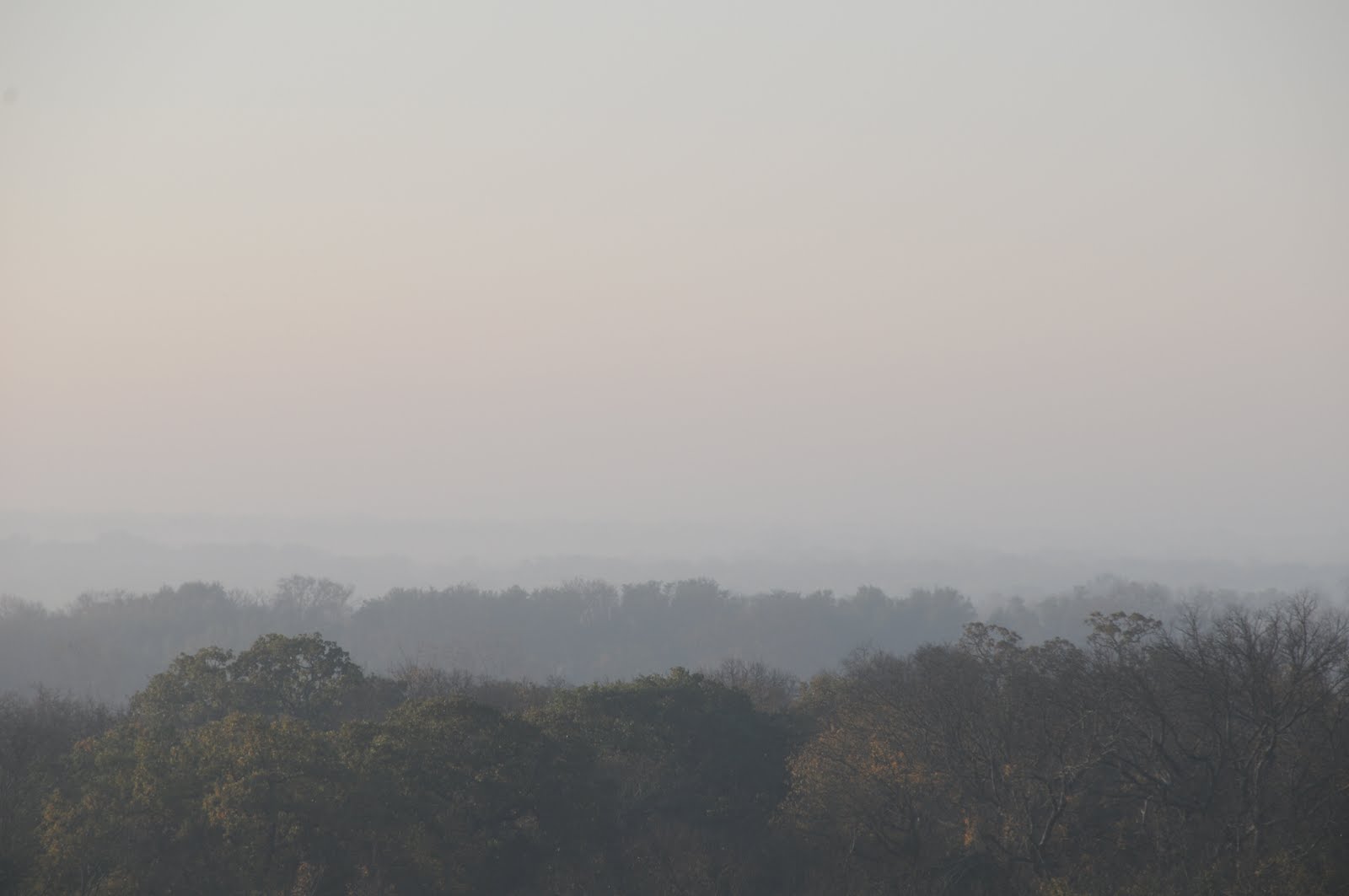
Fog in Sims Valley

Grove and Fog, November 10, 2009, Flying Hat Horses, Texas
Photo by J. Matthews
Early Feeding in Fog, November 10, 2009, Flying Hat Horses, Texas
Photo by J. Matthews
November mornings in central West Texas bring surprises.  Yesterday, fog dropped down and obscured the distant hills and Cross Timbers Mountains from the back terrace of our ranch house.  We live in Sims Valley, about four miles south of Interstate 20, between Abilene and Fort Worth.  The road that goes into the grove in the photograph, “Early Feeding in Fog,” is one of several dirt roads used in the nineteenth century between Stephenville and Thurber, a coal mining town that supplied fuel for the railroads.  When a north wind blows, we can hear the locomotives whistling as they speed through Strawn, Mingus, and Gordon, three small villages north of Interstate 20.
The horses, Shiners Fannin Peppy and Stars Bars Moore, eat some alfalfa I have put in their tub.  This morning, November 11, the fog was so thick I could hear the horses nicker, but could not see them in the arena.  The fog lifted by 10:00 a.m.
[Annotation:  because I have the flu, I stayed home yesterday and today.  I put on my field jacket and hat to feed, quickly returning to the house to get the camera and take the photographs.  I am feeling better this evening and can probably go to work at half-speed tomorrow.  Besides, I need to see if the ducks are still quacking on the Baird Hill Pond, close to Abilene.  We have to get our priorities straight, don’t we?]

1 Comment

Filed under Flying Hat Ranch, Horses

Flying Hats Over Gorman Falls, Texas

Photo Courtesy of Colorado Bend State Park

This is a narrative of how my ranchito in Texas is called, “The Flying Hat,” and of special places on earth that evoke attachment and meaning in an ineffable way, be it Gorman Falls or Estes Park or Truchas Peaks.

Gorman Falls is located in San Saba County, along the Colorado River, downstream from Bend, Texas, and above Lake Buchanan.  Since 1984, Gorman Falls has been managed, fortunately, by the Texas Parks and Wildlife Department. An artesian spring, ejecting about three-hundred gallons a minute, provide hand-cramping cold water for the falls.

When wading in the water, legs cramp from the cold.  Water cress grows naturally along the stream.

The spring is about one-quarter of a mile up from the falls.  The sound of the waterfall is loud, a low roar, back down by the cliffs, as you walk under a canopy of sycamores, cottonwoods, and pecan trees that give shade,  plunging the ambient temperature ten degrees or more.  The temperature change is so vivid, it is like opening the refrigerator in the house after working outside in the heat.  It is no wonder that the Comanche, the working cowboys of the Gorman and Lemons Ranches, planned their day to be close to the falls when toil eased at mid-day or stopped in the evening, so that the cool air and artesian water might ease their muscles or give good medicine to the tribe.

I know of these things, maybe not the Comanche camp, by listening to my grandmother who tended the chuck wagon for her husband who managed cattle for the ranches.  My grandmother, Effie, took me to the falls many times, always pointing out on the downhill slope to Gorman Falls, “That’s where we camped and set up the wagon, built a fire right there.”  And, I would look and see bleached rocks and junipers, a clearing in the trees, and, yes, the remnants of a fire, her fire, many layers below.  I thought of the cowboys who herded cattle, sitting down and eating beans, cornbread, and beef that my grandmother cooked.  She was not that tough of a woman, of a person, to fix grub on the ranches, but she did.  She followed my grandfather because she loved him and would cook for him and his pardners, as they tended cattle in the blazing hot, anvil-hard earth, Texas sun.  Gorman Falls, with its cool, artesian water, was Beulah land, paradise, relief beyond belief, for them, for me.

I have camped many times under the sycamores at Gorman Falls, but the time I remember the most was in 1951, when my grandmother, Effie; my stepfather, J. W. Hollingshead; and my mother, Gywn, drove to the falls for a picnic.  I was nine-years-old.  My step-father, J.W., had an old gray, felt hat that was soiled and very, very ugly.  My grandmother had teased him for months to get a new hat and throw his old hat away.  As the four of us chatted under the shade of the trees and cool air along the stream, my grandmother proposed to my stepfather that if he would throw his old hat over the waterfall cliffs, she would throw her bonnet over the falls after his hat.  But, J. W. throws first.  It was an ugly hat.

Smiling so broadly, my stepfather walked to the edge of the falls and threw his hat over the cliff, the wind and mists of the water catching it, holding it, and then settling onto the trees below, never to be seen again.  And, with that, my grandmother, grinning and chuckling softly, walked to the edge of the falls, unpinned the hat from her hair, and threw her hat, a yellow, broad-brimmed hat trimmed in wide black ribbons, into the air and it, too, settled with the mists of the falls onto the trees below.  The hats flew, suspended, they flew.

We all laughed and I, to myself, admired my grandmother for creating an event that took us beyond our scarce resources as a family, the jobs under good, but insensitive bosses, to a place that transcended our daily duty, our toil.  Yes, I laughed, too, but I was a witness, a boy looking at his gods, knowing something, but not understanding everything they did.

Time is fleeting.  I grew.  They worked.  They played, they loved.  They went away.  My grandmother passed in May 1965, my stepfather in December 2002, and my mother in April 2003.

In November 2003, I purchased land near Mingus, Texas, from the inheritance of my family.  I named the place, The Flying Hat.  That would be the best name, a time when all four of us were laughing:  my grandmother, stepfather, mother, and me, beside hand-cramping artesian water, under sycamore trees, as flying hats settle onto trees below.  These days, my granddaughter and I deliberately throw our hats off the terrace of our ranch house to amuse ourselves, but we know, deep down, the flying hats over Gorman Falls, Texas, flew first.

______________________________

Notes:

Portions of this post first appeared on The Flying Hat Horses website, several months ago.  The “About Us” page on the website is currently being revised.  The Colorado Bend State Park has infrequent field trips to the falls.  The Colorado Bend State Park, however, is open to campers and fishermen.

I visited Gorman Falls with my grandmother and relatives when it was under the supervision of the Lemons and Gorman Ranches (I’m not sure which ranch). Being privately owned, it lacked meticulous cleanups, having certain debris trails along the Colorado River bank and artesian stream. Despite that, the greenery around the stream was composed of ferns, some native.  I would like to go back and type the plants, especially the water cress, since my grandmother fixed a salad one time beside the stream by harvesting the cress.  I stated in the post that the temperature would fall ten degrees.  I have not taken the ambient temperature under the the canopy of trees, and I will correct my post if I have more data.

The fifty-three acres I purchased was with the inheritance I received from Effie, J.W., and Gywn, so I thought it proper to pay some respect by the naming, Flying Hat.  This fifty-three acres in Erath County is combined with thirty-five acres I share with my cousins in Mills County for a total of eighty-eight acres.  Living with eighty-eight acres is a soothing and fiery experience.  John Wesley Powell, in the nineteenth century, wrote that in the West a ranch should be comprised of at least 2,560 acres, so as to sustain a profitable operation.  Today, a lot of us in the southwest, have much less than 2,560 acres (four sections, English township nomenclature), but we have jobs to supplement our income and a passion to live with the land.  My grandfather, J.W., who helped manage the Gorman and Lemons Ranches, worked at times for the Santa Fe Railroad, to supplement his income and to save some for his own ranch.

1 Comment

Filed under Colony Road