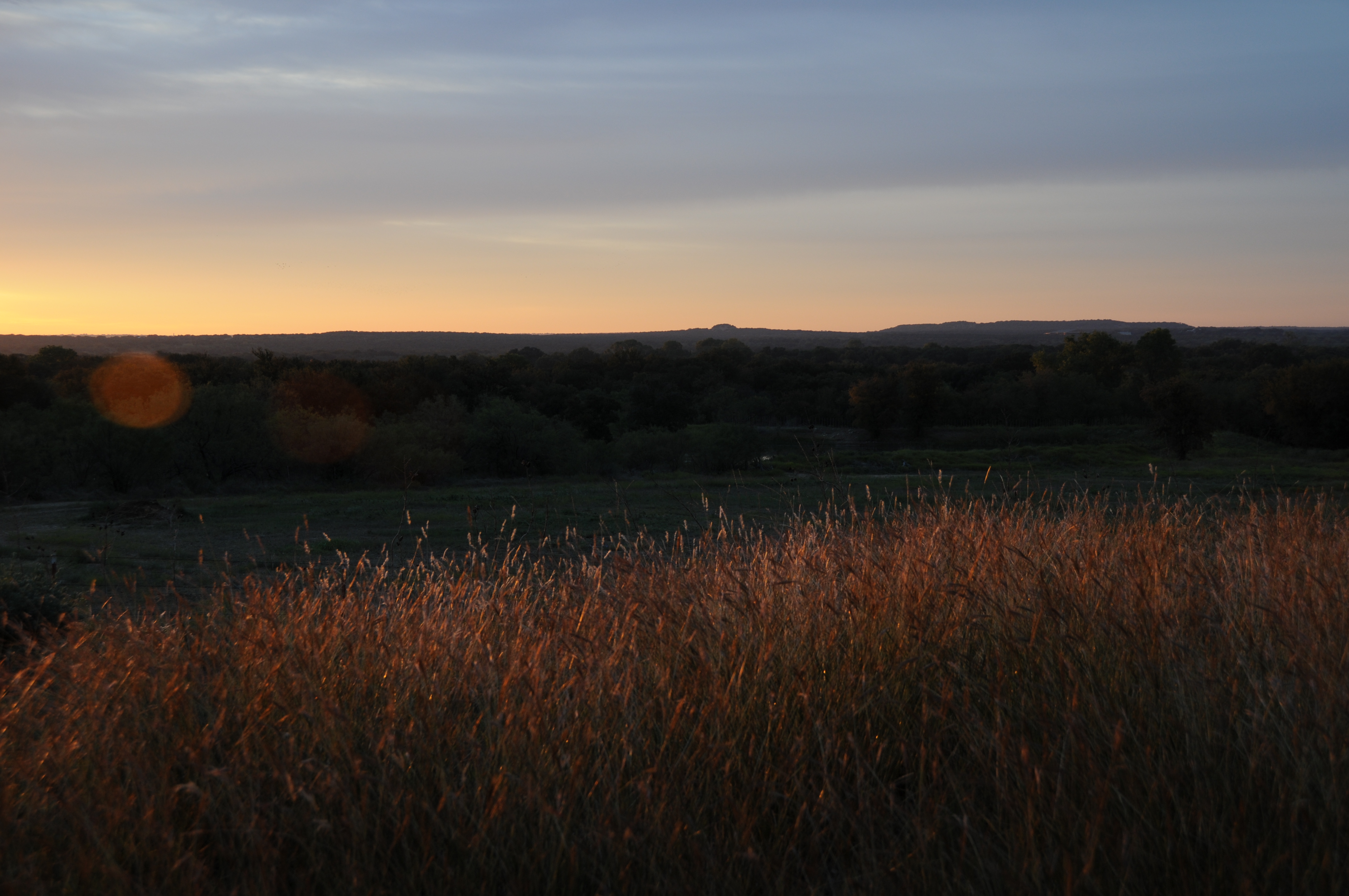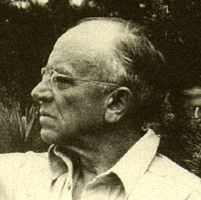
Sigfried Gideon wrote that in the western world, mechanization takes command. Jacques Ellul found technology so intrusive into western culture that “technique” rules behavior and slays choice. That is so, yet, sitting on the back porch early in the morning, the sun takes command. Wind orders glide of bird and sway of grass. If one sat and turned the face to the rising sun and fair breezes, choice would arise again, offering moments that should not be refused for mechanics and technique have most of the day.
Sufficient fowl for our day
North Erath County, Texas, Lat 32.43 N, Long -98.36 W, elev. 1,086 ft. Turkey Creek Quad.
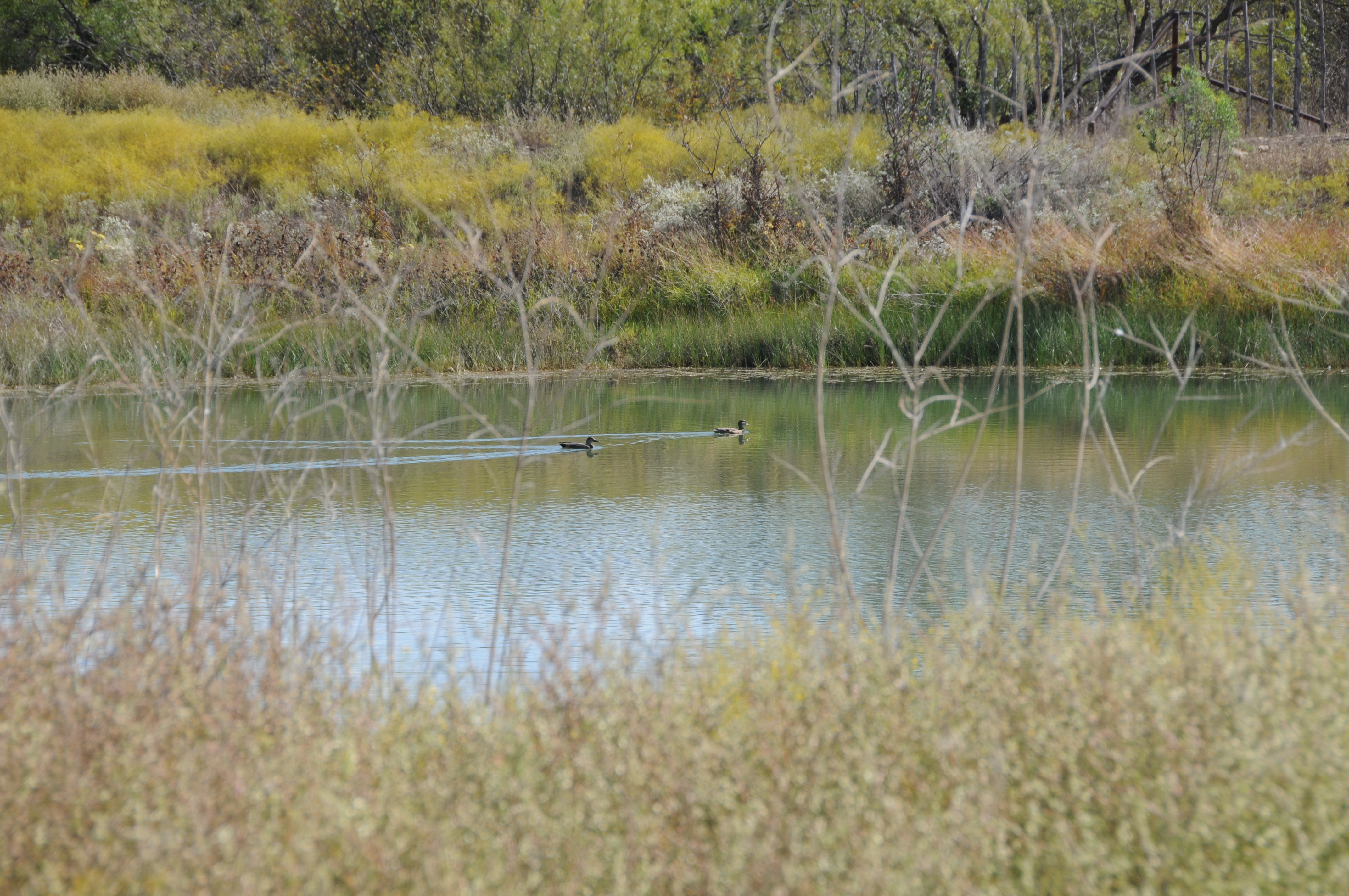
Your habitat, wherever you may be, probably sustains larger flocks of ducks, but I was glad to see these two ducks on our pond once again this Fall.
I walked across the Arena Pasture, diagonally to the road and directly to the pond, quietly edging up the slope and stopping in an area of broomweed in order to take a photograph of the two ducks. I had seen them three days ago and yesterday there were a dozen or so of their acquaintances feeding on the pond. When I finished snapping this photo, I walked on the road and scared up other ducks that were feeding, altogether about twelve. I will be more careful and not frighten them to flight although they rise just enough to clear the cottonwoods and land on Blue Pond, our neighbor’s stock tank to the east of us.
I took this walk after lunch, down to the Grove and around the edges of Salt Creek that has several caches of water, but is not flowing owing to the lack of rainfall. The water caches provide a source of water for deer, raccoon, fox and bobcat, among other species. Birds drink their fill and as they scatter in the trees, I hear their wings slap leaves. I walked, ambled is more like it, for forty-five minutes, taking photographs of foliage.
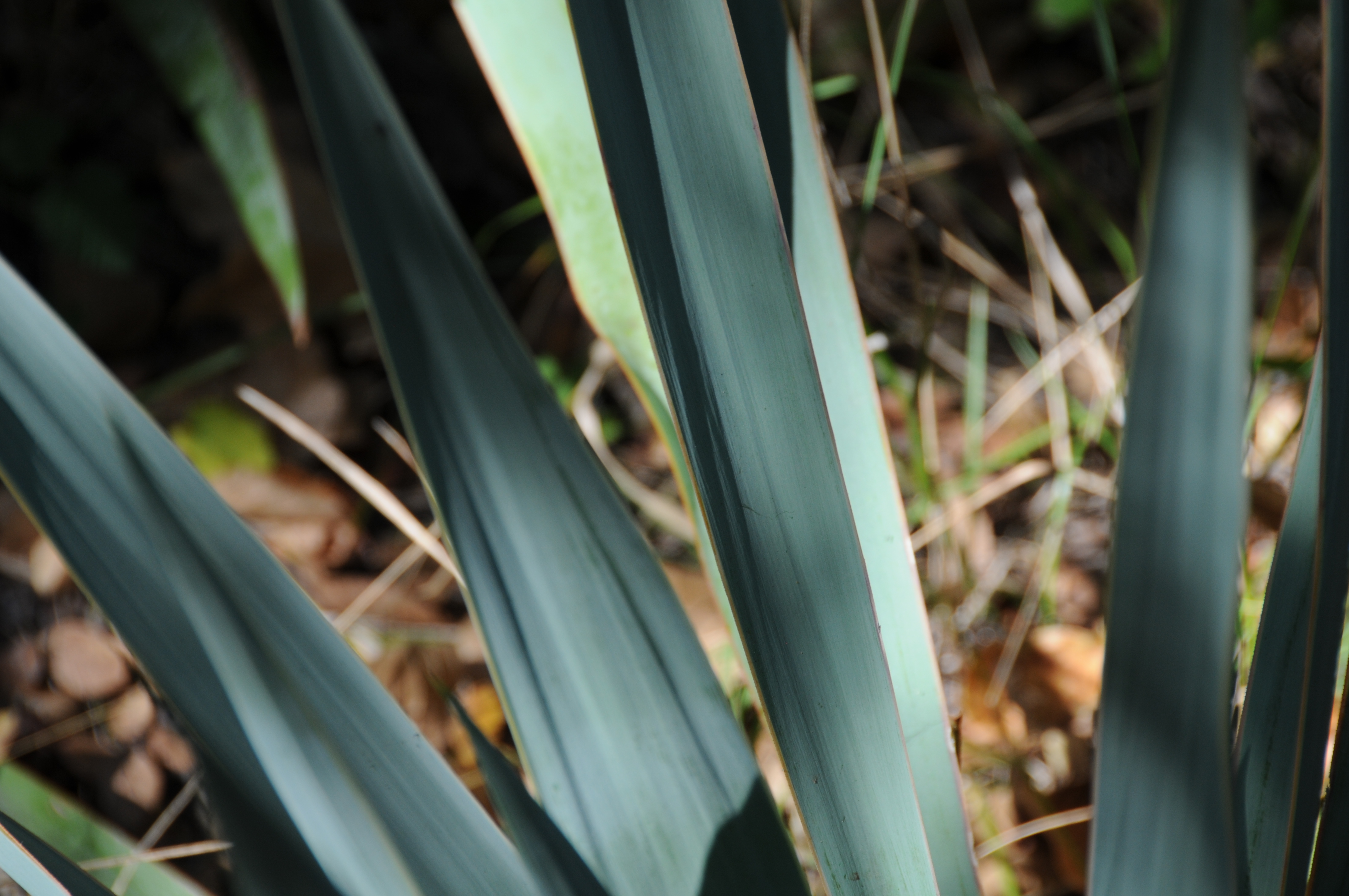
I came across a species of yucca that I must identify. I think it different from the narrow Pale-Leaf variety we have close to the house. This yucca has broader leaves and its color is a deep turquoise. The turkey bones that Olivia, my granddaughter, and I discovered this summer have been carried off. No feathers of the Thanksgiving fowl remain. What animal would carry off bleached bones and feathers?
I eased into this walk today, relaxed and breathing deeply. Nothing lay ahead of me except my next step, my scan of the ground and sky. I would have liked company, but this solitude was restful and aimless, other than to walk to the far field and turn around to retrace my trail. I could hear the dogs bark back at the house.
Then, I heard them. Sandhill Crane. I looked high and all I could see were the stratocirrus clouds. Their calls are like burbles, water gently falling over smooth stones in a clear stream. Gentle and calming. I could not see them. Their calls faded and I walked back up to the house. I stood for a moment on the back terrace and as I started back into the house, I heard a flock of Sandhill again. I looked up and 2,000 plus feet above me, a flock of crane flew. They could of been higher above ground than that and as I pulled my camera up for my first shot of the season, I could not see them. But I had seen them and they had such a pale-grey, whitish even, underside that it reminded me of the underside of jet planes I see above. Their undersides reflected the clouds below them and I took a photograph of where they had been, aiming their graceful necks towards the southeast and warmer climes.
I shall photograph them soon, but today I could not find them low to our earth for they soared above me and my camera. I heard them. I saw them, but their image I could not preserve en camera today. But I photographed two ducks for our Fall season. What’s the saying, “Sufficient unto this day?” I think so.
Filed under Birds, Ducks, Sandhill Crane
My life defined in the kingdom of animals
My life has been defined by animals. All sorts of animals: chickens, dogs, cats, horses, cattle, birds, wild and domesticated beings. For whatever reason, I preferred to stay home as a child while my mother and grandmother worked and when I was older and my mother married J. W., I liked the fact that he had land in Mills County filled with cattle, raccoons, squirrels and wild, tall, native grass that I later learned was bluestem.
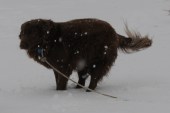
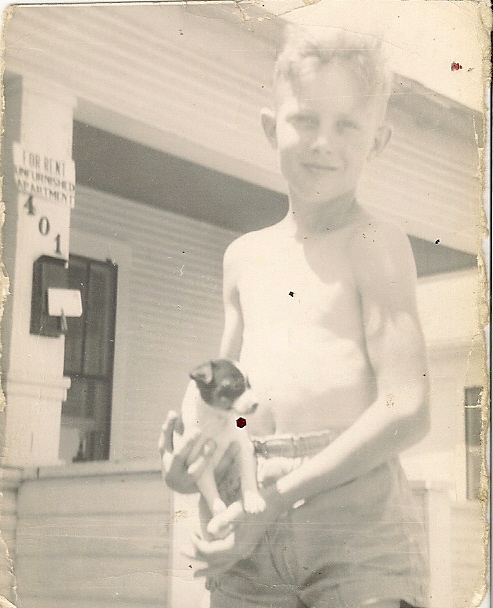
I was a latch-key kid. And when I sped home on my Hawthorne, Montgomery-Ward bicycle, the first thing I did was play with the dog. The dog you see in the picture is Spot and he was the second dog I ever owned. He did not live long, for distemper took his life. Before him, there as a chow-mix of a dog named Toy that mother had to relocate because he ate the neighbor’s chickens. I loved that Toy and when he was picked up by a farmer that lived in Bangs, Texas, one world came to an end and I lost my innocence, not in the back seat of a Ford, but in the driveway of my home as Toy went away. To this day, I can remember his fur and his dark, black tongue.
Many events force growth and sadden our days. The loss of a loved one, four-legged or not, wounds us and we stagger into days and nights hating the loss and finding ways to forget it or ease the heart from the tear.
Many events bring growth and brighten the day. The face of a loved one upon rising in the morning, the nickering of horses in the barn and the wagging of that tail.
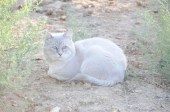
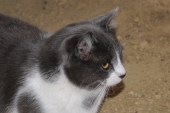
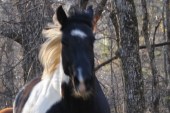
At the end of this post On the left sidebar of the blog home page are photos of cats, dogs and horses that surround Brenda and me. All of the cats are gone now, from accident or predators. I miss each of those kitties: Fenster walked with me to the far fields like a dog, Bubbles talked to me on the road down to the barn and Painters never strayed from my side while I fed and tended the horses. Painters would lie down in the middle of the corral and the horses would walk around him.
Lottie is a schnauzer and was my mother’s pet. I brought Lottie to Mingus and she has run through every room in the house slamming her toys for attention and play.
Yeller is like Toy, my first dog, the chow-mix. I first saw Yeller across the county road, staying on the Nowack place, our neighbor to the north. Yeller loved children, but the Nowacks had several dogs already and Yeller had come from some other family or was abandoned in the country by a cold-hearted person. One day Steve Nowack tried to shoo Yeller away. Yeller crept off the property and went down the road, just out of sight of the children, and stopped. Yeller turned around and sat on his haunches and looked over the grass towards the children, wagging his tail and smiling, wanting to go back and let the smaller children ride him. I had already begun to like the old boy, but that was it: Yeller obeying to go off as instructed, but not far enough to lose sight of children. I would not let another minute go by with him unattended by a human companion.
I called him to our yard. As he saw me engaging him and then petting him, Yeller ran around in circles, merrily and merrily he went. Soon, we took Yeller to the vet and had him brought to pristine health and today, tonight as I write this post, he sits on the floor beside me. I walk him and Lottie three times a day. He is always on leash. I cannot dis-attach myself, nor do I want to, from the kingdom of animals.
- Fenster
- Bubbles
- Lottie
- Yeller
- Paint
- Fanny
- Hija
- Star
- Jack with Spot at 401 Congress Avenue, Brownwood, Texas
- Shiney
- Lilly
Filed under Dogs, Recollections 1942-1966
Monarch Butterfly Roost at Flying Hat Ranch
North Erath County, Texas, Lat 32.43 N, Long -98.36 W, elev. 1,086 ft. Turkey Creek Quad.
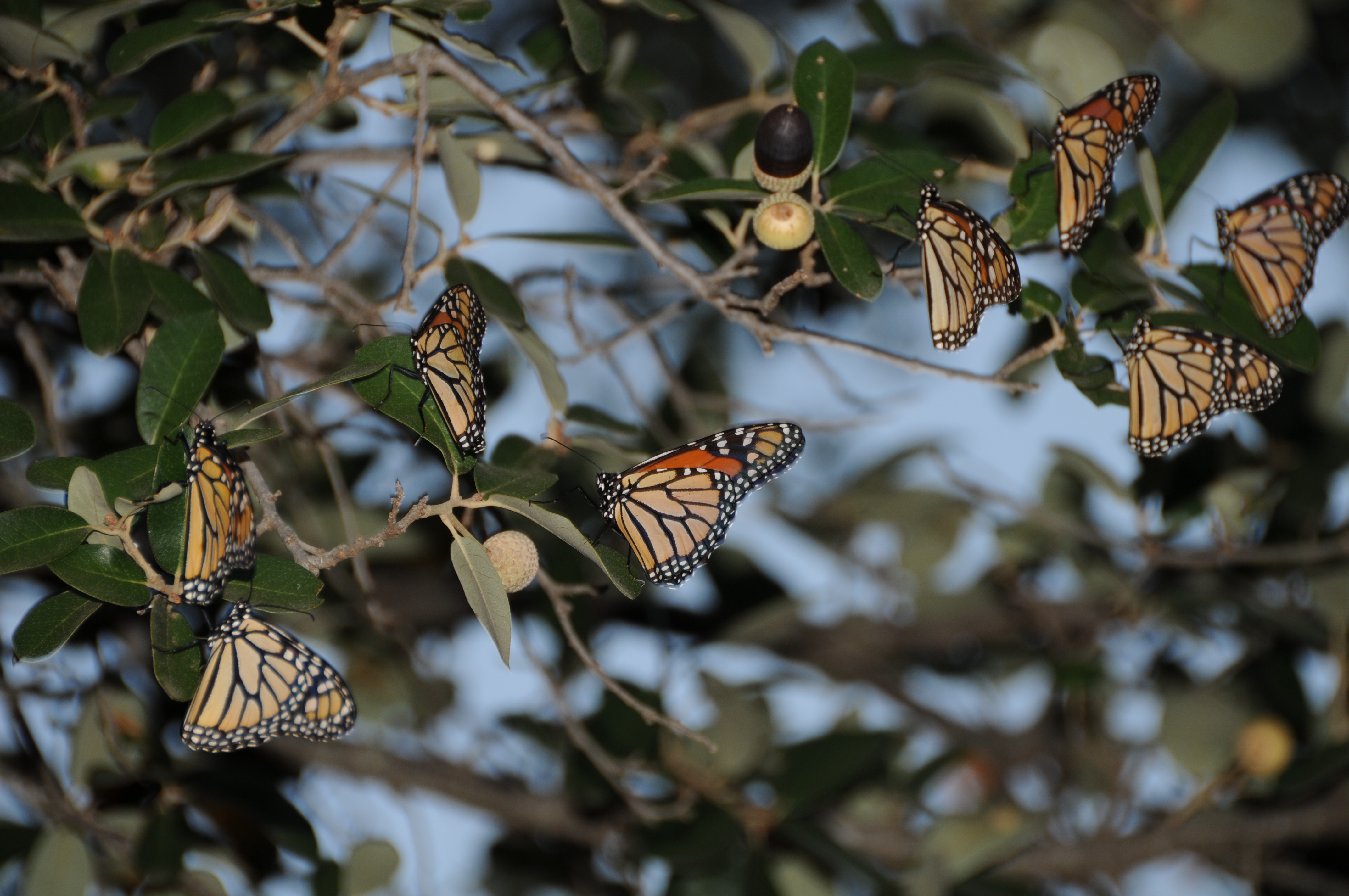
There are only nine Monarch butterflies in this roost, but it is a grouping that I photographed as the sun set this evening.
Five years ago, Brenda was walking Yeller, our Aussie-Lab mix, and as she came back to the house, Yeller kept looking up in the sky. Brenda, puzzled, looked up and hundreds of Monarch butterflies filled the space above our house. They probably roosted in the grove, but I was unaware of their habit patterns. We have not seen such a sight again.
Over the past two weeks, I have noticed Monarchs floating lazily across the interstate between Mingus and Abilene. Not many. I’ve counted only, at the most, four monarchs on the way back to my home, a trip of 87.2 miles.
This evening I took these photographs of the Monarchs that are roosting in our live-oak trees in front of the house. There are nine Monarchs. (One Monarch is nearby, but out of the photo frame.) They have settled in for the night. October is for turning leaves and the Monarch. It is a small grouping, but a grouping nonetheless.
They seem so fragile, but I have read they migrate for hundreds of miles without injury. Above our ranch, there also soars Sandhills Crane when the frigid temperatures force them southward. I shall photograph the Sandhills when they pass this season. I first hear them, then I see them. With the Monarch, first I see them and then I gaze on them intently, sensing a unity they have as a cluster, roosting together like birds, like birds.
______________________________
Notes:
Our house is on a knoll, called Poprock Hill, and in chasing the Monarchs before I saw them roosting, I took several pictures of Monarchs that were out of focus and sailing southward. Then, Brenda, said, “Look in the front yard!” I was so anxious to get pictures I couldn’t focus the camera. But, the Monarchs were patient with me and opened their wings for some reason. I got the pictures without falling off the terraces. Other Monarchs are floating above our tree line and probably will roost close by, but these guys are in the big live oak tree in front of our porch.
Update, October 14, 2010. As I left this morning to go down to the barn to feed and then commute to Abilene, I went back out to the Monarch roost. I shined a flashlight on the roost and the Monarchs were still resting. The temperature was between 38 deg. F. and 45 deg. F. about the area — from here to the interstate, about four miles north. I’ve spotted no Monarchs this afternoon. I watched closely until dark.
Filed under Life in Balance, Monarch Butterfly
Native Storytelling at Milagro at Los Luceros
Milagro at Los Luceros document, excerpt follows:
What is Milagro at Los Luceros?
In May of 2009, Governor Bill Richardson and Robert Redford announced a new, unique collaboration for New Mexico’s Native American and Hispanic filmmakers with the working title of ʺSundance in New Mexico.ʺ The collaboration has been officially renamed “Milagro at Los Luceros” in reference to The Milagro Beanfield War, the 1988 film directed by Mr. Redford, shot on location in Truchas, New Mexico, and based on the John Nichols novel of the same name.
Where is Los Luceros?
Named to the National Registry of Historic Places in 1983, Los Luceros is a hacienda (ranch complex) lying northeast of the town of Alcalde, New Mexico, just north of Española, on the Rio Grande. The New Mexico Department of Cultural Affairs (DCA) purchased and operates the 148‐acre Historic Los Luceros property and is preserving its historic nature and integrity for the purpose of cultural, artistic, environmental, and educational activities, events and outreach.
What is the mission of Milagro at Los Luceros?
In collaboration with the New Mexico Economic Development Department’s Film Division and Redford Enterprises, the mission of Milagro at Los Luceros is to provide immersive jobs training and education in film and the arts. The project will be dedicated to community, environmental protection, and advancing the arts as an economic driver. Programs will be designed specifically for New Mexico’s Native American and Hispanic
filmmakers.
[Excerpts closed.]
______________________________
Notes:
Los Luceros has a long history, dating back to pueblo occupation in prehistory.
Mary Cabot Wheelwright and family lived on the site for many years. She and other scholars discoursed with Hastiin Klah at Los Luceros whose sandpainting tapestry is displayed in the Wheelwright Museum of the American Indian, Santa Fe.
I visited the museum several times during the 1970s and 1980s when Klah’s tapestry dominated the public display collection. I have several postcards of his sandpaintings and his biography in my personal collection.
September 2009 SAR Field Trip to Historic Los Luceros.
April 2009 Field Trip of Chilis and Sherds to Los Luceros, Friends of Archeology.
Filed under Life in Balance
Ristra Thoughts
Pepper ristras adorn roadside markets in New Mexico before the Fall equinox. Bundles of harvest, early-arriving gifts from Christmas future, ristras symbolize the product of good growth in the high desert country, the earth’s abundance with green and red eruptions. Unlike other harvest food, the red and green pepper wreaths are hung for celebration as well as convenient spice for stew, meat and vegetables. When I see ristras, I see New Mexico, the American Southwest and callused hands nurturing soil and weaving garlands, farmers sitting under arbors beside the highway in a hundred places. Entering winter’s cold after equinox, I know the fruit of the ristra will warm me, warm us, into the day and night on both sides of Christmas with sight and taste for the holiday, table and heart.
______________________________
Notes:
I am not getting any kickback from this link The Real Southwest Hatch Chile Pepper Ristras, but it was too good to let pass with this post. There are probably a number of other links and articles on the web. I will try to list more ristra links under this post.
Filed under Santa Fe
Under the Shade of Cottonwoods
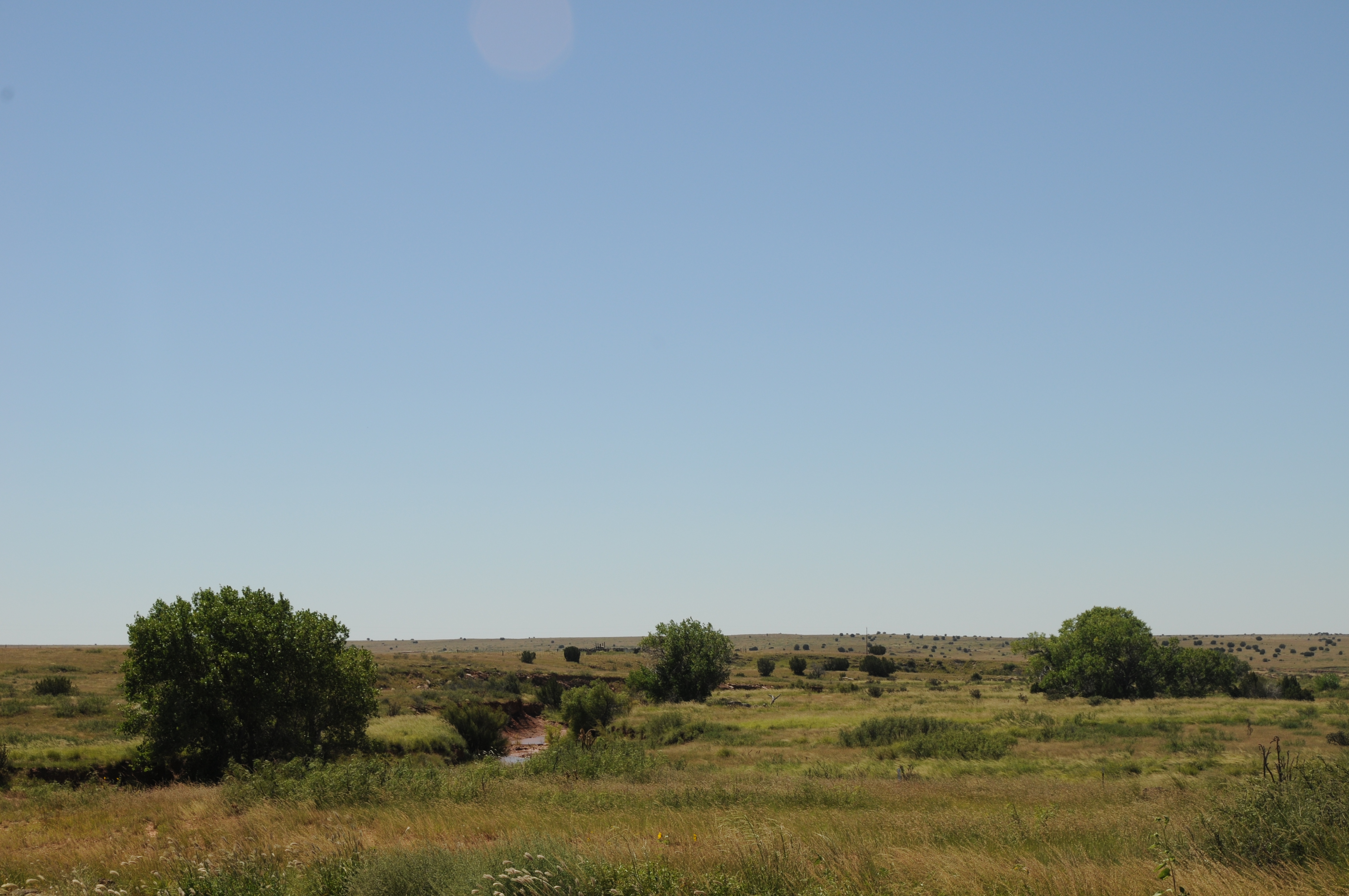
“At 26.9 m. [from Ft. Sumner, New Mexico] is a clump of handsome cottonwoods beside a bridge over an arroyo. These quick-growing shade trees that thrive where other trees can’t grow are a blessing to this land. Cane cactus appears farther on with occasional growths of low pinon and juniper.” From New Mexico, WPA Guide Series, 1940, p. 357. Photo by J. Matthews taken at exact spot of commentary in guidebook, September 2010. Seventy-years later, cottonwoods remain in the arroyo.
______________________________
All of the horses and dogs are fine. Lilly has recovered quite well from her bad days a few weeks ago and will go into the winter with good condition.
The pastures are green from the rain and tree leaves in the grove are turning gold. All is well on the ranch.
I will be taking a vacation from blogging and writing posts on Sage to Meadow, a rest under the shade of cottonwoods.
It is my intention to resume writing posts about nature on November 1, 2010.
Related Articles
- Transplanting tree seedlings (energybulletin.net)
Filed under Life in Balance