Light abstraction at night on I-20

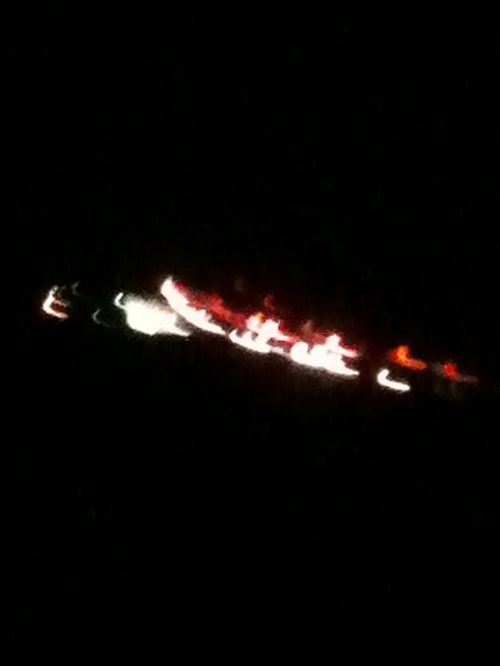
Tail lights and headlights on Interstate 20 near Brazos River (November 2011).

Last Friday night I drove back from Fort Worth, Texas, to the ranchito and took this picture on a hill with an iPhone 3G above the Brazos River as the traffic passed east to west, west to east, on Interstate 20, the major route between Fort Worth and Abilene.

The shaky photograph portrays tail lights and headlights.  The red lights are vehicles heading east, people on errands and business, burning oil to illuminate the night and find their way.  The white lights are vehicles driving west.  A mile to the east (to the left of the white lights in the photograph), the traffic bogged down on the Interstate because of construction with stop-and-go for almost twenty miles due to two-lane passage.  My driving west ( to the right of the photograph), did not slow down that much.

At times out here in the country on the interstate, I can see 20-mile stretches of cars and trucks driving the highway, going to their appointed rounds to deliver goods and visit friends.

7 Comments

Filed under Texas

Chris Clarke leaving the desert: las golondrinas chronicles

Yesterday’s post on “WeBLOG adobe las golondrinas” prompted me to go to Chris Clarke’s Coyote Crossing blog to see what is going on with his desert activism.  The ever-present need for economic vitality has visited Clarke with a vengeance upon his life in the desert so that now he is leaving the Mojave for urban Oakland (more than likely Oakland, he writes).   He has worked tirelessly to alter the building of the vast solar array out in the Mojave for alternative solar projects on home rooftops, vacant parking lots and probably the cathedral-like roofs of Goldman Sachs, Morgan Stanley.   Do they really need helicopter pads on those roofs?  Chris has stopped his car alongside desert roads to aid tortoises get to the other side of the road.  There’s no tortoise soup on Chris’s menu.

Here’s a poster from Chris’s website that shows his activism at Mach 1 supersonic speed:

I do like the slap-in-the-face-with-pig-bladder approach on the poster.  Not much room for debate, just good straight-forward compromise that favors the people.  Davy Crockett would be proud of Chris Clarke.  See also Andrew Jackson, Sam Houston who also favored the commonweal.  I’m an historian, so you gotta be a little tolerant of my diversions here.

Chris is still going to be active in saving the deserts from a new location. He writes that he has been active on the issue from afar and he will do it again. I will be giving Chris Clarke and Coyote Crossing a Prairie Sagebrush Award 2011 soon. The award doesn’t bring him any money to stay and proselytize, but it will illustrate his fine writing and love of the Mojave.

Do tortoises weep?

______________________________

Notes, corrections and additions:

Correction from first posting:  Chris Clarke has not helped move the tortoise out of the construction area.  (That sentence has been removed.)  He has stopped his car and aided the tortoise across the roads.  See Clarke’s correction in the comments.

12 Comments

Filed under Mojave Desert, Solar Energy

WeBLOG adobe las golondrinas

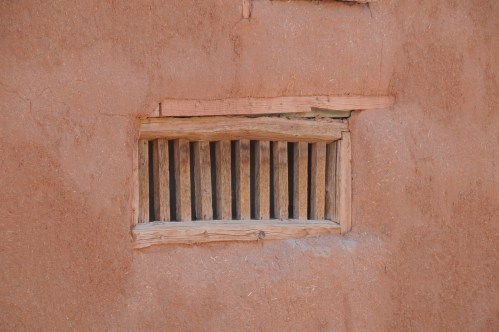
Window with bars, Las Golondrinas, New Mexico (2011)

A few notes from las golondrinas behind the bars:

Private business in cahoots with governmental agencies build solar arrays and oil pipelines that crisscross the American West.  Is this really necessary?  Tortoises are relocated — or at least a great many of them were — and wildlife corridors “will” be constructed to allow wild game to browse in the Great American West.  By all means let’s  power our cell phones, televisions and gaming equipment so that we can “see” nature on television, iPhones and earn all the levels of virtual combat games that we can boast about to our chums by e-mail on yahoo, gmail and msn.com.  Why, who needs “real” critters when we have “virtual” critters?

* * *

An old Native American narrative:  Grandfather takes grandson to see a river that runs between two mountains.  The river has cut a deep gorge between the mountains.

Grandfather:  Grandson, which is stronger, the river or the mountains?

Grandson:  (trying hard, puzzled)  The river, Grandfather?

Grandfather says nothing, looks at Grandson.

Grandson:  (trying harder to figure it out, changing answer)  The mountains, Grandfather?

Grandfather says nothing for a minute or two.

Grandfather:  Grandson, it doesn’t matter!

* * *

Henry David Thoreau wrote in Walden that a telegraph line was being built to connect Maine with Texas.  He said, in effect, That’s nice, but will they have anything to say to each other?

* * *

On the topic of a lot things:  It doesn’t matter.

______________________________

Notes, corrections and additions:

“Los Golondrinas” is Spanish for swallows.

There is a huge solar array system being built out on the Mojave Desert between California and Nevada.  Chris of Coyote Crossing has tried to impede the construction of the array because of the tortoise issue.  See his blog on my bloglist below for further news of these “necessary” and stupendous power grids in the making.

The narrative about Grandfather-Grandson is courtesy of Blu Cooksey.

Of course everyman has his Walden, so the quote is in there!  Please go look it up.

The origin of “blog” is from the two words, Web and log.  I don’t know if the OED has caught up with “blog” yet.  “In hindsight, it seems amazing that I did finish [her translation] — and, indeed, that anyone working the British university system ever finishes anything…,” writes translator Susanna Morton Braund in her preface of Juvenal and Persius, Cambridge: Harvard University Press, 2004.  Now, in my opinion, finishing the translation of Juvenal’s writing from Latin to English does matter.  Well, maybe not.

10 Comments

Filed under Life in Balance, Life Out of Balance

Shadows and Eric of 203

I suppose we all have nested away some items, some event or photograph we cherish.  I published a photograph several weeks ago on the feed bin in the far field with clouds that I had set aside in the files, but every time I came across the feed bin and clouds photograph I wanted to post it and share it with readers in the blogosphere.  I present two things here with a short story line, one is the long shadows in Stall 1 of the stables, the other is an artwork of Eric Andrews of Taos, New Mexico.

* * *

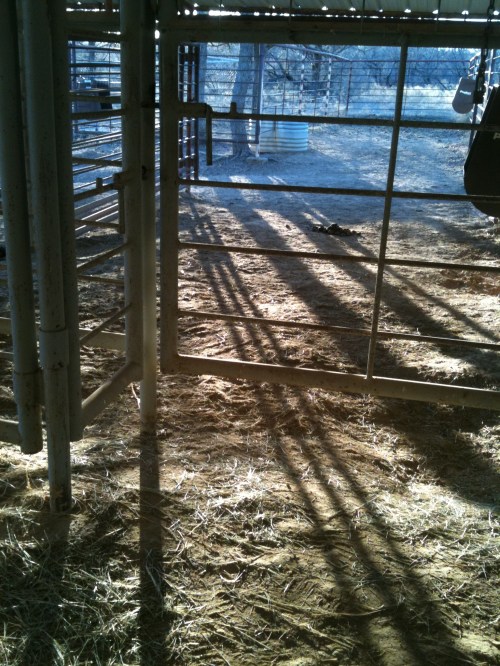
A January 28, 2011, photograph of Stall 1 in the stables

When this photograph was taken on January 28, 2011, the late afternoon shadows of the stall panels were surrounded by cold mist of a winter’s day. I was terribly sad because I had recently sold three of my prize horses at an auction in Oklahoma City, and the absence of Hija, Fanny and the foal-to-be was anguishing. The economy had gone sour and I had — through my own ineptitude — lost money on the stock market. So had other people lost money, but they had not be forced to sell their companions. I sold the horses — no small relief, to be sure — to fine people in Canada and Missouri and I was comforted in the transfer. The photograph illustrated to me the emptiness in my life at the time.

* * *

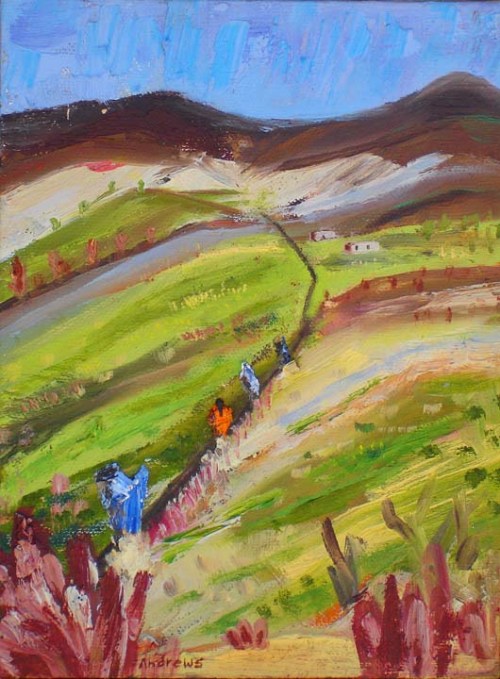
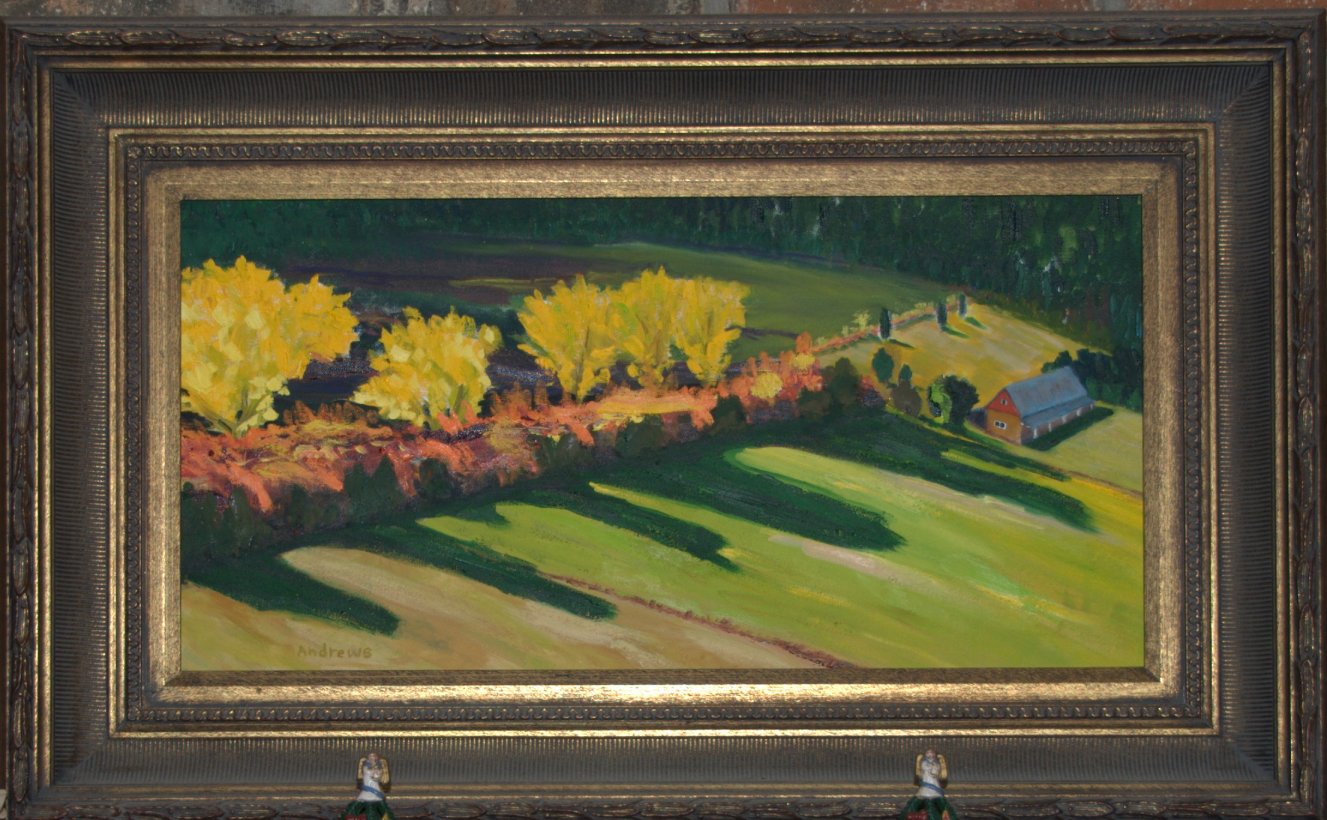
Walking the Acequia 2, Eric Andrews, 203 Fine Art Gallery, Taos

Eric Andrews’ painting, Walking the Acequia 2, is one of his current paintings for sale and is a good example of his art.  I possess one Eric Andrews painting.  He and his wife own the 203 Fine Art Gallery in Taos, New Mexico. After the death of my mother in 2003, I wanted to invest my inheritance in either fine art or land.  I eventually settled on buying the Flying Hat Ranchito. Before I bought the Flying Hat, however, I traveled to Taos and Santa Fe to put together an ensemble of southwestern paintings of the Taos Society of Artists — Bert Geer Phillips, Ernest L. Blumenschein, Joseph Henry Sharp, Oscar E. Berninghaus, E. Irving Couse and W. Herbert Dunton.

As I made a laundry list of the paintings I might purchase, going from art gallery to art gallery, I met Eric Andrews at the Parsons Gallery in Taos. It was an immediate friendship. I traveled to his studio out on the High Road to Taos from Santa Fe to visit with him and his wife and see their work. Although I made the decision to buy my ranchito, I bought Eric’s Vadito II that hangs over my fireplace (you can see it on the “About” page of Sage to Meadow). The painting above, Walking the Acequia 2, illustrates my acquaintance with Eric and my deep interest in all things acequia.

_____________________________

Founders of the Taos Society of Artists at the...

The Taos Society of Artists -- image via Wikipedia

5 Comments

Filed under Horses, Shiners Fannin Peppy (Fanny), Sweet Hija, Taos

Poaching or just curious? Deer on Flying Hat Ranchito

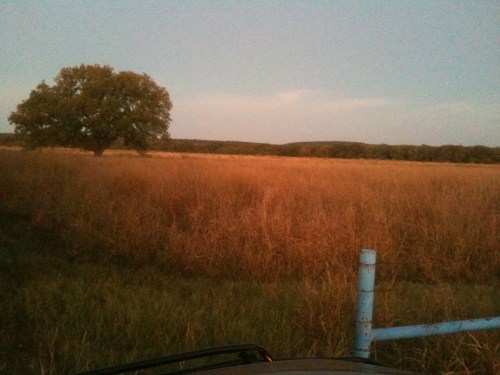
Southeast gate of Pecan Tree Pasture, deer season opening day, November 5, 2011, 7:35 a.m.

(The following datum comes from Field Notebook No. 1, October 29, 2011 –.  These are the original notes I took this morning on the first day of the regular deer season in north Erath County, Texas, November 5, 2011.)

7:50 a.m. In the far field at Pecan Tree Pasture.  One rifle shot to the south, a loud report.  41 deg. F.  One photo taken at southeast far gate.  No deer yet sighted.  Traffic light on State Highway 108.  Owl call, hooting, in the grove.  [I am parked between the grove and pecan tree, having entered from the far southeast gate to contain deer? within the field.]

No deer stands sighted on Old Bryant place, the Dooley place, that I can see.  This is different from past three years.  Two years ago, I sighted nine deer stands from my place.

Crows cawing — very few.

7:59 a.m., flock of crows flying east to west.

8:00 a.m.  Solitary deer sighted between me and water trough on my pasture road.  I am at the grove-pasture gate.

8:01 a.m.  Rifle report to the far south.

Deer may have come out of the grove gate by the water trough.  Deer leisurely walking up the pasture road.

(Bring binoculars next time.)

(Clear brush around fence in places so the F-250 is not scratched.)

A gray, short-bed pickup cruises by my open southeast gate, turns off road by gate, pauses, then goes north on SH 108.  No identification of the gray pickup.  Not a neighbor.

8:10 a.m.  Chickadees or wrens fussing in the mesquite brush, grove.  Will the solitary deer I saw cross SH 108?

8:14 a.m.  Rifle report to the east at some distance, estimated three miles distant.

8:21 a.m.  Rifle report to my southwest, very loud, very loud either on Dooley or Woods place.  I can almost smell the gunpowder.  [I carefully listen for bullet coming through air, but hear no sound.]

Far away to the south, another rifle shot.

A white-flatbed pickup passes on SH 108, slows down by field, turns around and comes back by deer at water trough, slows down, goes up road, turns around and then heads south on SH 108.  He probably saw the deer on my place.  Not a neighbor.

Big bluestem grass abounds in this field.

8:50 a.m.  Leave field.

______________________________

Notes, corrections, additions:

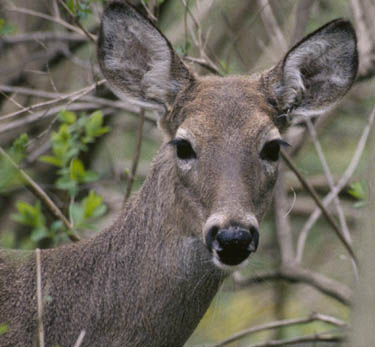
This year the rifle sounds are greatly reduced in number for the opening day of the general season.  The pickups that turn around and gaze into the far field where I have deer may be curious or may be looking for an opportunity to poach.  I can’t monitor and don’t want to monitor my field constantly.  I am glad that the deer stands have been significantly reduced in number from several years ago.  I have Tony Navarro to thank for that.  Game Warden Tony Navarro’s great-grandfather signed the Texas Declaration of Independence.  I rode with him in his outfitted pickup a couple of years ago when we scanned Flying Hat Ranchito for game. 

Game Warden Tony Navarro's card

2 Comments

Filed under Deer, Field Log

Bucks and bourbon: Texas deer season


This post is supported by Texas Hunter Safety Course online for Texas.  The Texas Hunter Safety Course online is endorsed and recommended by the Texas Parks and Wildlife Department.

By all means hunters, speed to your lease with these essential items before sunrise!  Please don’t, you shouldn’t speed.  Remember that in Erath County, Texas, the general hunting seasons is November 5, 2011 — January 1, 2012: bag limit 4 deer, not more than 2 bucks, and no more than 2 antlerless, all seasons combined (citations from the Texas Parks and Wildlife Department).

The Flying Hat Ranchito is closed to hunting because of the deer population decline.  In 2003, the White-tailed deer count was daily at 15-16, but this year the count has declined to three (3) deer, two doe and one fawn.

In truth, I recommend that you eliminate all of the following items below except a non-scope deer rifle and the deer from your hunt.  (And, yes, I have and still hunt without scope.)  Dress appropriately, maybe even a bit of camouflage, but considering the number of unschooled hunters out in the veld, you probably should wear red or orange.  Those of you that need to hunt for food or as an essential supply to your winter larder, I have no quarrel — in fact, I don’t like to quarrel or wrangle, in most cases — but the accumulation of the following “essential” items should be pared down whether venison is imperative or not.  I don’t like all the gadgetry and waste of resources.  To wit, I recommend these changes:

Build a natural blind of brush, hide behind a tree, sit on a log, get lost in the shinnery in order to scan and conceal. (Wear red or orange somewhere on your body, preferably above your waist.)

Do you really need an all-terrain vehicle to run up and down pasture roads or across fields?  Of course not.  Walk, glide through the forest, the grove, the bush.  Forget the telescope, use a less powerful rifle and stalk quietly the deer you seek to slay.  I think I would keep the flask and contents purely for exorcising the chill — two sip limit after the hunt, of course.

These changes, if adopted, will exercise your body, get you close to your kill and the extra money saved can pay part of your kid’s college tuition.

Of the following, what items can you eliminate and still achieve your goal?

Essential item no. 1: camouflage clothing

Essential item no. 2: all-terrain vehicle (ATV)

Essential item no. 3: the deer stand

Essential item no. 4: 30.06 rifles, some with scope

Essential item no. 5: bourbon whiskey flask

Essential item no. 6: White-tailed deer (bag limit is four).

Have a good hunt and feel liberated from the technologies of the present day!

(Please catch the field report of November 5, 2011, later on this morning in a separate post!)

______________________________

Notes, corrections and additions:

This post was originally entitled, “White-tailed deer season opens in Erath County: essential recommendations.”

3 Comments

Filed under Deer

Prairie Sagebrush Award 2011: Chromo schoolroom, Spring garlic

Here are two posts I award the Prairie Sagebrush Award 2011 for fine writing, photography and art in the blogosphere.  I select the most excellent post, photograph or art piece from 2010-2011, most of which come from my blogroll.   For each comment that is entered on these posts I will donate a buck ($1.00) to La Jicarita News, a community advocate newspaper of northern New Mexico OR a wildlife corridor in Texas or New Mexico.  I set a limit of $100.00.  I will be “awarding” the Prairie Sagebrush Award 2011 in piecemeal fashion — a couple or three at a time.  The total awards will be about a dozen.  I hope you agree with me that there is fine writin’ in the blogosphere!

You may also be interested in last year’s Prairie Sagebrush Award 2010 — see the awards by clicking on Prairie Sagebrush Awards 2010.

TERESAEVANGLELINE*TERESAEVANGELINE*TERESAEVANGELINE

Teresa Evangeline Blog link.   At play in the field of infinite possibilities. These are my field notes.  — From, “Homepage,” Teresa Evangeline.

At Home in My One Room Schoolhouse

[Posted January 20, 2011.]

Yesterday, I decorated my room. No, that’s not it. Not exactly. I’ll get to that.

This past Sunday night, I stayed with my friends, Anne and Paxton, at their home west of Taos. En route, while crossing the Great Divide, I gave some thought to the notion that we would have a good visit, then I would pack up the stuff I had stored there when I left Santa Fe, and head back to Minnesota.

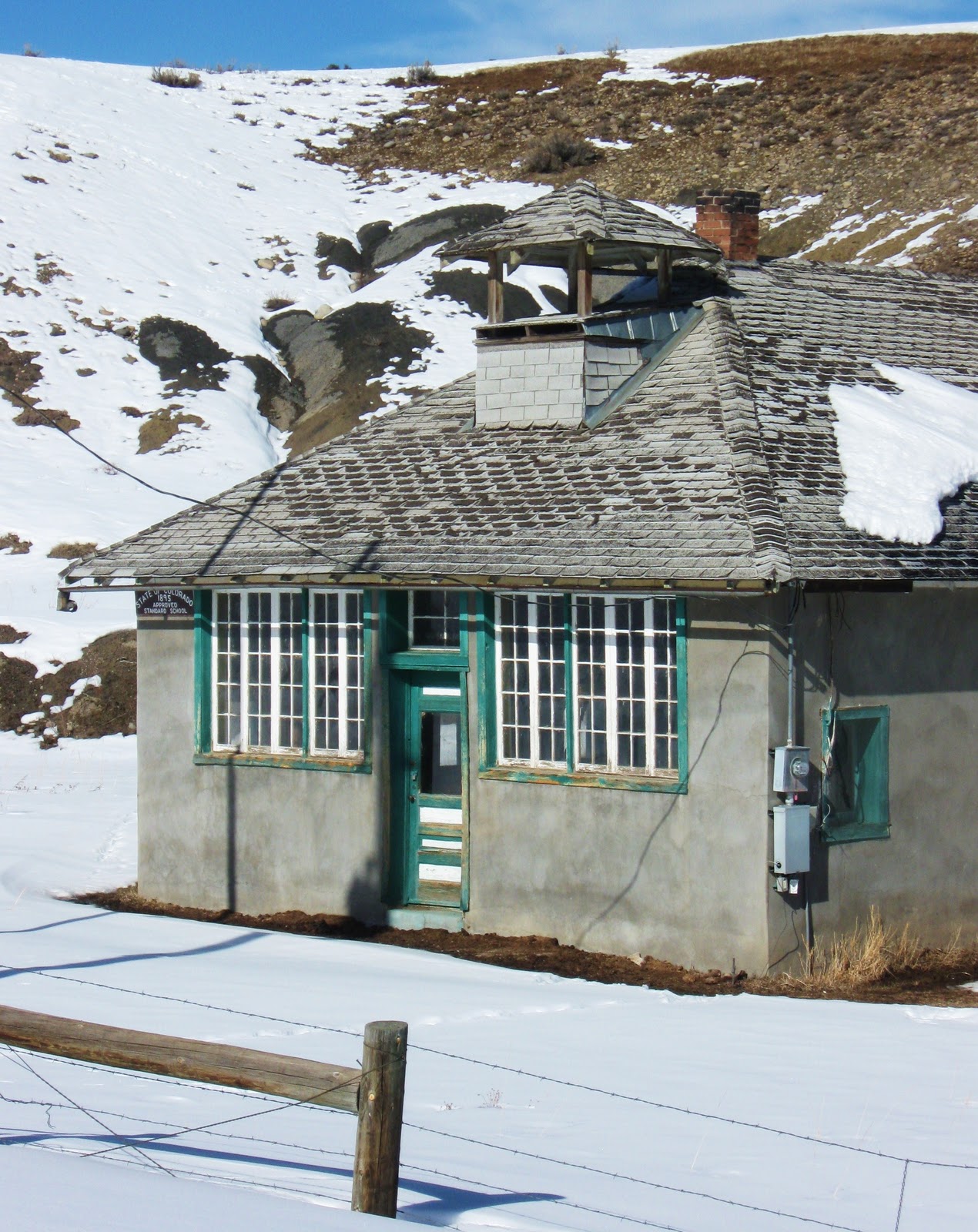
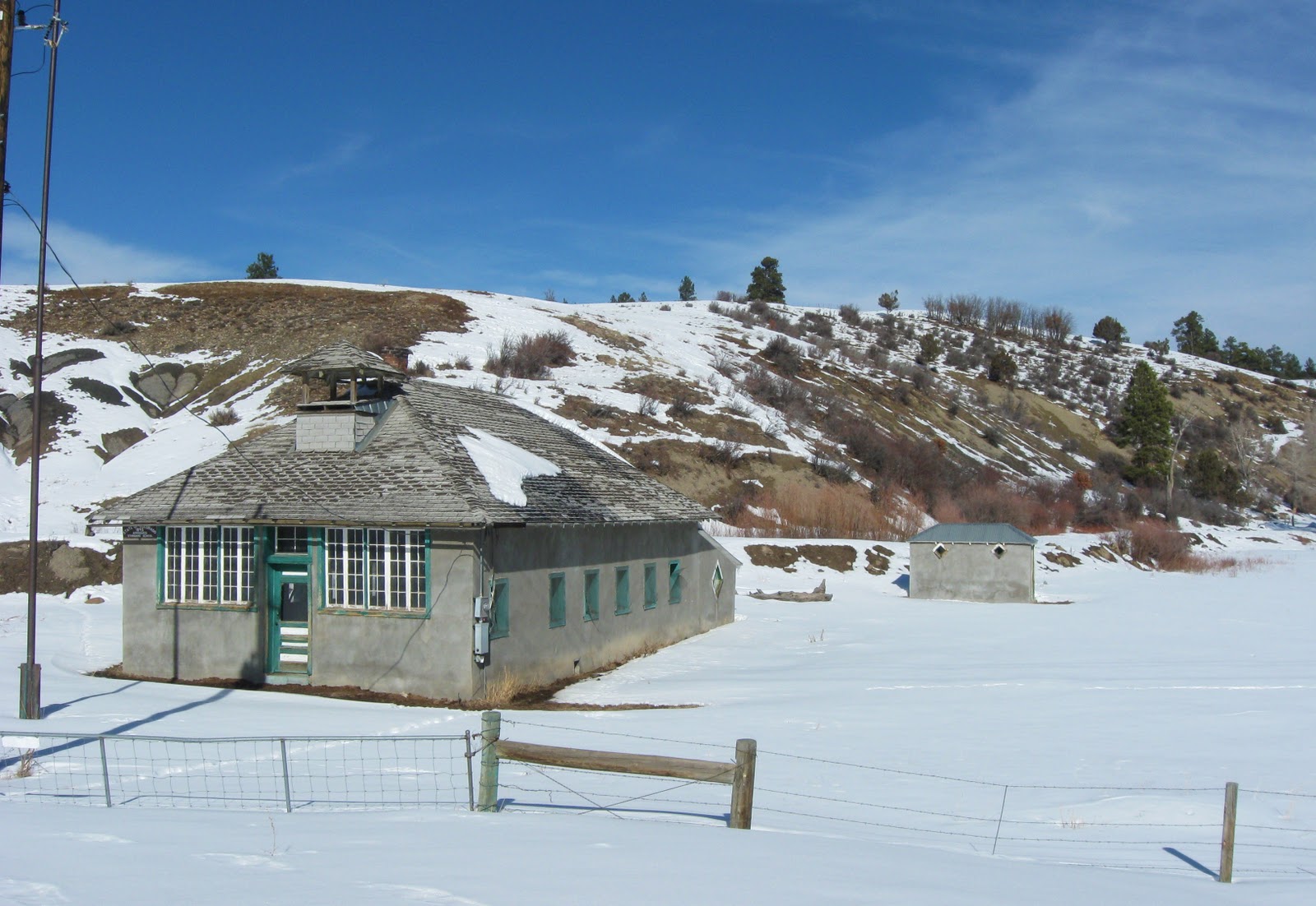
Just before passing through a tiny little town called Chromo, I stopped to take some photographs of an abandoned, one-room schoolhouse at the edge of town. I love these little bits of history, what they represent.

After arriving in the late afternoon, while Anne and I visited, we packed my car. Then we ate some pizza and stayed up talking late into the night.

In the middle of the night I woke up and was lying there waiting for I knew not what. Until I did. The almost-full moon was now over the house and was shining in the window. I was not going home to Minnesota yet. I was leaving Anne’s house and that’s all I knew. And not because she wanted me out, although I suppose that is a possibility, but I knew I should leave and listen for guidance.

In the morning, while driving the Rim Road, I felt I was supposed to go into Taos and look for a room. I pulled over at the first intersection before heading into town, briefly disagreed, and played with the notion of heading down to Sedona. I even called Anne, who makes regular visits, to ask how long it took to get there. Maybe I was supposed to be there, an idea that didn’t feel altogether disagreeable. I wavered. And then I sat and listened. Whether I liked it or not, for now at least, I was going into Taos. Not an altogether disagreeable option, either.

When I drove by a certain motel, I knew that was where I should be. Not the spiffiest joint in town, but it offers those things I need right now – off the road, with a certain sense of privacy and quiet, a courtyard with pinon trees, as well as trees outside almost every room, coyote fencing, and ristras hanging from the vigas – lots of southwestern ambiance, something I’ve been missing, and it’s cozy to boot (I think that’s a fairly decent pun, but I might be prejudiced). It also just so happens to be the first motel I ever checked into in New Mexico many years ago.

The cool thing is, I have two of my favorite paintings and a favorite framed print in my car. Well, I did have. They are now gracing my humble abode. Had I waited to pack up my stuff, I would not have them now for my room.

I think one of the things I may be learning is that, yes, it’s good to have a permanent home to always return to, and I’m very grateful for Lonewolf, for all it offers me, and I will be equally grateful to return there, but it’s also good to feel at home wherever I happen to be.

Having spent most of my life, since a teenager really, in one relationship or another, I became used to navigating through life with someone there to share the ups and downs, the day to day exigencies that can complicate or relieve our human experience, sort of a built-in support system that creates a sense of security. And even though I’ve spent the better part of the last five years sans a relationship, I find I am still learning to appreciate and honor a solo life. Learning to feel at home wherever I am means learning to feel at home with myself. And that, as they say, is big.
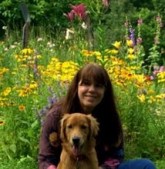
Teresa Evangeline with Buddy

So, I did a little decorating, leaning my artwork against the walls, bought some groceries at the store down the road, asked for and received a small refrigerator, and took a walk around the courtyard in the evening light. It’s feeling kinda homey.

I almost forgot to tell you: when I crossed over into New Mexico from Utah on Sunday, in less than a quarter of a mile there were two crows and a coyote. The crows were standing over their dinner in the ditch, whoever the poor critter had been, and the coyote was trotting away from them, down in a hollow, across a snow-covered field. He had decided it wasn’t worth it, or they had shared before I came over the hill. That second scenario isn’t likely, but one never knows what goes on when we’re not there to insert our conditioned human thinking. Either way, they made a fine welcoming committee.

Then, the morning after I arrived here, a lone crow cawed right outside my door, announcing my arrival. This is where I Am. Another day of learning in my own little one-room schoolhouse. And I don’t intend to abandon it. I will be carrying it with me.

Teresa Evangeline Blog link.

ANNIEPICKNS*ANNIEPICKNS*ANNIEPICKNS*ANNIEPICKNS*ANNIEPICKNS

Anniepickns’s Blog is given a Prairie Sagebrush Award 2011 for her post on garlic.  Annie features farmers’ markets throughout the west, including Santa Fe.  Link: Anniepickns’s Blog.  As the eldest of eight children, I have fond memories of our family raising or growing our own food in a variety of ways. Sometimes we just had a vegetable garden, some places we lived had fruit and/or nut trees. Sometimes we raised livestock: chickens for their eggs , rabbits goats and/or sheep for meat.  — From, “About,” Anniepickns’s Blog.

Spring Garlic

April 4, 2011 by anniespickns

Sunday I got to the Farmers’ Market later than usual, it was already packed with people but choices were still good. The first thing I wanted to do was find the egg guy and trade in my used cartons. It seems like the only time I remember that I’m going to take them back is when I am at the market buying more eggs. Very happy with myself for finally remembering. Egg cartons returned and a fresh dozen in my basket I was off to see what looked good as far as vegetables go. I bought a nice bunch of chard, a green that I much prefer to kale or mustard greens, some beautiful, thin asparagus, some very nice baby spinach, more Fuji apples, tangerines and the subject of this weeks post, green or Spring garlic.

Garlic is a species in the onion family and green garlic is simply immature garlic, which has been pulled to thin the crop. Garlic, onions, shallots, leeks and chives are close relatives. Since I love all garlic’s cousins I guess it isn’t any surprise I love garlic. I love it in its mature form and delight every spring when I can get it in its immature form.

Anniepickns

Green garlic is much milder than mature garlic. To use it trim off the root ends and any tough part of the green leaves. Chop or slice the white, light green and the first few inches of the dark green leaves (using only the leaves that are tender).

I read that the sticky juice within the cloves of mature garlic is used as an adhesive in mending glass and porcelain in China and that garlic has been around for about 6,000 years and is native to Central Asia. I also read that it was highly prized in early Egypt where it was even used as currency.

Here’s a little dish I prepared tonight using some of my fresh Spring garlic, left over baked Japanese sweet potatoes (Satsumaimo), a little butter and baby spinach.

First I thinly sliced the garlic, then placed it in a fly pan with a little butter and let the garlic gently cook until it had browned and was a little crispy. This isn’t something you would want to do with clove garlic as the taste of the garlic would be bitter. That doesn’t happen with the young version.  I then added the cooked garlic and butter to the Japanese sweet potatoes that had been peeled and mashed with a fork. Once this was done I made some little patties from the mixture then added them back into the frypan with just a touch of butter and gently fried the patties until they were crispy and browned, then turned them and did the same to the other side. When they were browned on both sides I removed them added the spinach and a splash of chicken stock (you can use water) added a lid and cooked the spinach until it had just wilted. That’s it, another one-pan yummy treat. Perfect for a spring evening.

You can find a recipe for green garlic and baby Bok Choy from one of my March 2010 posts here if you’d like another idea on how I’ve used it. It’s also excellent in any egg dish, think cheese and bacon omelet with spring garlic. If you can find Spring or green garlic at your Farmers’ Market or market, give it a try. I think you’ll like it.

Link: Annie Pickns’s Blog.

10 Comments

Filed under Prairie Sagebrush Awards 2011

Frosty tumbleweeds in a Texas corral

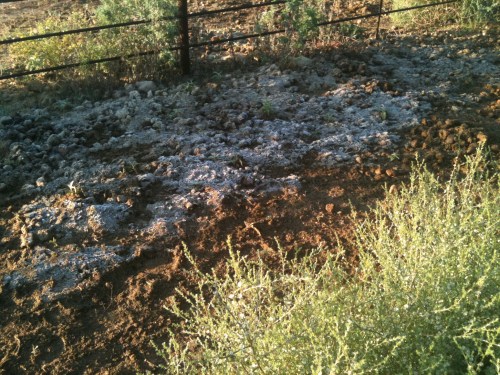
Frost in Broke Tree Corral (October 29, 2011).

For the first time since last April, frost rests upon the Broke Tree Corral!  The temperature at the ranch house read 35 deg. F., but when I walked down to the corral, I saw frost.  Then I photographed frost on the horse apples and soil (I could have photographed frost on the trailer, but this was a neat pic with green tumbleweed).

This weather event is worthy of a separate post — should have made it on Saturday — because, well, it’s cold for a change, and we have been sweltering, perspiring, cussing, finding shade, digging caves and seeking the earth’s innards for cool places like Sonora Caverns or Carlsbad Caverns.  Many of us in the Southwest have even constructed wine cellars for cool comfort even though many Texas vaqueros  prefer Shiner or Casa Blanca beer and won’t use the cellars for anything but a cool getaway.  River bottoms at night also offer pleasant temperatures.  Bear Creek and Palo Pinto Creek near my ranchito are cool at night.

I like the tumbleweed and frost.  Yesterday I had to shred tumbleweeds in the Broke Tree because when they dry up the tumbleweeds will detach from the soil, roll around and scare the horses at night — yes, tumbling tumbleweeds.  I am not going to ever use tumbleweeds for Christmas trees.  Too fragile, smell funny.  The way this economy is going, however, I may cut the tumbleweeds and go to the Metroplex and purvey to florists!  I am getting a mite desperate.

Tumbleweed courtesy of TumbleweedsRus.com

10 Comments

Filed under Plants and Shrubs

Not mine, not yours, but ours: Penasco Upper Llano acequias

The house on 17 irrigated acres from the Acequia de San Juan Nepomoseno del Llano. Water rights since 1789 (photograph by Taos Properties).

Forty-four years ago, in 1967, I traveled to New Mexico from Amarillo, Texas.  It was my third and most memorable trip for I dreamed for days about colors and pottery and adobe and silver.  I would lie down, fall asleep and pass into a dream world of silver and blue skies — northern New Mexico.  It was not all pleasant because I became ill from eating different Native American and Mexican foods, but that never deterred me from returning again and again and again.

Aside from digestive and dreaming events, I vividly remember a man plowing his field with horses near Mora, the unpaved streets about the Taos plaza and the narrow strips of farm land that bordered rivers and irrigation ditches.  The narrow strips of irrigated land not only reflected a precise lay of the land by survey crews, but also reflected a community, a meshing of farmers.  What was there about those fertile strips that drew me in?    In later anthropological field trips, I took my students by the Pecos River irrigated plots along State Highway 3 that ran from Interstate 40 to Interstate 25 between Santa Rosa and the Pecos Pueblo.  (Click to see Google map of the Pecos River plots.)

The system of irrigation is called acequia, referring both to the irrigation ditch and the association of members organized around it.

I have never owned land in New Mexico, but if I did I would buy a parcel of land that had water rights to an acequia, a system that stretches back in time to Native American communities before the arrival of the Spanish who adopted the local customs of water rights (riparian rights).  Having land that possesses an acequia, one automatically gains entry into a community that cleans, rebuilds and nourishes the ditches and, further, is granted rights to meet in a democratic association to discuss apportioning water and policies affecting owners that border the irrigation ditch.

Several weeks ago, I came across a piece of property near Penasco that if I could sell my ranchito, I would buy and move my horses and equipment post haste to Penasco Upper Llano.  See the following Google map:  This is the map-image of the Penasco Upper Llano property and other strips of community property.

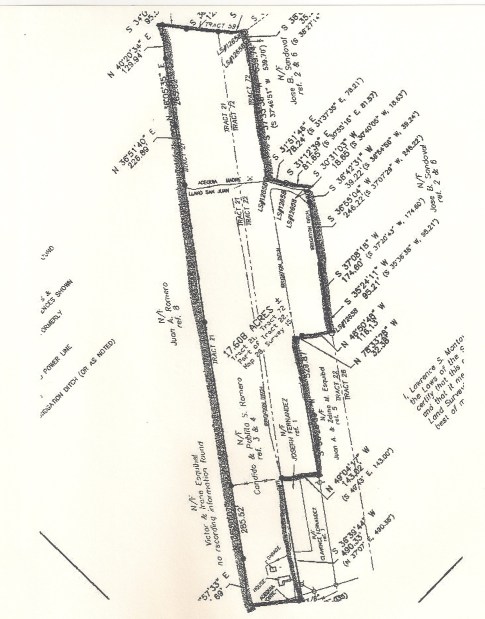
This particular piece of property with the adobe house pictured above is located in the high country between Taos and Santa Fe and can produce 700 bales of hay a year.  The water rights go back to 1789, the year that the United States inaugurated its first president, George Washington.  The surveyor’s plat looks like this:


Stanley Crawford in his work, Mayordomo: Chronicle of an Acequia in Northern New Mexico (1988), writes of the acequia culture that I admire:

There are few other civic institutions left in this country in which members have as much control over an important aspect of their lives; relatively autonomous, in theory democratic, the thousand acequias form a cultural web of almost microscopic strands and filaments that have held a culture and landscape in place for hundreds of years….

Ditch-cleanings are all very much the same, and in this they often feel more like ritual than work.  The crew varies from year to year: a couple of old men don’t turn up each year, a couple of boys barely able to handle a shovel, fifteen- and sixteen-year-olds, take their places; the weather is better or worse than some vague notion of what is usual, mayordomos come and go and some are responsible and fair, others vindictive, punitive, almost military, others are lazy and heedless of the needs of the ditch; and the crew can be a good-natured, hard-working creature, or sullen and complaining and evasive, qualities perhaps dictated by the amount of pride or fear circulating through the hearts of both those in charge and those doing the actual digging….

Buddy Manzanares who, on one of my last perfunctory inspection tours half an hour from the end of the spring digging, calls on me to admire a meticulously dug out and cleaned up tarea [a grave-size chunk of the ditch], with the banks cleaned of grass and squared neatly where they end in the bottom of the smoothly shoveled-out channel….This man knows how to make this small thing, this chore, into more than we commonly imagine, and what can be more important to know in this life, than just that.

Mayordomo, pp. 176, 224, 228-29.

The deep thing about acequia that pulls on me is the ready-made community that circulates around water rights that nourish subsistence crops and the growth of hay.  The isolation of many Texas ranches and the people that tend them and steward their animals is not good; in fact, it diminishes the rancher to a coarse individuality that thins the possibilities of  human endeavors, insinuates a obsessive pecuniary attitude about the land and narrows civic — read unselfish — behavior to the mere casting of a vote once or twice a year.

There are western ranching communities that transcend these deficiencies, I grant you, but the tendency has been to sell out or buy more land, thus expelling more people from the agrarian way of life.  I have experienced this and have witnessed the deleterious affect upon my family.

I shall not be accused of romanticizing the acequia culture — oh, go ahead and accuse! — because it is a human community and there will be conflict and law suits, but there is an association, a group of men and women meeting about water and how to nourish their livestock, beans, alfalfa, corn, tomatoes, okra, flowers, lawns, chilis, vineyards, peaches, plums, apricots, coastal bermuda, roses, trees, and every other conceivable plant that flourishes from the soil that is watered.  Having an acequia culture forces the lesson about sharing in real, material ways that no desk-bound, box-bound person will ever learn.  The basic premise is:  water is limited, we all need it, how will we share it?  And, how are we going to keep it coming down the ditch?  The answer: let’s talk about it, let’s vote on it, let’s implement our decision.

Like so many other things in life, the ditch is more than a ditch.  The acequia and the water is not mine, not yours, but ours.

Acequia near Vadito, New Mexico, (Vadito II, oil by Eric Andrews, Taos, personal collection of J. Matthews).

______________________________

Notes, corrections and additions:

The language keyboard for Spanish and diacritical markings frustrates me.  Hence, the Spanish diacritical markings for “Penasco” are missing, although about every 20 times, I can get the tilde above the “n” in Penasco.  If anyone has any suggestions within the WordPress format to easily apply diacritical markings to writing, please comment or drop me an email at matthewsranch@msn.com.  I am intent upon using proper markings, but I am not going to spend ten minutes every time I need a tilde to paste it on.  Can Windows Vista do anything right?  Of course they can, but you have to update your browser every five minutes.  And, then restart.

13 Comments

Filed under Life in Balance, Santa Fe, Taos

Pasqual’s calendar

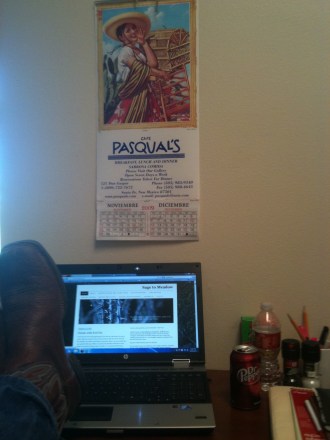
At my office at Cisco College in Abilene, Texas, I lean back and put my feet and Ariat boots up on the desk.

My view is nearly always the same when I catch my breath and lean back in the chair.  I have a calendar from Cafe Pasqual’s in Santa Fe — dated back to 2009 — that is of a pajarera (birdhouse).  I like those calendars from Pasqual’s.  I have a calendar underneath this calendar that is from 2008, entitled “Mi Moscata,” showing a boy with a pet squirrel.  Yes, I know, that’s three-years ago and I still have it on the wall.  Further, I have Sage to Meadow blog up on the computer, Dr. Pepper on the desk and behind the Dr. Pepper is a small green box of mild Tabasco sauce — bottle in the box, of course.  I have the red Tabasco there, too, but you can’t see it.  I eat lunch in my office, hence, the condiments.

It is not all boots on the desk, however, for I presented Madison’s influence at the Constitutional Convention to a U.S. History class, and in World Civilization I took the class through the Greek philosophers with a particular aside to the cynic, Diogenes of Sinope: “Alexander, stand out of the way, you are blocking the sun!”  Diogenes could get away with that.

Back when I was growing up, my parents would get a feed store calendar that would have the times of the sun rising and setting and the phases of the moon on each day.  They would use a clothes pin to attach receipts to the calendar until the end of the month when the receipts would be taken down and filed away.  I think some of those calendars had pockets in which you could store receipts.  Maybe not.

At Cafe Pasqual’s in Santa Fe I really like the smoked trout breakfast dish.  What is it called?

SMOKED TROUT HASH
A Golden Gruyère Potato Cake with Two Poached Eggs, a Scatter of Smoked Trout and Tomatillo Salsa 16

Ah, that’s it.

12 Comments

Filed under Life in Balance