Category Archives: Taos

Noise and relativity

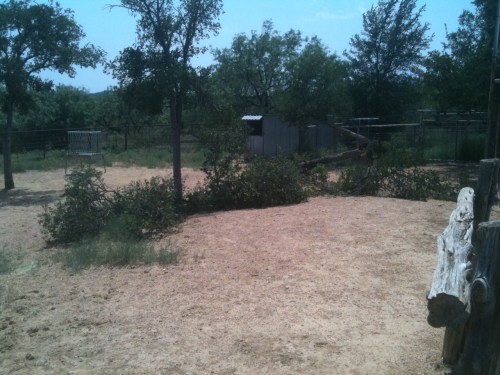
Felled tree in Corral No. 1 (May 2011).

In north Erath County, Texas, the south wind blew fiercely yesterday, its force bending high-grass seed tops to the ground in the arena pasture.  The sound of wind roughly soughing through live oak trees never let up during the day.  The temperature eased back to 93 degrees and I worked in the afternoon cutting down a split tree that threatened to topple onto a stable.  I chopped a large notch into the tree, lassoed the upper body of the tree with a lariat, tied a knot on the trailer hitch of the Case DX-55, pulled and brought the split tree down.  My step-father used the same axe as I did, chopping cedar and brush in Mills County, eighty-miles away and fifty-years ago.

A barn cat that I have not befriended — yet — watched from the stable while I worked out the physics of felling the tree.  Star fled from his feeding bin only when the tree fell, returning quickly to finish his block of coastal bermuda once the noise subsided.  Sweat stung my eyes and I opened up my shirt to cool as I sat in the shade of the barn alleyway, the high wind funneling through the alleyway more rapidly than in the corral.  The barn cat had eased his way into the hay and tools area, away from the wind.

I will clean up the tree debris in the corral today.

* * *

Deer and possibly quail returned to the far field, the Pecan Tree Pasture.  One reason is that mechanized noise has lessened in their habitat.  It is quieter.

My neighbors to the southeast, the Halls, are selling their home, stables and workshop.  Since they are dividing their time between here and Squaw Mountain near Throckmorton, much farther north of here, their off-road motor vehicles are silenced and they mow less frequently.  They do not fire pistols in training their horses to become accustomed to the noise.  To the west of me, on the Dooley place, the nephew has not target practiced in the adjacent pasture for several months.  And, finally, on my southern boundary the Old Bryant place, the deer stands and blinds have mostly been removed, only one remains.  I see deer browsing between my southern pastures and the pond, and on to a second healthy pond on the Blue place, to my east.  Blue takes care of his ailing mother and my rural route mail carrier sits with Blue’s mother so that he might go on errands or to church.  His place, his mother’s place, is quiet next to mine.

I labor under no illusion.  The noise might start again and the deer will flee.  I have no control over my neighbor’s behavior until my nose is bloodied or bone breaks.  I shall tend to my pastures and fields and allow all that is natural grow and browse.  The deer have not re-surged to levels six-years ago, but the deer are back.  The fawn prances again in the Grove.  The noise of mechanized activity, of gun powder and metal clanging has abated.  For now.

* * *

Several years ago, I almost purchased a place in northern New Mexico, up above Llano that bordered the Kit Carson National Forest.  The fifteen acres or so nestled up against an acequia that brought water to narrow fields below.  I envisioned building a small home, barn and corrals for horses.  A trail ascended into the national forest and I could ride Star for hours, even days into groves of aspen and high country meadows.  I did not buy the land.  I have no regrets for there are places like that near Taos and Rodarte still for sale.  If the need be, I will find them and resettle away from the clang of metal.

* * *

So much is relative; maybe all things are.  I am content that deer return, but in Australia the deer in places have populated so densely that the land is overgrazed and crops cannot be planted.  Yesterday, despite my focus on machine noise, I used a Case DX-55 tractor to pull down the split tree and a Stihl chainsaw to cut the trunk and limbs.  If I had continued to use my step-father’s axe, I would have had to soak the handle for the blade was loose.

Then, if I had moved to the high country of northern New Mexico, I would have the beauty of the land and resonance of diverse cultures, but jobs are few and the winters are bitter cold.  Yet, I could counter the cold with propane and wood, axe and chainsaw, sharpening files and good caulking about the quarters.

Ill fares the land?  No, not yet.

4 Comments

Filed under Life in Balance, Taos

Frank Waters and The Man Who Killed The Deer

Frank Waters (1901-1995), photo via In The Grand Canyon – John Jauregui.

I have read most of Frank Waters’ work and I find him spot on for southwestern life and lore. In college history classes, I have used his novel of Pueblo Indian life as a literary example for the internal conflict people have when born and reared in the center of conflicting cultures. This excerpt I have is not about cultural conflict or diffusion, but about the web of all living things as Silence spoke about the Pueblo Indian, Martiniano, killing a deer out of season and failure to give proper respect.  The Pueblo council of elders contemplates:

Nothing is simple and alone.  We are not separate and alone.  The breathing mountains, the living stones, each blade of grass, the clouds, the rain, each star, the beasts, the birds and the invisible spirits of the air — we are all one, indivisible.  Nothing that any of us does but affects us all.

So I would have you look upon this thing not as a separate simple thing, but as a stone which is a star in the firmament of earth, as a ripple in a pool, as a kernel of corn.  I would have you consider how it fits into the pattern of the whole.  How far its influence may spread.  What it may grow into . . .

So there is something else to consider.  The deer.  It is dead.  In the old days we all remember, we did not go out on a hunt lightly.  We said to the deer we were going to kill, “We know your life is as precious as ours.  We know that we are both children of the same Great True Ones.  We know that we are all one life on the same Mother Earth, beneath the same plains of the sky.  But we also know that one life must sometimes give way to another so that the one great life of all may continue unbroken.  So we ask your permission, we obtain your consent to this killing.”

Ceremonially we said this, and we sprinkled meal and corn pollen to our Father Sun.  And when we killed the deer we laid his head toward the East, and sprinkled him with meal and pollen.  And we dropped drops of his blood and bits of his flesh on the ground for Our Mother Earth.  It was proper so.  For then when we too built its flesh into our flesh, when we walked in the moccasins of its skin, when we danced in its robe and antlers, we knew that the life of the deer was continued in our life, as it in turn was continued in the one life all around us, below us and above us.

We knew the deer knew this and was satisfied.

But this deer’s permission was not obtained.  What have we done to this deer, our brother?  What have we done to ourselves?  For we are all bound together, and our touch upon one travels through all to return to us again.  Let us not forget the deer.

(Frank Waters, The Man Who Killed the Deer, pp. 24-25.)

William Lattrell of Wild Ramblings Blog has written of the respect that is needed for the kill.  When I sent twenty-seven Angus calves to market, I sent them with words to the effect that they hopefully would become the essential nutrition for scientist that would discover a cure for cancer or a person that would perform a great act and get the Nobel Peace prize.  Chris Clarke of Coyote Crossing Blog has written post after post and started pressure groups to slow down the terrible effects upon the tortoise and wildlife in the Mojave Desert with the construction of the huge solar complex.  Hundreds of others in the blogosphere write similar pieces and attest to the preciousness of all living things.

It sounds primitive and mystical, “But this deer’s permission was not obtained.”  But it’s not.  The kicker in this whole excerpt of Waters is, “What have we done to ourselves?”

Things need not fall apart, but we have to keep the connections vibrant or they will indeed fall apart.  For those of us that buy at the supermarket, the first step toward keeping connections vibrant is to realize that we do not obtain our food from the supermarket.  The earth provides food, not H.E.B or Central Market.  Thinking that in all its ramifications will have us doing good things to ourselves and others.

______________________________

Notes:

The Frank Waters Foundation of Taos, New Mexico, provides grants for writers of Southwestern genre.  Frank Waters was nominated for a Nobel Prize during his lifetime.


22 Comments

Filed under Taos

Our Taos Blue Door

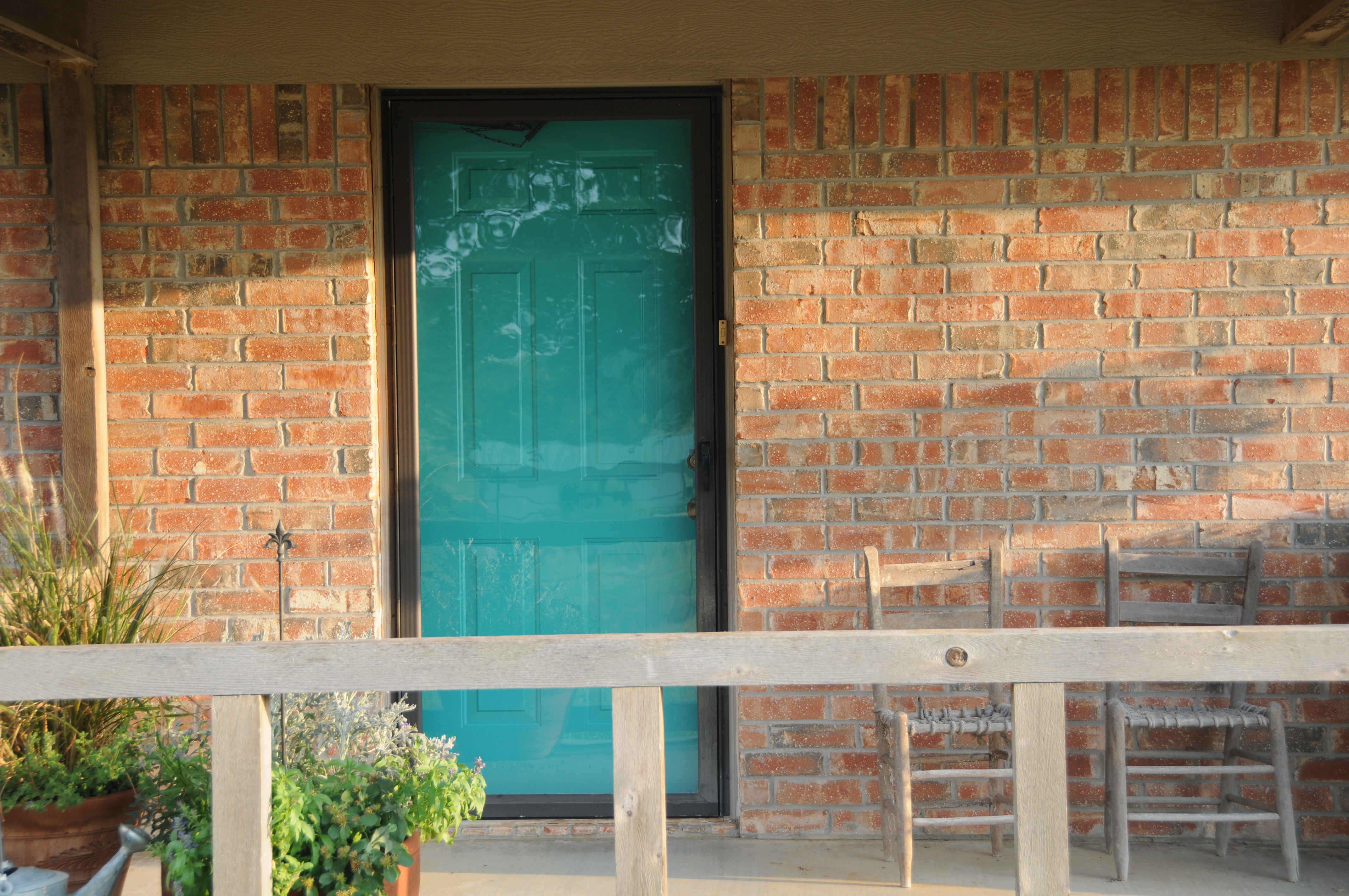
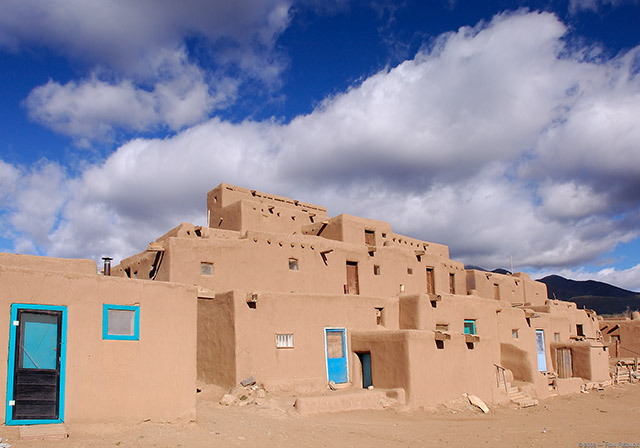
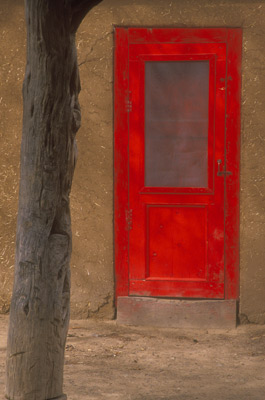
On my first visit to Taos Pueblo in 1967, blue doors and window frames reflected color brilliantly against adobe walls.  Still do.  Never outlandish in my opinion, the blue gave an even more mysterious quality to the north and south pueblo complexes.  I read that the Taos blue or Taos green, as it might also be designated, prevented evil and witchcraft from entering the dwelling.  The color surrounded the window or door frame with a protective halo.  It was also a beautiful color by itself, the security notwithstanding.

Blue Front Door, Flying Hat Ranch

When we decided to paint our gray doors, we looked up photographs in our books of the Taos blue and green, settling on the color you see in these photographs.  Brenda painted all three of our doors.  We got the paint from Sherwin Williams in Weatherford, Texas.  She took in a swatch that she had compared with photos in Christine Mather and Sharon Woods, Santa Fe Style, p. 25, lower right-hand photograph.  Sherwin Williams designated the color, Turquish, No. 6939.  She bought a gallon, using a third of the gallon to paint the doors twice.  I am trying to get her to paint the tack room door of the barn.  Course, there are no evil spirits down there.  Not with the horses chasing away bad dreams.

Close up of Taos Blue front door of Flying Hat Ranch house

______________________________

Notes:

Christine Mather and Sharon Woods, Santa Fe Style, New York: Rizzoli, 1986.

21 Comments

Filed under Flying Hat Ranch, Santa Fe, Taos, Taos Blue Doors

Taos Pueblo Watercolor

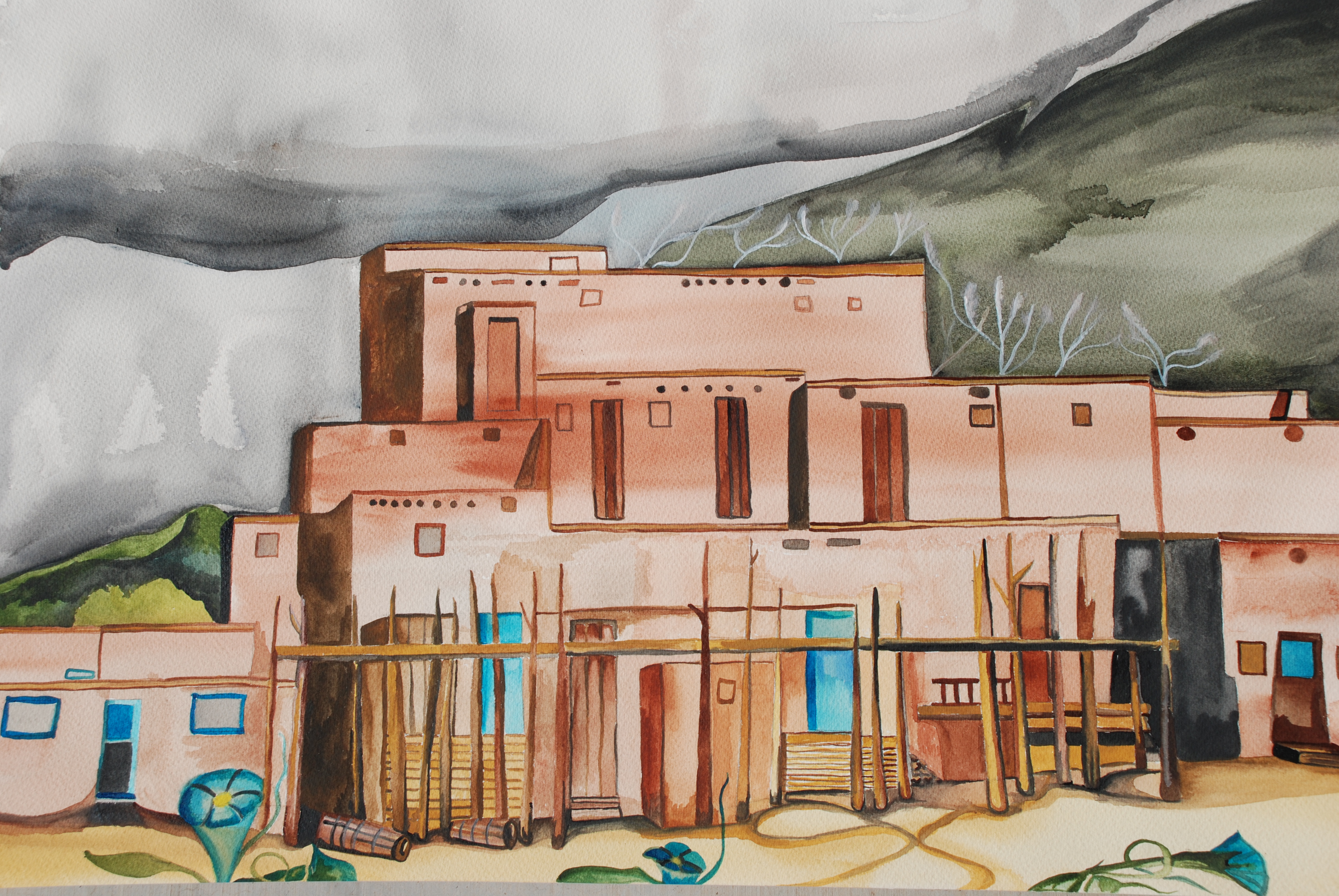
Taos Pueblo In Storm (2009)

WordPress has a function of searching related posts to a blogger’s posting.

This artist, only identified as Hilldowdy1, has produced a magnificent watercolor.  Who is Hilldowdy1?  The artist has several other watercolors online, but there is no information about him or her.

After skimming through Hilldowdy1’s blog, I find out that the artist has traveled in Europe and been at the Chicago Institute of Art.

Please link to Hilldowdy1’s blog by referring to her comment below.  A very fine blog with paintings.

7 Comments

Filed under Taos

Taos Council and Thoreau

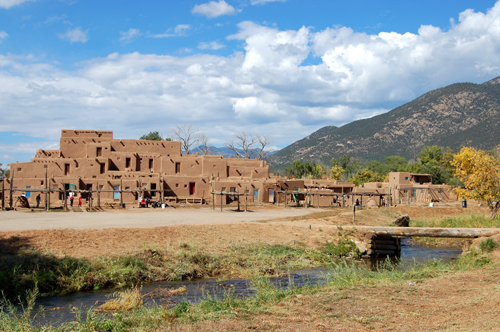
Taos Pueblo, Kathy Weiser, Legends of America (2008)

I’ve not the citations in front of me, but I remember the stories.  One is about the time that the elders of the Taos Pueblo talked over the possibility of bringing electricity into the heart of the pueblo, there on the plaza with the flowing stream between the two big houses.

The Taos council decided not to allow electricity to be brought into the heart of the pueblo.  Outside of the plaza, electricity could be brought into homes.

The reasoning of the elders was that electricity brings with it appliances: refrigerators, toasters, radios and other machines.  And, with those machines and gadgets, people would have to go to work, earn a living to buy those things to plug into electrical current.  Introducing new technology would upset the balance within the community, taking people away from daily activities within the pueblo.  Ceremonies would be forsaken–or, less important– because of the pressure to work to pay for machines to plug into electricity.  Much would be lost and little gained.  A simpler life would be complicated.  A way would be lost, all by the introduction of electricity.

And, so, electricity never came to the plaza.  The plaza still remains the old way.

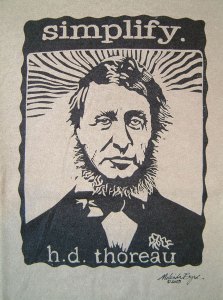
Henry David Thoreau, Green Mentality Files (WordPress)

The other narrative is somewhere in the Henry David Thoreau journals or maybe it was Walden.  Thoreau proposed a distance race and a puzzle to his readers.  Thoreau wrote that he could walk across Massachusetts faster than someone could take a train across the state.  He could start walking immediately, live off the land, do an odd chore and meet people as he walked across the state.  If one took the train, one had to buy a ticket.  To buy a ticket, one had to have money and to get money, one had to work.  So, before one could even board the train a whole sequence of things had to happen.  And, then, you had to travel on the train’s schedule.  To walk was faster, to travel the train was slower.  Race over, walking won, Thoreau wrote.

These two stories illustrate the dependency and attachments that occur when technology enters our lives.

10 Comments

Filed under Taos

Taos Sunflower: When The Simple Life Isn’t

A really great post on being on and off and on the electrical grid in Taos, New Mexico.  Personal comments on solar panels, batteries, washing, refrigeration and a husband who happens to be an electrical engineer.

Martie (Taos Sunflower) evokes the contradictions we all live with in trying to be frugal, green and sustainable.

Taos Sunflower: When the simple life isn’t.

4 Comments

Filed under Taos

Protected: Leroy and Alibates (The Notes)

This content is password-protected. To view it, please enter the password below.

Enter your password to view comments.

Filed under Colony Road, Recollections 1966-1990, Taos

Leroy and Alibates

Taos, 1970s…

Leroy, a northern Tiwa, came over and sat beside me on a bench on the Taos city plaza before they removed the jail that plunged beneath the ground on the northwest side.  It seemed a dungeon, of sorts, the jail.  Could be a Taos County law enforcement kiva?  Hey! he said.  Hey, back.  I read a newspaper.  We talked that day.  We talked the second day.  Jack, can you loan me ten?  Yes, I said.  It may have been the first day he wanted the ten.

Leroy and I talked the third day, on the plaza before they covered the jail underneath.  He said he used to make jewelry, but it bored him and he quit and drank too much.  So, he said, I came back here, to the pueblo.  More conversation.  I was from Amarillo, loved to come up to the mountains, the high-desert country, I confessed.

I liked Leroy.  So, I gave him a gift.

Out of my backpack on the third day, I brought out a paleolithic axe I had discovered in an exposed sandbank in the middle of  the Canadian River near the Alibates flint quarry in Texas.  I had waded across the Canadian River when it was low in the winter to find the 1849 rock cairns of Major Randolph B. Marcy when his survey team mapped a southern transcontinental railroad route.  I found Marcy’s cairn.  My legs cramped from the freezing, cold water when I waded across the Canadian River and when I came back.  The muscle cramps were worth it: I found a rare tool, a paleolithic axe, perfectly formed, grayish-blue.  And, I’ve never found such a prize since.

I handed the axe to Leroy.  He took it in his hands and then quickly raised it to his cheek and rubbed the Alibates flint axe against his face.

Why the rub against his cheek?  He smiled.  Ahh! he said.

It’s yours, I said.

All I can remember now is that he said, Ohh.

Then, Leroy:  Let me take you to the pueblo and up the mountain, Jack.

We went together up the Taos Mountain that day with his cousins in a blue Volkswagen with sunroof.  Towards Blue Lake, towards the sky, towards birch trees all around.

4 Comments

Filed under Adventure, Colony Road, Recollections 1966-1990, Taos

Diana of Taos

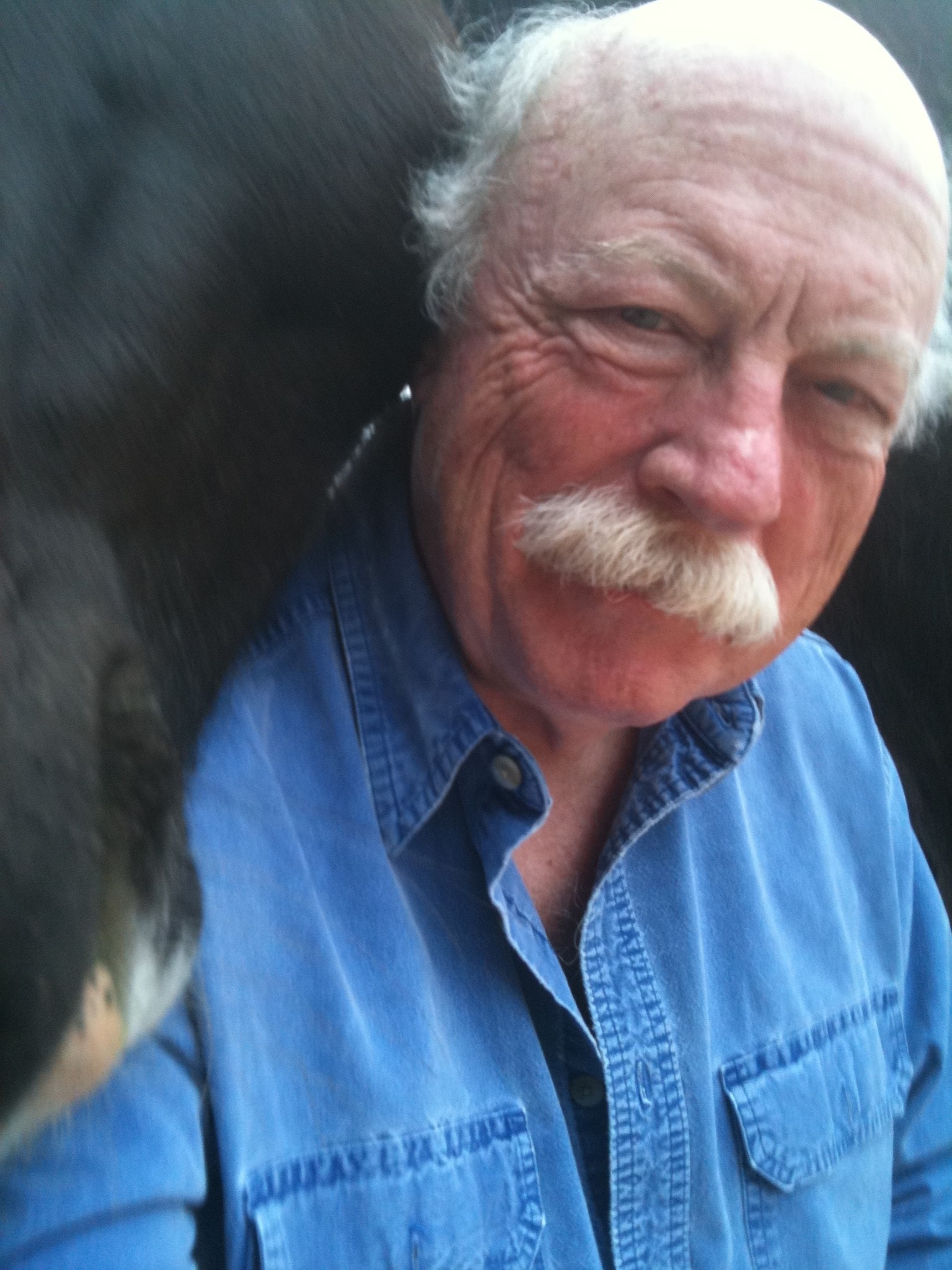
Diana of Letherwerks, Jack

I had rather be poked in the eye with a sharp stick than spend money.  Last Christmas I looked for a leather belt in Santa Fe and refused to spend the money.  My wife, Brenda, insisted that I buy a new belt this year because my old belt was “plain awful,” in her own words.  So, since I had purchased knives from Letherwerks of Taos two years ago and knew they purveyed belts, and we were dining at Doc Martin’s anyway, why not mosey down to Letherwerks?

I bought a bison belt with silver-plated nickel for a few pesos that I was quite happy about, and so was my wife.  On the quest for a belt, I was feted and prevailed upon to purchase the item by Diana of Taos, who could absolutely sell mesquite trees to Texans.  What a personality!  And, when I shook hands to make the sale, she went behind the counter to the crafting table and put a new buckle on the belt, tacking and pressuring the ornamentation into place.  No shrinking violet there.

I insisted that my picture be taken with Diana because she is a wonderful, outgoing, person that personifies the sun at midday.  She and Brenda wanted me to purchase a silver buckle, but I refused.  Diana said, “Well, everybody needs a silver buckle before they die, Jack!”  True enough, but I have a few more years to go, and I’ll come back to Taos.  Not to buy a silver buckle, but to see Diana ply her wares at Letherwerks.  Maybe look at a knife, another belt, or maybe that buckle, after all, Diana.

Notes

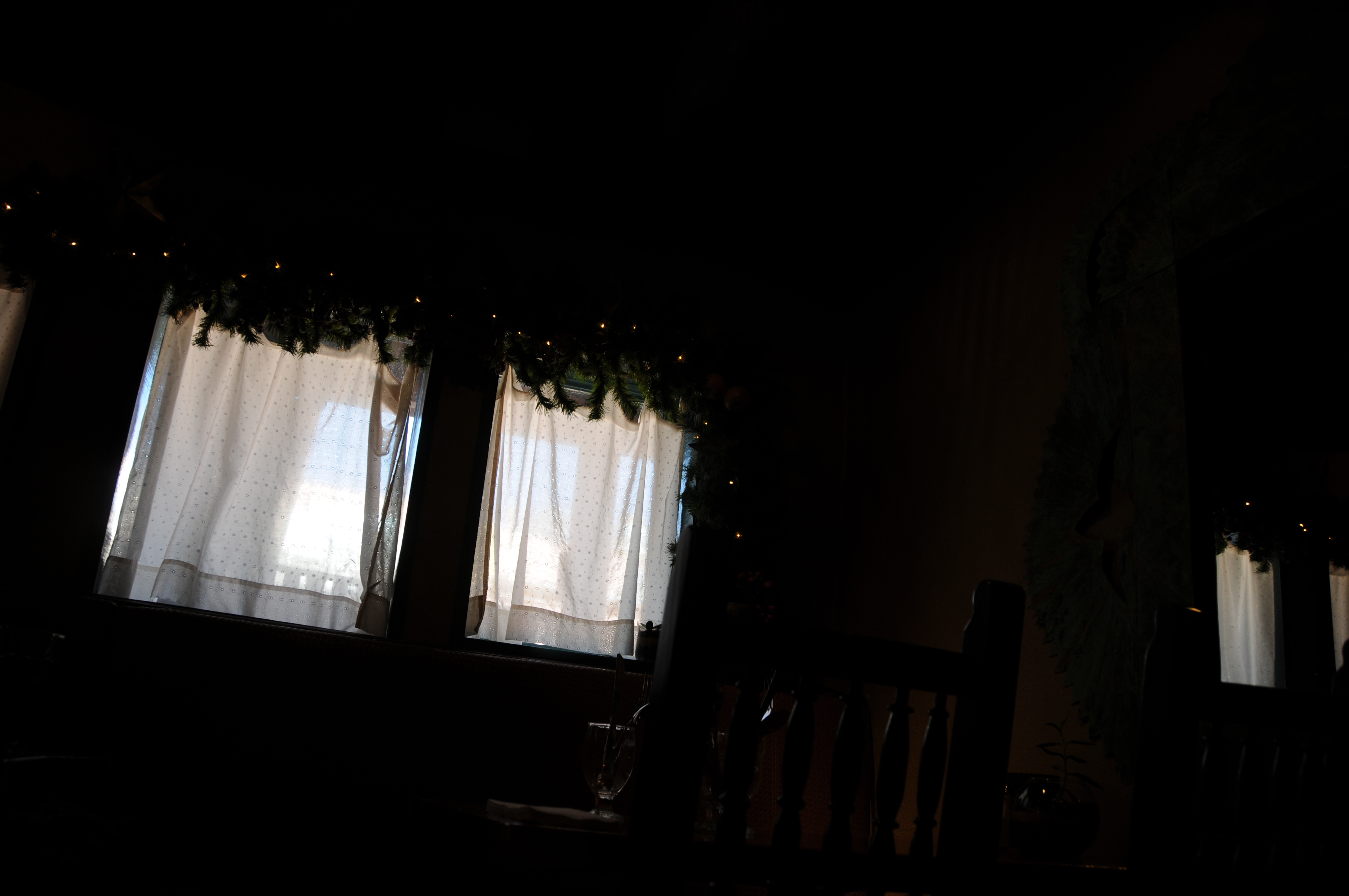
I have to show you a photograph I took inside of Doc Martin’s to finish off this post.  It was in their dining area just to the immediate right as you go in the restaurant and the photograph was shot intentionally at that angle.

Doc Martin's Restaurant, Taos, December 2009

6 Comments

Filed under Taos

Zacatecas Tutorial

I gave a tutorial yesterday to Alumna Zacatecas.  (I have changed the name to protect her privacy.)  Zacatecas is an older student from Mexico, enrolled in my world civilization course, prehistory to Treaty of Westphalia.  Tutorials are incongruous with state junior colleges.  Instructors have large classes, students coming by the office rarely occurs because of jobs and family.  Zacatecas was different.  She wanted to know things and, of course, there was the final examination on Thursday.  She was blocked in deciphering Omar Khayyám The Rubáiyát [Edward Fitzgerald’s translation, 1859].  She had questions.

“I don’t get it,” she said.  “Just what does Khayyám tell us in these verses about the meaning of life?” Zacatecas added.

Older student in her thirties, asking this?  She was serious about understanding The Rubáiyát . She looked perplexed, not dramatic in face, small wrinkles between her eyes in puzzlement.  Zacatecas had a tattoo about two inches below the hollow of her throat, often hiding it with high collar blouses because it had been inked when she was a teenager.  Physically, somatically, she was interested, but wanted to know quickly and then leave the office.  Other appointments, a teenager to manage?  Many plates in the air.

“Tell me what you think Khayyám thinks is the meaning of life,” I asked.

It began, the tutorial.

“Fill the Cup…Wine of Life keeps oozing…A Jug of Wine…Cup of forbidden Wine…Drink!”  She said, forcing an answer, phrases cobbled together.

“The meaning of life, is to drink?” She went on.  Zacatecas was not being contemptuous, I could tell.  Still perplexed.

No, not the meaning of life, to drink.

In class, I will ask the students to read a passage aloud they do not understand.  Maybe it would work in the tutorial.

“Read the first quatrain, and, read slowly,” I said.

“The Bird of Time has but a little way/To flutter–and the Bird is on the Wing.”  And, so on.

We paused.  Zacatecas pondered, “The Bird of Time….”  Still no change of expression in her face.

“Go on.  The second quatrain.”

“The Wine of Life keeps oozing drop by drop/The Leaves of Life keep falling one by one….”  And, so on.

“Continue, Zacatecas, the third quatrain.”  I thought this quatrain would punch through her confusion since it is the most quoted.

She read the third quatrain, “A Book of Verses underneath the Bough/A Jug of Wine, a Loaf of Bread–and Thou/Beside me singing in the Wilderness–/Oh, Wilderness were Paradise enow!”  And, there she stopped.

“Is ‘Thou’ you or is it me?”  She asked.  This was not exactly the question or declaration I wanted to hear, but at least it was movement.

I’m not a Rubáiyát scholar, but I answered, “Both, depending on how you read it, what context.  ‘Thou’ can mean any person, you, me.”

She said nothing.  Still cramped, stymied.  So, let us skip and go on to the sixth quatrain.  She read.

The Worldly Hope men set their Hearts upon

Turns Ashes–or it prospers; and anon,

Like Snow upon the Desert’s dusty Face,

Lighting a little hour or two–is gone….

Zacatecas became still in her chair, smiling faintly, looking at the sixth quatrain in her book.  The smile held, her body visibly relaxed, her breathing slowed.  She held the book more gently, less nervous, caring.  The tension left her face.

Zacatecas  looked up at me.  “It’s about living fully because life ends like snow on the desert.”

The sixth quatrain captured her, but did not ensnare.  Zacatecas integrated the refrain, something echoing from the high desert of her homeland, Mexico, an analogy with that day in her life when she parted from others of her village, seeing things they did not.

Tutorial over.  I concluded Zacatecas was beginning to know The Rubáiyát, felt the quatrains, had a new sense, a higher circle of confusion.  She left the office after a few more questions.  Gregorian chant?  Merovingian dynasty?  Slipping her books into her backpack, she pulled her dark pea coat tightly against the Texas cold, her blouse tucked high over the tattoo and walked out of the tutorial.

She will pass that question on Thursday.

______________________________

Notes:

I use Elsa A. Nystrom’s anthology of primary sources, Primary Source Reader for World History, Volume I: To 1500.

Undergraduates, generally, say little to absolutely nothing to their instructors.  At least, that has been my experience.  Therefore, I have focused on para-linguistic qualifiers, above and beyond what tedious pedagogues call body language, although that, too.  The pitch of the voice, facial expressions, postures, breathing, and the eyes.  These behaviors are often the only way they will communicate.  I have young men and women from different cultures and know that different cultures embed different qualifiers for communication.  Hence, my observations about Zacatecas take a rather focused picture in my essay.  During a regular class, I will observe a few students and how they are reacting.  Mainly, however, I am focused on the material.  A one-on-one lesson differs substantially.

Using diacritical markings occurs by composing the foreign word in Microsoft Word, then copying words created in Word, and then pasting onto WordPress.  Cumbersome, but gives literacy to the composition.

I have always thought of D. H. Lawrence coming out of the last canyon on the road from Santa Fe, seeing Taos Mountain for the first time, the desert.  He had written about New Mexico,

But the moment I saw the brilliant, proud morning shine high up over the deserts of Santa Fe, something stood still in my soul, and I started to attend.

The snows at Lawrence’s ranch linger longer than on the desert, but still melt in the spring.

5 Comments

Filed under Taos