Category Archives: Recollections 1942-1966

A series of posts about origins, initial memories, often stated in a three-part style of universal, family and personal.

Beginning: The Bridge Spoke

Bend, Texas, in the early fifties….

Two miles away from Sand Cemetery, the Colorado River was host mainly to catfish, some fifty pounds in weight, yellow and blue.  A few ducks from time to time browsed along the banks where the current slowed.  I saw catfish, gar, perch, turtle, ducks and heron.  Blue heron rose off the river, awkwardly flapping to gain lift.  You cross your fingers every time they start up as heron may never make the air.  But they do.  They gain ten or fifteen feet, level off and then in slow wing beats glide above the river following its contours like a liquid highway.  They would turn at the bend of the river, nearly out of sight as I stood on the suspension bridge connecting San Saba and Lampasas counties above the Colorado River, watching the blue heron turn a gray color in the distance.

The suspension bridge sagged three feet as cattle trucks crossed, the weight of the trucks pushing a ripple of bridge planks in front of them, like an ocean wave.  I ran to the end of the bridge and slid down the embankment to see trucks pass, the wave rising and falling.  The bridge held strong for passengers, livestock and man, until it was torn down and replaced by a wider, concrete bridge that held no awe, little respect, and absolutely no history.  The old suspension bridge groaned and creaked when cattle trucks shifted gears to speed over the planks.  When trucks first crossed onto the suspension there was thunderclap.  The new bridge did not speak; it said nothing when built; it says nothing now.

14 Comments

Filed under Bend Texas, Colony Road, Recollections 1942-1966

Protected: Beginning: Upkeep Donation

This content is password-protected. To view it, please enter the password below.

Enter your password to view comments.

Filed under Bend Texas, Colony Road, Recollections 1942-1966

Beginning: Bend Ford

Jack F. Matthews, Sr., Winter 1941-42, Texas

As posted in “Beginning: Red Ants,” there is first a setting out, a beginning of all things.  Nations and tribes record their origins and seed their narratives with great events and heroes.  Beginnings do not stop with national revolution or constitutions, but are present in the family, the circle of kin.  Not stopping there, the setting out goes even farther down into each sentient, solitary being.  Corporeal narratives, we each are.

The beginning is that earliest moment of consciousness, not self-consciousness because that comes later under the mesquite tree in Texas when the wind blows (at least for me, it was).  It may be a song, a face, an automobile, truly anything under the sky that sticks first in the mind, imprinting a memory.  At that moment the setting out begins and does not end till death.  It may never be written, never told; but it is embedded in the flesh.

Mother’s setting out, she tells me, was when she and her father, Jake, were crossing the Bend Ford on the Colorado River near her Uncle Nathan’s home on horseback, riding double, when the horse slipped and fell on her.  The river bottom, only one or two feet below the surface at the ford, is solid granite like the face of Round Rock near Fredericksburg, Texas, and mother, Jake, and horse entangled, thrashing in water.  Her leg broke and they sent for Dr. Doss who set the leg as her father fashioned a small crutch for his two-year old to walk.  The river became a constant theme in her life: the flood, the boundary, the swimming.  Gywn crossed the river at Bend Ford many times after the fall, but the accident was her setting out, with horse and water above her and a father to save her.

My cousin and I were sitting on the ground outside the one-room trailer house on Austin Avenue in Brownwood, Texas, looking down at a clock.  The year was either 1943 or 1944.  The bedside clock was a throwaway timepiece, the face removed, the case gone, but the wheels and spring intact.  In our play, the clock had been wound tight, the wing nuts stuck in the ground.  The alarm went off and the clock spun around and around.  My cousin and I gazed as only children can, intently focused on the exposed wheels and clock turning in the dirt.  Wheels clicked within wheels turning.  I looked away from the spinning clock and saw green bamboo stalks beside the trailer.  I looked down, my cousin stared at the spinning clock until it stopped, turned again, then finally stopped.  She looked at me.  We giggled.  My beginning was an old clock stuck in dirt, spinning round.

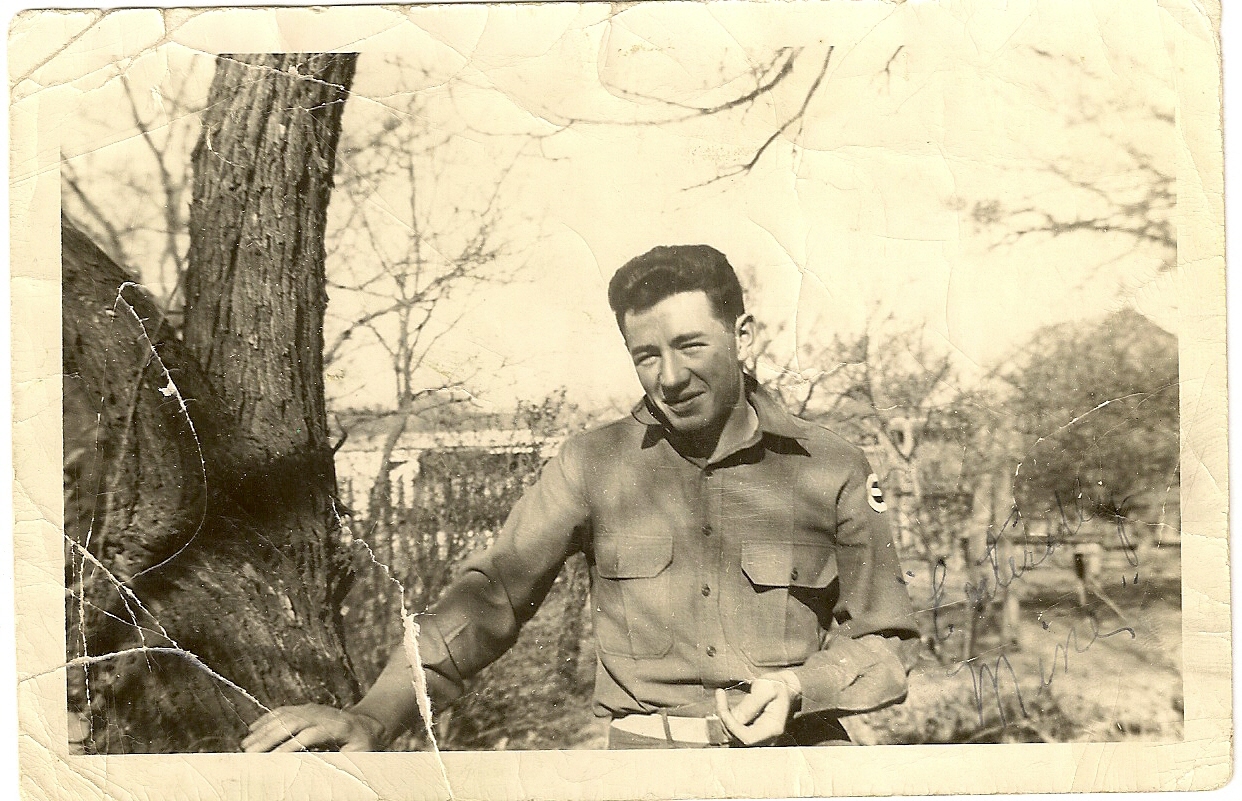
Two-and-a-half miles away from the spinning clock and trailer house, Camp Bowie trained soldiers for the war.  My father, Jack Matthews, had left the camp, left us, and was jumping out of planes for extra money, urging Gywn to keep flying the Irish green.  He was parachuting with Easy Company, 506th Parachute Infantry Regiment, destined for Europe and every major combat operation from Normandy to Berchestgarten.  The Band of Brothers, Easy Company.  Since Gywn and Jack had divorced shortly after the war, I knew few details about him.  I found a cache of letters in her things following her death and I did not open them until the summer of 2009.  When I found out he was a foot soldier in Easy Company, I ordered books overnight from Amazon.com and read his story, his name in print.

In Gywn’s cache of correspondence, I read the letters and documents dated until 1946.  There was a story beyond the narrative my mother had told me and its plot lines were different from what I had been told as a boy.  I stopped reading and put the letters back in the Bigso Boxes of Sweden I bought from Container Store to preserve them.  I have put them aside for now because there’s a story to be told.  An old, old story, along the banks of the Colorado River in Texas, before the spinning clock, before my beginning, but in the flesh of my family.

12 Comments

Filed under Bend Texas, Colony Road, Recollections 1942-1966

Beginning: Red Ants

There is first a setting out, a beginning of all things.  Among the Huron in America, a woman fell from from the sky, hurling toward water.  Two loons that were flying over the water saw her and placed themselves beneath her to cushion her fall, holding her above the water, and calling for other animals to help hold her up.  The cry of the loon can be heard a long distance.  Animals came, including the turtle, and helped her, building earth from the bottom of the sea.  Here in the Southwest, among the Navaho, human beings emerged from the earth as red ants and red ants are the ancestors of those that walk the earth today on solid ground.

I remember my Uncle Floyd on his ranch in Cherokee, Texas, taking poison to the large red ant hills in the corrals and alleyways of the cattle pens.  Some ants died, but most of them survived the attack and continued to bring small stones to their portal.  The red ants never stung him, nor me.  Uncle Floyd eventually gave up the task and let them be.  The Navaho and other tribes collect the stones at the ant pile and place them in gourds to make rattles.  Uncle Floyd, Aunt Lennie, and I would attend the Methodist Church in Cherokee, Texas, and hear the minister read Genesis on how God created the earth and gave dominion of its creatures to man in the beginning.

I never assisted in putting the poison on the ant hills.  The red ants always looked so harmless and when I held one in my hand, there was no stinging, just a waving of the antenna and a deliberate attempt to find a way off of my boyish hand.  Today here on Flying Hat, I let the red ants live and bring their little stones to their entry holes.  I wonder how they place themselves down in the ground and what chambers they retire to.  Their pathways are so well-traveled on the surface that they may be two inches wide, devoid of vegetation, and a hundred-yards in length.  In Pecan Tree pasture, the ants have a lot of food from the side-oats gramma Cody Scott and I planted five-years ago.  In the area cleared around the ant hills, I can see the tracks of deer.  The word, deer, is traced back to an Indo-European hypothetical word meaning,  to breathe.

On our place here in Texas, the ants emerge from the earth and a deer signifying breath stands above them on solid ground brought up by turtles in ancient times to save the woman that fell from the sky in the beginning.

Notes

For method, N. Scott Momaday, The Way to Rainy Mountain.  For Huron, Elsa A. Nystrom, Primary Source Reader for World History, volume I: to 1500.  For Navaho, divers sources including Washington Matthews, his Smithsonian series on Navaho singing chants.  See also Frank Waters, Masked Gods.

8 Comments

Filed under Colony Road, Recollections 1942-1966

Old Joe Clark

In 1953, my uncle Nathan Valentine Morris played fiddle and called the dances at Bend schoolhouse, Bend, Texas.  We danced the round dance in a large classroom and ate potluck stew in the schoolyard beside the bell that had tolled pupils to their lessons for generations.  The bell could heard across the Colorado River into Lampasas County.  That night, I understood community.

The narrative is coming soon, but until then, listen to Old Joe Clark:

Old Joe Clark, performed by The Resonators.


4 Comments

Filed under Bend Texas, Colony Road, Dancing, Recollections 1942-1966

Duncan Steele-Park Lane

South Poprock Hill Pasture, Flying Hat Ranch, January 7, 2010

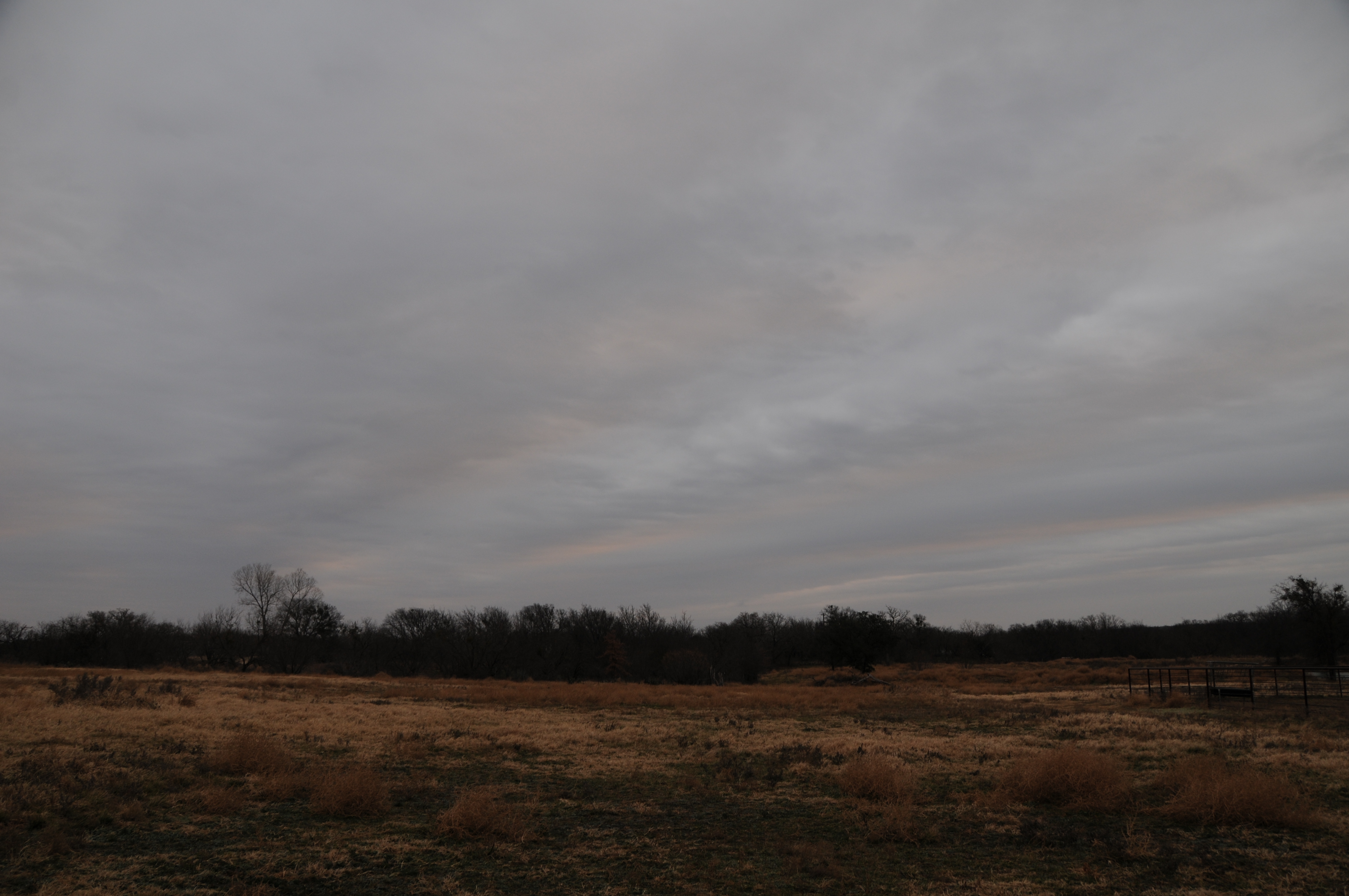
By the calendar it is January 7, 2010, and I am in the pickup, near the barn.  Looking east from the Well House corral in south Poprock Hill pasture, the early morning sky configures a cold day for livestock and young men and women on horseback who manage them.  Currently, we have no cattle herd to tend, but five horses need our daily attention.  I rose early before daylight and planned the first feed of the day for Lilly the oldest mare and alpha, Star the gelding-son of Lilly, Sweet Hija the King Ranch legacy mare, and Shiney the colt of Sweet Hija.

Presently, I do not tend the fifth horse.  The fifth horse is off-site, at Duncan Steele-Park’s place near Weatherford, Texas, going to school in the round pen of equine education.  This horse, Fanny, is with ten others in her cohort, learning and gaining confidence to join-up and toil with cowboys and cowgirls that must use horses that are strong and even-tempered.

Duncan has a philosophy about horse training.  Before we even unloaded Fanny from the stock trailer, he stated his way of working with young horses.  Duncan grew up in Australia and his methods presage directness, no frills, no nonsense.  He spoke clearly, precisely, in clipped tones of the Down Under, and with the authority of a thousand rides upon young horses needing guidance to confirm man as a friend, not predator.

The most important lesson you must teach a young horse, who is having his first few rides, is to go forward which is why I don’t spend much time in a round pen because there is no where for a horse to go in an arena.  I find myself a fence line or a lane and kick the latch of the arena open and let my young horse just run.  You see if you leave a young horse’s feet free you keep his mind free.  And if things are getting a little radical,  just one-rein stop him and then let him go and before you know it he begins to relax.  People and clinicians now days take too  much of the impulsion out of young horses because they spend too much time doing groundwork [in the roundpen].

I think I’ll play with Fanny this afternoon and see what she does [1].

My grandfather, J.W. “Jake” Parks trained or as they used to say, “broke” horses.  My mother told me that her father would use a forceful technique to train horses and that the “screams” of the horses upset her as a child and caused her to resent the method Jake used, even Jake.  My grandfather did not have a coarse or abusive nature; he loved jokes and took my mother and his sisters fishing along the Colorado River.   He was, unfortunately, taught to use the aggressive method by his teachers and peers; that was what he saw in the 1910s and 1920s in central Texas.  I think if my grandfather had seen another method to train without force, he would have used it.  Those methods were not present in his background, although the method of respectful, non-forceful training has been around in recorded history since Xenophon, the Greek cavalry officer, 5th century B.C.E.  General Stephen W. Kearny who marched American troops through New Mexico to California in the Mexican-American War, 1846-1848, reportedly used non-abusive techniques in handling horses.  My grandfather probably never knew Xenophon’s way or Kearney’s.  He was, like us all, a man of his times and it ended badly.

In the 1930s, while working on the Sorrel Ranch in Sonora, Texas, my grandfather was critically injured riding a horse named Hell’s Canyon as they popped brush for cattle.  Riding fast, he struck a low-hanging tree branch and was knocked unconscious.  Unfound for three days, he almost died before ranch hands rescued him.  He never regained his health following the accident.  I do not believe Hell’s Canyon delivered a mystical counterforce to Jake, re-aligning balance to horse screams and my mother’s pain, but rather the accident came as both horse and rider delighted in the chase of cattle for round-up.

The story of my grandfather and Hell’s Canyon was heaped on me when I was a child and I was told I favored my grandfather in body, but I never saw him.   In the family narrative, horses and and my grandfather were always joined, wedded, symbiotic, tragic.  I was never expected to follow my grandfather’s path.  That was just as well because I grew up in a small town, my country experiences were inconstant and we had no land, no cattle, no horses.

Time passed, I inherited horses, my grandfather’s inheritance was passed down to me and I bought more horses, good horses, fine-bloodied, and beautiful.  I bought land and I began to work with horses without force, without pain, and with respect.  And, when it is time, I take them by the halter and give them to a teacher who will help them grow in ways that take them to high places, wind-swept and sunlit that call out their strength and delight to help tend livestock with humans in the West.

Duncan Steele-Park has a fenced lane, about fifty-feet wide, that angles from his round pens into the Texas brush and trees and pasture.  Though I have not seen it, I know where the lane ends.  I can tell you where it begins.  For the horse, the lane begins with respect and it must end in a land of fun with Duncan Steele-Park.  Jake would be pleased; he would be changed.
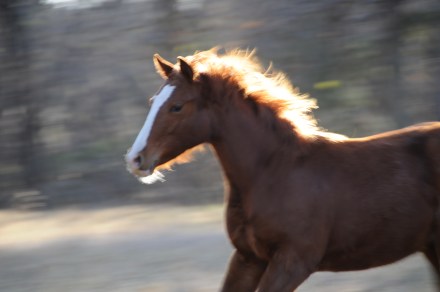
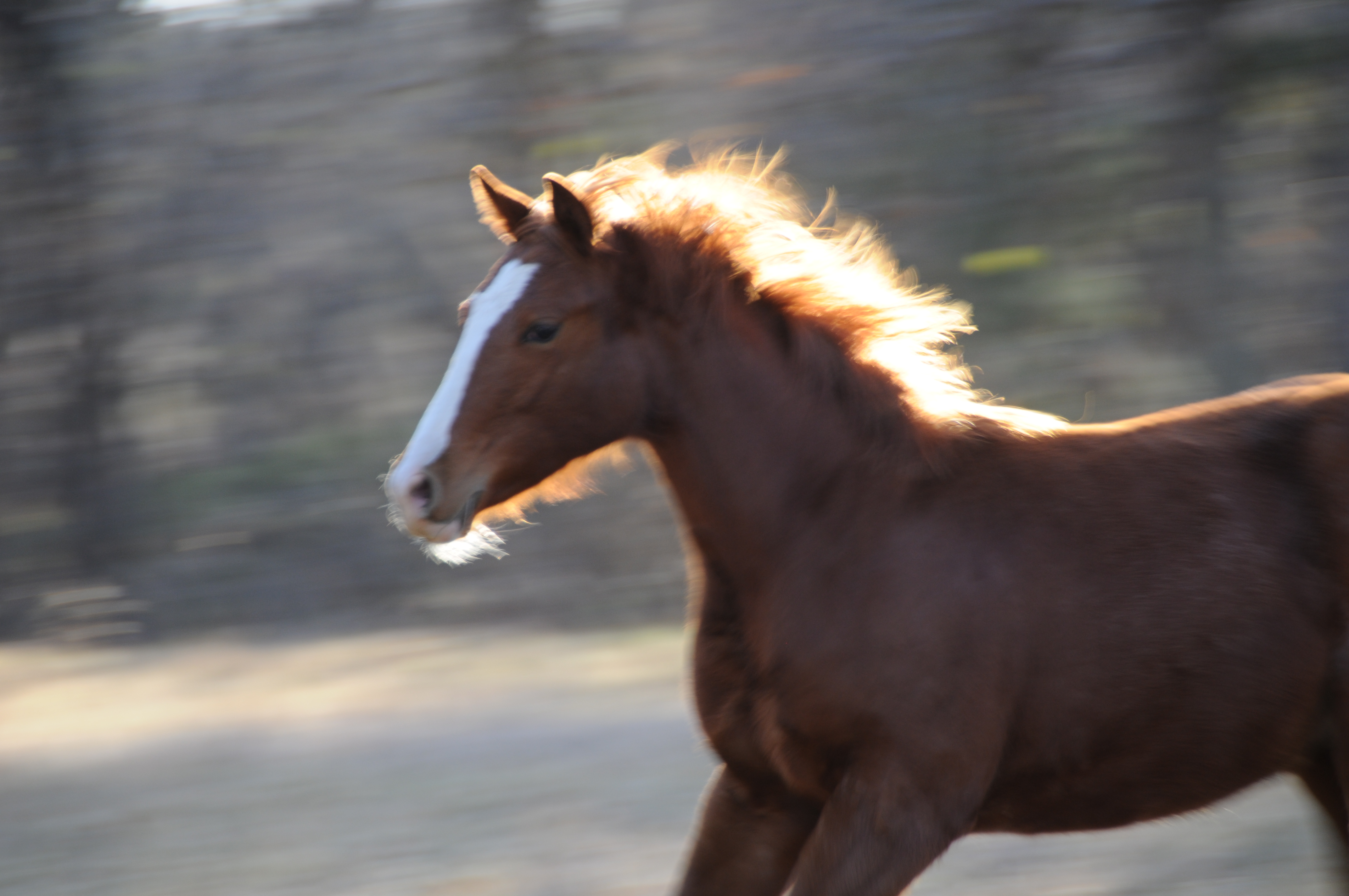
Fanny in the Grove, Winter 2009

Notes

[1]  Conversation of Duncan Steele-Park to Jack Matthews, Weatherford, Texas, December 22, 2009; email of Duncan Steele-Park to Jack Matthews, Weatherford, Texas, January 8, 2009.

An an object lesson in writing and fact-checking, I sent Duncan an email on January 7, 2009, for him to fact-check my recollection of our conversation on December 22, 2009.  My recollection was:

I let them gain a confidence before I ask anything of them.  Some trainers just put them in the round pen and round and round they go, boring them and not letting them be.  What I do is let them go down the lane, down the lane, learning for themselves and gaining confidence before I ask anything of them in the round pen.  Then as they go down the lane, after awhile I ask something of them in the round pen.

As you can read, Duncan’s correction of my recollection carries specificity about training that my later recollection did not.  His words have greater clarity about his philosophy and present his training style in definitely his own words.  I can hear in his writing, the down-under Australian accent.

Duncan Steele-Park’s email address is duncansteelepark@yahoo.com.

9 Comments

Filed under Bend Texas, Colony Road, Duncan Steele-Park, Horses, Recollections 1942-1966, Shiners Fannin Peppy (Fanny)

Floyd McRorey Angus in Cherokee, Texas

In 1946, my first experience with cattle occurred on the Floyd McRorey Ranch near Cherokee, Texas, San Saba county. I was four years old and the first time away from my family.  I slept on a cot beside my aunt and uncle in the master bedroom.  My uncle Floyd and his son, John R., ran a cow-calf operation of about forty head of black Angus. He sang a cattle call to bring them to feed: “Whooooooie, su, su, su!”   He repeated the call twice more.  Cattle came running and he would count.  The last time I saw Uncle Floyd in 1977, he was spraying the cattle for ticks.

As a boy, I visited my aunt and uncle, staying days, even weeks.  The ranch was the second or third ranch on County Road 407, north of Cherokee.  The house was white clapboard with three bedrooms and a grand room with dining table at one end, living room at the other.  A flower garden, lawn, and oak trees surrounded the house.  A windmill stood outside the fence surrounding the house.  The master bedroom had floor-to-ceiling windows facing south and Aunt Lennie had five or six shelves holding African violets across the windows. Floyd took a nap after lunch everyday so that he go back out in the field to work.  Before napping, he could look out of the bedroom window and see the oak trees and cattle when they grazed.  After I had seen Floyd the last time in 1977,  a few months later, he ate his lunch, went to the master bedroom for his customary nap, and died in his sleep.  Before falling asleep, his last visual must have been violets, noonday sunshine, oak trees, and his Angus cattle, a scene to carry for eternity.

Floyd’s Angus were very dear to him. His son, John R., told me that he thought his dad loved those cattle more than him. John R. laughed at the rivalry for he knew how much Floyd loved him.

When I had a herd of twenty-seven Angus-cross on our place, I called the cattle with, “Whoooooie, su, su, su.”  In reflection, I thought of my uncle and how he husbanded his Angus and his family and me, a blond-headed kid that always asked too many questions. Of all the days and nights I spent with uncle Floyd and aunt Lennie, there were no unkind words directed toward me or others in their country home. There was silence, a lot of it, and we would get up in the morning with the sun, listen to the weather report and markets from WOAI radio in San Antonio, and then to the fields.

When Angus Number 27 on my place became ill, I sped him to the veterinarian.  He survived his illness and recovered his eyesight. The 27th heart, as I call him, made it back with the herd because I remembered how Floyd cared for his cattle.  A cycle complete, I was tending a herd sixty years later the same way Floyd watched his Angus and lived with the land in Cherokee, Texas.

Leave a comment

Filed under Recollections 1942-1966