Category Archives: Plants and Shrubs

Field Log 5/10/2010 (Kiowa Good Luck, The Mariposa) [Corrected]

North Erath County, Texas, 32.43 lat., -98.36 long. Elev. 1,086 ft.  Turkey Creek Quad.

All photographs below may be enlarged with a click of the mouse for maximum detail.

Yesterday, I hiked into the grove.  Cool temperatures in the 60s F.  Light rain.  Saw several blooms of plants I have yet to identify.

This morning, drove to Pecan Tree Pasture to photograph blossoming plants for identification and cut mesquite.  Wind is high at 25 m.p.h. plus, sustained.  Red Flag warnings are posted on the MSN Weather link for counties west of us (Upper Concho River area) until 8:00 p.m.

Green-flowered Milkweed (Asclepias asperula), May 2010

Plant Identification

This is the Green-flowered Milkweed (Asclepias asperula).  I saw only two clumps in the pasture.  Several butterflies and bees are on the flower.  The Monarch caterpillar feasts on blossoms.  It is toxic to animals and probably humans.  The pollen may also cause a rash or itch.  The Butterfly-weed (not this type pictured) is also known as the Pleurisy-root, known for medicinal value.

I was not aware of its toxicity.
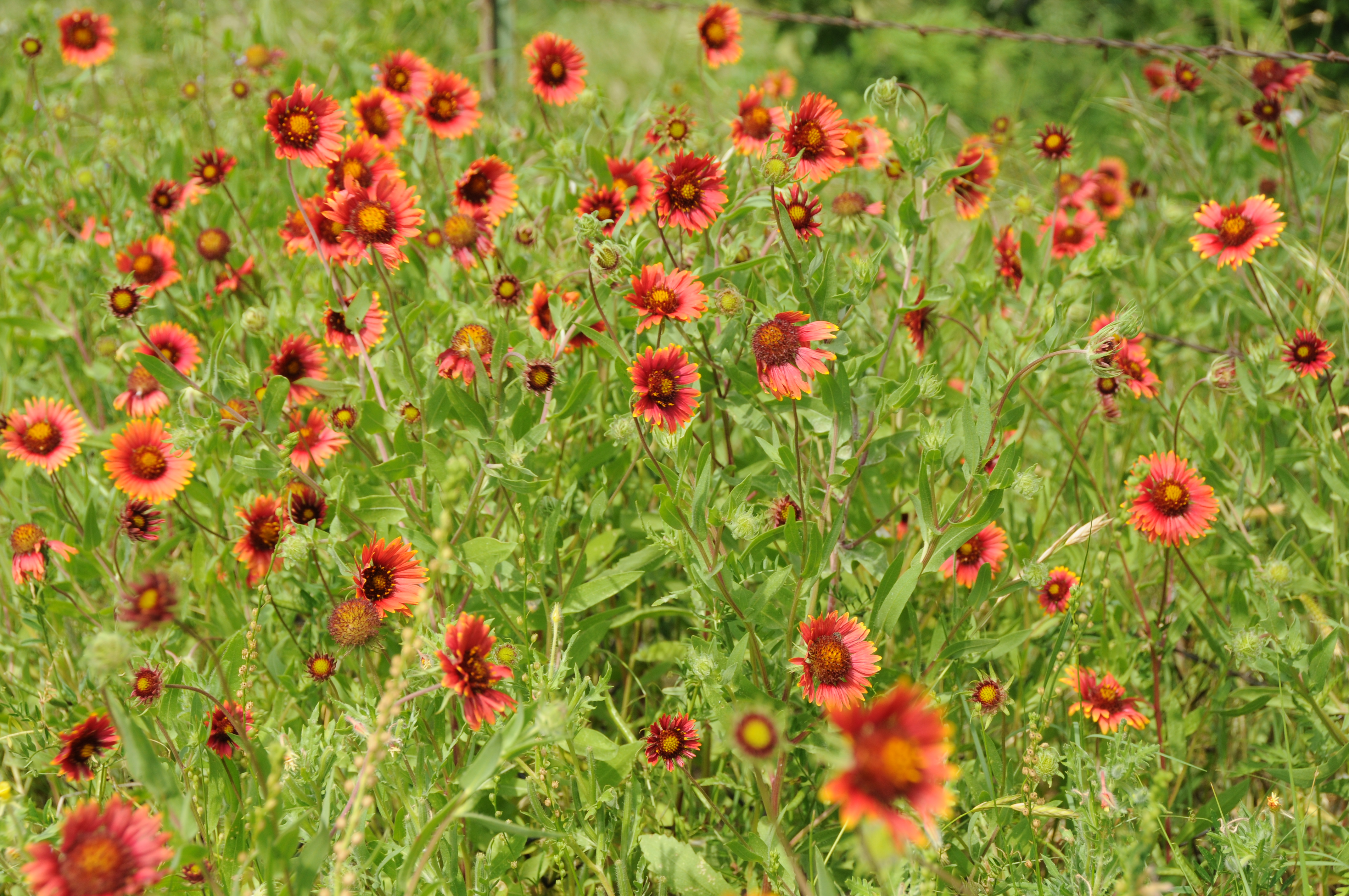
Indian Blanket (Gaillardia pulchella), May 2010

This is a stand of Indian Blanket (Gaillardia pulchella) next to the fence in the far pasture, the biggest stand of this species on the ranch.  Alongside State Highway 108, however, extensive Indian Blankets occur.  C. and L. Loughmiller, Texas Wildflowers, report that they have seen a forty-acre pasture completed covered in this one species.  Many years ago, I saw pastures in San Saba and Lampasas Counties covered in Indian Blanket.

Another name for Indian Blanket is Fire-Wheel.

It has medicinal qualities and the Kiowa considered its emergence good luck.  [See Lady Bird Johnson Wildflower Center notation, Indian Blanket.]
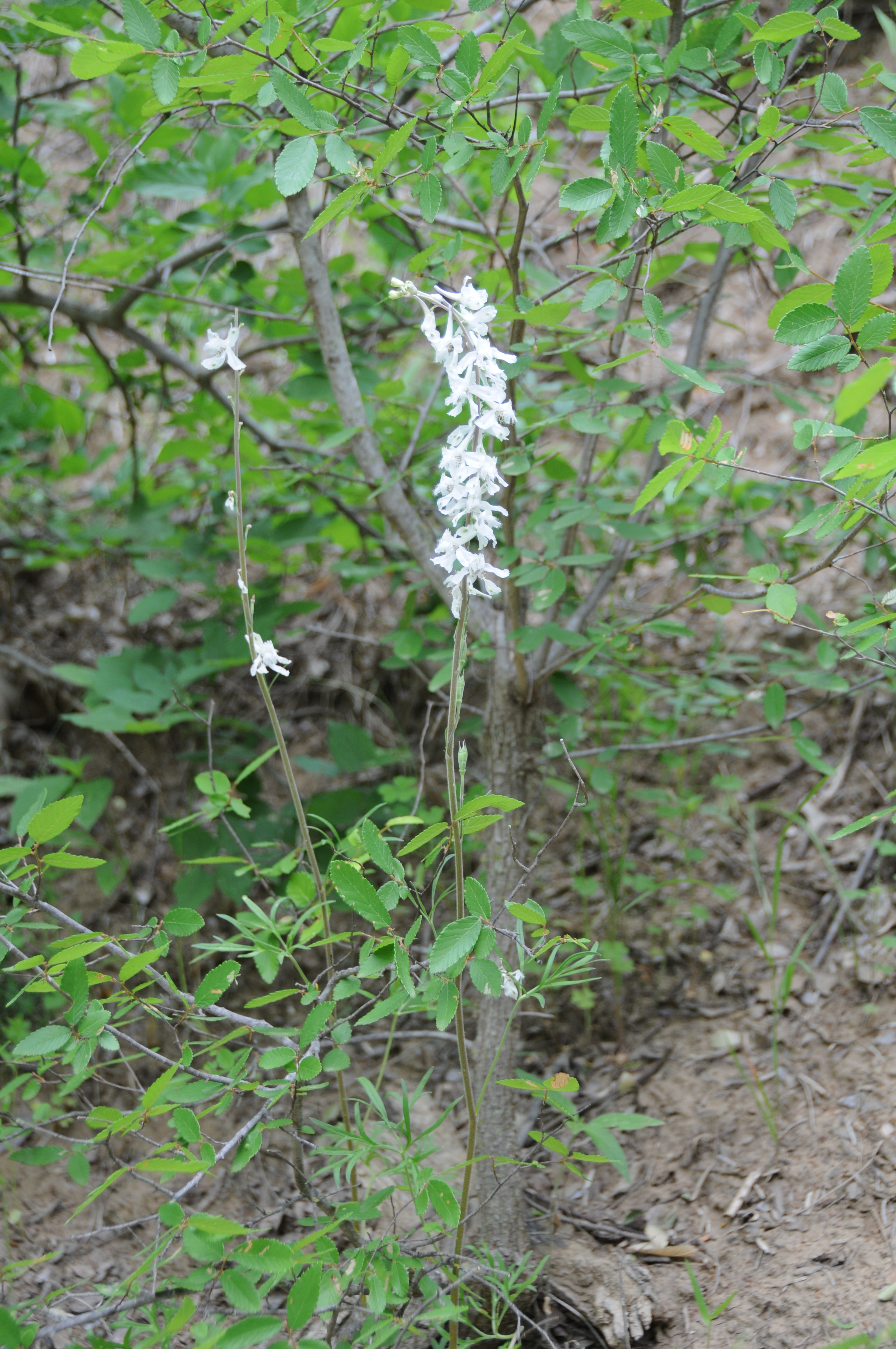
Prairie Larkspur (Delphinium virescens) Nutt., May 2010

This is the Prairie Larkspur (Delphinium virescens).  I found this along the banks of Salt Creek.  Again, this is a poisonous plant to animals and humans, although its seeds have medicinal properties.

In typing these plants and blossoms, I am finding more poisonous species than I imagined.  The horses leave the Larkspur and Milkweed alone, but I will be cautious during the fall when green grass is gone, as they might sample the plants.

Wine Cup (Callirhoe digitata), May 2010, Photo 1

I am excited about this plant and blossom.  It is a delicate flower and there are only two stands of it on Flying Hat.  It is called Mariposa Lily or Sego Lily (Calochortus nuttallii).  One stand is along side the Pecan Tree Pasture road and the other is on the north side of The Grove.  I’m anxious to put out this photograph to show you, and I think I have it typed correctly, but later this evening when the wind calms down, I will go and verify.

The Mariposa Lily is considered among the most beautiful wildflowers in southwestern United States (Loughmiller, Texas Wildflowers). This Mariposa Lily on Flying Hat is probably the more common Mariposa, but a Desert Mariposa is quite rare in Texas.  Nonetheless, this flower is most delicate and I am excited we have two bunches of Mariposas.

Although I would be disappointed, if anyone can type this otherwise, please enter your rationale in the comment section.
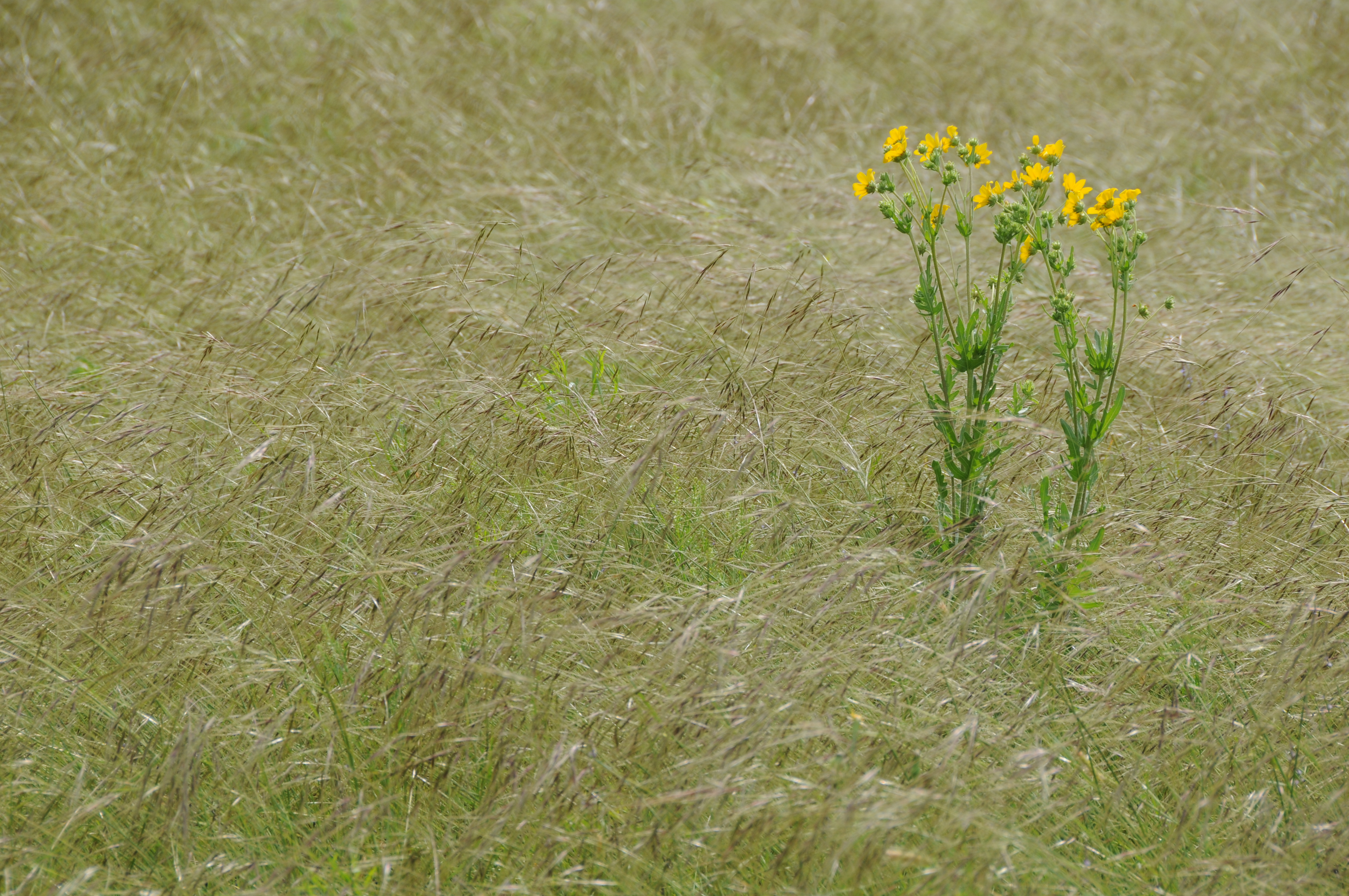
Texas Groundsel (Ragwort), May 2010

We have beaucoup amount of Texas Groundsel (Ragwort, Senecio ampullaceus) along our pasture roads.  The yellow blossoms are striking and until I changed the range strategy, I would shred these plants rather early in the spring.  This year, however, I have let them thrive.

Horses

Sweet Hija is still at Equine Sports Medicine & Surgery, waiting for the right time to be inseminated.

Shiney is still in Aubrey, learning manners from Jimmie Hardin.

Cut fifteen (15) mesquite bushes from pasture and fence row.

Note: Please check back later today for a verification of the Mariposa.

Correction to Identification

Correction to post, 5/10/2010, 5:38 p.m.  The winds died down some and I went back to The Grove to verify the plant and blossom.  It is not a Mariposa Lily.  It is a Wine Cup (Callirhoe digitata). When I investigated the Wine Cup in the field, I did not separate its petals to count them, but rather relied on the photograph exclusively when I got back to the house.  Brenda looked at it and had a question about the stamens and pistil form, but did concur with my first conclusion.

When I went back down to the grove a few minutes ago, I separated the petals to determine if there were three or five or however many.  Three petals would be the Mariposa.
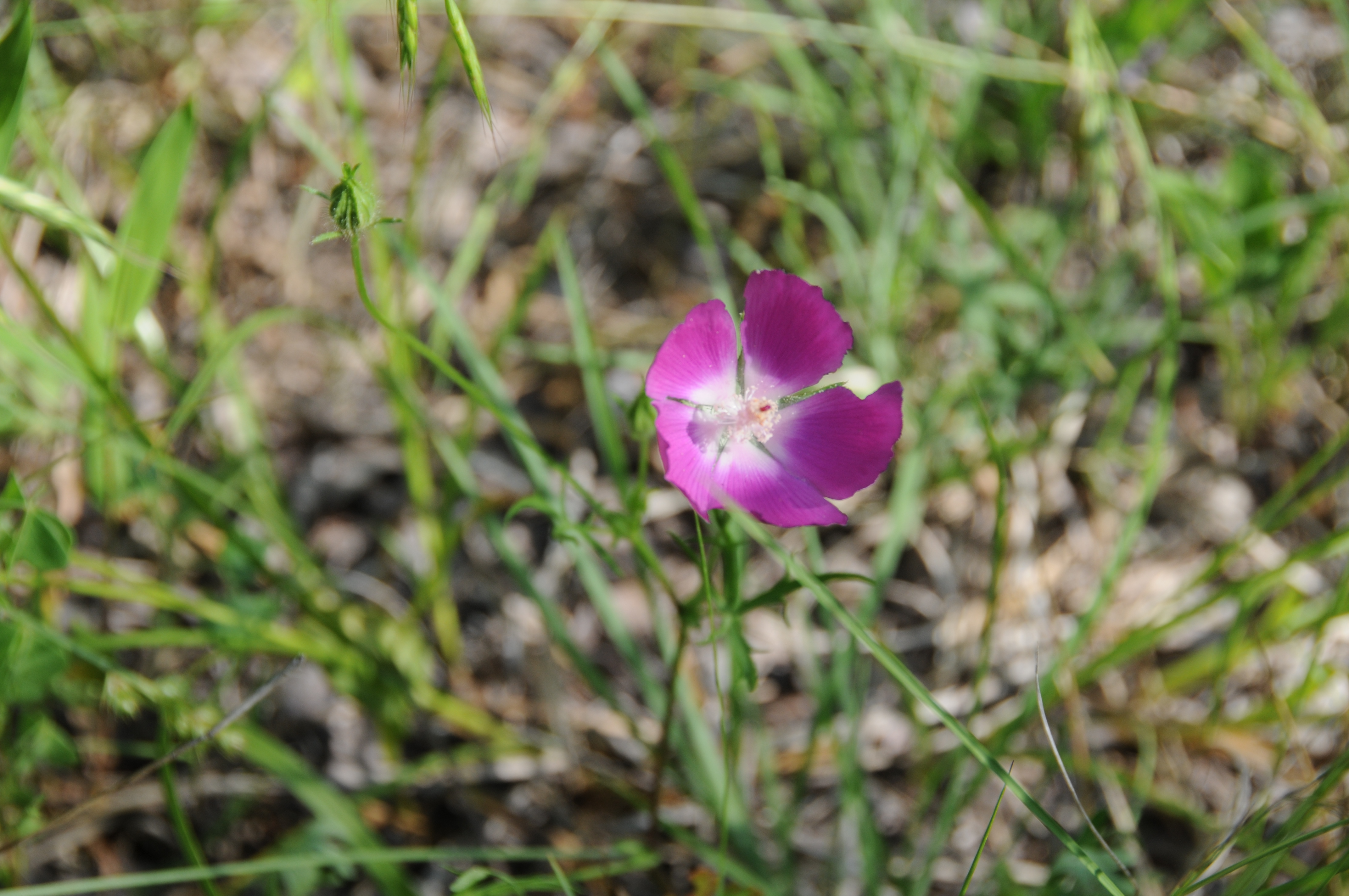
Wine Cup (Poppy Mallow), May 2010, Photo 2

As you can clearly see in the Photo 2 of Wine Cup (Poppy Mallow), there are five petals.  I also carefully delineated the stem structure and it seems to be C. involucrata (Nutt.) [Wills and Irwin, Roadside Flowers of Texas, p. 153-154].

This plant also goes by Finger poppy-mallow, Poppy mallow, Standing winecup, Wine cup or Winecup.

15 Comments

Filed under Field Log, Plants and Shrubs

Spring Flowers in Texas

Stork's Bill (Erodium texanum) April 2010

Here is Stork’s Bill or Pine Needle (Erodium texanum) found here on Flying Hat.  It is an annual herb, member of the Geranium family, most of which are found in Europe and South Africa [C. and L. Loughmiller, Texas Wildflowers: A Field Guide, p. 104; H. Irwin and M. Wills, Roadside Flowers of Texas, pp. 140-41.]

Scarlet Paintbrush or Indian Paintbrush (Castilleja indivisa) April 2010

These Indian Paintbrushes are uncommon on Flying Hat.  I found most of these in the Pecan Tree Pasture and not many of them.  The Blue Place, the family to the east of us, has a field that is quite loaded with the paintbrushes.  I have a photograph of the Blue field and will post it in the future.

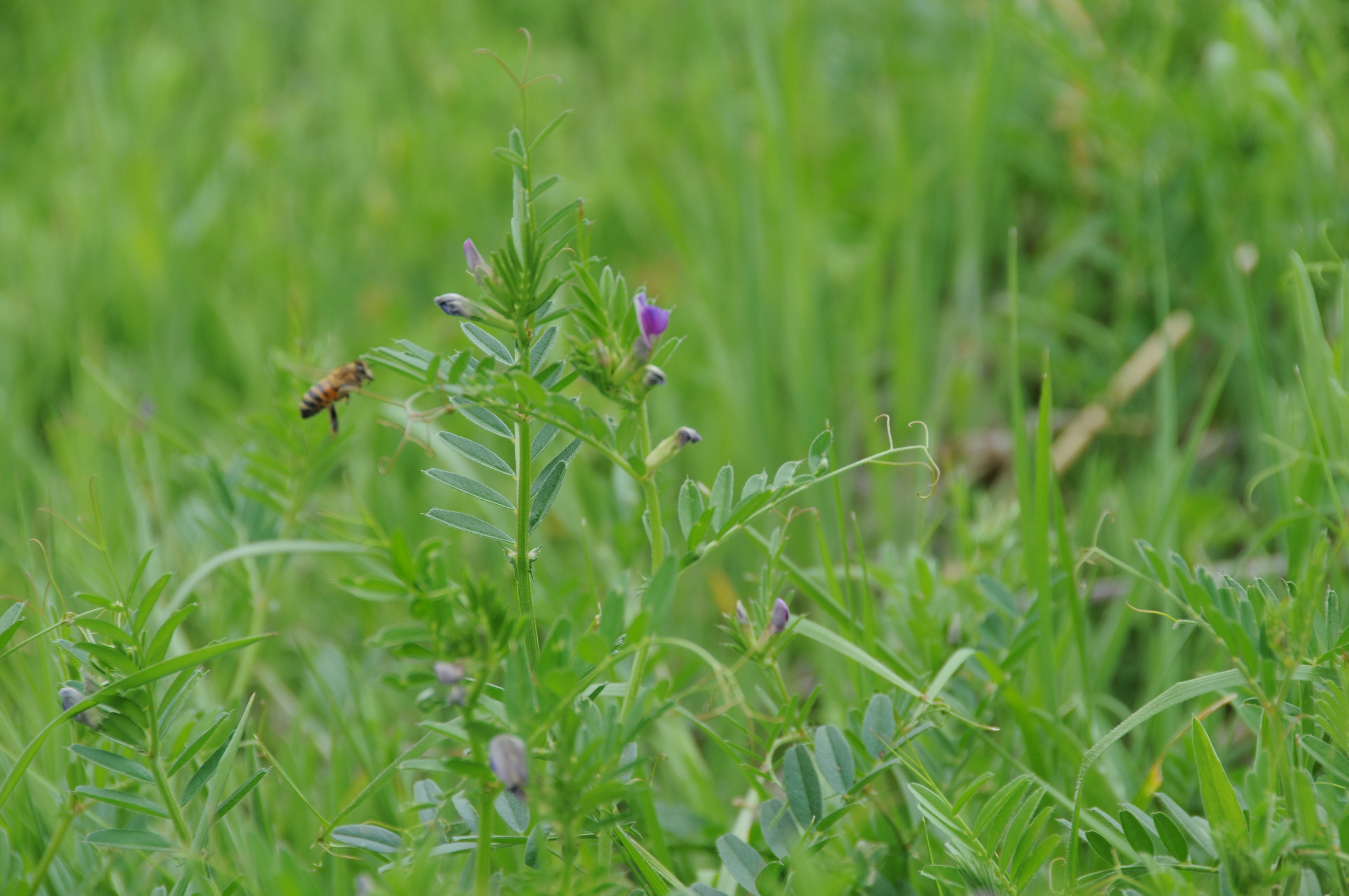
Purple Vetch (Vicia dasycarpa) with Bee April 2010

This vetch, Purple Vetch (Vicia dasycarpa), is not the poisonous variety. Notice the bee that is pollen-gathering.  The spring rains have been so abundant that the vetch is knee-high in my fields and the Blue Place, to the east of us, has vetch that is chest-high as it climbs on the field fence.  As I say, this is not the poisonous variety and the bees love to gather pollen from it.

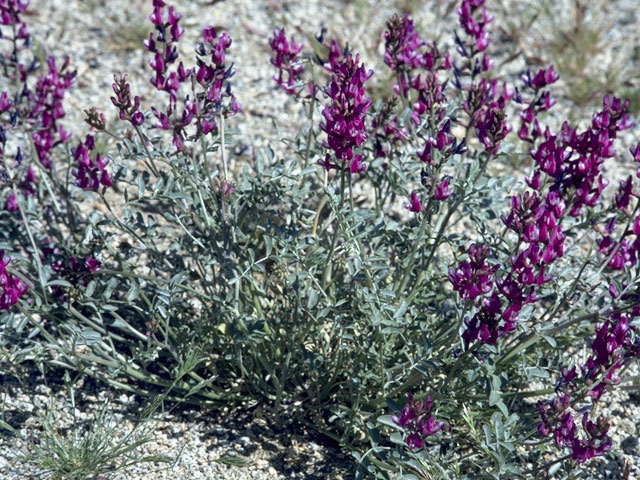
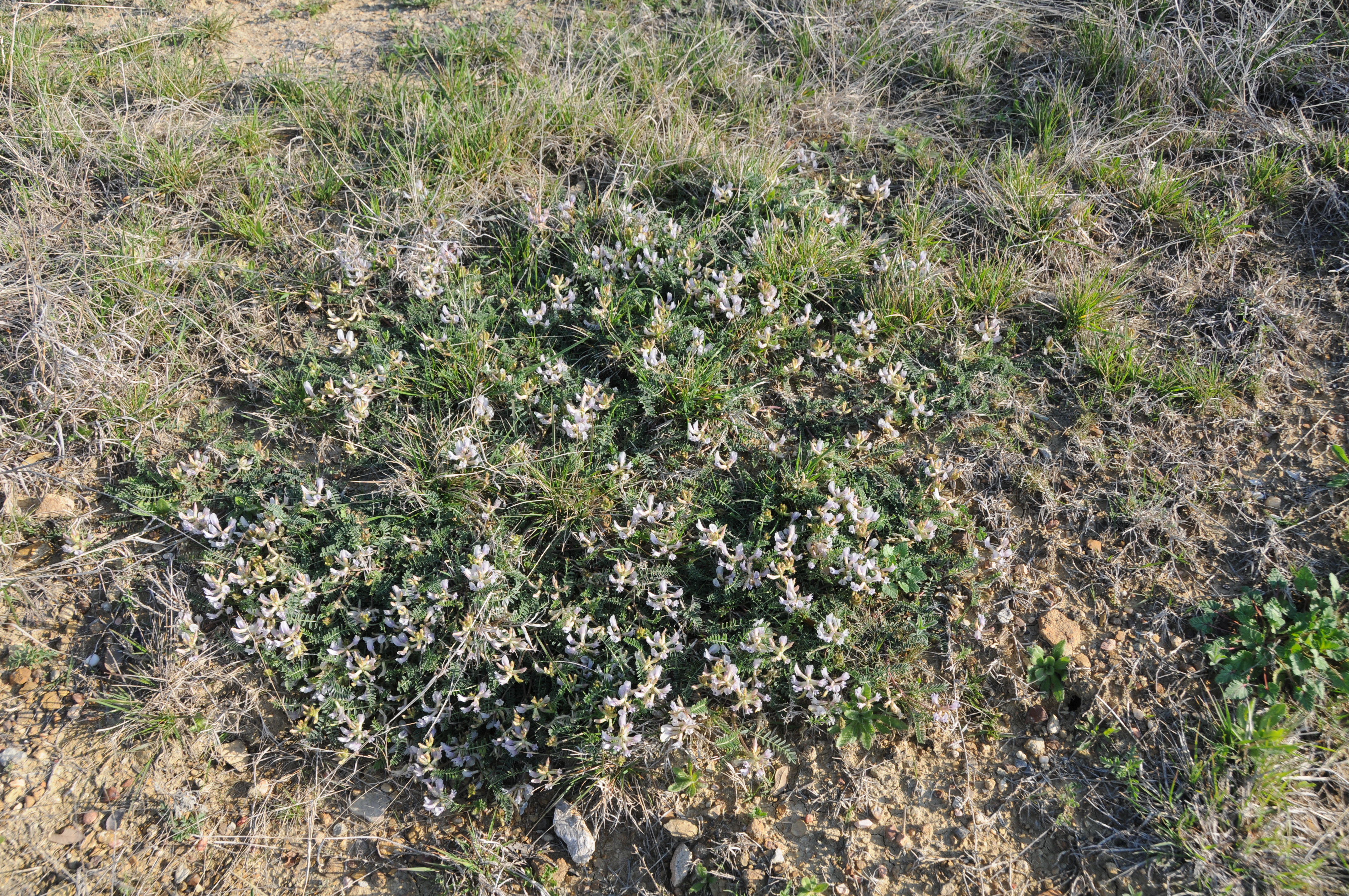
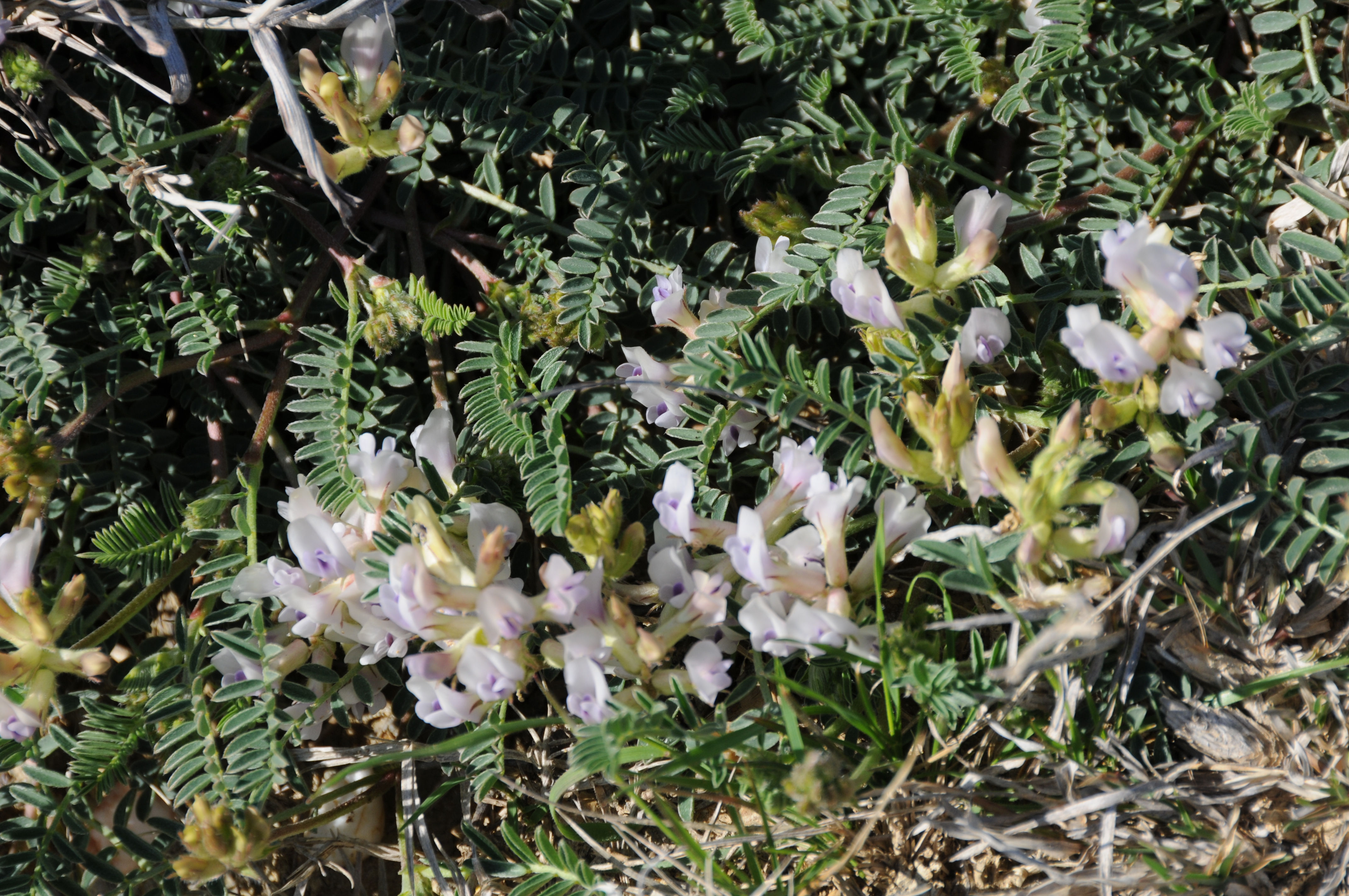
Wooly Milkvetch (Astragalus mollissimus), Wooly Locoweed (NPIN Image Gallery, Lady Bird Johnson Center)

This is a photograph of the poisonous variety of vetch that we do not have on the ranch.   From Irwin and Wills, Roadside Flowers of Texas, p. 138:  “Of the nearly 1000 species of Astragalus, over 200 occur in the United States, about 35 of them in Texas.  The members of the genus that are poisonous to livestock are called Locoweeds, while the harmless ones are known as Milk-vetches.  In the former category is the Woolly Loco of the Panhandle and Trans-Pecos area, a tufted, soft-hairy, deeply rooted perennial with dense racemes of purplish flowers in the late spring.  Quite innocuous looking to the eye, the Woolly Loco is among the ‘early risers’ in the spring, and so tempts cattle, even though its taste is so disagreeable that they normally avoid it.  Later, in periods of drought when grasses succumb, the persistent Woolly Loco remains, seemingly unaffected.  Nor are browsing animals the only ones concerned.  The nectar contains poisonous substances, sometimes causing decimation of bee populations.”

In talking with Roland Stroebel today, my colleague at the college who tends Angus cattle, our non-poisonous Purple Vetch is abundant on his place also, but does not cause a problem for his browsing livestock.  Roland’s ranch is south of Cisco, Texas, and his family goes back several generations.

2 Comments

Filed under Plants and Shrubs

Yucca Nuzzles

I have some photos about plants, animals, terrain and fossils I would like to show you.  There’s always a photo opportunity here on Flying Hat.  April offers some comforting snapshots about the place.  There’s a lot of communication taking place, even with horses and yucca.

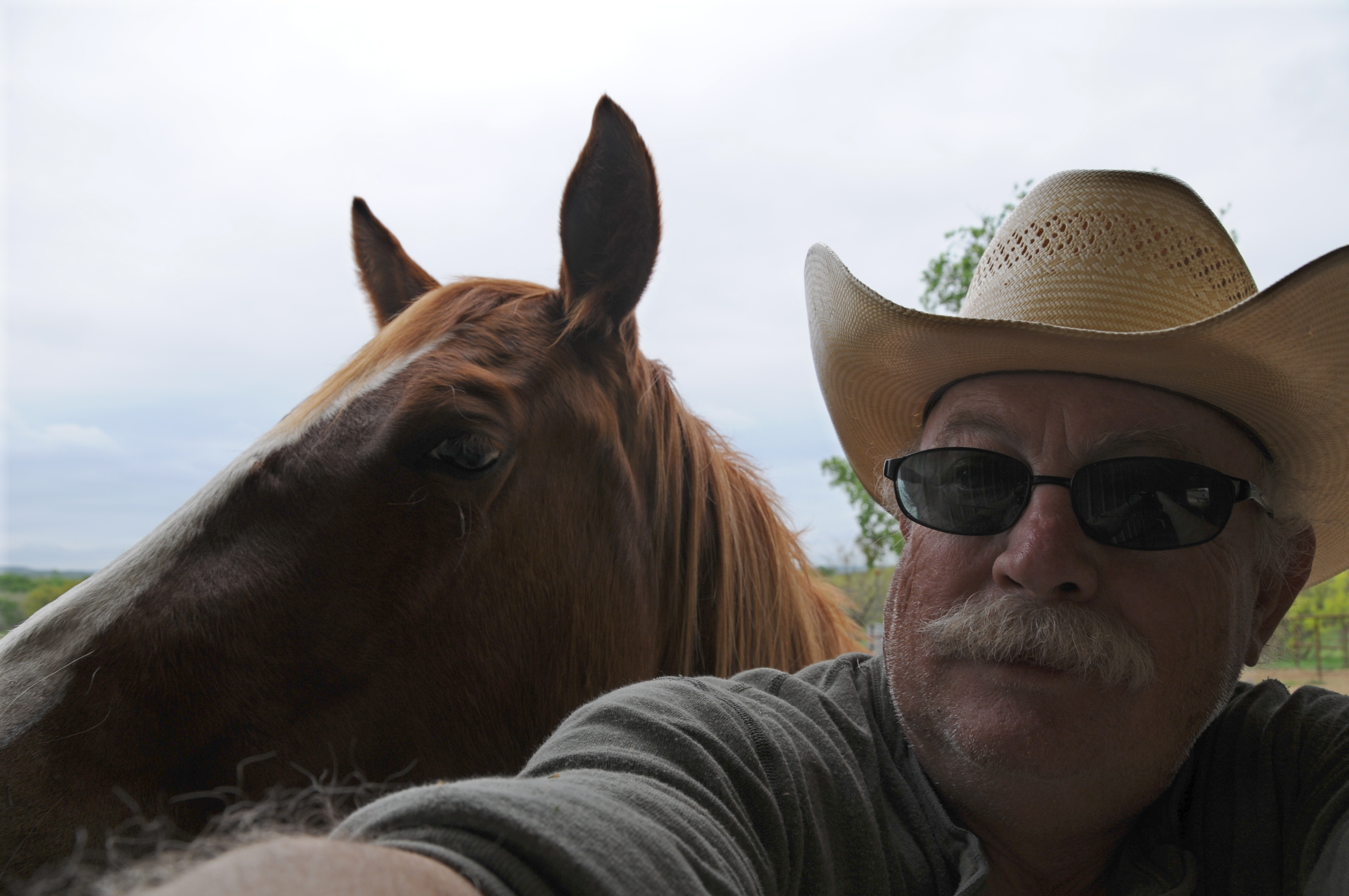
Fanny and Jack at Stable Alleyway

In “Fanny and Jack in the Stable Alleyway,” I am with Fanny and she wants to show her gratitude for the grain she got this morning.  She sees the camera and wants to get her picture taken as well as give me a nuzzle in the neck.

Fanny is not an aggressive horse.  Nonetheless, around horses, a person must be cautious.  They are flight animals and when frightened, they will kick or bolt forward.  Fanny is a good mare and her trainer, Duncan Steele-Park and the crew at GCH Land & Cattle Co., have taken her good qualities and improved them.  From the day of her birth, we have been familiar with Fanny, lifting her feet and touching her.

Fanny Nuzzles Jack

A nuzzle on the neck is good sign that the horse has “joined up” with a person.  “Joining up” is a trademark term of Monty Roberts, The Man Who Listens to Horses (1996) and From My Hands to Yours (2002).

Our horses have human contact–tactile contact–every day.  The touching includes a “sacking out” with the hands.  “Sacking out” is an term describing a procedure to rub the horse with a foreign object, i.e., a sack, halter, lead rope, blanket or with the hands.  A daily touching and haltering with the horse boosts the familiarity between horse and human.

In most cases, horses anticipate the tactile contact.  Lilly, our oldest mare, will glide up alongside us and stop, allowing us to rub her under her mane on the neck.  The horse’s approach should not crowd the space of humans and it is best if they stop a few feet away and present themselves, more or less, with their flanks exposed.  Even after a person becomes acquainted with equine behavior, it is always best to position the body at the flanks or broadside to the horse.

Fanny’s Head on Jack’s Shoulder

The daily contact with horses is a good thing for them and us.  We rub the horses once or twice between the eyes, a place they cannot see, as a sign we are trustworthy.

*   *   *

Read on, there’s more…

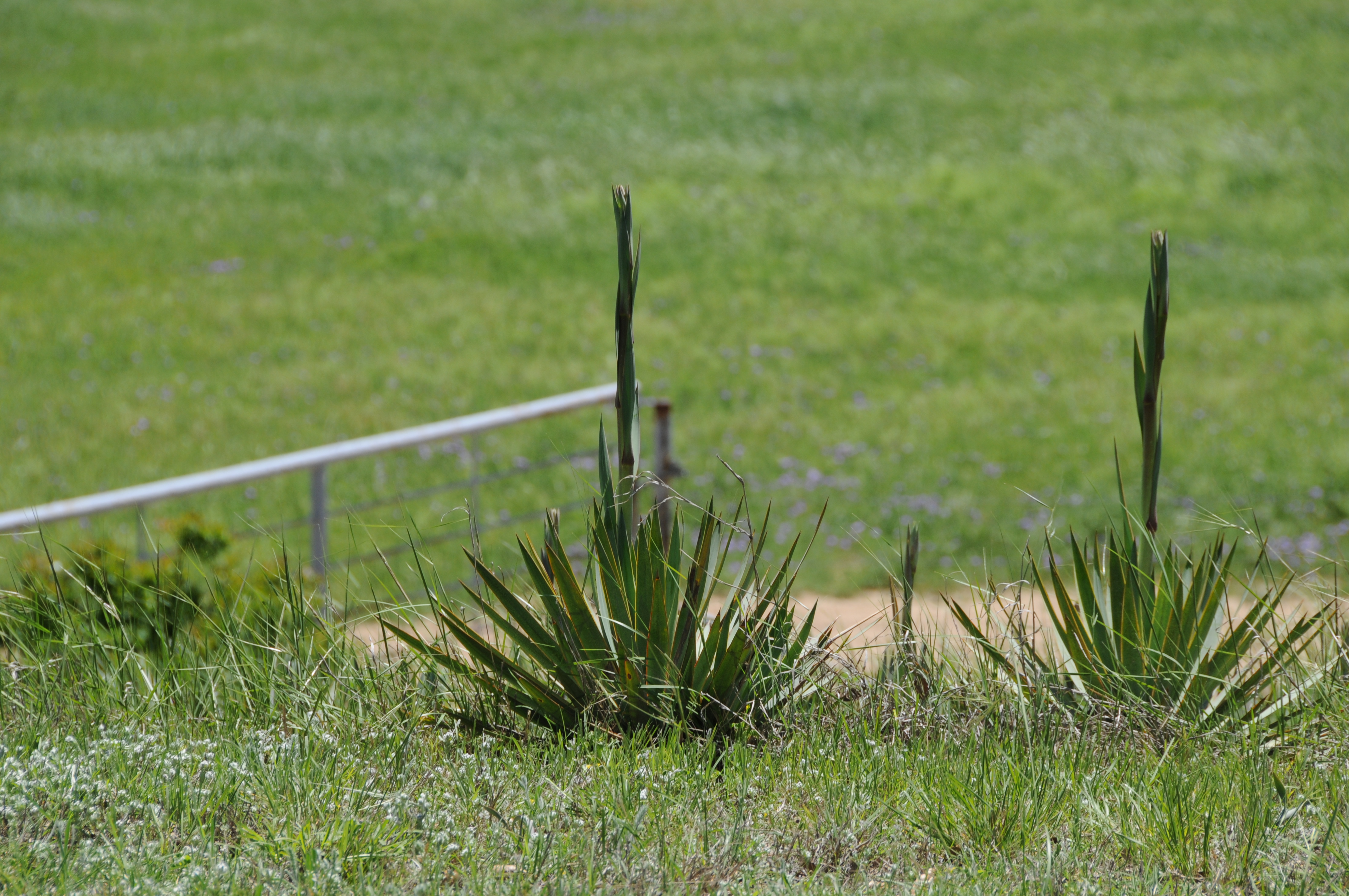
Pale-leaf Yucca (Y. pallida)

I have spent thirty minutes typing this yucca plant.  I may be wrong, but my factor analysis seems correct.  It is a Pale-leaf yucca (Yucca pallida).  As stated in my “Notice to Readers of Sage to Meadow,” if you discern an error in my typing this plant, please correct me.

Pale-leaf yucca is endemic (native only to a particular area) to North Central Texas and may extend into the Edwards Plateau, growing on rocky soil and outcrops of the Blackland Prairies and the Grand Prairie. It bears sage-green or bluish-green, orderly-arranged leaves having a noticeable waxy bloom, or glaucous appearance. The rosette itself is stemless and small, providing a spherical, coarse-textured look in the landscape. It may be single or have multiple offsets. Like all yuccas, Yucca pallida requires good drainage. It may be grown in the shade garden for textural interest, but may not bloom as well as those in more sun.  [Texas Plant Database, Texas A&M University.]

In my analysis, I also figured the yucca might be Yucca contricta (Buckley yucca) or Yucca necopina (Glen Rose yucca).  In the next few days, these yuccas will blossom and I will provide field photos.

*   *   *

DSC_1435a

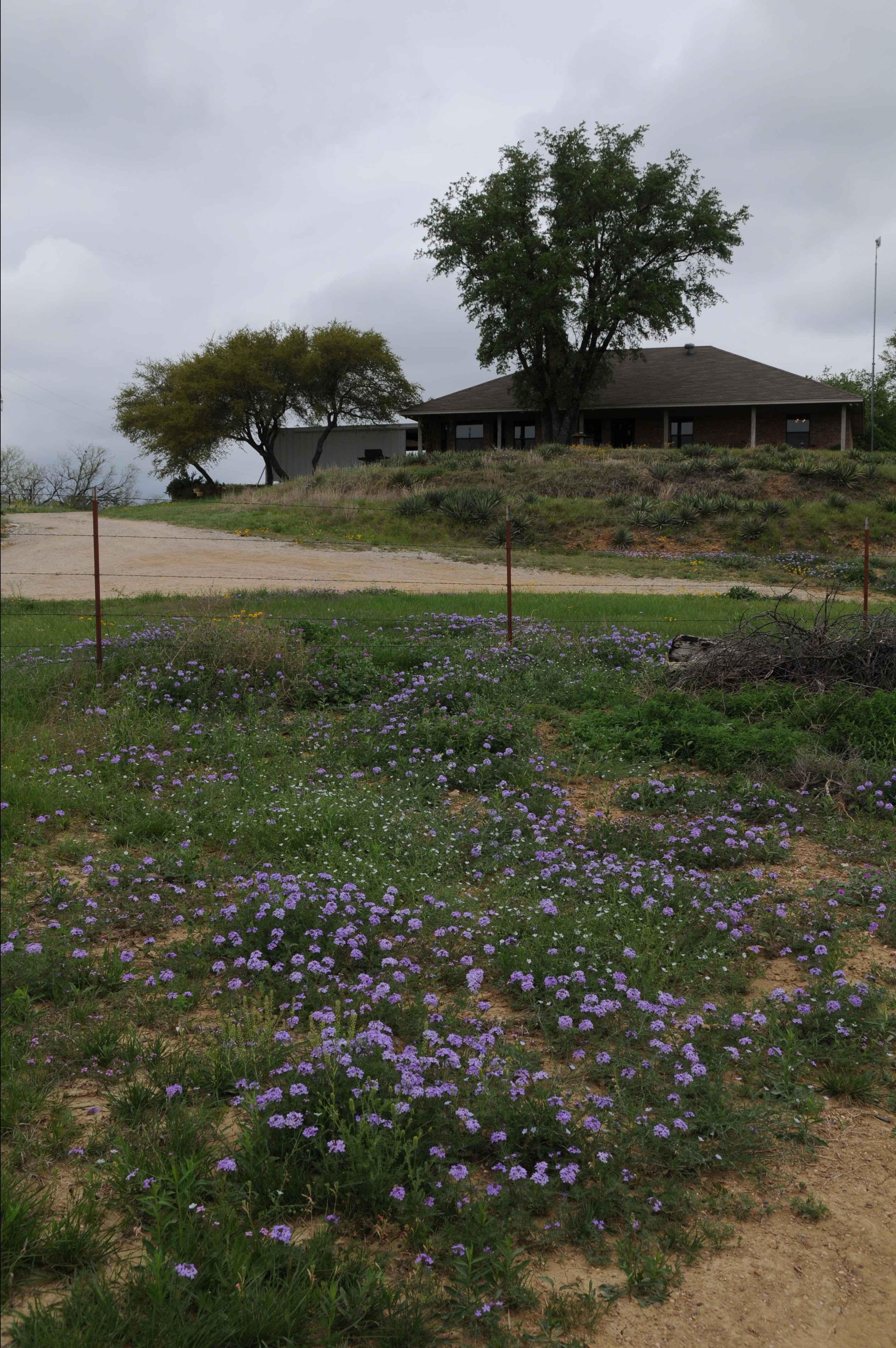
Verbena with Poprock HillI write so often about Poprock Hill, I thought I would provide a photo of the hill.  This was taken earlier this April before the full eruption of grasses, but you can see the proliferation of verbena in the foreground.  Notice also the abundance of Pale-leaf yucca (Yucca pallida) on the terraces below the ranch house.  Poprock Hill is aptly named by local settlers because of the poprocks that are plentiful about the hill.  I collect them, and with each rain poprocks emerge from the soil.

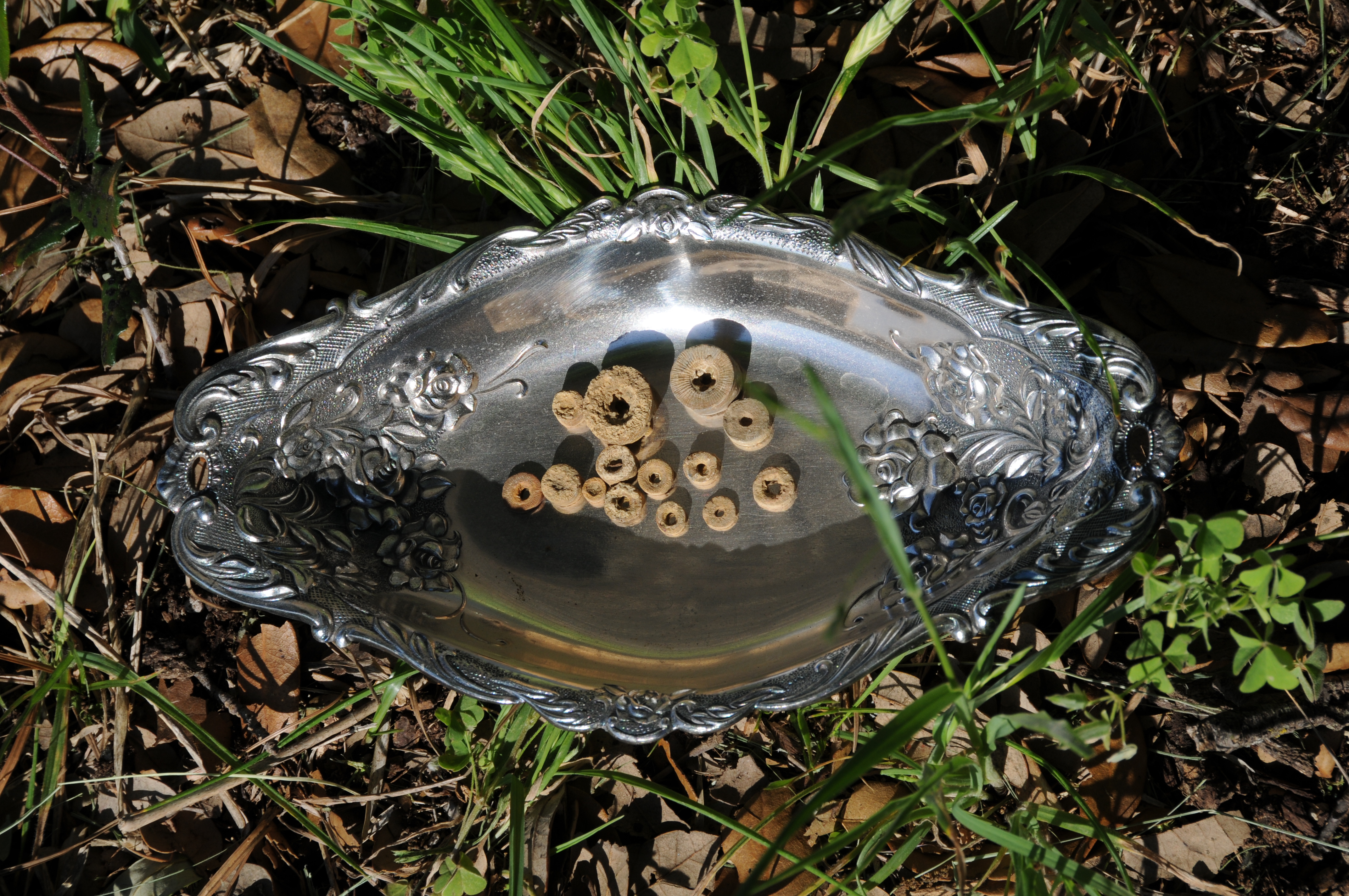
Poprocks on Silver

“Poprocks on Silver” shows several poprocks, large and small, that I have collected.

These photographs I have posted illustrate that even on simple, unglamorous land, there are natural items that are noteworthy and significant for study.  The yucca plant I typed (hopefully, correct) required me to go back out to the terrace and look closer at the edges of the leaves to determine if there was a white line or if the leaves were curled, narrow or broad.  As I began to type the yucca for posting, I got interested in the yucca for its own sake: what was it?  Was it rare?  Endemic?  The Glen Rose yucca is a uncommon plant and needs some protection from extraction and destruction.  Did I have a Glen Rose or not?  I find the yucca in Texas worthy of further study.  I may start a yucca farm.

Finally, I think this post with photos shows how connections can be funny and personal between species.  Fanny and I communicated and I think both of us got pleasure and companionship out of the contact.  The yucca could not respond.   Whoa there, cowboy!  From a Native American point-of-view, the yucca and I were talking to each other, weren’t we?  It showed me its style, color and emerging blossoms.  I watched it and it “told” me what it was doing.  Yes.  Certain species of the yucca can be used for soap, shampoo.  And, when I give Lilly her supplement for her osteoarthritis, the veterinary insisted that the supplement include yucca.  This personalization of plants and animals is beneficial to us all: medicine, companionship and a unity that, however briefly, overcomes life’s estrangement.  That’s talking with the plants and animals.  Maybe they are our relatives.

I wish you a pleasant week ahead: nuzzle your yucca, but be very careful.  Like with all relatives.

10 Comments

Filed under Duncan Steele-Park, Horses, Life in Balance, Plants and Shrubs, Shiners Fannin Peppy (Fanny)

Field Log 4/21/2010 (Scissor-Tails, Gyp Indian Blanket)

North Erath County, Texas, 32.43 lat., -98.36 long. Elev. 1,086 ft.  Turkey Creek Quad.

Sweet Hija has been inseminated at Equine Sports Medicine and Surgery (ESMS) on the Brazos.  She’ll be held for a couple of days, says Dr. Semira Mancill, to check on an edema problem.  Then Sweet Hija can be released to come back for two weeks before her next checkup.  Hija has a paddock and is comfortable at ESMS.  But, she prefers to be back here to gallop full-speed from one end of the pasture to the other.  Last year, I was at the east gate in the pasture and for no apparent reason, she reared up and stood for six seconds on her hind legs, cocked her eye towards me–I was about five feet away–and held my gaze.  Powerful girl!  Then, abruptly, with a snort and a turn, galloped to the other end of the pasture, a quarter-mile away.  Did not slow down until she reached the end of the lane.  Gasp.

Shiney (Shiners Fannin Pepto) is doing well at Jimmie Hardin’s in Aubrey.  He’s slightly off his feed.  The farrier came to trim him yesterday.  Jimmie said that they had worked him out, groomed him and tied him for training purposes and he did just fine.  I worry about the little guy since he is so exuberant and eager to please, it seems.  Am still undecided about whether I will lead him at the sales ring in Shawnee or have someone else lead him.

I put out more corn today near the deer salt lick.  I saw hoof prints of at least one deer.  Track put down after the last rain of 2.0 inches.  I’ve still not sighted deer.

I’ve seen hummingbirds.  (Taosmesa tweets that she has “heard” hummingbirds at her home, but not seen any.)  Scissor-Tailed Flycatchers  (Muscivora forficata) abound about the fields.  From Peterson, they breed here in w. and s. Texas, e. New Mexico, se. Colorado and s. Nebraska.  He writes that their call is a repeated ka-leep with some stuttering.  I concur (course, who be me?) with the ka-leep, although I might add that the refrain-call is like this: keck, keck, …ka-leep. (Peterson mentions the keck.)  I have a rich and full life, and trying to replicate bird calls is good for me.

When I grew up in Brownwood, Texas, in the 1940s and 1950s, I remember the Scissor-Tailed Flycatchers sitting on power lines in front of our home, down towards Fourth Street and Brady Avenue.  The Scissor-Tails had the same refrain-call back then as they do now.  They would fly upwards in an arc when they called and then settle back down on the power line: keck, keck, …ka-leep, arcing, settling.  I can see it now in my mind and hear it, too.

Here on Flying Hat, over in the Pecan Tree Pasture, several Red-Winged Blackbirds (Agelaius phoeniceus) will take up temporary residence sometime in the spring and summer.  I do not shred the tall Johnson grass so that they can perch on the high stems and be spring-tossed by the wind.  That touch of red on their wings is so bright, so colorful.  I’ve not seen them yet, but I will, I know.

Dense Stand of Gyp Indian Blanket, April 21, 2010

There are several stands of this plant, Gyp Indian Blanket (Gaillardia multiceps).  It may also be (I am unsure) a Pincushion Daisy (Gaillardia suavis).  It loses its petals quickly, but the brownish-red center remains.  The bare flower stems stand 18 inches taller or more.  Looks like those science fiction movies with the scout coming into the basement where Grade B movie actors are hiding.

Gyp Indian Blanket Flower Bases, April 21, 2010

This spring I’ve seen more variety of wild flowers than any spring since we moved here in 2003.  A variety of primrose has emerged today down by the barn.

*   *   *

Rural Declamation Interscholastic League State Meet 1938, Gywn Parks, Front Row, First Person, Left to Right

My mother, Gywn, always had plants and birds.  Her backyard looked like a wonderland in the summer and her bird room held finches she had purchased as far away as Australia as well as canaries and types I can’t remember.  She even had a red hen that scratched through the debris on the floor.

In the photograph to the left, she is the first woman on the first row, left to right.  She was representing Bend, Texas, in the state Declamation contest in 1938.  She placed first and received The University Interscholastic League Award.  Gywn wrote letters and sent cards to her friends as a habit pattern throughout her years (1920-2003).  I have many of the letters from her friends.  Careful in her speech and prose, she was my first teacher at home.  She was small, but she was fierce, I have said about her.  The Irish in her would bring her to a quickening: I’ll get me a shallelagh if you don’t settle down, Jackson!

She died seven-years-ago today, April 21, 2003.  Her last words of advice were for me to have good friends and talk to them everyday.  R.I.P., Mom.  I’m taking good care of the land and plants and birds and wildlife:  a steward, like you taught me.  And, I have friends.

6 Comments

Filed under Bend Texas, Birds, Field Log, Horses, Plants and Shrubs

Field Log 4/3/2010

North Erath County, Texas, 32.43 lat., -98.36 long. Elev. 1,086 ft.  Turkey Creek Quad.

Day looks less windy and can broadcast grass seeds.  Disc and broadcast today (Saturday).  Take Sunday off.

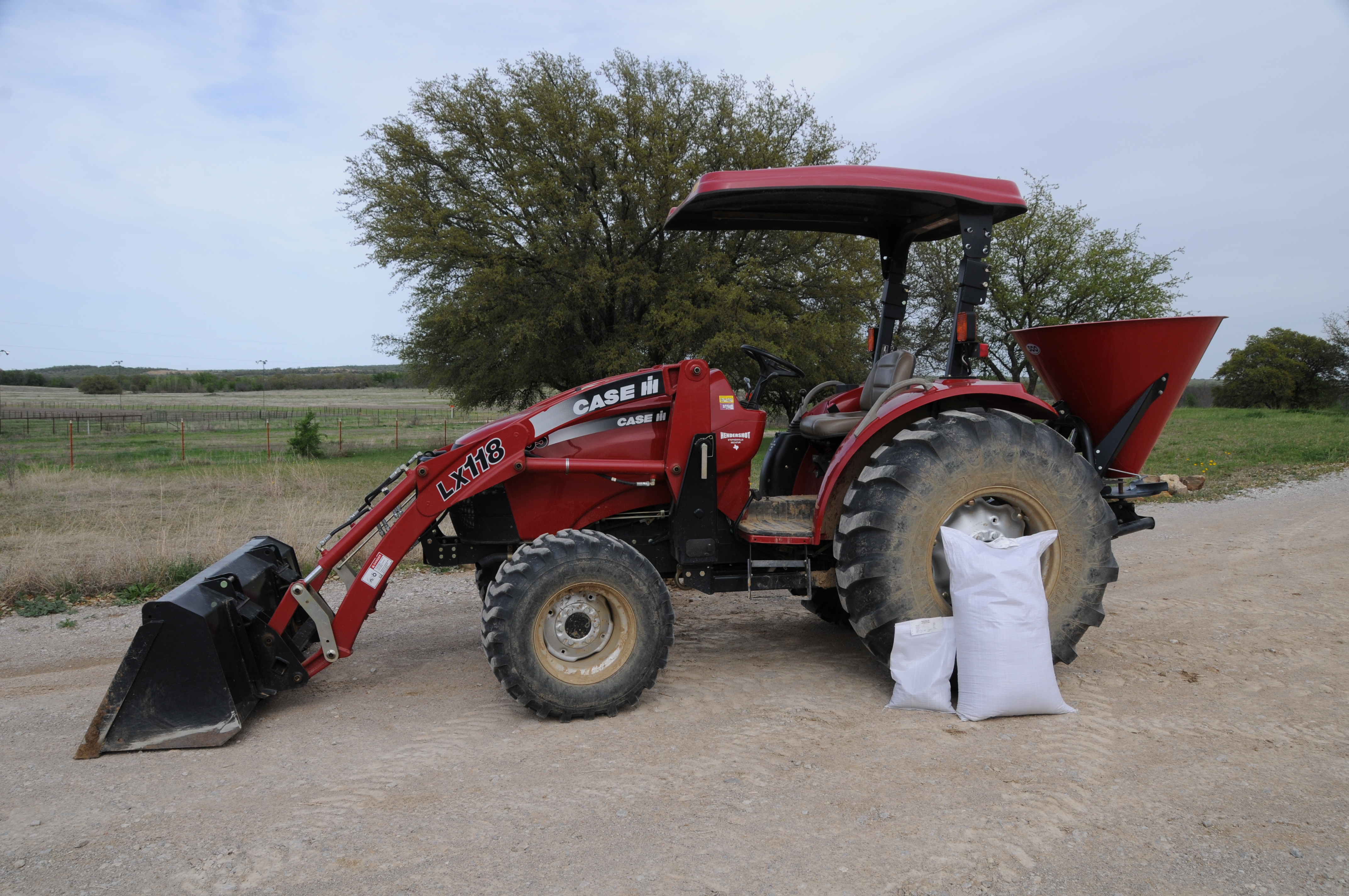
Finished turning and applying disc implement to Pecan Tree Pasture and the house fields.  Turned about four acres in the far pasture, two acres at the house fields.  Harris’ Hawk flies overhead as I prep soil.  The Bryant field west of the pecan orchard is being plowed so lessee can plant seed for hay.  The lessee drives a John Deere enclosed cab.  I like my Case that is not enclosed, but has a Farmall sun shield, because I can feel the wind and smell the turned soil.  And, I really don’t want a CD player and radio on the tractor.  Also, when idling the engine, I can hear the Harris’ Hawk — can’t do that with enclosed cab.  Note: with the Bryant field stripped of grass and brush, there is less cover for wildlife.

As I apply the disc to the pasture, I can see the shadows of the Turkey Vulture (Cathartes aura) and Harris’ Hawk on the ground as they glide above the tractor.  Several vultures roost in the dead tree on the Bryant place, along Barton Creek.

Wind over past two weeks has dried out topsoil despite rain.

I say to Brenda at lunch that I saw a wren-type, ground-feeding bird in the native grasses that I have let grow in the Pecan Tree Pasture.  The bird spied the tractor coming and darted around and entered the tall bluestem grass (verify) as I passed by along the fence row.  I have shredded the pasture twice since I moved here, but I’ll not be shredding any more.  The fifty-three (53) acres will be as sustainable as I can make it.  Seeing the wren in the field of native grass that Cody Scott had planted in 2004, signals to me that the field is a good habitat for wildlife.  Last year as I worked in the field, I scared up two deer that had taken a rest in the high grass.  Since the Halls cleared their brush and have put Adirondack chairs in their grove, small bridges over their gullies and a workshop next to the Pecan Tree Pasture, I’ll not be seeing as many deer as I once did.  I’ll not be putting any chairs about the place.  I’ll sit on a log or lean up against a tree — nature’s furniture.

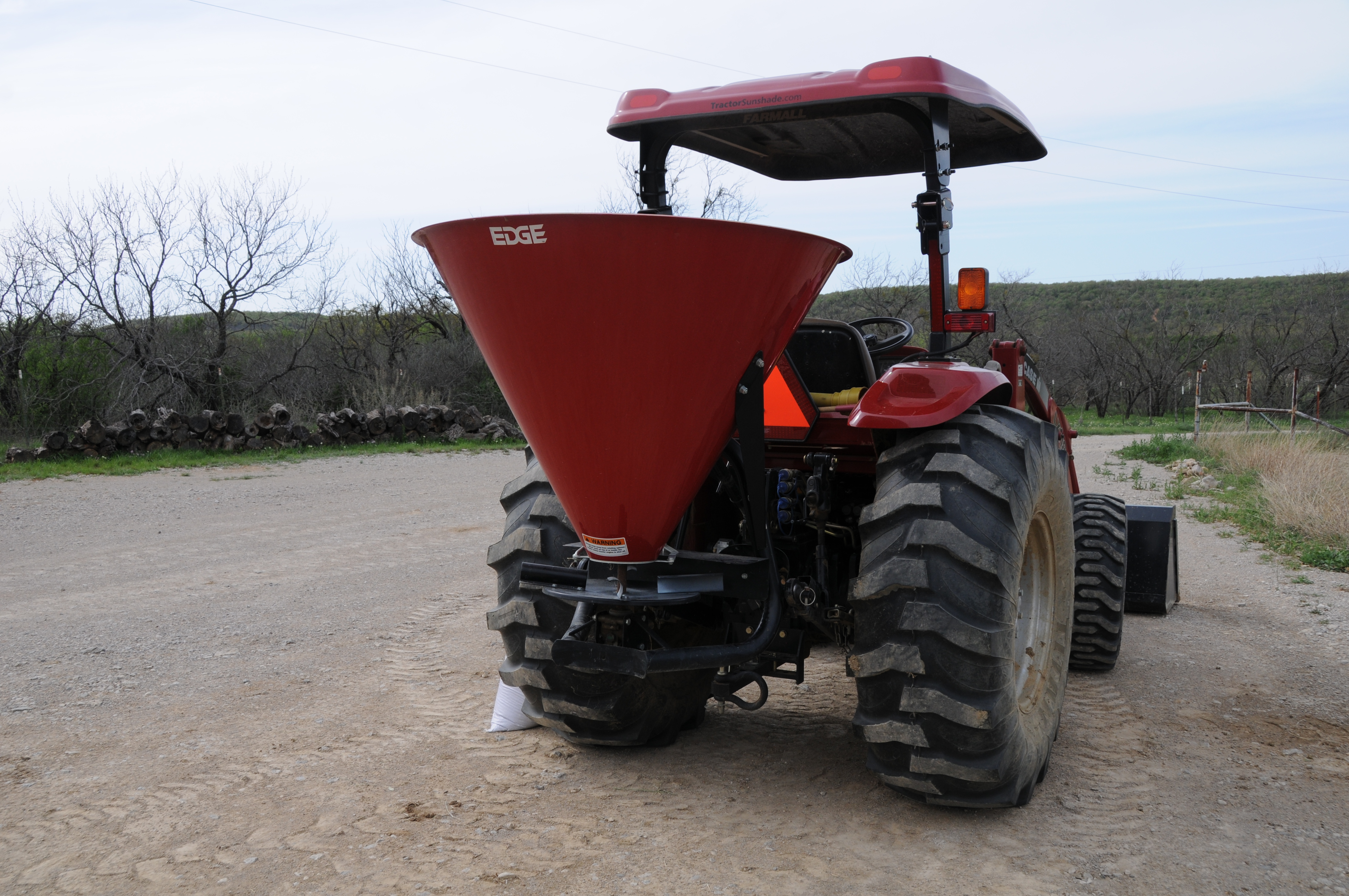
Brought up the tractor with the Edge broadcast seeder and spreader.  Backed tractor and spreader up to rocks on driveway so that water runoff would go onto lawn not puddle in driveway.  Attaching PTO difficult.  Used WD-40.

Case DX-55 with Edge Broadcast Seeder and Spreader, April 3, 2010 (click to enlarge)

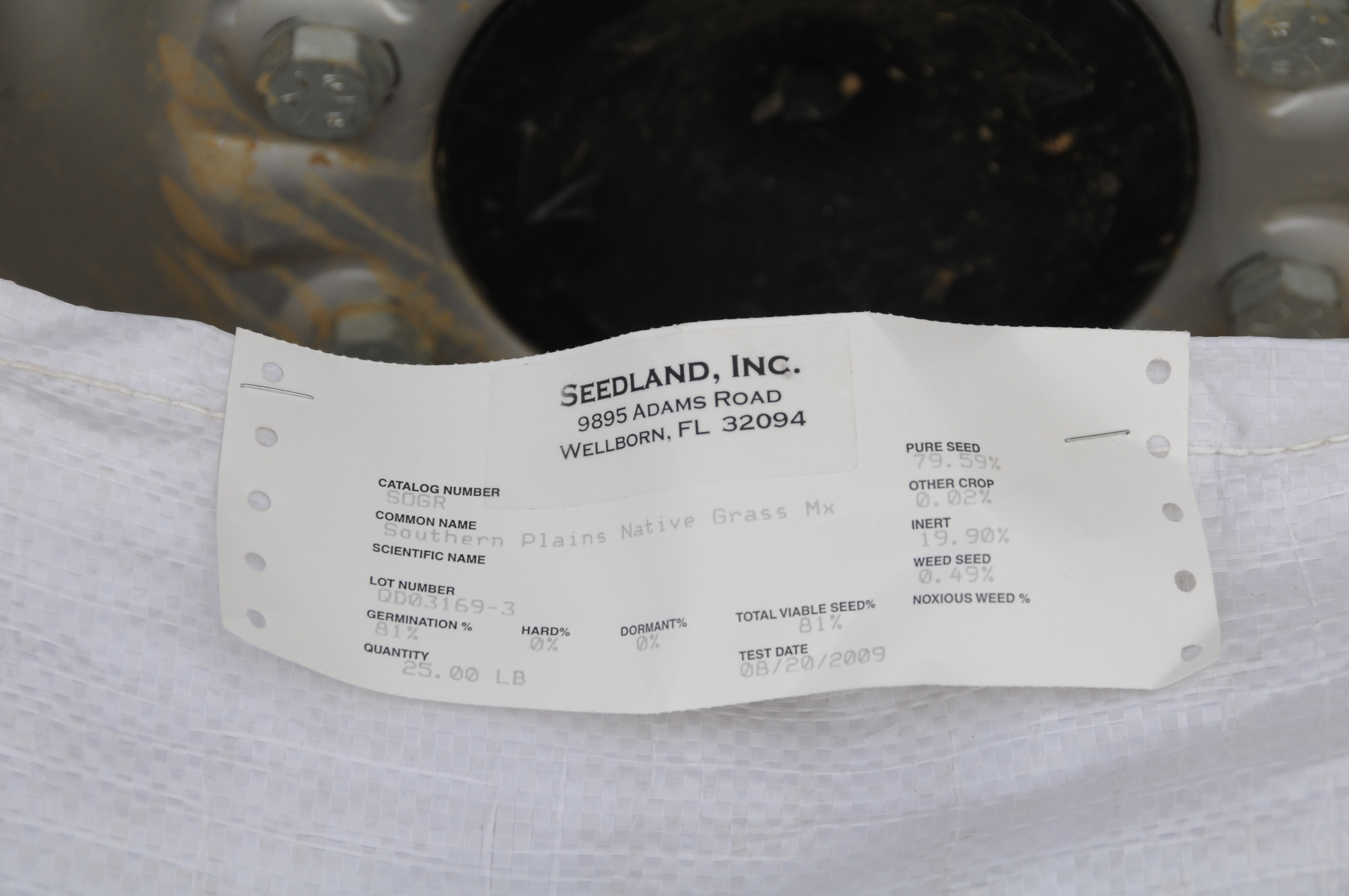
Made calculations as to orifice size to allow seeds to fall through and be broadcast.  Start out with a No. 2 opening.  In the thumbnail below you can see a large white bag and a smaller bag.  The larger bag is the native grass (25 lbs.) and the smaller is the wildflower seed (2 lbs.).

Southern Plains Native Grass Mixture #2901, April 3, 2010

Native Grass Seed Bag and Small Wildflower Bag, April 3, 2010

Texas and Oklahoma Native Wildflower Mixture, April 3, 2010

Wildflower Varieties Planted

Premium TEX / OKA Regional Wildflower Mixture

Common Name *Type Scientific Name Flower Color
Baby’s Breath, Annual A Gypsophila elegans White
Black-Eyed Susan A/B/P Rudbeckia hirta Yellow
Bluebonnet, Texas A Lupinus texensis Blue
Coreopsis, Lance-Leaved P Coreopsis lanceolata Yellow
Cosmos, Sulphur A Cosmos sulphureus Yellow/Orange
Candytuft, Annual A Iberis umbellata White/Pink/Violet
Coneflower, Purple P Echinacea purpurea Purple
Cornflower, Dwarf A Centaurea cyanus Mix
Coneflower, Prairie B/P Ratibida columnifera Yellow/Red
Coneflower, Clasping A Rudbeckia amplexicaulis Yellow
Golden Wave Tickseed A Coreopsis basalis Yellow
Evening Primrose, Dwarf P Oenothera missouriensis Yellow
Evening Primrose, Showy P Oenothera speciosa Pink
Gaillardia, Annual A Gaillardia pulchella Yellow-Red
Mint, Lemon A Monarda citriodora Lavender/White
Phlox, Annual A Phlox drummondii Red
Poppy, Corn A Papaver rhoeas White/Pink/Red
Prairie Clover, Purple P Petalostemon purpureum Purple
Sage, Scarlet A/P Salvia coccinea Red
Wildflowermix.com

Native Grasses Planted

The native grasses planted are: Blue Grama, Sideoats Grama, Buffalo Grass, Plains Bristlegrass, Little Bluestem, Prairie Junegrass and Sand Dropseed.

The wind came up to 10-15 m.p.h.  in the afternoon.  Delayed spreading until after supper at 6:15 p.m.

Following supper, spread seed in Pecan Tree Pasture and house pastures until 9:15 p.m.  Used headlights on tractor to finish spreading.  Orifice enlarged to Nos. 5 and 8.  Spread some seeds on arena-south pasture.  Must disc twice this area on Monday.

Salt Creek runs through the grove with about two-three inches of flow.  Tadpoles emerge.  I hear the trickle of flow as the water falls down on the rocks alongside the road to the far pasture.  Cannot use the road because of the water flow and must go around the Halls place on SH 108.  I put the Case tractor into high gear, fourth position and watch for traffic on the highway.  I have lights flashing.  In four trips to the far pasture today, only one vehicle passed me: a motorcycle with two people, man and woman, traveling to Stephenville, most likely to have barbecue at Hard Eight.

The quote I always have in mind:  Begin with the sun and all else shall follow.  — D.H. Lawrence.

4 Comments

Filed under Field Log, Plants and Shrubs

Field Log 3/28/2010

North Erath County, Texas, 32.43 lat., -98.36 long. Elev. 1,086 ft.  Turkey Creek Quad.

The wind continues to blow today, approx. 15-25 m.p.h.   Yesterday, the wind was so strong it blew the mistletoe off the trees.  That’s gotta be high wind.

Yesterday, looked at Cooper’s in Stephenville for hackamore.  No good choices.  Too much metal.  Duncan Steele-Park used soft rope, no metal for the hackamore.

Fanny adjusting back to the ranch, but the colt down in the arena is having a hissy-fit to get close to her.  Shiney the colt is all-boy.  He’s eleven-months old, doesn’t know what his body is all about right now, but he will.  We mature males and females went through this period, I think — puberty.

Today, let Fanny, Hija and Lilly into pasture.  Shiney runs around the arena trying to attract Fanny’s attention.  Shiney is a full-brother to Fanny (same sire, same dam).  He calms down, then I put the mares into the Broke Tree Corral and stall area.  They seem relieved to get away from the peppy little guy that just wants to play.

Evening feed, two-hours ago, they all settled in.  Calm, for awhile.

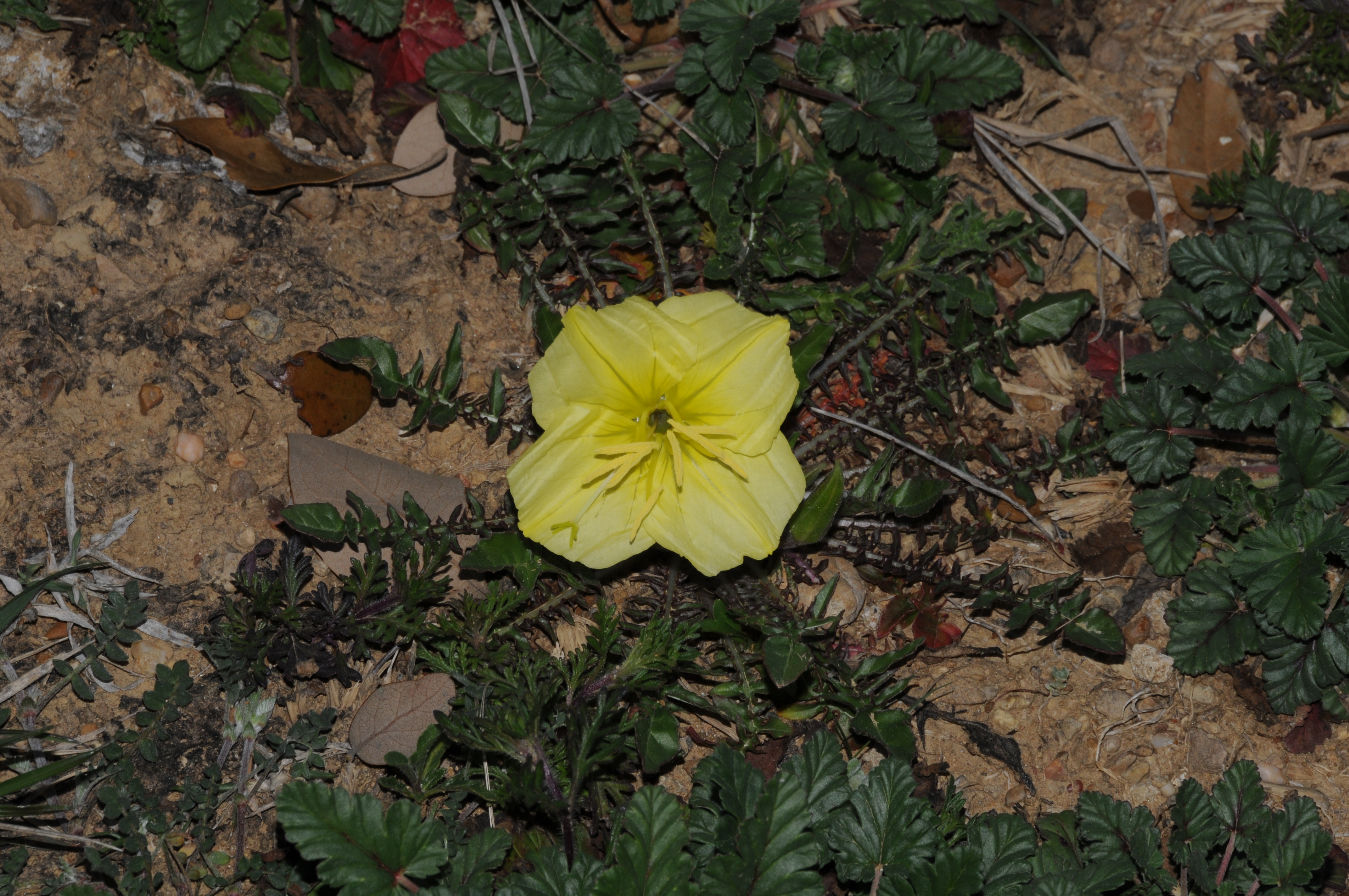
Buttercup (Oenothera triloba Nutt), Poprock Ranch House, March 2010 (click to enlarge)

I searched for genus and species typing for the wildflower above.  Found it in Irwin and Wills, Roadside Flowers of Texas, that I have cited before.  These blossoms open in the morning and in the later afternoon shade.  The plant falls under the Evening-Primrose Family (Onagraceae).  Brenda first called it an evening-shade plant and she was correct.

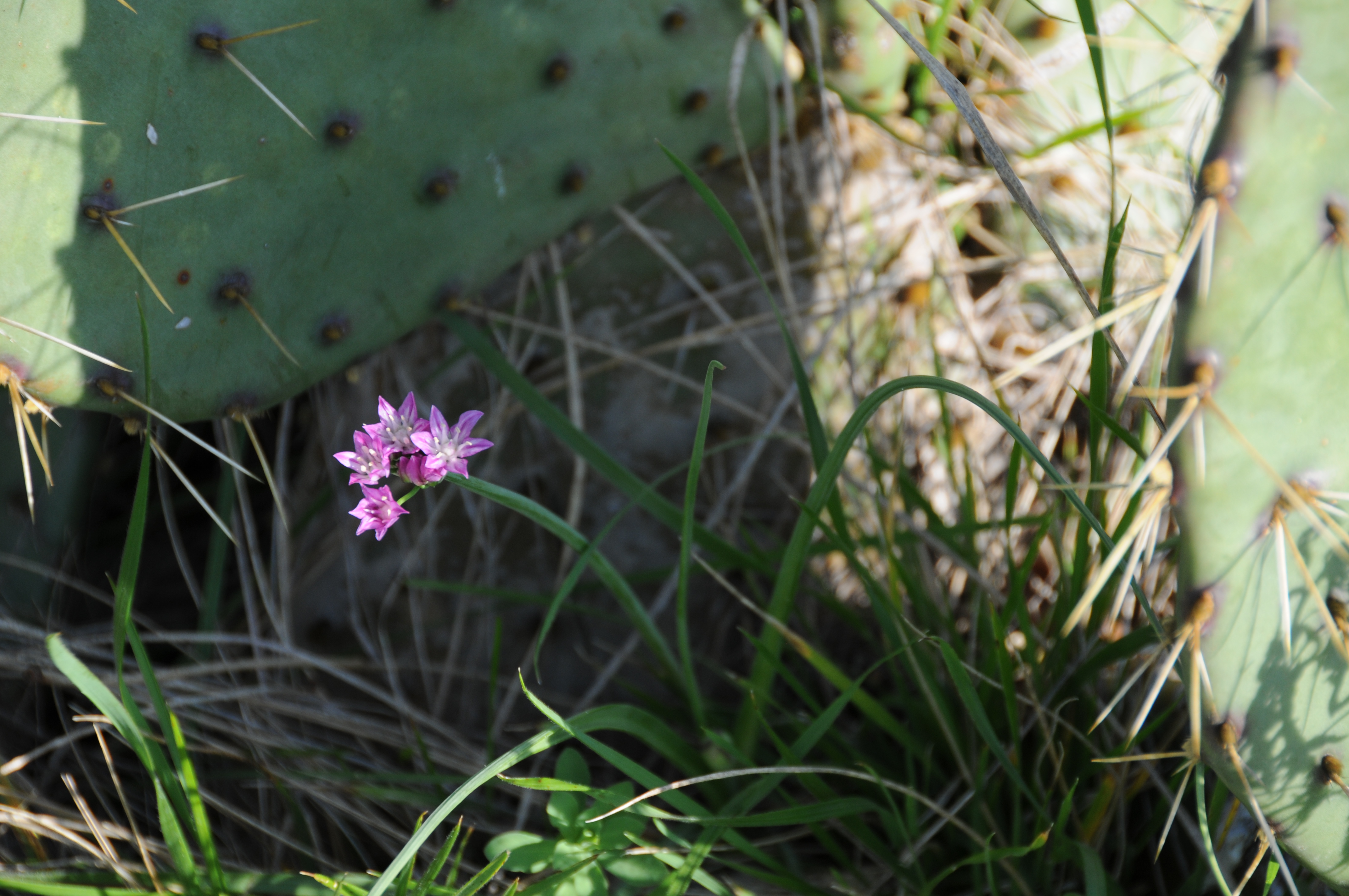
This next blossom is from the same vicinity of the Buttercup.  This is the Wild Onion (Allium mobilense) that I found this morning.  I go out for the third time to the Poprock Ranch House grounds, to the southwest, prior to the barn, and I find this Wild Onion.  It is next to the fence line and the morning sun is rising fast.  Don’t want to lose the shadow for this framing.

Prickly Pear Cactus and Wild Onion (Allium mobilense), March 2010 (click to enlarge)

Then, upon scanning the ground, I find these other wildflowers.  I will identify them later, but I thought to end the weekend, I’ll go ahead and post them.

Unknown No. 1, Poprock Hill Ranch House Grounds, March 2010 (click to enlarge)

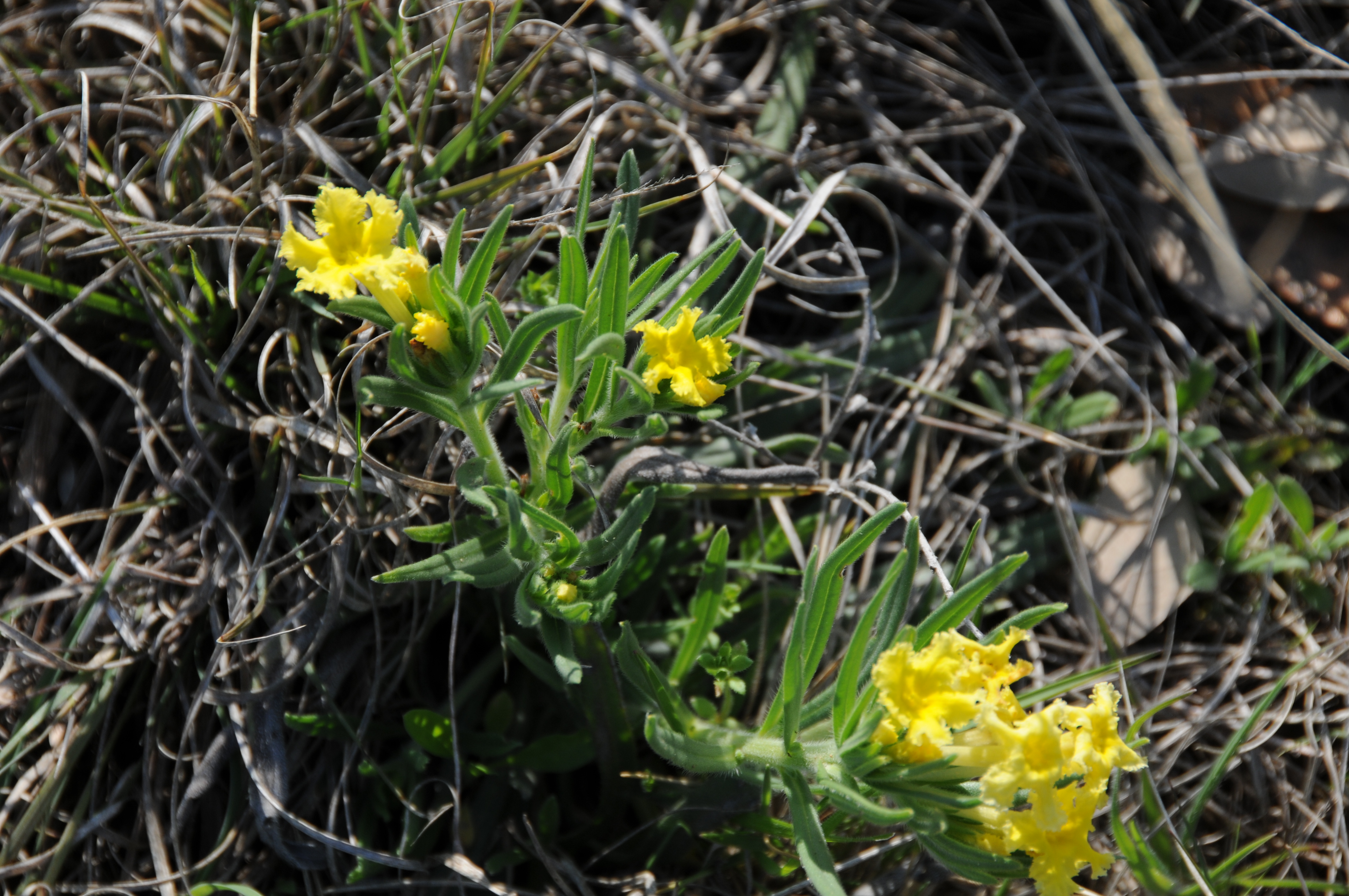
Unknown No. 2, Poprock Hill Ranch House Grounds, March 2010 (click to enlarge)

Unknown No. 2, Close-up, Poprock Hill Ranch House Grounds, March 2010 (click to enlarge)

This is a close-up view of the previous wildflower, having a distinctive scent.

Wind has died down.

Neighbors across on the country road that live in the trailer house have moved.  I liked the family.  Young woman with child.  She wrote letters and lifted up the red flag on the rural mailbox so that Jeannie Chisolm, our mail carrier and caretaker, could take the letters to friends far and wide.  Sometimes both our red flags for Jeannie would be up and I felt close to the family across the country road.

13 Comments

Filed under Field Log, Plants and Shrubs

A Naturalist’s Color Palette, ca. 1686


From Richard Waller, "A Catalogue of Simple and Mixt Colours with a Specimen of Each Colour Prefixt Its Properties" Philosophical Transactions of the Royal Society of London, vol. 6, 1686/1687 (London, 1688)

Click to enlarge the color palette

“Noting the lack of a standard for colors in natural philosophy, and inspired by a similar table published in Stockholm, Richard Waller indicated that his “Table of Physiological Colors Both Mixt and Simple” would permit unambiguous descriptions of the colors of natural bodies. To describe a plant, for example, one could compare it to the chart and use the names found there to identify the colors of the bark, wood, leaves, etc. Similar applications of the information collected in the chart might also extend to the arts and trades, he suggested.”  –Jessica Palmer, Bioephemera Blog.

Click the link below to bring up Jessica Palmer, Bioephemera Blog.

A naturalist’s color palette, circa 1686 : bioephemera.

Read more about Waller’s color system in The Creation of Color in Eighteenth-Century Europe by Sarah Lowengard.

6 Comments

Filed under Plants and Shrubs

Lewis and Clark Plant Identification

Lewis and Clark’s Montana Plants When Lewis and Clark were in Montana they collected an unknown number of vascular plant specimens.  Of all the specimens collected, 31 still exist and are housed in the Lewis and Clark Herbarium in Philadelphia. This page includes articles about these 31 special Montana plants generally, species specifically, and a list of sources for further study.  Click the link below for photographs and citations.

Lewis and Clark

2 Comments

Filed under Plants and Shrubs

Poppies in El Paso

Spring Poppies Near El Paso March 2010

Within the last few days, the Texas Mountain Trail Photo a Day blog site has taken photographs of poppies near Franklin Mountain at El Paso, Texas.  This photo was taken on March 8, 2010.  The type of poppy here is the Argemone mexicana, native in a triangle of Webb, Val Verde and Travis counties.  These poppies are also known as Texas Prickly-poppies, as the stems are prickly.  Of the twenty species in North America, eight species are in Texas.  (Please see Mary Motz Wills and Howard S. Irwin, Roadside Flowers of Texas, Austin: University of Texas Press, 1961, pp. 117-118.)

Poppies Near El Paso March 2010

Notice the Franklin Mountains in the distance.  Click the link below for more information. 

Website and blog for Texas Mountain Trail Daily Photo.

6 Comments

Filed under Plants and Shrubs