Category Archives: Plants and Shrubs

Allowing the flourishing of wildlife

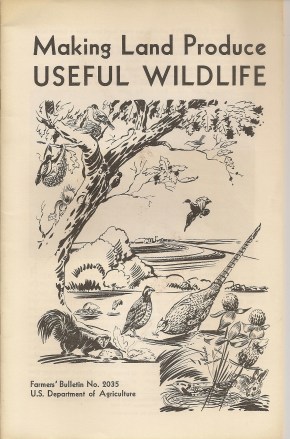
A 1975 reprint of Farmers' Bulletin No. 2035

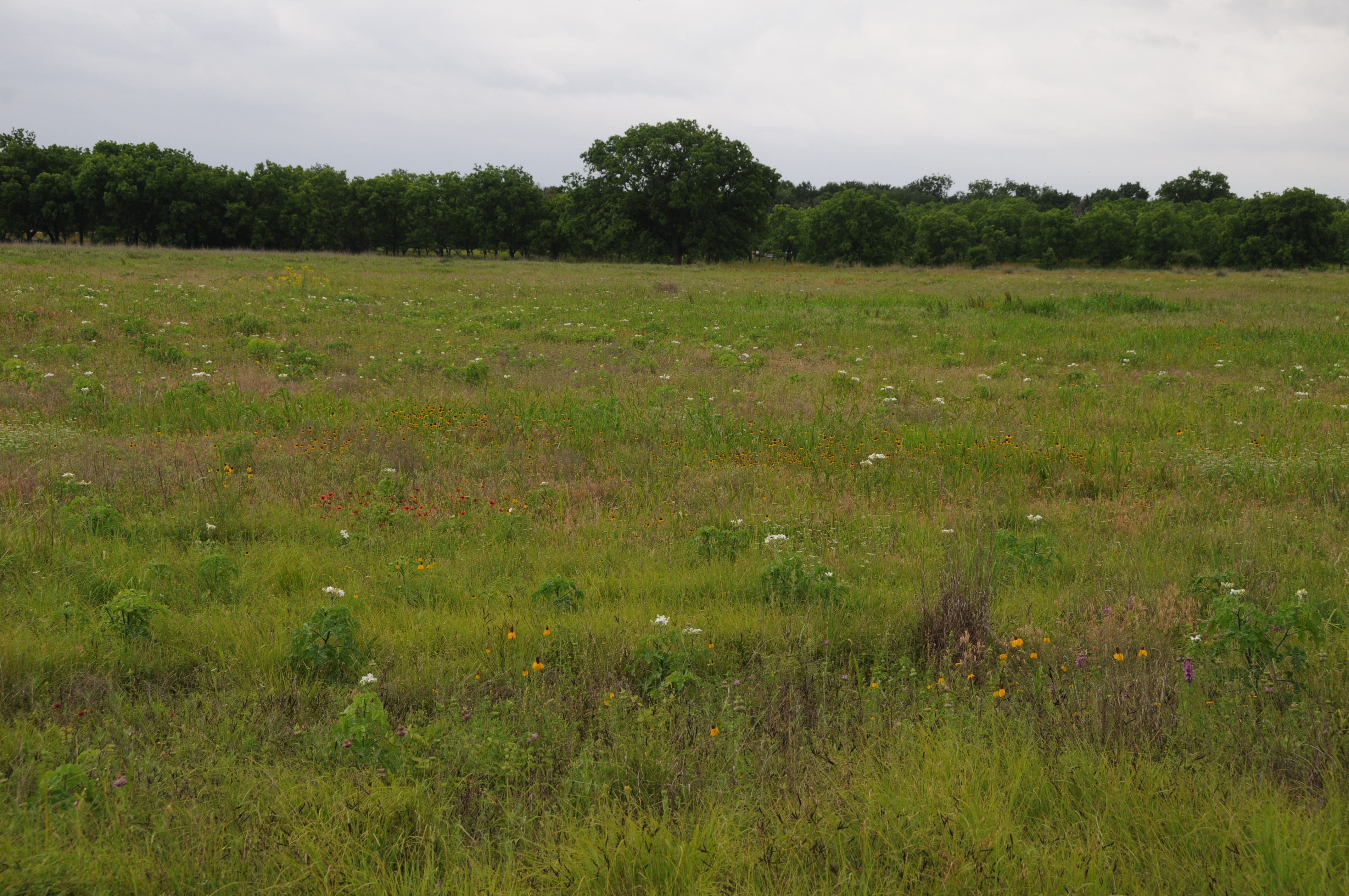
The first summer I lived on my ranchito, the summer of 2004, I hired Cody Scott to plant native grass seeds in my far pasture, the Pecan Tree Pasture that lay between Barton Creek and Salt Creek.  Last summer I reseeded the pasture with native grass seeds and wildflowers.  The upshot of these two distributions has been a resurgence of bluestem, side-oats gramma, buffalo grass, coneflowers, Indian blankets and vetch.  Frankly, I held no longitudinal goal other than to provide habitat food for cattle, horses and wildlife.

Frank Waters of The Man Who Killed The Deer (1942) fame wrote that the proper relationship of a person to the land was to “live with the land,” not on it, but with the land.  Living with the land has been an axiom for me, a mantra for many years.  A U.S. Department of Agriculture Farmers’ Bulletin No. 2035, “Making Land Produce Useful Wildlife,” provides me guidelines to live with the land.  By way of full disclosure, I do not make my living raising cattle or horses, but teaching at a junior college in Abilene, so my basic approach to my ranchito is sustaining the land, not cropping, leasing or planting.  That being said, I integrate what I have learned with horses, cattle and the land into my lectures.

The land is my teacher and all things upon it instruct, from thistles under juniper to even — I hesitate to write this — the mesquite.

So, a few tips from “Making Land Produce Useful Wildlife,” by Wallace L. Anderson, biologist, Soil Conservation Service, I list below.

To support a high wildlife population, a farm or ranch must have a plentiful supply of good food close to cover that furnishes protection from enemies and weather.  And it must be available in all seasons of the year….

Pastureland practices harmful to wildlife are uncontrolled burning, overgrazing, and complete clean mowing early in the season….

There are three essentials to good cover for wildlife — grasses, weeds, stubble, and other low-growing plants for nesting and roosting; dense or thorny shrubs for protection from predators, for loafing, and for nesting; and, in the North, clumps of evergreens or other tall dense cover for winter protection.

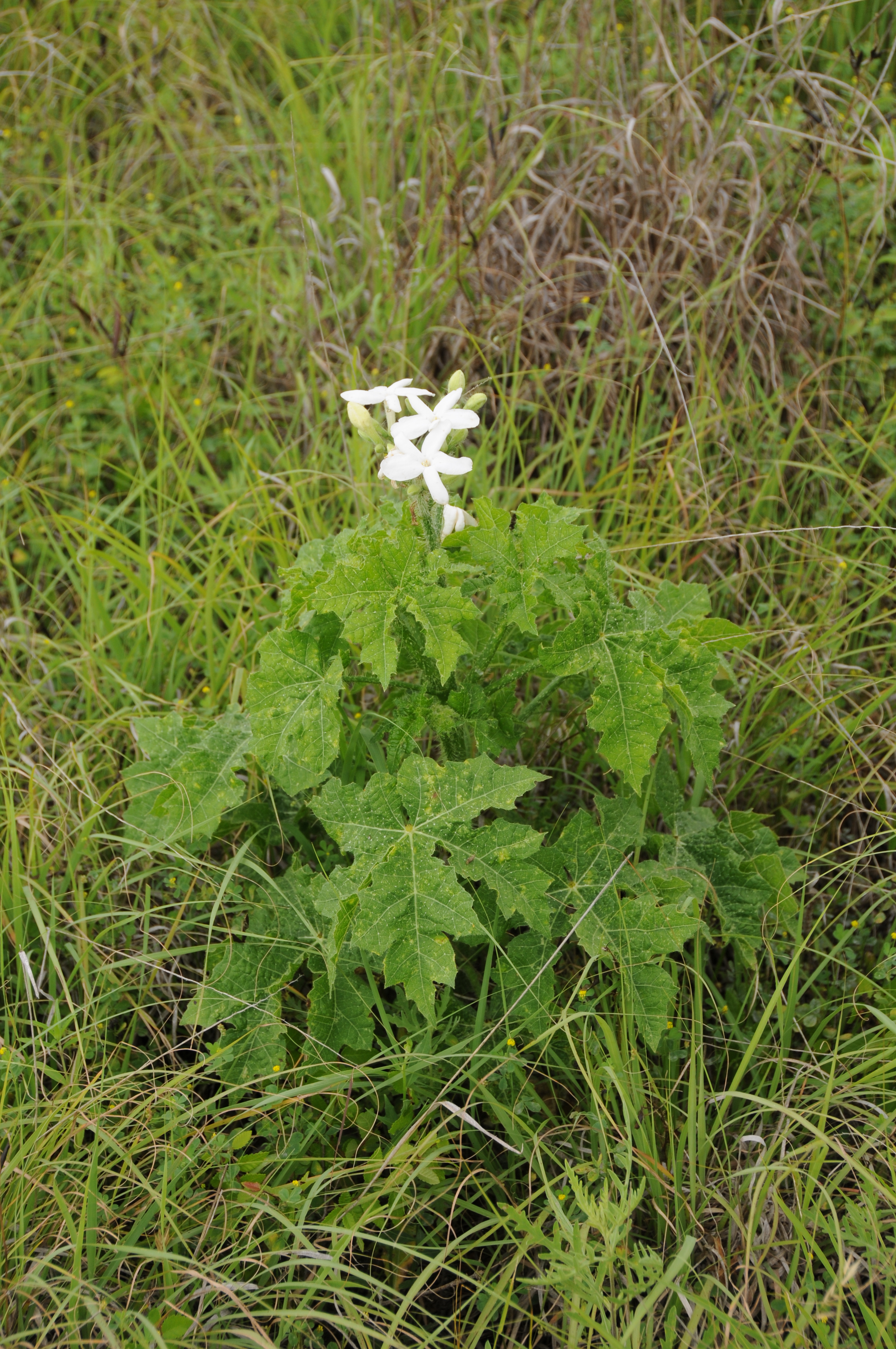
Mesquite thorns, poisonous plants and cacti also abound along the fence rows in the far field.   I have bull nettle, a stinging plant to the touch, but it has medicinal properties.  The nightshade plant that many define as a weed has been used to treat snakebite erupts along the corral.  And the few cedar trees, cut and harvested year after year prior to my ownership, their posts for sale in Mingus and Palo Pinto, are defined more appropriately as “juniper” provide berries for birds, aroma for incense and luscious shade from the sun.  I shan’t be cutting  cedar breaks or juniper.  All this in the far field allows the flourishing of wildlife close to me, close to you, close to us all.
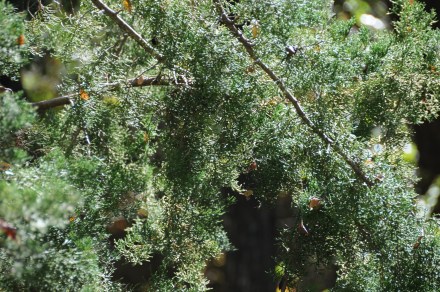
Juniper, often referred to as cedar (J. Matthews, 2011).

[In my next post, I will write about the mesquite tree that is close to us all here in the bush.]

6 Comments

Filed under Cedar, Flying Hat Ranch, Juniper, Life in Balance, Plants and Shrubs, Wild Flowers of Texas

Little bluestem with iPhone

On February 26, Saturday last, when in the field, I applied the iPhone to take photographs and upload for a field test: short bursts of field notes and photographs as I surveyed 53 acres of Cross Timbers prairie, creek and woodland. I attempted to snap a photograph and upload it with commentary as I went about my survey. While in the field, miles from cell towers, I was unable to coordinate photos and commentary. In addition, the “thumbing” of data on the iPhone was too slow. I was absorbing data much, much faster than I could thumb the phone. I did send a few in-the-field updates onto my blog, but later trashed them. I composed a long post with photographs taken with the Nikon when I got back to the ranch office.  In the field I did not think the photographs had been uploaded.

Today, however, as I was going through the media library on Sage to Meadow blog, I discovered that the photographs with the iPhone had been uploaded! I uploaded one photograph twice, thinking it had not been uploaded the first time. And, here it is, Little bluestem grass that is coming back on the prairie.

Little bluestem grass, Pecan Tree Pasture, Flying Hat Ranch, Texas, February 2011.

I think the utility of the iPhone in field work is evolving.  It is portable and lighter than a camera.  Composing commentary can exceed 140 characters.  It’s not going to replace the steno pad and camera, but it may have some further use.  I like the idea of field work live, or with a minimum of time lapse, as a light and useful activity.

3 Comments

Filed under Bluestem Field Log, Plants and Shrubs

Gathering mistletoe in December

Oklahoma floral image mistletoe

In the 1940s and 1950s, I grew up in central Texas, playing and working about the counties of Brown, Mills, San Saba and Lampasas.

Although born in Brown County, my family spend a great deal of time visiting relatives during the holidays in San Saba and Lampasas Counties.  The Colorado River and San Saba River formed the backdrop of my childhood and early teen years.  During December, I often stayed a week or two with my grandmother who lived first in Bend, Texas, and then Lometa, a few miles away from Bend where she worked as a telephone switchboard operator for the communities.  The switchboard was in her living room.  Her name was Effie Morris Parks and she taught me much about living off the land, or at least using nature’s products from the original source, not a supermarket.

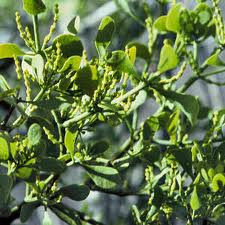
Grandmother Effie, as I called her, steered me in the month of December to harvest and collect two things:  mistletoe and cedar.  Cedar is still harvested, but the gathering of mistletoe with its poisonous berries to frock the door portal seems to have vanished from holiday culture.

She had a green Chevrolet pickup.  We would drive the pickup down dirt county roads and pull up next to a tree, usually mesquite, that would have clumps of deep green mistletoe with white berries.  We would knock down the mistletoe with long bamboo poles that we also used to gather pecans in the Fall.  Either that or I would climb up the tree and break off the fungus.  Then we would gather the mistletoe and place it in the bed of the pickup until the pile topped the rails.  We had to be careful to preserve the white berries because that improved the price we would receive.  We drove to San Saba or Lometa and would sell the mistletoe at the mohair and wool congregating store.  We would make upwards of twenty dollars and during the rest of the season, I often thought I saw what we had collected in small, cellophane packages sold in grocery stores in Brownwood.  I doubt that was the case, but I felt rather pleased that I had helped make holidays brighter for someone.

I chopped cedar only once or twice as a boy and it was grueling work, but during December the weather was cold and going into the cedar breaks to cut wood did not seem as brutal as it was chopping cedar in the summer.  Grandmother’s friends would take my cuttings — not very much, I’m afraid — and I would have a few dollars to spend during the holidays.  The cedar choppers I worked around were all muscled and strong and I envied their chopping expertise.  I learned how to cut staves versus good thick fence poles.

My grandmother Effie also gathered water cress, pecans, killed and plucked her own chickens, and during the late summer we would take the green Chevrolet and collect wild Mustang grapes that she would turn into jelly to consume on our breakfast table and give to friends.  The tartness of the Mustang grape is like no other.

But it is the memory of harvesting and gathering of mistletoe and cedar with Grandmother that stays with me today during the holiday stretch.  I scraped my arms and got stuck by mesquite thorns.  Despite it all, I grew up knowing nature intimately during the cold of December with my grandmother as teacher.

17 Comments

Filed under Bend Texas, Cedar, Christmas, Juniper, Life in Balance, Plants and Shrubs, Recollections 1942-1966, San Saba Texas

Tickling the belly of buffalo: no more

[When I lived in Amarillo, Texas, from 1966-1990, I gazed upon the landscapes of the Panhandle-Plains and saw distances and life in those distances.  Not barren, not unlivable, but inhabited.  Sandhills Crane, burrowing owls, sagebrush, mesquite, cool waters of the Prairie Dog Fork of the Red River, geese, Mallards, mule deer, white-tailed deer and the Barbary Sheep of the Palo Duro Canyon.  I hiked into the edges of vast ranches and found campsites of cowboys and Kiowa tribes, they not-knowing, the owners that I was even there, lightly I trod.

In the midst of all this wandering, I taught at Amarillo College and I impelled my students in anthropology to sketch corn-grinding sites in the canyons for practice and awe.

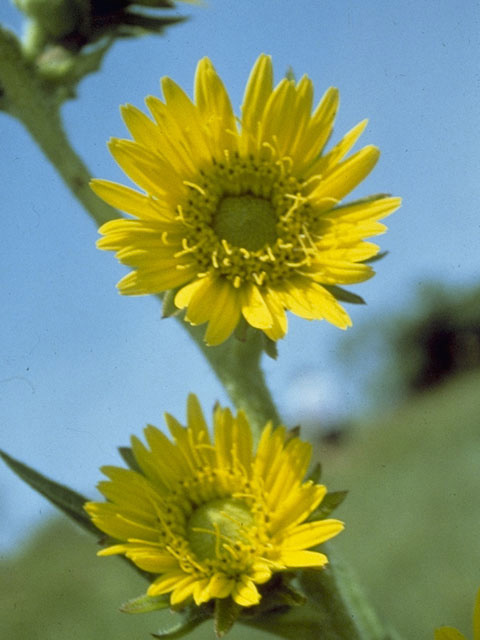
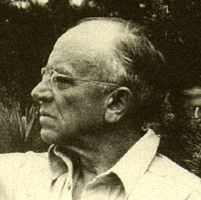
Somewhere along the way of field trips and hikes, I came across Aldo Leopold’s A Sand County Almanac. He died fighting a prairie fire.  Here is an excerpt about the Silphium of the Aster family.  It is more than a plant cut under the progress of road.  It is the canary in a cage in a mine, deep into the earth.

From the University of Texas, http://gargravarr.cc.utexas.edu/chrisj/leopold-quotes.html This excerpt is from Aldo Leopold, A Sand County Almanac.  Other excerpts are included at this website.]

Every July I watch eagerly a certain country graveyard that I pass in driving to and from my farm. It is time for a prairie birthday, and in one corner of this graveyard lives a surviving celebrant of that once important event.

It is an ordinary graveyard, bordered by the usual spruces, and studded with the usual pink granite or white marble headstones, each with the usual Sunday bouquet of red or pink geraniums. It is extraordinary only in being triangular instead of square, and in harboring, within the sharp angle of its fence, a pin-point remnant of the native prairie on which the graveyard was established in the 1840’s. Heretofore unreachable by sythe or mower, this yard-square relic of original Wisconsin gives birth, each July, to a man-high stalk of compass plant or cutleaf Silphium, spangled with saucer-sized yellow blooms resembling sunflowers. It is the sole remnant of this plant along this highway, and perhaps the sole remnant in the western half of our county. What a thousand acres of Silphiums looked like when they tickled the bellies of the buffalo is a question never again to be answered, and perhaps not even asked.

This year I found the Silphium in first bloom on 24 July, a week later than usual; during the last six years the average date was 15 July.

When I passed the graveyard again on 3 August, the fence had been removed by a road crew, and the Silphium cut. It is easy now to predict the future; for a few years my Silphium will try in vain to rise above the mowing machine, and then it will die. With it will die the prairie epoch.

The Highway Department says that 100,000 cars pass yearly over this route during the three summer months when the Silphium is in bloom. In them must ride at least 100,000 people who have ‘taken’ what is called history, and perhaps 25,000 who have ‘taken’ what is called botany. Yet I doubt whether a dozen have seen the Silphium, and of these hardly one will notice its demise. If I were to tell a preacher of the adjoining church that the road crew has been burning history books in his cemetery, under the guise of mowing weeds, he would be amazed and uncomprehending. How could a weed be a book?

This is one little episode in the funeral of the native flora, which in turn is one episode in the funeral of the floras of the world. Mechanized man, oblivious of floras, is proud of his progress in cleaning up the landscape on which, willy-nilly, he must live out his days. It might be wise to prohibit at once all teaching of real botany and real history, lest some future citizen suffer qualms about the floristic price of his good life.

______________________________

Notes:

All photographs of the plants, courtesy of Lady Bird Johnson Center for Plants in Texas.

11 Comments

Filed under Life Out of Balance, Plants and Shrubs

Cactus Illusion II

Caralee Woods, Cacti Illusion, Fort Worth, Texas

Caralee Woods of Kanab, Utah, sent me a cactus illusion she had in her home at Eagle Mountain Lake, Texas, several years ago.  She writes,

Here’s another cactus illusion, one of my favorite photos.  It was taken in a hall that led from the kitchen to the garage in the Fort Worth house.  You will remember there was a series of three small square windows in which I put little pots of small cacti.  The sun would shine at a particular angle, making a shadow on the white opposite wall.

Caralee Woods and Jimmy Henley live in Kanab, Utah, and are building a strawbale compound.  You can visit their website Building Our Strawbale Home! Caralee was a regional book representative for Harper and Row before she retired.  Her husband, Jimmy Henley, was the undergraduate dean at Texas Christian University and taught sociology.  He was a grade school and high school friend of mine in Brownwood, Texas.

Their home at Eagle Mountain Lake near Fort Worth was featured in Architectural Digest [n. d.] before they sold it and moved to Kanab.  Their home was built with many of the lines and forms of the Kimball Art Museum in Fort Worth.

I used to house sit and take care of their companions (doggies and kitty cats) while they vacationed in the American Southwest.  I grew so attached to their companions that I regretted when they returned and I had to leave.

______________________________

Correction:

Caralee and Jimmy’s home was not featured in Architectural Digest, but in the local Dallas and Fort Worth newspapers.  See the comment section below.

6 Comments

Filed under Lilly, Plants and Shrubs

Yucca Meditation 1.0

Three terraces form the foundation for our home on a hill.  The hill stands out in the Turkey Creek Quadrangle map, but it has no name.  We refer to our knoll with its expansive view in west Texas as Poprock Hill, but the numerous swallows gliding about our home prompt us to rename the hill: Swallow Hill.  We’ve not committed to the change, but the possibility lingers.

Pale-leaf Yucca grows and roots along and down each of our three terraces, providing nectar for moths and fruit for deer although we have seen no deer in several months.  The yucca stalks are several feet high, the blossoms are so heavy that most of the stalks are weighted down, drooping bulbs, yet still a vibrant yellow-white for weeks in mid-spring.  By now, the last days of July, all of the blossoms have fallen.

It is said that plants grow in assemblies, like a family of sorts.  If so, then our yucca family on Poprock Hill prospers and grows haply.  I do not see the yucca as a plant to be uprooted, but as a succulent that prevents erosion of our terraces, an ornamental of natural spikes guarding our home.  A protector.  Someday because of erosion we will have to reinforce the terraces, but we will not uproot one yucca, one family, one blade, to do so.  Bayonets, stakes on the plains, these yuccas have been named in history.  For us, however, our Pale-leaf Yucca are our cousins that enliven the daily family reunion we have with nature.

4 Comments

Filed under Plants and Shrubs

Nature Reflections 1.0 (Scents)

Opening up the senses in the country — it could also be the city — means to go outside, into the weather, the air.  Lewis and Clark saw antelope rub their heads on sagebrush to perfume themselves.  I camped one night on the Zuni reservation and a light rain fell that exploded the smell of sage around me.  Today the dominant scent is dust, stirred by shredding broomweed that has a pungent, woody quality when cut.  From time to time, however, the broomweed receded as I shredded wild thyme, rising  up in sweet waves to greet me, please me, offering a odor that buffered dust and wood.

In the distance, I see thunderclouds and rain shafts, and coming on the cool breeze is the smell of rain sprinkling the ground, turning dust to loam, a nursery for wild thyme.  Dominant not is dust anymore.   A revolution of the senses always comes with rain.

______________________________

Notes:

My cousin, Sam Gray, whose mother (Myvan Morris Gray) was my great aunt on my maternal grandmother’s side, wrote on facebook that there was word describing the smell of rain:

petrichor — a pleasant, distinctive smell frequently accompanying the first rain after a long period of warm, dry weather in certain regions.  Also, an oily liquid mixture of organic compounds which collects in the ground and is believed to be responsible for this smell (Oxford English Dictionary).

6 Comments

Filed under Plants and Shrubs

Native Shrub Identification Guide (Post)

My blog page, “Native Shrub Identification Guide,” is the most popular hit on my blog and continually attracts a variety of readers.

I plan to expand the page in the near future by finding additional links on identifying shrubs and plants in western America.

If you have any suggestions on how to improve the page, please leave a comment.

1 Comment

Filed under Plants and Shrubs

Field Log 5/30/2010 (Coneflowers)

North Erath County, Texas, Lat 32.43 N, Long -98.36 W, elev. 1,086 ft. Turkey Creek Quad.

General Log

Weather has been hot, 90 deg. F. plus, last few days.  Air is almost completely calm.  Some slight breeze from the south.

Grass is drying up, browning.  Seeds are become ripe and falling off.

This week, Shiney goes for sale at Shawnee, Oklahoma.  We leave on Thursday, come back on Sunday.  The most important objective is guarantee that Shiney will have a good home, regardless of the auction price.

F-250 in shop for air conditioner repair.  Have been looking at new and used F-250s to purchase.  The trucks have been repaired frequently in the last week, ranging from oil pumps to the F-150 bearings and now the air conditioner.

Barn Swallows and Feeding Wild Birds by Hand (A Method Observed)

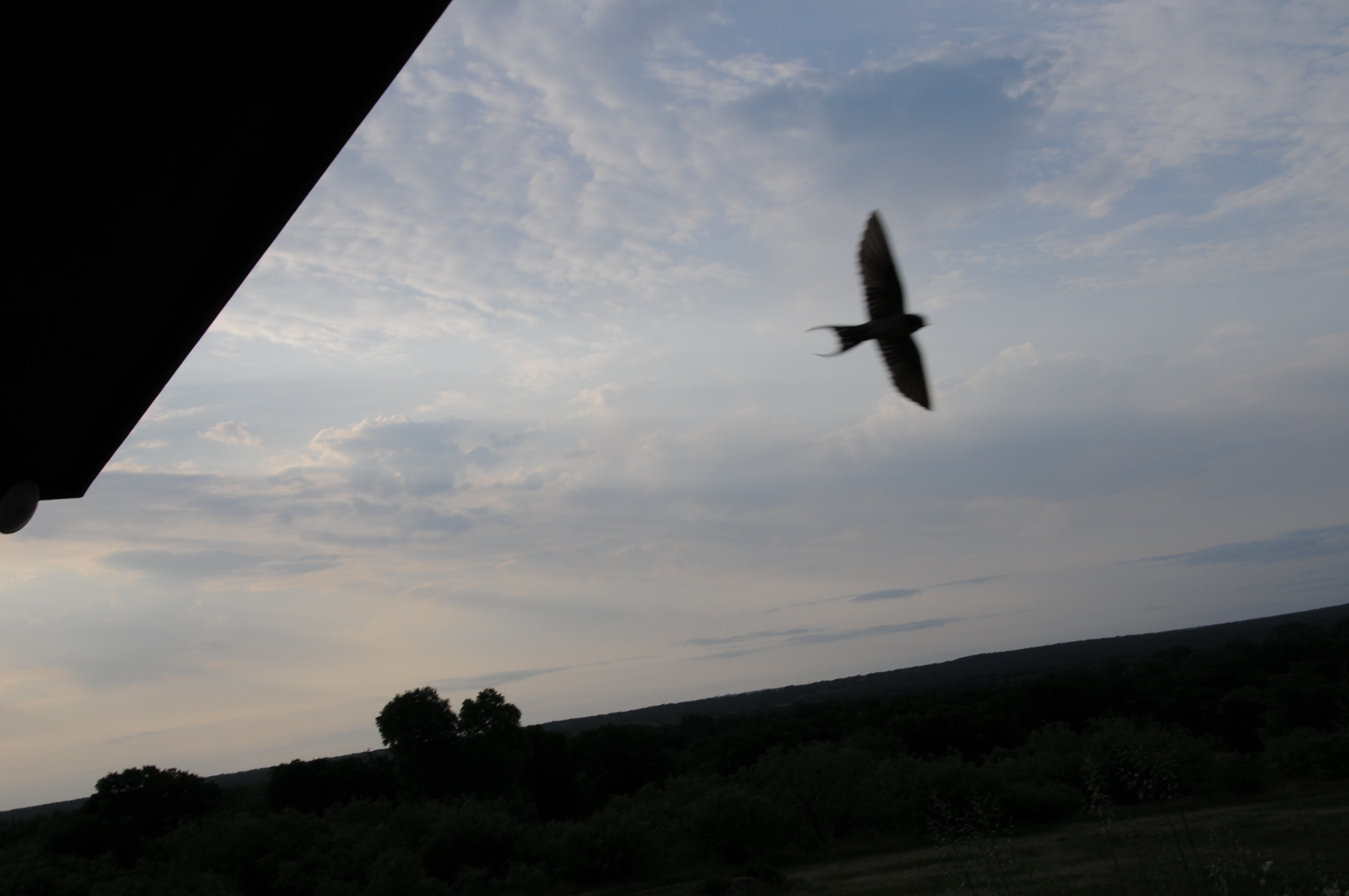
In the evening, Barn swallows (Hirundo rustica) encircle our ranch house on Poprock Hill and feed on mosquitoes and flies.  A nest of barn swallows have hatched fledglings on our back porch.  Notice the characteristic sharply-notched tail.  This photograph was taken in the morning.  If I sit quietly on the porch, the swallows will angle under the eve of the porch and fly within three or four feet of where I am sitting.  Last year, a resident wren that fed about the porch landed on my hat and pecked around on my hat for about a minute until it flew off.   I will set the camera up for remote operation and see if I can photograph the wren on my hat.  When I lived in Paris, I was always intrigued by the young man at Notre Dame that would sit in a chair about the sidewalk and hedge and have the sparrows feed out of his hand.  The method he used was to look away from the birds and extend his arm back from his body (like in handing off a baton) so that the birds did not see his eyes or mouth (specific threat areas for birds).  The young man was neither monk nor priest, but a lad that loved birds.

Barn Swallow in Flight, Photo by J. Matthews

Wildflower Photography and Hoe Downing with Bull Nettle (Not a Dance)

On May 23, 2010, Brenda and I drove the F-150 to Pecan Tree Pasture for her to photograph wild flowers and for me to hoe down Bull Nettle.

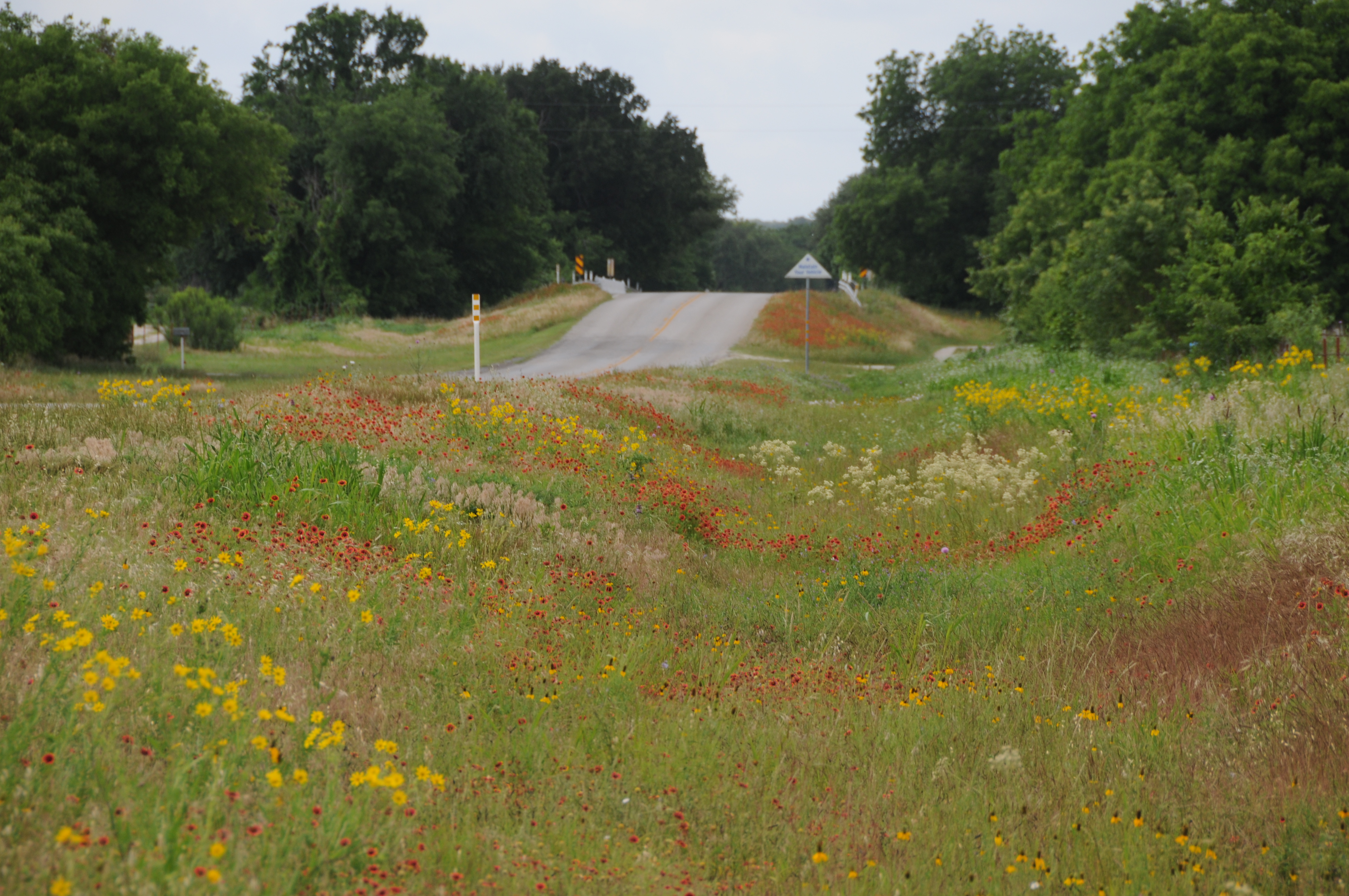
Wild Flowers alongside SH 108 at Gate 3 Entrance, Photo by B. Matthews

Lemon Horsemint, Photo by B. Matthews

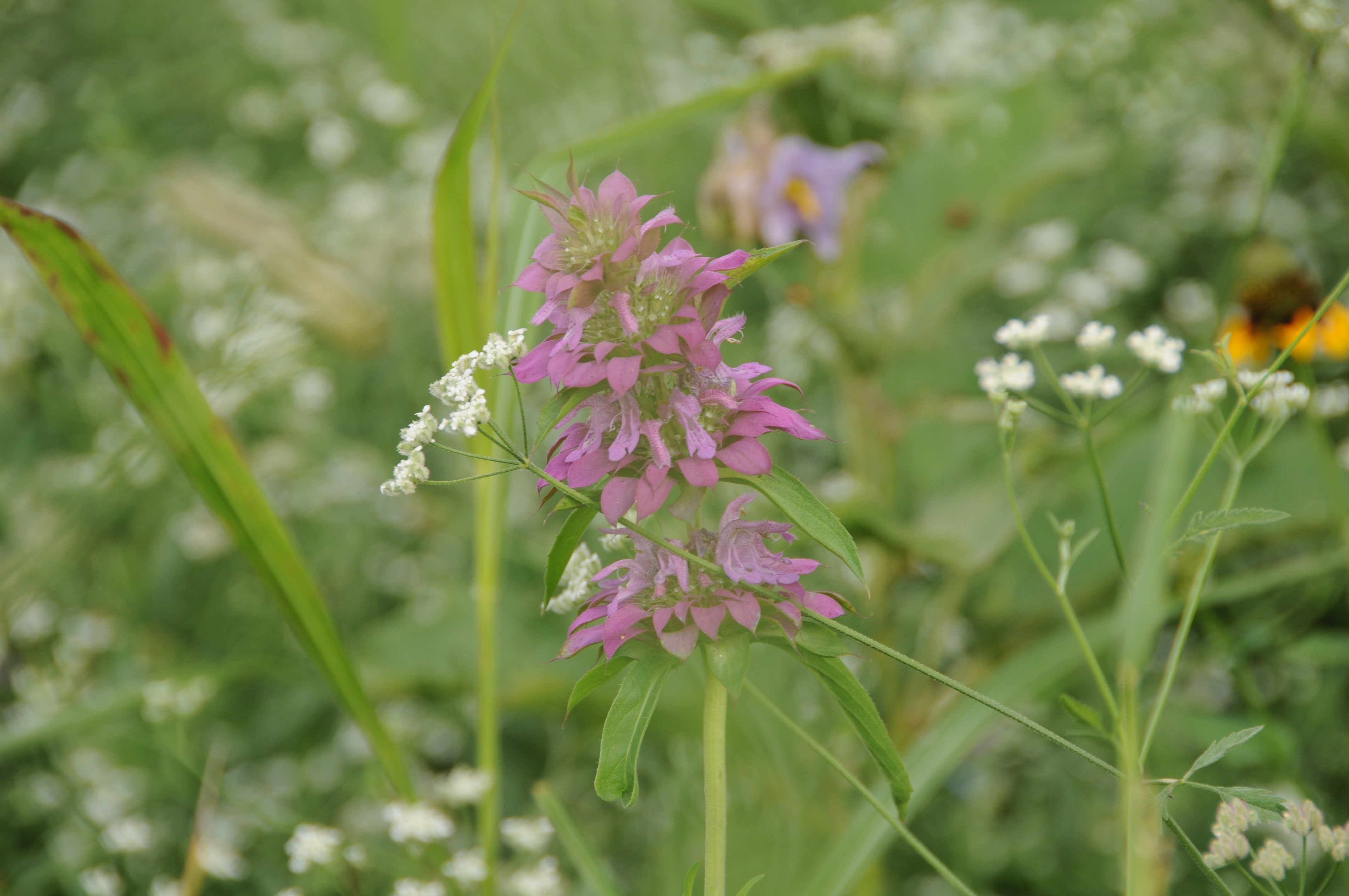
This blossoming plant is the Lemon horsemint (Monarda citriodora Cerv. ex Lag.)  It is also known as the Lemon beebalm, Horsemint, Purple horsemint or Plains horsemint.  Several stands of this plant are about the place.  Over near the pecan tree, a few blossoms are present.  The biggest stand of Lemon horsemint is back up by the barn, about an old hearth location that goes back for several decades, perhaps prehistoric.  The Lemon horsemint is attractive to butterflies and bees.

Clasping Coneflower, Photo by B. Matthews

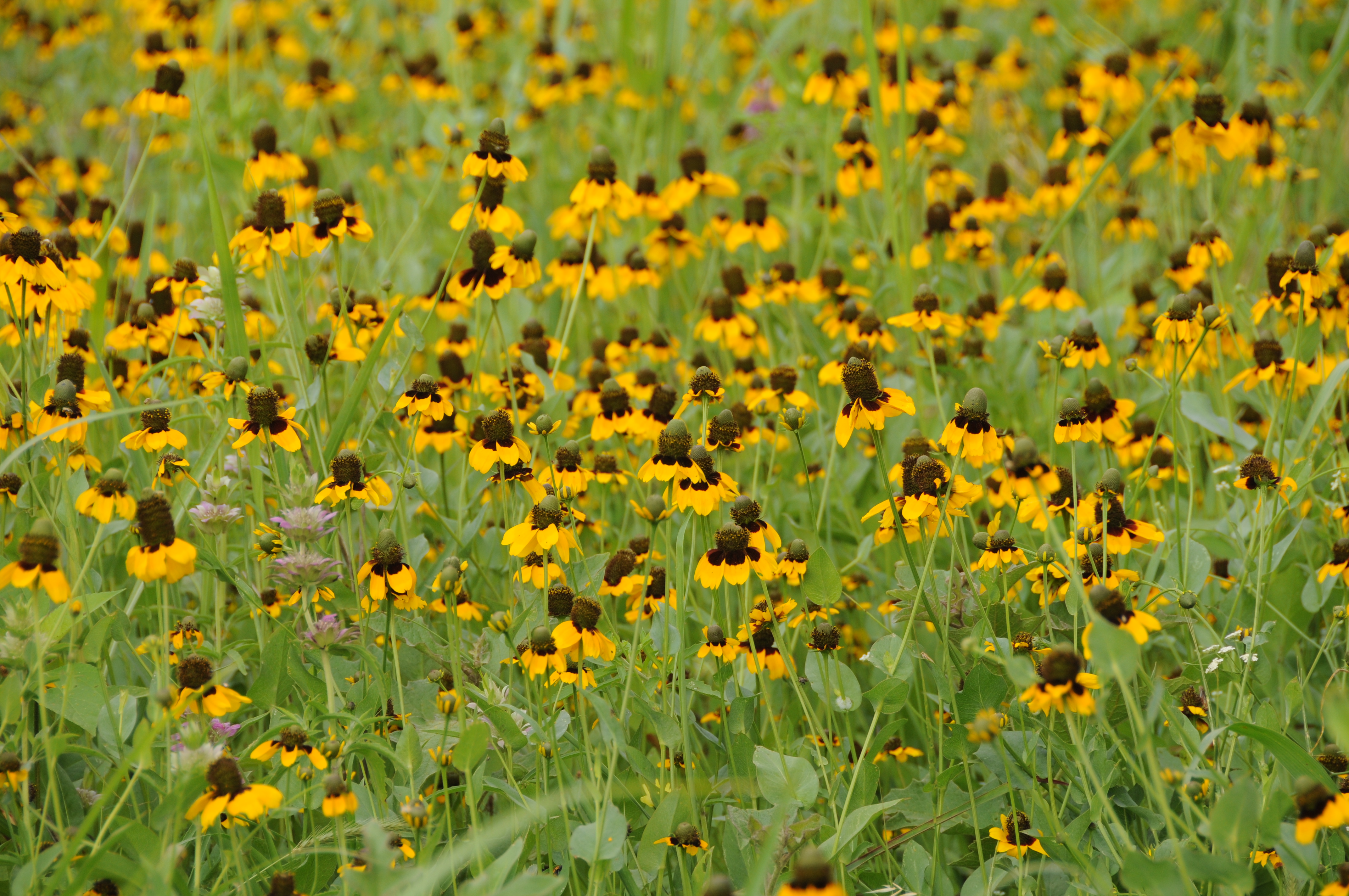
This yellow-leafed blossom is the Clasping Coneflower (Dracopis amplexicaulis).  It is also know as Clasping-leaf Coneflower.  It differs from the Black-eyed Susan and Mexican Hat.  This particular species has medicinal qualities: the Cherokee used the  juice of root for earache and a tea, made from the leaves, was used as a tonic and diuretic.

Unidentified Plant and Blossom (Now Identified)

Bush Vetchling or Manystem Pea, Photo by B. Matthews

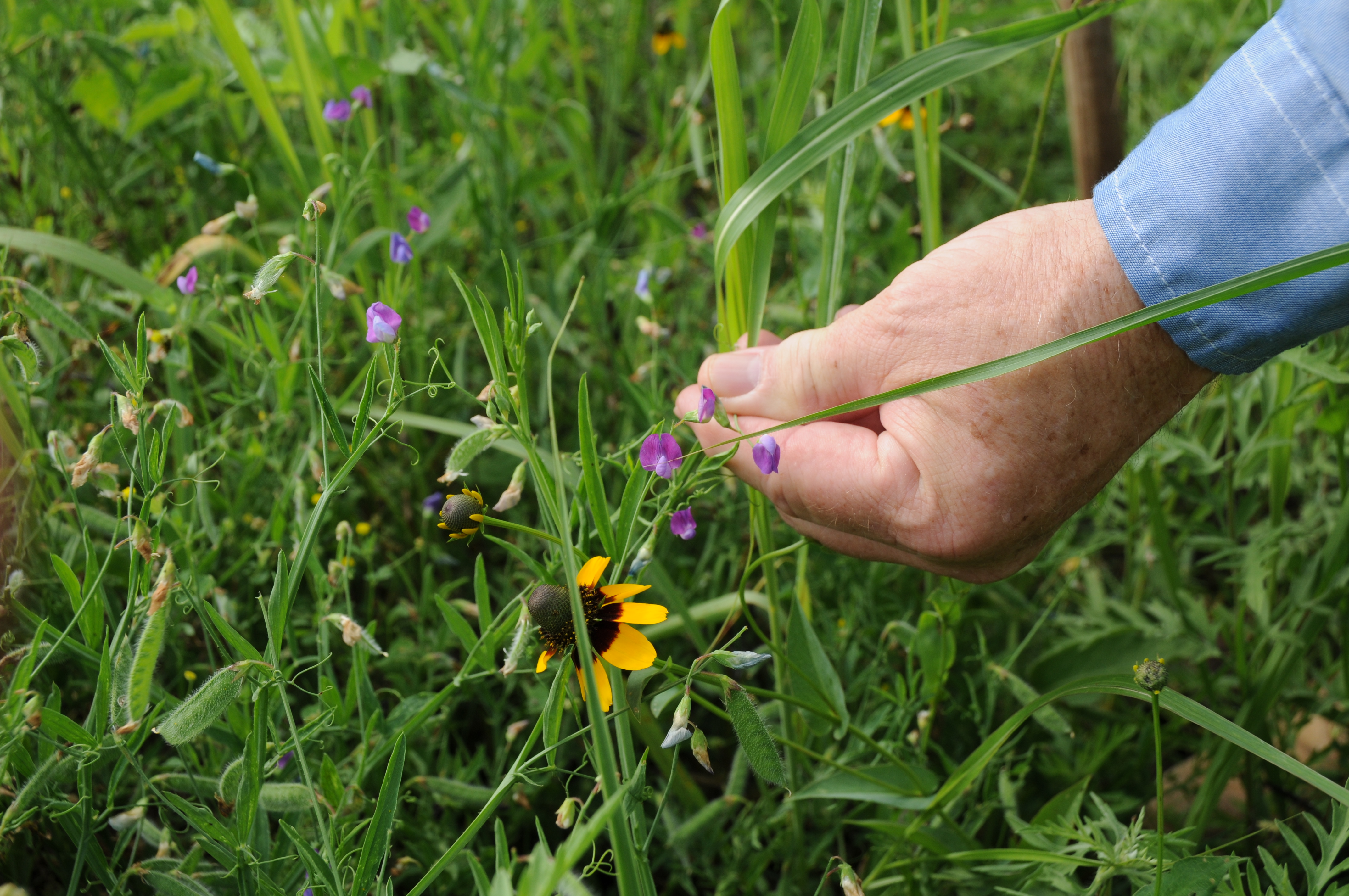
Here we have an unidentified plant and blossom.  (See update for identification in next paragraph.)  I first thought it a Skull-cap (Scutellaria drummondii), but I am not sure.  Like my previous analysis regarding the Mariposa and Wine-cup, I must go back over to the pecan tree area and re-photograph and take a sample of the full plant, not merely the blossom.  One of the interesting aspects of posting this photograph and determining genus and species is that I look more closely at the photograph to make sure I get it right, and upon looking closer at the photograph, I see bean pods that I did not notice while I was in the field — see if you can spot the pods.

Update:  The unidentified plant and blossom is the Bush Vetchling or Manystem Pea from the Lathyrus genus, more than likely the species montanus or nissolia.  The Lady Bird Johnson Wildlife Center lists several species including polymorphus and brachycalyx ssp. zionis. Thank you, Grethe Bachmann of Thrya Blog and Flora and Fauna Blog for the identification.  I never would have found it since it does not appear the two general sources of plants I use for identification.  You can go to Grethe’s blogs by linkage from my blogroll on my Homepage.

Texas Prickly Pear, Photo by B. Matthews

This is the blossom of the Texas Prickly Pear (Opuntia engelmannii var. lindheimeri).  The blossoms are especially brilliant.

Indian Blankets with Shelton Rock Hills, Photo by B. Matthews

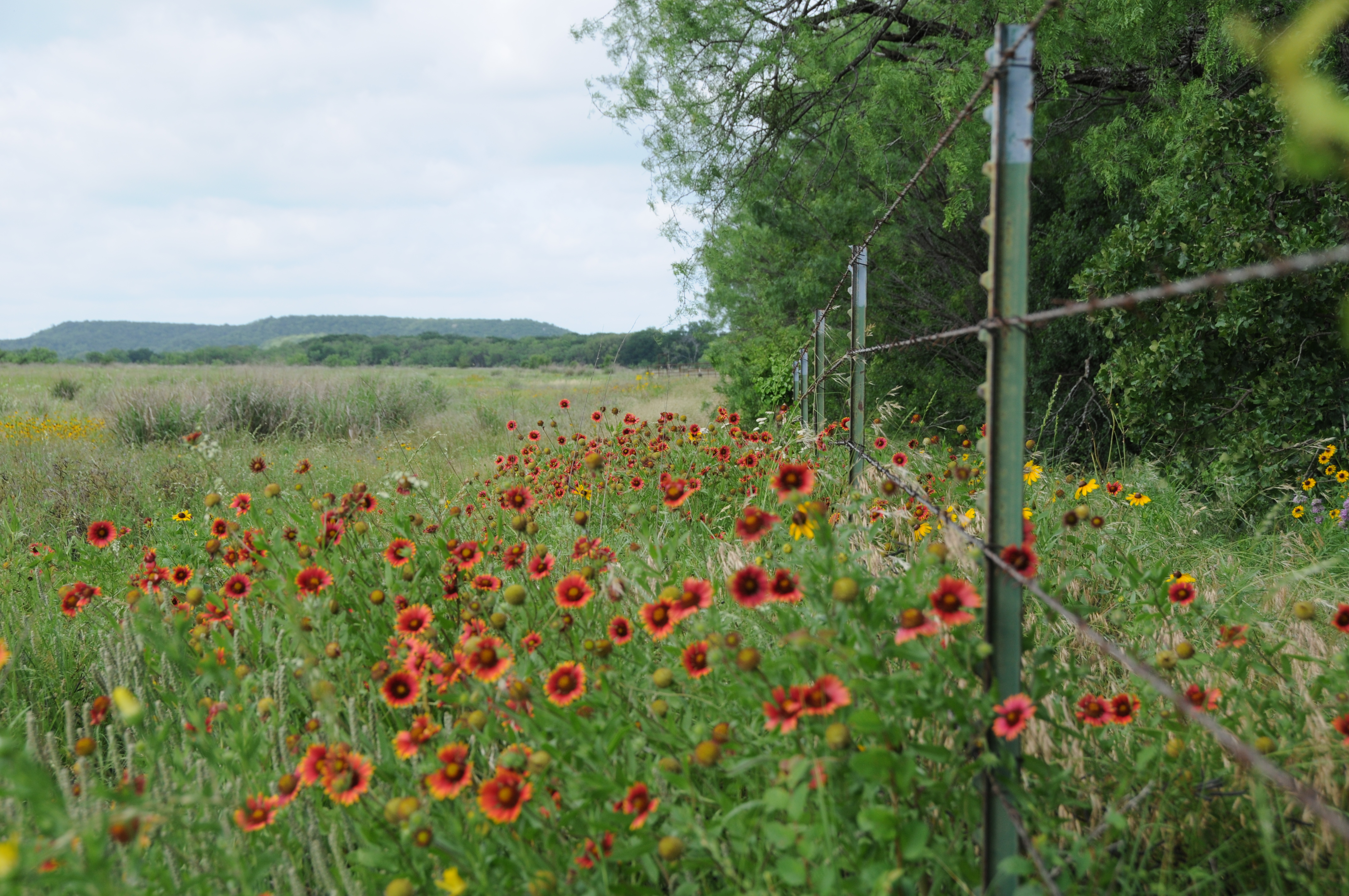
This is a stand of Indian Blankets with the Shelton Rock Hills (north and south) in the background.  The direction of the camera is west.  To the right (north) is The Grove and Salt Creek.

With this hot weather, the horses go back to the stables for shade and water.  I attend to them at about 6:00 p.m. everyday.

Jack Matthews with Hoe and Clasping Coneflower (2010), Photo by B. Matthews

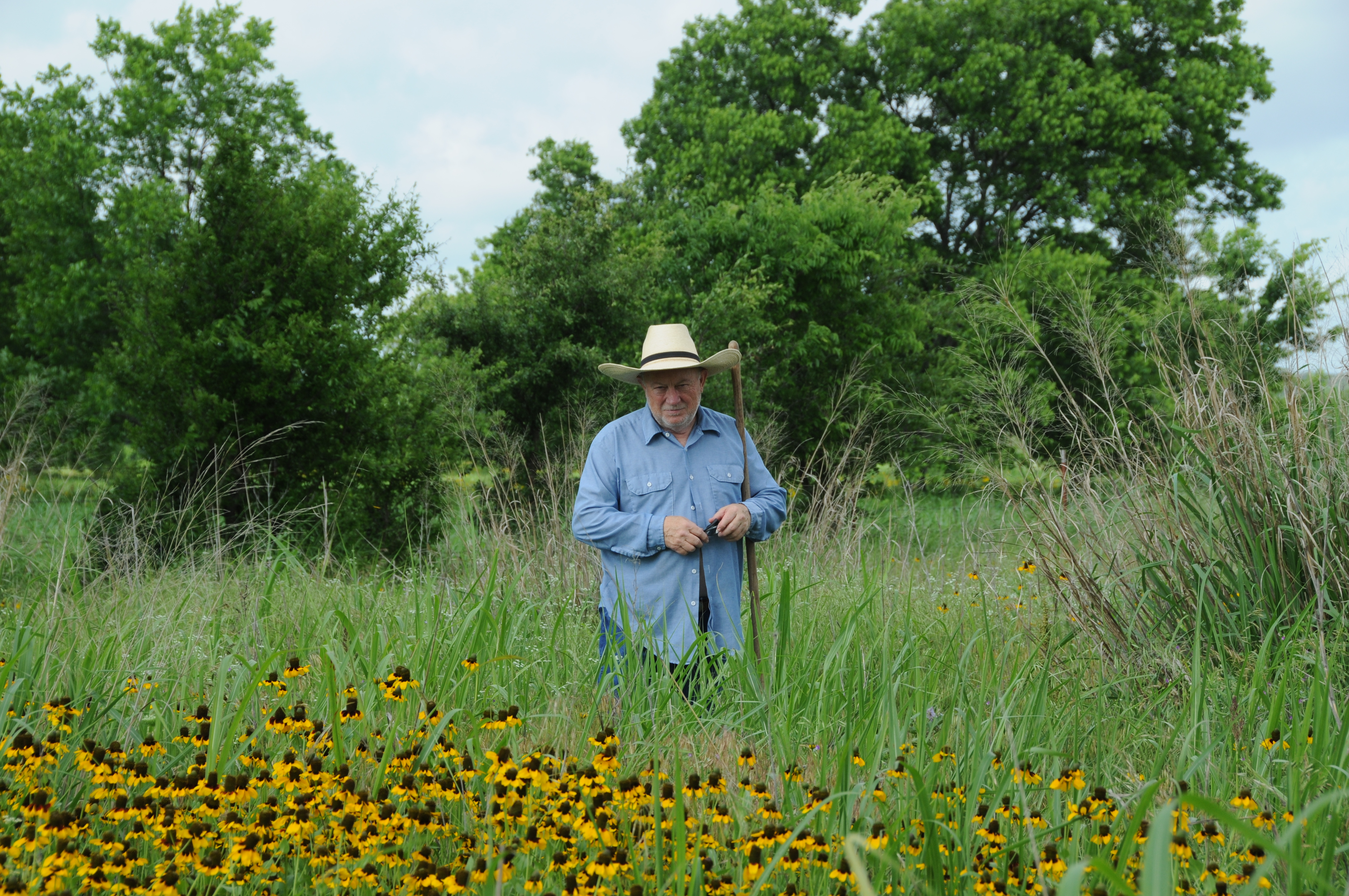
I am actually in a much, much better mood than what this photograph belies.  In the pasture, I’ve been hoeing a few Bull Nettle down and it is rather hot, late in the morning.  Note the large stand of Big Bluestem grass to my left.  I’ve been careful to keep the Big Bluestem from getting shredded for several years and now it grows higher than me in the field.  Please also note the tool on my left side.  That is a hoe.  Not machinery, a manual tool.  Kinda Luddite-ish, don’t you think?

15 Comments

Filed under Field Log, Plants and Shrubs

Prairie Sandbur and Bull Nettle

Two New Discoveries of Flowering Plants

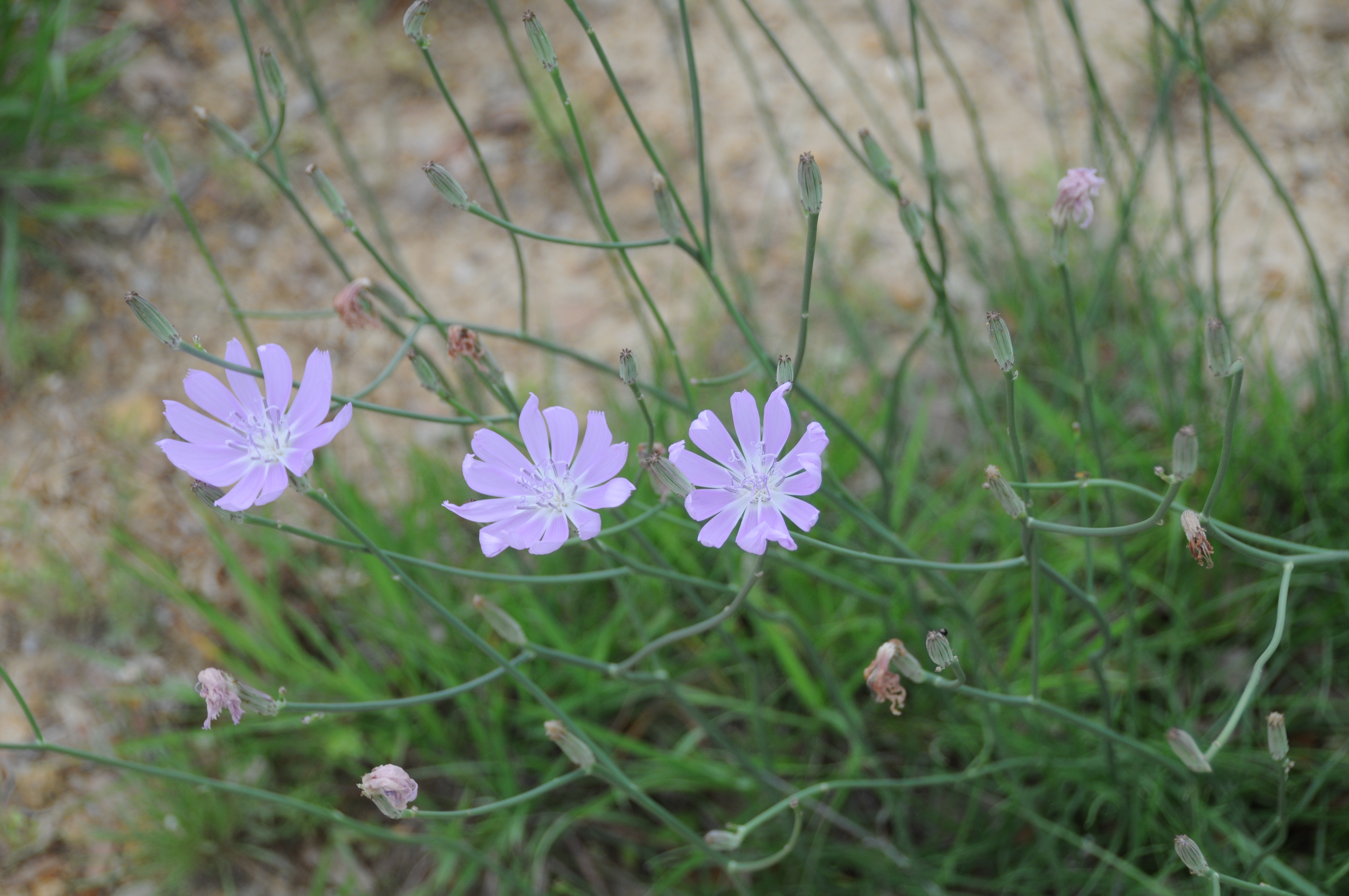
In my regular field work here on Flying Hat, two new discoveries were made this morning of Texas flowering plants.  One discovery  was the Texas Skeleton Weed (Lygodesmia texana), also known as Purple Dandelion, Flowering Straw.  The other discovery, this one rather exciting, was the Prairie Sandbur (Krameria lanceolata), also known by the name of Crameria, Ratany or Trailing Ratany.  Before we go to the Prairie Sandbur (accurate spelling), let’s look at the Texas Skeleton Weed, shall we?  (I’m beginning to sound like Mr. Rogers here.)

Texas Skeleton Weed

Texas Skeleton Weed, May 2010

This beautiful lavender flower is the Texas Skeleton Weed (Lygodesmia texana), also referred to as the Purple Dandelion, Flowering Straw.  These flowers appeared rather suddenly in the last two or three days.  The term skeleton is applied because of the  leafless stems and the odd angles of the stems, analogous to skeletal assemblies.  According to Loughmiller, Texas Wildflowers, “When the stems are broken, they exude sap which coagulates into a gum.”  The medicinal qualities of this plant are presently unknown to me.  I am currently searching my bookselves for my medicinal plant book for North America.  I do have Richard Evans Schultes, Hallucinogenic Plants, New York: Golden Press, 1976, but this Texas Skeleton Weed is not in it.  I don’t like the term, “weed.”  This plant is far to beautiful to be designated, “weed.”  Perhaps the Bull Nettle is a weed, but I even have my doubts about the construct of the botanical term, “weed” applied to it.  Weed carries a cultural signification of unwanted, not desirable or bad.  I know we use the term, “weed,” a great deal and I understand the context, but I think it should be dropped from the lexicon.

Prairie Sandbur

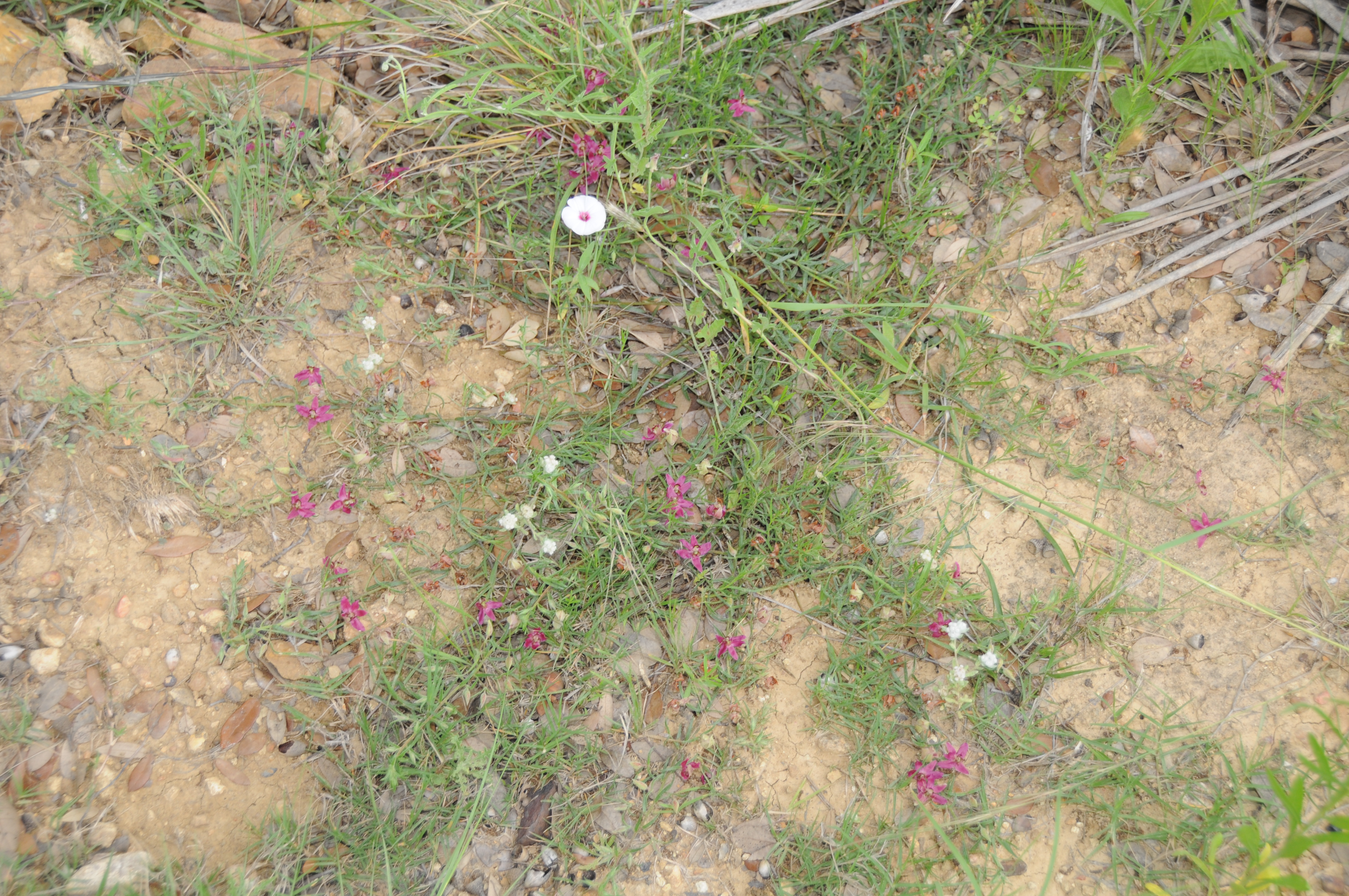
Prairie Sandbur Cluster, May 2010

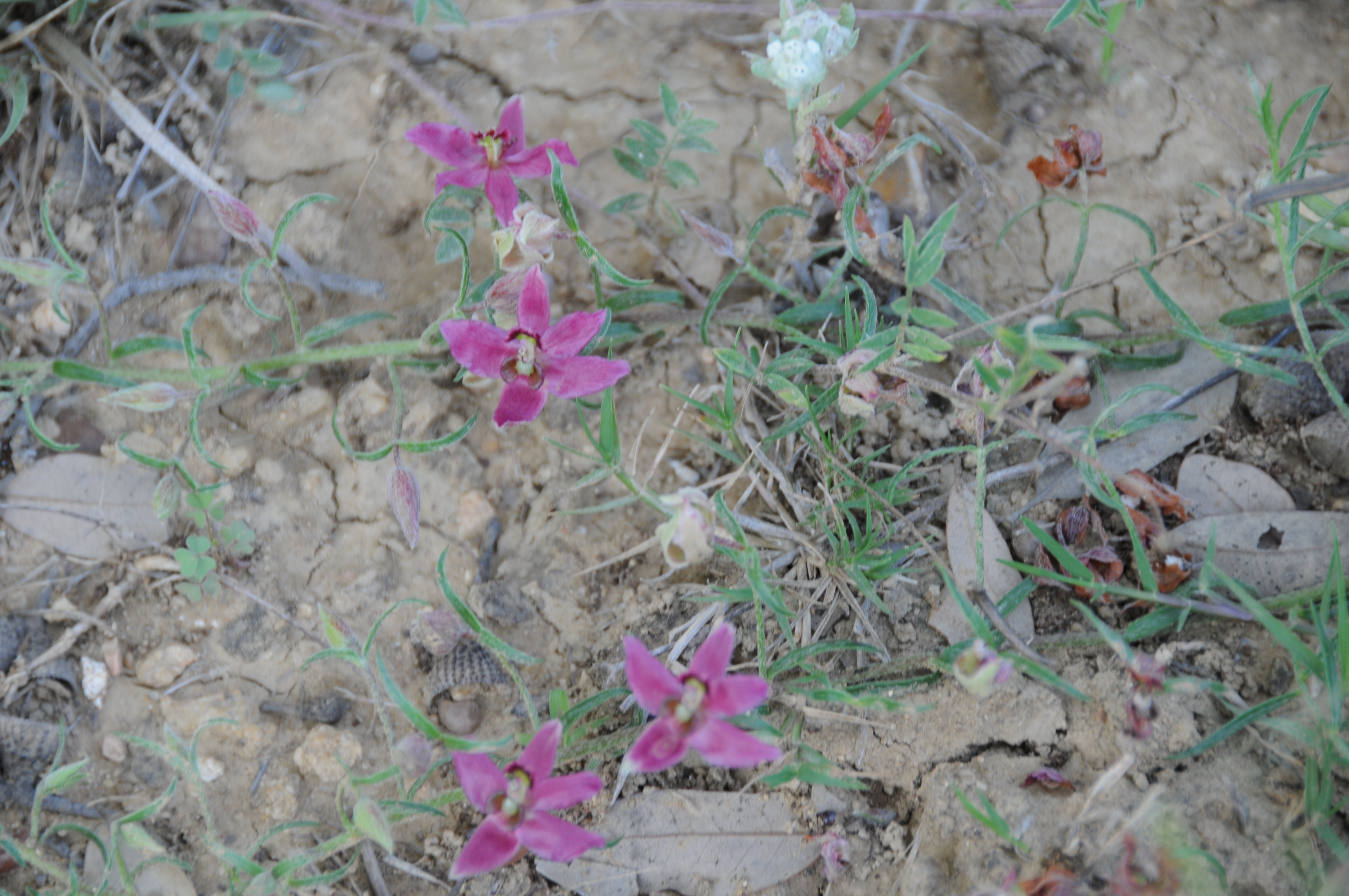
Prairie Sandbur Close-up, May 2010

The Prairie Sandbur is the reddish flower in the photographs above.  It is also known as the Trailing Krameria, Ratany, Crameria and Trailing Ratany.  This is not the sandbur of the grass family.  The leaves and flowers grow from prostrate branches.  According to Loughmiller, this plant and flower is neither conspicuous nor abundant.  They state that the Prairie Sandbur does occur in many parts of the Trans-Pecos River area of Texas.  Our ranch is in the West Cross Timbers region of Texas.  We are Trans-Brazos by about 50 miles westward.  This Prairie Sandbur was found on the east side of Poprock Hill in a well-drained slope area.  This plant may be the rarest find on our place.  I have looked carefully about Poprock Hill and this is the only cluster!

Texas Bull Nettle, Stinging Nettle, Tread-Softly, Spurge Nettle or STAY AWAY FROM THIS THING!

I went out to the Pecan Tree Pasture this morning and hoed or cut out by the hoe some 100 or so Bull Nettles (Cnidoscolus texanus).  I still have about one more acre to hoe.

Bull Nettle (White Blossoms) in Pecan Tree Pasture, May 2010

Here you see the white blossoms of the Bull Nettle in the field.  Actually, hoeing the plant is rather easy since the vascular main stems are soft at this stage of growth, plus with all the rain we have had, the soil is soft.  This photograph is looking southward, towards the Old Bryant Place, and you can see that the pecan tree, for whom this pasture is named has dark-green foliage.

Single Bull Nettle Plant in Pecan Tree Pasture, May 2010

The Bull Nettle is a plant to be avoided.  The plant has leaves that are prickly as well as the stem and if you brush up against it, the nettles will sting.  Loughmiller says the effect of the nettles will last 30-45 minutes.  The stems, if broken, will exude a sap that some people discover, too late, is an allergen.

Today, I brushed up against a Bull Nettle once and I was wearing denim jeans (Wranglers), but the nettle penetrated the denim and I felt a sharp sting.  It was a light brushing, just once, but still burned.  I have a quick recovery to Bull Nettle in my system and the stinging lasted for about one minute.   My initial contact with Bull Nettle occurred when I was three or four-years old and I was with my mother and grandmother at the Sand Cemetery in Bend, Texas.  They were on a cemetery clean-up for our ancestors’ graves when I grabbed a Bull Nettle (trying to help) in my right hand.  It had a lovely blossom.  I really, really experienced pain, especially in the palm of my hand, and for several years, the palm would erupt in a rash.  I think that early exposure to Bull Nettle gave me a bit of tolerance, but not immunity.

The Bull Nettle has a personal and family history that goes back sixty-four years, to a time when we cleaned up the cemetery for the Morris, Baxter and Brazil families at Bend, Texas.  With the 400 or so Bull Nettles I have scooped out of my pasture, every Bull Nettle or so, I think of my family and how I came to be doing precisely this hoeing, on this cloudy day in Texas.

______________________________

Notes:

A fine source for identifying Texas wildflowers is Campbell and Lynn Loughmiller, “Texas Wildflowers: A Field Guide,” Austin: University of Texas Press, 1989.

I supplement my typing operations with cross-checking from other sources, particularly the online services listed under my page, “Native Shrub Identification Guide.”  The sources found online at the Ladybird Johnson Wildlife Center are quite valuable.

13 Comments

Filed under Plants and Shrubs, Recollections 1942-1966