
 A new “culture of nature” is changing the way we live – and could change our politics, too.
Category Archives: Nature Quote of the Day
Robert Macfarlane: why we need nature writing
Thoreau the philosopher: The hound, a bay horse, and a turtle-dove
 The following quote of Henry David Thoreau reflects a symbolism, rather deep I suspect, of three sentient beings: dog, horse and dove (bird). Historians and literary scholars speculate these lost animals never existed. Like so many queries, further research is necessary. My quick and dirty (fast, not slow or deep) study assumes that they did exist AND they represent Thoreau’s tangential thinking. In part, the dog is companionship, friendship, association; the horse is the passion and energy of men and women; and the dove is the transcendental quality, possessed by all men, to break the bonds of family, religion, nation and materialism.
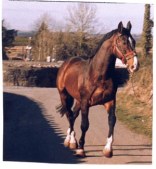
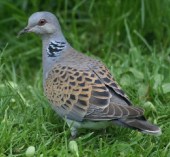
I long ago lost a hound, a bay horse, and a turtle-dove, and am still on their trail. Many are the travelers I have spoken concerning them, describing their tracks and what calls they answered to. I have met one or two who have heard the hound, and the tramp of the horse, and even seen the dove disappear behind a cloud, and they seemed as anxious to recover them as if they had lost them themselves.
~ Henry David Thoreau, Walden; or, Life in the Woods (1854).

* * *
And, in association with such tracking and calling, I submit my own experiences with hound, horse and bird:
Come here, boy, come here. I hear the rustle of grass and juniper brush before I see my hound.
One long high whistle, followed by three low-toned whistles. The gallop towards me grows louder, the ground shakes and earth is a-flying.
The dove comes back to be with its own kind, a cooing ensues and a dance. I reach inside their loft — they are accustomed to me — and pick one gently up and as I stroke its breast, it sleeps, head tucked under its wing. I lay it gently down and in the morning’s light it disappears behind the clouds.
* * *
Not trying to be didactic or professorial (I hate that, even in my own classroom), what do you think about Thoreau’s quote? Should this quote be taken literally? Symbolically? Or both? I’ll expect your comments by September 1, or I will have to check the non-compliance box next to your name. So, let’s get on with the punishment, shall we?
______________________________
Notes, corrections and additions:
The original post contained only Thoreau’s quote and my three extrapolations about hound, horse and dove. I added the first paragraph before the quote and added the questions at the end of the post. The photographs have also been added — all additions occurred August 27, 2011.
I originally started re-reading Thoreau for a variety of reasons, especially searching for irony and wit in his writing, but I got side-tracked with this quote.
Filed under Life in Balance, Nature Quote of the Day, Quote of the Day
Kiowa wind, grass, colors
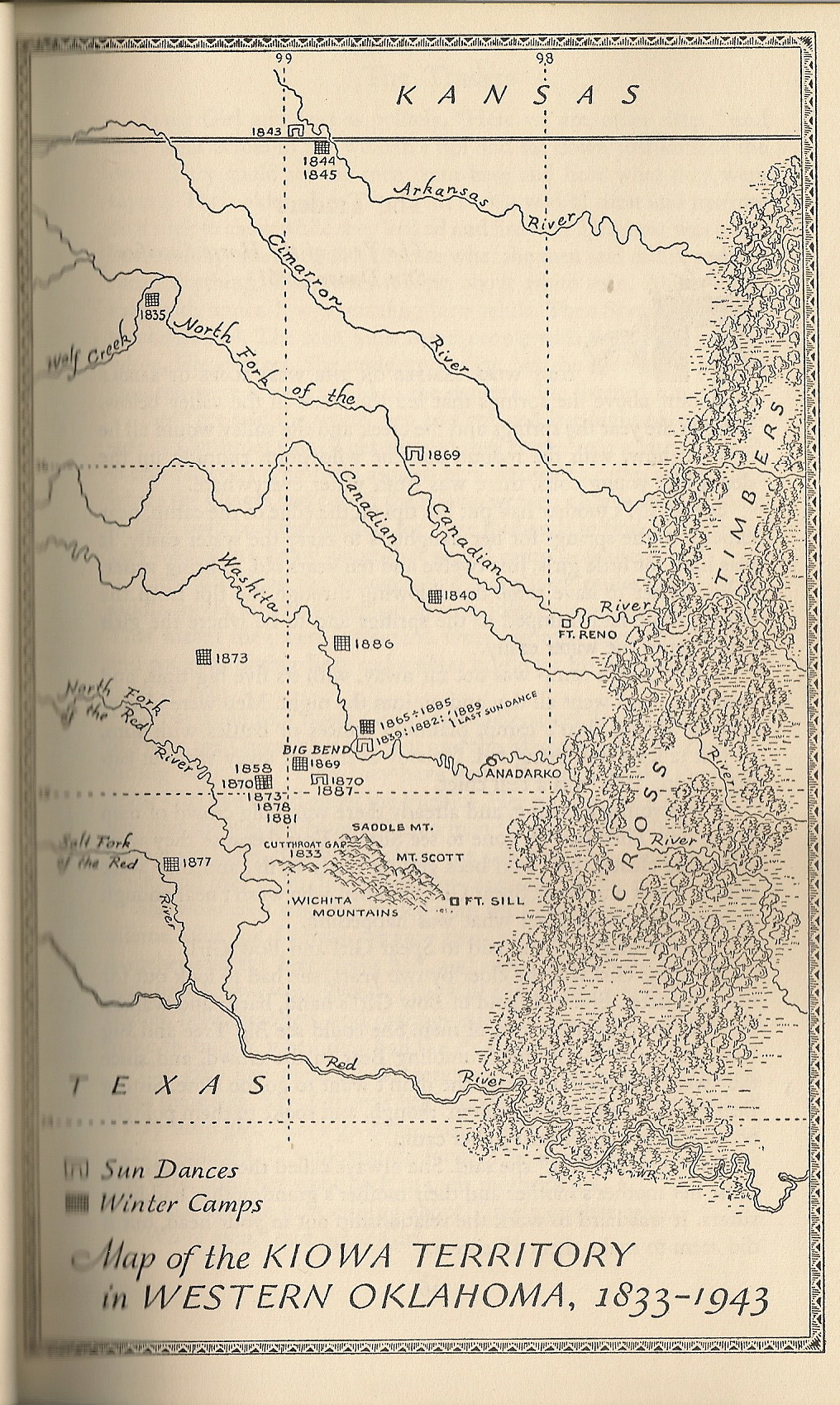
Map of the Kiowa Territory in Western Oklahoma, 1833-1843, from Alice Marriott, The Ten Grandmothers, p. 15.
In 1944, Alice Marriott in her book, The Ten Grandmothers, recorded Kiowa Spear Woman’s narrative of the motion and color changes of prairie grasses. The “Ten Grandmothers” are ten Kiowa medicine bundles. The bundles still exist, but they have not been opened since the 1890s when the last person who had the right to see the contents died.
For Leah the south porch of the big house was the best part of home. Here you could sit and watch sunrise or sunset; watch the shapes of the earth change and move as the sun moved. Then you knew, when you sat out there, that the earth was alive itself.
Spear Woman sat beside her granddaughter and thought that the earth had gone dead. Lights played and moved, and cloud shadows came and went, but the earth itself had somehow died. It was all one color now; not like the old days when its shades really changed and flickered like flames under the wind. She stirred and sighed and spoke.
When the buffalo moved across it, there were other colors and other lights.
The thought was near enough Leah’s own to startle her. There are lots of colors there now.
Her father spoke behind them. Not like there used to be. In the days that even I remember, there was one color when the wind was from the north and another when it was from the south, one from the east and another from the west. Now the grass is all one color on every side, and it doesn’t change with the wind.
Sometimes the colors change. Down near Lawton there is a prairie where the grass takes different colors.
* * *
[Spear Woman insists they travel to Lawton (Fort Sill, Oklahoma), fifty miles away.]
She brought her best Pendleton blanket from the trunk and spread it over the seat. She put on her very best clothes and painted her face….
Two lines of high, tight fence spread across the prairie from a gate, and Spear Woman sat stiff, suddenly. What is that! That is grass like the old days. Real grass. All different colors.
It was, too. It was like changeable silk, the kind the Delawares used to trim their blankets. Yellow as the wind struck it; rose-color as it died away; then a sort of in-between color, with patterns that moved like patterns in silk when you folded it….
Shade was not even in sight, and when they had driven through the gates, with the lines of the fence on either hand, it was still not easy to find. Spear Woman didn’t care. She sat and watched the grass turn over in the sun, flickering and bending and straightening like little campfire flames, and was happy. It was the old kind of grass, the old, rippling, running prairies, even if there were fences. She was glad her eyes were dim, because she didn’t always see the fences, and could forget about them. It was all peaceful and alive again.
From Alice Marriott, The Ten Grandmothers, pp. 285-288.
* * *
When I was a boy, my grandmother drove between Brownwood and Bend, Texas, near San Saba to visit relatives. I watched fields of grass sway in the wind on either side of the road, a narrow two-lane highway. She would point out to me where she and her family had camped and where she had seen buckboard wagons ascend a hill along the creek, the hubs carving their initials along the cliffs. I saw them and put my hands in wagon-hub grooves when we stopped to rest. The prairie wind flowed over the grass, moving stems and leaves in a rhythm, a wave of motion like water I saw in Corpus Christi Bay.
* * *
Last year I planted six acres of native grasses in the Pecan Tree Pasture. The grasses are native to the Cross Timbers of Oklahoma where Spear Woman found peace again, and the grasses are native to our ranch that is also designated as Cross Timbers. The grasses in our pastures grow waist-high, chest-high in some areas, and when the prevailing wind, a southwest flow from Mexico, crosses the pastures, grasses move and bend and change color. As I go up the road towards Huckabay, Texas, about six miles away, I always notice a very old stand of Bluestem that turns reddish-brown in the Fall and Winter, but becomes blue and green in the Spring. The stand of Bluestem is only an acre in size and machines have not touched it in many years for it is on the side of a hill. It is old, that family, and I care for it. If I could move that acre of old Bluestem to my ranch, I would. I can’t. But I have planted its relatives in the Pecan Tree Pasture and there I shall attend to their health and growth.
______________________________
Notes:
The citation is: Alice Marriott, The Ten Grandmothers, Norman: University of Oklahoma Press, 1945. I have the fourth printing, October, 1951. In the excerpt, I have omitted quotation marks and substituted italics for the spoken words.
Lawton, Oklahoma, is also the home of Fort Sill, Oklahoma, that is seen in the map above. If you click on the map, then enlarge it with your computer, you can see more clearly the locations of encampments and the Sun Dance locations. The Cross Timbers designation flows all the way down into Texas and includes our ranch, Flying Hat Ranch, Mingus, Texas.
Field as teacher
John Cheever in Massachusetts at the age of seventeen…
The spring of five months ago was the most beautiful spring I have ever lived in. The year before I had not known all about the trees and the heavy peach blossoms and the tea-colored brooks that shook down over the brown rocks. Five months ago it was spring and I was in school.
In school the white limbs beyond the study hall shook out a greenness, and the tennis courts became white and scalding. The air was empty and hard, and the vacant wind dragged shadows over the road. I knew all this only from the classrooms.
I knew about the trees from the window frames, I knew the rain only from the sounds on the roof. I was tired of seeing spring with walls and awnings to intercept the sweet sun and the hard fruit. I wanted to go outdoors and see the spring, I wanted to feel and taste the air and be among the shadows. That is perhaps why I left school.
In the spring I was glad to leave school. Everything outside was elegant and savage and fleshy. Everything inside was slow and cool and vacant. It seemed a shame to stay inside.
~ John Cheever, “Expelled,” The New Republic, October 1, 1930.
* * *
I think it important, even redemptive, that I spend time in nature, away from the classroom or ranch house, walking in pasture and grove. Yes, I know, it is all nature, even within four walls — the air, the sunlight, the particles of dust and skin floating within the house. Without walls, however, weather intrudes, scents come sharply and trees present their foliage. Wildlife intersects the trail.
When I lectured at T. C. U. one semester, I taught from a second-story lecture hall with an array of seven or eight windows looking out upon elms and green grass about the campus. It was a western civilization class of thirty students. Often I went to the windows while lecturing, propped my elbow on the ledge and instructed undergraduates while frequently glancing into the seasons outside the panes. I liked that classroom and sometimes dream of it.
* * *
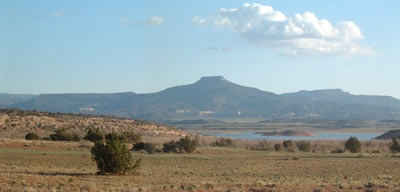
Field work in anthropology never tired me. Surface surveys for isolated occurrences of stone tools or hearths carried me from arroyo to mesa in New Mexico. Boots dusty, sweatband wet and Levis soiled at the end of the morning offered solid evidence of my toil. I thought of people, long ago, that walked the same good ground, gazing at Cerro Pedernal. My students that I led into the field, without fail, always returned to the classroom the next day invigorated, talkative and inspired. The field instructed, not me.
______________________________
Notes:

John Cheever, “Expelled,” The New Republic, October 1, 1930, reprinted in The New Republic, January 5, 2011.
Filed under Life in Balance, Nature Quote of the Day, Quote of the Day
Pleasant Valley footsteps: naturalist quote
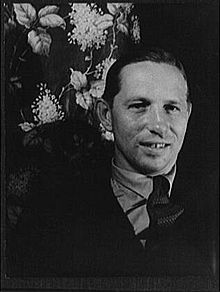
Louis Bromfield, photo by Carl Van Vechten, 1933.
Several mornings during the month I search for a quote, an excerpt, that I can post; an excerpt that illustrates humanity’s vital relationship to nature. This morning I glanced through — and will use later — works of Gregory Bateson, New Mexico trail guides, historical scrapbooks of the Old West, my old family photographs and the W.P.A. guide to Texas. The farrier, Dale Lyon, is coming at 9:30 a.m., an hour from now, so I’ve made a selection from Louis Bromfield, Pleasant Valley (1943). Bromfield’s writing about Malabar, his Ohio farm, is in the tradition of Walden.
A good farmer must be many things — a horticulturist, a mechanic, a botanist, an ecologist, a veterinary, a biologist and any number of other things — but knowledge alone is not enough. There must be too that feel of all with which nature concerns herself….A farmer knows from day to day, even from hour to hour the state of the weather, of his crops, of his animals….He is the man who learns by farming, to whom the very blades of grass and stalks of corn tell stories. He is the man to whom good crops sing a song and poor ones convey a painful reproach. He is the man who knows that out of the soil comes everything, that out of the soil come the answers to the questions that torment him.
…With all the research we have made there still remain many mysteries, not beyond explanation but which have not yet been explained or understood. In this borderland the “live” farmer finds his place — the man who sees and feels what is going on in the soil beneath his feet and on the earth around him, the man whose footsteps are the best fertilizer for the farm.
Notes:
Louis Bromfield, Pleasant Valley, New York: Harper and Brothers, 1943, pp. 147-148.
See the page under Fine Writing for more information.
Filed under Nature Quote of the Day
Magpies Coming Day
Magpie photo by Martin Meyers of sierrabirdbum.com
COMING DAY. A favorite among the Gros Ventre near Fort Belknap, Montana, was Coming Day, who in 1937 was more than eighty years old and still maintained his reputation for fearlessness. In his prime he rode joyously in the white man’s “devil-bug,” that sputtered and smoked and traveled like the wind without the use of ponies. In August 1936, he boarded the white man’s “thunder bird” during the reservation fair and waved gaily to his quaking comrades. When the plane was at an altitude of several thousand feet he exhorted the pilot in the Gros Ventre tongue to go higher. “As yet,” he shouted scornfully, “we are not to the height where flies the common magpie!”

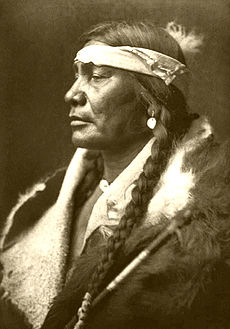
Montana: A State Guide Book, Works Progress Administration Guide Book Series (1939)
Fort Belknap sat on the lower lands of Montana, but the magpie inhabits the mountain, higher in elevation than the fort. Coming Day spoke to that fact and more. I have seen magpies at 9,000 feet in the Sangre de Cristo Mountains of New Mexico, as I laboriously put one foot in front of the other, daring to the climb the Truchas Peaks. The magpie is a creature of nature, the plane an invention of man, each finding ways to cut through air and soar. Both bird and plane are worthy of praise, but for me and probably for Coming Day, the magpie will always fly higher.
* * *
Flying on an extended world vacation in the 1960s, Georgia O’Keeffe painted Sky Above Clouds IV after she returned to the United States. It is her largest painting (8 x 24 feet) and is at the Art Institute of Chicago. When I flew to France in 1996, I saw ice floes, glaringly-white, in the far North Atlantic that looked like clouds on the ocean, reminding me of O’Keeffe’s painting and stripes of white on magpie wings.
______________________________
Notes:
See also Archie Hobson (ed.), Remembering America: A Sampler of the WPA American Guide Series, New York: Columbia University Press, 1985.
In this quote are themes worthy of extended commentary — technology collides with Native American interpretation, native language re-describes new technology in colloquialisms and the valuable capture of local color in the American Guide Book Series by writers in the 1930s.
The published Montana guide book did not have a description of the plane that carried Coming Day into the sky, but the Waco biplane inserted below would have been a possible aircraft since the Waco was being built in the 1920s, a decade before the Gros Ventre fair of 1936.
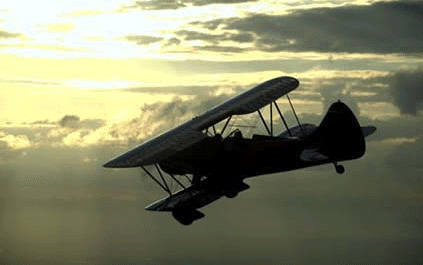
Waco biplane photo by Mike Fizer freylia.net (2003)
Filed under Nature Quote of the Day
Naturalist quote of day: Krakauer on Devils Thumb
- John Krakauer by newhum.com
All that held me to the mountainside, all that held me to the world, were two thin spikes of chrome molybdenum stuck half an inch into a smear of frozen water, yet the higher I climbed, the more comfortable I became. Early on a difficult climb, especially a difficult solo-climb, you constantly feel the abyss pulling at your back. To resist takes a tremendous conscious effort; you don’t dare let your guard down for an instant. The siren song of the void puts you on edge; it makes your movements tentative, clumsy, herky-jerky. But as the climb goes on, you grow accustomed to the exposure, you get used to rubbing shoulders with doom, you come to believe in the reliability of your hands and feet and head. You learn to trust your self-control.
Jon Krakauer, climb on Devils Thumb, Alaska, Into the Wild, p. 142 (1996)
_____________________________
Notes:
Jon Krakauer, Into the Wild, concerns the wilderness trek of Christopher McCandless into the Alaskan back country, ending in his death. Krakauer, in the quote I have excerpted above, juxtaposes his own experience on the side of Devils Thumb with that of McCandless. Krakauer came out alive. Unfortunately, McCandless did not.
Addendum, November 27, 2010: If you have not clicked on the hyperlink to Devils Thumb, do so because it takes you to the Google map in Alaska.
Filed under Adventure, Nature Quote of the Day
Naturalist quote of day: Aldo Leopold on danger of not owning a farm
There are two spiritual dangers in not owning a farm. One is the danger of supposing that breakfast comes from the grocery, and the other that heat comes from the furnace.
To avoid the first danger, one should plant a garden, preferably where there is no grocer to confuse the issue.
To avoid the second, he should lay a split of good oak on the andirons, preferably where there is no furnace, and let it warm his shins while a February blizzard tosses the trees outside.
Aldo Leopold, A Sand County Almanac (1949)

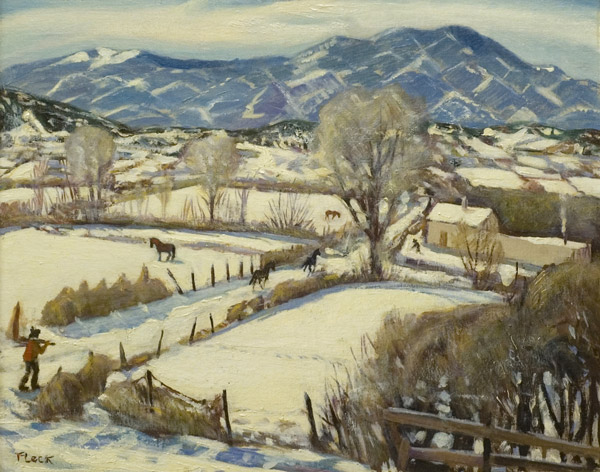
- Winter by Joseph Fleck (Taos Art Museum and Fechin House)
______________________________
Notes:
Painting of Joseph Fleck associated with the Taos Art Museum and Fechin House.
See also Taos Painter Joseph Fleck.
Related Articles
- Tickling the belly of buffalo: no more (swamericana.wordpress.com)
Filed under Life in Balance, Life Out of Balance, Nature Quote of the Day
Nature quote of day: Navajo
 Native American oration illustrates a thankfulness and recognition of nature: earth, sky, creatures of the water, winged-ones, two-legged ones and four-legged animals. For this Thanksgiving Day, Navajo singing chants show admiration of Nature.
Beauty above me,
Beauty below me,
Beauty to the east, west, north and south of me,
Beauty all around me.
Washington Matthews, The Night Chant, Smithsonian (ca. 1900)
______________________________
Notes:
The Navajo rug pictured above is on display at Sagebrush Gallery in Nevada City, California. “Yei figures, Probably a mid-20th century rug. This has a muted mustard yellow…Three figures with feathers. “
Washington Matthews translated many Navajo singing chants and ceremonies. The night chant translation is my favorite. Many years ago I bought the large and lengthy chant from the Taos Bookstore. They found a copy of the rare book and it sits among other Native American literature on my shelves.
Filed under Nature Quote of the Day
Nature quote of the day: Annie Dillard
- Annie Dillard (Photo by Susan Olding)

It is possible, in deep space, to sail on solar wind. Light, be it particle or wave, has force: you rig a giant sail and go. The secret of seeing is to sail on solar wind. Hone and spread your spirit till you yourself are a sail, translucent, broadside to the merest puff.
Annie Dillard, Pilgrim at Tinker Creek (1974)
Filed under Nature Quote of the Day


















 Sage to Meadow ~ Jack Matthews