Category Archives: Life in Balance

Field as teacher

John Cheever in Massachusetts at the age of seventeen…

The spring of five months ago was the most beautiful spring I have ever lived in. The year before I had not known all about the trees and the heavy peach blossoms and the tea-colored brooks that shook down over the brown rocks. Five months ago it was spring and I was in school.

In school the white limbs beyond the study hall shook out a greenness, and the tennis courts became white and scalding. The air was empty and hard, and the vacant wind dragged shadows over the road. I knew all this only from the classrooms.

I knew about the trees from the window frames, I knew the rain only from the sounds on the roof. I was tired of seeing spring with walls and awnings to intercept the sweet sun and the hard fruit. I wanted to go outdoors and see the spring, I wanted to feel and taste the air and be among the shadows. That is perhaps why I left school.

In the spring I was glad to leave school. Everything outside was elegant and savage and fleshy. Everything inside was slow and cool and vacant. It seemed a shame to stay inside.

~ John Cheever, “Expelled,”  The New Republic, October 1, 1930.

* * *

I think it important, even redemptive, that I spend time in nature, away from the classroom or ranch house, walking in pasture and grove.  Yes, I know, it is all nature, even within four walls — the air, the sunlight, the particles of dust and skin floating within the house.  Without walls, however, weather intrudes, scents come sharply and trees present their foliage.  Wildlife intersects the trail.

When I lectured at T. C. U. one semester, I taught from a second-story lecture hall with an array of seven or eight windows looking out upon elms and green grass about the campus.  It was a western civilization class of thirty students.  Often I went to the windows while lecturing, propped my elbow on the ledge and instructed undergraduates while frequently glancing into the seasons outside the panes.  I liked that classroom and sometimes dream of it.

* * *

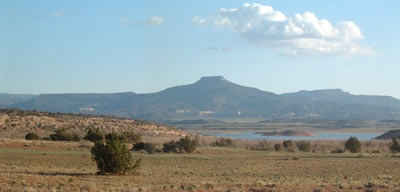
Field work in anthropology never tired me.  Surface surveys for isolated occurrences of stone tools or hearths carried me from arroyo to mesa in New Mexico.  Boots dusty, sweatband wet and Levis soiled at the end of the morning offered solid evidence of my toil.  I thought of people, long ago, that walked the same good ground, gazing at Cerro Pedernal.  My students that I led into the field, without fail, always returned to the classroom the next day invigorated, talkative and inspired.  The field instructed, not me.

______________________________

Notes:


John Cheever, “Expelled,” The New Republic, October 1, 1930, reprinted in The New Republic, January 5, 2011.

13 Comments

Filed under Life in Balance, Nature Quote of the Day, Quote of the Day

Pronghorn sunbursts

N. Scott Momaday

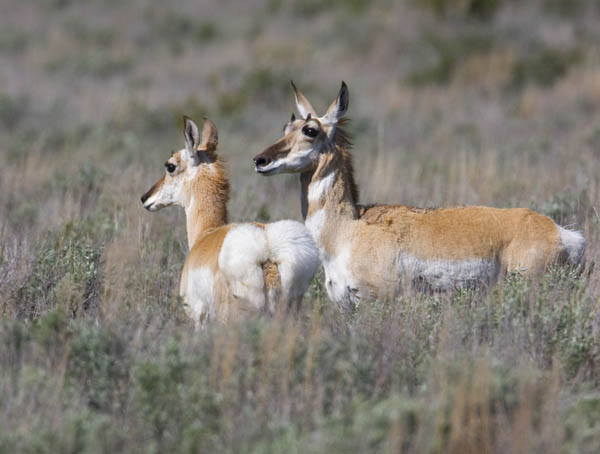
One morning on the high plains of Wyoming I saw several pronghorns in the distance.  They were moving very slowly at an angle away from me, and they were almost invisible in the tall brown and yellow grass.  They ambled along in their own wilderness dimension of time, as if no notion of flight could ever come upon them.  But I remembered once having seen a frightened buck on the run, how the white rosette of its rump seemed to hang for the smallest fraction of time at the top of each frantic bound — like a succession of sunbursts against the purple hills.

— N. Scott Momaday, The Way to Rainy Mountain, p. 19.

* * *

In the early seventies, between Clayton and Springer, New Mexico, Charles Fairweather and I drove fast to the Sangre de Cristos for our yearly getaway with several other friends who had already made camp.  We came up out of the roadbed onto a small hill and to the right, off the highway about 200 feet, were several pronghorn.  Charles quickly stopped the car and pulled out his deer rifle.  Charles, I said, let the pronghorn be.  Besides, it would be poaching if you shot him.  He was a good man, but impulsive at times.  He re-sheathed his weapon without a word and drove on to camp.

* * *

Between Snyder and Post, Texas, large ranches abound.  On one ranch, the Covered S, I saw pronghorn graze five years ago.  In the last four years, with the placement of wind mills for power and an extensive clearing of brush, I see no pronghorn.  They grazed in pastures on either side of highway.  This holiday, as we traveled to Lubbock, I looked intently onto the eastern pasture of the Covered S, hoping to see white rump in brown and yellow grass.  I saw none on either day we passed the Covered S.  I counted plenty of oil wells, but no antelope.

* * *

In the Journals of Lewis and Clark, they reported that antelope would rub themselves against sagebrush in order to perfume themselves.

* * *

Pronghorn at Red Rock, Idaho (J. Purdue photographer)


11 Comments

Filed under Adventure, Life in Balance, Life Out of Balance, Sagebrush

“From the Stone Wall” by Wildramblings

Far away from the Southwest, this nature writer describes a day in the New England woods, not so far different from our treks and hunts among the mesquite, cholla and oak.  Wildramblings is a blog worthy of putting on your roll.  Click the link below and relish fine writing.

From the Stone Wall | Wildramblings.

7 Comments

Filed under Adventure, Life in Balance

Willful Lilly

Willful Lilly walks to Well House Corral (December 27, 2010).

In the ongoing story of Lilly (Ima Lil Moore), she is a willful horse.  The above photograph shows her this morning, after browsing a few minutes in the front pasture, walking intently to the fence panels of the Well House Corral.

Lilly had spent the night in the stables underneath a 150 watt light bulb.  When I went down this morning to feed her, she was up and moving and whinnying for her breakfast, even pinning her ears back slightly when I entered her stall.  After she finished her grain, I put out two blocks of green alfalfa for her to munch on.

And, this is point of the story, she turned away from the hay rack and deliberately walked out of the corral and into the pasture with a determination of a yearling.  She’s twenty-five years old, for goodness sakes!  Then, after a bit of browsing, I shot the above photograph of Lilly.

She’s going to die — we’re all headed that way, for sure — within who-knows-how-long?  Tomorrow, next week, next month, next year?  Jim Scroggins is coming out to the ranch with his back hoe in the morning to dig a grave pit for Lilly.  Don’t be sad.  I’ll set up panels around it so that no one will wander into it.  It’s a preparation, sort of like making a will or planning a funeral with your favorite mortician.  (My political mentor when I was young was Groner Pitts of Brownwood, Texas, a funeral director.)  If Lilly makes it through the winter and I and the vet think she will, I’ll fill up the pit with water and maybe ducks will swim in it.  It is there, however, just in case.

But, for now, Lilly is a willful mare, stubborn in her habits, sleeping longer than usual and limping a little with arthritis.  Kinda like your grandfather or grandmother.  She has her life today and she willfully directs herself to green winter grass, lying down in the sun and drinking from the stock pond with ducks swimming about her.  It’s a good day to live.

9 Comments

Filed under Horses, Life in Balance, Lilly

Saving a drowning Roadrunner

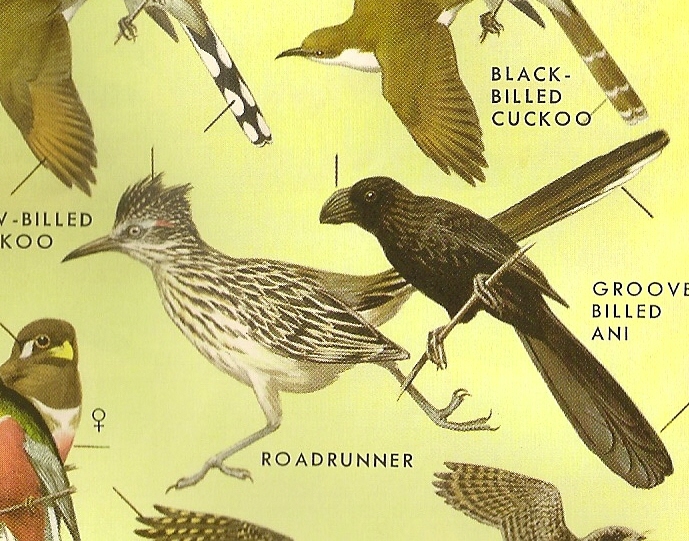
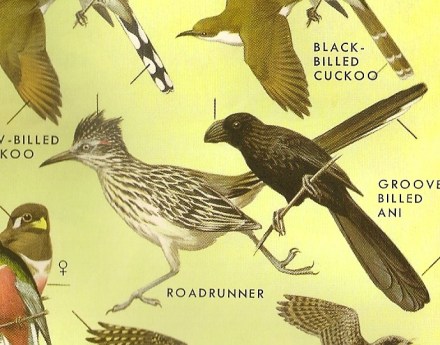
Roadrunner (Geococcyx californianus), Petersen Field Guide

In the summer of 2009, I rescued a roadrunner (Geococcyx californianus) from drowning in the circular water trough in the Well House Corral.

Roadrunners occupied a minor niche in my bird and animal kingdom as I grew up in central Texas.  My Aunt Lennie McRorey who lived on a ranch with her husband in San Saba County, Texas, kept a minor collection of roadrunner figurines and commissioned a small oil painting of a roadrunner that my daughter displays on her end table in Lubbock.  Driving down highways and especially back roads, roadrunners flew or ran across the road in front of the car.  I never saw any remains of roadrunners beside the road, attesting, I think, to their agility and speed.  They were big and seemed amusing the way they ran and picked at insects along the highways.  In a way, the roadrunner to me seemed unique among birds, more of an ostrich-like being than a flight creature — a miniature ostrich, for sure.

When we moved to our ranch in 2003, I saw roadrunners occasionally along our county road, but in 2008 and 2009, I noticed a pair of roadrunners that nested or habitually occupied the Well House Corral next to the Dooley Pond and mesquite brush to the west of our fence line.  As are most of my discoveries here on the place, my initial observation was accidental.  I was resting in the shade of the barn alleyway one hot summer day in 2008, when I saw a roadrunner dart from well house to the arena and under the trees in the corral.  Initially, I saw only one, but after a few more sightings during the summer, I saw two of them.  They often flew up in the lower branches of the live oaks and sat in the afternoon.  At the most, I spent thirty minutes watching their antics in the lower branches, wallowing and playing in the arena, and then I followed their hunt towards the east and our stock pond.  The summer of 2008 came to a close and I did not see them until the next summer.

Water trough in Well House Corral that ensnared roadrunner.

I had set a circular water trough in the Well House Corral for cattle and horses.  The trough was large, about six feet in diameter and held enough water for two or three days for cattle.  One afternoon in the summer of 2009, I walked down to the trough to check its level and noticed that the water was greenish and appeared disturbed.  Live oak leaves fell in the trough, and algae grew about the leaves and errant grass stems.

As I looked at the level of water I saw a long, log-like thing in the water.  It was listless, dead.  I looked closer and realized it was some kind of animal?   I thought at first a very large squirrel or possum?  Then, the parts all came together and I realized it was a roadrunner, one of the roadrunners I had been observing for two summers.  I thought, How could you have gotten drowned as crafty and smart as you are?  Oh, no, you poor thing.  I beat myself up for a moment, thinking I should have kept the water level higher so that if he had wanted a drink, he could have perched on the edge.

Well, I had to get him out of the water or it would become contaminated.  As I reached over to pick him up, his eye blinked!

Good god almighty, he’s alive!

I gotta get him out of there.  As I reached over to pick him up with my bare hands, I stopped.  The roadrunner could turn and peck me mightily, drawing blood.  Several years ago I had grabbed a mockingbird that had become caught in some netting I used to protect ripening grapes in our vineyard and the mockingbird had turned and pecked my finger in two places, drawing blood before I could let it go.  Pecked by a mockingbird is one injury, but a roadrunner peck may be a wound to the bone.

Seeing that the roadrunner was exhausted and I had to do something fast, I ran back up to the barn and grabbed my sombrero that was large and a couple of warm, fresh towels I used to groom horses.  I hurried back down to the water trough and dipped the sombrero under the roadrunner and lifted him out.  He was still blinking, but not moving at all.  He was huge.  I never knew how big these things were.  He was at least two feet long!  Think a small ostrich.

I put the roadrunner and sombrero on the ground and gently gathered him up in the towels.  With one towel I held him and the other I dried him off thoroughly.  With each stroke of the towel, going from head to tail, he would stretch his neck and extend his body as if running.  As he would stretch, his neck area would reveal sparse feathers and tender skin.  I saw no lesions or breaks or fractures.  I continued for five minutes or so drying him off.

Now what to do?  He was not standing or trying to fly off.  I decided to keep him on the towel and take him to the arena where it was sunny and warm and away from our barn cats.  I placed him down alongside the arena panels, near an area that I had seen him and his mate play.  He remained still, but was beginning to stir a bit.

I walked back up to the alleyway where I could monitor him and watched.  After about thirty minutes, I saw him stand up and begin to fluff his feathers and preen.  This went on for fifteen minutes.  I had to move on to other chores and left him alone.  An hour or so later, I went back to the arena and checked on his condition.  He was gone, most likely over the fence line to the Dooleys and his mate.

I’ve often wondered, fantasy-like, Borges-like, that somewhere in Mexico after he had recovered, this roadrunner told a story to his friends about a sombrero, the marvelous power of a hat that came down out of the sky and carried him out of water to dry land and life again amongst the cactus and creosote of the desert.  Just a fantasy.
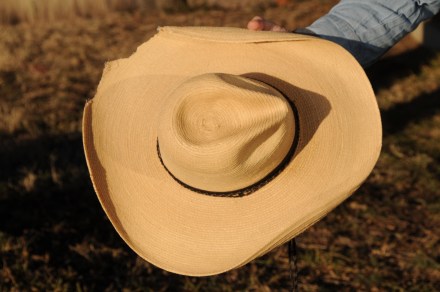
The sombrero that was used to rescue the roadrunner.

______________________________

Notes:

This last summer, 2010, I have not seen any roadrunners in the Well House Corral.  Our neighbors to the east have cleared a lot of brush from their property and deer and other critters have moved southward, into the grove and far pasture, so the habitat for the roadrunner has changed.  I continue to look for them.  I know that observing the roadrunner in the wild is most infrequent and I am motivated to observe more when I can.

In the photograph of the hat, you will notice two bite marks out of the rim.  Star, my paint gelding, reached through the stall and took two chunks of straw out of it while I wasn’t looking.  The hat is made by SunBody hats www.sunbody.com and is constructed from palm leaves in Guatemala by Jose Medrano.
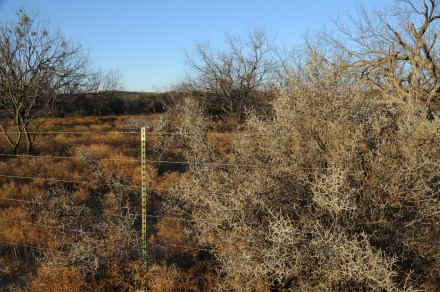
Towards the Dooley Pond where the roadrunners have their nest.
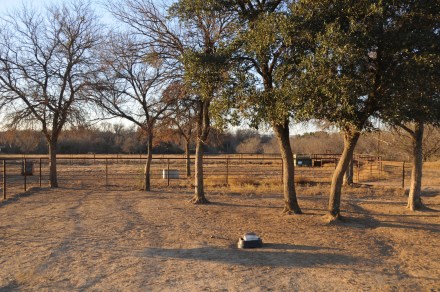
The live oak trees where the roadrunners sat.

The arena where the roadrunners played.

The spot where I put the roadrunner to dry off.

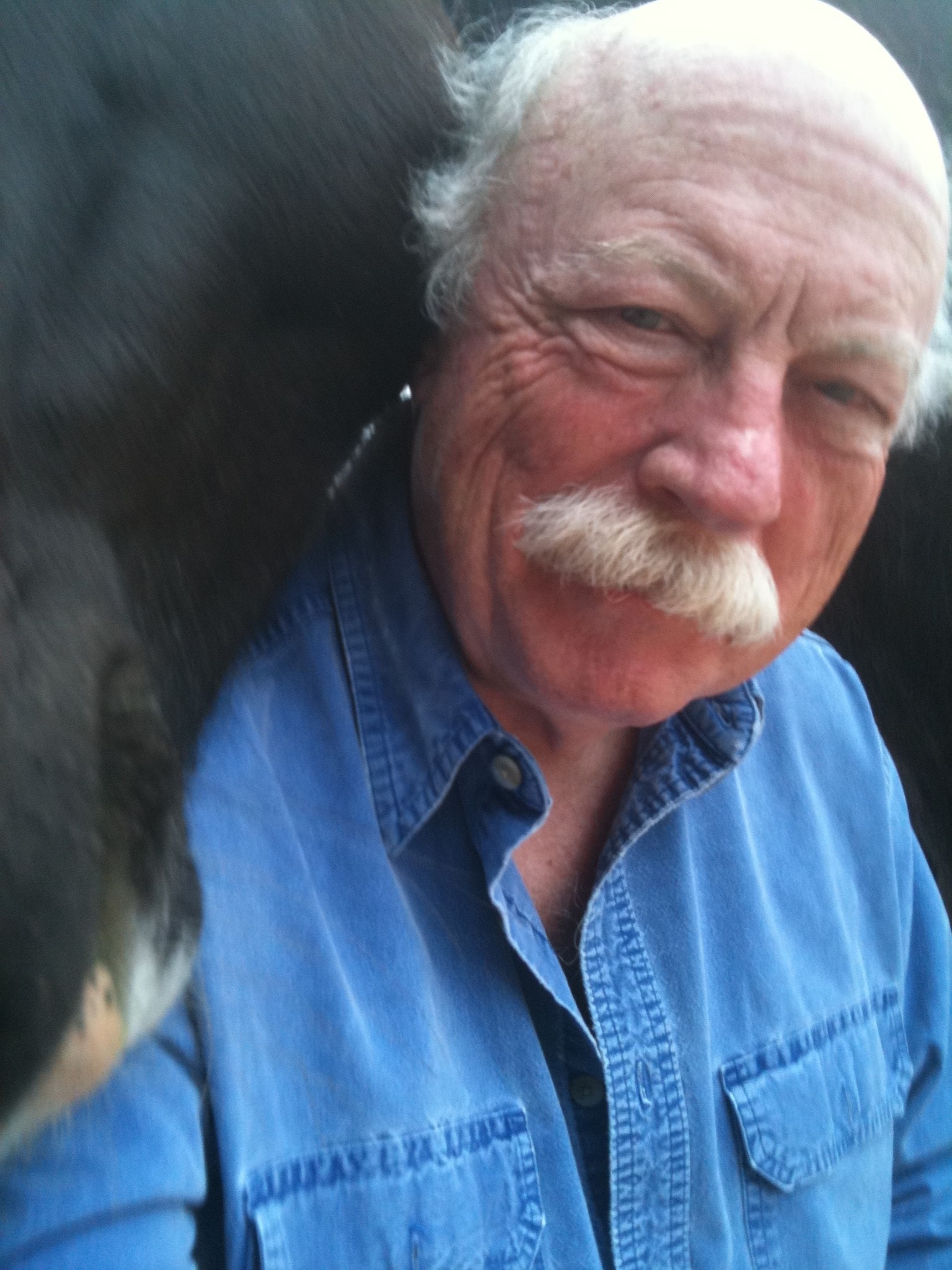
Senor Jack wearing the hat that saved the roadrunner.

17 Comments

Filed under Flying Hat Ranch, Life in Balance, San Saba Texas

Forthcoming posts


I am not fond of making lists, but I made one today on the posts I want to compose.


I have some posts I want to write, and, once my paperwork has been turned in to Cisco College and Texas Wesleyan University, I want to write something about:

Henry Clay and his fantastic ability to dance.

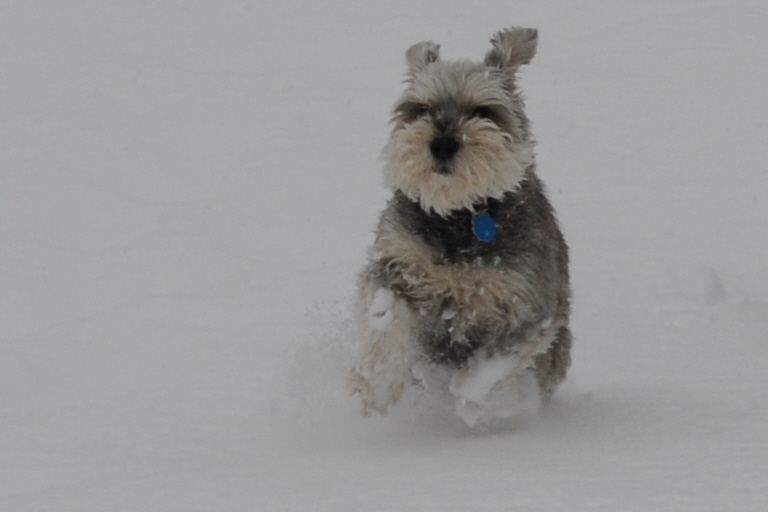
A newly-discovered playful aspect of Lottie (snow-plowing schnauzer).

Lilly, the oldest mare on our place, and her insistence on opening gates that are closed.

The lone coyote that yips over by the Dooley pond.

My rescue of a roadrunner from drowning last summer.

The reconstruction of the Chimayo restaurant with the help of its staff and contractors following their disastrous fire.

Paying for damages for breaking crockery in the morning and writing letters of apology.

But, for now, I must complete my tasks for concluding the semester.


Lottie the snow-plowing schnauzer.


14 Comments

Filed under Adventure, Life in Balance

Long shadows soaring

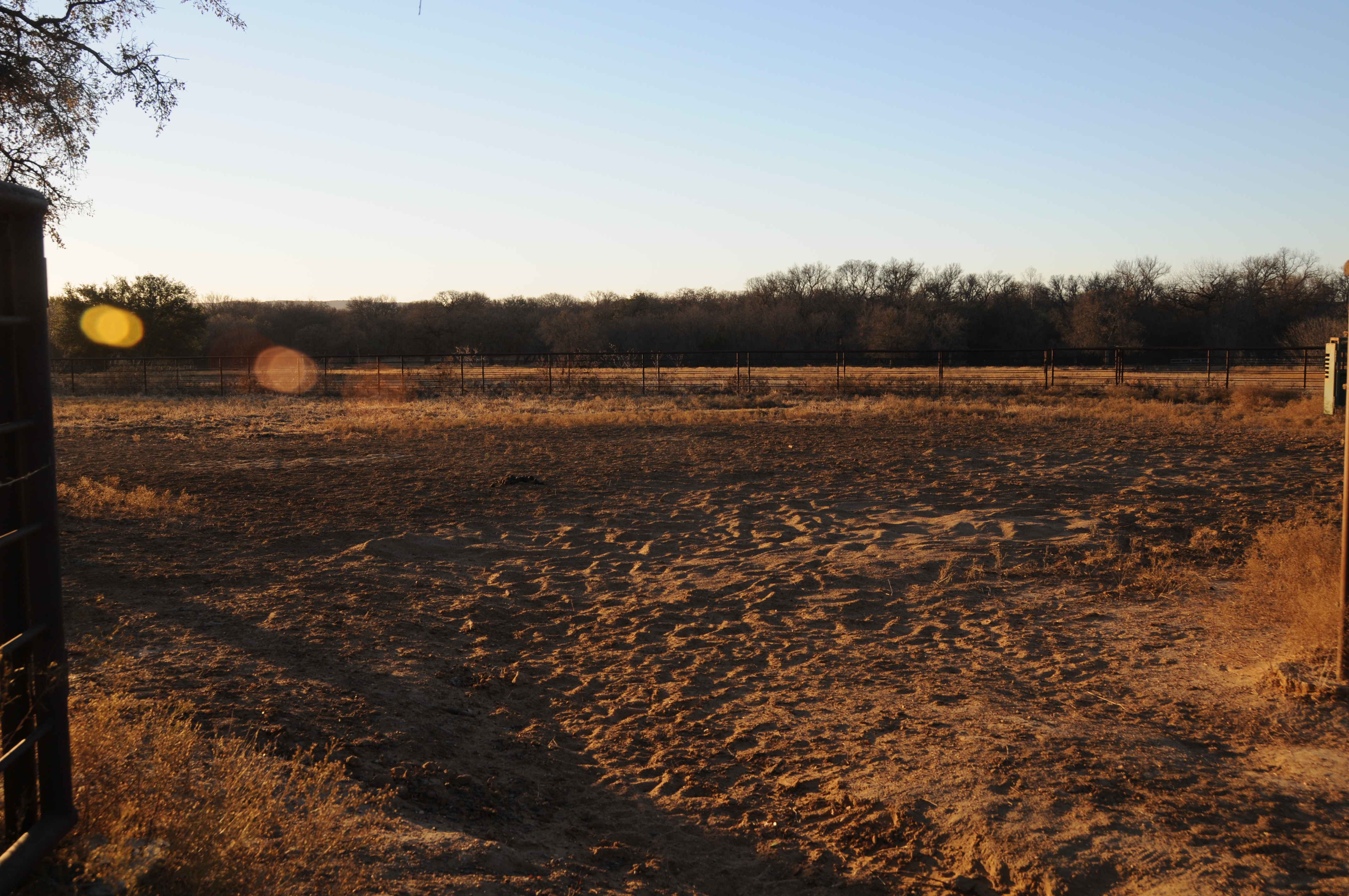
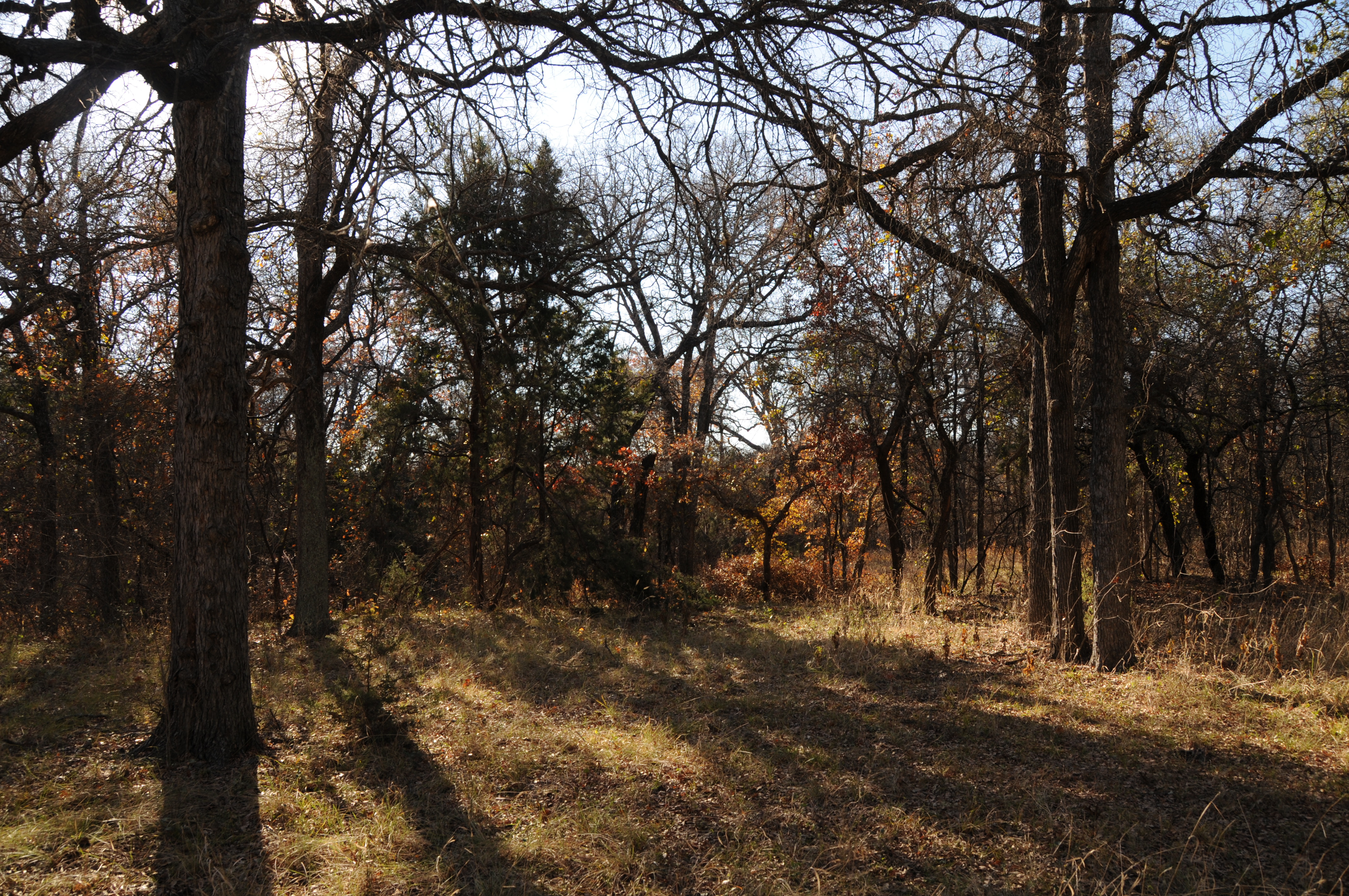
Long shadows in the grove

This afternoon I decide to walk into field, grove and far pasture of native grass.  The walk.  What propels me, anyone, to walk into the raw material of nature?  Flying up in my face are three urges: what is changing out there?  Who is out there?  And, what is the surprise, the non-contingent event, large or small, that will stop me, stop us, and reveal the universal in the particular?

Before I walk into the field, from the house on top of Poprock Hill, with the aid of binoculars, I count approximately ten ducks, mallards mostly, feeding at the south end of the stock pond, the same pond that Star, my paint gelding, and his mother, Lilly, drink and cool their feet in mud.  The pond is low this December, the water line two feet below the cockle-burr plants I must root out next Spring.

I walk through the alleyway of the barn and through the two corrals, striding slowly next to the fence line of the Dooleys, our neighbors to the west.  Their stock pond is also low.  Yesterday morning, I heard a lone coyote call and yip near the pond.  (After dark tonight I heard the same coyote near the Dooley pond.)  I walk past the pond, counting vultures and crows in the air.  I see the gray, cocked-tufted, long-tailed bird that builds nests on barn light reflectors, pulling horse hair around the nests, dabbing the nest with feathers and mud.   I must pull down my Peterson and type it when I can.  I walk beside the west fence line, away from the mallards on the pond so as to keep them feeding, turning as they do upside down, their rumps fully exposed, their heads plunging and bills nibbling below the surface for tadpoles and moss.

I see that deer have been licking the salt block I put out last summer in the grove.  I do not see deer in the late evening so they must come after dark.  I see deer hoof prints abounding, more than I have seen in months.  The soil is hard packed from the lack of rain, but hardly any dust is stirred up for the wind is slight and cool from the east.  I believe when the deer walk down the pasture road, their small hooves stir up dust.  The horses and deer as well ducks browse and feed in close vicinity.  I have seen Star and Lilly wade up to their ankles in pond water while five feet away mallards dunk each other and dive for food.  The deer browse for grass alongside the horses.

In the tree grove alongside the creek, I notice shadows of trees are long, but it is only two o’clock in the afternoon.  This makes me fully aware, these long shadows, that it is nearly Winter and that the sun sinks lower towards the south until December solstice, a few days away.  In the low underbrush, two wrens feed, each starting at the top of the bush and making their way down towards the ground, spiraling downward, gravity’s pull upon their browsing.  I was aware of the calendar, December it is, but the natural effect of being outdoors and seeing the long, long shadows of elm, ash and oak force my day into the truth of the season changing to Winter.

As I walk with short breaths up the road and into the edge of the far field of native grass, I hear the surprise.  I hear the call of the Sandhill Crane above me — a gentle warble of sorts — and I look intently, but cannot see the flock flying south.  I hear them, once, twice, three times.  I take a photograph of side-oats grama grass, turn around, retrace my path, avoiding the mallards on the stock pond still quacking, and come home.

I come home because I have seen what is out there and what is changing.  And, I have been surprised at life soaring in the wild.

______________________________

Notes:

The date of hearing the coyote at night is December 8, 2010.  This post was composed the next day.

The bird in the barn alleyway is most likely a flycatcher.  I looked it up in the Petersen, but could not find a precise description or photo.

Correction: “Sandhill” Crane, not Sandhills.  Also, “grama” grass, not gramma grass.

10 Comments

Filed under Field Log, Life in Balance

Gathering mistletoe in December

Oklahoma floral image mistletoe

In the 1940s and 1950s, I grew up in central Texas, playing and working about the counties of Brown, Mills, San Saba and Lampasas.

Although born in Brown County, my family spend a great deal of time visiting relatives during the holidays in San Saba and Lampasas Counties.  The Colorado River and San Saba River formed the backdrop of my childhood and early teen years.  During December, I often stayed a week or two with my grandmother who lived first in Bend, Texas, and then Lometa, a few miles away from Bend where she worked as a telephone switchboard operator for the communities.  The switchboard was in her living room.  Her name was Effie Morris Parks and she taught me much about living off the land, or at least using nature’s products from the original source, not a supermarket.

Grandmother Effie, as I called her, steered me in the month of December to harvest and collect two things:  mistletoe and cedar.  Cedar is still harvested, but the gathering of mistletoe with its poisonous berries to frock the door portal seems to have vanished from holiday culture.

She had a green Chevrolet pickup.  We would drive the pickup down dirt county roads and pull up next to a tree, usually mesquite, that would have clumps of deep green mistletoe with white berries.  We would knock down the mistletoe with long bamboo poles that we also used to gather pecans in the Fall.  Either that or I would climb up the tree and break off the fungus.  Then we would gather the mistletoe and place it in the bed of the pickup until the pile topped the rails.  We had to be careful to preserve the white berries because that improved the price we would receive.  We drove to San Saba or Lometa and would sell the mistletoe at the mohair and wool congregating store.  We would make upwards of twenty dollars and during the rest of the season, I often thought I saw what we had collected in small, cellophane packages sold in grocery stores in Brownwood.  I doubt that was the case, but I felt rather pleased that I had helped make holidays brighter for someone.

I chopped cedar only once or twice as a boy and it was grueling work, but during December the weather was cold and going into the cedar breaks to cut wood did not seem as brutal as it was chopping cedar in the summer.  Grandmother’s friends would take my cuttings — not very much, I’m afraid — and I would have a few dollars to spend during the holidays.  The cedar choppers I worked around were all muscled and strong and I envied their chopping expertise.  I learned how to cut staves versus good thick fence poles.

My grandmother Effie also gathered water cress, pecans, killed and plucked her own chickens, and during the late summer we would take the green Chevrolet and collect wild Mustang grapes that she would turn into jelly to consume on our breakfast table and give to friends.  The tartness of the Mustang grape is like no other.

But it is the memory of harvesting and gathering of mistletoe and cedar with Grandmother that stays with me today during the holiday stretch.  I scraped my arms and got stuck by mesquite thorns.  Despite it all, I grew up knowing nature intimately during the cold of December with my grandmother as teacher.

17 Comments

Filed under Bend Texas, Cedar, Christmas, Juniper, Life in Balance, Plants and Shrubs, Recollections 1942-1966, San Saba Texas

Naturalist quote of day: Aldo Leopold on danger of not owning a farm

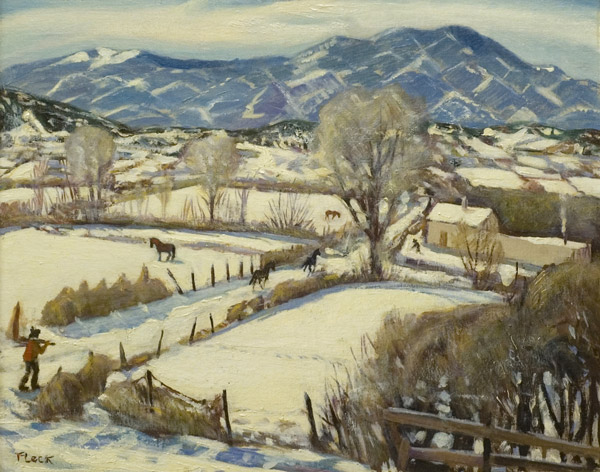
There are two spiritual dangers in not owning a farm.  One is the danger of supposing that breakfast comes from the grocery, and the other that heat comes from the furnace.

To avoid the first danger, one should plant a garden, preferably where there is no grocer to confuse the issue.

To avoid the second, he should lay a split of good oak on the andirons, preferably where there is no furnace, and let it warm his shins while a February blizzard tosses the trees outside.

Aldo Leopold, A Sand County Almanac (1949)


Winter by Joseph Fleck (Taos Art Museum and Fechin House)

______________________________

Notes:

Painting of Joseph Fleck associated with the Taos Art Museum and Fechin House.

See also Taos Painter Joseph Fleck.

Related Articles

7 Comments

Filed under Life in Balance, Life Out of Balance, Nature Quote of the Day

In the field with Ant Lions


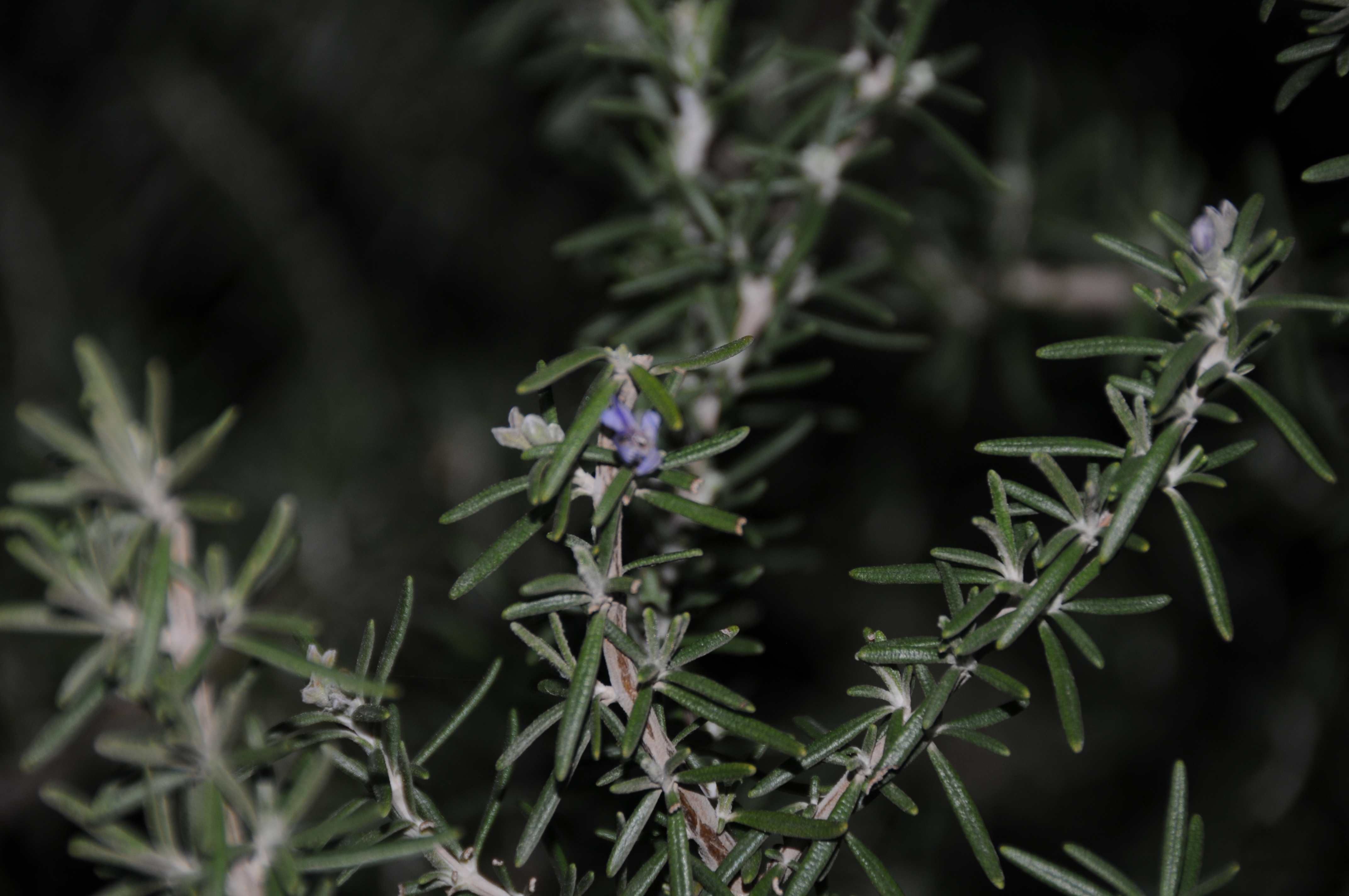
After Ant Lions and the alleyway, a beautiful violet blossom of rosemary is seen before the cold winter blast tomorrow.

Yesterday, November 23, 2010, late in the afternoon, I wanted to walk into the pastures, grove and corrals and first observe, then photograph, then write a post.  Frankly, I never got farther than the alleyway between barn and stables.  Since my intent was to observe sentient creatures especially — invertebrate as well as vertebrate — there emerged enough activity that I did not even venture past the barn or first corral.

Between the house and barn is a distance of 300 feet.  The house is about fifteen to twenty feet higher than the barn, providing a panoramic view of our countryside — Sims Valley, Upper Salt Cove, Twin Mountains, Salt Creek and Barton Creek.  From house to barn, I see yellow butterflies feed on small white flowers.  Acorns from the Live Oak trees continue to fall on the ground, making a crackling sound, and on the slope down from the house the acorns are like marbles under my boots so that I step gingerly lest I slip and fall.  Small birds flit about the underbrush and yucca.  I walk into the barn alleyway and sit down on a step-up crate that I have to climb on — like a small ladder — to mount horses.

Sitting on the step-up in the alleyway, I hear a solitary crow, then see the crow fly west to east, towards our duck pond.  The crow persistently calls, but no reply comes from other birds and it flies towards Morgan Mill, avoiding the duck pond treeline and mesquite on the other side.  Ducks quack, but I decide against walking to the pond to photograph the noisy assembly.  A turkey vulture circles in the sky over Salt Creek.  Our two horses, Star and Lilly, are nowhere to be seen as they had sauntered into the Grove, perhaps down into the creek bed.

A stern cold front is to pass through central west Texas tomorrow, putting the temperatures into the 50s F. for daytime, 20s F. for the night.  As I sit on the red-colored step-up, the temperature reads 80 F., the sun quite warm, the cold front a day away, the sky clear.  I look down at the ground in the alleyway and see small funnel traps, drilled by Ant Lions that throw dirt up frantically and then wait for ants and insects to kill and eat.  Of the ten or so dirt traps, three of those traps are being fussily arranged by bugs.  The sun beams down on their efforts and I bend down more closely to see if I could discern the sentient.  I could not, but the dirt continues to fly up over the one-inch funnel, prima facie evidence of invertebrate activity.  How fragile, how strong at the same time, life is.

As I lean over to see the funneling Ant Lions, I place my hand over a stable railing to balance myself.  The air is still, the sky clear to the south and east.  Then, quite discreetly a gentle zephyr comes through the alleyway from the north.  I face south and the cool air moves over my neck and hand grasping the rail.  The air is definitely cool and I look up into the sky and the clouds move across, northwest to southeast.  I know the cold front is a least a day away, but this is a prelude, an advance-scout for the weather change.  The clouds persist in clustering, the Ant Lions stop their funneling, the temperature falls a few degrees and I stand up, whistling for the horses to come to supper: long-high whistle followed by three short-low-toned whistles, a pitch change of about an octave.  Two minutes later, Star and Lilly emerge from the creek bottom and walk home to me, their grain and alfalfa.

I feed Star and Lilly.  I walk back up the hill to the house and pace the three terraces, looking for a possible photographic shot of an errant Monarch or striped lizard.  I find a small blossom of rosemary to photograph and by 5:00 p.m. I go inside the house to write of Ant Lions and alleyways.  I mince rosemary for our dinner.

______________________________

Notes:

After the second sentence in the second paragraph, I shift to present tense.  I had written this piece using past tense, but decided to change the tenses.  I like it better than past tense in this post.

The camera was in the pickup and when I saw the Ant Lions — Doodlebugs — I started to fetch it and photograph.  The wind — zephyr (I don’t get to use the word often) — came up about that time and I knew if I went to the pickup, I would lose my place in the alleyway and, besides, I could not capture on Kodachrome the wind passing over my flesh.  So, I stayed put and let things transpire.

16 Comments

Filed under Life in Balance