Category Archives: Life in Balance

Noise and relativity

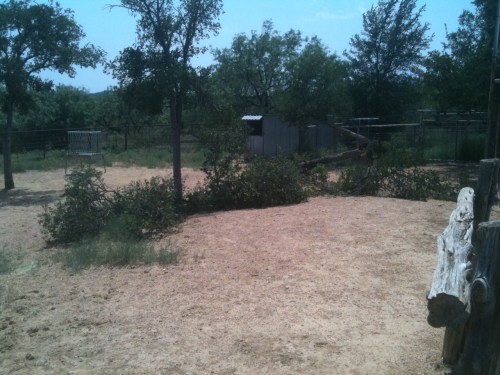
Felled tree in Corral No. 1 (May 2011).

In north Erath County, Texas, the south wind blew fiercely yesterday, its force bending high-grass seed tops to the ground in the arena pasture.  The sound of wind roughly soughing through live oak trees never let up during the day.  The temperature eased back to 93 degrees and I worked in the afternoon cutting down a split tree that threatened to topple onto a stable.  I chopped a large notch into the tree, lassoed the upper body of the tree with a lariat, tied a knot on the trailer hitch of the Case DX-55, pulled and brought the split tree down.  My step-father used the same axe as I did, chopping cedar and brush in Mills County, eighty-miles away and fifty-years ago.

A barn cat that I have not befriended — yet — watched from the stable while I worked out the physics of felling the tree.  Star fled from his feeding bin only when the tree fell, returning quickly to finish his block of coastal bermuda once the noise subsided.  Sweat stung my eyes and I opened up my shirt to cool as I sat in the shade of the barn alleyway, the high wind funneling through the alleyway more rapidly than in the corral.  The barn cat had eased his way into the hay and tools area, away from the wind.

I will clean up the tree debris in the corral today.

* * *

Deer and possibly quail returned to the far field, the Pecan Tree Pasture.  One reason is that mechanized noise has lessened in their habitat.  It is quieter.

My neighbors to the southeast, the Halls, are selling their home, stables and workshop.  Since they are dividing their time between here and Squaw Mountain near Throckmorton, much farther north of here, their off-road motor vehicles are silenced and they mow less frequently.  They do not fire pistols in training their horses to become accustomed to the noise.  To the west of me, on the Dooley place, the nephew has not target practiced in the adjacent pasture for several months.  And, finally, on my southern boundary the Old Bryant place, the deer stands and blinds have mostly been removed, only one remains.  I see deer browsing between my southern pastures and the pond, and on to a second healthy pond on the Blue place, to my east.  Blue takes care of his ailing mother and my rural route mail carrier sits with Blue’s mother so that he might go on errands or to church.  His place, his mother’s place, is quiet next to mine.

I labor under no illusion.  The noise might start again and the deer will flee.  I have no control over my neighbor’s behavior until my nose is bloodied or bone breaks.  I shall tend to my pastures and fields and allow all that is natural grow and browse.  The deer have not re-surged to levels six-years ago, but the deer are back.  The fawn prances again in the Grove.  The noise of mechanized activity, of gun powder and metal clanging has abated.  For now.

* * *

Several years ago, I almost purchased a place in northern New Mexico, up above Llano that bordered the Kit Carson National Forest.  The fifteen acres or so nestled up against an acequia that brought water to narrow fields below.  I envisioned building a small home, barn and corrals for horses.  A trail ascended into the national forest and I could ride Star for hours, even days into groves of aspen and high country meadows.  I did not buy the land.  I have no regrets for there are places like that near Taos and Rodarte still for sale.  If the need be, I will find them and resettle away from the clang of metal.

* * *

So much is relative; maybe all things are.  I am content that deer return, but in Australia the deer in places have populated so densely that the land is overgrazed and crops cannot be planted.  Yesterday, despite my focus on machine noise, I used a Case DX-55 tractor to pull down the split tree and a Stihl chainsaw to cut the trunk and limbs.  If I had continued to use my step-father’s axe, I would have had to soak the handle for the blade was loose.

Then, if I had moved to the high country of northern New Mexico, I would have the beauty of the land and resonance of diverse cultures, but jobs are few and the winters are bitter cold.  Yet, I could counter the cold with propane and wood, axe and chainsaw, sharpening files and good caulking about the quarters.

Ill fares the land?  No, not yet.
4 Comments

Filed under Life in Balance, Taos

Quail and deer lease my field

Deer skull with prairie grass (2011).

Temperatures reached 102 degrees yesterday.  Work slows or stops at 11:00 a.m.  Winds blew fierce, reaching 40 m.p.h. in gusts.  Yet, the pastures are green, the grass not browning for the moment.

* * *

Two days ago I shredded several narrow paths about the pastures.  I do not shred fields or pastures.  As I shredded a narrow path around the edges of Pecan Tree Pasture, I flushed a bobwhite quail.  Just one quail, but it is significant for quail habitually cluster in coveys.  Quail have disappeared in large portions of the area from hunting, shredding pastures, cropping and the spread of fire ants that kill young chicks.  I have reseeded the Pecan Tree Pasture with native grass and allowed the field to remain fallow for several years.  If I see more quail — the late sighting proving to not be an isolated occurrence — I will conclude I have done well in partial restoration of a native habitat.

* * *

Yesterday I sighted three mature deer and a fawn between the grove and the stock pond.  It is odd that their color is so pale brown, almost yellow, against the greenery of Spring.  Deer return, quail flush.  The fawn pranced.

* * *

As I sat on the back porch yesterday afternoon, a cattleman from Gordon knocked on the door.  He wanted to lease the pasture that I had flushed the quail and seen the deer — a monthly lease depending upon the number of cattle he would place.  I refused.  I told him that I would probably run a few head myself.  He stated that he had seen no cattle on the pasture and that’s why he had inquired.  I took his card and he said he was looking for pasture within ten miles of Gordon, so that if I heard of any land available for rent, please let him know.  I politely said I would.

Other inquires will follow this Spring.  They always do from cattlemen or harvesters of grass.  And, I always refuse and politely explain that I have the pasture for horses or a few head of cattle.  I have not run any cattle for four years.  I may put a few on the land this Spring, but not many and they will not disturb either deer or quail.  In the field, the Big Bluestem grass will be higher than the withers of horse and rump of cattle.

* * *

I had to kill a copperhead in the barn two days ago.  I knelt down to air up a tire and moved a salt block receptacle to position myself and a copperhead lay under the receptacle.  I will be cleaning out the barn early next week.  I had planned to do so — in fact I had moved six boxes of books to my office in Abilene a week ago –, but the danger of snake bite spurs me sooner to glean the barn.  My air conditioner repairman and contractor lost part of a finger last year from a copperhead bite.  For some reason, we have more copperheads in this portion of north Erath County, Texas, than most areas.

* * *

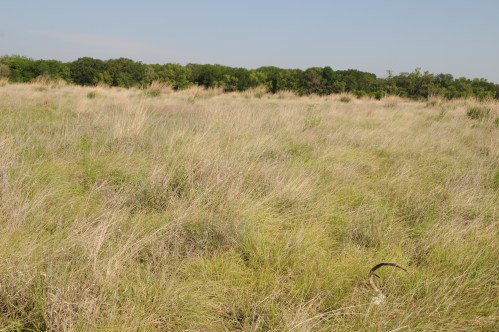
The photograph at the beginning of the post was taken over at Pecan Tree Pasture about where the solitary bobwhite was sighted.  I was observing the growth of native grasses a month ago and happened across the deer skull with horns.  I consider myself keenly observant of objects in my field of sight, but the grass has grown so high, secrets are undisclosed unless one tramps the land.  The skull remains in situ.  I like the simplicity, the complexity intertwined: deer, native grasses, treeline.

The field wholly remains in situ, lightly touched, deeply felt.

15 Comments

Filed under Birds, Deer, Field Log, Life in Balance

Saturday morning chores

Path in the Grove, Spring 2011.

It is Saturday morning and chores must be done.

I had rather walk the path in the Grove as photographed above, but duty calls.

To wit:  establish an insecticide ring about the ranch house that is minimal to reduce or eliminate the large wood ants scouting out the kitchen.

Go to Gordon Hardware Store six-miles away and purchase hardware for gates and trellis.

Collect trash along County Road 114.

Fetch Shiner Bock beer from barn refrigerator.  Pour half for me, half-a-bottle for Star, the paint gelding.  I don’t know about me, but Star deserves it having made it through isolation and the smoke from the fires.

16 Comments

Filed under Life in Balance

Spring with Effie and Gywn


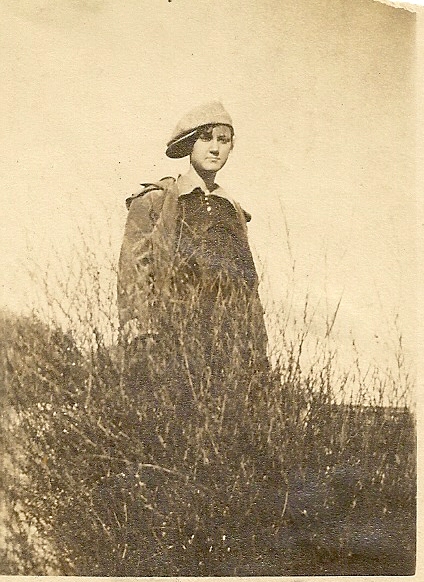
Effie Vernon Morris Parks (1900-1966)

I have written about my grandmother, Effie Parks, many times on the blog.  Here is a photograph of her in 1919, near Bend, Texas.  She cooked for chuck wagons on several ranches along with her husband, Jake, who managed cattle on horseback.  During the Great Depression, she sewed for the Works Progress Administration.  In her last years, she worked as a telephone operator in Lometa and Bend, Texas.  She taught me the rudiments of dominoes, playing guitar and hitting a baseball.  She and her husband were married by a parson in an onion field near the Colorado River in central Texas.  In her will, she divided her property among her two children and me.

Gywn Matthews Hollingshead (1920-2003)

This is my mother, Gywn.  This photograph was taken about 1938 when she was living with her mother, Effie, at Bend, Texas.  She married my father, Jack, in 1942, shortly before he volunteered to become a parachutist with the 506th P.I.R.  He was a member of Easy Company, made famous by Stephen Ambrose and Tom Hanks.  Gywn worked for over thirty years for the Southwestern States Telephone Company and General Telephone.  She helped pay for my college education and gave Brenda and me the money for a down payment for a $35,000 house in Mingus, Texas in 2000.  She would come to Mingus and visit us, sitting in the kitchen and looking out on the vineyard I had planted.  She always had a quote of some sort to throw out for the occasion.  One I remember is: Ask me no questions and I’ll tell you no lies.  She was Irish mainly, and proud of it.

I have posted these photographs and short commentary of Effie and Gywn because it is April and Spring is upon us and I never can go through this month without thinking of how Effie and Gywn and I traveled the backroads to Bend, Texas, and San Saba to visit relatives at Easter.  The flowers of April and May emitted the most beautiful perfumes imaginable in nature.  They talked quietly about plants and cattle and loved ones that we saw and loved ones that had departed.  I sat in the back seat of the car and listened to their talk and inhaled the scent of bluebonnets and paintbrushes all around.

Today, Brenda and I can travel the same road to Bend, Texas, and flowers spring up again.  We can go down that road and crisscross the same roads I traveled as a boy with Effie and Gywn.

31 Comments

Filed under Bend Texas, Life in Balance

The fox, the hare and the chef

I think we should leave our boxes of house, classroom and boardroom and integrate with the natural world of fresh air, sun and terrain, if only for a vacation.  Venturing into the field, the park, even a backyard, nature comes upon you with sight, sound and scent that carries you away from asphalt and brick.

It’s not all pleasant, this leaving the box.  With the flower comes the wasp.  The fox is beautiful, but rabbits will die.

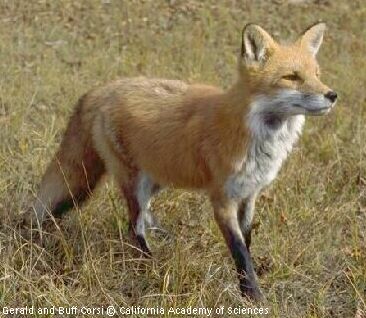
I have seen three wild foxes in my lifetime — that’s all, and I have looked.  In 1956, the first was along Pompey Creek in Mills County, Texas, on the lease of my step-father.  I was sitting on one side of the creek and along the other bank, a fox trotted along the stream, looked once at me and continued on.  I was impressed at its gait that was leisurely, self-assured.  The fox was plump, its coat deep-red and shiny.  I wanted to follow it and see where it went and if it had a mate and kits and where its burrow was.  I wanted to live with the fox and see it again and again and again in the forest and along Pompey Creek.  I never saw it again, although I looked for months and years thereafter for red fur coats in the central Texas brush.

The second time I saw a wild fox was in 2005 when Brenda and I were sitting out on the back porch.  We can look far into the pasture that is twenty-feet below, as we are on a hill above the grasses.  In the late spring evening, a fox came trotting along a pasture road, heading north into the brush of Blue’s farm to the east of us.  This fox’s coat was darker than the one at Pompey Creek, but the same focused gait carried him farther into the brush and away from the cleared field of buffalo grass.  Brenda and I spoke in whispers as it trotted away.  That same year, 2005, fifteen deer moved daily from Blue’s farm, across our pasture and into the grove.

Two years later in 2007, I was standing on the bank of Salt Creek in our oak tree grove when along the dry creek bed the third fox trotted, headed upstream towards the Dooley place on the west side of our ranch.  I was about fifteen feet above the creek bed and stood still as the fox passed by.  That was four years ago and I have seen none since.  A solitary deer occasionally drinks from the pond and I see track that may be fox.

* * *

The fox hunts and in the end, rabbits scream and chickens cluck and run.  The farmer brings the shotgun to the shoulder and fires once, twice, thrice.  The Dooleys to our west have chickens and they pen them for safety, but fox and coyote still take their cut.  The Dooleys count their losses.  I hear no gunfire.  The fox must eat.

It is a cycle of birth and death, the preyed upon and the predator.  You know the story, you’ve even been a part of it.  To describe the cycle is easy, but to understand it and live with it, to go on despite the tooth and claw is very difficult, for we like to deny the cycle happens or we put it away over there, behind the fence, beyond the hedge.  When I taught anthropology, my first lesson and repeated lesson through the semester was “Food — Where is it?  And, how do we get it? Who provides it for you?”  We buy food at the supermarket, but that’s not where it comes from, and it is not wrapped in cellophane when the middleman harvests the animal or plant.

Thomas Keller owns the most famous restaurant in America today, The French Laundry in California.  When he was young and honing his skills at the restaurant of Rene and Paulette Macary, near Catskill, New York,  he approached the purveyor of rabbit:

Thomas Keller

One day, I asked my purveyor to show me how to kill, skin, and eviscerate a rabbit.  I had never done this, and I figured if I was going to cook rabbit, I should know it from its live state through slaughtering, skinning, and butchering, and then the cooking.  The guy showed up with twelve live rabbits.  He hit one over the head with a club, knocked it out, slit its throat, pinned it to a board, skinned it — the whole bit.  Then he left.

I don’t know what else I expected, but there I was out in the grass behind the restaurant, just me and eleven cute little bunnies, all of which were on the menu that week and had to find their way into the braising pan.  I clutched the first rabbit.  I had a hard time killing it.  It screamed.  Rabbits scream and this one screamed loudly.  Then it broke its leg trying to get away.  It was terrible.

The next ten rabbits didn’t scream and I was quick with the kill, but that first screaming rabbit not only gave me a lesson in butchering, it also taught me about waste.  Because killing those rabbits had been such an awful experience, I would not squander them.  I would use all my powers as a chef to ensure that those rabbits were beautiful.  It’s very easy to go to a grocery store and buy meat, then accidentally overcook it and throw it away.  A cook sauteing a rabbit loin, working the line on a Saturday night, a million pans going, plates going out the door, who took that loin a little too far, doesn’t hesitate, just dumps it in the garbage and fires another.  Would that cook, I wonder, have his attention stray from that loin had he killed the rabbit himself?  No.  Should a cook squander anything, ever?

It was a simple lesson.

— Thomas Keller, The French Laundry Cookbook, New York: Artisan, 1999, p. 205, “The Importance of Rabbits.”

In too many of my hunts when young I squandered wildlife.  I still pay for that everyday.  I don’t hunt anymore, but I would if I had to.  My last hunt was deer and that was many years ago when I went with two of my closest friends to Van Horn, Texas.  I dressed my kill in the field and brought the deer back for my family.  I did not need to hunt for I garnered a paycheck every month and bought groceries at the supermarket.  I never hunted after Van Horn.  We ate what I shot.


In 2008, Brenda and I brought to market twenty-seven head of Angus stocker cattle after feeding them several months on our native grass pastures.  I made sure that when I transported them to the feed yard that they went to the cleanest and healthiest feed yard in Texas.  They did go to Perryton, Texas, a place of little stress and fine management with no HotShots (paddles to strike the calf) and plenty of room to move and breathe.

As I loaded the twenty-seven Angus into the stock trailer, I said under my breath and to no one in particular:  You go now!  You fatten yourselves!  I’ve done the best by you I could!  You better go to the table of someone that finds a cure for cancer for I will think of you the rest of my years!

I made no profit on the cattle, but I prepared them the best I could.  I did not squander resources in tending them as their steward.

And they were beautiful, like the fox, for some of them had a red hue about their coats as the sun went down.

______________________________

Notes:

One of my first blogs was called, “The 27th Heart,” named after Unit 27 Angus stocker calf that fell sick.  I tended him and took him to the vet.  He recovered.

I cook from Keller’s cookbook and always remember that story he wrote.  It is deep and connected with the American Indian.  Parallels can be drawn.

The italics in the quote of Keller’s are mine.


28 Comments

Filed under Life in Balance

Balance — monarchs, milkweed and horses

Leading edge monarch in Spring 2011, north Erath County, Texas.

Earlier this week on the first full day of Spring 2011, I received a communication from Journey North that the monarchs “were pouring out of Mexico” and that the leading edges were entering Oklahoma, about a 100 miles from our place in north Erath County, Texas.  A day before the e-mail, I had seen a monarch in our front field feasting on nectar of wild verbena, but I did not have my camera to take a picture.

The next day, March 23, 2011, I spotted this leading edge monarch in our live oak tree out in front of our house.  Twenty-three live oak trees live on the knoll of our home, a hill really, that is known as Poprock Hill in local folklore.  These trees have been the roosting place for monarchs, I am sure, for several generations.  We have seen monarchs every year since we have moved here and last year I snapped pictures for the blog of a large roost of monarchs in the Fall as they flew to Mexico.

I have known of butterflies all of my life, but only in the last fifteen years have I begun to look deeply into the ecology of where I live in north Erath County, Texas.  This blog I write, Sage to Meadow, has become a platform for me to the rest of the world, a medium of communicating my love of nature, its greens and browns, births and deaths that encompass us all.  Butterflies such as the monarch abound where I live and I did not know milkweed was a prime source of its nutrition.

Milkweed, like many other things, is an example of nature’s complexity and diversity, for although it is a prime source of food for butterflies, its over-indulgence by horses and cattle is toxic and may result in death if untreated.  When I learned of that last year, I quickly researched  the milkweed and its correlation with horses and found that adequate grass and grain prevents the livestock from consuming large quantities of milkweed.

So, the lesson here is balance for farmers and ranchers.  Keep good stands of grass in the field, do not overgraze, and horses and man and butterflies can co-exist.  It’s not the final lesson of life, but it’s one of the best lessons to acquire — for the monarchs can continue to find food to and from Mexico, horses will graze elsewhere and be pacified, and we will be able to look upon all their beauty and grace as we observe from close and far away the interconnectedness of us all.


Green-flowered Milkweed (Asclepias asperula), May 2010, north Erath County, Texas.


18 Comments

Filed under Horses, Life in Balance, Monarch Butterfly

Kiowa wind, grass, colors

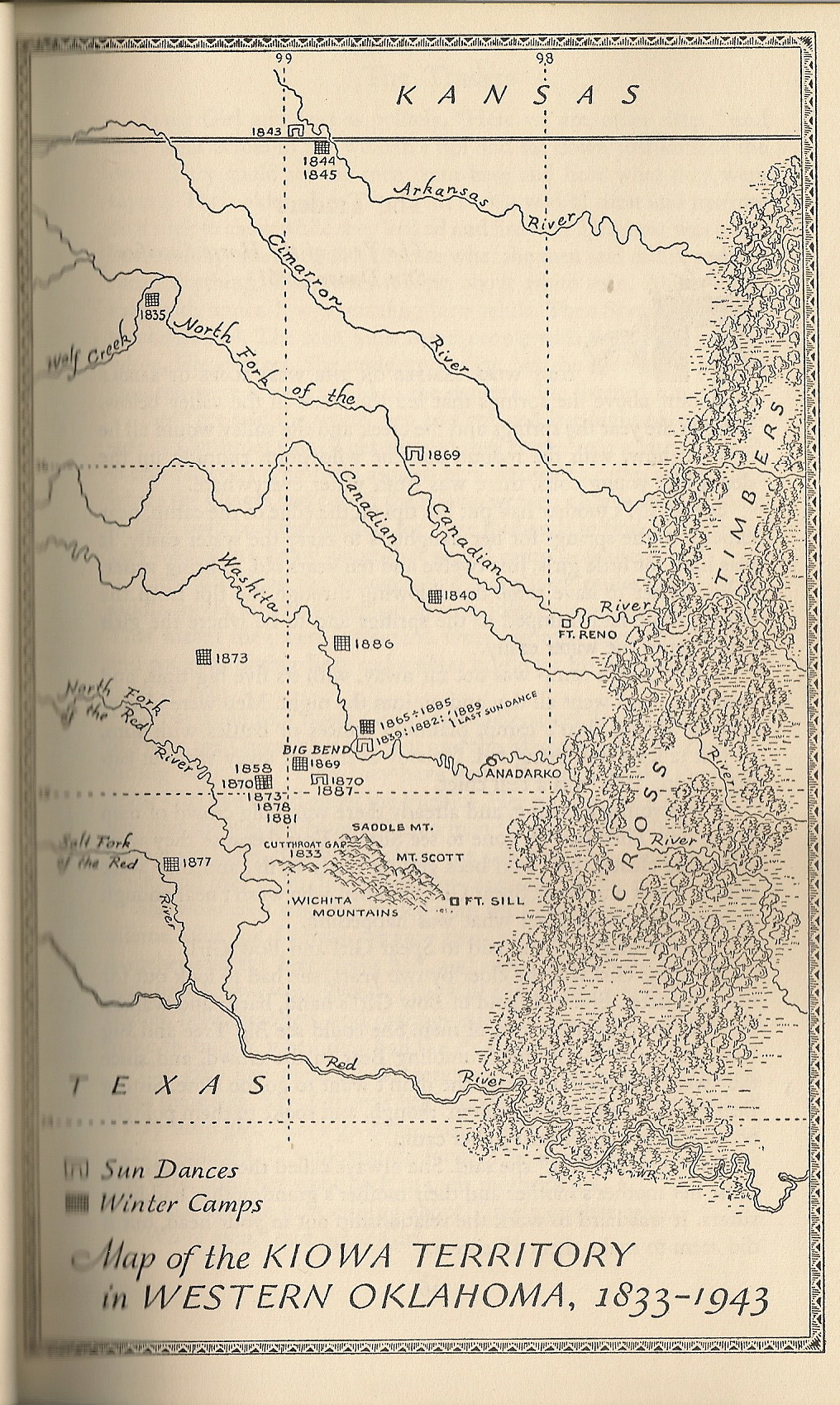
Map of the Kiowa Territory in Western Oklahoma, 1833-1843, from Alice Marriott, The Ten Grandmothers, p. 15.

In 1944, Alice Marriott in her book, The Ten Grandmothers, recorded Kiowa Spear Woman’s narrative of the motion and color changes of prairie grasses.  The “Ten Grandmothers” are ten Kiowa medicine bundles.  The bundles still exist, but they have not been opened since the 1890s when the last person who had the right to see the contents died.

For Leah the south porch of the big house was the best part of home.  Here you could sit and watch sunrise or sunset; watch the shapes of the earth change and move as the sun moved.  Then you knew, when you sat out there, that the earth was alive itself.

Spear Woman sat beside her granddaughter and thought that the earth had gone dead.  Lights played and moved, and cloud shadows came and went, but the earth itself had somehow died.  It was all one color now; not like the old days when its shades really changed and flickered like flames under the wind.  She stirred and sighed and spoke.

When the buffalo moved across it, there were other colors and other lights.

The thought was near enough Leah’s own to startle her.  There are lots of colors there now.

Her father spoke behind them.  Not like there used to be.  In the days that even I remember, there was one color when the wind was from the north and another when it was from the south, one from the east and another from the west.  Now the grass is all one color on every side, and it doesn’t change with the wind.

Sometimes the colors change.  Down near Lawton there is a prairie where the grass takes different colors.

* * *

[Spear Woman insists they travel to Lawton (Fort Sill, Oklahoma), fifty miles away.]

She brought her best Pendleton blanket from the trunk and spread it over the seat.  She put on her very best clothes and painted her face….

Two lines of high, tight fence spread across the prairie from a gate, and Spear Woman sat stiff, suddenly.  What is that!  That is grass like the old days.  Real grass.  All different colors.

It was, too.  It was like changeable silk, the kind the Delawares used to trim their blankets.  Yellow as the wind struck it; rose-color as it died away; then a sort of in-between color, with patterns that moved like patterns in silk when you folded it….

Shade was not even in sight, and when they had driven through the gates, with the lines of the fence on either hand, it was still not easy to find.  Spear Woman didn’t care.  She sat and watched the grass turn over in the sun, flickering and bending and straightening like little campfire flames, and was happy.  It was the old kind of grass, the old, rippling, running prairies, even if there were fences.  She was glad her eyes were dim, because she didn’t always see the fences, and could forget about them.  It was all peaceful and alive again.

From Alice Marriott, The Ten Grandmothers, pp. 285-288.

* * *

When I was a boy, my grandmother drove between Brownwood and Bend, Texas, near San Saba to visit relatives.  I watched fields of grass sway in the wind on either side of the road, a narrow two-lane highway.  She would point out to me where she and her family had camped and where she had seen buckboard wagons ascend a hill along the creek, the hubs carving their initials along the cliffs.  I saw them and put my hands in wagon-hub grooves when we stopped to rest.  The prairie wind flowed over the grass, moving stems and leaves in a rhythm, a wave of motion like water I saw in Corpus Christi Bay.

* * *

Last year I planted six acres of native grasses in the Pecan Tree Pasture.  The grasses are native to the Cross Timbers of Oklahoma where Spear Woman found peace again, and the grasses are native to our ranch that is also designated as Cross Timbers.  The grasses in our pastures grow waist-high, chest-high in some areas, and when the prevailing wind, a southwest flow from Mexico, crosses the pastures, grasses move and bend and change color.  As I go up the road towards Huckabay, Texas, about six miles away, I always notice a very old stand of Bluestem that turns reddish-brown in the Fall and Winter, but becomes blue and green in the Spring.  The stand of Bluestem is only an acre in size and machines have not touched it in many years for it is on the side of a hill.  It is old, that family, and I care for it.  If I could move that acre of old Bluestem to my ranch, I would.  I can’t.  But I have planted its relatives in the Pecan Tree Pasture and there I shall attend to their health and growth.

______________________________

Notes:

The citation is: Alice Marriott, The Ten Grandmothers, Norman: University of Oklahoma Press, 1945.  I have the fourth printing, October, 1951.  In the excerpt, I have omitted quotation marks and substituted italics for the spoken words.

Lawton, Oklahoma, is also the home of Fort Sill, Oklahoma, that is seen in the map above.  If you click on the map, then enlarge it with your computer, you can see more clearly the locations of encampments and the Sun Dance locations.  The Cross Timbers designation flows all the way down into Texas and includes our ranch, Flying Hat Ranch, Mingus, Texas.

12 Comments

Filed under Flying Hat Ranch, Life in Balance, Life Out of Balance, Nature Quote of the Day

Why western American landscape photography matters

John K. Hillers, Mesa at Zuni Pueblo, ca. 1875

Cameron Walker writes in a recent issue of High Country News,

Recently, I asked Martha Sandweiss, a Princeton University historian and author of Print the Legend: Photography and the American West, why people are so attracted to Western photographs — hoping, really, that I’d learn something more about myself.

Photography, she said, became a way of reframing the country after the Civil War. “The West was a place beyond history, during a time when recent history was really painful,” Sandweiss said. Many landscape photographers kept their cameras trained on the wilderness and its prospects, often omitting the West’s history and people to create a powerful illusion of a place where only the future mattered. “There’s this intense desire to imagine the West as our last great hope.”

To Sandweiss and Walker, the West in landscape photography is a place beyond history, a place where only the future matters, the West as our last great hope.  I agree.  Placing this position on one side, say, the positive side, we have the other position that Western landscape photography displaced a painful past (Civil War in this case), created an illusion and omitted actual history (relocating Indians, extermination of vast herds of buffalo, hollowing out natural resources).  Both sides fit together although we repress the pain, illusion and facts in favor of a place beyond history.  Look at the following three photographs, continue reading and let me explain.

Ansel Adams, Tetons and the Snake River, Wyoming, 1942

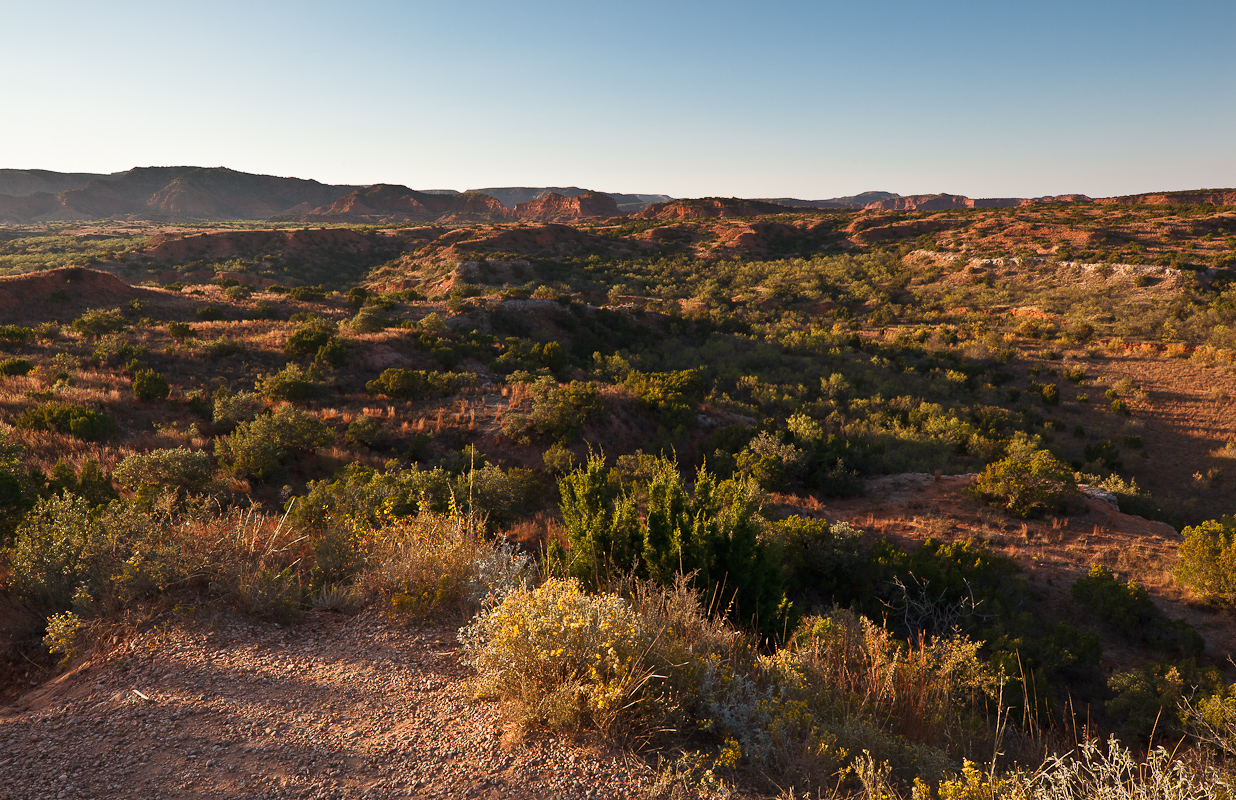
Jeff Lynch, Palo Duro Canyon, Texas, 2011

Montucky of Montana Outdoors, Cool, clear water, 2011

In the three photographs of Ansel Adams, Jeff Lynch and Montucky, each has captured a western landscape in pure form, without human artifice intruding — no church spires, courthouses, schools or bridges.  As we wander into these Wests, I submit that we want to leave behind those objects that change the terrain — automobile, antennas, roads.  Further, if we seek to preserve these pure forms, we must leave behind the ideologies of exploitation, over-consumption and race.  We may desire preservation, but the ongoing drive of the machine into the West can hardly be slowed down, much less stopped, as population expands.  We may want to leave behind the ideologies and terrain-changing objects and, though difficult, it is not impossible.

I do not view nature in these photographs as a cropping or harvesting opportunity and they are not presented as such by the artists.  I see rivers, streams, trees and mountains that are in themselves moving and living things, having the same molecular and atomic substance that make up my flesh, bones and hair.  Different arrangements for a time, the land and me, but substantially the same.  These three photographs give rise, I believe, to humanity’s kinship with the earth and invite gentle, ethical occupation of the land.  When I move into these Wests I do not want to construct a Monticello, but rather fit my home and hearth into the line and contour of the earth as in John K. Hillers, Mesa at Zuni Pueblo, seen above.

Leaving artifice behind, slowing the machine and having kinship with the earth in thought and deed has been tried before, and the dream has died ten-thousand times and it will die again.  Sand Creek and Ludlow coexist with the Rockies as backdrop in our history — blood and beauty.  Nonetheless, every vignette of western landscape offers the dream again, a chance to move on past the pain of history and into the wild without the machine.  Art museums, galleries and photographic books elicit a response in the viewer that there is a purity of form beyond the city, in all landscapes, all regions.  As a special art, western American landscape photography matters because it renews again and again what has been torn in our history.  We build upon beauty momentarily captured on film and not what has been shattered in history.  Western landscape photography can help us transcend what has terribly gone wrong.  As a result, I submit, we will take lighter loads and bigger hearts in our wagons when we migrate West next time.

It is all there in the photographs, beyond the lens of Adams, Lynch and Montucky.  They point the way.  Can you not see it?

* * *

Not all people that view landscape photography of the West will see renewal or lessen their impact on the land.  The West is still seen as ripe for exploitation and extraction.  New lamentations are writ everyday in the West and many of them are never heard, yet they are always seen — on film.

______________________________

Notes:

Cameron Walker, January 24, 2011, High Country News, interviews Martha Sandweiss, “Depth Afield: Why is the Western Image so Appealing?”

Mesa at Zuni Pueblo from James L. Enyeart, Land, Sky, and All That is Within: Visionary Photographers in the Southwest, Santa Fe: Museum of New Mexico Press, 1998.

Additional comment, February 2, 2011.  Caralee Woods of Kanab, Utah, sent this by e-mail and I post it as another example of the appeal of the western image.

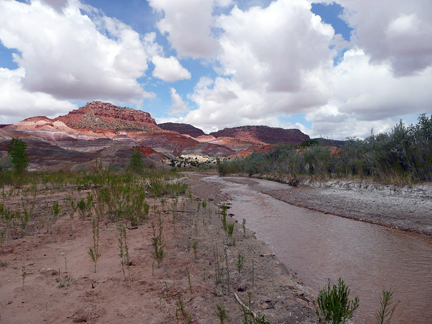
Caralee Woods, Paria River, Grand Staircase-Escalante National Monument, Utah, 2010.

18 Comments

Filed under Life in Balance, Life Out of Balance

Bearable lightness of humans with horses

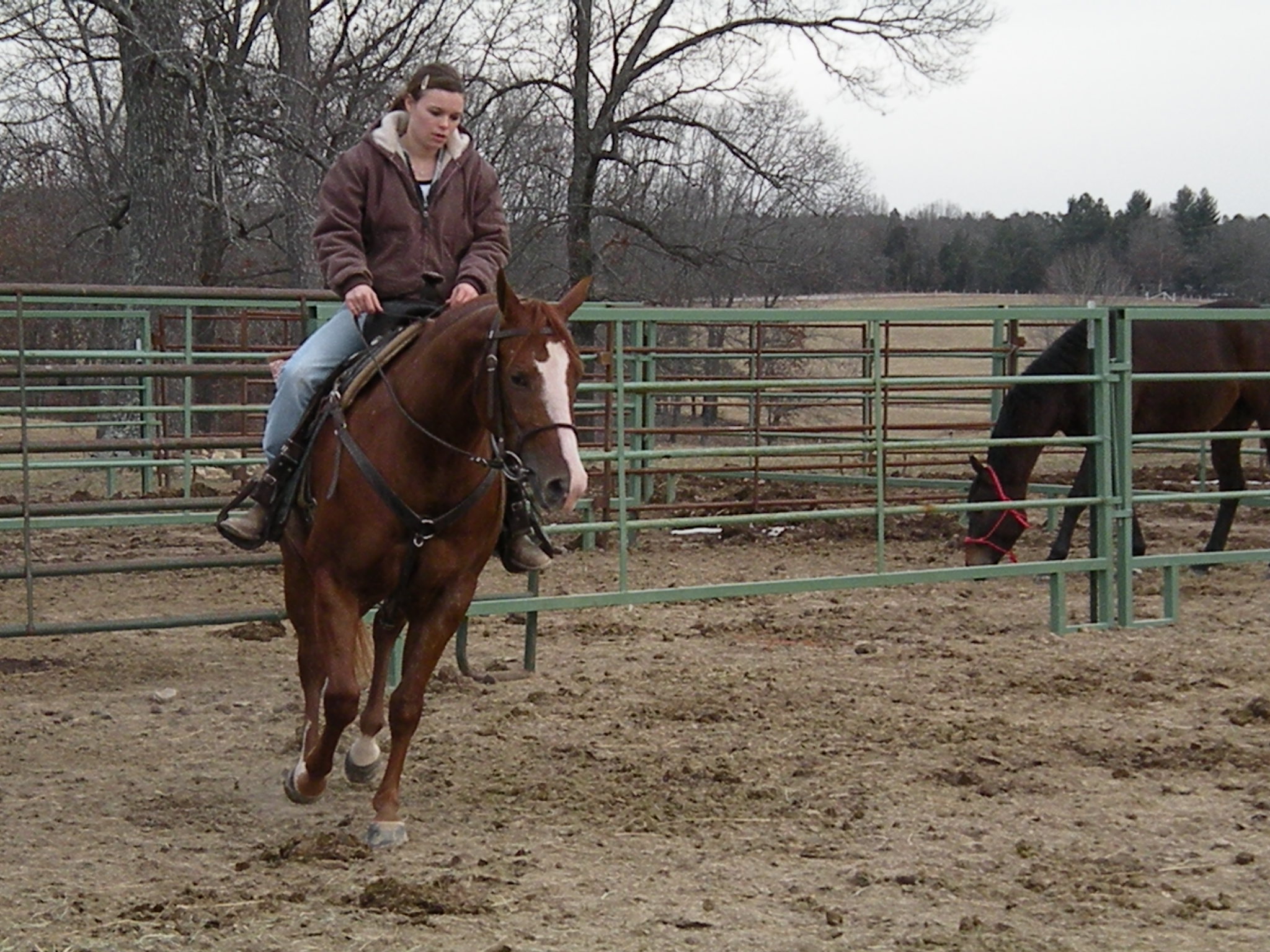
Courtney Hampton on Fanny in Missouri (2011)

Considering all the events of the past week, I thought I would pass this e-mail along to you from Courtney Hampton who traveled to Oklahoma City on a mission to see and evaluate Fanny.  She bought Fanny and this is her comment on riding her the first day.

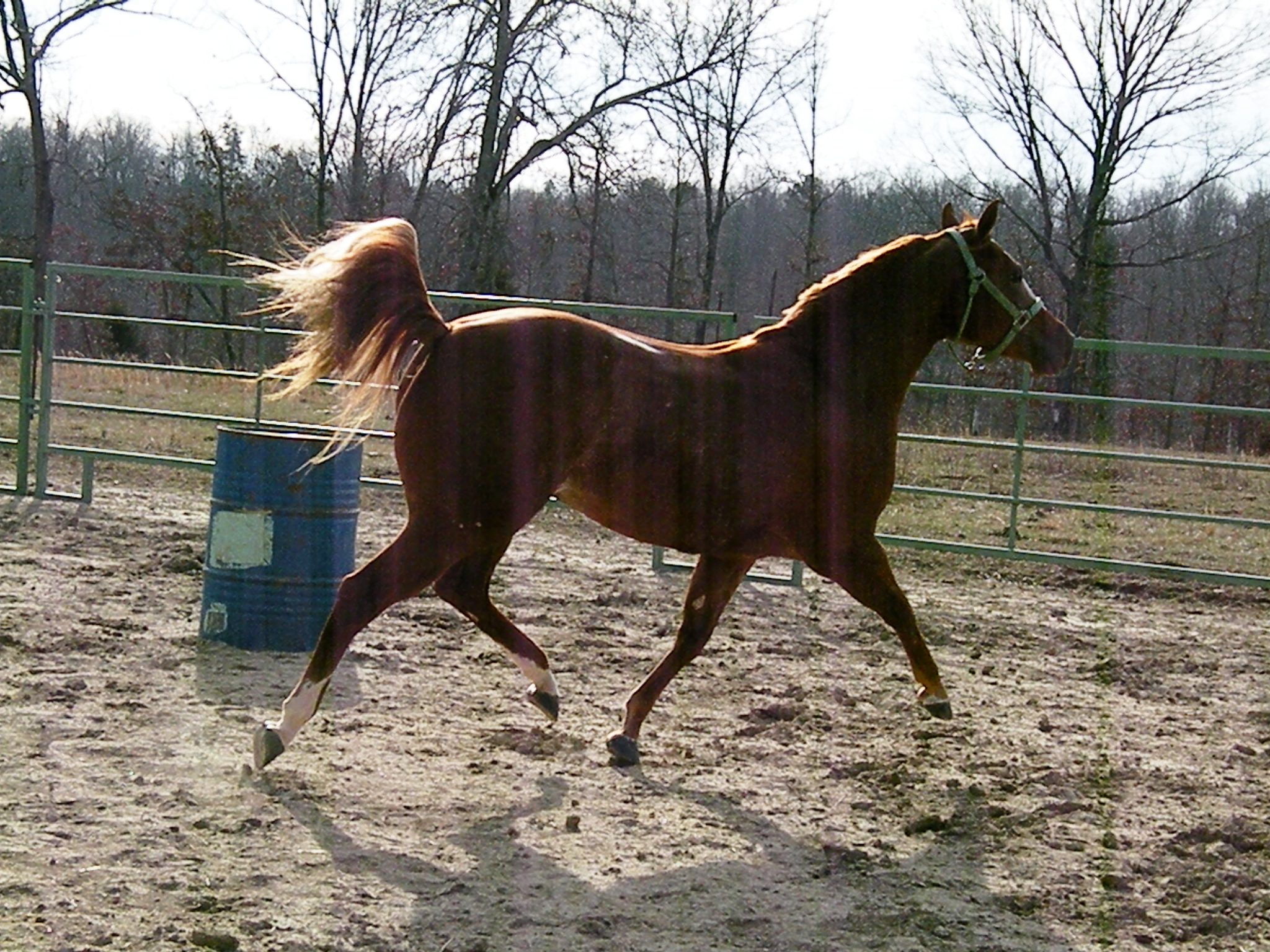
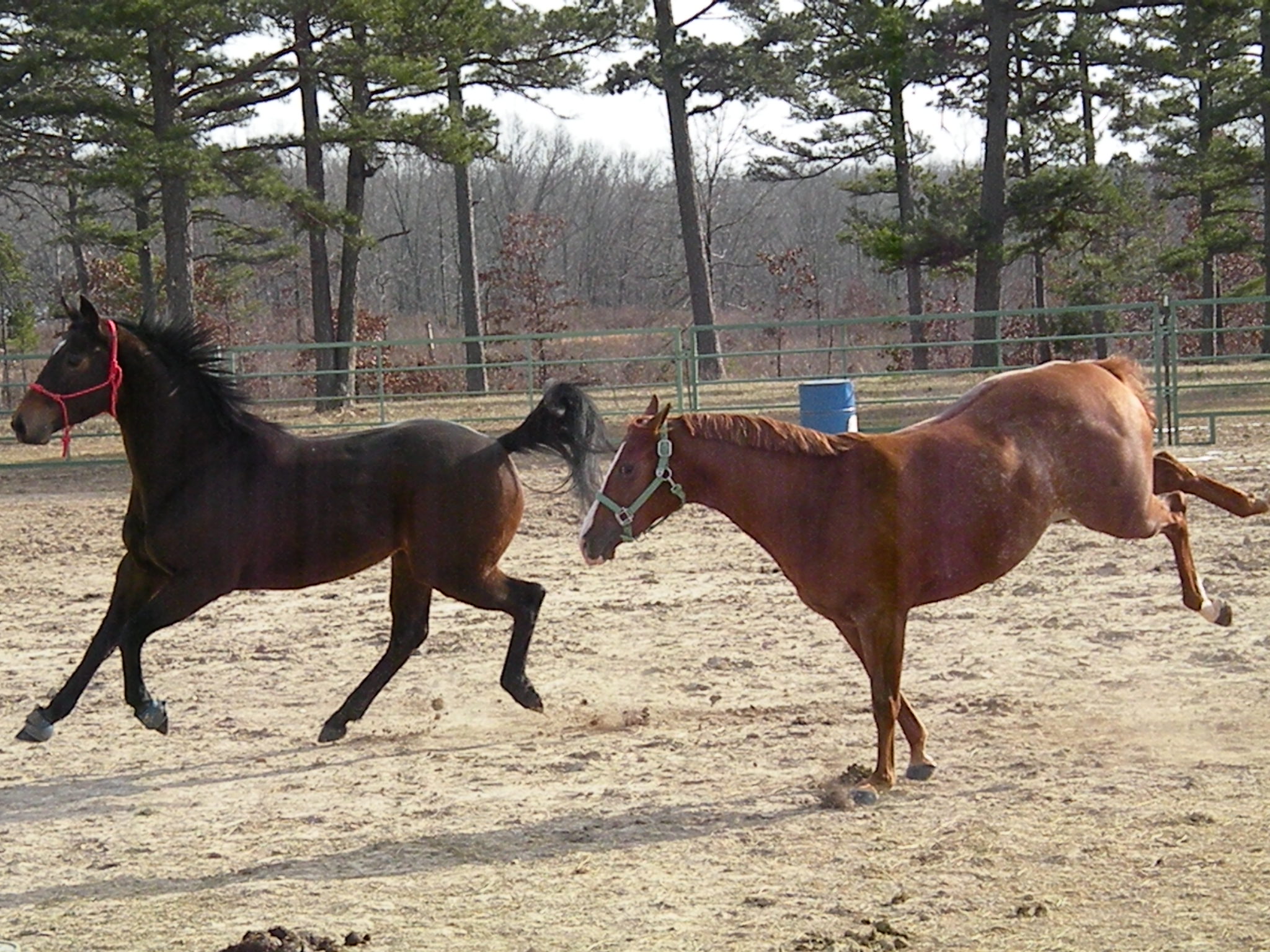
I just thought I’d give you an update on how Fanny is doing. We arrived at Heritage Place at about 5 a.m. Friday morning and loaded her and Diesel (the other mare we bought) up and headed to Missouri. It was about an eight-hour drive, but we stopped several times to let them stretch.   She handled everything very well. When we got her home (about 1:30 p.m.) we turned her and Diesel (aka Ms Royal Fever) out in the big arena (their new home for two weeks until the others get used to them).   As soon as we let them go they took off and started running and bucking.  They were definitely happy to get out of the trailer!  It was about 55 degrees out, so all my other horses started running around too.  (It hasn’t been that warm in weeks.)  What a sight to be sure!  Fanny was sure strutting her stuff! (I will attach pictures.)  She and Diesel ran around that arena for half an hour. So cool to watch!  After their energy had worn down some I threw some alfalfa out and they went to munching.  Later that day, about 4:30 or so, I went down and decided to ride them both for a few minutes just to see how they did.  I started with Fanny first as I wasn’t sure how the race mare was going to be (I’ve bought off the track horses before and they can be a little hard to handle).   I saddled Fanny and of course she just stood there like a pro.  I got on her and rode her around for about 30 minutes and put her through some paces just to see what she could do. She did everything I asked like a champ: roll-backs, counter-bending, side-passing, stop *which that mare can STOP!*  Then I took her out and walked her around the pasture that we have our weanling calves in.  Of course she was very alert and nervous but she never spooked — even when our flock of guinea hens flew by her.  She started shaking (poor baby), but then just snorted and walked on.  Since she was doing so good I quit her and unsaddled and fed her while I rode Diesel (who has a pretty good handle on her for a race mare and I was pleasantly surprised).

— Courtney Hampton to Jack Matthews, January 16, 2011

This is the sweet side of handing off horses to young people whose attachment to animals renews those of us that have become coarse.  Some of the bitter goes away when you hear-tell this kind of narrative.

14 Comments

Filed under Duncan Steele-Park, Horses, Life in Balance, Shiners Fannin Peppy (Fanny)

Lilly (1985 – 2011)

Lilly (1985-2011)

Lilly died today.  Born January 20, 1985, at Cibolo, Texas, on the ranch of Janis Hawthorne, she had two issues, the last one being Star Bars Moore who remains on our ranch.

Lilly had osteoarthritis.  She had been down since yesterday for eighteen hours, but had come up for me this morning.  The vets were called at 8:00 a.m.  She had alfalfa and a natural sedative to lessen her pain before the vets arrived.  I told her I was beside her and not be afraid.  She was not.

Lilly has been with my family for eighteen years and our grandchildren have ridden her.  She carried my stepfather on trail rides for many years and Brenda rode her with great pleasure.

Her son, Star Bars Moore, watched at a distance as we put her down.  I had talked to him about what we were doing and he lowered his head, not so much about what I told him for he did not understand, but that I had come directly to him to talk in fair and caring tones.  He watched at a distance as I covered his mother in the good earth of this world.

We shall miss this fine horse.


44 Comments

Filed under Life in Balance, Lilly