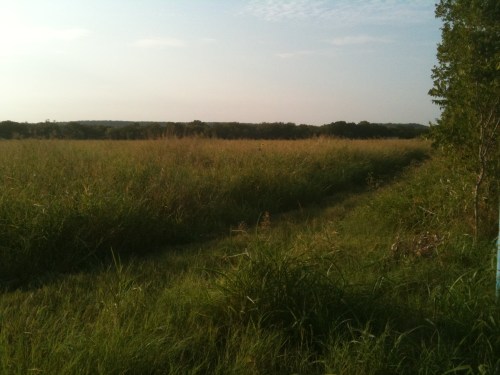
Category Archives: Life in Balance

Pasqual’s calendar

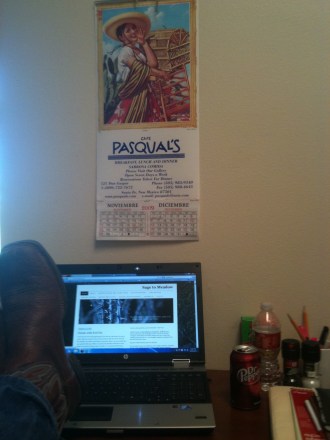
At my office at Cisco College in Abilene, Texas, I lean back and put my feet and Ariat boots up on the desk.

My view is nearly always the same when I catch my breath and lean back in the chair.  I have a calendar from Cafe Pasqual’s in Santa Fe — dated back to 2009 — that is of a pajarera (birdhouse).  I like those calendars from Pasqual’s.  I have a calendar underneath this calendar that is from 2008, entitled “Mi Moscata,” showing a boy with a pet squirrel.  Yes, I know, that’s three-years ago and I still have it on the wall.  Further, I have Sage to Meadow blog up on the computer, Dr. Pepper on the desk and behind the Dr. Pepper is a small green box of mild Tabasco sauce — bottle in the box, of course.  I have the red Tabasco there, too, but you can’t see it.  I eat lunch in my office, hence, the condiments.

It is not all boots on the desk, however, for I presented Madison’s influence at the Constitutional Convention to a U.S. History class, and in World Civilization I took the class through the Greek philosophers with a particular aside to the cynic, Diogenes of Sinope: “Alexander, stand out of the way, you are blocking the sun!”  Diogenes could get away with that.

Back when I was growing up, my parents would get a feed store calendar that would have the times of the sun rising and setting and the phases of the moon on each day.  They would use a clothes pin to attach receipts to the calendar until the end of the month when the receipts would be taken down and filed away.  I think some of those calendars had pockets in which you could store receipts.  Maybe not.

At Cafe Pasqual’s in Santa Fe I really like the smoked trout breakfast dish.  What is it called?

SMOKED TROUT HASH
A Golden Gruyère Potato Cake with Two Poached Eggs, a Scatter of Smoked Trout and Tomatillo Salsa 16

Ah, that’s it.

12 Comments

Filed under Life in Balance

Fox and Salt Creek: field log entry 2

12:00 p.m. — 1:08 p.m.:  After thirty minutes communing with a fussy wren, I finished a brief field observation with a walk up Salt Creek about one-tenth of a mile.  I logged tadpoles, frogs, wrens, bluejays, heard the cry of the red-tailed hawk or the Harris hawk, photographed a turkey vulture (not included herein) and saw the owl (unidentified) fly into the grove away from my hike.  Back at the ranch house, I identified the wren that had chattered at me — a Bewick’s Wren (Thryomanes bewickii).    I saw numerous tracks in the mud.

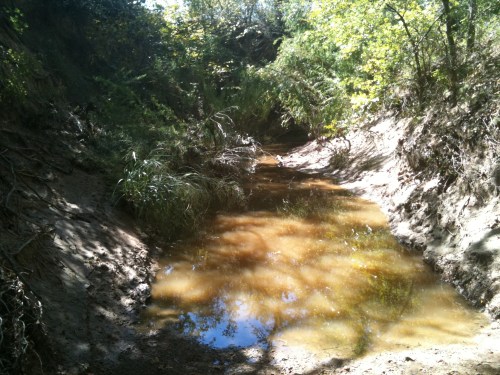
I counted two monarch butterflies within the cool willows of the water cache — see photograph below for the Salt Creek water cache with sky blue.

Salt Creek water cache with sky blue (October 15, 2011).

The Audubon Society Field Guide to North American Birds states that Bewick’s Wren prefers drier conditions to its resemblance, the Carolina Wren.  Bewick’s Wren has certainly enjoyed dry conditions throughout the summer.

I liked this photograph of the prickly-pear cactus with the willow and pecan trees in the background.  It describes in essence what this part of Texas and my ranchito is all about — wet and dry, green and brown, cactus and pecan, things-that-stick-you and things-you-eat.

Fox I did not see.  I did not expect to see any, but one never knows.  My friend, Wild Bill of Wild Ramblings Blog, suggested that I get a animal call tool that sounds like a wounded rabbit to attract the fox.  I think I shall because I want to see fox again.   Cougars and bobcats have been sighted in our area, so I shall be cautious.  I don’t want my day spoiled by predators of that size taking me from behind.  We have a saying out here, “If it doesn’t sting or bite you, it will stick you!”   I’ll take the stinging and sticking anytime over the biting.  Now, where are my field catalogs?

5 Comments

Filed under Birds, Bluestem Field Log (Live), Field Log, Life in Balance, Monarch Butterfly

Fox and Salt Creek: field log entry 1

Eight minutes ago, I sat down at the site in the grove, above Salt Creek about fifteen feet, where I saw a fox trotting in the creek bed several years ago. I have a folding chair I sit in, my field log, pen, iPhone for composing and taking pics and an internet connection.

Since seated, I log: turkey vulture shadow passes over me, an unidentified wren chatters at me ten feet away, rifle and shotgun firing in the distance, crows cawing, vehicle traffic on SH 108, cool breeze.

I face northwest by west. Here is a photo of the creek bed at the precise spot I saw the fox:

20111015-122037.jpg

Leave a comment

Filed under Bluestem Field Log (Live), Field Log, Life in Balance

The quail, the deer and setting the lesson

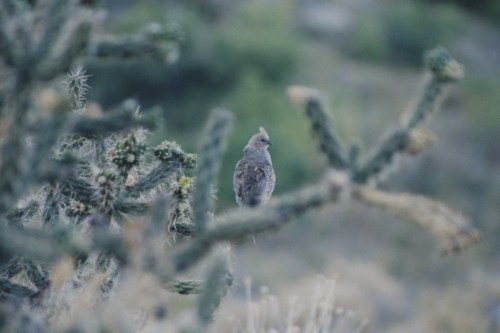
Scaled quail on cholla bush (photograph by Marcus G. Martin, Photo Gallery).

Quail are sociable, staying together from birth to death as a covey, and when one lone quail, separated from the group, calls out plaintively, the covey circles back and joins the solitary being, bedding down all together in the evening so that they appear to be one animal, not fifteen or twenty, when observed closely.  (I have reared quail and know their habits.)  The quail also make for a fine gumbo, or with a brown sauce on top of white rice, a delicious entree.  They are beautiful and interesting to watch, but they are also food.

Deer, buck or doe, appear majestic in the field as they scan for predators and graceful when they arc over fallen timber or fence.   Fawns scamper and play about their mothers like children at the playground.  The backstrap or tenderloin of the deer is one of the finest cuts of meat on earth.  The liver of venison when soaked in milk overnight becomes delicate to the taste when fried and offers potency to the sick.  Deer are beautiful and interesting to watch, but they are also food.

Two years ago, in 2009, I chose the name of my blog, “Sage to Meadow,” based upon a post by Coffeeonthemesa, a blog published out of Taos, New Mexico. Coffeeonthemesa uses a phrase in her post that describes a covey of scaled quail moving from “sage across the meadow” near her home.  I like that.  It describes plant and terrain, sage and meadow: expansive geographic images and symbols of the American West.

Here is the post of Coffeeonthemesa — the italics are mine — that gave my blog its name and a setting of a lesson about food.

The covey of scaled quail (Callipepla squamata) that pass through our yard on their mesa rounds is smaller this year. It seems there are only a dozen or so, but they are quite plump. They move north to south from the sage across the meadow, stop to graze under the sunflower seed feeder, move through the little shed (have they ever found anything to eat in there?) and out again, in a little row. They search around the wood pile and cross the barren summer garden, before heading down the road towards the mesa edge. Last week I found the feathers and scant remains of one on the north side of the house where our woodstove ash pit lies.

They’re short-tailed, chunky birds with a cotton top crest, and the lookout quail sits atop a sagebrush or low fence post and barks out warnings to the others. Generally they run when something nears, zigzagging through the underbrush. Although the covey can explosively flush when startled.

I cannot help, when watching them under the feeder, but imagine how their plump little breasts would make a fine gumbo.

Coffeeonthemesa blog, Taos, New Mexico, November 13, 2009.

The eloquence of Coffeeonthemesa’s prose brings the eternal cycle into her final sentence:  “I cannot help, when watching them under the feeder, but imagine how their plump little breasts would make a fine gumbo.”

I have never been a consistent hunter in the food chain.  I shop the food chain.  I go to the supermarket for food, but I know it is not the supermarket that gives me food.

I have hunted in the food chain.  In the 1970s, I went deer hunting with two friends, shot my deer and dressed it in the field.  Oh, I had known the one-life-for-another axiom for a long time, but the buck I shot set the lesson inside me, inside my body so that all the literature and thinking I had ever done about one-life-for-another seemed faraway, alien even, to the beautiful, majestic animal I knelt before.

Beneath me, still breathing, eyes open, the grey coat shimmering, lay the deer, my first deer, its antlers hard and white.  No longer would he browse the field, sniff the wind, eat acorns beneath live oaks.  His animation was near end.  As I put my pistol to his heart, I promised myself that I would prepare all of him for me and my wife and my friends to eat.  I would honor this being, this deer, this day under the sun near Van Horn, Texas.

As I dressed the deer, I retched and threw up.

Must all lessons be assimilated like this?  Or, expelled like this?  Can’t very well drop the class can I?  Can we?  How do I get out of this university (universe)?

The regret and sadness I had that day recedes when I ponder the lesson the deer set in me.   In my anthropology classes, the lesson is taught every semester, every class, to every student.  I don’t grade them on it except for the economics of reciprocity in a society.  I set them on a path to learn the lesson — they will have to go into the field to have the lesson truly set, but here are the words:

We all take life to sustain ourselves.  To obscure that fact is profane.  To recognize that we take a life to sustain ourselves is sacred.  The sharing of food with another, next to laying down our life, is the greatest gift we can give others.  Who feeds you?  And, what do you do for them in return?

Jack Matthews, author of Sage to Meadow, Introductory Lecture in Physical and Cultural Anthropology.

____________________________

Notes, corrections and additions:

The New Mexico State University Scaled Quail Management Operation.

Marcus G. Martin Bird Photo Gallery.   The quail on cholla bush is from Martin’s gallery — permission pending.  Click his link for other photographs and website.

This post started out only as a post describing how my blog got its name.  From quail gumbo, however, the post grew into what it is now.

Along with the more somber lesson herein written, there are other lessons  from an anthropological perspective that relate to to food:  (1) by giving food, parties, spreading your resources, you enlarge your social network and friends; (2) gifts make slaves; (3) by giving of gifts, including food, you create obligations.  I think that we could go deeper into the psychology of harvesting animals, but for the moment, this is it.  One aspect that bears mentioning is that if you take life with respect, you probably won’t harvest unnecessarily, and you will get beaucoup angry with those that do.  You may even go to war with agencies that take the fat of the land and hold it in reserve, extracting a price for its distribution.  Read most any history on the opening of the American West, the partial closing of the American West. 

5 Comments

Filed under Deer, Life in Balance

Well springs Frio loam

Southeast corner of Pecan Tree Pasture, Johnsongrass and big bluestem (September 4, 2011).

Drought has come to the Southwest, particularly Texas. Wildfires erupt and I view every cloud in the sky as either friend or foe, rain-cumulus or pyrocumulus. Man lives in oscillating cycles: birth, maturity, degeneration and death; spring, summer, winter and fall; day and night. Nature’s theater, the grandest show — in fact the only show on the road — brings hot, dry days to us, an uneasy audience that sits without a program in hand.

Raising my hands and putting on a broad-brimmed hat to shield myself from the sun, I think, Is there is no way out of this parched country of west Texas, this incessant drought?  As a matter of habit, I drove to the far field two days ago, then again yesterday, and what I saw brought me out of the funk and into the reality of primary, nascent things that fosters renewal, not despair.  What I saw was the green field of my far pasture, Pecan Tree Pasture, a 35 acre field of buffalo grass, side-oats gramma, little bluestem, big bluestem and Johnsongrass that stood higher than my head!  The rain of about 2.5 inches two weeks ago provided enough moisture for a re-eruption of growth.

Trying to understand the dissonance of yellow-brown drought in Texas and this field of green grass, I gazed deeper and deeper into the field, trying to resolve these issues of color.  Then, it penetrated:  I was not looking deep enough, for beneath the grass lay soil, the wellspring for grass, the fountain of energy that we all thrive upon.  Well springs the soil.

Land, then, is not merely soil; it is a fountain of energy flowing through a circuit of soils, plants, and animals.  Food chains are living channels which conduct energy upward; death and decay return it to the soil.

Aldo Leopold, A Sand County Almanac, p. 216, New York: Oxford Press, 1949.

In primary school, we all saw the pyramid chart of soil, plants, animals, man, sun and the flowing of energy back and forth.  The tooth and claw of the pyramid remained omnipresent, but never voiced.  We knew one thing lived by absorbing another living thing, whether cougar on deer, fox on rabbit or kids on hamburgers, but our teachers for reasons of refinement side-stepped the tooth, the claw.  The revealing of one thing eating another lay with fathers and uncles in the field on cloudy, windy and cold days.  Perhaps that is how it should be.

To know my soil, early this morning I unfolded the Soil Survey Map of Erath County, Texas, in order to type the soil of the far field I saw yesterday.  The map is ninety-one years old (1920); it is still accurate, still a good map.  My land, temporary occupant that I am, encompasses three soil types.  First, I have rough stony land (R) upon which sits the house, barn, stables and arena.  Second, the tree grove of American elm, willow, live oak, red oak, juniper and pecan rests upon Frio silty clay loam, Colluvial phase (F).  Through the tree grove runs Salt Creek, an intermittent flowing stream.

In the far field, where big bluestem is stretching upwards of seven-feet in height, a pasture that has not been grazed by Angus cattle in four years, is Frio loam (Fm), deposits of earth that have rushed down from High Salt Cove and between two creeks, Barton Creek and Salt Creek.  From Frio loam springs the grass in the far field.  The doe and fawn I disturbed yesterday lie between the high stands of big bluestem, and I lapse back to Oklahoma’s plains and the waving blue-red waves of autumnal bluestem that rustle with wind, the stems making sounds as they brush against one another.  The pasture holds the moisture of the last rain and though I am not a person of edgy competition, I would put my far field of green grass up against any non-fertilized field in Erath County for height, vigor, nutrients and wildlife.

After tending the far field for eight years and seeing the soil’s fountain of energy this late summer, How is it that man fouls such richness, such gifts?  The answer is complex, but knowable.  The resolution to stop the pollution begins with a respect for knowledge, deep knowledge that is revealed early and, unfortunately, forgotten early on with so many other things in our youth, a bulletin board that displayed the food chain in first grade.  The ethic of conservation and sustainability rests upon simple principles that need the status of a Commandment, an article of the Constitution, a catechism of the church.  Better yet, we should recover that which was lost when we began to make pottery, metal and textiles thousands of years ago, or left on that bulletin board at Coggin Elementary School in Brownwood, Texas.

Land is a fountain of energy.  In my far field, Frio loam is a wellspring.

* * *
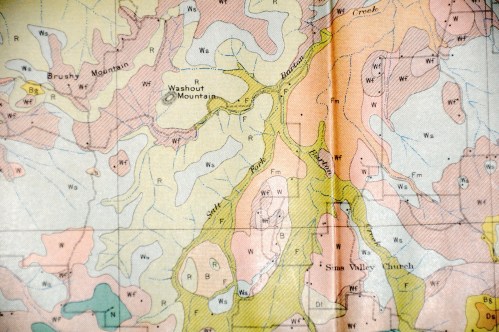
Click to enlarge. Soil survey map, Salt Creek and Barton Creek merger, from Soil Survey of Erath County, Texas (Washington: Government Printing Office, 1922). The far field is located at about center-left along Salt Fork and is associated with the symbol, Fm, for Frio loam.

______________________________

Notes, corrections and additions:

Aldo Leopold, A Sand County Almanac And Sketches Here and There, New York: Oxford Press, 1949.  I am quoting from the paperback, special commemorative edition that has an introduction by Robert Finch.

Soil Survey of Erath County, Texas, Washington: Government Printing Office, 1922.  The map was drawn in 1920, hence, it is ninety-one years old.  I found it in the workshop of the house I once owned in Mingus, Texas.  The house was know as the Old Bertino Place, named for the Italian family that had come to the area to work in the coal mines of Thurber in the nineteenth century.

I have been reading a considerable amount of literature this summer:  Aldo Leopold, Thoreau, Tolkien, Patrick Leigh Fermor, Edward Hoagland, Black Elk, Frank Waters, Wordsworth, Catulus.  I have something to write.  Whether it sells or not is a by-product.  I have to write, I really do.

18 Comments

Filed under Life in Balance, Rain, Sounds, Weather

Thoreau the philosopher: The hound, a bay horse, and a turtle-dove

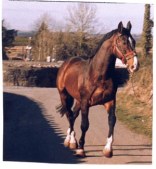
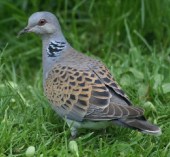
The following quote of Henry David Thoreau reflects a symbolism, rather deep I suspect, of three sentient beings: dog, horse and dove (bird).  Historians and literary scholars speculate these lost animals never existed.  Like so many queries, further research is necessary.  My quick and dirty (fast, not slow or deep) study assumes that they did exist AND they represent Thoreau’s tangential thinking.  In part, the dog is companionship, friendship, association; the horse is the passion and energy of men and women; and the dove is the transcendental quality, possessed by all men, to break the bonds of family, religion, nation and materialism.

I long ago lost a hound, a bay horse, and a turtle-dove, and am still on their trail. Many are the travelers I have spoken concerning them, describing their tracks and what calls they answered to. I have met one or two who have heard the hound, and the tramp of the horse, and even seen the dove disappear behind a cloud, and they seemed as anxious to recover them as if they had lost them themselves.

~ Henry David Thoreau, Walden; or, Life in the Woods (1854).

* * *

And, in association with such tracking and calling, I submit my own experiences with hound, horse and bird:

Come here, boy, come here. I hear the rustle of grass and juniper brush before I see my hound.

One long high whistle, followed by three low-toned whistles. The gallop towards me grows louder, the ground shakes and earth is a-flying.

The dove comes back to be with its own kind, a cooing ensues and a dance. I reach inside their loft — they are accustomed to me — and pick one gently up and as I stroke its breast, it sleeps, head tucked under its wing. I lay it gently down and in the morning’s light it disappears behind the clouds.

* * *

Not trying to be didactic or professorial (I hate that, even in my own classroom), what do you think about Thoreau’s quote?  Should this quote be taken literally?  Symbolically?  Or both?  I’ll expect your comments by September 1, or I will have to check the non-compliance box next to your name.  So, let’s get on with the punishment, shall we?

______________________________

Notes, corrections and additions:

The original post contained only Thoreau’s quote and my three extrapolations about hound, horse and dove.  I added the first paragraph before the quote and added the questions at the end of the post.  The photographs have also been added — all additions occurred August 27, 2011.

I originally started re-reading Thoreau for a variety of reasons, especially searching for irony and wit in his writing, but I got side-tracked with this quote.

17 Comments

Filed under Life in Balance, Nature Quote of the Day, Quote of the Day

My summer’s end

Medieval depiction of the four seasons, peasant perspective.

As far back as I can remember, my summers end with the beginning of school in late summer, although at college and the university eons ago the semester began in September, not the middle of one-hundred degree temperatures in August, a month christened:  harvest month (Finnish), month of leaves (Japanese) or month of the sickle (Polish).  August still blows hot and the cumulus clouds don’t always come together during the day for a thundershower in Texas.  These days, my summer’s end comes when the bugle sounds, “Faculty Assembly,” and I file in with other professors for another encounter with young men and women who must always be reminded that getting an education is beyond, way beyond, getting a job.  And, frankly, by December, they know the difference.  ‘Tis a seasonal thing, I say.

When does summer officially end?  Oh, gosh, no, here comes a science lesson: Summer is calculated as ending when “the tilt of the Earth’s axis is inclined neither away from nor towards the Sun, the center of the Sun being in the same plane as the Earth’s equator.”  This equality of the northern and southern hemisphere angle or tilt towards the Sun occurs twice, about March 21, September 22.  Enough of the astronomical parsing, just what is going on with my summer’s end, prematurely a month before its true shutoff?

Like the medieval image above, I lay down my sickle and pick up the history survey text of the United States and lecture.  No more harvesting here, I throw fertilizer and facts at students and hope the plants thrive.  I feel unnatural to put my farm tools down before summer ends.  What will happen when I am in the classroom and it has rained and the fields need cultivation?  The plow follows the rain, as every farmer knows.  Will things be okay without my studied interference?  I think so.  The fields manage quite well without my disc, chisel or shredder.  (I still have areas I cultivated five-years ago that remain dormant mainly because I interfered.  No more of that!)  I’ll catch up another day on interfering.

What I will miss most is arising at 4:30 a.m. and by 5:00 a.m. sitting out in the dark or early morning light and logging the sights, sounds and smells of the coming day, scribbling fast on my steno pad, nine to ten lines a steno page in the dark so as to keep up with the ending of night, the beginning of the day in American West.  Drought has a scent: dusty, dry wood, a tad smoky, bog water, leather that needs oiling, mesquite bean, burnt stone.  I should like next summer to rise early again, take notes in the dark, drink coffee and look for orioles as the rosy fingers of Dawn emerge before my summer’s end.  ‘Tis a seasonal thing, to be sure.

_____________________________

Notes, corrections and additions:

Orioles are uncommon in west Texas.  I have only seen two in my life: one when I was ten, then day before yesterday, I saw another oriole, brilliant in color against the green mesquite.  It flew with a rhythm like a runner jumping hurdles.

Here is a painting that depicts Everyman and their summer’s, life’s end:

Summer's end.

This painting comes from the blog: http://damnthefreshman15.wordpress.com/2010/08/21/summers-end/

18 Comments

Filed under Birds, Life in Balance

Downy feathers and purple fruit of Texas

The drought affect upon a person’s mood in Texas can quickly decline into prurient prose and photographs to the neglect of new abundances, new vacuums, curious presences in the arid lands. The drought’s vignettes multiple in west-central Texas:  Boer goats standing tall, eating mesquite and live oak leaves, dropping on all fours to dead grass; auction sales in Dublin, Eastland, and Coleman, Texas, that go on through the night and into the next day selling cattle that will, in the main, be quickly transported to packinghouses; cow tanks and water caches that were never dry in my lifetime are now barren, their empty beds cracking like dregs of buttermilk on clear glass; and reflective heat exploding my Boston Scientific Weather Station thermometer to 122 degrees.

No need to get angry at the weather; that’s crazy, wrote Nietzsche.  And after going over the daily picture rituals of dry, semi-arid, landscapes, I prefer not to reside in some smutty alcove of bereavement, rocking back and forth, counting beads, hoping for a drastic change in the jet stream.  I am in a droughty weather cycle, yes, but so?  Start designing interior plazas, stucco walls and arbors with water mists — all replete with scented juniper shade.  And, in the cool morning, begin construction.

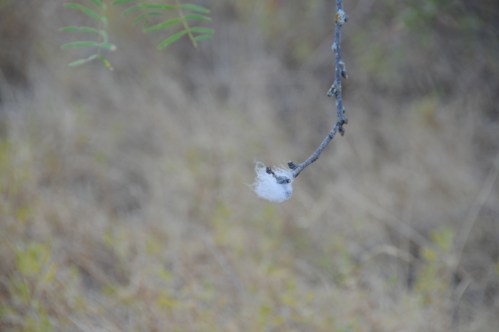
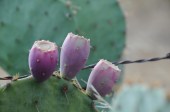
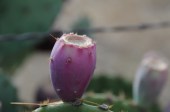
Then, in the field, observe all things, including downy dove feathers on mesquite and the purple tulip fruit of the ubiquitous Desert prickly pear.  These are trusty images to dwell upon during the heat of the day.

Desert prickly pear, New Mexico prickly pear, bearing tulip fruits that are edible (north Erath County, Texas, 2011).


15 Comments

Filed under Life in Balance

Chocolate to mesquite

Several months ago in a previous post, I wrote that one of my field objectives on the Flying Hat Ranchito was to identify every tree species rooted about the pastures and Salt Creek.  Beginning with this post, I identify the mesquite tree.  Unless Southwesterners have been reared in a dark box, everyone recognizes the mesquite and usually such identification is followed with a curse word or two.   Except for the far pasture between Barton Creek and Salt Creek, mesquite erupts constantly about the ranchito and requires annual shredding or pruning.  I relate to the mesquite tree without impatience, finding it worthy of praise, not scorn.  But, first, from a objective point of view, then followed by subjectivity.

The mesquite tree…

Mesquite is one of the most widely distributed trees in Texas. It is a small to medium tree with an irregular crown of finely divided bipinnately compound foliage that casts very light dappled shade underneath. It is armed with thorns sometimes up to 2 inches long. In the spring, summer and after rains it is covered with fragrant white flowers, and the long bean pods are ornamental as well as providing food for wildlife and livestock. Mesquite is not a rancher’s favorite tree: it readily invades overgrazed sites and other disturbed land, is virtually impossible to get rid of, and the thorns injure livestock. However, the foliage, flowers and fruit are attractive, it adapts to almost any soil that is not soggy, it is heat and drought tolerant, it fixes nitrogen in the soil and provides many areas of Texas with shade, fuel and timber where otherwise there would be none. The wood is used in flooring, furniture, and as a cookwood for seasoning.

“Texas Native Plants Database,” Texas A&M University (2011).

The mesquite bean is also ground up and can be used as an additive to wheat flour or corn flour for making tortillas and bread.  I’ve not tried the recipe, but I shall from a Native American reference I have on file.

* * *

Objects that appear void of emotional affect to one person may be illuminated with soundings of deep, ineffable meaning to another.  The mesquite and juniper trees in my life resound with spiraling emotion that takes me to a different plain, evoking events in my memory that I never forget and can only begin to understand.   I shall write about the juniper another day.  Today my focus is the mesquite.

When I was a boy, about five or six years old, I used to play underneath a mesquite tree adjacent to my mother’s studio apartment in Brownwood, Texas.  It was shortly after World War II had concluded and my father had separated from us and was reestablishing himself in Pennsylvania, far away from Texas, the place he met my mother.  Across the street from mother’s apartment, my grandmother lived in a small trailer house and took care of me while mother worked at Southwestern States Telephone Company.  At the time, I did not know how close we were to destitution.  I was a boy and I played outside underneath the mesquite tree, thoughtless and innocent about money matters.

One day as I played under the mesquite tree, I heard the sound of the wind — a southwest wind — flowing through the trees as I had never heard it before, but have ever since.   The sound was of medium pitch, neither high nor low, and it persisted with a rising and falling velocity, bending branches, shifting the shade about me and my toys.  As I heard the wind, I felt lonely, really alone in the world.  My mother was in the house — I knew that — but I sensed a separation from her and a state of emotion that evoked a sadness, a sorrow that I found inexpressible at the time.  The moment remains clear and even the affect is still apparent.  It  never leaves me.

Years later I came to realize that under the mesquite tree I felt, for the first time, a separateness from other things, other people.  I realized I was an individual, distinctively apart from others, and there was no going back I came to find out.  Under a mesquite tree was the place  the affect of estrangement spooled out and bound me.  I’m not alone in that awareness and that is a comfort, for we all sense that estrangement and how we meet the abyss and gain unity or self-loss is the rest of our life.  These days, as I walk underneath and beside mesquite trees on the ranchito, I sense the mesquite as a companion one day and a intransigent master teacher the next.  It helped me grow.  I didn’t want to, but it threw me out of my Eden.

* * *

In Aztec mythology, Quetzalcoatl, the giver of knowledge and wisdom to the people was thrown out of his city, country and reign for moral turpitude.  As he went into exile, going east, he crossed the mountains to the sea, his dwarf companions died from the cold and the chocolate trees he passed turned to mesquite and great sorrow came upon the land.

[This is first of several posts on the mesquite.]

9 Comments

Filed under Cedar, Life in Balance, Life Out of Balance, Recollections 1942-1966

Allowing the flourishing of wildlife

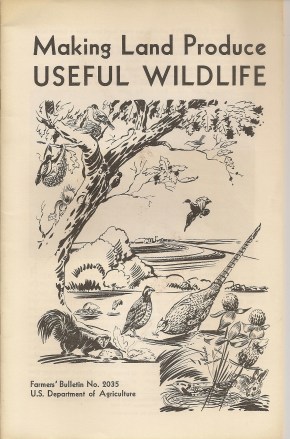
A 1975 reprint of Farmers' Bulletin No. 2035

The first summer I lived on my ranchito, the summer of 2004, I hired Cody Scott to plant native grass seeds in my far pasture, the Pecan Tree Pasture that lay between Barton Creek and Salt Creek.  Last summer I reseeded the pasture with native grass seeds and wildflowers.  The upshot of these two distributions has been a resurgence of bluestem, side-oats gramma, buffalo grass, coneflowers, Indian blankets and vetch.  Frankly, I held no longitudinal goal other than to provide habitat food for cattle, horses and wildlife.

Frank Waters of The Man Who Killed The Deer (1942) fame wrote that the proper relationship of a person to the land was to “live with the land,” not on it, but with the land.  Living with the land has been an axiom for me, a mantra for many years.  A U.S. Department of Agriculture Farmers’ Bulletin No. 2035, “Making Land Produce Useful Wildlife,” provides me guidelines to live with the land.  By way of full disclosure, I do not make my living raising cattle or horses, but teaching at a junior college in Abilene, so my basic approach to my ranchito is sustaining the land, not cropping, leasing or planting.  That being said, I integrate what I have learned with horses, cattle and the land into my lectures.

The land is my teacher and all things upon it instruct, from thistles under juniper to even — I hesitate to write this — the mesquite.

So, a few tips from “Making Land Produce Useful Wildlife,” by Wallace L. Anderson, biologist, Soil Conservation Service, I list below.

To support a high wildlife population, a farm or ranch must have a plentiful supply of good food close to cover that furnishes protection from enemies and weather.  And it must be available in all seasons of the year….

Pastureland practices harmful to wildlife are uncontrolled burning, overgrazing, and complete clean mowing early in the season….

There are three essentials to good cover for wildlife — grasses, weeds, stubble, and other low-growing plants for nesting and roosting; dense or thorny shrubs for protection from predators, for loafing, and for nesting; and, in the North, clumps of evergreens or other tall dense cover for winter protection.

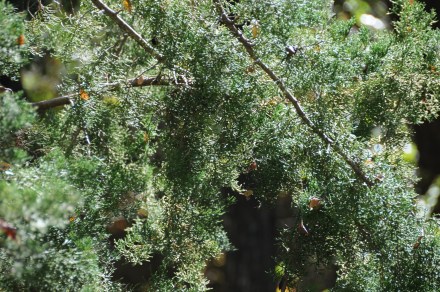
Mesquite thorns, poisonous plants and cacti also abound along the fence rows in the far field.   I have bull nettle, a stinging plant to the touch, but it has medicinal properties.  The nightshade plant that many define as a weed has been used to treat snakebite erupts along the corral.  And the few cedar trees, cut and harvested year after year prior to my ownership, their posts for sale in Mingus and Palo Pinto, are defined more appropriately as “juniper” provide berries for birds, aroma for incense and luscious shade from the sun.  I shan’t be cutting  cedar breaks or juniper.  All this in the far field allows the flourishing of wildlife close to me, close to you, close to us all.

Juniper, often referred to as cedar (J. Matthews, 2011).

[In my next post, I will write about the mesquite tree that is close to us all here in the bush.]

6 Comments

Filed under Cedar, Flying Hat Ranch, Juniper, Life in Balance, Plants and Shrubs, Wild Flowers of Texas