Category Archives: Life in Balance

Restoration

This is how you restore the environment.  Begin with the plot of land in front of you. Be the steward with the grass and animals in front of you. Take care of the water in front of you. I write of sagebrush in California, grouse in Colorado and the fir in Washington — magnificent places. And, I will continue to do so, but the 53 acres upon which I reside in North Erath County, Texas, is my first responsibility. From what I learn and observe here, I can extrapolate to other communities and families of living things, beyond Texas.  You may, as a reader, trust my observations — and corroborate — my conclusions if I write of prickly pear and sagebrush that I live with everyday, like a brother or sister, those plants. I encourage you to be the steward to the plot or the trellis of climbing vines in front of you. It’s right there, within your care.  Please read on and don’t forget the list of restorative goals for Flying Hat Ranchito.  Through the cycle of seasons, I will write about attaining or failing the objectives.  Yes, it is an imperfect world, but some ways of behaving are less imperfect than others.
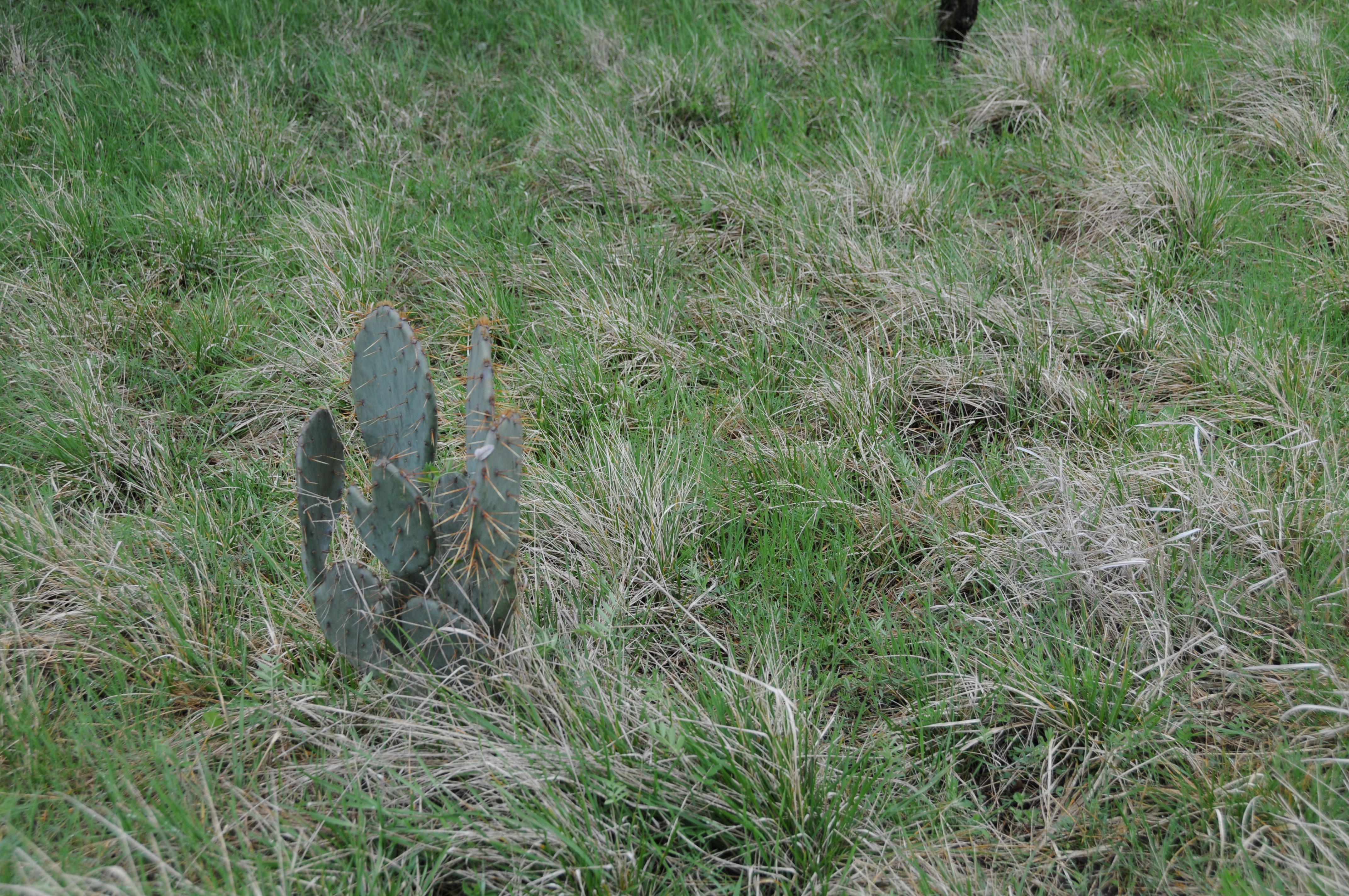
Buffalograss (Buchloe dactyloides) with Prickly Pear (Genus Opuntia, species untyped), March 20, 2010 (click to enlarge)

What I seek to accomplish in Sage to Meadow blog is to write about nature, wild and domesticated living things, people that live with the land and the constant cycles of the seasons that envelop our lives. It is not all pleasant, this nature writing, because life is abundant and green one season, gone and brown the next.  Today is the first day of spring in North America and other northern latitudes. We now evolve into abundance and the green, but not so far removed from winter, it seems, as the season this year seemed unusually long and cold — and we’re not completely through with winter as snow dust falls here at the ranch.

Vetch Without Blossom, Poprock Pasture (Vicia orobus), March 20, 2010 (vetch is the frond-looking plant, click to enlarge)

Predictably, the cycle into spring yields abundance for our consumption:  De Leon peaches in July for our nutrition, Gulf of Mexico warm wind for face and neck, Texas bluebonnet for the eye, the peeps of newly-hatched sparrow chicks and the scent of fresh vetch in field.  Polymorphously, we are plunged into nature.  Like it or not, we are here.  Yet, to every description I present, another can be stated to counter:  mosquitoes, allergies, April the cruelest month, and so on — come the spring.  So true:  ant and butterfly in our midst, pain and beauty within a day’s toil.
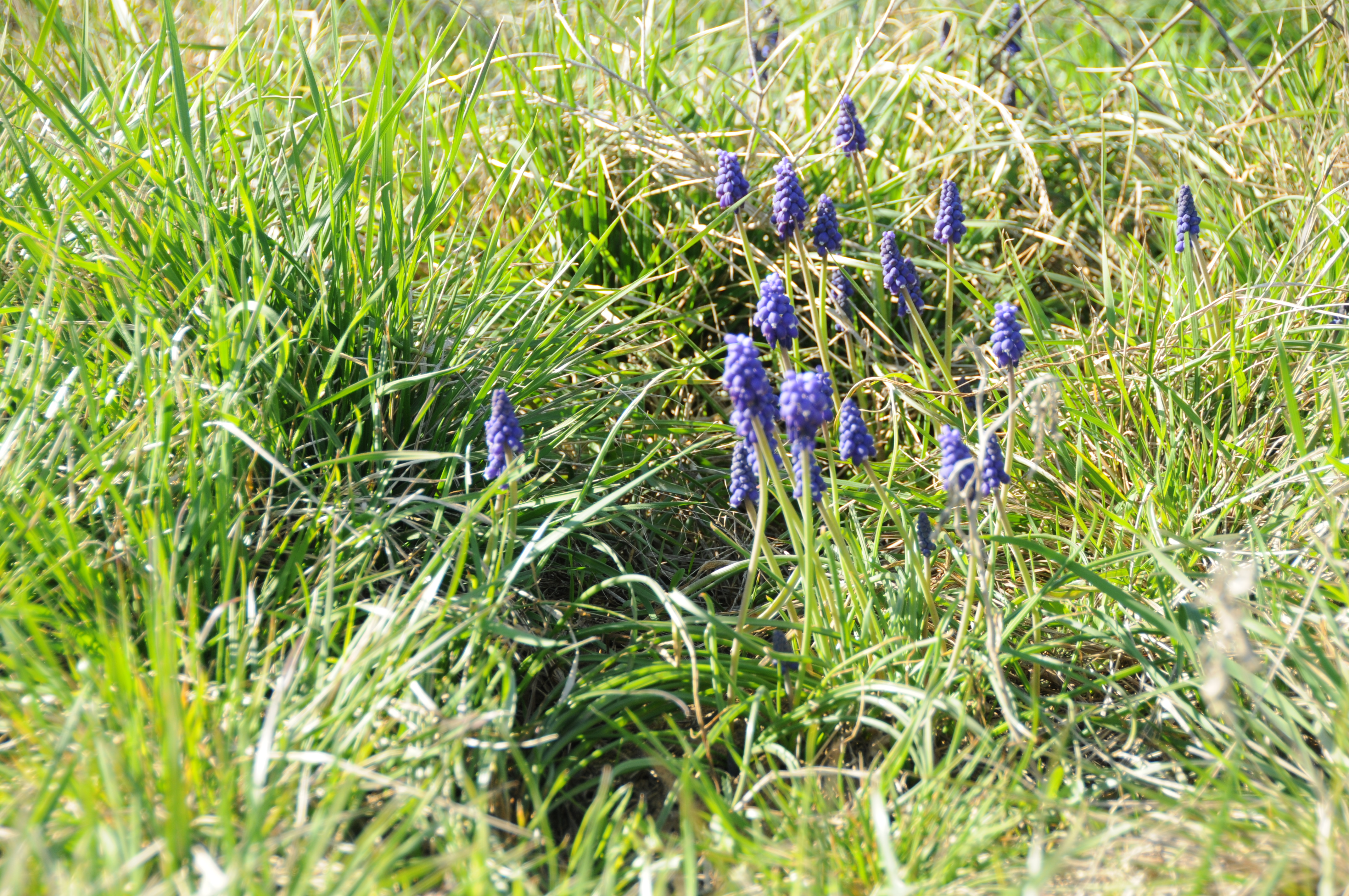
Grape Hyacinth on County Road, Front of Ranch House, March 19, 2010 (click to enlarge)

For the moment, however, this first day of spring, I want to mark the restoration of nature — oh, it’s not ever been that far away — with respect:  respect that The-Incomprehensible-Spirit-That-Moves-In-All-Things still animates the world despite corporate and individual behaviors that injure and destroy.  I include nothing mystical nor religious in using the word, “Spirit,” but rather I intend to refer to a force, an urging in nature and physical forces we encounter and do not completely understand.  I do not want to lose what we have, incomprehensible or not.  I seek restoration and preservation.
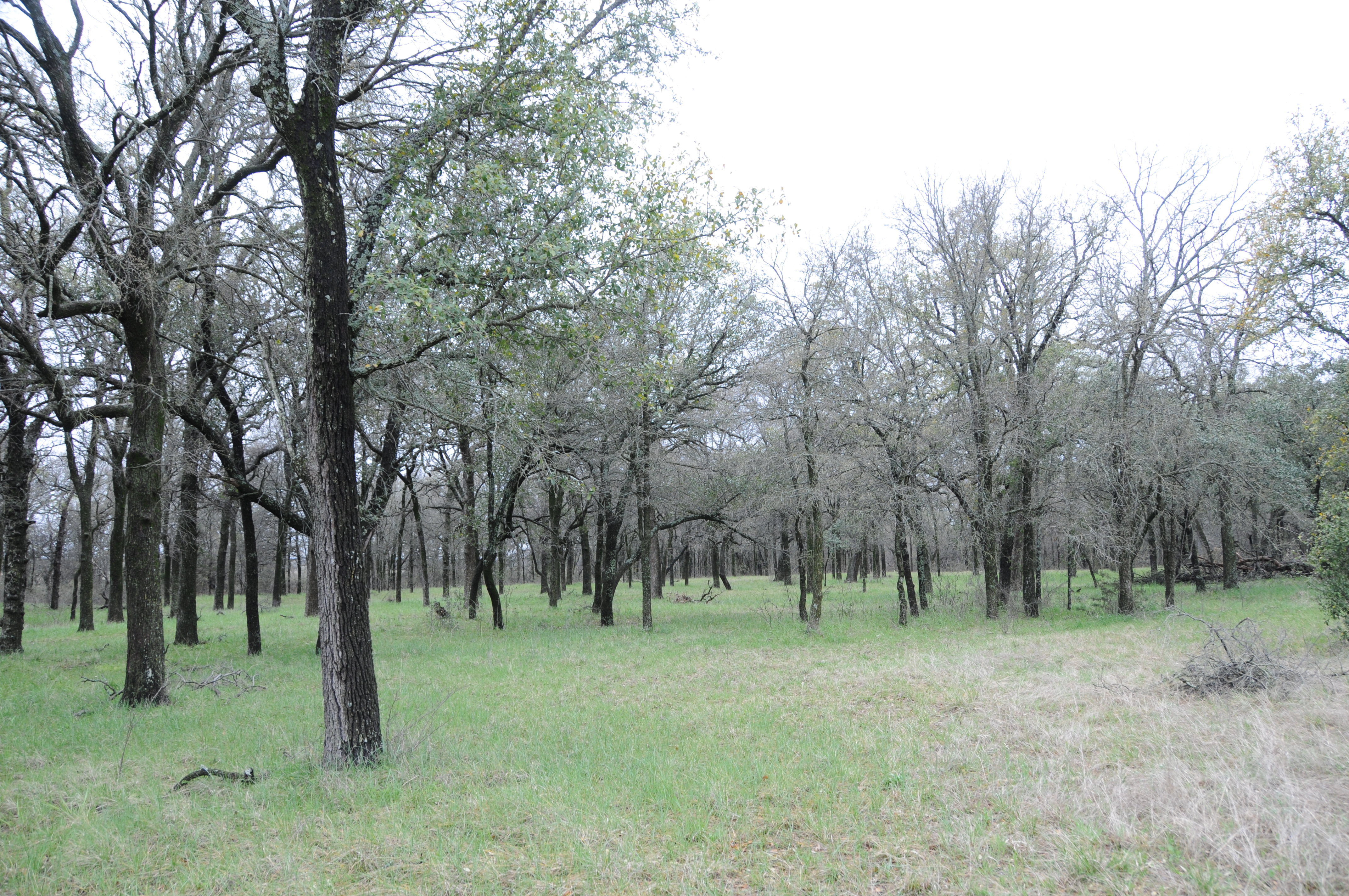
The Grove, March 20, 2010 (click to enlarge)

I think we can restore natural families we have damaged:  sagebrush, grouse, deer, shortgrass and fir.  I may, at the end of the day, be proven wrong in assuming we could correct ourselves, but for today I will walk with respect for spring in my pasture, stride through shrubs a’blooming in The Grove, and fervently hope that the restoration of nature will be fulfilled.

Restoration Short List for Flying Hat Ranchito

1.  Retard and prevent soil erosion in pasture with planting of native grasses.

2.  Give protection for deer migration in The Grove: allow brush to obscure their loafing areas.

3.  Seed native wildflowers in lanes and bypaths.

4.  Encourage pair of roadrunners return to arena area and cactus grove.

5.  Shred not high native grasses:  allow cover for birds and fox.

6.  Find strategy to encourage return of wild turkeys in pastures.

7.  Limit shredding substantially: allow grasses to seed out, encourage field mice, hawks.

8.  Build new brush piles to harbor wildlife.

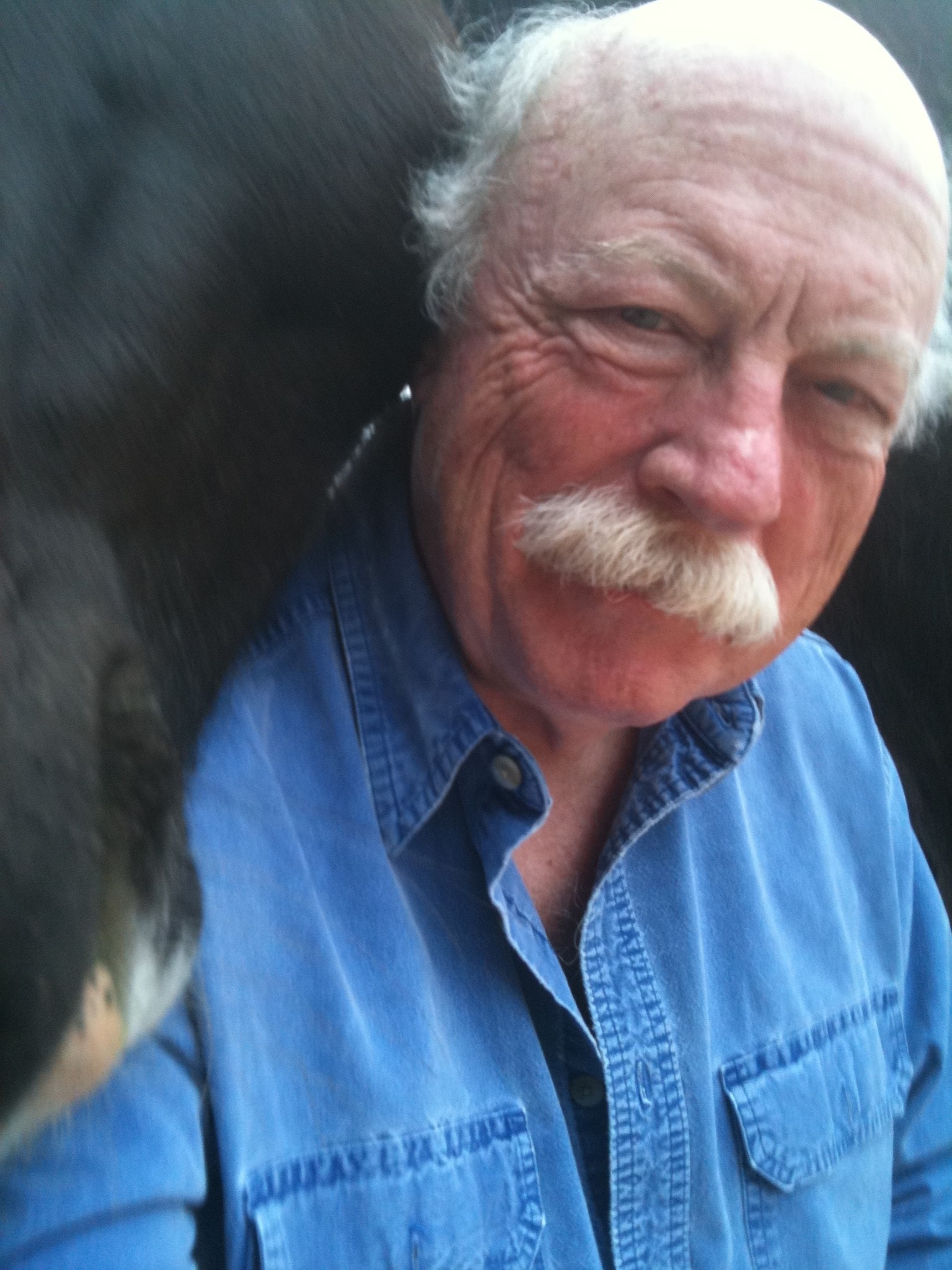
Jack Matthews, March 17, 2010, Fredericksburg, Texas, Author of Sage to Meadow Blog (click to enlarge)
2 Comments

Filed under Life in Balance

The Seasons | Anselm Kiefer – Before Spring

The Seasons | Anselm Kiefer – Before Spring – NYTimes.com.

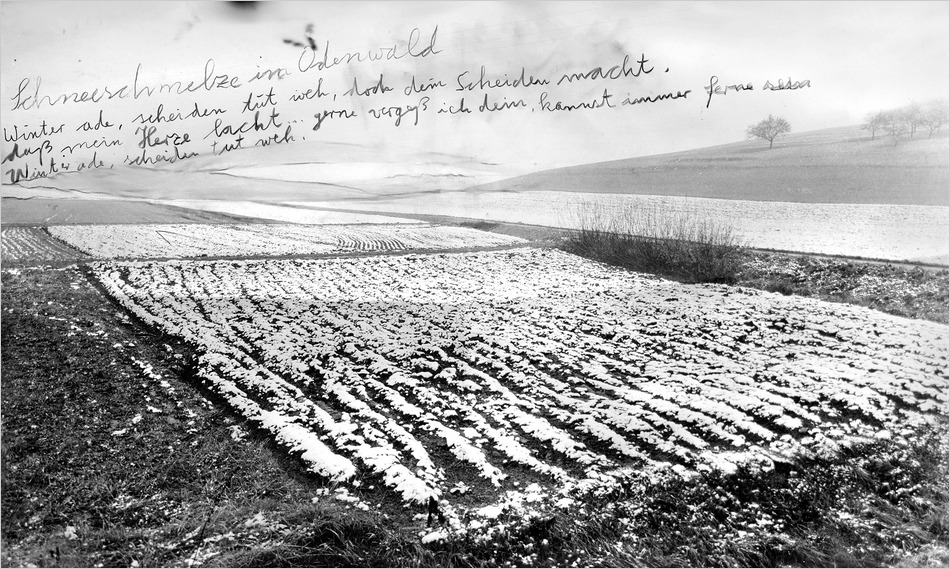
Text on the work is translated as follows: Snow melt in the Odenwald. Goodbye, winter, parting hurts but your departure makes my heart cheer. Gladly I forget thee, may you always be far away. Goodbye, winter, parting hurts.

Anselm Kiefer, "Snow Melt in Odenwald," 2010, gouache on photographic paper (click to enlarge)

The snow is melting and trees are sprouting.  I have applied the disc to the field in order to soften the ground for grass seed.  Not the above field, but our field here in Texas.  Warmer here.

9 Comments

Filed under Life in Balance

Bluebonnet in Texas, March 16, 2010

[Please note that this post was published last year on March 16, 2010.  I have brought it to the front page since it is an anniversary of the bluebonnet.]

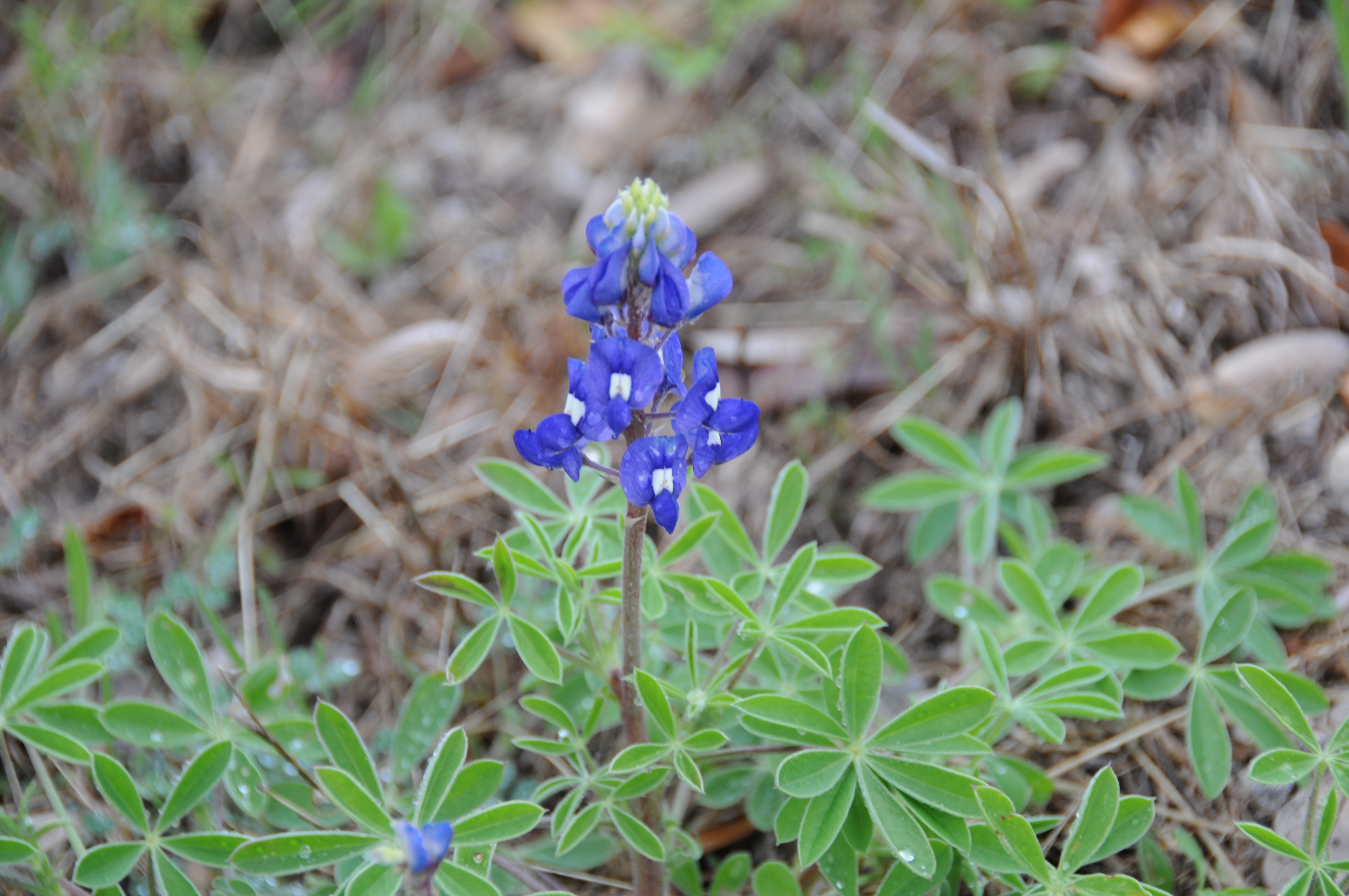
We toured to Fredericksburg, Texas, today for a two-day vacation.  This was the first bluebonnet (Lupinus texenis) I saw this spring.  No large fields, yet just one blossom.  It’s here, at least, a bluebonnet twixt Llano and Fredericksburg.


Texas Bluebonnet (click to enlarge) March 16, 2010, Twixt Llano and Fredericksburg, Texas

All the way down Highway 16, we had seen few signs of spring.  Winter still dominated the landscape and roadside.  One significant greening area was south of De Leon, Texas, where the trees showed green leaves beginning to sprout, but not full emergence.  That was along the River Sabanna.  Past Llano on Highway 16,we stopped beside the road for a rest.  As we paused, I saw this one bluebonnet and got the camera out.  About the time I started shooting photographs, cars and pickups whizzed by.  I stopped, then took several shots.  This shot was without a flash.  Just natural.  Shouldn’t it be that way?  Natural?  In springtime?  In America?

Oh, I think so.

12 Comments

Filed under Life in Balance

The Honest Scrap Award Given to Sage to Meadow Blog

Sage to Meadow blog was given The Honest Scrap Award today.  Kittie Howard of The Block Blog gave Sage to Meadow the award for longevity, fine writing and comments.  Thank you, Ms. Howard and the blog, Adventures of The Cautionary Tale.

I must give an acceptance speech or writing to obtain The Honest Scrap Award for outstanding blogging, so in compliance with accepting this award, here are ten (10) personal items about me that most people do not know:

1.  Swimming across the coves of central Texas lakes from shore to shore, I do like.

2.  I like to sit in the stable alleyway for hours watching not only the horses, but the wildlife that comes to the corrals.

3.  Flying commercial overseas, I only fly Lufthansa.

4.  I enjoy being the only person in charge of care taking my granddaughters and grandsons, with no parents around, so that I can talk to them and they to me.

5.  I like the rain in my face.

6.  Choirs and symphonies with all stops unloosed, I like.

7.  I like afternoon naps when I can have all the windows open and hear the wind flow through the screens.

8.  I love those students that may not make the “A,” but work like crazy and long hours and come to exams with circles under their eyes, having given their “old college try” for the exam.

9.  I like the widest of open spaces, the desert south of Taos, looking at the Three Sisters Peaks.

10.  I like to drive in the springtime down through the backroads of San Saba and Lampasas Counties with the windows down, the air conditioner on the pickup full-blast, inhaling the scent of meadows of bluebonnets and paintbrushes and wildflowers I cannot even type.

Thanks again, my friends and fellow bloggers.  Here’s to making slight, but significant, changes for the common good through our writing!

(Thanks, Brenda, for being patient with me as I blog.  You do so much.)

18 Comments

Filed under Life in Balance

Animals May Be Granted Legal Protection in Switzerland

An extended protection of animals without egregious sentimentality, taking into account all parties and understanding the necessity to sustain multiple-living communities for their own sake as well as human beings, is a just cause.

These are issues for all of us to be sensitive to, whether conservative or liberal or in-between.

Ships and corporations are treated in United States courts as “fictitious” persons, so this is not as far-fetched as it might seem.  If a corporation is entitled to due process, why not the Greater Sage Grouse that is facing a retreating habitat in California and Nevada?  Or, other living, sentient beings?

Swiss May Give Animals Free Lawyers – The Lede Blog – NYTimes.com.

8 Comments

Filed under Life in Balance

Texas Rancher An Unlikely Environmentalist : NPR

Texas Rancher An Unlikely Environmentalist : NPR.

Down near Johnson City, Texas, this rancher has taken worn-out land and turned it into a place for wildlife, cattle, grass, plants and trees.  He’s even built a bat cave!

Although prosperous through salesmanship and Church’s Fried Chicken, he never forgot his farming roots in the Mid-West and once able, bought over-used ranch land and restored it.

2 Comments

Filed under Life in Balance

A Year in Ninety Seconds, Oslo, Norway

A really good piece.

A Year in Ninety Seconds, Oslo, Norway

Leave a comment

Filed under Life in Balance

Pulling Down the Sun

In days past, the sun’s rays at noon on winter solstice were carefully marked, attended.  The sun in northern American latitudes would be at the lowest place in the sky for a year, thereafter rising higher daily to the summer solstice noon in June.  These two times, winter and summer solstice, were known as meridian passage.

Elsie Clews Parsons made note of the Isleta Pueblo marking light on winter solstice day.

In the roof of the ceremonial room there is a hole through which at noon the sun shines on a spot on the floor near where the chief stands….All sing the song of “pulling down the sun.”…This is noon time when for a little while the Sun stands still [1].

Humans, singing,  help pull the sun down.  And, by singing again, humans push the sun up.  Although scientifically un-plausible, the ceremony embeds connection with the sun in a metaphorical sense that, in turn, reflects the empirical, august, palpable unity that people need with one another to sing their lives into another yearly cycle with nature.

Notes

[1]  Elsie Clews Parsons, Forty-Seventh Annual Report of the Bureau of American Ethnology for the Years 1929-1930, pp. 193-466.  Washington, D. C.: 1932.  From Anna F. Sofaer and Rolf M. Sinclair, “Astronomical Markings on Fajada Butte,” in John B. Carlson and W. James Judge (eds.), Astronomy and Ceremony in the Prehistoric Southwest, Papers of the Maxwell Museum of Anthropology, No. 2, 1987, pp. 63-64.

YS8JKK5S6UG7

2 Comments

Filed under Life in Balance