
I’m sorry to report that no news has surfaced in public newspapers this last week about the shooting of the filly, Bald-Face Lie. The Parker County Sheriff’s Department is taking this case very seriously, says one person who has knowledge of the case.
Category Archives: Horses
Levitating Horse at Flying Hat
I give you my word, this photograph has not been retouched. Click the photograph to see the famous, all-inspiring, fabulous, courageous, fine, good horse named, Star, as he defies gravity in the Texas snowstorm. Come one, come all…okay, enough. Let’s look at the photograph. I caught Star in a leap off the ground.
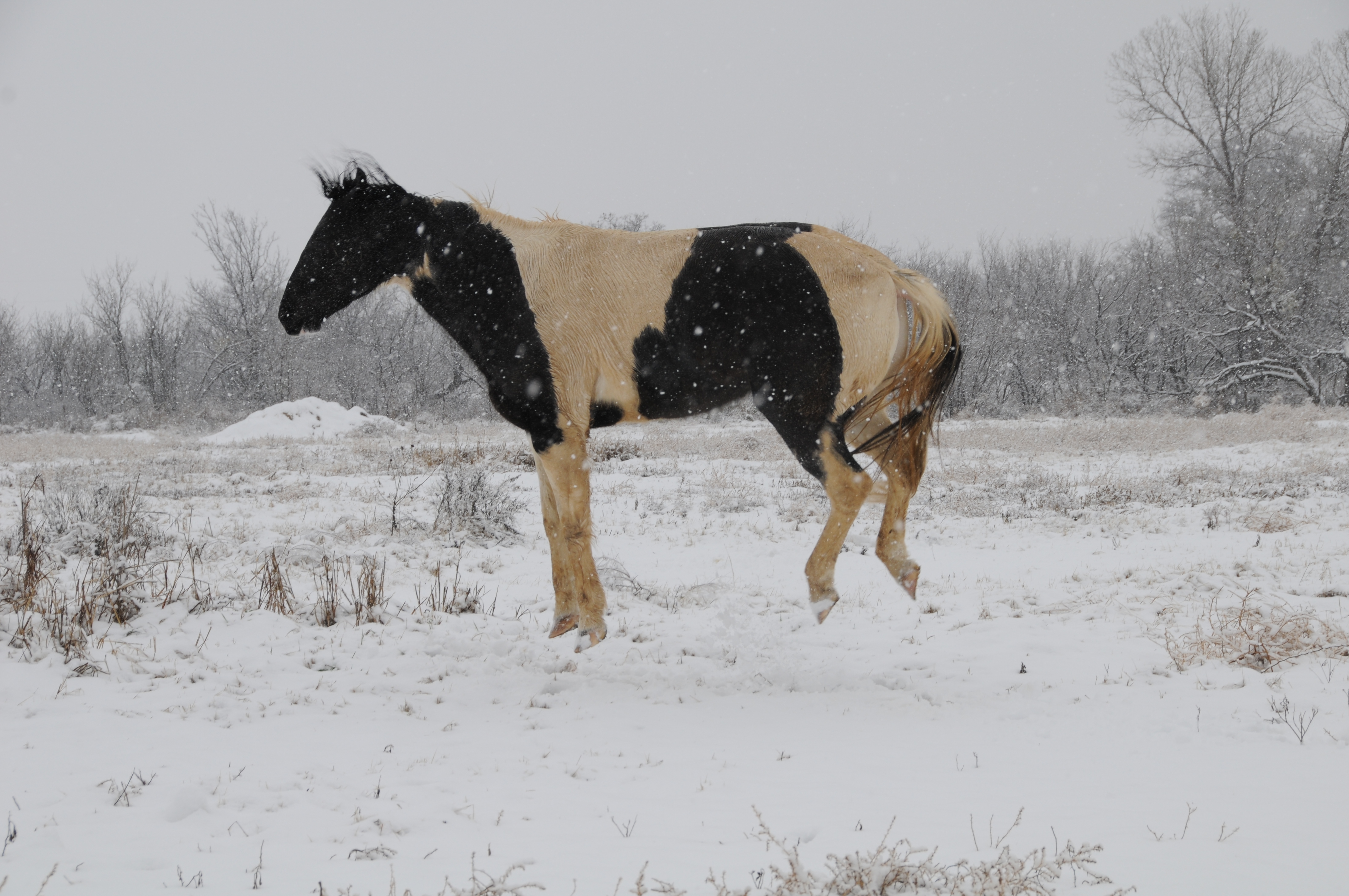
Stars Bars Moore (APHA) Levitates
Winter Photographs at Flying Hat

Poprock Pasture and Arena In Winter
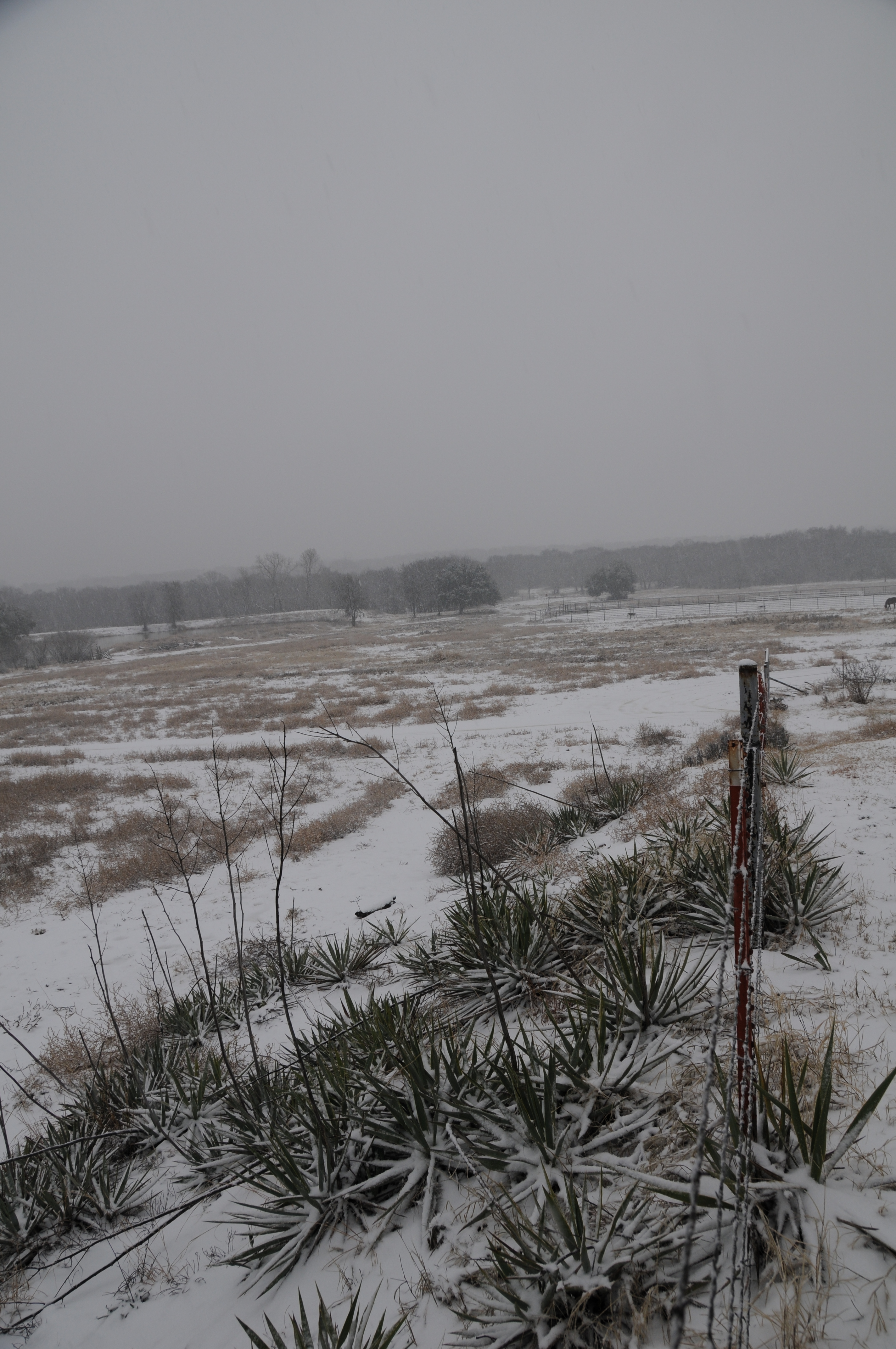
Yucca and Fence
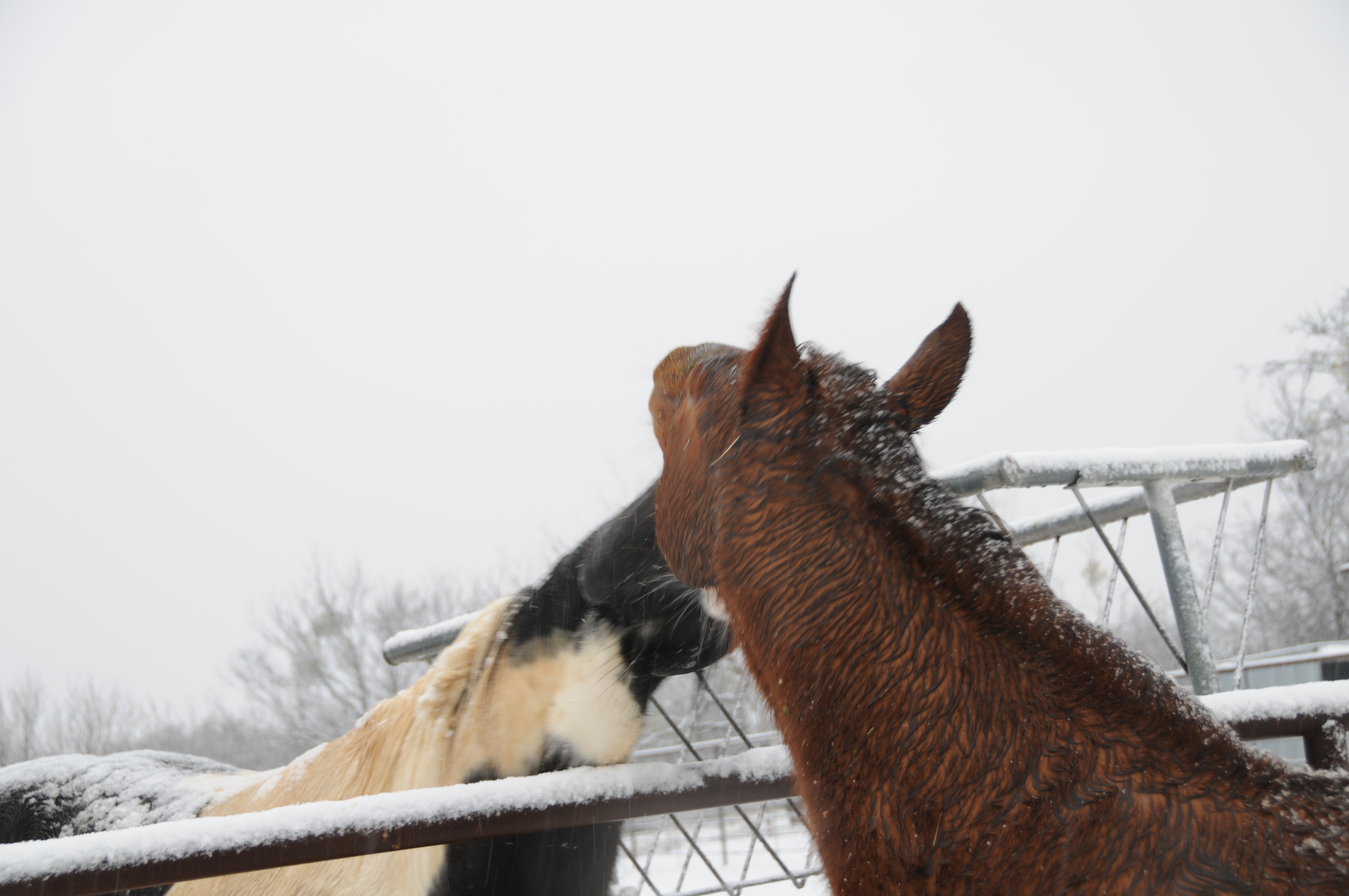
Shiney and Star Playing Gotcha
Shiney Galloping to Corral
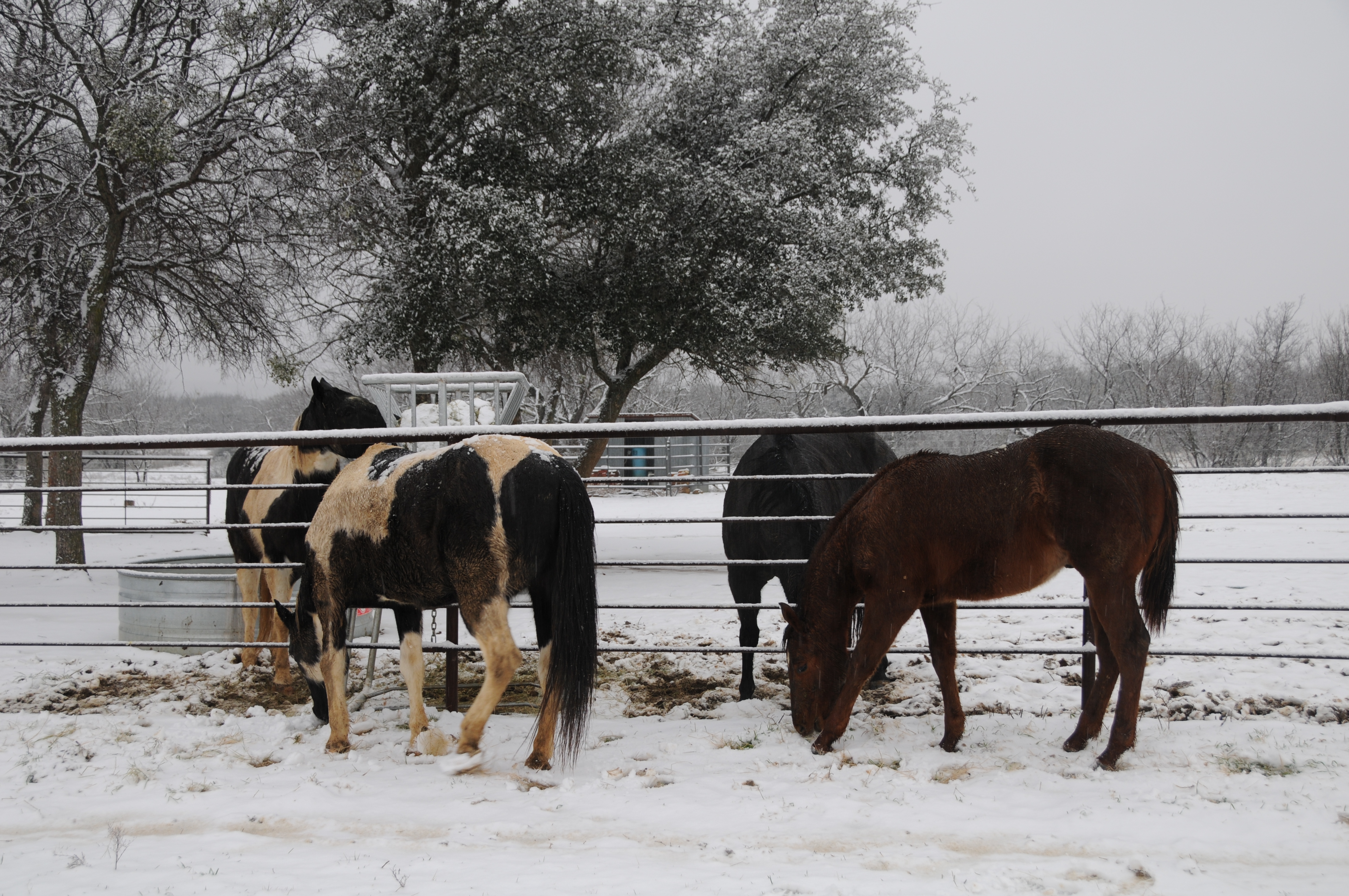
Remuda at Well House Corral

Mountain White-crown Sparrows Above Stables (Zonotrichia leucophrys oriantha)
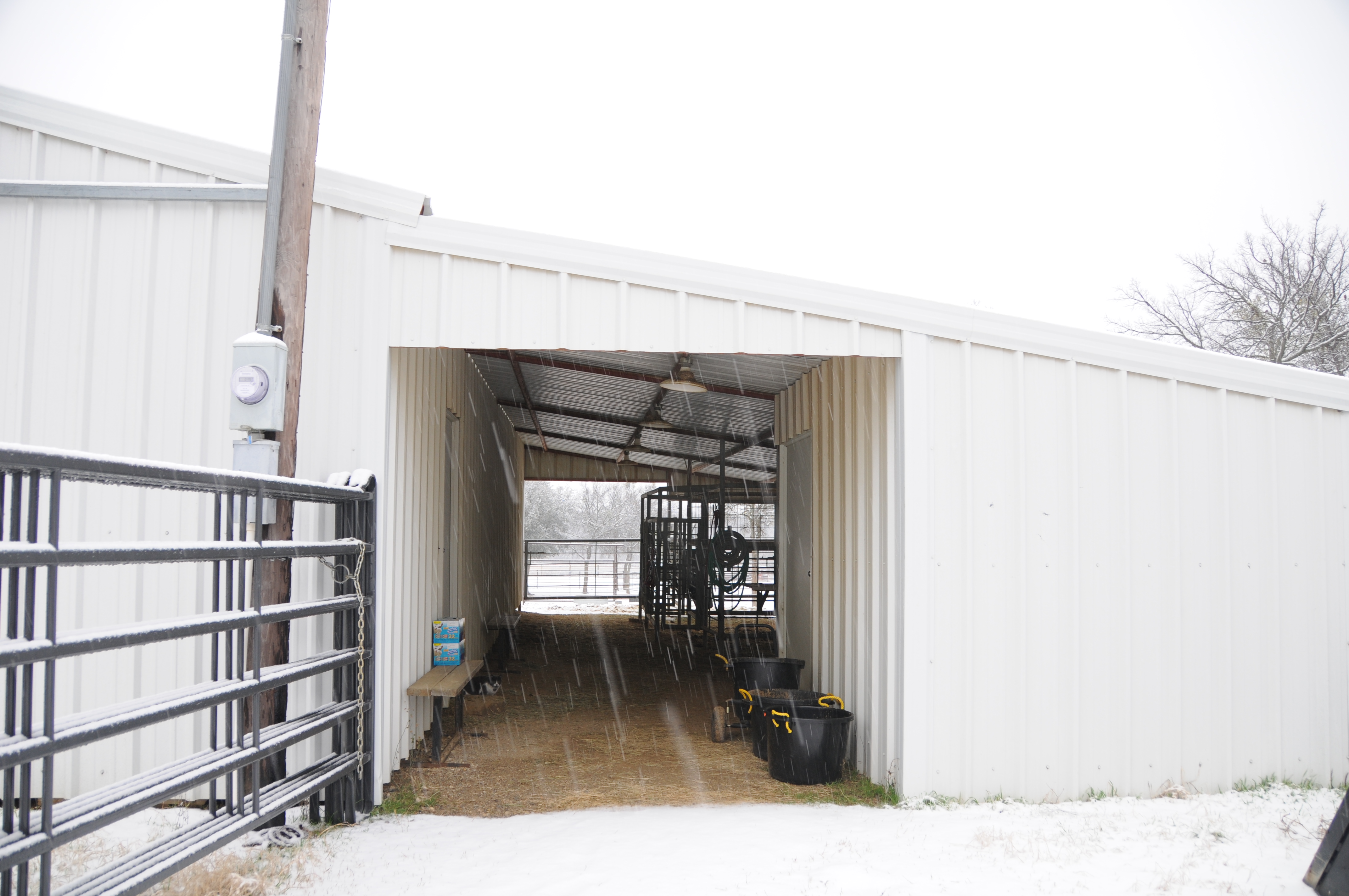
Stable Alleyway with Panels
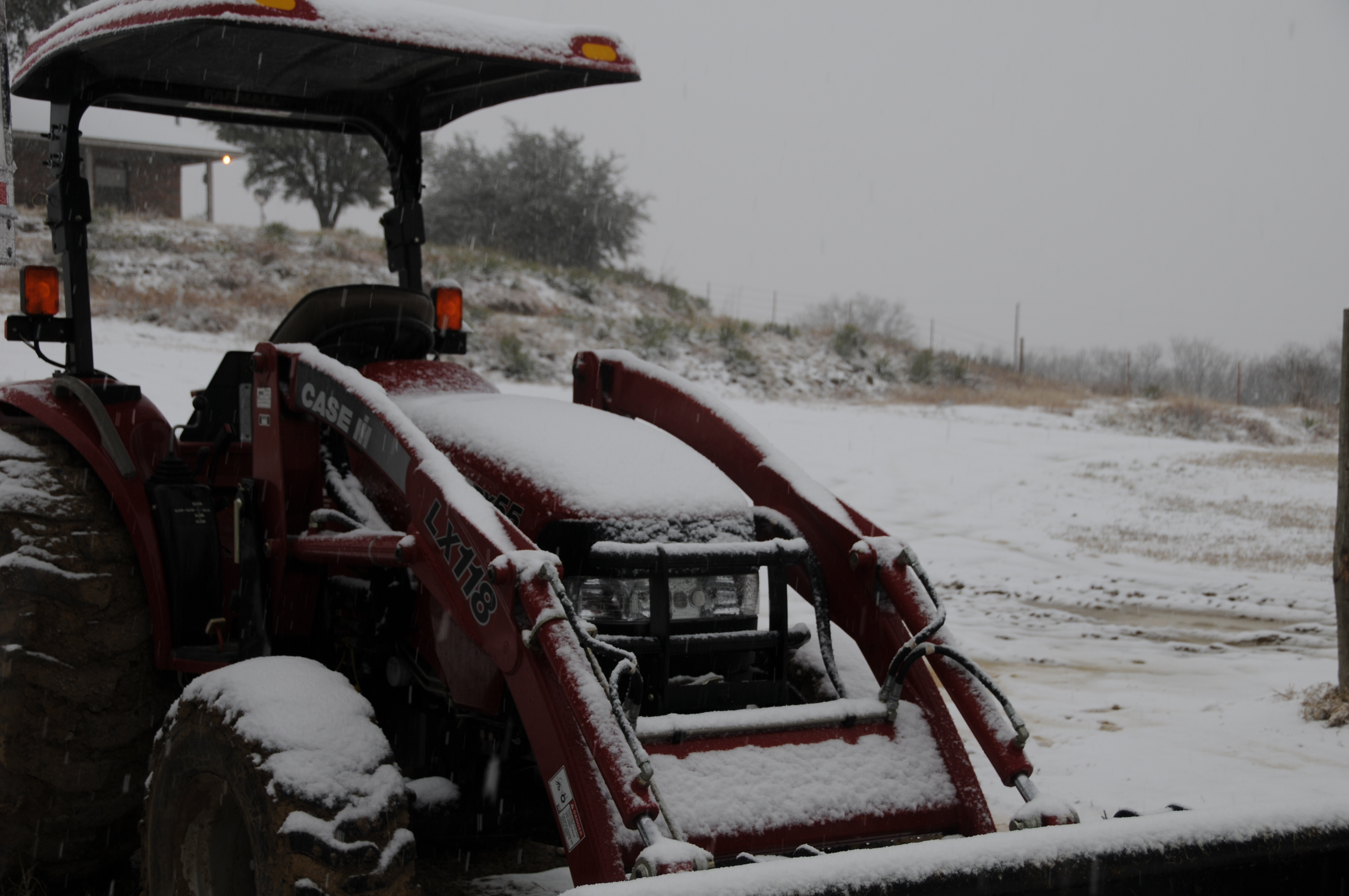
55 Horses by Case Farmall

Flying Hat Ranch House
Schools in Abilene and Fort Worth, Texas, were canceled this morning. I went out to take some photographs of Flying Hat. If you click the photographs, you get a full-size picture with detail.
A Finer Justice
A FINER JUSTICE
Intemperate bulldozers stand by,Idling, low rumbling rhythm,As a finer justice falls into place.One lonely soul, lost in fitful sleep,Hears soft, distant whinnySlowly moving closer, ever closerWhite velvet face of the beautiful Bald-Face LieRises up through fog of despair,Breathing, breathing,Warm, moist nostrilsBreathing loose the mask of reason,Reminding, reminding,Life is better-lived with blood-free handsAnd a quiet mind.
(Teresa Evangeline, “A Finer Justice”)
_____________________________________
(Bald-Face Lie, a seven-month-old filly of 72 Ranch near Weatherford, Texas, was shot by an unknown person on January 24, 2010, near the fence line on Fox Road.
Teresa Evangeline has a blog. Its link is Teresa Evangeline. She lives and writes in Minnesota, USA.)
Filed under Horses
Post Haste Update on Bald-Face Lie
There is no news to report on the killing of the cutting-horse filly, Bald-Face Lie. I have searched local newspapers and have listed three links on the original post from the Fort Worth Star-Telegram.
January 25, 2010, Horse Found Slain in Pasture
February 1, 2010, Community Posts Reward for Killer of Bald-Face Lie
Post Haste Bald-Face Lie

Bald-Face Lie 2009-2010
A seven-month-old filly named Bald-Face Lie was found dead last Sunday, shot between the eyes at close-range. A horse trainer and ranch hand to the 72 Ranch near Weatherford, Texas, found Bald-Face Lie near the fence where as a friendly horse she would loaf with several other fillies. The high sheriff of Parker County, Larry Fowler, said We are going to find out who did this. We are just numb, grieved the owner, Kris Larsen. I was with the mare when this baby was born and I weaned her and halter-broke her. The reward for the killer is now close to $10,000 and he should have the good sense to turn himself in before he is found out. Bulldozers gouge the earth intemperately and sometimes to a higher purpose.
I know the 72 Ranch where Bald-Face Lie resided. Several miles north of the 72 Ranch, Duncan Steele-Park trains horses, including our horse, Fanny. Cattle drives from south Texas in the nineteenth century passed through Parker County on the trail to Dodge City, Abilene, even to greener pastures in the high mountains of New Mexico, Colorado, Wyoming.
72 Ranch mourns. The trainer slips halters on fillies and colts today and he will tomorrow and the next. The horror of Bald-Face Lie’s death settles respectfully beneath the pain of a world that is out of balance for human and horse alike. We will shrug and go on to the next watering hole that used to be called an oasis.
Newspaper article link: Community Offers Reward, February 1, 2010.
Newspaper article link: Prized Filly Valued at $20,000.00, January 26, 2010.
Newspaper article link: Cutting Horse Found Slain in Parker County Pasture, January 25, 2010.
Filed under Horses
Greenery in a Texas Winter

Stable Greenery in a Texas Winter
Yesterday, January 17, 2010, the temperature was 70 degrees in central-west Texas. A light breeze came from the south persisting into the early evening. Down in the uncovered stables winter grass emerged about two inches high during the day. Although winter wheat and rye give green to fields in a Texas winter, the winter grass in the stable seemed different, like a surprise gift from a friend. Lilly the alpha mare saw the grass and grazed after eating her senior grain with supplements to ease her arthritis. Forget April for the moment. January is the cruelest month.
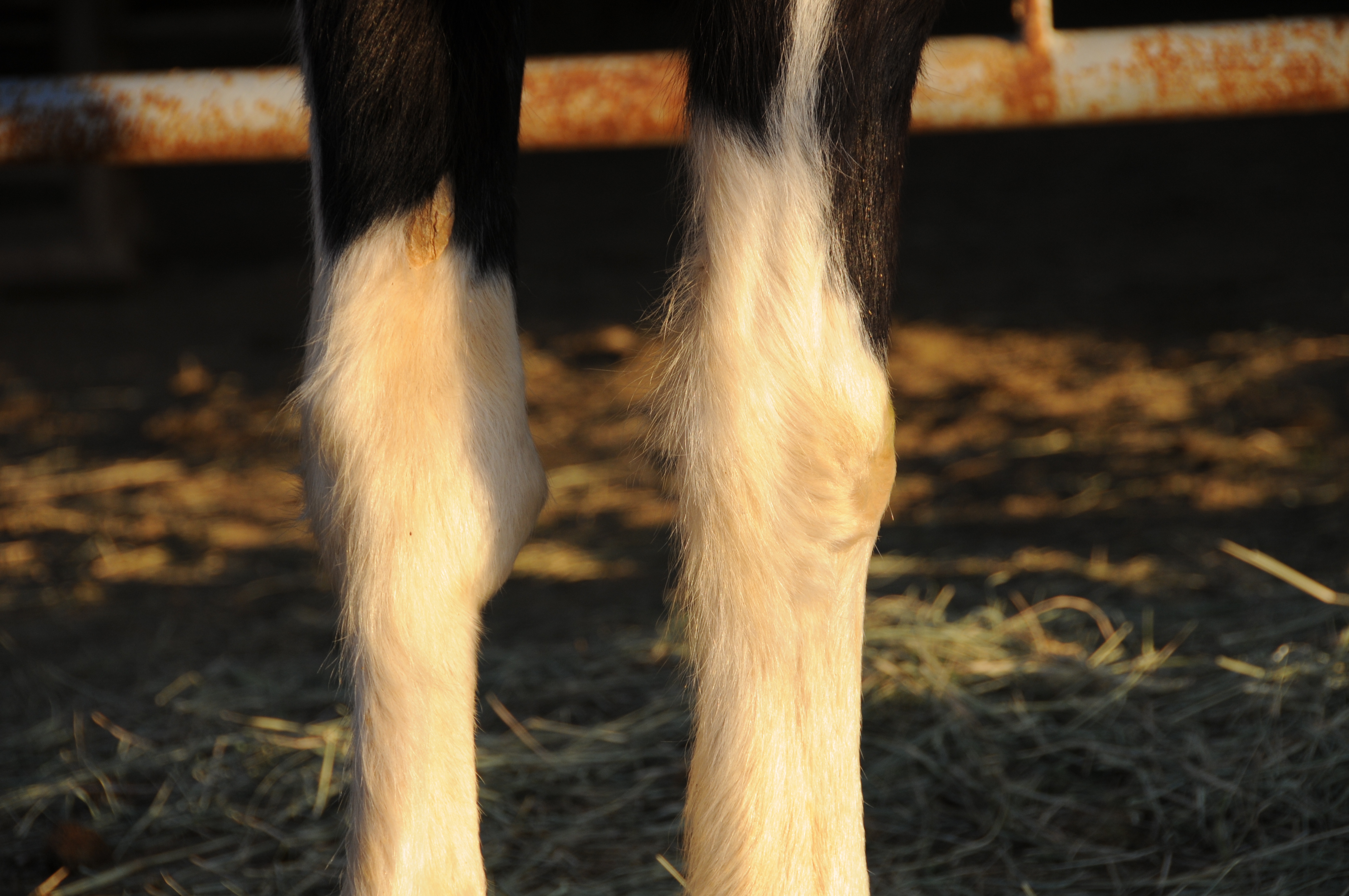
Old Lilly's Knees and Forearms Backside
This is the backside of Lilly’s knees and forearms and you can see her osteoarthritis. She is twenty-five-years old. Her date of birth is January 20, 1985. Her full name is Ima Lil Moore and she is the companion and foal sitter to Shiney. Despite her age, when it snows Lilly prances.

Shiney the Horse in Morning Sunshine
Shiney is a six-months-old colt. He is a male, all-boy and quite different from a filly. Lilly, his sitter and companion, will turn her backside to him and threaten a kick if he acts rambunctious towards her. Oddly enough, pairing the oldest horse in the remuda with the youngest, Lilly and Shiney, has kept her young and made him old.
Filed under Horses
Ice in Trough
My first winters in Texas in the 1940s were in Brownwood, central Texas, but other winters fell upon me in Austin, Amarillo, and Mingus. Snowshoes and skies are not required in Texas, but gloves, long underwear, waterproof boots, field coat, and hood or toboggan cap are accouterments imperative to outdoor work or play. Chaps of wool aren’t optional, they don’t even exist this far south in the West. Wooly chaps would snag on brush and mesquite down here, spilling rider into the cactus and spooking the horse to bolt. If you insist upon wearing a hat, it must be felt and if it cold and windy, stampede strings are required to hold the hat in place although I have seen few strings in my lifetime. Usually, a hoodie is worn and a neckerchief is tied twice around the throat for warmth. The hoodie is hardly ever pulled up about the head. Too urban.
Most often these days the tending of cattle during a Texas winter is performed in a pickup, stopping to throw hay or chop ice from a trough. Mechanized feed bins on the back of flatbed pickups allow cattle cake or cubes to be dispersed without leaving the warmth of the cab.
This winter in the 2010s I must feed two horses in the stable area, then load hay and grain in the pickup and drive to the Well House corral to feed the other three horses. Before daylight in the morning, I shuttle the grain and hay into two feed bins without separating the horses. The horses sort themselves out, the alpha mare Sweet Hija makes the other two horses move aside as she chooses. I get out of the pickup with a flashlight and have the headlights beamed into the arena so that I can climb over the corral fence and chop ice. For the last five mornings I have taken the hatchet to the ice in the trough and chopped through two to five inches of ice. The water splashes up on my coat and glasses and freezes immediately. I become partially caked in ice and as I climb back over the corral fence, my gloves stick to the piping and I have to pull my hands away from the railing. I think of the movie Christmas Story and the boy whose tongue stuck to the flagpole. Nothing that serious here. Only gloves, not tongue.
I finish the chore of feeding horses before 6:00 a.m. on Tuesdays and Thursdays and drive around the Poprock Hill pasture, through the pasture gate and up the hill and out on the county road. Other days of the week I can feed later at daybreak, not in the dead of night. On Tuesdays and Thursdays I have a lecture at 8:00 a.m. in Abilene and I must be at the bottom of Ranger Hill by 6:15 a.m. to keep with my schedule on Interstate 20.
I drive to Abilene, my gloves are drying out on the dashboard, I’ve unwrapped the bandanna from my throat, taken my toboggan cap off and have my coat hung behind me. The Ford F-150 cab is warm. I think my lecture to the first class will be….
Filed under Horses
Duncan Steele-Park Lane
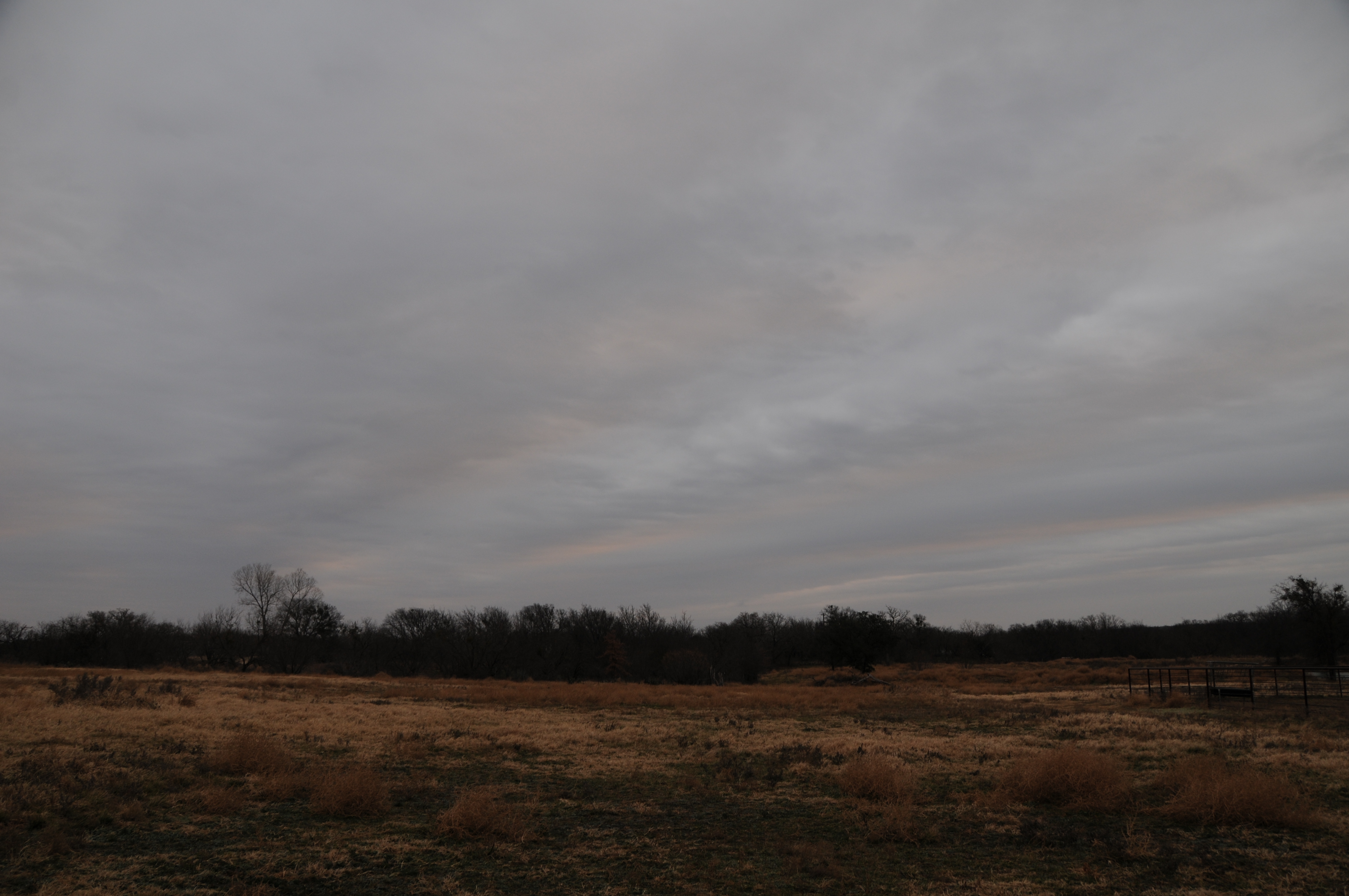
South Poprock Hill Pasture, Flying Hat Ranch, January 7, 2010
By the calendar it is January 7, 2010, and I am in the pickup, near the barn. Looking east from the Well House corral in south Poprock Hill pasture, the early morning sky configures a cold day for livestock and young men and women on horseback who manage them. Currently, we have no cattle herd to tend, but five horses need our daily attention. I rose early before daylight and planned the first feed of the day for Lilly the oldest mare and alpha, Star the gelding-son of Lilly, Sweet Hija the King Ranch legacy mare, and Shiney the colt of Sweet Hija.
Presently, I do not tend the fifth horse. The fifth horse is off-site, at Duncan Steele-Park’s place near Weatherford, Texas, going to school in the round pen of equine education. This horse, Fanny, is with ten others in her cohort, learning and gaining confidence to join-up and toil with cowboys and cowgirls that must use horses that are strong and even-tempered.
Duncan has a philosophy about horse training. Before we even unloaded Fanny from the stock trailer, he stated his way of working with young horses. Duncan grew up in Australia and his methods presage directness, no frills, no nonsense. He spoke clearly, precisely, in clipped tones of the Down Under, and with the authority of a thousand rides upon young horses needing guidance to confirm man as a friend, not predator.
The most important lesson you must teach a young horse, who is having his first few rides, is to go forward which is why I don’t spend much time in a round pen because there is no where for a horse to go in an arena. I find myself a fence line or a lane and kick the latch of the arena open and let my young horse just run. You see if you leave a young horse’s feet free you keep his mind free. And if things are getting a little radical, just one-rein stop him and then let him go and before you know it he begins to relax. People and clinicians now days take too much of the impulsion out of young horses because they spend too much time doing groundwork [in the roundpen].
I think I’ll play with Fanny this afternoon and see what she does [1].
My grandfather, J.W. “Jake” Parks trained or as they used to say, “broke” horses. My mother told me that her father would use a forceful technique to train horses and that the “screams” of the horses upset her as a child and caused her to resent the method Jake used, even Jake. My grandfather did not have a coarse or abusive nature; he loved jokes and took my mother and his sisters fishing along the Colorado River. He was, unfortunately, taught to use the aggressive method by his teachers and peers; that was what he saw in the 1910s and 1920s in central Texas. I think if my grandfather had seen another method to train without force, he would have used it. Those methods were not present in his background, although the method of respectful, non-forceful training has been around in recorded history since Xenophon, the Greek cavalry officer, 5th century B.C.E. General Stephen W. Kearny who marched American troops through New Mexico to California in the Mexican-American War, 1846-1848, reportedly used non-abusive techniques in handling horses. My grandfather probably never knew Xenophon’s way or Kearney’s. He was, like us all, a man of his times and it ended badly.
In the 1930s, while working on the Sorrel Ranch in Sonora, Texas, my grandfather was critically injured riding a horse named Hell’s Canyon as they popped brush for cattle. Riding fast, he struck a low-hanging tree branch and was knocked unconscious. Unfound for three days, he almost died before ranch hands rescued him. He never regained his health following the accident. I do not believe Hell’s Canyon delivered a mystical counterforce to Jake, re-aligning balance to horse screams and my mother’s pain, but rather the accident came as both horse and rider delighted in the chase of cattle for round-up.
The story of my grandfather and Hell’s Canyon was heaped on me when I was a child and I was told I favored my grandfather in body, but I never saw him. In the family narrative, horses and and my grandfather were always joined, wedded, symbiotic, tragic. I was never expected to follow my grandfather’s path. That was just as well because I grew up in a small town, my country experiences were inconstant and we had no land, no cattle, no horses.
Time passed, I inherited horses, my grandfather’s inheritance was passed down to me and I bought more horses, good horses, fine-bloodied, and beautiful. I bought land and I began to work with horses without force, without pain, and with respect. And, when it is time, I take them by the halter and give them to a teacher who will help them grow in ways that take them to high places, wind-swept and sunlit that call out their strength and delight to help tend livestock with humans in the West.
Duncan Steele-Park has a fenced lane, about fifty-feet wide, that angles from his round pens into the Texas brush and trees and pasture. Though I have not seen it, I know where the lane ends. I can tell you where it begins. For the horse, the lane begins with respect and it must end in a land of fun with Duncan Steele-Park. Jake would be pleased; he would be changed.
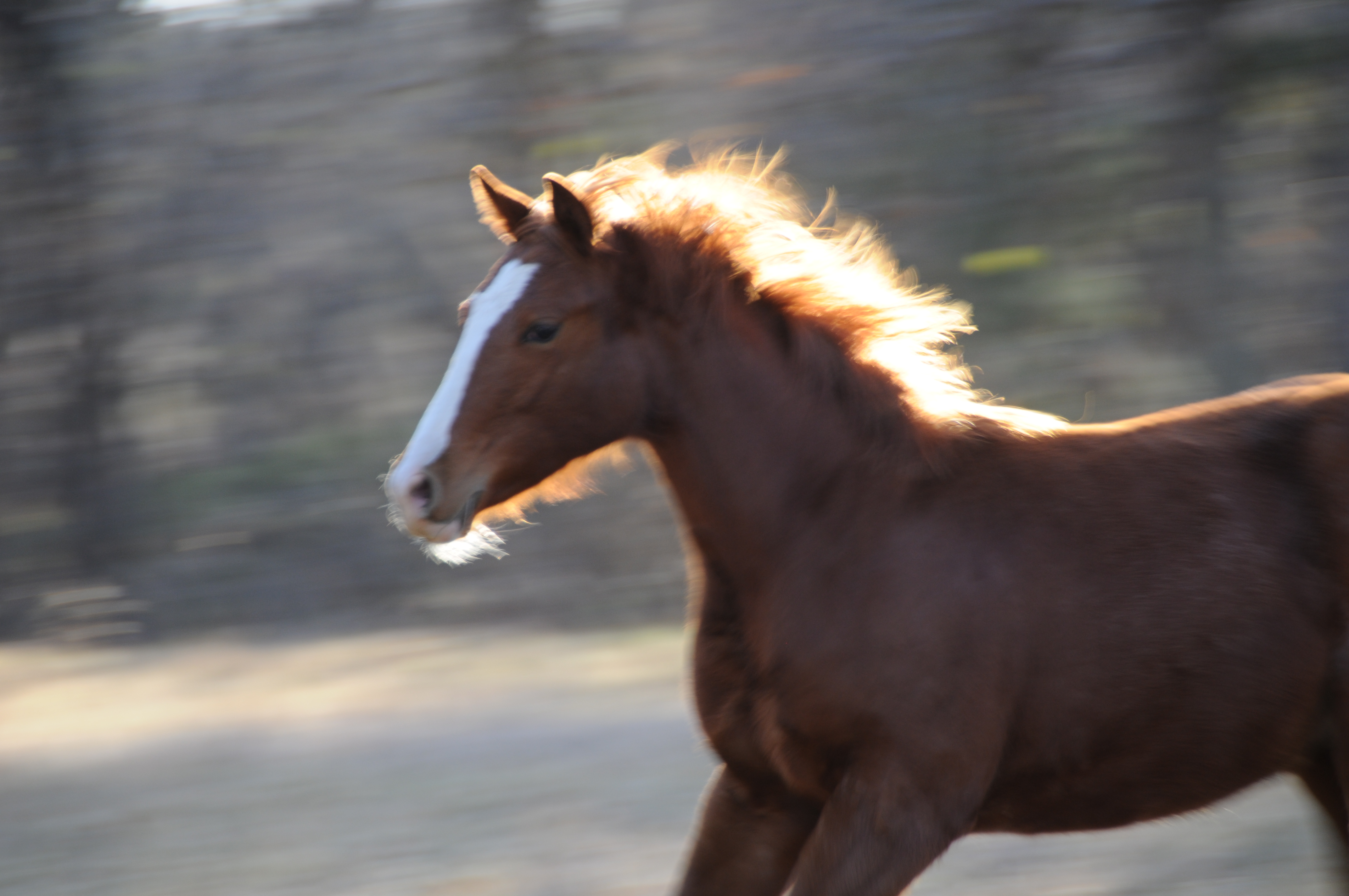
Fanny in the Grove, Winter 2009
Notes
[1] Conversation of Duncan Steele-Park to Jack Matthews, Weatherford, Texas, December 22, 2009; email of Duncan Steele-Park to Jack Matthews, Weatherford, Texas, January 8, 2009.
An an object lesson in writing and fact-checking, I sent Duncan an email on January 7, 2009, for him to fact-check my recollection of our conversation on December 22, 2009. My recollection was:
I let them gain a confidence before I ask anything of them. Some trainers just put them in the round pen and round and round they go, boring them and not letting them be. What I do is let them go down the lane, down the lane, learning for themselves and gaining confidence before I ask anything of them in the round pen. Then as they go down the lane, after awhile I ask something of them in the round pen.
As you can read, Duncan’s correction of my recollection carries specificity about training that my later recollection did not. His words have greater clarity about his philosophy and present his training style in definitely his own words. I can hear in his writing, the down-under Australian accent.
Duncan Steele-Park’s email address is duncansteelepark@yahoo.com.
Happy New Year! What Are We Going to do Next?
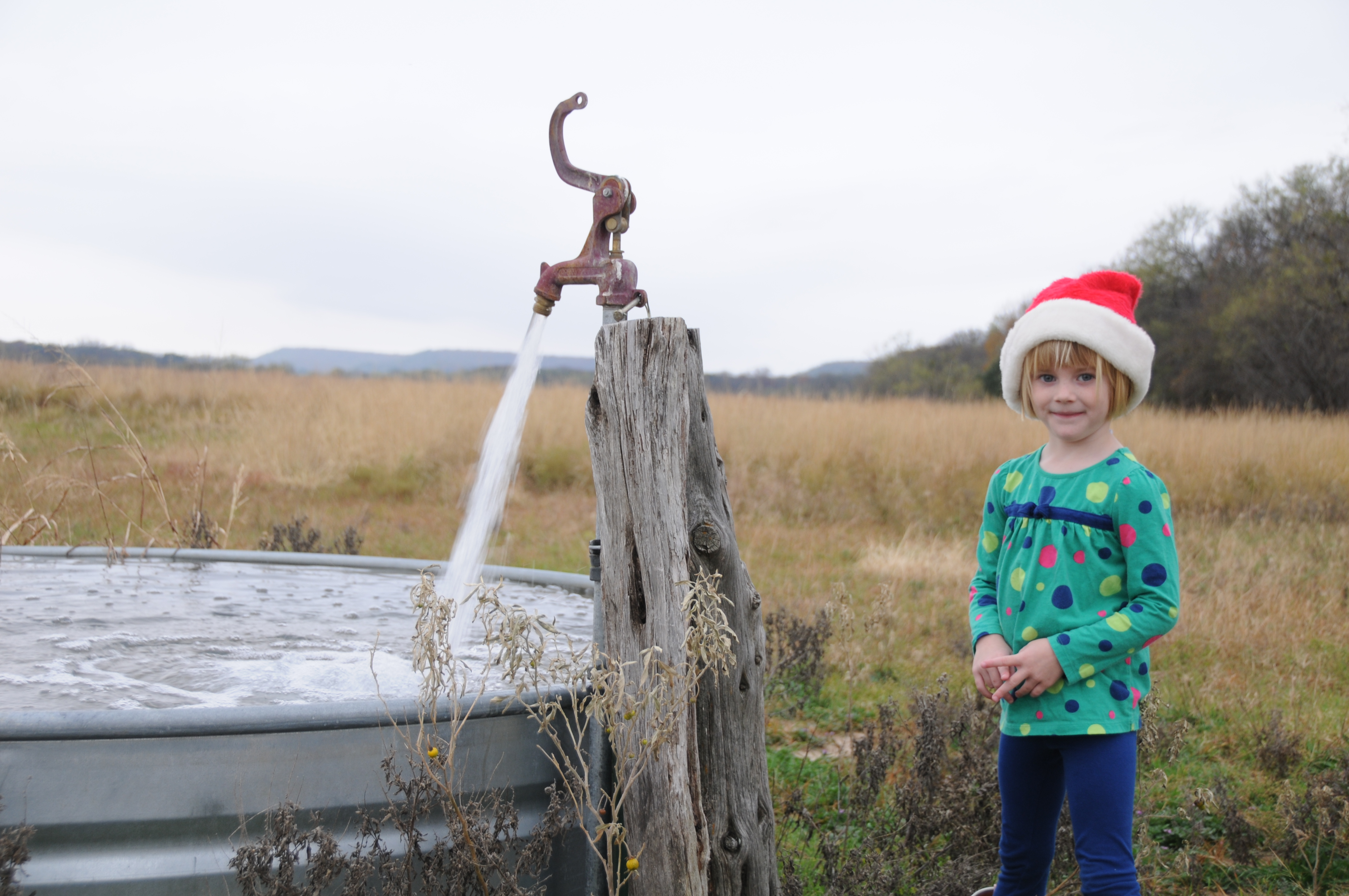 In preparation for Christmas and the New Year, stock tanks must be filled to the brim for horses, cattle, and deer. Olivia Gywn Needham poses while filling the Pecan Tree Pasture water trough. On this day in late November, she incessantly asked, “What are we going to do next, Grandpere?” I ran out of chores before she ran out of energy. Chores are play at this time in her life. Being with Olivia makes chores enjoyable, festive, and less burdensome. I have seen, as you have, fathers and mothers, grandfathers and grandmothers, bring the child into the tasks of the day that must be completed before the dark. Integrating the child with what we have to do gives them a sense of belonging and purpose to the day, and, I think, it gives us a sense of renewal that the world just might continue to endure with a piece of us after we depart.
 This young woman is Jennifer Connell, my daughter-in-law, and she is engaging Star, Sweet Hija, and Fanny (looking over Hija’s withers). Jennifer is in her second year of law school at Texas Wesleyan University. Recently married to my step-son, she also works at Wesleyan to help defray expenses. As we were walking back to the ranch house, she said that she wants horses again in her life, as she had been around them growing up in north Texas. The New Year for Jennifer will be difficult, attending school, settling into her marriage, and working. But, beneath the stress and grind, she prevails into the year, performing in class and rewriting her notes for clarity. The New Year for her and Michael, her husband, will bring accomplishment of goals that will set their path for the future. Star, the paint, when Jennifer visits, will lower her blood pressure and give companionship that only a horse can do. “There’s something about the outside of a horse, that is good for the inside of a woman.” And, a man.
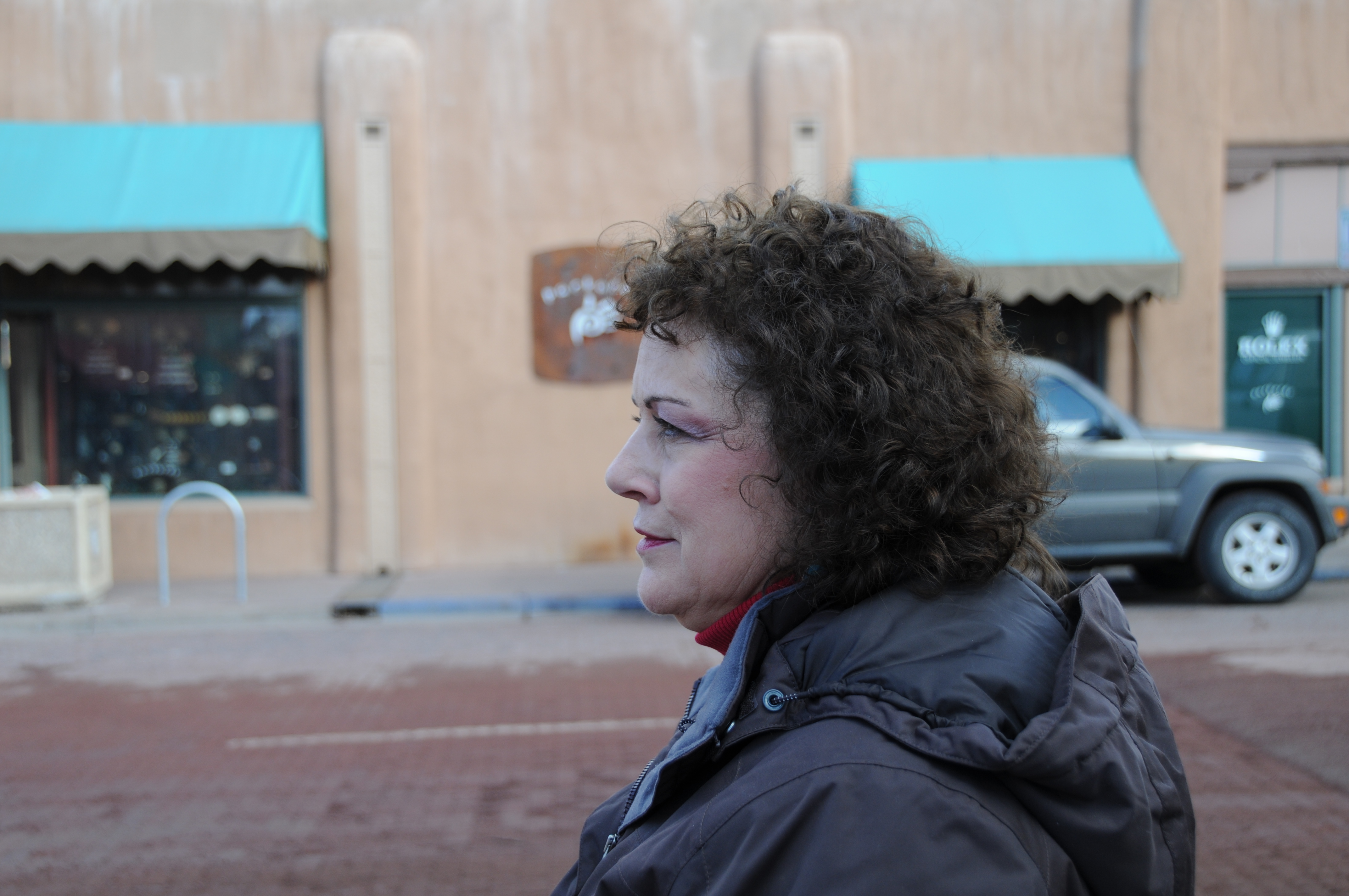 This is Brenda, my wife. While in Santa Fe she noticed that several shops had closed and that inventory stock was down at several businesses. Our stay in Santa Fe this year was a rest from teaching and tending our ranchito (anything less than 2,560 acres is not a ranch, see John Wesley Powell). The New Year for Brenda will be, like mine, sacred and profane, toil and rest, sky-high and ocean-low. Like Olivia and Jennifer, in the photos above, we will endure and with some deliberation, maybe we can occasionally play through our days and nights, finding a self-loss in the rhythm of nature’s beauty out here in the West.
To my friends, to my fellow bloggers, to my family, to my dogs and cats and horses, trees and grasses, and the wildlife of the American Southwest:
Happy New Year!
Filed under Horses

















 Sage to Meadow ~ Jack Matthews