Category Archives: Horses

Yucca Nuzzles

I have some photos about plants, animals, terrain and fossils I would like to show you.  There’s always a photo opportunity here on Flying Hat.  April offers some comforting snapshots about the place.  There’s a lot of communication taking place, even with horses and yucca.
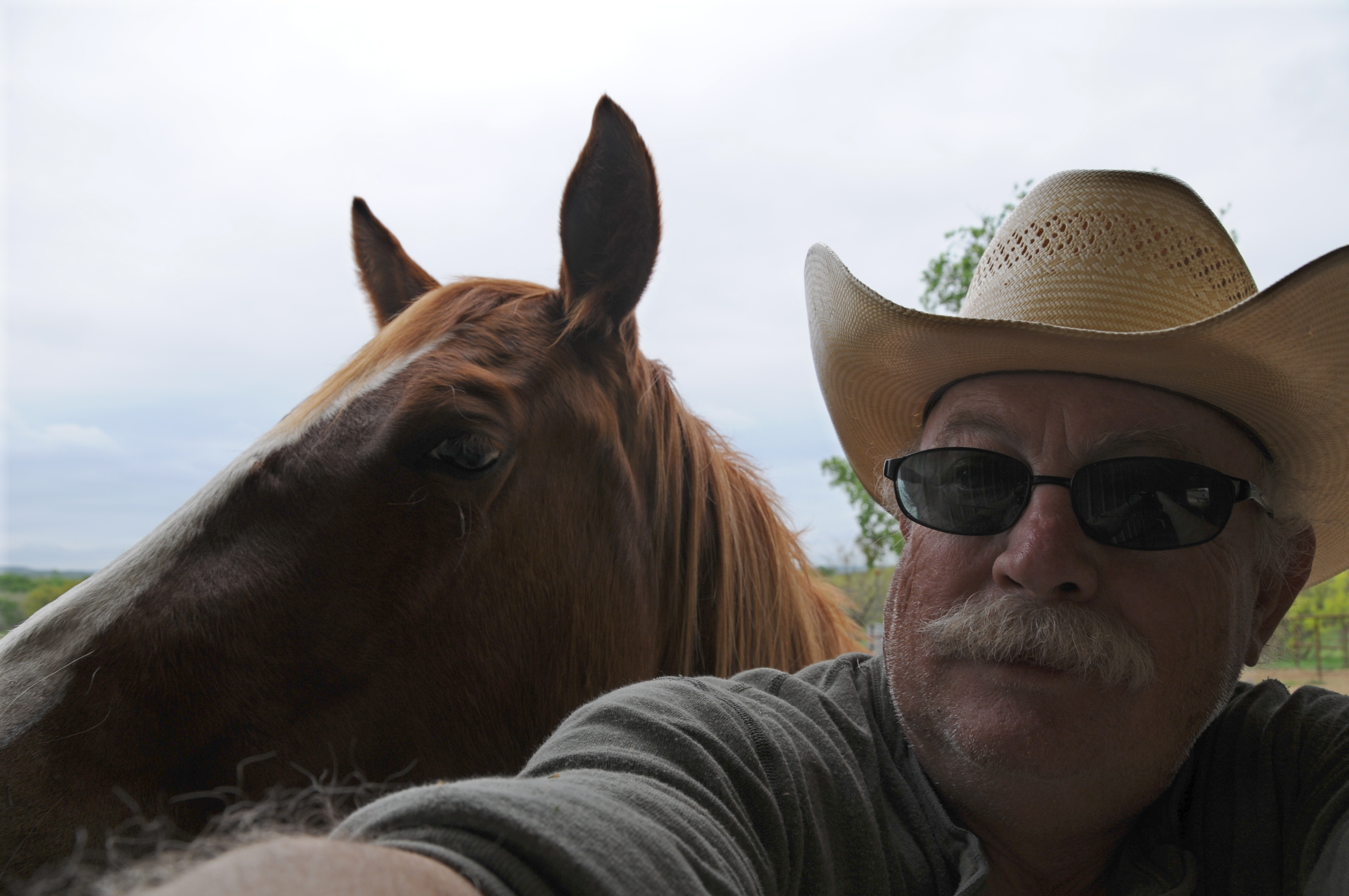
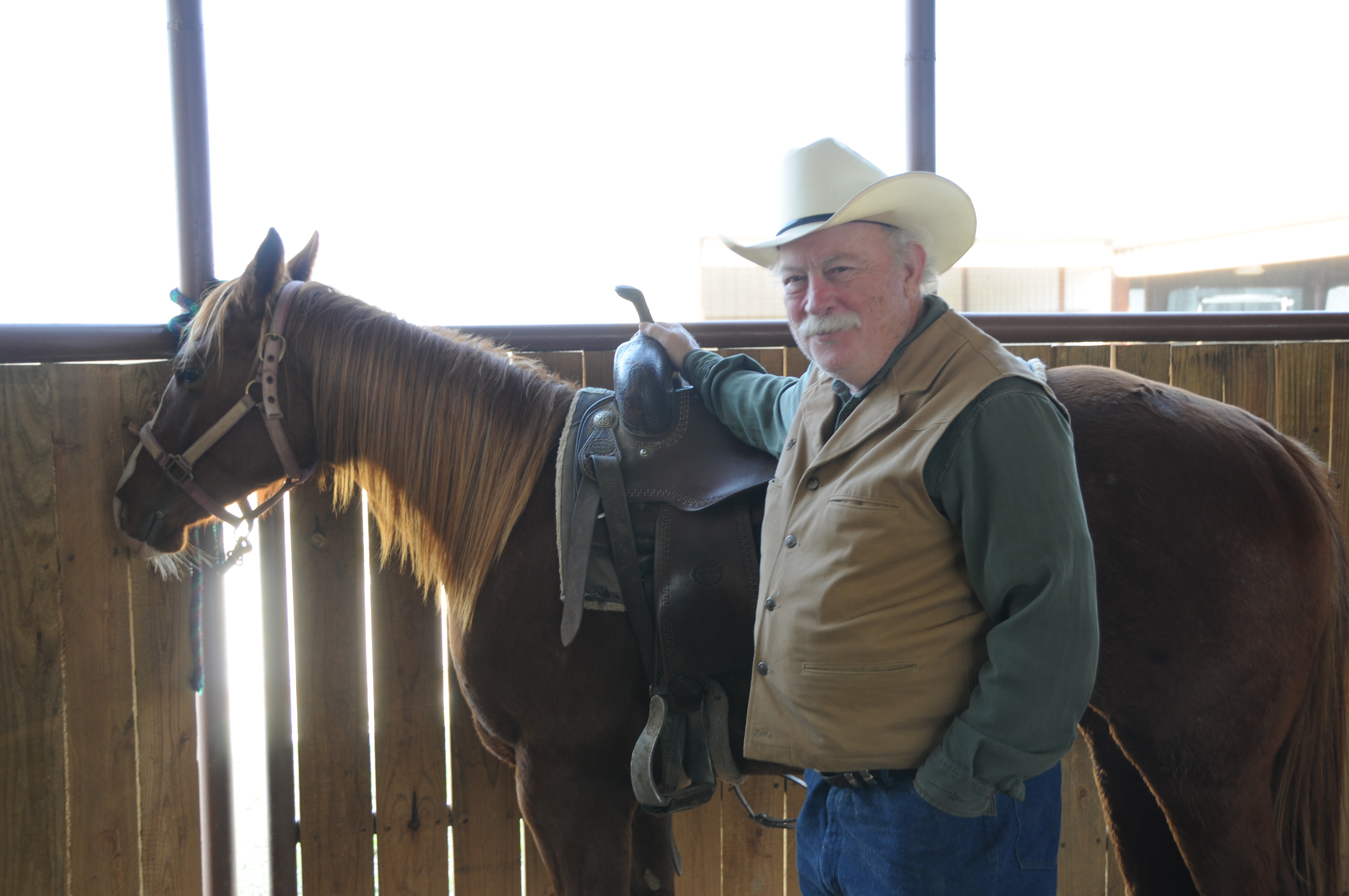
Fanny and Jack at Stable Alleyway

In “Fanny and Jack in the Stable Alleyway,” I am with Fanny and she wants to show her gratitude for the grain she got this morning.  She sees the camera and wants to get her picture taken as well as give me a nuzzle in the neck.

Fanny is not an aggressive horse.  Nonetheless, around horses, a person must be cautious.  They are flight animals and when frightened, they will kick or bolt forward.  Fanny is a good mare and her trainer, Duncan Steele-Park and the crew at GCH Land & Cattle Co., have taken her good qualities and improved them.  From the day of her birth, we have been familiar with Fanny, lifting her feet and touching her.

Fanny Nuzzles Jack

A nuzzle on the neck is good sign that the horse has “joined up” with a person.  “Joining up” is a trademark term of Monty Roberts, The Man Who Listens to Horses (1996) and From My Hands to Yours (2002).

Our horses have human contact–tactile contact–every day.  The touching includes a “sacking out” with the hands.  “Sacking out” is an term describing a procedure to rub the horse with a foreign object, i.e., a sack, halter, lead rope, blanket or with the hands.  A daily touching and haltering with the horse boosts the familiarity between horse and human.

In most cases, horses anticipate the tactile contact.  Lilly, our oldest mare, will glide up alongside us and stop, allowing us to rub her under her mane on the neck.  The horse’s approach should not crowd the space of humans and it is best if they stop a few feet away and present themselves, more or less, with their flanks exposed.  Even after a person becomes acquainted with equine behavior, it is always best to position the body at the flanks or broadside to the horse.

Fanny’s Head on Jack’s Shoulder

The daily contact with horses is a good thing for them and us.  We rub the horses once or twice between the eyes, a place they cannot see, as a sign we are trustworthy.

*   *   *

Read on, there’s more…
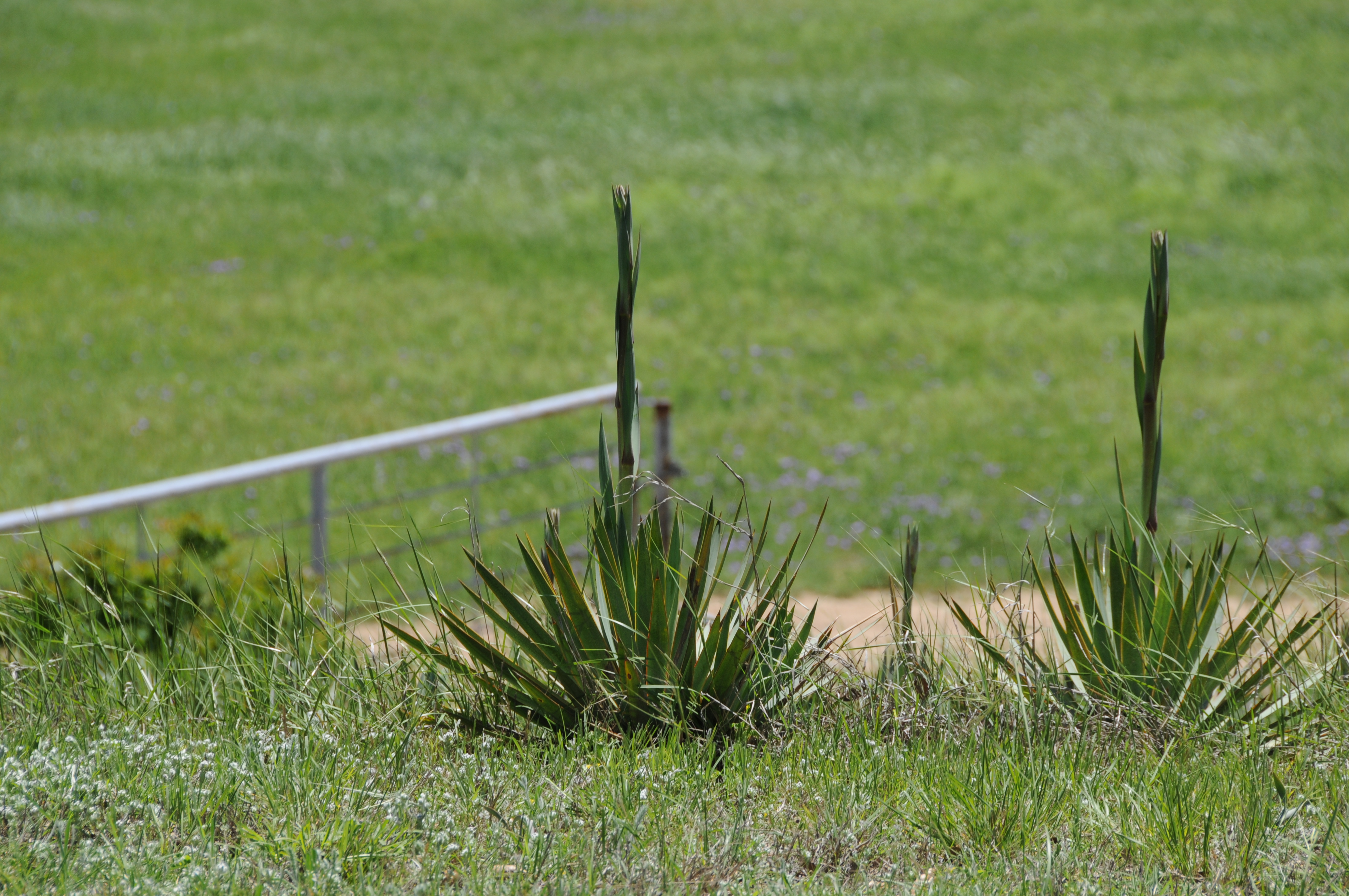
Pale-leaf Yucca (Y. pallida)

I have spent thirty minutes typing this yucca plant.  I may be wrong, but my factor analysis seems correct.  It is a Pale-leaf yucca (Yucca pallida).  As stated in my “Notice to Readers of Sage to Meadow,” if you discern an error in my typing this plant, please correct me.

Pale-leaf yucca is endemic (native only to a particular area) to North Central Texas and may extend into the Edwards Plateau, growing on rocky soil and outcrops of the Blackland Prairies and the Grand Prairie. It bears sage-green or bluish-green, orderly-arranged leaves having a noticeable waxy bloom, or glaucous appearance. The rosette itself is stemless and small, providing a spherical, coarse-textured look in the landscape. It may be single or have multiple offsets. Like all yuccas, Yucca pallida requires good drainage. It may be grown in the shade garden for textural interest, but may not bloom as well as those in more sun.  [Texas Plant Database, Texas A&M University.]

In my analysis, I also figured the yucca might be Yucca contricta (Buckley yucca) or Yucca necopina (Glen Rose yucca).  In the next few days, these yuccas will blossom and I will provide field photos.

*   *   *
DSC_1435a

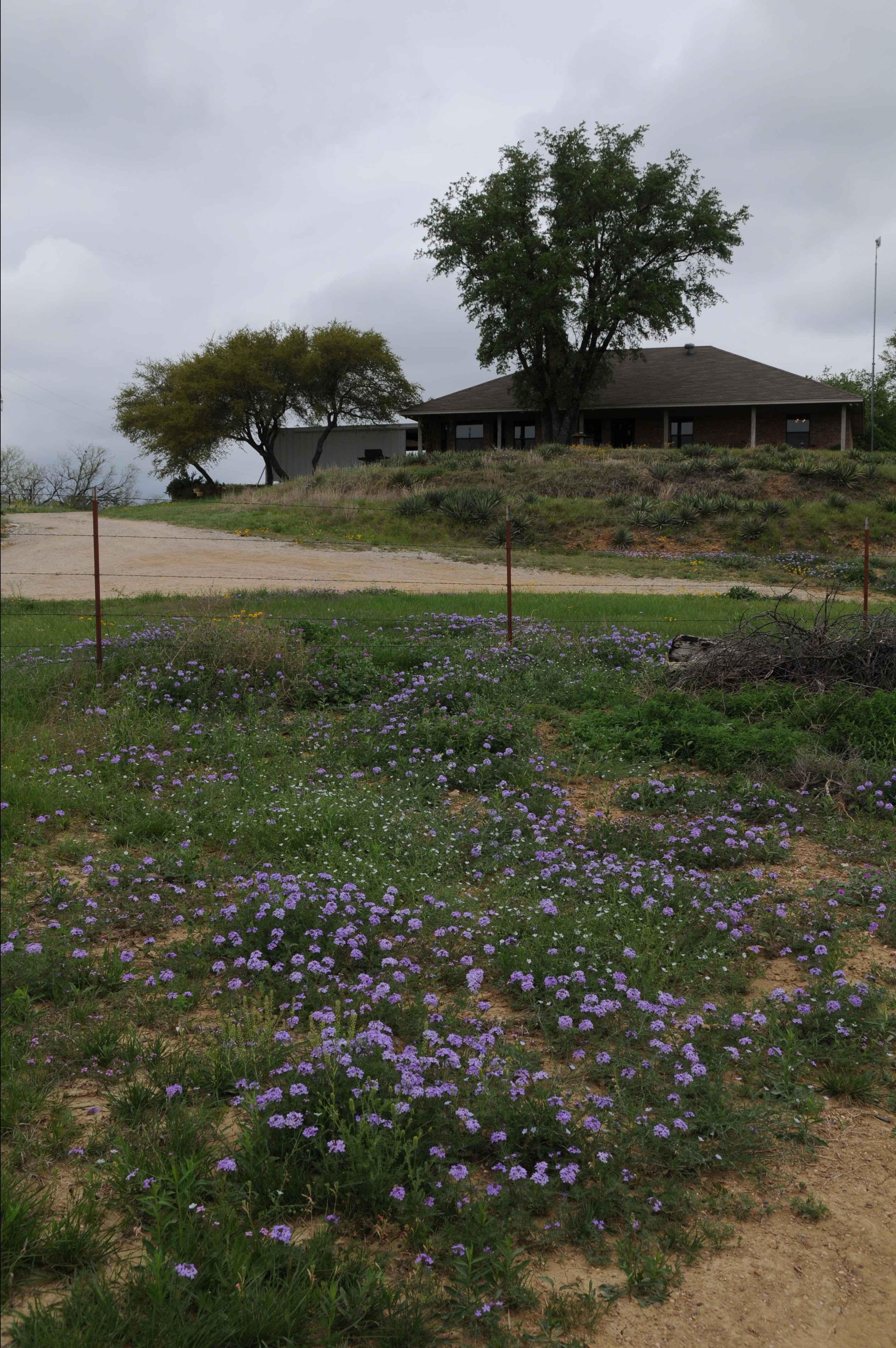
Verbena with Poprock HillI write so often about Poprock Hill, I thought I would provide a photo of the hill.  This was taken earlier this April before the full eruption of grasses, but you can see the proliferation of verbena in the foreground.  Notice also the abundance of Pale-leaf yucca (Yucca pallida) on the terraces below the ranch house.  Poprock Hill is aptly named by local settlers because of the poprocks that are plentiful about the hill.  I collect them, and with each rain poprocks emerge from the soil.
Poprocks on Silver

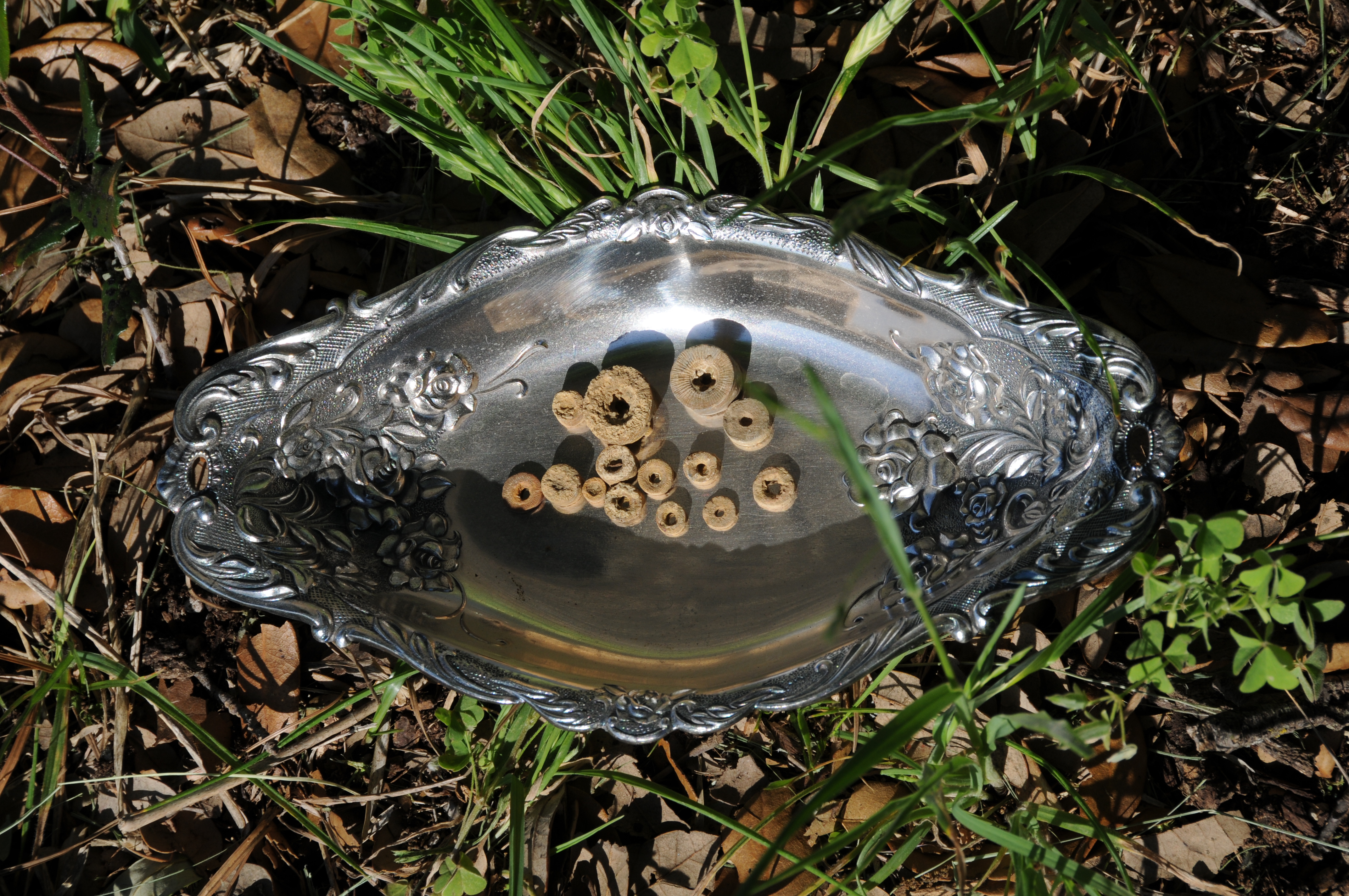
“Poprocks on Silver” shows several poprocks, large and small, that I have collected.

These photographs I have posted illustrate that even on simple, unglamorous land, there are natural items that are noteworthy and significant for study.  The yucca plant I typed (hopefully, correct) required me to go back out to the terrace and look closer at the edges of the leaves to determine if there was a white line or if the leaves were curled, narrow or broad.  As I began to type the yucca for posting, I got interested in the yucca for its own sake: what was it?  Was it rare?  Endemic?  The Glen Rose yucca is a uncommon plant and needs some protection from extraction and destruction.  Did I have a Glen Rose or not?  I find the yucca in Texas worthy of further study.  I may start a yucca farm.

Finally, I think this post with photos shows how connections can be funny and personal between species.  Fanny and I communicated and I think both of us got pleasure and companionship out of the contact.  The yucca could not respond.   Whoa there, cowboy!  From a Native American point-of-view, the yucca and I were talking to each other, weren’t we?  It showed me its style, color and emerging blossoms.  I watched it and it “told” me what it was doing.  Yes.  Certain species of the yucca can be used for soap, shampoo.  And, when I give Lilly her supplement for her osteoarthritis, the veterinary insisted that the supplement include yucca.  This personalization of plants and animals is beneficial to us all: medicine, companionship and a unity that, however briefly, overcomes life’s estrangement.  That’s talking with the plants and animals.  Maybe they are our relatives.

I wish you a pleasant week ahead: nuzzle your yucca, but be very careful.  Like with all relatives.

10 Comments

Filed under Duncan Steele-Park, Horses, Life in Balance, Plants and Shrubs, Shiners Fannin Peppy (Fanny)

Field Log 4/21/2010 (Scissor-Tails, Gyp Indian Blanket)

North Erath County, Texas, 32.43 lat., -98.36 long. Elev. 1,086 ft.  Turkey Creek Quad.

Sweet Hija has been inseminated at Equine Sports Medicine and Surgery (ESMS) on the Brazos.  She’ll be held for a couple of days, says Dr. Semira Mancill, to check on an edema problem.  Then Sweet Hija can be released to come back for two weeks before her next checkup.  Hija has a paddock and is comfortable at ESMS.  But, she prefers to be back here to gallop full-speed from one end of the pasture to the other.  Last year, I was at the east gate in the pasture and for no apparent reason, she reared up and stood for six seconds on her hind legs, cocked her eye towards me–I was about five feet away–and held my gaze.  Powerful girl!  Then, abruptly, with a snort and a turn, galloped to the other end of the pasture, a quarter-mile away.  Did not slow down until she reached the end of the lane.  Gasp.

Shiney (Shiners Fannin Pepto) is doing well at Jimmie Hardin’s in Aubrey.  He’s slightly off his feed.  The farrier came to trim him yesterday.  Jimmie said that they had worked him out, groomed him and tied him for training purposes and he did just fine.  I worry about the little guy since he is so exuberant and eager to please, it seems.  Am still undecided about whether I will lead him at the sales ring in Shawnee or have someone else lead him.

I put out more corn today near the deer salt lick.  I saw hoof prints of at least one deer.  Track put down after the last rain of 2.0 inches.  I’ve still not sighted deer.

I’ve seen hummingbirds.  (Taosmesa tweets that she has “heard” hummingbirds at her home, but not seen any.)  Scissor-Tailed Flycatchers  (Muscivora forficata) abound about the fields.  From Peterson, they breed here in w. and s. Texas, e. New Mexico, se. Colorado and s. Nebraska.  He writes that their call is a repeated ka-leep with some stuttering.  I concur (course, who be me?) with the ka-leep, although I might add that the refrain-call is like this: keck, keck, …ka-leep. (Peterson mentions the keck.)  I have a rich and full life, and trying to replicate bird calls is good for me.

When I grew up in Brownwood, Texas, in the 1940s and 1950s, I remember the Scissor-Tailed Flycatchers sitting on power lines in front of our home, down towards Fourth Street and Brady Avenue.  The Scissor-Tails had the same refrain-call back then as they do now.  They would fly upwards in an arc when they called and then settle back down on the power line: keck, keck, …ka-leep, arcing, settling.  I can see it now in my mind and hear it, too.

Here on Flying Hat, over in the Pecan Tree Pasture, several Red-Winged Blackbirds (Agelaius phoeniceus) will take up temporary residence sometime in the spring and summer.  I do not shred the tall Johnson grass so that they can perch on the high stems and be spring-tossed by the wind.  That touch of red on their wings is so bright, so colorful.  I’ve not seen them yet, but I will, I know.

Dense Stand of Gyp Indian Blanket, April 21, 2010

There are several stands of this plant, Gyp Indian Blanket (Gaillardia multiceps).  It may also be (I am unsure) a Pincushion Daisy (Gaillardia suavis).  It loses its petals quickly, but the brownish-red center remains.  The bare flower stems stand 18 inches taller or more.  Looks like those science fiction movies with the scout coming into the basement where Grade B movie actors are hiding.

Gyp Indian Blanket Flower Bases, April 21, 2010

This spring I’ve seen more variety of wild flowers than any spring since we moved here in 2003.  A variety of primrose has emerged today down by the barn.

*   *   *

Rural Declamation Interscholastic League State Meet 1938, Gywn Parks, Front Row, First Person, Left to Right

My mother, Gywn, always had plants and birds.  Her backyard looked like a wonderland in the summer and her bird room held finches she had purchased as far away as Australia as well as canaries and types I can’t remember.  She even had a red hen that scratched through the debris on the floor.

In the photograph to the left, she is the first woman on the first row, left to right.  She was representing Bend, Texas, in the state Declamation contest in 1938.  She placed first and received The University Interscholastic League Award.  Gywn wrote letters and sent cards to her friends as a habit pattern throughout her years (1920-2003).  I have many of the letters from her friends.  Careful in her speech and prose, she was my first teacher at home.  She was small, but she was fierce, I have said about her.  The Irish in her would bring her to a quickening: I’ll get me a shallelagh if you don’t settle down, Jackson!

She died seven-years-ago today, April 21, 2003.  Her last words of advice were for me to have good friends and talk to them everyday.  R.I.P., Mom.  I’m taking good care of the land and plants and birds and wildlife:  a steward, like you taught me.  And, I have friends.

6 Comments

Filed under Bend Texas, Birds, Field Log, Horses, Plants and Shrubs

Volcano and Horses

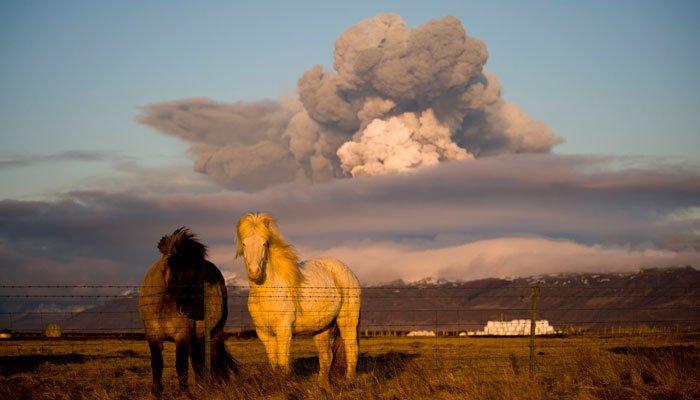
This was too good to pass up, especially for a horse lover like me.  I can’t say that I would be so calm as to stand there with that big, black cloud coming.  This photograph was by fdba, whatever that stands for.  By way of citation, this came from the tag surfer on WordPress.

4 Comments

Filed under Horses

Sweet Hija to the Brazos

North Erath County, Texas, 32.43 lat., -98.36 long. Elev. 1,086 ft.  Turkey Creek Quad.

Two days ago, we took Sweet Hija to Equine Sports Medicine and Surgery on the Brazos (ESMS on Brazos) for artificial insemination to Shiners Lena Doc out of Carol Rose’s stables.

As an added feature to taking Hija to ESMS, I saw Peptoboonsmal, one of the leading quarter horses of recent years.  He is standing (residing for breeding purposes) at ESMS on Brazos.

Peptoboonsmal by Cutting Horse Chatter, April 2010, Jackson Land & Cattle Co.

I knew that Peptoboonsmal was at ESMS and when I met the reproduction manager, Kellee Clarke, I said that I remembered a red roan up at Carol Rose’s several years ago.  Did she have him?  I did not even call his name, it was just the pink guy.  Yes, Kellee said, Would you like to see him?  Of course.  This guy is becoming one of the famous sires of quarter horses of all time, coming up on Peppy San Badger, Hija’s grandsire at King Ranch.

So, Kellee, Brenda and I went back into the stallion barn to see the old boy (born 1992).  I missed him at first as we walked by and had to turn around.  Kellee opened the door to this fabulous stallion and said, He likes this.  She entered ‘Boonsmal’s stall and he stuck out his tongue to have it scratched and massaged!  Kellee said, he is a really sweet old boy.  I can see that, I replied.

I stood and watched.  Large old guy, but gentle and handsome.  All matings with Peptoboonsmal are on site.  There’s no artificial insemination from him.  He’s a valuable sire and his owner, Jackson Land & Cattle Company, Jackson Hole, Wyoming, is going to limit his exposure.  They have quite a horse.

Left off Sweet Hija.  Dr. Semira Mancill called later in the day, stating that Hija had recently come out of ovulation cycle, so they would keep her for a few days, give her an injection to start her ovulation again and then breed her.  She will be bred to Shiners Lena Doc from Carol Rose’s stables.  My other two offspring from Hija are also from Shiners Lena Doc:  Fanny and Shiney, aka Shiners Fannin Peppy and Shiners Fannin Pepto.

We should be able to pick up Sweet Hija from the Brazos ESMS by the end of the week.

4 Comments

Filed under Horses, Sweet Hija

The Horses of Flying Hat

I thought I would put in one post a photograph of each of the horses I work with on a daily basis here at our place, Flying Hat.  All of these photographs can be enlarged by clicking on the photograph. By enlarging the photograph, if you have a moment, will reveal a lot of detail, as these photographs are usually 2.0 plus in megabytes.  I like to take photographs using the most detailed mode (within reason, of course) I can.  You can always lessen the detail in a photograph, but never add detail to it.

Shiners Fannin Peppy

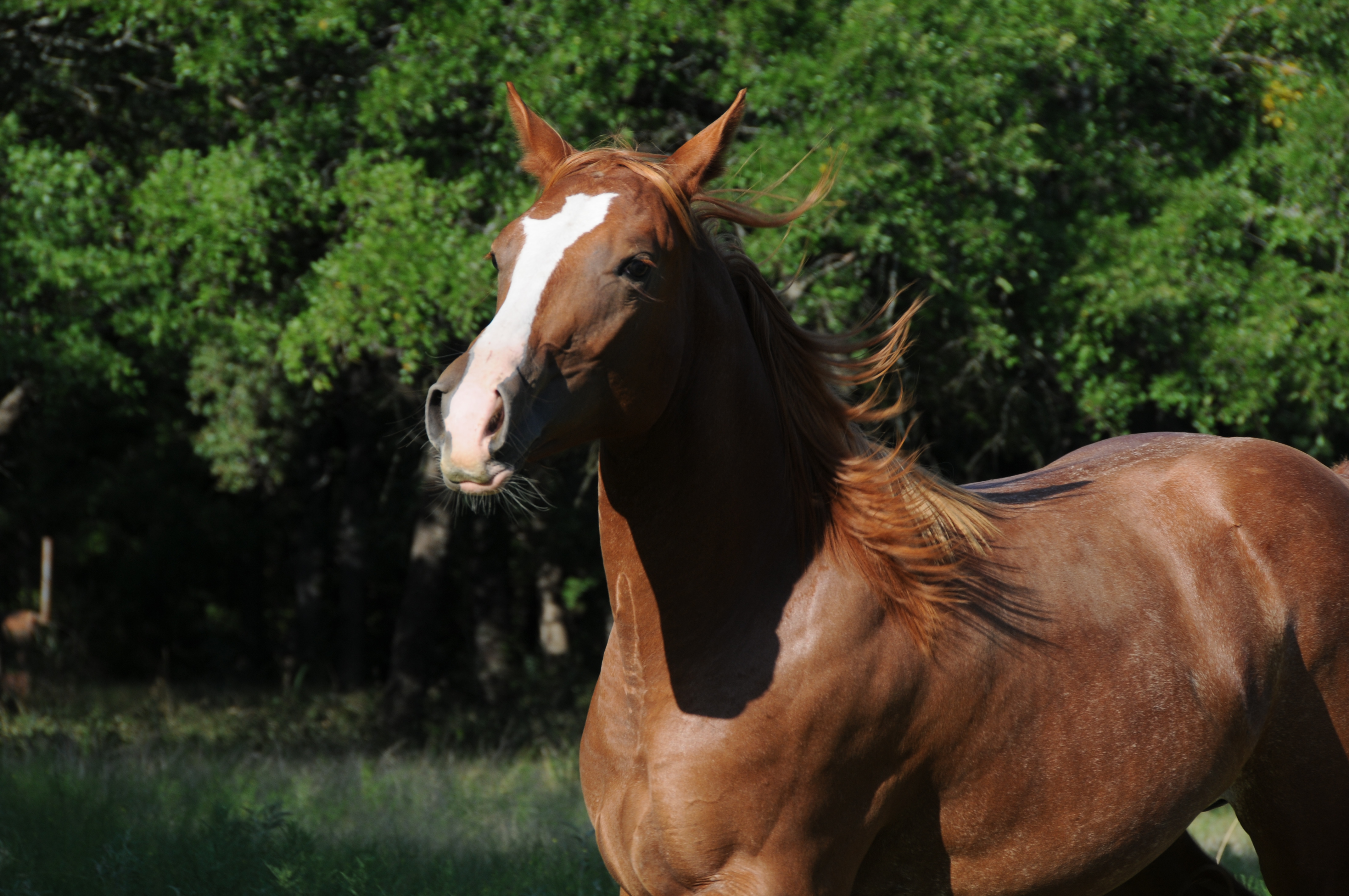
This is Shiners Fannin Peppy or “Fanny.”  Fanny has been in training — elementary school — for a hundred days with Duncan Steele-Park at the GCH Land & Cattle Company of Weatherford, Texas.  Fanny is a daughter of Sweet Hija below.  Fanny is quite vocal.  She will begin to nicker once she knows that I am going to feed.  It is a vocalization that is more of a chortle, kind of a gargle, deep-down in her throat.  Fanny will continue to nicker-chortle every fifteen seconds or so until I put feed in her bin.  Translation to English:  “Oh, boy, I can’t wait, can’t wait for my grain.  Oh, boy, oh boy.”

Sweet Hija

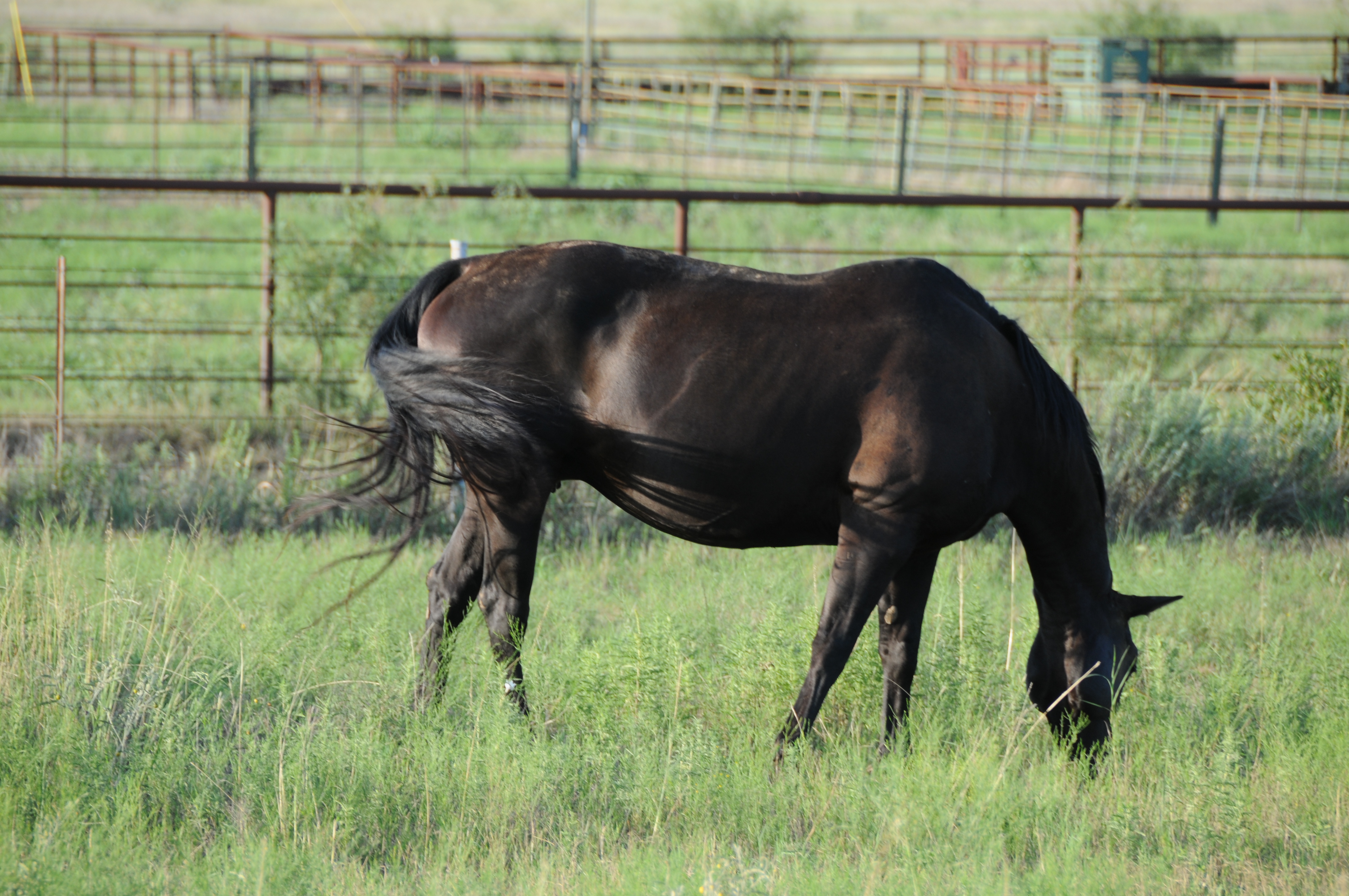
This is Sweet Hija or “Hija,” as we like to call her.  I purchased her in 2003, from King Ranch.  She starred in a King Ranch video for marketing before the auction at Kingsville.  She cut cattle with J. R. Ramirez, her trainer, in front of two-hundred prospective buyers.  I bought her at the King Ranch Legacy Auction in 2003, in front of  2,000 spectators — really stressful, but fun.  When I walked to the stables to view Hija after purchase, two stalls down from her was her grandfather, Peppy San Badger.  He was looking over the crowd and his granddaughter.  Peppy San Badger was nearing the end of his days, but he was still eager to see people and his progeny — be around the excitement.  I am sorry to say that I did not appreciate his background and heritage that day as I was just beginning to understand the quarter horse culture.  Peppy San Badger, Hija’s grandsire, was one of the greatest quarter horses ever to have lived: he rewrote performance records and records in the show pen.  He died in 2005, less than two years after he saw Hija load up into our horse trailer and come to Hannibal.  I have a photograph that shows Peppy in the background, Hija in the fore.  I’ll try and retrieve it for you some day.

When I saddle and ride Hija, I have to give her a run around the round pen before I mount (it’s been a while, however, since I’ve ridden) because she has that spirit of Peppy San Badger.  He would give a little buck when you first mounted him, but not a mean buck, just an energetic buck that he was happy to be alive — so also, his granddaughter.

Ima Lil Moore

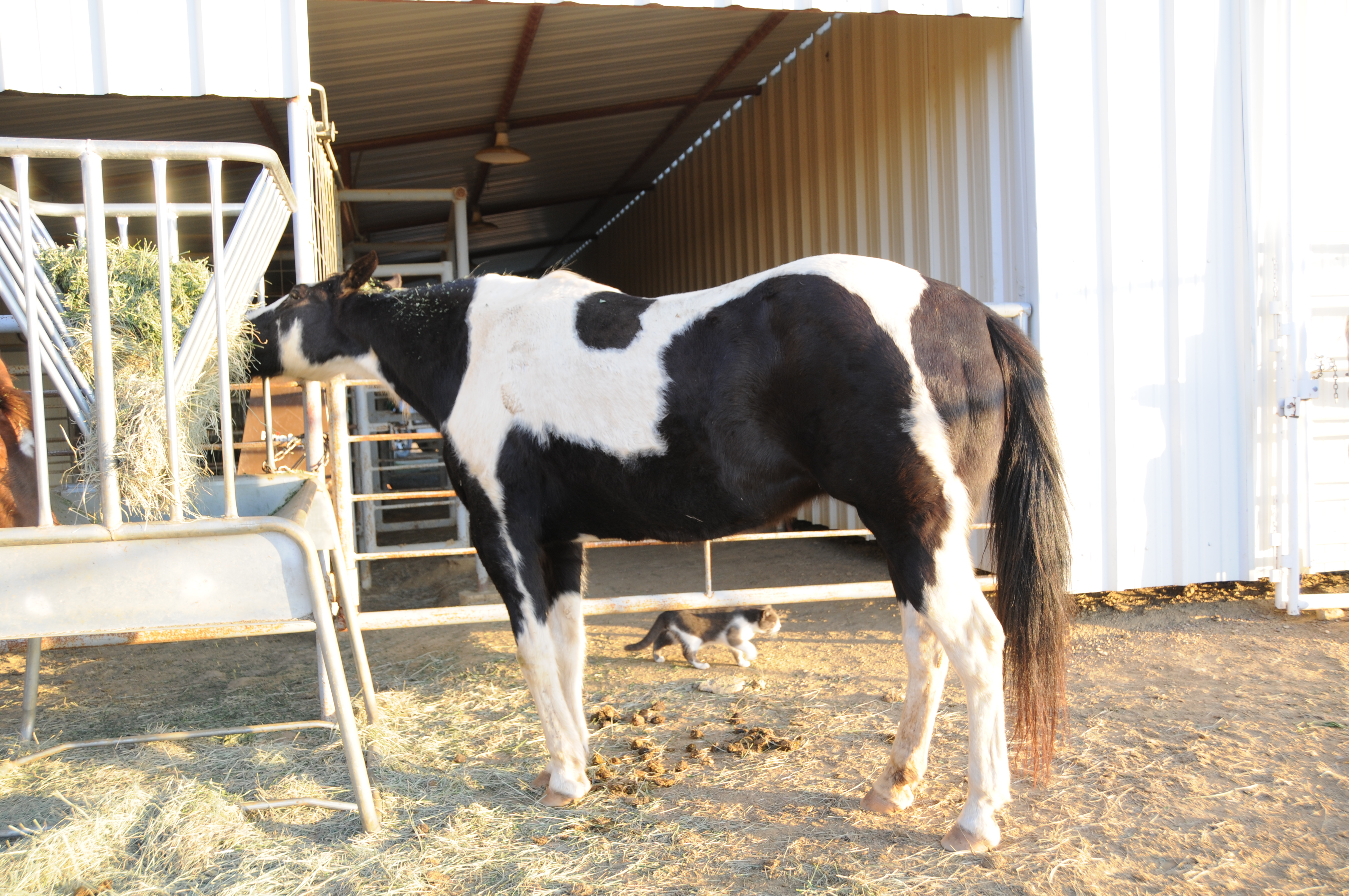
This is Lilly, the oldest mare in the remuda.  I inherited Lilly and her son, Star, upon the settlement of my parents’ estate in 2003.  Lilly is the alpha mare of the remuda.  She is challenged by Fanny for placement at the food trough.  Lilly likes to take her good time these days to come to the stall.  I favor her and let her use the alleyway to get into her stall (see the alleyway above) rather than have her walk a longer distance.  You can also see in the photograph above, the barn cat, Paint or Little Paint.  Odd, but he has the same markings of Lilly.

Shiners Fannin Pepto

Here is “Shiney.”  He is all-boy, a colt and a peppy one at that.  He is the son of Sweet Hija.  This is the guy I am having so much fun with these days.  He is an intact male and I have him for sale, but Brenda and I have talked about keeping him — me more than her — but it would require the construction of a stallion run.  Shiney is such a fine boy.  I really like working with him.

Stars Bars Moore

Star is a gelding and the baby-sitter for Shiney.  Star and Shiney inhabit the large outdoor arena and are given to playing many games of “Gotcha,” a variation of tag.  Star is a large horse.  I often refer to him with affection: The Beer Wagon Horse.  Star is the son of Lilly.  Star is known far and wide as the levitating horse of Flying Hat — check a previous post this winter on the blog.

A friend of mine at the college, Roland Stroebel, says to me almost daily, “I’m homesick, Jack.”  By that he means that he wants to go back to his farm south of Cisco, Texas, and work with the land and his cattle.  He misses his farm — homesick.  When Roland’s work is done at the college, he leaves and I can see him working with his fine Angus cattle into the evening darkness.

When I am away from all of the horses and land upon which they trod, I am homesick for their companionship, their warm breath and smell.  It is said:  “There is something about the outside of a horse that is good for the inside of a person.”  I believe that with all my heart.

19 Comments

Filed under Duncan Steele-Park, Flying Hat Ranch, Horses, Lilly, Shiners Fannin Peppy (Fanny), Shiney (Shiners Fannin Pepto), Star, Sweet Hija

Fanny Returns

Shiners Fannin Peppy and Jack Matthews, GCH Land & Cattle Co., March 2010 (click to enlarge)

Shiners Fannin Peppy, “Fanny,” came back to Flying Hat yesterday.  At the hands of Duncan Steele-Park, her teacher, she has had three months of the best training I could afford.  Fanny will be a excellent pleasure horse, a fair cutter and all-around riding horse.  Duncan assessed Fanny:  She’s a good horse, but in this high-dollar business of cutting horses, she could not compete at the super-athlete level that is required to succeed.  I’m not a swimmer, either, he said, and I and you, Jack, have to play to her talents, to her disposition and behavior.  It’s unfair to force her into being the athlete she is not.

I could not have asked for a better teacher for my horse.  Let her be herself, play to her strengths.  Fanny came back home and was welcomed by the remuda: they kicked and ran and whinnied, communicating excitement.  I’ll have more photographs about Fanny, but for now, you’ll have to settle for the photograph above: myself, my companion.

16 Comments

Filed under Duncan Steele-Park, Horses, Shiners Fannin Peppy (Fanny)

Field Log 3/25/2010

North Erath County, Texas, 32.43 lat., -98.36 long. Elev. 1,086 ft.  Turkey Creek Quad.

Rain yesterday, 0.90 inches.  Cannot work field, too wet to plow (literally, folks).

Bow hunter died this morning.  My colleague at college, David Kanady, passed away.  Forty-ish.

He taught British literature at a juco place — oh, the bowels of  pedagogy.  David would walk the hall to  invigorate himself to teach.  He saw teaching as an opportunity, not a preparation.  But, a bow hunter died this morning.  That’s what I want to write about, that’s his legacy.  A bow hunter: giving the animal a chance.   He missed his shot.  He ate what he killed.  Traveled to Wyoming, followed the herd, and took his shot.  I know it was part vain, but  he shot with honor, giving life a chance.  He was appointed on a contract to teach at a juco place, $24,000.00 a year.  Hey, but you get benefits!   He gave the antelope a chance, then he dressed it, and brought the meat to the table of his parents, an only child he was.  He missed shots.  Bow and arrow.   David hunted parttime, respected nature always.  RIP, David.

Lilly settle in to her stall.  Hija adjusts to corral again.  Oh, she is a peppy girl — see her pedigree.

Called Duncan Steele-Park.  Will pick up Fanny tomorrow.

The Origin of Urantia by Dipti Bhakti

11 Comments

Filed under Duncan Steele-Park, Field Log, Shiners Fannin Peppy (Fanny)

Still No News on Bald-Face Lie Shooting

Bald-Face Lie Profile 2009-2010

Sorry to report that there is no news on the shooting of the filly, Bald-Face Lie.  I’ll see what I can do to find out some additional information.  If you Google the Weatherford Democrat and the Fort Worth Star-Telegram newspapers, you can read some articles about previous depredations in the area.  I, frankly, do not want to post articles of such violence, but, as Kittie Howard wrote, “There is something Really Nasty out there.”  I think despite the gore, we have got to speak out about this craziness and drill down into the American culture to burn out those ideas and pathologies, fostering violence against people, animals and nature.  The Really Nasty has to always feel the heat and hear the hooves coming at ’em.

I am writing an article on the shooting of several buffalo up north of Abilene, Texas, months ago.  It’s a piece I want to spend time on, nail it down and write about the rancher that slaughtered the herd that had “strayed” on his land as well as the culture (regional and historical) that underwrites this behavior.  I may have to post the article on another blog than Sage to Meadow, but I’ll let you know where.

6 Comments

Filed under Horses

Fanny with Duncan Steele-Park

Shiners Fannin Peppy with Duncan Steele-Park

I went to see Fanny Wednesday morning after classes.  Duncan Steele-Park took her through her paces, circles and stops.  It was a cold morning and Fanny and Duncan followed one calf in the large indoor arena to accustom her to cattle.  At times, I saw her breath as a small cloud, rise softly, then evaporate.  Fanny has been around cattle all her short life, but having a rider to give her commands was different.  Duncan gave me a critique of her behavior in the workout and she stops really well.  Her work on right-hand circles is testing her, although her left-hand circles are good.  Fanny has about two more weeks with Duncan before we make a decision on her future.  She is out of kindergarten, Duncan says, and in elementary school.

On the one hand, with progressive improvement, Fanny can stay in school and in another year become a futurity prospect in a crop of 750 cutting horses.  Then, on the other hand, Fanny can have a good education at the hands of Duncan for a few more weeks and come back home to our place to be a good companion and safe horse for human beings.  Duncan has stated that there could be reasons to bring her out of his training and put her on a decent, average road for horses that will not be a prospect for the Fort Worth futurity, but will give her experience for a comfortable, safe life with human beings.  And, they with Fanny.

I do wish all of you could see Duncan and Fanny working together.  He lets her be free in learning.  By that I mean, he lets her be a force for herself, not him, not Duncan.  He will start every session with turning her head with the rein and hackamore (no snaffle, no bit) to the left, then to the right.  When he changes the gait in her circles, there is no overt spurring or talk, just a few clucks or pressure with his legs, and she adjusts.  I could not see the cue Duncan was applying to get her to stop.  Maybe there was a slight pressure from the hackamore for Fanny to whoa, but I could not see his cue for her to halt.  And, she stops quickly.

So, I asked Duncan, What is the cue you give Fanny to whoa?  As he was riding by on Fanny, Duncan said, Look at my leg and boot.  I looked and when Duncan takes his boot and leg away from her flank, just slightly, she stops.  All he does is take off leg and boot pressure about her flanks and she halts.  Dead so, doesn’t move.  Stays immobile, stopped.  I thought: That’s why I pay tuition.

Fanny is fortunate.  Fanny is under a stoa, a porch, of ancient pedagogy, a place with a teacher that doesn’t use a cudgel to beat the cursive into the student, but a stoa-arena that allows her to draw out of herself a strength and performance that instills confidence that she will possess, whether she is futurity bound or is ridden by a young, blondhaired lass in the greenest of nature’s pastures, enjoying the wind on her face and the gentle pressure of rider around her soft, sorrel flanks.  Go, my darling, Fanny, go.  I have given you the best I could.

Fanny and Duncan Under the Stoa (Click image for enlargement.)

14 Comments

Filed under Duncan Steele-Park, Horses, Shiners Fannin Peppy (Fanny)

Early Morning Sounds on Flying Hat

I rise early to start the day, walking down the lane to the barn.  Before sunrise this morning at 6:45 a.m., I heard three flocks of turkeys responding to each other to the south and west of our place.  They gobbled in flock choruses, their refrains carrying far because of the cold air.  Between turkey gobbles, loud and many they were, coyotes howled and yipped.  I don’t think the coyote had a kill, but were merely howling.  Past the Dooley’s place, I heard a neighbor’s hound bay, and from the Dooley’s farmyard, a cock crowed.  Ducks on the pond quacked and I heard them on Blue’s pond to the east of us, sounding friendly to each other, not alarmed.  The sun lay below the horizon, slowly illuminating the sky, as I absorbed sounds of nature’s creatures, some wild, some not.  I finished one chore and returned to the house, waiting for the horses to turn broadside, flankside to the sun as it rose, awaiting their grain and hay.  Lilly the alpha mare will nicker when I enter the stables.

8 Comments

Filed under Dogs, Ducks, Flying Hat Ranch, Horses