Category Archives: Flying Hat Ranch

Wild onion and the Great Plains Restoration Council

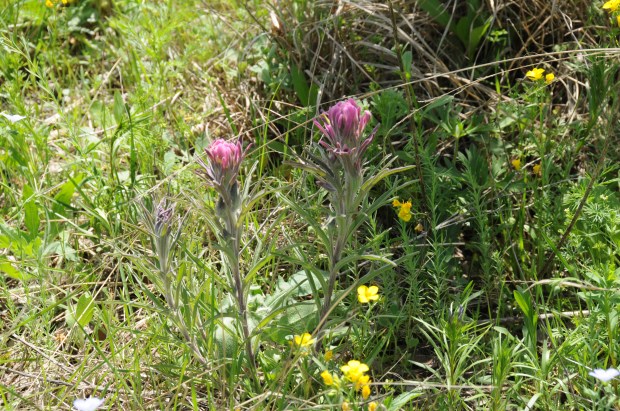
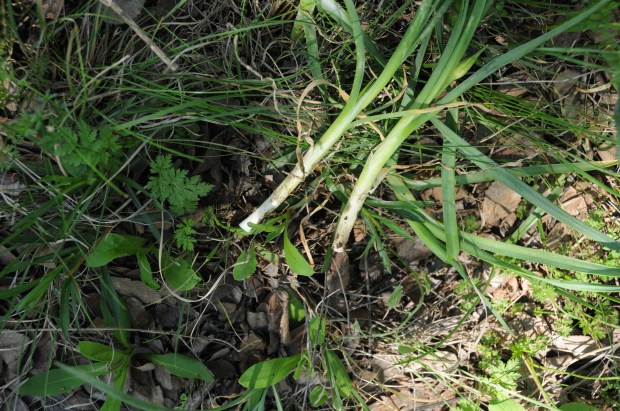
Wild Onions (Photograph by Jack Matthews)

Three thousand acres of old-growth prairie is at the backdoor of Fort Worth near Lake Benbrook.

I put the last acres of Flying Hat Ranch up for sale last week. The location for 29.15 acres is 38295 N SH 108, Mingus, TX. The posts of Sage to Meadow since 2009 have been centered on that ranchito, which had started out at fifty-three acres. Ranch Realty Pro, the broker being J. Bryan Davis, of Stephenville is handling the sale the land.

Yes, I am sad, even grieving, that we had to sell. But the traffic to and from Fort Worth on Interstate 20 has become risky, even dangerous. (From my home in Fort Worth to the Far Field is seventy-two miles.)

So this morning, I searched for public places near me that I could go out and trek and commune with nature. I found just a few miles away, the Fort Worth Prairie Park that is under the purview of the Great Plains Restoration Council.

3,000 acres of old-growth prairie

I never knew the prairie was so close, so protected from development.

I took my Nikon camera and hiked three-quarters of mile into the prairie. I could see the flags of Fort Worth development and hear the planes overhead, but no matter, I wandered with the prairie and found wild onion and spring blossoms. I came across an old campsite (historic) that had not been used for several years. Here are some of the photos of my afternoon.

Pink and yellow blossoms

Blue blossoms
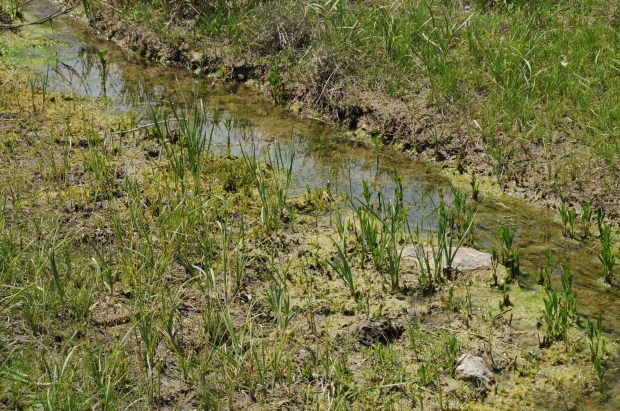
A family of onions
Fire ring

Look closely at the red ants busy tending their home

I will go back to the prairie. The link to the Fort Worth Prairie Park site and Great Plains Restoration Council is https://gprc.org/our-work/fort-worth-prairie-park/.

I am connected to all things. There is no “other.”

All photographs by Jack Matthews.

14 Comments

Filed under Adventure, Field Log, Flying Hat Ranch, Life in Balance, Uncategorized

Late, Damp Fall Day at the Field

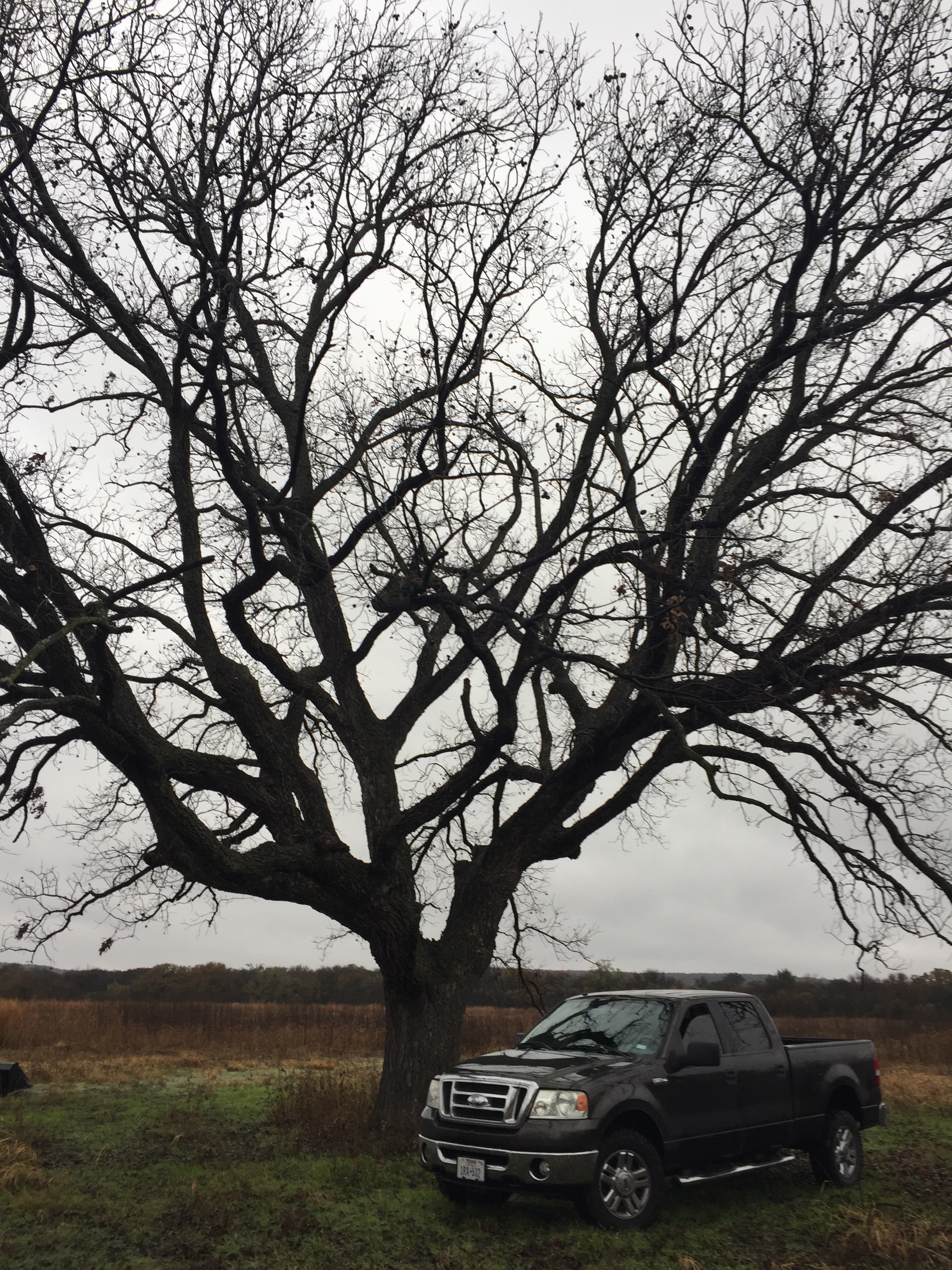
Light rain has fallen in the field. Late fall temperature is 53 degrees, the grass remains green, but most of the pasture has gone into dormancy.  The pecan tree has shed leaves and pecans.

I like the lane shown in the photograph above. Going east on the lane I leave the field, but coming towards me with the camera, I leave behind the traffic on the state highway and enter a different world of green lanes and a tractor that needs its engine turned over.

4 Comments

Filed under Bluestem Field Log, Christmas, Field Log, Flying Hat Ranch, Life in Balance, Pecan

Xeriscaping

Your Guide to Planning Drought Friendly Landscaping

By Mary Sauer

[I now have a house in the city and may apply these techniques to the landscape.  I still have 29 acres of farmland and pasture near Mingus, Texas.  Check out the links to this company.  Full disclosure:  I am not getting any monetary compensation from re-publishing Mary Sauer’s article.  I find it helpful in saving water and, as Frank Waters wrote, “living with the land” respectfully.]

When you live in an area prone to droughts, the decisions you make regarding your landscaping can either promote water conservation and sustainable living or they can promote water waste. Specific areas of the country experience months of dry weather, with very little rain providing natural hydration for lawns and landscaping elements. The good news is, there are plenty of attractive and ecologically responsible landscaping options that are perfect for areas prone to droughts.

Image

Alternatives to Lawns of Green

One of the biggest challenges faced in areas that experience droughts is finding an alternative to lawns comprised largely of grass. Green lawns require a large amount of water on a daily basis. In some areas of the country, city governments are placing strict regulations on the amount of space that can be occupied by grass in hopes of lessening water waste and promoting more sustainable landscaping.

Xeriscaping is a popular landscaping practice that completely eliminates landscaping elements that require water beyond what their environment naturally provides. These options include the use of stones, ornamental grass, native flowers, succulents, and plants with a reputation for surviving with very little maintenance.

When it comes to landscaping, stones are as drought friendly as it gets. Obviously, stones require no water. With the countless shape, color, and size options occurring in nature, it is easy to create a beautiful and visually interesting space. Additionally, with a little research, you should be able to find stones that have been harvested with minimal negative impact on their environment.

Certain flowers and plants need very little water to thrive in areas prone to drought. The simplest place to start is with flowers that occur naturally in your region. Native flowers will thrive, even during a drought, and won’t require you to indulge in wasteful water use habits to keep them alive. One of our favorites is the Lewisia Cotyledon, or Sunset Strain, a dainty, pink flower with evergreen foliage that is native to California and Oregon. Certain ornamental grasses also do very well during droughts, and many are larger enough to take the place of thirsty shrubs. Lastly, succulents actually do best with just a small amount of water, and are ideal for use in areas that regularly deal with droughts.

Image

Use Grey Water to Hydrate Your Landscaping

If you do have certain elements in your landscaping that require regular hydrating, there are alternative methods for watering that are less wasteful. Grey water is any water that you are already using during your day-to-day life that you are reusing a second time. Consider catching the water used while showering, washing dishes, or doing laundry and reusing it to water your lawn.

 At Modernize, we are passionate about empowering homeowners like you to find beautiful yet sustainable ways to create a home that truly captures your personality and meets your needs. Just because you live in a region that receives very little rain doesn’t mean you have to give up on having a beautiful lawn—by using these tips, your new landscaping will be more unique and exotic than ever before!

 

4 Comments

Filed under Flying Hat Ranch, Life in Balance, Plants and Shrubs

Water in Far Field

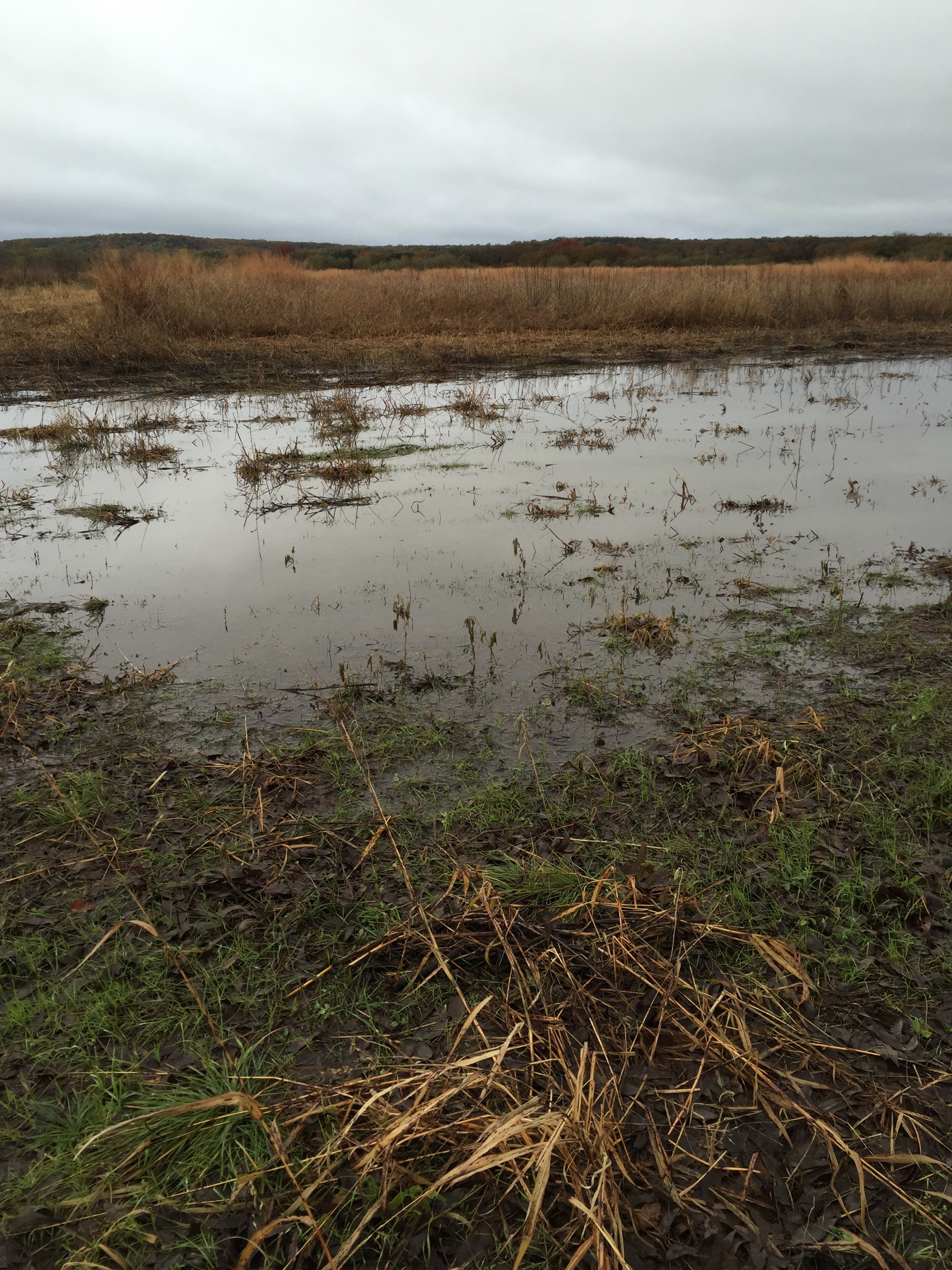
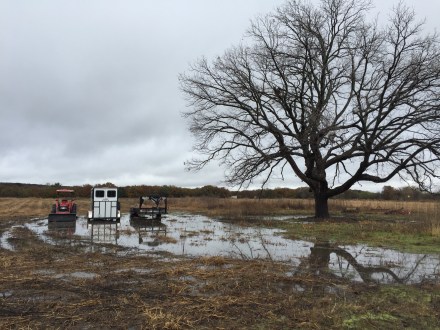
Central Texas in the last week had rain.  My Far Field (shown in photograph above) shows a marshy area on the south section of the field.  The rains this week have broken the record for the wettest November in the Fort Worth area.

I walked and viewed the marshy area yesterday, parking my F-250 along State Highway 108 because the road into Far Field lacked gravel or cliche for pavement.  The temperature was 44 degrees F., wind calm, and sky cloudy.  Crows inevitably cawed, killdeers pipped, and some type of finch perched and chirped in the pecan tree above me.  I had intended to cut down a tree that was blocking the gate, but the low temperature and wetness forced me back into the pickup, my axe never unloaded from the cabin.

I retired from teaching college in June of this year, having either been in college or teaching for fifty-five years.  Shortly after retirement, I sold the front part of the farm, including the house, barns, stables and arena, keeping the Far Field of 29.151 acres.  Moving into Fort Worth, some sixty miles to the east, I took an apartment that is adjacent to the Trinity River.  Since in the apartment, I have seen owls, falcons, hawks, Sandhill Cranes, and numerous species of waterfowl that fly along the river, turning as a flock at the bends of the river.  Wild turkeys inhabit a ranch across the river from where I live and I have seen a seven-member troop of them walk up into the homes and yards when it rained heavily last week.

My Far Field qualified for agricultural use.  It consists of native grasses and various inserts of Johnson grass and other “invasive” species.  The field is still wet today and will remain so for a couple of weeks.  To what use shall I put the field?  Cattle grazing, crops for wildlife?  I am not sure, but the decision  “to do” something with the soil has raised some philosophical questions about my behavior towards the land.  For now, the field is wet, the crows and hawks perch on the only tree in the field.  Nestled in the field grasses and burrowing into the earth are skunks and voles.  So, leaving it alone for now is practical and respectful.

IMG_0503


7 Comments

Filed under Flying Hat Ranch, Life in Balance

Rain at Flying Hat in central Texas

Within the last month, rain fell on central Texas and upon my place, Flying Hat Ranch, or ranchito.  My former professor, Donald Worcester of TCU, used to say of his 142 acres near Fort Worth was a “ranchito,” due to its size and to the calculations of John Wesley Powell, noted surveyor of the West in the nineteenth century, who opined that a ranch in the semi-arid West should be at least 2,560 acres to run cattle and attain self-sufficient for a family.  So, notwithstanding a definition of terms, my 53 acre ranchito has received rain.  And, we are forecast for more rain starting at 4:00 p.m. today.

Since the flourishing of grass and trees this spring, I have observed large eruptions of milkweed.  More milkweed has grown about the pastures and especially the roadways, such as Texas State Highways 16 and 114, than I have ever seen since moving here in 2000.  In certain places, where I would seasonally see ten blossoms of milkweed, I now see a hundred.  Monarch butterflies, however, have not passed by here.  I see one or two in my grove, but no more than that–for now.

Rain and milkweed abound.  Yet, there is a different caliber of field news.  Worms have destroyed many elm trees on the ranchito.  I saw an elm tree covered in worm strands down by the grove, encased like a cocoon.  I have not counted the loss precisely, but my elm tree loss is between fifty and a hundred trees.  Some elms survived the worm infestation and remain hardy; others have partially damaged limbs.  I shall bring out the axe and chainsaw to harvest the dead trees.

I am closing with a video of my petting a wild, juvenile cottontail rabbit.  I have seen its parents in the tall grass, not far from where I rescued the roadrunner from the water trough.  Yes, I know as you do, cycles of life and death on ranches, farms, cities, and this good earth.  And, lately, rain has fallen.

4 Comments

Filed under Flying Hat Ranch, Salt Creek, Texas

Spring at Flying Hat: The Constant and the Transient

   It is spring at my place, Flying Hat Ranch or Ranchito, and I am not sad, even though it is said, “April is the cruelest month.”  I understand the sadness and lament, but yesterday I took several photographs of the constant and the transient forms on Flying Hat.
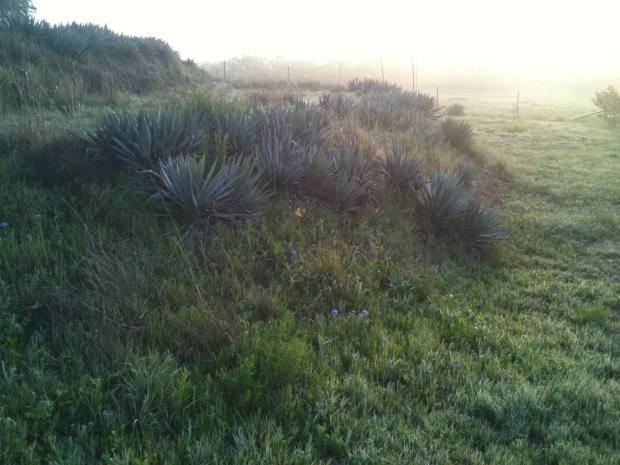
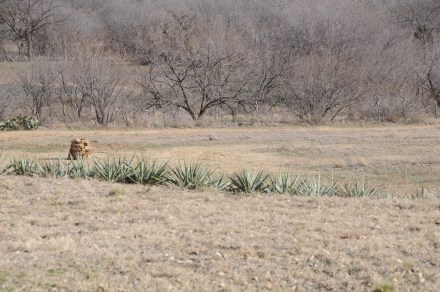
The constants are the live oaks and yucca.  You see them, they seem always present, but the blossoms of plants erupt, then fade out.  They are the “transients.”

Yet, as the blossoms drop off, transient as they are, I know their roots and stems remain.  That is constant, and given another year about this earth, I will see them again.

Transient, though I may be.


4 Comments

Filed under Flying Hat Ranch, Life in Balance

Sunlight in stalls

As I finished throwing hay to Star, I saw this sunlight in stalls and thought it artful.

20130914-131628.jpg

8 Comments

Filed under Flying Hat Ranch, Horses

Yucca morning

Pale-leaf Yucca on Terraces with Fog, Flying Hat Ranchito, March 30, 2012

In walking down to the stables to feed Star this morning, I paused and looked towards the east, the rising sun flared by fog, and I shot this photograph of yucca, fog, dew and a couple of blossoms of verbena (click the photograph to enlarge). Three terraces gird the ranch house and each level has families of yucca that hold the soil about the landscape and prosper in well-drained soil for their health.

The temperature briefly holds in the middle 60s as I look at this scene. I dwell on it as I write this post and think of the moisture upon green grasses and yucca.  So different from this time last year as fires broke out across Texas, consuming dried grasses, brittle brush and wildlife unable to flee.  Today is different, substantially so, with recent rains and low temperatures. The fire ban is off for Erath County. I see an abundance of wildflowers and I inhale the air suffused with humidity and perfumed with fresh grasses.

This ‘yucca morning’ will last in my senses for a long, long time, and I possessively want the moment to stand still as I look east towards the rising sun, flared by fog, that shall warm the day and send fresh grass shoots skyward.

14 Comments

Filed under Flying Hat Ranch, Life in Balance, Plants and Shrubs, Succulents

Wind and flag football

URGENT – WEATHER MESSAGE NATIONAL WEATHER SERVICE FORT WORTH TX 206 PM CST SUN JAN 22 2012 …A WIND ADVISORY IS IN EFFECT FOR MOST OF NORTH TEXAS THROUGH 7 PM… .A POTENT UPPER LEVEL SYSTEM MOVING NORTH OF THE REGION IS SPREADING VERY STRONG AND GUSTY WINDS FROM WEST TO EAST ACROSS THE REGION. WEST TO SOUTHWEST WINDS WILL BE SUSTAINED FROM 20 TO 35 MPH WITH GUSTS OF 40 TO 50 MPH. THE STRONGEST WINDS WILL OCCUR IN THE AREA GENERALLY ALONG AND WEST OF INTERSTATE 35/35E.

I read the weather forecast last night, fearing an outbreak of fire with such oxygen rushing through dry brush and grass.  From the back porch, I see eight miles to the Cross Timbers hills and ridge lines toward Stephenville and Hannibal.  Neither smoke nor fire can be seen, only dust and the affect of wind.

I seek to take photographs that will reflect the aridity, the drought conditions as well as today’s fierce wind.  As I have written before in another post, if you wait for the wind to die down or cease in Texas to work, you will never get anything done.  True.  A good pair of sunglasses and sunscreen provide protection as well as a sense of humor to work and play here in central West Texas.  To play hard and lose one’s self, one forgets the wind.

In the 1970s, at holidays with family in the Panhandle, near Canyon, Texas, we played football after dinner (served at noon), and we played with windy conditions.  Across a large front yard providing turf for, say, forty yards of a playing field, we had to compensate for the strong prevailing winds out of the southwest or northwest — low, short passes.  The teams were co-ed and young wives and female cousins ran and fought for every yard along side their husbands and relatives — one female cousin became a colonel in the Marines.  Touch football rules prevailed, sometimes flag football with a bandanna hanging out of our blue jeans.  The wind begone, we played anyway.  Of course, we forgot about the cold and wind as we played together at Thanksgiving, Christmas and once in the summer.

Here at the ranchito, the wind blows today, but there are no contests in the front yard, only birds tucked fast in the branches of the live oaks or nestled in pasture grass.  Here are some photos I took about an hour ago.

This view is towards the southwest, showing the dust in the distance and the leafless trees.

***

Wind whipping grass blades on terrace.

***

View towards Lilly's rock cairn and the Blue farm beyond the mesquite tree line.

***

Looking towards the west.

***

From the back terrace, I shot a thirty-second video of the landscape to the southeast.  Not much excitement in the footage, but it’s the middle of Winter.

16 Comments

Filed under Flying Hat Ranch, Recollections 1966-1990

Clouds with feed bin

I have kept this late evening photograph of the feed bin with clouds for several weeks. I like the symmetry of the tree line, feed bin, hills and clouds. The feed bin I bought at Gore Bros. Feed Store in Comanche, Texas, a store my family had patronized for fifty years. When it was said at the breakfast table that we were going to Comanche to pick up some “cow cake,” it was understood that Gore Bros. was the destination. Most of my ranch equipment has been purchased from their ranch supplies area, i.e., feed bins, water troughs, hay racks. The lime green color of the feed bin, the dark grasses and the white clouds compose a very simple photograph that I think is appealing. Of course, as we all know, there is no accounting for taste.

20111022-124032.jpg

9 Comments

Filed under Flying Hat Ranch