Category Archives: Field Log

Field Log 5/30/2010 (Coneflowers)

North Erath County, Texas, Lat 32.43 N, Long -98.36 W, elev. 1,086 ft. Turkey Creek Quad.

General Log

Weather has been hot, 90 deg. F. plus, last few days.  Air is almost completely calm.  Some slight breeze from the south.

Grass is drying up, browning.  Seeds are become ripe and falling off.

This week, Shiney goes for sale at Shawnee, Oklahoma.  We leave on Thursday, come back on Sunday.  The most important objective is guarantee that Shiney will have a good home, regardless of the auction price.

F-250 in shop for air conditioner repair.  Have been looking at new and used F-250s to purchase.  The trucks have been repaired frequently in the last week, ranging from oil pumps to the F-150 bearings and now the air conditioner.

Barn Swallows and Feeding Wild Birds by Hand (A Method Observed)

In the evening, Barn swallows (Hirundo rustica) encircle our ranch house on Poprock Hill and feed on mosquitoes and flies.  A nest of barn swallows have hatched fledglings on our back porch.  Notice the characteristic sharply-notched tail.  This photograph was taken in the morning.  If I sit quietly on the porch, the swallows will angle under the eve of the porch and fly within three or four feet of where I am sitting.  Last year, a resident wren that fed about the porch landed on my hat and pecked around on my hat for about a minute until it flew off.   I will set the camera up for remote operation and see if I can photograph the wren on my hat.  When I lived in Paris, I was always intrigued by the young man at Notre Dame that would sit in a chair about the sidewalk and hedge and have the sparrows feed out of his hand.  The method he used was to look away from the birds and extend his arm back from his body (like in handing off a baton) so that the birds did not see his eyes or mouth (specific threat areas for birds).  The young man was neither monk nor priest, but a lad that loved birds.
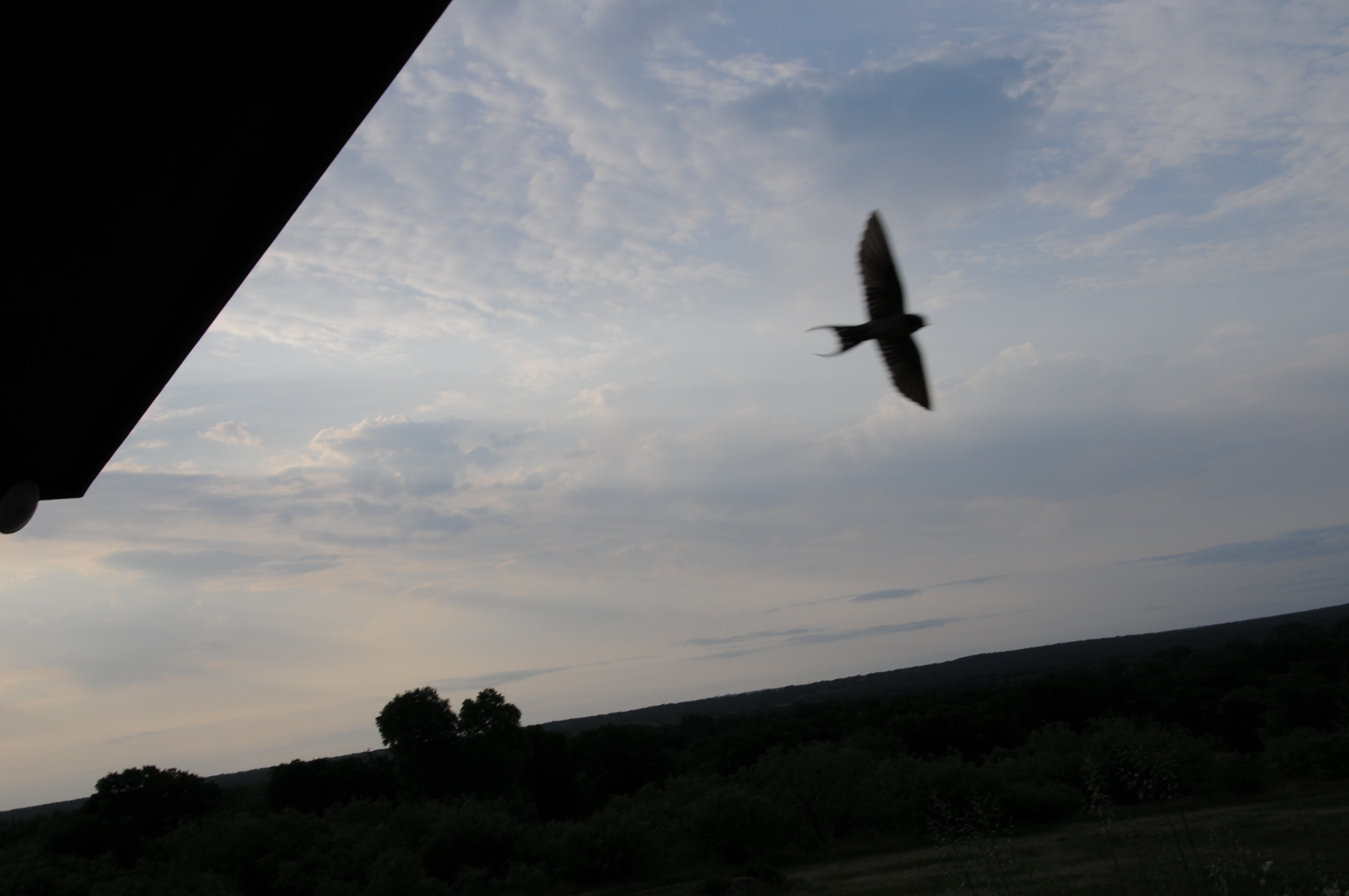
Barn Swallow in Flight, Photo by J. Matthews

Wildflower Photography and Hoe Downing with Bull Nettle (Not a Dance)

On May 23, 2010, Brenda and I drove the F-150 to Pecan Tree Pasture for her to photograph wild flowers and for me to hoe down Bull Nettle.
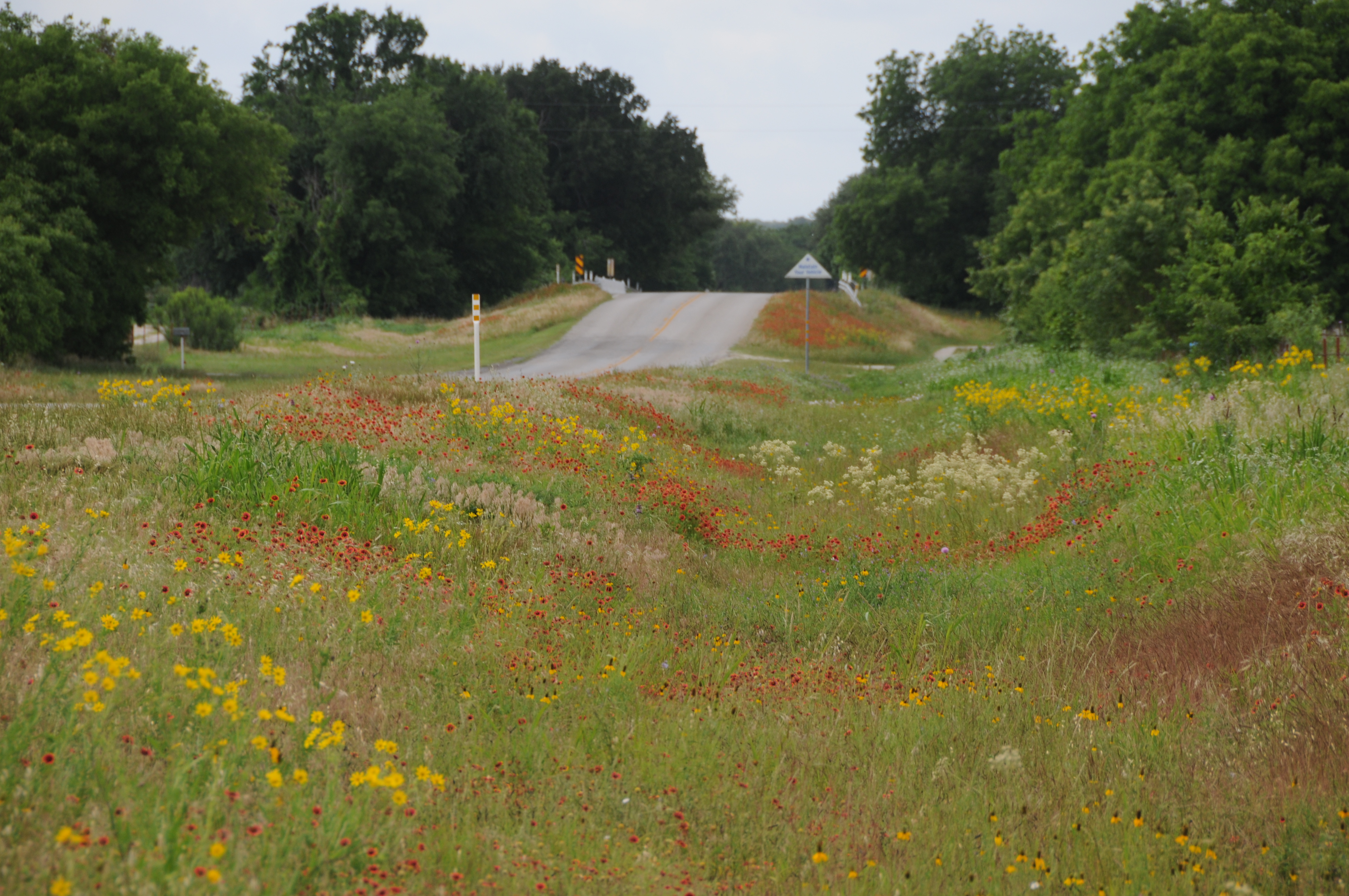
Wild Flowers alongside SH 108 at Gate 3 Entrance, Photo by B. Matthews
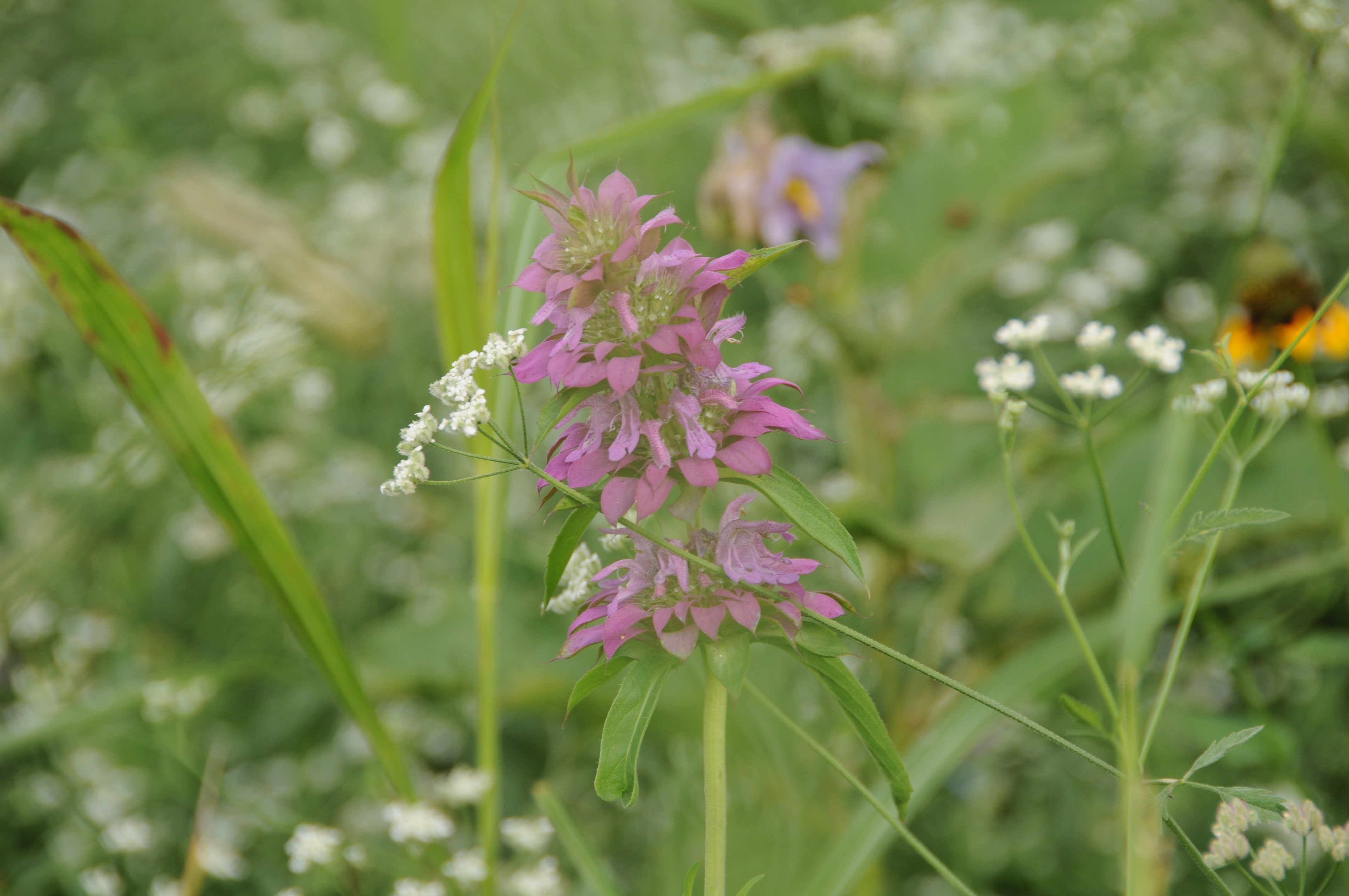
Lemon Horsemint, Photo by B. Matthews

This blossoming plant is the Lemon horsemint (Monarda citriodora Cerv. ex Lag.)  It is also known as the Lemon beebalm, Horsemint, Purple horsemint or Plains horsemint.  Several stands of this plant are about the place.  Over near the pecan tree, a few blossoms are present.  The biggest stand of Lemon horsemint is back up by the barn, about an old hearth location that goes back for several decades, perhaps prehistoric.  The Lemon horsemint is attractive to butterflies and bees.
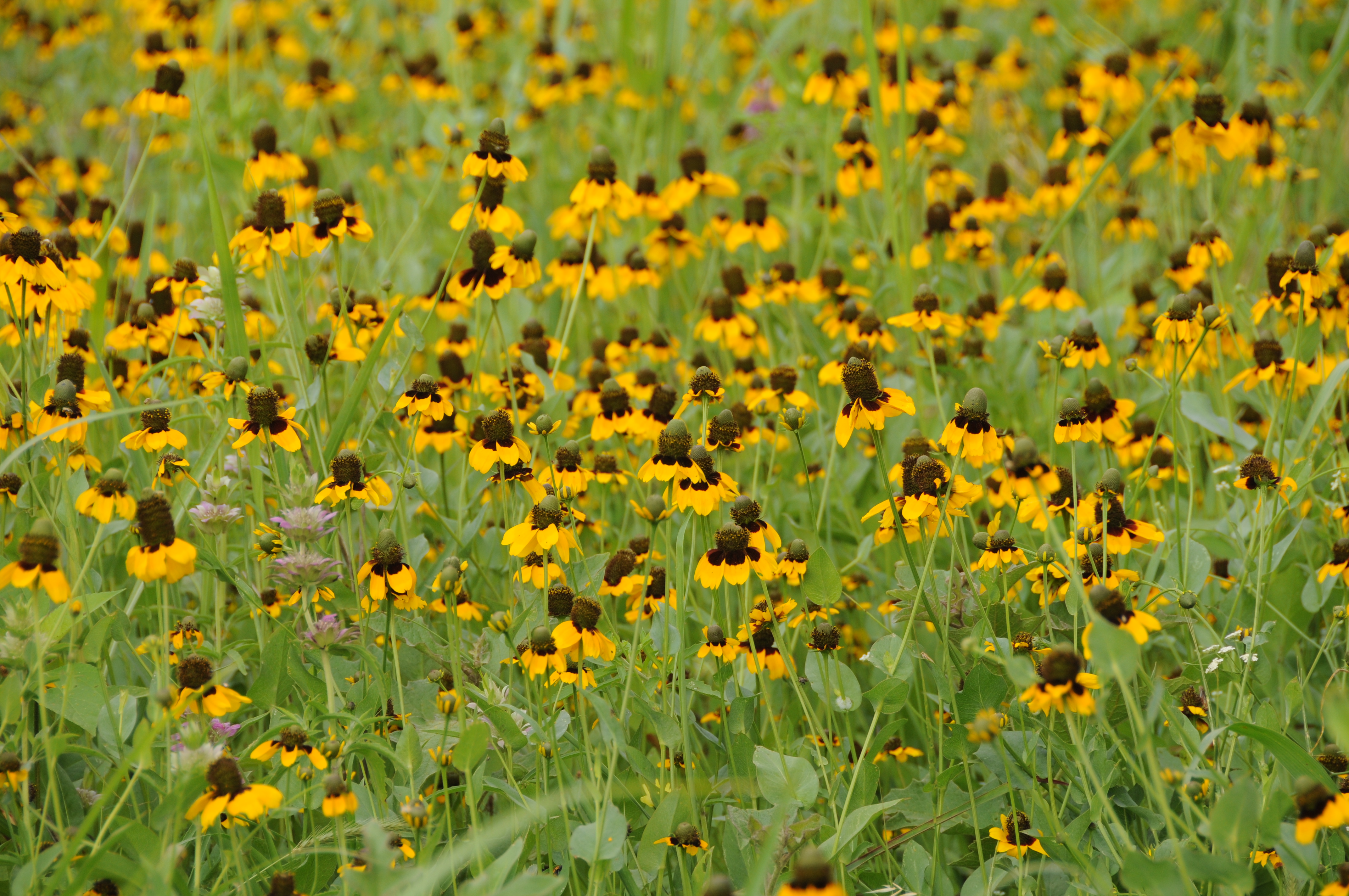
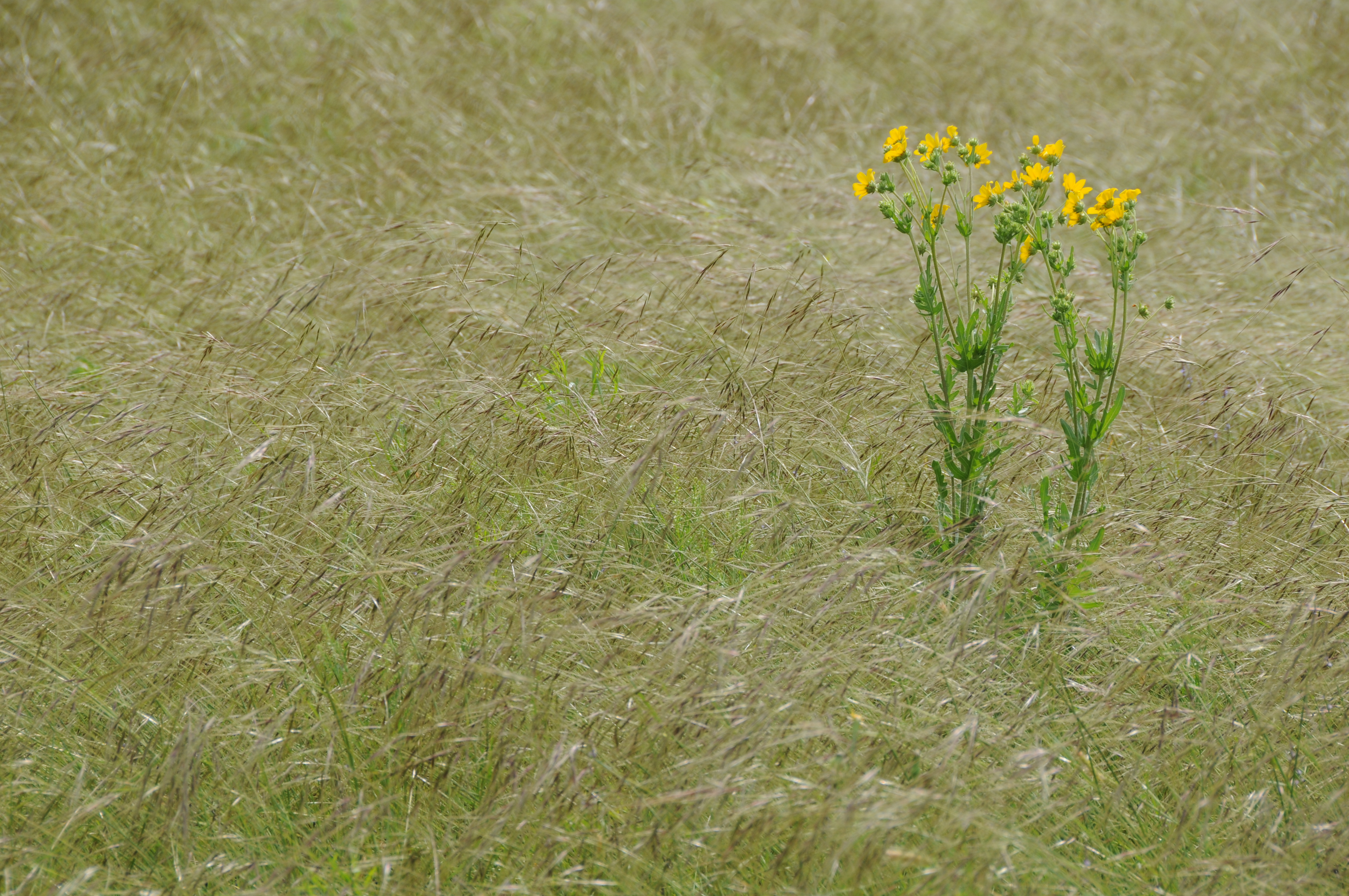
Clasping Coneflower, Photo by B. Matthews

This yellow-leafed blossom is the Clasping Coneflower (Dracopis amplexicaulis).  It is also know as Clasping-leaf Coneflower.  It differs from the Black-eyed Susan and Mexican Hat.  This particular species has medicinal qualities: the Cherokee used the  juice of root for earache and a tea, made from the leaves, was used as a tonic and diuretic.

Unidentified Plant and Blossom (Now Identified)
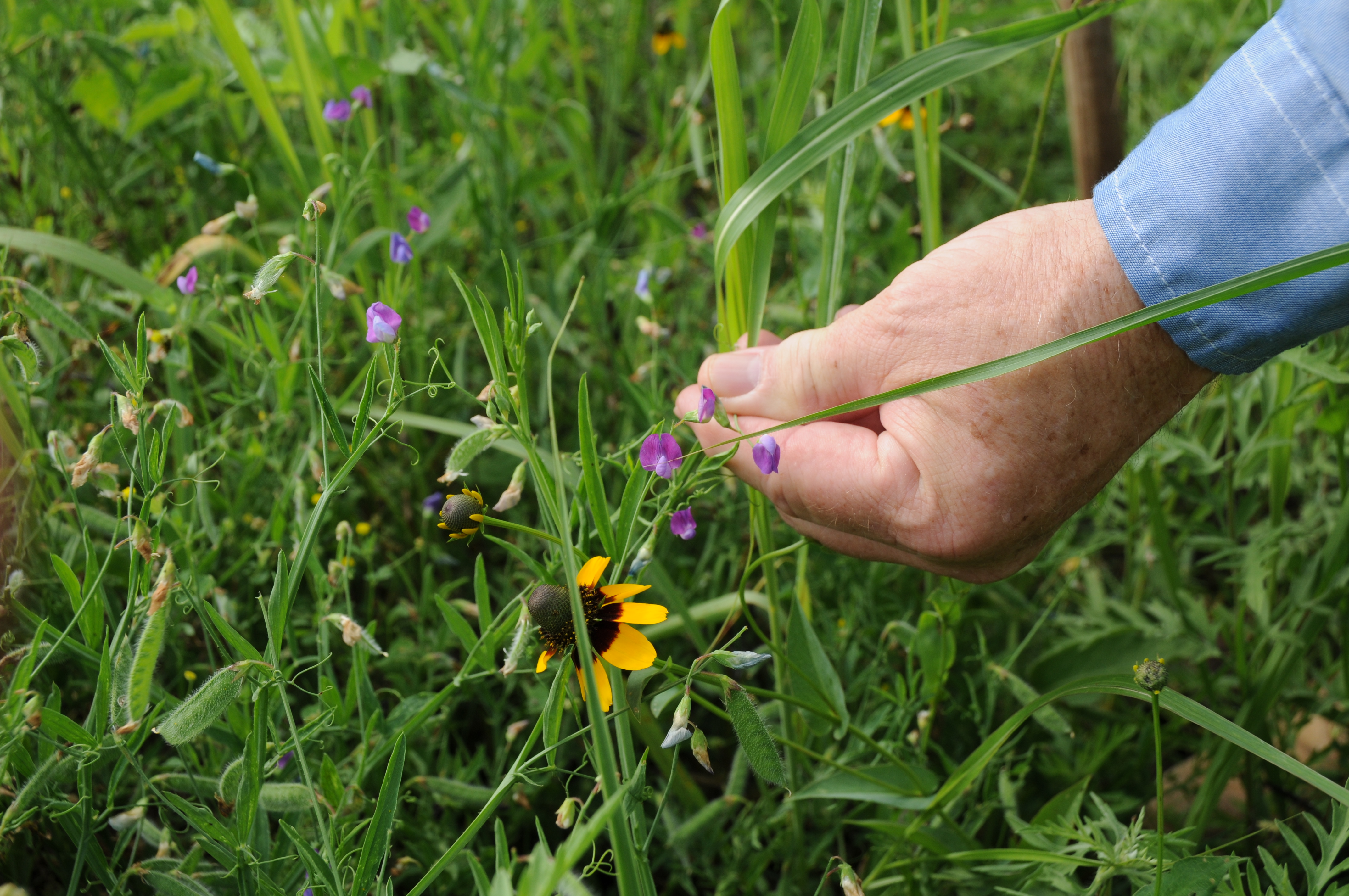
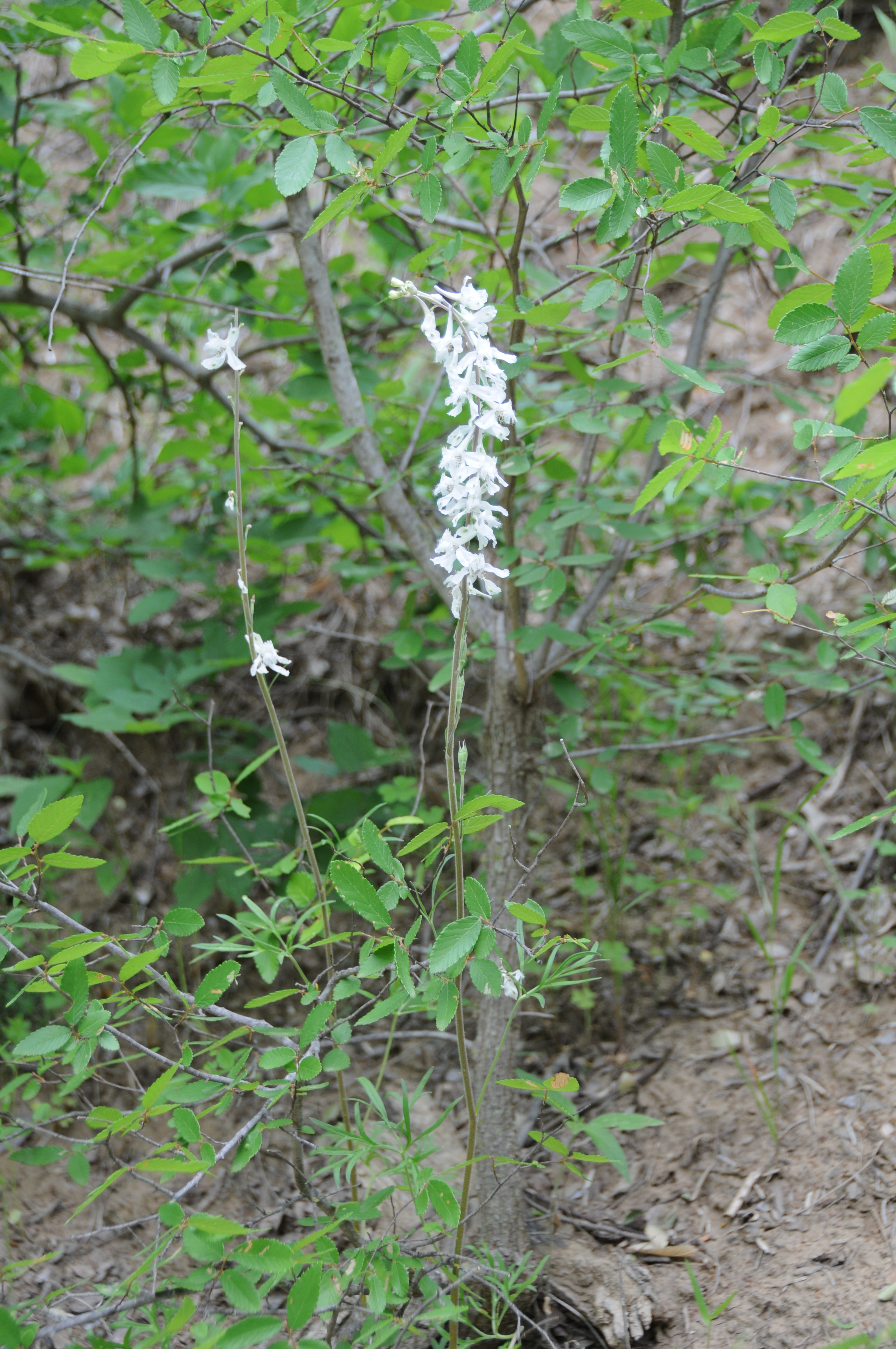
Bush Vetchling or Manystem Pea, Photo by B. Matthews

Here we have an unidentified plant and blossom.  (See update for identification in next paragraph.)  I first thought it a Skull-cap (Scutellaria drummondii), but I am not sure.  Like my previous analysis regarding the Mariposa and Wine-cup, I must go back over to the pecan tree area and re-photograph and take a sample of the full plant, not merely the blossom.  One of the interesting aspects of posting this photograph and determining genus and species is that I look more closely at the photograph to make sure I get it right, and upon looking closer at the photograph, I see bean pods that I did not notice while I was in the field — see if you can spot the pods.

Update:  The unidentified plant and blossom is the Bush Vetchling or Manystem Pea from the Lathyrus genus, more than likely the species montanus or nissolia.  The Lady Bird Johnson Wildlife Center lists several species including polymorphus and brachycalyx ssp. zionis. Thank you, Grethe Bachmann of Thrya Blog and Flora and Fauna Blog for the identification.  I never would have found it since it does not appear the two general sources of plants I use for identification.  You can go to Grethe’s blogs by linkage from my blogroll on my Homepage.

Texas Prickly Pear, Photo by B. Matthews

This is the blossom of the Texas Prickly Pear (Opuntia engelmannii var. lindheimeri).  The blossoms are especially brilliant.
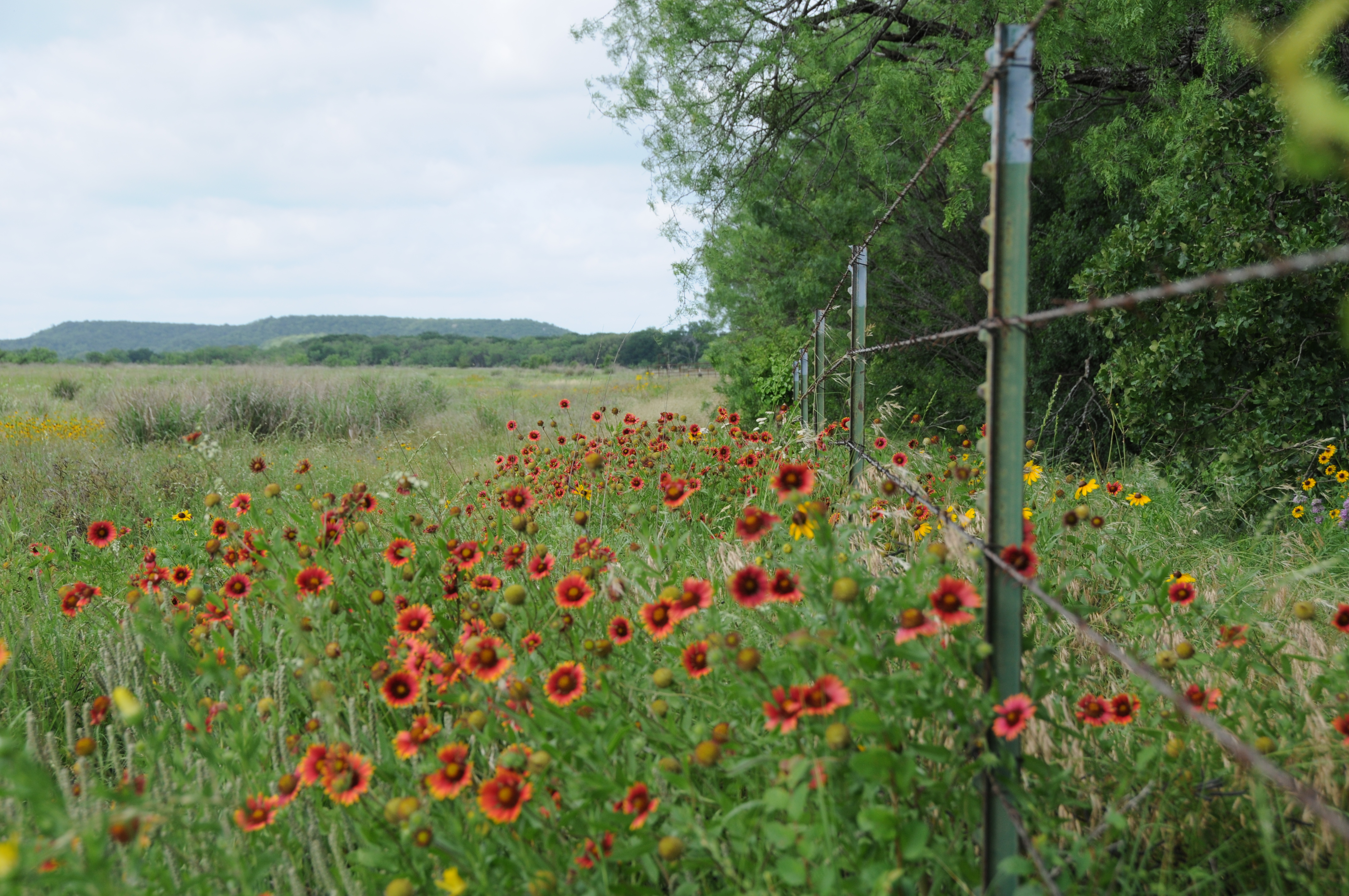
Indian Blankets with Shelton Rock Hills, Photo by B. Matthews

This is a stand of Indian Blankets with the Shelton Rock Hills (north and south) in the background.  The direction of the camera is west.  To the right (north) is The Grove and Salt Creek.

With this hot weather, the horses go back to the stables for shade and water.  I attend to them at about 6:00 p.m. everyday.
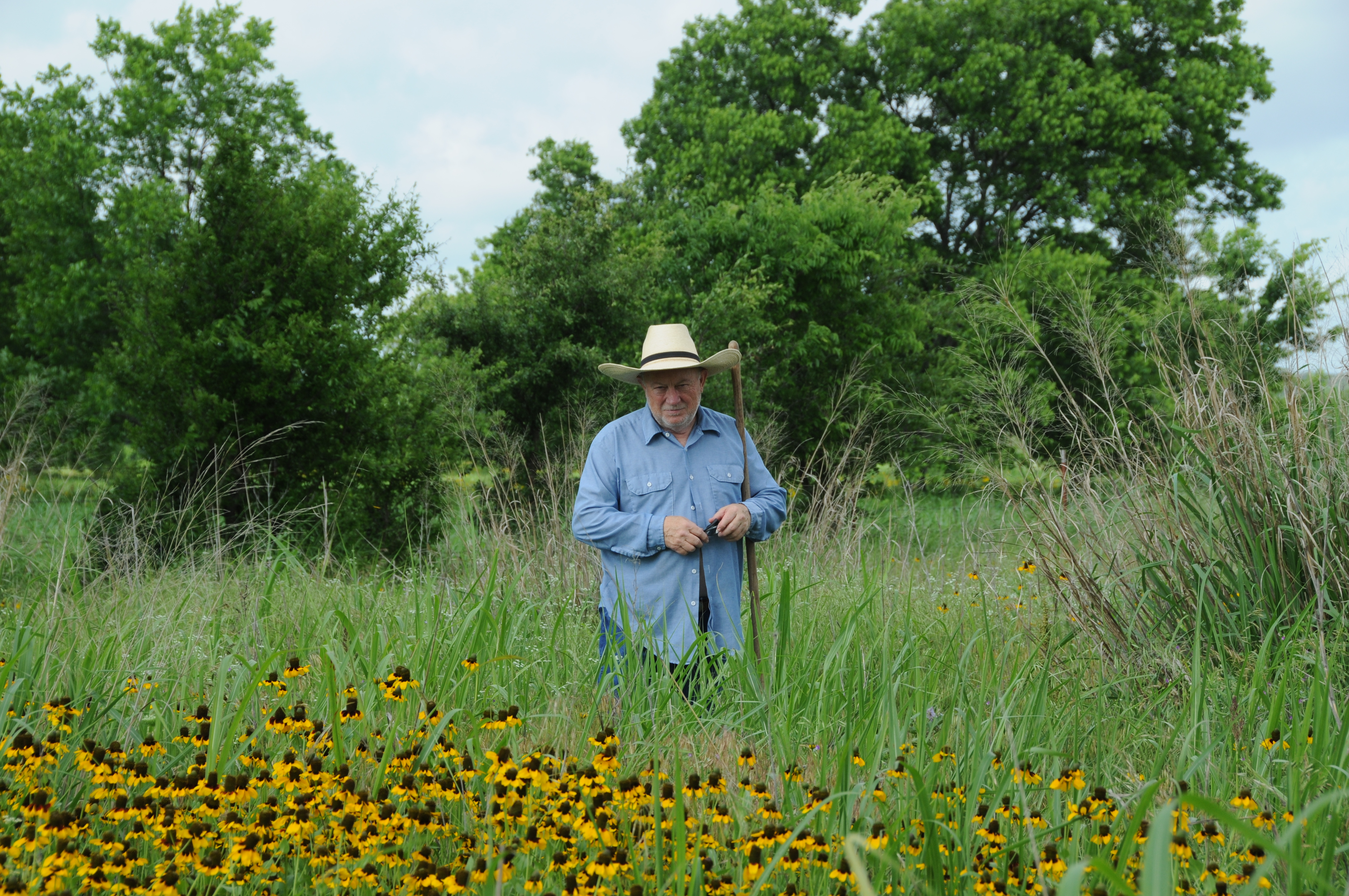
Jack Matthews with Hoe and Clasping Coneflower (2010), Photo by B. Matthews

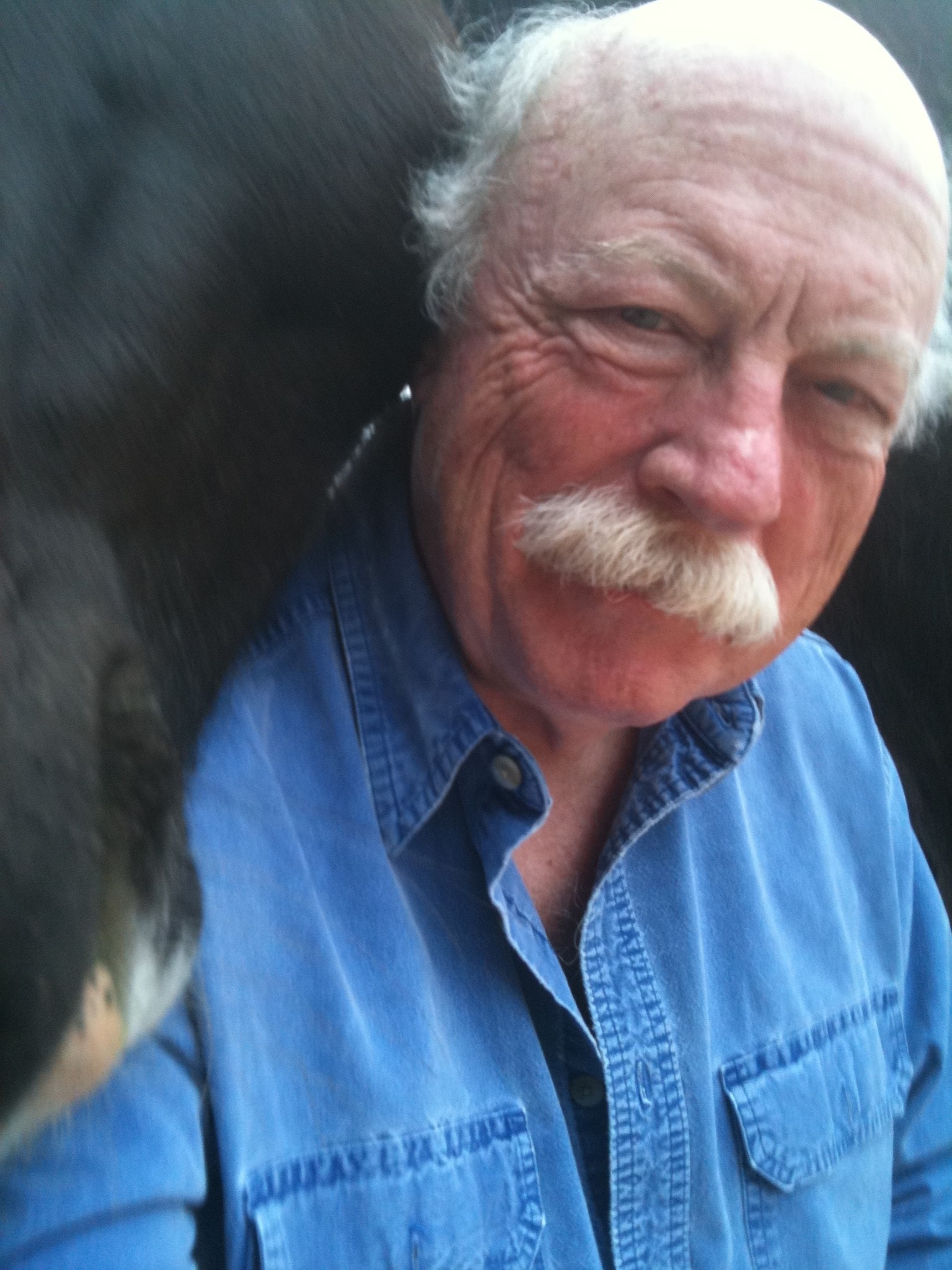
I am actually in a much, much better mood than what this photograph belies.  In the pasture, I’ve been hoeing a few Bull Nettle down and it is rather hot, late in the morning.  Note the large stand of Big Bluestem grass to my left.  I’ve been careful to keep the Big Bluestem from getting shredded for several years and now it grows higher than me in the field.  Please also note the tool on my left side.  That is a hoe.  Not machinery, a manual tool.  Kinda Luddite-ish, don’t you think?

15 Comments

Filed under Field Log, Plants and Shrubs

Field Log 5/21/2010 Native Prairie Grass Restoration

North Erath County, Texas, Lat 32.43 N, Long -98.36 W, elev. 1,086 ft.  Turkey Creek Quad.

Early this spring I planted a variety of native grasses in Pecan Tree and Poprock Hill Pastures.  Some sprouts have come up and the native wild flower mix I integrated into the seed broadcast has yielded flowers.  I have committed to minimum impact farming and stock-tending on the land.  One principle is to allow native prairie grasses to flourish and reseed areas that are sparse.  A second principle is to manually work the land, where possible, such as using the garden hoe, grubbing hoe, shovel and pick rather than machinery–minimum use of the tractor.

To work manually, I hoed six acres, cutting Bull Nettle with a garden hoe.  Approximately 300 nettle scooped out.

Poprock Hill Pasture with Soil Prepared for Reseeding

Pecan Tree Pasture with Native Grass

I still have some nettle to remove, but two-thirds has been eradicated by the hoe–no herbicides used.  If I had used the recommended herbicides, I would have had to keep livestock off the pasture for several weeks plus purchase the herbicides and spray tank.  As it was, when I hoed, I discovered areas in the 35 acre pasture that could use a disc plow to aerate and some natural fertilizer for enriching the soil.  If I had not been close to the ground with my hoe, I would not have seen the land profoundly.

5 Comments

Filed under Field Log

Field Log 5/15/2010 (Wildlife Migration and High Field Fence)

North Erath County, Texas, Lat 32.43 N, Long -98.36 W, elev. 1,086 ft.  Turkey Creek Quad.

Talked by phone with Jimmie Hardin in Aubrey, Texas.  Shiney the colt is progressing along very well.  “He’s a boy and doing just fine,” she said.

Sweet Hija was inseminated on Thursday.  Will pick her up today.

Rain yesterday: 0.9 inches.

This morning at 5:10 a.m. I heard owl and turkey.  Scissor-tailed flycatchers call out vigorously just before daybreak.

Weather pattern unusual.  Finfrock at NBC-DFW says the dynamic is a cold front semi-stalled over Texas with jet stream winds blowing one way, surface winds the other.  Pattern has been with us for three days–since Wednesday.

Question the high fencing built by ranches.  What does this do to migratory patterns?  Celebrity Ranch has high fencing.  Factor this in for disturbance of wildlife migration.

High Field Fence by LE Fence Company, Waco, Texas

High field fence as pictured above can prevent migratory wildlife from crossing dangerous roads.  Use it to alter, without completely destroying, trails.  But, how?  Consult the corridor crew over in New Mexico.

In the nineteenth century, Glidden sold fence in San Antonio, Texas, with the advertisement for barbed wire: “Lighter than air, stronger than whiskey and cheaper than dirt!”  Cattle could be micro-managed within the barbed-wire pastures.

Do we have any significant corridors for wildlife migration in Texas that are specially designated?

4 Comments

Filed under Field Log

Field Log 5/10/2010 (Kiowa Good Luck, The Mariposa) [Corrected]

North Erath County, Texas, 32.43 lat., -98.36 long. Elev. 1,086 ft.  Turkey Creek Quad.

All photographs below may be enlarged with a click of the mouse for maximum detail.

Yesterday, I hiked into the grove.  Cool temperatures in the 60s F.  Light rain.  Saw several blooms of plants I have yet to identify.

This morning, drove to Pecan Tree Pasture to photograph blossoming plants for identification and cut mesquite.  Wind is high at 25 m.p.h. plus, sustained.  Red Flag warnings are posted on the MSN Weather link for counties west of us (Upper Concho River area) until 8:00 p.m.

Green-flowered Milkweed (Asclepias asperula), May 2010

Plant Identification

This is the Green-flowered Milkweed (Asclepias asperula).  I saw only two clumps in the pasture.  Several butterflies and bees are on the flower.  The Monarch caterpillar feasts on blossoms.  It is toxic to animals and probably humans.  The pollen may also cause a rash or itch.  The Butterfly-weed (not this type pictured) is also known as the Pleurisy-root, known for medicinal value.

I was not aware of its toxicity.

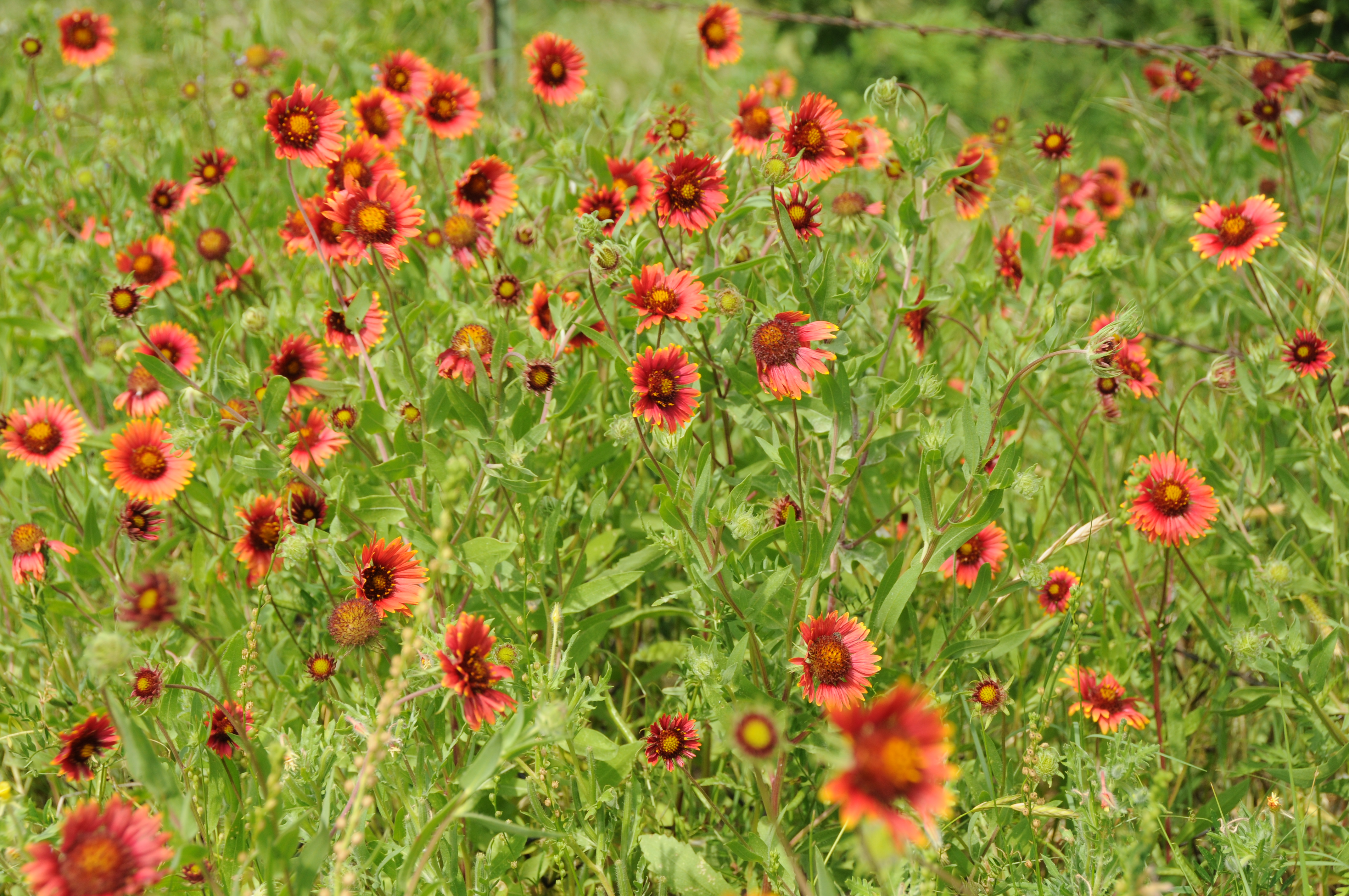
Indian Blanket (Gaillardia pulchella), May 2010

This is a stand of Indian Blanket (Gaillardia pulchella) next to the fence in the far pasture, the biggest stand of this species on the ranch.  Alongside State Highway 108, however, extensive Indian Blankets occur.  C. and L. Loughmiller, Texas Wildflowers, report that they have seen a forty-acre pasture completed covered in this one species.  Many years ago, I saw pastures in San Saba and Lampasas Counties covered in Indian Blanket.

Another name for Indian Blanket is Fire-Wheel.

It has medicinal qualities and the Kiowa considered its emergence good luck.  [See Lady Bird Johnson Wildflower Center notation, Indian Blanket.]

Prairie Larkspur (Delphinium virescens) Nutt., May 2010

This is the Prairie Larkspur (Delphinium virescens).  I found this along the banks of Salt Creek.  Again, this is a poisonous plant to animals and humans, although its seeds have medicinal properties.

In typing these plants and blossoms, I am finding more poisonous species than I imagined.  The horses leave the Larkspur and Milkweed alone, but I will be cautious during the fall when green grass is gone, as they might sample the plants.

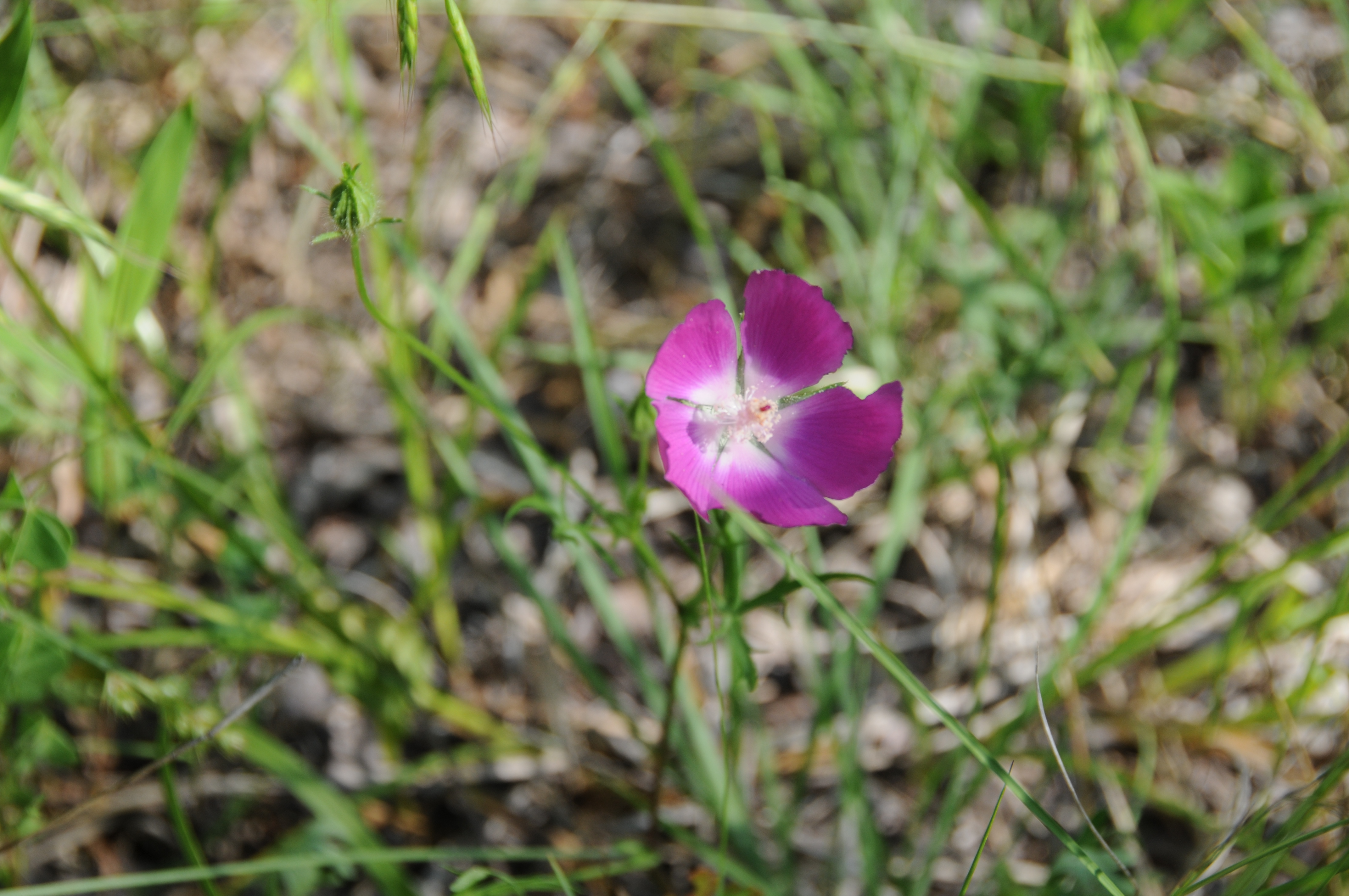
Wine Cup (Callirhoe digitata), May 2010, Photo 1

I am excited about this plant and blossom.  It is a delicate flower and there are only two stands of it on Flying Hat.  It is called Mariposa Lily or Sego Lily (Calochortus nuttallii).  One stand is along side the Pecan Tree Pasture road and the other is on the north side of The Grove.  I’m anxious to put out this photograph to show you, and I think I have it typed correctly, but later this evening when the wind calms down, I will go and verify.

The Mariposa Lily is considered among the most beautiful wildflowers in southwestern United States (Loughmiller, Texas Wildflowers). This Mariposa Lily on Flying Hat is probably the more common Mariposa, but a Desert Mariposa is quite rare in Texas.  Nonetheless, this flower is most delicate and I am excited we have two bunches of Mariposas.

Although I would be disappointed, if anyone can type this otherwise, please enter your rationale in the comment section.

Texas Groundsel (Ragwort), May 2010

We have beaucoup amount of Texas Groundsel (Ragwort, Senecio ampullaceus) along our pasture roads.  The yellow blossoms are striking and until I changed the range strategy, I would shred these plants rather early in the spring.  This year, however, I have let them thrive.

Horses

Sweet Hija is still at Equine Sports Medicine & Surgery, waiting for the right time to be inseminated.

Shiney is still in Aubrey, learning manners from Jimmie Hardin.

Cut fifteen (15) mesquite bushes from pasture and fence row.

Note: Please check back later today for a verification of the Mariposa.

Correction to Identification

Correction to post, 5/10/2010, 5:38 p.m.  The winds died down some and I went back to The Grove to verify the plant and blossom.  It is not a Mariposa Lily.  It is a Wine Cup (Callirhoe digitata). When I investigated the Wine Cup in the field, I did not separate its petals to count them, but rather relied on the photograph exclusively when I got back to the house.  Brenda looked at it and had a question about the stamens and pistil form, but did concur with my first conclusion.

When I went back down to the grove a few minutes ago, I separated the petals to determine if there were three or five or however many.  Three petals would be the Mariposa.

Wine Cup (Poppy Mallow), May 2010, Photo 2

As you can clearly see in the Photo 2 of Wine Cup (Poppy Mallow), there are five petals.  I also carefully delineated the stem structure and it seems to be C. involucrata (Nutt.) [Wills and Irwin, Roadside Flowers of Texas, p. 153-154].

This plant also goes by Finger poppy-mallow, Poppy mallow, Standing winecup, Wine cup or Winecup.

15 Comments

Filed under Field Log, Plants and Shrubs

Field Log 5/7/2010 (Shiney’s Little Stud Moments)

North Erath County, Texas, 32.43 lat., -98.36 long. Elev. 1,086 ft.  Turkey Creek Quad.

Shiners Fannin Pepto (Shiney) Winter 2009-2010

Shiney at Jimmie Hardin’s

Talked with Jimmie Hardin in Aubrey about Shiners Fannin Pepto’s (Shiney) training for manners on the ground and around mares and people.  She said that “Shiney is doing really great, settling down, but he does have his little stud moments.”  What a world I thought, “Little stud moments.”  I asked Brenda, my wife, the female equivalent of “little stud moment,” and she said, maybe for women, “It’s a meltdown.”

The first time at Jimmie Hardin’s, when we put Shiney in a corral, he was between two mares and they teased him over the fence.  He was really an excited colt with two mares on either side of him.  The mares pranced in front of him and he ran around in a prancing gait, light on his feet, even though he probably didn’t know what was going on.  He became lathered up and I fretted he was over-doing his excitement, but Jimmie said he would settle down once we left with his travel buddy, Star, the paint from our place that we put in the trailer to help ease Shiney’s trip to Aubrey, north of Denton.  Star munched on his alfalfa while watching his little friend, Shiney.

In conclusion, he is doing just fine despite his little stud moments.

Called up to Triangle Sales in Shawnee, Oklahoma.  They will have handlers to help me show him through the ring.  And, knowing he is a stud, they will not put him between two mares in the stall area.

Pecan Tree Pasture Mesquite Trimming

Indian Blanket flowers are blooming over in Pecan Tree Pasture.

Went over to Pecan Tree Pasture to lob off mesquites that were growing in the field.  The grass is up to my chest in places and I can detect large animals–deer or wild boar–that have lain in the grass.

Yahoo Runs Amuck

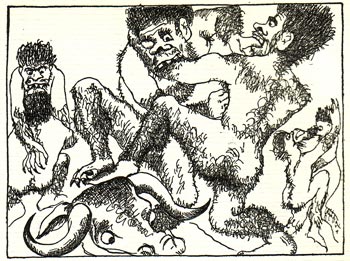
While cutting mesquite, some yahoo drove through my gate, wanting to inquire about the trailer my neighbors have for sale.  The yahoo immediately drove off the pasture road and started coming toward me in his grey, F-250 pickup, trampling grass I wanted to let seed and grow higher.  I was a hundred-yards away and frantically waved him to stop.  What the dickens was this yahoo doing coming into a native grass field in his pickup?

I walked briskly over to where he had stopped after coming some fifty yards into the native grass field, scattering birds.  I had my pruning shears in my hand, but my pistol (.45 cal.) was in the pickup some seventy-yards away.  I did not know what to say, but this is what happened.

Yahoos Fighting by Dudley Fitts (Illustrator)

“Yew goin’ git chiggers,” he squawked, referring to the high grass I had come through to stop his onslaught into the field.  An entirely inappropriate opening of discourse after entering posted property (Texas and Southwestern Cattle Raisers Association blue sign).  Was there some chigger alert I had missed on the morning news from Stooperville’s Fox News?

Holding my anger, I said, “You don’t need to be rolling into my field crushing the grasses.  It’ll take two months for the grass to come back up.  The trailer belongs to those people,” I nodded in the direction of the Hall Place.

He looked at me, put the truck in reverse, made an abrupt turn around and sped off, then hit high speed next to my water tank and out the gate and on down the highway towards Stephenville.  I paced off how many feet he had knocked down by coming into grassland that was two to four feet high, native species I had planted six-years ago: a total of one-hundred and twenty-five feet of off-road grass crushing.  It’ll rise up again in a few months with the rains.

I’ll close the gate next time to avoid a confrontation.  I was born and reared in Texas, but I am seeing more arrogant and ill-mannered  people than ever before.  I know yahoos are all around us, but jeez!, wouldn’t you think they could all hang out at another cracker barrel in a county over?

The field log is rather caustic today.  Sorry.

8 Comments

Filed under Field Log, Shiney (Shiners Fannin Pepto)

Field Log 4/21/2010 (Scissor-Tails, Gyp Indian Blanket)

North Erath County, Texas, 32.43 lat., -98.36 long. Elev. 1,086 ft.  Turkey Creek Quad.

Sweet Hija has been inseminated at Equine Sports Medicine and Surgery (ESMS) on the Brazos.  She’ll be held for a couple of days, says Dr. Semira Mancill, to check on an edema problem.  Then Sweet Hija can be released to come back for two weeks before her next checkup.  Hija has a paddock and is comfortable at ESMS.  But, she prefers to be back here to gallop full-speed from one end of the pasture to the other.  Last year, I was at the east gate in the pasture and for no apparent reason, she reared up and stood for six seconds on her hind legs, cocked her eye towards me–I was about five feet away–and held my gaze.  Powerful girl!  Then, abruptly, with a snort and a turn, galloped to the other end of the pasture, a quarter-mile away.  Did not slow down until she reached the end of the lane.  Gasp.

Shiney (Shiners Fannin Pepto) is doing well at Jimmie Hardin’s in Aubrey.  He’s slightly off his feed.  The farrier came to trim him yesterday.  Jimmie said that they had worked him out, groomed him and tied him for training purposes and he did just fine.  I worry about the little guy since he is so exuberant and eager to please, it seems.  Am still undecided about whether I will lead him at the sales ring in Shawnee or have someone else lead him.

I put out more corn today near the deer salt lick.  I saw hoof prints of at least one deer.  Track put down after the last rain of 2.0 inches.  I’ve still not sighted deer.

I’ve seen hummingbirds.  (Taosmesa tweets that she has “heard” hummingbirds at her home, but not seen any.)  Scissor-Tailed Flycatchers  (Muscivora forficata) abound about the fields.  From Peterson, they breed here in w. and s. Texas, e. New Mexico, se. Colorado and s. Nebraska.  He writes that their call is a repeated ka-leep with some stuttering.  I concur (course, who be me?) with the ka-leep, although I might add that the refrain-call is like this: keck, keck, …ka-leep. (Peterson mentions the keck.)  I have a rich and full life, and trying to replicate bird calls is good for me.

When I grew up in Brownwood, Texas, in the 1940s and 1950s, I remember the Scissor-Tailed Flycatchers sitting on power lines in front of our home, down towards Fourth Street and Brady Avenue.  The Scissor-Tails had the same refrain-call back then as they do now.  They would fly upwards in an arc when they called and then settle back down on the power line: keck, keck, …ka-leep, arcing, settling.  I can see it now in my mind and hear it, too.

Here on Flying Hat, over in the Pecan Tree Pasture, several Red-Winged Blackbirds (Agelaius phoeniceus) will take up temporary residence sometime in the spring and summer.  I do not shred the tall Johnson grass so that they can perch on the high stems and be spring-tossed by the wind.  That touch of red on their wings is so bright, so colorful.  I’ve not seen them yet, but I will, I know.

Dense Stand of Gyp Indian Blanket, April 21, 2010

There are several stands of this plant, Gyp Indian Blanket (Gaillardia multiceps).  It may also be (I am unsure) a Pincushion Daisy (Gaillardia suavis).  It loses its petals quickly, but the brownish-red center remains.  The bare flower stems stand 18 inches taller or more.  Looks like those science fiction movies with the scout coming into the basement where Grade B movie actors are hiding.

Gyp Indian Blanket Flower Bases, April 21, 2010

This spring I’ve seen more variety of wild flowers than any spring since we moved here in 2003.  A variety of primrose has emerged today down by the barn.

*   *   *

Rural Declamation Interscholastic League State Meet 1938, Gywn Parks, Front Row, First Person, Left to Right

My mother, Gywn, always had plants and birds.  Her backyard looked like a wonderland in the summer and her bird room held finches she had purchased as far away as Australia as well as canaries and types I can’t remember.  She even had a red hen that scratched through the debris on the floor.

In the photograph to the left, she is the first woman on the first row, left to right.  She was representing Bend, Texas, in the state Declamation contest in 1938.  She placed first and received The University Interscholastic League Award.  Gywn wrote letters and sent cards to her friends as a habit pattern throughout her years (1920-2003).  I have many of the letters from her friends.  Careful in her speech and prose, she was my first teacher at home.  She was small, but she was fierce, I have said about her.  The Irish in her would bring her to a quickening: I’ll get me a shallelagh if you don’t settle down, Jackson!

She died seven-years-ago today, April 21, 2003.  Her last words of advice were for me to have good friends and talk to them everyday.  R.I.P., Mom.  I’m taking good care of the land and plants and birds and wildlife:  a steward, like you taught me.  And, I have friends.

6 Comments

Filed under Bend Texas, Birds, Field Log, Horses, Plants and Shrubs

Field Focus Log 4/18/2010 (RT)

North Erath County, Texas, 32.43 lat., -98.36 long. Elev. 1,086 ft.  Turkey Creek Quad.

I have a focus for field activity today: scout on ranch and immediate surrounds for white-tailed deer.  Last sign of track for deer was over a month ago and since then, noise and brush-clearing from adjacent development has occurred.  All entries for Sage to Meadow will be as close to real time (RT) as possible.

7:05 a.m. CST: scan in grove and pasture for deer, daylight.  No sighting.  Seek track later today with corn distribution.  No corn has been distributed for two weeks.  Probability of finding deer track is minimal.

11:30 a.m., depart for general store for deer corn.

1:00 p.m., arrive back at ranch with two sacks of deer corn, $7.50 per sack.  Rain and mist, 57 deg. F.

On Sundays, I purchase deer corn at the Circle H Shell gasoline station at Interstate 20 and Highway 281, approximately 20 miles away.  Since it is misting and raining, I place the deer corn in the cab of the pickup, the scent of fresh-shucked corn filling the cab as I come back to the pastures.  An attendant at Circle H remarks, “I loaded up a couple of sacks of corn yesterday in the back of my pickup and by the time I got back home there was water dripping from the sacks.”

“That’s why I put the sacks in the cab when it rains,”  I replied.  The conversation was amiable, an exchange of information from two strangers, overcoming boredom on a rainy afternoon.

2 Comments

Filed under Deer, Field Log

Field Log 4/16/2010

North Erath County, Texas, 32.43 lat., -98.36 long. Elev. 1,086 ft.  Turkey Creek Quad.

Light mist this morning.  Probably 0.20 inch of rain since yesterday.

Lilly, Star and Fanny browse front pasture.  Lilly shows age with slower gait and right back leg limp.  Sweet Hija still at ESMS on Brazos.  Shiney is at Jimmie Hardin’s in Aubrey, Texas, for ground training and conditioning for Triangle Sale, Shawnee, Oklahoma, June 5, 2010.  Miss the little guy more than I thought I would.

Pasture grasses are erupting well.  Vetch in far field is waist-high in places.

This week, Mourning Doves (Zenaidura macroura) are cooing.  No calls before then, but noticed their presence.  This morning the doves were ground feeding in the front yard.  From Peterson: has a pointed tail, most widespread dove in the West.  As to the call, Peterson says it is a “hollow mournful ooah, cooo, cooo, coo. At a distance only the three coo‘s are audible.”  The color of the dove in our front yard was a reddish-gray with black spots.  The two dove would ground feed a moment, then hunker down in the grass and loaf.  I must have watched them for ten minutes and then had to come back to office and work on college Blackboard classes.  I will have to focus on their call to hear the 00ah.  I am practicing on imitating their call better.

We have a larger dove that is whitish that appears in late summer.  It is untyped.  The two dove will perch on the power pole by the barn and watch me feed the horses.

The following are some photographs I took this morning.

Vetch and Clouds Far Field, April 2010

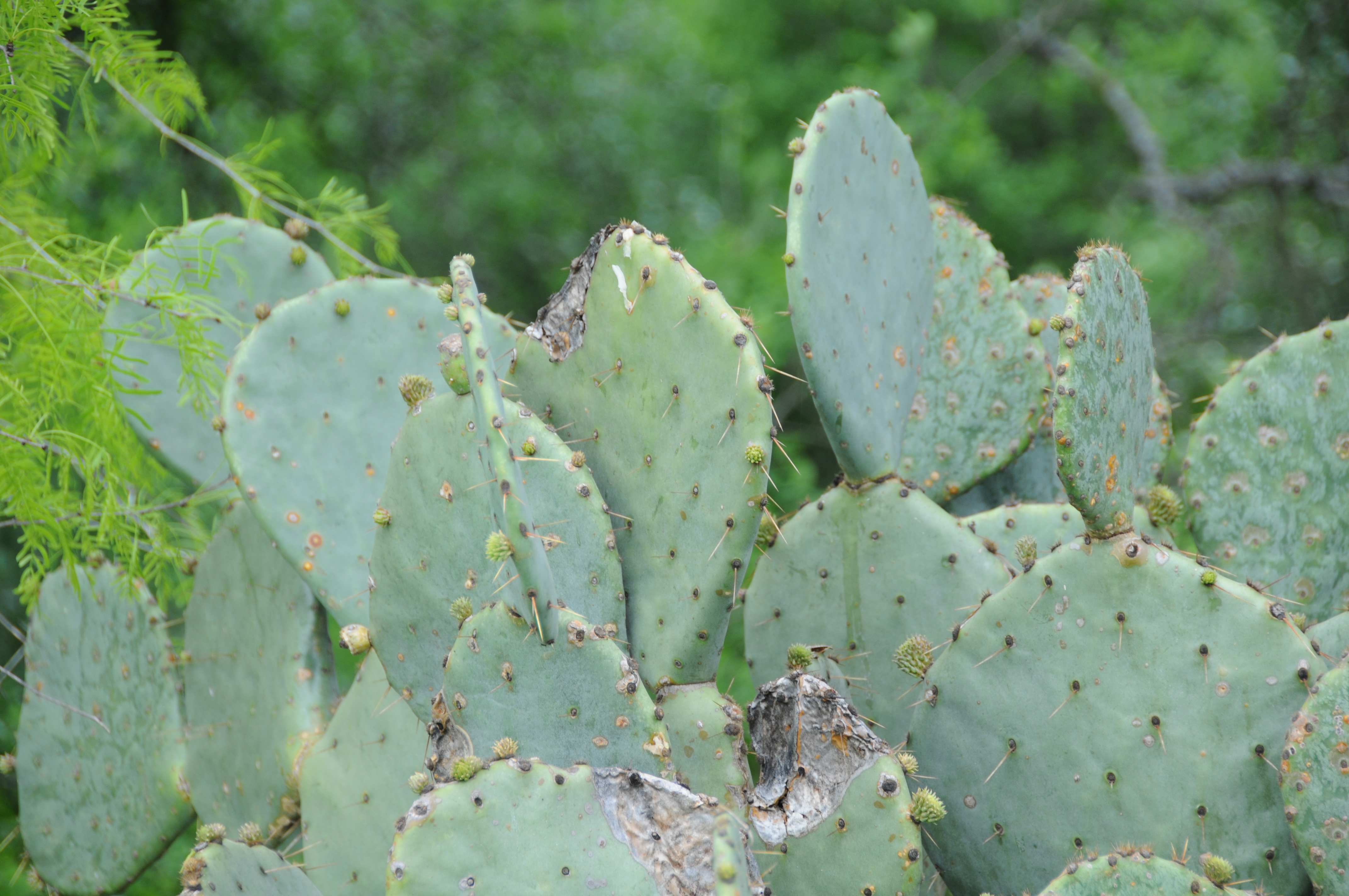
Prickly Pear Bush, April 2010

Cactus Fruit, April 2010

These photographs were taken last week.

Round Pen and Twin Mountains in Distance, April 2010

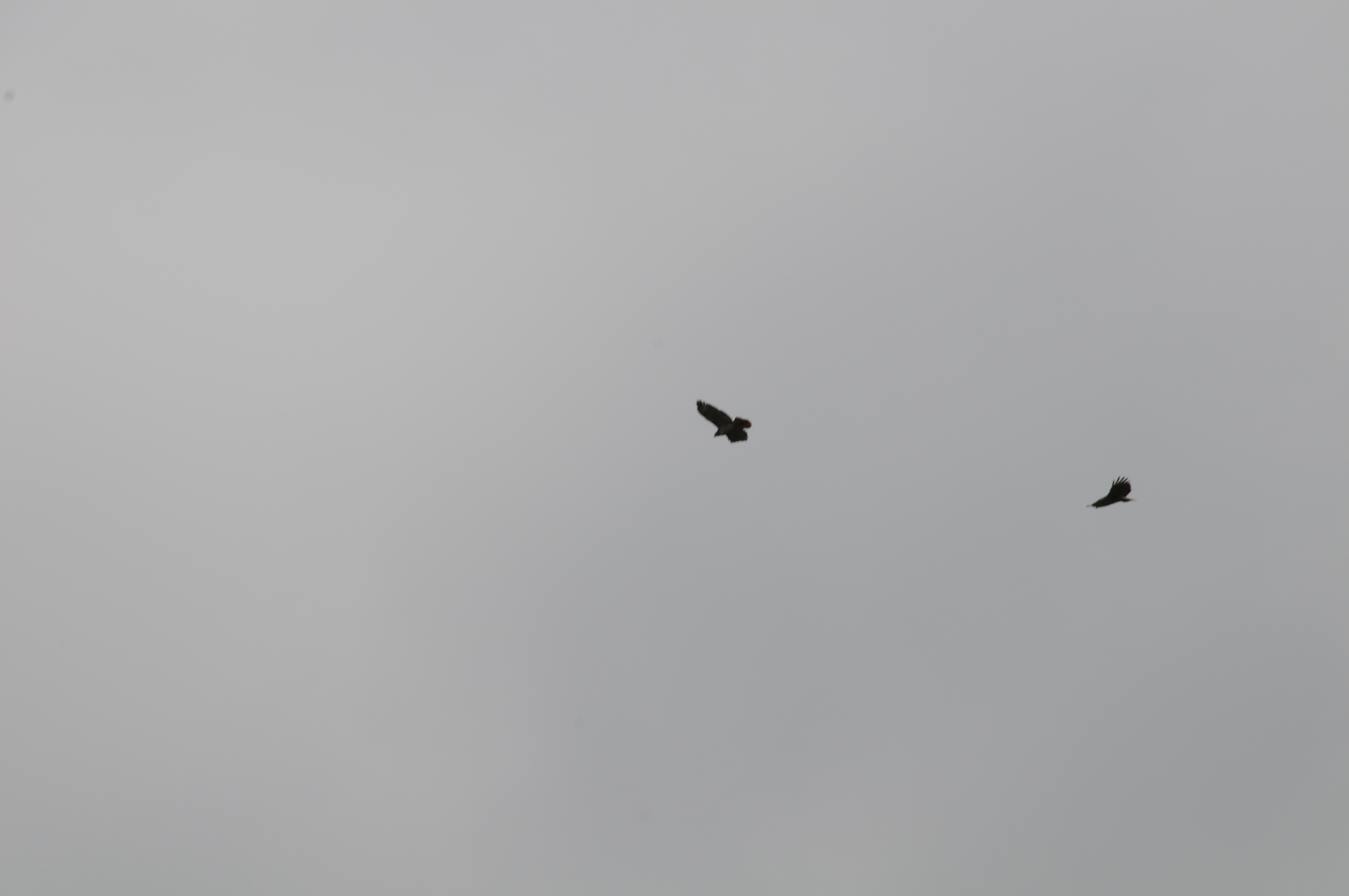
Harris' Hawks at Play, April 2010

Field grasses obscure pasture lanes.  Minimum shredding planned this year, indicative of lower carbon footprint.  In addition, taller grasses can harbor wildlife.  Hand cut mesquite brush this season, using clippers and large cutters.  Lessen vehicle use in pastures.

Lilly, Star and Fanny have browsed their way to the front pasture and are now standing close together, switching their tails to keep the flies away.  They have all this space to lounge around in and they prefer to stand together with their bodies almost touching.  Herd animals.  I worry about Lilly during the night and have corralled her so she can avoid predators.  One mountain lion sighting three months ago on SH 108 near Gibson place.

I must get the duct tape down in the barn and duct tape my Peterson’s Field Guide.  The binding is coming off.

10 Comments

Filed under Field Log

Field Log 4/3/2010

North Erath County, Texas, 32.43 lat., -98.36 long. Elev. 1,086 ft.  Turkey Creek Quad.

Day looks less windy and can broadcast grass seeds.  Disc and broadcast today (Saturday).  Take Sunday off.

Finished turning and applying disc implement to Pecan Tree Pasture and the house fields.  Turned about four acres in the far pasture, two acres at the house fields.  Harris’ Hawk flies overhead as I prep soil.  The Bryant field west of the pecan orchard is being plowed so lessee can plant seed for hay.  The lessee drives a John Deere enclosed cab.  I like my Case that is not enclosed, but has a Farmall sun shield, because I can feel the wind and smell the turned soil.  And, I really don’t want a CD player and radio on the tractor.  Also, when idling the engine, I can hear the Harris’ Hawk — can’t do that with enclosed cab.  Note: with the Bryant field stripped of grass and brush, there is less cover for wildlife.

As I apply the disc to the pasture, I can see the shadows of the Turkey Vulture (Cathartes aura) and Harris’ Hawk on the ground as they glide above the tractor.  Several vultures roost in the dead tree on the Bryant place, along Barton Creek.

Wind over past two weeks has dried out topsoil despite rain.

I say to Brenda at lunch that I saw a wren-type, ground-feeding bird in the native grasses that I have let grow in the Pecan Tree Pasture.  The bird spied the tractor coming and darted around and entered the tall bluestem grass (verify) as I passed by along the fence row.  I have shredded the pasture twice since I moved here, but I’ll not be shredding any more.  The fifty-three (53) acres will be as sustainable as I can make it.  Seeing the wren in the field of native grass that Cody Scott had planted in 2004, signals to me that the field is a good habitat for wildlife.  Last year as I worked in the field, I scared up two deer that had taken a rest in the high grass.  Since the Halls cleared their brush and have put Adirondack chairs in their grove, small bridges over their gullies and a workshop next to the Pecan Tree Pasture, I’ll not be seeing as many deer as I once did.  I’ll not be putting any chairs about the place.  I’ll sit on a log or lean up against a tree — nature’s furniture.

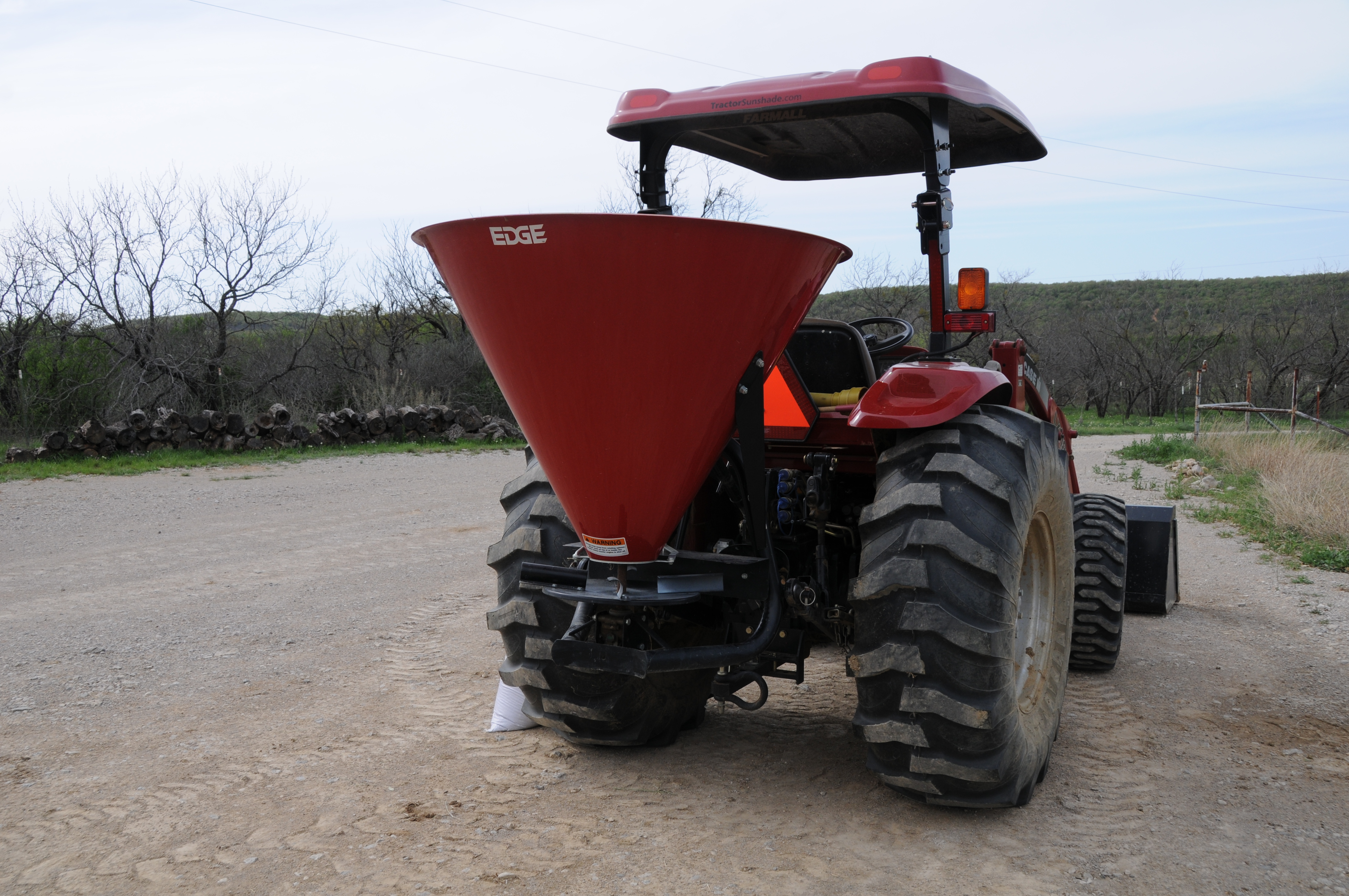
Brought up the tractor with the Edge broadcast seeder and spreader.  Backed tractor and spreader up to rocks on driveway so that water runoff would go onto lawn not puddle in driveway.  Attaching PTO difficult.  Used WD-40.

Case DX-55 with Edge Broadcast Seeder and Spreader, April 3, 2010 (click to enlarge)

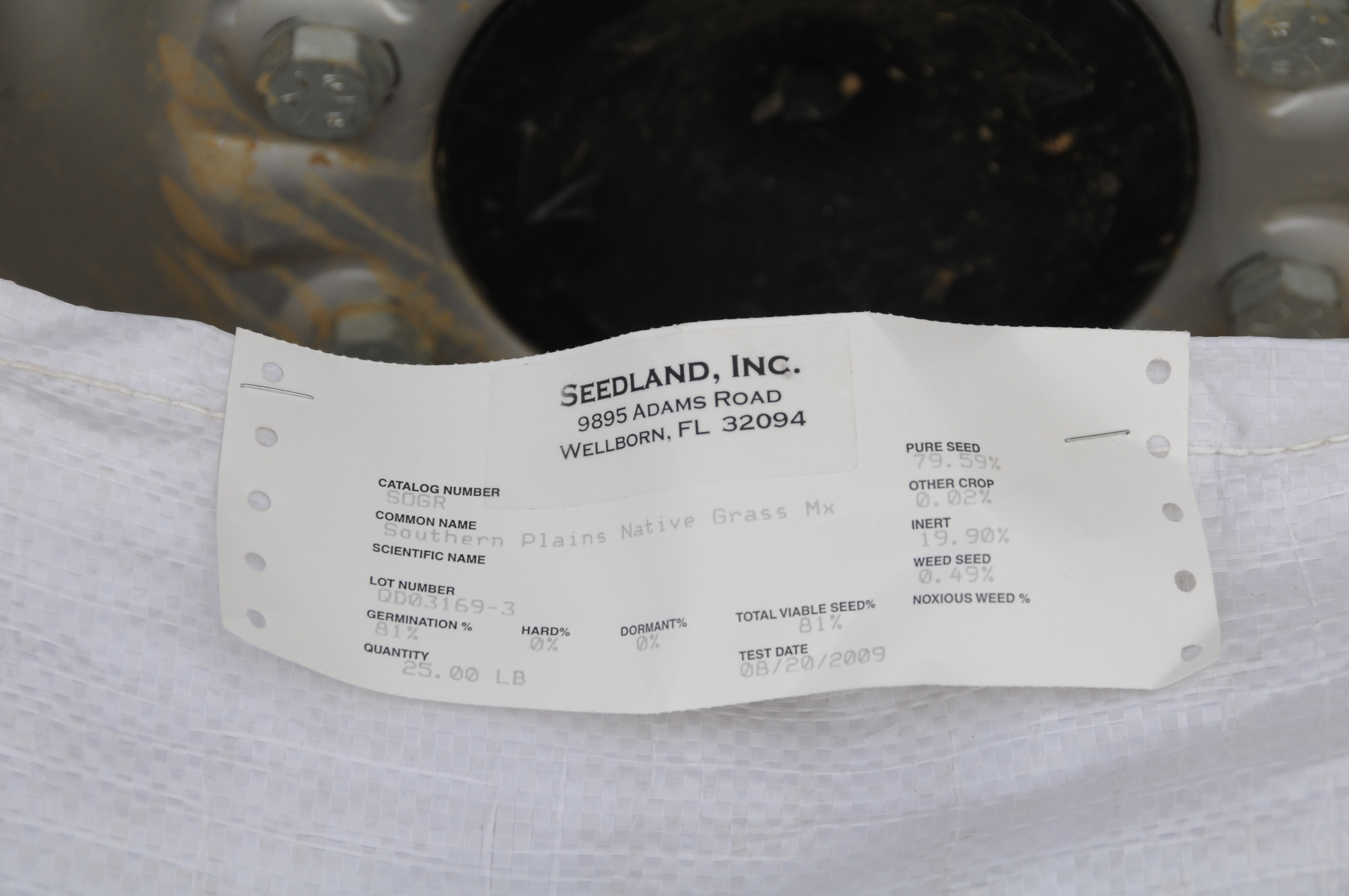
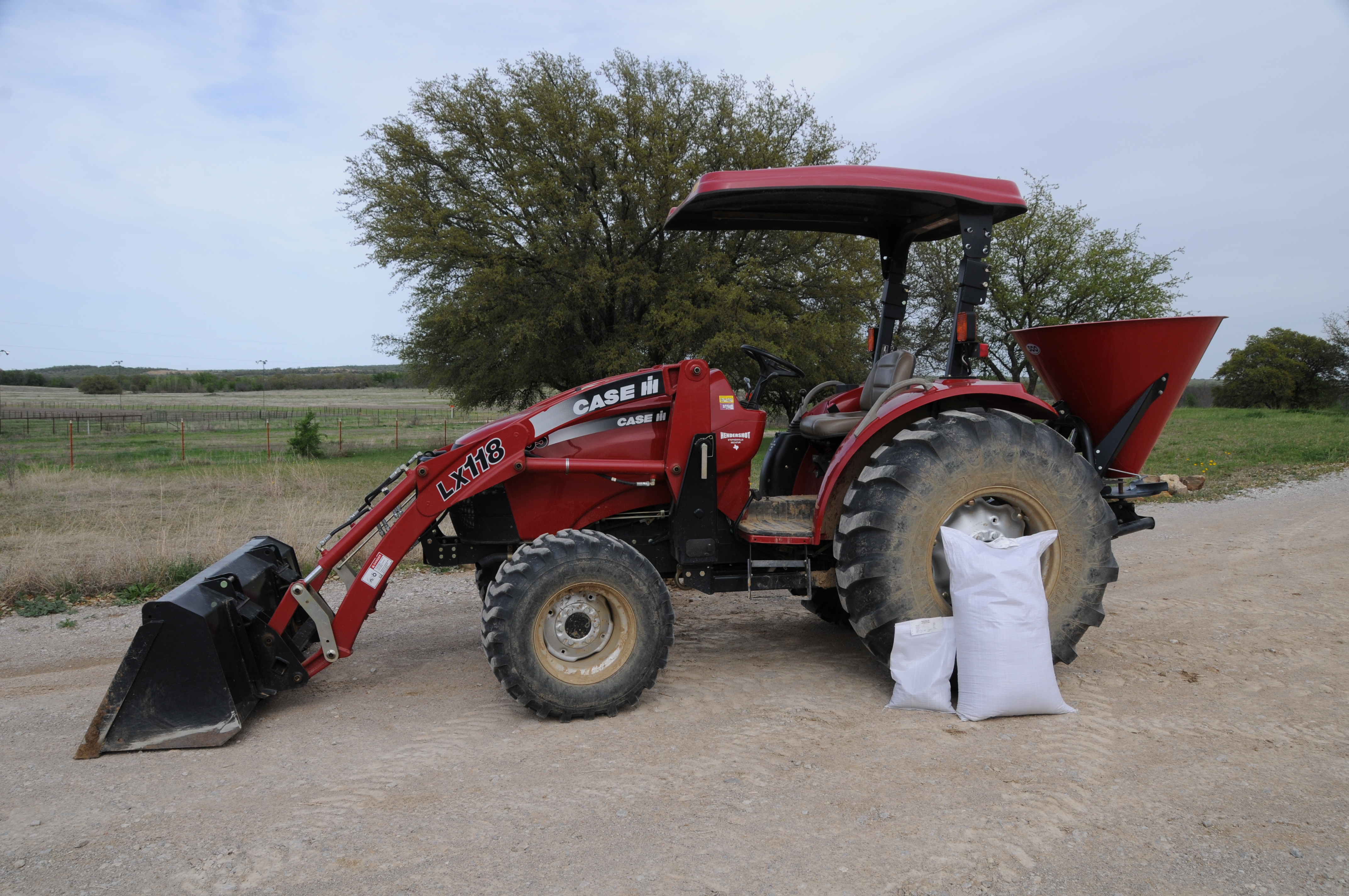
Made calculations as to orifice size to allow seeds to fall through and be broadcast.  Start out with a No. 2 opening.  In the thumbnail below you can see a large white bag and a smaller bag.  The larger bag is the native grass (25 lbs.) and the smaller is the wildflower seed (2 lbs.).

Southern Plains Native Grass Mixture #2901, April 3, 2010

Native Grass Seed Bag and Small Wildflower Bag, April 3, 2010

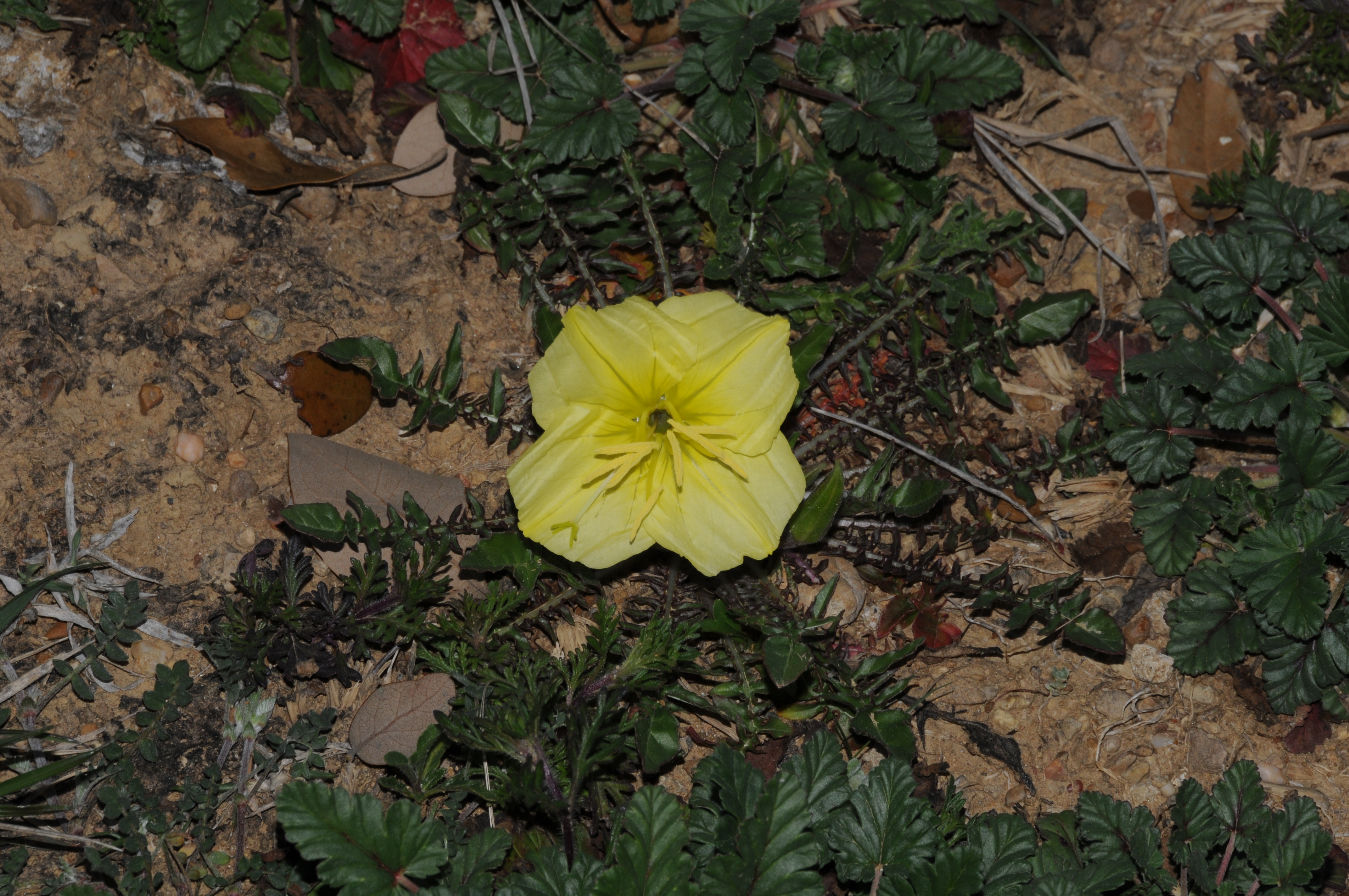
Texas and Oklahoma Native Wildflower Mixture, April 3, 2010

Wildflower Varieties Planted

Premium TEX / OKA Regional Wildflower Mixture

Common Name *Type Scientific Name Flower Color
Baby’s Breath, Annual A Gypsophila elegans White
Black-Eyed Susan A/B/P Rudbeckia hirta Yellow
Bluebonnet, Texas A Lupinus texensis Blue
Coreopsis, Lance-Leaved P Coreopsis lanceolata Yellow
Cosmos, Sulphur A Cosmos sulphureus Yellow/Orange
Candytuft, Annual A Iberis umbellata White/Pink/Violet
Coneflower, Purple P Echinacea purpurea Purple
Cornflower, Dwarf A Centaurea cyanus Mix
Coneflower, Prairie B/P Ratibida columnifera Yellow/Red
Coneflower, Clasping A Rudbeckia amplexicaulis Yellow
Golden Wave Tickseed A Coreopsis basalis Yellow
Evening Primrose, Dwarf P Oenothera missouriensis Yellow
Evening Primrose, Showy P Oenothera speciosa Pink
Gaillardia, Annual A Gaillardia pulchella Yellow-Red
Mint, Lemon A Monarda citriodora Lavender/White
Phlox, Annual A Phlox drummondii Red
Poppy, Corn A Papaver rhoeas White/Pink/Red
Prairie Clover, Purple P Petalostemon purpureum Purple
Sage, Scarlet A/P Salvia coccinea Red
Wildflowermix.com

Native Grasses Planted

The native grasses planted are: Blue Grama, Sideoats Grama, Buffalo Grass, Plains Bristlegrass, Little Bluestem, Prairie Junegrass and Sand Dropseed.

The wind came up to 10-15 m.p.h.  in the afternoon.  Delayed spreading until after supper at 6:15 p.m.

Following supper, spread seed in Pecan Tree Pasture and house pastures until 9:15 p.m.  Used headlights on tractor to finish spreading.  Orifice enlarged to Nos. 5 and 8.  Spread some seeds on arena-south pasture.  Must disc twice this area on Monday.

Salt Creek runs through the grove with about two-three inches of flow.  Tadpoles emerge.  I hear the trickle of flow as the water falls down on the rocks alongside the road to the far pasture.  Cannot use the road because of the water flow and must go around the Halls place on SH 108.  I put the Case tractor into high gear, fourth position and watch for traffic on the highway.  I have lights flashing.  In four trips to the far pasture today, only one vehicle passed me: a motorcycle with two people, man and woman, traveling to Stephenville, most likely to have barbecue at Hard Eight.

The quote I always have in mind:  Begin with the sun and all else shall follow.  — D.H. Lawrence.

4 Comments

Filed under Field Log, Plants and Shrubs

Field Log 3/28/2010

North Erath County, Texas, 32.43 lat., -98.36 long. Elev. 1,086 ft.  Turkey Creek Quad.

The wind continues to blow today, approx. 15-25 m.p.h.   Yesterday, the wind was so strong it blew the mistletoe off the trees.  That’s gotta be high wind.

Yesterday, looked at Cooper’s in Stephenville for hackamore.  No good choices.  Too much metal.  Duncan Steele-Park used soft rope, no metal for the hackamore.

Fanny adjusting back to the ranch, but the colt down in the arena is having a hissy-fit to get close to her.  Shiney the colt is all-boy.  He’s eleven-months old, doesn’t know what his body is all about right now, but he will.  We mature males and females went through this period, I think — puberty.

Today, let Fanny, Hija and Lilly into pasture.  Shiney runs around the arena trying to attract Fanny’s attention.  Shiney is a full-brother to Fanny (same sire, same dam).  He calms down, then I put the mares into the Broke Tree Corral and stall area.  They seem relieved to get away from the peppy little guy that just wants to play.

Evening feed, two-hours ago, they all settled in.  Calm, for awhile.

Buttercup (Oenothera triloba Nutt), Poprock Ranch House, March 2010 (click to enlarge)

I searched for genus and species typing for the wildflower above.  Found it in Irwin and Wills, Roadside Flowers of Texas, that I have cited before.  These blossoms open in the morning and in the later afternoon shade.  The plant falls under the Evening-Primrose Family (Onagraceae).  Brenda first called it an evening-shade plant and she was correct.

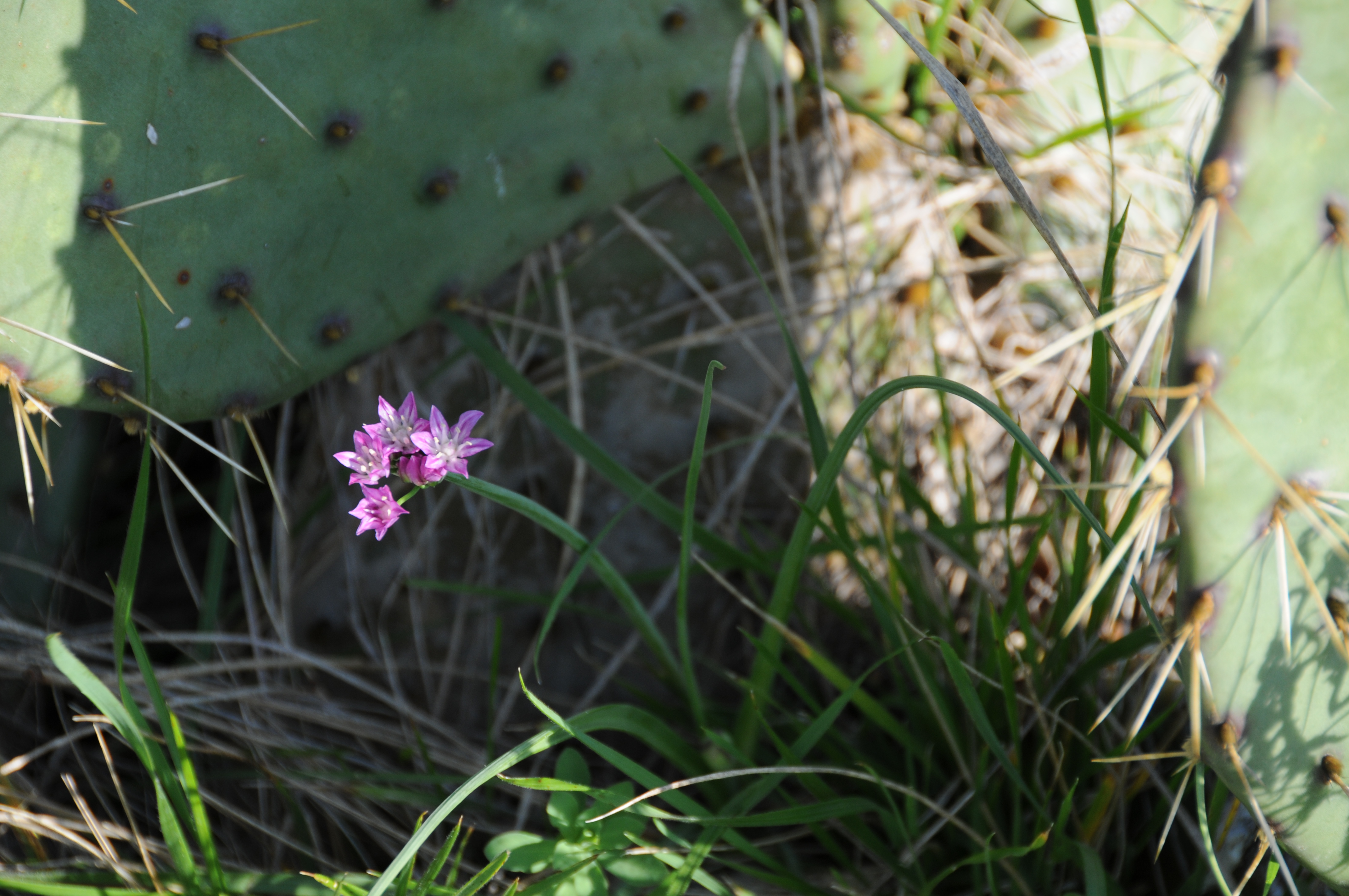
This next blossom is from the same vicinity of the Buttercup.  This is the Wild Onion (Allium mobilense) that I found this morning.  I go out for the third time to the Poprock Ranch House grounds, to the southwest, prior to the barn, and I find this Wild Onion.  It is next to the fence line and the morning sun is rising fast.  Don’t want to lose the shadow for this framing.

Prickly Pear Cactus and Wild Onion (Allium mobilense), March 2010 (click to enlarge)

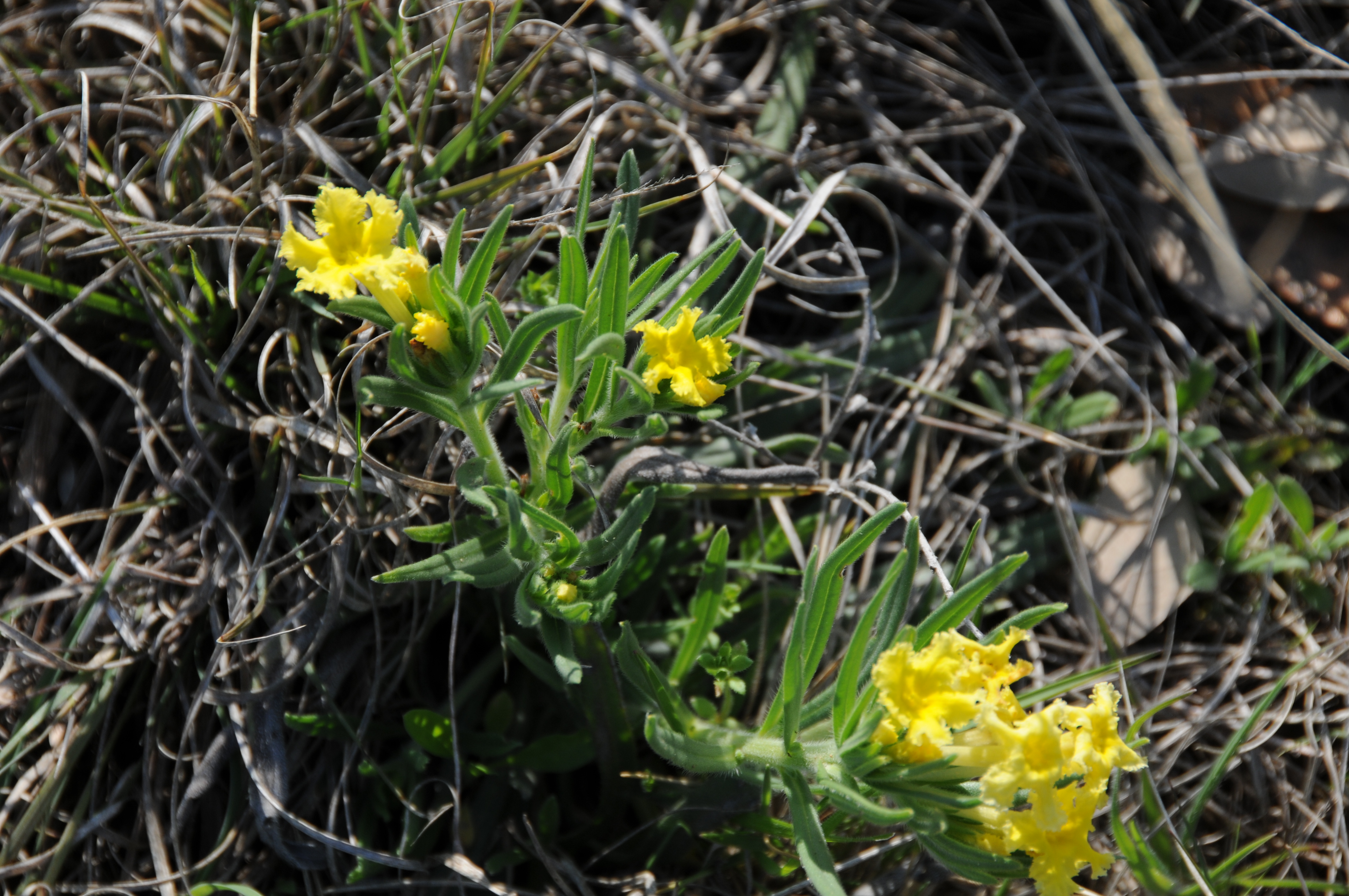
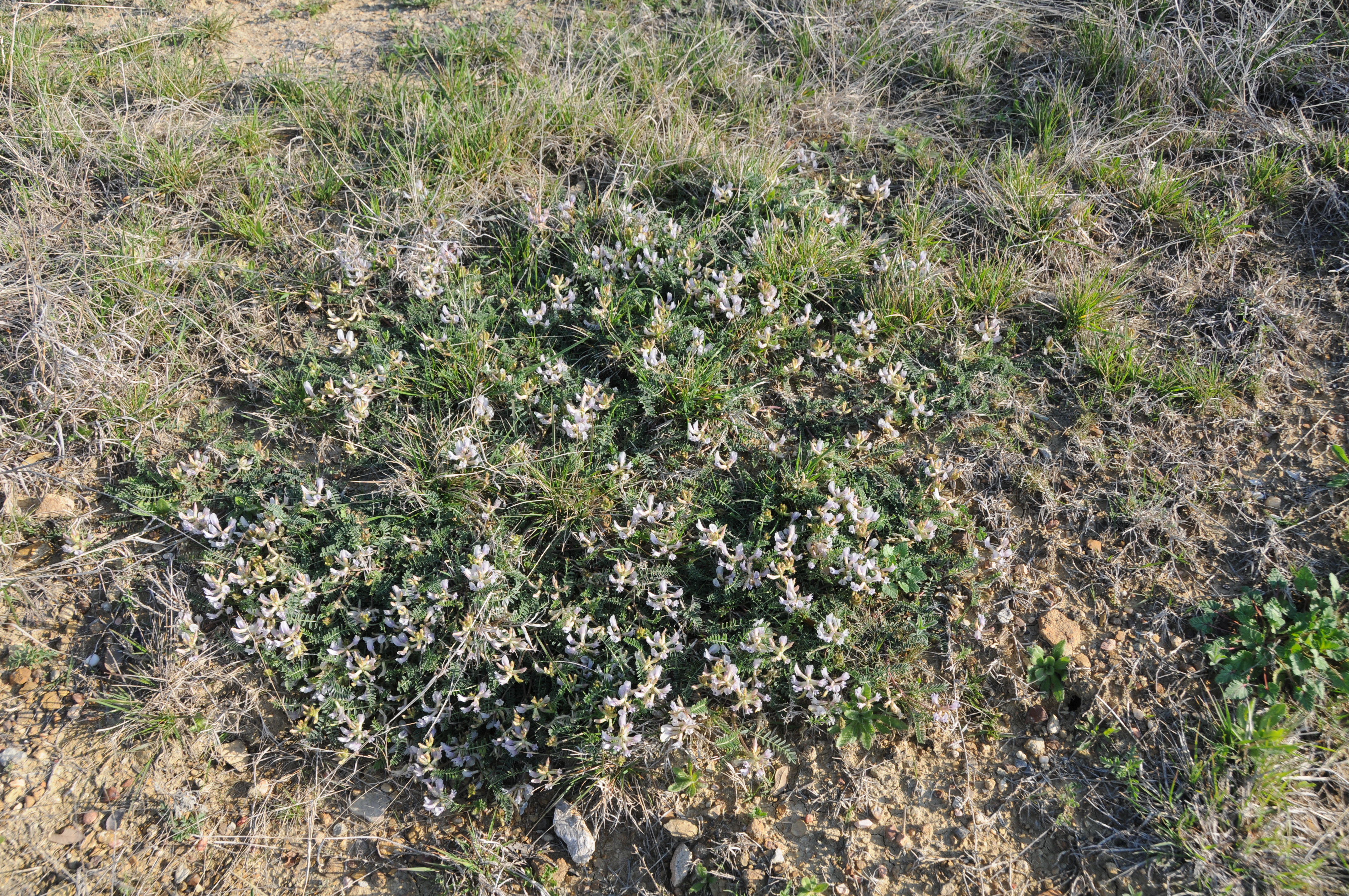
Then, upon scanning the ground, I find these other wildflowers.  I will identify them later, but I thought to end the weekend, I’ll go ahead and post them.

Unknown No. 1, Poprock Hill Ranch House Grounds, March 2010 (click to enlarge)

Unknown No. 2, Poprock Hill Ranch House Grounds, March 2010 (click to enlarge)

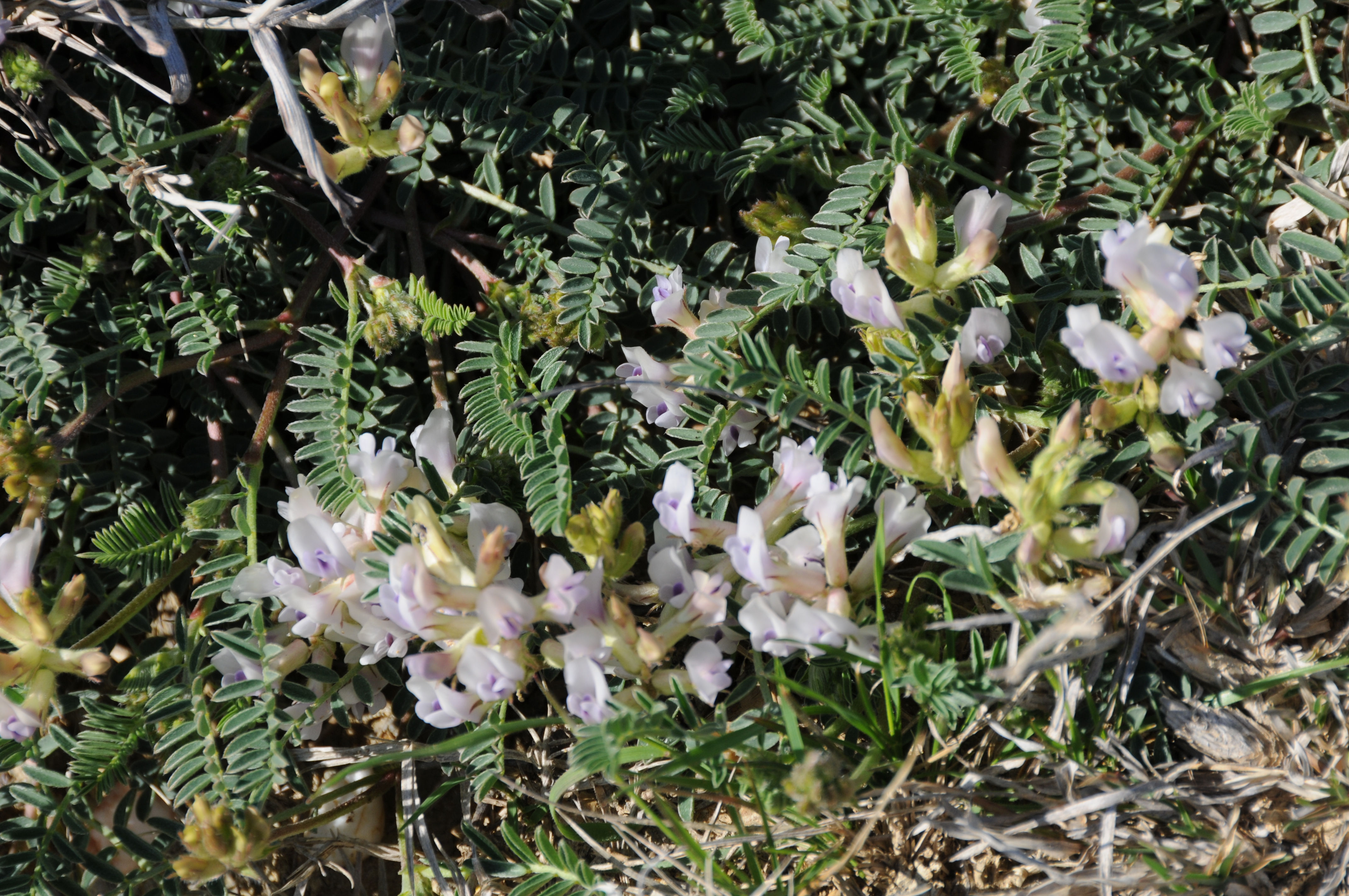
Unknown No. 2, Close-up, Poprock Hill Ranch House Grounds, March 2010 (click to enlarge)

This is a close-up view of the previous wildflower, having a distinctive scent.

Wind has died down.

Neighbors across on the country road that live in the trailer house have moved.  I liked the family.  Young woman with child.  She wrote letters and lifted up the red flag on the rural mailbox so that Jeannie Chisolm, our mail carrier and caretaker, could take the letters to friends far and wide.  Sometimes both our red flags for Jeannie would be up and I felt close to the family across the country road.

13 Comments

Filed under Field Log, Plants and Shrubs