Category Archives: Christmas

Luminaria Christmas


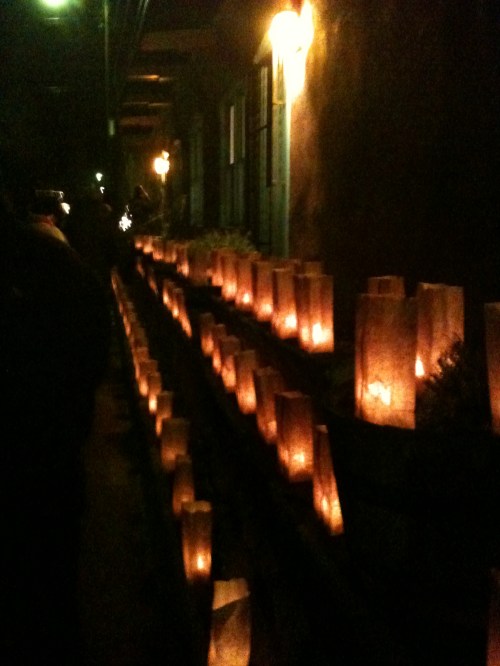
Farolitos

Lights wrapped around tree with mobile art piece.


Rios Woodyard luminaria.

Christmas in Santa Fe includes the traditional farolito stroll after dark along Canyon Road, the artistic thoroughfare that delights the eye.  The luminaria is the wood fire.  Farolitos are candles within paper sacks that light up the edges of sidewalks and walls along Canyon Road.  For up-to-date information, consult the Santa Fe New Mexican newspaper’s Christmas Day edition.

New Mexican Christmas celebrations rival Italy and Germany.  Alessio Franceschetti, a very good friend of mine, sent me a montage of Christmas scenes in Italy.  Do look at it:  Natale in Italia 2010.  This montage is moving and beautiful.  Thank you, Alessio.


4 Comments

Filed under Christmas

Holiday wishes from Sage to Meadow and field notes

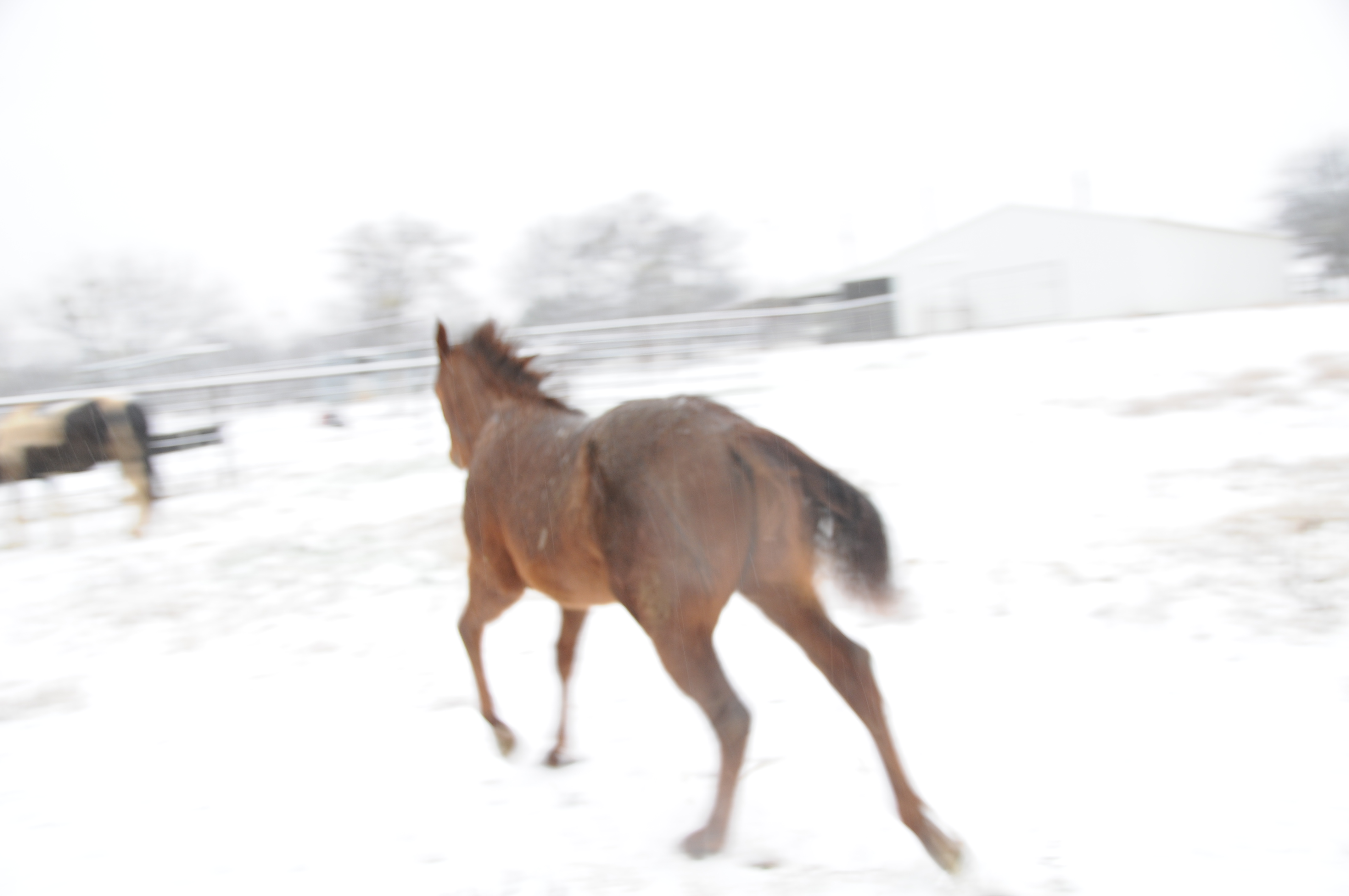
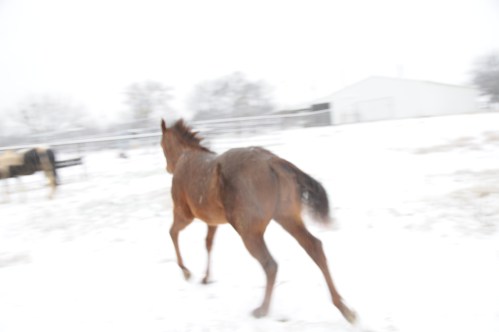
Shiney galloping to the corral during winter. No fear of the sun disappearing here.

A holiday greeting…

The sun in the northern hemisphere is at its lowest points this time of the year.  I do not think ancient and prehistoric people feared the sun would continue to sink towards the south and disappear forever — at least in southern latitudes of the northern hemisphere.  There was and is sufficient overlap of folk knowledge and tribal elder history to instruct the young and anxious that nature’s cycle continues her circle of cold to warm to hot, hot to warm to cold.

Christmas Eve and Day are here.  I wish each of you a Merry Christmas and Happy New Year!

* * *

Update on Lilly and Star…

Lilly, our oldest mare, is holding her own at 25 years of age.  She moves between the Well House Corral and the pasture, indicating a good level of energy and health.  Her feed consists of all the alfalfa she wants, Equine Senior Purina grain and 1 – 2 grams of bute (painkiller for horses) a day.  To husband animals rewards the steward: nickers and whinnies of recognition and impatience, warmth of animal in cold weather, riding for fun (both rider and horse can enjoy if accomplished properly) and work, and the sheer companionship and friendship of the horse.  One of my pleasures of having horses is hiking in the woods and having Star follow me like a hiking friend.  Star will go up and down creek bank, push aside brush to continue the hike and rest with me beside a fallen log.  If I wish to walk alone, I have to close the gate to the woods.  Most of the time, I want him with me.

Star is confined to the first corral.  He is overweight and feed intake must be limited.  He has all the coastal bermuda hay he can eat and some painkiller for his front legs.  His confinement lasts one week.  I have had to separate him from Lilly since she has alfalfa, he must have coastal.  Star is not pleased, but he adjusts.

* * *

A field post about bird songs on winter mornings…

December 16, 2010, 7:05 a.m.

Within the last two weeks I have noted birds about the barn and stables sing profusely only in the morning during the winter and are relatively quiet for the rest of the day.  I have not spent the day about the barn and stables to confirm unequivocally this observation (I’ll probably regret having brought this up in the first place), but it seems a sound observation.  During the day when I do chores and in the evening when I feed the horses and spend a hour or so in the barn area, I hear no birds or few birds.  In the morning, birds chatter and tweet, but do not break into long melodious fugues.

Our small ranch is located in North Erath County, Texas, Lat 32.43 N, Long -98.36 W, elev. 1,086 ft. Turkey Creek Quad.  Mesquite trees, live oak trees, elm and underbrush comprise the habitat for birds.

Among singing birds I see in the morning are redbird (just tweets), titmouse, chickadee, wrentit, wren, red-headed woodpecker, white-crowned sparrow, house sparrow, dove and a couple of other species I have yet to identify.  They browse in trees, on the ground and in the underbrush.  If I remain motionless in the corral after disturbing them, they resume their chattering and calls in a few minutes.  When the sun reaches a point in the sky at approximately 10:00 a.m. or so, songs and calls diminish.  I see birds for the remainder of the day, though not quite as frequent as the first two or three hours in the morning.  I hear during the day the quacks of ducks on stock ponds and crows on the fly.

7:35 a.m.

I have returned from the barn and stable area and this post is taking a curious turn.

A cold front moved in last night and the temperature is 40 deg. F.  The sun is not shining and clouds completely obscure the sky.  On point, birds are quiet, not even a peep, casting a different observation and bringing to light variables I had not considered: temperature, sunshine, clouds.

With the temperature in the 40s and no sunshine, I hear no birds.

17 Comments

Filed under Christmas, Flying Hat Ranch, Horses

Christmas Eve Music in Old California

This post was published Christmas 2009.  I have added some photographs to the original for this 2010 Christmas.  I find “Christmas Eve music in Old California” poignant with the cultural interaction.


Christmas in California before the Americans came [1840s] was a season when all the grown people had as much fun as the children do now.  And the children had so much fun that they never got over it and ever after loved play and presents more than work and hard bargaining….

One Christmas Eve, I remember best, there was a full moon.  Over all the ground there was a glittering frost, just enough to whiten everything, yet not enough to even nip the orange trees which at this season of the year hang full of fruit and blossom both….

We had much music–guitars of the Mexican and Spanish type, made with twelve strings of wire, and mandolins.  After supper there was dancing in the patio, coffee and cigaritos on the veranda, and singing everywhere.  Someone said it was a beautiful night for a horseback ride over the valley to the Mission Santa Clara.  The horses in the corral were soon saddled.  There were twenty-five or thirty of us young men and women.  Our horses were the best of the big herds that were attached to every rancho….The saddles, bridles and spurs were heavily covered with silver bullion ornaments, as in those times we put silver on our horses instead of on our dining tables; for Spaniards…live on horseback, and they eat but to live, instead of living to eat.

Riding out of the patio gate it was like a scene from the time of the Moors in Spain.  As our horses snorted in the cold air they spun the rollers in their bits, making music that only the Spanish horse knows [1].

______________________________

Notes:

[1]  José Ramon Pico, “Before the Gringo Came,” San Francisco Call, December 1899.  From Sam Travers, Christmas in the Old West:  A Historical Scrapbook, pp. 171-174.

Mission Santa Clara Asís established in 1777, was located a few miles south of San Francisco.  This mission and adjacent Indian pueblo eventually grew into Santa Clara and San Jose.  The mission is now located on the campus of  Santa Clara University.

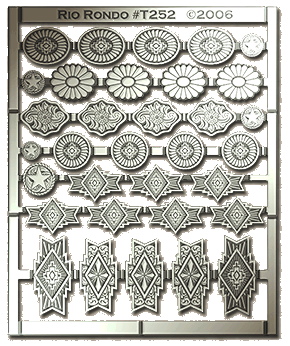
Frank Principe, silversmith from Lindell Beach, British Columbia, writes that many of the old California-type bits, such as the Santa Barbara, were designed with Islamic religious symbols.  The symbols included seven buttons, half moons, and starts.  This is traceable to Moorish occupation of Spain until the 1490s, the Cortez expedition to Mexico, and other adventures.  He writes, “For the last one hundred years or so most North American bit makers have been using these designs without realizing their historical significance.”

Sweet Hija (Spanish for “daughter”), my black mare, has King Ranch breeding.  Even today, King Ranch provides ranch horses for Mexican ranches.  Of all my horses, Sweet Hija is the fastest and most energetic.  After saddling Hija, I must run her about the round pen to work off her energy before she is ridden.  She is the most alert and sensitive to her surroundings, spotting deer a half a mile away.  I have to use binoculars to see what she sees.

Spanish Mustang Research Facility.

11 Comments

Filed under Christmas, Horses

River lights contentment


River lights by Montana Outdoors, December 13, 2010.

Montana Outdoors is a photography blog and the above photo is one of many excellent shots of nature’s grandeur in winter.  Its author wrote the following in his introduction to his blog that has been published since 2006,

I am privileged to live in western Montana, close to the wilderness and roadless areas that I love so much, and I’m thankful that I am still able to venture up into them and spend much of my time there.

Most of the photos that I post are of scenes that cannot be seen from from roads or highways. There is a very beautiful world out there in the wild country and it is my wish to make it visible, by words and photographs, to those who are interested in enjoying it.

It seems that many folks have all but forgotten that we are part of that natural world and that ultimately it sustains us in both body and spirit. My hope is that we will have the wisdom and the discipline to preserve it for future generations, for once the wilderness has vanished, mankind will soon vanish as well.

Readers, you must go to Montana Outdoors website for it is a beautiful paean to all things, big and small, in the outdoors.

* * *

In concord with Montana and the holiday season, Sam Travers, Christmas in the Old West: A Historical Scrapbook, has a note about Christmas at the Saleesh House in Montana in 1813, from the pen of trader Ross Cox,

Our hunters killed a few mountain sheep, and I brought up a bag of flour, a bag of rice, plenty of tea and coffee, some arrowroot, and fifteen gallons of prime rum.  We spent comparatively happy Christmas and, by the side of a blazing fire in a warm room, forgot the suffering we endured in our dreary progress through the woods.

* * *

From The San Saba News (Texas), December 15, 1883, here is a comment about Christmas and the progress of time,

Christmas is near at hand — two weeks from Tuesday — and each day between now and the great event will drag wearily away to the little folks.  What a pity it is men cannot experience on this day of peace and good-will to all the unalloyed happiness they did as boys.  But then years bring experience and ofttimes misery, and happy is he who can retain even until middle life a touch of boyhood’s pleasures.

The editor of The San Saba News wrote columns upon columns of prose each week for a frontier community far removed from trolley cars and opera houses.  In other news, the little town of San Saba celebrated Christmas by gift giving and church gatherings.  Several advertisements listed gifts men and women might enjoy, such as colognes and mustache cups.

Whether Montana or Texas, people seem to find a way to transcend their discontent by celebration and looking upon light from a river in winter.

______________________________

Notes:

The San Saba News from the nineteenth century is found on Chronicling America The Library of Congress link on the sidebar under small town newspapers in Texas.

I had pulled together the San Saba editorial and the Old West scrapbook piece for two separate posts, but when I came across River Lights by Montana Outdoors, I brought them together in one post.  I think we all find a way to get by the holidays, be it “prime rum” or family gatherings.  Since my family is scattered in Texas and Florida, I go to Santa Fe more often than not at Christmas.  This Christmas of 2010 I am not sure where my wife and I will be.  In any case, and this is my point, nature is outside my window and there I can find a measure of contentment — River Lights always beckon.  Always.


7 Comments

Filed under Christmas, Santa Fe

Gathering mistletoe in December

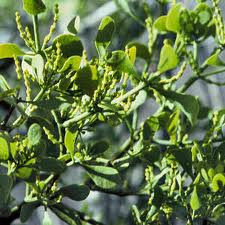
Oklahoma floral image mistletoe

In the 1940s and 1950s, I grew up in central Texas, playing and working about the counties of Brown, Mills, San Saba and Lampasas.

Although born in Brown County, my family spend a great deal of time visiting relatives during the holidays in San Saba and Lampasas Counties.  The Colorado River and San Saba River formed the backdrop of my childhood and early teen years.  During December, I often stayed a week or two with my grandmother who lived first in Bend, Texas, and then Lometa, a few miles away from Bend where she worked as a telephone switchboard operator for the communities.  The switchboard was in her living room.  Her name was Effie Morris Parks and she taught me much about living off the land, or at least using nature’s products from the original source, not a supermarket.

Grandmother Effie, as I called her, steered me in the month of December to harvest and collect two things:  mistletoe and cedar.  Cedar is still harvested, but the gathering of mistletoe with its poisonous berries to frock the door portal seems to have vanished from holiday culture.

She had a green Chevrolet pickup.  We would drive the pickup down dirt county roads and pull up next to a tree, usually mesquite, that would have clumps of deep green mistletoe with white berries.  We would knock down the mistletoe with long bamboo poles that we also used to gather pecans in the Fall.  Either that or I would climb up the tree and break off the fungus.  Then we would gather the mistletoe and place it in the bed of the pickup until the pile topped the rails.  We had to be careful to preserve the white berries because that improved the price we would receive.  We drove to San Saba or Lometa and would sell the mistletoe at the mohair and wool congregating store.  We would make upwards of twenty dollars and during the rest of the season, I often thought I saw what we had collected in small, cellophane packages sold in grocery stores in Brownwood.  I doubt that was the case, but I felt rather pleased that I had helped make holidays brighter for someone.

I chopped cedar only once or twice as a boy and it was grueling work, but during December the weather was cold and going into the cedar breaks to cut wood did not seem as brutal as it was chopping cedar in the summer.  Grandmother’s friends would take my cuttings — not very much, I’m afraid — and I would have a few dollars to spend during the holidays.  The cedar choppers I worked around were all muscled and strong and I envied their chopping expertise.  I learned how to cut staves versus good thick fence poles.

My grandmother Effie also gathered water cress, pecans, killed and plucked her own chickens, and during the late summer we would take the green Chevrolet and collect wild Mustang grapes that she would turn into jelly to consume on our breakfast table and give to friends.  The tartness of the Mustang grape is like no other.

But it is the memory of harvesting and gathering of mistletoe and cedar with Grandmother that stays with me today during the holiday stretch.  I scraped my arms and got stuck by mesquite thorns.  Despite it all, I grew up knowing nature intimately during the cold of December with my grandmother as teacher.

17 Comments

Filed under Bend Texas, Cedar, Christmas, Juniper, Life in Balance, Plants and Shrubs, Recollections 1942-1966, San Saba Texas

A good day with Vouvray

Lilly was at the gate with Star, waiting for their grain and hay.  They will go into the pastures, loafing and browsing, visiting their neighbors across the road.  She is having a good day.

The dogs have settled on their pallets in the living room, catching the sun’s rays through the windows.

We shall have a good lunch today in Fort Worth and a bottle of Vouvray or Bordeaux, depending upon our entree.  We will talk of our Thanksgiving plans, most likely traveling to Fredericksburg, seeing Christmas lights as only that city can do it.

Fredericksburg, Texas

Here on the Wesleyan campus, the church bells ring the hour and play music for a few minutes, arousing the students from their Saturday morning sleep.  It is noon and I will walk to the Science Hall where Brenda is advising young men and women to coursework and bright futures.

It is a fine, fine day.

______________________________

Notes:

Fredericksburg, Texas, photograph by:

http://members.virtualtourist.com/m/ed19/d644a/

5 Comments

Filed under Christmas, Life in Balance