Category Archives: Bend Texas

Beginning: Bend Ford

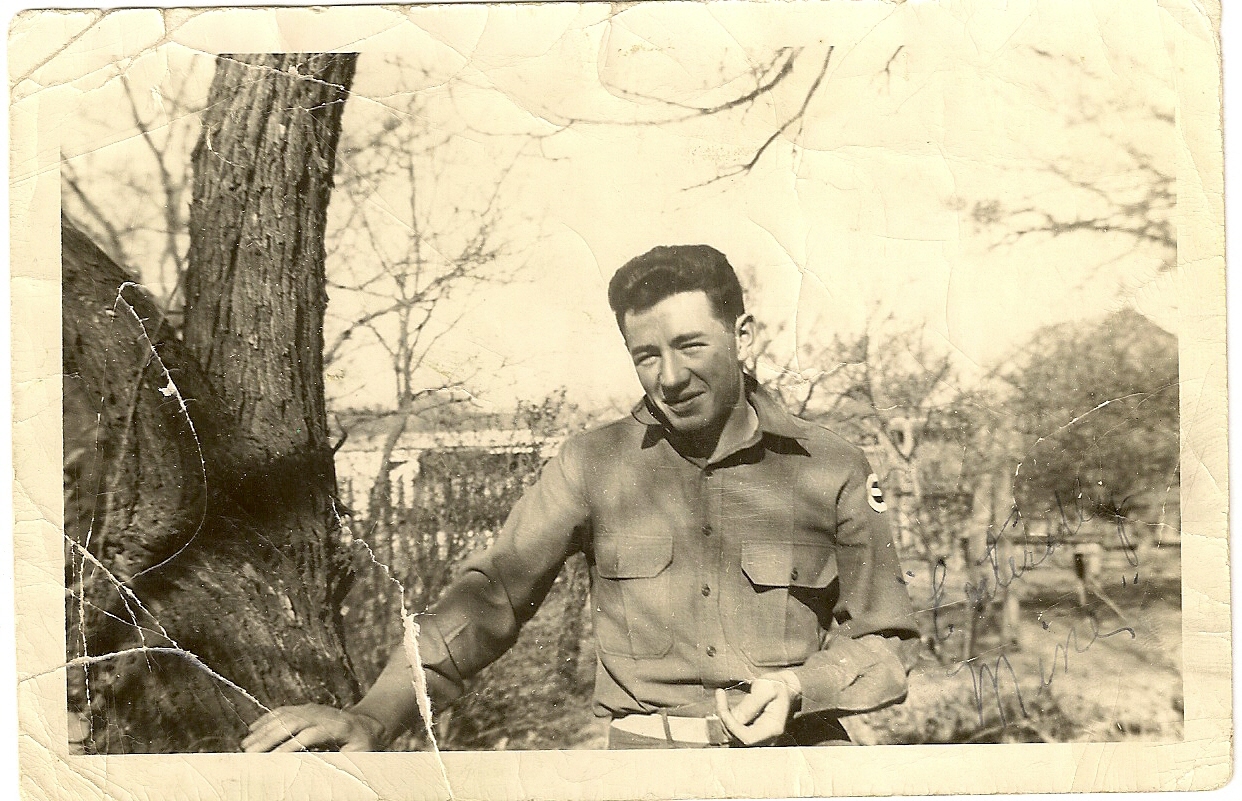
Jack F. Matthews, Sr., Winter 1941-42, Texas

As posted in “Beginning: Red Ants,” there is first a setting out, a beginning of all things.  Nations and tribes record their origins and seed their narratives with great events and heroes.  Beginnings do not stop with national revolution or constitutions, but are present in the family, the circle of kin.  Not stopping there, the setting out goes even farther down into each sentient, solitary being.  Corporeal narratives, we each are.

The beginning is that earliest moment of consciousness, not self-consciousness because that comes later under the mesquite tree in Texas when the wind blows (at least for me, it was).  It may be a song, a face, an automobile, truly anything under the sky that sticks first in the mind, imprinting a memory.  At that moment the setting out begins and does not end till death.  It may never be written, never told; but it is embedded in the flesh.

Mother’s setting out, she tells me, was when she and her father, Jake, were crossing the Bend Ford on the Colorado River near her Uncle Nathan’s home on horseback, riding double, when the horse slipped and fell on her.  The river bottom, only one or two feet below the surface at the ford, is solid granite like the face of Round Rock near Fredericksburg, Texas, and mother, Jake, and horse entangled, thrashing in water.  Her leg broke and they sent for Dr. Doss who set the leg as her father fashioned a small crutch for his two-year old to walk.  The river became a constant theme in her life: the flood, the boundary, the swimming.  Gywn crossed the river at Bend Ford many times after the fall, but the accident was her setting out, with horse and water above her and a father to save her.

My cousin and I were sitting on the ground outside the one-room trailer house on Austin Avenue in Brownwood, Texas, looking down at a clock.  The year was either 1943 or 1944.  The bedside clock was a throwaway timepiece, the face removed, the case gone, but the wheels and spring intact.  In our play, the clock had been wound tight, the wing nuts stuck in the ground.  The alarm went off and the clock spun around and around.  My cousin and I gazed as only children can, intently focused on the exposed wheels and clock turning in the dirt.  Wheels clicked within wheels turning.  I looked away from the spinning clock and saw green bamboo stalks beside the trailer.  I looked down, my cousin stared at the spinning clock until it stopped, turned again, then finally stopped.  She looked at me.  We giggled.  My beginning was an old clock stuck in dirt, spinning round.

Two-and-a-half miles away from the spinning clock and trailer house, Camp Bowie trained soldiers for the war.  My father, Jack Matthews, had left the camp, left us, and was jumping out of planes for extra money, urging Gywn to keep flying the Irish green.  He was parachuting with Easy Company, 506th Parachute Infantry Regiment, destined for Europe and every major combat operation from Normandy to Berchestgarten.  The Band of Brothers, Easy Company.  Since Gywn and Jack had divorced shortly after the war, I knew few details about him.  I found a cache of letters in her things following her death and I did not open them until the summer of 2009.  When I found out he was a foot soldier in Easy Company, I ordered books overnight from Amazon.com and read his story, his name in print.

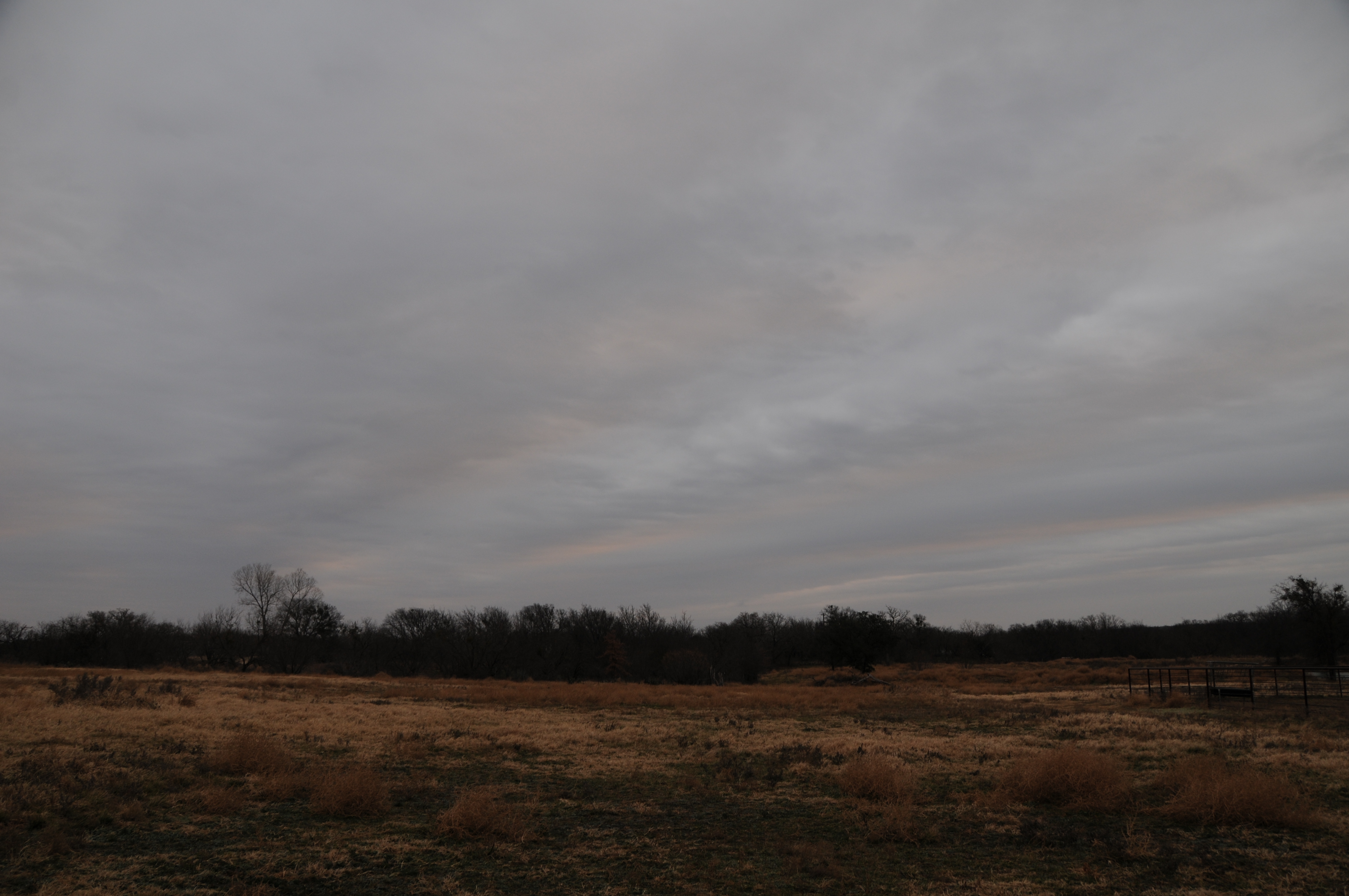
In Gywn’s cache of correspondence, I read the letters and documents dated until 1946.  There was a story beyond the narrative my mother had told me and its plot lines were different from what I had been told as a boy.  I stopped reading and put the letters back in the Bigso Boxes of Sweden I bought from Container Store to preserve them.  I have put them aside for now because there’s a story to be told.  An old, old story, along the banks of the Colorado River in Texas, before the spinning clock, before my beginning, but in the flesh of my family.
12 Comments

Filed under Bend Texas, Colony Road, Recollections 1942-1966

Old Joe Clark

In 1953, my uncle Nathan Valentine Morris played fiddle and called the dances at Bend schoolhouse, Bend, Texas.  We danced the round dance in a large classroom and ate potluck stew in the schoolyard beside the bell that had tolled pupils to their lessons for generations.  The bell could heard across the Colorado River into Lampasas County.  That night, I understood community.

The narrative is coming soon, but until then, listen to Old Joe Clark:

Old Joe Clark, performed by The Resonators.


4 Comments

Filed under Bend Texas, Colony Road, Dancing, Recollections 1942-1966

Duncan Steele-Park Lane

South Poprock Hill Pasture, Flying Hat Ranch, January 7, 2010

By the calendar it is January 7, 2010, and I am in the pickup, near the barn.  Looking east from the Well House corral in south Poprock Hill pasture, the early morning sky configures a cold day for livestock and young men and women on horseback who manage them.  Currently, we have no cattle herd to tend, but five horses need our daily attention.  I rose early before daylight and planned the first feed of the day for Lilly the oldest mare and alpha, Star the gelding-son of Lilly, Sweet Hija the King Ranch legacy mare, and Shiney the colt of Sweet Hija.

Presently, I do not tend the fifth horse.  The fifth horse is off-site, at Duncan Steele-Park’s place near Weatherford, Texas, going to school in the round pen of equine education.  This horse, Fanny, is with ten others in her cohort, learning and gaining confidence to join-up and toil with cowboys and cowgirls that must use horses that are strong and even-tempered.

Duncan has a philosophy about horse training.  Before we even unloaded Fanny from the stock trailer, he stated his way of working with young horses.  Duncan grew up in Australia and his methods presage directness, no frills, no nonsense.  He spoke clearly, precisely, in clipped tones of the Down Under, and with the authority of a thousand rides upon young horses needing guidance to confirm man as a friend, not predator.

The most important lesson you must teach a young horse, who is having his first few rides, is to go forward which is why I don’t spend much time in a round pen because there is no where for a horse to go in an arena.  I find myself a fence line or a lane and kick the latch of the arena open and let my young horse just run.  You see if you leave a young horse’s feet free you keep his mind free.  And if things are getting a little radical,  just one-rein stop him and then let him go and before you know it he begins to relax.  People and clinicians now days take too  much of the impulsion out of young horses because they spend too much time doing groundwork [in the roundpen].

I think I’ll play with Fanny this afternoon and see what she does [1].

My grandfather, J.W. “Jake” Parks trained or as they used to say, “broke” horses.  My mother told me that her father would use a forceful technique to train horses and that the “screams” of the horses upset her as a child and caused her to resent the method Jake used, even Jake.  My grandfather did not have a coarse or abusive nature; he loved jokes and took my mother and his sisters fishing along the Colorado River.   He was, unfortunately, taught to use the aggressive method by his teachers and peers; that was what he saw in the 1910s and 1920s in central Texas.  I think if my grandfather had seen another method to train without force, he would have used it.  Those methods were not present in his background, although the method of respectful, non-forceful training has been around in recorded history since Xenophon, the Greek cavalry officer, 5th century B.C.E.  General Stephen W. Kearny who marched American troops through New Mexico to California in the Mexican-American War, 1846-1848, reportedly used non-abusive techniques in handling horses.  My grandfather probably never knew Xenophon’s way or Kearney’s.  He was, like us all, a man of his times and it ended badly.

In the 1930s, while working on the Sorrel Ranch in Sonora, Texas, my grandfather was critically injured riding a horse named Hell’s Canyon as they popped brush for cattle.  Riding fast, he struck a low-hanging tree branch and was knocked unconscious.  Unfound for three days, he almost died before ranch hands rescued him.  He never regained his health following the accident.  I do not believe Hell’s Canyon delivered a mystical counterforce to Jake, re-aligning balance to horse screams and my mother’s pain, but rather the accident came as both horse and rider delighted in the chase of cattle for round-up.

The story of my grandfather and Hell’s Canyon was heaped on me when I was a child and I was told I favored my grandfather in body, but I never saw him.   In the family narrative, horses and and my grandfather were always joined, wedded, symbiotic, tragic.  I was never expected to follow my grandfather’s path.  That was just as well because I grew up in a small town, my country experiences were inconstant and we had no land, no cattle, no horses.

Time passed, I inherited horses, my grandfather’s inheritance was passed down to me and I bought more horses, good horses, fine-bloodied, and beautiful.  I bought land and I began to work with horses without force, without pain, and with respect.  And, when it is time, I take them by the halter and give them to a teacher who will help them grow in ways that take them to high places, wind-swept and sunlit that call out their strength and delight to help tend livestock with humans in the West.

Duncan Steele-Park has a fenced lane, about fifty-feet wide, that angles from his round pens into the Texas brush and trees and pasture.  Though I have not seen it, I know where the lane ends.  I can tell you where it begins.  For the horse, the lane begins with respect and it must end in a land of fun with Duncan Steele-Park.  Jake would be pleased; he would be changed.

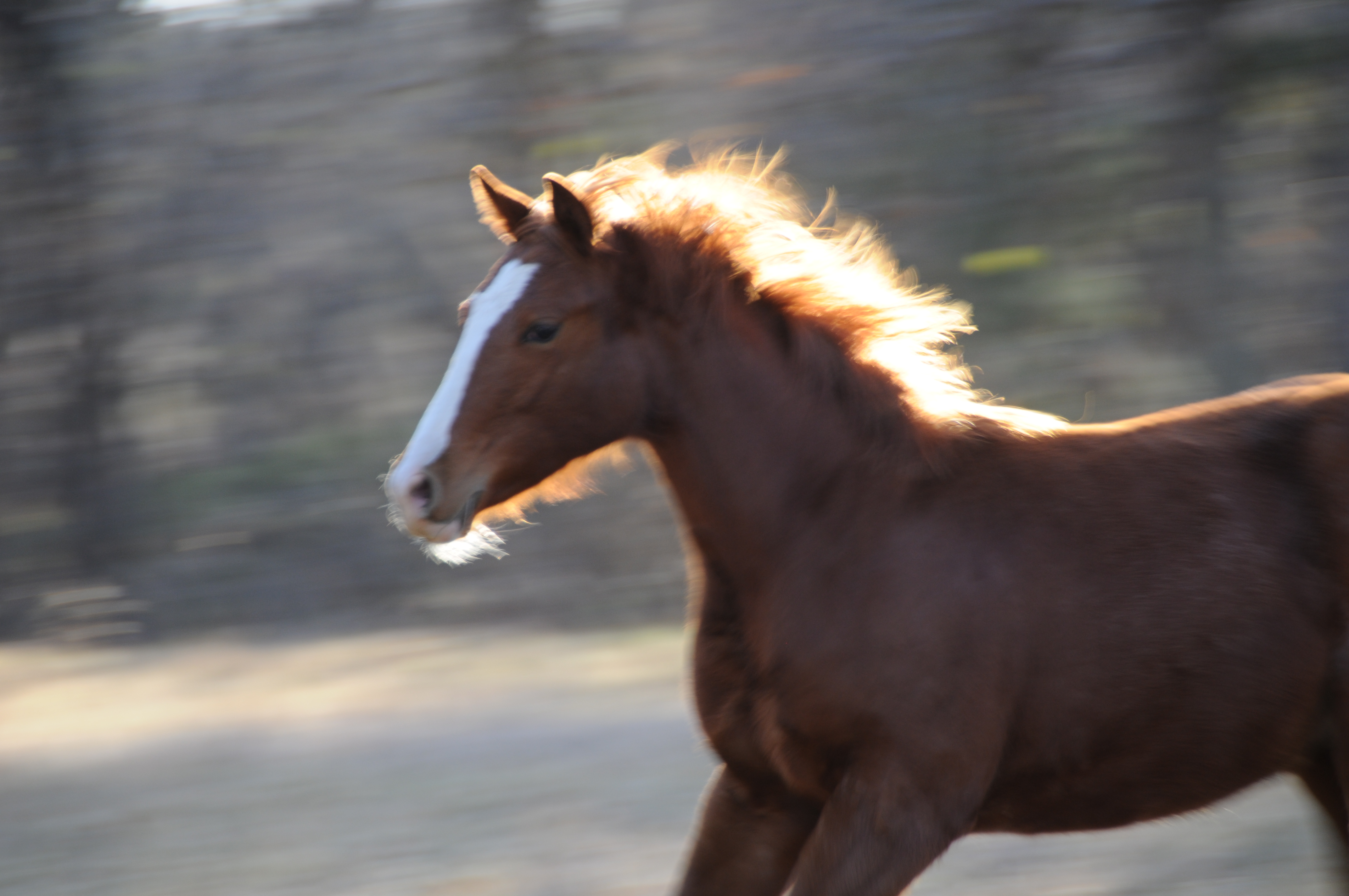
Fanny in the Grove, Winter 2009

Notes

[1]  Conversation of Duncan Steele-Park to Jack Matthews, Weatherford, Texas, December 22, 2009; email of Duncan Steele-Park to Jack Matthews, Weatherford, Texas, January 8, 2009.

An an object lesson in writing and fact-checking, I sent Duncan an email on January 7, 2009, for him to fact-check my recollection of our conversation on December 22, 2009.  My recollection was:

I let them gain a confidence before I ask anything of them.  Some trainers just put them in the round pen and round and round they go, boring them and not letting them be.  What I do is let them go down the lane, down the lane, learning for themselves and gaining confidence before I ask anything of them in the round pen.  Then as they go down the lane, after awhile I ask something of them in the round pen.

As you can read, Duncan’s correction of my recollection carries specificity about training that my later recollection did not.  His words have greater clarity about his philosophy and present his training style in definitely his own words.  I can hear in his writing, the down-under Australian accent.

Duncan Steele-Park’s email address is duncansteelepark@yahoo.com.

9 Comments

Filed under Bend Texas, Colony Road, Duncan Steele-Park, Horses, Recollections 1942-1966, Shiners Fannin Peppy (Fanny)