Monthly Archives: March 2010

Brush Fire High Salt Cove Creek

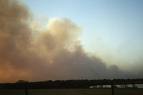
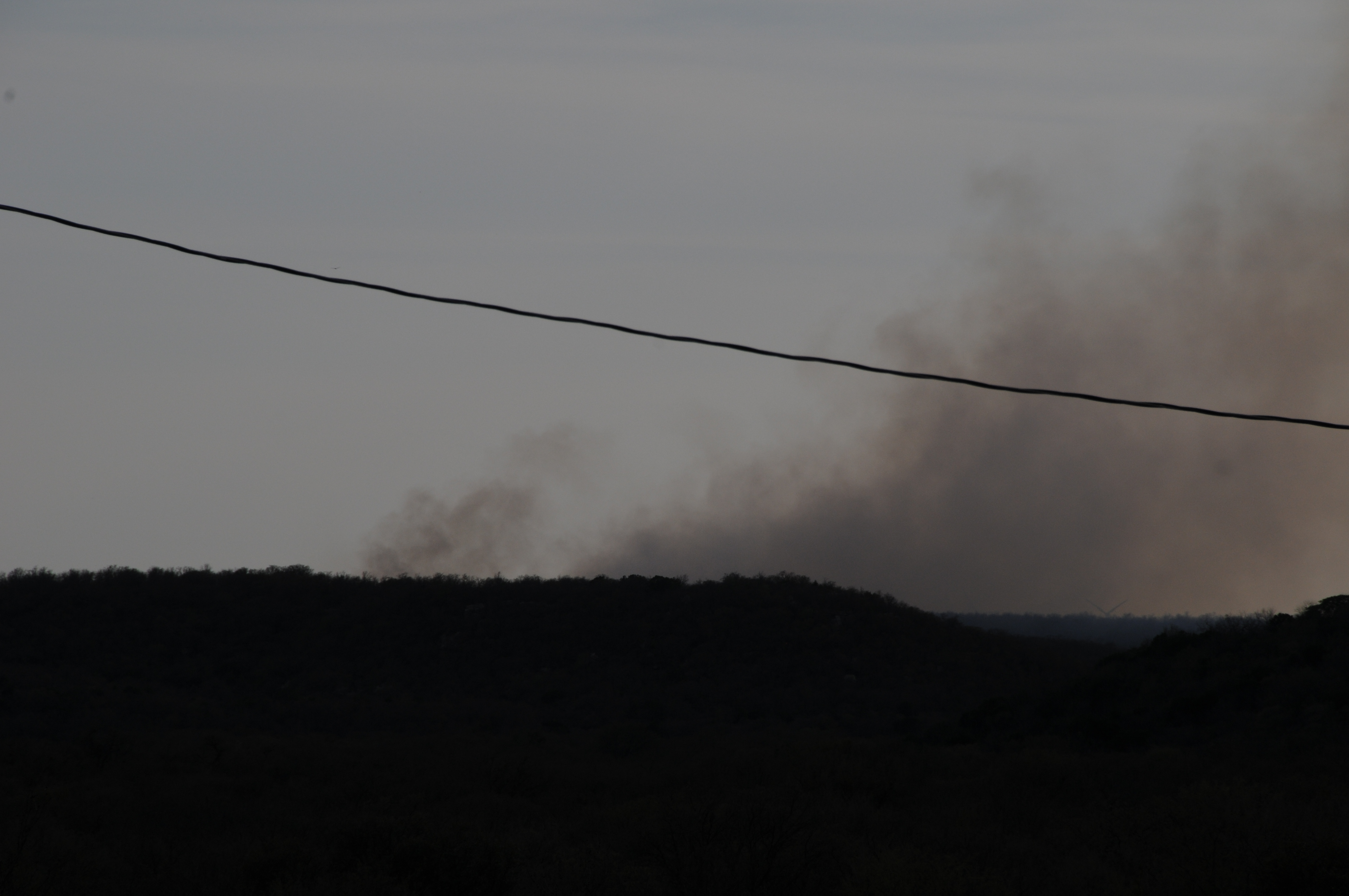
Two days ago, March 22, 2010, a brush fire raged out of control about four miles southwest of our place.  My estimation of the location from our place on Poprock Hill was near High Salt Cove Creek, 32.43 deg. N., 98.39 deg. W., Stephenville Quad map.

High Salt Cove Creek Fire, March 22, 2010 (click to enlarge)

Volunteer fire departments from Huckabay, Gordon and other small communities converged on the fire and extinguished the blaze late yesterday evening.  Despite recent snow and rain, last spring and summer’s growth of grass was dead and ignited.

The smoke colored the air a kind of amber about our home — not at all pleasant.

Cross Plains, Texas, Fire ca. 2007

Several years ago a huge fire broke out near Cross Plains, Texas, approximately seventy (70) miles southwest of Flying Hat.  Brenda and I were attending a funeral near Cisco, Texas, and the wind and smoke completely covered the western sky.  Several people were killed and the destruction obliterated sections of the community.  A firefighter at Cross Plains reported that the wind changed directions while the town burned and swept into neighborhoods that had been bypassed with the first sweep of fire.

It was also the same year that the huge prairie fire in the Texas Panhandle destroyed livestock and several hundred square miles of grassland.  Therefore, like any other community in the country, we are quite conscious of fire safety.

There are some good tips for making your country surroundings safe from the Texas Forest Service website below.

Texas Forest Service.

6 Comments

Filed under Flying Hat Ranch

A Naturalist’s Color Palette, ca. 1686


From Richard Waller, "A Catalogue of Simple and Mixt Colours with a Specimen of Each Colour Prefixt Its Properties" Philosophical Transactions of the Royal Society of London, vol. 6, 1686/1687 (London, 1688)

Click to enlarge the color palette

“Noting the lack of a standard for colors in natural philosophy, and inspired by a similar table published in Stockholm, Richard Waller indicated that his “Table of Physiological Colors Both Mixt and Simple” would permit unambiguous descriptions of the colors of natural bodies. To describe a plant, for example, one could compare it to the chart and use the names found there to identify the colors of the bark, wood, leaves, etc. Similar applications of the information collected in the chart might also extend to the arts and trades, he suggested.”  –Jessica Palmer, Bioephemera Blog.

Click the link below to bring up Jessica Palmer, Bioephemera Blog.

A naturalist’s color palette, circa 1686 : bioephemera.

Read more about Waller’s color system in The Creation of Color in Eighteenth-Century Europe by Sarah Lowengard.

6 Comments

Filed under Plants and Shrubs

Texas Buffalo Shooting

I affirm.  Life is out of balance: this news article and oral interview (on the primary NPR site link) brings out the worst on both sides of the fence here in Texas.  Ranch managers and owners, near Benjamin, Texas, clash over the buffalo of QB Ranch (diversified operation, but also a hunting ranch) straying consistently upon the Niblo Ranch, a traditional operation.  After pushing through the fence, fifty-one buffalo of QB ranch were shot on the Niblo Ranch.

Buffalo, by law in Texas, are classified as indigenous animals and have not the same protections as cattle or sheep.  The Niblo ranch foreman who shot the buffalo has been charged with criminal mischief.

Texas Buffalo Shooting Triggers Culture Clash : NPR.

“Two hundred years ago, great herds of plains bison — massive majestic animals — roamed the endless prairie of West Texas. What happened to those herds stains the national conscience. The bleaching white bones of the 51 animals rotting in the Texas sun near the QB Ranch are a throwback, a reminder of the carnage a man with a rifle can do.”  — Wade Goodwyn of NPR.

I affirm.  The placement of buffalo on a ranch for trophy-hunting purposes may be legal, but it is base and immoral.  It is base because it reflects a lack of refinement of virtue, the virtue of preserving life for its own sake, be it buffalo or the sage grouse.  It is immoral, for the act of killing buffalo is killing another life without just cause.  It never was just to kill buffalo except for the family and tribe to survive in the time before the railroads came.  At that moment in time, the buffalo kill sustained life and the animal itself was worshiped for what it gave to keep tribes and families intact — so different from now.  Much has been written about the near-extermination of the buffalo in the nineteenth-century and it is not my purpose to go over the historiography of America’s western expansion.  I am an historian and I know the canon.  And, the process of settling the New World was based on erasing the wild, stomping out the natural, and assimilating all things New World to the Old.

The big ranches at Benjamin are costly monuments to the Old World’s erasure of the New.  The Dallas oilman that stocks his ranch with buffalo for bloodsport reflects European kings that killed stags throughout the day and the next day and the next.  NPR states there is a culture clash.  That is correct, but they stopped short of indicting the largest cultural clash of modern times:  the artifices of man versus the naturalism of the world, death versus life, the city against the garden.  The rotting buffalo near the QB ranch do not stink, it is industrialized culture that settles over their spirits that stinks to hell.

[Please also refer to The Fat-Takers by Lame Deer.]

11 Comments

Filed under Life Out of Balance

Lewis and Clark Plant Identification

Lewis and Clark’s Montana Plants When Lewis and Clark were in Montana they collected an unknown number of vascular plant specimens.  Of all the specimens collected, 31 still exist and are housed in the Lewis and Clark Herbarium in Philadelphia. This page includes articles about these 31 special Montana plants generally, species specifically, and a list of sources for further study.  Click the link below for photographs and citations.

Lewis and Clark

2 Comments

Filed under Plants and Shrubs

Field Log 3/21/2010

North Erath County, Texas, 32.43 lat., -98.36 long. Elev. 1,086 ft.  Turkey Creek Quad.

Prepared one acre of pasture for seeding native grasses, 3/19/2010.

Received shipment of native grass and wildflower seed, 3/17/2010

Scattered deer corn in The Grove.  Note:  find article on supplements to corn, move low steel feeding trays to The Grove.

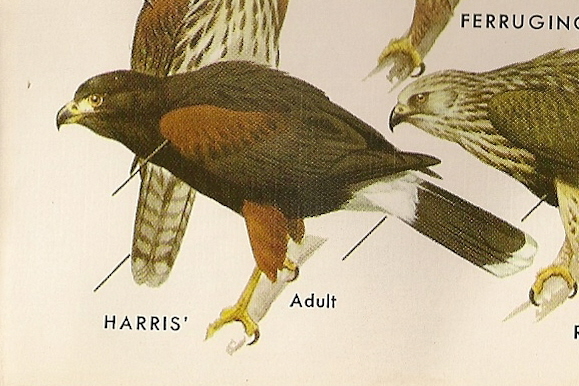
Definite typing of hawk.

Harris' Hawk (Parabuleo unicinctus) Peterson's Field Guide

Harris' Hawk (Parabuleo unicinctus) Peterson's Field Guide

Field surprise (always).  As I sat listening to the wind in The Grove, the hawk flew within fifty (50) yards of me, displaying flashy white rump and white band on the tail. White banding very conspicuous. Black and chestnut colors on thighs and shoulders. He flew extremely fast back and forth three times in front of me, then angled over to the pond. Fast. Peterson writes that the Harris’ Hawk resides in c.-w. Texas south into Mexico. Habitat is river woodlands, mesquite, brush. Nesting of sticks in yucca, mesquite, low tree. I have been looking higher for a nest. Must look lower. One hawk.

Take photo of Harris’ Hawk in field.

Cleaned out stalls, hay bins.

Addendum, 3/22/2010, here is my 1969, Peterson, A Field Guide to Western Birds, and the plate with identification factors.  It’s well-used and a treasure of mine.

Plate 15, Peterson, A Field Guide to Western Birds, 2nd ed., 1969 (click to enlarge)

2 Comments

Filed under Field Log

Escape the Notion that Land is only Cropping Opportunity: Like Udall R.I.P.

Roger G. Kennedy, who was director of the National Park Service in the 1990s, said Mr. Udall “escaped the notion that all public land was essentially a cropping opportunity — the idea that if you cannot raise timber on it or take a deer off it, it wasn’t valuable.” On the other hand, Mr. Kennedy said, Mr. Udall understood that public lands like parks enhanced the economic value of privately held land nearby.

Stewart L. Udall, 90, Conservationist in Kennedy and Johnson Cabinets, Dies – Obituary (Obit) – NYTimes.com.

2 Comments

Filed under Life in Balance, Life Out of Balance

Restoration

This is how you restore the environment.  Begin with the plot of land in front of you. Be the steward with the grass and animals in front of you. Take care of the water in front of you. I write of sagebrush in California, grouse in Colorado and the fir in Washington — magnificent places. And, I will continue to do so, but the 53 acres upon which I reside in North Erath County, Texas, is my first responsibility. From what I learn and observe here, I can extrapolate to other communities and families of living things, beyond Texas.  You may, as a reader, trust my observations — and corroborate — my conclusions if I write of prickly pear and sagebrush that I live with everyday, like a brother or sister, those plants. I encourage you to be the steward to the plot or the trellis of climbing vines in front of you. It’s right there, within your care.  Please read on and don’t forget the list of restorative goals for Flying Hat Ranchito.  Through the cycle of seasons, I will write about attaining or failing the objectives.  Yes, it is an imperfect world, but some ways of behaving are less imperfect than others.

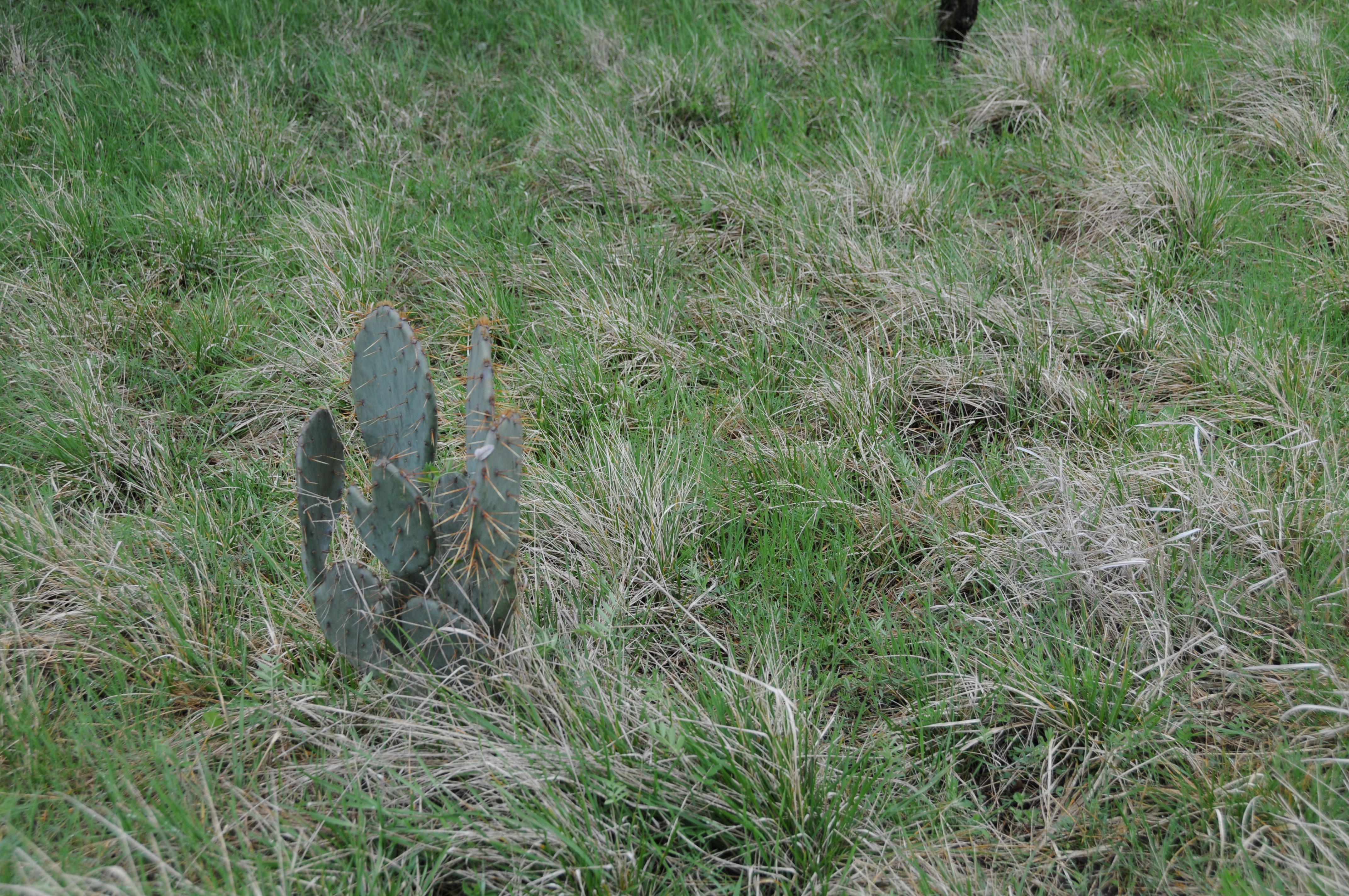
Buffalograss (Buchloe dactyloides) with Prickly Pear (Genus Opuntia, species untyped), March 20, 2010 (click to enlarge)

What I seek to accomplish in Sage to Meadow blog is to write about nature, wild and domesticated living things, people that live with the land and the constant cycles of the seasons that envelop our lives. It is not all pleasant, this nature writing, because life is abundant and green one season, gone and brown the next.  Today is the first day of spring in North America and other northern latitudes. We now evolve into abundance and the green, but not so far removed from winter, it seems, as the season this year seemed unusually long and cold — and we’re not completely through with winter as snow dust falls here at the ranch.

Vetch Without Blossom, Poprock Pasture (Vicia orobus), March 20, 2010 (vetch is the frond-looking plant, click to enlarge)

Predictably, the cycle into spring yields abundance for our consumption:  De Leon peaches in July for our nutrition, Gulf of Mexico warm wind for face and neck, Texas bluebonnet for the eye, the peeps of newly-hatched sparrow chicks and the scent of fresh vetch in field.  Polymorphously, we are plunged into nature.  Like it or not, we are here.  Yet, to every description I present, another can be stated to counter:  mosquitoes, allergies, April the cruelest month, and so on — come the spring.  So true:  ant and butterfly in our midst, pain and beauty within a day’s toil.

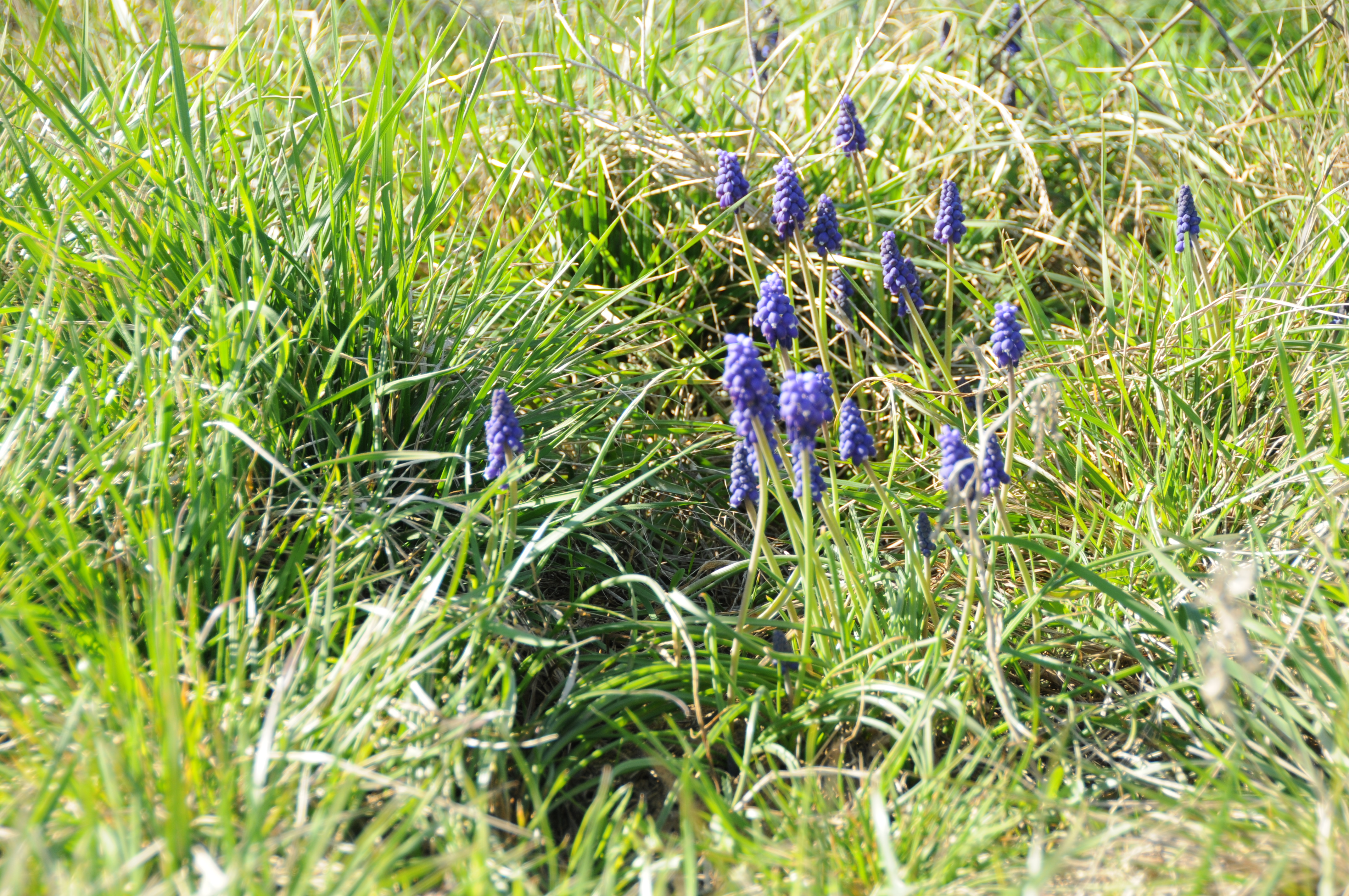
Grape Hyacinth on County Road, Front of Ranch House, March 19, 2010 (click to enlarge)

For the moment, however, this first day of spring, I want to mark the restoration of nature — oh, it’s not ever been that far away — with respect:  respect that The-Incomprehensible-Spirit-That-Moves-In-All-Things still animates the world despite corporate and individual behaviors that injure and destroy.  I include nothing mystical nor religious in using the word, “Spirit,” but rather I intend to refer to a force, an urging in nature and physical forces we encounter and do not completely understand.  I do not want to lose what we have, incomprehensible or not.  I seek restoration and preservation.
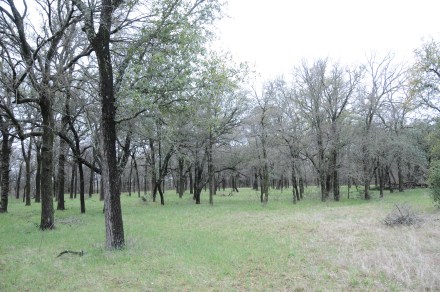
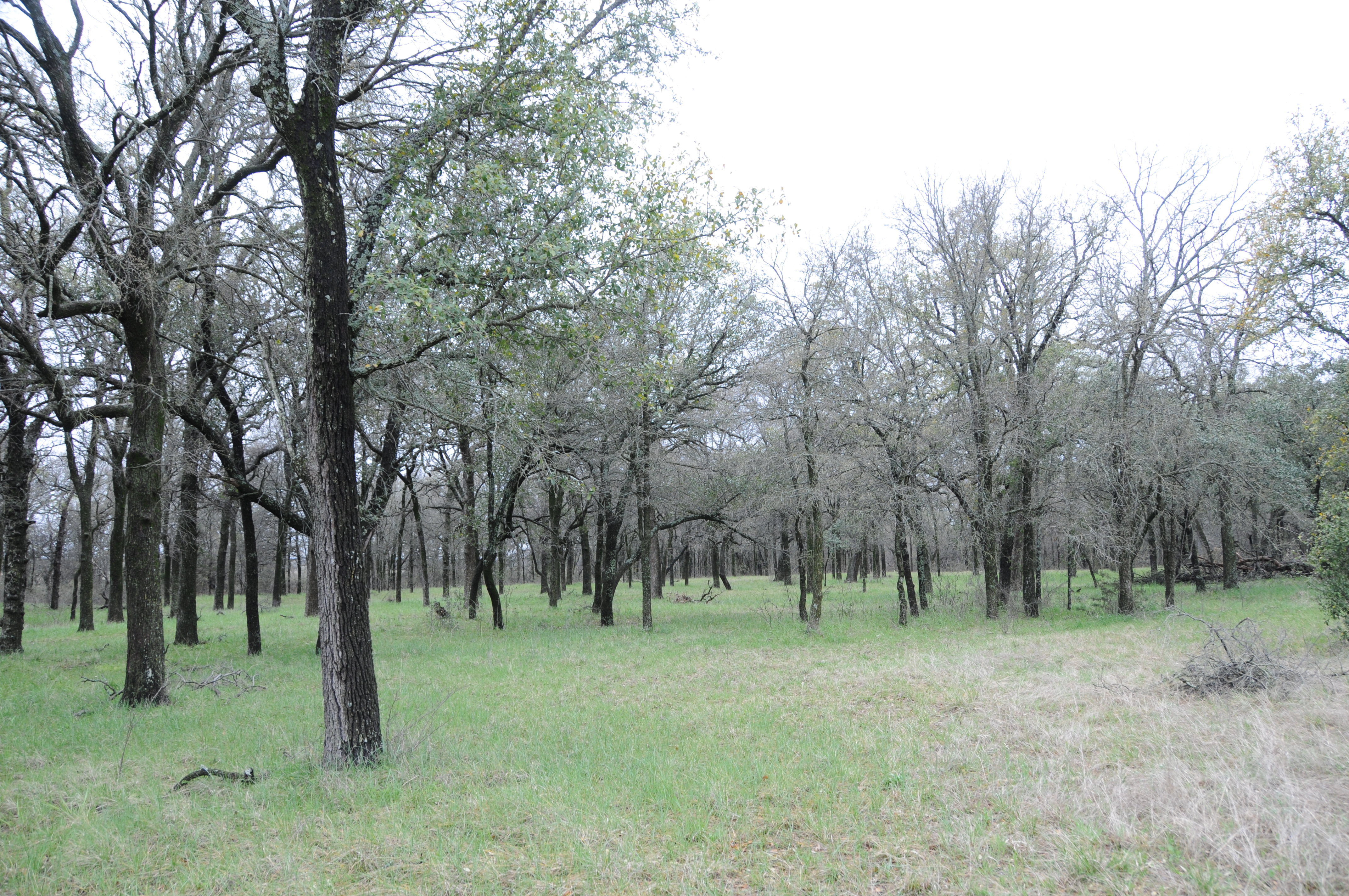
The Grove, March 20, 2010 (click to enlarge)

I think we can restore natural families we have damaged:  sagebrush, grouse, deer, shortgrass and fir.  I may, at the end of the day, be proven wrong in assuming we could correct ourselves, but for today I will walk with respect for spring in my pasture, stride through shrubs a’blooming in The Grove, and fervently hope that the restoration of nature will be fulfilled.

Restoration Short List for Flying Hat Ranchito

1.  Retard and prevent soil erosion in pasture with planting of native grasses.

2.  Give protection for deer migration in The Grove: allow brush to obscure their loafing areas.

3.  Seed native wildflowers in lanes and bypaths.

4.  Encourage pair of roadrunners return to arena area and cactus grove.

5.  Shred not high native grasses:  allow cover for birds and fox.

6.  Find strategy to encourage return of wild turkeys in pastures.

7.  Limit shredding substantially: allow grasses to seed out, encourage field mice, hawks.

8.  Build new brush piles to harbor wildlife.
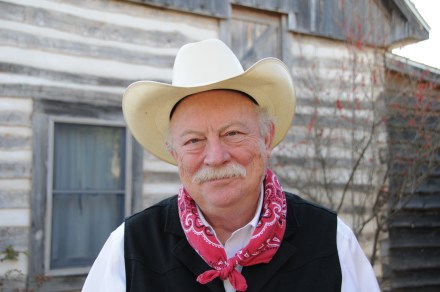
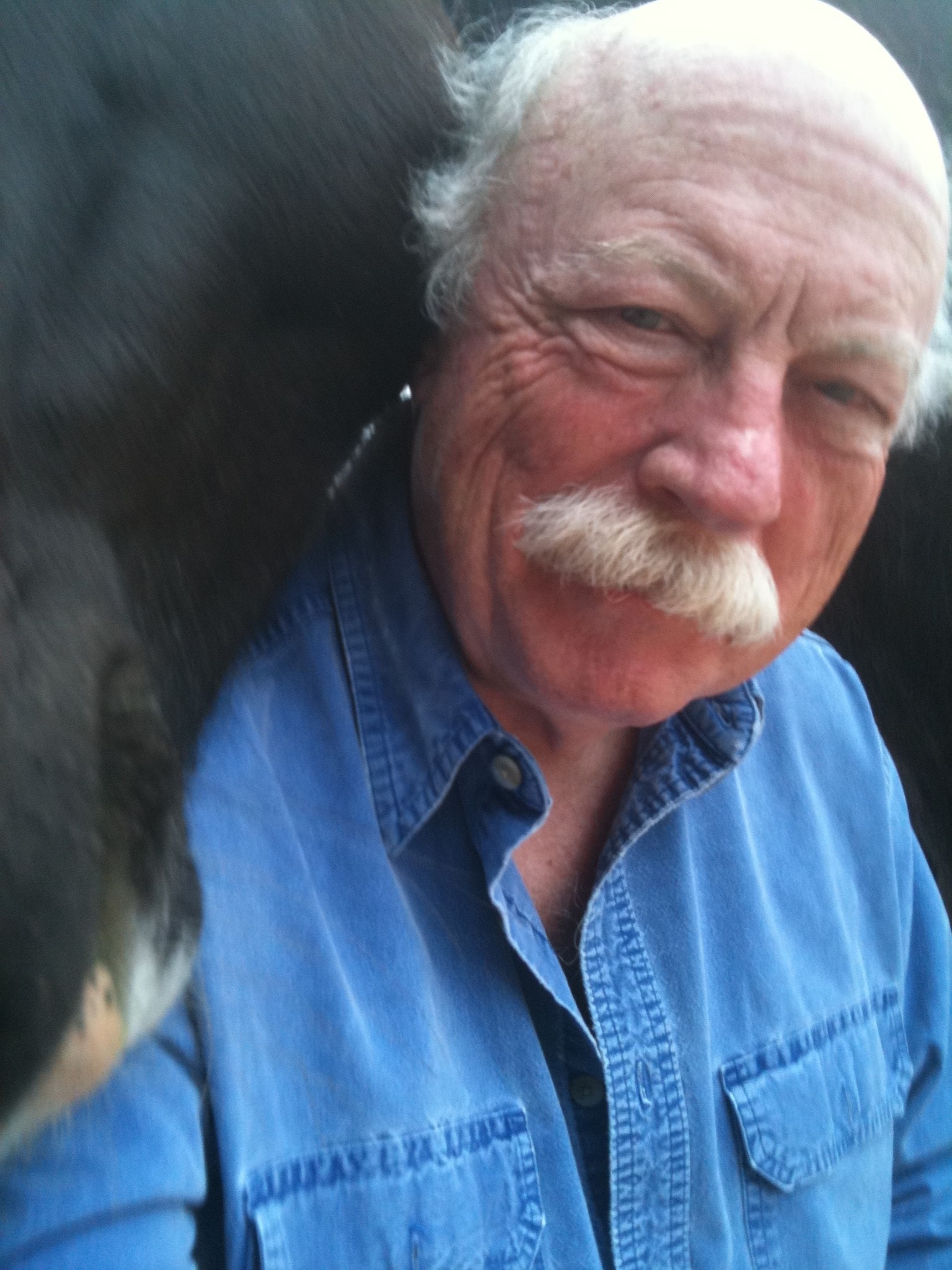
Jack Matthews, March 17, 2010, Fredericksburg, Texas, Author of Sage to Meadow Blog (click to enlarge)

2 Comments

Filed under Life in Balance

Field Log 3/20/2010 (Deer Track)

North Erath County, Texas, 32.43 lat., -98.36 long. Elev. 1,086 ft.  Turkey Creek Quad.

Windy from north, intermittent slight snow mist, 34 deg. F.  Heavy rain last night.  Rain gauge not measured.

Drove DX-55 tractor to arena area.  Slippery, used four-wheel drive.  Walk to grove revealed no track.  Camera tucked under zipped field coat.

Hawk sighted, soaring low from north to south along pasture.  No definite typing.  Voice resembles a high-pitched shrill pweeeeeee; diminishing (see Peterson, A Field Guide to Western Birds, p. 68, under Broad-Winged Hawk (Buteo platypterus) [2nd ed., 1969]).  Tailbanding verification is ambiguous.

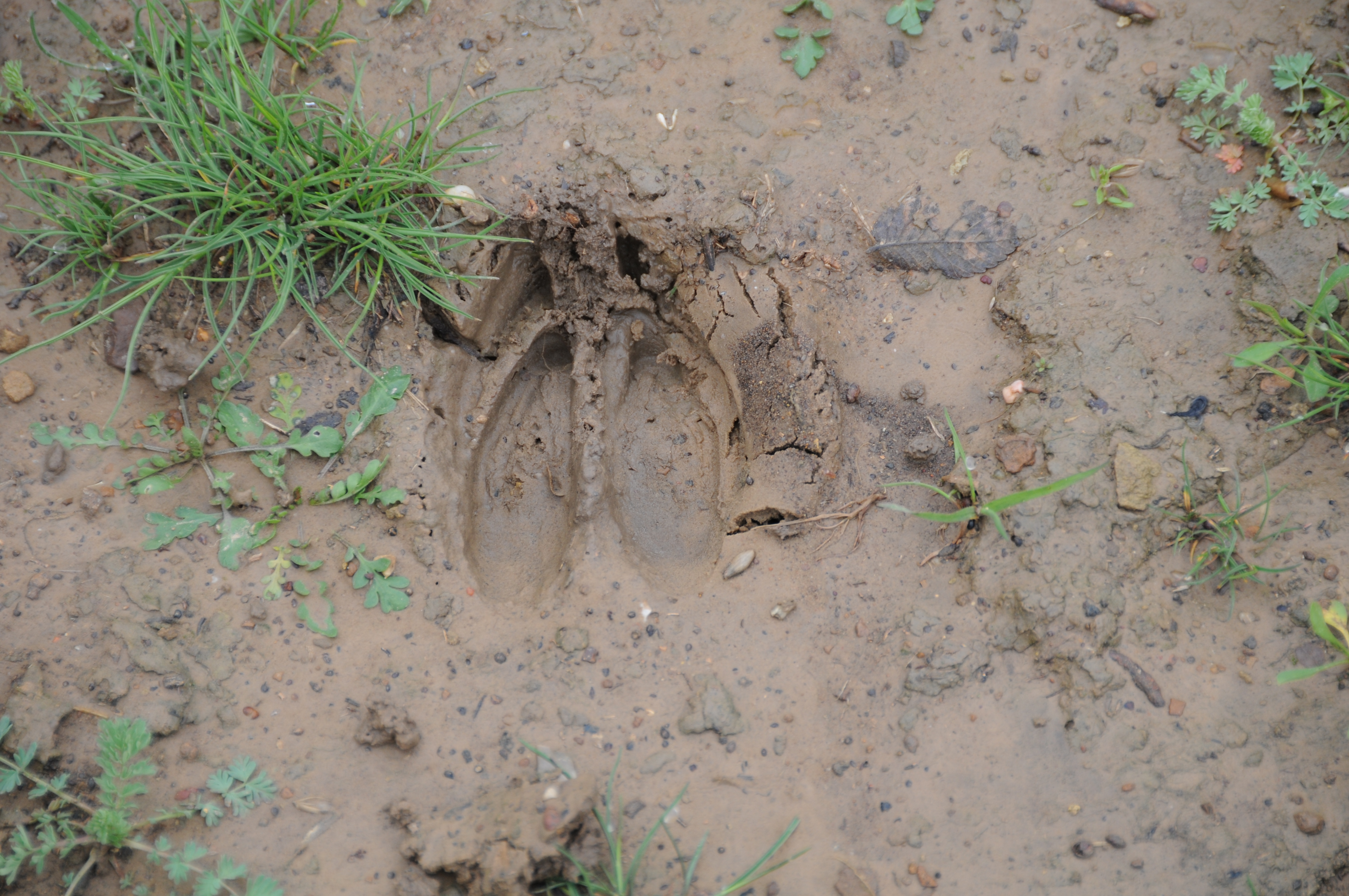
Deer track found on north side of The Grove, near corn site.  No corn set out for five days.  One deer track.  Mature.  Headed southwest.

Deer Track North Side Grove, March 20, 2010 (approx. 2.5 in. length, click to enlarge)

Deer Track North Side Grove Large View, March 20, 2010 (click to enlarge)

Scouting to creek area revealed no deer track.  Creek running high at approx. three (3) feet above normal.

Salt Creek After Rain, March 20, 2010 (click to enlarge)

Upon returning to house, deer track discovered along Poprock Hill Pasture, near the Blue place pond.  This indicates the one deer is still browsing between Blue’s pond, our pasture and the grove area.  No track emanates from Hall place to the southeast, as it used to.  Note: talk to Blue and verify continued support of brush growth around his pond.

One or two deer, not fifteen.

Returned to house at 11:15 a.m.

10 Comments

Filed under Deer, Field Log

Deer Tracks Vanishing

Neighbors surround our place and new arrivals have built homes and constructed fences and water gaps.  Changing things, the habitat for wild things, most of all.  Not any of the change has been good for me.  Oh, I can look closer at settlement patterns and see loneliness overcome, socializing more frequent and assistance rendered when needed — but I would not depend on it.

Deer tracks vanish.  The fox are gone.  Wildlife disappears.  Within seven years since our arrival here in the country, human settlement has pushed wildlife to an endangered status on our place.

Yesterday, I scouted the south side of The Grove for deer track.  I found none.  Since 2003, I have found deer track every day I have looked on the south side of The Grove.  Not yesterday.  The new neighbors to the southeast cut and burned brush that harbored deer.  For what purpose?  Better view from their house?  To loose their dogs into the clearings for exercise?  To give horses a open area for turnout?  A person can use their property as they see fit — an English-American axiom.

And, to the west, our neighbor has permitted two more families to reside on their place.  Target practice occurs.  The creek bank and bed where shots are fired in practice are pathways for deer migrating through our place and onto adjacent ranches.  Last Sunday, I stopped counting the rounds fired in the creek bed.  A person can use their property as they see fit — an English-American axiom.

In 2003, I regularly saw a herd of twelve-to-fifteen deer migrate and browse in our pasture.  Our farrier, Allen Gaddis of Wyoming, marveled at the deer on a misty morning as he trimmed hooves.  Deer used to graze with our horses.  Last year, I saw no more than three deer in a grouping.

I will go tomorrow to the north side of The Grove and seek deer track.  I will take the camera.  If there is track, I want a record in the future of how things used to be and how people use their property as they see fit — an English-American axiom.

I may post photographs.  I may not.

6 Comments

Filed under Deer, Life Out of Balance

The Seasons | Anselm Kiefer – Before Spring

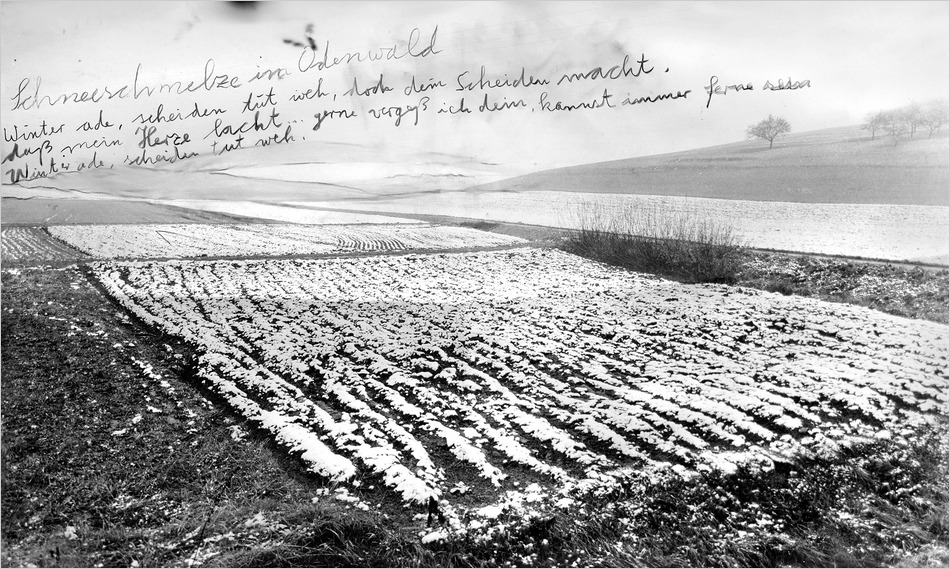
The Seasons | Anselm Kiefer – Before Spring – NYTimes.com.

Text on the work is translated as follows: Snow melt in the Odenwald. Goodbye, winter, parting hurts but your departure makes my heart cheer. Gladly I forget thee, may you always be far away. Goodbye, winter, parting hurts.

Anselm Kiefer, "Snow Melt in Odenwald," 2010, gouache on photographic paper (click to enlarge)

The snow is melting and trees are sprouting.  I have applied the disc to the field in order to soften the ground for grass seed.  Not the above field, but our field here in Texas.  Warmer here.

9 Comments

Filed under Life in Balance